Last month I watched a friend furnish an entire living room from her phone over a single weekend. Total damage: $230. It looked like a styled vacation rental — not because she has expensive taste, but because she knew which Pinterest-saved ideas actually hold up in real life and which ones collapse the moment you see them in person.
The 19 ideas below are the ones Pinterest users are pinning and re-pinning through 2026. Every one of them can be done for under $50 — most for less than the price of a takeout dinner — and all of them have survived my personal test: would I notice the difference if I walked into this room?
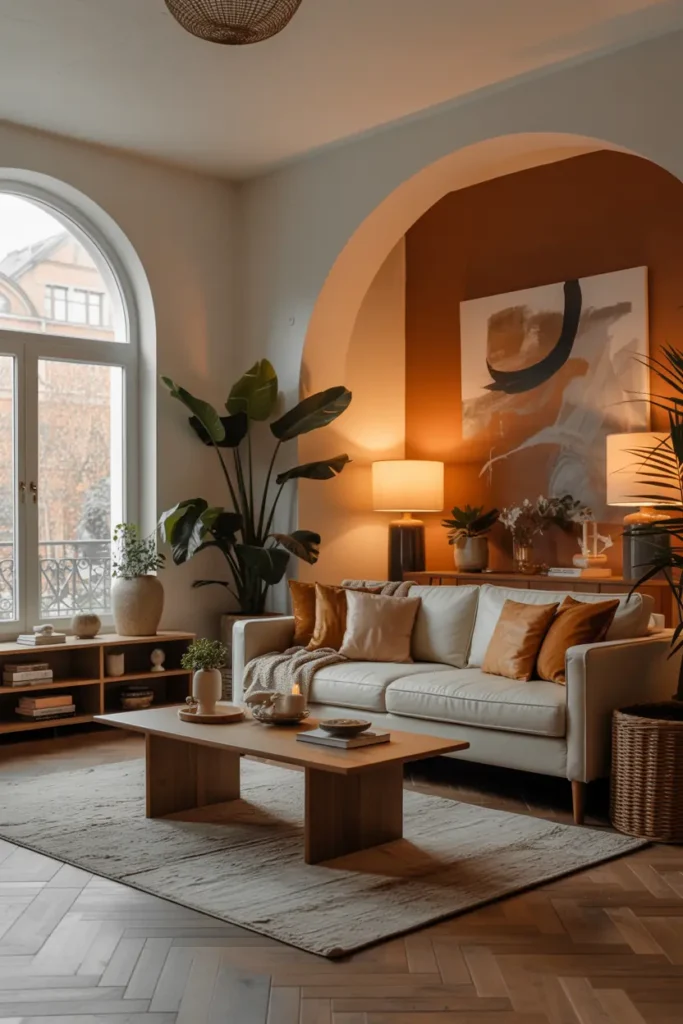
1. Limewash Walls for That Organic Textured Look
Limewash paint is the single most saved wall treatment on Pinterest right now, and it’s easy to see why. The finish has a soft, cloudy depth that flat paint can’t fake — walls look plastered, old-world, expensive. The budget play: a gallon of limewash (Portola, Bauwerk, or the more affordable Kalklitir line) runs $35–$70 and covers about 250 square feet, so one accent wall in most bedrooms costs a single gallon.
Application is the whole game. You need a big block brush — not a roller — and you paint in loose, crisscross X strokes so the texture builds up unevenly on purpose. Two thin coats, with about 4 hours of dry time between them. The mistake everyone makes: trying to make it look even. Uneven is the look. Keep windows open while it cures and don’t touch the wall for 24 hours.
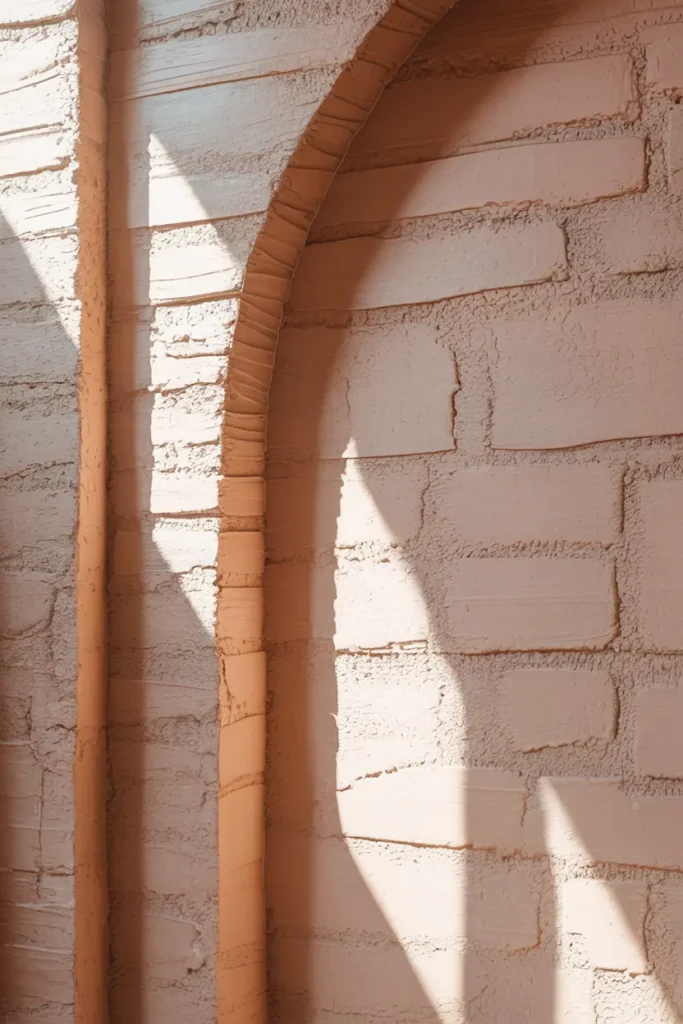
2. Arched Mirrors as Statement Pieces
Arches are still climbing on Pinterest because they soften every hard rectangle in a room — doorways, windows, the TV. A full-length arched floor mirror is the highest-impact version: lean a 60-inch arch against a blank wall and a boring corner suddenly looks intentional. Decent ones run $90–$140 at big-box stores, but the cheaper hack works too — buy a rectangular mirror and frame it with arched-top trim painted to match the wall.
Placement matters more than the mirror itself. Hang wall-mounted arches so the center sits at 57 inches (average eye level), and never across from a cluttered surface — a mirror just doubles whatever it reflects, so point it at a window or a plant. If it’s a leaning floor mirror, anchor the top to the wall with a furniture strap, especially with kids or pets around. A 60-inch leaning mirror weighs 15–20 pounds; that’s a trip to urgent care if it slides.
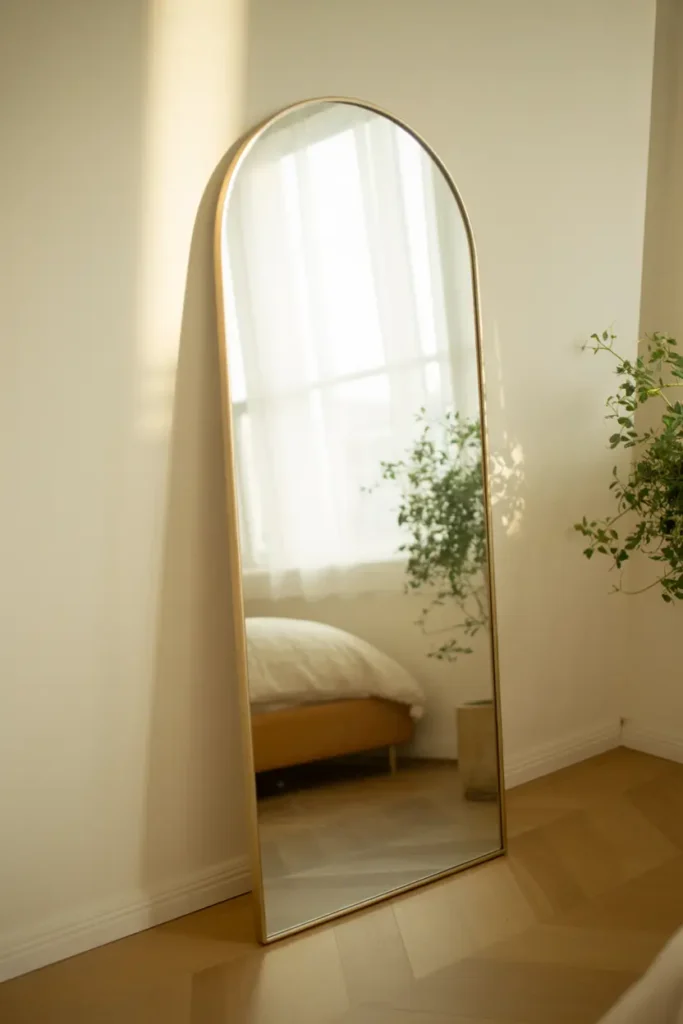
3. Terracotta and Clay Tones Throughout the Space
The color story Pinterest keeps returning to is warm earth: terracotta, clay, rust, burnt sienna. These tones work because they’re saturated enough to read as a deliberate choice but neutral enough to sit next to almost anything — beige, cream, walnut, black. The cheapest way in is textiles: terracotta pillow covers run $10–$15 each, and swapping four of them onto a neutral sofa changes the entire room for under $60.
If you want to commit further, paint is the move — shades like Sherwin-Williams Cavern Clay or Farrow & Ball Red Earth are the exact colors dominating saved pins. One quart ($18–$25) covers a door, a piece of furniture, or a bold arch painted directly on the wall. The appetite for this palette has moved well past accent status — whole bathroom mood boards on Pinterest are now built around rust-toned tile and clay-colored plaster.
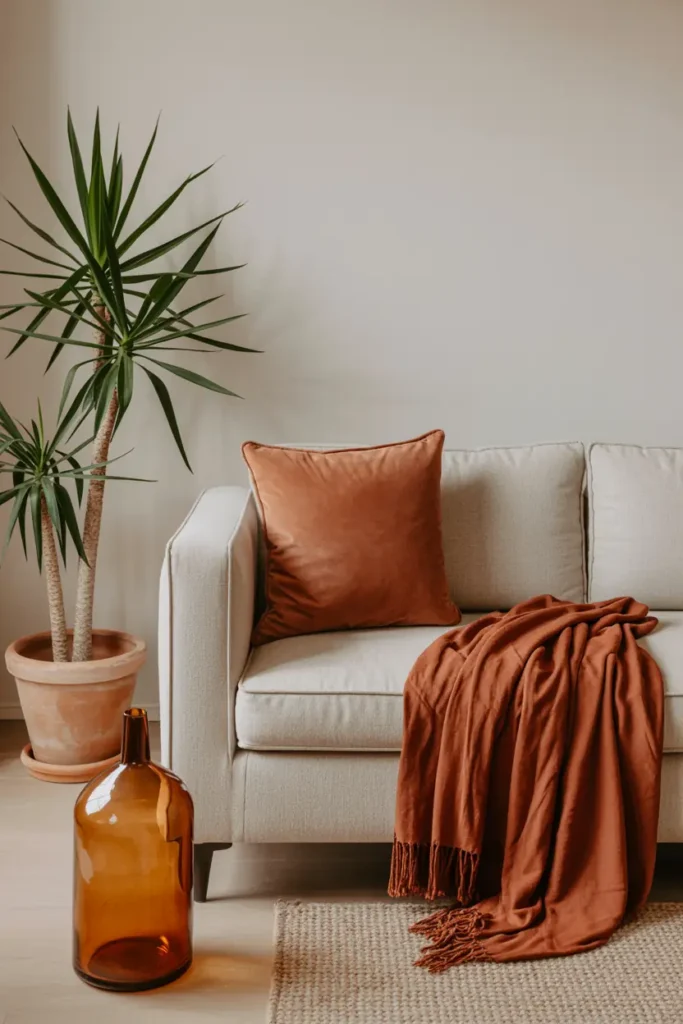
4. Cozy Reading Nooks in Unexpected Corners
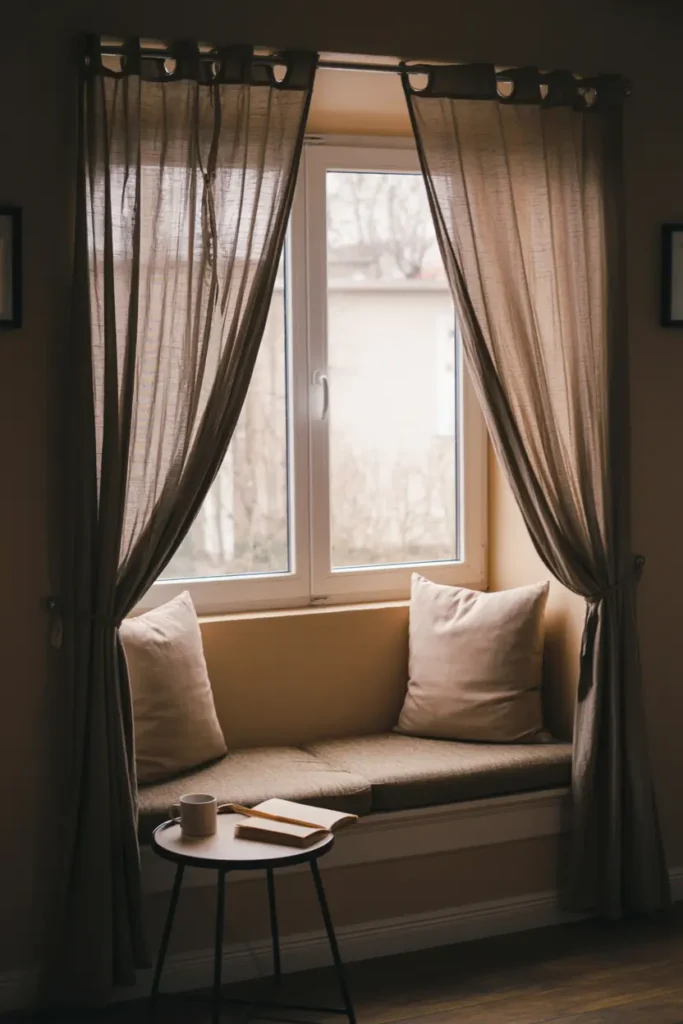
The reading nook works because it turns dead square footage into the most-used seat in the house. You need about 3×3 feet: one comfortable chair (thrift stores are full of $20–$40 armchairs with good bones), a clip-on or wall-mounted reading light ($12–$18), and something to hold a book — a small side table or even a sturdy stool. Tuck it next to a window and it doubles as a morning coffee spot.
The common failure is lighting. An overhead room light makes the nook feel like an interrogation, so the dedicated lamp is non-negotiable — 2700K warm bulb, aimed at the chair. Add one throw and one small pillow and you’re done. Resist the urge to fill every inch; the empty space around the chair is what makes it feel like a retreat instead of storage.
5. Dried Botanicals as Year-Round Decor
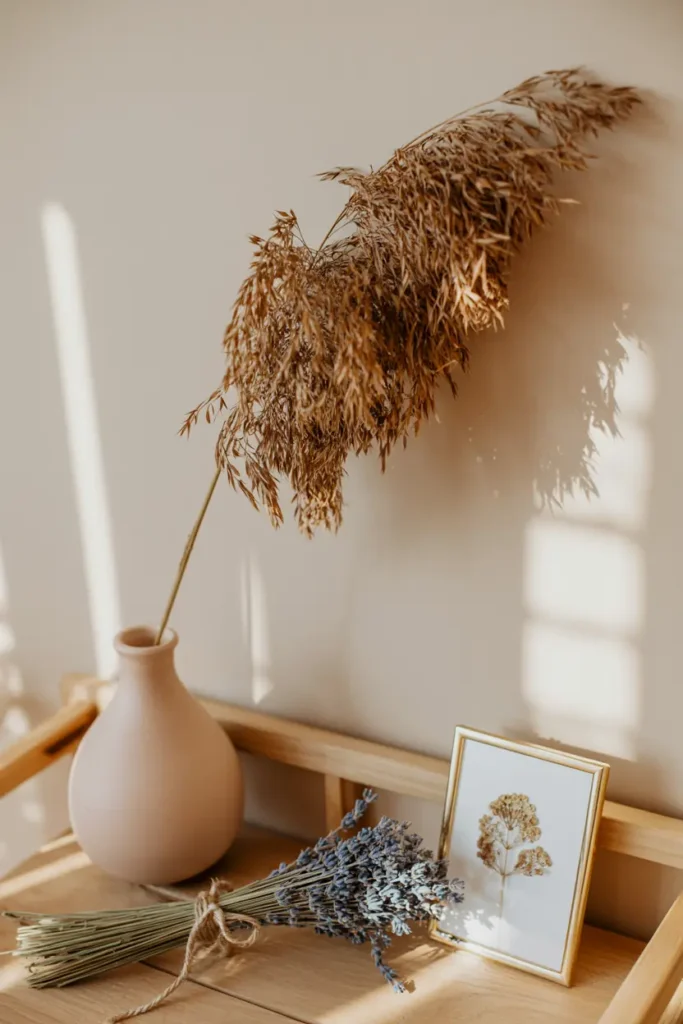
Fresh flowers are a $15 weekly subscription you never signed up for. Dried botanicals — eucalyptus, pampas grass, dried lavender, bunny tails — cost $6–$12 a bundle and look good for a year or two with zero maintenance. A single tall vase of pampas stems ($10 at craft stores) fills an empty corner for less than one bouquet delivery.
Two care notes: keep them out of direct sunlight or the colors bleach within weeks, and dust them monthly with a cool hair dryer from a foot away — handling them breaks the stems. Pampas grass sheds aggressively at first, so shake it outside before bringing it in, and skip it entirely if anyone in the house has grass allergies. Eucalyptus is the safer pick, and it smells wonderful.
6. Boucle and Textured Fabric Accents
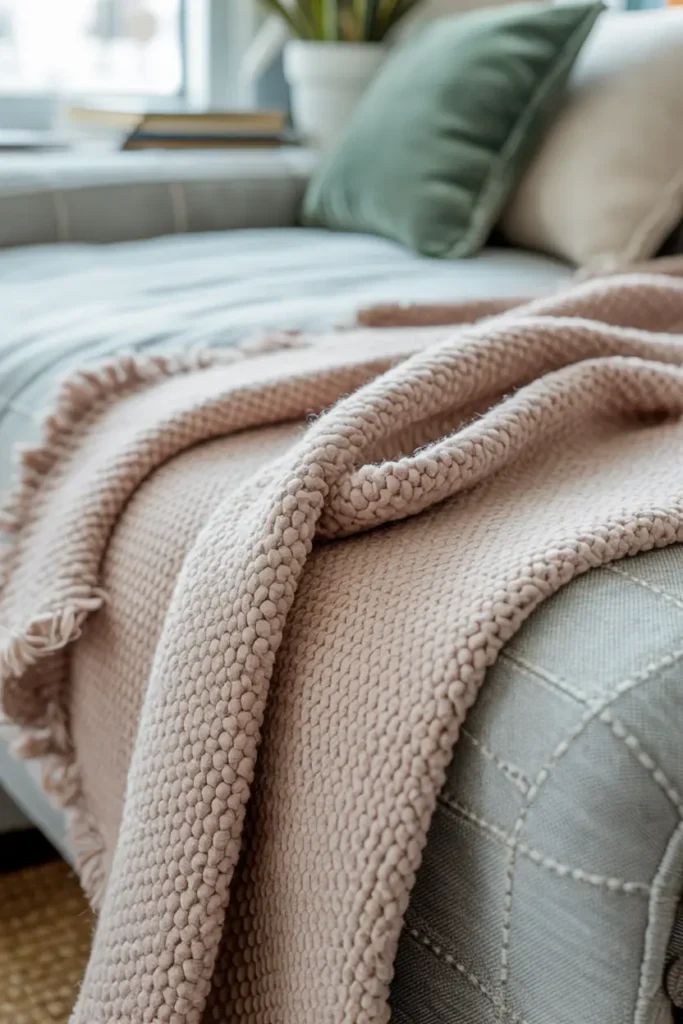
Bouclé — that loopy, nubby, cloud-like textile — photographs like luxury and feels like it too. A full bouclé accent chair runs $150–$300, which is not budget, but you don’t need the chair. Bouclé pillow covers ($14–$22) or a single throw ($30–$45) give you the texture on a regular sofa, and texture is what both the camera and the eye register first.
Fair warning before you commit: bouclé is a pet-hair magnet and it pills where it gets rubbed, like armrests. Choose covers with removable, washable cases and keep a lint roller nearby. In a no-pets, low-traffic spot like a guest bedroom chair, it’s practically maintenance-free. Cream and oatmeal bouclé against dark wood is the combination Pinterest is saving most.
7. Floating Shelves Styled Like a Pro
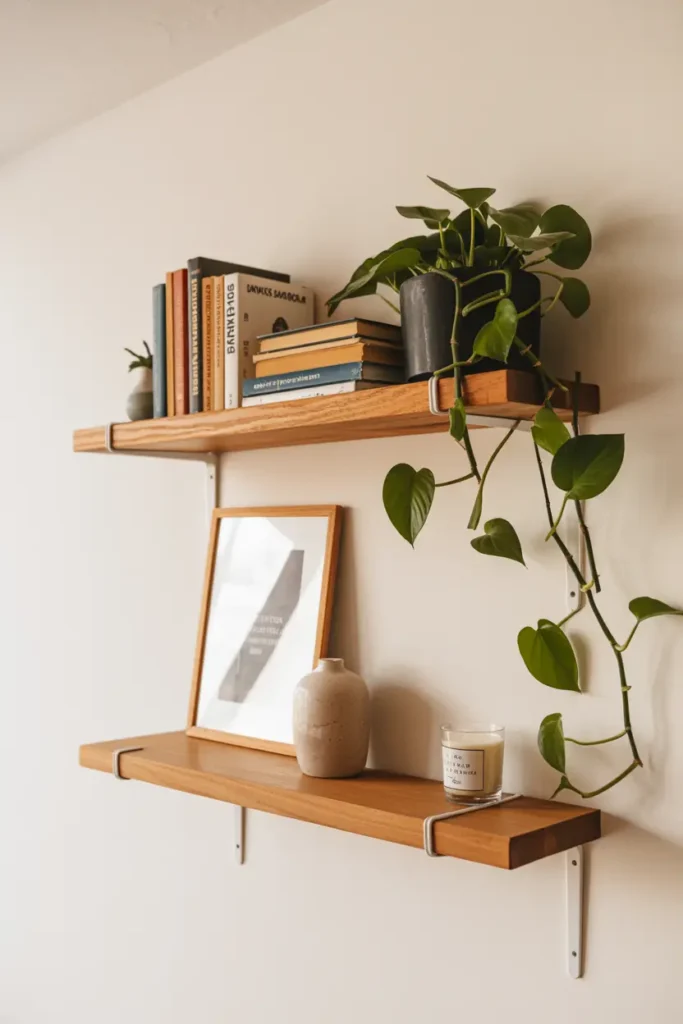
Floating shelves keep getting pinned because they’re the cheapest architectural feature you can install — a 36-inch solid wood shelf with hidden brackets costs $25–$40, and two of them can turn a blank wall into a styled display. The critical step is finding studs: drywall anchors alone won’t hold books. A $15 stud finder is the real budget hero here, because a shelf loaded with 20 pounds of books needs at least one bracket in solid wood.
Styling is where most shelves fail. Follow the 60/30/10 split: 60% functional (books, stacked bowls), 30% decorative (a vase, a small frame), 10% empty air. Group objects in odd numbers — threes and fives — and vary heights so the eye moves across. Leave 12 inches of clearance below anything hung above the shelf; crowding kills the floating effect.
8. Gallery Walls With a Personal and Layered Feel
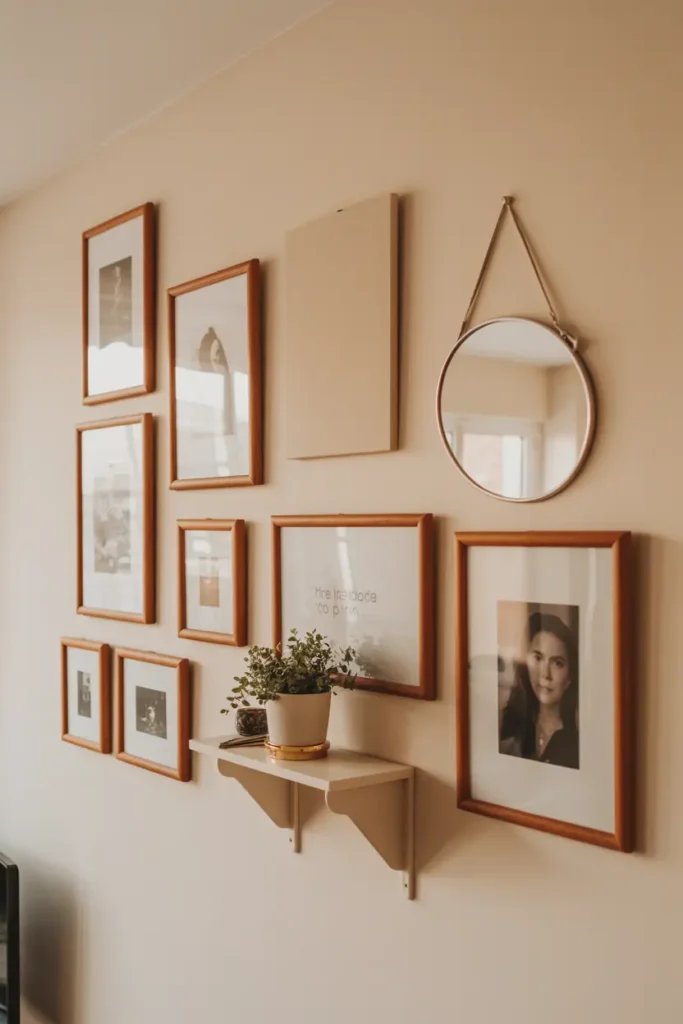
The 2026 gallery wall ditched the matching-frame grid. The saved versions now mix frame finishes — thin black, natural oak, one brass — and layer in non-frame pieces: a small textile, a wall basket, a vintage plate. Start with thrifted frames ($1–$3 each); spray-paint the mismatched ones in a single finish and nobody can tell. Lay the whole arrangement on the floor first and photograph it before a single nail goes in.
Use the kraft-paper trick: trace each frame on paper, tape the cutouts to the wall with painter’s tape, and live with it for a day before hanging. Keep 2–3 inches between pieces and center the whole arrangement at 57 inches — galleries hung too high are the number one mistake. A gallery wall of 8–12 thrifted frames, hung well, costs less than one large framed print and looks ten times more personal.
9. Warm Ambient Lighting With Multiple Sources
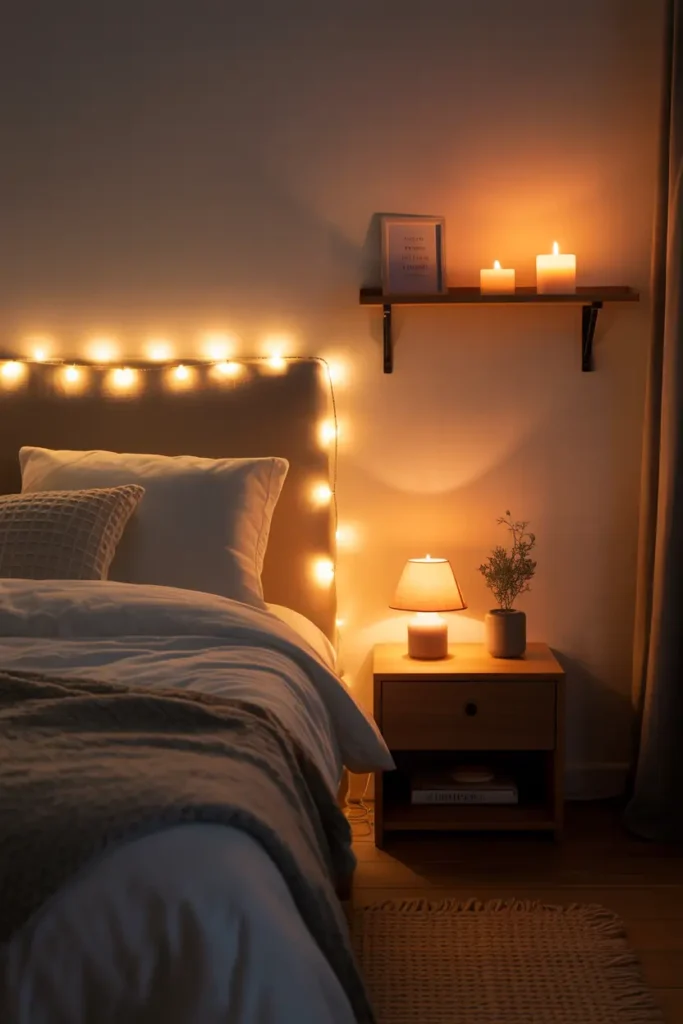
Nothing cheap-transforms a room like light. The formula designers use: three light sources per room at different heights — one overhead (or a tall floor lamp), one table lamp, one low accent like a candle cluster or string lights. Swap every bulb to 2700K warm white (about $8 for a four-pack of LEDs) and the whole house instantly stops looking like an office.
Budget finds that punch above their weight: paper lantern floor lamps ($25–$35) give huge, soft glow; plug-in wall sconces ($18–$30) add light without an electrician. Put table lamps on $10 plug-in dimmers — dimmed warm light at 8pm is what makes a room feel expensive. Avoid daylight bulbs (5000K+) anywhere you relax; they flatten skin tones and make wood look gray.
10. Vintage and Thrifted Finds Mixed With New Pieces
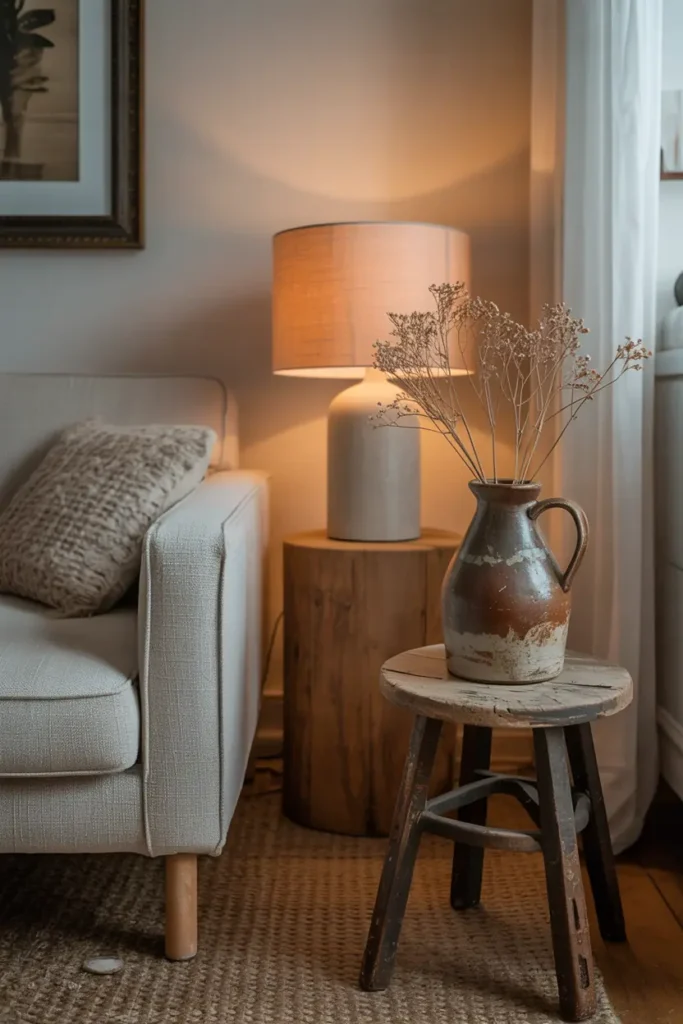
The most saved rooms on Pinterest right now aren’t all-new or all-vintage — they’re roughly 70% new basics mixed with 30% character pieces. One thrifted wooden side table ($15), a vintage brass lamp ($12), or an old framed oil painting ($8) next to a new sofa keeps a room from looking like a showroom. The patina does the decorating for you.
Shop with a tape measure and a photo of the spot you’re filling; “I’ll make it fit” is how thrift-store regret happens. Check Facebook Marketplace and estate sales for solid wood furniture — a $30 dresser with dovetail joints beats a $200 flat-pack particle-board piece every time. And always sniff upholstered pieces before buying; musty foam never fully airs out.
11. Indoor Jungle Corners With Layered Plants
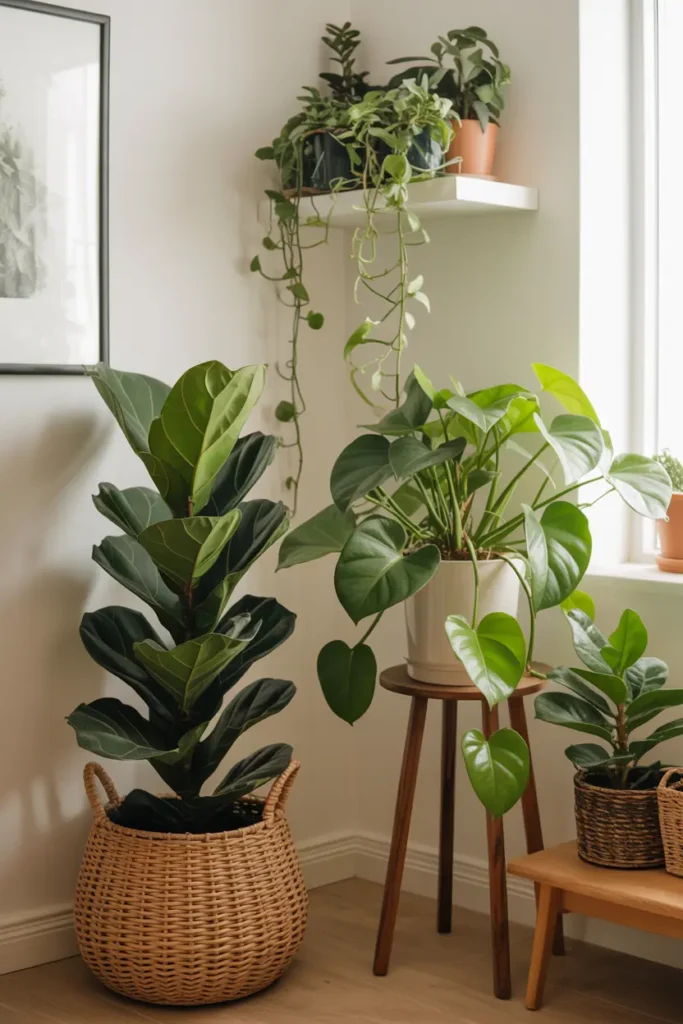
The scattered-single-plant look is out; 2026 is about the jungle corner — five to seven plants clustered at different heights in one spot. The layering is what makes it work: a tall floor plant (fiddle leaf or bird of paradise, $25–$40), mid-height plants on a $20–$30 bamboo stand, and trailers on top of a bookshelf. One dense corner reads as intentional; the same plants spread across the house just read as chores.
Group plants with similar water needs together or half of them die — that’s the real secret. Put a $10 humidity tray (a shallow dish of pebbles and water) under tropical plants if your air is dry, and rotate pots a quarter-turn weekly so growth stays even. Under $100 total gets you a corner that photographs like a greenhouse.
12. Linen Everything for That Effortless Texture
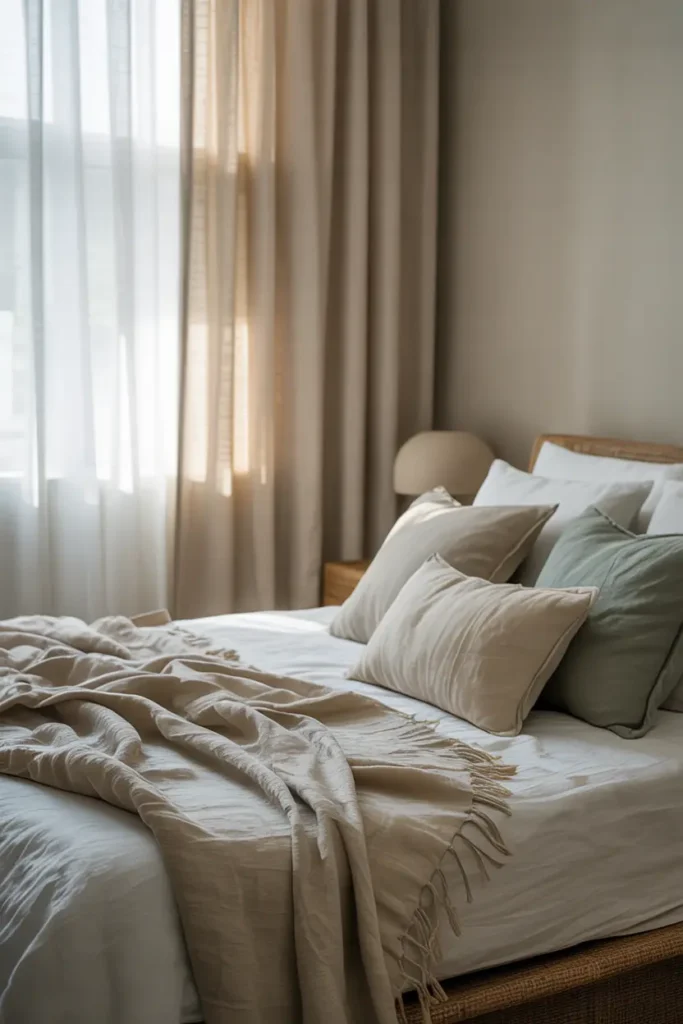
Linen is the fabric of the most saved bedrooms on Pinterest because it does the impossible: it looks expensive while refusing to look fussy. The wrinkles are the point. A linen duvet cover set runs $60–$100 on sale (check end-of-season clearances), and it instantly makes a bed look styled even when you barely made it.
Buy 100% linen or a linen-cotton blend — “linen-look” polyester pills and holds heat. Wash cold, skip the dryer or use low heat, and never iron it; ironing linen defeats the entire aesthetic. For a budget test-drive, start with two linen pillowcases ($20–$30 for the pair) before committing to the full set. Oatmeal, flax, and soft white are the shades getting saved most.
13. Wooden Accents and Natural Timber Details
Raw wood is the fastest way to warm up a room that’s gone too gray or too white. You don’t need new furniture — a $12 oak cutting board leaned against the kitchen backsplash, a thrifted wooden stool ($8–$15) as a plant stand, or a set of wooden bowls ($10) on a coffee table all do the job. The grain adds visual texture that paint and fabric can’t.
If you thrift unfinished wood, one $12 bottle of Danish oil and an hour of work transforms it: wipe on, wait 15 minutes, wipe off, done. It deepens the color and protects against water rings. Stick to one or two wood tones per room — mixing oak, walnut, pine, and cherry in the same sightline is what makes wood accents look cluttered instead of curated.
14. Peel-and-Stick Wallpaper in Powder Rooms and Small Spaces
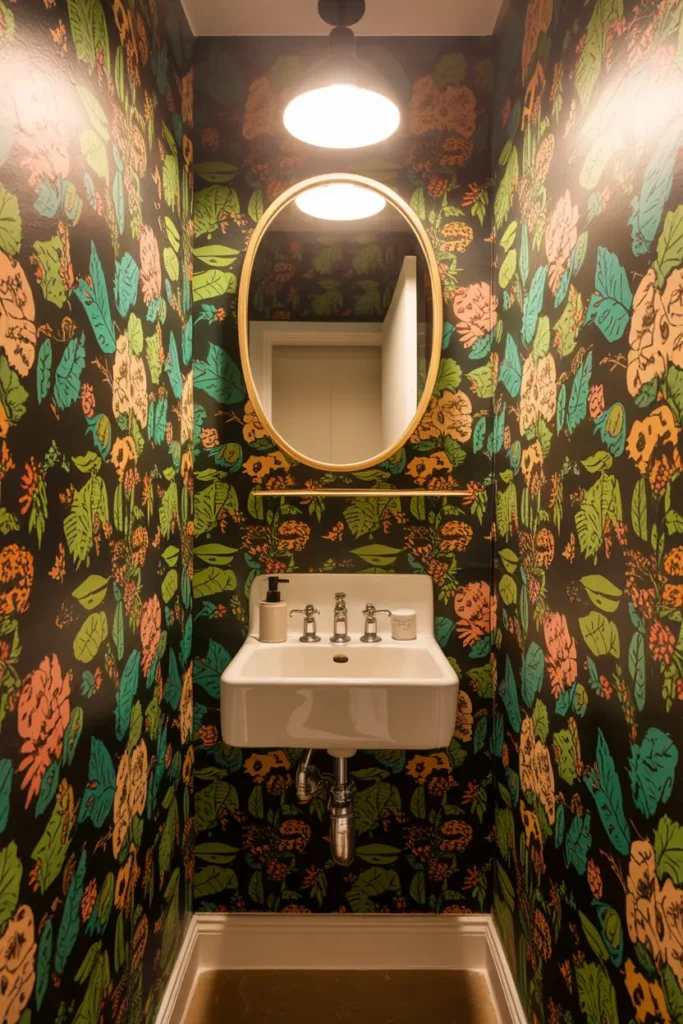
Small spaces are where peel-and-stick wallpaper earns its reputation. A powder room — often just 4×5 feet — needs a single roll ($25–$40 for a 20.5-inch by 16.5-foot roll) and about an hour. One bold wall behind the mirror turns the smallest room in the house into the one guests talk about.
The make-or-break detail is wall prep: the paper sticks to clean, smooth, fully dry walls and peels off textured or dusty ones within weeks. Wipe walls down, let them dry completely, and start at the most visible corner. Match the pattern repeat carefully at the seams — that’s what separates a pro-looking job from a sticker-looking one. It’s fully renter-friendly: quality brands peel off cleanly with a hair dryer on low heat.
15. Styled Coffee Tables That Look Magazine-Ready
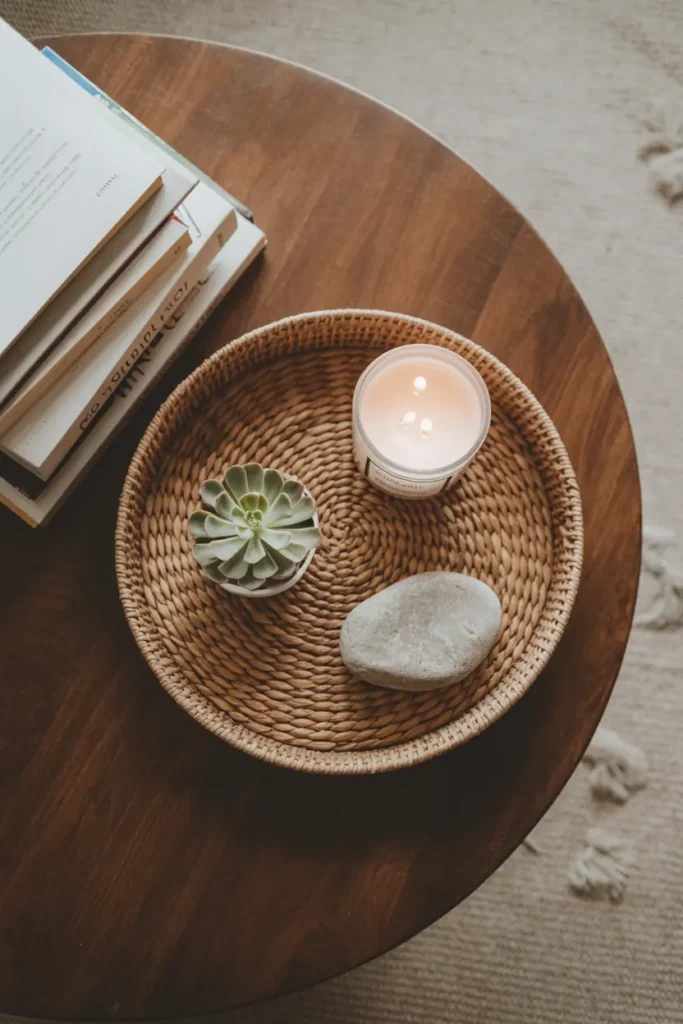
The coffee tables getting pinned all follow the same invisible formula: a tray to corral everything ($15–$25), a stack of two or three books (thrift stores, $1–$3 each — nobody checks if you’ve read them), and one organic object — a small plant, a stone, a candle. That’s it. Three elements, varying heights, and a full third of the table left empty.
The empty space is the part people skip, and it’s the whole trick — a crowded table looks like a shelf, not a styled surface. Corral small items on the tray so there’s exactly one thing to move when you actually use the table. Swap one element seasonally (a pinecone in winter, a shell in summer) and the table looks freshly styled year-round for zero extra dollars.
16. Maximizing Small Spaces With Clever Storage Decor
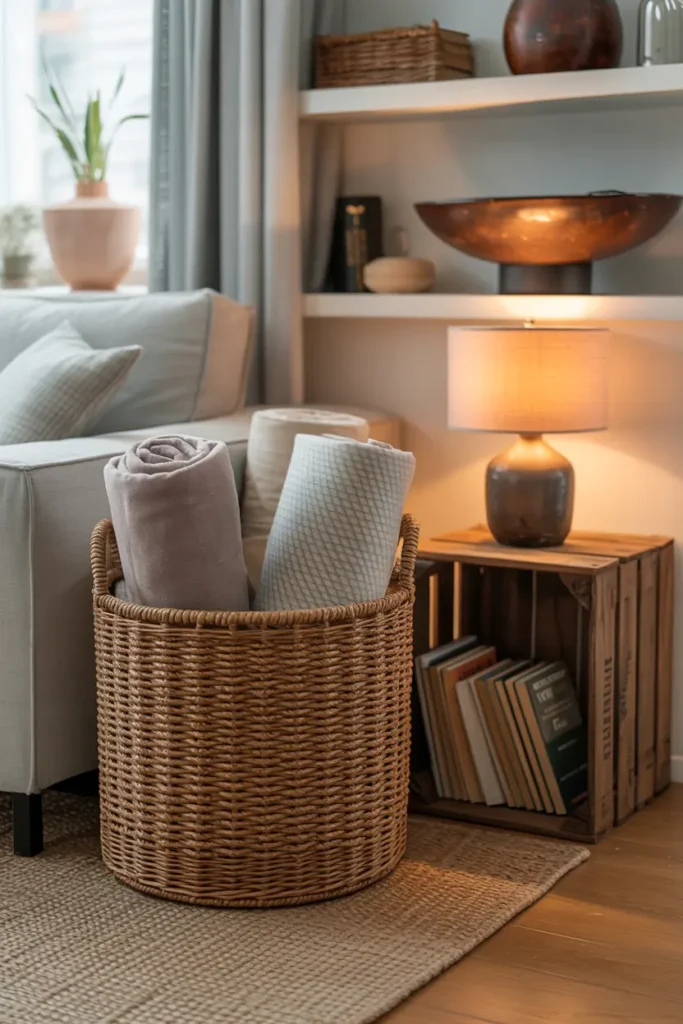
Pinterest users in 2026 are increasingly saving decor that solves real problems, and small-space storage is the category’s sweet spot. The wins are all vertical: over-door hook racks ($12–$18) that hold bags and robes, wall-mounted pegboards ($20–$30) for entryways, and storage ottomans ($35–$50) that swallow blankets while giving you a seat. Every piece has to earn its footprint twice.
Measure before you buy — a 24-inch ottoman that blocks a walkway is worse than no ottoman. Keep 30 inches of clear passage through main paths, and favor closed storage (baskets, lidded boxes) over open shelves in small rooms; visible clutter shrinks a space faster than anything. Under-bed boxes ($10–$15 each) reclaim the most ignored square footage in any bedroom.
17. Black Accents for a Modern Grounding Effect
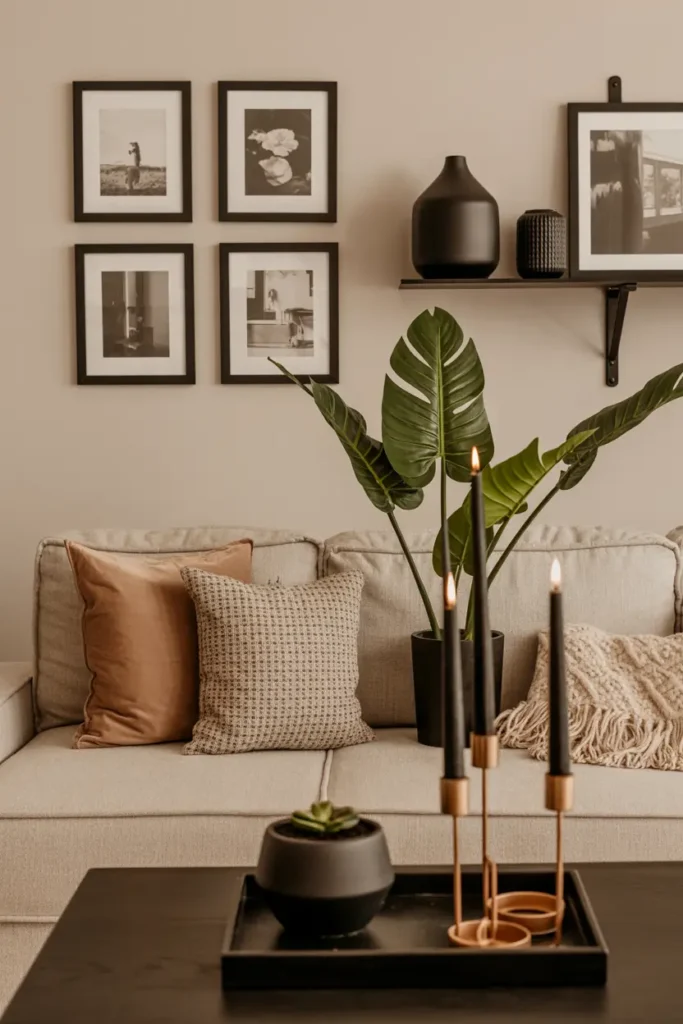
Black is a neutral — Pinterest figured this out and now it’s everywhere in small, deliberate doses. The rule: keep black to about 5–10% of a room. Matte black picture frames, a black tray, black cabinet pulls, or one black floor lamp. It sharpens everything around it the way eyeliner sharpens an eye.
The cheapest route is an $8 can of matte black spray paint: update brass or chrome cabinet pulls, an old mirror frame, or a dated light fixture in an afternoon. Sand lightly with 220-grit first and do two thin coats. One warning: black shows every speck of dust, so don’t put matte black on surfaces you won’t wipe weekly — picture frames yes, baseboards no.
18. Transforming Thrifted Furniture With Paint
Furniture flips dominate Pinterest’s DIY saves because the math is unbeatable: a $25 solid-wood dresser plus $30 of paint becomes a $400-looking piece. But the paint is only 20% of the job — prep is everything. Degrease with TSP substitute ($8), scuff-sand with 220-grit, wipe clean, then one coat of shellac-based primer (BIN, about $18 a quart) so the old finish can’t bleed through.
For furniture, use an enamel paint in satin or semi-gloss — it levels smooth and resists chips — two thin coats with a foam roller and a brush for details. A quart ($25–$35) covers a dresser or a pair of nightstands. Skip the chalk-paint-and-wax route for anything that gets daily use; wax scratches and needs reapplication, while enamel cures hard in about two weeks.
19. Intentional Empty Space as a Design Choice
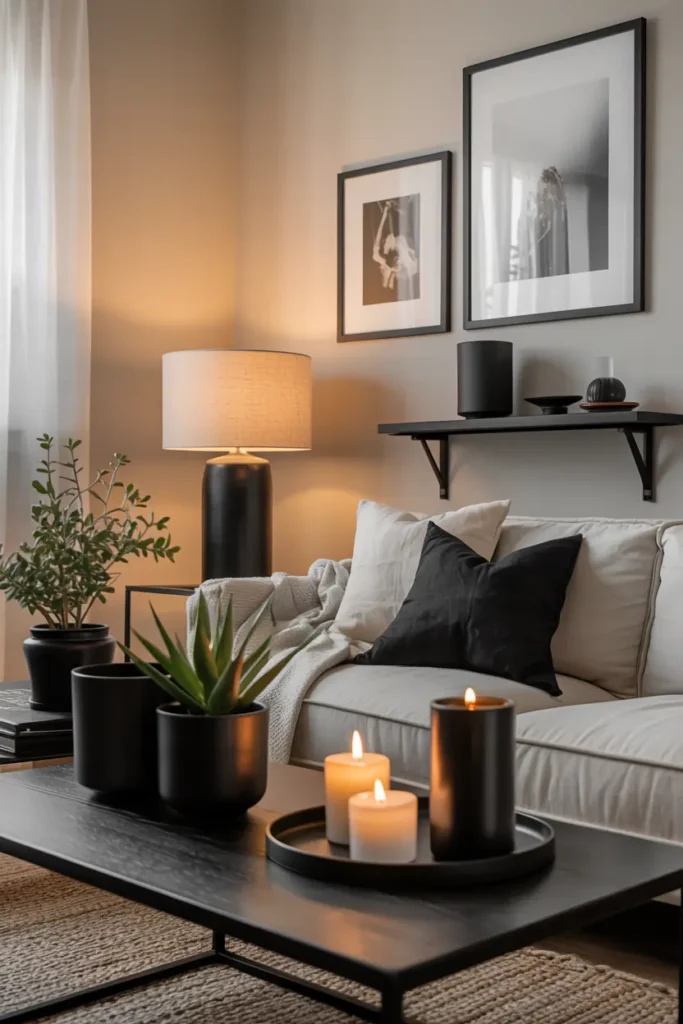
The quietest revolution on Pinterest in 2026 is the embrace of nothing. Rooms with breathing room — one completely clear wall, a corner with just a single plant, a nightstand with one lamp and nothing else — photograph as calm and expensive, while packed rooms photograph as storage. Empty space is free, and it’s the fastest way to make budget pieces look deliberate.
Try the subtraction test: remove three things from your most decorated room and live with it for a week. Most people never put them back. Keep at least 30 inches of clear walkway through main paths and resist filling every wall — one blank wall per room gives the eye somewhere to rest and makes everything else in the room look more considered.
Pick three ideas from this list — not nineteen — and do them this weekend. A limewashed accent wall, a $10 bundle of dried eucalyptus, and three warm 2700K bulbs will change your home more than a year of saving pins ever could. That’s the real Pinterest lesson: the boards are just the shopping list; the room is the reward.
Pro Tips
- Test before you commit: paint a 2-foot sample square on the wall and live with it for 48 hours before buying gallons. Colors shift dramatically between morning and evening light.
- Photograph your room before rearranging or styling — the camera shows clutter and awkward gaps your eyes have learned to edit out.
- Buy secondhand first for anything solid wood or metal; buy new for anything upholstered, electrical, or that touches food.
- Finish one project completely before starting the next. Five half-done rooms feel worse than one finished room and four untouched ones.
FAQs
How much should I realistically budget to refresh one room with these ideas?
Most single-room refreshes using this list land between $150 and $300, and you can go lower by thrifting. The highest-impact cheap wins are warm 2700K bulbs ($8 for four), a gallon of accent paint ($25–$40), and thrifted frames or textiles — those three alone transform most rooms for under $75.
I’m renting. Which of these ideas are landlord-safe?
Peel-and-stick wallpaper, plug-in sconces, leaning (not mounted) mirrors, all textiles, plants, and styled surfaces are fully reversible. For limewash or paint, ask first — many landlords approve a single accent wall if you offer to repaint it white on move-out. Command strips rated for the actual weight handle most lightweight frames.
Do Pinterest trends actually last, or will my room look dated in a year?
The ideas on this list split into two camps: timeless (warm lighting, plants, wood, good storage) and trendy (bouclé, limewash, pampas). Spend your money on the timeless ones and keep trend spending under $30 per item — pillow covers and stems, not sofas and wall treatments — so refreshing next year’s look costs almost nothing.
What’s the single highest-impact idea for under $25?
Warm lighting, no contest. Swapping every bulb in a room to 2700K warm white and adding one $15 plug-in dimmer changes how every object, color, and person in that room looks. It’s the difference between a room that photographs well and one that feels good to sit in.

HowDecor is a home decor blog sharing simple, practical decorating ideas for everyday spaces. We believe a beautiful home should feel comfortable, personal, and full of warmth — and that great style does not require a huge budget. Our goal is to inspire readers to create spaces that feel peaceful, welcoming, and truly their own — one room at a time.