You don’t need a makeover. You need a Saturday. Most rooms that feel tired aren’t missing money — they’re missing decisions. Furniture in the wrong spot. Surfaces doing nothing. Light that flatters nobody. Fix those and the room changes. No renovation, no big spend.
Twenty ideas below. Each one takes an hour or less, most cost under $30, several cost nothing at all. Start at the top, stop when the room feels right.
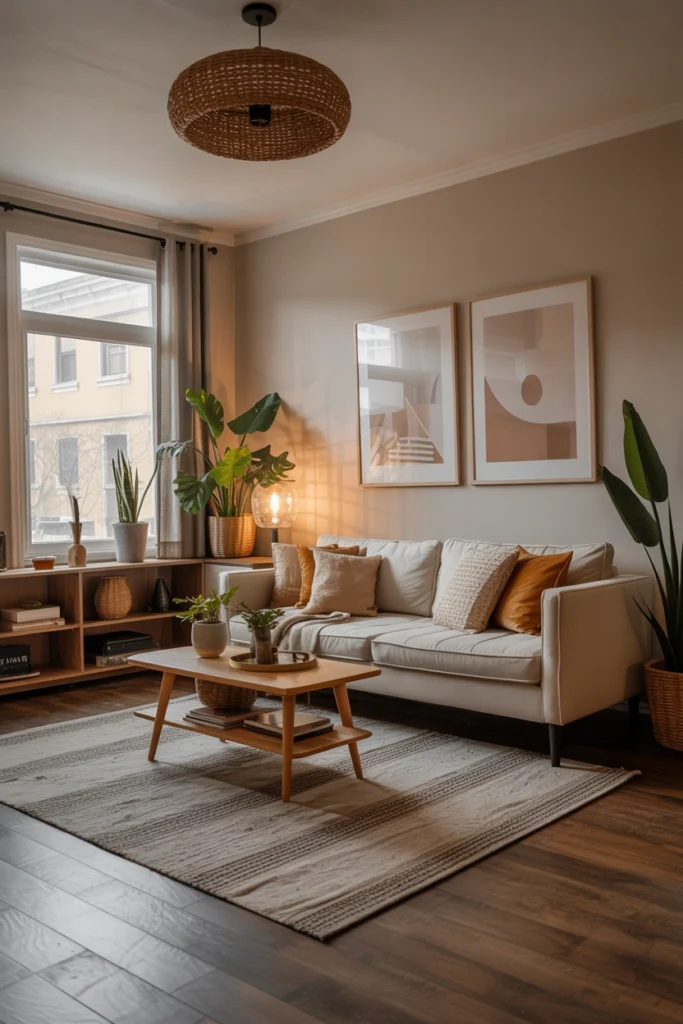
1. Rearrange What You Already Own
Free. Fast. Underrated. Pull everything away from the walls, then rebuild the room around how you actually use it — conversation first, TV second, traffic paths clear. Most people discover their sofa has been blocking the room’s best light for years.
Test each arrangement by sitting in it for ten minutes, not by looking at it. A layout that photographs well but forces you to shout across the room is a failed layout. Move the big pieces first, live with it for a day, then adjust. Cost: zero. Impact: the single biggest change on this list.
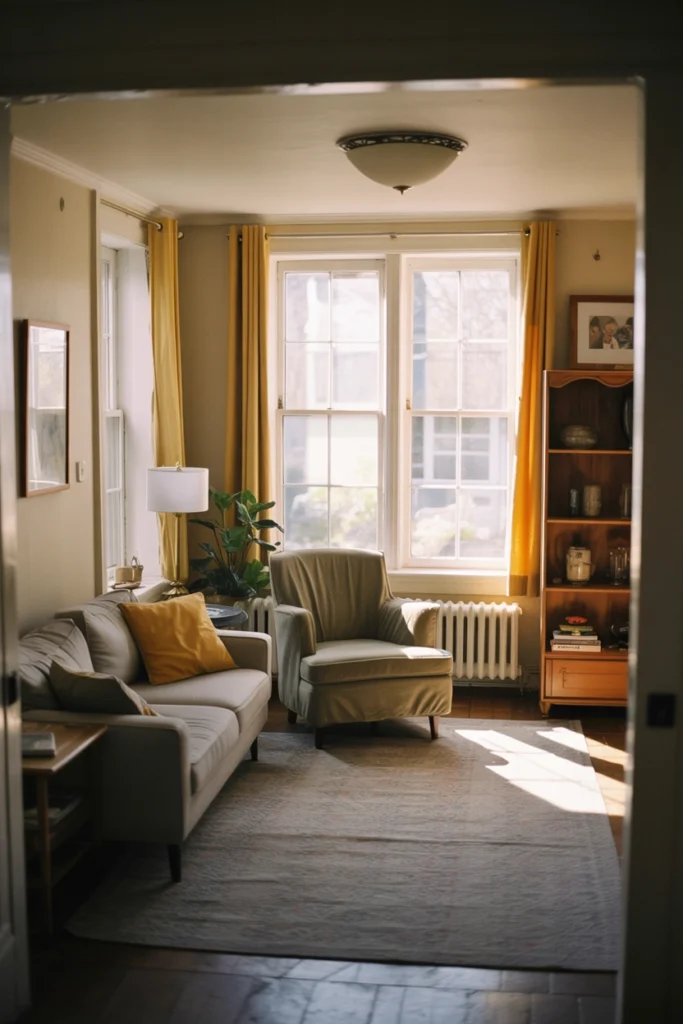
2. Swap Cushion Covers for a Completely Different Look
Best dollar-for-dollar move in decorating. Three cushion covers at $10–15 each and your sofa looks like a different piece of furniture. The sofa is the biggest object in the room — change its skin, change the room.
Go one shade deeper or warmer than what you have now. Small shift, big effect. Mix one solid, one textured — done. Don’t overthink the pattern; at this price you can change them again next season. Keep the old covers in a bag. Rotation beats replacement.
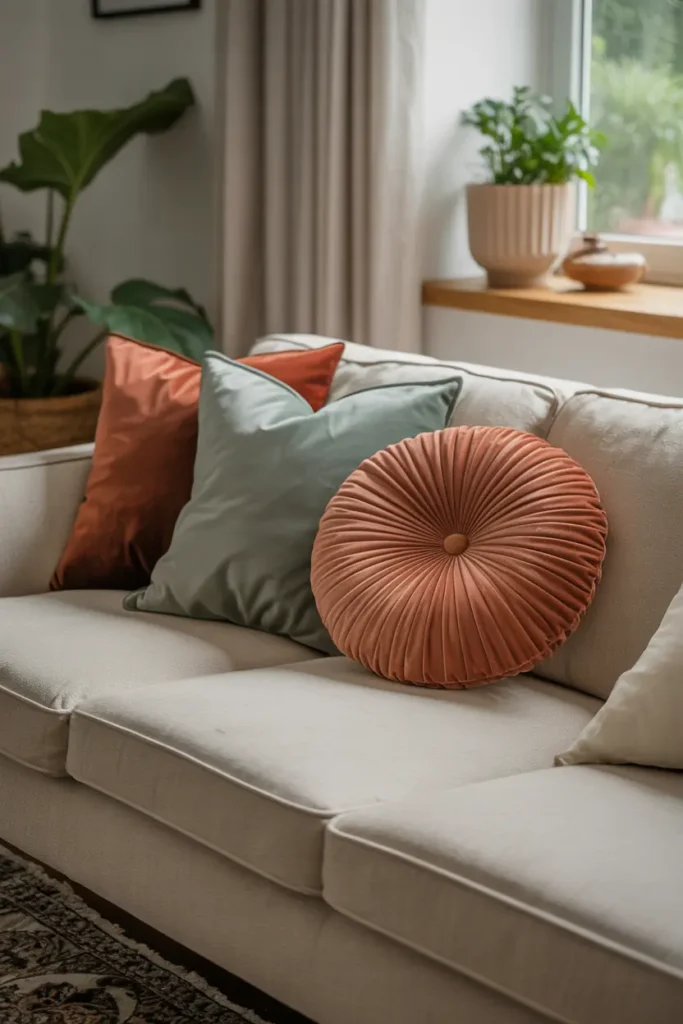
3. Add a Throw Blanket and Style It Properly
A throw draped properly looks like styling. A throw balled up looks like laundry. The difference is thirty seconds: fold it in thirds lengthwise, drape it over one arm of the sofa or across the corner diagonally, let one end hang. That’s it.
Choose a throw with some weight — a chunky knit or a heavy cotton ($20–35) — because thin throws slide off and look fussy. One throw per seating area. More than that and the sofa looks like it’s in storage. The throw lives there. It’s not decoration you put away; it’s part of the furniture now.
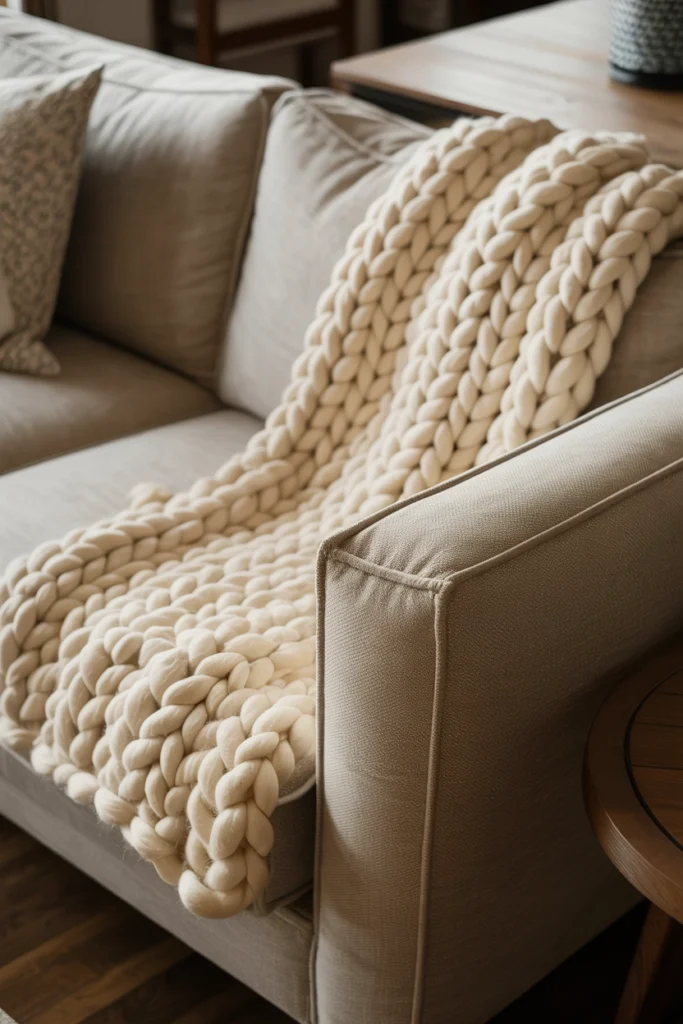
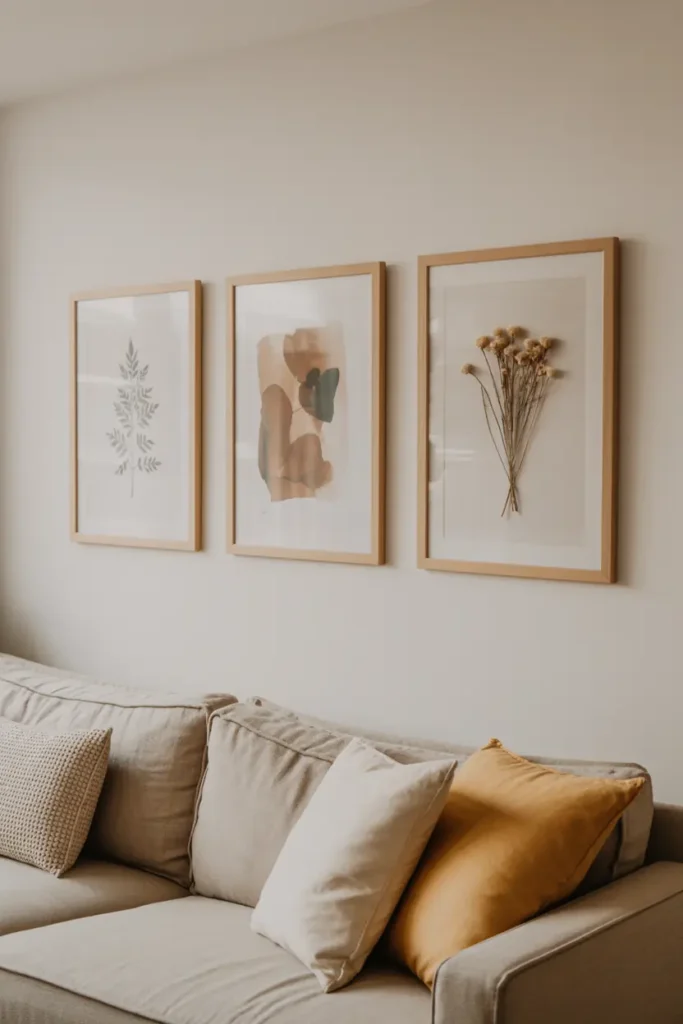
4. Refresh Your Walls With Affordable Art
Bare walls make a room feel unfinished. Full stop. You don’t need expensive art — you need something with intention on the walls. A $15 frame around a print you actually like beats a $200 canvas you feel nothing about.
Print your own photos large — a 16×20 print costs $8–12 at most print shops and means more than any stock art. Hang it at eye level: 57 inches to the center. One good piece on a wall beats five small ones scattered. If the wall is big, go big — undersized art on a large wall looks apologetic.
5. Use Books as Decor Elements
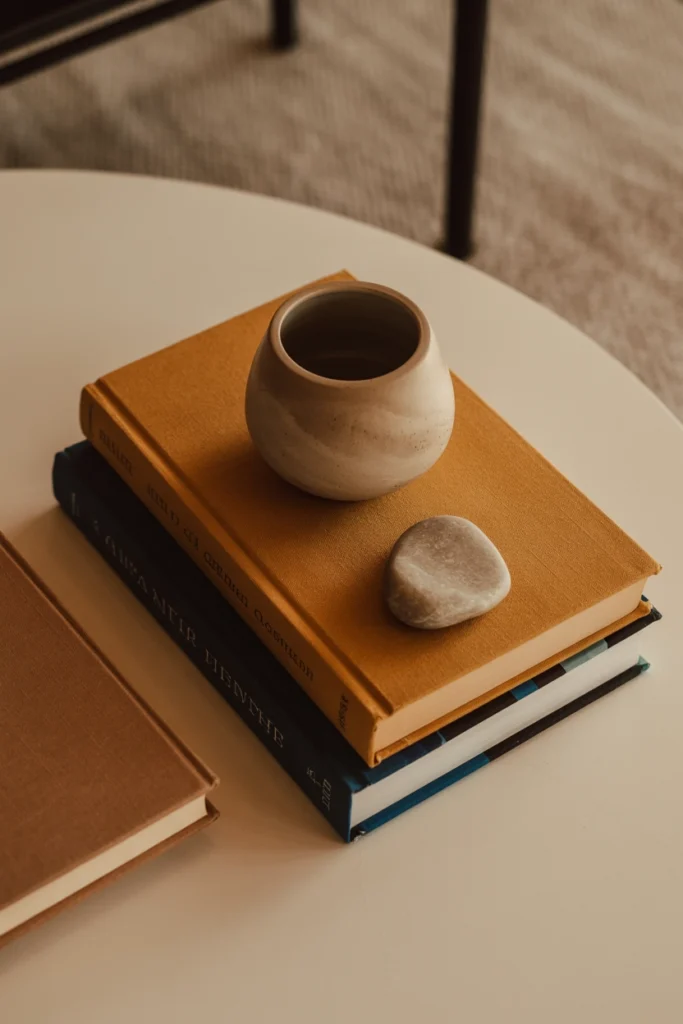
You already own them. Stack them. Books are color, texture, and height in one object, and a stack of three to five on a coffee table or shelf does the work of a decor object that would cost $30.
Rules: stack horizontally, largest on the bottom, spines aligned. Remove the dust jackets if the covers underneath look better — they usually do. Group by color if you’re feeling precise, or don’t; a mixed stack looks collected, which is better than matched. Books you haven’t read yet go on the nightstand, not the shelf. The shelf is for the ones that say something about you.
6. Bring in at Least One Plant
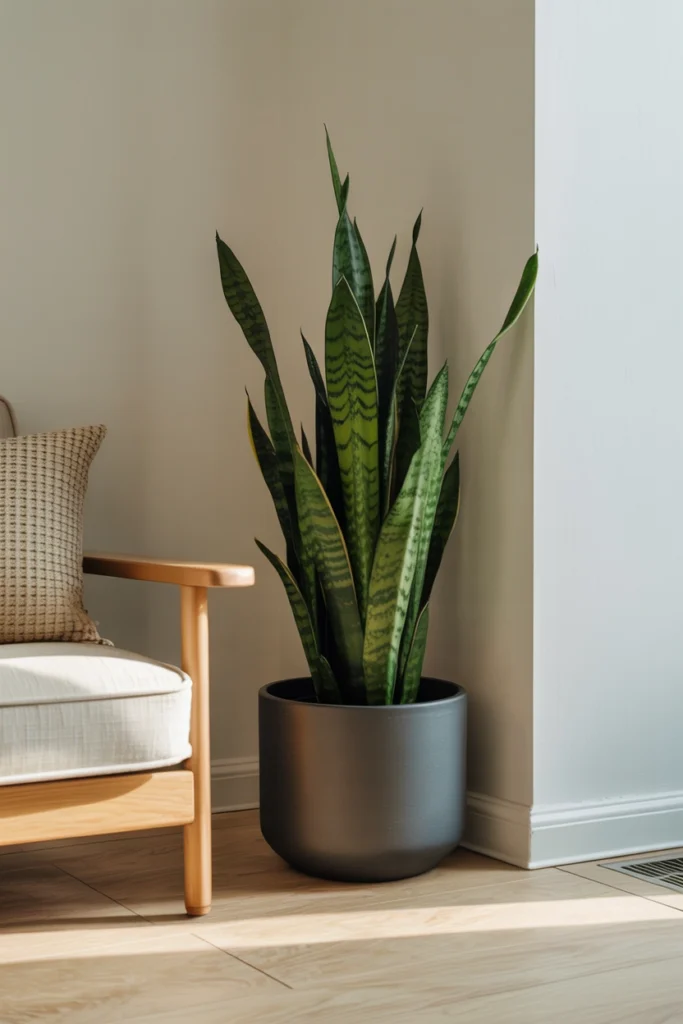
One plant changes a room’s energy in a way that’s hard to explain and impossible to miss. It adds life, color, and a shape that isn’t a rectangle. Every room needs at least one thing that grows.
Start indestructible: pothos, snake plant, ZZ. A 6-inch pot costs $8–15 and survives most neglect. Put it where you’ll see it daily — plants you forget to water die, plants in your eyeline get watered. One healthy plant beats three dying ones. If you’ve killed every plant you’ve owned, get a snake plant and water it monthly. Monthly. You can do monthly.
7. Clean and Clear Every Surface Deliberately
Not glamorous. Most impactful step here. Clear every surface in the room completely, wipe it down, then put back only what belongs. Half the time the room was fine — it was just buried.
Do it surface by surface, not room by room. One console, one shelf, one counter. Fifteen minutes each. The stuff you remove goes into a box; if you don’t reach into the box for a month, donate it. A clean surface makes everything on it look intentional. Clutter makes everything look accidental — including the nice things.
8. Style One Surface as a Vignette
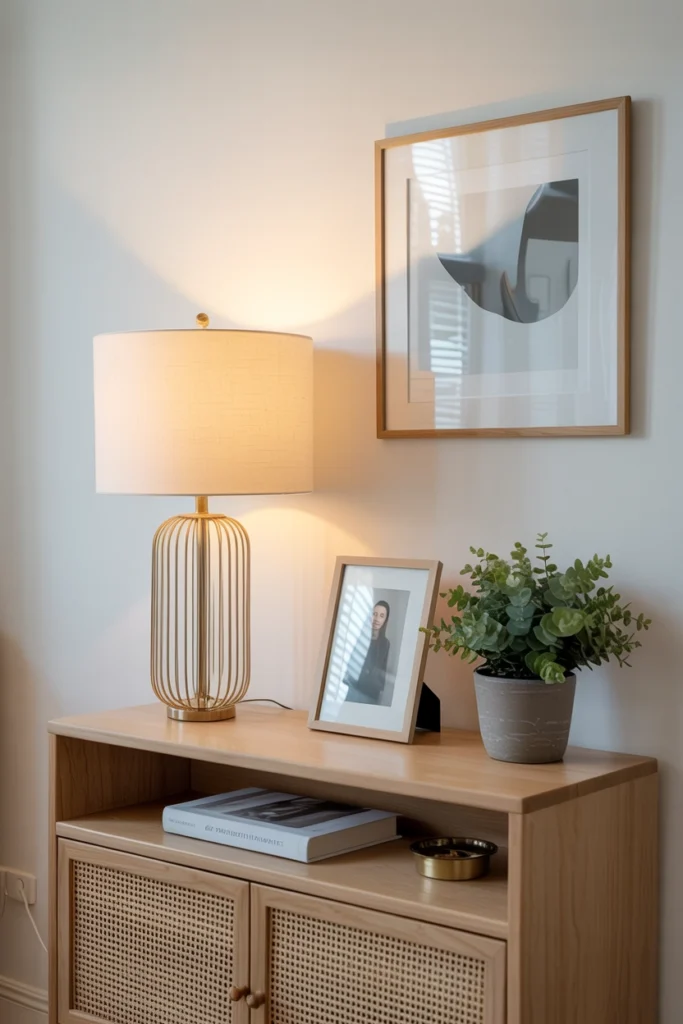
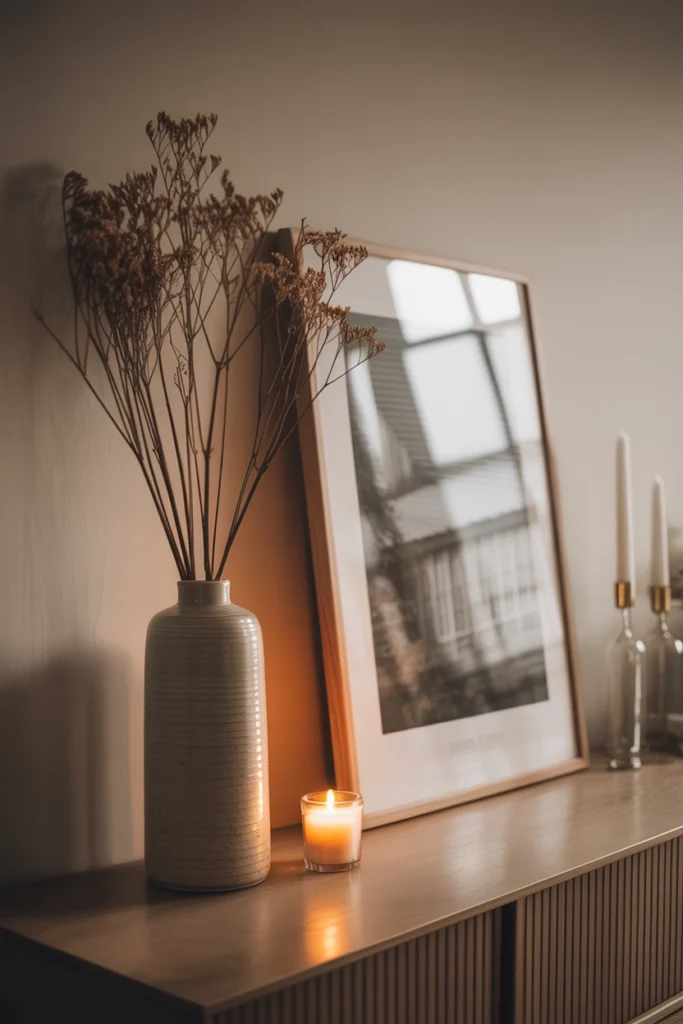
A vignette is three objects that look good together. That’s the whole definition. Pick one surface — the console, the dresser top, one shelf — and arrange three things with different heights: tall, medium, small. A vase with stems, a stack of books, a candle. Done.
The trick is the odd number and the height variation. Two objects look like a pair; four look like a collection; three look styled. Leave empty space around the group — the air is part of the composition. If it doesn’t look right, remove one thing. Less almost always fixes it. This one styled corner upgrades the whole space around it.
9. Hang a Mirror in the Right Place
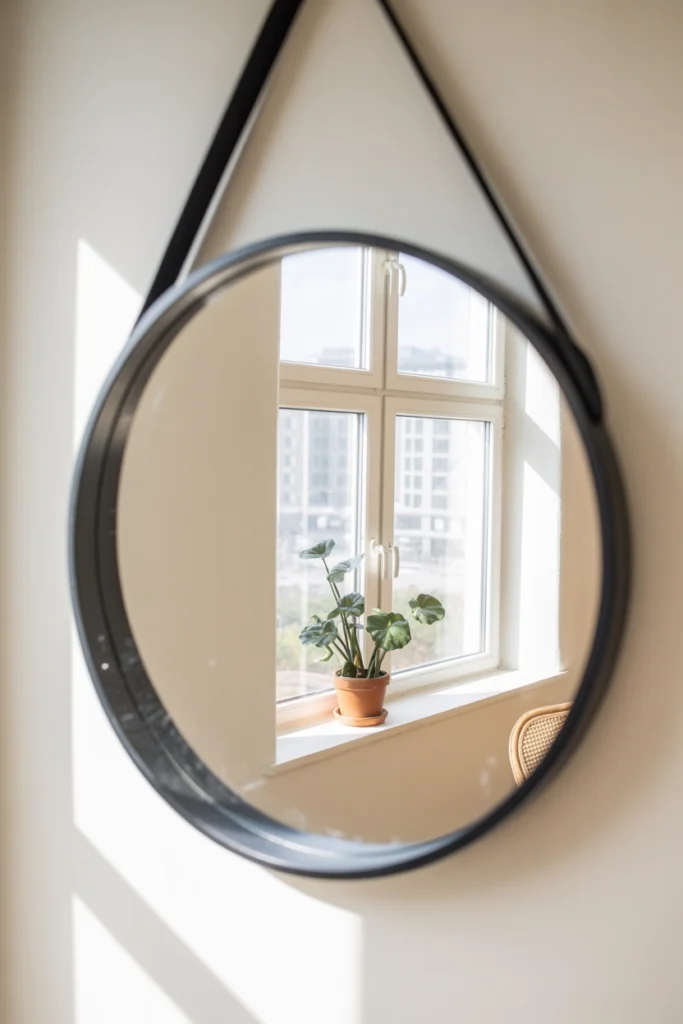
A mirror in the wrong spot is just a reflective rectangle. In the right spot, it doubles your light and your view. The right spot: opposite or adjacent to a window, where it catches daylight and throws it deeper into the room.
Size up. A 24×36-inch mirror ($40–70) does real work; a tiny decorative one doesn’t. Lean a large mirror against the wall on a dresser for a relaxed look, or hang it at eye level over a console. Check what it reflects before you commit — it should face the window, the plant, the art. Never the clutter. A mirror doubles whatever it’s pointed at. Aim carefully.
10. Upgrade Your Lighting Without Rewiring Anything
No electrician needed. The fastest lighting upgrade: replace every cool-white bulb with 2700K warm white. A multipack costs under $12 and the room changes that evening. Cool light makes a home feel like a workspace. Warm light makes it feel like home.
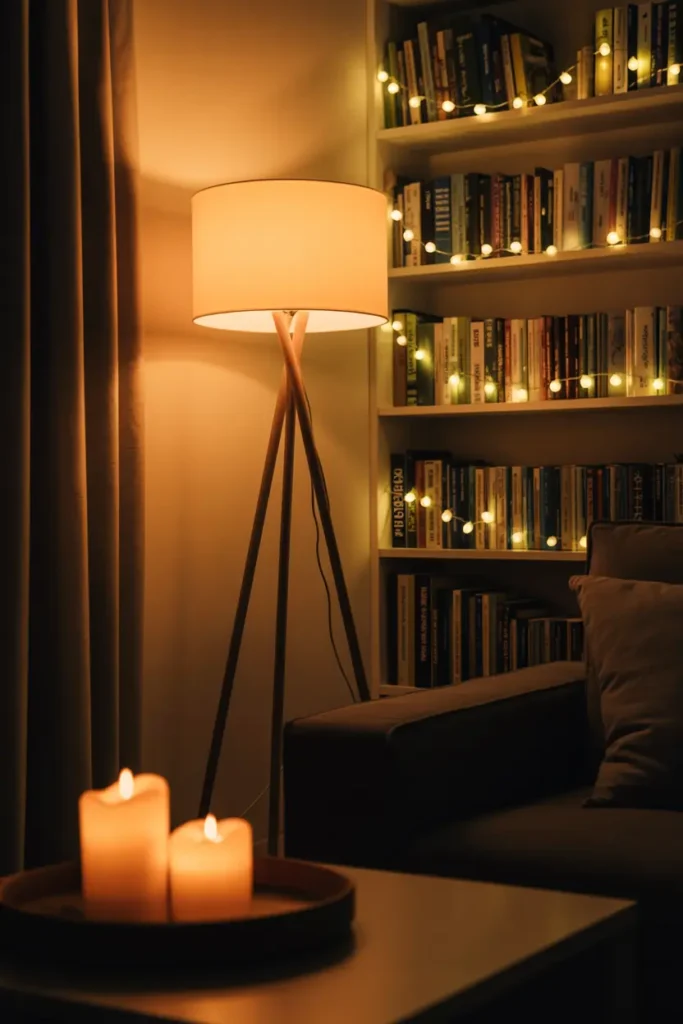
Second move: add one lamp at seating height. A table or floor lamp ($25–40) beside your main seat gives you a pool of warm light exactly where you sit — and lets you turn the overhead off. Overhead-only lighting is the flattest, least flattering light there is. One lamp fixes it. Two lamps and the room has actual atmosphere.
11. Introduce One New Texture to the Room
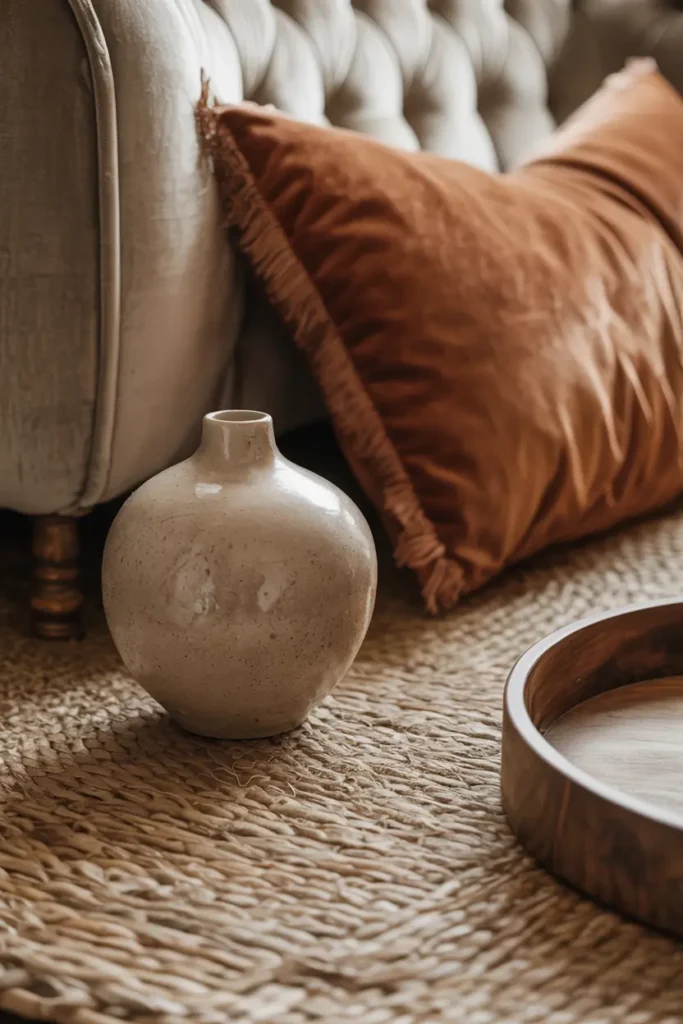
If the room feels flat despite decent furniture, it’s missing texture. One new texture — a nubby throw, a woven basket, a rough ceramic vase — gives the eye something to catch on. Flat rooms feel unfinished; textured rooms feel layered.
Pick the texture that’s most absent. Everything smooth? Add rough — a seagrass basket ($15–25), a jute runner. Everything soft? Add hard — a stone or concrete object, a wooden tray. One addition, not five. Texture works by contrast; piling on more of what you have changes nothing. Touch the room, find the gap, fill it.
12. Create a Candle Corner or Scent Station
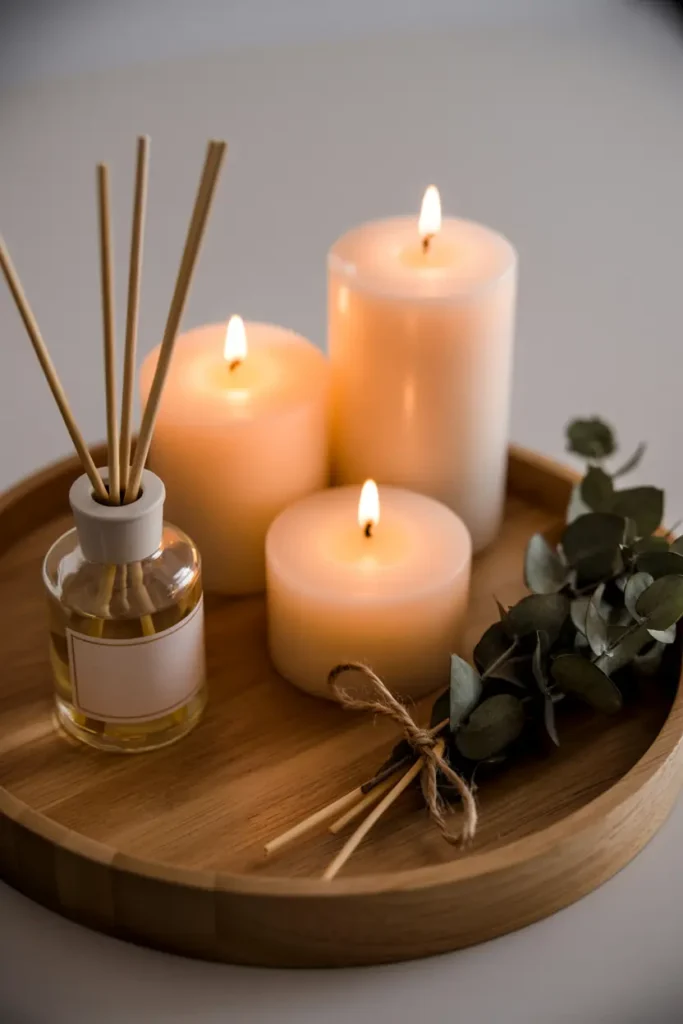
Scent is the most overlooked element in budget decorating, and the cheapest to add. A small tray with two or three candles on a side table or shelf — that’s a scent station. It looks styled during the day and transforms the room at night.
One scent at a time. Mixed candles in a small room smell like a shop. Pick warm — vanilla, cedar, amber — for living spaces. Soy candles at $10–15 burn 30–50 hours, so one candle is weeks of atmosphere. Put the station where you sit in the evening, not by the front door. Scent should greet you when you settle, not when you arrive.
13. Frame and Hang Things You Already Own
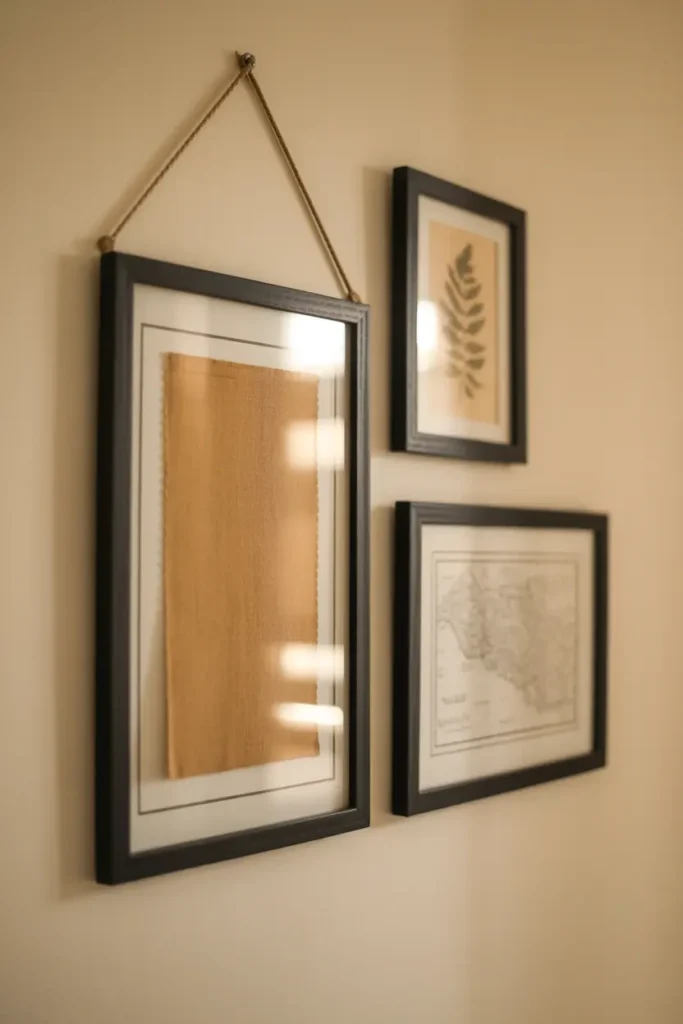
Look around. That scarf with the beautiful pattern. The vintage map in the drawer. Your kid’s drawing. The concert poster rolled up in the closet. Half your art is already in the house — it’s just not on the walls.
A $12–18 frame turns any of it into real decor. Fabric stretches over a canvas frame with a staple gun in ten minutes. A poster in a simple black frame looks like a gallery piece. The rule: if you love looking at it, it deserves a frame and a nail. Hang at 57 inches to center. Your walls should hold your life, not a store’s inventory.
14. Use Color Strategically in Small Doses
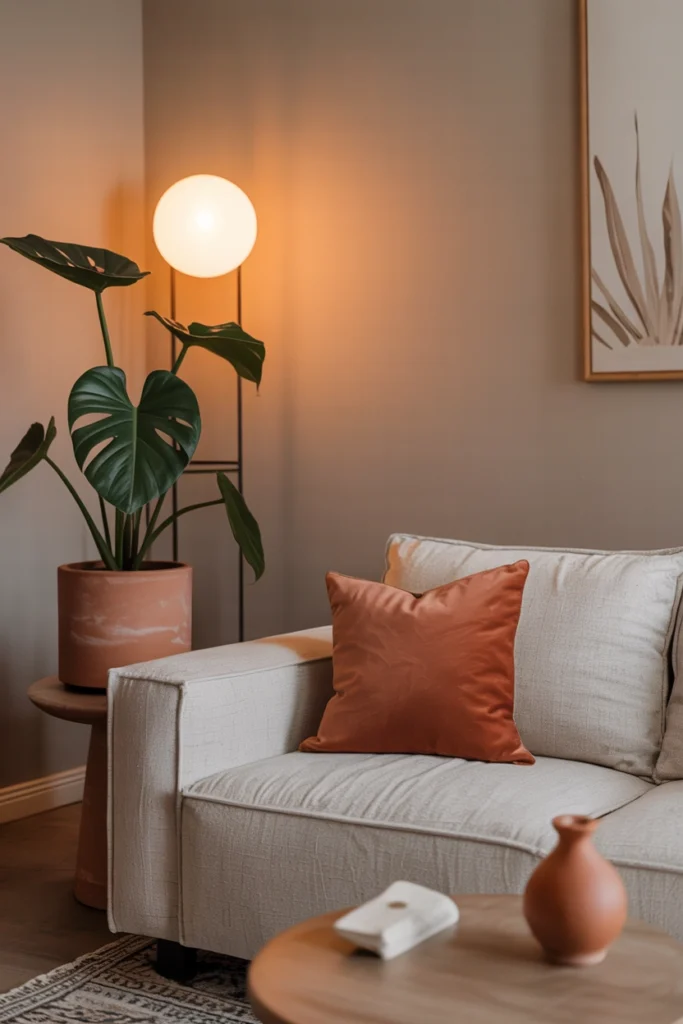
You don’t need to repaint to add color. Small doses — a cushion, a throw, a piece of art, a plant pot — give a neutral room exactly the lift it needs. Color in doses reads as confident. Color everywhere reads as chaos.
Pick one accent color and repeat it three times in the room. Three is the magic number: once is an accident, twice is a coincidence, three times is a decision. A terracotta cushion, a terracotta vase, a terracotta book spine. That’s a palette. Spend under $40 total. If you get tired of it, swap the three things — the room resets.
15. Tidy and Style the Kitchen Counter
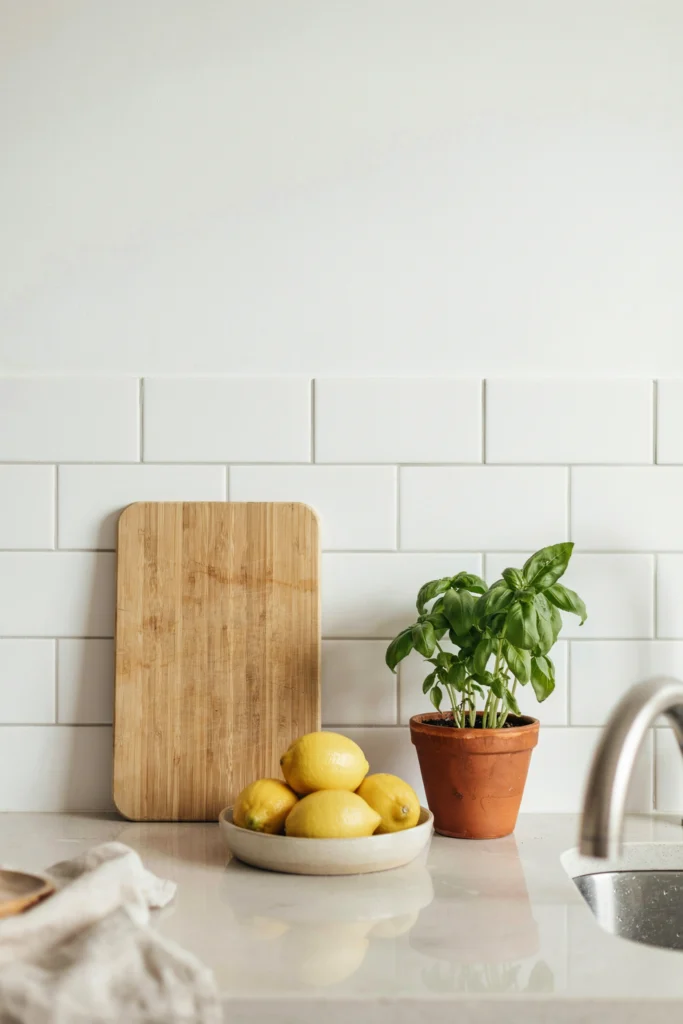
Kitchen counters collect everything and therefore look like nothing. Clear the counter completely, then put back only the daily essentials — and corral them. A tray or a small basket turns five scattered items into one tidy group.
The working counter holds: the coffee setup, the cutting board, one utensil holder, soap. Everything else lives in a cabinet. Decant the dish soap into a simple dispenser ($8–12) — branded bottles are visual noise. One small plant or a bowl of fruit adds the living touch. A clear counter makes the whole kitchen feel twice as big. It’s the cheapest renovation there is.
16. Layer Your Bedding for a Hotel-Quality Look
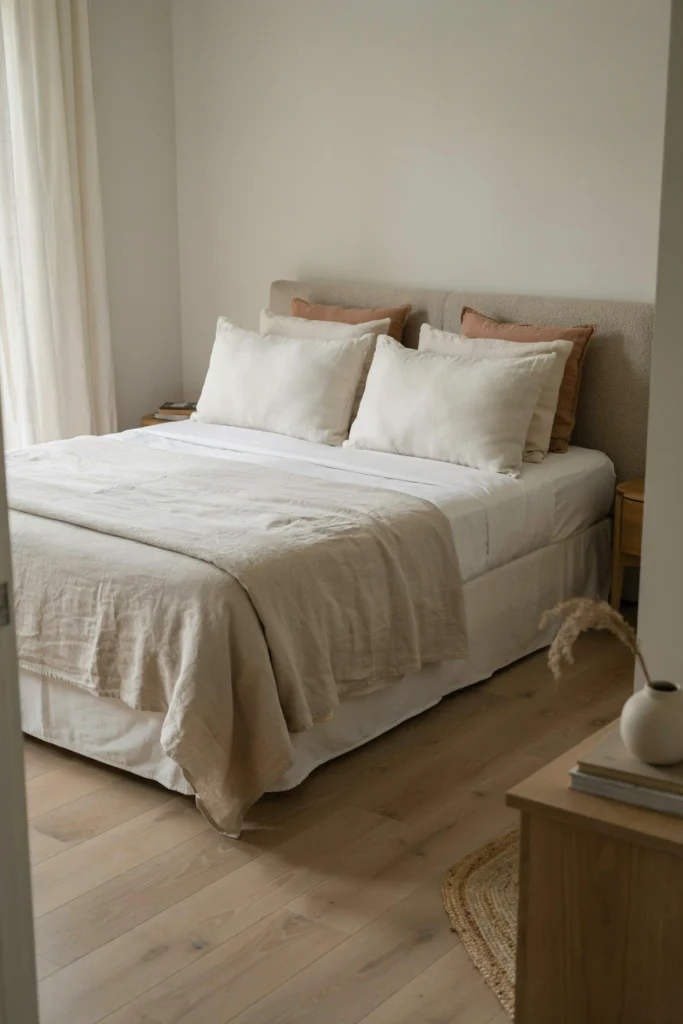
Hotel beds look good because of layers, not expensive sheets. The formula: fitted sheet, flat sheet or light quilt, duvet folded back a third, two sleeping pillows plus two shams, one throw across the foot. That’s it. That’s the whole hotel secret.
You don’t need new bedding — rearrange what you have into layers. Fold the duvet down instead of pulling it up; instant depth. Add the throw you already own across the foot. Iron or steam the shams once and they’ll look new for months. Ten minutes in the morning. The bedroom is the first room you see every day — make it the one that feels finished.
17. Add Personality to a Forgotten Corner
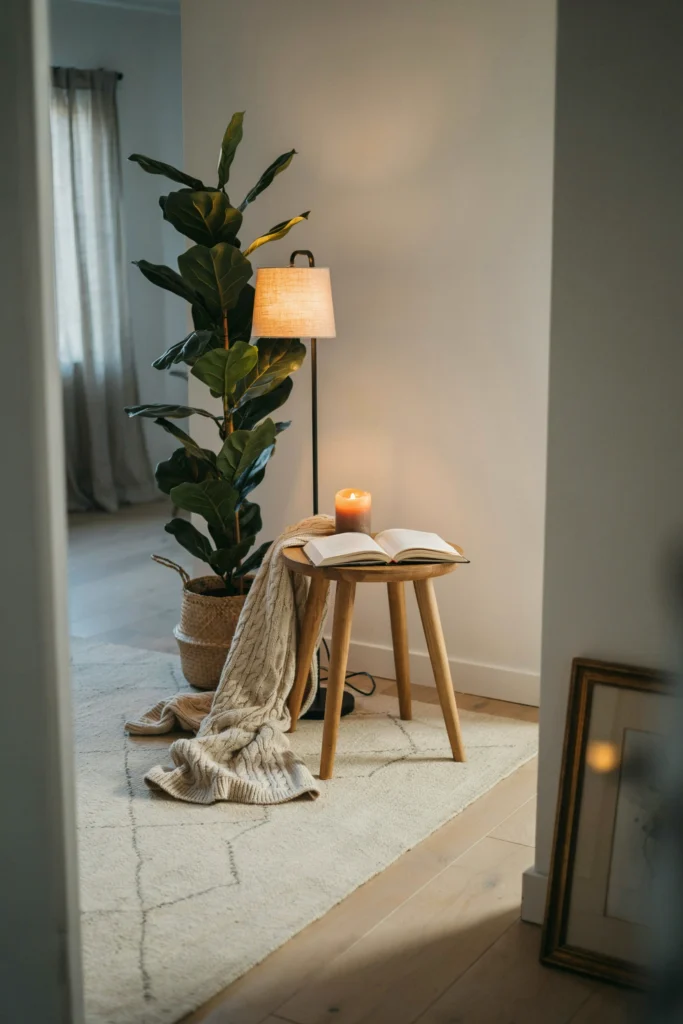
Every home has one — the corner that holds nothing, means nothing, collects dust. A floor lamp, a plant, a small chair, a piece of art: pick two and the corner becomes a destination. Dead space is a choice, not a feature.
The fastest fix is vertical: a tall plant ($25–40) or a floor lamp ($30–45) fills the height that makes corners feel empty. Add one small thing at ground level — a basket, a stack of books — and the corner has a composition. Cost: under $60. Time: twenty minutes. Corners are where rooms go to feel finished. Don’t leave yours empty.
18. Elevate Your Bathroom With Small Details
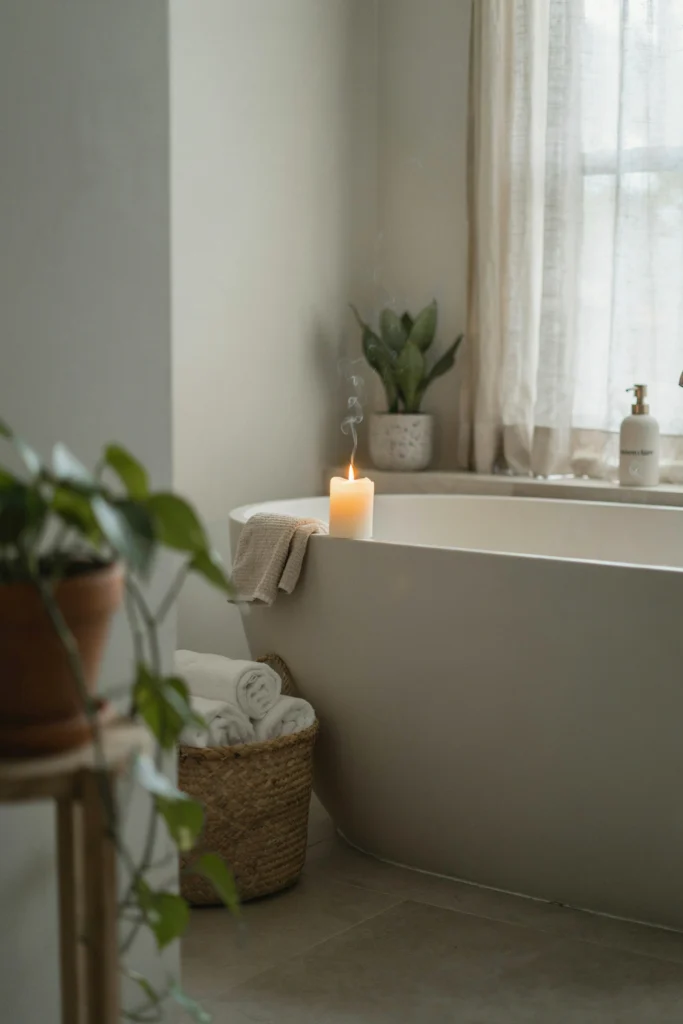
Bathrooms get ignored because they’re small and private. Wrong thinking — small means every detail shows. Matching dispensers ($15–25 for the set), folded white towels instead of the mismatched pile, a plant that likes humidity. Under $50 total. Hotel effect.
Decant everything out of branded packaging. That’s the single fastest upgrade — the visual noise of labels is what makes bathrooms feel cheap. Add one green thing: a pothos on the shelf, eucalyptus on the showerhead ($6). Keep the counter to three items. A bathroom with three intentional objects feels luxurious; one with fifteen feels like a drugstore.
19. Make Your Entryway Work Harder
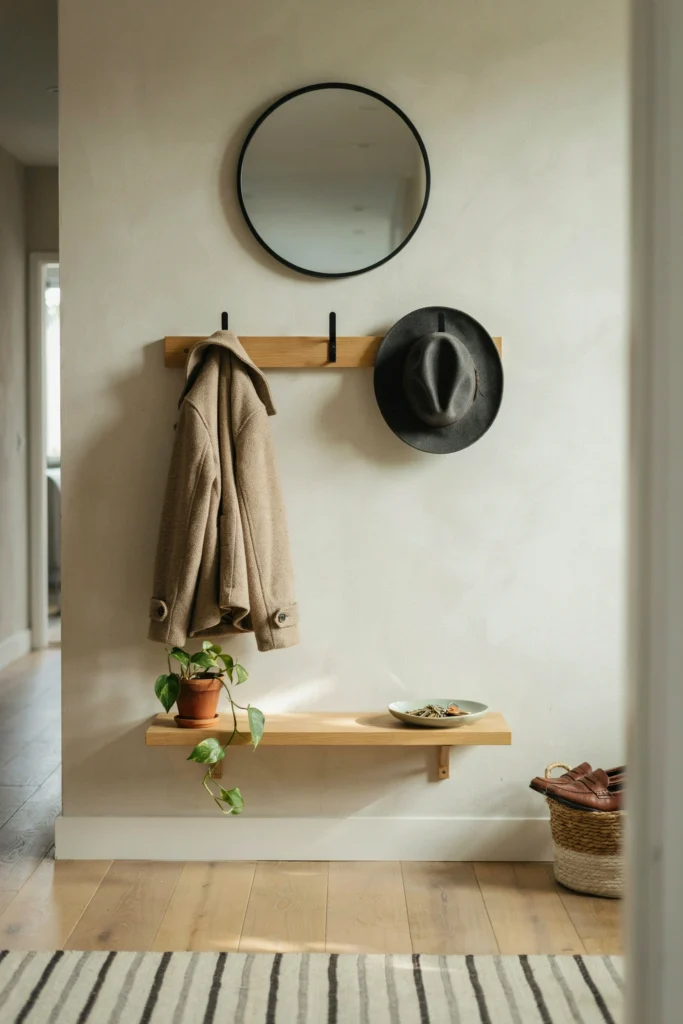
The entryway sets expectations for the whole house, and most do nothing. Three things: a place for keys, a place for shoes, something to look at. A small bowl, a mat, a mirror or a frame. Thirty minutes of work.
Mount three hooks ($10–15) for the daily coats and bags — hooks beat a coat rack in small spaces because they use wall, not floor. A washable runner ($15–25) handles the dirt zone. The mirror by the door is practical and doubles the light. Small entryway, complete job. First impressions are made here.
20. Rotate Your Decor Seasonally Without Buying New Things
The urge to redecorate is usually just the urge to see something different. Satisfy it for free: move things. Art from the bedroom to the hallway. Cushions from the sofa to the bed. The vase from the shelf to the table. New arrangement, new room, zero spending.
Do it twice a year — spring lightens, autumn warms. Store the swapped pieces in one box so it’s a rotation, not a scavenger hunt. Photograph each arrangement you like; next year you’ll have a catalog of looks to choose from. Your home already contains its next version. You just have to rearrange it.
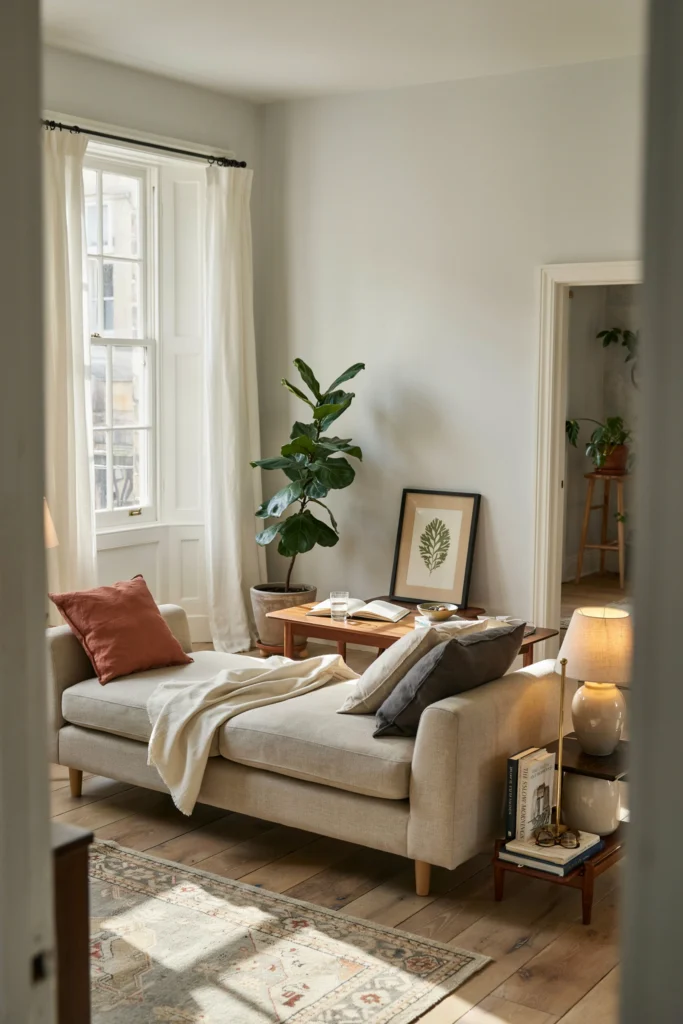
That’s the whole philosophy: no makeover required. A Saturday, some decisions, maybe $30. The rooms that feel best aren’t the ones with the most spent on them — they’re the ones where somebody paid attention. Start with the free moves. You’ll be surprised how far attention goes.
Pro Tips
- Do the free moves first — rearranging, clearing surfaces, rotating decor — before spending anything. Half the time the paid moves become unnecessary.
- Take a photo of each room before you start. The camera shows you what your eyes have learned to ignore.
- When in doubt, remove one thing. Over-styled beats under-styled only in magazines; in real rooms, less wins.
- Keep a small “home box” with spare bulbs, hooks, frames, and batteries — most of these ideas stall on a missing $5 item.
FAQs
What’s the fastest way to refresh a room without spending money?
Rearrange the furniture and clear every surface. Those two free moves change how the room functions and looks more than any purchase under $50. Do them first, then decide if you still want to buy anything.
How do I style a room without it looking cluttered?
Style in odd numbers — three objects per surface — with varied heights and empty space around the group. Then remove one thing. If the room still feels busy, the problem is quantity; box up the extras for a month and see if you miss them.
Can I really improve lighting without an electrician?
Yes. Swap to 2700K warm bulbs ($12 for a multipack) and add one plug-in lamp at seating height ($25–40). No wiring, no holes beyond a hook if you want a pendant. That’s 90% of what professional lighting design does in a living room.
How often should I rotate my decor?
Twice a year is plenty — once when the light changes in spring, once when it drops in autumn. More often than that and you’re just shuffling; the point is a fresh eye, and that needs a few months to reset.

HowDecor is a home decor blog sharing simple, practical decorating ideas for everyday spaces. We believe a beautiful home should feel comfortable, personal, and full of warmth — and that great style does not require a huge budget. Our goal is to inspire readers to create spaces that feel peaceful, welcoming, and truly their own — one room at a time.