“Aesthetic” gets mocked as a shallow word, but in a bathroom it’s the whole job. Nobody needs a bathroom to be beautiful the way they need a kitchen to be functional — a bathroom is the room you visit half-awake at 6 a.m. and wind down in at 11 p.m. Its aesthetic is its function. It sets the temperature of your day at both ends.
Blue is the aesthetic color for bathrooms the way green is for gardens — it just belongs. These ten ideas aren’t about trends; they’re about moods. Each one builds a specific feeling — airy, moody, coastal, romantic — with concrete choices you can actually make, not vibes you have to imagine.
Table of Contents
- Soft Sky Blue Bathroom
- Navy Blue Luxury Bathroom
- Blue Tile Accent Wall
- Pastel Blue Cottage Bathroom
- Blue and White Coastal Bathroom
- Blue Marble Bathroom
- Moody Blue Bathroom Lighting
- Blue Glass Shower Design
- Blue Vanity Cabinets
- Blue Floral Wallpaper Bathroom
Soft Sky Blue Bathroom
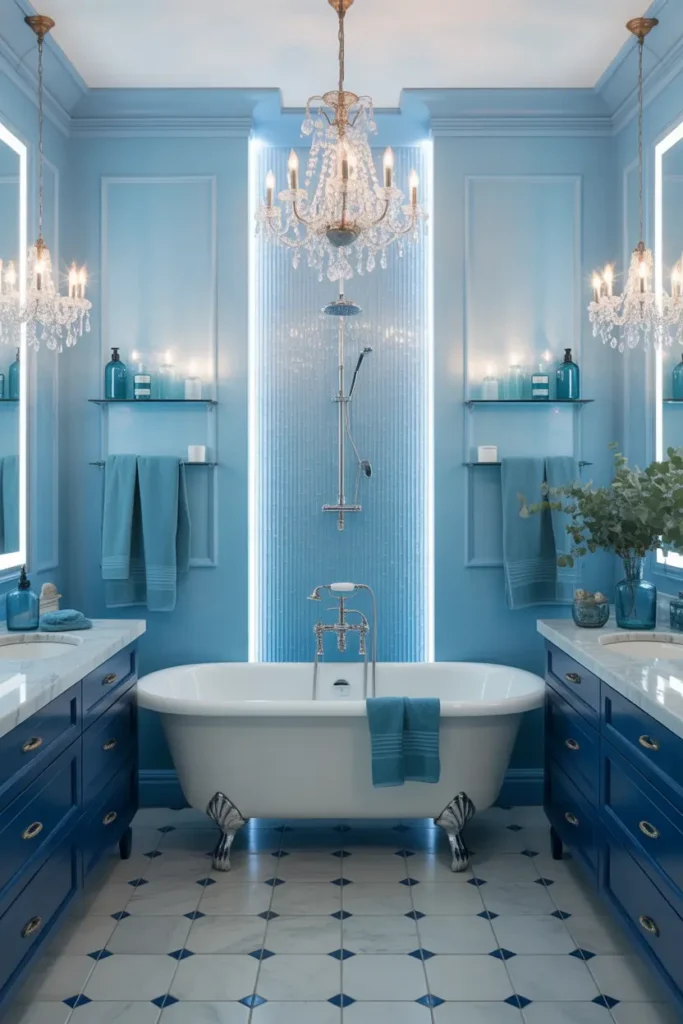
The airy aesthetic: walls in the palest blue you can find without it reading as white — think the inside of a seashell. This works because of light behavior: pale blue reflects almost as much light as white, but the tiny blue shift makes the whole room feel like it has better weather. Morning people love this bathroom; it makes 6 a.m. feel like 9 a.m.
Keep everything else honest and simple: white tile, a frameless mirror, one plant. The aesthetic breaks when you add competing colors — pale blue’s whole power is its quiet, and quiet needs space. Warm 3000K lighting keeps it from feeling chilly; cool daylight bulbs would push it into laboratory territory.
Navy Blue Luxury Bathroom
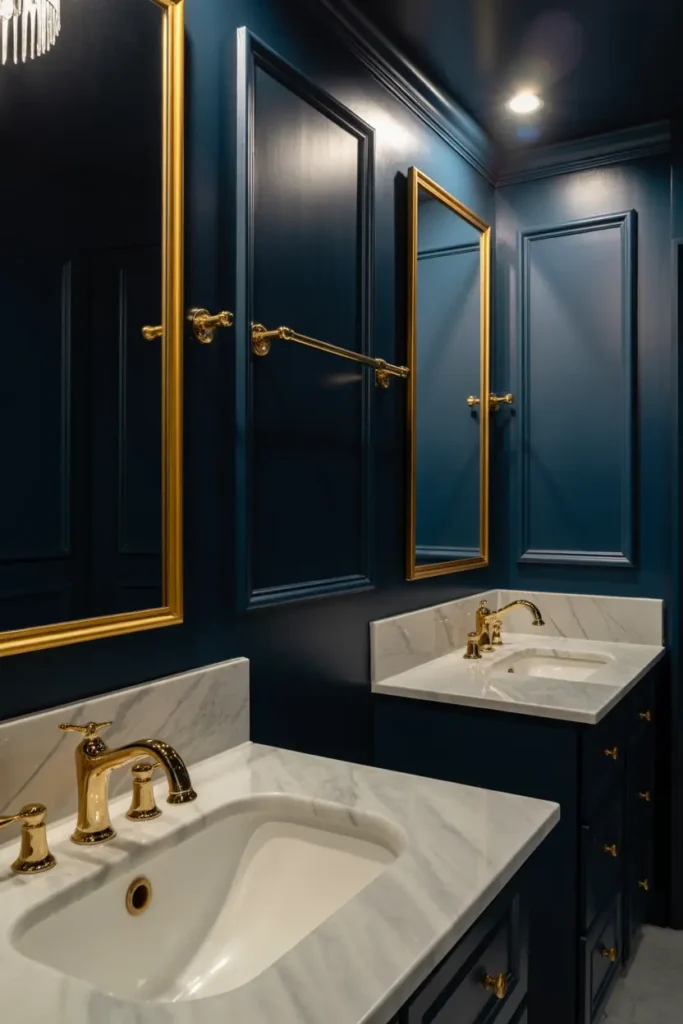
The hotel aesthetic: deep navy walls or tile, brass fixtures catching warm light, white marble or quartz cutting through the dark. This is the bathroom that makes guests ask for the paint color — it photographs like a boutique hotel suite because it uses the same formula: dark envelope, warm metallics, one light stone.
The luxury here is really about contrast management. Every dark surface needs a light partner nearby — navy wall, white ceiling; dark vanity, white counter; navy tile, chrome or brass fixtures gleaming against it. Without the light partners, navy goes flat. With them, it glows. Keep accessories to a minimum; this aesthetic is confident enough to not need styling.
Blue Tile Accent Wall
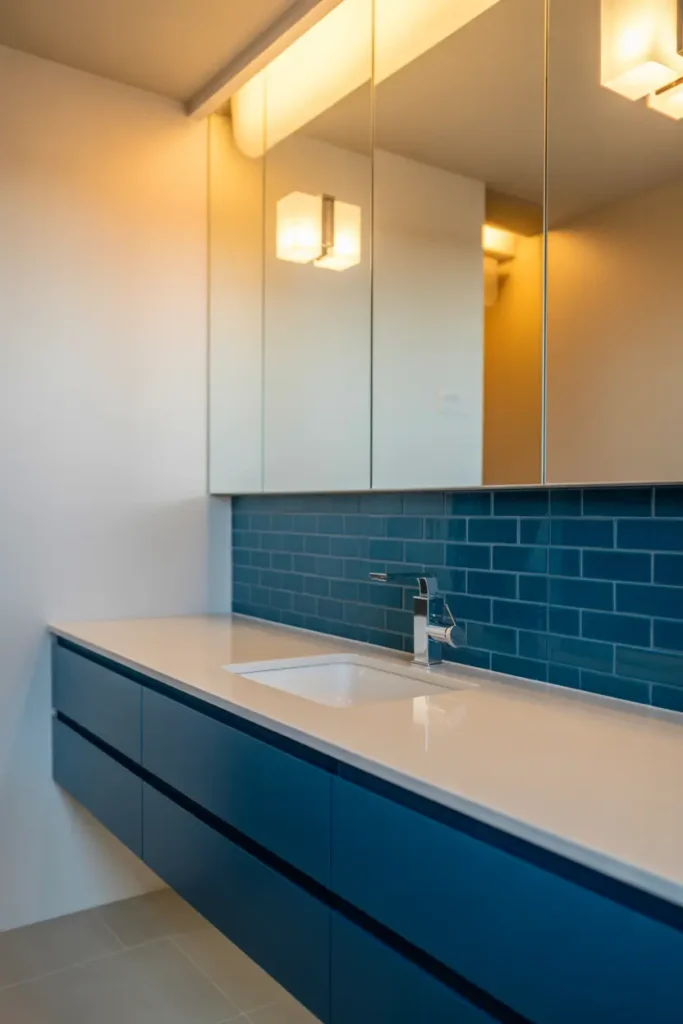
The gallery-wall aesthetic, translated to tile: one wall in blue — handmade-look zellige in a watery blue-green is the current reference — while the rest of the room stays quiet. The accent wall works like art: it’s the thing your eye goes to, which means everything else can relax. This is how you get personality without busyness.
Zellige-look tiles (the real handmade ones run $15–$30/sq ft; good porcelain lookalikes $6–$12) have uneven surfaces that catch light differently on every tile — that’s the magic, a wall that shimmers instead of sitting flat. Run it floor to ceiling behind the vanity or in the shower. One wall only; two accent walls is just… walls.
Pastel Blue Cottage Bathroom

The storybook aesthetic: pastel blue beadboard, a vintage-look faucet, a small floral print in a simple frame. This is nostalgia as design — it works because pastel blue is the color of a hundred childhood summers, and the bathroom borrows that feeling. It’s the least “designed” looking aesthetic here, which is precisely its charm.
Texture is the engine: beadboard or shiplap painted pastel blue, a woven basket, a ruffled or textured shower curtain, towels with fringe. Smooth modern fixtures fight this aesthetic — a simple bridge faucet or cross-handle taps belong here, not a waterfall spout. One floral element maximum; cottage tips into granny with two.
Blue and White Coastal Bathroom
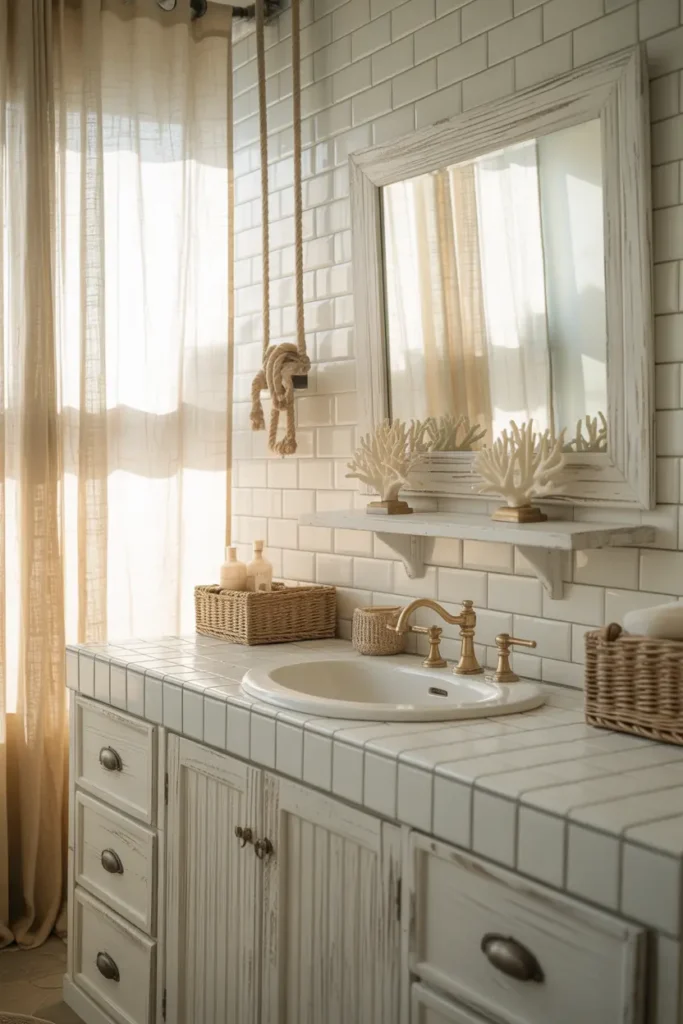
The vacation aesthetic: crisp white, sea blue, and the feeling that the beach is nearby even when it isn’t. The trick is restraint — real coastal style is about light and air, not beach themed objects. White shiplap or tile, a soft blue vanity or blue textiles, natural textures (jute, rattan, linen), and absolutely no anchors.
Light is the main material here. Maximize whatever natural light exists — sheer curtains or none, a large mirror to double it — and keep the blue in the mid-tone range where it reads as “sea” rather than “navy.” This aesthetic fails in dark bathrooms; it needs light the way plants need water. If your bathroom has no window, add the brightest 3000K lighting you can and a large mirror.
Blue Marble Bathroom
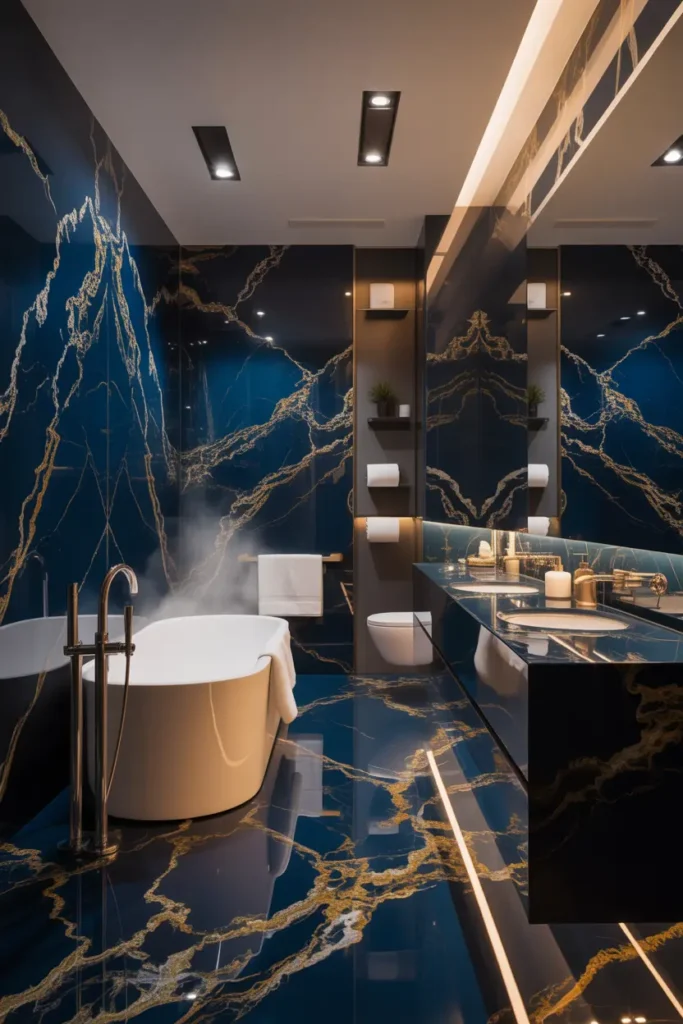
The gallery aesthetic: blue marble — veined, dramatic, each slab unrepeatable — treated as art. A marble wall behind the vanity or in the shower doesn’t need any other decoration; the stone is the decoration. This is the aesthetic of confidence: one spectacular material, everything else silent.
Real blue marble (Azul Macaubas and similar) runs $40–$100+/sq ft installed; the porcelain interpretations at $10–$20 are remarkably convincing, especially in the blue marbles where the pattern does the talking. Either way, seal natural stone, keep the fixtures simple (the marble is the jewelry — chrome or nickel, nothing competing), and let the veining be the room’s only pattern.
Moody Blue Bathroom Lighting
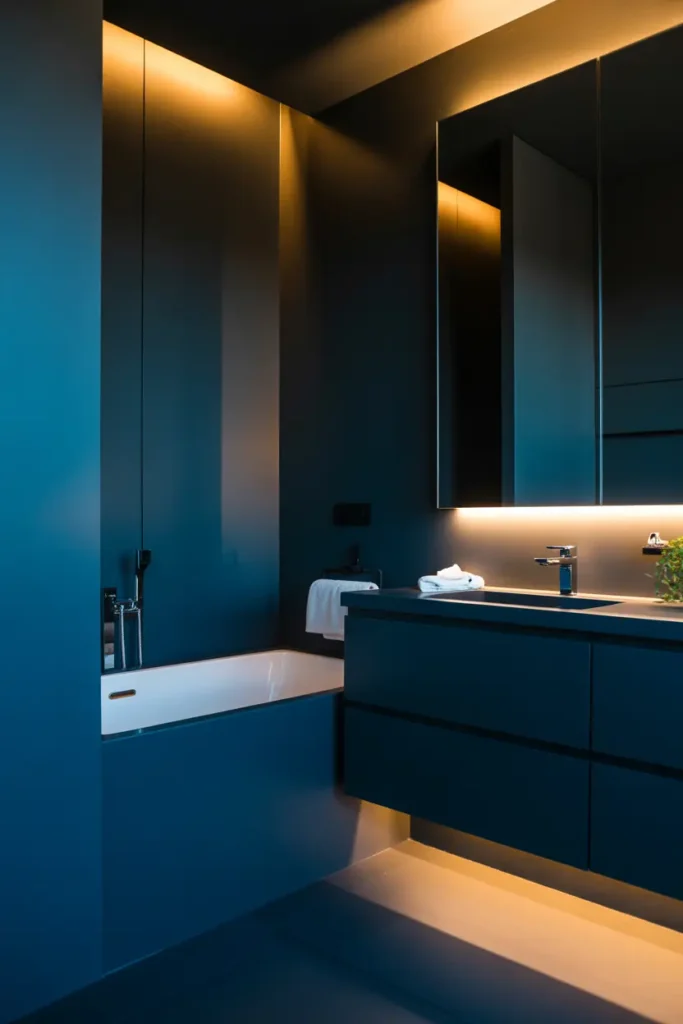
The evening aesthetic: this one’s not about a color on the wall, it’s about what happens when the sun goes down. Deep blue-grey walls, all lighting warm and low — sconces at face height, a dimmed overhead, maybe candles. The room transforms at night into something intimate and cocooning, the bathroom equivalent of a jazz club.
Dimmers are mandatory — every light source on its own dimmer, so the room can shift from functional morning brightness to evening mood. 2700K bulbs maximum; anything cooler kills the mood instantly. A backlit mirror is the secret weapon here: it gives you functional face light while contributing to the glow rather than fighting it.
Blue Glass Shower Design
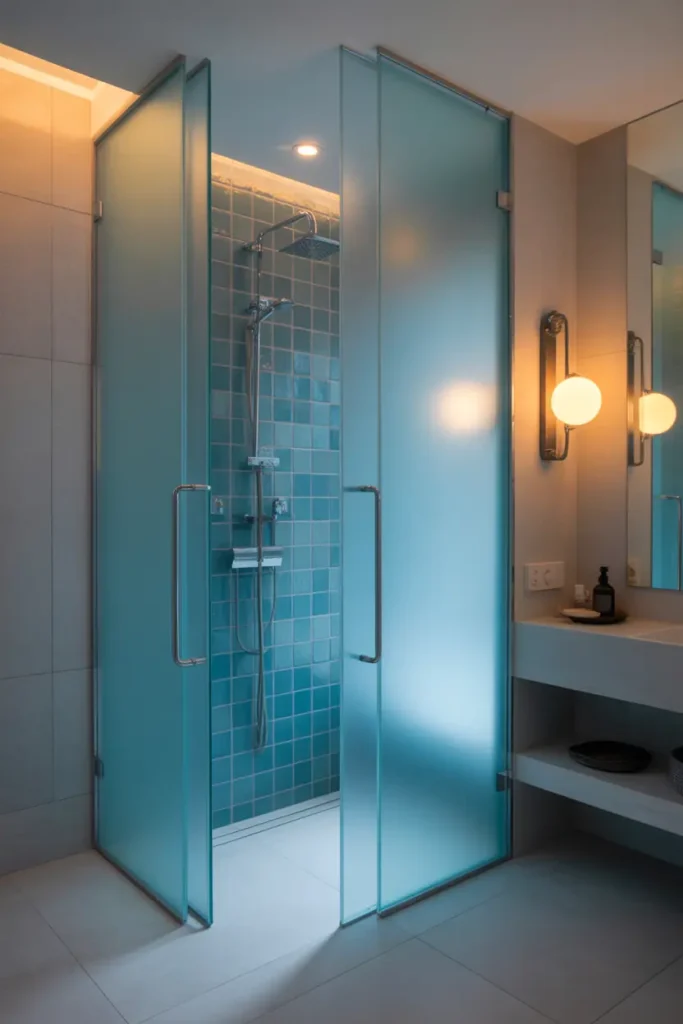
The underwater aesthetic: blue-tinted glass — either a blue glass tile mosaic or a shower enclosure with a subtle blue tint — creates the feeling of being inside water. Light refracts through it differently than through clear glass or tile; the whole shower glows faintly blue, especially in morning light. It’s subtle, strange, and completely memorable.
Keep the surrounding palette minimal — white or very pale grey — so the blue glass is the only color event. And check the tint in person before committing: some “aqua” glass reads green in certain lights, which is a different aesthetic entirely. This is a love-it-or-hate-it choice, which is exactly what an aesthetic should sometimes be.
Blue Vanity Cabinets
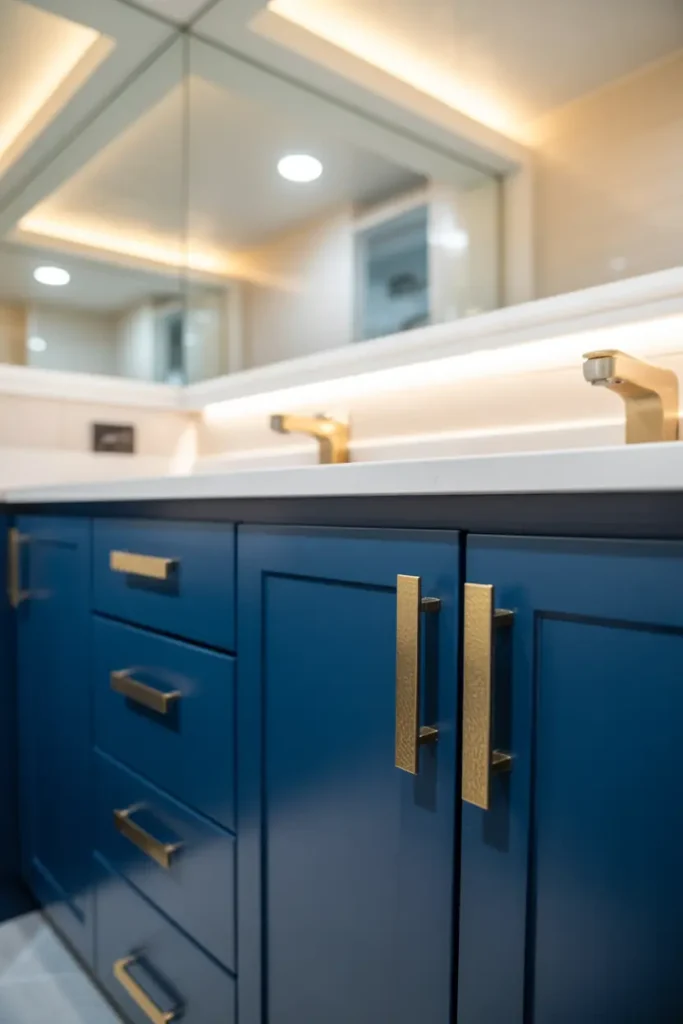
The tailored aesthetic: a vanity in a confident blue — dusty, slate, or navy — with everything else crisp and quiet. It’s the menswear of bathroom design: structured, intentional, timeless. The vanity becomes the room’s anchor the way a good blazer anchors an outfit, and like a good blazer, it works in almost any setting.
The details that sell it: quality hardware (this is where the money shows — solid brass pulls, not hollow), a white or marble top for contrast, and a mirror that respects the vanity’s width (mirror should be 70–80% of the vanity width, never wider). Paint it yourself with cabinet enamel or buy it — but don’t pair a blue vanity with blue walls. One blue statement per room.
Blue Floral Wallpaper Bathroom
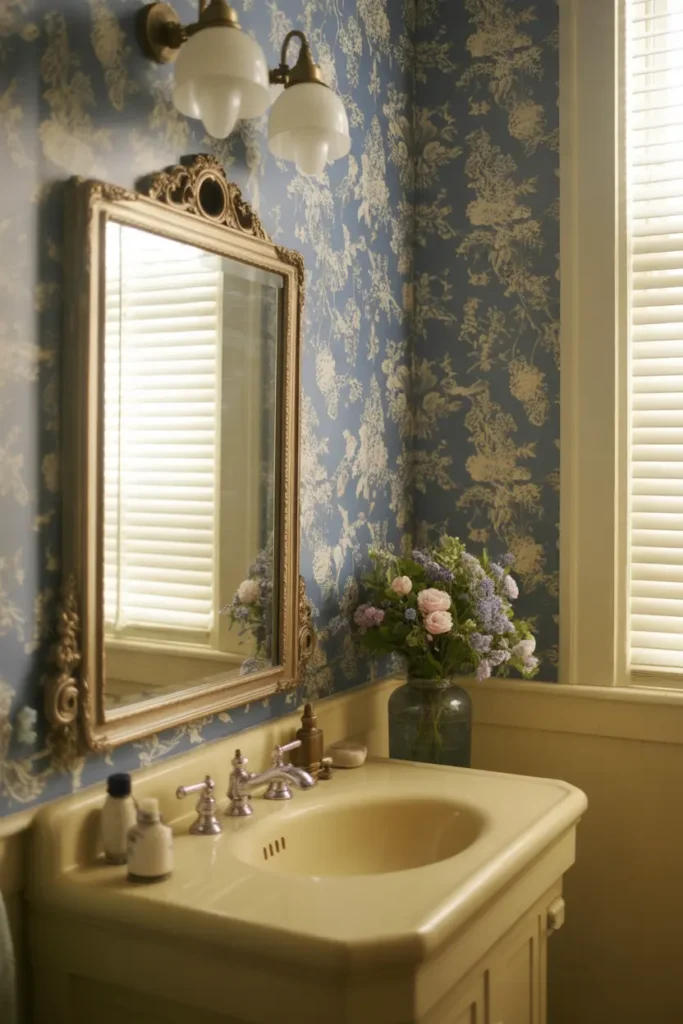
The romantic aesthetic: blue floral wallpaper — chinoiserie branches, trailing vines, oversized blooms in indigo on white — turning the smallest room in the house into the prettiest. Powder rooms are wallpaper’s natural habitat: small enough for one dramatic wall, visited briefly enough that bold pattern never tires.
Vinyl-coated for moisture, one wall (the one you see from the door), and keep everything else simple — white fixtures, a simple mirror, minimal accessories. The wallpaper is doing all the aesthetic work; your job is to not interfere. Scale the pattern to the room: small powder rooms want smaller repeats, or the flowers eat the walls.
Pro Tips
- Pick the mood before the color. “Dreamy” can mean airy (pale blue, lots of white, natural light) or moody (navy, warm low light, brass). Those are opposite designs — decide which dream you’re having before buying anything.
- Photograph the room in the light you’ll use it. Bathroom aesthetics live or die on lighting. Take phone photos morning and evening; the photo reveals what your eyes forgive — usually that the “soft blue” goes grey at night.
- One hero per room. Marble wall, or bold wallpaper, or navy vanity — pick one. Two heroes compete; three is a crowd. The rest of the room’s job is to make the hero look good.
- Aesthetics need maintenance plans. Marble needs sealing, wallpaper needs ventilation, dark paint needs touch-ups. The dreamiest bathroom is the one that still looks good in year three — choose materials you will actually maintain.
FAQs
How do I choose between light blue and navy for my bathroom?
Match it to your light and your mood: generous natural light and a love of airy calm → pale blue; limited light but good artificial lighting and a taste for drama → navy with strong warm lighting. Small dark bathrooms can handle navy on one wall or the vanity, but rarely on all four walls.
What is the most “aesthetic” blue bathroom style right now?
The handmade-look blue tile (zellige or zellige-look) accent wall is the defining image of the moment — it photographs beautifully and feels artisanal. For a quieter take, pale blue walls with white tile and one natural texture (wood, rattan) never dates.
Can a blue aesthetic work in a bathroom with no windows?
Yes, but lean into it deliberately: either go light and bright (pale blue, white, strong 3000K lighting, big mirror) or go moody on purpose (navy, layered warm dimmable light). The middle ground — mid blue, single overhead light — is what looks flat and sad without daylight.
How do I keep a blue bathroom from feeling cold?
Warm light (2700–3000K), one natural material (wood, rattan, linen), and warm metallics (brass, gold) where the budget allows. Blue only feels cold when everything around it is also cool — one warm element changes the entire reading of the room.

HowDecor is a home decor blog sharing simple, practical decorating ideas for everyday spaces. We believe a beautiful home should feel comfortable, personal, and full of warmth — and that great style does not require a huge budget. Our goal is to inspire readers to create spaces that feel peaceful, welcoming, and truly their own — one room at a time.