Let’s clear something up immediately: a princess bedroom is not a child’s bedroom. The grown-up version of this style — the one in boutique hotels and period dramas — is about softness, craftsmanship, and light. Pastels instead of primaries. Carved wood instead of plastic. Linen and velvet instead of polyester. It’s romance as a design language, and when done well, it’s one of the most calming styles there is.
The line between dreamy and childish is materials and restraint. Real lace, not printed lace patterns. One floral, not five. Antique or antique-look furniture with actual patina. Here’s how to build the fairytale without the costume.
1. Start With a Whisper-Quiet Pastel Palette
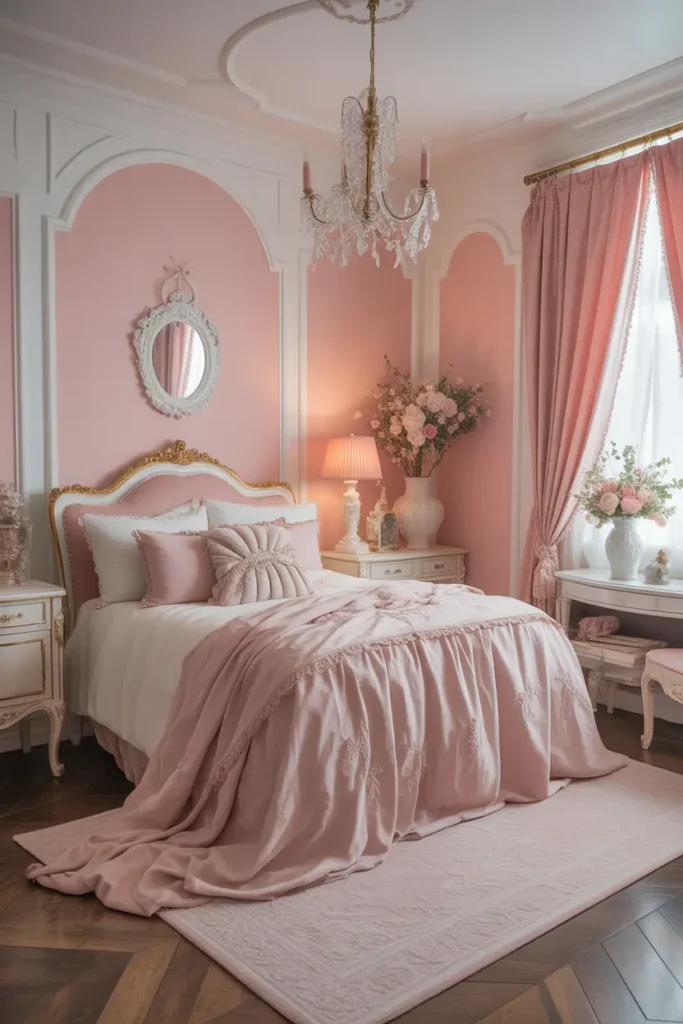
The foundation is color that barely raises its voice: blush, cream, powder blue, lavender gray, pale peach. These aren’t just pretty — they’re psychologically calming, and they make natural light look softer. The key is keeping them desaturated; chalky, muted pastels read as sophisticated, while bright pastels read as nursery.
Pick two pastels maximum plus cream as your base. Blush + cream + soft gold is the classic; lavender gray + cream + silver is cooler and more modern. Paint large swatches and check them in morning and evening light — pastels shift dramatically, and a blush that looks elegant at noon can look peachy-orange under warm bulbs. When in doubt, go paler than you think; you can always deepen with textiles.
2. Crown the Room With a Canopy Bed
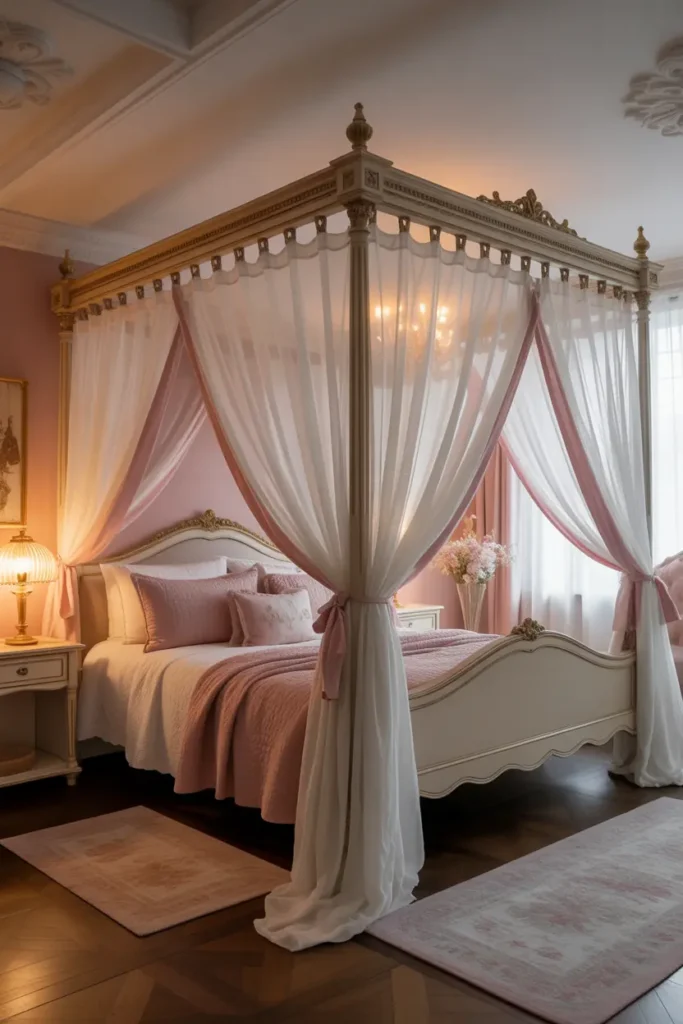
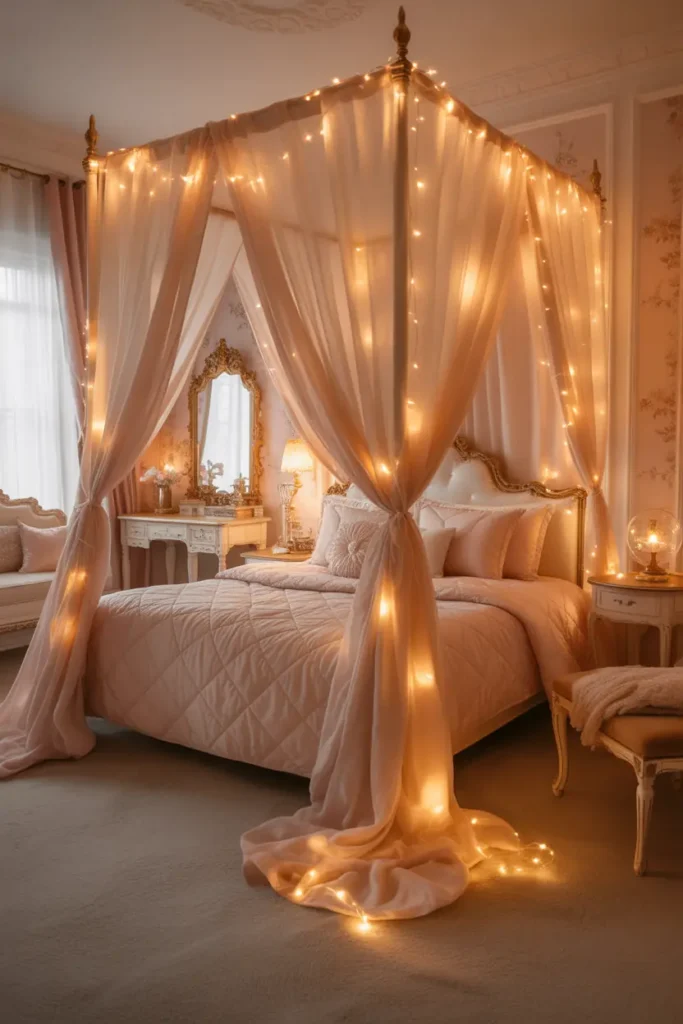
Nothing says princess like a canopy — it’s the architectural equivalent of a crown. Four posts with draped fabric transform an ordinary bed into the room’s undisputed centerpiece and create the enclosed, dreamy feeling the whole style is built around. Even a simple metal frame with flowing curtains achieves it.
Sheer white or ivory voile is the classic choice — it softens everything behind it and glows beautifully in morning light. For more drama, layer sheers over a heavier pastel drape. The canopy should feel airy, not heavy: leave the foot end open and keep the fabric light enough to move slightly in a breeze. That movement is half the magic.
3. Choose Furniture With a Past
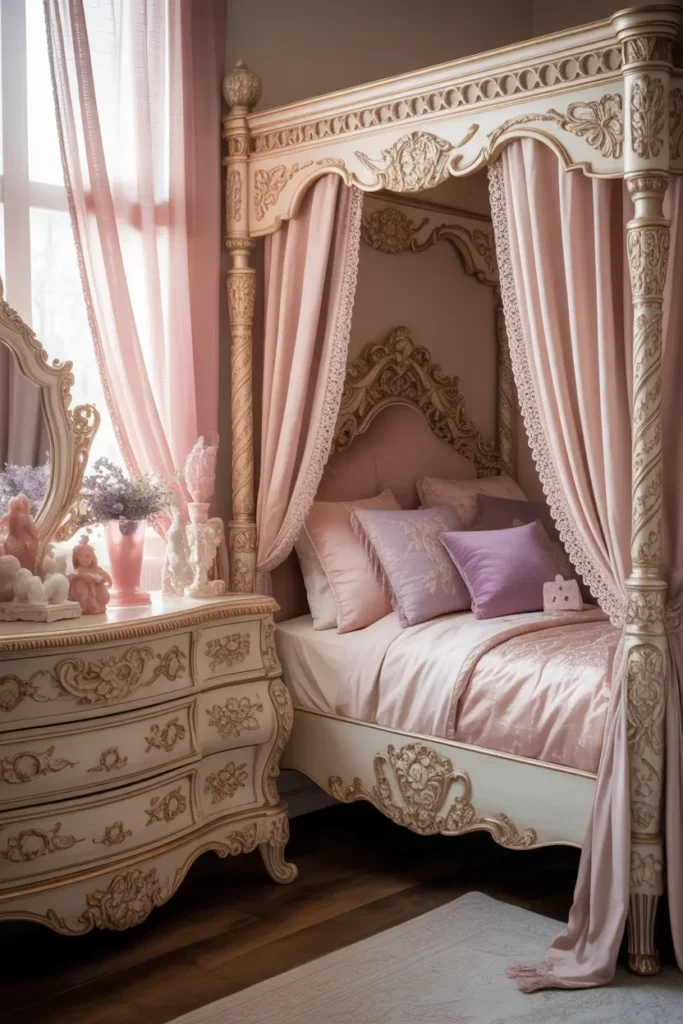
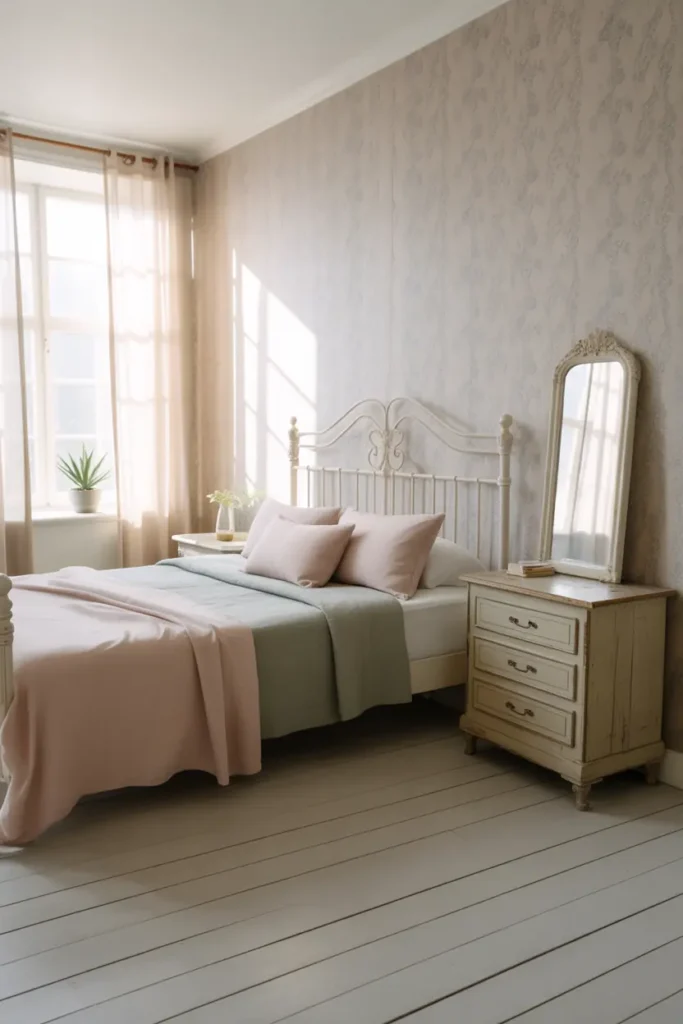
Vintage-style furniture — curved legs, carved details, distressed finishes, oval mirrors — is what separates princess from merely pink. Look for French-inspired shapes: cabriole legs, scrolled arms, arched headboards. The furniture should look like it has stories, even if you bought it last month.
Thrift stores, estate sales, and Facebook Marketplace are ideal hunting grounds; a $75 vintage dresser with good bones beats a $400 new “vintage-style” piece every time. If the finish is wrong, chalk paint in cream or soft white unifies mismatched vintage finds beautifully. One rule: keep the wood tones consistent (all cream, all walnut, all white) so the collection reads as curated, not random.
4. Use Florals Sparingly and Well
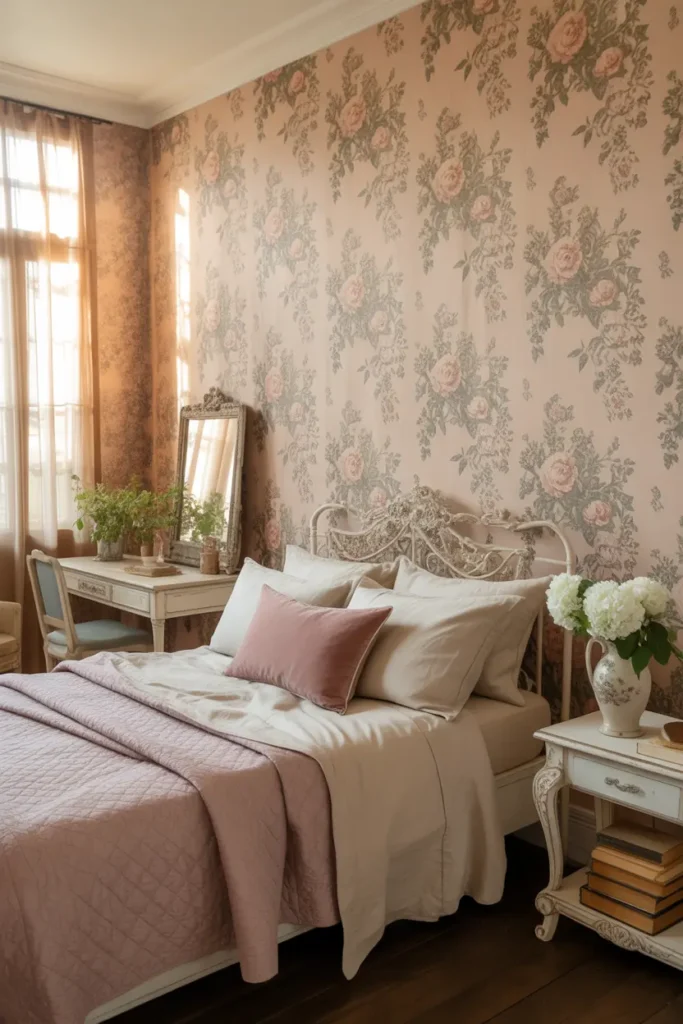
Florals are essential to the fairytale — and the fastest way to ruin it if overdone. The rule: one floral pattern per room, used in one or two places (bedding or curtains or wallpaper, not all three). Choose small-scale, delicate prints in muted tones; oversized cabbage roses in bright colors belong to a different era.
Vintage botanical prints are the sophisticated alternative to floral fabric — framed flower illustrations in thin gold frames bring the garden indoors without any fabric commitment. And fresh flowers, obviously: a small vase of real blooms on the nightstand does more for the fairytale feeling than any print. Replace weekly; wilted flowers break the spell.
5. Layer Lace and Sheers
Lace is the textile signature of the style — but real lace, used thoughtfully, not lace patterns printed on polyester. A lace-trimmed duvet cover, sheer lace curtains, a lace runner on the dresser: these add the delicate, handmade texture that defines princess. The key word is trim and accent, not wall-to-wall.
Sheer curtains deserve special mention: floor-length sheers in white or ivory, hung high and wide, make windows look larger and light look softer. Layer them over a heavier pastel drape for privacy plus dreaminess. And keep lace clean — dingy lace is sad; fresh white lace is magic. Wash gently, never bleach harshly.
6. Light It Like Golden Hour
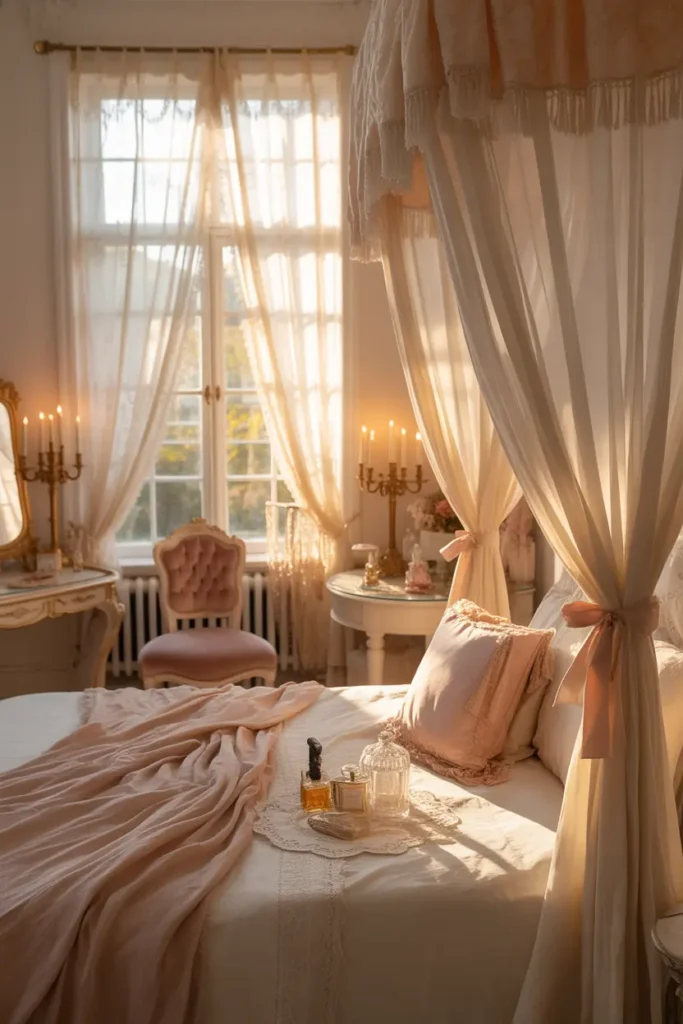
Princess lighting is warm, low, and abundant: table lamps with fabric shades, fairy lights woven through the canopy, candles on the vanity. Overhead lighting should be dimmable and rarely at full brightness — this room lives in the glow of late afternoon, permanently.
Lampshades matter enormously here: cream or blush fabric shades (never white plastic) diffuse light into the soft glow the style needs. A pair of matching bedside lamps creates the symmetry the aesthetic loves. And fairy lights aren’t just for teenagers — woven through canopy drapes or along a mirror, warm micro-lights add the starlight quality that makes the room feel enchanted after dark.
7. Hang a Chandelier
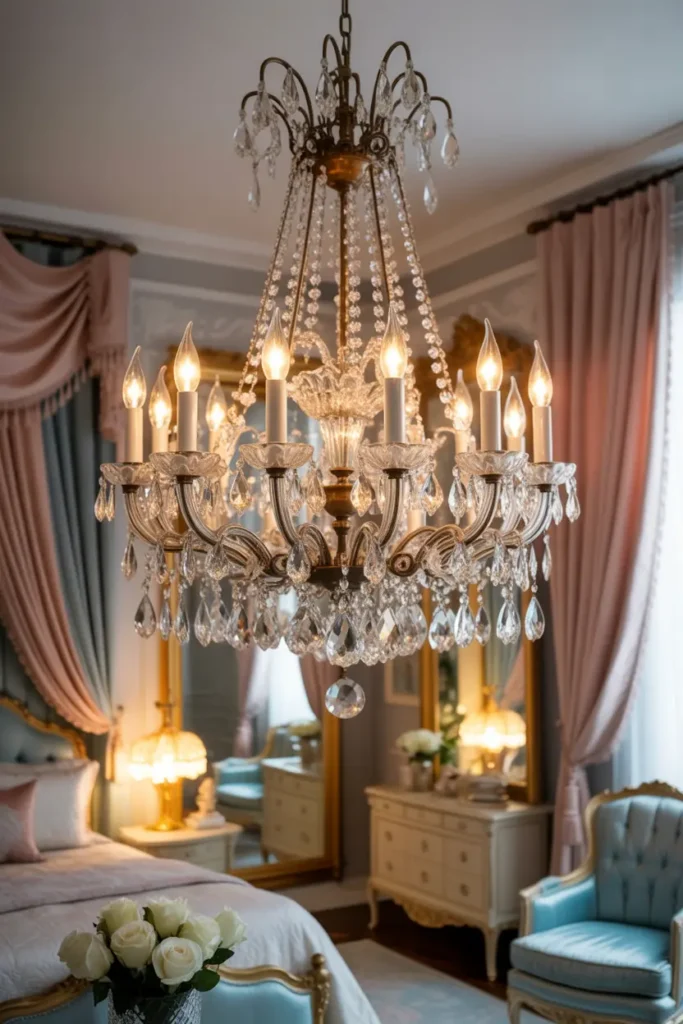
A chandelier is the crown jewel — literally the thing that makes guests gasp. In a bedroom, it doesn’t need to be huge; a small crystal or beaded chandelier (18–24 inches) over the bed or in the center of the room delivers the royal statement without overwhelming. This is the one place where a little sparkle is mandatory.
Crystal-style acrylic is fine (and much lighter than real crystal, which matters for ceiling mounting), but choose warm-toned crystals — clear can read cold. Put it on a dimmer; a chandelier at full blast is interrogation lighting, at 30% it’s a fairytale. Budget options start around $80 and look genuinely lovely once installed.
8. Mirror, Mirror, in an Ornate Frame
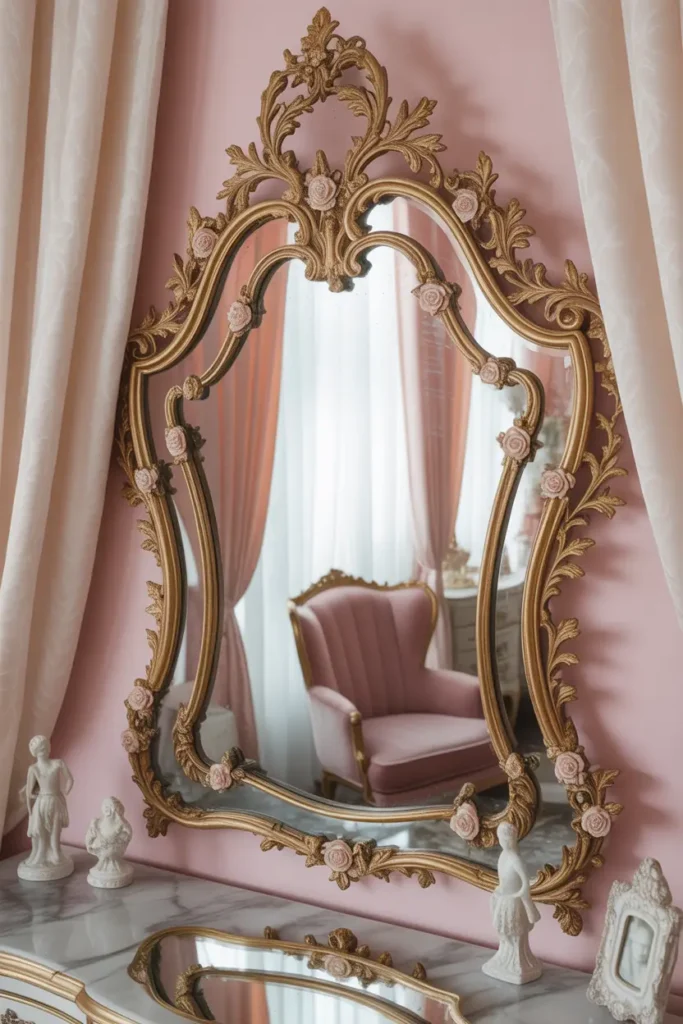
An ornate mirror is both functional and thematic — it bounces light, makes the room feel larger, and the frame itself is decor. Baroque-style gold frames, vintage oval mirrors, or antique-look carved wood: the more detailed the frame, the better it serves the style. This is maximalism’s one approved zone.
Lean a full-length ornate mirror against the wall if you can’t hang it — the casual lean looks intentional in this style. Place it where it catches window light or the chandelier’s glow; a mirror’s job here is to multiply the room’s prettiest light. And keep the glass spotless — a dusty ornate mirror looks neglected, not romantic.
9. Sink Into a Proper Rug
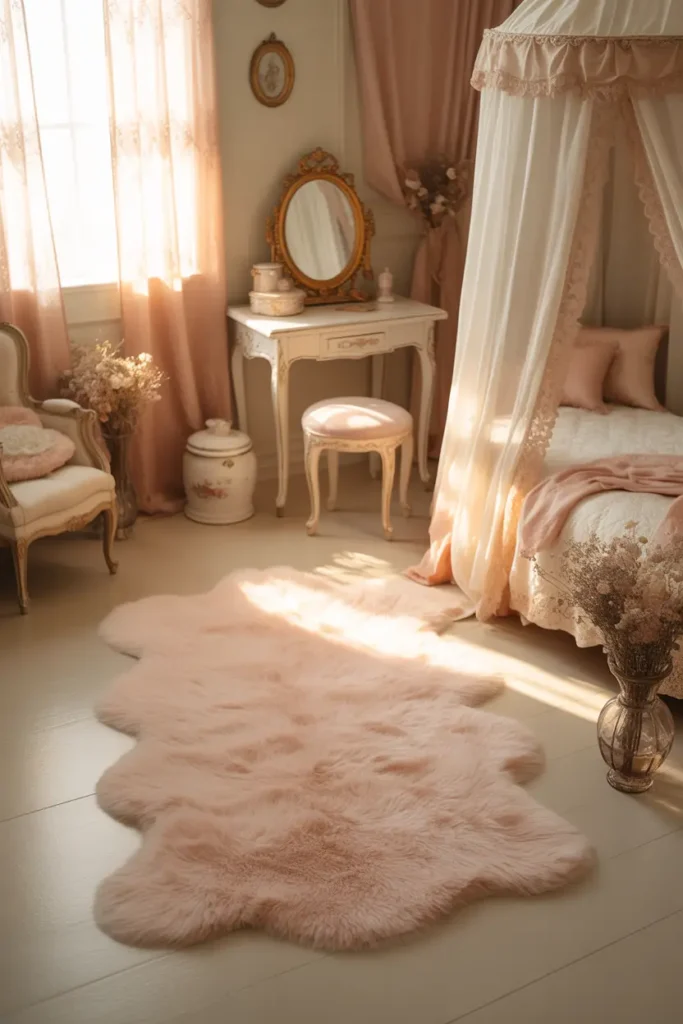
Bare floors have no place in a fairytale bedroom. A plush rug — soft underfoot, in cream, blush, or a faded vintage pattern — is the foundation layer that makes everything above it feel intentional. It also absorbs sound, which contributes enormously to the hushed, serene feeling.
Size it generously: the rug should extend at least 18–24 inches beyond the bed on the sides and foot. A too-small rug looks like an apology. Vintage-style rugs with faded Persian patterns are ideal — they add pattern and history without competing with florals. And get a rug pad; plush without padding is just flat.
10. Curate the Wall Art
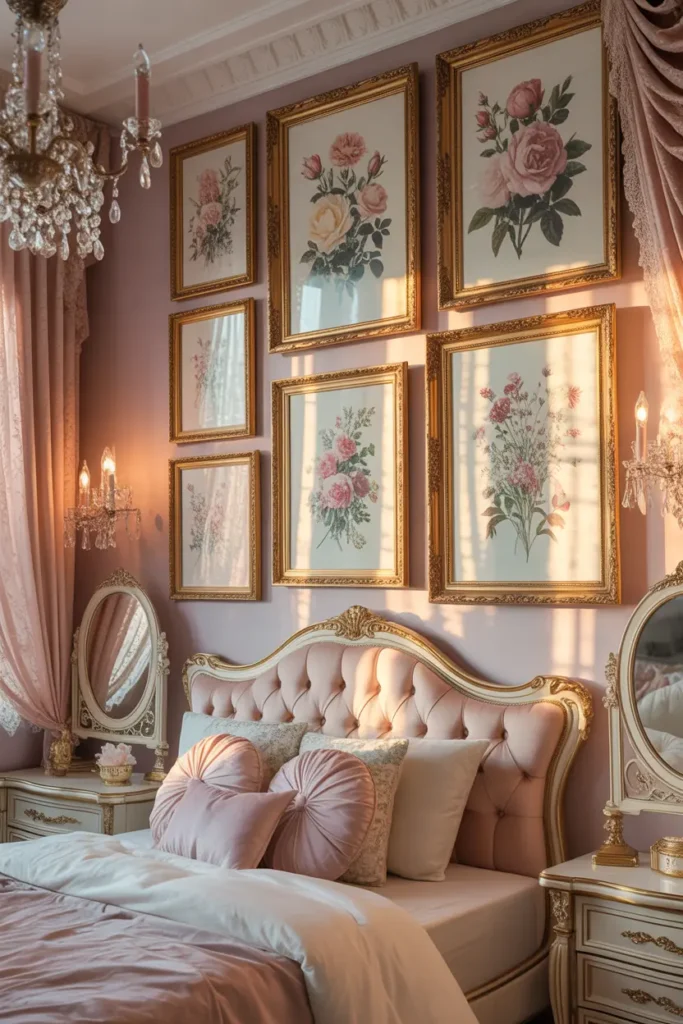
Wall art in a princess bedroom should feel collected over time: framed botanical prints, vintage fashion illustrations, soft landscapes, maybe a gilt-framed mirror or two. The frames matter as much as the art — thin gold, cream, or ornate vintage frames unify disparate pieces into a collection.
Keep the palette of the art inside the room’s pastels; one jarring modern piece breaks the spell. Arrange in a loose salon style or a single symmetrical pair — both work, but pick one approach per wall. And include something personal: a framed pressed flower, a vintage postcard, a photo in an antique frame. The personal piece is what makes it yours, not just pretty.
11. Add Gold in Small Doses
Gold is the metal of the fairytale — but like all good things here, in moderation. Picture frames, mirror frames, lamp bases, drawer pulls, a tray on the vanity: small gold hits scattered through the room catch light and signal luxury. Brushed or antique gold beats shiny; patina beats polish.
Rose gold is the softer alternative and pairs beautifully with blush palettes. Whichever you choose, keep it consistent — mixing yellow gold, rose gold, and silver in one room looks indecisive. Three to five gold accents per sightline is the sweet spot; more than that and the room starts to glitter instead of glow.
12. Set Up a Vanity Corner
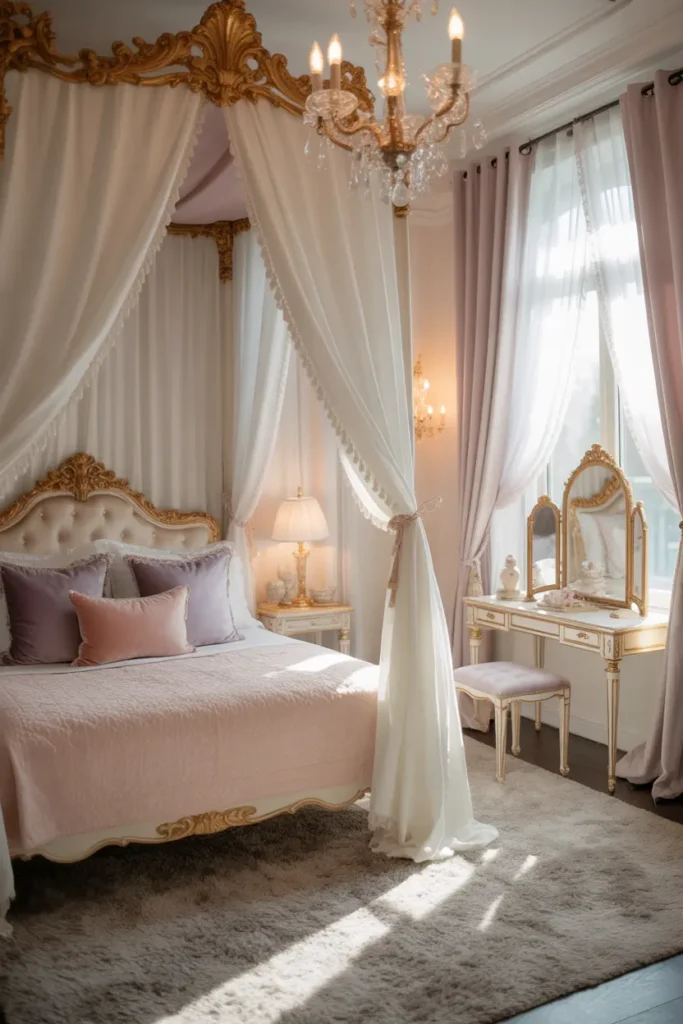
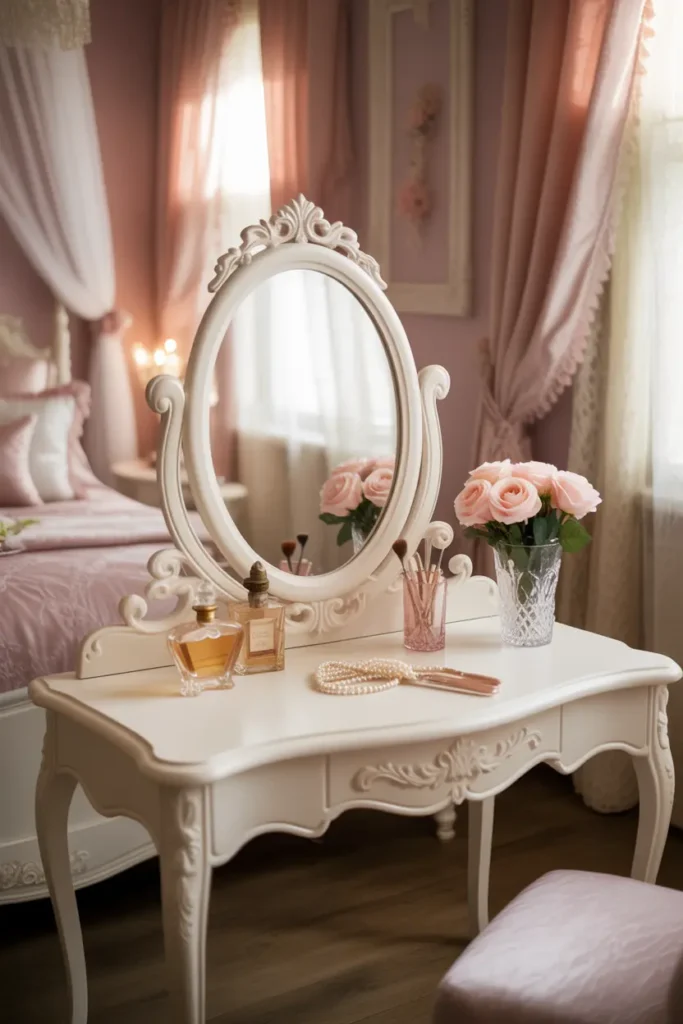
A vanity table is the princess bedroom’s signature furniture — part functional, part theater. A small vintage-style table or desk, an oval mirror, a cushioned stool or chair, and your daily rituals displayed prettily: it’s where the fairytale becomes a lifestyle, not just a look.
Style it like a still life: a tray for perfumes, a small vase with fresh flowers, a beautiful brush set, a candle. Everything visible should be pretty; the practical stuff lives in the drawers. A vanity with good natural light (near a window) is ideal — it’s where you’ll actually sit every morning, so make it genuinely pleasant, not just photogenic.
13. Layer the Bedding Like a Cloud
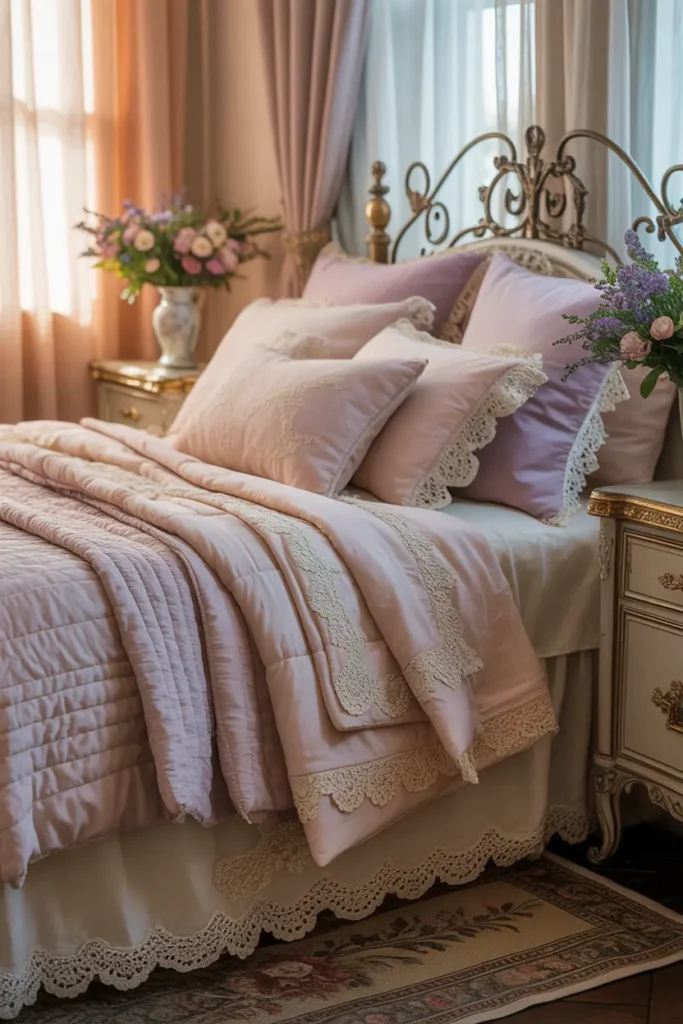
The bed is the landscape of the room, and in this style it should look deep enough to disappear into. Start with quality sheets in cream or white, add a duvet in your pastel, layer a quilt or coverlet, then a throw at the foot, then pillows in descending sizes — sleeping pillows, shams, accent pillows, one lumbar. It’s a formula, and it works every time.
Mix textures within the palette: linen sheets, a velvet throw, lace-trimmed shams, a knit blanket. The variety of textures is what makes all-cream bedding look rich instead of flat. And make the bed properly every morning — a layered bed only looks luxurious when it’s made; unmade, it just looks like laundry.
14. Let the Curtains Flow
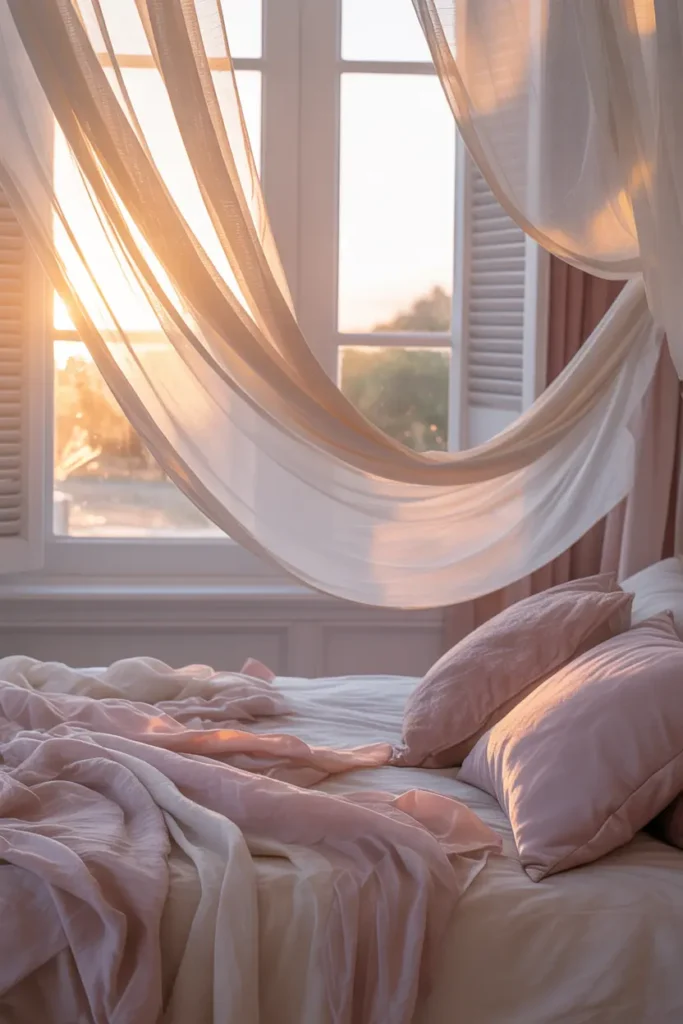
Curtains in a princess bedroom should move — floor-length, full, in fabrics light enough to stir in a breeze. Sheers layered over pastel drapes give you both the dreamy glow and the privacy, and the movement adds the living quality that stiff blinds never will.
Hang them high and wide (4–6 inches below the ceiling, 6–12 inches beyond the frame) — the oversized scale is what makes them look expensive. Choose fabrics with drape: linen, voile, lightweight velvet. Avoid anything stiff or shiny. And let them kiss the floor; precisely hemmed curtains look tailored, and this style wants romance, not tailoring.
15. Make Storage Beautiful
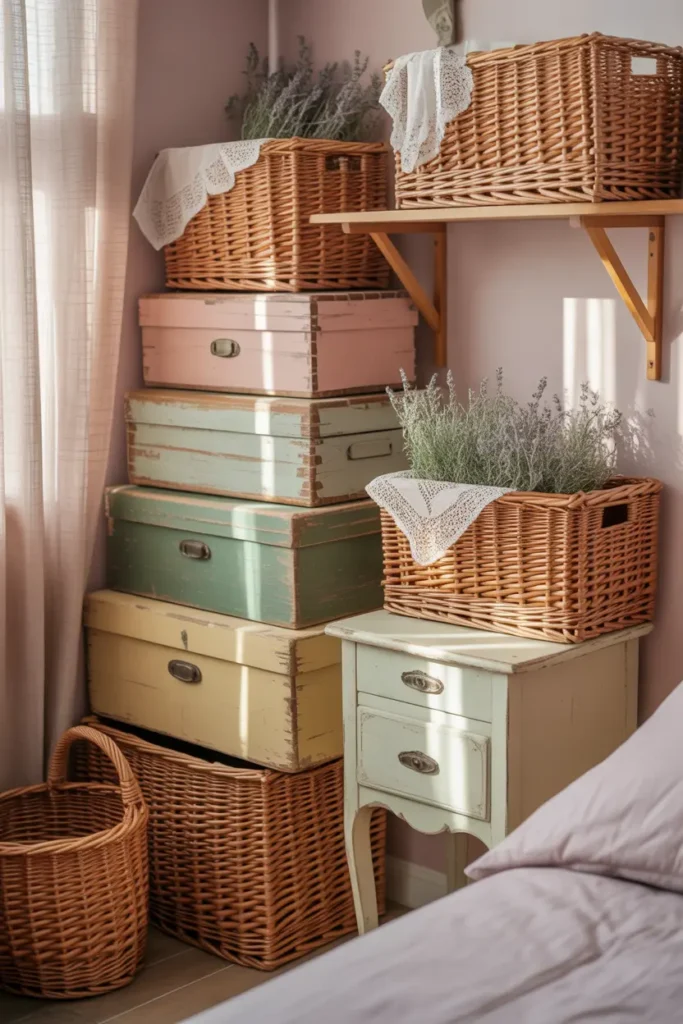
Even princesses have clutter — they just hide it prettily. Vintage hatboxes, decorative trunks, woven baskets with lids, pretty boxes on shelves: storage that looks like decor. The rule is simple: if it’s visible, it should be beautiful; if it’s not beautiful, it should be invisible.
Hatboxes stacked in a corner are the iconic move — they hold off-season clothes or keepsakes and look like a still life. A vintage trunk at the foot of the bed holds blankets and doubles as a bench. And inside the closet, don’t skimp on organizers; the fairytale collapses if opening a door reveals chaos.
16. Wallpaper One Wall Softly
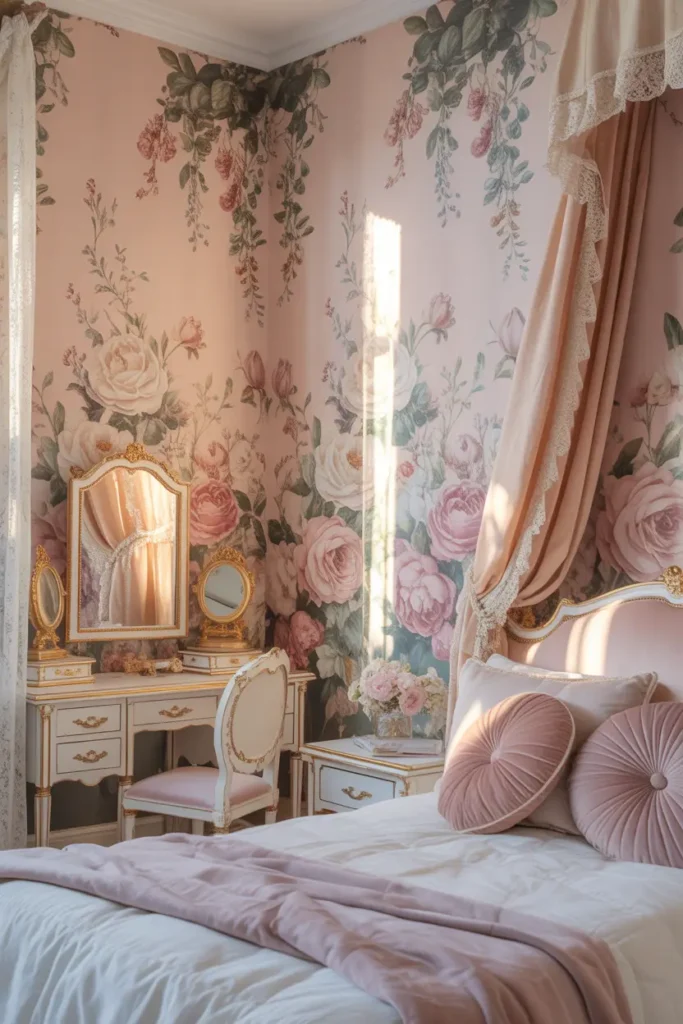
Subtle wallpaper — a tone-on-tone damask, a delicate stripe, a faint botanical — adds the depth that flat paint can’t, without the commitment of a bold pattern. In a princess bedroom, wallpaper should be felt more than seen: texture and movement rather than statement.
Peel-and-stick options make this renter-friendly and low-risk. Behind the bed is the natural placement — it creates a headboard-wall effect even with a simple bed frame. Keep the pattern scale small and the colors within your pastel palette; the wallpaper is the whisper, not the conversation.
17. Scatter Personal Treasures
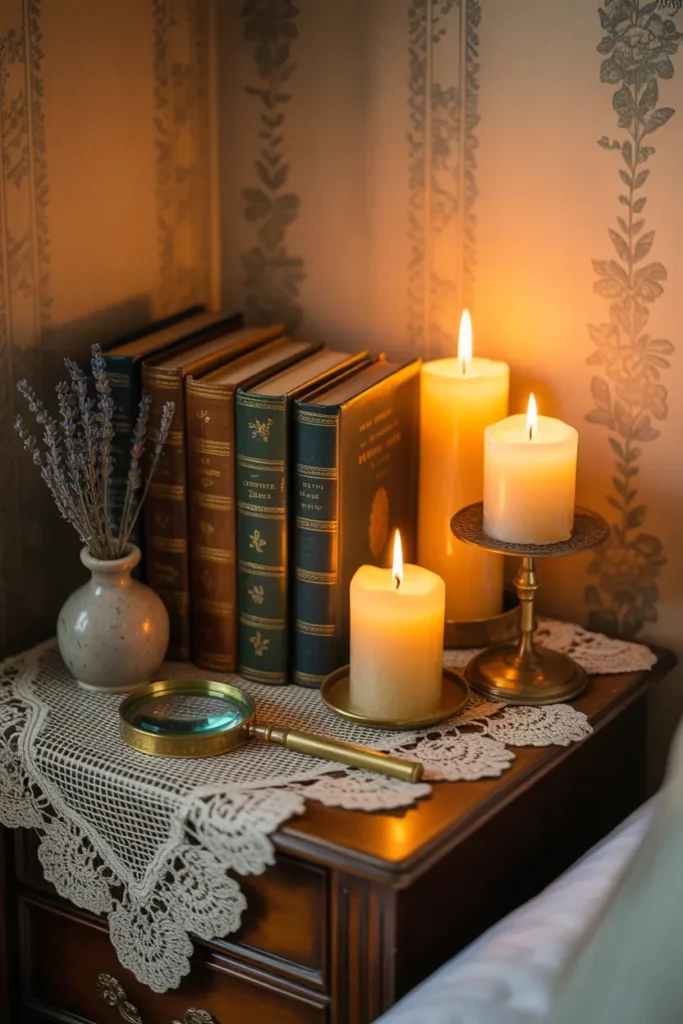
The details are what make it yours: a vintage perfume bottle collection, a small stack of beloved books, a music box, framed pressed flowers, a candle in your signature scent. These small, personal objects are the difference between a styled room and a lived-in fairytale.
Group them in odd numbers on trays — three objects on a mirrored tray read as curated; the same three scattered read as clutter. And edit ruthlessly: ten treasures is a collection, thirty is a gift shop. Every object should earn its place by being beautiful or meaningful, preferably both.
18. Keep the Layout Serene
All this softness needs space to breathe. Resist filling every corner — negative space is what lets the pretty things shine. Clear pathways, an uncluttered floor, surfaces with room to spare: the calm layout is as much a part of the aesthetic as the pastels.
The test: stand in the doorway. Your eye should travel smoothly from the bed (the star) to the vanity to the window — not bounce between competing focal points. If something feels crowded, remove one thing before adding anything. In a dreamy room, less is genuinely more.
19. Scent the Air
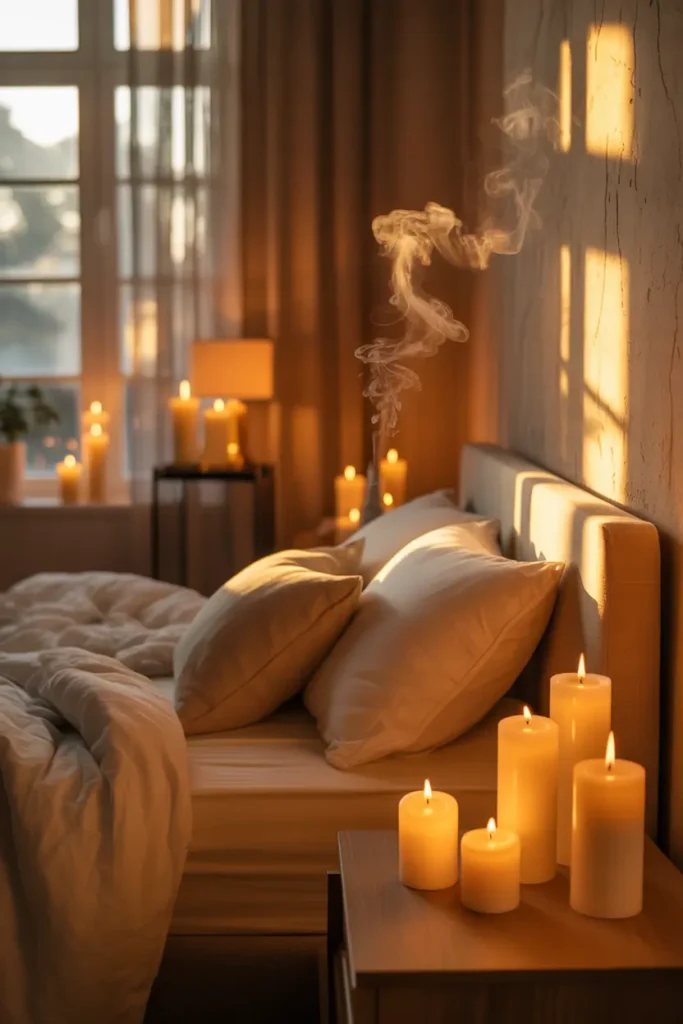
A fairytale is multisensory, and scent is the invisible layer most people forget. A signature fragrance — peony, vanilla, linen, rose — delivered via a reed diffuser (constant, flameless, safe) or quality candles, makes the room feel finished in a way visuals alone can’t.
Pick one scent family and keep it consistent across candles, diffusers, and linen spray — mixed fragrances clash. Reed diffusers are the workhorse (they run 24/7 with no effort); candles are for rituals. And keep it subtle: the room should smell like something lovely, not like a perfume counter. Two to three reeds in the diffuser, not six.
20. Mix Eras With Confidence
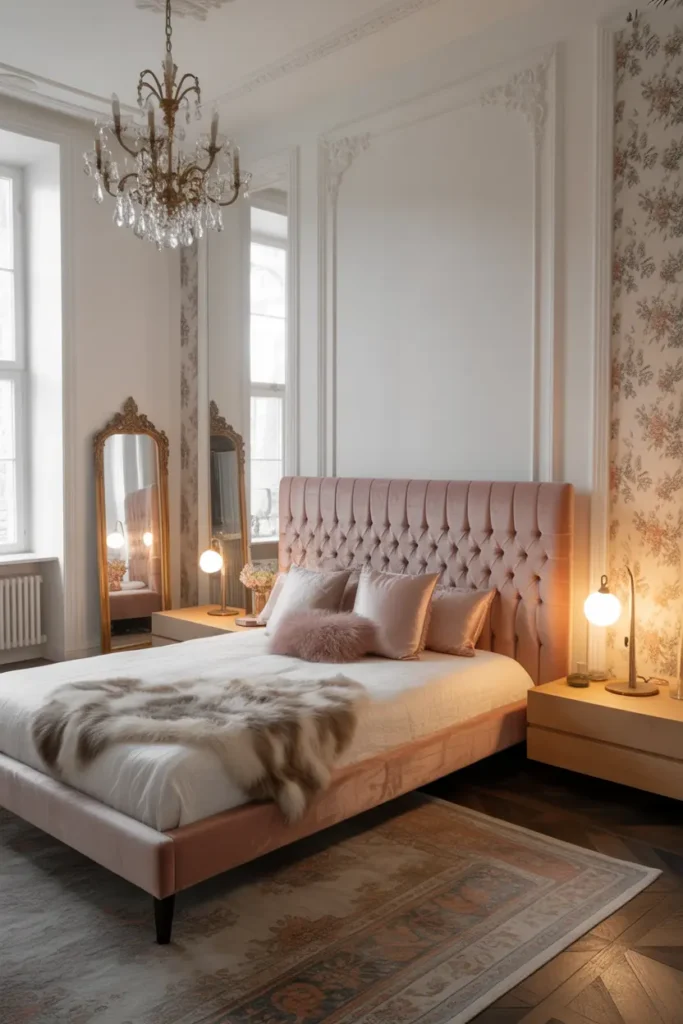
The final touch: don’t let the room become a period piece. A vintage chandelier with a modern upholstered bed, an antique mirror above a contemporary nightstand, a 200-year-old aesthetic with a hidden charging station — the mix of old and new keeps the room feeling like a real person’s home, not a museum.
The ratio that works: about 70% vintage-inspired, 30% modern. The modern pieces keep it functional (good mattress, real lighting, actual storage); the vintage pieces keep it magical. And hide the 21st century where you can — cords in covers, tech in drawers. The fairytale is the experience; modern comfort is just the infrastructure.
Related Decor Ideas
If you love this dreamy style, you might also explore:
- Bedroom decor ideas
- Cozy bedroom decor ideas with soft lighting
- Neutral bedroom ideas with pastel accents
- Small bedroom styling tips for better space use
Conclusion
The vintage princess bedroom works because it’s built on real design principles — soft color, honest materials, layered light, and careful restraint — dressed in romance. It’s not about pretending to be royalty; it’s about giving yourself the calm, beautiful, intentional space that royalty supposedly enjoyed.
Start with color and light — the pastels and the glow do most of the work. Add the vintage pieces slowly, thrifting and collecting over time rather than buying a “princess set” in one go. The rooms that feel most magical are the ones that grew organically, one treasure at a time. Yours will too.
Pro Tips
- Thrift the furniture, buy the textiles new. Vintage wood has character you can’t fake, but vintage fabric is just used. Spend your textile budget on new lace, linen, and velvet — they’ll look and feel dramatically better.
- Test pastels at night. This room lives in lamplight, so evaluate every color under your actual evening bulbs, not just daylight. Pastels that look perfect at noon can turn muddy or neon under the wrong light.
- Keep one modern anchor. A contemporary lamp, a clean-lined nightstand, or modern art in one spot keeps the room from feeling like a theme. It’s the contrast that makes the vintage pieces look intentional.
- Maintain the magic. Dust the chandelier crystals quarterly, wash sheers seasonally, replace candles before they burn to stubs. The fairytale depends on freshness — neglected pretty things look sadder than neglected plain things.
FAQs
How do I keep a princess bedroom from looking childish?
Use muted, desaturated pastels (not bright pink), real materials (wood, linen, velvet, lace — not plastic), and keep branded or cartoon elements at zero. An adult guest should read the room as “romantic vintage” first. Sophistication comes from restraint and material quality, not from avoiding the theme.
What’s the most impactful single change?
The canopy or draped bed — it transforms the room’s entire silhouette and creates the enclosed dreamy feeling nothing else can. Second place: a chandelier. Either one alone changes the room’s category from “bedroom” to “retreat.”
Can this style work in a small bedroom?
Yes, with editing. Choose the high-impact, low-footprint moves: pastel walls, sheer canopy drapes (they take no floor space), one ornate mirror, layered bedding, and warm lighting. Skip the bulky vintage dresser and the full chandelier; scale everything to the room.
Is pink required?
Not at all. The style works in any soft palette — lavender gray, powder blue, sage, cream-on-cream. Pink (specifically blush) is traditional, but a cream-and-gold or lavender-and-silver princess room is equally authentic to the aesthetic. Pick the pastel you actually love living with.

HowDecor is a home decor blog sharing simple, practical decorating ideas for everyday spaces. We believe a beautiful home should feel comfortable, personal, and full of warmth — and that great style does not require a huge budget. Our goal is to inspire readers to create spaces that feel peaceful, welcoming, and truly their own — one room at a time.