Small bathrooms have an unfair reputation. People assume “small” means “can’t look expensive” — but some of the most luxurious bathrooms in the world are tiny. What makes a bathroom feel expensive was never square footage. It’s coherence: everything matching, everything intentional, nothing fighting for attention.
The best part? None of that requires a renovation. A small bathroom is actually cheaper to make luxurious than a big one — less tile to replace, less paint to buy, fewer accessories needed to fill it. These twenty ideas are organized from space-saving foundations to budget upgrades to the finishing touches that fake five-star hotels. Start wherever your bathroom hurts most.
Small Bathroom Decor Ideas That Save Space and Look Stylish
1. Start With One Spa Corner, Not the Whole Room
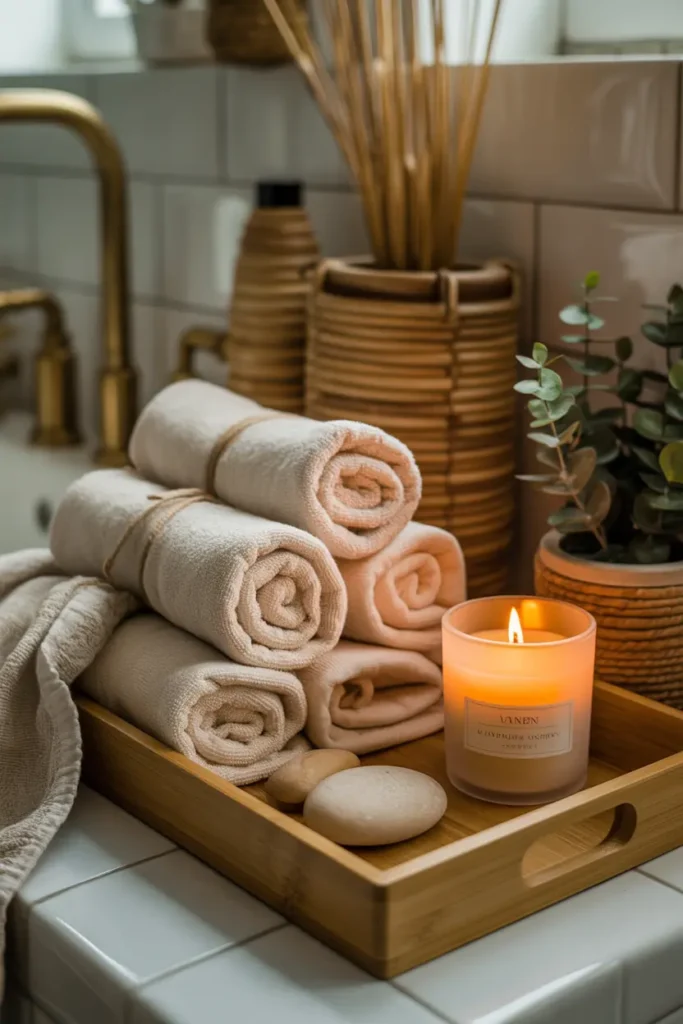
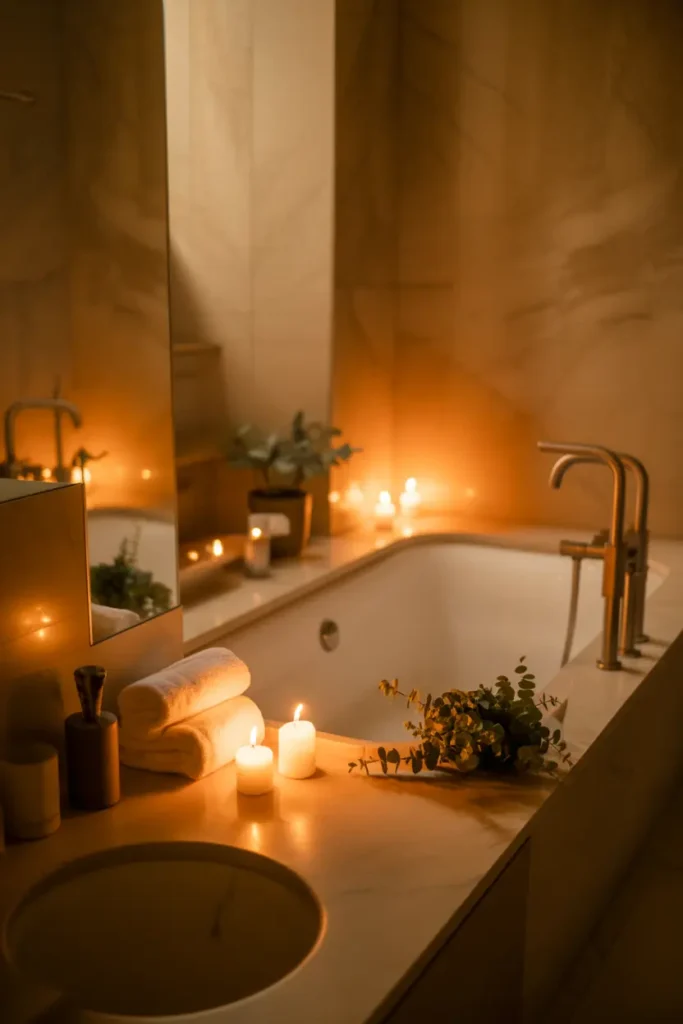
The fastest way to make a bathroom feel styled is to style one corner completely: a wooden tray with rolled towels, a candle, a small plant, maybe a folded washcloth stack. That single composed vignette changes how your brain reads the entire room — suddenly it’s “a styled bathroom” instead of “a functional box.”
Even a small spa-style setup can make your bathroom feel instantly more premium. The psychology is simple: one intentional corner implies intention everywhere, even if the rest is still a work in progress. Start there, then let the styling spread naturally.
2. Think Vertically — the Floor Is Not Your Only Storage
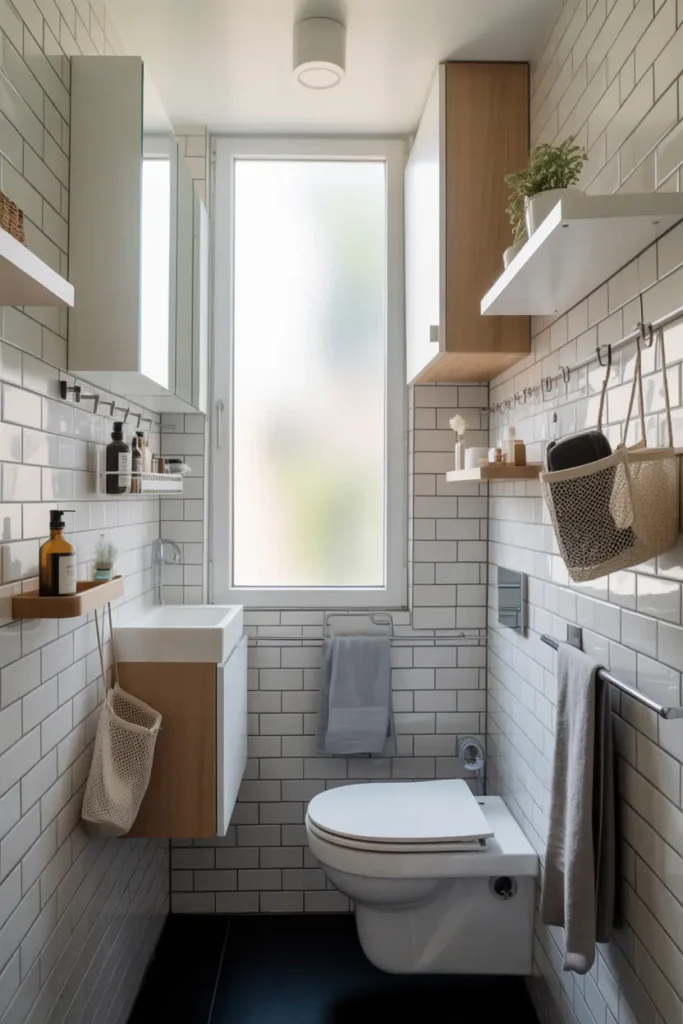
In a small bathroom, the floor is the scarcest resource and the walls are free real estate. Tall narrow shelving, over-the-toilet storage, wall-mounted cabinets, hooks on the back of the door — moving storage upward keeps the floor clear, and clear floor is what makes small rooms feel big.
The rule of thumb: nothing should live on the floor except furniture and you. Baskets, hampers, and bins all get wall-mounted, stacked, or tucked. Once the floor is clear, even a 40-square-foot bathroom breathes. Measure your vertical space before buying — most people underestimate how much wall they have by half.
3. Float Your Storage
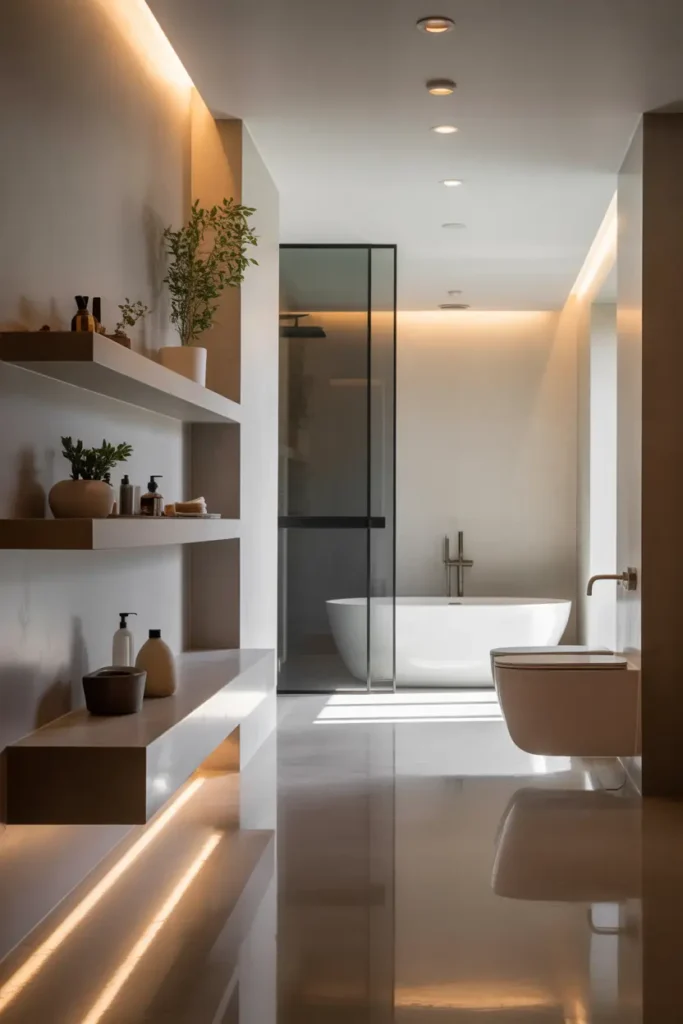
Wall-mounted vanities and floating shelves are the small bathroom’s best friend. The visible floor underneath tricks your eye into reading the room as larger, cleaning becomes trivial (mop straight under), and the floating look reads as modern and custom even when it’s off the shelf.
A floating vanity needs proper wall support — tile over cement board with blocking behind, or a vanity rated for the span. Leave 10–12 inches of clearance beneath for the floating effect to register visually. And add an LED strip underneath: the soft glow on the floor at night makes the bathroom feel twice as designed for about $20.
4. Clear the Counter Completely, Then Add Back Half
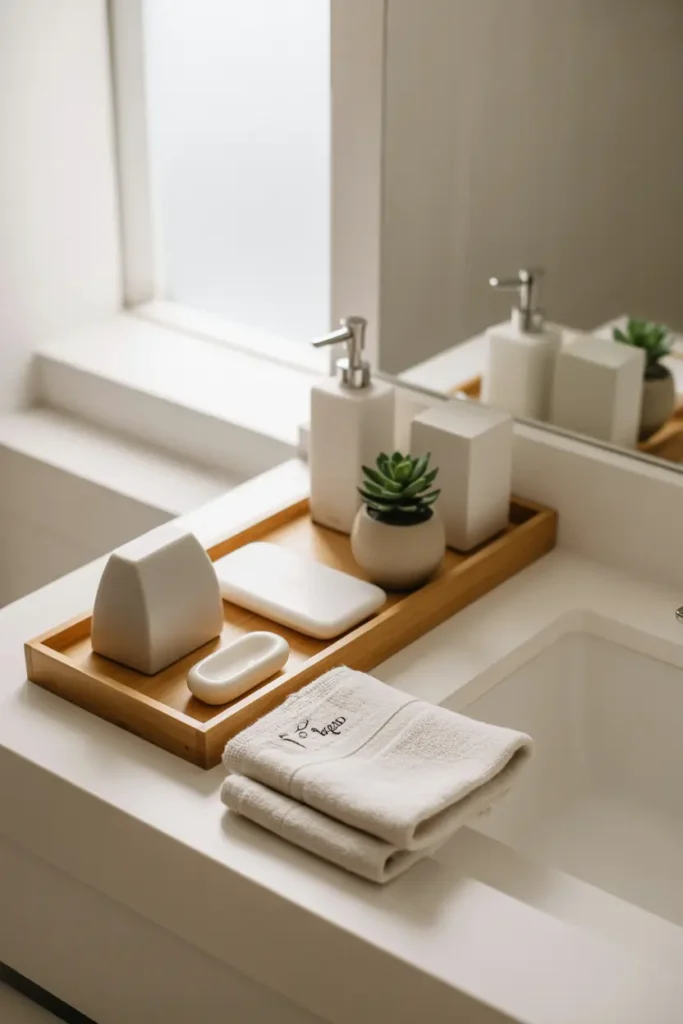
Here’s an uncomfortable truth: no decor survives a cluttered counter. You can have the most beautiful trays and dispensers in the world, but if they’re drowning in seven half-used bottles, the bathroom looks messy. Clear everything, then put back only what you use daily — on a tray, decanted into matching containers.
The tray is the whole trick: it turns five random objects into one intentional arrangement. Matching pump bottles (decant the drugstore stuff — $12 for a set) eliminate visual noise instantly. Everything else lives in a drawer or cabinet. A clear counter with one tray looks more expensive than a crowded counter with $200 of accessories.
Modern Bathroom Decor Trends You Should Try in 2026
5. Why Matte Black and White Always Work
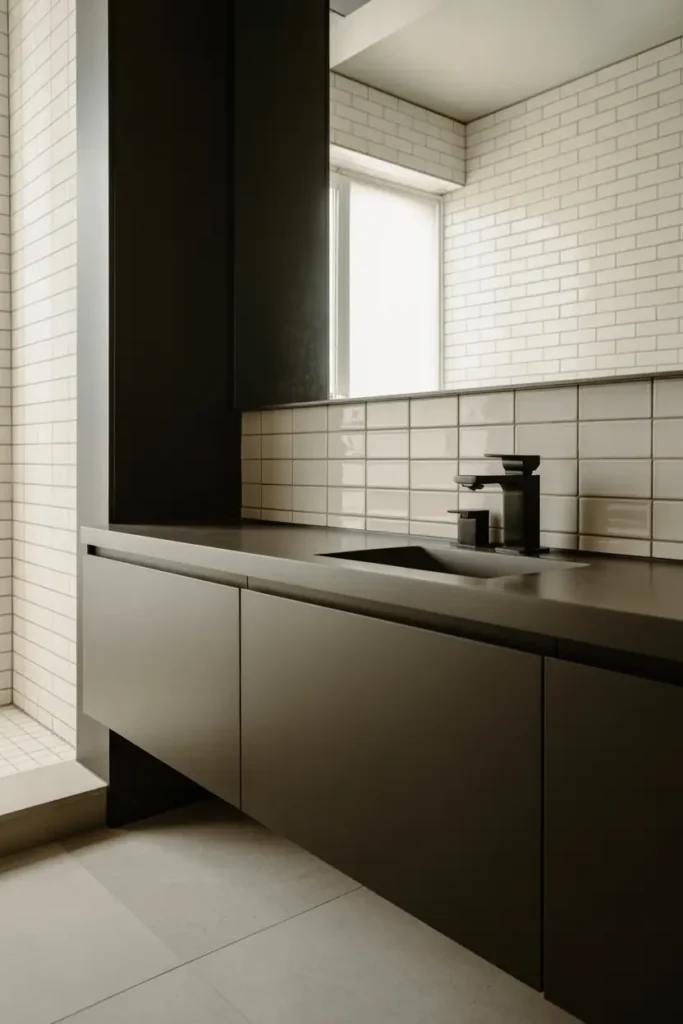
Matte black fixtures against white surfaces is the defining bathroom contrast of the decade — graphic, clean, and somehow both modern and timeless. Black faucet, black mirror frame, black hardware against white tile and a white vanity: the combination looks designed even when everything else is basic builder-grade.
The budget version is real: you don’t need black tile (expensive), just black accents — faucet ($80–$150), mirror frame, cabinet pulls, towel hooks. Against existing white surfaces, these small black hits deliver the whole aesthetic. Keep the black matte and consistent; mixed black finishes look accidental.
6. Let One Mirror Do All the Talking
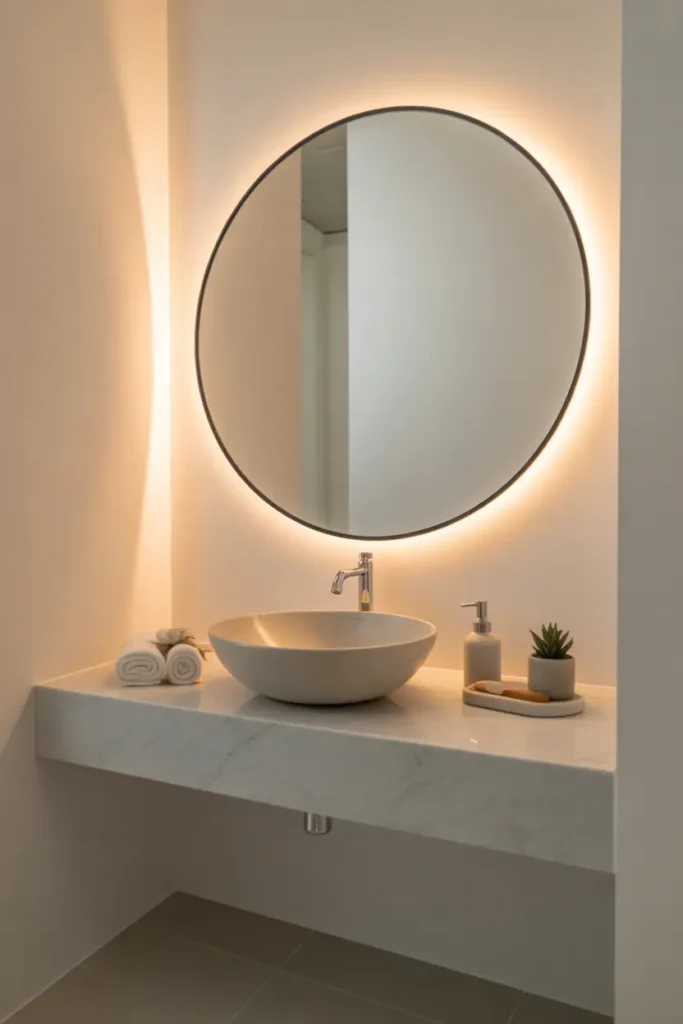
In a small bathroom, the mirror is the largest decorative surface — treat it that way. One oversized, interesting mirror (round, arched, asymmetrical, backlit) becomes the focal point that organizes the entire room around it. Skip the medicine-cabinet-afterthought mirror; this is a design decision, not a utility.
Size up boldly: the mirror should be nearly as wide as the vanity. Round mirrors soften boxy bathrooms; arched mirrors add architecture; backlit mirrors add both light and drama (and they’re the best makeup/shaving light you can buy). A $150 statement mirror routinely outperforms $500 of tile upgrades in visual impact.
7. Warm It Up With Wood
Bathrooms are full of cold materials — tile, porcelain, glass, chrome. Wood is the antidote: a teak bath mat, an oak shelf, a wooden stool, even just a wooden tray on the vanity. The warmth of wood against cool tile is what makes a bathroom feel like a room instead of a laboratory.
You don’t need much — one or two wood elements per sightline. Teak and sealed oak handle bathroom humidity; keep wood out of direct shower spray regardless. The contrast is the point: the colder your tile and fixtures, the more warmth a single wood piece contributes. It’s the highest-ROI material in bathroom design.
8. Layer the Lighting Like a Spa
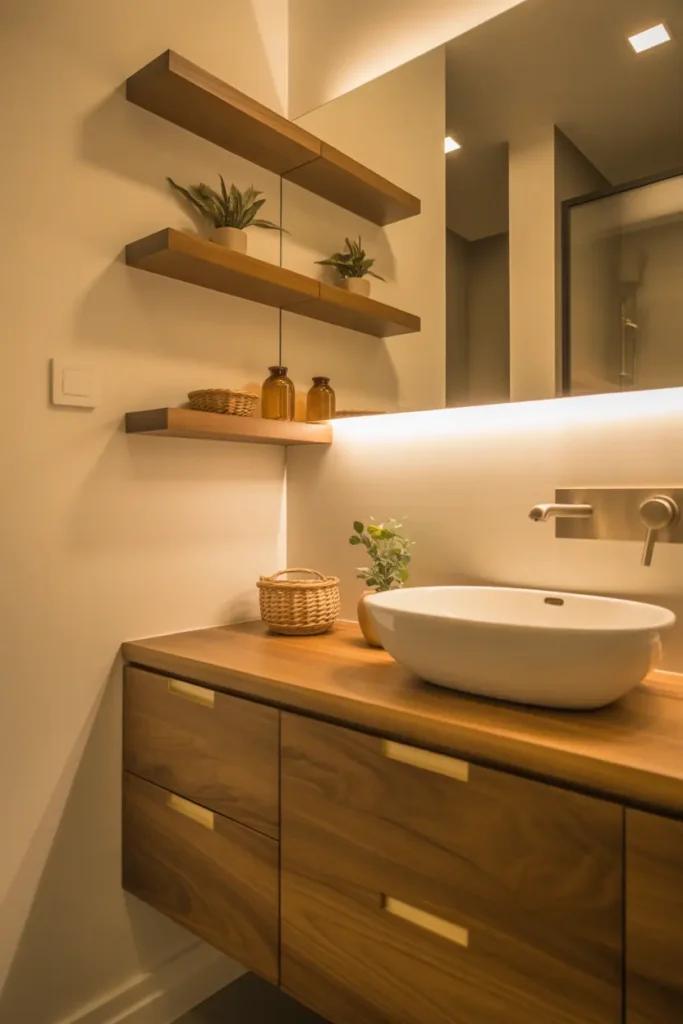
Harsh overhead lighting is why most bathrooms feel clinical. The fix is layers: a dimmable overhead for mornings, sconces or a lit mirror at face level for tasks, and a low warm glow (candles, LED strips) for evenings. Three light sources, each on its own control, and the same bathroom serves three different moods.
Keep everything at 2700K warm white — cool white in a bathroom feels like a hospital. The evening layer is where the luxury lives: turn off the overhead after dark and let the room run on sconce-and-candle light. It costs nothing once the fixtures exist; it’s just the habit of using them. Lighting alone can make your bathroom feel completely different at night.
Budget Bathroom Makeover Ideas That Actually Work
9. Add One Plant and Watch What Happens
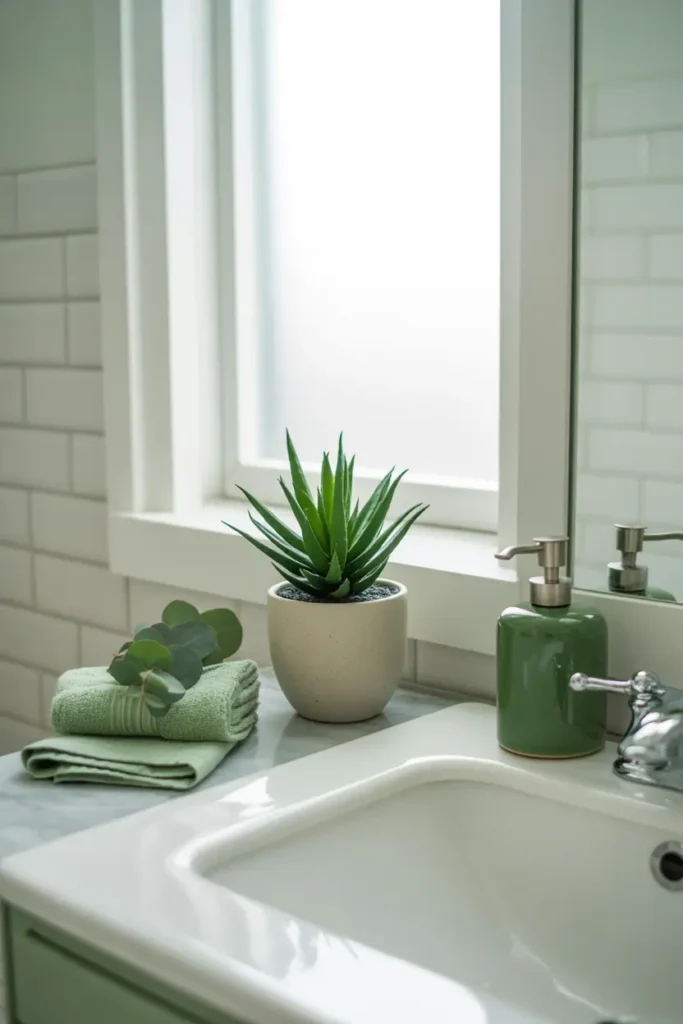
It sounds too simple, but a single healthy plant changes a bathroom more than most $100 upgrades. Green against tile is a vivid, living contrast; the organic shape softens every hard line; and bathrooms’ humidity makes them genuinely great plant habitats. One pothos on a shelf, one fern on the vanity — that’s all it takes.
Choose for your light: no window means pothos, snake plant, or ZZ (all nearly unkillable); a window opens up ferns and orchids. Hang trailing plants high where steam rises. And commit to exactly one thriving plant rather than three struggling ones — a dead plant in a bathroom looks worse than no plant at all.
10. Texture the Floor With a Real Rug
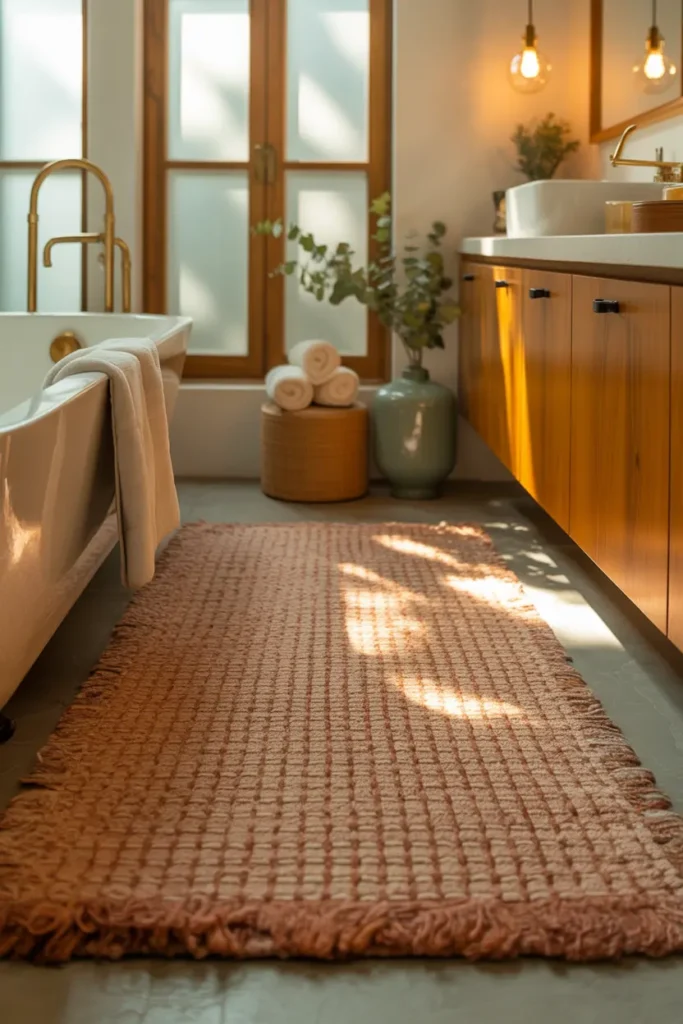
Bare tile floors are cold — visually and literally. A proper bath rug (not a sad flat mat) adds the texture, warmth, and color that makes a bathroom feel finished. It’s also the easiest upgrade on this entire list: unroll it, done, for $25–$50.
Go bigger than you think — a generous rug that extends beyond the vanity looks intentional; a tiny mat looks apologetic. Choose washable, quick-dry materials with non-slip backing, and wash it regularly. A clean, substantial rug is a luxury signal; a dingy small mat is the opposite.
11. Match Your Accessories Like You Mean It
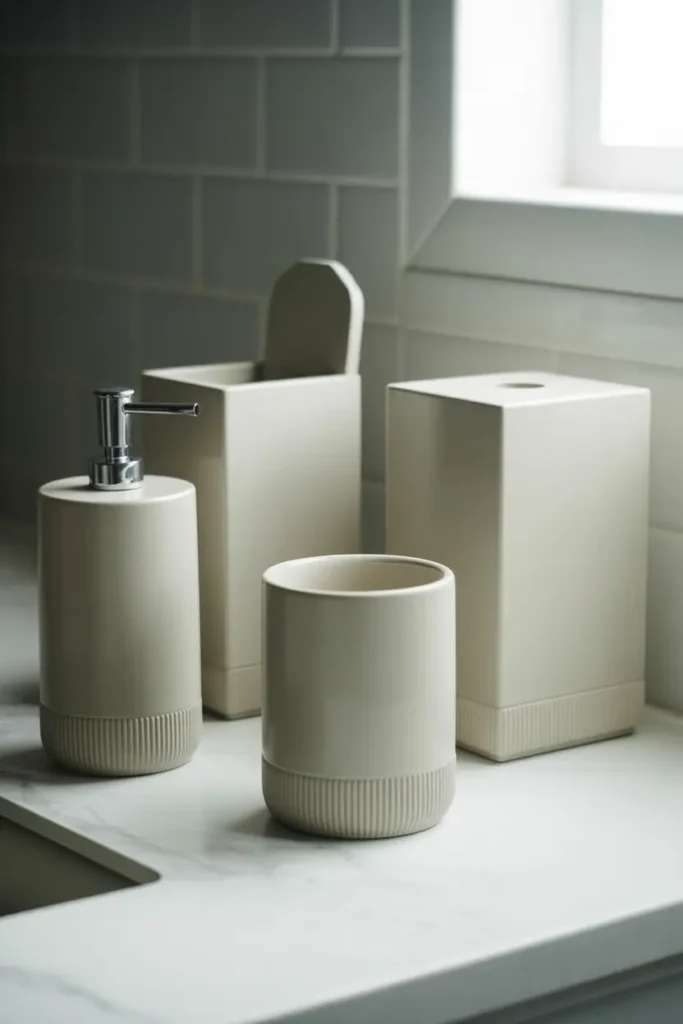
Here’s what separates designer bathrooms from random ones: the accessories match. Same finish, same style, same color family across the soap dispenser, toothbrush holder, tray, and hooks. It’s a $30–$50 fix (a coordinated set) that reads as a $500 design decision.
Decant everything into the matching set — the branded plastic bottles are visual noise, no matter how nice the product inside. Pick one material story (matte ceramic, amber glass, brushed metal) and commit across all visible accessories. Cohesion is the cheapest luxury there is.
12. Don’t Underestimate Scent
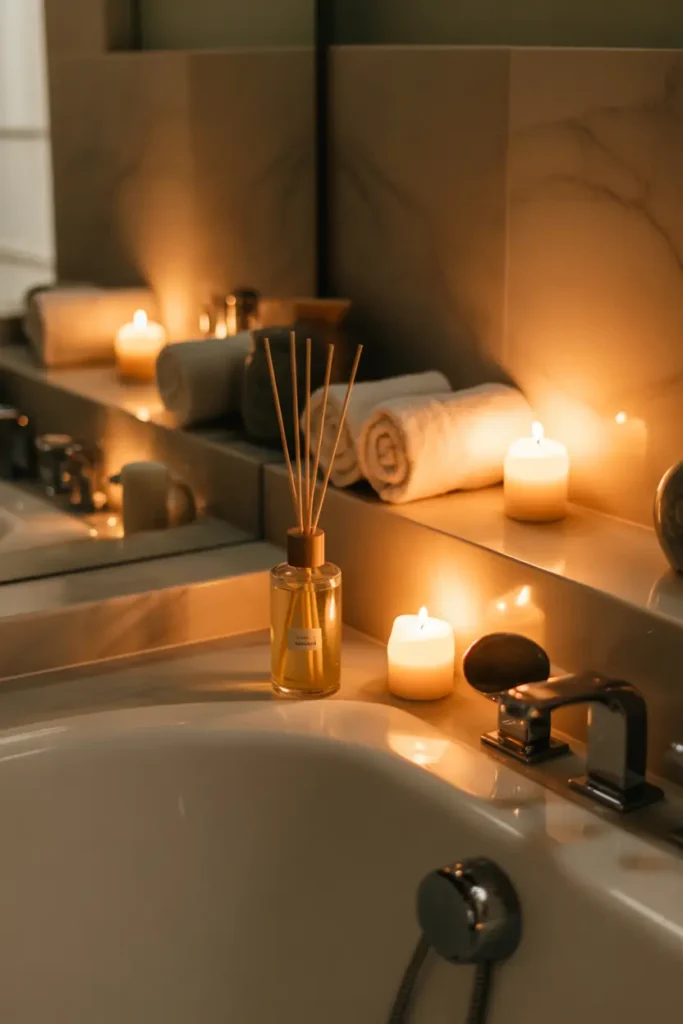
A beautiful bathroom that’s odor-neutral is only doing half the job. Scent is the invisible finish: a reed diffuser, a quality candle, or a few drops of essential oil on a cotton ball behind the toilet. Guests won’t consciously notice it, but they’ll register the bathroom as “lovely” rather than just “nice.”
Pick one signature scent — eucalyptus, sea salt, cedar, fig — and keep it consistent. Reed diffusers are the workhorse (constant, flameless, 2–3 months per fill); candles are for the ritual. In a small bathroom, go subtle: two reeds, not six. Over-scented small rooms give headaches, not luxury.
Stylish Bathroom Upgrades That Feel Expensive
13. Choose One Focal Point and Commit
Expensive-looking rooms have a clear star; cheap-looking rooms have everything shouting at once. Pick one focal point for your bathroom — the mirror, a feature wall, a statement tile, the vanity — and let everything else support it quietly. Restraint around the star is what makes it shine.
The test: cover the focal point with your hand (mentally). If the room collapses into nothing, the focal point is working. If the room looks the same, you don’t have one yet — or you have five competing ones. One strong gesture beats ten weak ones, every time, in every room.
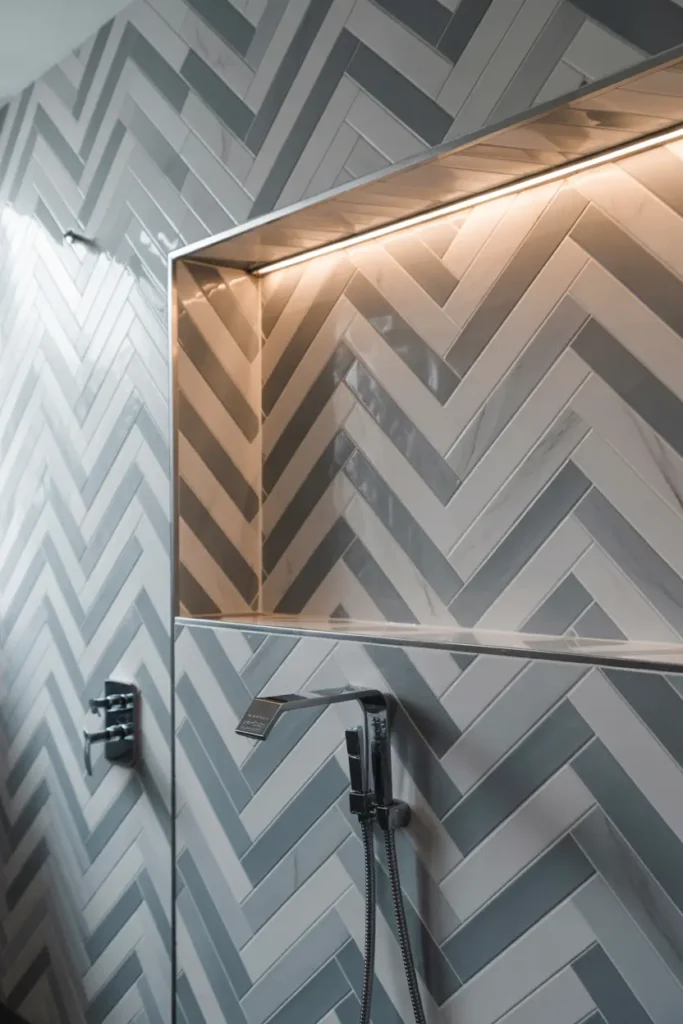
14. Open It Up With Glass
Every opaque barrier in a small bathroom costs you perceived space. A clear glass shower panel instead of a curtain, a glass shelf instead of a bulky cabinet, transparent dispensers instead of solid ones — each one lets light and sightlines pass through, and the cumulative effect is a bathroom that feels significantly larger.
Frameless or minimal-frame glass is the goal. The maintenance is real — a 30-second squeegee after showers keeps glass spotless — but the spaciousness payoff is permanent. If a full glass enclosure isn’t in the budget, even swapping a dark shower curtain for a clear or frosted one helps.
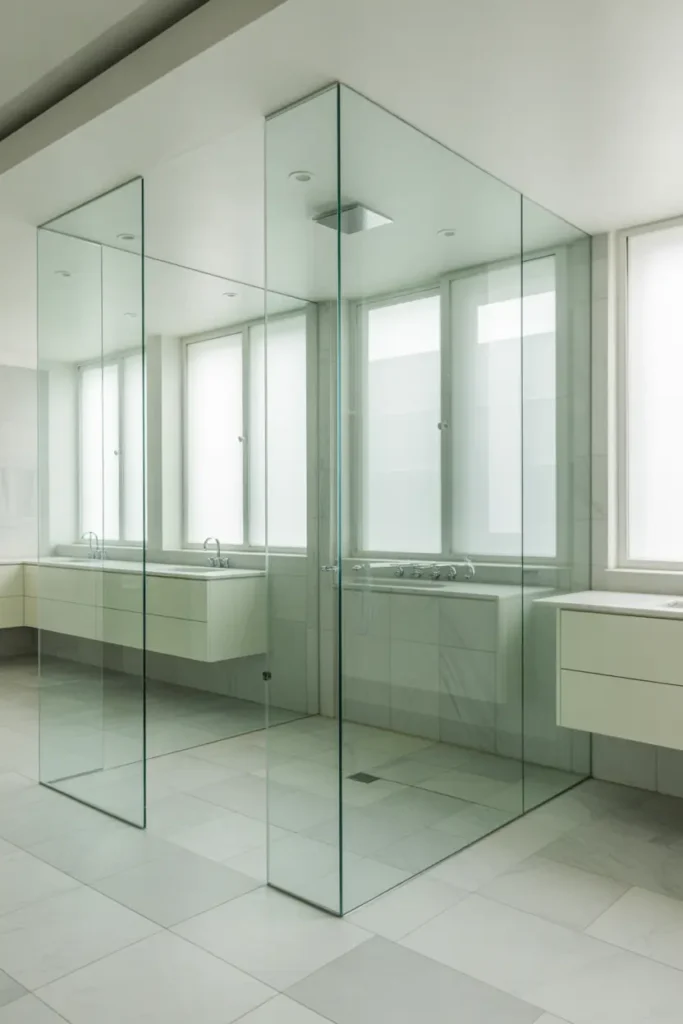
15. Add Black in Small, Sharp Doses
You don’t need a black bathroom to get black’s benefits. Black hardware, a black mirror frame, black faucet, black towel hooks — small, sharp hits of black against light surfaces add the graphic contrast that reads as modern and intentional. It’s the eyeliner of bathroom design: a little defines everything.
Keep the black elements consistent in finish (all matte, ideally) and repeat the color at least three times so it looks deliberate. Under $150 total for the full set in most bathrooms. This is the fastest “looks redesigned” trick in the book.
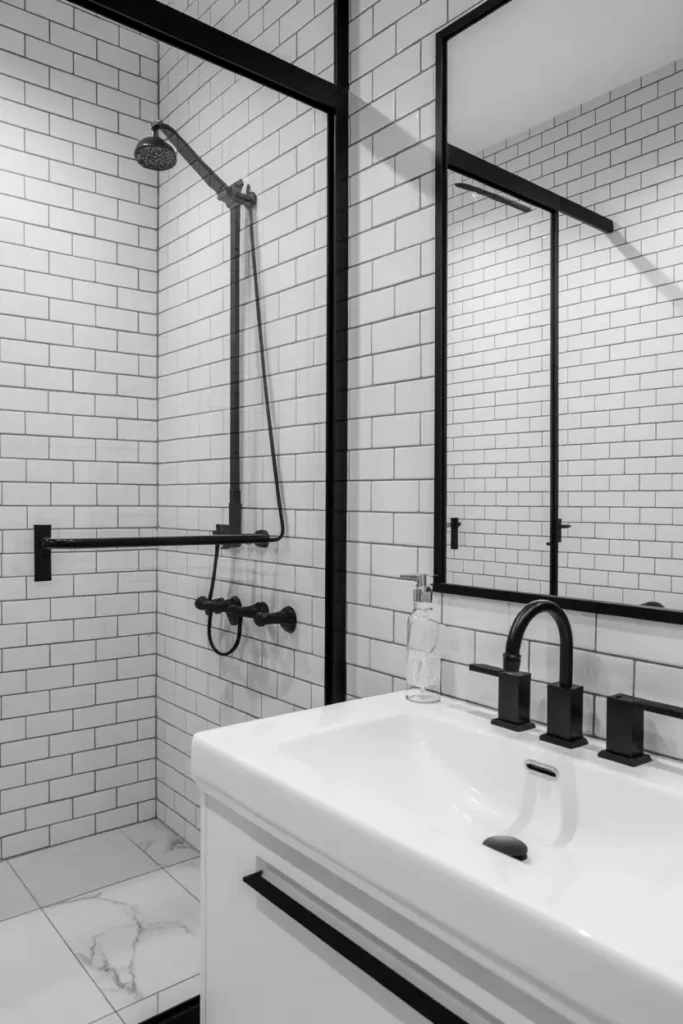
16. Hide Everything You Can
Visible clutter is the enemy of expensive-looking. The rule: if you don’t use it daily, it doesn’t live visible. Recessed niches, vanity drawers with organizers, a linen closet or over-toilet cabinet, baskets inside closed storage — the goal is surfaces so clear they look staged, but functional enough for real life.
Audit ruthlessly: expired products, duplicates, “someday” items — out. What remains gets a home: drawer dividers ($15) transform vanity chaos, and a shower niche or corner caddy corrals the in-shower collection. Hidden storage isn’t about minimalism as a lifestyle; it’s about giving the beautiful things room to be seen.
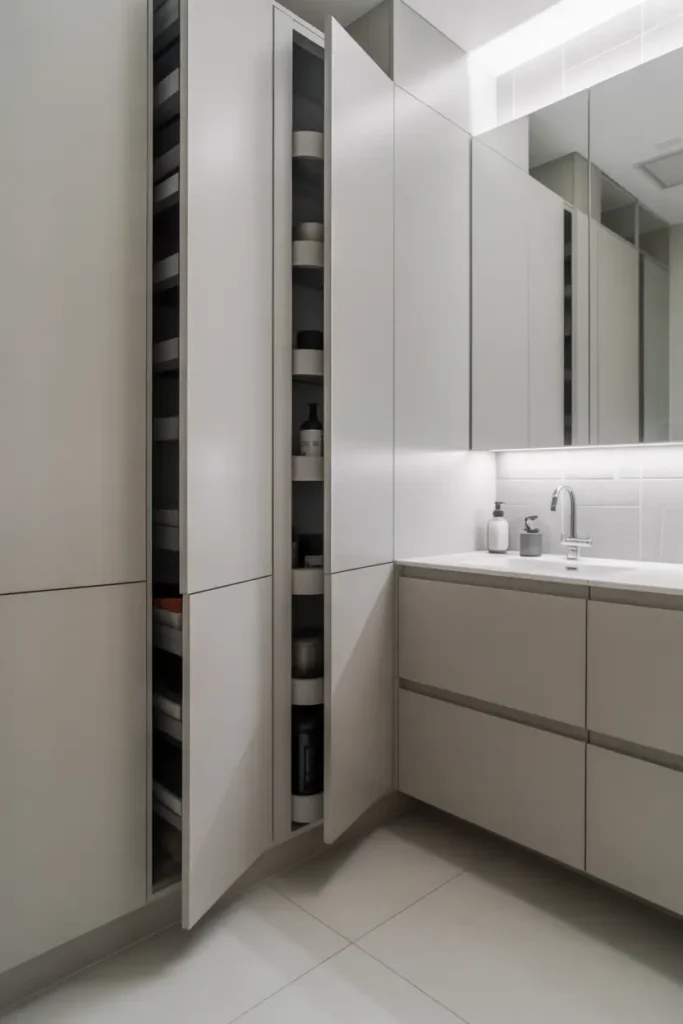
17. Maximize Natural Light
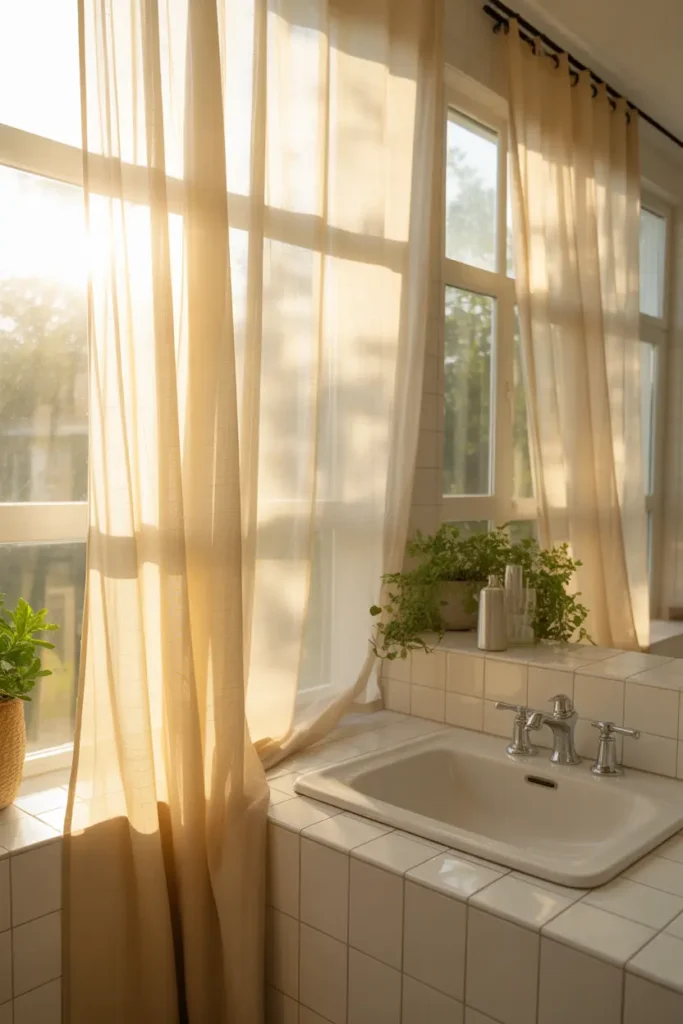
Daylight is the most flattering light there is, and it’s free. Heavy curtains, frosted-over windows, and cluttered sills all steal it. Switch to sheer curtains or light-filtering shades, clear the sill, and clean the glass (inside and out — you’d be surprised). The difference is often dramatic.
No window? Fake it well: a backlit mirror, daylight-balanced bulbs (5000K) for daytime use, and the palest palette you can stand. Light-colored surfaces bounce what light exists; dark ones absorb it. In windowless baths, every design decision should serve brightness — it’s the whole game.
18. Add a Stool — Style Plus Function
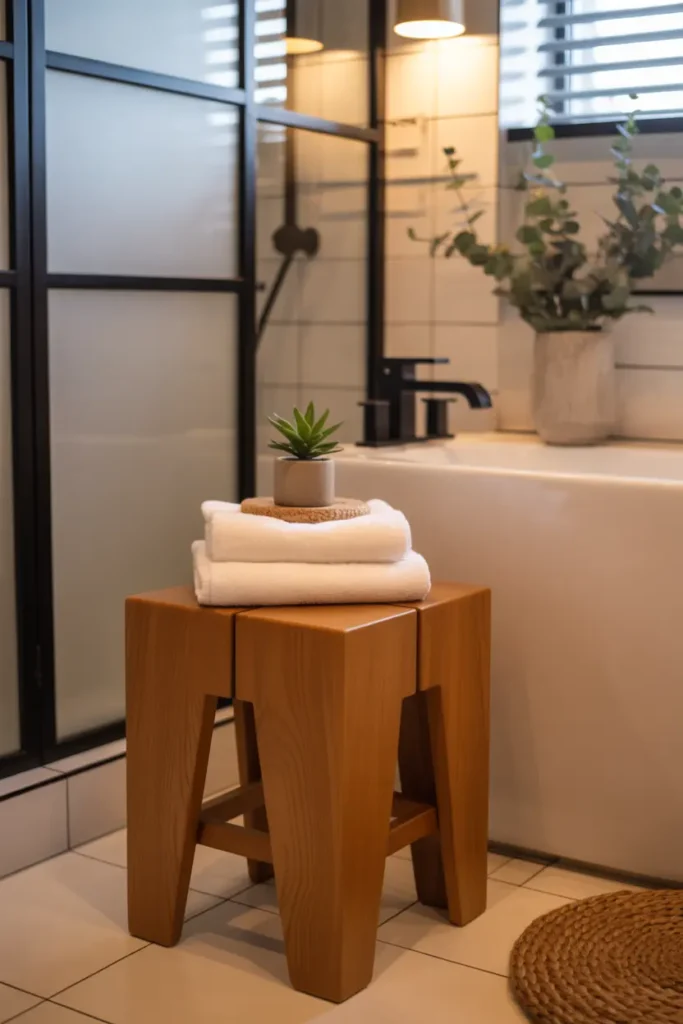
A small stool or bench in a bathroom is one of those things you don’t know you need until you have one: a perch for the towel, a stand for the candle and book during baths, a step for reaching high shelves, a sculptural object when not in use. Wood, rattan, or stone — pick a material that echoes the room.
Keep it small (12–16 inches wide) so it doesn’t eat floor space, and make sure it can handle humidity. A teak shower bench doubles as in-shower seating — genuine luxury for under $80. It’s the rare bathroom item that’s simultaneously practical, beautiful, and conversation-worthy.
19. Steal the Hotel Formula
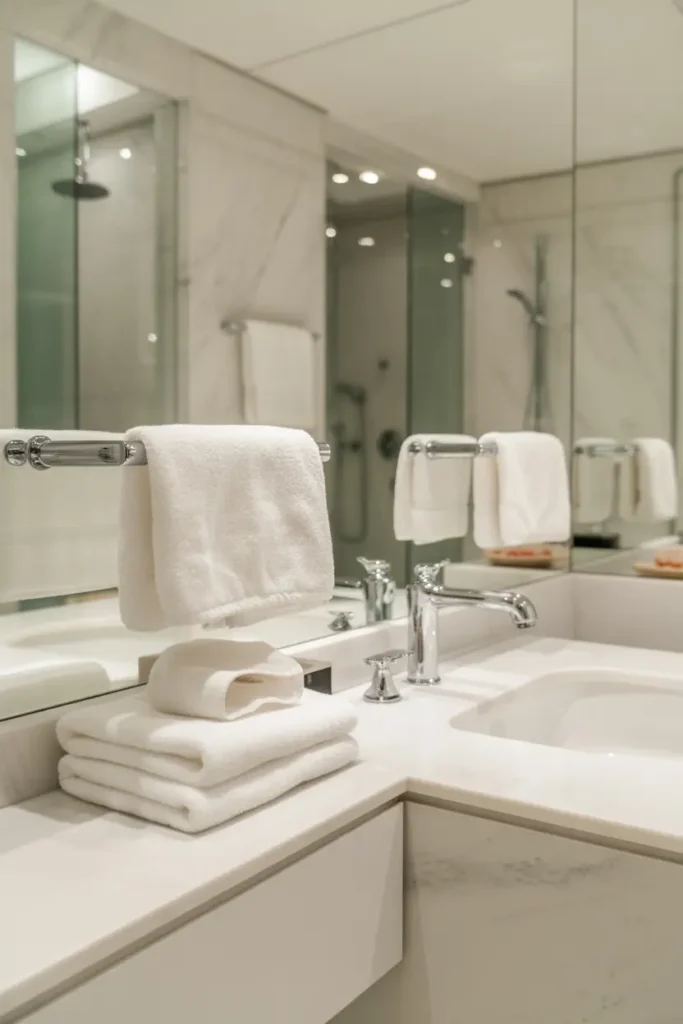
Hotel bathrooms feel premium for specific, copyable reasons: all-white linens, symmetry (matching everything in pairs), clear surfaces, one scent, and perfect lighting. There’s no mystery — it’s a formula, and it works in a 40-square-foot home bathroom exactly as well as in a suite.
The starter kit: white towels (all matching, replaced when dingy), a white shower curtain, symmetrical styling (same item both sides of the mirror), and a single tray with two or three beautiful things. Symmetry reads as intentional; matching whites read as clean; clear surfaces read as calm. That’s the whole hotel trick, and it’s mostly laundry.
20. Keep It Clean — That’s the Real Luxury
The unsexy truth behind every “expensive-looking” bathroom: it’s clean. Grout without mildew, glass without spots, chrome without water marks, towels fresh, floors mopped. No decor survives grime, and no renovation is needed when maintenance is on point. Cleanliness is the actual luxury — everything else is garnish.
Build the 10-minute weekly routine: squeegee glass, wipe counters and faucet, clean the toilet, mop the floor, swap the hand towel. Daily: 30-second squeegee after showers, hang towels to dry properly. A modest bathroom maintained beautifully will always outshine a renovated bathroom maintained poorly. Simplicity and cleanliness are the real luxury.
Common Bathroom Decor Mistakes to Avoid
Before you start decorating, keep these common mistakes in mind:
- Overcrowding your bathroom with too many decor items
- Using harsh lighting that feels uncomfortable
- Ignoring storage, which leads to clutter
- Mixing too many colors without balance
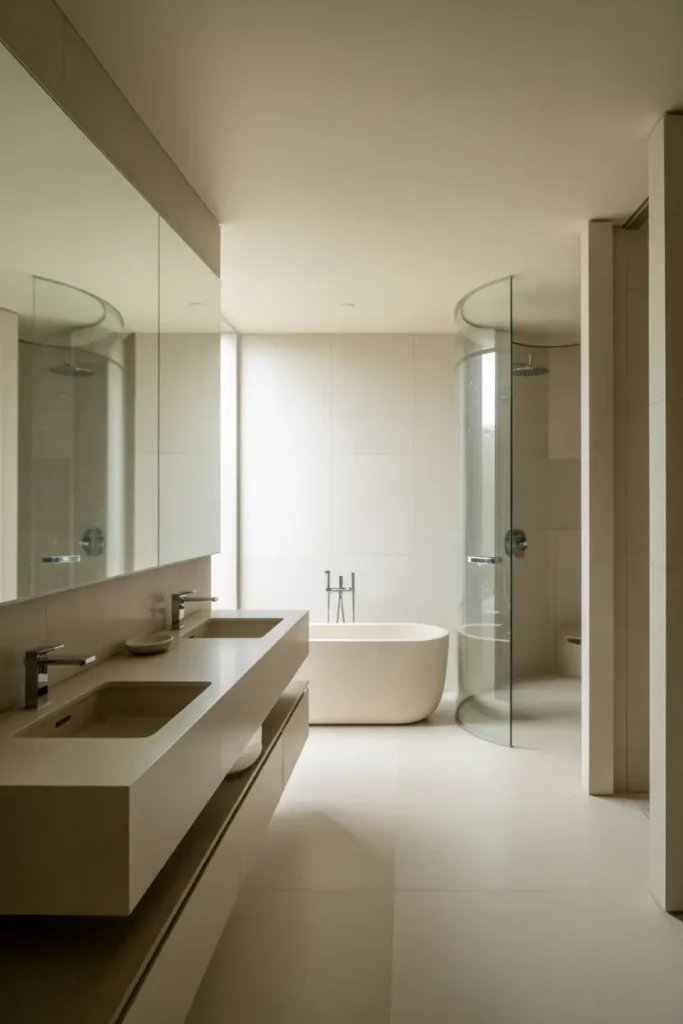
Simple and clean design always looks more expensive — when in doubt, remove something rather than adding.
Conclusion
An expensive-looking small bathroom isn’t bought; it’s edited. Clear surfaces, coherent accessories, one focal point, good light, and relentless cleanliness — that’s the entire formula, and most of it costs nothing. The renovation industry wants you to believe you need new tile; you mostly need new habits.
Start with the free moves: declutter, clean deeply, rearrange for light. Then spend small and strategically: matching accessories, a statement mirror, a plant, a rug. Your small bathroom was never the problem — it was just waiting for someone to treat it like it mattered.
Pro Tips
- Photograph before and after. Bathroom changes are incremental and easy to undervalue. A before photo (taken in the same light, same angle) makes progress visible and keeps you motivated through the unglamorous middle.
- Buy the squeegee before the decor. A $10 squeegee used daily does more for “expensive-looking” than $100 of accessories. Maintenance tools are decor tools in a bathroom.
- Standardize your whites. Not all whites match — some are warm, some are cool. When buying white towels, curtains, and accessories, compare them together in daylight. Clashing whites look dingy; matching whites look crisp.
- Fix the fan first. If your exhaust fan is weak or loud, replace it before decorating. Moisture destroys every beautiful finish — paint, wood, metal, grout. A quiet, powerful fan ($100–$150) protects the entire investment.
FAQs
How can I make my small bathroom look expensive on a budget?
Focus on cohesion, not cost: matching accessories, clear counters, one statement mirror, warm layered lighting, and spotless maintenance. Under $200 total — mirror ($80–$120), accessory set ($30), plant ($15), rug ($30) — transforms most small bathrooms completely.
What’s the biggest mistake in small bathroom decor?
Too many competing focal points and visible clutter. Small bathrooms need one star and a quiet supporting cast. The second biggest: harsh cool-white overhead lighting as the only light source. Fix those two and you’re 80% there.
Should I renovate my small bathroom or just redecorate?
Redecorate first, always. Deep clean, declutter, update accessories, mirror, lighting, and textiles — live with that for a month. Most people find the “need” for renovation disappears. Renovate only for functional problems (bad layout, failing plumbing, no storage), not cosmetic ones.
How do I keep a small bathroom looking good day-to-day?
The 2-minute daily reset: squeegee the shower, wipe the counter, hang towels properly, empty the trash if full. Weekly: toilet, floor, mirror. The secret of beautiful bathrooms isn’t the initial styling — it’s the maintenance routine that keeps it that way.

HowDecor is a home decor blog sharing simple, practical decorating ideas for everyday spaces. We believe a beautiful home should feel comfortable, personal, and full of warmth — and that great style does not require a huge budget. Our goal is to inspire readers to create spaces that feel peaceful, welcoming, and truly their own — one room at a time.