Walk through the most interesting bedrooms of 2026 and you’ll notice what’s missing: the grey-everything minimalism of five years ago, the farmhouse signs, the accent walls in navy. In their place is something quieter and more confident — warm neutrals, honest materials, light treated as a design element, and rooms that feel personal rather than styled. The modern bedroom has grown up, and it’s better for it.
These ten ideas distill what’s actually defining bedrooms right now — not fleeting trends, but the shifts that designers keep returning to because they work. Each one is achievable in a real bedroom, not just a showroom.
Idea 1: Warm Minimal Neutrals Take Over
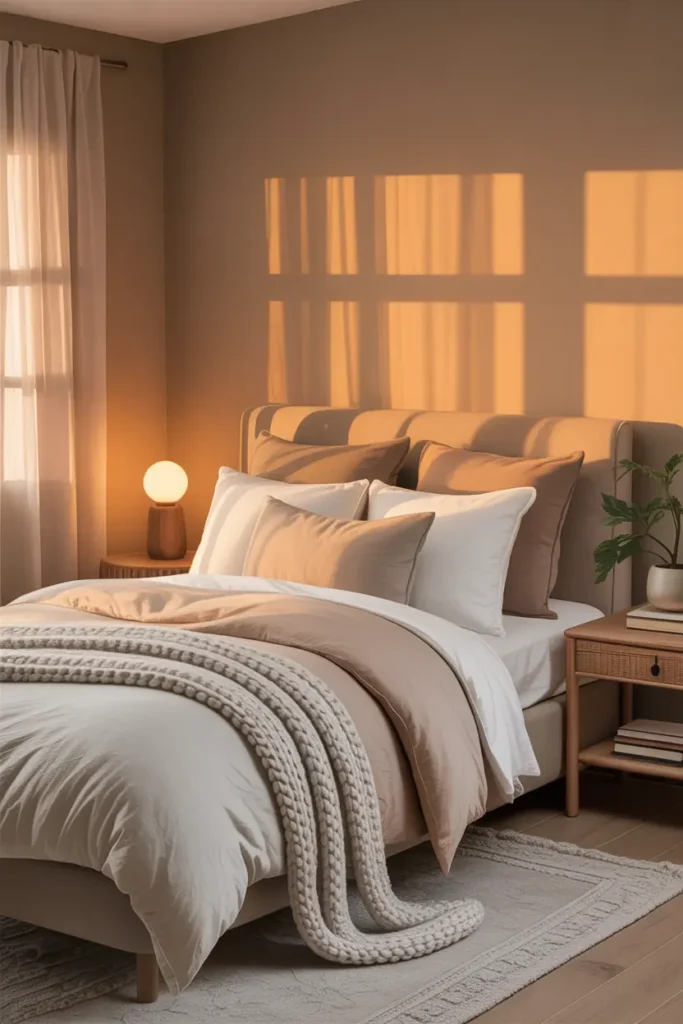
The defining palette of 2026 is warm minimalism: oatmeal, mushroom, warm white, clay, and camel — neutrals with yellow and red undertones instead of grey ones. The shift matters because warm neutrals flatter skin tones and feel embracing at night, while cool greys always read slightly clinical. Build the room in three values — light walls, mid-tone bedding, one deeper accent — and the palette does the designing for you.
The 2026 detail: texture within the palette. A bouclé throw, linen duvet, and jute rug can all be “beige” while looking completely different from each other. Monochrome only works when materials vary; same-color-everything in the same finish is what makes minimalism feel flat.
Idea 2: Natural Wood Returns, Honestly This Time
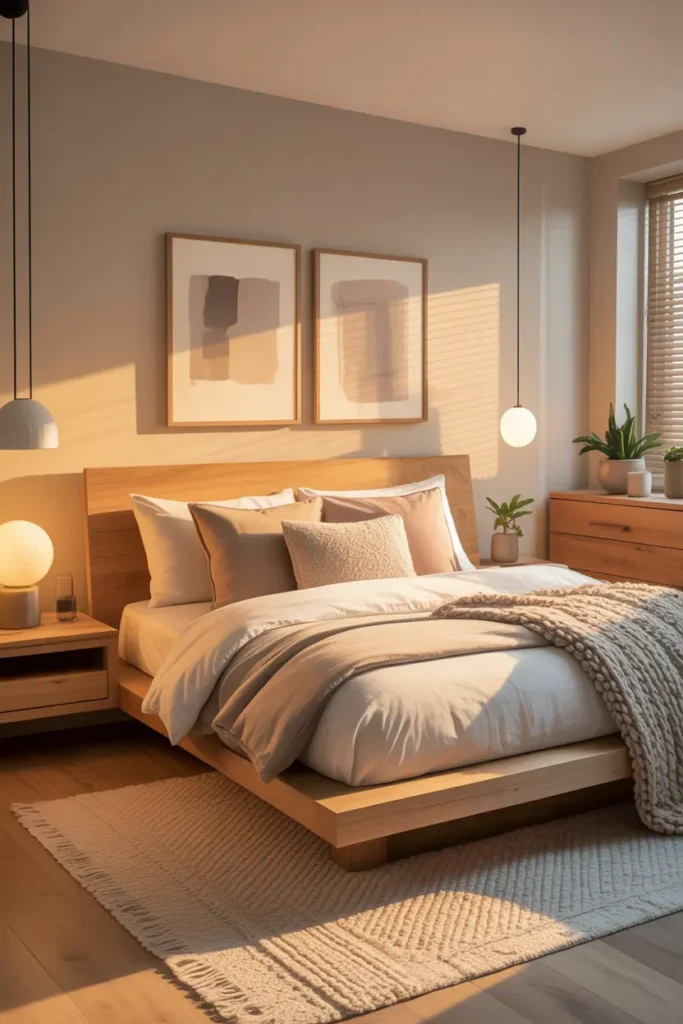
Wood is back in bedrooms, but not the dark espresso of the 2010s or the whitewashed everything of the farmhouse era. 2026’s wood is honest and mid-toned: white oak, walnut, warm teak — visible grain, matte or oil finishes, used structurally in bed frames, nightstands, and dressers rather than as accent decor. One or two real wood pieces anchor a room in a way veneer never quite manages.
Mix wood tones deliberately rather than matching: a walnut nightstand beside an oak bed frame looks collected and current; everything in identical “wood tone” looks like a set. Keep the undertones consistent (all warm or all cool) and the mix works every time.
Idea 3: Lighting Designed in Layers
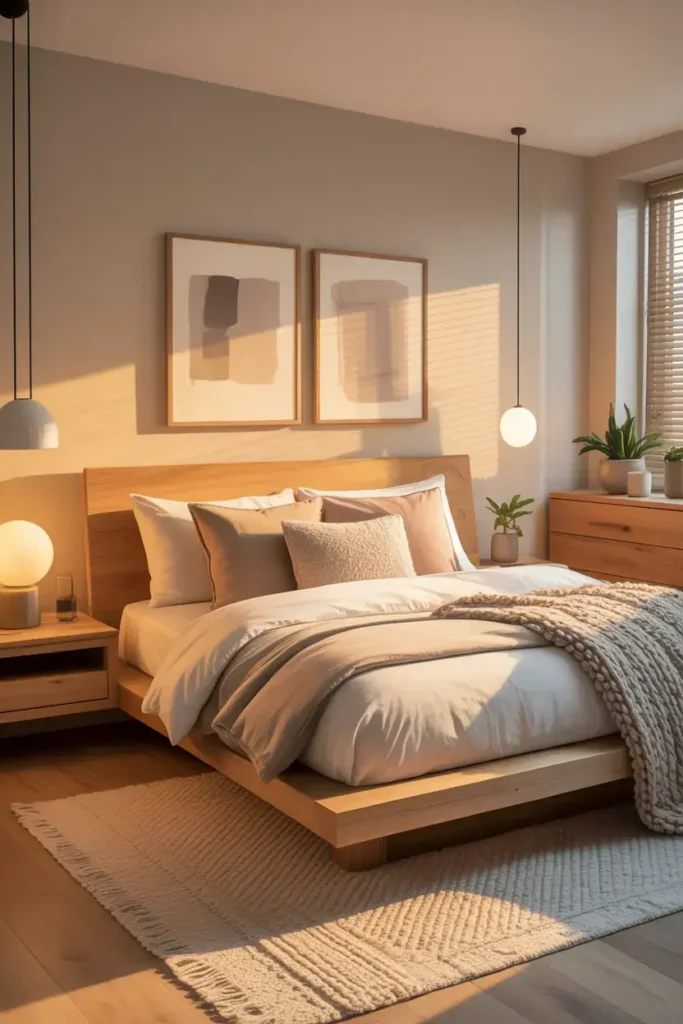
The single biggest upgrade in 2026 bedrooms is treating light as decor: layered, dimmable, warm. The formula designers use now — a sculptural pendant or flush mount for ambient light, bedside lamps or wall sconces for reading, and LED strips behind the headboard or under floating nightstands for glow. All 2700K, all dimmable. A bedroom lit this way feels like evening from the moment you walk in.
Wall-mounted sconces beside the bed are the defining 2026 move: they free nightstand surfaces, look architectural, and plug-in versions need no electrician. If you do one lighting project this year, make it this one.
Idea 4: One Large Artwork Instead of Many Small Ones
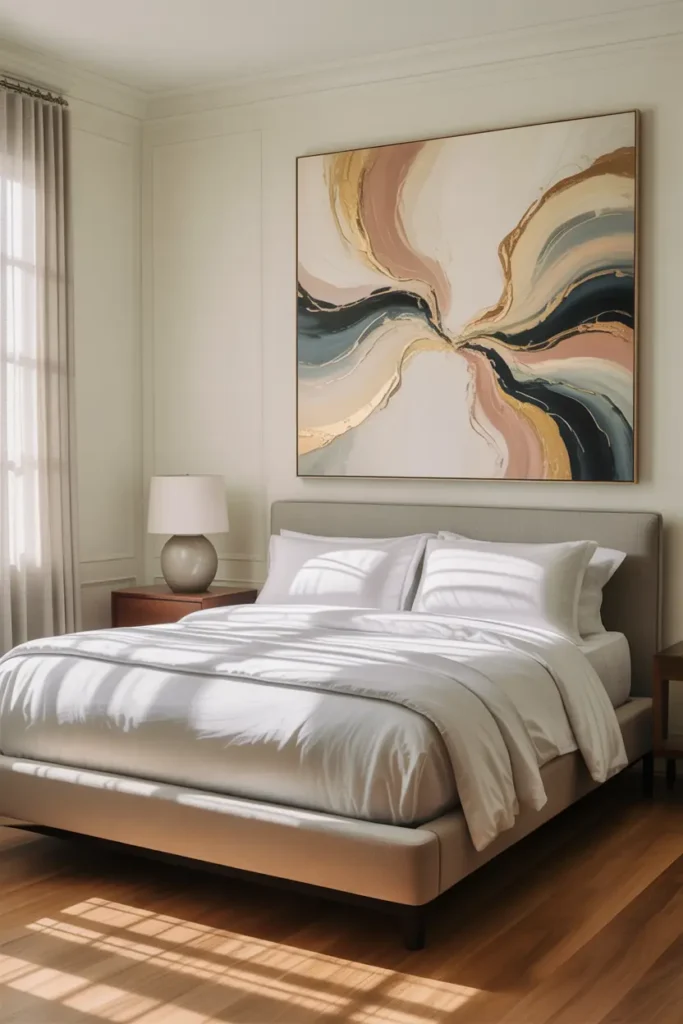
Gallery walls are receding; the 2026 move is a single oversized piece — 36×48 inches or larger — hung alone where it commands the room. One large artwork simplifies a bedroom instantly: fewer visual edges, one clear focal point, and a sense of confidence that clusters of small frames can’t match. Abstract landscapes and soft figurative work dominate; the mood is calm, not challenging.
Size it to the wall: the piece should span roughly two-thirds the width of the furniture below it. Hang the center at 57–60 inches. Oversized art in a thin natural-wood or black frame, with a wide mat, is the gallery look adapted for bedrooms.
Idea 5: The Low Platform Bed
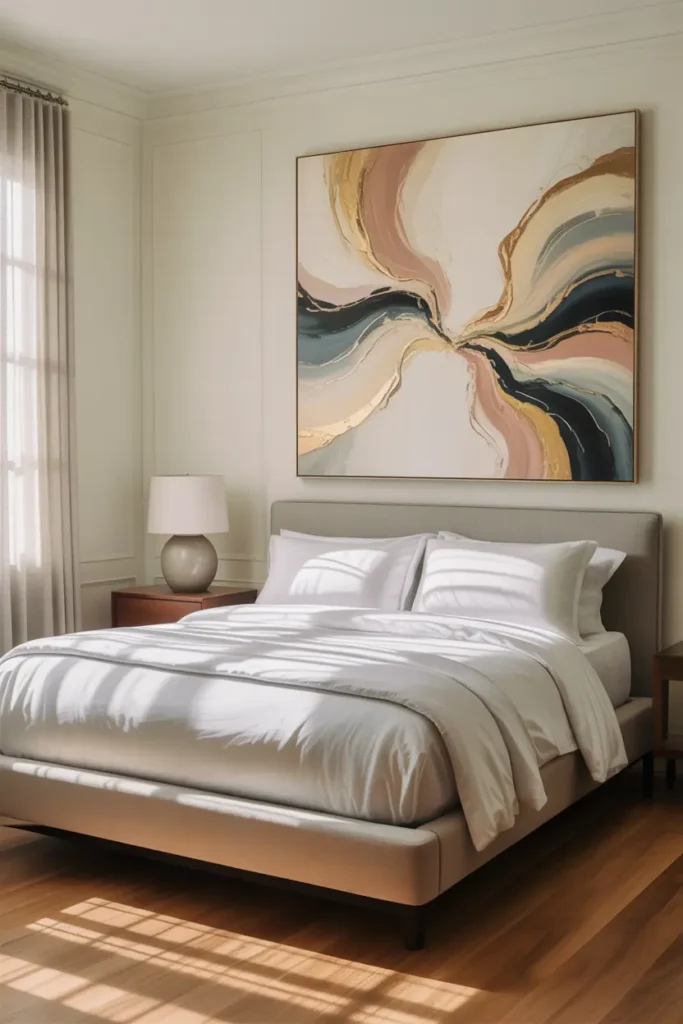
Bed heights keep dropping — the 2026 platform bed sits 10–14 inches off the floor including the mattress, creating that grounded, Japanese-influenced calm. Low beds make ceilings feel higher and rooms feel more spacious, and they suit the warm-minimal aesthetic perfectly. Look for solid wood platforms with clean lines; the mattress sits directly on slats, no box spring needed.
The tradeoff to know: low beds are harder to get out of for anyone with knee or back issues, and under-bed storage disappears. If you need the storage, choose a platform with built-in drawers rather than going back to a tall frame — the low profile is doing real visual work.
Idea 6: Plants as Living Sculpture
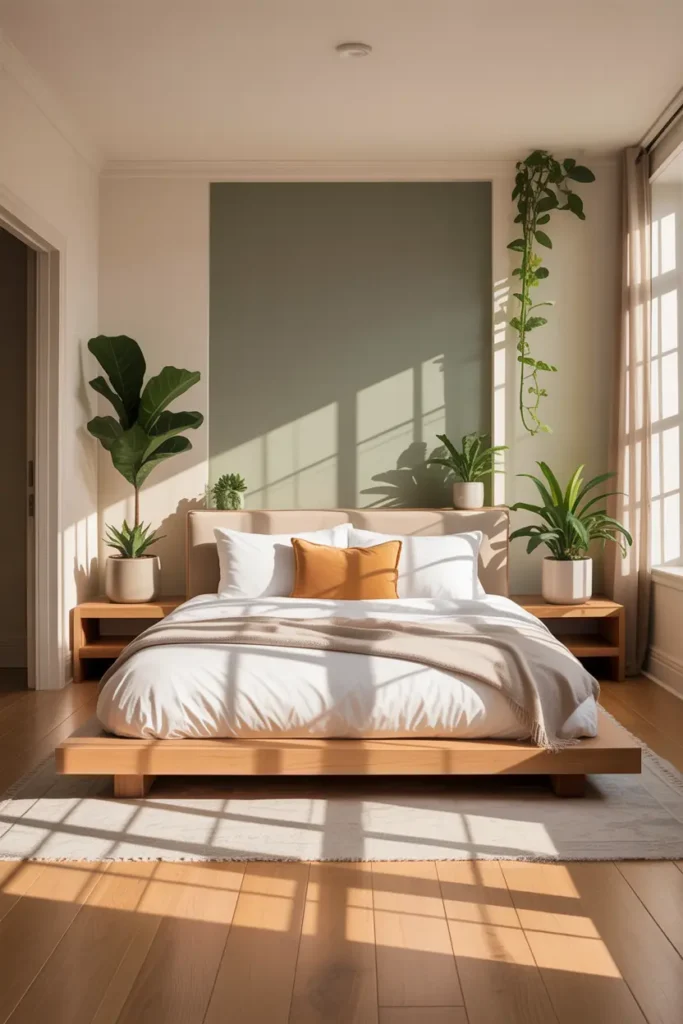
Bedroom plants in 2026 are chosen like art: one architectural specimen — an olive tree, a tall snake plant, a sculptural monstera — rather than a collection of small pots. A single 4–5 foot plant in a beautiful ceramic pot fills the dead corner every bedroom has and adds the one thing no object can: something alive.
Bedroom-specific advice: choose low-maintenance, low-light-tolerant plants (snake plant, ZZ, pothos) since bedrooms often have less light than living rooms, and avoid heavily fragrant flowering plants — strong scent interferes with sleep for sensitive people. One plant, well-chosen, beats five struggling ones.
Idea 7: Sheer Curtains for Filtered Daylight
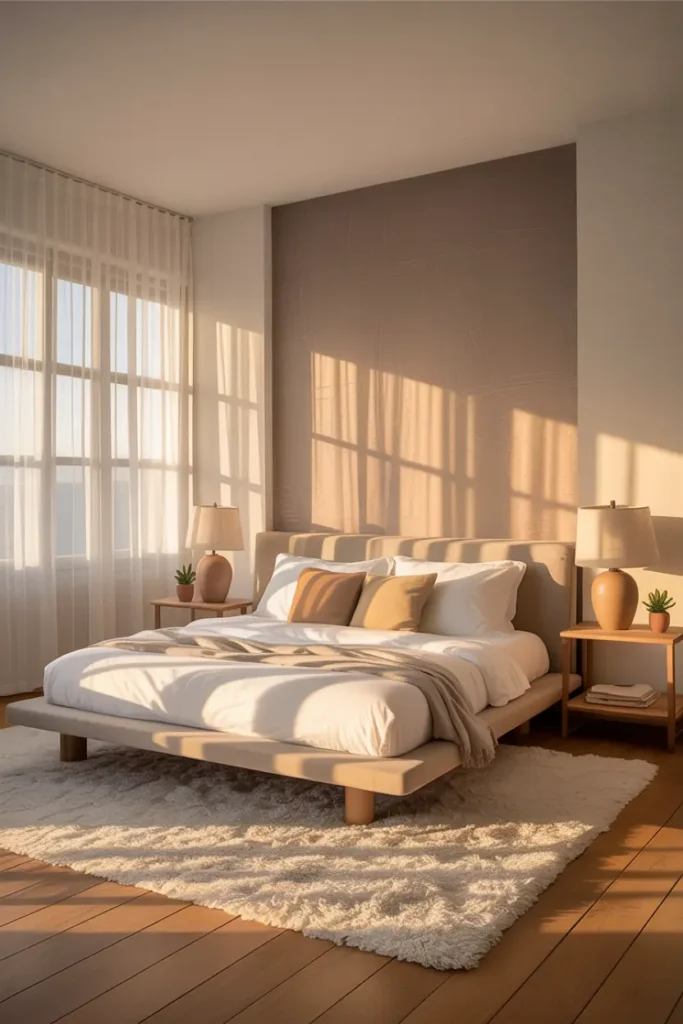
Heavy blackout curtains are giving way to layered window treatments: sheers for the day, with blackout behind or a separate sleep shade for night. Sheer linen curtains diffuse daylight into the soft, glowing light that makes 2026 bedrooms photograph so beautifully — and waking up to filtered morning light is genuinely better for your circadian rhythm than a pitch-dark room with an alarm.
Hang sheers high and wide — rod 4–6 inches above the frame, extending 8–12 inches beyond each side — so the window reads larger. For sleep, add a separate blackout roller shade mounted inside the frame; you get the daytime glow and the nighttime dark without compromise.
Idea 8: A Seating Corner Worth Sitting In
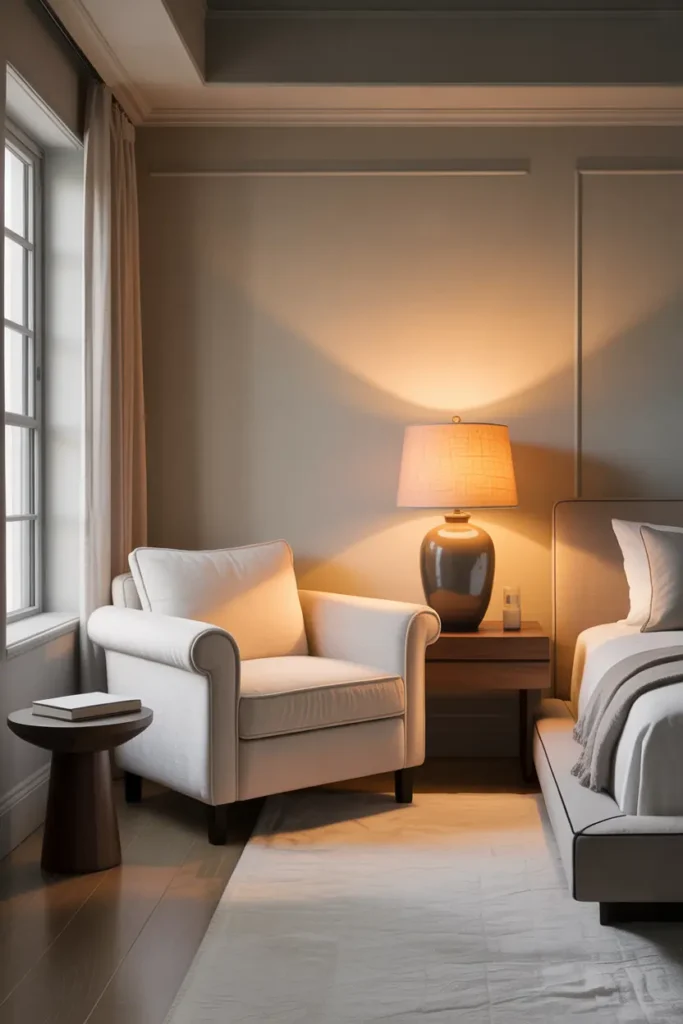
The bedroom chair that nobody sits in is finally being replaced by seating people use: a proper reading chair with a floor lamp and small side table, scaled for lingering. In 2026 the corner chair is upholstered for comfort (bouclé, velvet, or a deep armchair), not chosen as a sculptural object. If you won’t read in it for an hour, it’s the wrong chair.
Place it where it catches natural light — near but not blocking the window — and give it a throw and a real reading lamp (not just ambient glow). A corner that invites an hour with a book changes how a bedroom feels: it’s no longer just for sleeping, it’s for retreating.
Idea 9: Storage That Disappears
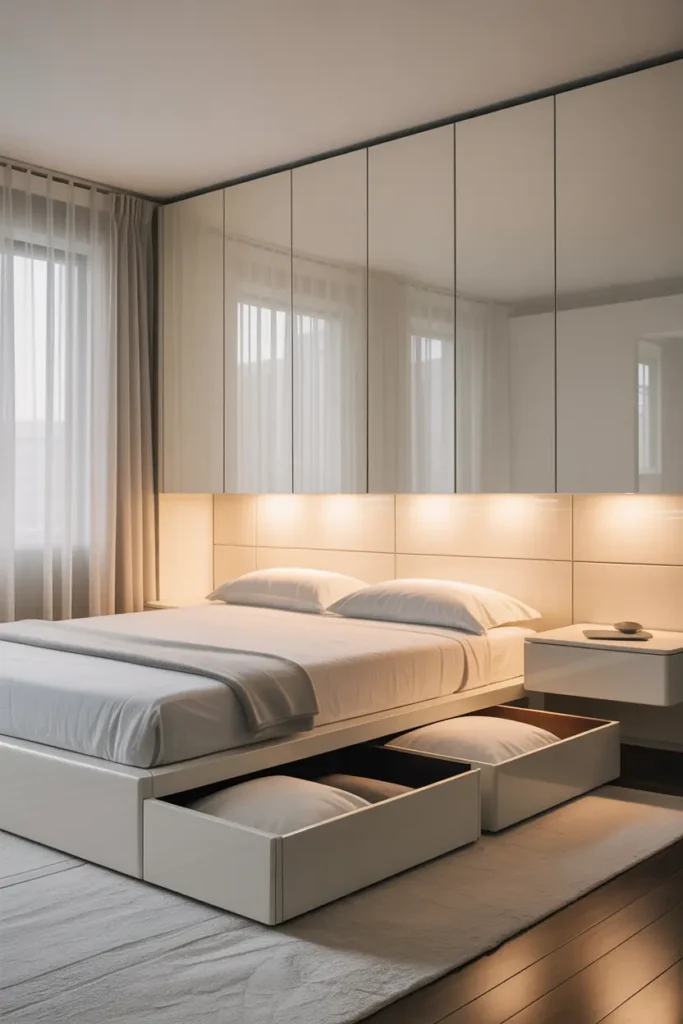
Visible clutter is the enemy of the calm 2026 bedroom, so storage has gone undercover: ottomans with hidden compartments, nightstands with drawers (not open shelves), wardrobes with interior organizers, platform beds with built-in drawers. The goal is surfaces that stay clear — because a clear nightstand and a clear dresser top are what make a bedroom feel serene.
The rule: everything in the bedroom should have a closed home. Open shelving in bedrooms collects dust and visual noise; closed storage keeps the calm. Do a monthly purge of the nightstand drawer — it’s where bedroom clutter goes to hide.
Idea 10: Personal, Not Perfect
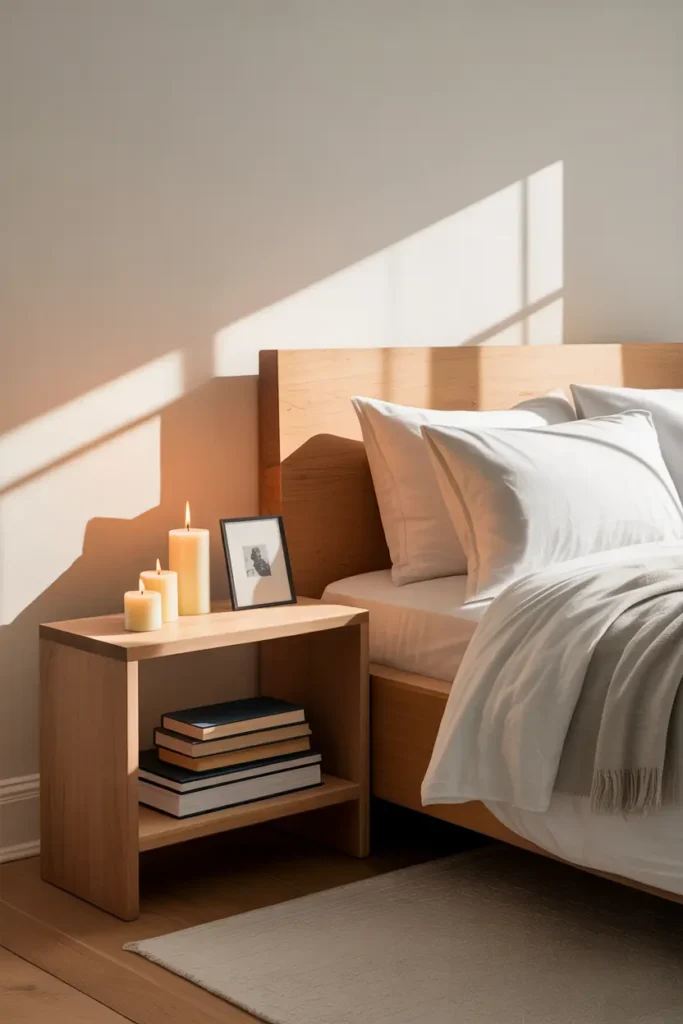
The most current 2026 bedrooms aren’t showroom-perfect — they have evidence of a person: a stack of actually-being-read books, one framed photo that matters, a textile from travels, a plant that’s slightly wild. Designers call it “warm minimalism” — the minimalism provides the calm, the personal objects provide the soul. A bedroom with no personal traces feels like a hotel, however beautiful.
Edit personal items to a curated few rather than displaying everything. Three meaningful objects on a dresser tell a story; fifteen tell a mess. The 2026 skill isn’t acquiring beautiful things — it’s choosing which few deserve to be seen.
Final Thought
The modern bedroom of 2026 is warm, low, layered in light, and quietly personal. Warm neutrals, honest wood, one strong artwork, lighting in three layers, and a few things that are truly yours — that’s the formula, and it works in every size of room.
Pro Tips
- Change your bulbs before you change your furniture: 2700K warm-white everywhere, dimmable where possible. Light temperature defines a bedroom’s mood more than any single object.
- Invest in the bed first — frame, then mattress, then bedding. It’s the largest object and the most-used; everything else is supporting cast.
- Keep technology out of sight: charge phones in a drawer, not on the nightstand. A bedroom that looks calm helps you feel calm.
- Photograph your bedroom in morning light once a season. You’ll spot what’s working and what’s drifted faster than by living in it.
FAQs
What is the most popular bedroom style in 2026?
Warm minimalism: warm neutrals, natural wood, layered warm lighting, low platform beds, one large artwork, and curated personal touches. It’s minimalism with texture and warmth instead of cold austerity.
What color should I paint my bedroom in 2026?
Warm whites, oatmeal, mushroom, and soft clay tones lead the year. Avoid cool greys — they’ve dated. If you want color, muted sage or dusty terracotta as an accent wall works within the warm palette.
Are platform beds good for small bedrooms?
Yes — their low profile makes ceilings feel higher and rooms feel larger. Just know the tradeoffs: less under-bed storage and a lower sitting height. Choose one with built-in drawers if storage matters.
How can I make my bedroom feel luxurious on a budget?
Layered warm lighting ($30 in bulbs and a plug-in sconce), one oversized art print in a simple frame, quality-feeling bedding in a warm neutral, and clearing every surface. Luxury in bedrooms reads as calm, and calm is mostly editing.

HowDecor is a home decor blog sharing simple, practical decorating ideas for everyday spaces. We believe a beautiful home should feel comfortable, personal, and full of warmth — and that great style does not require a huge budget. Our goal is to inspire readers to create spaces that feel peaceful, welcoming, and truly their own — one room at a time.