Designing a bedroom that works for both boys and girls — whether it’s shared siblings or simply a room you don’t want to repaint every two years — comes down to one principle: build the room on what kids share, not what divides them. Every child needs sleep, play, storage, and a sense of “mine.” Colors and themes are just the wrapping paper. Get the foundations right and the room works for any kid, at any age, without a single gendered cliché.
These eight ideas create a bedroom that’s genuinely neutral in the best sense: not boring, not beige-everything, but built on universal kid needs with personality layered on top in ways that are easy to change.
Idea 1: A Neutral Base With Room to Grow
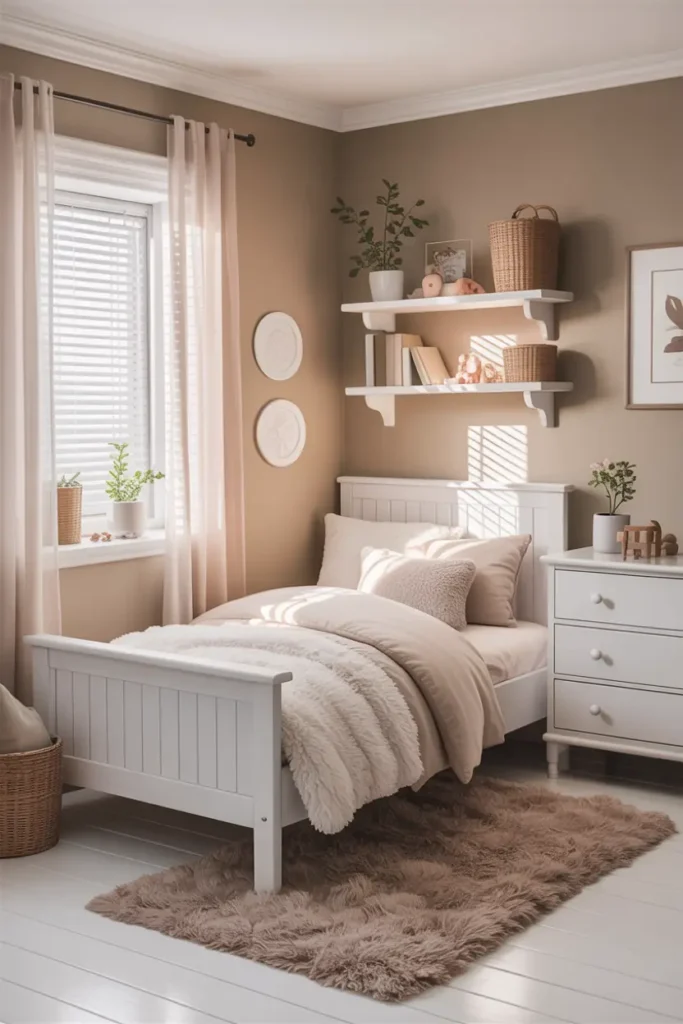
Paint walls in a warm, light neutral — soft white, pale greige, warm light grey — and let personality live in the changeable layers. This isn’t about avoiding color; it’s about putting color where it can evolve. A neutral shell at age 4 becomes a teen’s gallery wall at 14 with zero repainting. The psychology backs it up: calm wall colors support sleep, while bright walls can overstimulate at bedtime.
If plain feels too plain, add one removable element: a wide stripe of peel-and-stick wallpaper on one wall, or a painted arch behind the bed in a soft tone. Both come off cleanly when the next phase arrives, and both give the room character right now.
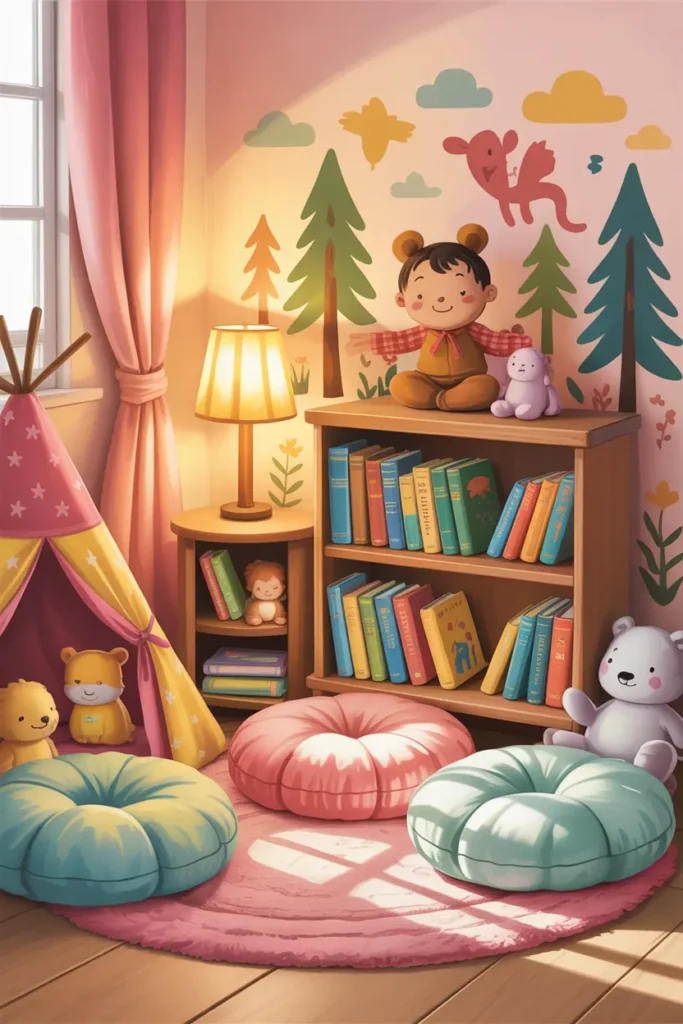
Every kids’ bedroom deserves a reading spot, and in a shared room it doubles as the peace treaty — a neutral zone that belongs to together-time. A wide floor cushion or small loveseat-style floor chair ($25–40), a wall-mounted book rack at kid height, and a clip-on reading light. Siblings who read side by side fight less; it’s practically science.
Stock it with books for both ages if siblings share — picture books on the lower rack, chapter books above. A small basket for each child’s current book prevents the “that’s mine” wars. This corner costs little and gets used daily, which is more than most bedroom furniture can claim.
Idea 3: Bold Bedding Against Calm Walls
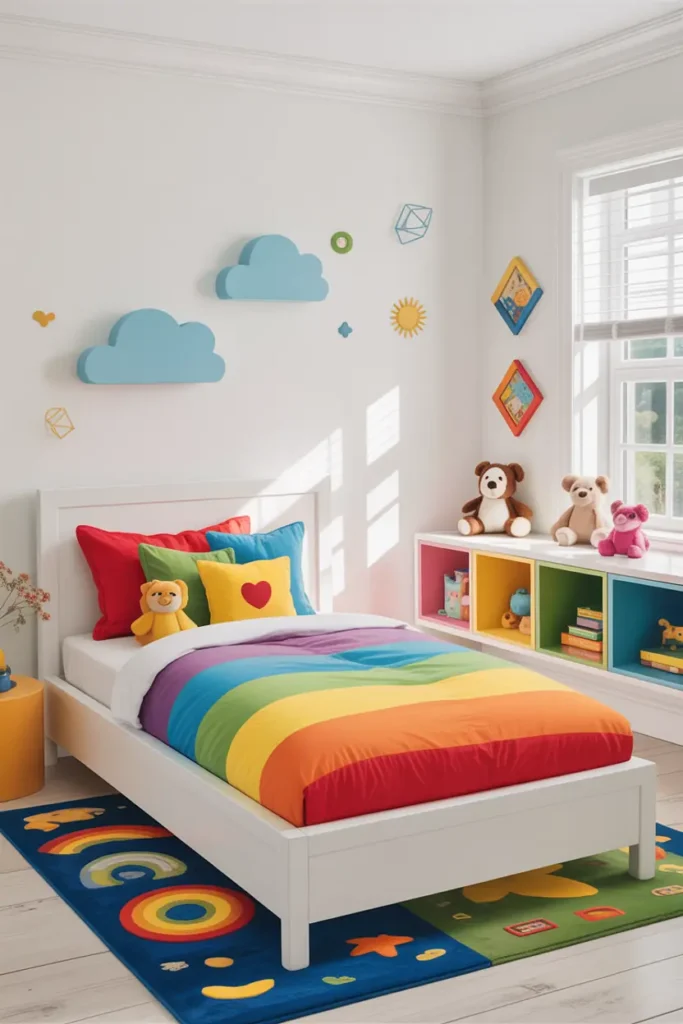
Here’s where the color lives: bedding. In a shared room, give each child their own duvet in their own chosen color or pattern — teal for one, mustard for the other, or matching sets if they prefer unity. The beds become the room’s color story, and when tastes change (monthly, in some households), you swap a $25 duvet cover instead of redecorating.
Keep sheets and pillows white or cream so the duvets pop without clashing. If the patterns fight each other, unify with matching throw blankets at the foot of each bed — one shared textile ties two different tastes together visually.
Idea 4: A Wall Display That Holds Everyone’s Work
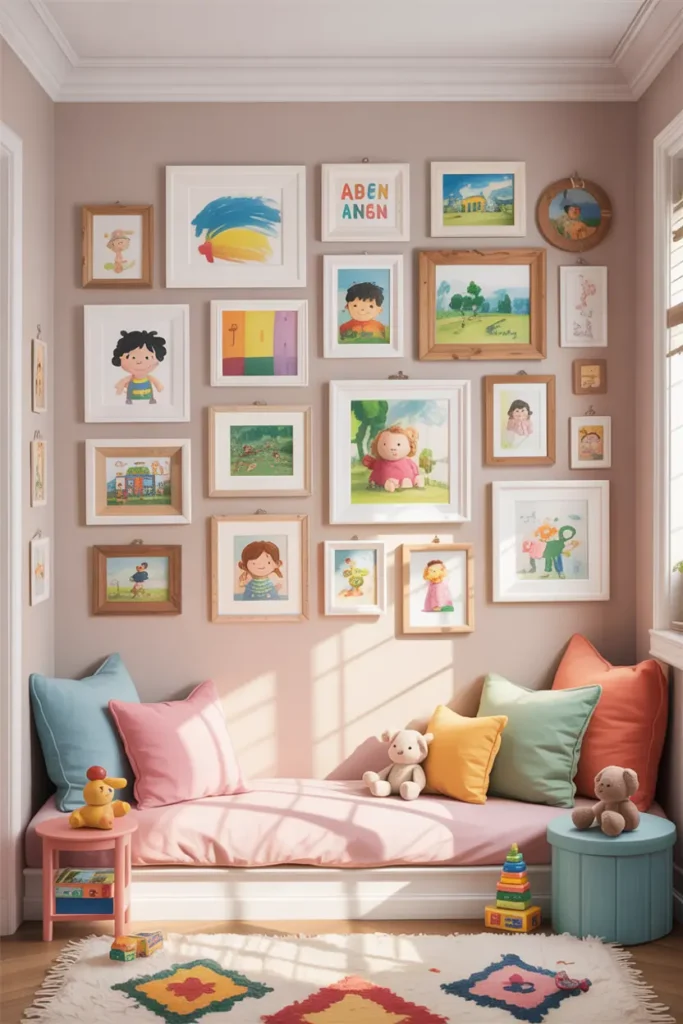
Skip the “his side / her side” divide and create one shared gallery: a long picture ledge or two rows of clipboards running along one wall, where every child’s art, photos, and treasures get equal space. Shared display teaches something subtle — that both kids’ creations matter equally in this room.
Use identical frames or clips for everyone’s pieces so no one’s work looks “better” by presentation. Rotate monthly and let each child curate their own section. For teens, the same ledge holds photos, postcards, and ticket stubs — the system grows up with them.
Idea 5: Storage That Ends the Toy Wars
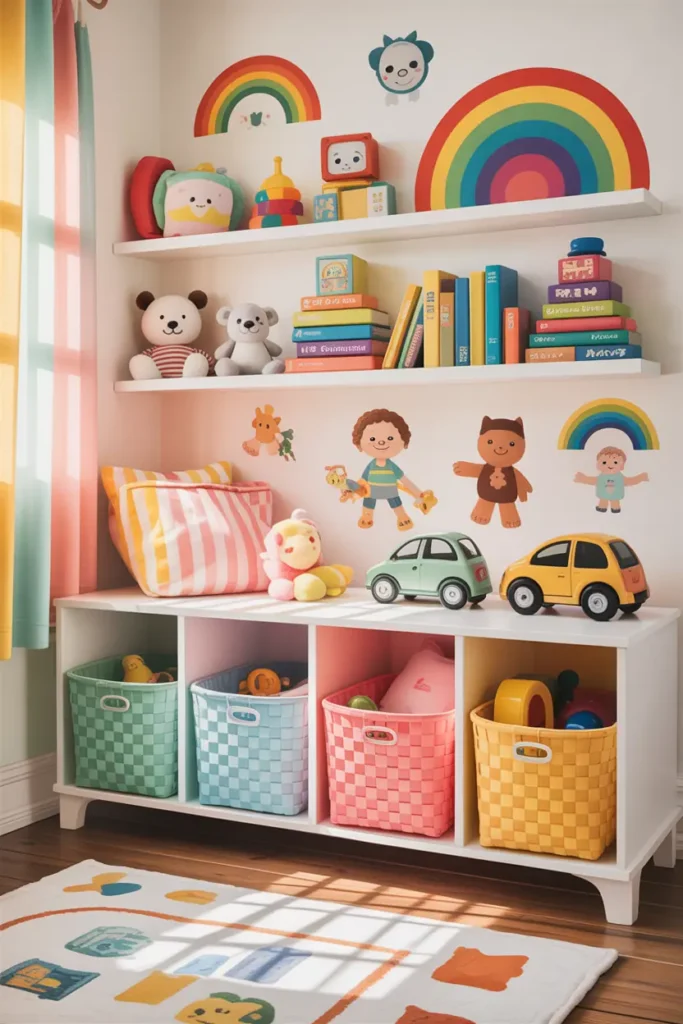
In shared rooms, storage needs a system, not just containers. The one that works: color-coded baskets — one color per child — plus one shared basket for communal toys. Each child owns their color, manages their basket, and the shared basket holds the peace. Label with names for readers, pictures for pre-readers.
Place the storage as a divider if the room is shared: a low cube shelf ($40–60) between the beds creates both storage and a sense of personal territory without building a wall. Cube shelves with fabric bins are the unsung heroes of sibling rooms — accessible, visible, and tidy-looking even when they’re not.
Idea 6: A Play Rug Big Enough for Two
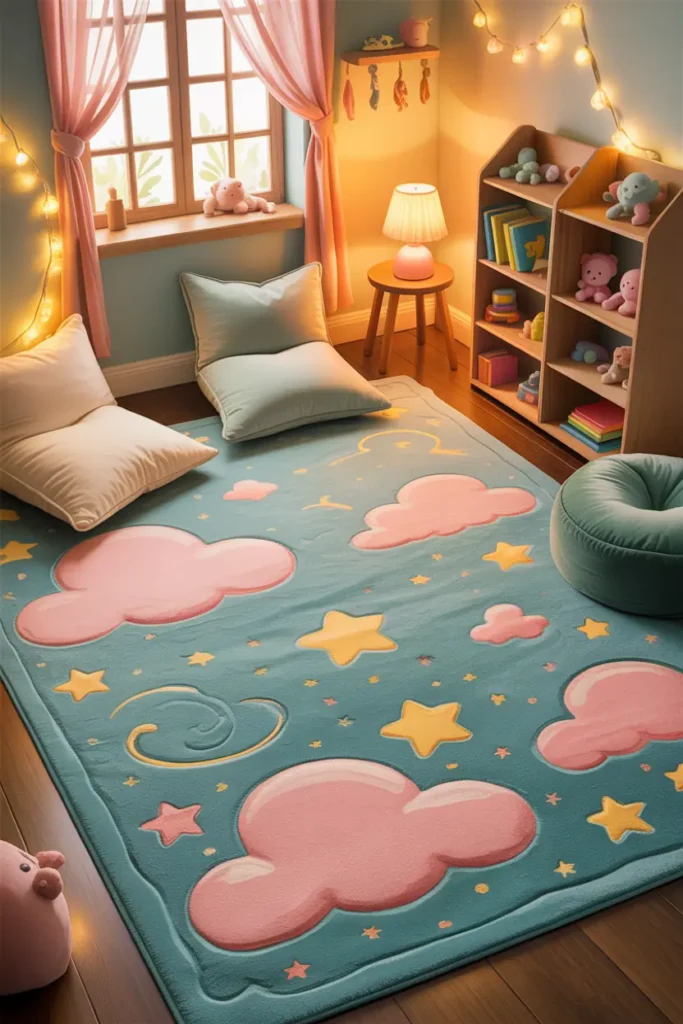
Floor play is where siblings actually bond, so the rug needs to fit two kids building, wrestling, or sprawling with books. Go 6×9 minimum in a shared room — big enough for parallel play without elbows colliding. Choose a low-pile, washable rug in a pattern that hides the evidence of childhood: subtle geometrics, tone-on-tone designs.
Avoid pure white or very light solid rugs; they show every mark and create stress about messes, which defeats the purpose of a play space. A rug that forgives is a rug that gets used. Machine-washable is worth every penny of the small premium.
Idea 7: Lighting for Two Different Sleepers
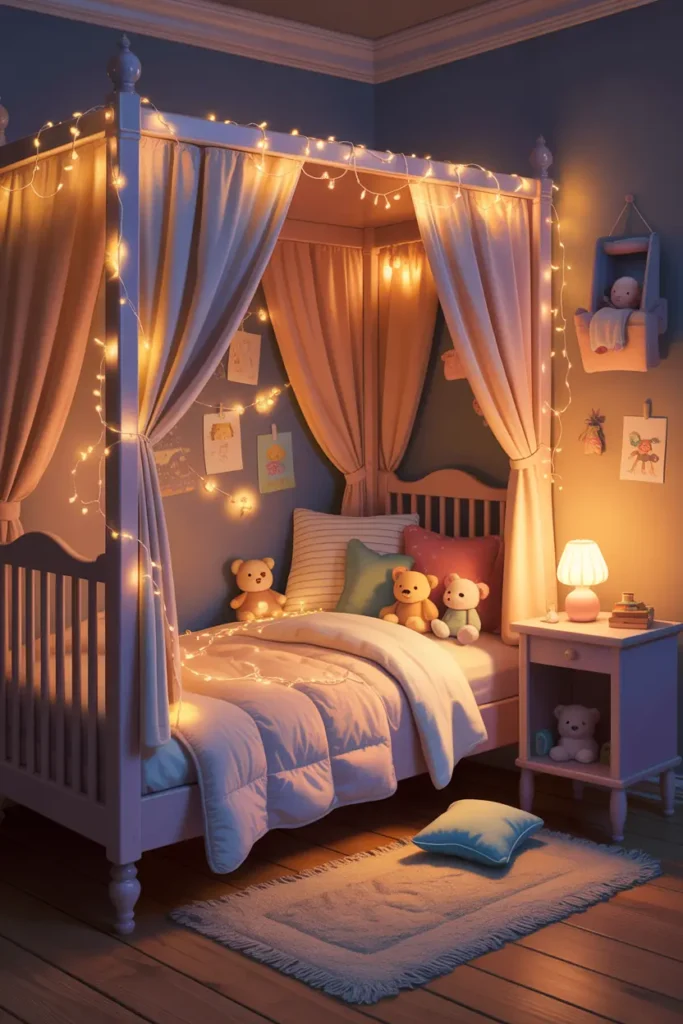
Siblings rarely share a sleep schedule, so lighting needs zones: a dimmable main light or individual clip-on reading lights ($10–15 each) per bed, plus a soft night light for the younger or more nervous sleeper. Individual bed lights are the real game-changer — one child can read while the other sleeps, and bedtime stops being a negotiation.
Warm white (2700K) for all bedroom lighting; cool light suppresses melatonin and fights sleep. Put the main light on a dimmer or use a smart bulb — dimming the room 30 minutes before bed is a genuine sleep-hygiene upgrade, not just ambiance.
Idea 8: One Shelf Each for Treasures
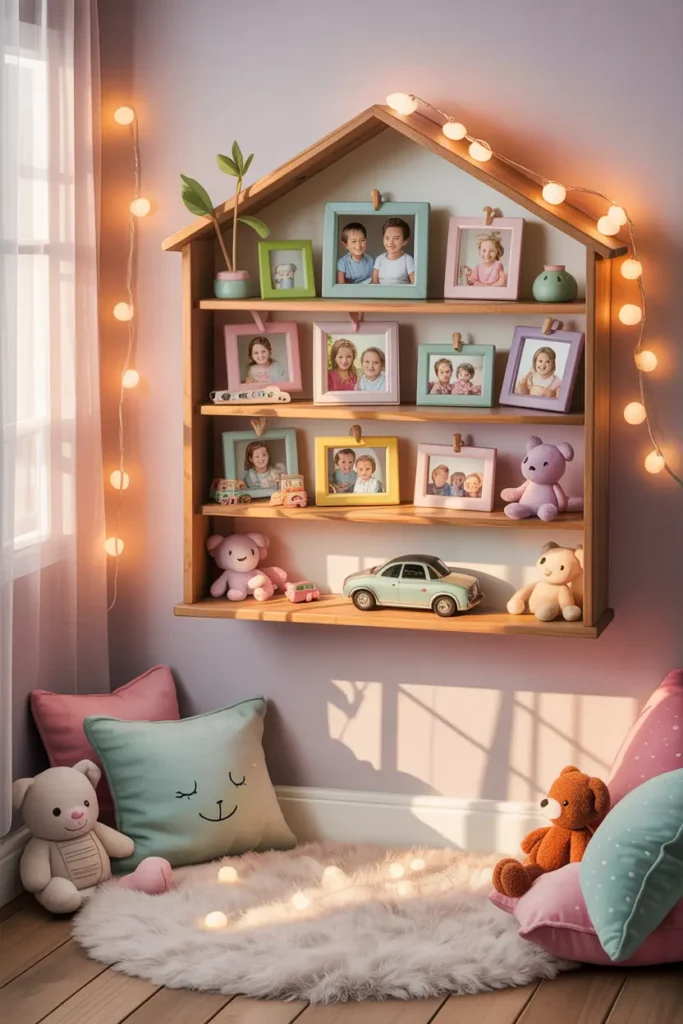
Every child needs one small space that’s entirely theirs — a single floating shelf above each bed for trophies, special toys, photos, the rock collection. It’s tiny, costs $10 to install, and does enormous psychological work: in a shared room, “my shelf” is territory, identity, and pride.
Let each child arrange their own shelf with zero adult editing (safety excepted). The lopsided, deeply personal shelf is the point — it’s the one spot in the room that reflects exactly who they are right now, and it changes as they do.
Final Thought
A bedroom for boys and girls — together or apart — works when it’s built on shared needs: good sleep, real play space, fair storage, and personal territory. Keep the shell neutral, let bedding and art carry the personality, and the room will adapt to whoever sleeps in it, at whatever age.
Pro Tips
- In shared rooms, duplicate the essentials: two reading lights, two laundry hampers, two bedside surfaces. Shared items cause 90% of sibling room conflicts.
- Use a white noise machine ($20–30) in shared bedrooms — it masks the sounds of one child falling asleep while the other is still awake.
- Anchor every piece of furniture to the wall, especially in rooms where kids play actively. Anti-tip straps take ten minutes to install.
- Revisit the room layout every year on their birthday — kids’ needs change fast, and an annual 30-minute reset keeps the room fitting the child.
FAQs
How do I decorate a shared bedroom for a boy and girl?
Keep walls and large furniture neutral, give each child their own bedding color and personal shelf, and use color-coded storage. Shared neutrals plus individual accents respect both kids without forcing a theme on either.
What age can siblings share a room comfortably?
Many families share successfully from toddlerhood through early teens with the right setup: individual reading lights, divided storage, and some personal territory per child. The key is giving each child ownership of something, even in a shared space.
How do I stop fighting over toys in a shared kids’ room?
Color-coded personal baskets plus one shared basket for communal toys, with a simple rule: personal baskets are private, shared basket is fair game. Clear systems beat constant mediation.
Should kids’ bedrooms have TVs or screens?
Sleep experts recommend keeping screens out of bedrooms — the blue light and stimulation genuinely harm sleep quality. If space requires it, use a tablet stored in the living room and brought in only for specific, time-limited use.

HowDecor is a home decor blog sharing simple, practical decorating ideas for everyday spaces. We believe a beautiful home should feel comfortable, personal, and full of warmth — and that great style does not require a huge budget. Our goal is to inspire readers to create spaces that feel peaceful, welcoming, and truly their own — one room at a time.