Here’s something nobody tells new parents about kids’ rooms: your child will not remember whether the bedding matched. They’ll remember the reading corner where you read to them every night, the wall where their art went up, the rug where they built entire worlds out of blocks. Decorate for the memories, not the photos — and suddenly a kids’ room on a budget stops feeling like a compromise and starts feeling like the whole point.
These eight ideas all cost under $25 each, most under $10. They’re chosen for real family life: washable, safe, adaptable as kids grow, and genuinely fun for the small humans who live there.
Idea 1: A Gallery Wall of Their Own Art
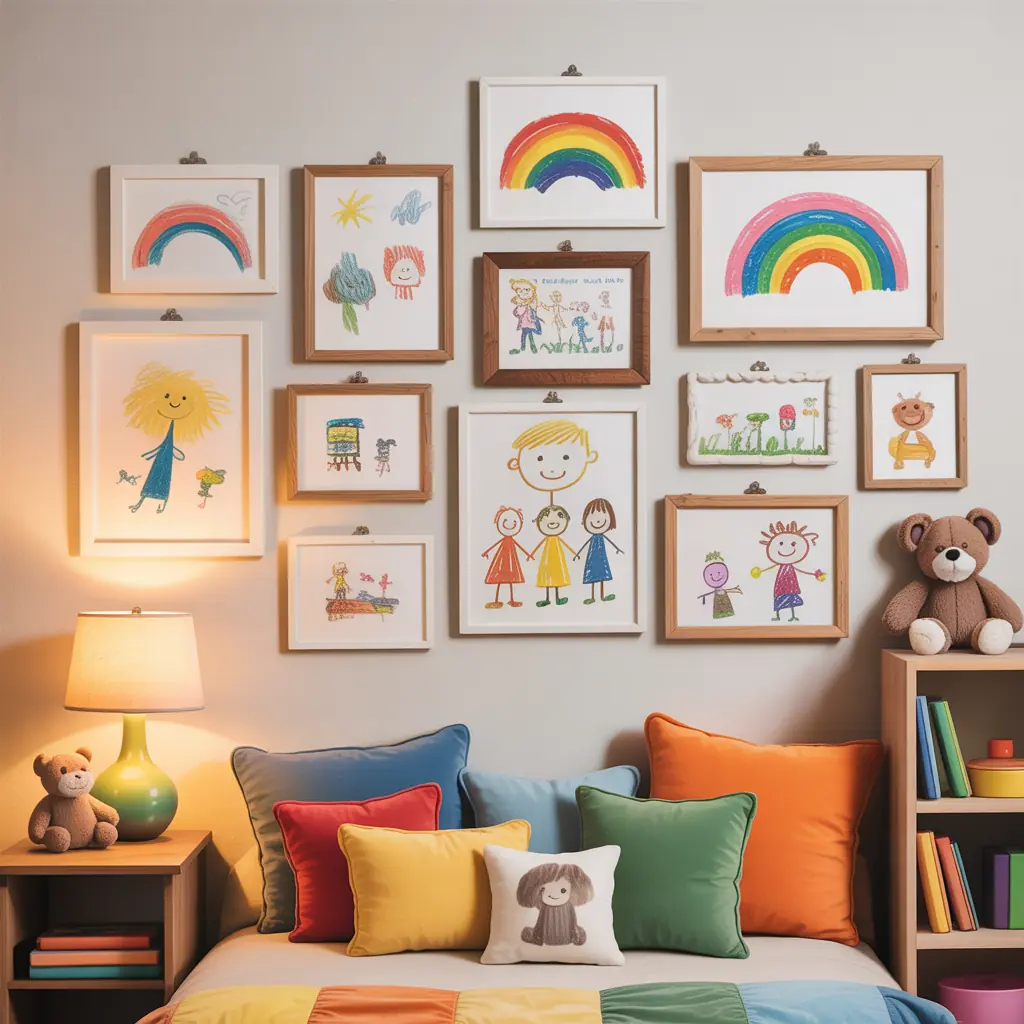
The best art for a kids’ room is free and already exists — it’s in the recycling bin of school papers. Buy a set of matching frames ($1–3 each at discount stores, all the same color), hang them in a grid at your child’s eye level (not yours — 36 to 44 inches for little ones), and rotate the art monthly. Kids light up seeing their work framed like it matters, because to them, it does.
Use frames with plexiglass instead of real glass anywhere a child might bump into them. And hang the grid with the bottom row low enough that your child can point to their favorites — the gallery is for them, not for adult visitors.
Idea 2: A Reading Corner They’ll Actually Use
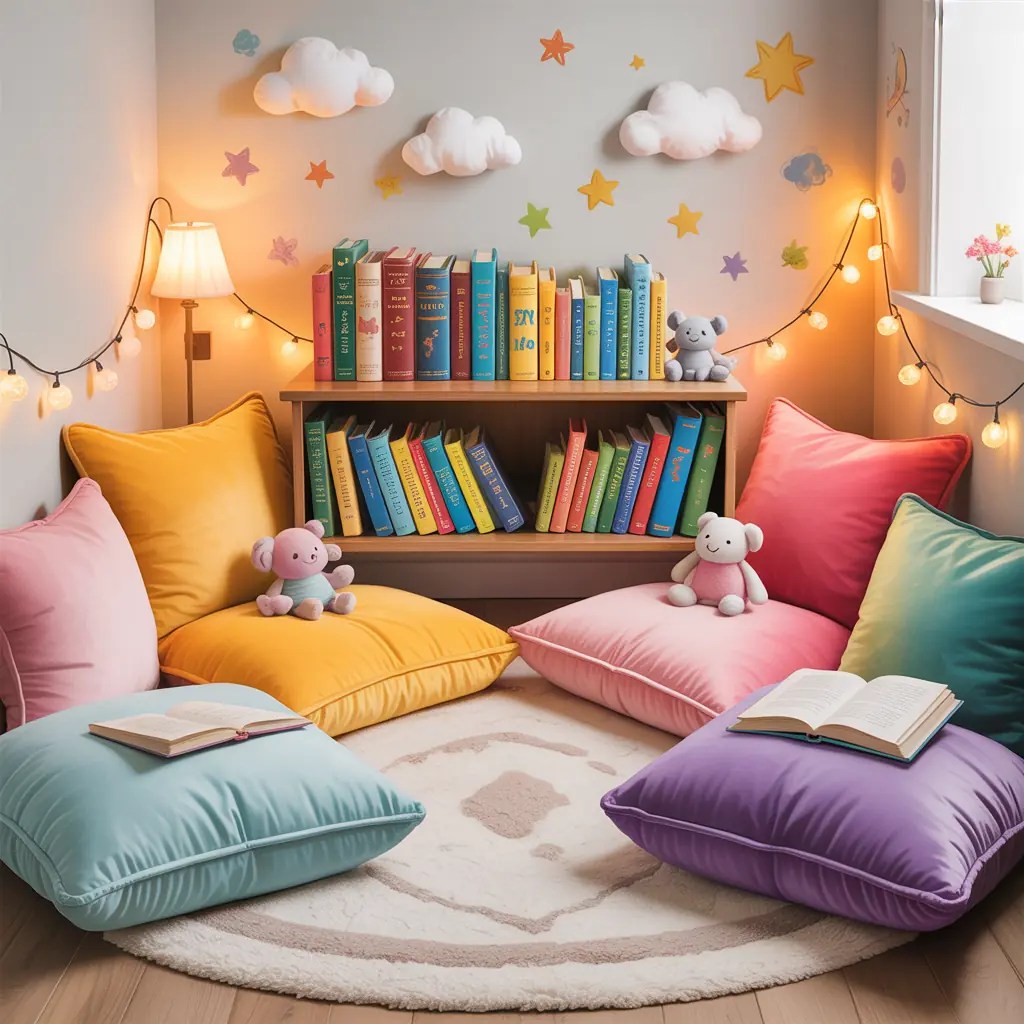
You don’t need a fancy teepee — a corner, a cushion, and light are the whole formula. Put a thick floor cushion or a folded duvet in an underused corner, add a small bookshelf or wall-mounted book sling at child height, and hang a $10 plug-in wall light or place a small lamp nearby. Total cost: $15–25. Kids who have a dedicated reading spot read more; it’s that simple.
Keep the book selection small and rotating — 8–10 books out, the rest stored away. A full overflowing shelf overwhelms young kids; a curated few invite browsing. Add one stuffed animal as the corner’s “guardian” and the spot becomes theirs in a way no furniture purchase can replicate.
Idea 3: Storage Baskets in Fun Colors
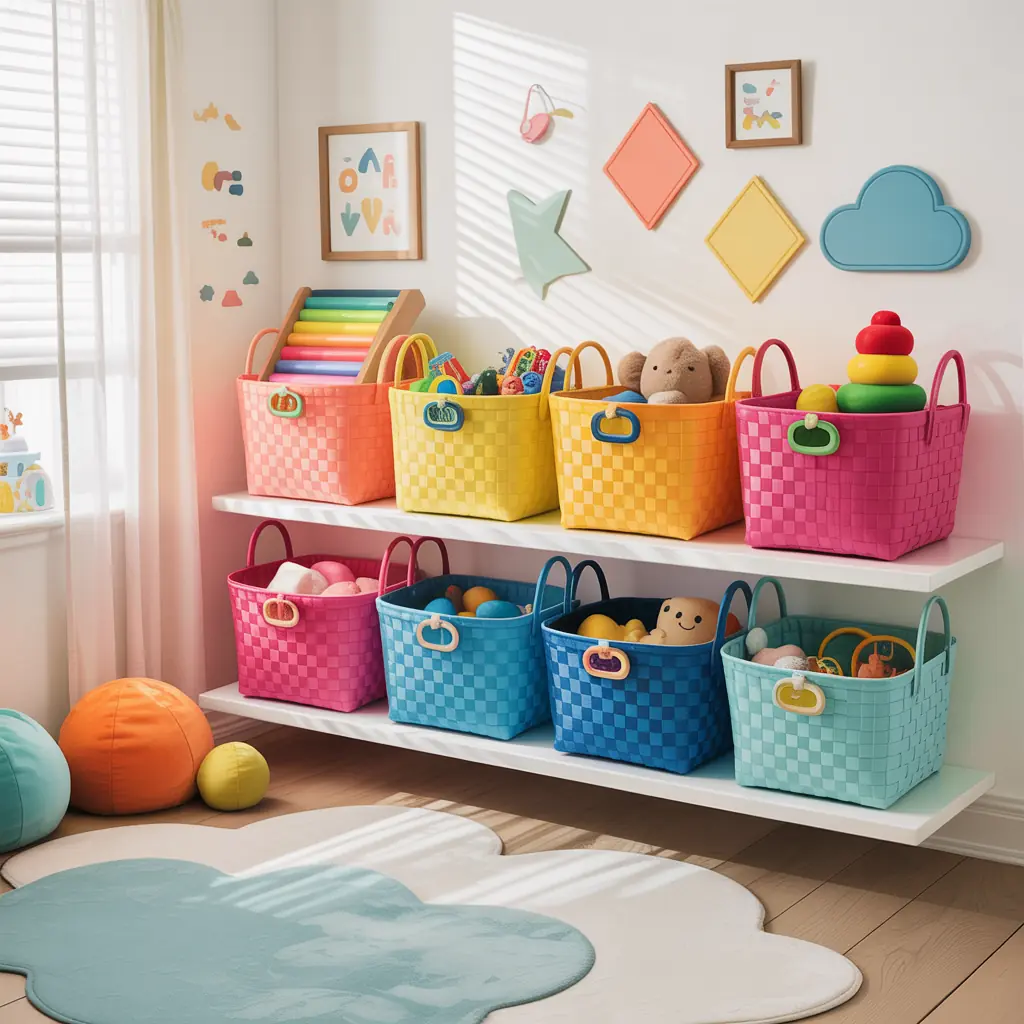
Toy chaos is the #1 enemy of a cute kids’ room, and baskets are the peace treaty. Buy 4–6 fabric or woven baskets in 2–3 cheerful colors ($5–8 each), label them with pictures for pre-readers (a photo of blocks on the block basket), and put them where the toys actually land — not where they’d look tidiest. Storage only works if it’s easier than the floor.
The system that actually sticks: one basket per toy category, baskets at child height, and a five-minute “basket reset” before dinner that the kids do themselves. A room with labeled baskets looks organized even mid-play, which is the realistic goal.
Idea 4: Removable Wall Stickers
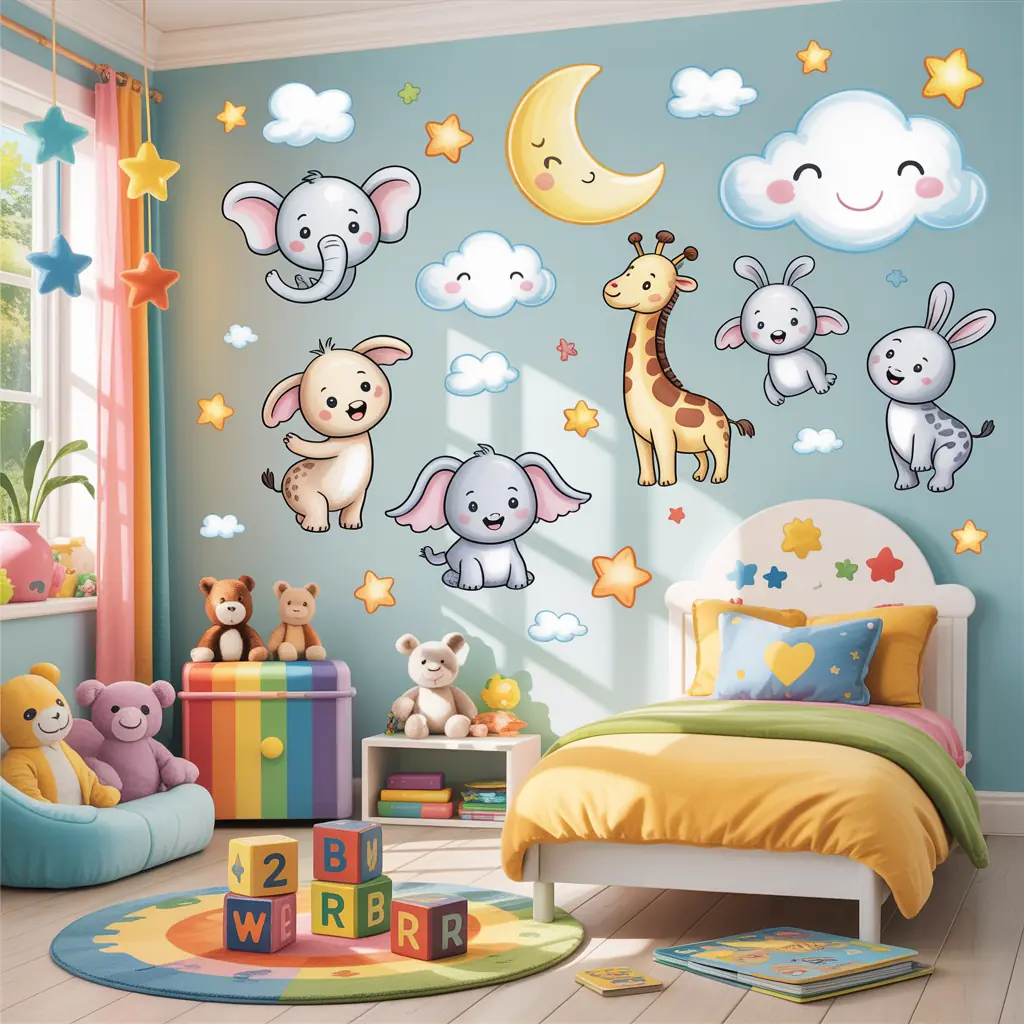
Wall decals are the renter-parent’s best friend: a $10–15 pack transforms a plain wall into a forest, a space scene, or a polka-dot wonderland, and peels off cleanly when tastes change (and they will, roughly every 18 months). Let your child help place them — imperfect placement by a six-year-old is part of the charm.
Apply to clean, dry walls and smooth from the center outward to avoid bubbles. Avoid placing decals where little hands will pick at edges constantly — mid-wall and up is safer than within arm’s reach of the bed. When removing, warm with a hairdryer for 30 seconds and peel slowly.
Idea 5: A Soft Rug for Floor Play
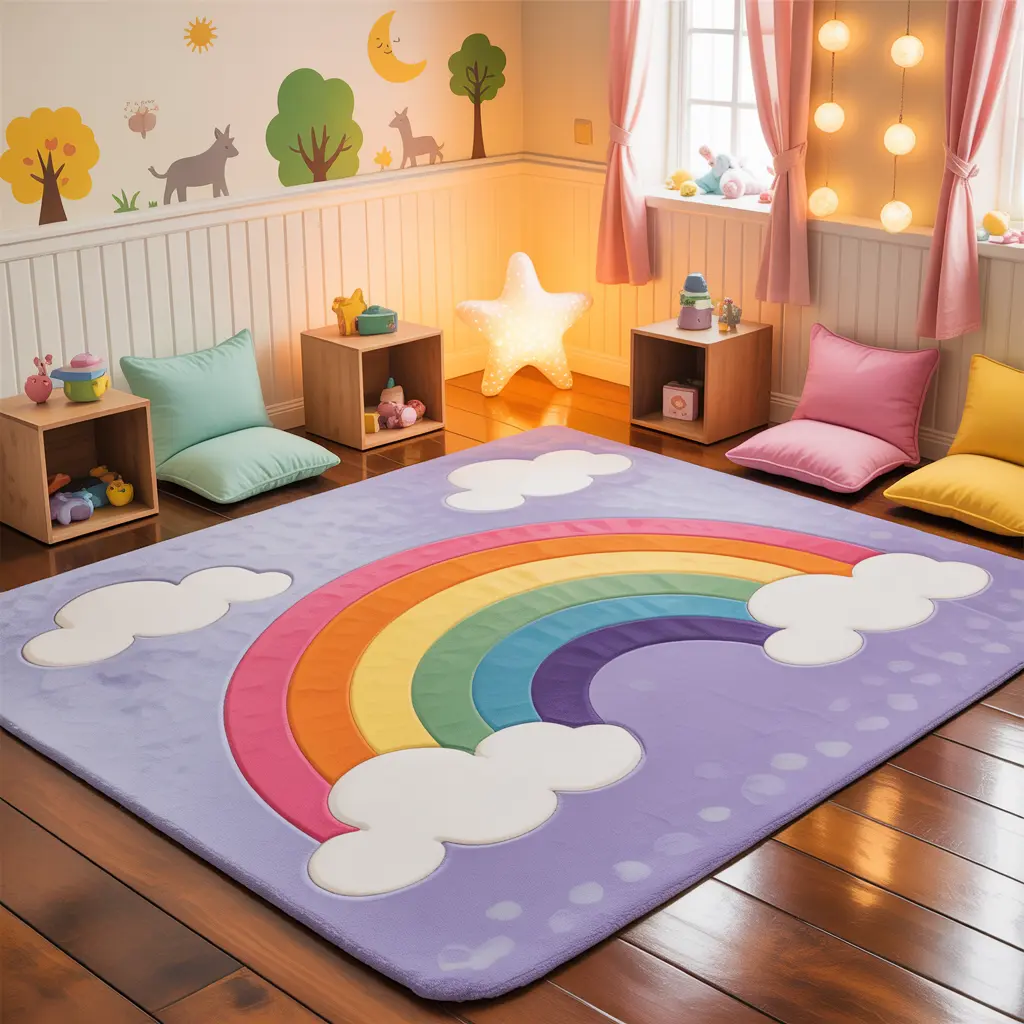
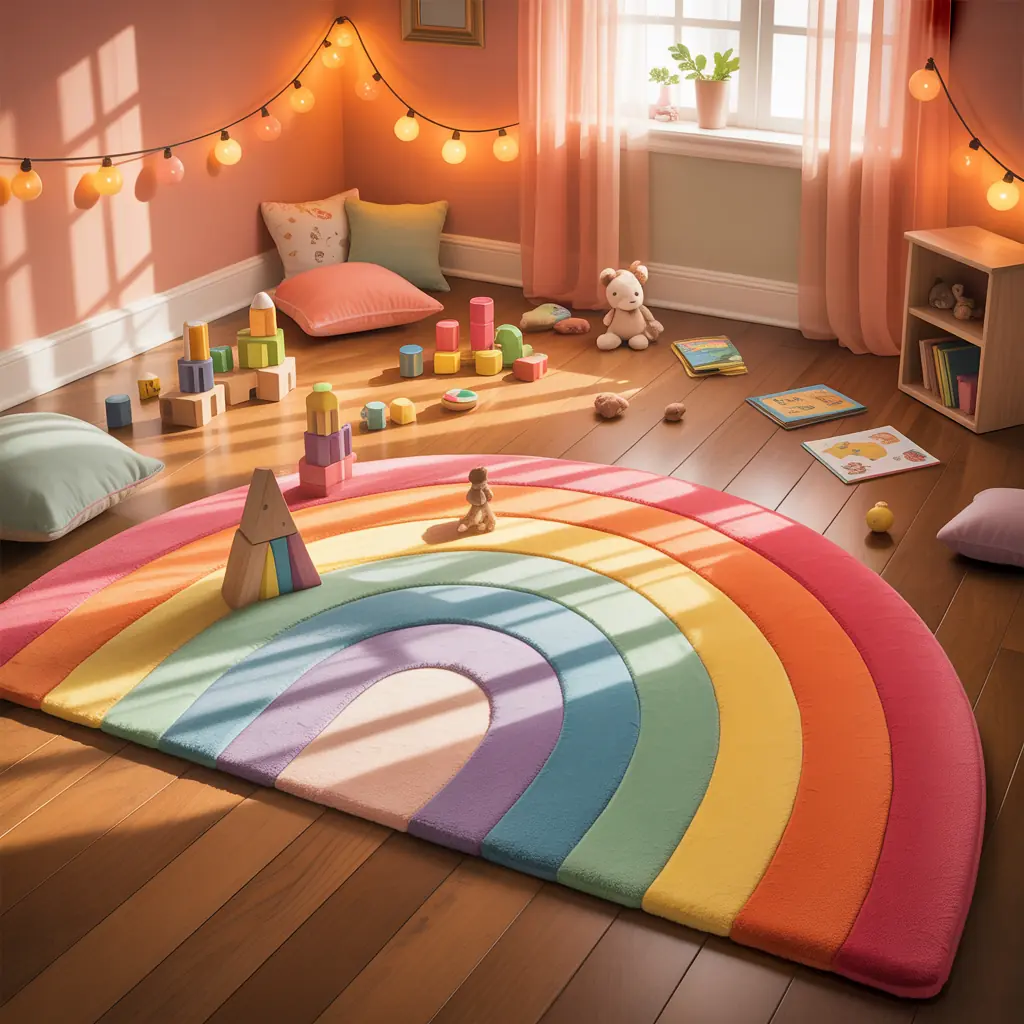
Kids live on the floor, so the rug is arguably the most important piece in the room. Choose something soft, washable, and big enough for actual play — a 5×7 flatweave or low-pile rug ($30–50) beats a tiny decorative one every time. Darker patterns hide the inevitable: juice, markers, mystery stickiness.
Washability is non-negotiable — check the label for machine-washable before you fall in love. A $40 washable rug you can throw in the machine beats a $150 “kids rug” that needs professional cleaning after one accident. Layer a small round play mat on top for building-block zones.
Idea 6: A Photo Corner That Grows With Them
String a wire or twine across one wall section and clip photos with colorful clothespins — family pictures, first-day-of-school shots, the blurry birthday candids. It costs $5, takes twenty minutes, and becomes a living timeline your child watches grow. Update it together every few months; kids love seeing their own history on the wall.
Keep the wire at a height your child can reach to add their own drawings alongside the photos. The mix of family photos and kid art is what makes it personal rather than decorative. Use plastic-coated wire or sturdy twine — little hands will tug.
Idea 7: Bedding They Pick Themselves
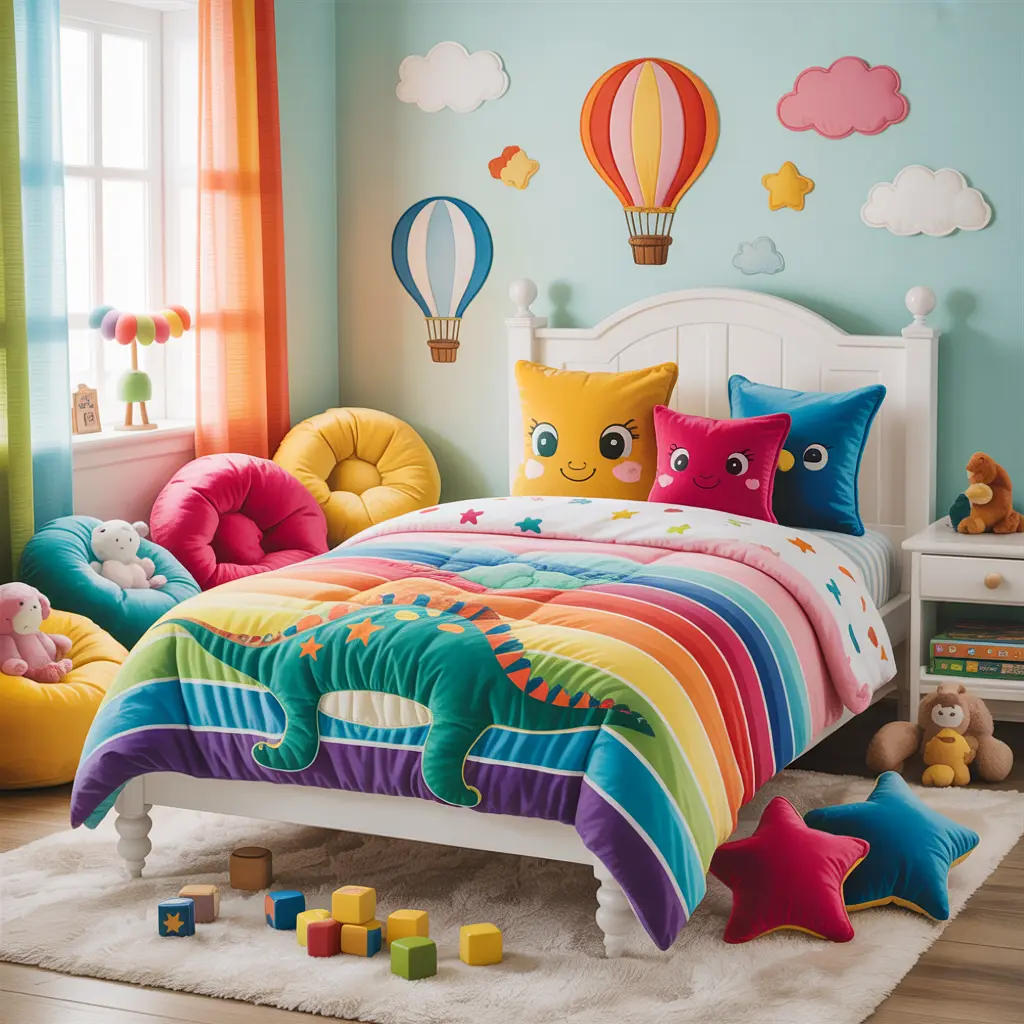
Let your child choose their own duvet cover (within your pre-approved options — this is parenting, not anarchy). A $20–30 bedding set in their current obsession, dinosaurs today, space tomorrow, transforms the whole room because the bed is the largest visual object in it. When they chose it, they also take better care of it. Funny how that works.
Buy one size up in duvet covers if they’re between bed sizes — slightly oversized bedding looks cozy, slightly small looks stingy. Add two sleeping pillows plus one fun-shaped cushion; more than that becomes a nightly avalanche the parent has to manage.
Idea 8: Lighting That’s Fun and Safe
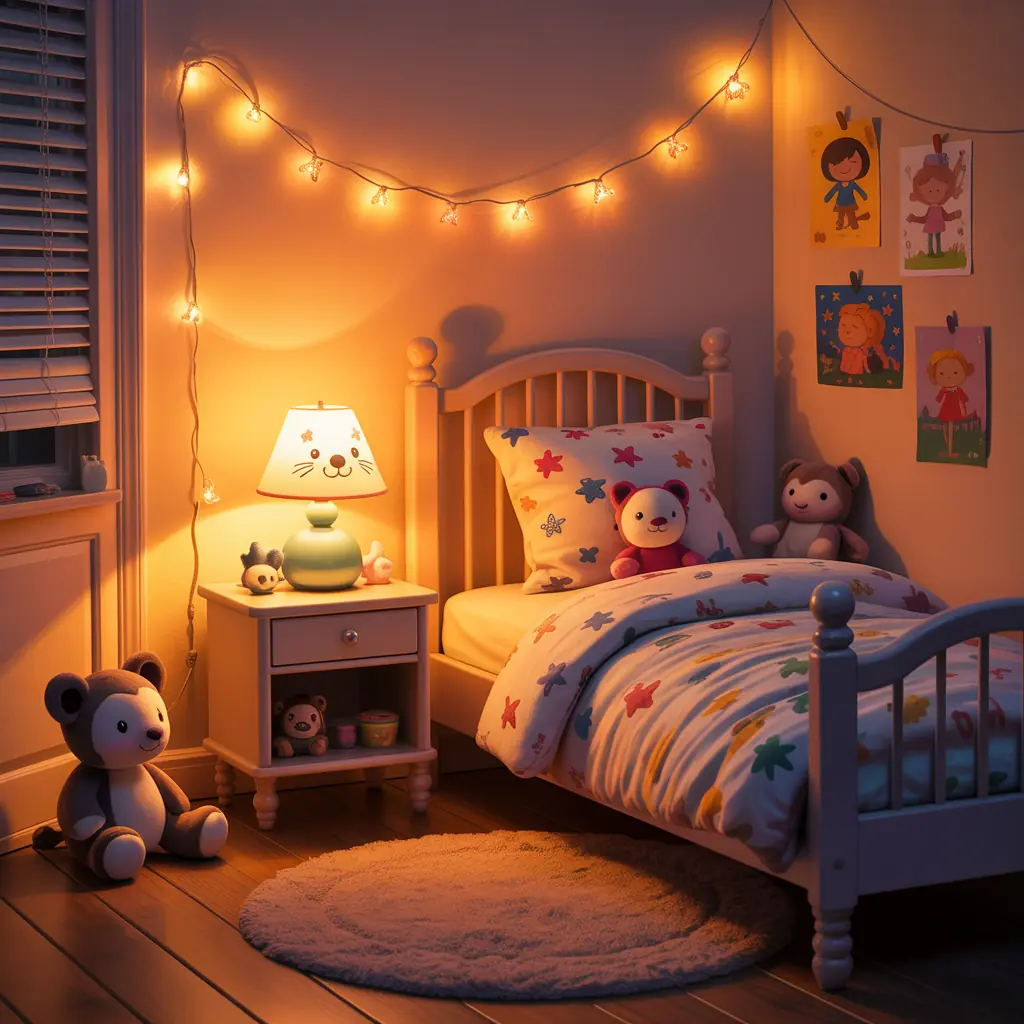
Kids’ rooms need two lights: a proper one for homework and reading, and a fun one for magic. The fun one can be a $12 star-projector night light, fairy lights in a jar, or a paper lantern — warm white, always. Night lights aren’t just cute; they genuinely help kids who wake up scared, and a child who can turn on their own gentle light feels in control.
Safety rules: no exposed bulbs within reach, cords secured behind furniture, and any plug-in light on a timer so it turns itself off. Battery-operated fairy lights in a high jar give all the magic with zero cord risk for toddlers.
Final Thought
A great kids’ room on a budget isn’t about themes or matching sets — it’s about a soft floor, a reading spot, walls that show their life, and storage that actually works. Build those four things and the room will feel like childhood should: safe, fun, and entirely theirs.
Pro Tips
- Anchor all furniture — bookshelves, dressers, anything climbable — to the wall with anti-tip straps ($8 for a pack). This is the single most important “decor” decision in any kids’ room.
- Choose washable everything: paint (satin or eggshell finish), rugs, bedding, even wall decals. Kids are washability-testing machines.
- Leave one wall deliberately plain. Kids’ rooms accumulate stuff fast — artwork, toys, books — and one calm wall keeps the room from feeling chaotic.
- Involve your child in two decisions (bedding, one wall color or decal theme) and decide the rest yourself. Total kid control is overwhelming; zero control feels impersonal.
FAQs
How can I decorate a kids’ room on a very small budget?
Focus on four things: a washable rug ($30–40), wall decals ($12), their own art framed on the wall ($10), and labeled storage baskets ($25). Under $100 total transforms the room — everything else can wait.
What colors are best for a kids’ bedroom?
Soft, warm neutrals on walls (they adapt as tastes change) with color in the easily-swapped items: bedding, baskets, decals, cushions. Avoid painting murals or theme colors on walls — kids outgrow them fast and repaints are expensive.
How do I keep a kids’ room organized?
One basket per toy type at child height, labeled with pictures for young kids, plus a daily five-minute reset they do themselves. Fewer, better-organized toys beat a mountain of unsorted ones every time.
Is it safe to use fairy lights in a child’s room?
Yes, with rules: battery-operated LED strings (no cords, no heat), placed out of reach — in jars on shelves, along curtain rods, or around a headboard. Never leave plug-in lights accessible to toddlers, and use a timer for automatic shutoff.

HowDecor is a home decor blog sharing simple, practical decorating ideas for everyday spaces. We believe a beautiful home should feel comfortable, personal, and full of warmth — and that great style does not require a huge budget. Our goal is to inspire readers to create spaces that feel peaceful, welcoming, and truly their own — one room at a time.