Table of Contents
- Dual-Purpose Play & Sleep Zone
- Vertical Storage with Fun Baskets
- Cozy Reading Corner
- Themed Wall Decor
- Multi-Functional Furniture
- Personalized Display Shelves
- Creative Ceiling Decor
- Soft Lighting with Character
- Flexible Color Palette
- Final Thought
Dual-Purpose Play & Sleep Zone
When we set up my daughter’s 10×11-foot room, the floor disappeared under toys within a week. The fix wasn’t a bigger room — it was zoning. We pushed the bed against the longest wall and laid a 4×6-foot rug beside it as the “play island.” Instantly, the same 110 square feet had two rooms in one: a calm sleep side and an anything-goes play side, separated by nothing but a change underfoot.
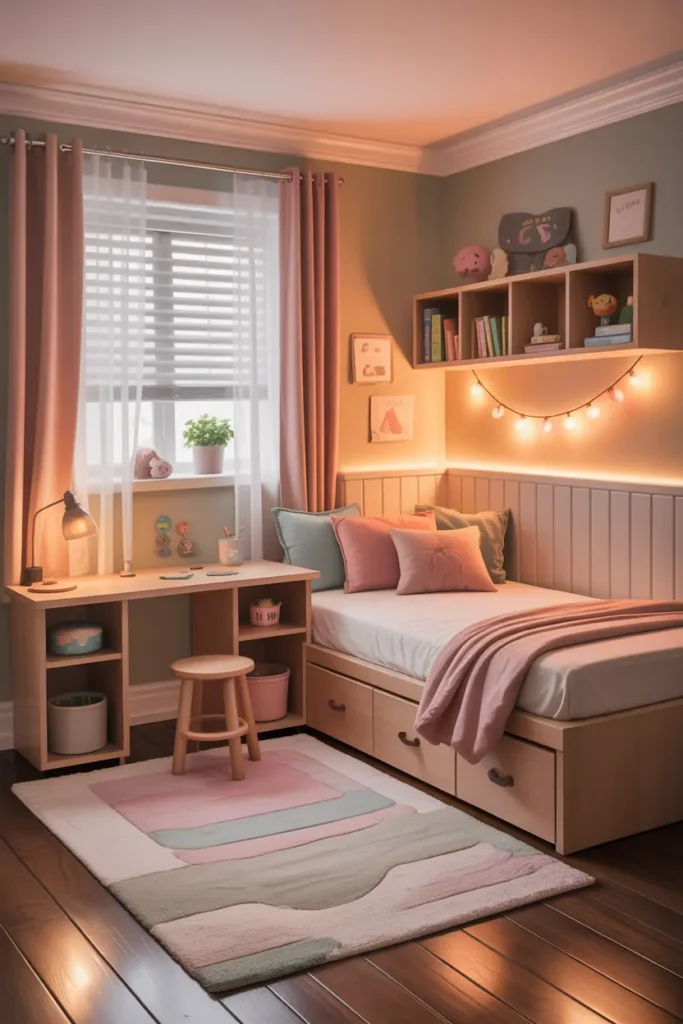
In a big bedroom, do the same thing on a larger scale: float the bed in one zone and give play its own corner with a low bookshelf turned sideways as a divider. The rule that matters here is separation of energy. Beds signal rest, rugs signal play — and kids respond to those cues more reliably than to any “tidy up” speech. A mid-sleeper or loft bed works the same trick vertically, freeing the floor underneath for a desk or a den, but only buy one with a guard rail at least 5 inches above the mattress and a ladder your child can climb confidently.
Vertical Storage with Fun Baskets
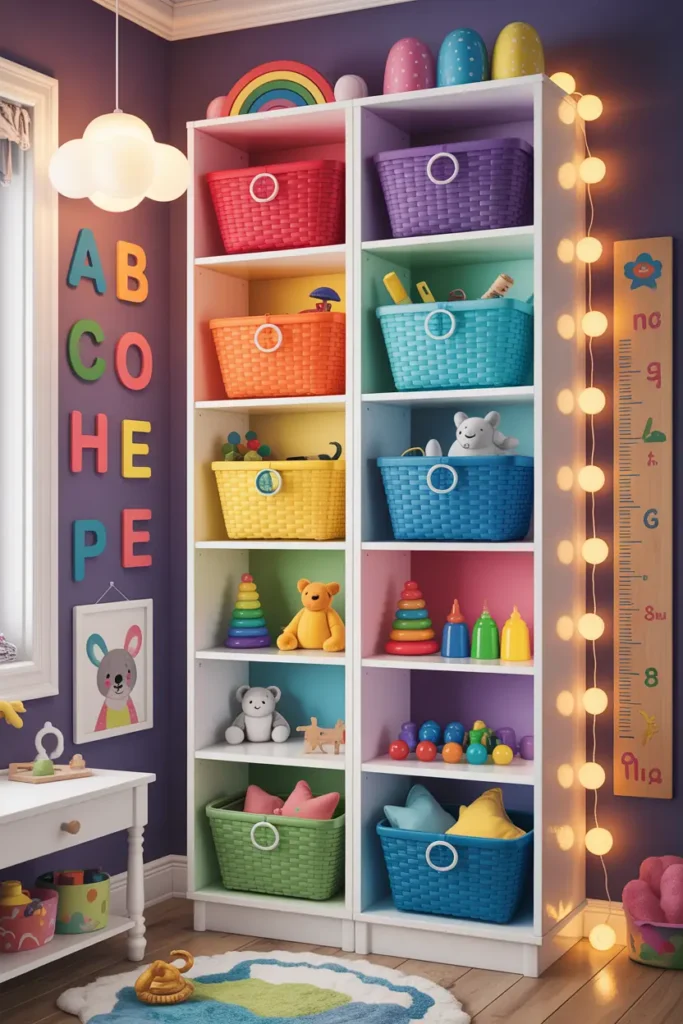
Floor space is sacred in a kids’ room, so storage should climb. The sweet spot for everyday shelves is 36–48 inches high — reachable for a five-year-old, which means they’ll actually put things back. Go higher with closed storage for out-of-season clothes and the Lego sets with 400 pieces. Anchor every tall unit to the wall; freestanding bookcases are a tipping hazard, and furniture straps cost less than a coffee.
Baskets do the visual heavy lifting. One color family of woven or fabric bins — say, natural seagrass with colored labels — turns storage into decor instead of clutter. Picture labels work better than words for under-fives: a dinosaur sticker on the dinosaur bin, and cleanup becomes a sorting game instead of a chore. Keep the basket count odd — three or five on a shelf looks styled, while two symmetrical rows look like a warehouse.
Cozy Reading Corner
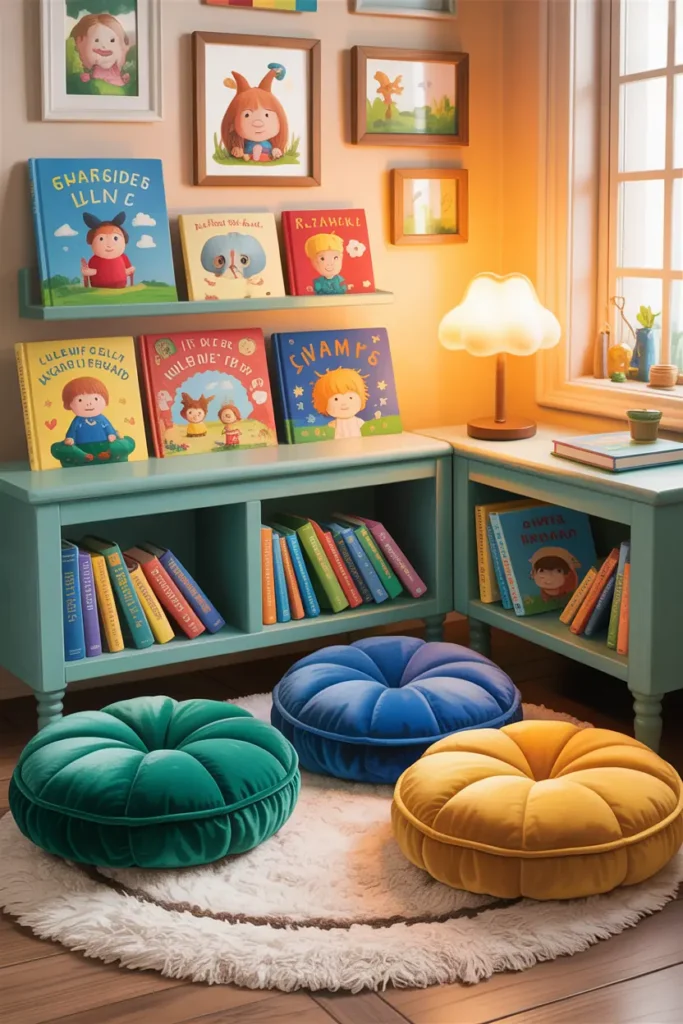
You don’t need much: a corner, a washable rug at least 3×4 feet, and something soft to sink into. A beanbag chair or a couple of floor cushions costs less than a single picture book set and creates the room’s emotional anchor — the place your child goes when they need to be alone with a story. Put it near the window if you can; natural light makes reading feel like an event instead of homework.
Give the corner a ceiling of its own. A simple canopy or a $15 pop-up tent turns a corner into a “place,” and kids are place-driven creatures — a reading nook inside a tent gets used ten times more than the same cushions in the open. Add one warm lamp (warm white, never cool daylight) and a low front-facing bookshelf where the covers show. Seeing the cover is what makes a child reach for a book; spine-only shelves are libraries, and libraries are for adults.
Themed Wall Decor
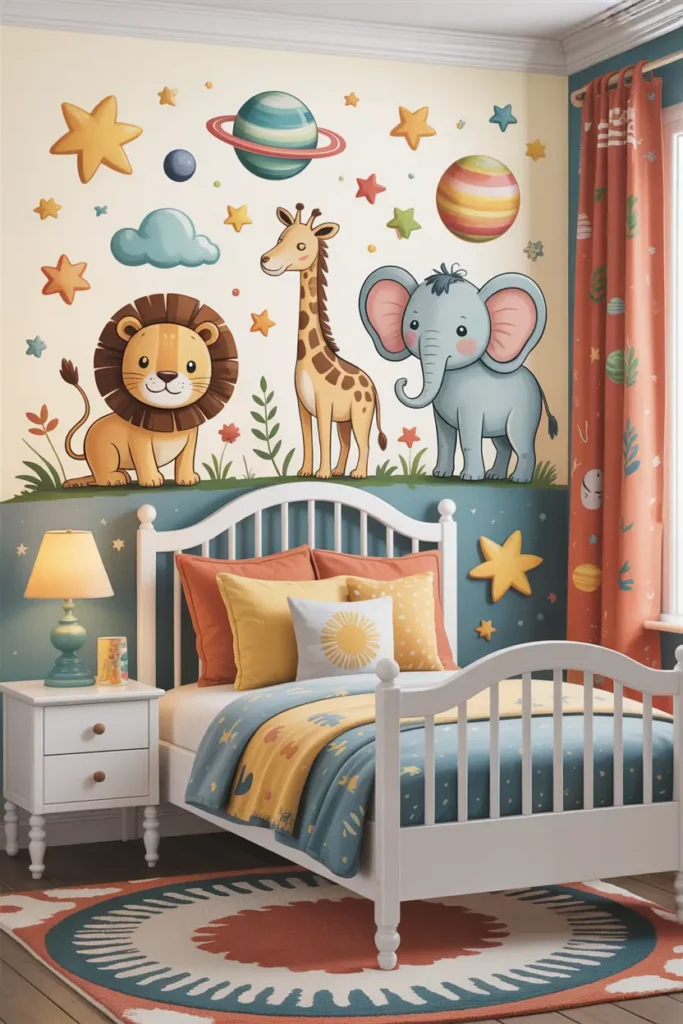
A theme gives a kids’ room its personality, but the trick is committing where it counts and staying flexible everywhere else. Peel-and-stick wall decals — constellations, jungle animals, a hot-air-balloon trail — cover a 6-foot wall in an afternoon and peel off cleanly when the dinosaur phase ends. That matters: the average kid’s theme loyalty lasts about 18 months.
Put the permanent, expensive stuff on neutral ground. One big framed print or a painted accent wall in the theme’s color can stay for years; let the cheap stuff — bedding, decals, cushion covers — carry the theme itself. And involve your child in exactly one decision, like picking the decal set. Ownership means they’ll love it longer and fight you less about bedtime in it.
Multi-Functional Furniture

A bed with deep drawers (at least 8 inches deep to be useful) swallows seasonal clothes and spare bedding. A wall-mounted drop-leaf desk gives a homework surface that vanishes for dance practice. In small rooms, these pieces aren’t clever extras — they’re the difference between a room that works and a room that fights you.
In larger rooms, multifunctional furniture does a different job: zoning without walls. A storage bench marks the end of the sleep zone; a low cubby shelf divides play from study. Choose pieces in one finish — white or light wood — so the room reads as calm rather than as a furniture showroom. Neutral finishes also survive theme changes, which the bright-red racing-car bed will not.
Personalized Display Shelves

Kids’ rooms should contain evidence that a specific child lives there. A floating shelf at their eye level — around 48 inches for school-age kids — displaying their art, a trophy, and one beloved toy turns the room from “bedroom” to “their bedroom.” It costs one $20 shelf and an afternoon, and it lands harder emotionally than any themed bedding set.
Rotate the display monthly. Keep a small box labeled “shelf rotation” and swap pieces when they start to fade into background. This one habit keeps the room feeling fresh for years without buying a single new thing — and watching their old creations get honored teaches kids that making things matters.
Creative Ceiling Decor
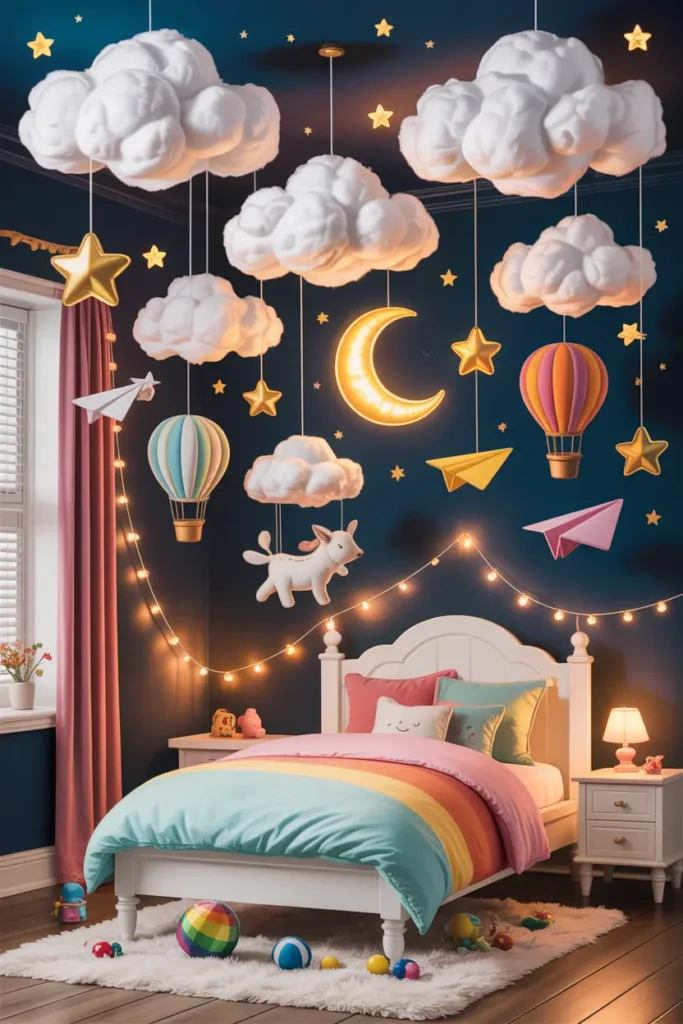
The ceiling is free real estate nobody uses. Glow-in-the-dark stars (the good ones actually hold a charge for hours) turn bedtime into a planetarium. Paper lanterns or a hanging mobile draw the eye upward and make small rooms feel taller — the opposite of what floor clutter does. One statement light fixture, like a cloud-shaped pendant, can carry a whole theme on its own.
Keep ceiling decor lightweight and firmly fixed — anything that could fall on a sleeping child is a no. Battery-operated LED fairy lights on a timer give the magical glow without the fire risk of old plug-in strands, and they cost less than a pizza. It’s the cheapest wow-factor in the entire room.
Fun Rugs for Activity Zones
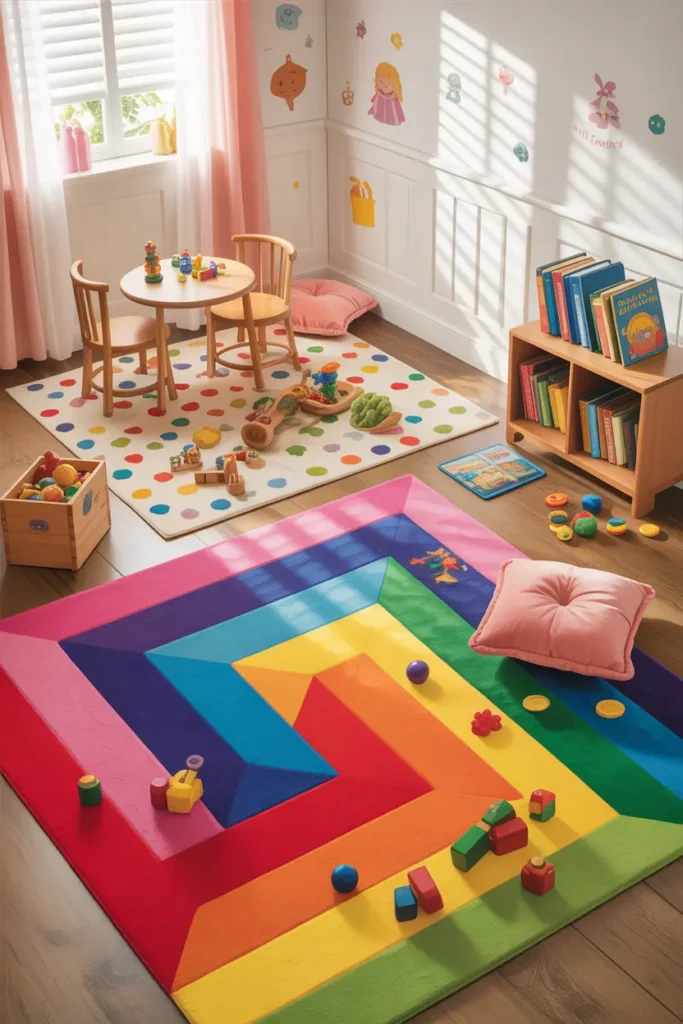
A rug is a room divider that costs a tenth of a bookshelf. In a small room, one 5×7-foot low-pile rug defines the play zone and survives toy cars, spills, and daily vacuuming. Low pile matters — high pile traps Lego pieces and snack crumbs, and you’ll curse it within a month. Machine-washable rugs are worth every penny of the small premium.
In big rooms, layer two rugs to mark two zones: a soft shag for the reading corner, a flat-weave for the play area. The texture change tells your child where each activity lives without a single word. And always put a non-slip pad underneath — a rug that slides on hard floors is both annoying and a genuine fall hazard.
Soft Lighting with Character
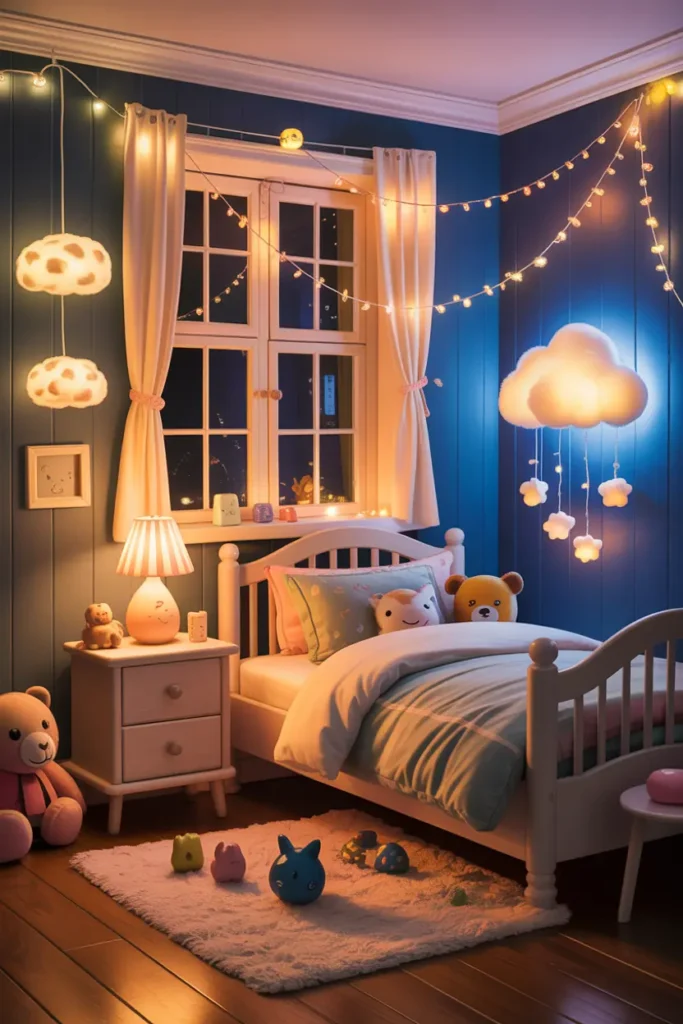
Overhead lighting is the enemy of coziness. Layer instead: a warm table lamp for homework (3000K or warmer), fairy lights for magic, and a dim night light for the 2 a.m. bathroom run. A plug-in dimmer — about $12 — lets one lamp serve both homework and bedtime-story duty.
Character lamps (clouds, animals, rockets) earn their keep in kids’ rooms because they make the room feel designed rather than assembled. Put lighting on timers so the night light handles itself; kids who can control their own light — a reachable lamp switch — settle to sleep measurably faster than kids who can’t.
Flexible Color Palette
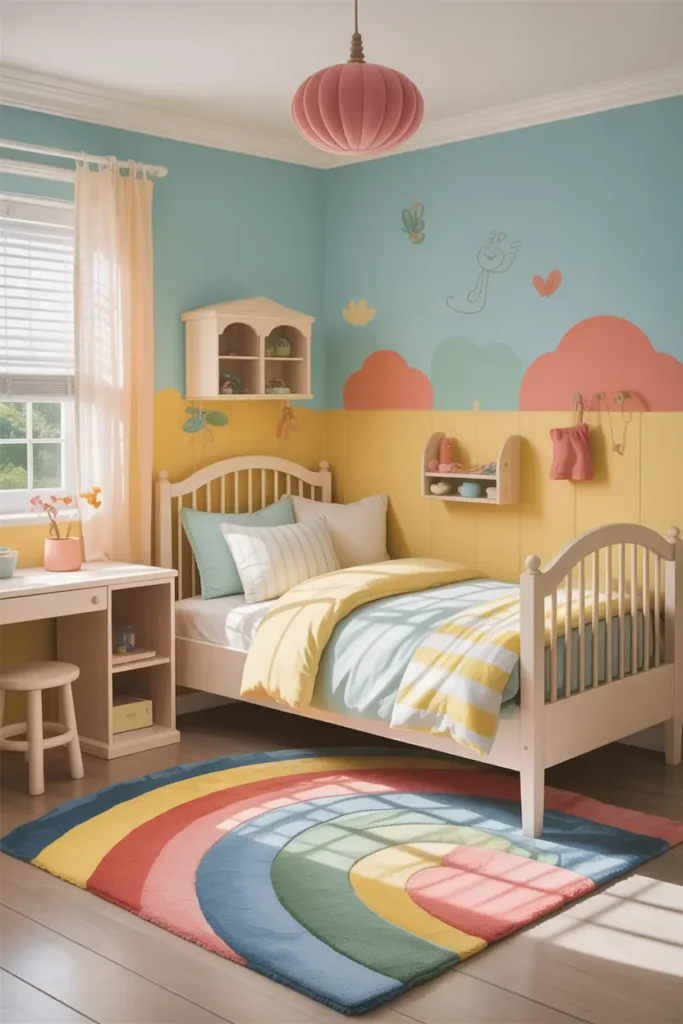
Paint the walls a color you’ll still like when your child is twelve: soft white, warm greige, pale sage. Then let the color live in the replaceables — bedding, curtains, rug, cushions. Repainting costs a weekend and $60 of paint; replacing bedding costs $40 and takes ten minutes. Put the flexibility where it’s cheap.
One accent wall in a deeper version of the bedding color ties everything together without commitment to the whole room. And when the theme changes — and it will — you’re buying new textiles, not hiring a painter. This is the single most budget-friendly decorating strategy for kids’ rooms, full stop.
Final Thought
The best kids’ rooms aren’t the most themed or the most expensive — they’re the ones where everything has a place and the child had a say. Zone it, climb the walls with storage, keep the palette flexible, and let your kid’s personality do the decorating. That’s what they’ll remember.
Pro Tips
- Measure your child, not the catalog. Shelves, hooks, and switches your child can reach get used; ones they can’t reach get ignored. Sit at their height and check.
- Anchor everything tall. Bookcases, dressers, and shelf units get wall straps — non-negotiable, under $10, and it takes twenty minutes.
- Buy the rug last. Choose rugs after the furniture is placed so you size them to the zones that actually formed, not the zones you imagined.
- Keep one “grow” element. A neutral wall color, a good lamp, or a quality bed frame that survives theme changes saves you real money over five years.
FAQs
How do I fit a play area and a bed in a small kids’ room?
Zone it with a rug: push the bed to the longest wall and lay a 4×6-foot rug beside it as the play island. Or go vertical with a loft bed — the floor underneath becomes a play den or desk area, effectively doubling the room’s usable space.
What is the safest storage for a toddler’s room?
Low, wide, and stable: fabric bins on the floor or a low cubby shelf, with nothing tall that can tip. Anything above knee height should be anchored to the wall, and heavy items belong on the lowest shelves.
How can I change a kids’ room theme cheaply?
Keep walls neutral and let bedding, curtains, decals, and cushion covers carry the theme. When the phase passes, you replace $40–$80 of textiles instead of repainting — the decals peel off and the new theme takes an afternoon.
What kind of lighting helps kids sleep better?
Warm, dimmable, and layered: a warm-white lamp for evening routines, a dim night light for overnight, and no cool-white overheads after dinner. Kids with a reachable bedside lamp they control themselves settle faster than those dependent on a parent for light.

HowDecor is a home decor blog sharing simple, practical decorating ideas for everyday spaces. We believe a beautiful home should feel comfortable, personal, and full of warmth — and that great style does not require a huge budget. Our goal is to inspire readers to create spaces that feel peaceful, welcoming, and truly their own — one room at a time.