Every year has its “every kid’s room has this” list, and most of it is marketing. This one isn’t. I pulled these ten ideas from what parents are actually buying, building, and — more importantly — still happy with six months later. The pattern in 2026 is clear: less theme-park, more grow-with-me. Ideas that adapt when the dinosaur phase ends and the chapter-book phase begins.
None of these require a renovation. Half of them cost under $50. And every single one has survived the only review that matters: a real child living with it, day after day.
Table of Contents
- ✨ Idea 1: Nature-Inspired Play Zone
- ✨ Idea 2: Interactive Chalk Wall
- ✨ Idea 3: Cozy Reading Nook With Fairy Lights
- ✨ Idea 4: Modular Storage and Play
- ✨ Idea 5: Pastel Color Blocking
- ✨ Idea 6: Theme Zones for Activity
- ✨ Idea 7: Personalized Display Shelves
- ✨ Idea 8: Soft Canopy Bed Spot
- ✨ Idea 9: Under-Bed Storage and Play
- ✨ Idea 10: Window Seats With Plush Cushions
- Final Thought
Idea 1: Nature-Inspired Play Zone
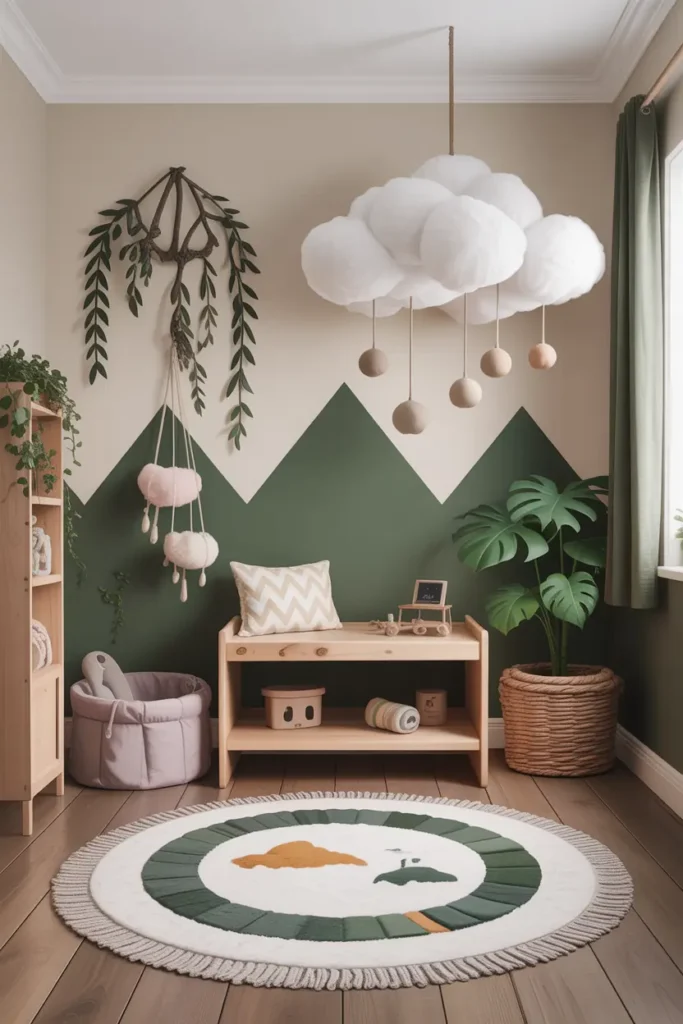
The strongest trend of the year isn’t a color — it’s a mood. Parents are building one corner around natural textures: a grass-green rug (low pile, washable), a couple of cloud-shaped cushions, a basket of wooden blocks, maybe a birch-branch coat hook. The science is real — studies consistently show natural materials calm children faster than bright plastics — and the look photographs beautifully, which doesn’t hurt.
Keep it contained to one zone, about 4×5 feet. The whole point is contrast: one calm, tactile corner in a room that otherwise does its job. A grass-textured rug runs $30–$60, and it’s the anchor — everything else (a jute basket, a linen pouf) can arrive over time. Avoid going full “forest”: one leafy garland is charming, five is a theme park.
Idea 2: Interactive Chalk Wall
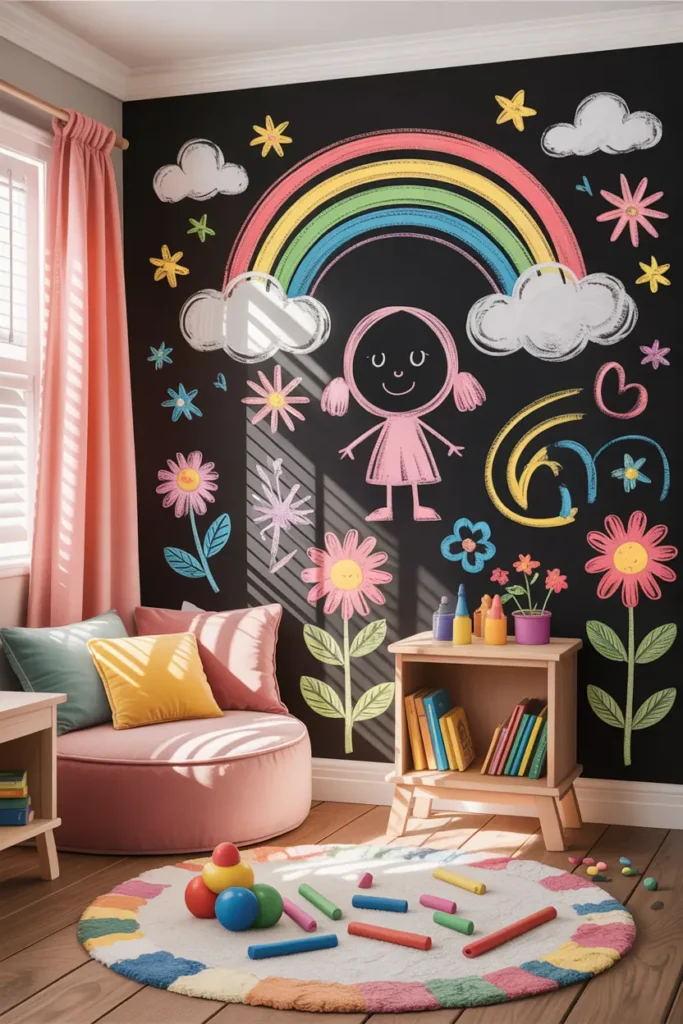
Chalkboard paint on one wall — or even a 3×4-foot framed panel — is the highest play-value-per-dollar idea on this list. A quart of chalkboard paint costs around $15 and covers roughly 30 square feet. Prime first, apply two thin coats, let it cure a full three days before the first drawing, or the chalk will ghost permanently.
The part parents love most isn’t the art — it’s containment. All that creative energy that used to end up on the hallway walls now has a designated home. Dustless chalk cuts the mess, and a damp microfiber cloth wipes it clean in seconds. As kids grow, the same wall becomes a homework planning board. That’s a five-year lifespan for fifteen dollars.
Idea 3: Cozy Reading Nook With Fairy Lights
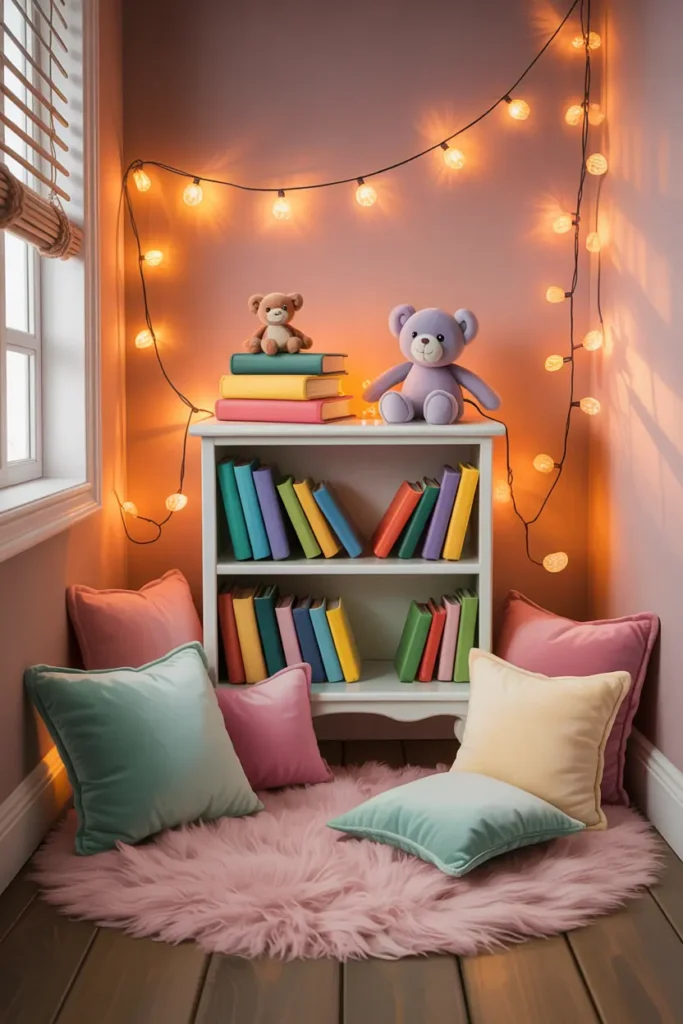
The 2026 version of the reading nook has one upgrade that matters: light the child can control. A $10 battery-operated LED string on a timer plus a floor cushion near the bookshelf, and the nook becomes self-serve. Kids who can switch their own light on settle into reading without being told — it’s a small autonomy that pays off nightly.
Placement matters more than styling. Put the nook where the room’s natural light already falls in the afternoon, and keep the shelf front-facing at about 30 inches high so covers — not spines — do the inviting. Skip the expensive teepee; a simple canopy draped from a ceiling hook gives the same “my place” feeling for a quarter of the price.
Idea 4: Modular Storage and Play
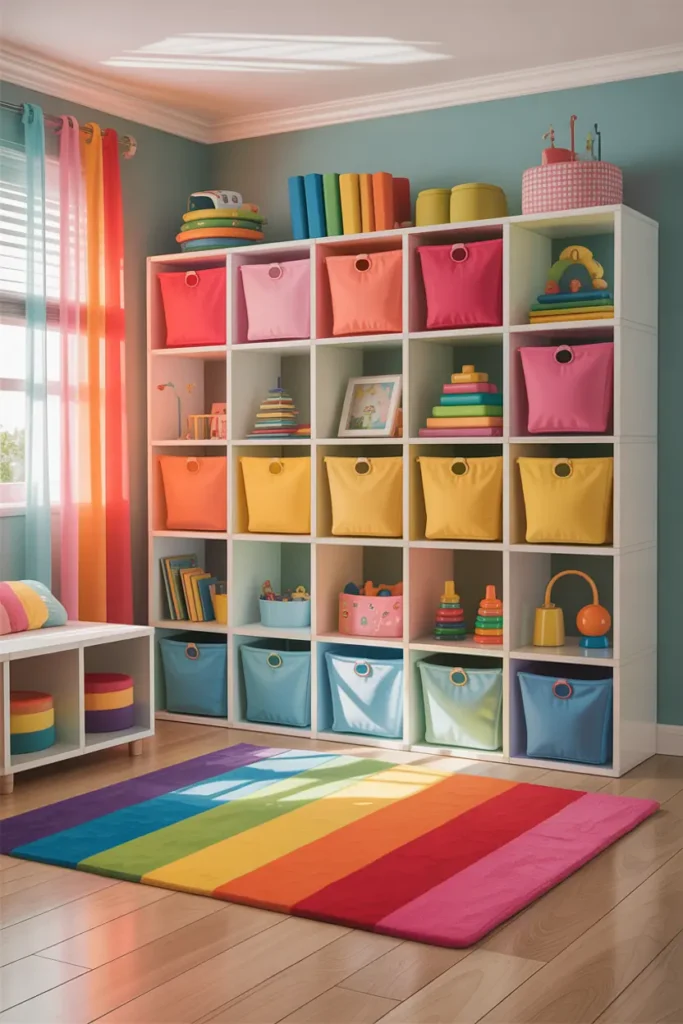
Stackable cube shelves have quietly become the default kids’ furniture of 2026, and the reason is simple economics: an 8-cube unit costs around $60, holds everything, and reconfigures from horizontal (a bench-height room divider) to vertical (a tower) as the child grows. Add fabric bins in one color family and it reads as designed, not improvised.
The trick is the ratio: for every two closed bins, leave one cube open as display — a favorite toy, a plant, a stack of books. All-closed reads as storage unit; all-open reads as chaos. That 2:1 mix is what makes cube shelving look intentional instead of utilitarian, and it teaches kids the same sorting logic without a lecture.
Idea 5: Pastel Color Blocking
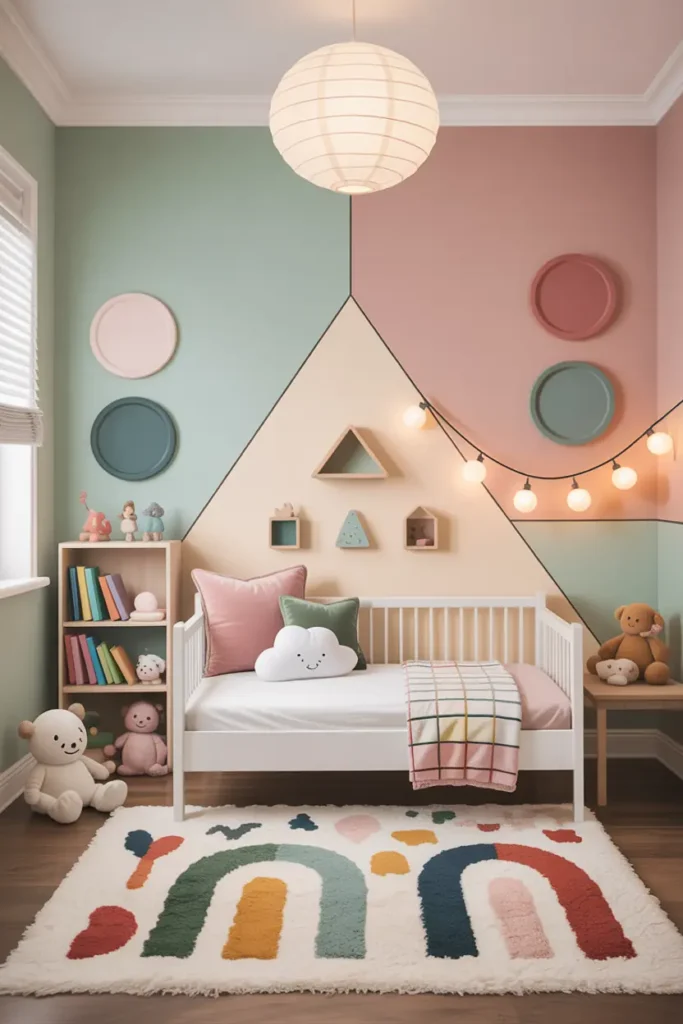
Instead of painting the whole room pink or blue, parents are painting big geometric blocks — a sage arch behind the bed, a peach circle behind the reading nook. A sample-size paint pot ($6–$8) covers a 3-foot arch, and the effect looks professionally designed. The geometry does something clever: it visually zones the room without any furniture.
Tape your shape with painter’s tape, seal the edges with the base wall color first (this stops bleed and gives crisp lines), then fill with the pastel. The most forgiving shapes are arches and half-circles — no sharp corners to judge you. When the phase passes, one coat of the original wall color erases it in an hour.
Idea 6: Theme Zones for Activity
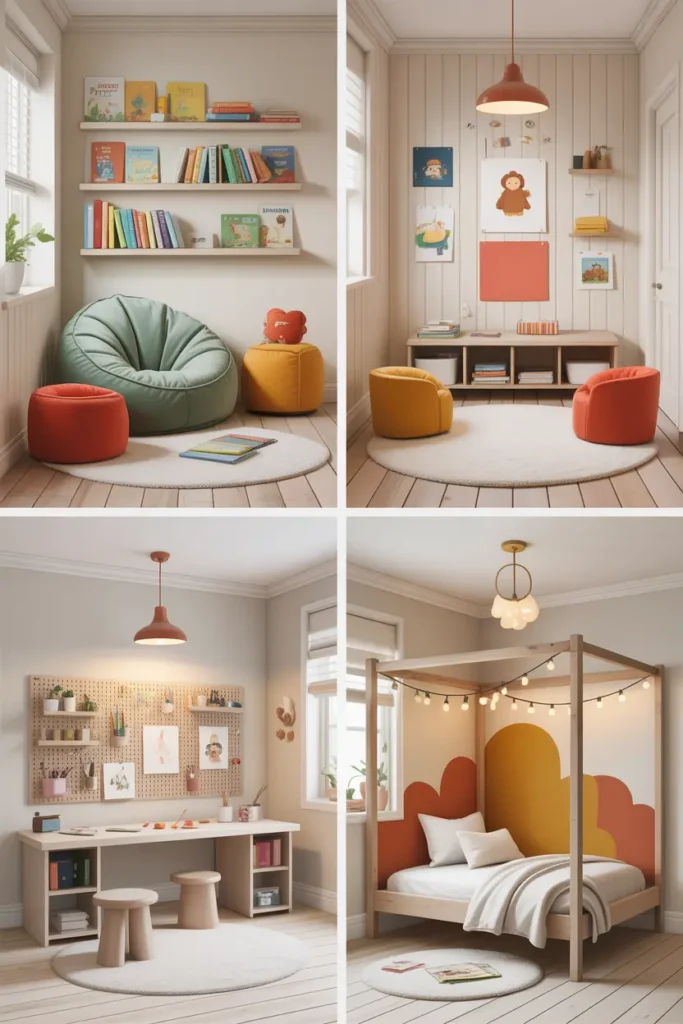
The “one room, many rooms” approach: a reading zone, a building zone, a winding-down zone, each marked by a rug or a color block. Kids’ brains are context-driven — a child who won’t read at the desk will read in the nook, because the place carries the habit. It sounds like psychology because it is, but it’s also just practical.
You don’t need furniture to zone. A rug marks play, a floor cushion marks reading, a string of lights marks the wind-down corner. The mistake is creating zones nobody asked for — watch where your child already goes, then formalize those spots. Three zones is plenty; six zones is a floor plan, not a bedroom.
Idea 7: Personalized Display Shelves
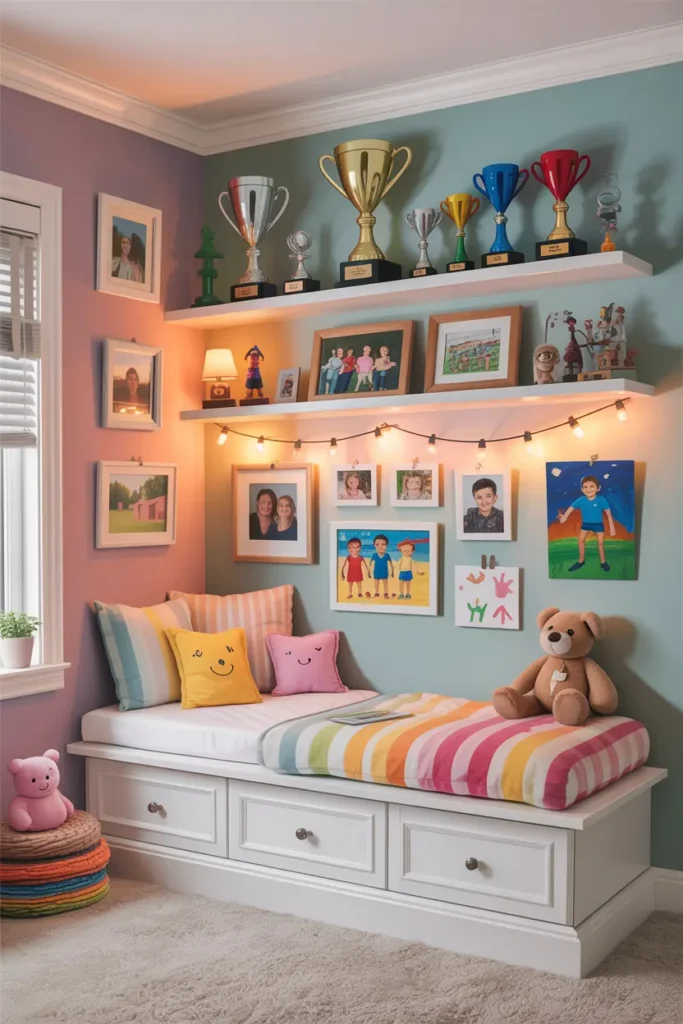
A shelf that holds only things the child made or chose — their drawing, their rock collection, their tournament medal — does something no decor can fake: it tells the kid the room is theirs. One floating shelf at their eye level, about $20 with brackets, is the whole investment.
Keep it shallow (6–8 inches deep) and curate ruthlessly: five treasures, not fifteen. Rotate monthly from a small “archive” box. The rotation habit matters more than the shelf itself — it keeps the display alive and gives old favorites their moment back. Kids notice when their things are honored, and it shows in how they treat the room.
Idea 8: Soft Canopy Bed Spot
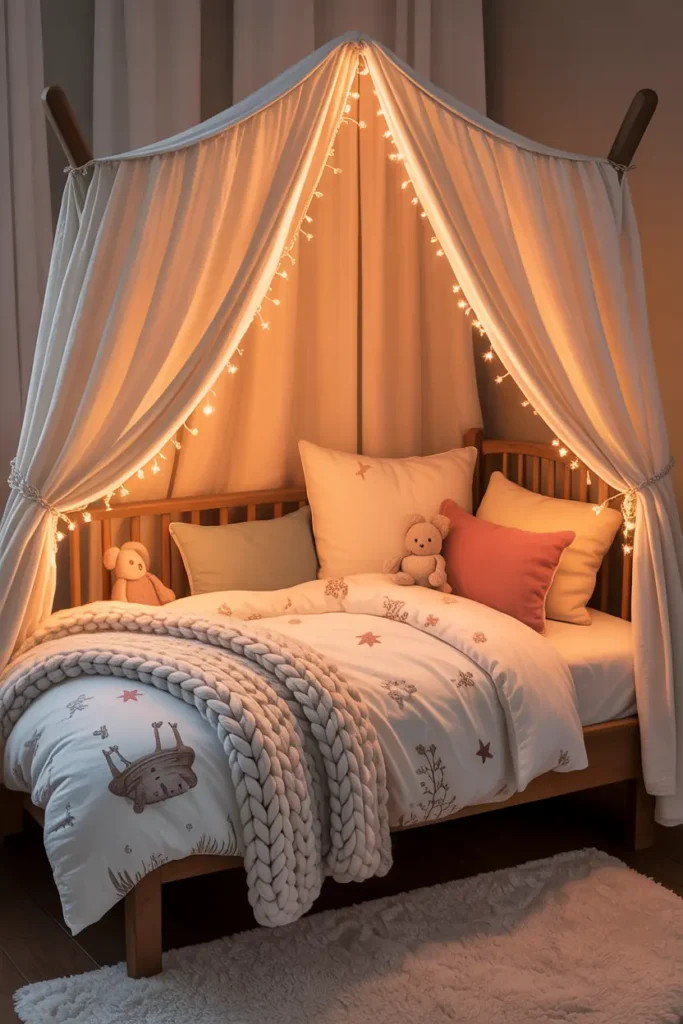
A canopy — a $20–$35 mosquito-net-style drape on a ceiling hoop — turns any bed into a hideaway. Children are den-builders by instinct, and the canopy gives them the den without the living-room blanket fort. Pair it with warm string lights inside and bedtime resistance drops noticeably; it’s hard to argue with a glowing tent.
Safety first: mount the hoop with a proper ceiling anchor, not an adhesive hook, and keep the fabric tied back from the pillow area while sleeping for smaller kids. Use lightweight, breathable fabric — never heavy drapes that could sag onto a sleeping child. Done right, it’s the coziest square footage in the house.
Idea 9: Under-Bed Storage and Play

The average kid’s bed wastes about 20 square feet of floor area underneath it. Rolling drawers or low bins reclaim it: seasonal clothes, board games, the Lego overflow. Measure first — you need at least 6 inches of clearance for standard under-bed bins, and 10+ inches for the deep ones that are actually useful.
In small rooms, this is survival; in big rooms, it’s still smart. Label the bins with pictures for young kids, words for readers. And here’s the part nobody mentions: teach the “one bin out” rule early. Under-bed storage only stays organized if one bin returns before the next comes out — otherwise you’ve just moved the mess somewhere darker.
Idea 10: Window Seats With Plush Cushions
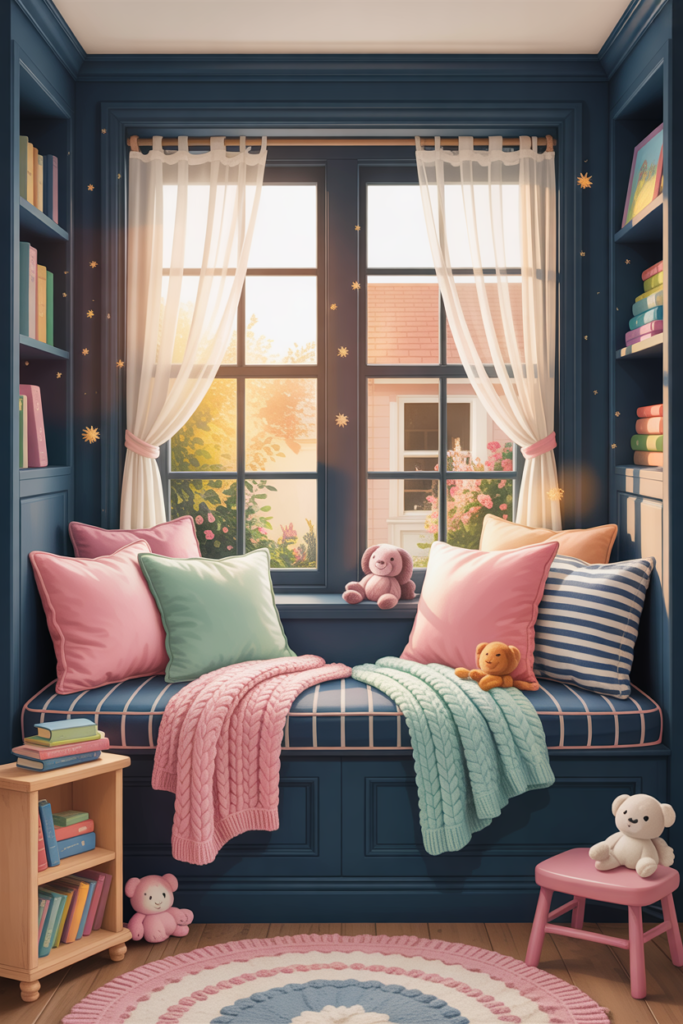
The window seat is the room’s free upgrade — that dead space under the window becomes the favorite spot in the house. A 2-inch foam pad cut to fit ($25–$40 from a foam supplier), covered in a washable slipcover, plus two cushions, and you’ve built a reading throne with a view.
Check the draft situation before committing: if the window leaks cold air in winter, the seat becomes decorative from December to March. A heavy curtain that can close behind the seat fixes it. And keep the cushions machine-washable — window seats collect sunlight, dust, and the occasional juice box, in that order.
Final Thought
The thread through all ten ideas is the same: give the room jobs, give the child control, and spend the real money on the three things that touch the body every day — the bed, the light, and the floor. Trends fade; a room that works never goes out of style.
Pro Tips
- Test-drive with cardboard. Before buying any furniture, mock up zones with cardboard boxes for a week. Where your child actually plays tells you where the real zones are.
- Light temperature is everything. Keep all kids’-room bulbs at 2700–3000K. Cool white light after dinner works against melatonin and bedtime — this one change is free if you’re already buying bulbs.
- Buy the “boring” version of furniture, fun version of textiles. Neutral shelves and beds survive every phase; wild bedding and decals carry the current obsession. Replace the cheap stuff, keep the expensive stuff.
- Photograph the room every six months. Kids grow faster than rooms adapt. A dated photo shows you exactly what stopped working — usually storage that no longer fits the toys.
FAQs
Which 2026 kids’ room trend is actually worth the money?
The chalk wall or chalk panel. Around $15 of paint, an afternoon of work, and it serves as art space, learning board, and theme-changer for years. Nothing else on this list comes close on cost-per-year of use.
How do I make a small kids’ room feel bigger without renovating?
Go vertical and go under: tall storage, under-bed bins, and one big mirror or light wall color. The single biggest visual gain comes from clearing the floor — every square foot of visible floor makes the room feel larger.
Is a canopy safe for a young child’s bed?
Yes with precautions: use a proper ceiling anchor (not adhesive), lightweight breathable fabric, and keep fabric tied away from the sleeping area for under-fives. Battery LED lights inside are safer than plug-in strands.
How often should I update my child’s room decor?
Refresh textiles and displays every 12–18 months as interests change, but keep the big pieces — bed, storage, lighting — for 4–5 years. If the bones are neutral, each refresh costs under $100 and takes a weekend.

HowDecor is a home decor blog sharing simple, practical decorating ideas for everyday spaces. We believe a beautiful home should feel comfortable, personal, and full of warmth — and that great style does not require a huge budget. Our goal is to inspire readers to create spaces that feel peaceful, welcoming, and truly their own — one room at a time.