I still remember the first kids’ room I ever helped with — my nephew’s, eleven years ago. He was six, obsessed with rockets, and his room was beige. Not cozy-beige. Rental-beige. His mother asked for “something fun but not crazy,” and what we landed on taught me the whole philosophy of kids’ rooms: cozy isn’t about stuff, it’s about permission. Permission to play, to make a mess, to be exactly six.
These eight ideas are built on that. Every one of them is weekend-doable, budget-friendly, and — this is the part that matters — designed to make a child feel like the room is on their side.
Table of Contents
- ✨ Idea 1: Colorful Wall Art Gallery
- ✨ Idea 2: Cozy Reading Corner
- ✨ Idea 3: Fun Themed Bedding
- ✨ Idea 4: Playful Storage Solutions
- ✨ Idea 5: Soft Lighting for Comfort
- ✨ Idea 6: Creative Wall Stickers
- ✨ Idea 7: Soft Rugs and Floor Comfort
- ✨ Idea 8: Personal Touch Corner
Idea 1: Colorful Wall Art Gallery
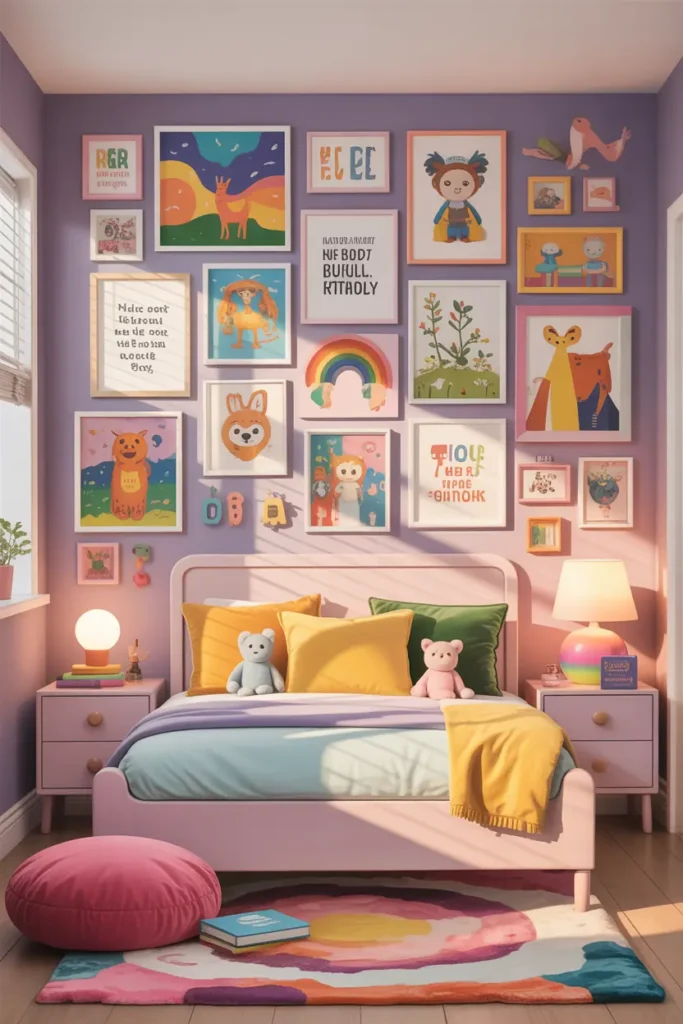
The fastest way to kill rental-beige is a wall of art — specifically, your child’s art. We framed six of my nephew’s drawings in matching $4 frames and hung them in a tight grid, and his face when he saw his own work on the wall did more for that room than any purchase could have. Kids’ drawings are naturally bold and colorful; in simple matching frames, they look like a real gallery.
Hang the grid low — center it at your child’s eye level, not yours, around 42–48 inches for a six-year-old. Use frames in one color so the art does the talking. And build in rotation: keep the frames on easy-open backs so new masterpieces can swap in monthly. A gallery that changes stays magical; one that freezes becomes wallpaper.
Idea 2: Cozy Reading Corner
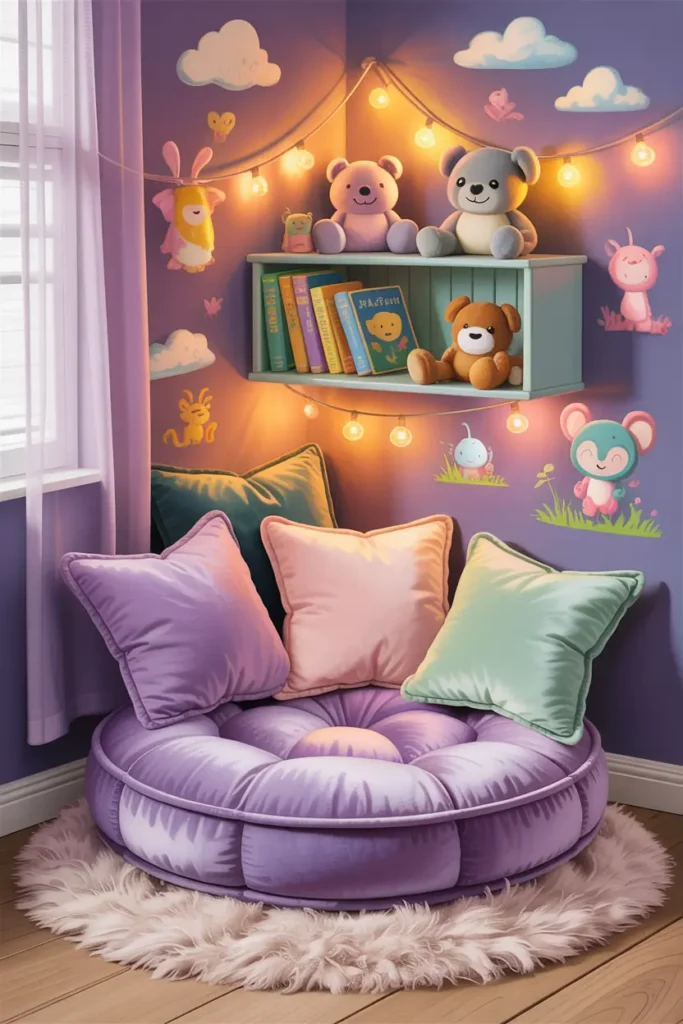
Every cozy kids’ room needs one spot that’s built for doing nothing — well, for reading, but it should feel like nothing. The formula is small: a corner, a soft landing (beanbag or two floor cushions), and a basket of books within arm’s reach. We used a $25 beanbag and a laundry basket lined with a blanket for books, and it became the most-used square footage in the house.
Warmth comes from layers, not size. A throw over the beanbag, a small rug underneath so feet don’t hit cold floor, and one warm lamp or string light. Keep the book basket shallow — kids dig through deep baskets once, then stop. A wide, shallow basket where covers show face-up gets used daily.
Idea 3: Fun Themed Bedding
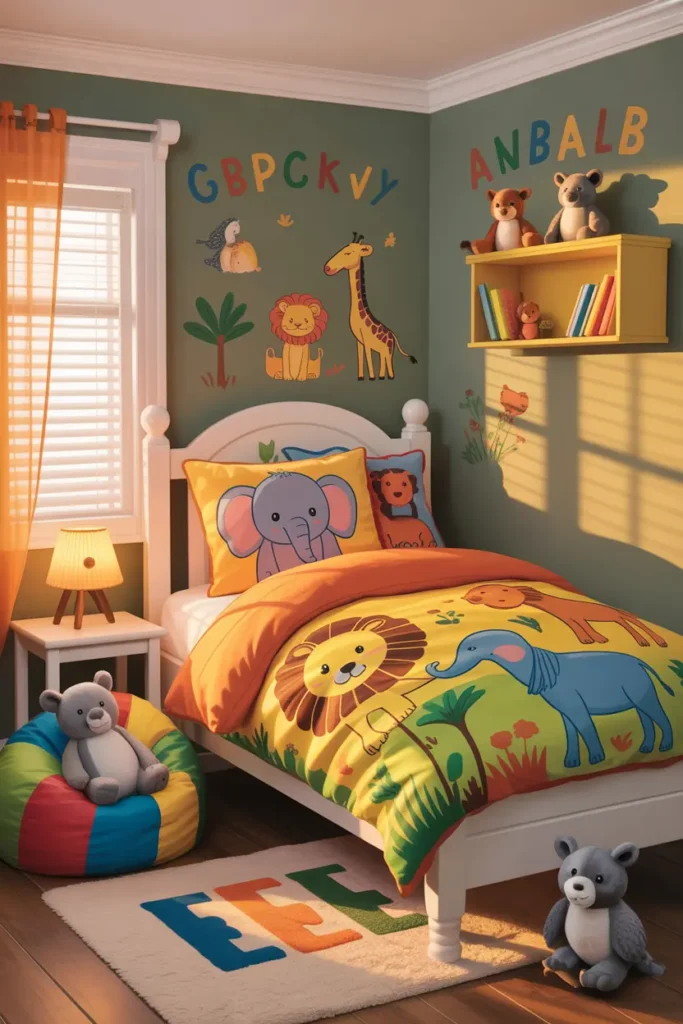
Bedding is the room’s biggest color block — a twin duvet covers about 15 square feet of visual space — so it’s the cheapest way to change the entire mood. When the rocket phase arrived, a $35 duvet set did more than any wall paint could. When the rocket phase ended (eighteen months, right on schedule), a new set reset the room in an afternoon.
Buy for the wash, not the print. Kids’ bedding gets washed weekly, so look for 100% cotton or cotton-blend with a tight weave that survives 50+ wash cycles. Dark or busy patterns hide the inevitable stains; white bedding in a kids’ room is a decision you’ll regret by week three. Keep one spare set so laundry day doesn’t mean a bare mattress.
Idea 4: Playful Storage Solutions
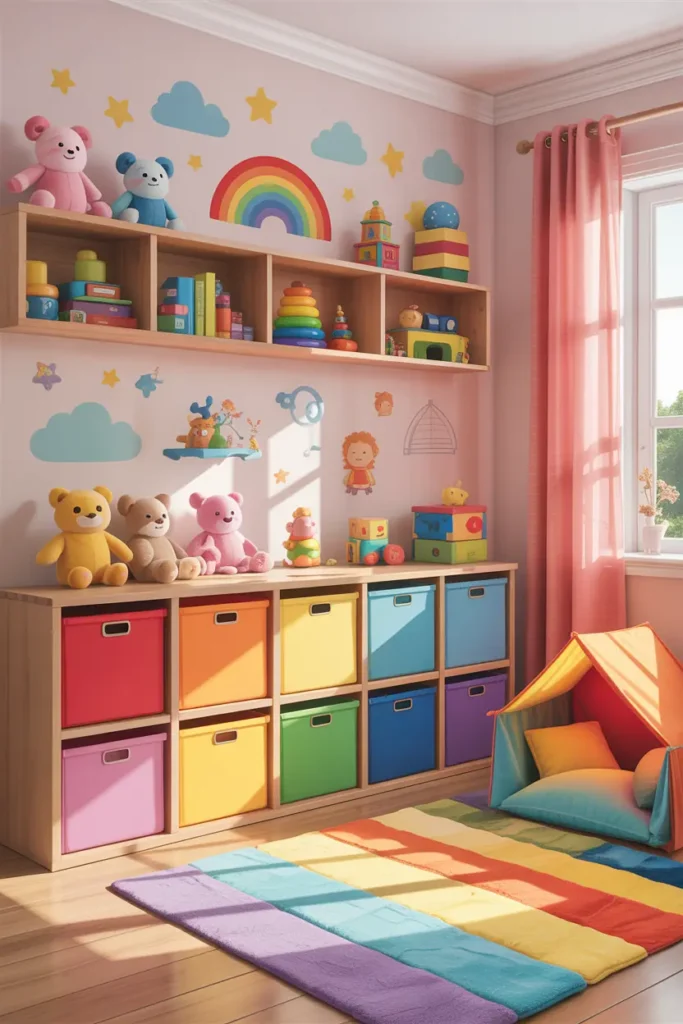
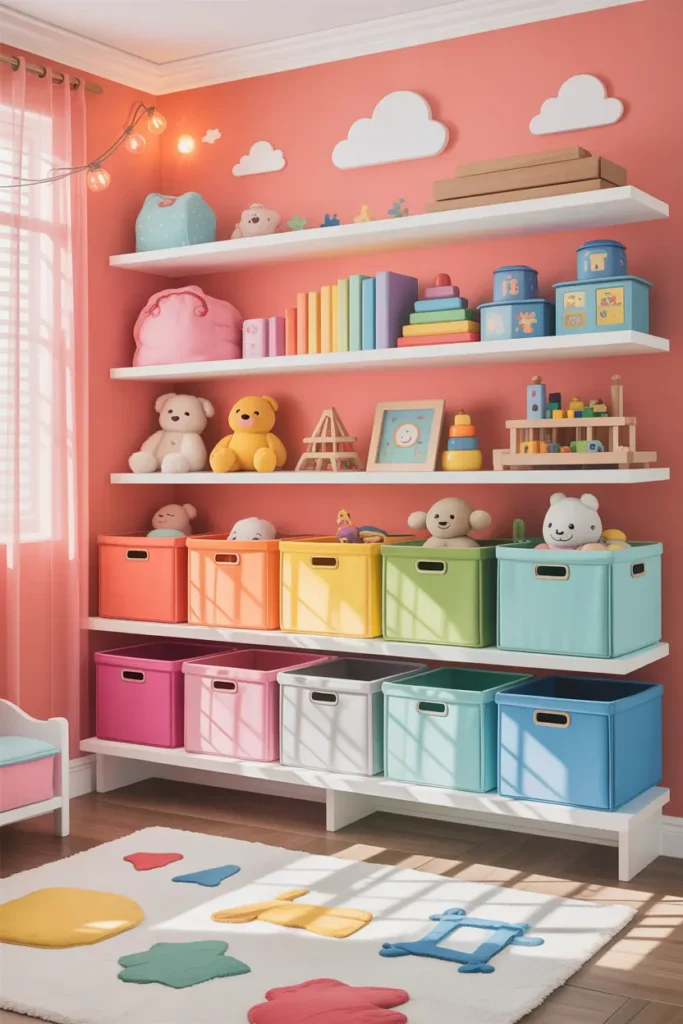
Storage fails in kids’ rooms for one reason: it requires too many steps. A lid to lift, a latch to open, a box to pull out — each step is a reason the toy stays on the floor. The fix is open-top bins, one category per bin, at floor level. Toss-in beats put-away, and a room that’s roughly tidy beats a “system” nobody uses.
Make the bins themselves fun: colored fabric cubes, a toy chest that doubles as a bench, a rolling cart for art supplies that can follow the project. Label with pictures for pre-readers. And cap the inventory — if the bins overflow, the answer is fewer toys, not more bins. The “one in, one out” rule, taught early, is a life skill disguised as tidying.
Idea 5: Soft Lighting for Comfort
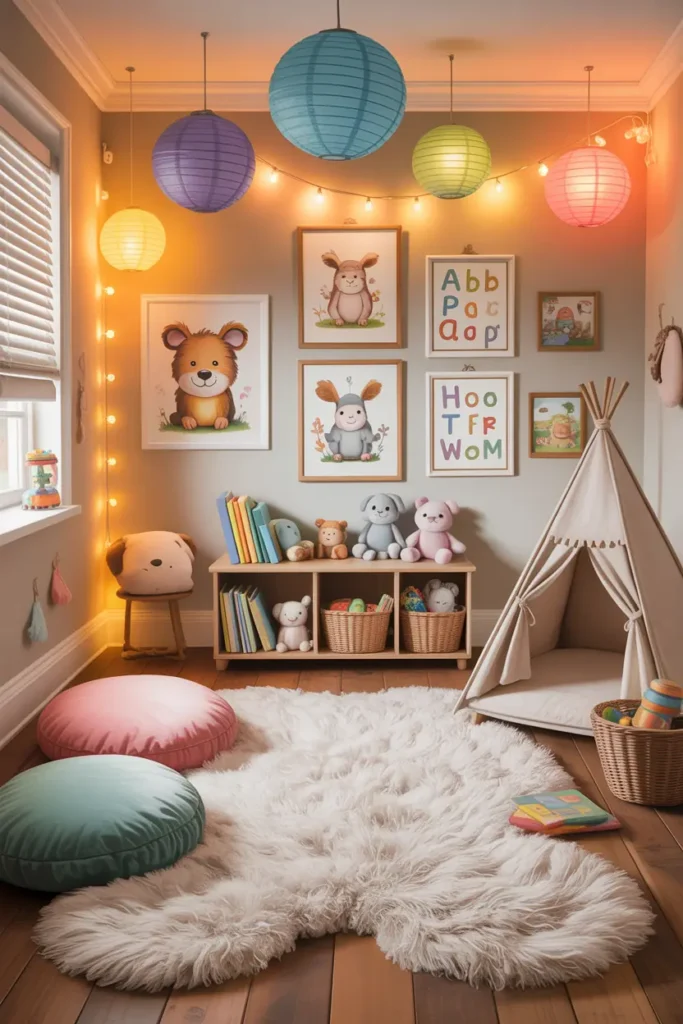
Harsh overhead light is the fastest way to make a room feel institutional. Kids’ rooms should glow, not glare. The working formula: one warm main lamp (2700K), one night light for the dark hours, and one fun light — fairy lights, a star projector, a cloud lamp — for the magic. Three layers, three moods, and the room can shift from homework to bedtime without anyone touching the ceiling fixture.
Put the fun light on a timer so it handles bedtime itself — lights fading at 8:30 is a better “time for bed” signal than any announcement. And keep a small lamp within the child’s reach; being able to turn their own light on is, for a kid afraid of the dark, the difference between panic and independence.
Idea 6: Creative Wall Stickers
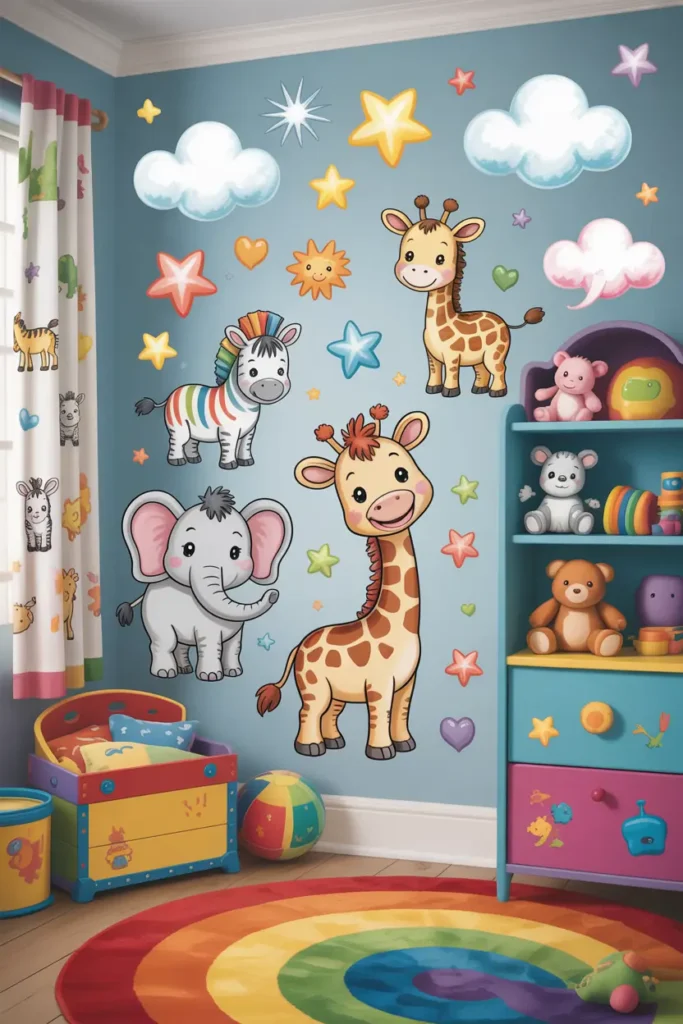
Wall stickers are the commitment-phobe’s dream: a full rocket-ship solar system across one wall for $20, removable without a trace when the phase passes. The quality range is enormous, though — cheap vinyl tears on removal and leaves adhesive ghosts. Look for “fabric” wall decals; they reposition cleanly and survive multiple moves.
Apply them as a scene, not scattered confetti. One big composition — a tree with animals, a night sky with planets — reads as designed; fifty random stickers read as clutter. Let your child place the last few themselves. Imperfect placement by small hands is part of the charm, and the ownership makes them love it longer.
Idea 7: Soft Rugs and Floor Comfort
Kids live on the floor. Adults visit it; children inhabit it. So the rug isn’t decor in a kids’ room — it’s furniture. A 5×7-foot low-pile rug gives a play surface that’s warm, defines the play zone, and deadens the sound of toy cars hitting the floor at 7 a.m. (your downstairs neighbors will thank you).
Machine-washable is the only spec that matters. Juice, paint, mystery stickiness — it will all happen, and a rug you can throw in the wash is a rug that survives childhood. Low pile over high pile, always: Lego bricks vanish into shag, and you’ll be fishing them out with tweezers. A non-slip pad underneath keeps the whole thing from becoming a slip-and-slide.
Idea 8: Personal Touch Corner

This is the idea that costs nothing and matters most. One shelf, one pinboard, one corner of wall that belongs entirely to the child — their photos, their medals, the weird rock they found and insisted was a fossil. When we gave my nephew a corkboard for his “important things,” he arranged and rearranged it for a week. It was the first time I’d seen him curate anything.
Don’t style it for them. Resist the urge to arrange it “nicely” — a personal corner that’s parent-perfect isn’t personal. Give them the board and the pins and step back. Update it together when seasons change. Years from now, they won’t remember the bedding, but they’ll remember that their things mattered enough to be displayed.
Pro Tips
- Start with the floor, not the walls. A rug and soft seating change how the room feels instantly; wall decor can wait. Kids experience rooms from three feet high — decorate for that altitude.
- Washability beats beauty. Every textile in a kids’ room should survive the washing machine. If it can’t be washed, it can’t live here.
- Leave 30% empty. Don’t fill every wall and corner. Empty space is where imagination sets up camp — and where future interests will need room to land.
- Ask the resident expert. Give your child two real choices (“blue rug or green rug?”) instead of open questions or no input. Bounded choice means they feel heard without the decision spiraling.
FAQs
How can I make a kids’ room cozy on a tight budget?
Start with the floor and the light: a washable rug ($40–$70) and warm lighting (a $15 lamp plus fairy lights) transform the feel of a room for under $100. Add your child’s own art in matching frames and the room feels personal without another dollar spent.
What is the best flooring for a kids’ bedroom?
Whatever’s there, plus a large low-pile washable rug. The rug provides the warmth and play surface; low pile survives toys and vacuuming, and machine-washable means spills aren’t tragedies. Always use a non-slip pad underneath on hard floors.
How do I keep a kids’ room tidy without constant nagging?
Make tidying a one-step action: open-top bins, one category per bin, at the child’s height. Picture labels for young kids. And limit the inventory — a room with fewer toys stays tidier than a room with more storage, every time.
When should I update my child’s room theme?
When they ask — or when you notice they’ve stopped noticing it. The cheap carriers (bedding, decals, cushions) can refresh every 12–18 months for under $80; the bones (walls, furniture, rug) should last years. Let the child drive the timing.

HowDecor is a home decor blog sharing simple, practical decorating ideas for everyday spaces. We believe a beautiful home should feel comfortable, personal, and full of warmth — and that great style does not require a huge budget. Our goal is to inspire readers to create spaces that feel peaceful, welcoming, and truly their own — one room at a time.