Blue and grey is the pairing bathrooms were made for — one brings water and sky, the other brings stone and shadow. But the difference between a bathroom that feels like a spa and one that feels like a dentist’s office is entirely in the proportions, the finishes, and where you let each color do its job. These eight combinations cover every starting point, from full renovation to a $30 shower curtain.
A note on the colors themselves before we start: when I say “soft blue,” I mean something in the LRV 55–70 range (light, reflective) — think powder blue, not navy. “Grey” here means warm greys with a hint of beige, not cold concrete grey, unless stated otherwise. That warmth is what keeps blue from feeling chilly.
Table of Contents
- ✨ Idea 1: Soft Blue Walls with Grey Marble
- ✨ Idea 2: Grey Walls with Blue Vanity
- ✨ Idea 3: Blue Tiles with Grey Grout
- ✨ Idea 4: Blue and Grey Coastal Bathroom
- ✨ Idea 5: Grey Tiles with Blue Shower Curtain
- ✨ Idea 6: Blue Ceiling with Grey Walls
- ✨ Idea 7: Grey Vanity with Blue Accessories
- ✨ Idea 8: Blue and Grey Minimal Balance
Idea 1: Soft Blue Walls with Grey Marble
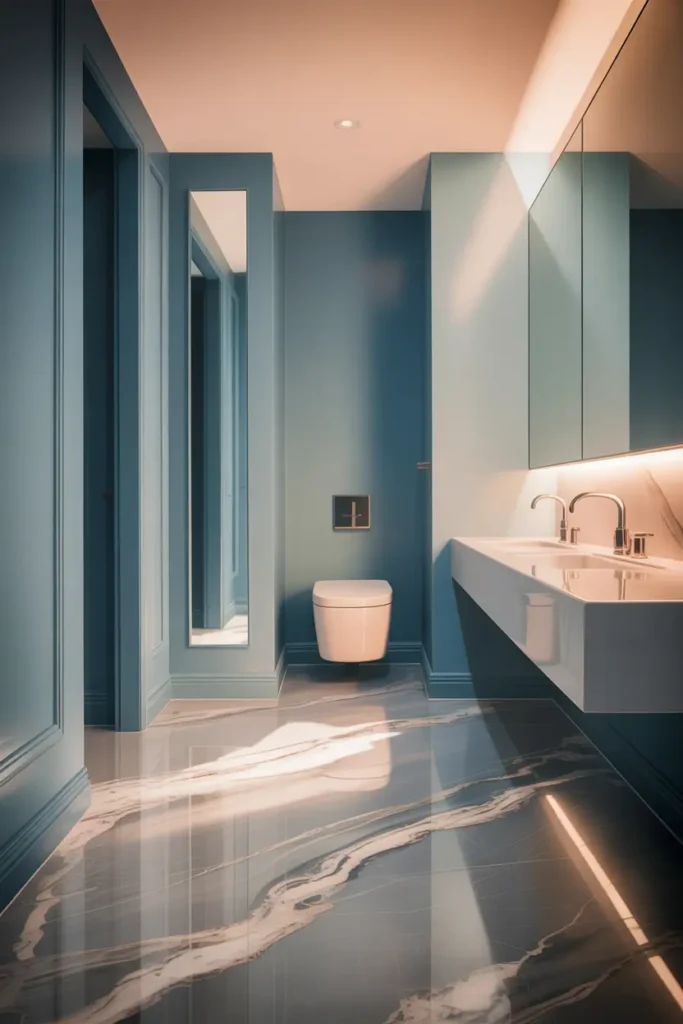
This is the classic spa formula, and it works because of the finish contrast: matte blue walls (eggshell or matte paint, never gloss) against polished grey marble — or marble-look porcelain, which gives you 90% of the look at 30% of the cost and zero sealing maintenance. Real marble needs resealing every 6–12 months in a wet bathroom; porcelain needs nothing.
Keep the blue pale — roughly a 60/40 split of blue to grey by surface area — and let the marble carry the grey in the floor and one feature strip. White fixtures bridge the two. The common mistake is adding a third strong color; with this much tonal variation, towels and accessories should stay white, cream, or natural wood.
Idea 2: Grey Walls with Blue Vanity

Flip the formula and the vanity becomes the room’s signature. A vanity in dusty blue or slate blue (about 24–36 inches wide for a standard bathroom) against warm grey walls reads as custom cabinetry. If you’re painting an existing vanity, use a cabinet-grade enamel — regular wall paint will chip within months in bathroom humidity — and sand plus prime first.
Hardware decides the style: matte black pulls modern, brushed brass pulls classic, polished chrome pulls contemporary. Pick one metal and use it on the faucet, mirror frame, and towel hooks — mixed metals in a small bathroom read as indecision. Keep the walls a true warm grey (greige family) so the blue vanity pops without the room feeling cold.
Idea 3: Blue Tiles with Grey Grout
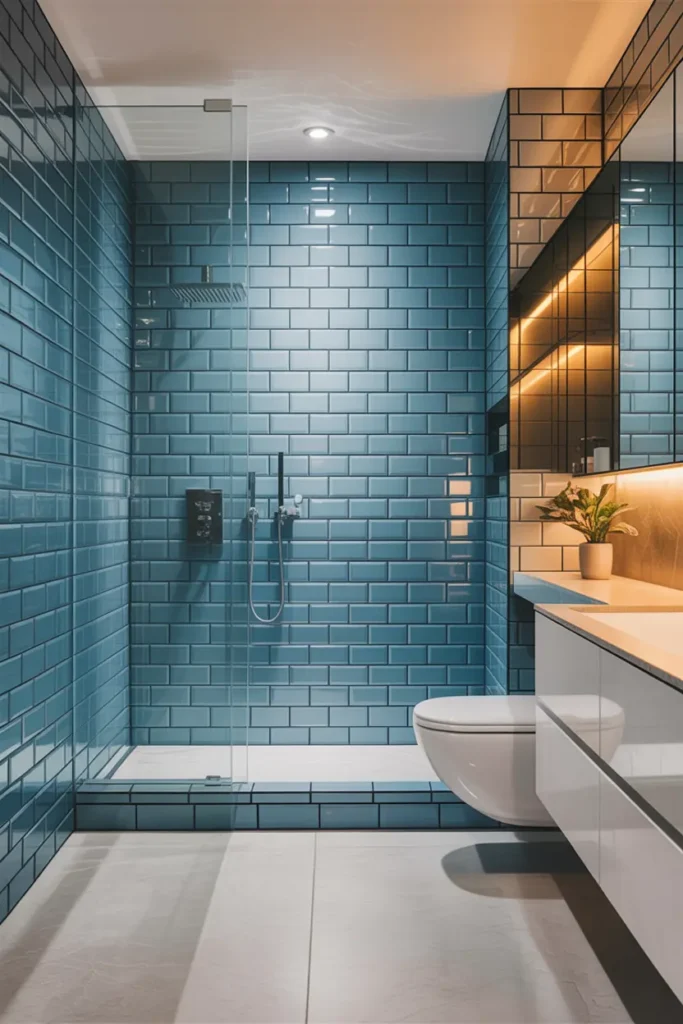
Grout is not a neutral detail — it’s a design decision. Grey grout (a mid-tone, not charcoal) against blue subway or square tiles gives you visible texture without the high-contrast grid that white grout creates. White grout also stains; grey grout hides a multitude of sins, which in a shower is a genuine maintenance advantage.
Tile size sets the era: 3×6-inch subway in a running bond is timeless; 4×4-inch squares stacked read more modern; large-format 12×24-inch blue tiles make a small bathroom feel bigger because there are fewer grout lines breaking up the surface. Run the tile to the ceiling in the shower — stopping at 7 feet with painted drywall above looks unfinished — and seal the grout once with a penetrating sealer.
Idea 4: Blue and Grey Coastal Bathroom
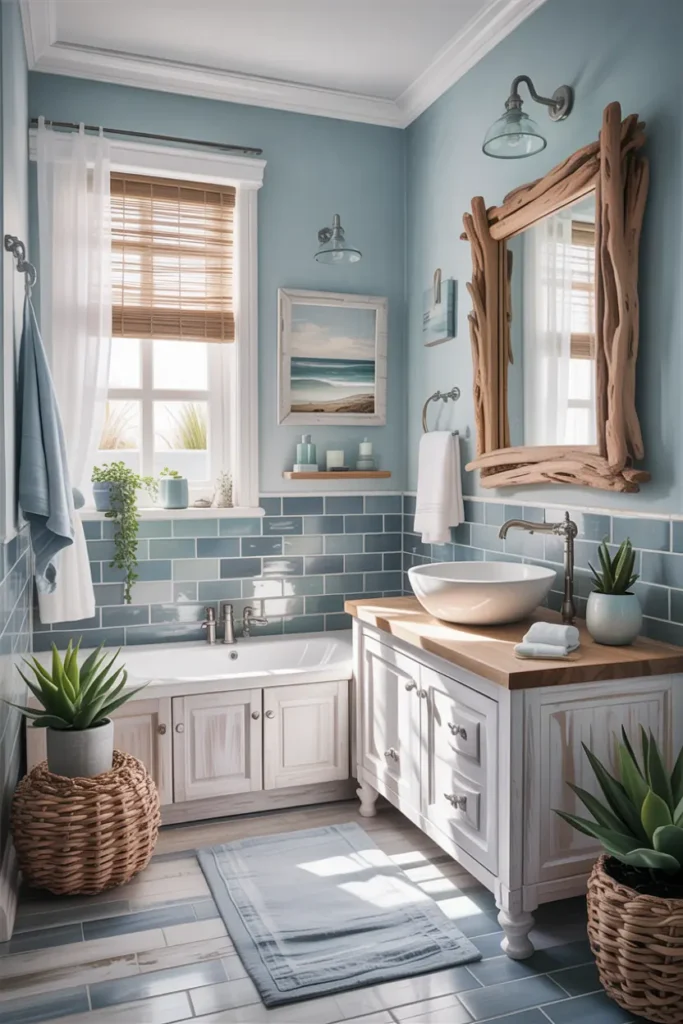
Coastal doesn’t have to mean anchors and rope. The grown-up version is a palette — sea-glass blue, driftwood grey, warm white — plus one natural material. A teak bath mat, a woven hamper, or a simple wooden stool is enough; the mistake is theming every surface. One natural element whispers “coast,” five of them shout “gift shop.”
Keep finishes matte and soft: brushed nickel fixtures, honed (not polished) tile, linen-textured shower curtain. Glossy chrome and polished marble fight the relaxed coastal brief. A eucalyptus sprig in a bud vase on the vanity costs $4 and does more for the coastal feeling than any wall decal — it brings in scent, which is the sense most tied to “fresh.”
Idea 5: Grey Tiles with Blue Shower Curtain
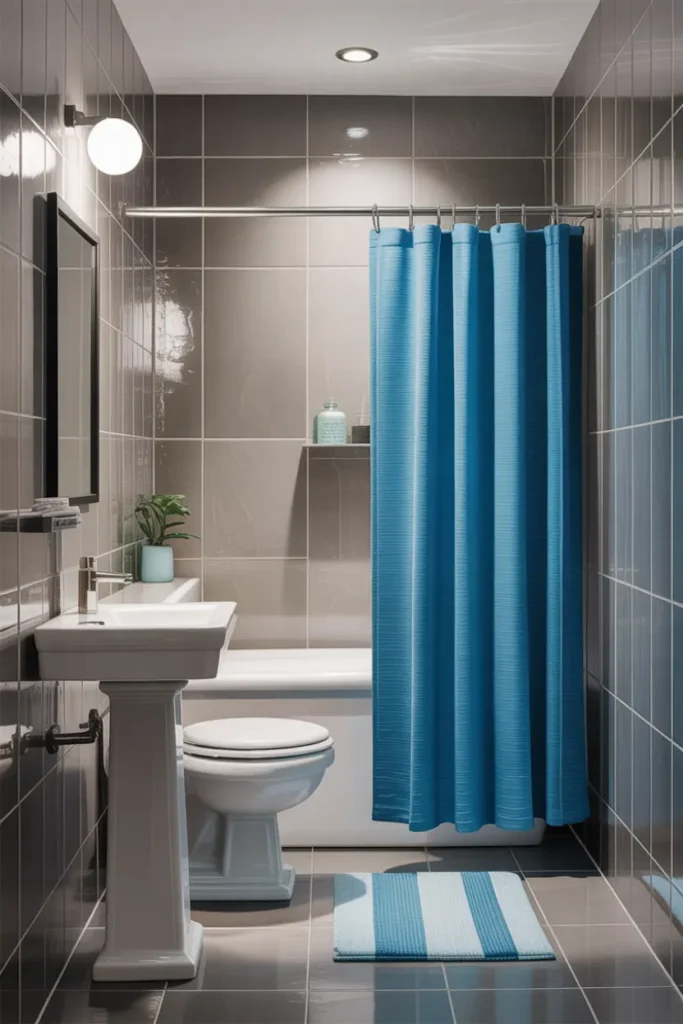
The renter’s power move. Grey or greige tiles are the default in most rentals and new builds, and a blue shower curtain — ideally in a weighted, fabric-like material rather than flimsy plastic — is a $25–$40 transformation that takes five minutes. Hang it high and wide: the rod should extend 3–4 inches past the tub on each side, and the curtain should just kiss the floor of the tub, not pool in it.
Match the curtain’s blue in one more place — a folded towel, a soap dispenser, a small bath mat — so it reads as a decision rather than an accident. The 60-30-10 rule applies even here: 60% grey (tiles), 30% white (fixtures), 10% blue (curtain plus accents). When the lease ends or tastes change, the whole scheme reverses in minutes.
Idea 6: Blue Ceiling with Grey Walls
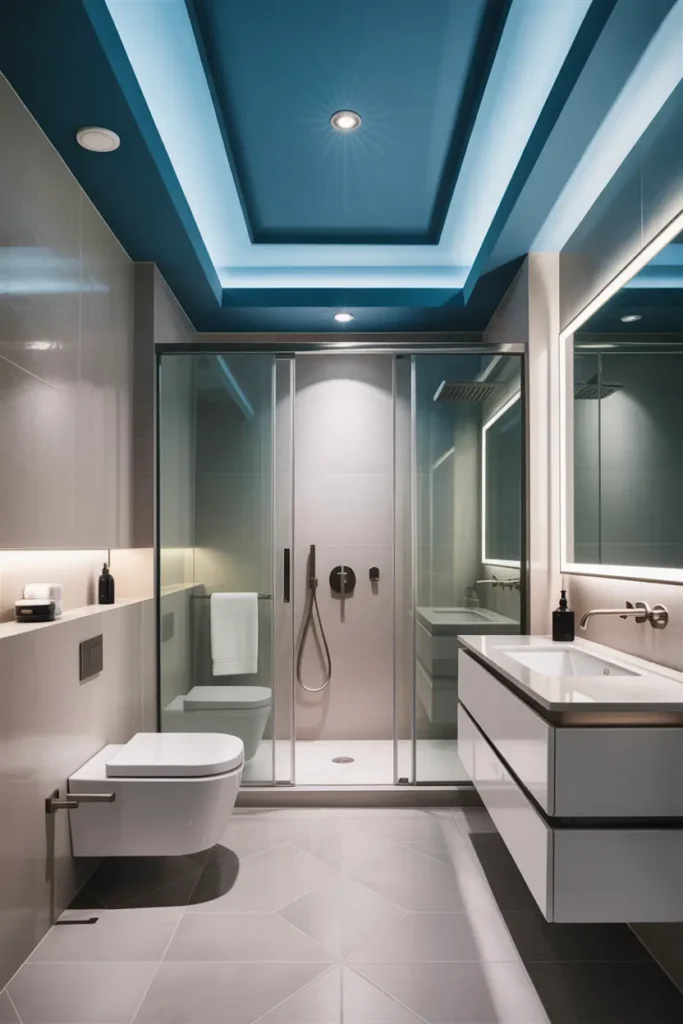
The “fifth wall” trick: a pale blue ceiling (haint blue, the traditional porch color, is the reference point) with warm grey walls makes an 8-foot ceiling feel higher and the room feel custom. It works because ceilings are usually dead white — any deliberate color there reads as designer confidence. Use a flat ceiling paint to hide imperfections; gloss on a ceiling shows every flaw.
Keep the blue at least two shades lighter than any blue elsewhere in the room — a ceiling that’s darker than the walls closes the room in. This works best in bathrooms with decent natural light; in a windowless bath, pair it with bright 3000K lighting or the blue can read as grey-green gloom. It’s a bold move that costs one quart of paint.
Idea 7: Grey Vanity with Blue Accessories
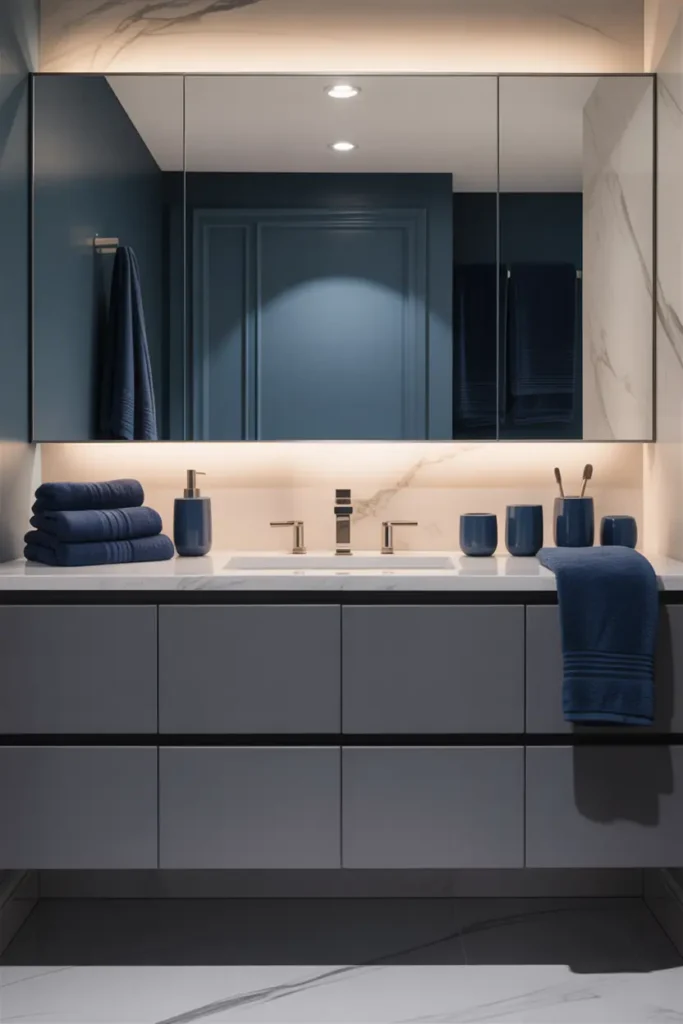
The lowest-commitment entry on this list: a grey vanity you already own, plus blue in the replaceables. Folded blue towels (Turkish cotton, which gets softer with washing), a blue soap dispenser and tray set, maybe a small blue stool or bath mat. Total cost: $40–$80, total time: an afternoon of shopping.
The discipline here is restraint — three blue items, not ten. Accessories work by repetition with breathing room: towel, dispenser, one more. When every surface is blue, nothing is. And because nothing is permanent, you can test whether you actually like living with blue before committing to tile or paint.
Idea 8: Blue and Grey Minimal Balance
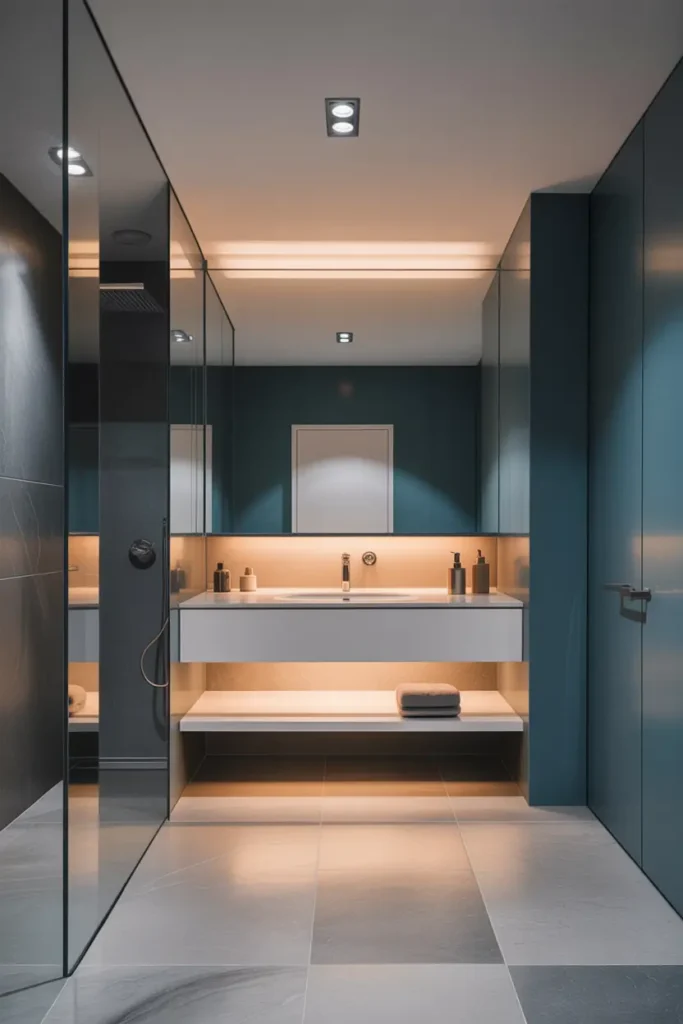
Minimalism with two colors is harder than it looks — with nothing to hide behind, every choice shows. The formula: one surface in blue (a single tiled wall, or the vanity), everything else in layered greys and whites, and genuinely minimal accessories. One plant, one folded towel, one soap dispenser. That’s the whole styling budget.
Texture does the work that color usually does: a honed stone floor, a matte tile wall, a linen curtain, a wooden stool. Four textures, two colors, zero clutter. The most common failure is going too cold — if the room feels sterile, add one warm element (wood, brass, or a 2700K bulb) and the whole scheme snaps into place.
Pro Tips
- Test paint in the bathroom’s actual light. Blue shifts dramatically under different bulbs — sample on the wall and check it morning, noon, and evening before committing. A $5 sample pot saves a $200 repaint.
- Seal grout, skip sealing porcelain. Cement grout needs a penetrating sealer in wet areas; porcelain and ceramic tile never do. Don’t let a contractor sell you a tile “sealing” service — it’s unnecessary.
- One metal finish per bathroom. Chrome, nickel, brass, black — pick one and repeat it on faucet, hardware, and mirror. Mixed metals fragment small bathrooms.
- Ventilate before you decorate. A bathroom fan that actually moves air (or a cracked window habit) prevents the mold and peeling paint that ruin every color scheme. Run the fan 20 minutes after every shower.
FAQs
Will blue make my small bathroom feel smaller?
Not if you keep it light — pale blues with high light-reflectance actually recede and can make walls feel farther away. Dark navy on all four walls will close a small room in; pale blue on walls with white fixtures will not.
What grey goes best with blue in a bathroom?
Warm greys (greige tones with a hint of beige) pair best with most blues because they prevent the chilly, clinical feeling that cool concrete greys can create. Test them together under your bathroom’s lighting before deciding.
Is marble worth it in a bathroom, or should I use porcelain?
For most people, marble-look porcelain is the smarter choice: it costs far less, needs no sealing, and resists etching from toothpaste and cosmetics that damages real marble. Choose real marble only if you love the natural veining enough to maintain it.
How do I add blue to a rental bathroom without losing my deposit?
Stick to the replaceables: shower curtain, towels, accessories, and a bath mat — all reversible in minutes. Removable wallpaper on one wall is also deposit-safe if your lease allows it. Avoid paint and anything that requires drilling.

HowDecor is a home decor blog sharing simple, practical decorating ideas for everyday spaces. We believe a beautiful home should feel comfortable, personal, and full of warmth — and that great style does not require a huge budget. Our goal is to inspire readers to create spaces that feel peaceful, welcoming, and truly their own — one room at a time.