Stand in a furniture showroom and you’ll see the trap laid out in neat rows: the rooms that look modern feel cold, all glass edges and grey wool, and the rooms that feel cozy look cluttered, piled with cushions and competing patterns. Somewhere between those two extremes sits the room most of us actually want to live in — clean-lined enough to feel calm, warm enough to sink into at the end of the day.
Getting there on a budget is less about shopping than about balance. Every choice below is a small negotiation between modern and cozy: a little structure here, a little softness there, until the room holds both. Twenty-one ideas, each one a step toward a home that feels considered rather than decorated.
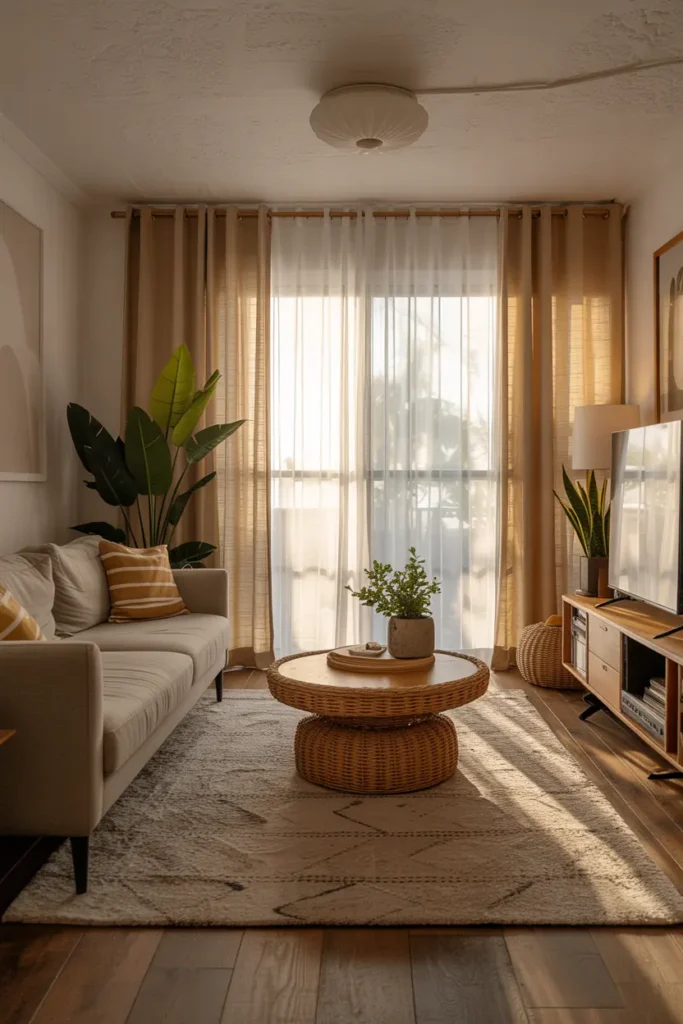
1. Start With a Neutral Base and Build From There
Every modern-cozy room rests on a foundation that doesn’t fight itself. Warm whites, soft greys, pale taupes — colors that recede and let everything else breathe. The specific choice matters less than the temperature: a warm white like Benjamin Moore’s White Dove keeps a room feeling sunlit even on grey days, while a cool grey can quietly drain the warmth out of wood and fabric.
The discipline is to keep the big surfaces quiet — walls, floors, the sofa — and let the personality live in the smaller things you can change cheaply. Repainting one room costs a single $35–50 gallon; recovering a sofa costs a fortune. So the sofa stays neutral for a decade, and the cushions, throws, and art rotate around it for $15 a season. A neutral base isn’t boring. It’s a stage.
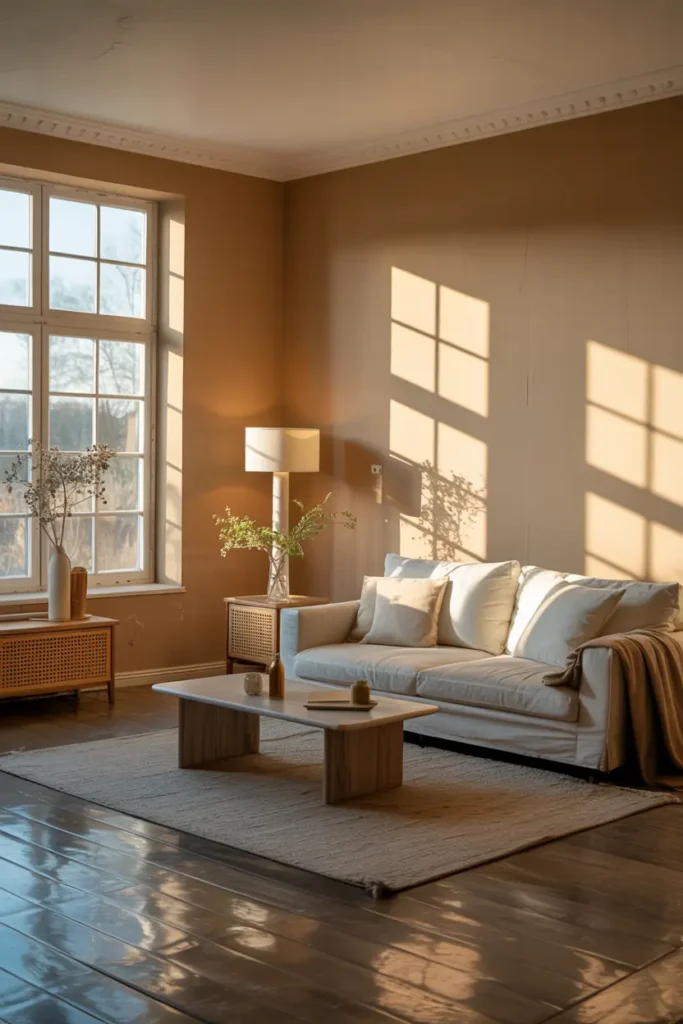
2. Layer Different Textures Across the Room
Modern doesn’t mean flat, and cozy doesn’t mean overstuffed — the space between them is texture. When a room feels somehow unfinished despite having all the right furniture, the missing ingredient is almost always tactile variety: the nub of a wool throw against the smoothness of a lacquered tray, rough linen beside polished wood. Texture is what makes a neutral palette feel rich instead of empty.
Work in threes. In any seating area, aim for three distinct textures within arm’s reach — say, a knit throw, a leather cushion, and a woven basket. Each one costs little (thrifted throws run $5–12, a seagrass basket $15–25), but together they give the eye and the hand something to discover. Run your fingers over a room the way a guest’s eyes will, and add roughness wherever everything feels the same. A room you want to touch is a room that feels like home, and texture does that immediately in a way color alone never can.
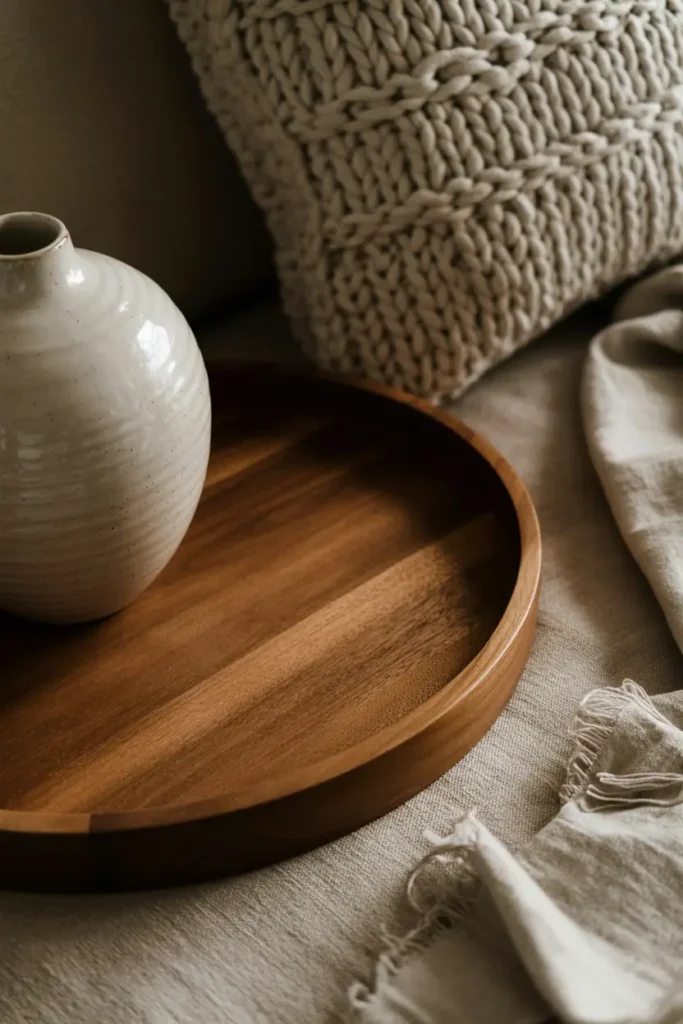
3. Choose Furniture With Clean Lines but Warm Materials
The modern half of this equation comes mostly from silhouette: simple shapes, uncluttered lines, legs you can see under. The cozy half comes from material: oak instead of chrome, bouclé instead of leather, cane instead of glass. A mid-century-style armchair in warm walnut with a nubby oatmeal fabric is both things at once — and it’s why that style has survived seventy years of trends.
On a budget, hunt for the silhouette secondhand and fix the material. A clean-lined wooden chair with tired upholstery is a $20–40 thrift find; a slipcover or a re-cover in warm fabric ($30–60 in material) makes it the warmest seat in the house. Avoid ornate carving and heavy tufting — both fight the modern half of the balance. Simple shape, warm skin. That’s the formula, and it applies to everything from coffee tables to bed frames.
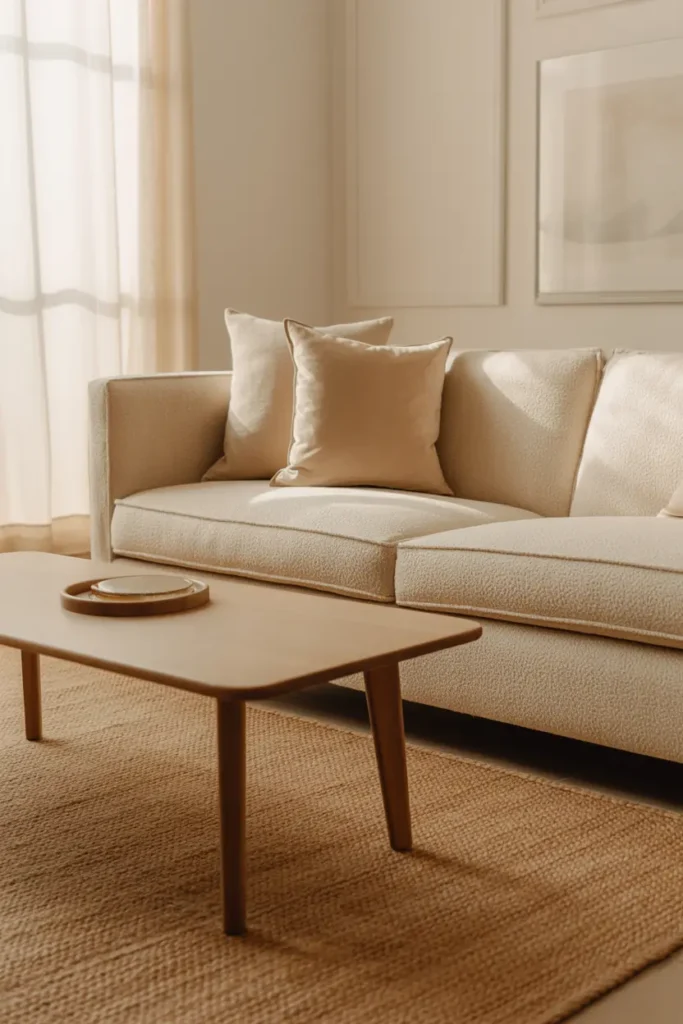
4. Add Warmth Instantly With the Right Lighting
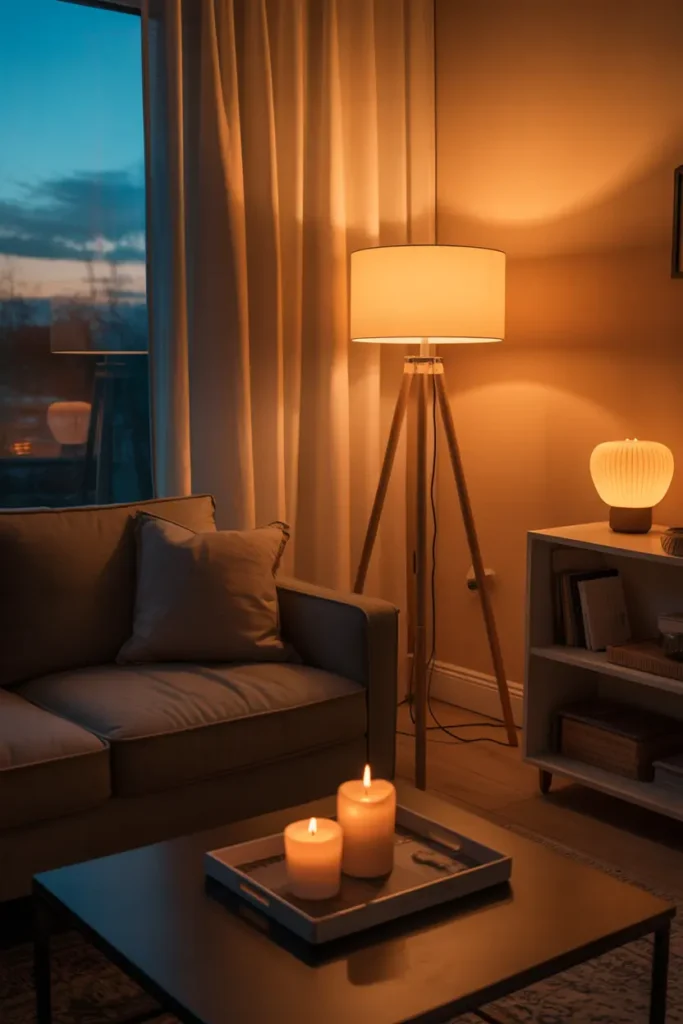
Lighting is where modern and cozy either meet or miss each other entirely. A room lit by a single overhead fixture feels like an office no matter how soft the sofa is; the same room lit by a floor lamp, a table lamp, and a candle feels like evening. The difference isn’t the furniture. It’s the light falling on it.
Build three layers and keep them all warm — 2700K bulbs throughout, no exceptions, because one cool bulb in a warm room reads as a mistake. A paper lantern floor lamp ($35–55) gives sculptural modern shape with glowing warm light, which is the whole philosophy in one object. Put the brightest light where you work, the softest where you rest, and never let the ceiling fixture be the only thing on after dark.
5. Bring in a Statement Plant or Two
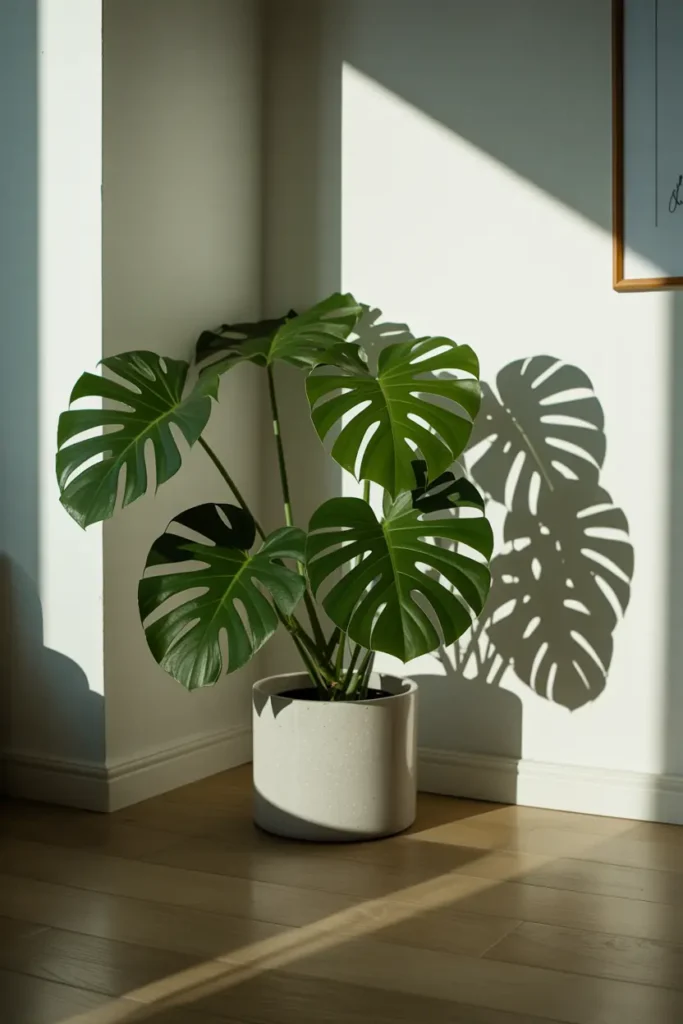
Plants do something in a room that no manufactured object can: they grow. That quiet aliveness — a new leaf unfurling, a stem leaning toward the window — is the most natural warmth available, and it’s why even the most minimal modern interiors keep one large plant in the corner. It softens every straight line around it just by being organic.
One large plant beats five small ones. A 4–5-foot fiddle leaf fig, olive tree, or bird of paradise ($40–80 at nurseries, often half that at big-box stores) becomes the room’s living sculpture. Put it in a simple ceramic or woven pot — the pot is the decor, the plant is the life. If your light is low, a ZZ plant or snake plant tolerates near-neglect and still reads architectural. Water on a schedule, wipe the leaves monthly, and it will outlast every trend.
6. Use a Large Rug to Anchor the Whole Room
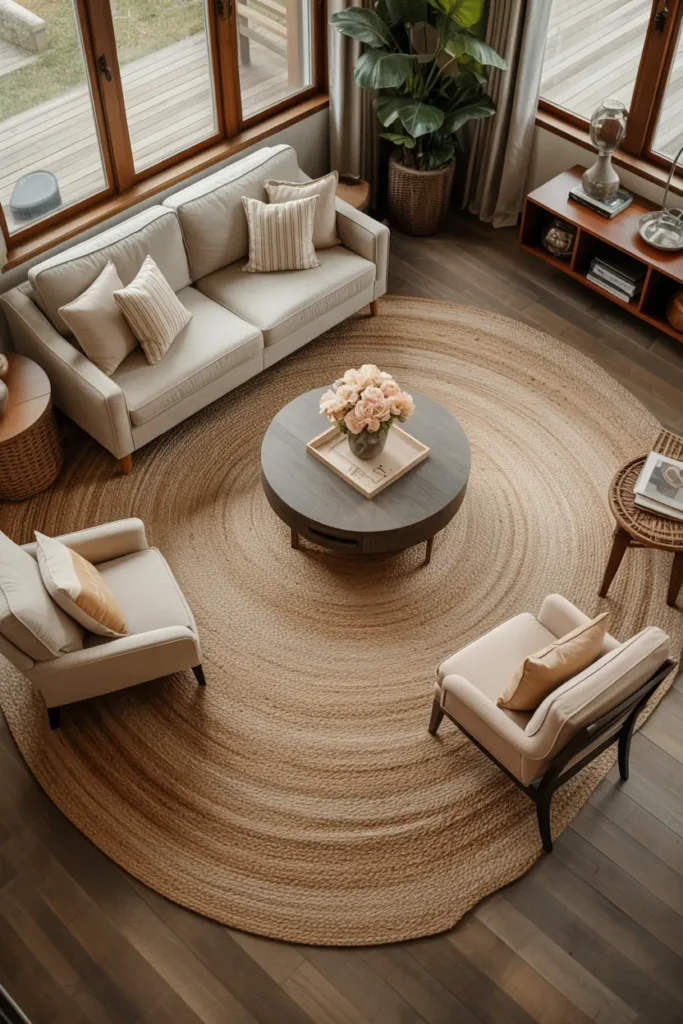
A room without a rug often feels like it’s floating — furniture adrift on hard floor, nothing holding the arrangement together. The rug is the anchor: it defines where the conversation happens, softens every footstep, and gives the modern-cozy balance its cozy half in one piece. It’s the single largest textile in the room, so it sets the tone more than any cushion.
Size is the whole game. A 8×10 rug under the main seating area ($120–200 for a decent flat-weave) makes the room feel generous; a 5×7 floating in the middle makes it feel apologetic. The front legs of every seat should rest on it — that contact is what “anchors” actually means. If the budget is tight, layer: a large natural jute base ($60–80) with a smaller patterned rug on top gives you scale and personality for half the price of one big designer rug.
7. Create a Focal Point in Every Room
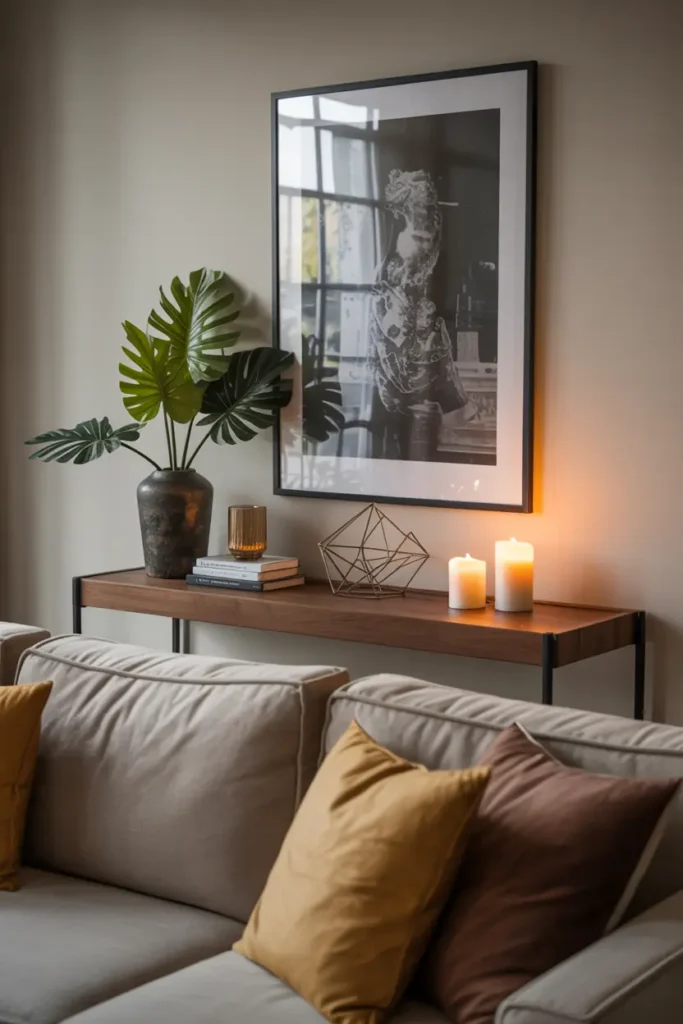
Modern rooms feel intentional, and intentionality comes from the eye knowing where to land. Every room needs one clear focal point — the thing you notice first, around which everything else arranges itself. A fireplace, a large piece of art, a dramatic plant, a beautifully styled bookcase. Without one, the eye wanders and the room feels accidental.
You don’t need to buy a focal point; you need to choose one. Walk into each room and notice what you look at first — then strengthen it. A large canvas ($30–50 if you stretch your own or buy a print) hung at eye level over the sofa, flanked by nothing competing. A vintage dresser painted deep green with a mirror above it. The rule is one per room: two focal points fight, and the room loses. Everything else becomes the supporting cast.
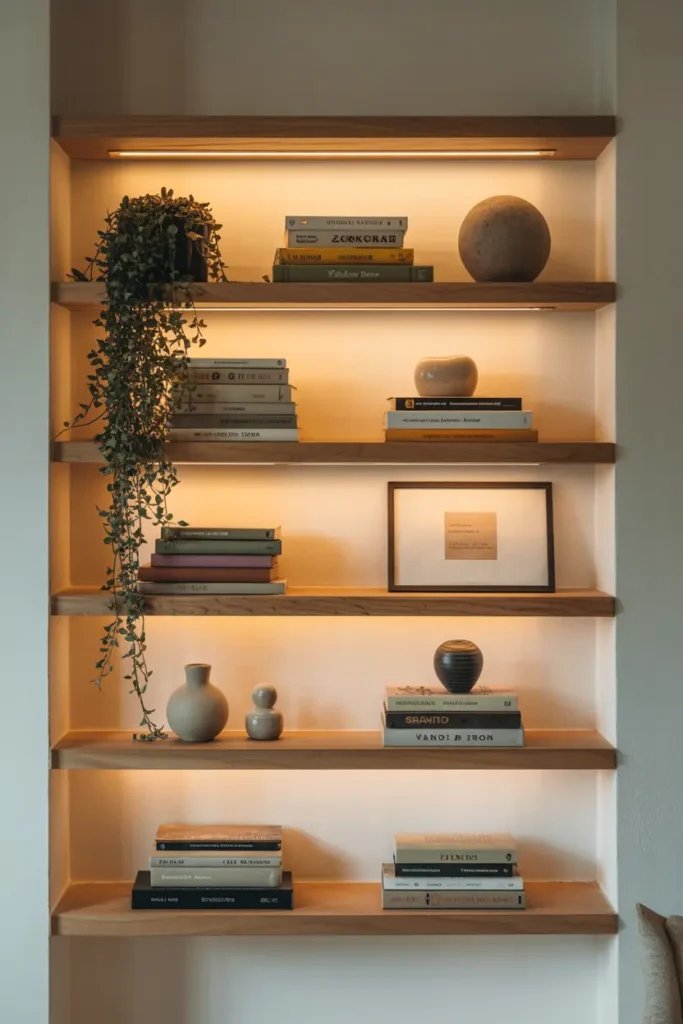
8. Style Your Shelves With Intention and Restraint
Shelves are the most powerful and most misused decor opportunity in the home. Overcrowded shelves read as storage; half-empty ones read as styling. The difference is restraint — and restraint is free. The modern-cozy shelf holds books, a few objects with breathing room between them, and negative space that lets the eye rest.
The working ratio: roughly two-thirds books and objects, one-third empty space. Group in odd numbers — three books stacked horizontally, a small vase beside them — and vary the heights so the shelf has rhythm. Step back after every shelf and squint: if it reads as one calm composition, you’re done; if any single object shouts, remove it. Restyle seasonally by rotating objects from other rooms. The shelf is a gallery, not a warehouse.
9. Introduce Curves to Soften the Space
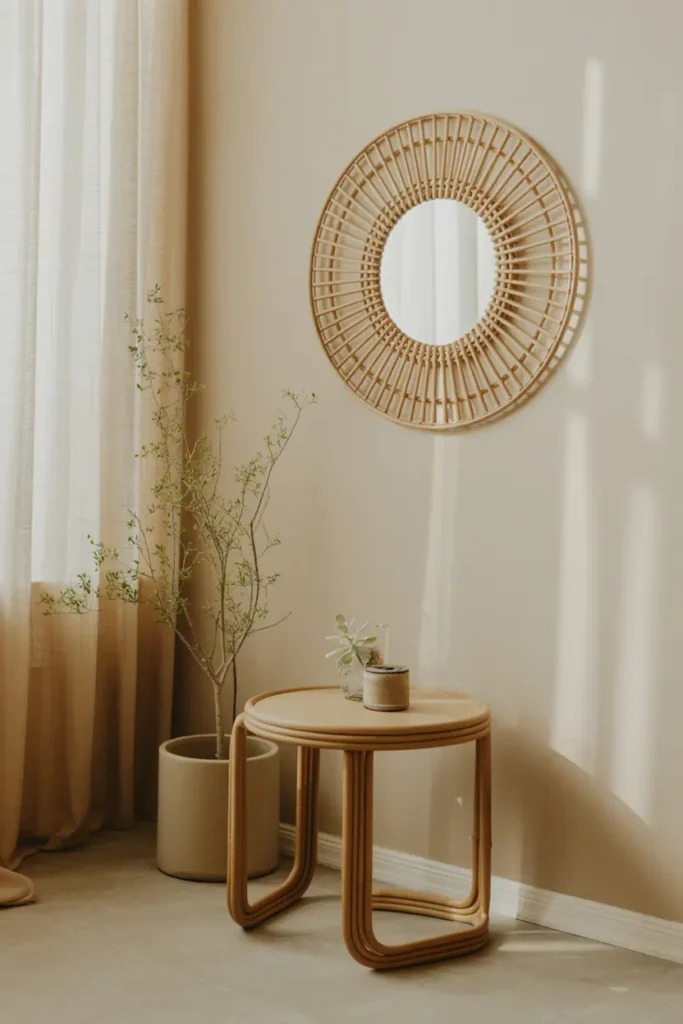
Modern design leans rectilinear — straight sofas, square tables, right angles everywhere. Curves are what keep all those straight lines from feeling severe. A round mirror, an arched doorway detail, a curved-back chair: each one is a visual exhale in a room full of held breath. Contemporary interiors are embracing this precisely because the alternative got too sharp.
You need very little. One curve per room is the dose — a round jute rug under a square coffee table ($50–70), an arched floor mirror leaning in the bedroom corner ($60–100), a bowl-shaped pendant over the dining table. The curve should contrast the room’s dominant geometry, so in a room full of rectangles, go round; the contrast is the point. Too many curves and the room loses its modern backbone. One is a whisper. That’s enough.
10. Use Curtains to Add Height and Softness
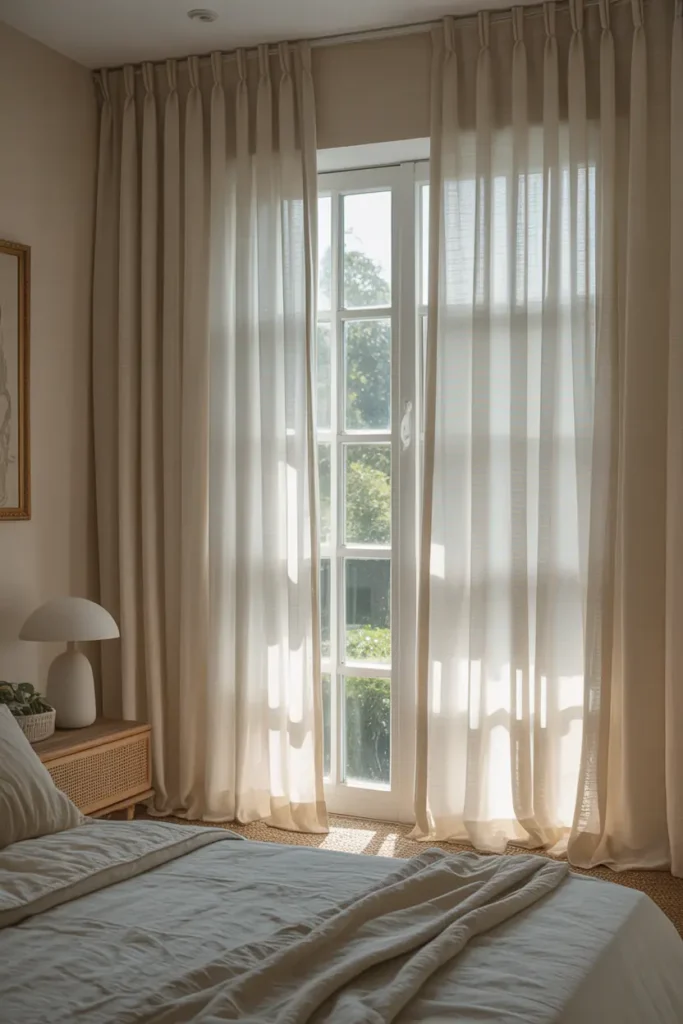
Curtains are easy to get wrong and transformative when done right, because they do two jobs at once: they soften the hard rectangle of the window, and they add vertical line to the wall. Hang the rod 4–6 inches below the ceiling and 6–10 inches wider than the window frame, and the window reads taller and grander than it is. The fabric should just kiss the floor.
In a modern-cozy room, the fabric choice carries the balance: linen or linen-look in warm white or natural gives you softness without fussiness, structure without stiffness. Budget panels run $20–35 per pair and filter light beautifully — sheer enough to glow in daylight, substantial enough to feel finished. Avoid anything shiny or heavily patterned; the curtain’s job is to be the quiet backdrop, not the performance.
11. Build a Cozy Reading Corner From Scratch
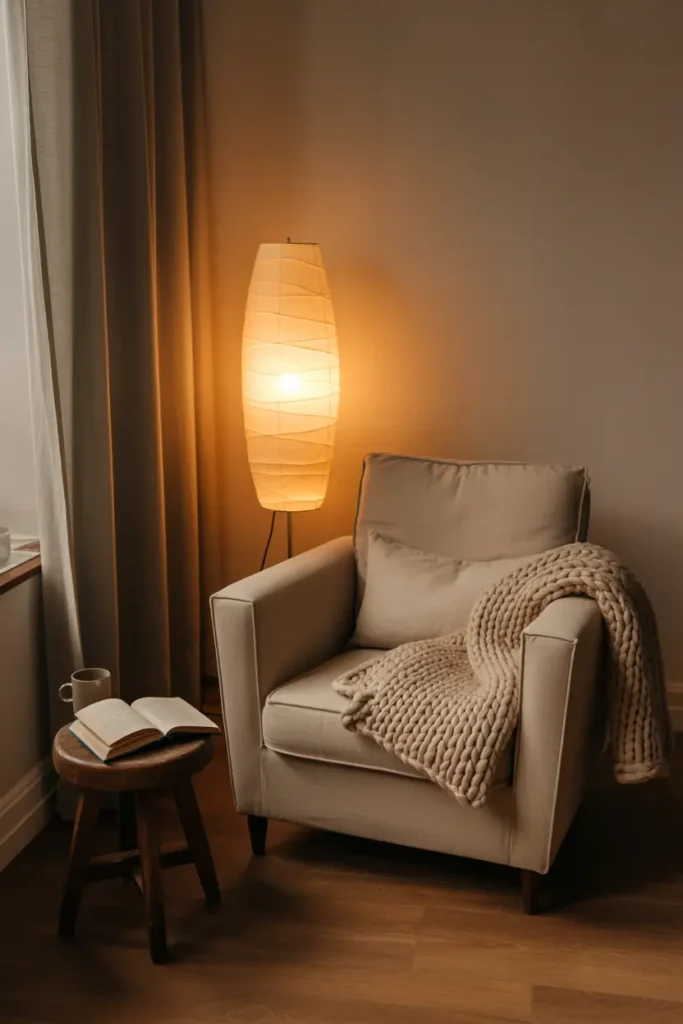
Every home deserves one spot that exists purely for rest — no screens, no chores, just a chair and a book and an hour that belongs to you. A reading corner is the coziest square meters in any house, and it asks for almost nothing: a comfortable chair, light at shoulder height, a surface within reach, something soft.
Start with the chair — the one piece worth spending on, $80–150 secondhand for something with a high back and real cushion depth. A floor lamp with a warm bulb ($30–45) positioned over the shoulder, a small side table ($20–30) for tea, a throw that lives there permanently. Tuck it near a window if you can; daylight makes it a morning corner, lamplight makes it an evening one. The corner earns its keep the first time you choose it over the sofa.
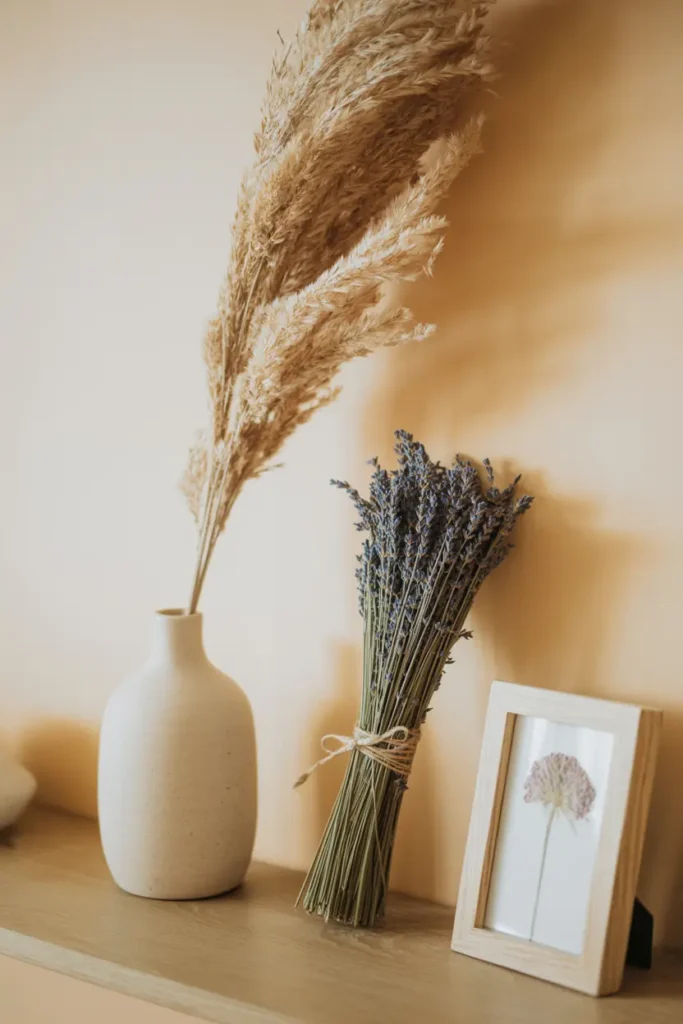
12. Decorate With Dried and Preserved Botanicals
Fresh flowers are beautiful and expensive to maintain; a weekly $15 bouquet is $780 a year. Dried and preserved botanicals — eucalyptus, pampas grass, dried lavender, preserved ferns — have become a serious design element precisely because they offer the organic softness of flowers with a lifespan measured in months, not days. A $12 bunch of dried eucalyptus looks good for half a year.
Style them the way you would fresh: one generous bunch in a ceramic or glass vase, stems cut to about one and a half times the vase height. Eucalyptus brings silvery calm, pampas brings drama, dried lavender brings scent as well as color. Keep them out of direct sun (they fade) and away from humidity (they droop). When a bunch finally tires, compost it and spend another $12. The vase stays; the contents rotate with the seasons.
13. Paint or Refinish Old Furniture Instead of Replacing It
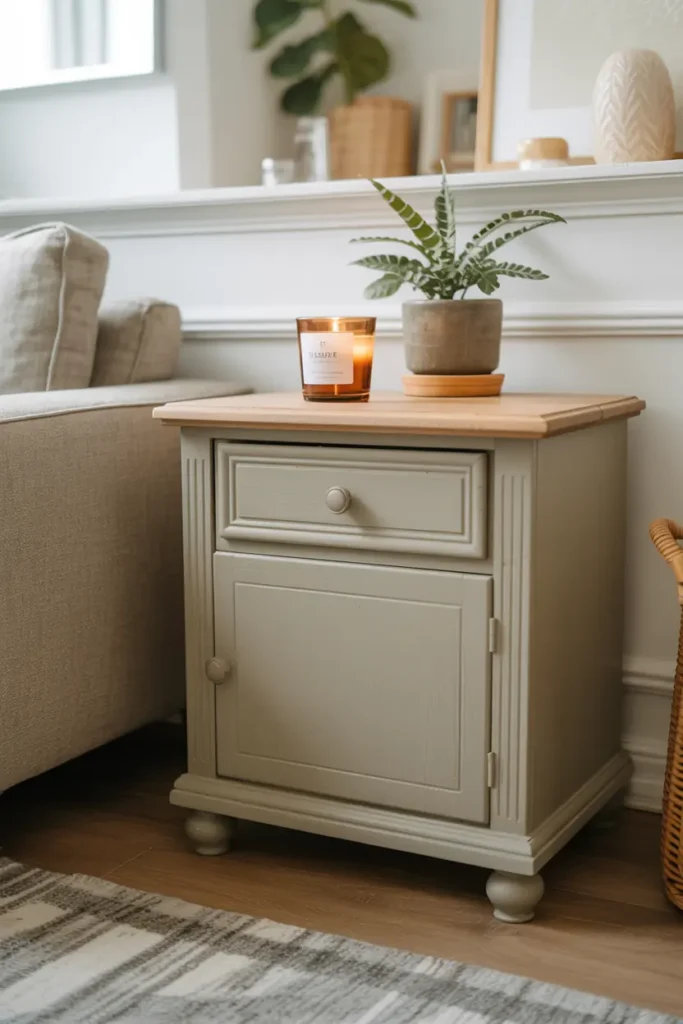
Before writing off a tired piece of furniture, imagine what it could become. A solid-wood dresser with good bones and an ugly finish is a $25 can of paint away from being the best-looking thing in the room. The furniture industry wants you to replace; the wood wants a second coat. Bet on the wood.
The process is simple and forgiving: clean with sugar soap or TSP, light sand with 120-grit, one coat of primer, two coats of furniture paint in satin or eggshell. A quart covers a dresser ($18–25 for quality paint). Deep, warm colors — forest green, warm charcoal, rich navy — turn dated pieces into statement pieces; warm white turns them into quiet modern backdrops. Replace the hardware while you’re at it ($2–3 per pull) and nobody will believe it’s the same piece.
14. Add a Gallery Wall That Feels Personal
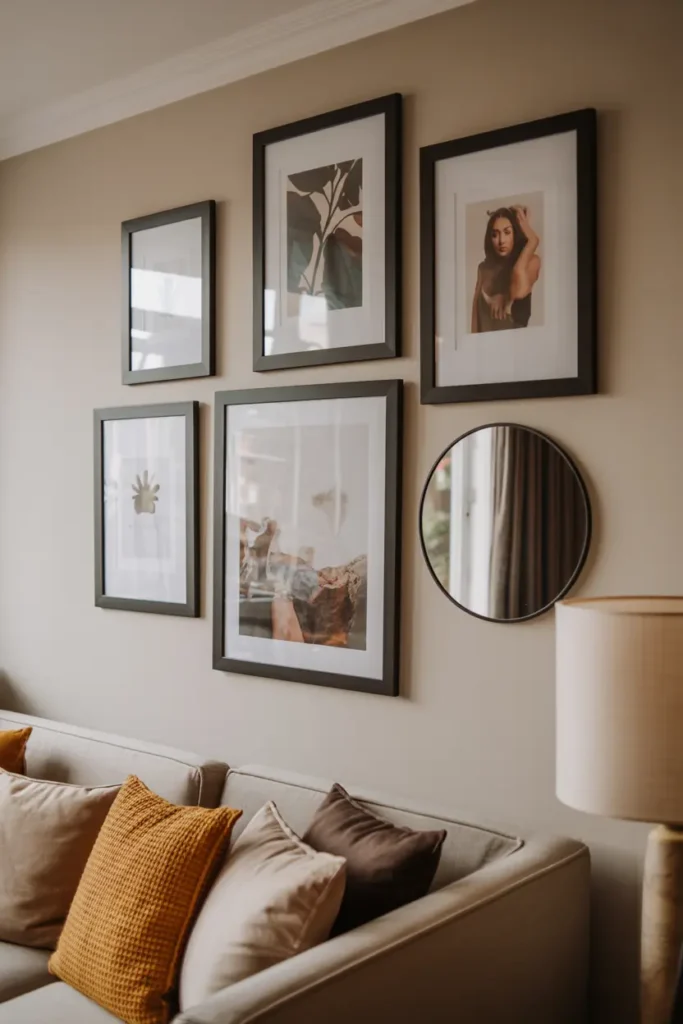
A gallery wall done well is one of the most affordable transformations available to any room — and done badly, it’s the fastest way to make a wall look busy. The difference is personal: the walls that work are full of things that mean something — your photographs, art you chose slowly, a child’s drawing in a real frame — arranged with the care of a collection, not the randomness of a pinboard.
Plan it on the floor first. Lay out the frames, photograph the arrangement, adjust the spacing to a consistent 2–3 inches, then transfer to the wall starting from the center piece at 57 inches to center. Mix frame finishes but keep one unifying element — all black frames with varied art, or varied frames with a consistent mat color. Thrifted frames ($2–5) painted to match pull the whole wall together for almost nothing. Personal doesn’t mean cluttered; it means every piece earned its place.
15. Use Trays to Create Instant Vignettes
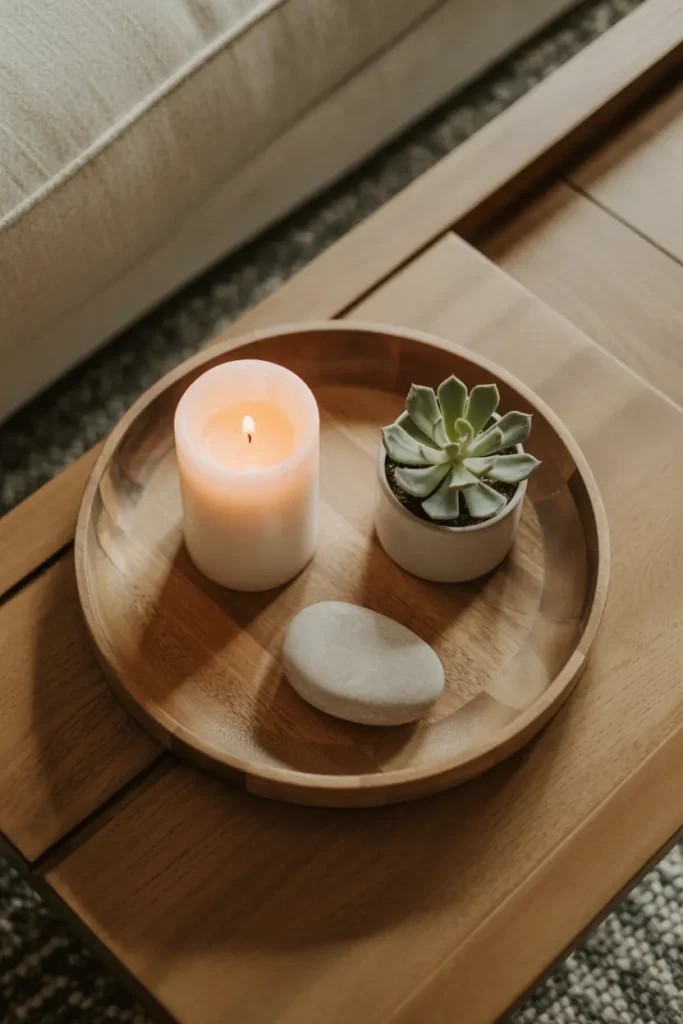
A tray is one of the most underestimated styling tools in home decor, because it does something almost magical: it turns any scattered group of objects into an intentional arrangement. A candle, a small plant, and a coaster loose on a coffee table look like clutter; the same three on a tray look styled. The tray draws the boundary that says “this is a composition.”
Keep one on the coffee table (wood or rattan, $15–30), one on the bathroom counter for the everyday bottles, one on the dresser corralling perfume and a small dish. The formula inside the tray: three objects, three heights, one natural element. When the surface needs to function — guests arriving, dinner served — you lift one tray instead of clearing ten objects. Corral first, style second, and every surface stays both beautiful and usable.
16. Maximize Natural Light Wherever Possible
Natural light is the most beautiful and most affordable design element in any home, and most people unintentionally block half of theirs. Heavy curtains eating the window edges, furniture parked in front of the lower glass, grimy panes filtering the sun through a film of dust — each one steals light you didn’t know you were losing.
The audit takes twenty minutes: wash the windows inside and out, pull curtains fully clear of the glass, move anything blocking the lower half. Then amplify what’s left — a mirror opposite the largest window ($40–60 for a 30-inch round) effectively doubles your best light source, and pale wall colors bounce it deeper into the room. Rooms oriented away from the sun need this most; a north-facing room with clean glass, clear sills, and a good mirror can feel brighter than a south-facing room that’s been neglected.
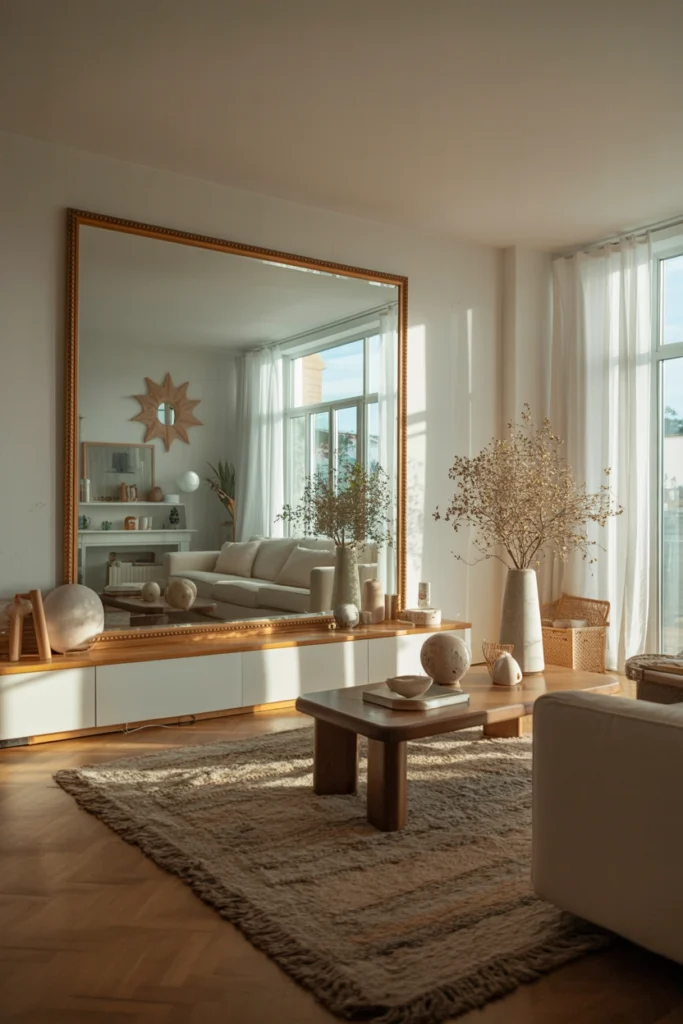
17. Invest Thoughtfully in One or Two Hero Pieces
Budget decorating doesn’t mean everything has to be cheap — it means being strategic about where the money goes. One or two hero pieces, chosen slowly and bought well, elevate everything around them. A beautiful armchair makes a budget sofa look intentional. A real wool rug makes flat-pack furniture look curated. The heroes carry the room; the supporting cast just needs to not embarrass them.
Choose heroes for the surfaces you touch and see most: the chair you sit in every evening, the rug under your feet, the bedding against your skin. Spend $150–300 on one of these and $30 on everything else, and the room will read as the expensive version. Buy heroes last, not first — live with the room for a month, notice what you keep looking at and wishing were better, and put the money there. The right splurge is always obvious in hindsight; patience makes it obvious in advance.
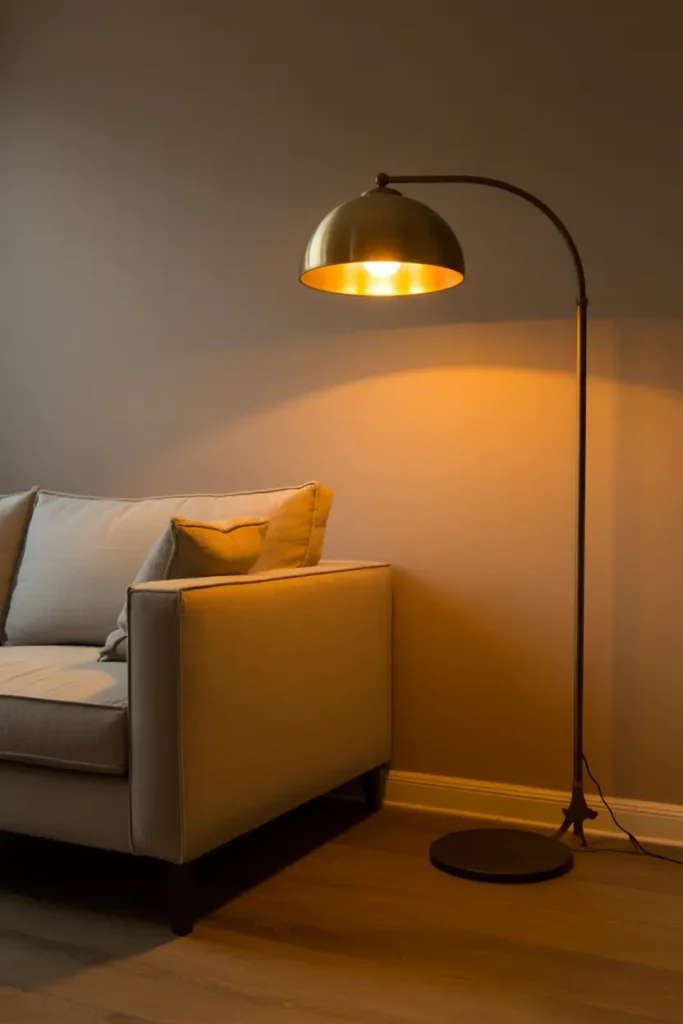
18. Refresh the Bedroom With Thoughtful Layering
The bedroom is where the modern-cozy balance matters most, because it’s the room that holds you when you’re most vulnerable — falling asleep, waking up. Modern here means calm and uncluttered: clear nightstands, no visual noise. Cozy means layered and tactile: bedding you want to sink into, light that flatters at 6am.
Layer the bed the way you’d dress for unpredictable weather: a fitted sheet, a flat sheet or light quilt, a duvet folded back a third, a throw across the foot. Four layers in one palette with mixed textures — linen, cotton, knit — and the bed looks like it belongs in a boutique hotel. Keep the nightstands to three things each: lamp, book, glass of water. Anything more is noise in the room where quiet matters most.
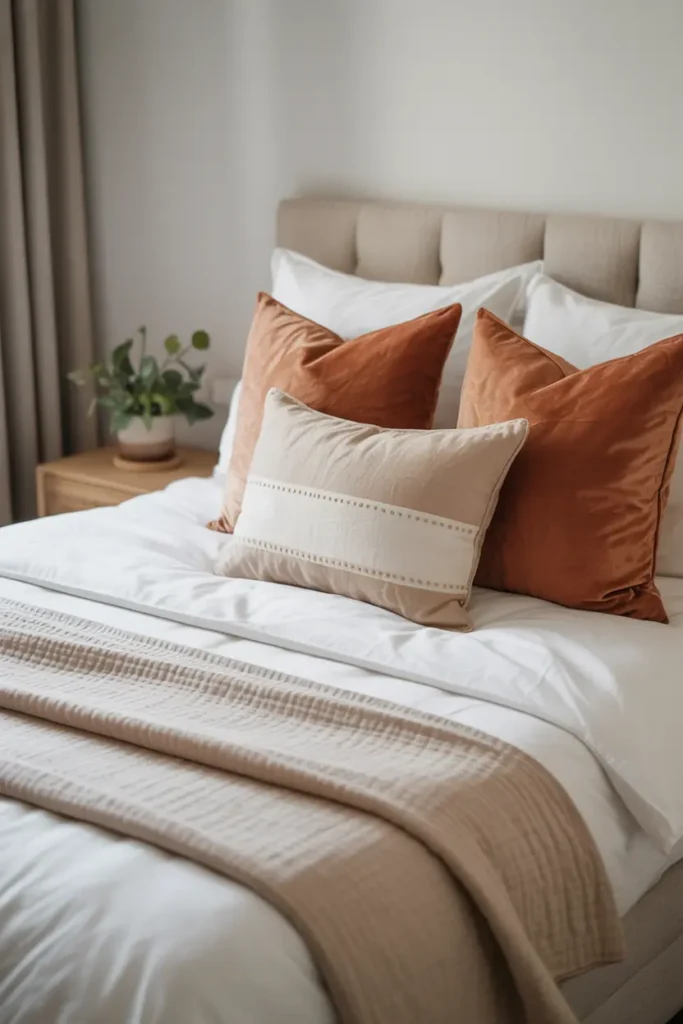
19. Declutter With Intention Before Adding Anything New
This is the step everyone skips, and it’s almost always the most important one. No amount of beautiful, well-chosen decor survives a room full of things that don’t belong there. Before buying a single cushion or frame, edit: remove everything from the room’s surfaces, clean them, and put back only what serves the room’s purpose or genuinely delights you.
The method that works is the four-box sort — keep, relocate, donate, discard — applied to one room at a time, not the whole house at once. Be honest about the relocate box: things that belong in another room go there today, not someday. Most people find that decluttering alone transforms the room so completely that half their shopping list becomes unnecessary. The empty space you create is the most modern thing you can add, and it costs nothing.
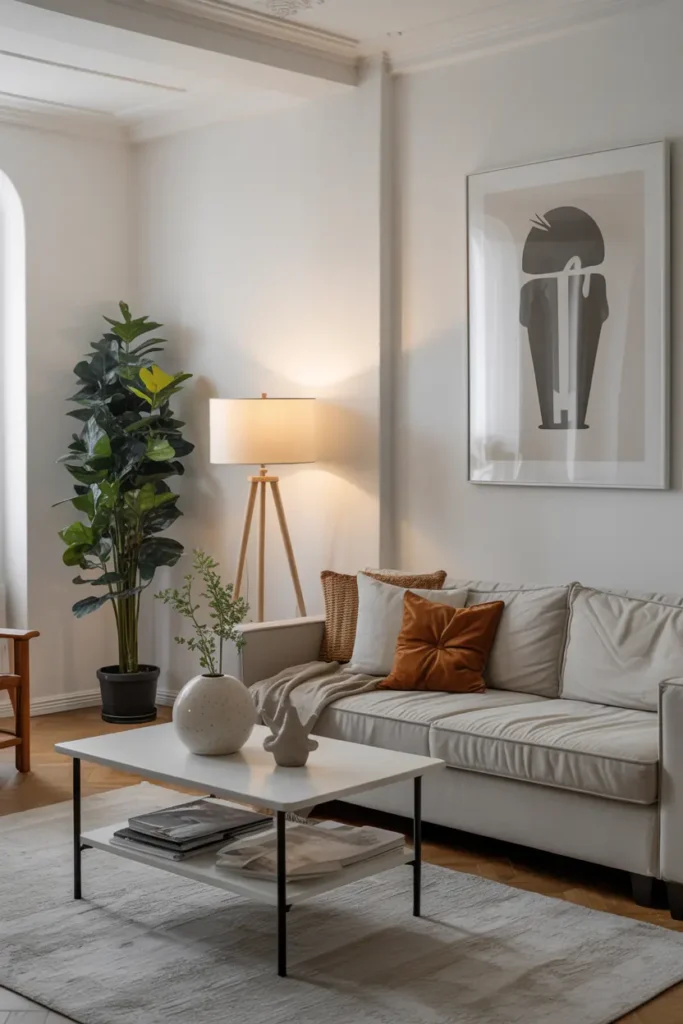
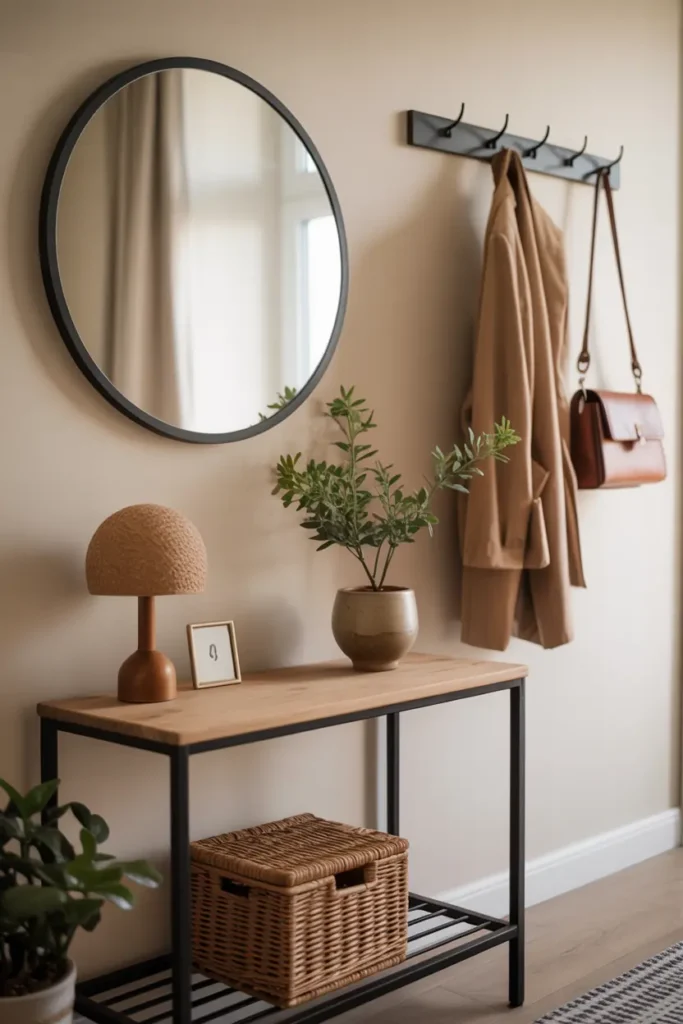
20. Make the Entryway Set the Tone
The entryway is the first thing anyone sees walking in and the last thing you see leaving — it’s the room’s opening sentence. In a modern-cozy home it should say two things: this home is calm, and someone lives here with intention. A console or bench, a mirror, a place for keys, one piece of art. That’s the complete vocabulary.
Keep it shallow and functional: a 12-inch-deep console ($50–90) or a wall-mounted shelf, three hooks for the daily rotation of coats and bags, a small bowl for keys. The mirror does double duty — last check before leaving, and it bounces light into what’s often the darkest part of the home. One scent element, a candle or diffuser, and the entryway greets with more than visuals. Small space, complete thought.
21. Keep Evolving Your Space Over Time
The most beautiful homes are never finished all at once. They’re assembled slowly, as the people living in them change — a chair found on a trip, art bought the year the kids were small, a rug that survived three apartments. This slow accumulation is what makes a home feel like a life rather than a project, and it’s the one thing money can’t shortcut.
So resist the urge to complete a room in a weekend. Live with the nearly-finished version for a season and notice what’s missing — you’ll know it when you feel it, the way you know a sentence is missing a word. Buy the next piece only when you’ve wanted it for a month. Homes decorated over years have a depth that same-day rooms can’t fake, and every object in them has a story. That’s the real luxury, and it’s free.
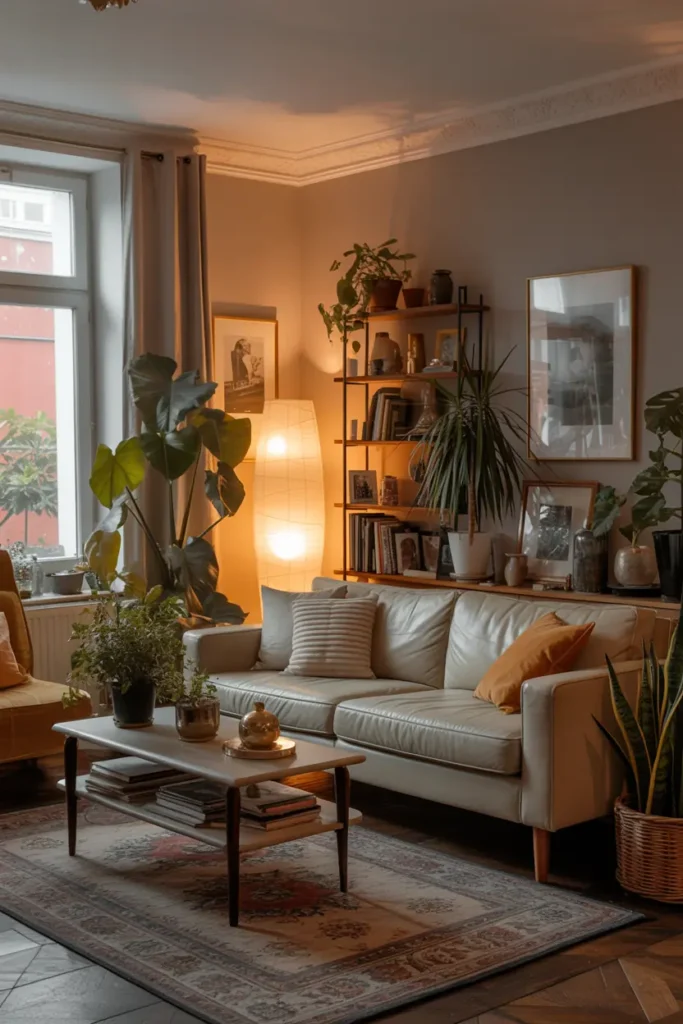
Modern and cozy were never opposites — they were always two halves of the same desire: a home that feels calm and feels like yours. Work through these ideas slowly, let the rooms evolve, and trust the balance. The goal was never perfection. It was a home that holds you well.
Pro Tips
- When choosing between two paint colors, pick the warmer one — cool neutrals photograph well but feel colder in person than they look on screen.
- Touch-test every textile before it enters your home; if you don’t instinctively want to run your hand over it in the store, you won’t love it on your sofa.
- Keep one “maybe” box in a closet for decor you’re unsure about — revisit it in three months, and whatever you didn’t miss goes to donation.
- Style in odd numbers and photograph the result; the camera reveals imbalances your eyes forgive in person.
FAQs
Can a small room really feel both modern and cozy?
Yes — the combination actually suits small rooms, because clean modern lines keep the space feeling open while warm textures keep it from feeling stark. The key is restraint: fewer pieces, warmer materials, and breathing room around each one.
What’s the cheapest way to make my home feel cozier?
Layered lighting. Swap cool bulbs for 2700K warm ones and add one lamp at seating height — under $40 total — and the room’s entire evening mood changes. Texture comes second: one knit throw does more than three new cushions.
Should I declutter before or after decorating?
Before, always. Decorating around clutter is like painting over dirt — the new things just compete with the old mess. Edit first, live with the clean room for a week, then add back only what the room actually needs.
How do I keep a neutral home from feeling boring?
Texture and one strong focal point per room. A neutral palette with three distinct textures and a single bold piece of art or furniture reads as sophisticated, not empty — boredom comes from flatness, not from neutrals.

HowDecor is a home decor blog sharing simple, practical decorating ideas for everyday spaces. We believe a beautiful home should feel comfortable, personal, and full of warmth — and that great style does not require a huge budget. Our goal is to inspire readers to create spaces that feel peaceful, welcoming, and truly their own — one room at a time.