Here’s the good news about 2026: the year’s defining decor shift doesn’t ask you to buy more. It asks you to buy better — and mostly, to buy less, but with intent. Warm minimalism, textured walls, curved everything. None of it requires a renovation. Most of it doesn’t even require new furniture.
Below: twenty-one moves that read current without reading expensive. Each one costs a fraction of what it looks like, and every single one can be done in a weekend. The year rewards texture, warmth, and things that look touched by human hands. Let’s go.
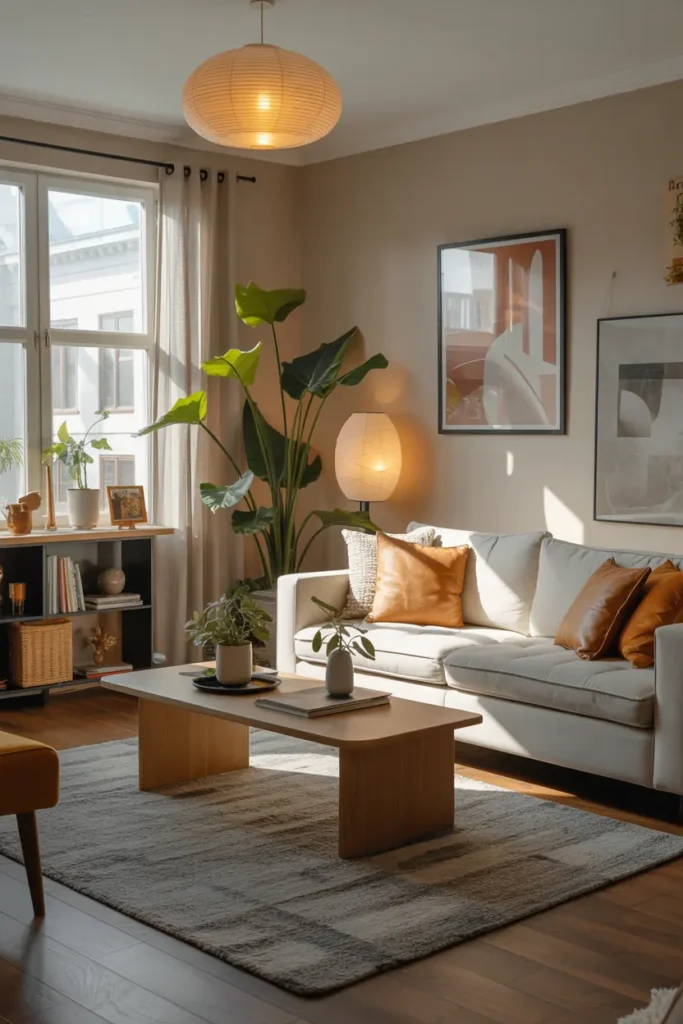
1. Embrace Warm Minimalism
Cold, gallery-white minimalism is done. The 2026 version keeps the clean lines but wraps them in cream, camel, warm wood, and soft boucle. The formula is ruthless and simple: fewer objects, warmer materials. A room with four warm things beats a room with fourteen cold things. Every time.
Budget translation: you don’t need new furniture to do this. Strip your surfaces to one-third of what’s on them, then swap one cold element for one warm one — a grey cushion cover becomes oatmeal linen ($12–18 per cover), a chrome tray becomes a wooden one. Two swaps and the room’s temperature changes. Warmth is a material decision, not a shopping spree.
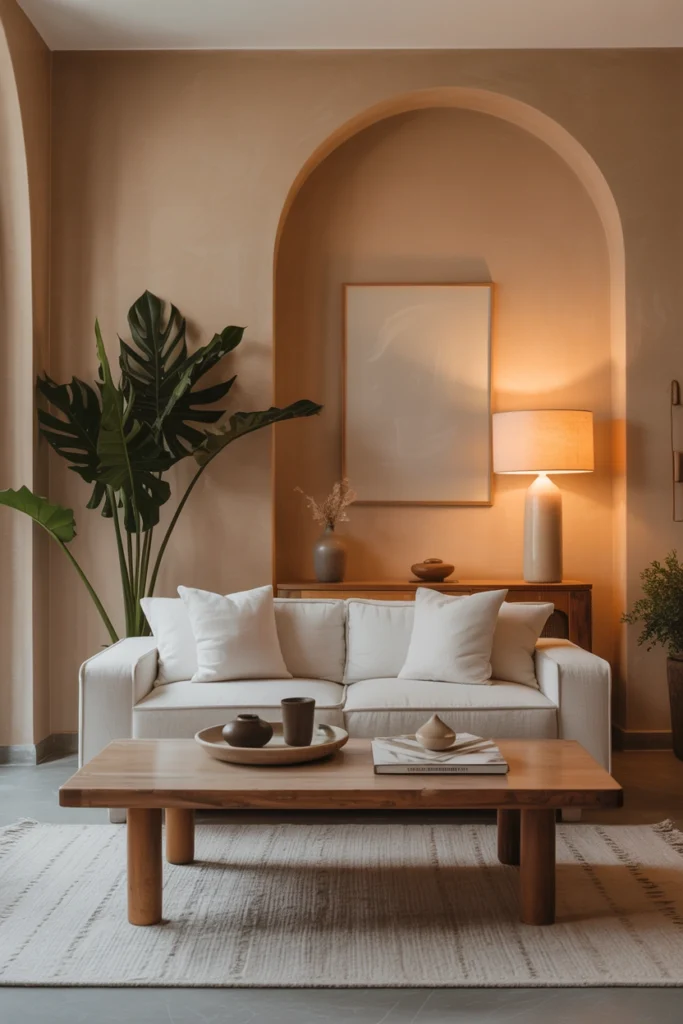
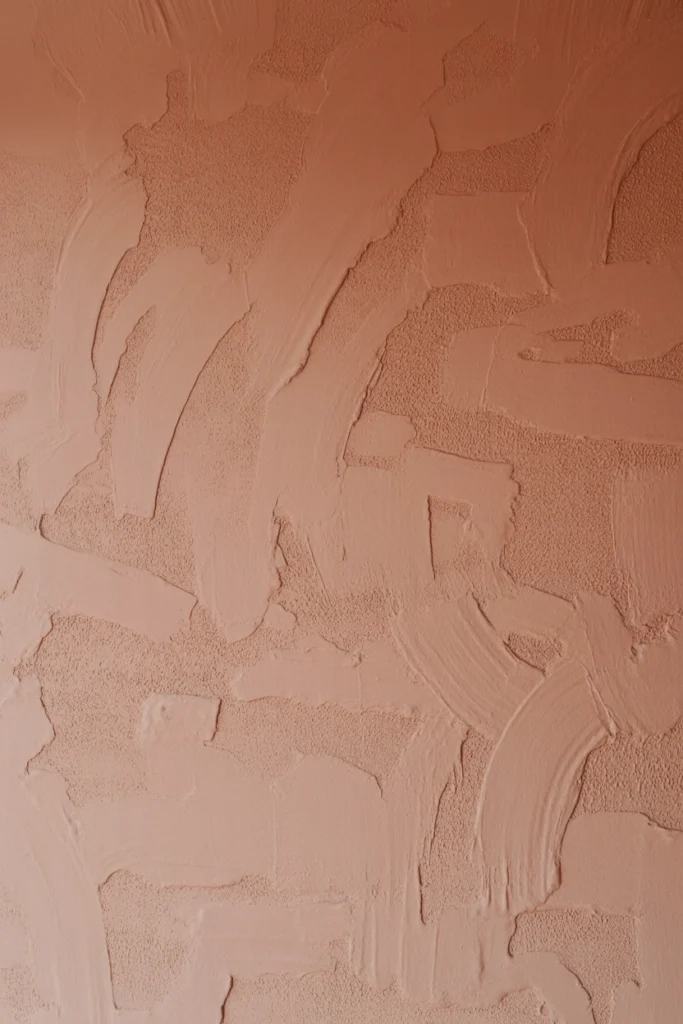
2. Try Limewash or Textured Paint Finishes
Limewash is the texture story of 2026. That soft, clouded, old-European-plaster look — and it costs about the same as regular paint. A gallon of limewash runs $40–60 and covers 250–350 square feet, applied with a big brush in crisscross strokes. The finish hides wall imperfections that would show through flat paint, which makes it perfect for older homes and rental walls that aren’t perfectly smooth.
The technique forgives everything. Apply it loose, let it be uneven — the movement is the point. One accent wall behind a bed or sofa delivers 80% of the effect of doing a whole room. If you rent, several brands now make removable textured finishes, and a textured peel-and-stick plaster panel ($25–35 for a 3×6-foot section) fakes the look with zero commitment.
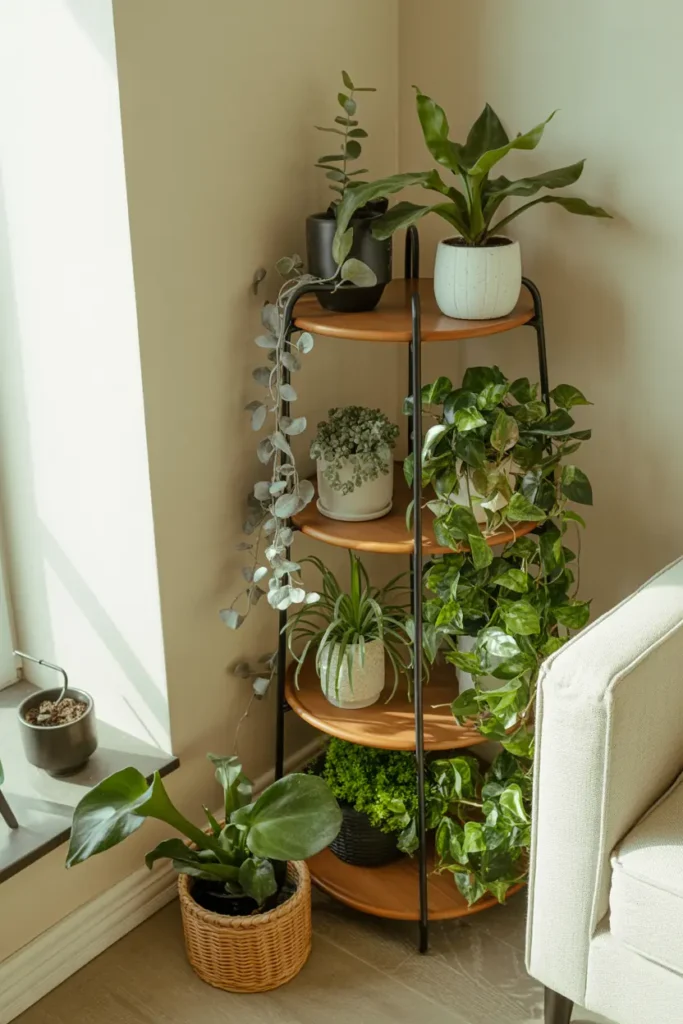
3. Curate a Living Wall or Plant Shelf
Plants aren’t a trend in 2026; they’re a material. The fresh move is curation, not accumulation — one well-composed plant shelf beats a house full of random pots. Think like a stylist: a trailing pothos on the left, a tall snake plant grounding the middle, a small ceramic collection pulling it together. Five plants, one shelf, deliberate.
A floating shelf is $15–25. Three starter plants in 4-inch pots run $6–10 each. So for under $50 you have a living installation that grows more beautiful over time — the only decor element that appreciates. Put the shelf where you see it from your main seat. Plants you don’t look at are just chores; plants in your eyeline are joy.
4. Use Arched Frames and Shapes
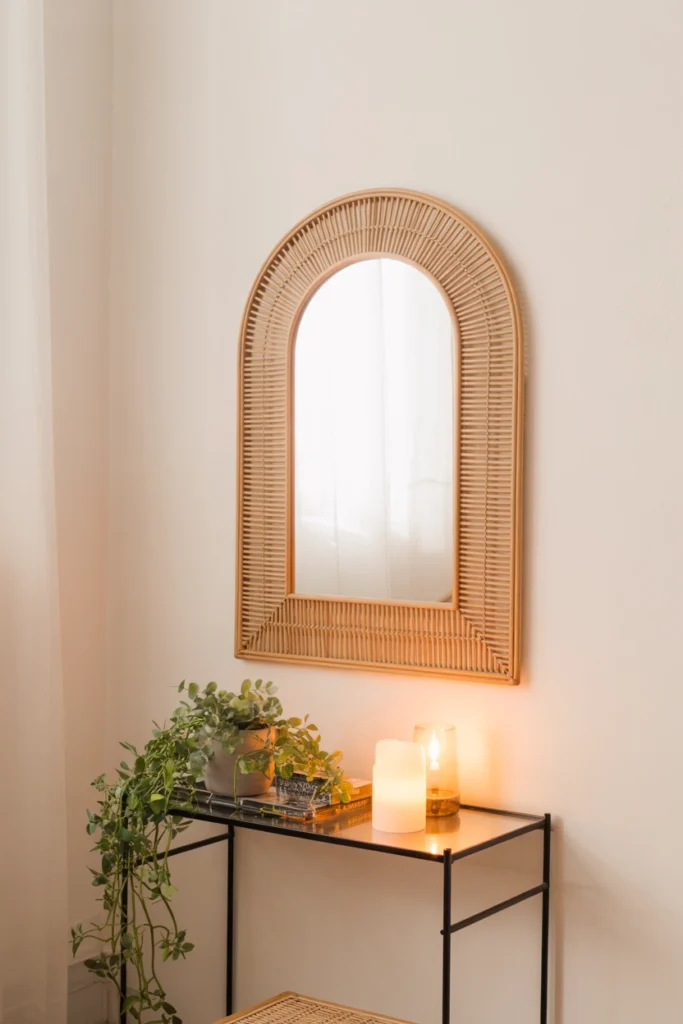
Arches won the decade. Doorways, mirrors, frames, headboards — the curve softens every room it enters, and it photographs beautifully, which is half of why it’s everywhere. The smart play: one arch, well placed, does more than five scattered around. A single arched mirror (36×24 inches, $60–100) above a console is the classic for a reason.
No budget for the mirror? Arched art does the same job. An arched print in a thin frame ($20–35 total if you print it yourself) or even a painted arch directly on the wall — a quart of paint and a steady hand — gives you the silhouette for under $20. Place it where the eye lands when entering the room. Arches work because they’re unexpected geometry; they need to be seen first, considered second.
5. Swap Out Hardware for an Instant Kitchen or Bathroom Refresh
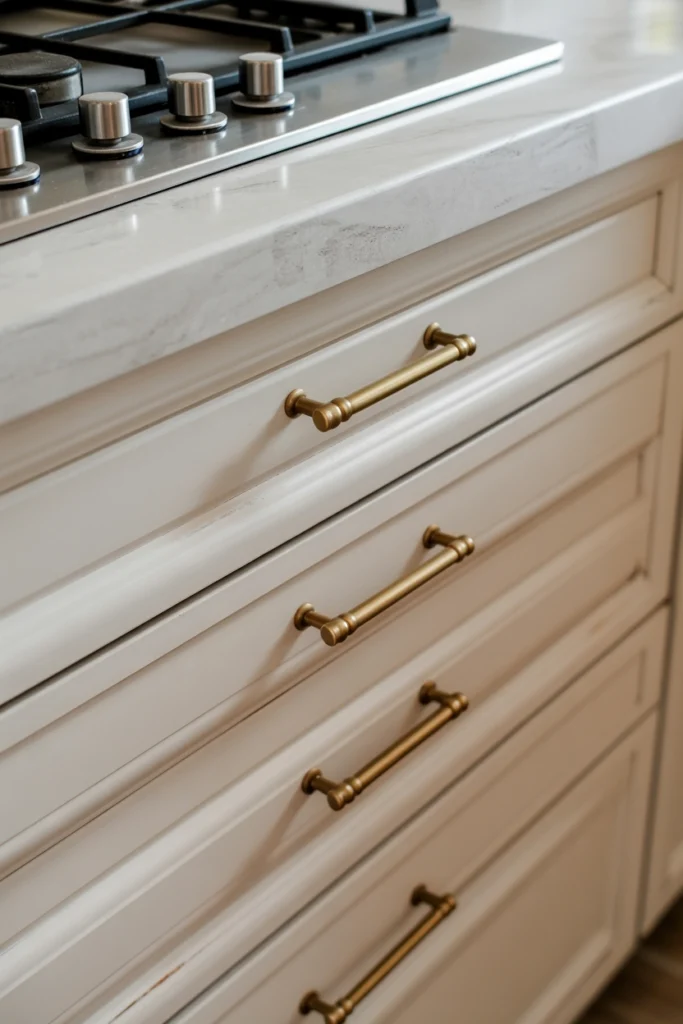
This is the highest-ROI move in this entire list. A kitchen with thirty cabinet pulls costs $40–80 to transform if you buy pulls at $1.50–3 each, and it takes one afternoon with a screwdriver. The room looks renovated. It isn’t. Same wood, same tile, completely different jewelry.
Go warm: brushed brass, matte black, or leather pulls depending on your palette. Measure the center-to-center distance between screw holes before ordering (standard is 3 or 3.75 inches) — mismatched pulls are the one mistake that ruins this. Save the old hardware in a bag labeled with the room. Renters: swap back before you move out, and you’ve enjoyed a custom kitchen for the price of lunch.
6. Layer Rugs for Texture and Warmth
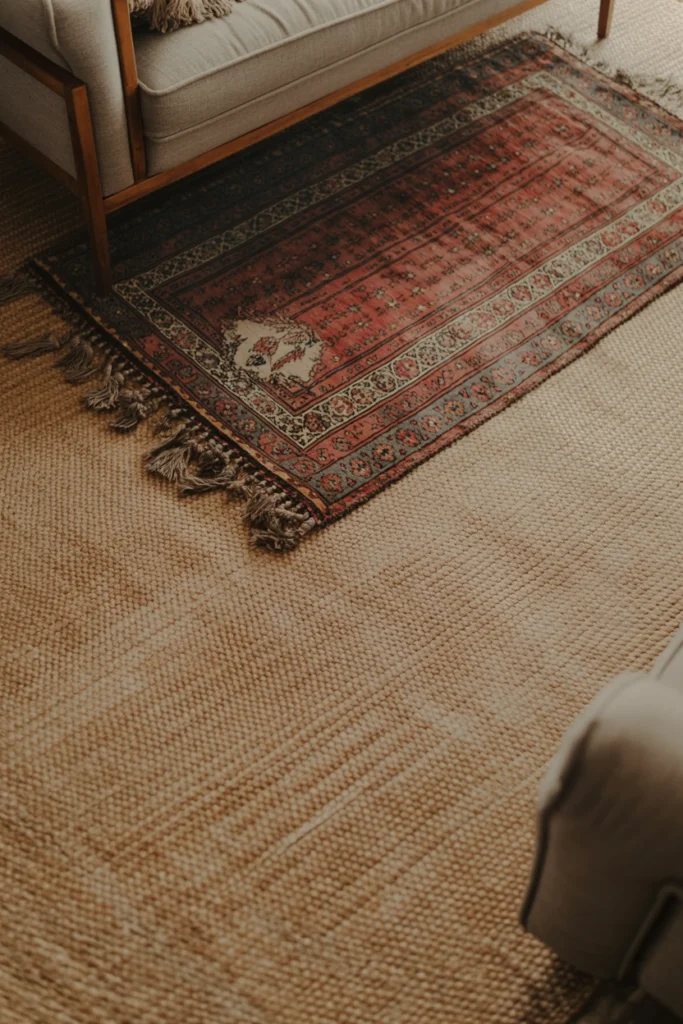
Rug layering looks like a $500 stylist trick and costs about $80. The formula: a large, cheap, flat base (jute or natural fiber, 8×10 for around $60–80) with a smaller, softer, patterned rug on top (5×7 vintage-style, $40–60). The base handles scale; the top handles personality. Together they read as one expensive custom piece.
Offset the top rug slightly — dead-center looks staged, a few inches off looks lived-in. The top rug should sit under at least the front legs of the main furniture. This works best on hard floors, where the jute adds the texture and warmth the floor lacks. In rentals with sad carpet, a jute base on top of carpet actually works too — the layers disguise the beige beneath.
7. Build a Gallery Wall With Mixed Media
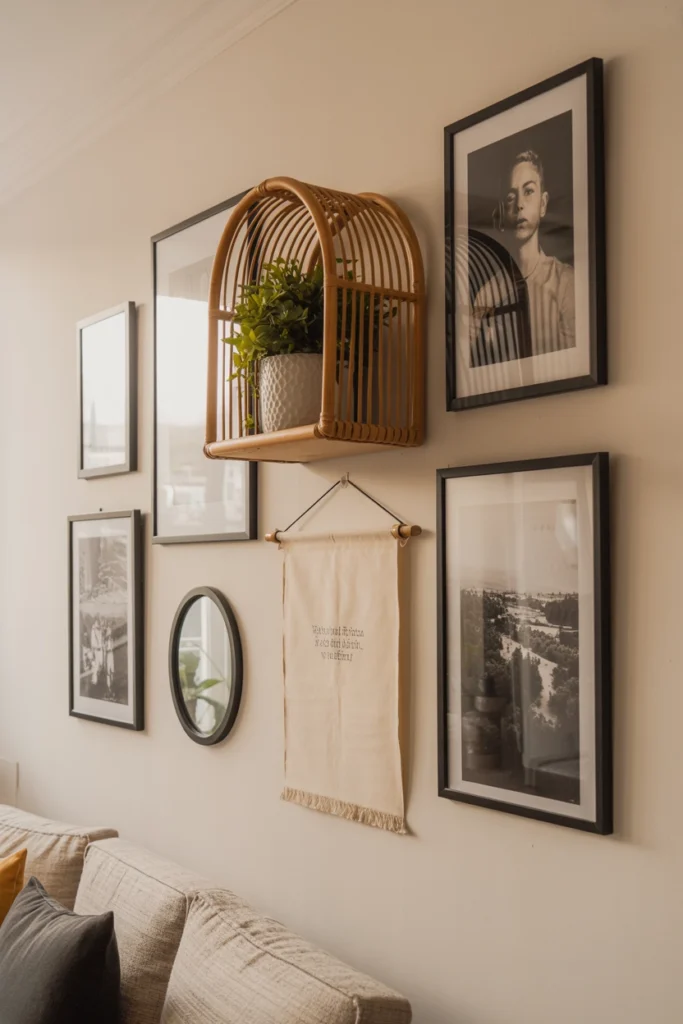
The 2026 gallery wall killed the matching-frame grid. The new look is mixed media: a photograph next to a textile, a small painting beside a framed postcard, different frame finishes, different scales. It looks collected, not decorated. Collected is the whole aesthetic currency of the year.
Build it over time — that’s the budget version. Start with three pieces, hang them slightly off-center from each other, add a fourth in a month. Frames from thrift stores ($2–5 each) painted one unifying color pull mismatched art together instantly. Lay the arrangement on the floor first and photograph it; the floor never lies about spacing the way a wall does. Aim for 2–3 inches between frames.
8. Introduce Curved Furniture Through Affordable Accents
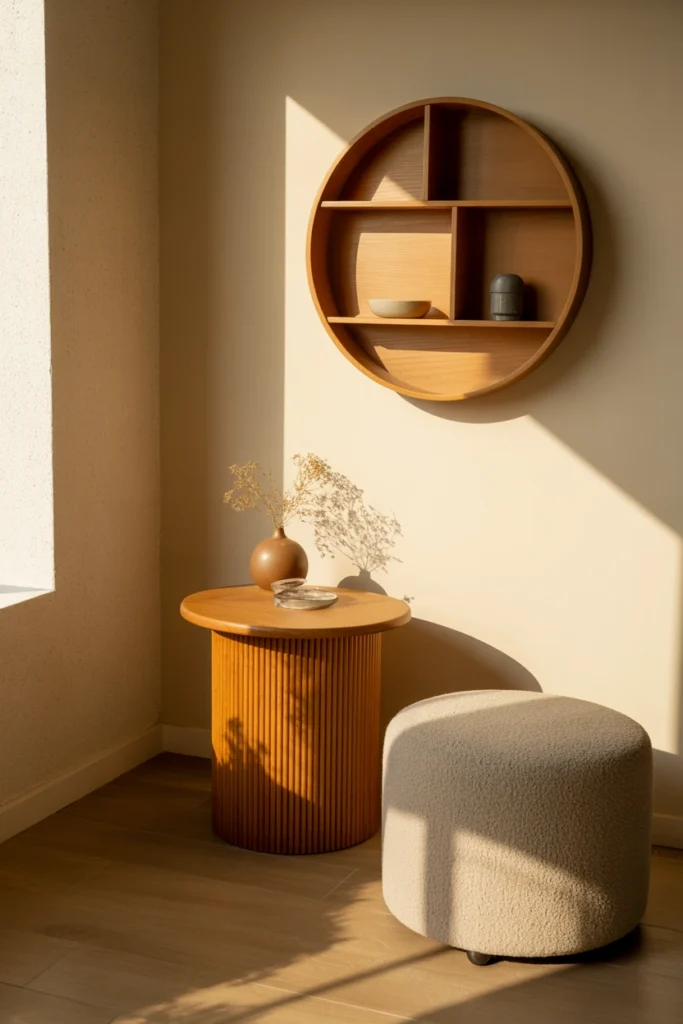
The curved-sofa-everywhere look costs thousands. The accent version costs tens. A round ottoman ($40–70), a curved-back accent chair from a secondhand listing, even a round mirror — curves in small doses soften a boxy room without committing to the full investment. One curve is a statement; five is a theme park.
Hunt for the shape, not the brand. Facebook Marketplace and estate sales are full of curved pieces at a tenth of retail because sellers don’t know the trend. Reupholstering a $30 curved chair in a boucle-look fabric ($15–20 per yard, 2–3 yards needed) gives you the $800 look for under $100. The rule: one curved piece per room, placed where it breaks up the most rectangles.
9. Refresh Soft Furnishings With On-Trend Colors
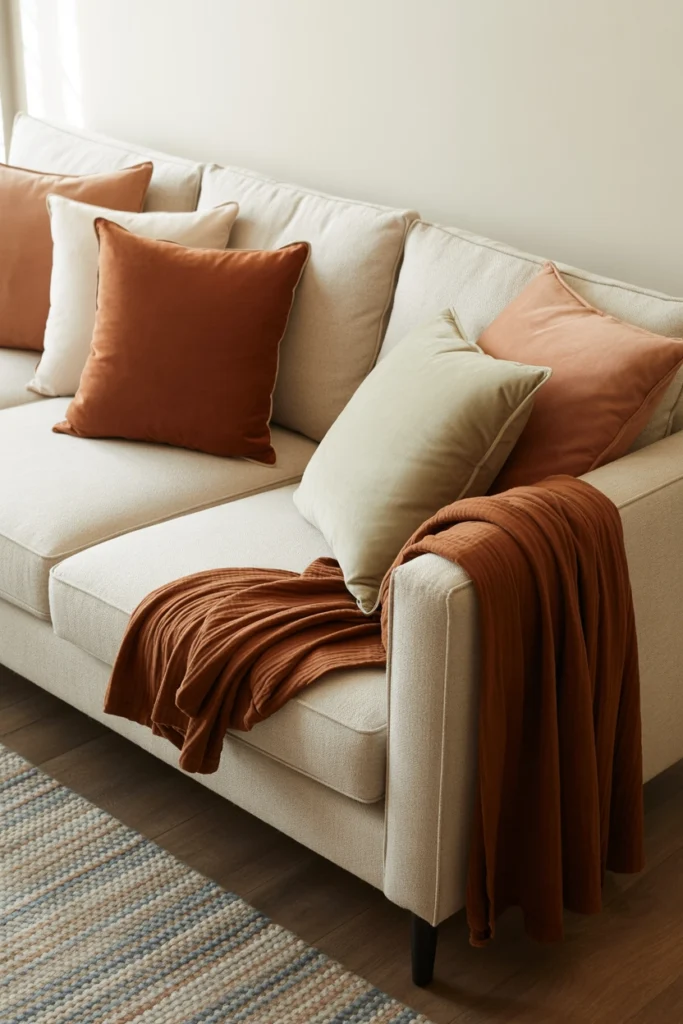
You don’t need new furniture to look current. You need new covers. 2026’s palette is warm and earthy — terracotta, olive, warm ochre, deep cream — and cushion covers are the cheapest way to wear it. Three covers at $12–18 each and your sofa speaks the year’s language.
The technique: pick one color that appears in three places (cushions, a throw, a piece of art) so it reads intentional rather than random. Mix one solid, one textured, one patterned — that ratio keeps it interesting without chaos. Change them seasonally if you like; covers store flat in a drawer, and rotating them feels like redecorating for free. Your sofa is a canvas. The covers are the paint.
10. Create a Dedicated Candle and Scent Corner
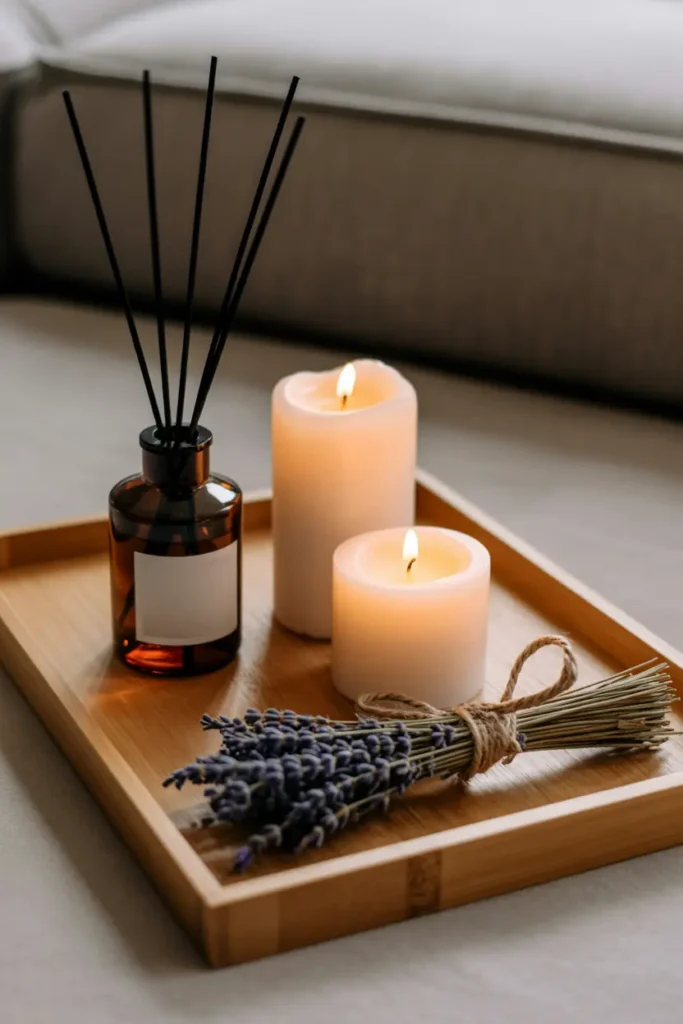
Scent styling is fully mainstream now, and the 2026 expression is the candle corner — a tray or small shelf with three to five candles of varying heights, a box of long matches, a snuffer. It’s part ritual, part decor. It says this home is tended.
A wooden tray ($15–25), three soy candles ($10–15 each, 30–50 hour burn), and you’re done. Group them at one end of a console or on a side table near where you sit in the evening. Stick to one scent family — all wood, all citrus — because mixed candles in a small room smell like a department store. The visual matters too: unlit, a cluster of candles in glass and ceramic is a vignette that works all day.
11. Use Bookshelves as Room Dividers
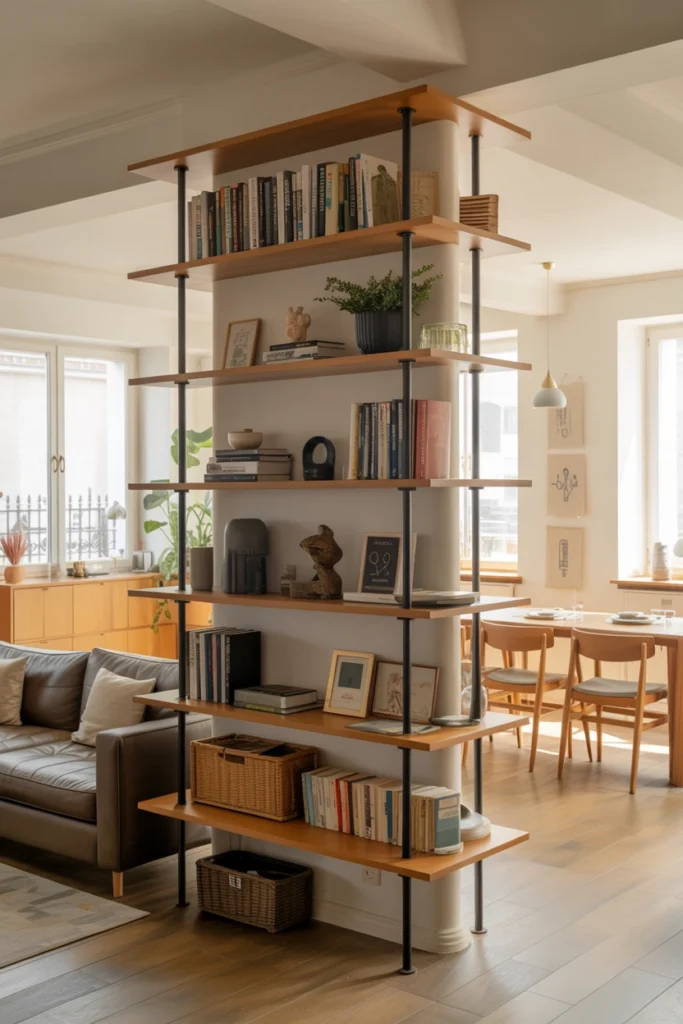
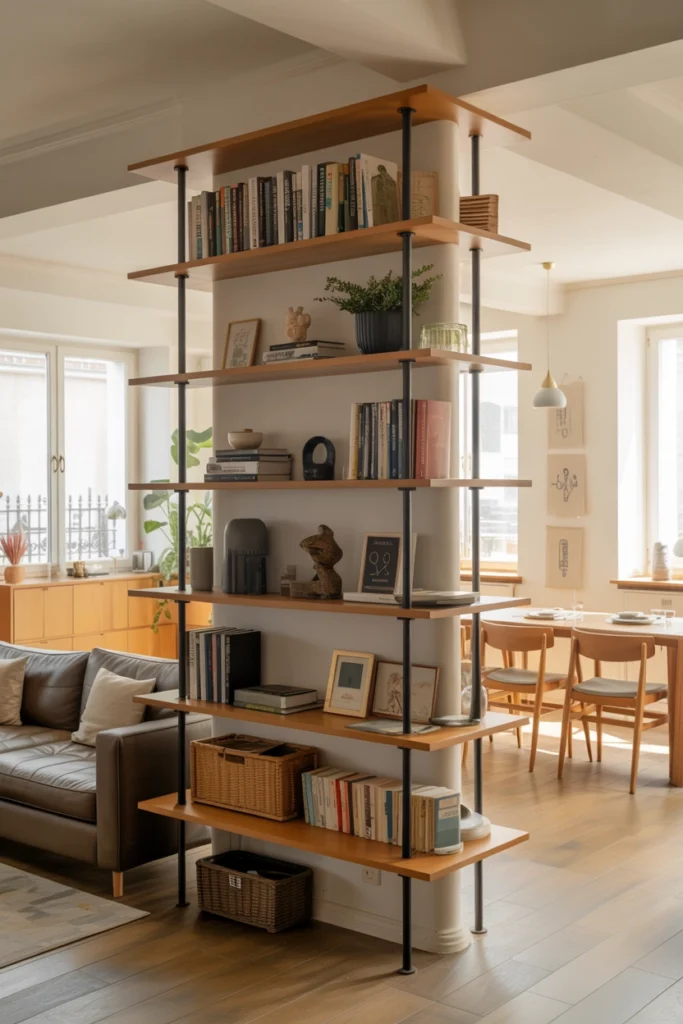
Open-plan living needs definition, and a bookcase is the friendliest wall you’ll ever build. A standard 6-foot bookcase placed perpendicular to a wall splits a studio into living and sleeping zones without blocking light or air. Style both sides — the back of a bookcase facing a bed should look as good as the front.
Open-backed units ($70–120) keep sightlines open and both sides usable. Anchor it to the wall with an anti-tip strap ($8) — this is non-negotiable with freestanding dividers. Style the shelves asymmetrically: books on one side, objects on the other, some shelves half-empty. A divider that looks like furniture beats a divider that looks like storage.
12. Try Peel-and-Stick Wallpaper in One Small Space
Peel-and-stick has grown up. The 2026 products are thick, repositionable, and genuinely look like real wallpaper from three feet away. The move: one small space — a powder room, a pantry wall, the back of a bookcase — where the pattern can be bold without overwhelming. Small space, big pattern, huge impact.
Measure twice, order 10% extra (pattern matching eats paper), and apply from the top down with a smoothing tool. A powder room usually needs 2–3 rolls at $30–45 each. Start on the least visible wall to learn the technique. The back-of-bookcase trick needs barely one roll and transforms an entire shelving unit. Renters, this is your accent wall — it peels off clean when you leave.
13. Incorporate Natural and Organic Materials
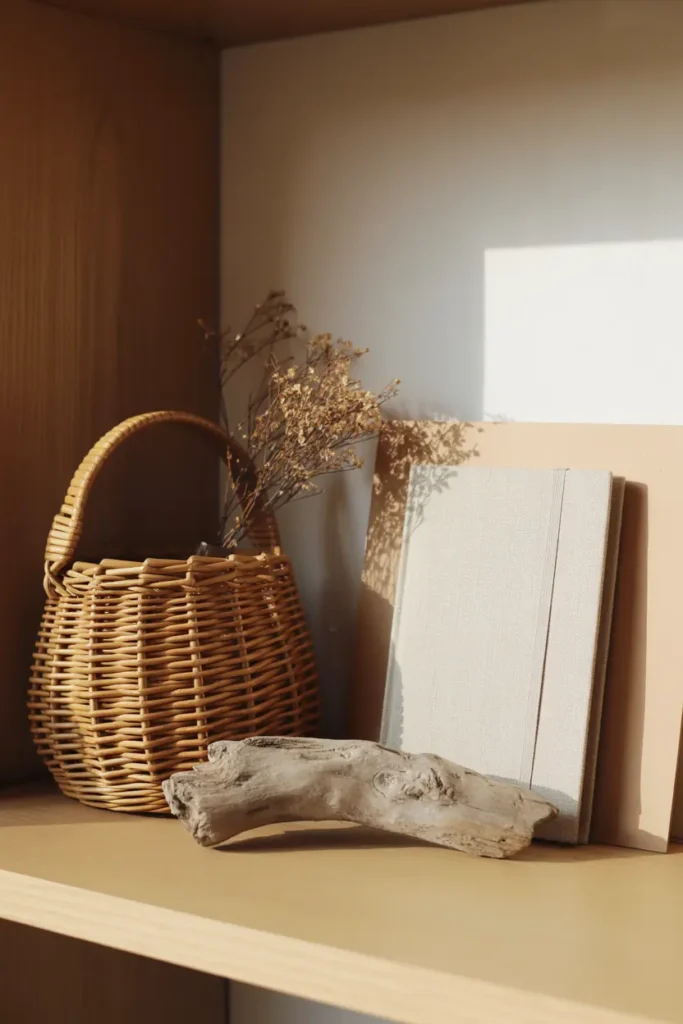
Rattan, jute, raw linen, unfinished wood, stone — the organic-materials wave keeps building because it answers the room’s need for touch. Smooth screens, smooth furniture, smooth everything: a room full of manufactured surfaces feels unreal. One rough thing fixes it.
You don’t need much. A jute runner ($30–50), a rattan basket for throws ($20–35), a linen table runner that wrinkles beautifully — three organic touches and the room has a pulse. Thrift stores are full of real wood and wicker at prices that make retail look absurd. The test: if you want to touch it, it belongs. Texture you can feel is the entire point.
14. Refresh Your Bedroom With New Pillow Layering
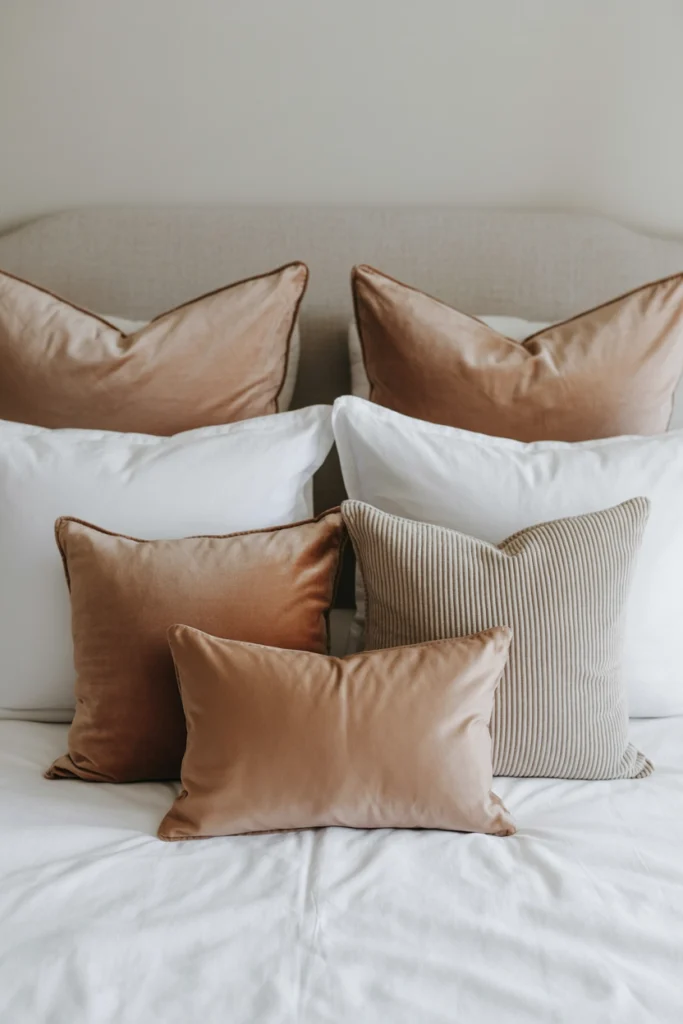
The bed is the biggest surface in the bedroom, so how it’s dressed sets the whole room. The 2026 layering order: two sleeping pillows flat against the headboard, two Euro shams (26×26) standing in front, then two to three smaller cushions in descending size, one long lumbar in front. Five to seven pieces. That’s the whole formula.
Covers, not pillows — replace the covers ($10–20 each) and reuse the inserts. Work in one palette with mixed textures: linen, velvet, knit. Fold the top sheet or duvet down six inches to show the layers. A bed dressed this way looks like a hotel and costs about $60–80 in covers. Ten minutes each morning keeps it. Make the bed; the room follows.
15. Add Architectural Interest With Wall Paneling
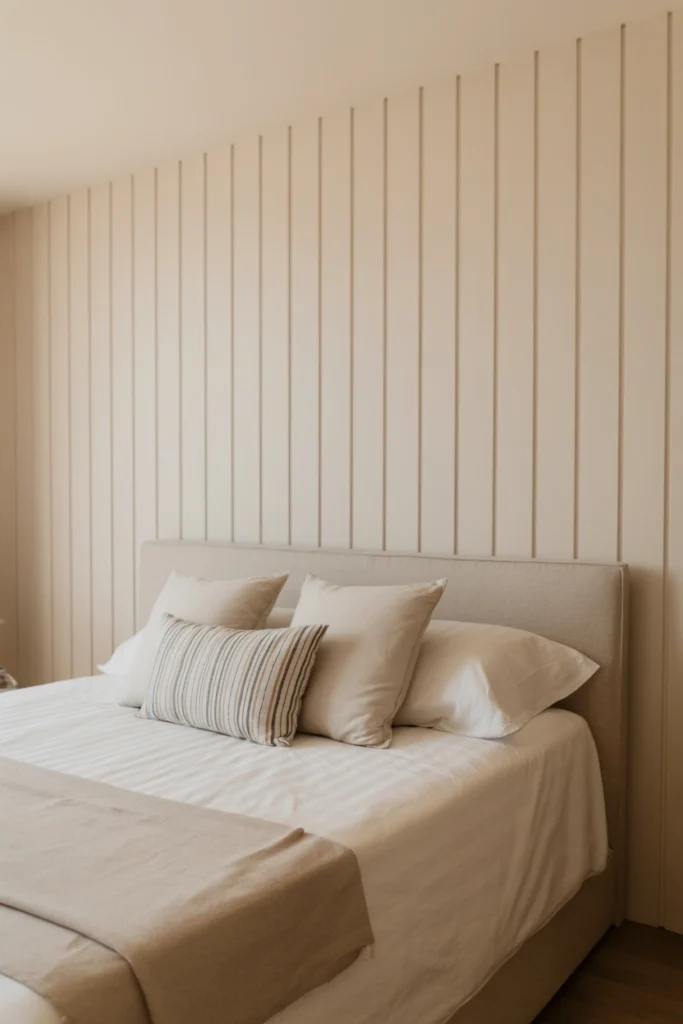
Wall paneling is one of the most searched decor ideas of recent years for one reason: it adds architecture where there is none. A flat rental wall becomes a panelled wall for $100–150 in materials — thin MDF strips or pre-cut molding, adhesive, paint. One weekend. The room looks like it has history.
The simple board-and-batten grid is the most forgiving: vertical strips every 12–16 inches, a horizontal rail at chair height or two-thirds up, everything painted the same color as the wall. Same-color paneling reads as texture, not decoration — that’s the 2026 way. Measure your wall, sketch the grid on paper first, and keep the spacing even. Even spacing is what separates “custom” from “craft project.”
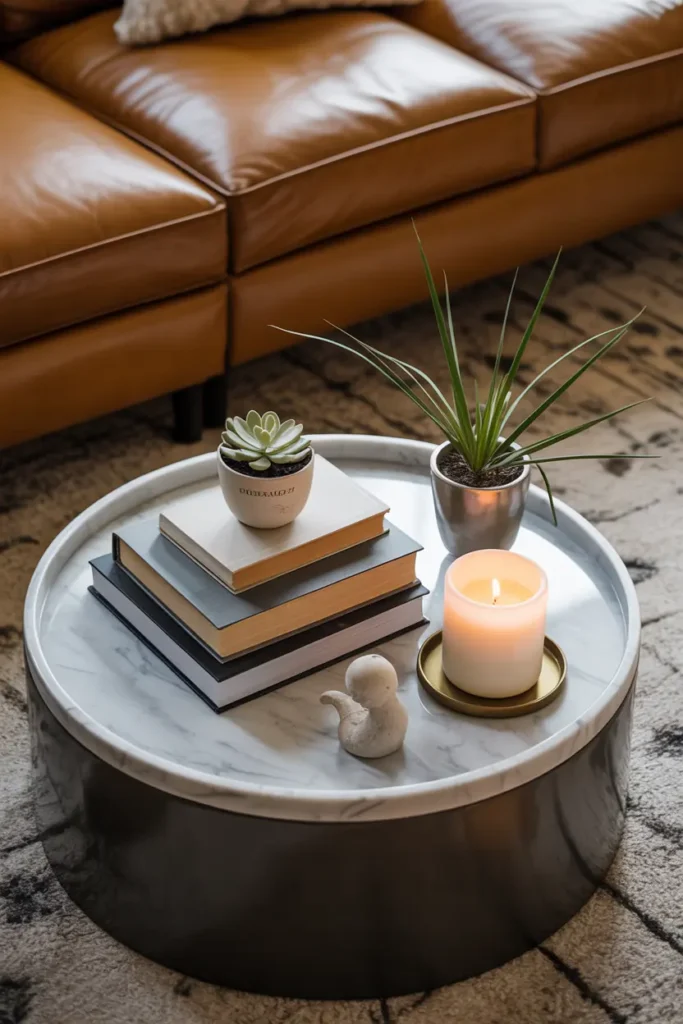
16. Style Your Coffee Table Like a Designer
Designers style coffee tables to a formula, and it’s embarrassingly simple: something tall (a vase with stems), something flat (a stack of two books), something small (a candle or object). Tall, flat, small. Three items, three heights, done. The tray underneath optional — it corrals everything into one “zone” on a big table.
The stems are the trick: dried eucalyptus or pampas grass ($8–15 a bunch) lasts months and adds the height nothing else can. Books should be ones you’d actually open — a fashion monograph, a travel book. Leave one-third of the table empty; a styled table you can’t set a coffee cup on is a failed table. Restyle it every few months with things from other rooms. Free refresh.
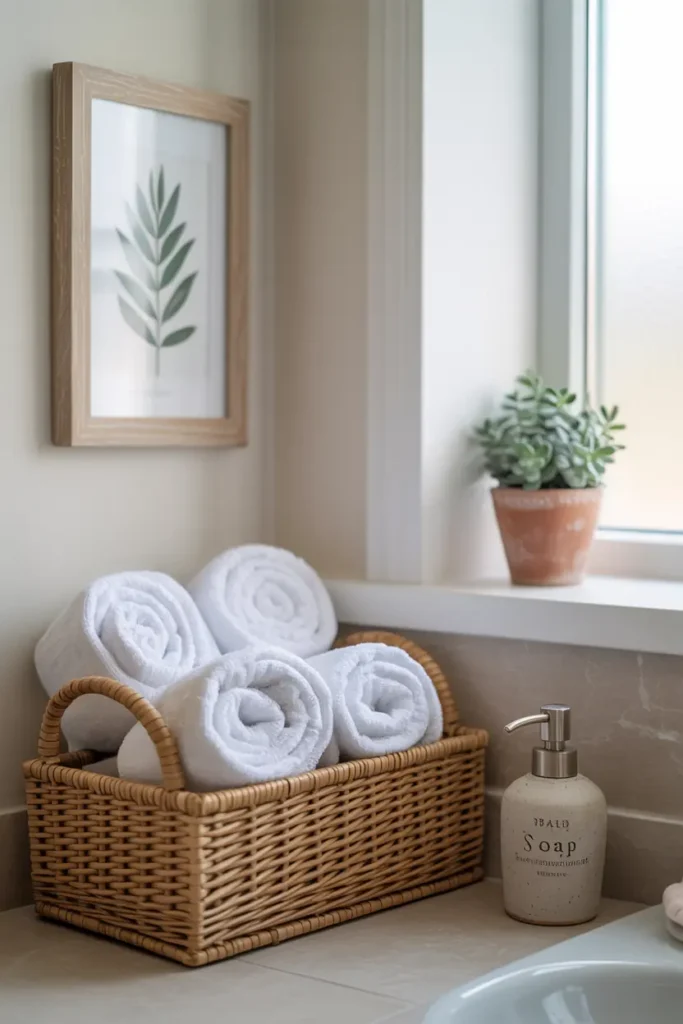
17. Upgrade Your Bathroom With Small Luxuries
Bathrooms get neglected because they’re “just functional.” Wrong — they’re the highest-impact-per-dollar rooms in the house. Matching dispensers for soap and lotion ($15–25 for a set), a folded stack of white towels instead of the raggedy mixed set, a small eucalyptus bunch hanging from the showerhead ($6). Total: under $50. Effect: hotel.
Decant everything. The fastest luxury upgrade in existence is getting products out of their branded packaging and into matching containers. Add one plant that loves humidity — pothos, ferns — and a candle on the tank or shelf. The bathroom is small, so every object is on display; that means every object counts. Edit it like a shelf, not a closet.
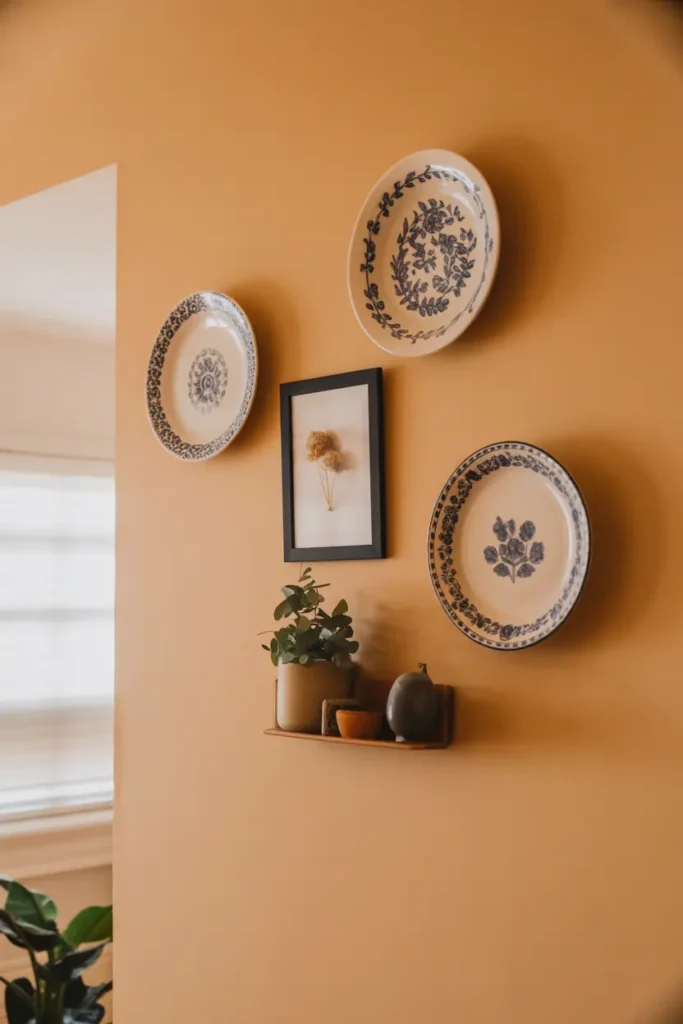
18. Hang Something Unexpected as Art
Art doesn’t have to be art. In 2026 the best walls hold the unexpected: a vintage scarf in a frame, a beautiful hat on a hook, a woven basket hung flat, a collection of brass spoons. The rule is simple — if it’s beautiful and flat-ish, it can hang. This is also the cheapest art you’ll ever own, because you already own it.
The trick is presentation: one unexpected object, framed or mounted well, reads as intentional. Three random objects read as clutter. Give it the same respect you’d give a painting — centered, at eye level (57 inches to center), lit if possible. A $15 frame turns a $2 flea-market textile into gallery work. Walk your home with fresh eyes; your walls are full of art you haven’t hung yet.
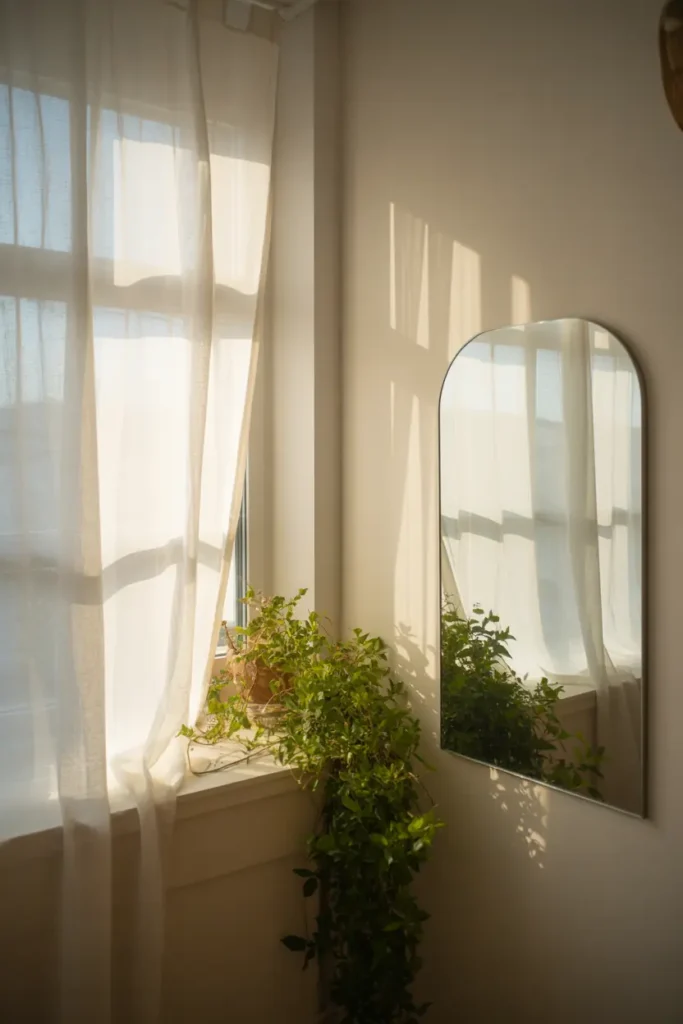
19. Make the Most of Natural Light
Natural light is free, and it’s the best light there is. Most people waste half of it. Sheers instead of blackout in living areas ($20–30 per panel) let daylight flood in while keeping privacy. Mirrors opposite windows double it. Light wall colors bounce it. Every one of these is cheap, and together they transform a dim room.
Audit your windows: are the tops of the glass clean? Are heavy curtains eating four inches of window on each side? Is furniture blocking the lower half? Fix those three things before buying anything. Then add the mirror opposite the biggest window — a 30-inch round mirror ($40–60) doubles your best light source for the price of dinner. Light is the room. Everything else is commentary.
20. Build a Cozy Corner Intentionally
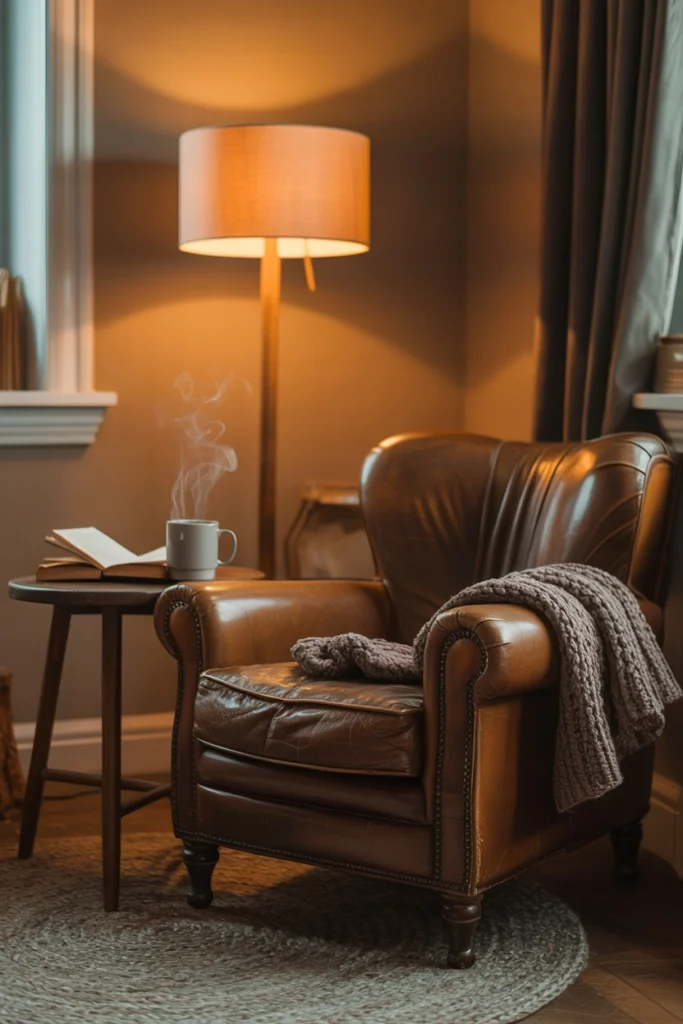
Every home needs one spot that exists to hold you. A chair, a light, a surface for tea, something soft. That’s the whole recipe. The mistake is scattering coziness everywhere — a throw here, a candle there — until no single spot is actually comfortable. Pick one corner. Commit to it.
The chair is the investment ($80–150 for a good reading chair secondhand). The lamp is the essential ($25–40, warm bulb, at shoulder height when seated). Everything else is garnish: a small side table, a basket for the book you’re reading, a throw that lives there permanently. Sit in it the first night. If you don’t reach for your phone, you built it right.
21. Rotate and Refresh Rather Than Replace
The smartest budget move of 2026 is also the simplest: stop buying, start rotating. Move the art from the bedroom to the hallway. Swap the living room cushions with the bedroom’s. Restyle the shelves with objects from the closet. A room you’ve seen daily for a year looks brand new when its contents are rearranged — your brain reads “new arrangement” as “new things.”
Do it seasonally. Spring: lighter textiles, greenery forward. Autumn: warmer tones, candles out. The rotation takes an afternoon and costs nothing, and it satisfies the itch to redecorate without the spending. Store the off-season pieces in one labeled box so rotation is a swap, not a hunt. Your home already contains next season’s look. You just have to move it.
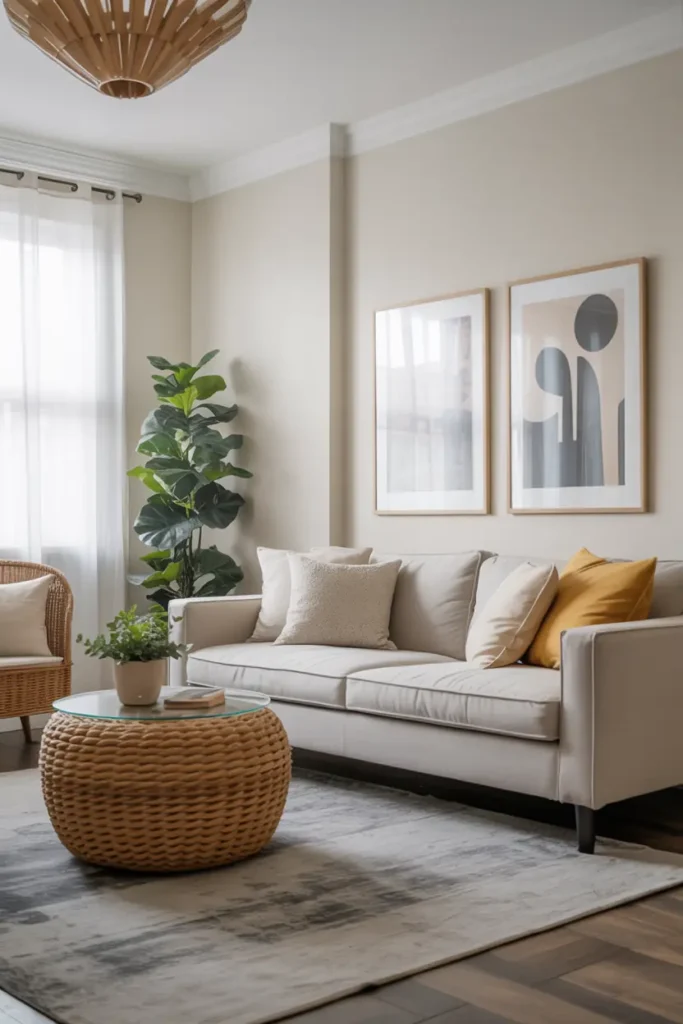
Twenty-one ideas, and not one of them asks for a renovation or a windfall. The thread running through all of them: warmth, texture, intention. 2026 rewards homes that look lived in by actual humans, not styled for a catalog. Pick three this weekend, and by Monday your home will feel like the year caught up with it.
Pro Tips
- Before buying anything, photograph the room and the item together on your phone — the screen reveals clashes your eyes miss in the store.
- Buy paint in sample pots ($5–8) and live with the color for three days in different light before committing to a gallon.
- Keep a running “home list” on your phone of measurements — window widths, wall lengths, shelf depths — so you never guess at the store again.
- One statement per room. If everything is interesting, nothing is; let one bold move carry each space.
FAQs
What’s the most impactful budget decor change for 2026?
Swapping cabinet hardware in the kitchen or bathroom. For $40–80 and one afternoon, the room reads as renovated. Nothing else on this list delivers that much visible change per dollar.
Is warm minimalism just a trend, or will it last?
The warm part will last — cream, wood, and texture are perennial. The specific label will fade, as labels do. Decorate with warm materials you genuinely like and you’ll be fine whatever the next trend is called.
How do I try limewash if I rent?
Look for removable textured finishes or peel-and-stick plaster panels instead of real limewash. You get the clouded, tactile look with zero damage, and it comes off clean when your lease ends.
Can I really refresh my home without buying new furniture?
Yes — most of these ideas assume your furniture stays. New cushion covers, rearranged art, layered rugs, and better lighting change how every existing piece reads. Furniture is the last thing to change, not the first.

HowDecor is a home decor blog sharing simple, practical decorating ideas for everyday spaces. We believe a beautiful home should feel comfortable, personal, and full of warmth — and that great style does not require a huge budget. Our goal is to inspire readers to create spaces that feel peaceful, welcoming, and truly their own — one room at a time.