A friend of mine measured her living room last spring: 11 by 13 feet, two windows, one radiator she couldn’t move. Everything in it was decent furniture, nothing broken, and yet the room felt like a storage unit with a sofa in it. The fix wasn’t new furniture. It was about fifteen small decisions, none costing more than a dinner out. The approach to the same problem, and the lesson in both cases is identical: small homes don’t need more stuff — they need warmer, smarter choices.
This guide is built around that lesson. Seventeen ideas, each tested in real apartments and cottages, each chosen because it does two jobs at once: it makes a compact space feel bigger and feel warmer. Work through them in order or jump to whichever problem is annoying you today.
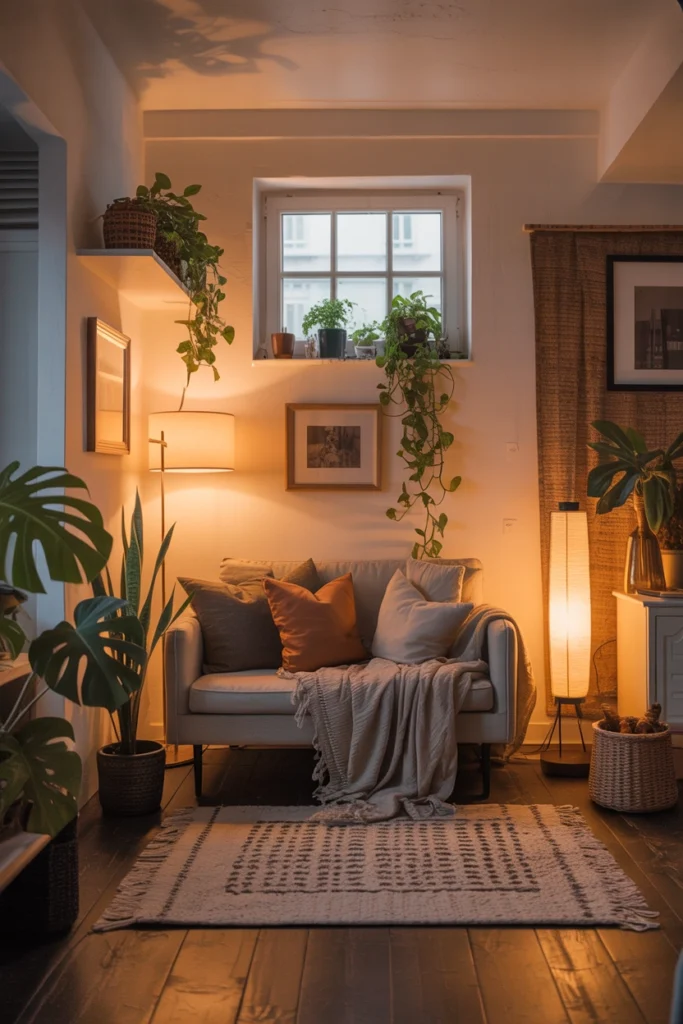
1. Start With a Warm, Light Paint Color
Paint is the cheapest transformation in decorating, and in a small home it’s also the most powerful. A warm off-white — think creamy, like Farrow & Ball’s White Tie or Behr’s Swiss Coffee — reflects about 80–90% of light back into the room instead of swallowing it. The difference between a warm white and a cool blue-grey on a 10×12 wall is the difference between a room that glows at 4pm and one that feels like it’s already night.
The mistake I see constantly: painting one accent wall in a dark, dramatic color “for interest.” In a room under 150 square feet, an accent wall chops the space in half visually. Paint the whole room one warm light color, ceilings included (yes, ceilings — same color, flat finish), and you’ll gain a perceived 20% more space. One gallon covers roughly 350–400 square feet, so most small rooms need a single $35–50 gallon.
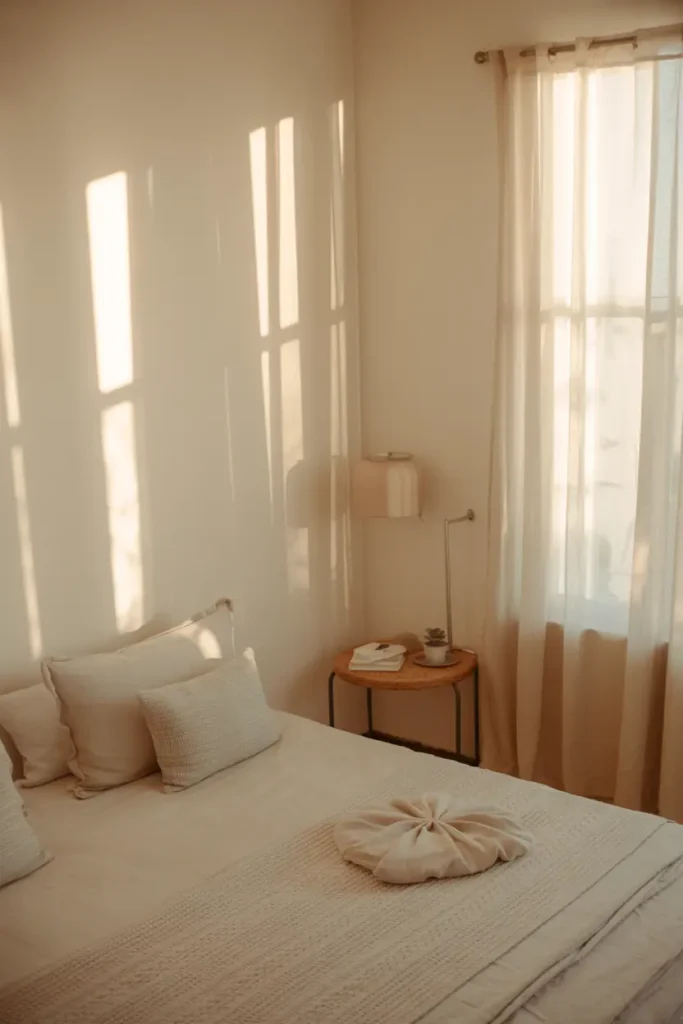
2. Use Mirrors Strategically to Open Up Space
A mirror does exactly one useful thing: it doubles whatever it’s reflecting. Place it opposite a window and you get twice the daylight, twice the view, and the illusion that the room continues past the wall. Place it opposite a cluttered shelf and you get twice the clutter. The rule is simple — a mirror should face something beautiful or something bright, never a mess.
Size matters more than frame style. A 24×36-inch mirror over a console or leaning against the wall on a dresser reads as furniture, not decoration, and that scale is what creates the expansion effect. Round mirrors soften the hard rectangles of a small room, so if your space is all corners, go round. Check thrift stores before buying new: a $10 frame with a scratched mirror is a $15 project if you order a replacement mirror cut at any hardware store.
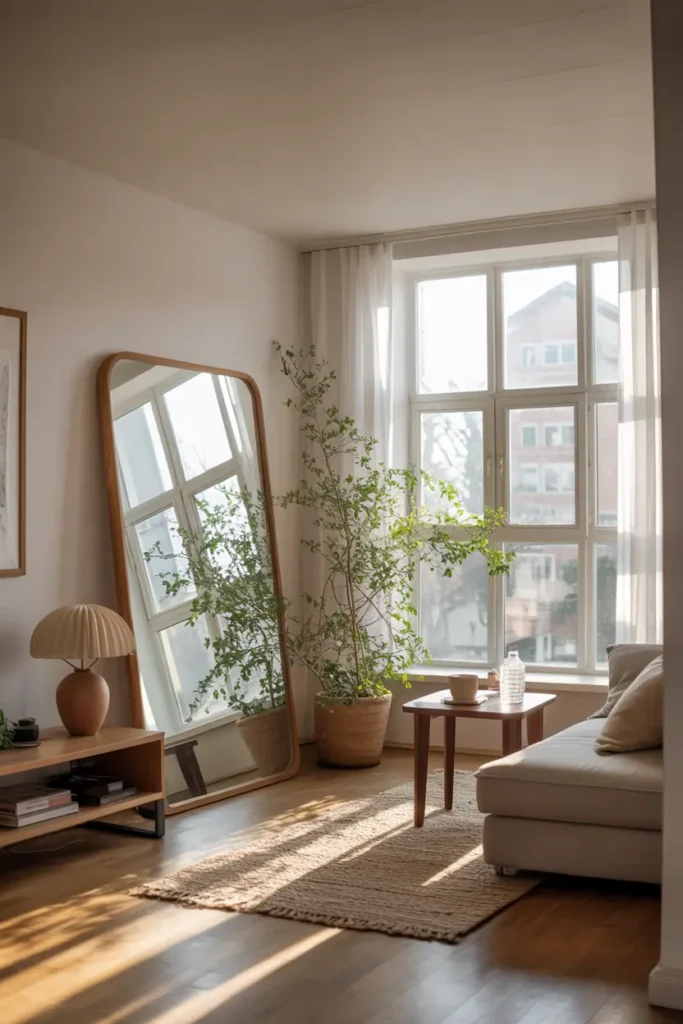
3. Choose Furniture That Does Double Duty
Every piece in a small home needs to hold a second job. A storage ottoman ($60–120 at most retailers) swallows throws, remotes, and board games while serving as a coffee table, extra seat, and footrest. A sleeper sofa turns a living room into a guest room without adding a single square foot. A drop-leaf dining table seats two on weeknights and six when family visits.
Before buying anything new, audit what you have with a blunt question: what does this thing do? If the answer is one thing and it occupies real floor space, it should probably be upgraded or replaced. The worst offenders are side tables that hold nothing but a lamp and decorative chairs nobody sits in. Replace them with a lift-top coffee table with storage ($90–150), and you’ve added seating, a hidden workspace, and a storage unit in one footprint.
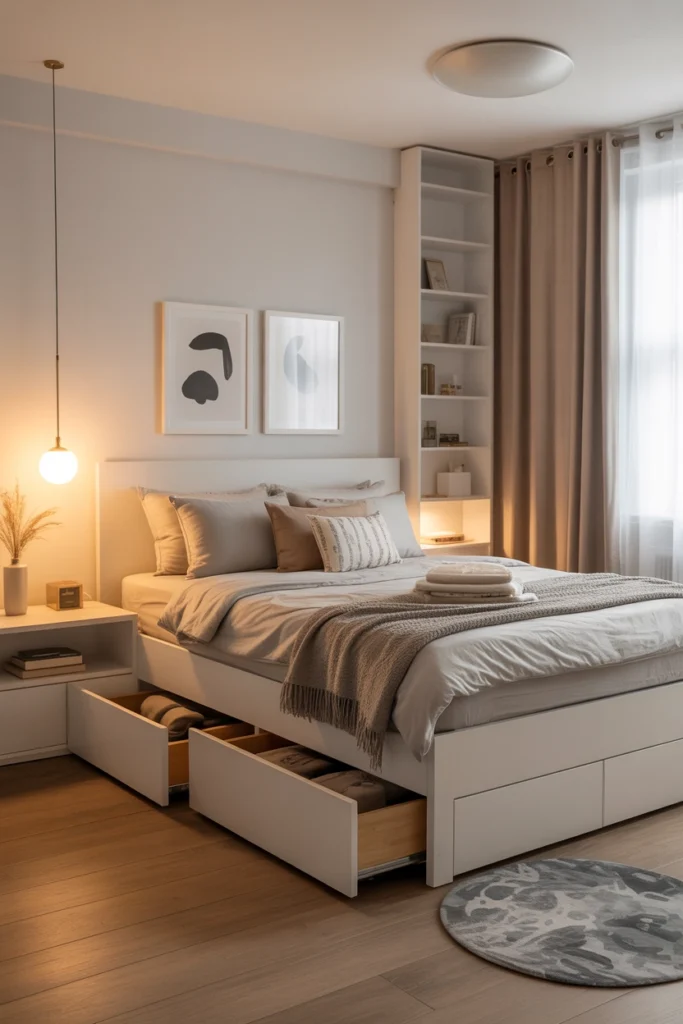
4. Go Vertical With Shelving and Storage
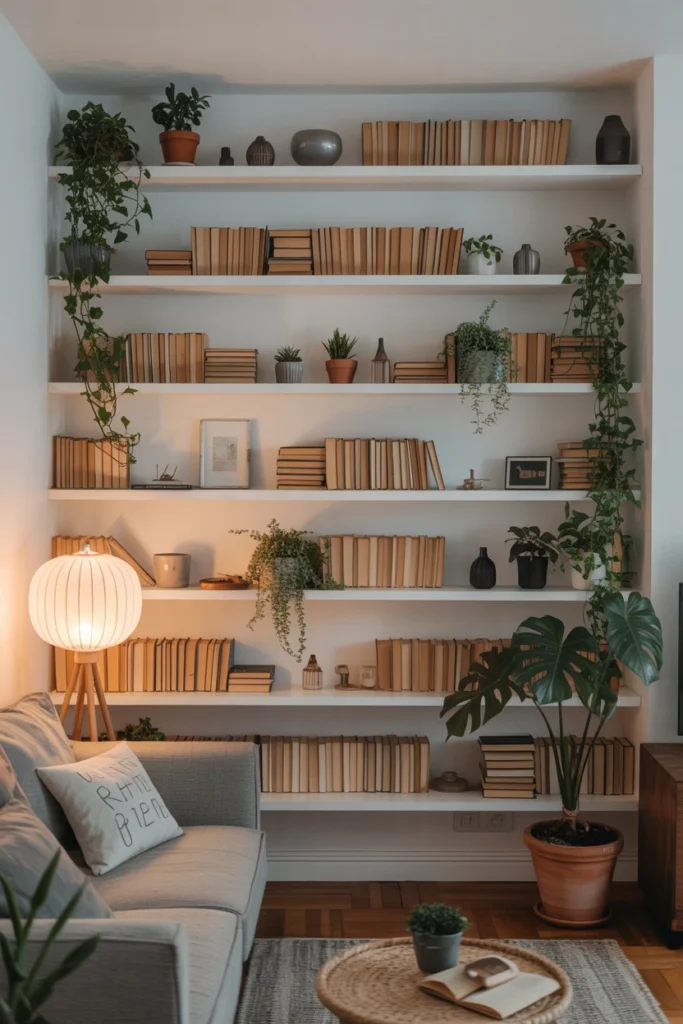
When floor space is gone, the only direction left is up. Walls are free real estate, and tall shelving does something floor-level storage can’t: it pulls the eye upward, which makes the ceiling feel higher and the room feel larger. A single 72-inch bookcase takes up less than two square feet of floor and holds as much as a sideboard three times its footprint.
Install shelves 12–16 inches above desk height for a working shelf, and 18–24 inches apart for book display. The key discipline: keep the top shelf lightly filled (a plant, one framed photo) so the whole unit reads airy, not heavy. In kitchens and bathrooms, wall-mounted rails with S-hooks ($8–15) hold utensils, mugs, and towels with zero floor footprint — a trick professional organizers use in every apartment under 800 square feet.
5. Bring in Warm Lighting at Every Level
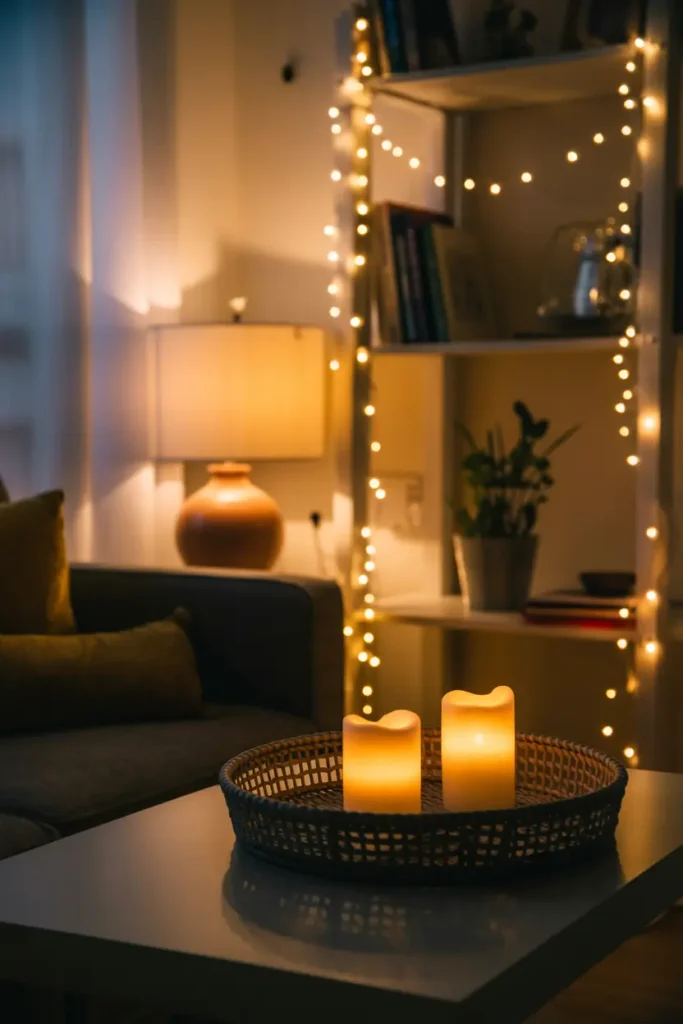
A single overhead bulb is what makes small rooms feel like waiting areas. Warmth comes from layers: an overhead light for function, a floor or table lamp at eye level for reading, and a low glow — candles, a string of fairy lights, a small lantern — for atmosphere. Three levels of light at three heights and a 12×14 room suddenly has depth it didn’t have at noon.
Buy 2700K bulbs, not 5000K daylight. Daylight bulbs render a small room like a dentist’s office; 2700K mimics candlelight and makes skin, wood, and fabric look richer. A decent table lamp costs $25–40, and if you’re renting, a plug-in wall sconce ($30–50) gives you layered light with zero drilling. Put your warmest, dimmest light in the corner you use after 8pm — that’s where you’ll feel the difference first.
6. Use a Consistent Color Palette Throughout
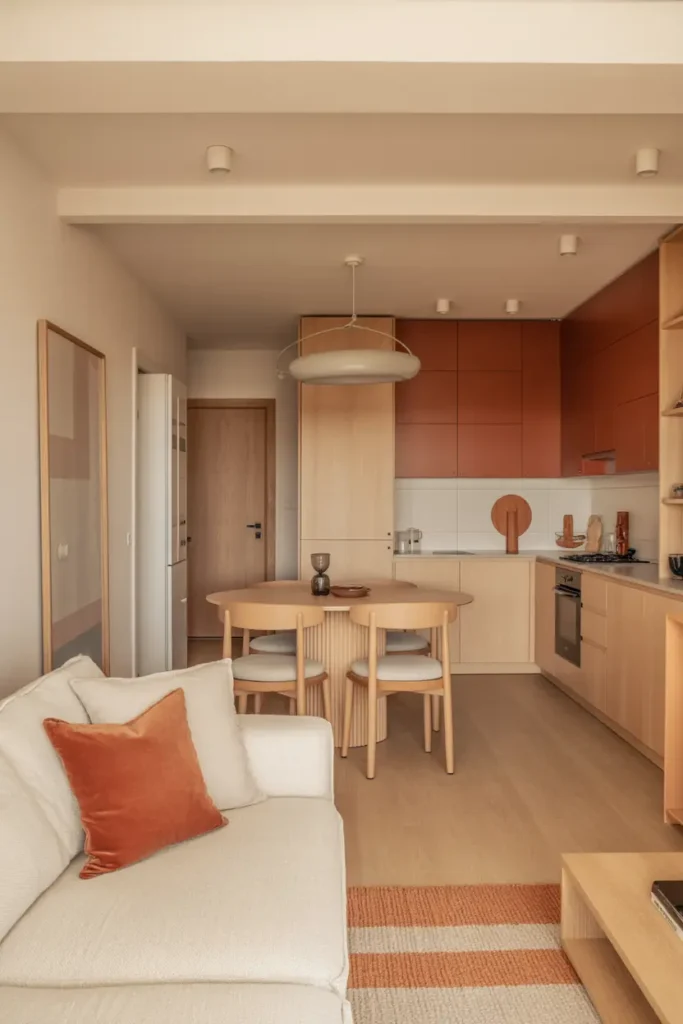
Walk through a small home that feels chaotic and you’ll almost always find the same cause: seven colors fighting in six rooms. The eye can’t rest, and the space feels smaller because every color boundary reads as a wall. A consistent palette — say, warm white, oatmeal, olive, and walnut — lets the eye travel through the whole home without stopping, and that continuity reads as spaciousness.
This doesn’t mean everything matches. It means everything relates. Pick two base neutrals and one or two accent colors, and repeat them in every room: the olive appears on a cushion in the living room, the bedroom throw, the kitchen tea towels. When colors echo room to room, a 600-square-foot apartment feels like one coherent home instead of four tiny boxes. Paint chips taped to the wall for three days are the cheapest design tool there is — live with the palette before committing.
7. Add Softness With Rugs and Textiles
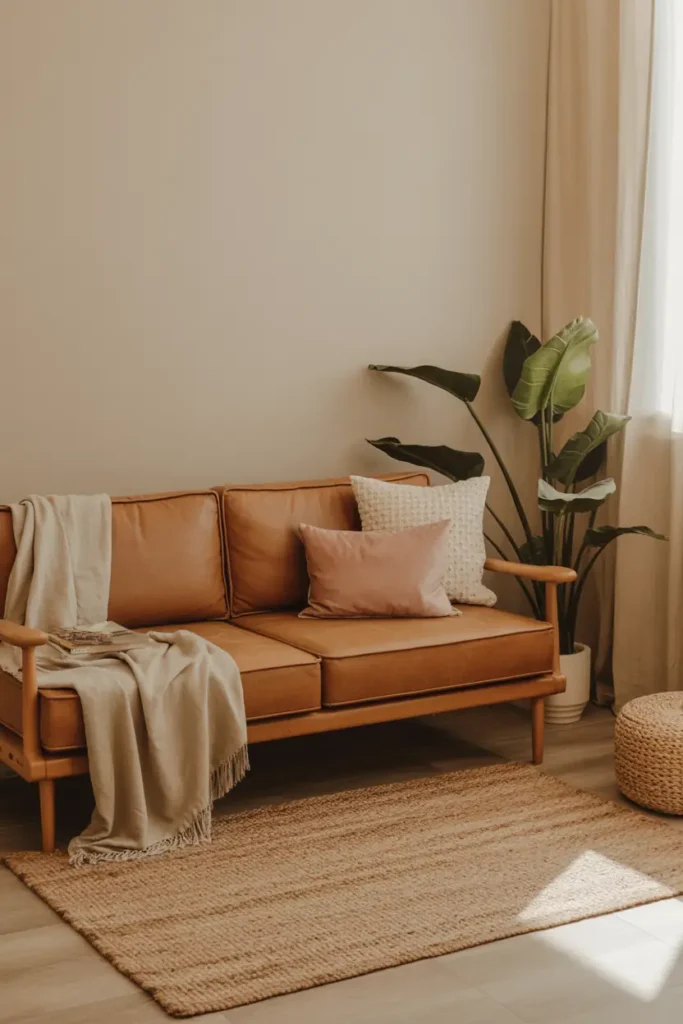
Hard floors and bare surfaces bounce sound and light in ways that feel cold and echo-y. A rug changes the acoustics of a room within minutes — it absorbs the hollow slap of footsteps and softens voices, and the room immediately feels inhabited. In a small space, go bigger than you think: a 5×7 or even 6×9 rug under the main seating area anchors everything, while a too-small rug makes the room look patchy and divided.
The money-saving rule: anchor at least the front legs of your sofa and chairs on the rug. If the rug is too small for that, it’s the wrong rug. Layer a flat-weave jute rug ($60–90 for 5×7) under a softer vintage-style rug for texture and warmth without spending $300. Washable rugs (Ruggable and its imitators) are worth every penny in small homes where one rug covers the main living zone and gets all the traffic.
8. Embrace Minimalism Without Making It Feel Cold
Small-home minimalism isn’t about owning less for the aesthetic. It’s about the practical reality that every object in a compact room is visible, all the time, so each one has to earn its visibility. The warm version of minimalism keeps the edited-down quantity but adds texture: a chunky knit throw, a rough ceramic vase, a linen cushion cover. Same count of objects, completely different feeling.
Do the one-box test. Fill a box with everything you can remove from a room without breaking its function, live with the room for a week, then open the box. Most people return one or two things and realize the rest were clutter in disguise. The things you bring back are your real style — keep those and let them breathe with six inches of empty space around them. Warmth in minimalism lives in the gaps.
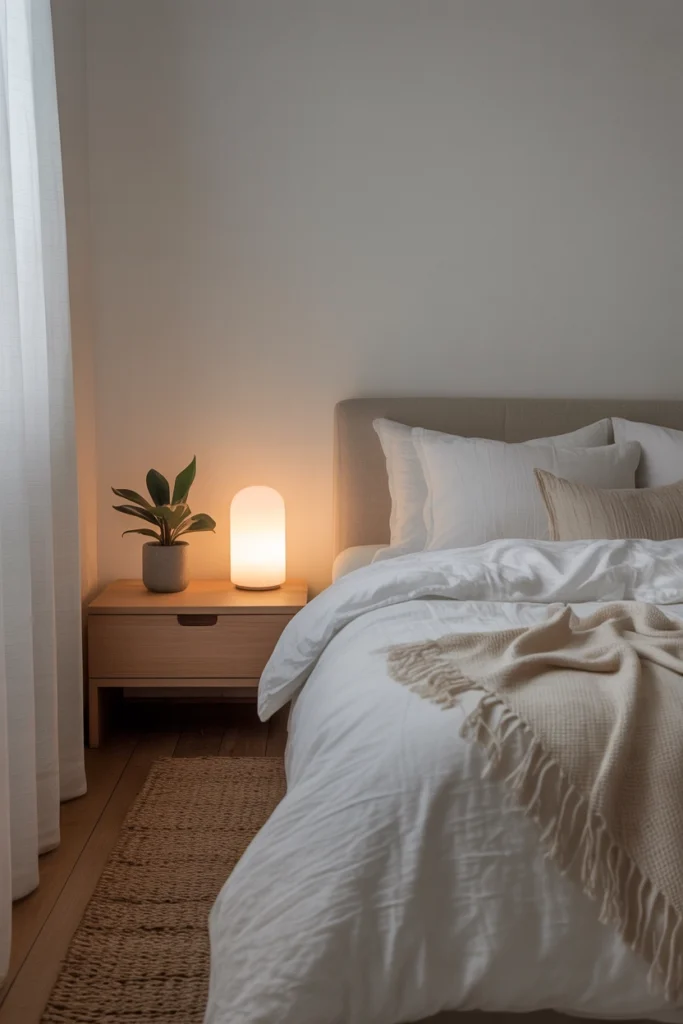
9. Use Plants to Add Life and Color
A room with no plants reads as a photograph of a room; a room with plants reads as a place someone lives. That’s the entire magic, and it’s why one $12 pothos can do more for warmth than a $80 decor object. Plants add color, soft organic shapes, and movement — leaves shift in the breeze from an open window in a way no static object can match.
In small homes, choose plants for verticality and tolerance, not drama. Snake plants and ZZ plants survive weeks of neglect and grow straight up, taking almost no floor space. Hang pothos or philodendrons from curtain rods or high shelves so the green trails down without touching the floor at all. One large plant (4–5 feet tall) makes a bigger statement than five small ones scattered around — cluster your greenery into one lush corner instead of spreading it thin.
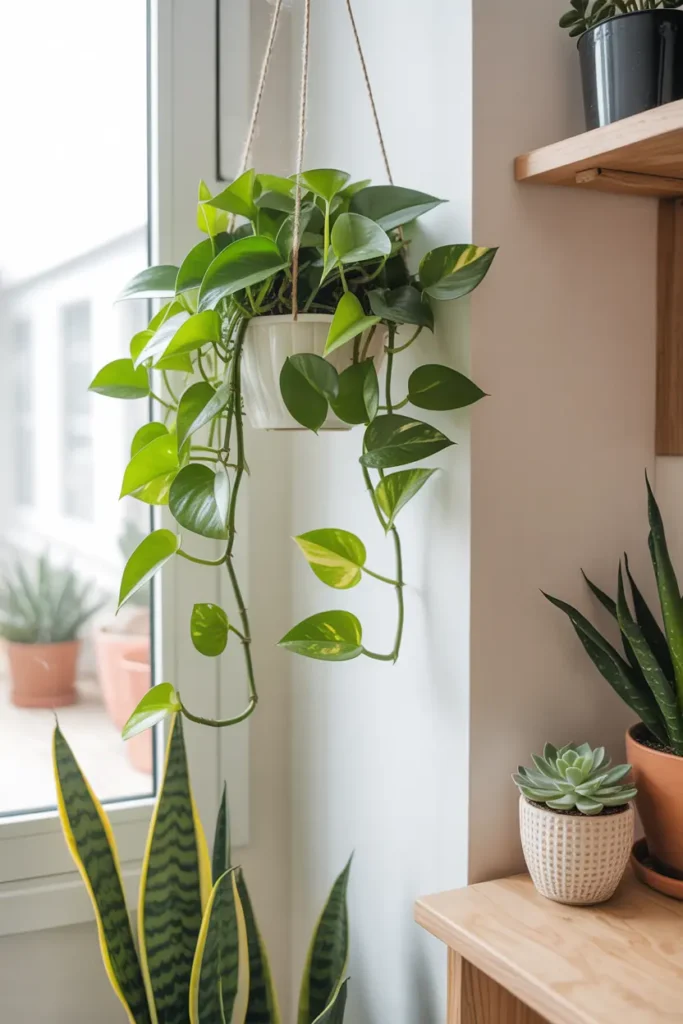
10. Create Zones in an Open Space
Open-plan small homes have a specific problem: everything is one room, so nothing feels like a room. Zones fix that without walls. A rug under the sofa area says “this is the living room”; a pendant light over the dining table says “this is where we eat”; a bookcase turned perpendicular to the wall says “the bedroom starts here.” Each zone becomes its own small, intentional space.
The cheapest zoning tool is a rug ($50–80), followed by lighting — a $25 plug-in pendant over a dining table instantly carves a dining room out of a living room corner. Keep the zone markers low and permeable: a bookcase divider should be open-backed so light passes through, and a curtain panel on a tension rod ($15–20) gives a sleeping nook real privacy without a single screw. Three zones in one room feels like three rooms; one undivided space feels like a studio.
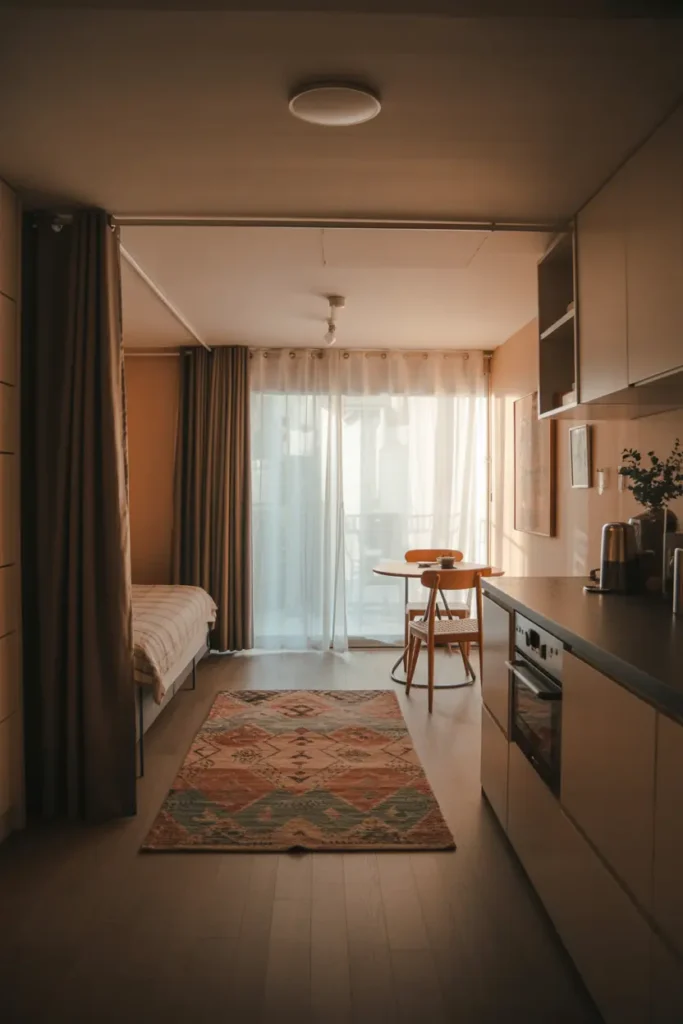
11. Style Windowsills as Display Space
In a home where every surface matters, windowsills are free shelf space that most people leave bare or dump with keys. A deep windowsill — 5–6 inches — is a perfect display ledge: it’s lit by daylight, it frames whatever’s on it, and it costs you nothing. Three small objects with varied heights (a trailing plant, a candle, a framed photo) turn a windowsill into the prettiest shelf in the house.
Keep it practical: anything on a sill needs to survive temperature swings and direct sun, so skip wax candles on south-facing sills and watercolors that will fade. Glass, ceramic, and plants thrive there. In kitchens, a windowsill lined with small herb pots ($3–5 each) is decoration you can eat. The rule is three objects max on a standard sill — four reads as storage, three reads as styled.
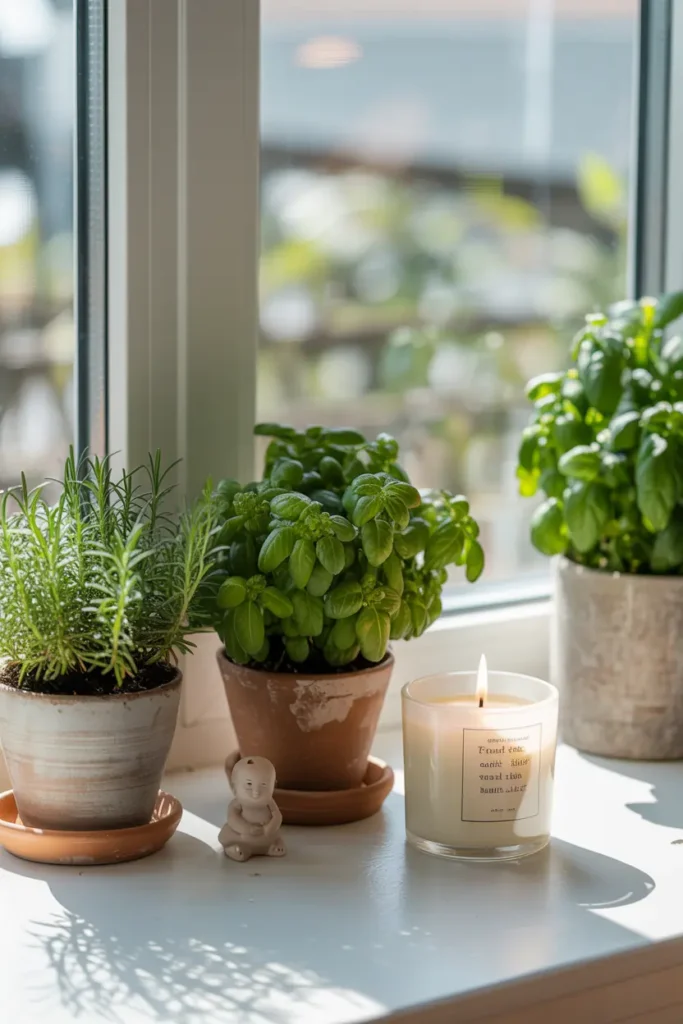
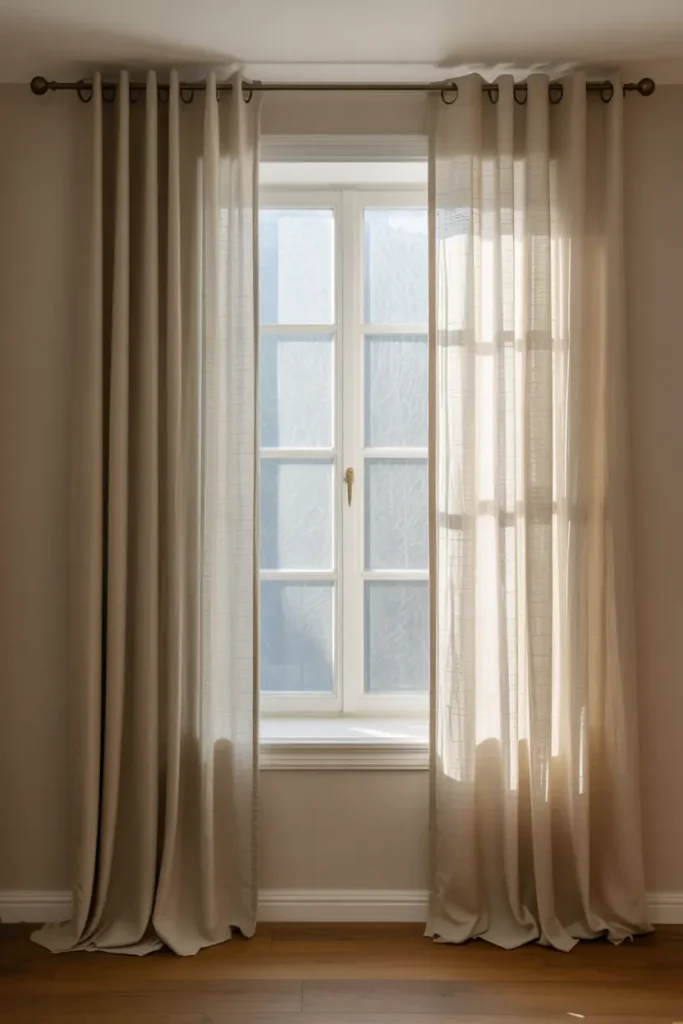
12. Hang Curtains High and Wide
This is the oldest trick in the book because it works every time. Mount the curtain rod 4–6 inches below the ceiling (or 2–3 inches above the window frame in rooms with high ceilings) and extend it 6–12 inches past the window on each side. The window instantly looks taller, the wall looks wider, and the light coming through spreads across the room instead of squeezing through a narrow slit of fabric.
When closed, the curtains should stack entirely on the wall, not the window — that’s the point of the wide rod, and it’s what makes a 36-inch window read as 60 inches wide. Buy panels long enough to kiss the floor (they’ll run $20–40 per pair at budget retailers); curtains that stop at the sill chop the wall’s height. Linen-look or cotton panels in a warm white filter light beautifully and won’t fight your palette. Avoid heavy drapes in small rooms — they eat the very airiness you’re building.
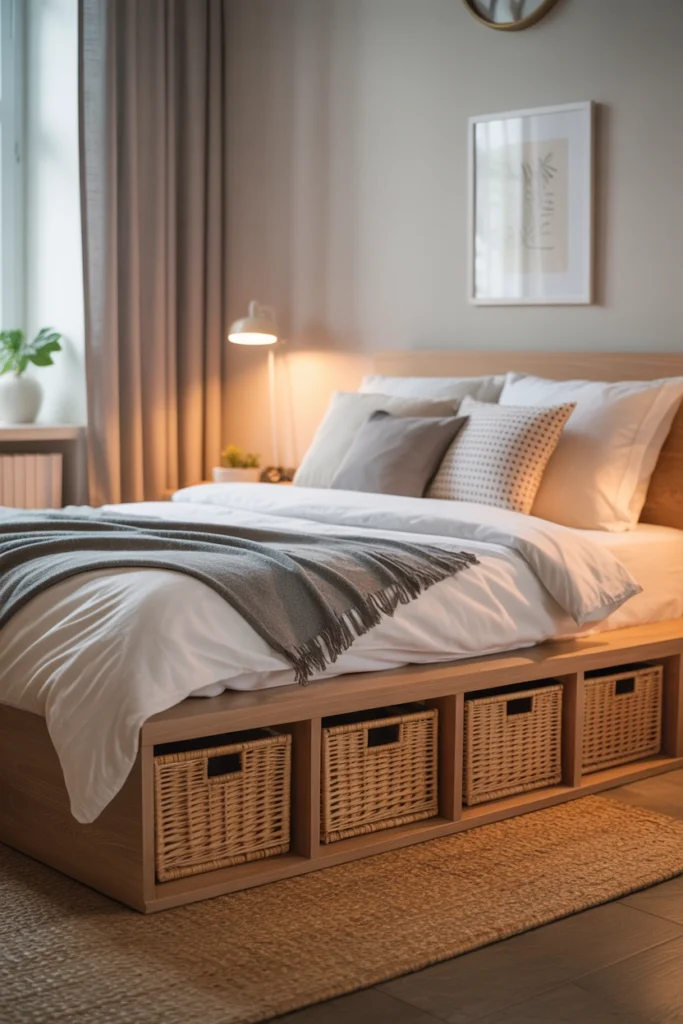
13. Use Under-Bed Space Creatively
The area under your bed is roughly 25–35 square feet of storage — more than a standard closet’s floor — and in most homes it’s occupied by dust. Flat storage boxes (7–8 inches tall, $12–18 each) slide under standard bed frames and hold off-season clothes, bedding sets, wrapping supplies, anything. Vacuum bags ($15 for a set of six) compress bulky winter bedding to a third of its volume.
Measure before you buy: frame rails and support bars eat into the clearance, so measure the actual open height, not the frame’s stated height. If your bed sits low, $10–15 risers lift it four inches and unlock the whole space. In a child’s or guest room, rolling drawers under the bed replace a dresser entirely — that’s one less piece of furniture competing for floor space. Keep a simple list taped inside your closet of what’s under there, or you’ll forget and buy duplicates.
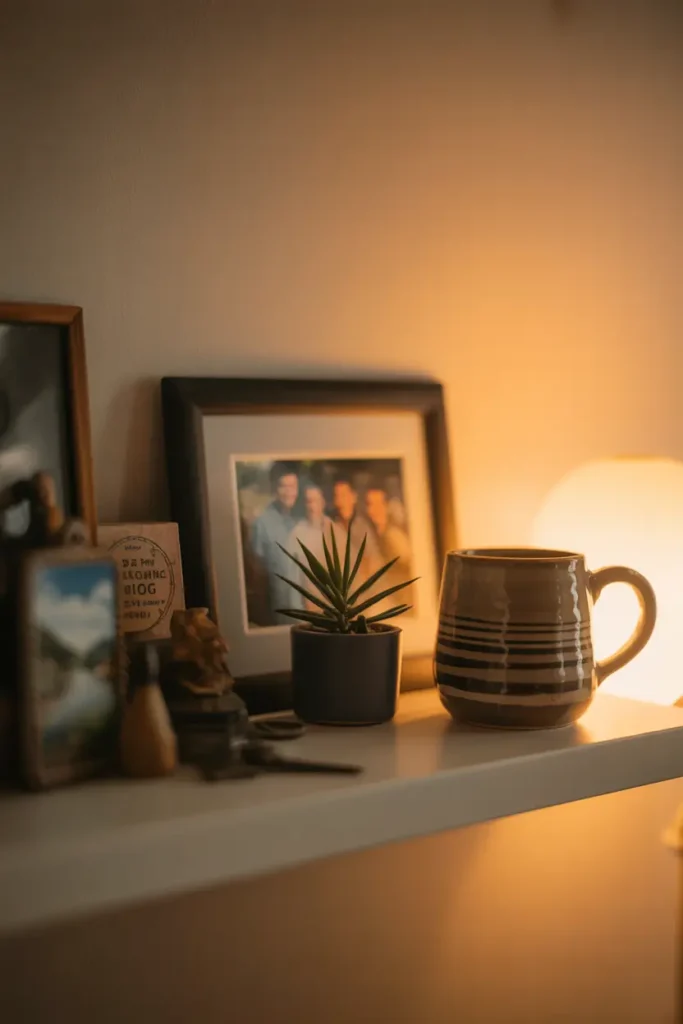
14. Add Personal Touches That Tell Your Story
The difference between a decorated small home and a staged one is evidence of a life. A framed photo from a trip, the weird ceramic bird your grandmother gave you, a stack of books with cracked spines you actually read — these are what make visitors lean in and say it feels like you. Without them, even a perfectly styled room feels like a showroom, and showrooms are cold.
Be selective, though — a small home shows every object, so curate. Choose five to seven personal items for the whole living space, and give each one a real spot: the travel photo in the hallway where you see it daily, the grandmother’s bird on the windowsill, the concert ticket stub framed above your desk. One personal object per surface is the rhythm. The goal is a home that tells your story in headlines, not footnotes.
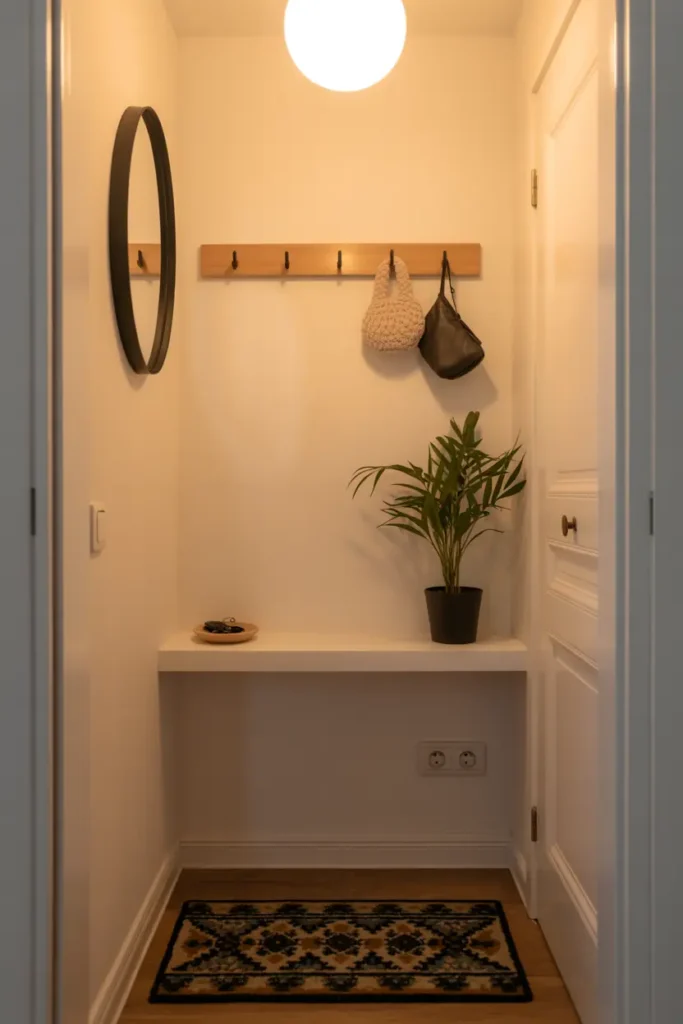
15. Keep Entryways Small but Intentional
The entryway is the first thing you see coming home and the last thing you see leaving — in a small home it’s often just three square feet of floor by the door, and it still deserves intention. A narrow console or wall-mounted shelf (12 inches deep is plenty), a hook for your keys, and a small mirror or piece of art at eye level. Thirty seconds of setup, and the whole home feels considered from the first step.
The practical trio is: somewhere to drop keys, somewhere to sit or lean while changing shoes, and somewhere to hang a coat. A wall-mounted folding bench ($40–60) gives you the seat without permanent floor space; a row of three hooks handles coats, bags, and tomorrow’s outfit. Add a small washable mat ($15–25) — small entryways take the full brunt of shoes and weather, and the mat protects the floor behind it. Everything within arm’s reach of the door, nothing deeper than a foot.
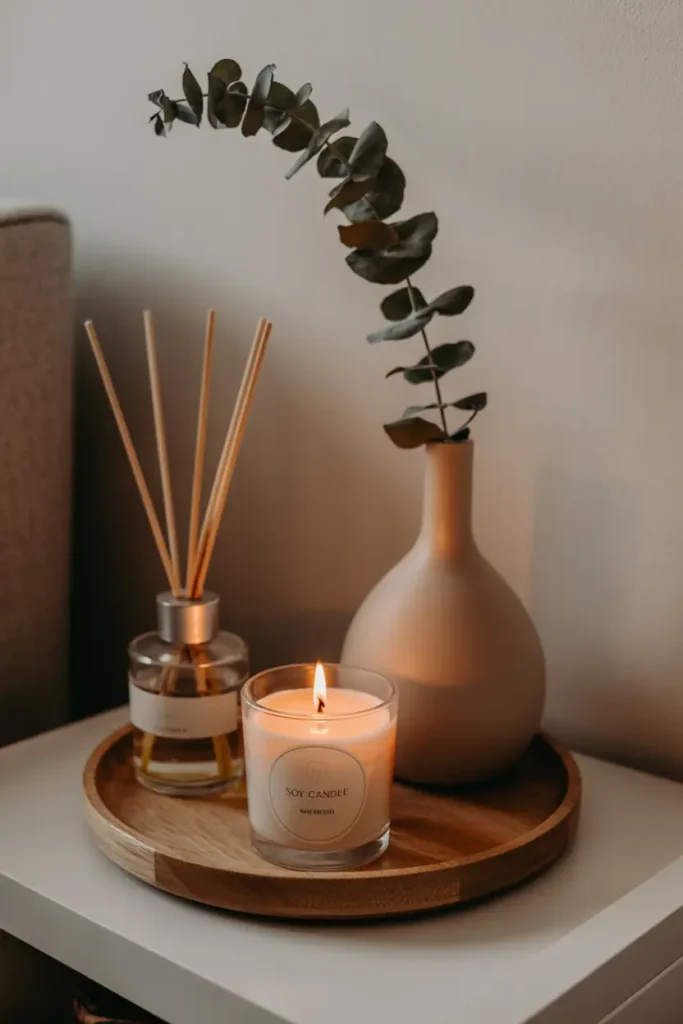
16. Use Scent to Create an Atmosphere
You notice scent before you notice decor — walk into a home that smells of cedar and vanilla and you’ve decided it feels warm before your eyes adjust. In a small home this works even better, because the volume of air is small: one candle or diffuser scents the whole living space. Pick one signature scent per season and make it the background of your home the way a wall color is the background of your rooms.
Soy candles in the $10–15 range burn 30–50 hours; place them where you sit in the evening, not where guests stand at the door — scent should meet people as they settle, not as they arrive. Reed diffusers ($12–20, lasting 2–3 months) handle the entryway and bathroom with zero flame risk. Keep it to one scent per floor; two competing fragrances in 600 square feet smell like a shop, not a home. Unscented is always better than clashing.
17. Declutter Regularly and Edit With Intention
In a large home, clutter is an aesthetic problem. In a small home, it’s a spatial one — ten misplaced objects on a counter in a 60-square-foot kitchen genuinely remove usable space. The fix isn’t one dramatic purge; it’s a fifteen-minute weekly edit. Set a timer, walk each room with a laundry basket, and collect everything that doesn’t belong. Put the basket’s contents back where they live or into a donation bag. Fifteen minutes, once a week, and clutter never gets a foothold.
Editing is the second half: once a season, pick one shelf, one drawer, or one closet and ask the honest question — have I used this in three months? If not, it leaves. The one-in-one-out rule keeps small homes stable after the initial edit: a new book means an old one goes to the donation box. Homes stay warm not because they’re full but because everything in them is chosen. That choosing is a habit, not an event.
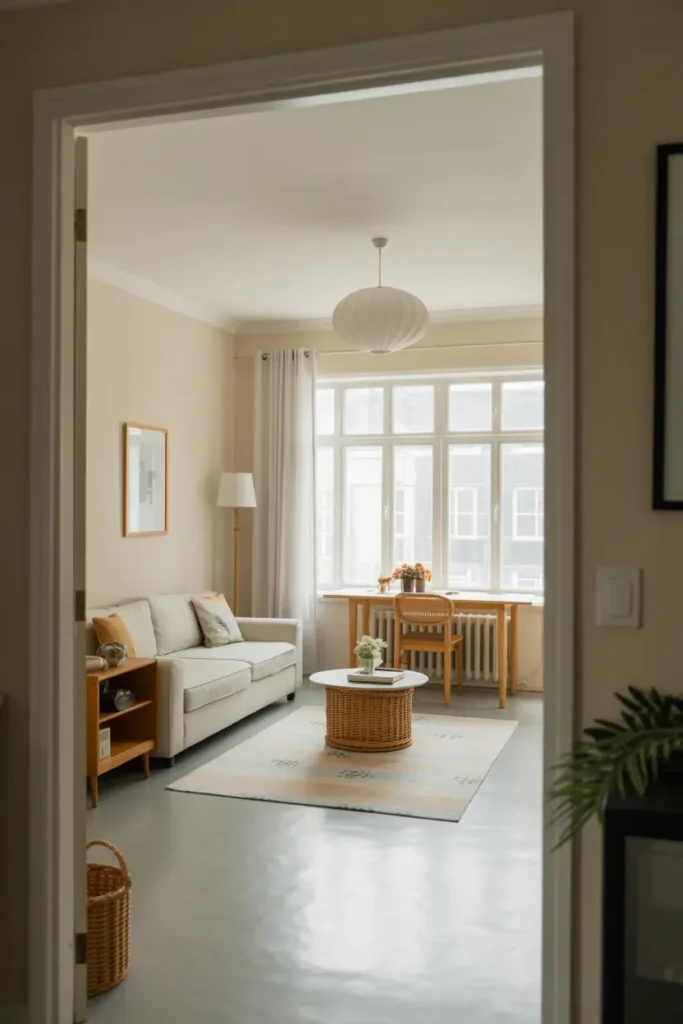
None of these ideas requires a big budget or a big home — that’s the whole point. Pick the three that solve your loudest problems first, live with them for a month, and notice which rooms you gravitate toward. Warmth in a small home is never about square footage. It’s about a warm wall color, layered light, one good rug, and the discipline to let everything else go.
Pro Tips
- Paint ceilings the same warm white as walls in a flat finish — it erases the line where wall meets ceiling and the room reads taller instantly.
- Put dimmers on every light you can ($8–12 per plug-in dimmer). A small room at full brightness feels interrogated; the same room at 40% feels like evening.
- Keep one empty surface in every room. An uncluttered nightstand or console signals calm to your brain the way a full one signals noise.
- Photograph each room from the doorway before and after changes. The camera catches awkward proportions and clutter your eyes edit out in person.
FAQs
What’s the cheapest way to make a small home feel warmer?
Swap your bulbs to 2700K warm white (under $10 for a multipack) and add one textured throw. Those two changes cost less than $30 total and transform how a room feels at night, which is when warmth matters most.
Can I use dark colors in a small home?
You can, but use them in doses — a dark green reading nook or a charcoal bathroom can feel cozy and intentional. The mistake is painting the main living areas dark; keep those warm and light, and let one small space carry the drama.
How do I decorate a small home without it looking cluttered?
Give every object breathing room — six inches of empty space around decorative items — and repeat a tight color palette across rooms. Then run the weekly fifteen-minute reset: clutter in small spaces is almost always maintenance, not quantity.
Is it worth buying a rug for a rental?
Yes, and a washable one especially. A 5×7 rug defines your living zone, softens sound, and protects the floor underneath — and it moves with you. Think of it as furniture, not decoration.

HowDecor is a home decor blog sharing simple, practical decorating ideas for everyday spaces. We believe a beautiful home should feel comfortable, personal, and full of warmth — and that great style does not require a huge budget. Our goal is to inspire readers to create spaces that feel peaceful, welcoming, and truly their own — one room at a time.