Oak has been the cabinetmaker’s timber for a thousand years, and it shows. I’ve worked with every kitchen material on the market, and oak is the one that forgives mistakes — in fitting, in styling, in living. It dents rather than chips, it patinas rather than fades, and it makes a room feel established on day one.
But “oak kitchen” covers everything from a £3,000 veneer flat-pack to a £40,000 solid in-frame masterpiece, and the difference matters enormously. These eighteen ideas walk through the real choices — solid versus veneer, finishes, pairings — so you get the oak kitchen you actually want, not the one the brochure sold you.
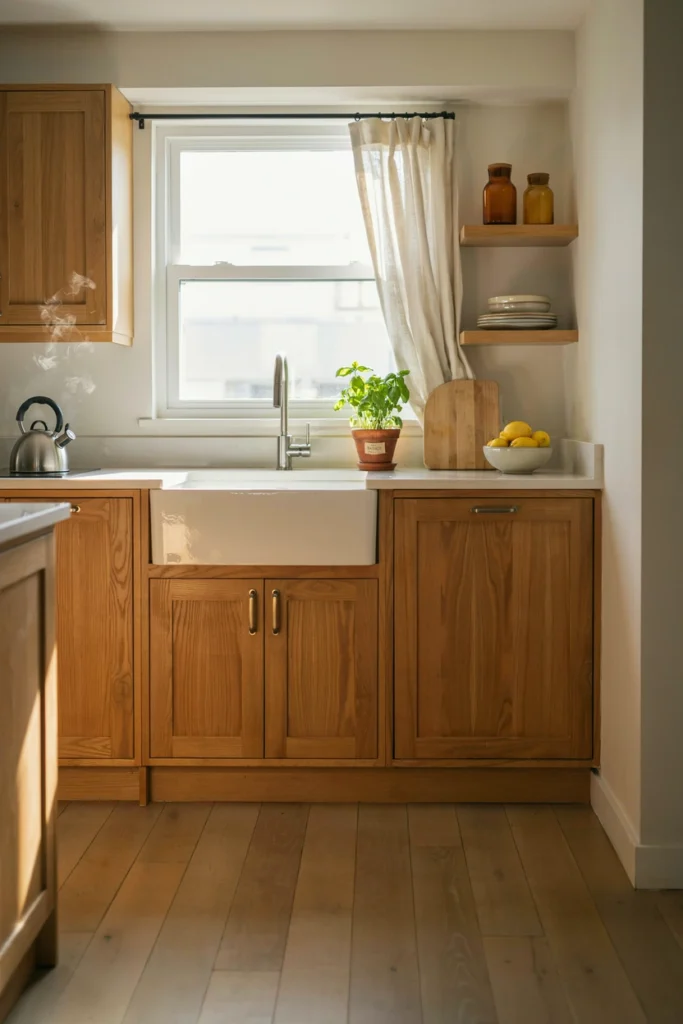
1. Floor-to-Ceiling Oak Cabinets
Full-height oak is a commitment, and in the right room it’s magnificent. The vertical grain draws the eye upward, making ceilings feel higher, and a full wall of timber has a calm, library-like presence that painted kitchens can’t touch.
This works especially well in narrow kitchens where visual continuity matters. The unbroken vertical line of wood creates a sense of flow that opens the space rather than closing it in. Keep the grain direction consistent — vertical on tall units, horizontal on wide drawers — or the wall will look restless instead of calm.
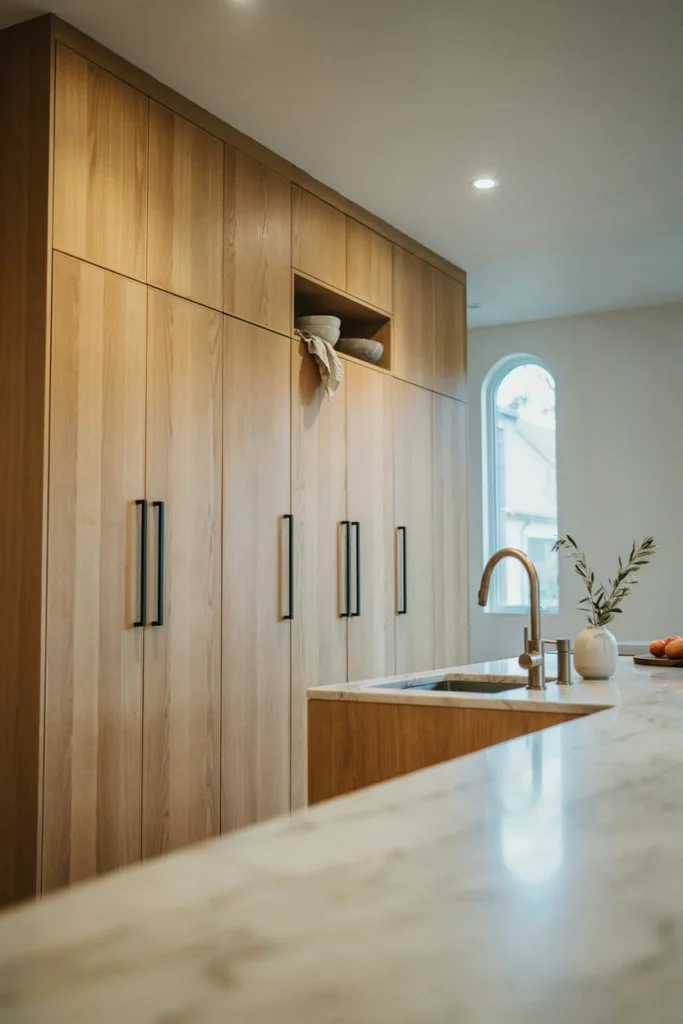
2. Two-Tone Oak and White Kitchen
Oak lowers with white uppers is the pairing that converted a generation to wood kitchens. The white keeps the room light at eye level; the oak grounds it at worktop level where the wear happens. It’s also the most forgiving combination for resale — buyers who fear “too much wood” still love this.
The junction matters: run the oak up to the worktop and stop cleanly. A thin shadow gap or a simple oak upstand as the splashback keeps the transition crisp. Fussy trim between the two materials is what makes two-tone kitchens look dated within five years.
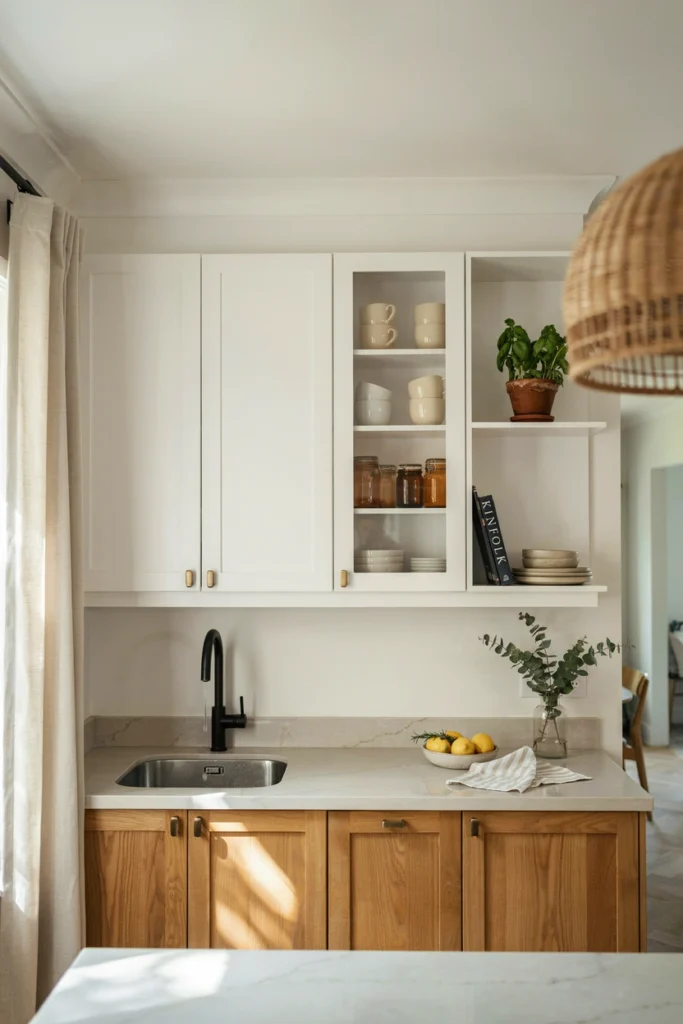
3. Oak Open Shelving
Two or three thick oak shelves — 4cm minimum, not the flimsy 2cm boards — bring timber into a kitchen without committing to full oak cabinetry. The thickness is the whole point: chunky shelves read as crafted, thin ones read as flat-pack.
Support them properly. Oak is heavy, and loaded oak shelves are heavier: use concealed steel brackets rated for the span, fixed into studs or solid wall. A 120cm shelf needs three brackets, not two, or it will bow within two years under a row of plates.
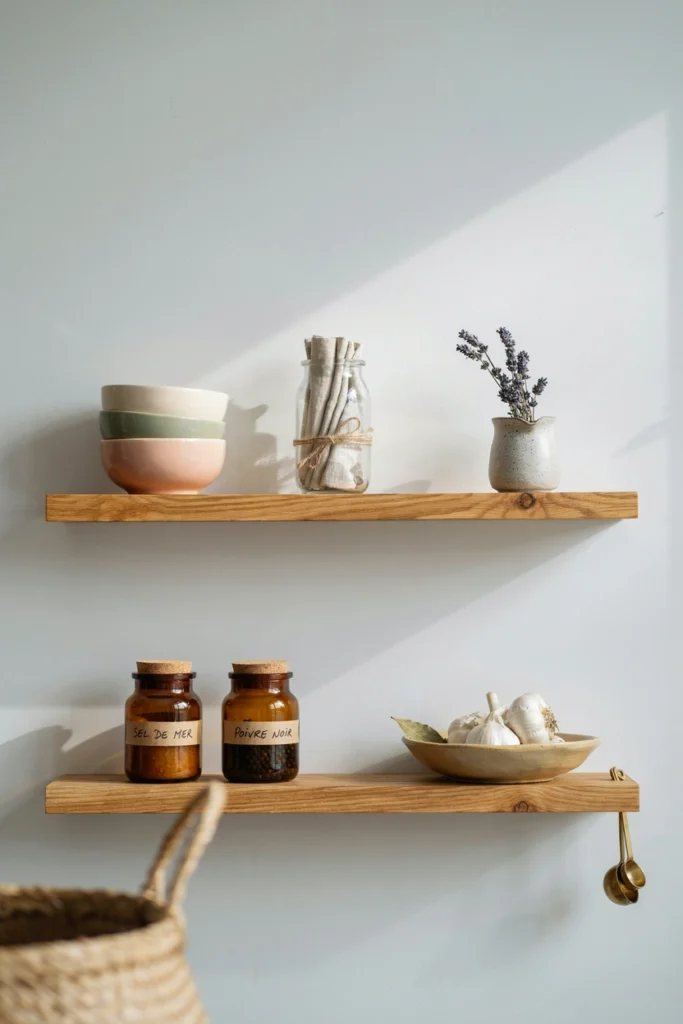
4. Oak Island with Contrasting Countertop
The island is where oak earns its keep — it’s the piece everyone touches, leans on, and gathers around. An oak island base with a pale stone or quartz top is the combination I specify most: warm timber below, cool practical stone above, and the contrast makes both materials look better.
Size it for humans, not photos. An island needs 90cm clearance on all working sides (120cm if two people cook), and seating overhang needs 30cm of knee space. An island that’s too big for the room is worse than no island at all — it turns a kitchen into an obstacle course.
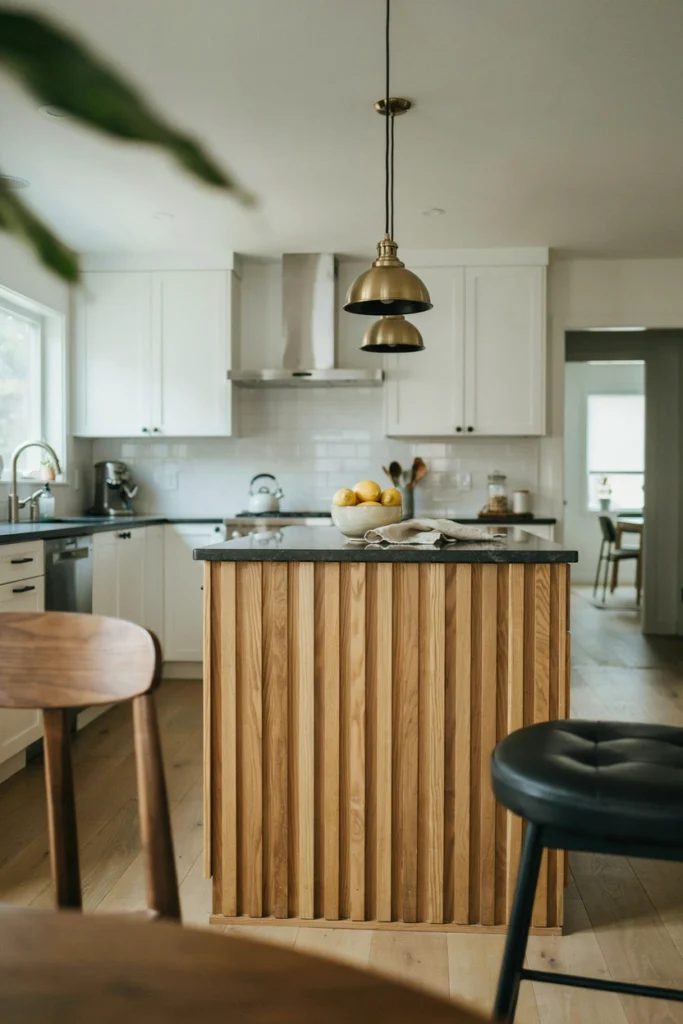
5. Handleless Oak Cabinets
Handleless oak is the modernist’s timber kitchen — all grain, no interruption. It works because oak’s figure is interesting enough to carry a flat front; a plain material would look blank. The J-pull rail, cut as a 45-degree chamfer along the top of each door, keeps the silhouette clean while giving fingers a proper grip.
Choose your oak carefully here: handleless fronts show every inch of grain, so book-matched or consistently grained doors matter. Mixed wild grain across flat fronts looks busy rather than calm. Ask your supplier for “select” grade with consistent figure for handleless runs.
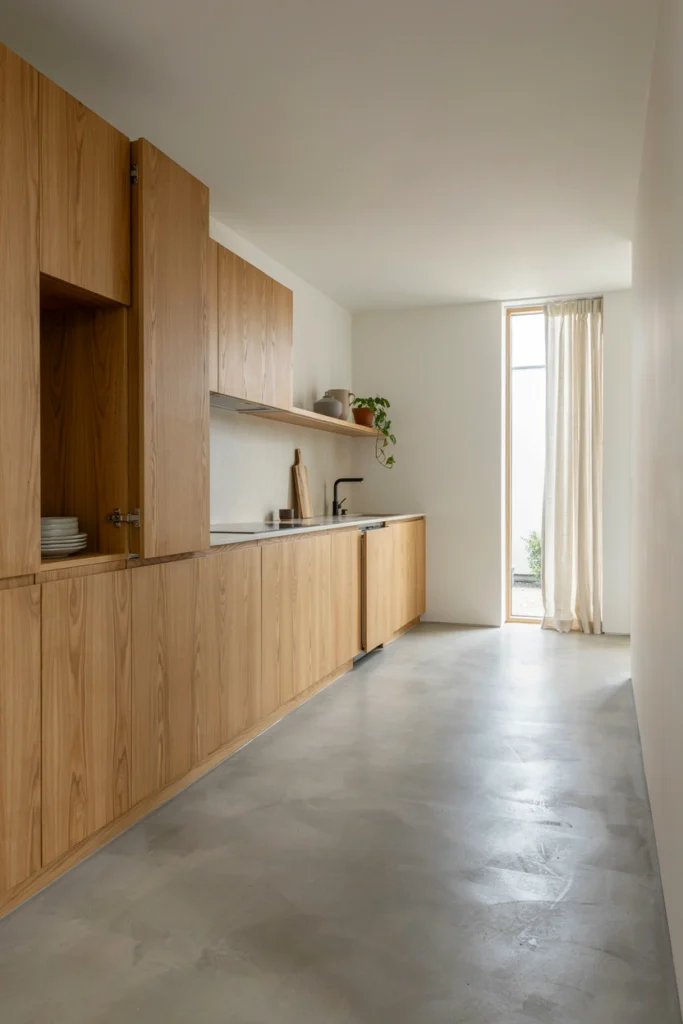
6. Smoked or Dark Oak Finish
Smoked oak — fumed with ammonia to darken the tannins — gives you the depth of walnut with oak’s grain character, at oak’s price. It’s the sophisticated dark wood: rich without the purple cast cheap dark stains get, and it hides dust and fingerprints better than any pale finish.
It needs light to breathe. Smoked oak in a dark kitchen needs warm under-cabinet lighting and a pale worktop, or it absorbs the room. In a bright room, though, it’s extraordinary — the grain seems to move as the light changes through the day.

7. Oak Veneer Cabinets on a Budget
Here’s the honest truth about veneer: a good oak veneer on stable MDF is more dimensionally stable than solid oak, won’t crack or warp with central heating, and costs a third of the price. The snobbery about veneer is twenty years out of date.
The difference between good and bad veneer is the substrate and the edge. Good veneer is 0.6mm+ thick on moisture-resistant MDF with solid oak lippings on the door edges — the edges are what you touch, and solid lippings feel like solid doors. Bad veneer is paper-thin on chipboard with foil edges that peel in steam. Ask what’s underneath before you fall for the surface.
The contrast gives the space a layered, considered look that feels more custom than it actually is. It’s a great option for anyone working with a mid-range budget who wants a result that looks far more expensive than it actually is — spend the saving on the worktop and the fitting, which is where budget kitchens are really won or lost.
8. Oak and Stone Combination
Oak and stone is the oldest partnership in kitchen design — timber and rock, warm and cool, soft and hard. A honed limestone or slate worktop on oak cabinets has a timelessness that manufactured materials chase and never quite catch.
Maintain it honestly: natural stone needs sealing annually and will patina — etch, stain slightly, wear at the edges. If that bothers you, choose a honed quartz that mimics stone; if it delights you, choose the real thing and let it record twenty years of family dinners.
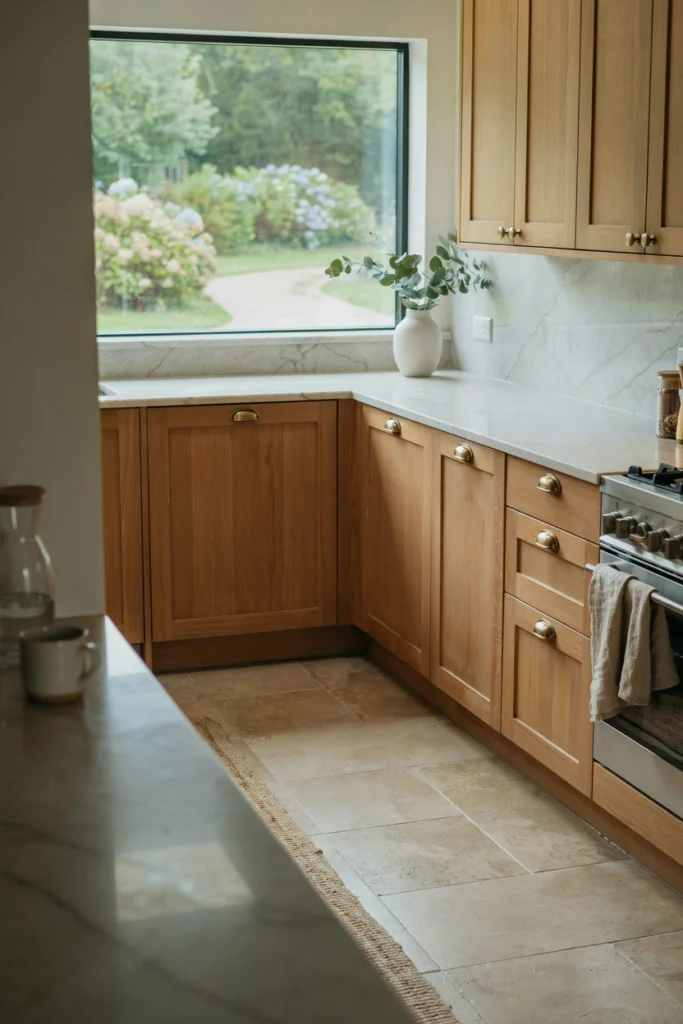
9. Oak Breakfast Bar
A breakfast bar is the most-used seat in most houses, so the oak needs to be the hard-wearing kind: 40mm thick, oiled, and ready for hot mugs, homework, and laptop heat. Thin timber on a breakfast bar looks mean within a year.
Oil it, don’t varnish it. Danish oil or hardwax oil lets you sand out a stain and re-oil the spot invisibly; varnish chips and then the whole top needs stripping. Re-oil once a year — a Sunday morning job — and the bar will outlive the kitchen around it.
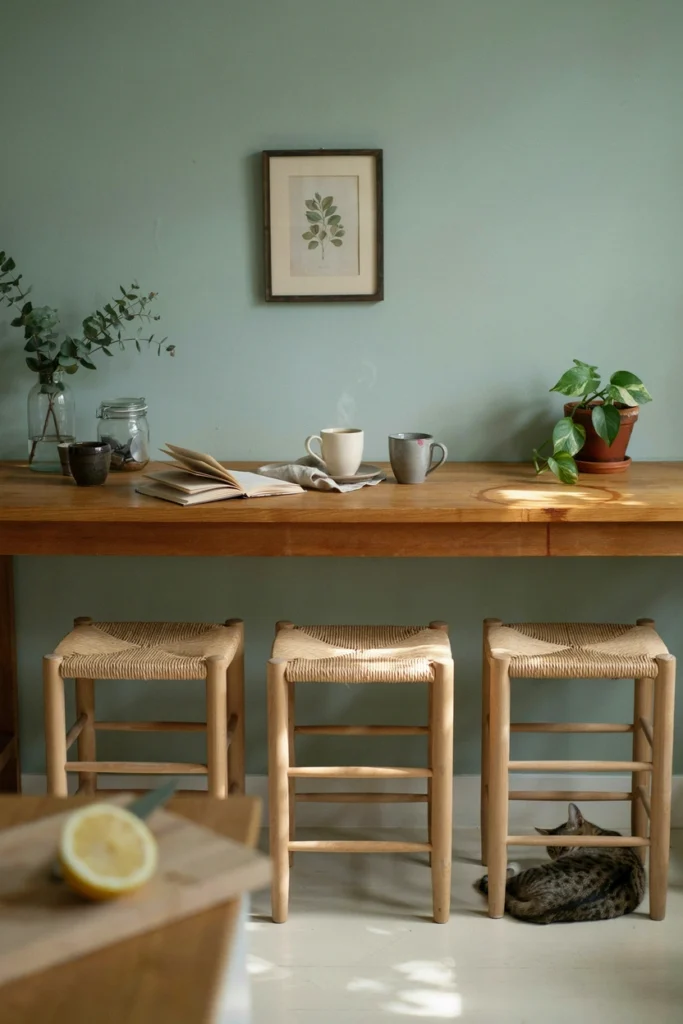
10. Shaker Style Oak Kitchen
Oak shaker is the cabinetmaker’s signature: the five-piece door shows off the timber’s figure in the frame and panel, and the style is old enough to never date. In oak rather than painted, shaker reads as craftsmanship rather than country — a subtle but important distinction.
Look at the joints. A proper shaker door has cope-and-stick joints you can feel with a fingertip; a cheap one is a flat panel with a routed groove pretending to be a frame. The real thing costs more and lasts generations; the imitation fools nobody up close.
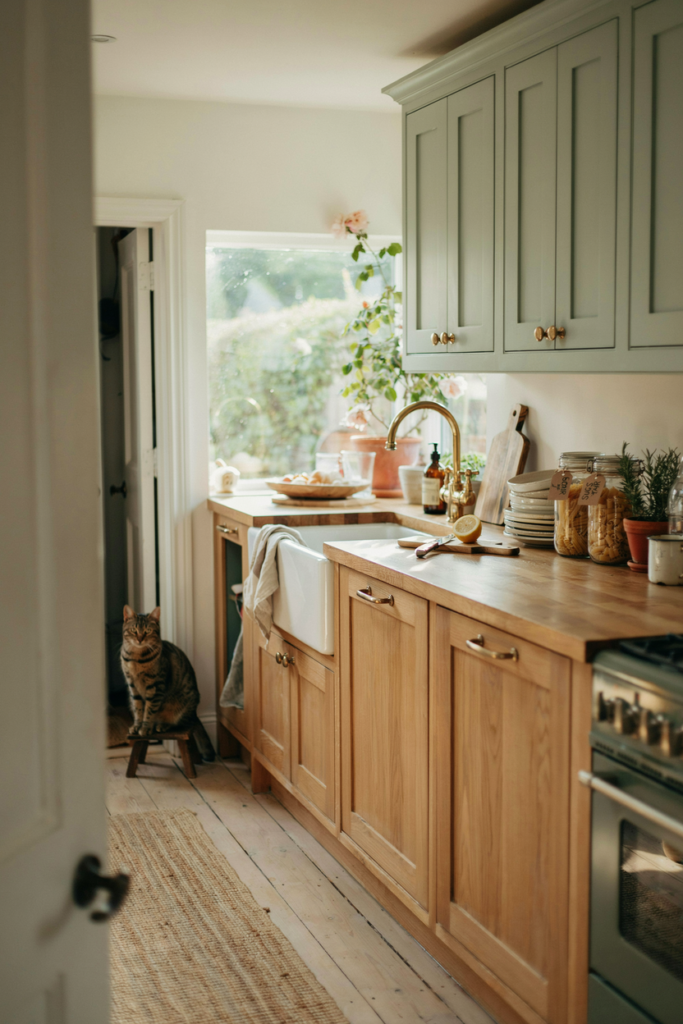
11. Oak and Black Kitchen
Oak and black is the high-contrast pairing that makes both materials look their best — the black sharpens the oak’s warmth, the oak softens the black’s severity. Black granite or quartz worktops, black handles, black tap: the dark elements should be few and confident.
Keep the black to the horizontal surfaces and hardware, and the oak to the verticals. Reversing it — black tall units with oak worktops — is heavier and harder to live with. The eye wants the darkness low, like furniture, not looming.
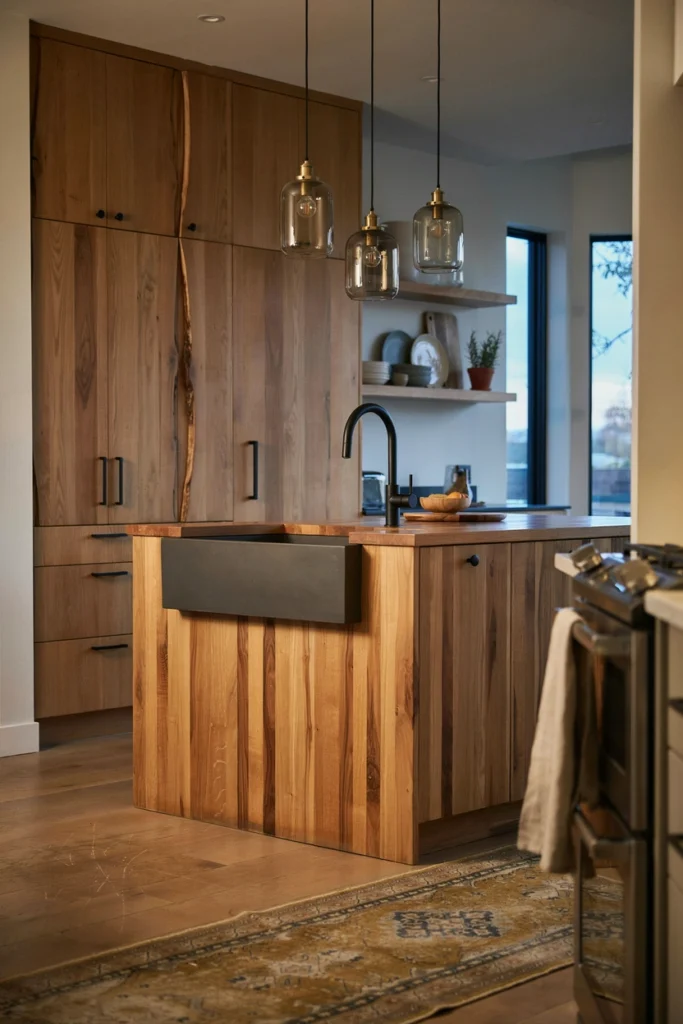
12. Mixed Wood Kitchen with Oak as the Base
Oak plays well with other timbers if you follow one rule: oak is the constant, the other wood is the accent. Oak cabinets with a walnut island, or oak floors with ash shelves — the secondary timber should appear in exactly one or two places, never scattered.
Match undertones, not species. A warm oak sits happily with warm walnut but fights cool ash. Hold samples together in the room’s light: if they look like they grew in the same forest, they’ll live in the same kitchen.
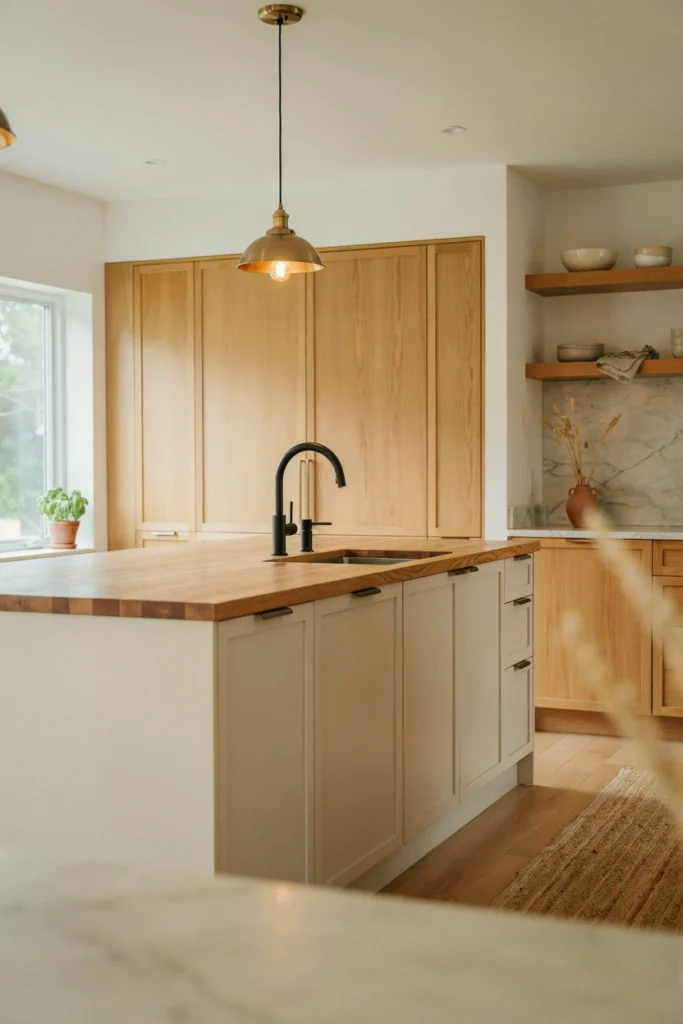
13. Oak Kitchen with Integrated Appliances
Integrated appliances behind oak doors give you the calm of uninterrupted timber with the function of a full modern kitchen. The dishwasher, fridge, and even the washing machine disappear, and the room reads as furniture rather than equipment.
Budget for the mechanisms: integrated appliances need proper door-fixing kits and ventilation gaps, and the doors add weight that needs heavier hinges. A standard hinge on an integrated fridge door will sag within a year. Specify the appliance manufacturer’s own kits — the generic ones never fit quite right.
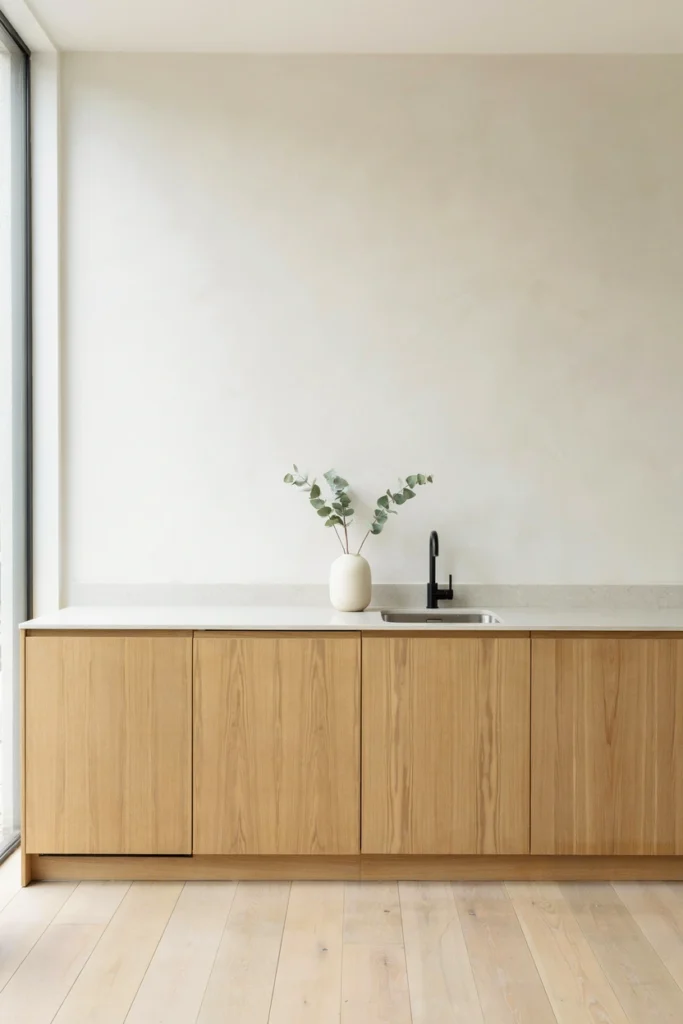
14. Oak Flooring Matching the Cabinets
Oak floor plus oak cabinets can be magnificent or monotonous, and the difference is tone separation. The floor should be at least two shades different from the cabinetry — lighter floor with mid-tone cabinets, or dark floor with pale oak units. Identical tones merge into one overwhelming mass of wood.
Run the floorboards toward the window, not across it — boards running into the light look longer and show less dirt in the joints. And choose a finish you can live with: oiled floors are beautiful and need annual attention; lacquered floors are tougher and look it.
15. Painted Oak Kitchen
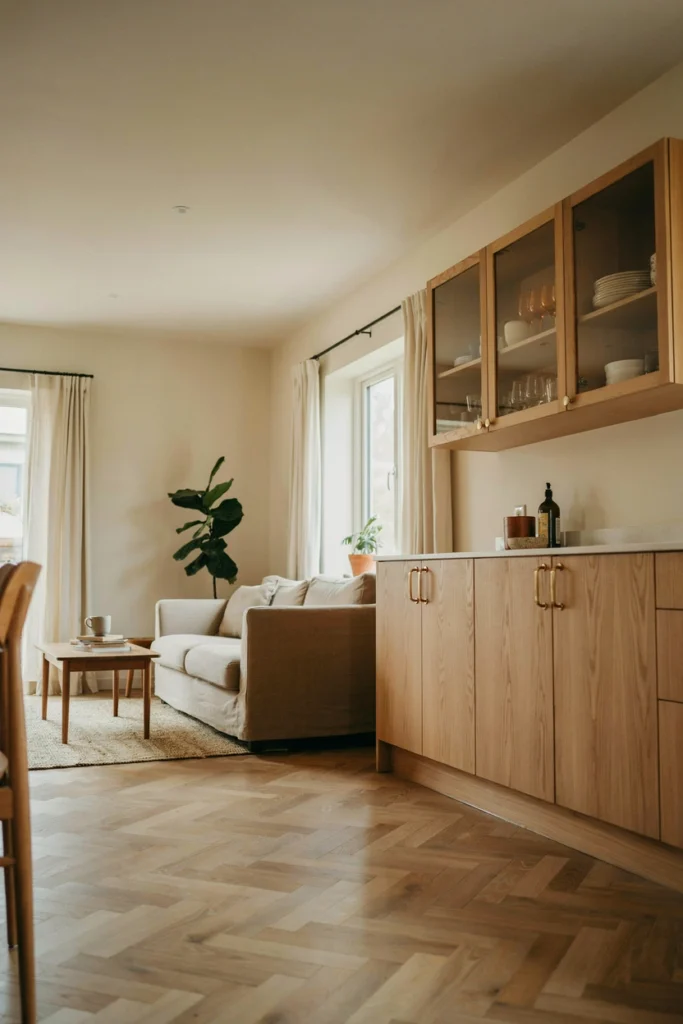
Painting oak sounds like sacrilege until you see a fifteen-year-old oak kitchen refreshed in deep green or navy for a tenth of replacement cost. Oak takes paint beautifully — the grain shows through just enough to prove it’s real timber underneath.
Prep is everything: degrease thoroughly (kitchens accumulate invisible grease that rejects paint), sand to 120 grit, use a shellac-based primer to block tannin bleed — oak tannins will stain through ordinary primer in yellow patches — then two coats of proper furniture paint. Skip the shellac primer and you’ll be repainting within the year.
16. Oak and Terrazzo Kitchen
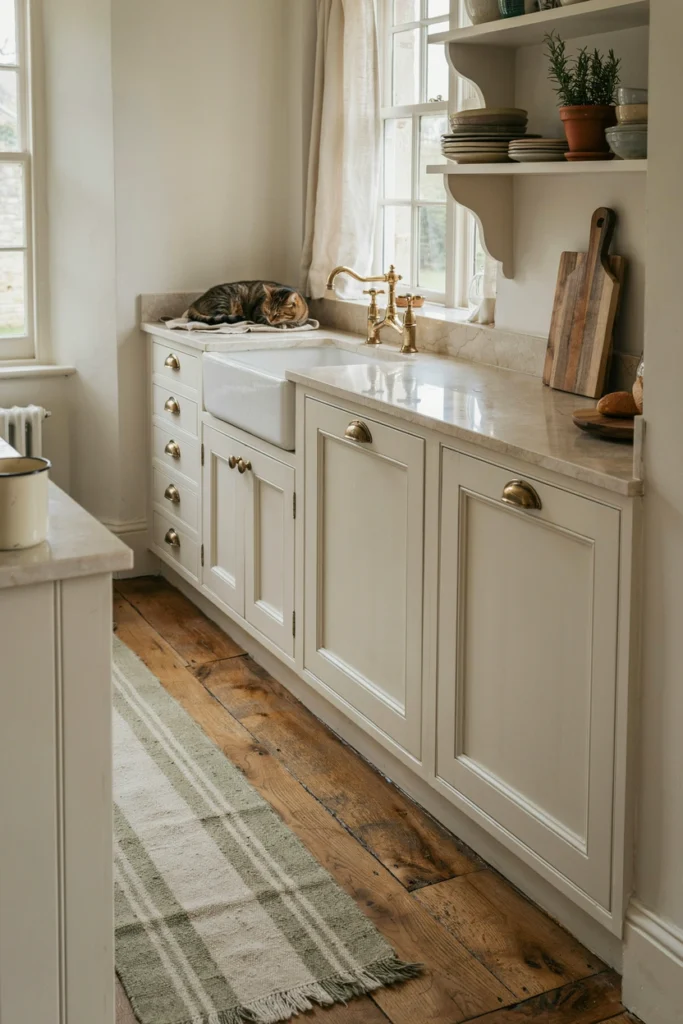
Terrazzo’s confetti of stone chips against oak’s calm grain is one of the great modern pairings — playful and grounded at once. It works as a worktop, a splashback, or flooring; pick one surface, because terrazzo on all three is a circus.
Real terrazzo (cement or resin-bound marble chips) is poured and polished — expensive and permanent. Porcelain terrazzo-effect tiles give you 90% of the look at a fraction of the cost and none of the sealing. For a splashback, the porcelain is the sane choice every time.
17. Rustic Oak with Exposed Brick
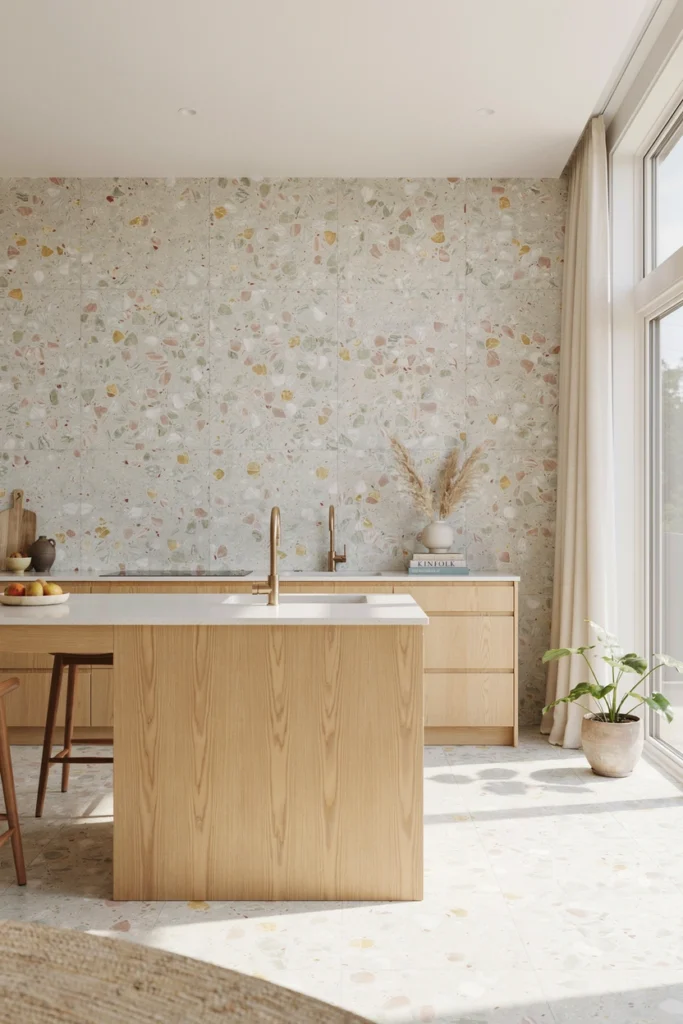
Rustic oak — visible knots, rough-sawn texture — with exposed brick is the countryside kitchen archetype, and it works because both materials are honest about what they are. No pretending, no polish, just timber and clay doing what they’ve done for centuries.
Seal the brick with matte masonry sealer before you cook a single meal — unsealed brick absorbs grease permanently and there’s no cleaning it afterward. And choose your oak grade honestly: “rustic” grade is cheaper because of the knots, not despite them. That’s the point.

18. Minimalist Scandinavian Oak Kitchen
Scandinavian oak is pale, quiet, and ruthlessly edited — the timber equivalent of a deep breath. Pale oak or white-oiled finishes keep the wood’s warmth while reflecting maximum light, which is exactly what the style was designed for in dark northern winters.
The discipline is in what you remove: no wall cabinets where shelves will do, no handles where a J-pull works, nothing on the worktop that isn’t used daily. Scandinavian minimalism isn’t empty — it’s edited. Every remaining object has to earn its place twice over.

Conclusion
Oak endures because it’s honest material — it ages, it marks, it tells the story of the kitchen honestly instead of pretending to be ageless. Choose the right form for your budget, finish it for your life, and pair it with restraint.
A good oak kitchen doesn’t just survive twenty years; it gets better for twenty years. Few materials can say that, and none at oak’s price.
Pro Tips
- Ask for the grade, not just the species. “Prime” oak is clear and calm; “rustic” is knotty and characterful; “select” sits between. The grade affects price more than the species does — and the look even more.
- Oil beats varnish for worktops, every time. Oiled oak can be spot-repaired invisibly; varnished oak needs full stripping when it fails. Re-oil annually and the top outlives the kitchen.
- Acclimatise solid oak before fitting. Stack it in the room for two weeks so it adjusts to your home’s humidity. Fitting oak straight from a cold warehouse is how you get gaps by spring.
- Test finishes on offcuts in your light. Oil, hardwax oil, and lacquer each change oak’s colour differently — oil warms it, lacquer can cool it. Never choose a finish from a brochure photo.
FAQs
Is solid oak or oak veneer better for kitchen cabinets?
For doors and visible fronts in a centrally heated home, quality veneer on stable MDF is often the better engineering choice — it won’t warp or crack with humidity swings. Solid oak wins for worktops, shelves, and anywhere you want repairability. The honest answer: veneer for the doors, solid for the surfaces you touch.
How do you maintain an oak kitchen worktop?
Wipe spills promptly, use boards for chopping and trivets for hot pans, and re-oil once or twice a year with Danish oil or hardwax oil. Sand out any stains with fine paper before re-oiling. A well-maintained oak top lasts decades; a neglected one needs replacing in five years.
Does oak go with grey?
Warm oak pairs beautifully with warm greys (greige); it fights cool blue-greys. The undertone rule decides everything — hold samples together in your light. When in doubt, oak with white, black, or navy is unfailable; oak with grey needs the undertone check.
Will an oak kitchen date?
Oak has been in continuous use for centuries and has never had a true “dated” period — unlike, say, 1970s pine or 1990s maple. What dates is the styling around it (handles, worktops, tiles), not the timber. Keep the surrounding choices simple and the oak will outlast every trend.

HowDecor is a home decor blog sharing simple, practical decorating ideas for everyday spaces. We believe a beautiful home should feel comfortable, personal, and full of warmth — and that great style does not require a huge budget. Our goal is to inspire readers to create spaces that feel peaceful, welcoming, and truly their own — one room at a time.