There’s a shelf in my kitchen that guests always photograph, and it’s nothing special — a few white canisters, a chipped jug, some dried lavender. But it took me three years to get it right, because farmhouse shelves aren’t decorated. They’re accumulated. The difference is everything.
Modern farmhouse style, at its best, is restraint wearing work boots: the warmth of old things without the clutter of a museum. These twenty ideas are about building shelves that look gathered over time — even if you did it all on a Saturday — and that still work as hard as your kitchen needs them to, leaving behind something that feels both lived-in and quietly beautiful.
The golden rule before you start: every shelf needs one job. The shelf by the cooker holds cooking things. The shelf by the window holds pretty things. A shelf with no job becomes a shelf of clutter within a month — I’ve watched it happen in a hundred kitchens.
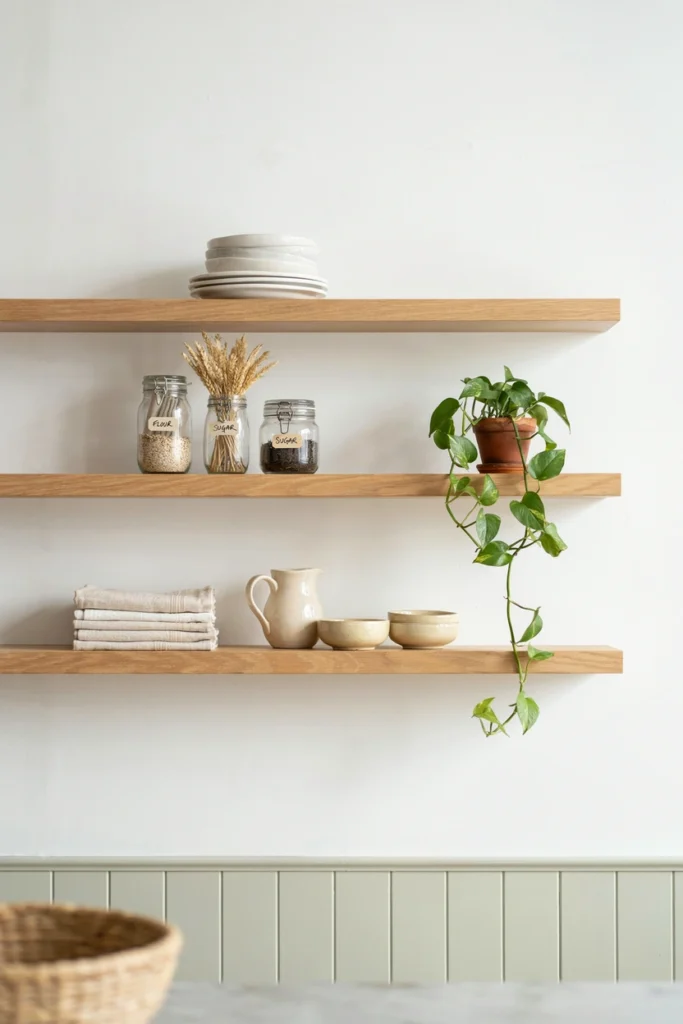
1. White Ceramic Canisters as Anchor Pieces
Every good shelf starts with anchors — the big, solid pieces everything else orbits around. White ceramic canisters are the classic anchor because they’re substantial, useful, and visually quiet. Three canisters in graduated sizes, grouped tight on the left or right third of the shelf, give the eye a place to land.
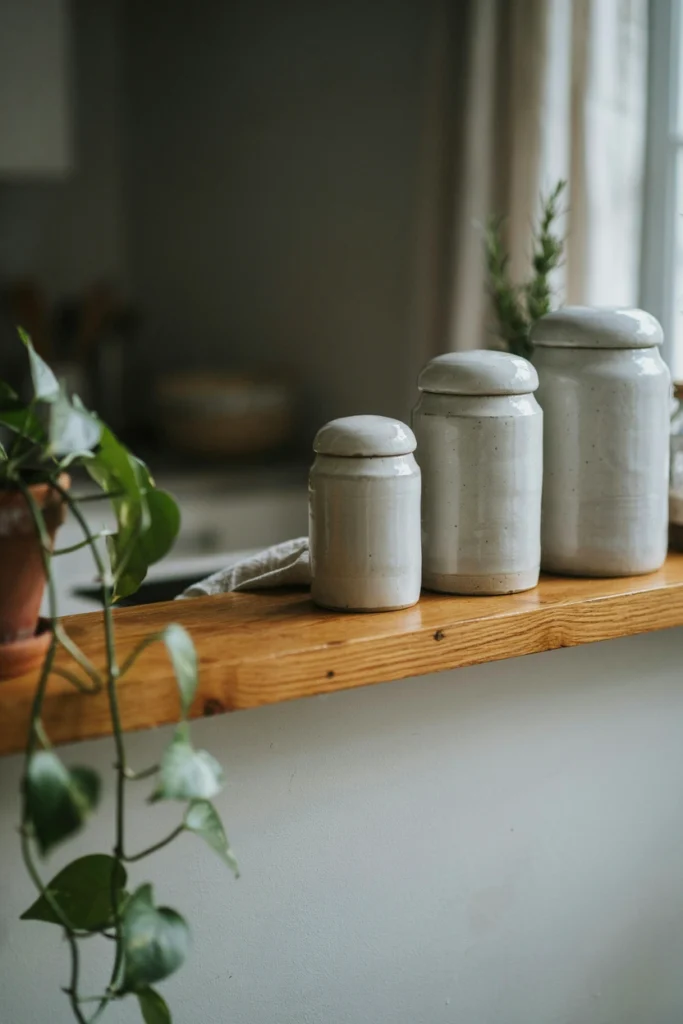
2. Vintage-Style Glass Jars for Everyday Storage
Fill glass jars with the beautiful dry goods — lentils, pasta, coffee beans, sea salt — and they become decoration that earns its shelf space. The trick is filling them fully; a half-empty jar looks neglected, a full one looks abundant. Keep the jars you actually open within arm’s reach and the display-only ones higher up.
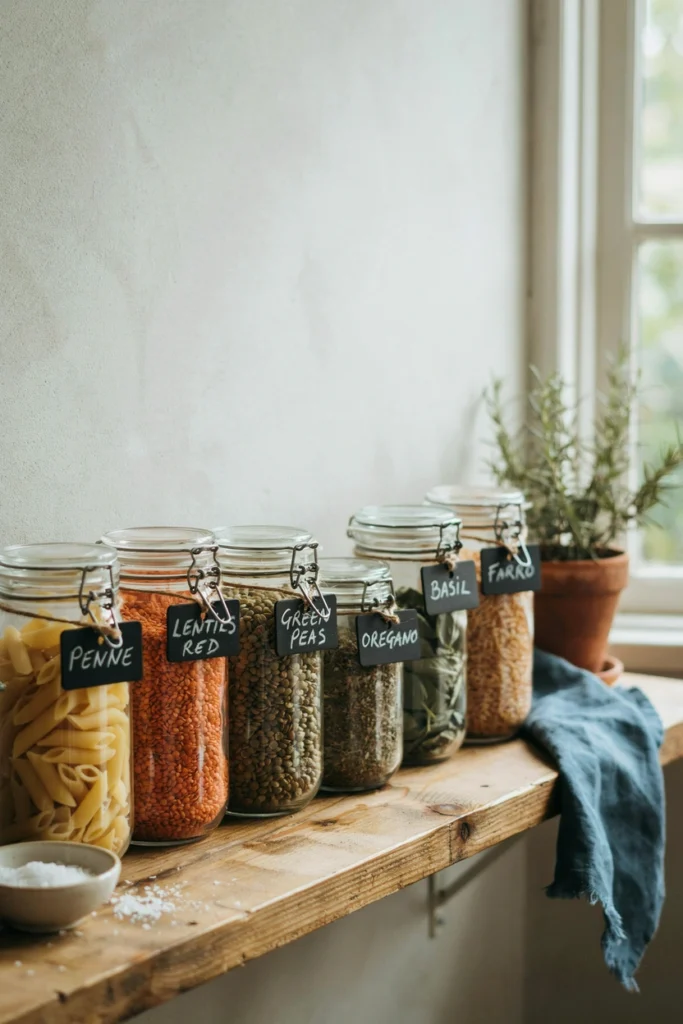
3. A Wooden Cutting Board as Shelf Art
Lean a beautiful cutting board against the wall at the back of the shelf and it reads as art with a past. End-grain boards with visible knife marks are better than pristine ones — the marks are the story. Prop it at a slight angle, overlapping a smaller board in front, and you’ve built depth in ten seconds.
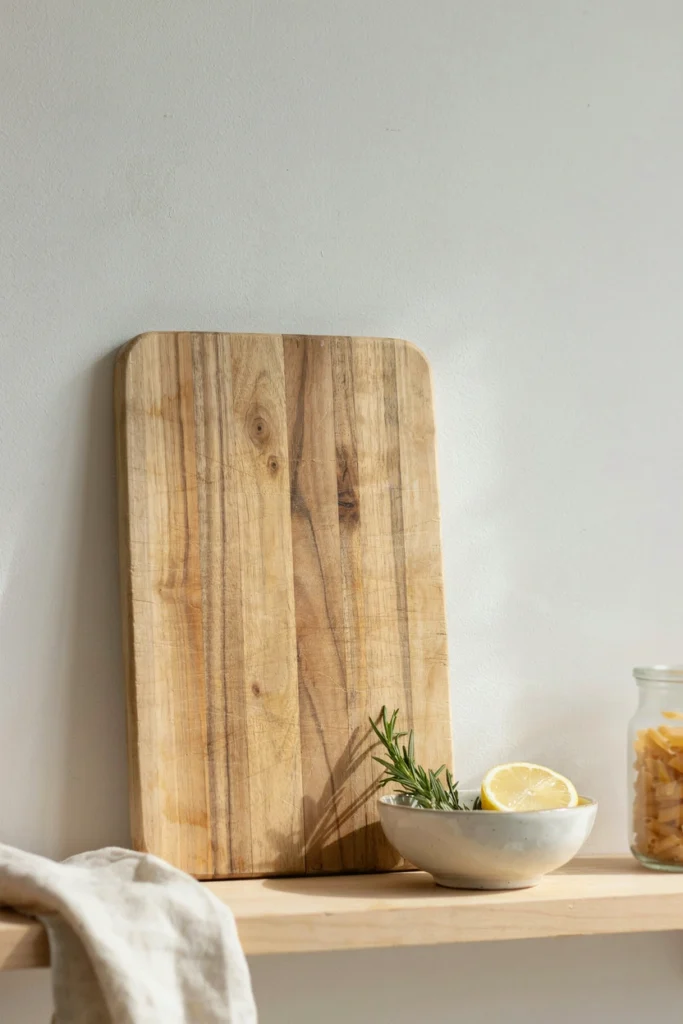
4. Stacked Linen Dish Towels for Texture and Color
A neat stack of folded linen towels is the cheapest styling trick in this whole list. The soft folds break up all the hard ceramics and glass, and you can change the entire colour mood of the shelf by swapping the top towel. Keep the stack to four or five — more looks like a shop display.
5. Fresh or Dried Herb Bundles
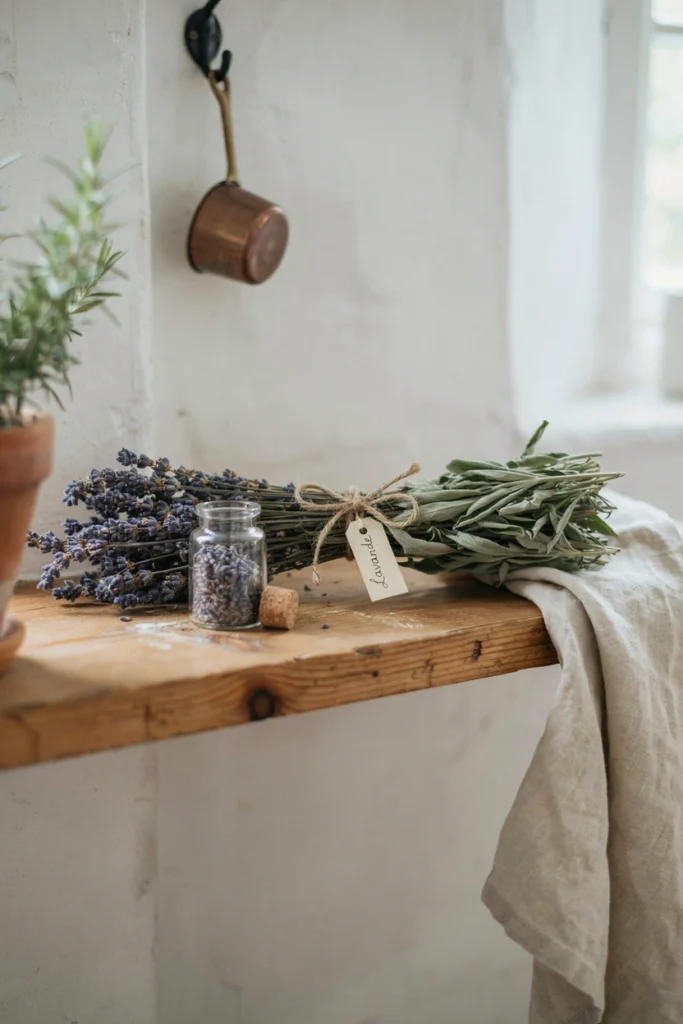
Nothing brings a farmhouse kitchen shelf to life quite like plants or botanicals. Fresh herb pots work beautifully if your shelf gets enough light, but dried herb bundles tied with simple twine are just as effective and require no maintenance at all. Lavender, rosemary, eucalyptus, and dried wheat are all natural choices that smell wonderful and photograph even better. Hang them from a small hook on the shelf above or lay a bundle horizontally against the back wall for a relaxed, organic touch.
6. Ironstone or Vintage-Style Serving Pieces
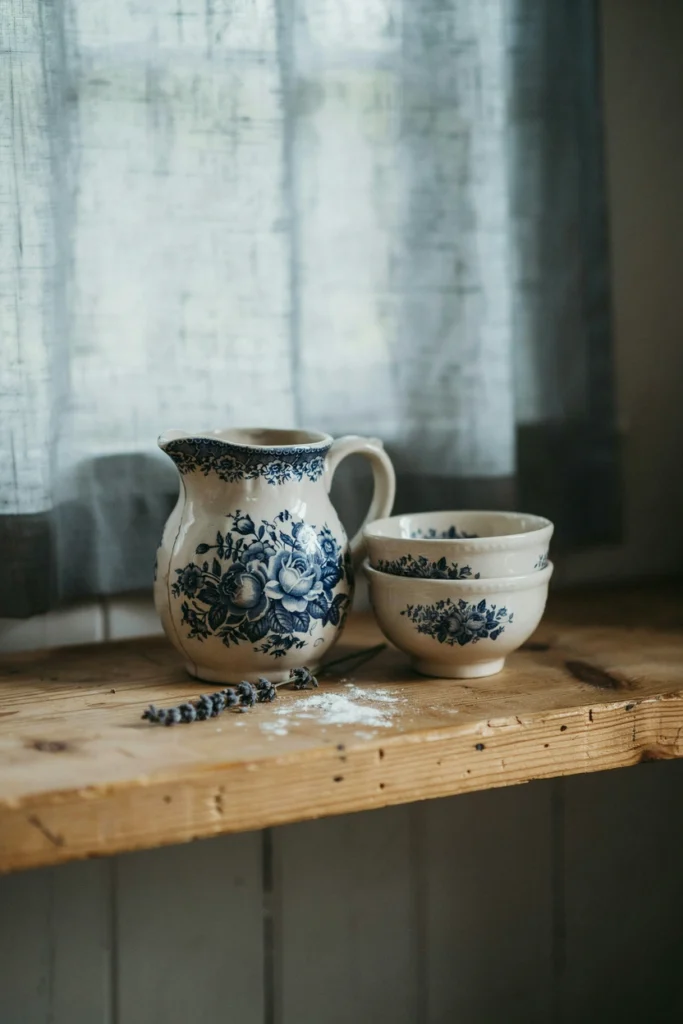
One big ironstone platter or a stack of vintage-style bowls adds the weight of history to a shelf. Ironstone’s appeal is its imperfection — the crazing, the uneven glaze, the little chips. Buy the pieces with flaws; the perfect reproductions look like what they are. A flea market platter for £8 will out-charm a new one at ten times the price.
7. A Small Potted Plant or Succulent
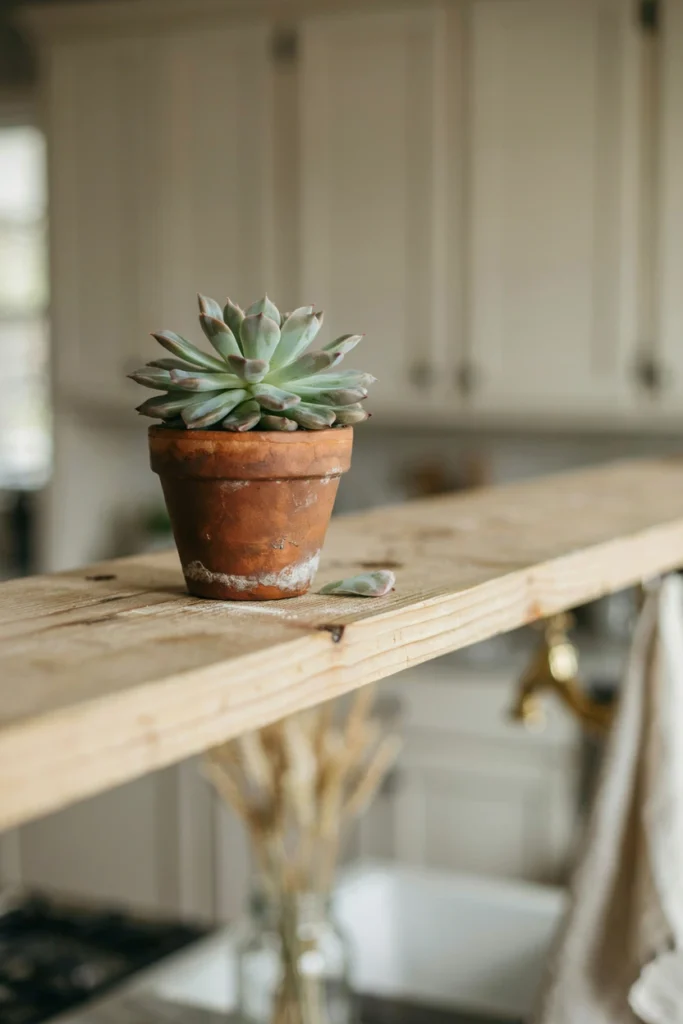
A living thing on the shelf changes everything — it moves slightly in drafts, it grows, it needs you. Small succulents in terracotta pots are the low-maintenance choice; a trailing pothos softens the shelf’s hard lines beautifully. Just remember you’ll need to reach it to water, so don’t put the thirsty ones on the highest shelf.
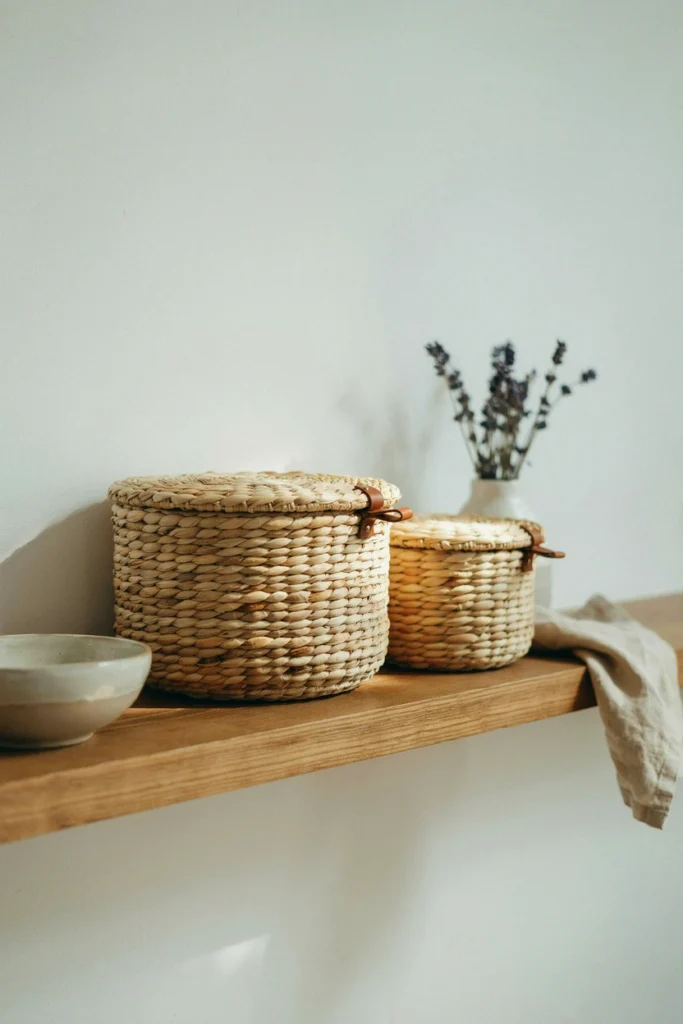
8. Woven Baskets for Hidden Storage
Every styled shelf needs somewhere to hide the unphotogenic necessities — the spare batteries, the takeaway menus, the bits of string. A lidded seagrass or willow basket swallows them all and looks like it belongs. Size it to fill its section of shelf fully; a small basket rattling around in a big space looks lost.
9. A Chalkboard or Small Framed Sign
One sign, maximum. A small chalkboard with the week’s menu or a framed print with a single line of text adds personality — two signs start reading as a gift shop. Keep the frame simple wood or black; the words are the decoration, not the frame. And change the chalkboard message — a menu from March in October tells its own sad story.
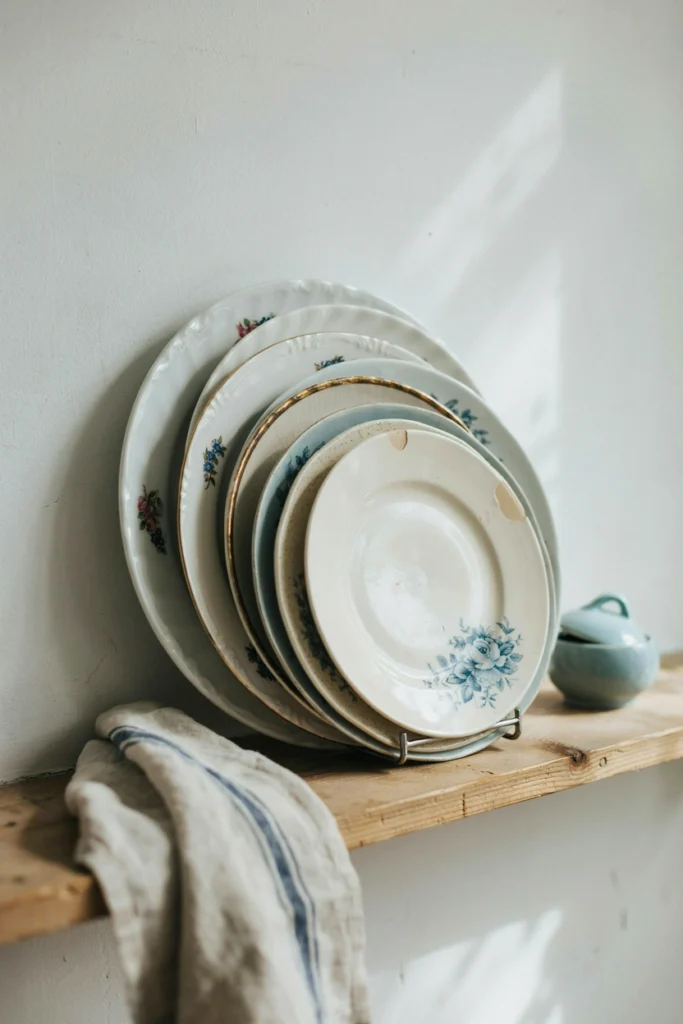
10. Stacked Vintage or Mismatched Plates
A short stack of plates in a plate rack or simply stacked flat adds height and pattern to a shelf. Mismatched is better than matched here — three different patterns in the same colour family look collected, not chaotic. Keep the stack to five or six plates; taller stacks wobble and nobody reaches for the bottom one anyway.
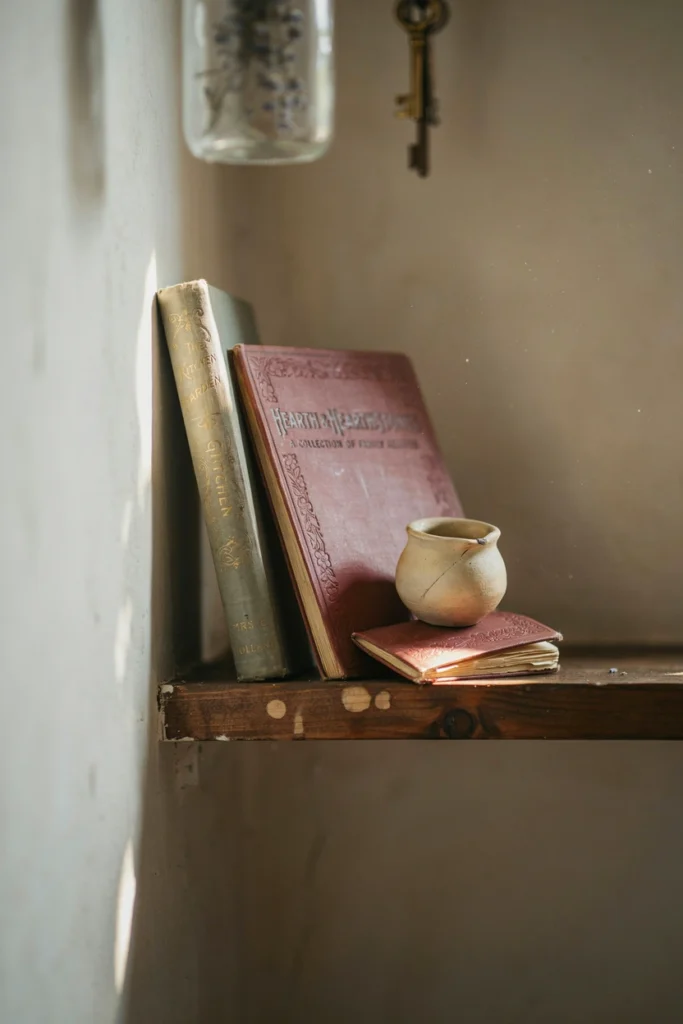
11. Open Books or a Vintage Cookbook
A cookbook propped open on a small stand — or simply stood upright between bookends — tells visitors this kitchen is used for joy, not just function. Choose one with a beautiful spine; it’ll be seen more than read. Vintage cookbooks with worn covers are ideal — they look like they’ve fed people, because they have.
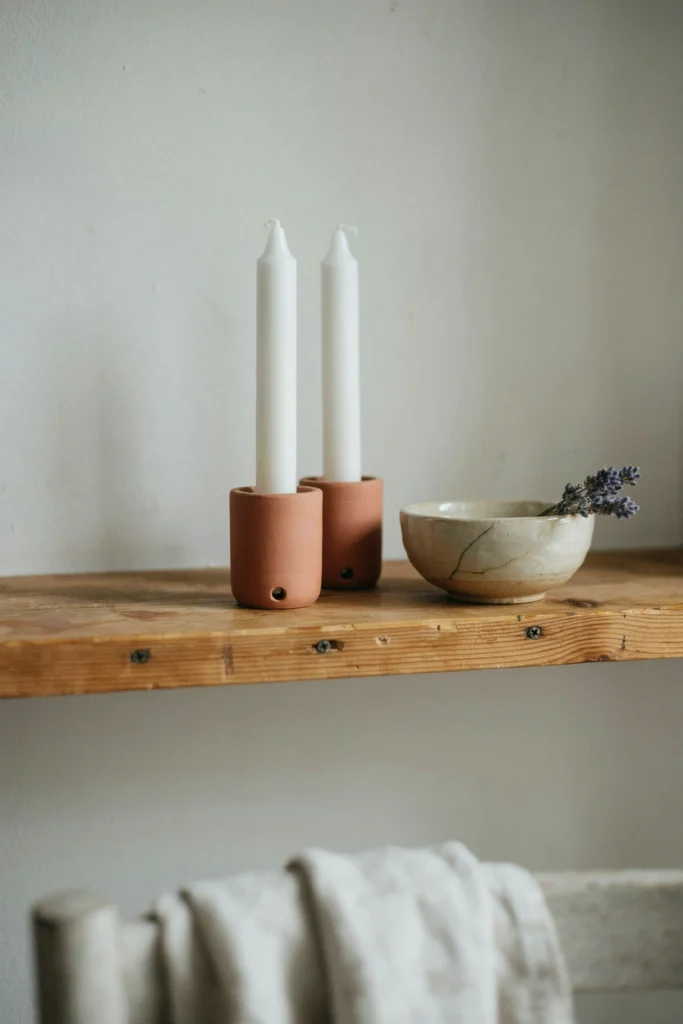
12. A Simple Candle or Two
Candles on a kitchen shelf are about the object, not the flame — you’ll rarely light them there. A pair of beeswax tapers in simple holders, or one large pillar candle, adds vertical lines and warmth. Unscented only; a scented candle next to food storage is a mistake your nose will regret.
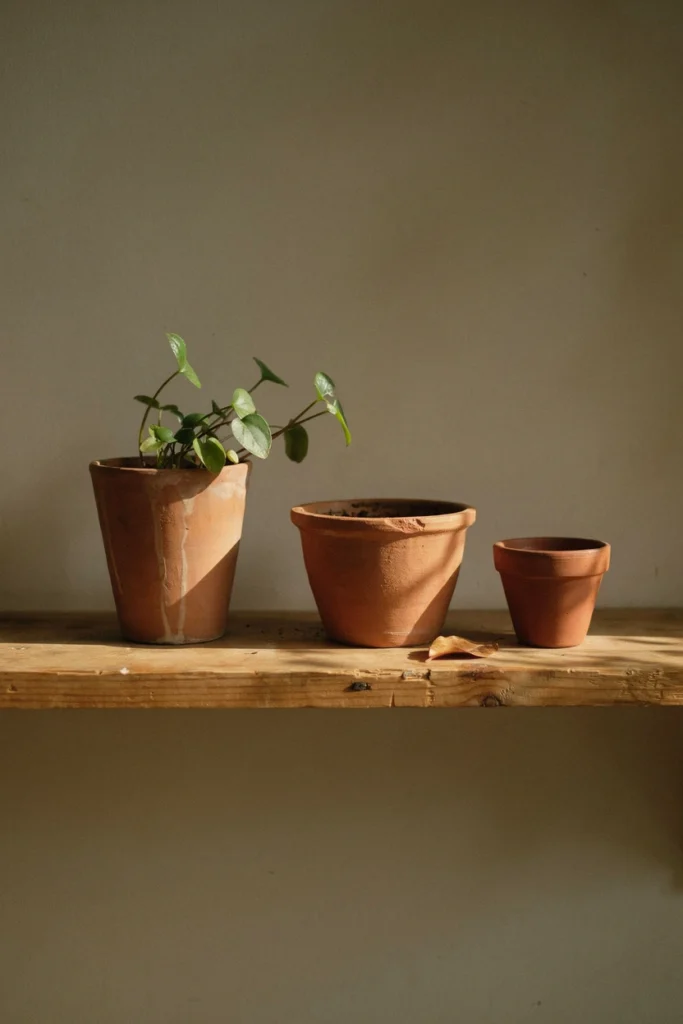
13. Terracotta Pots in Varying Sizes
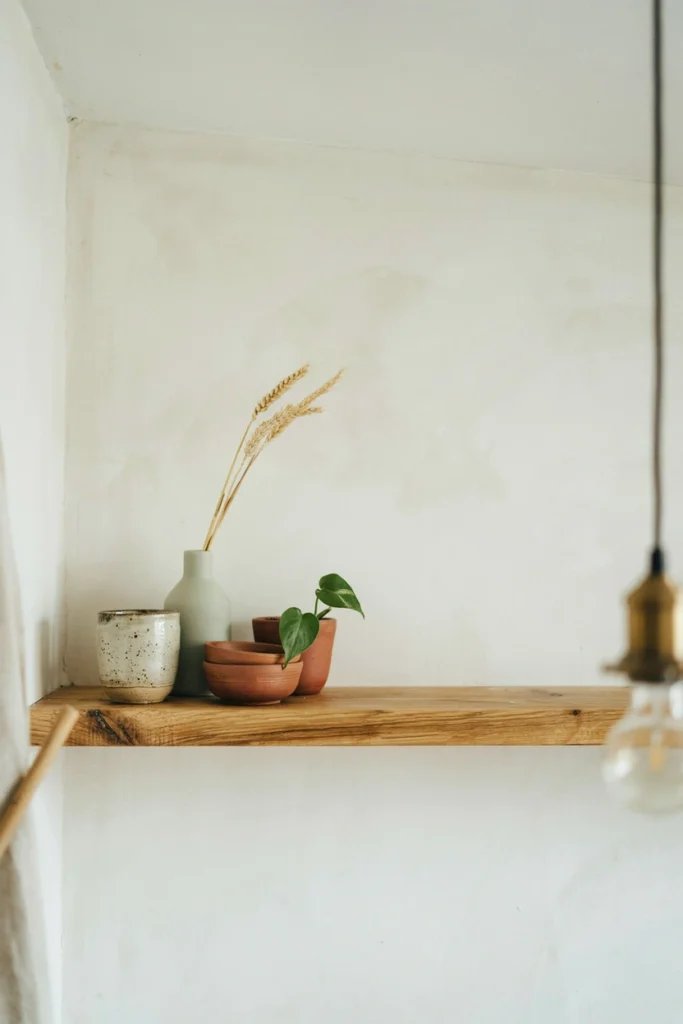
Three terracotta pots in graduated sizes, even empty, are a complete still life. The warm clay colour does something to a shelf that nothing else does — it glows against white walls and wood. Vary the heights by at least 10cm between each pot or they read as a set rather than a collection.
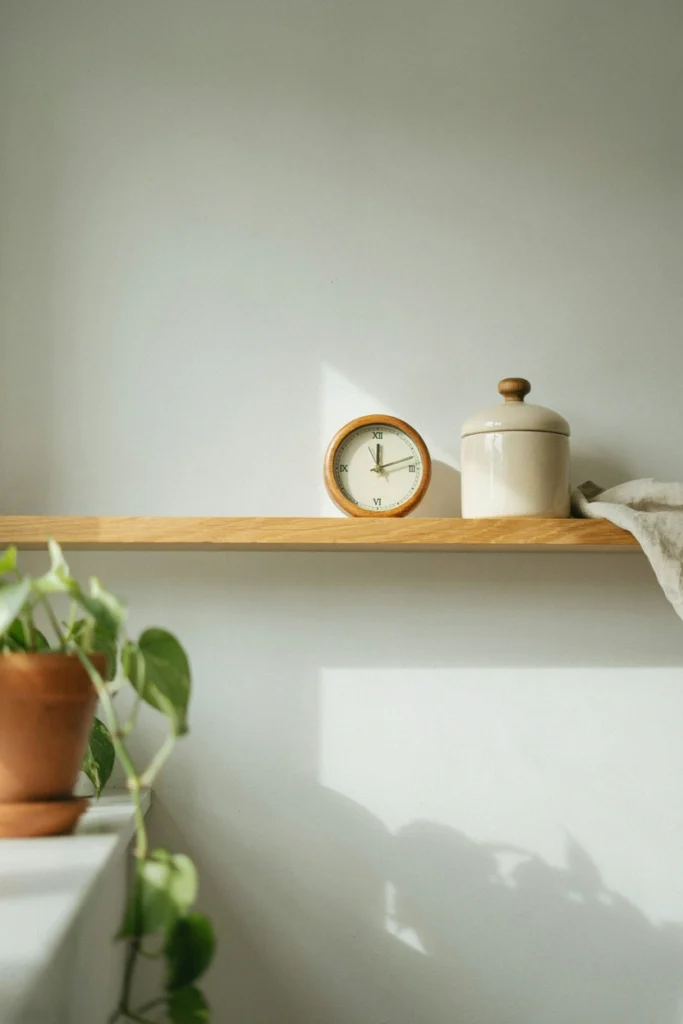
14. A Wooden Clock as a Functional Accent
A small wooden clock earns its place because it’s genuinely useful — kitchen timers live on phones now, but a glanceable clock while your hands are covered in flour is a small daily mercy. Choose one with a quiet movement; a ticking clock in a kitchen becomes maddening by the second day.
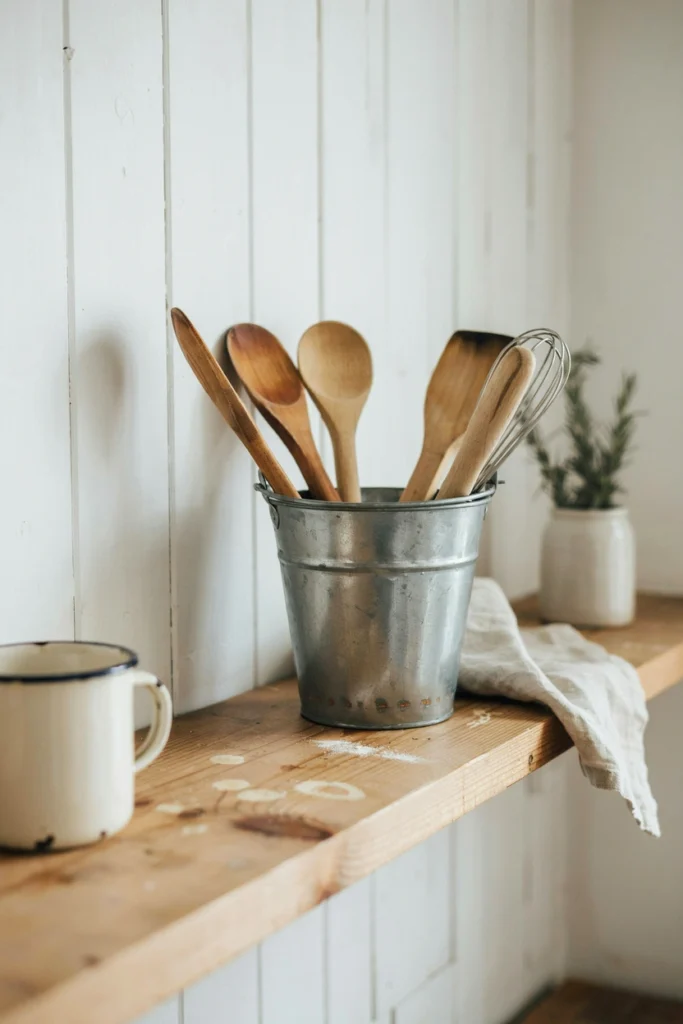
15. Galvanized Metal Containers
Galvanized buckets and bins bring the farm into the farmhouse — literally, they were farm tools first. Use them for utensils, for the kindling by an Aga, or for a big leafy plant. One galvanized piece per shelf is the limit; two starts looking like a hardware store display.
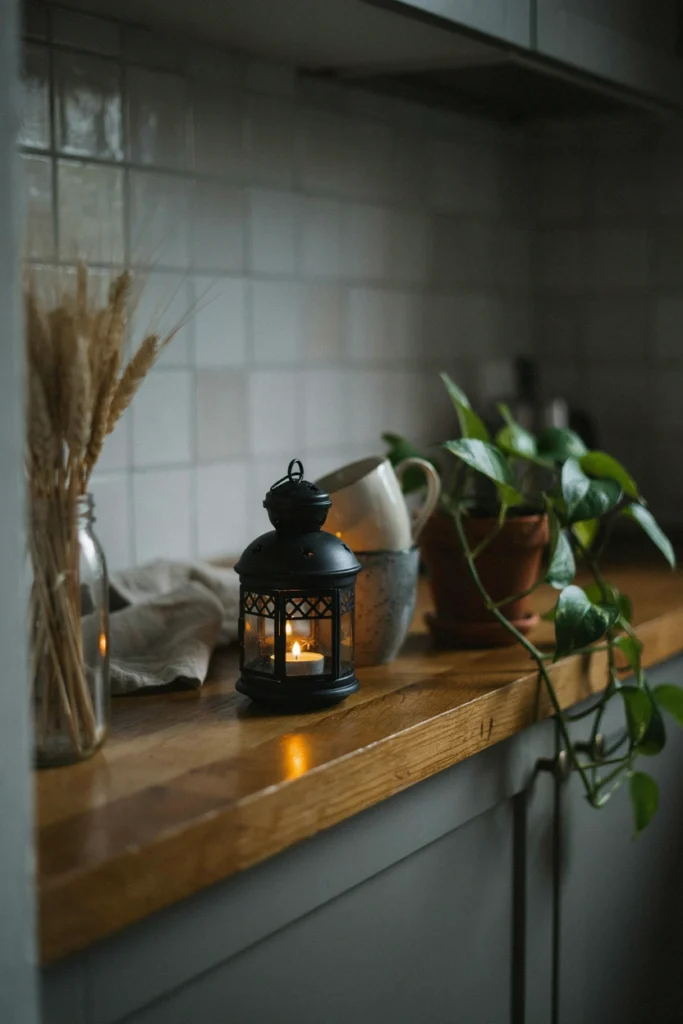
16. A Lantern-Style Candle Holder
A lantern adds architecture to a shelf — it’s a small building among the objects, and the eye loves that. Black metal lanterns suit modern farmhouse; aged zinc suits the rustic end. Put a battery candle inside if the shelf is high or near curtains; real flames and high shelves are a combination for the fire brigade.
17. Seasonal Touches That Rotate With the Calendar
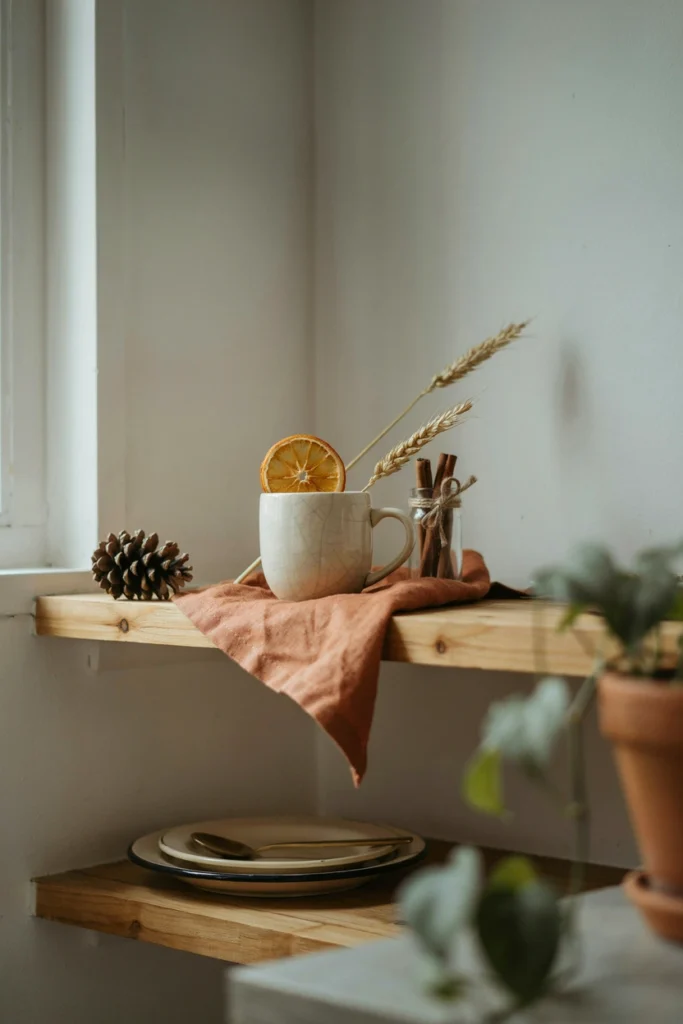
The shelves that stay beautiful year-round are the ones that change a little with the seasons. Pumpkins in October, pinecones in December, a jug of blossom in April — one seasonal swap per shelf, taking two minutes. It keeps the kitchen feeling alive and gives you a reason to actually look at your shelves four times a year.
18. A Simple Tray to Corral Small Items
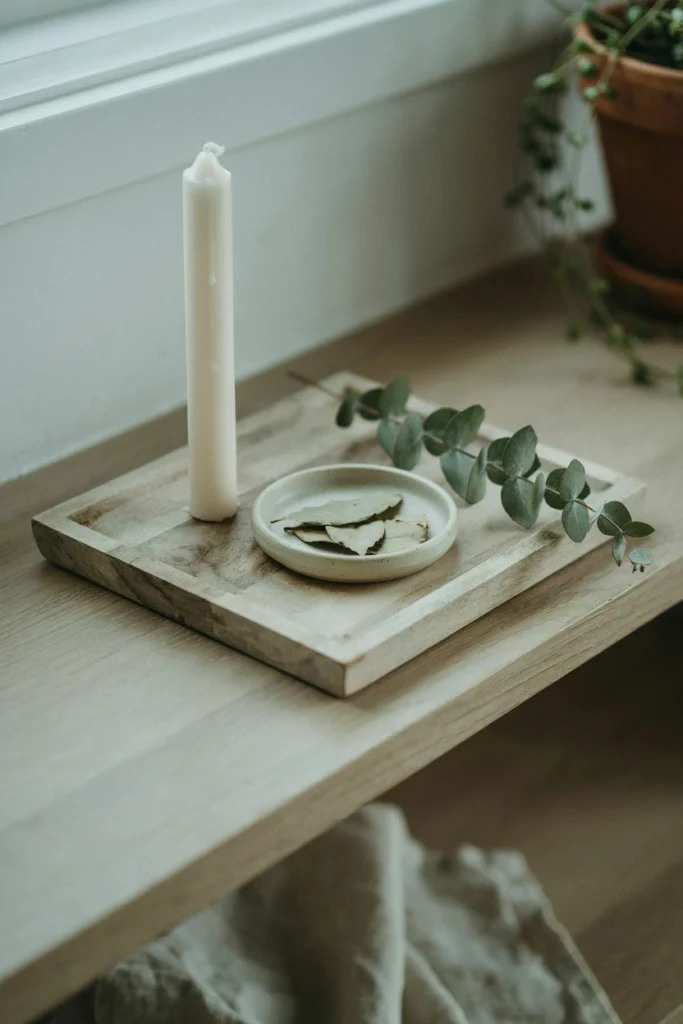
Small things scattered look like clutter; small things on a tray look like a collection. A wooden or galvanized tray groups the salt cellar, the oil bottle, the little plant into one intentional arrangement. The tray is the frame — without it, the same objects are just things on a shelf.
19. Hanging Mugs From a Simple Peg Rail
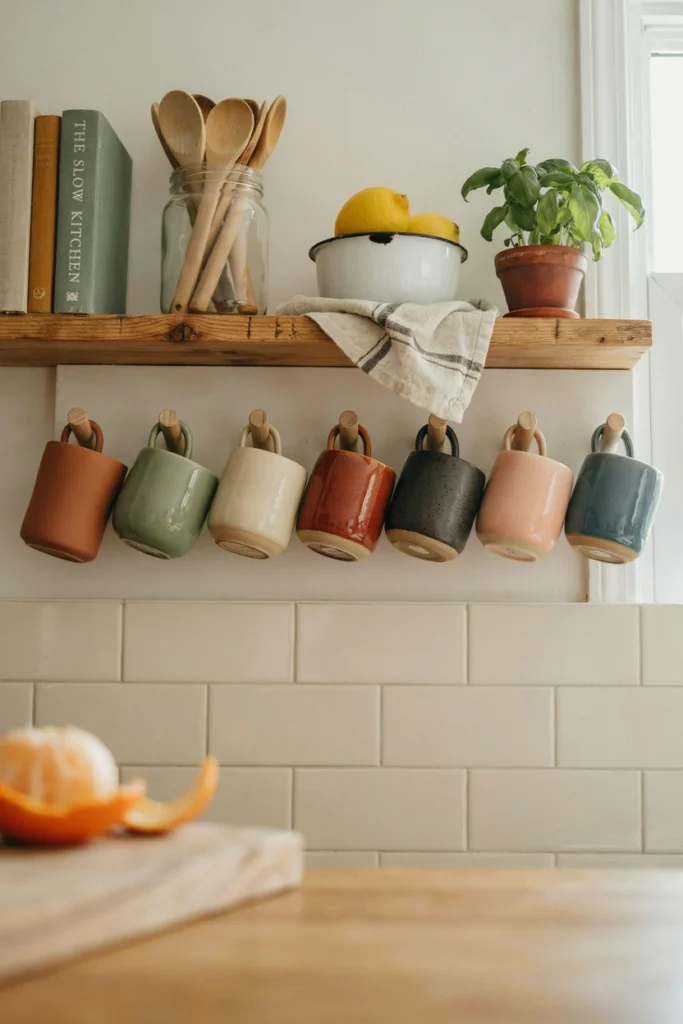
A peg rail mounted under a shelf turns dead space into storage and display at once. Hang your best mugs — the handmade ones, the ones with stories — by their handles. It keeps them visible, accessible, and off the shelf surface where they’d eat space.
Mount the rail into studs or solid masonry; a rail of mugs is heavier than it looks, and plasterboard fixings will let go dramatically one Tuesday morning. Space pegs 12–15cm apart so mugs don’t clink, and hang the rail 25cm below the shelf above for clearance.
20. Keeping One Section Intentionally Empty
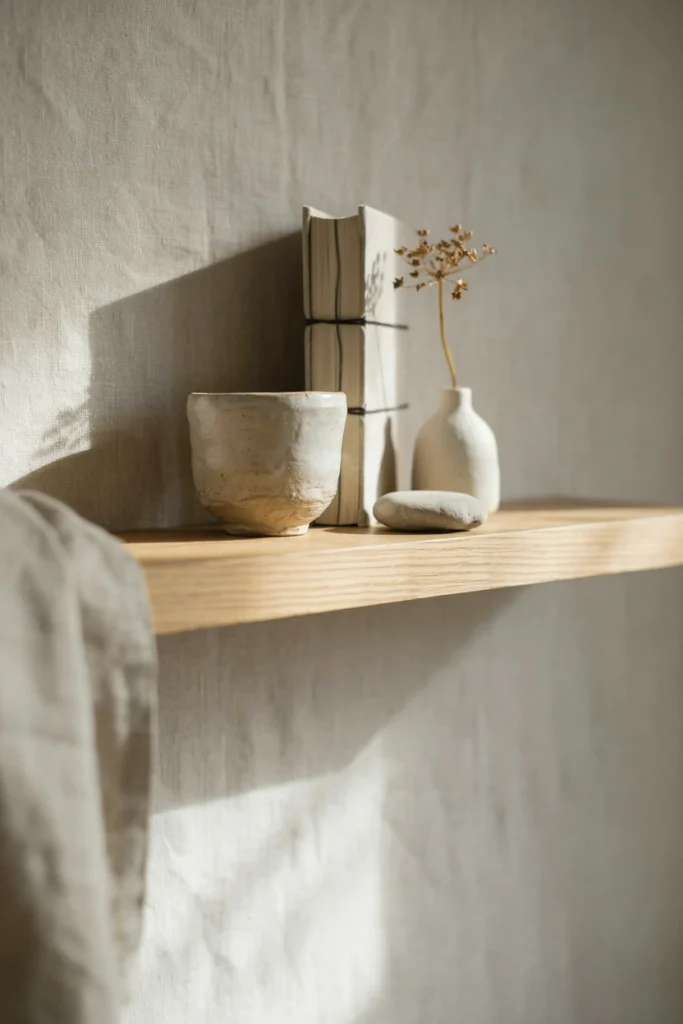
The bravest farmhouse move is negative space. Leave one section of one shelf completely empty — no object, no trailing plant, nothing. It gives the eye somewhere to rest and makes everything else on the shelf look more deliberate. Stylists call it breathing room; your grandmother called it not cluttering.
Conclusion
Farmhouse shelves work when they tell the truth about your kitchen: that it’s used, loved, and added to over time. You can’t buy that feeling in one shopping trip, but you can start it — one anchor piece, one honest object at a time.
Style them once with these ideas, then let life do the rest. The best shelf in five years will be the one with your stories on it, not the one that looks like the photo.
Pro Tips
- Follow the rule of thirds. Divide each shelf mentally into three sections and style only two. The empty third is what makes the styled two-thirds look intentional instead of crowded.
- Style in odd numbers. Three canisters, five plates, one jug — odd groupings look natural to the human eye; even groupings look like a shop display. It’s the oldest stylist trick because it works.
- Photograph the shelf to edit it. A phone photo reveals clutter your eyes have learned to ignore. If something looks out of place in the photo, move it.
- Dust on a schedule, not when you notice. Open shelves collect grease and dust fast in a kitchen. A five-minute wipe-down every two weeks keeps everything looking fresh — and keeps you honest about what’s actually earning its place.
FAQs
How do I keep open kitchen shelves from looking cluttered?
Edit ruthlessly and give everything a zone: daily items together, display items together, and nothing that doesn’t belong to one of those groups. Leave 20–30% of each shelf empty. If a shelf looks cluttered, the answer is almost always removing three things, not rearranging twenty.
What should I put on farmhouse kitchen shelves?
A mix of useful and beautiful: everyday dishes and glassware you actually reach for, plus a few decorative anchors like canisters, boards, plants, and one or two vintage pieces. If you haven’t touched it in six months and it’s not decorative, it belongs in a cupboard, not on display.
Do open shelves get very dusty and greasy?
Yes — that’s the honest trade-off. In a kitchen where you fry regularly, open shelves need wiping every week or two. Placing them away from the hob helps enormously, as does keeping displayed items minimal. Many people find the maintenance worth it for the look and accessibility.
How deep should kitchen shelves be?
25–30cm is the sweet spot: deep enough for dinner plates and canisters, shallow enough that nothing disappears into a dark back row. Deeper than 35cm and the back half becomes a graveyard of forgotten items.

HowDecor is a home decor blog sharing simple, practical decorating ideas for everyday spaces. We believe a beautiful home should feel comfortable, personal, and full of warmth — and that great style does not require a huge budget. Our goal is to inspire readers to create spaces that feel peaceful, welcoming, and truly their own — one room at a time.