Charcoal gray is the colour I specify when a client says “I want something timeless but I’m bored of white.” It’s the darkest neutral that still behaves like a neutral — dramatic without being difficult, modern without an expiry date. But dark cabinetry is unforgiving of lazy decisions, so let’s make the right ones.
These twenty ideas cover charcoal in every configuration that works: full kitchens, islands, two-tone pairings, and the finishes and metals that keep it from going flat. Each one accounts for the two things dark kitchens demand — light and contrast — because charcoal without either is just darkness.
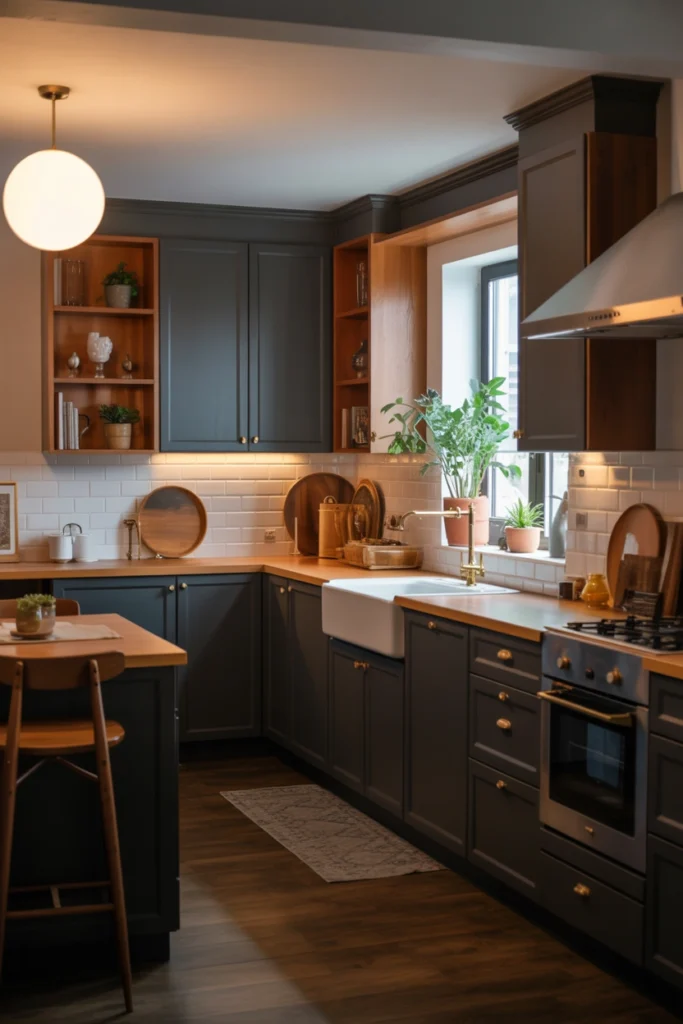
1. Charcoal Gray With Warm Brass Hardware
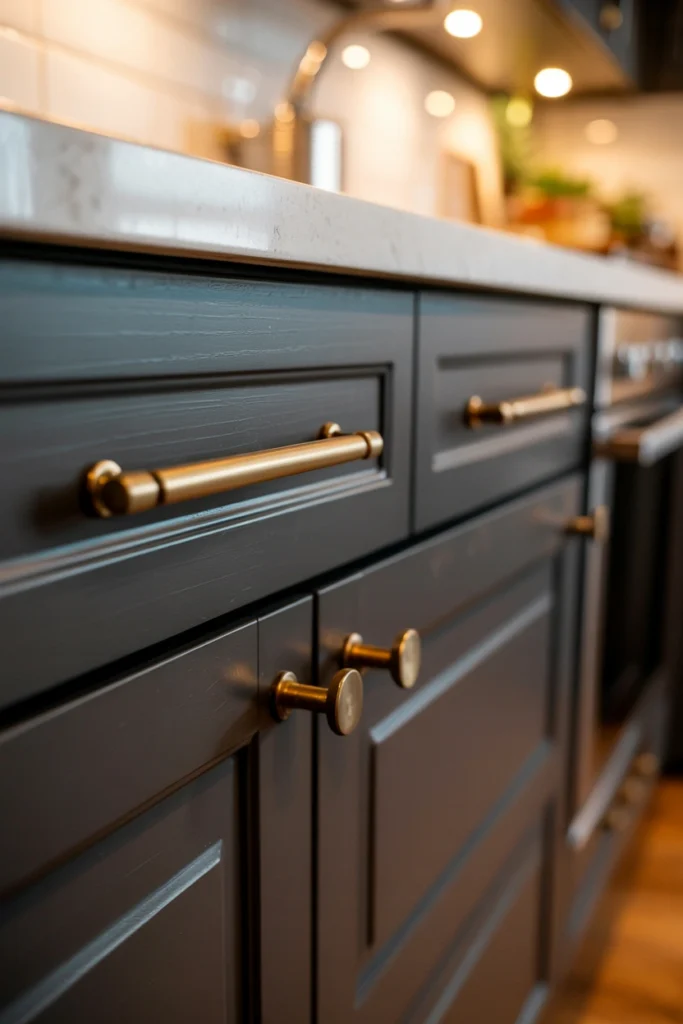
This is the charcoal combination with the longest proven record: dark grey cabinetry, warm brass handles and tap. The brass does essential work here — its warmth stops the grey reading as cold or industrial, and the metallic glint gives the eye somewhere to rest on all that matte darkness. This pairing works in both modern and transitional kitchens, and the brass ages beautifully over time, developing a natural patina that only adds to the overall character of the space.
2. Full Charcoal Gray Kitchen With White Countertops
White countertops against charcoal gray cabinets is one of the most classic contrasts in contemporary kitchen design. The lightness of the countertop stops the cabinets from feeling heavy or dominant, and the result is a kitchen that feels clean, balanced, and effortlessly stylish. White quartz with subtle veining works particularly well here because it adds visual interest without competing with the strong cabinet color. This combination is a safe but genuinely beautiful choice for almost any kitchen size or layout.
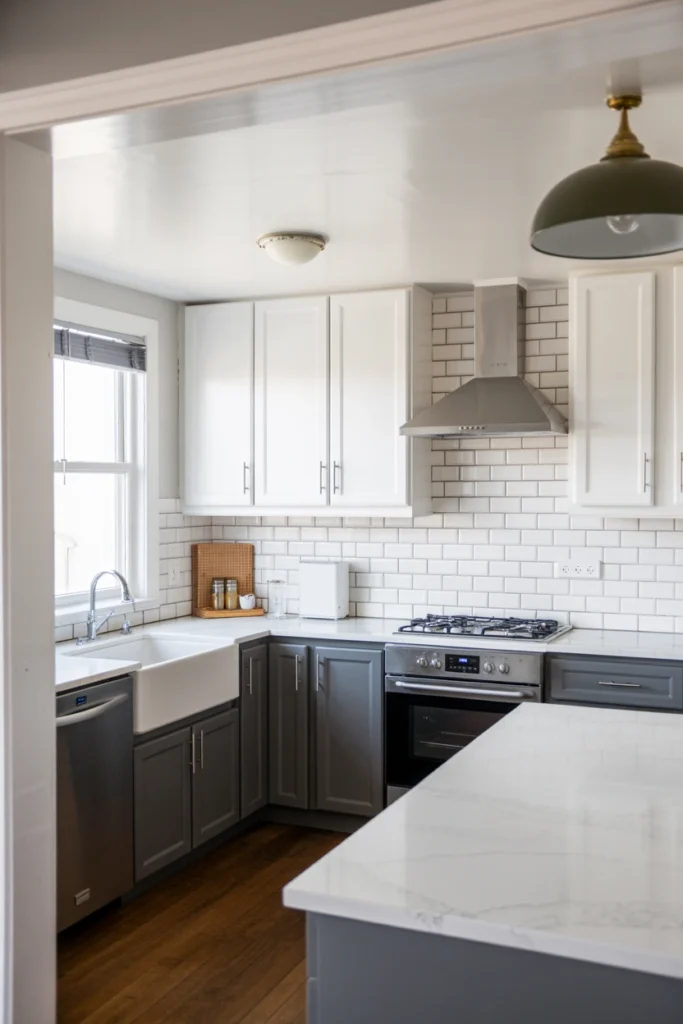
3. Two-Tone Kitchen With Charcoal Lowers and White Uppers
Charcoal below, white above is the risk-managed way into dark cabinetry. You get the drama and practicality of dark base units — they hide scuffs, kicks, and splashes that would scream on white — while the white uppers keep the room light at eye level. The worktop becomes the horizon line between the two, so choose it deliberately: it’s the most visible surface in the room.
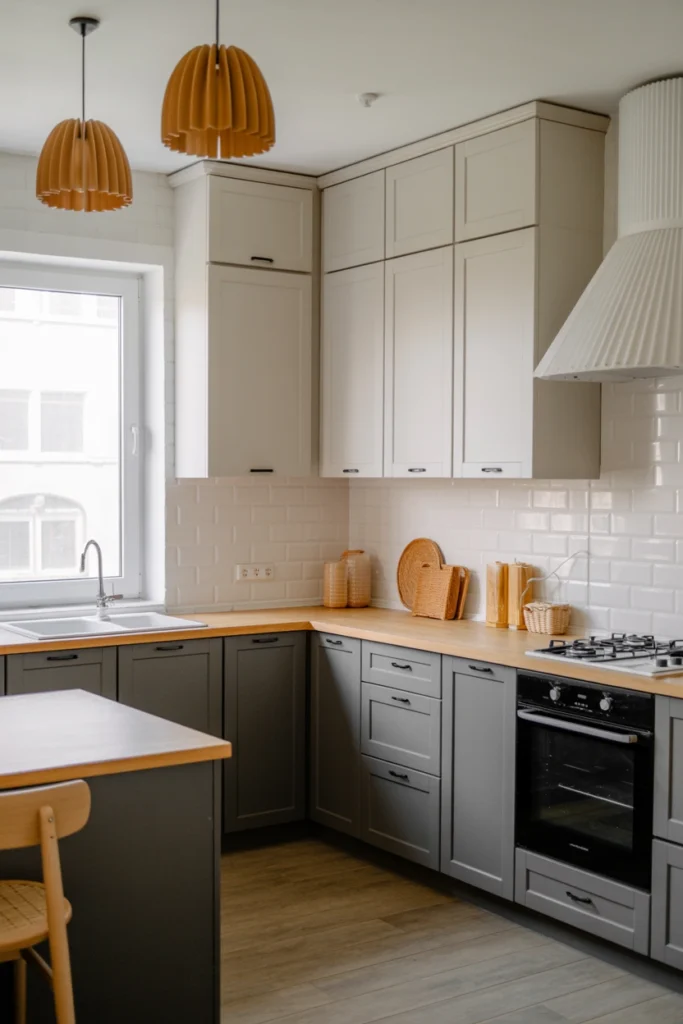
4. Charcoal Gray Shaker Cabinets
Shaker in charcoal is where traditional craft meets modern colour, and the combination is more versatile than either alone. The recessed panel gives the dark colour shadow and depth — flat-front charcoal can look one-dimensional, but shaker charcoal has facets that catch the light differently through the day.
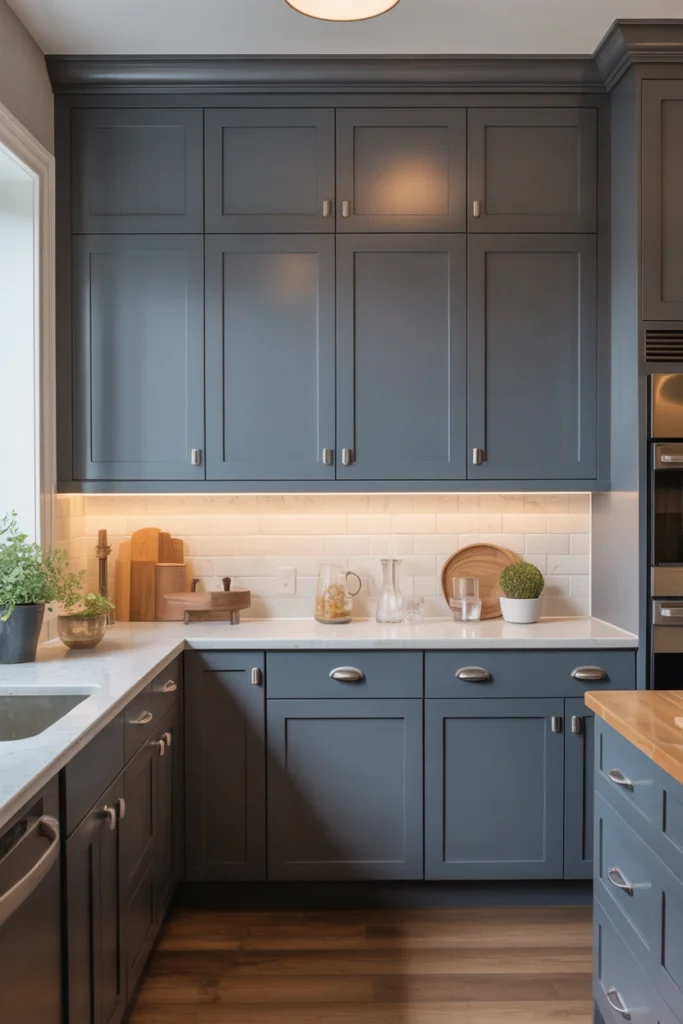
5. Charcoal Gray With Natural Wood Open Shelving
Two oak shelves against charcoal cabinetry do what nothing else can: they break the darkness with warmth and give you display space that isn’t another dark surface. The wood should be mid-tone or pale — dark walnut shelves on charcoal cabinets disappear; pale oak sings against them.
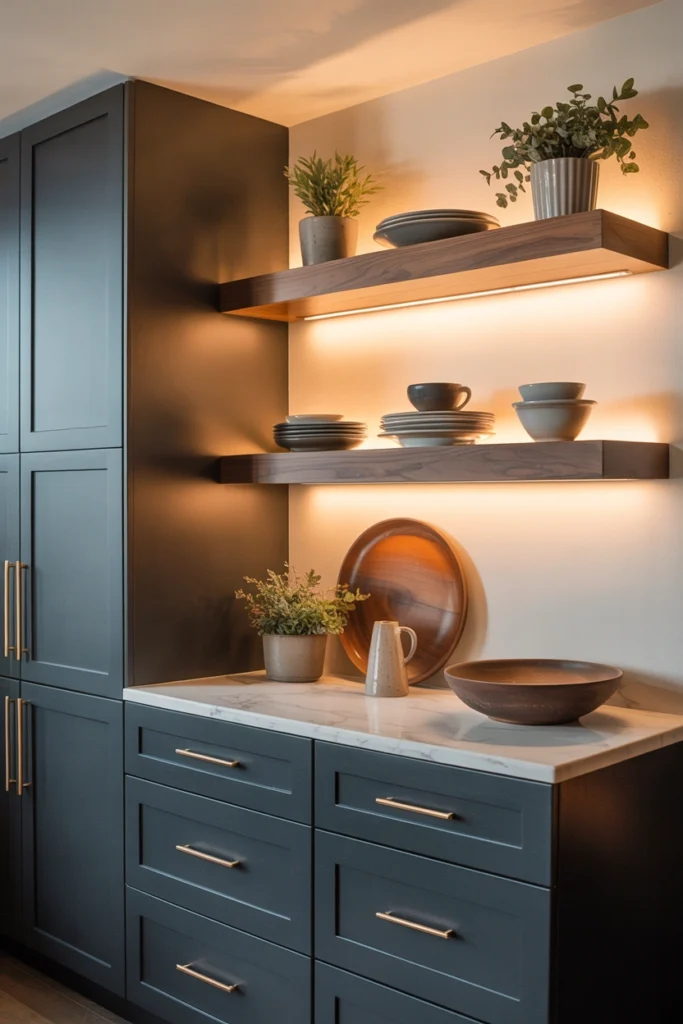
6. Matte Finish Charcoal Gray Cabinets
Matte is the right finish for charcoal — it absorbs light softly instead of throwing it back, which is exactly what you want from a dark colour. Gloss charcoal shows every fingerprint and every ripple in the door; matte forgives both. Specify a matte lacquer with a slight sheen (5–10%) rather than dead flat, which marks when you look at it.
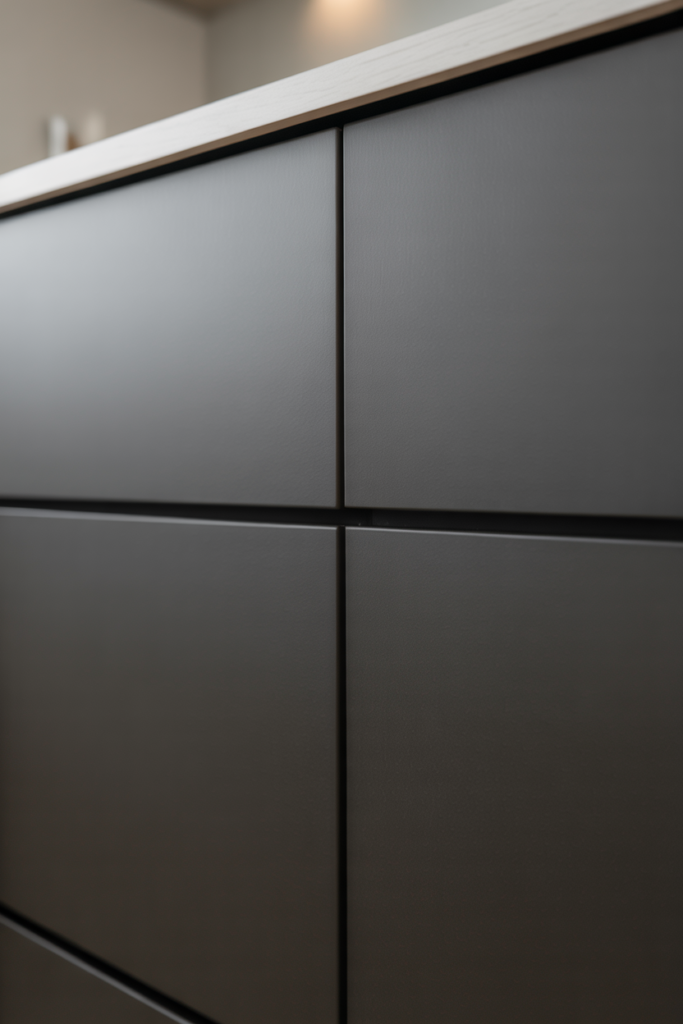
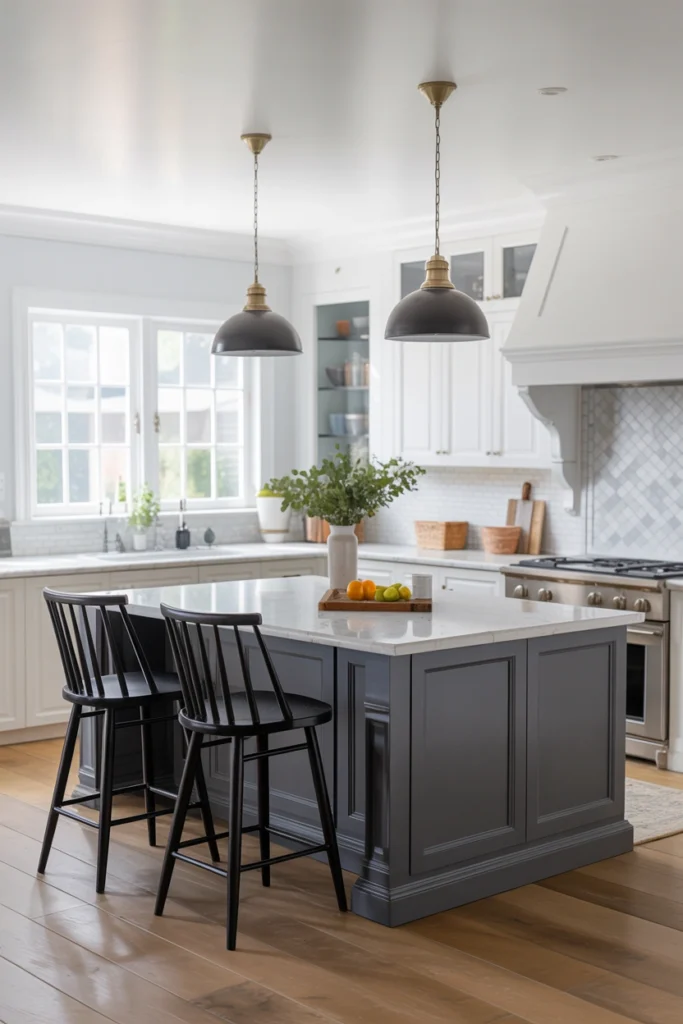
7. Charcoal Gray Island in a White Kitchen
A charcoal island in an otherwise white kitchen is the single most popular dark-kitchen move, and for good reason: it’s one piece of drama in a calm room, it’s repaintable in a weekend if you tire of it, and it anchors the space the way a dark rug anchors a pale room. Keep the island’s worktop pale to maintain the contrast that makes it work.
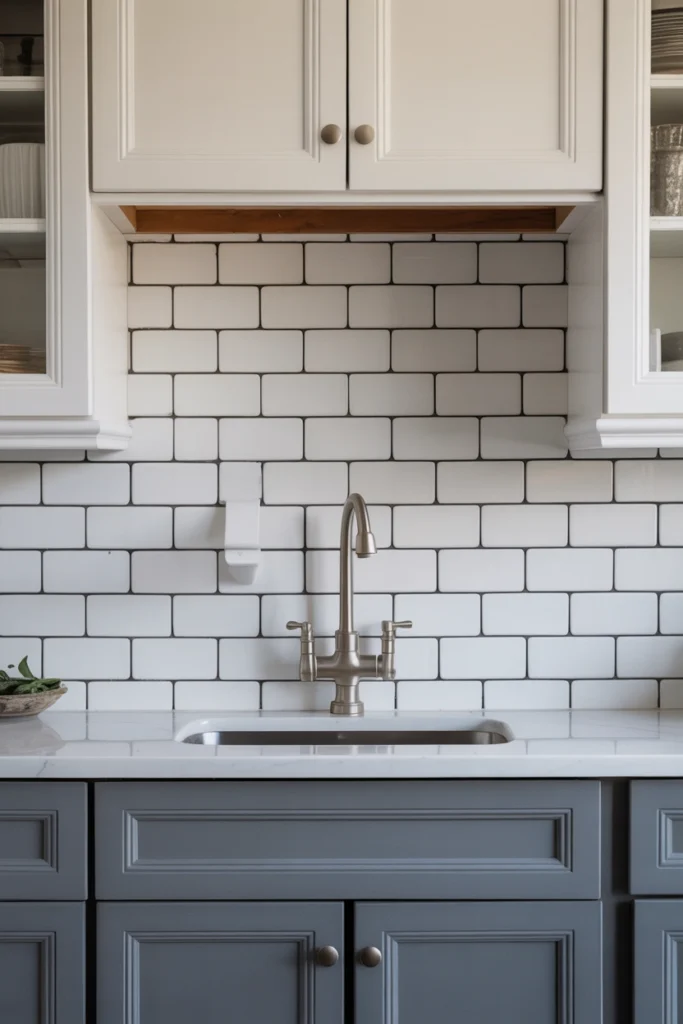
8. Charcoal Gray With Subway Tile Backsplash
White subway tile against charcoal cabinets is the contrast pairing that never fails — crisp, graphic, and bright exactly where the work happens. Lay the tiles in a herringbone or vertical stack rather than the standard offset if you want it to feel designed rather than default. Use a mid-grey grout; white grout against white tile next to dark cabinets shows every speck.
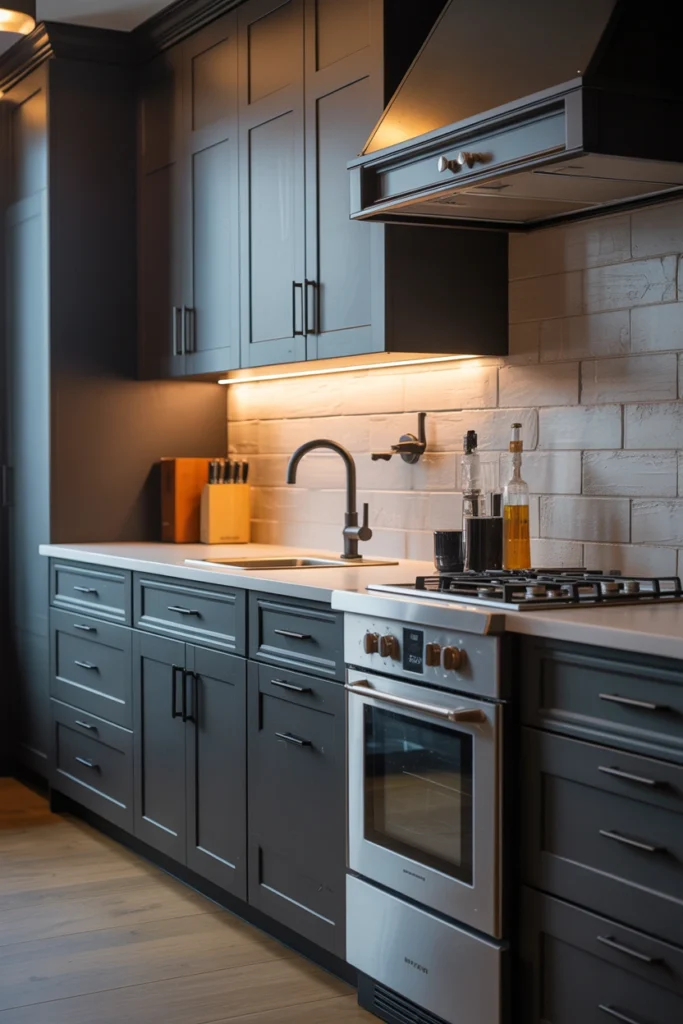
9. Charcoal Gray With Black Fixtures and Hardware
Charcoal cabinets with black hardware is tone-on-tone dressing — subtle, architectural, and very current. It works because the slight difference in depth between the grey and the black creates texture without contrast. The risk is flatness: this combination needs a pale worktop and warm lighting, or the room has nowhere for the eye to rest.
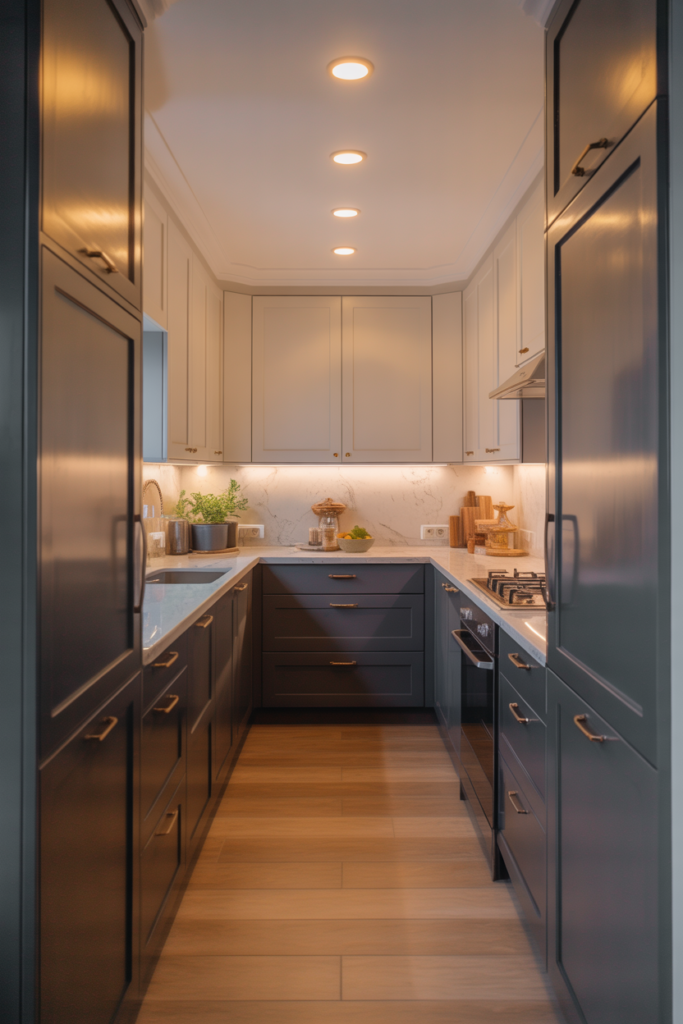
10. Charcoal Gray in a Galley Kitchen
Conventional wisdom says never put dark colours in a galley kitchen. Conventional wisdom is wrong — a charcoal galley with a pale floor, white ceiling, and strong under-cabinet lighting feels like a chic corridor rather than a tunnel. The key is keeping one long sightline pale: usually the floor. Dark walls plus dark cabinets plus dark floor is the combination that actually closes in.
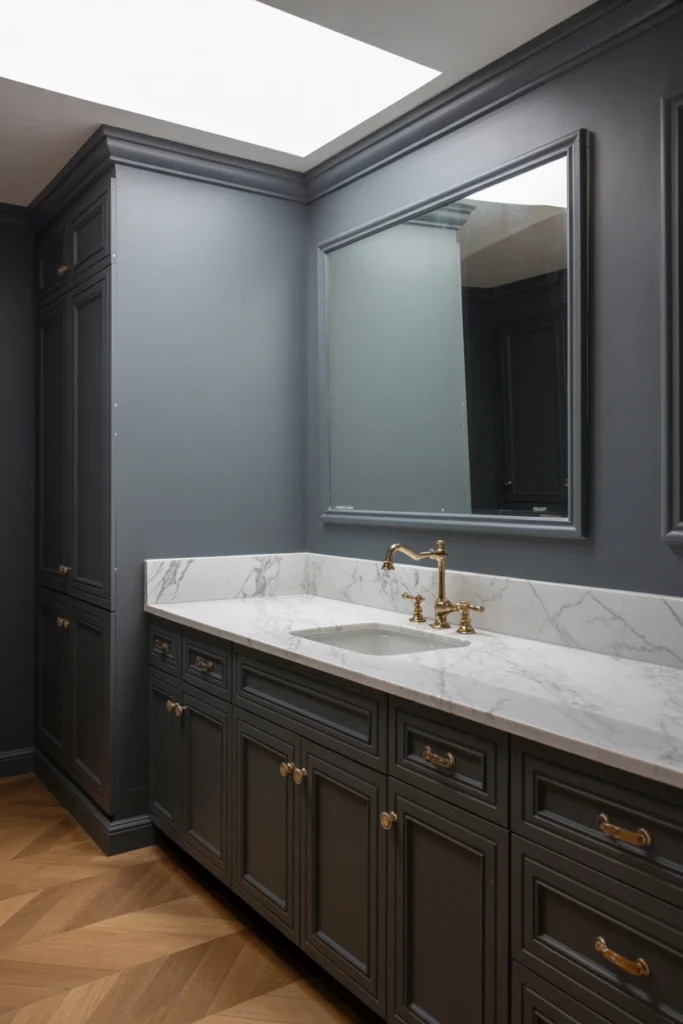
11. Charcoal Gray With Marble Countertops
Charcoal and marble is the power pairing — dark and light, matte and polished, modern colour with classical stone. The veining in the marble gives the dark cabinetry something to converse with, and the pale stone lifts the whole room. If real marble’s maintenance worries you, a marble-effect quartz gives the look with none of the anxiety.
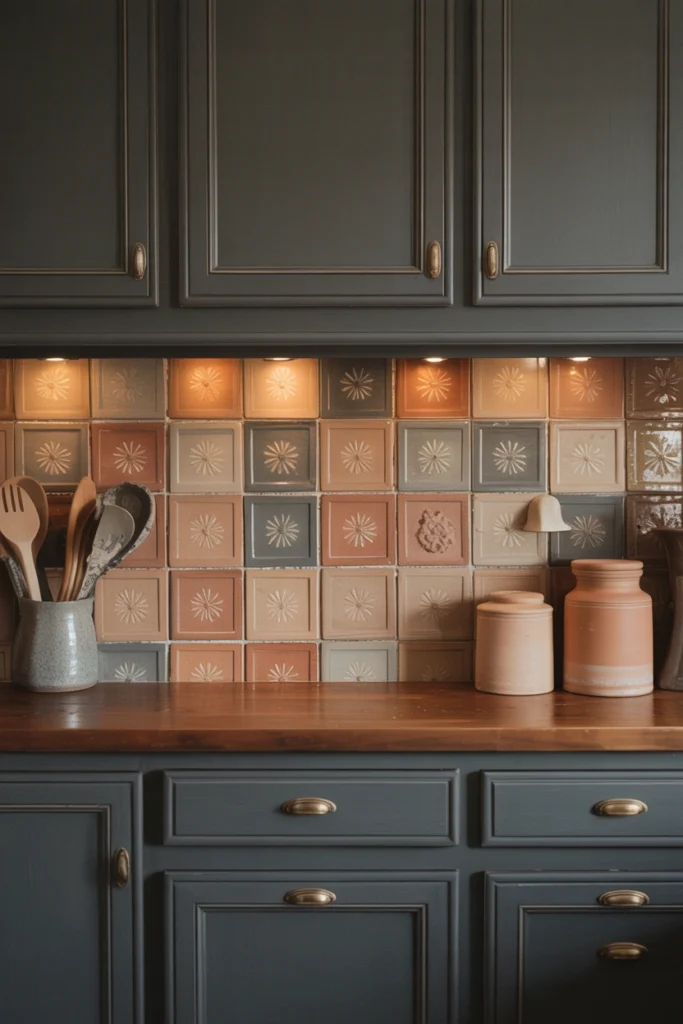
12. Charcoal Gray With Warm Terracotta Accents
Terracotta is charcoal’s unexpected best friend. The warm clay colour does for grey what brass does — adds the warmth the colour lacks — but in a earthier, more relaxed register. A terracotta tile floor, a few terracotta pots, or a terracotta splashback: one warm note is enough to transform the room’s temperature.
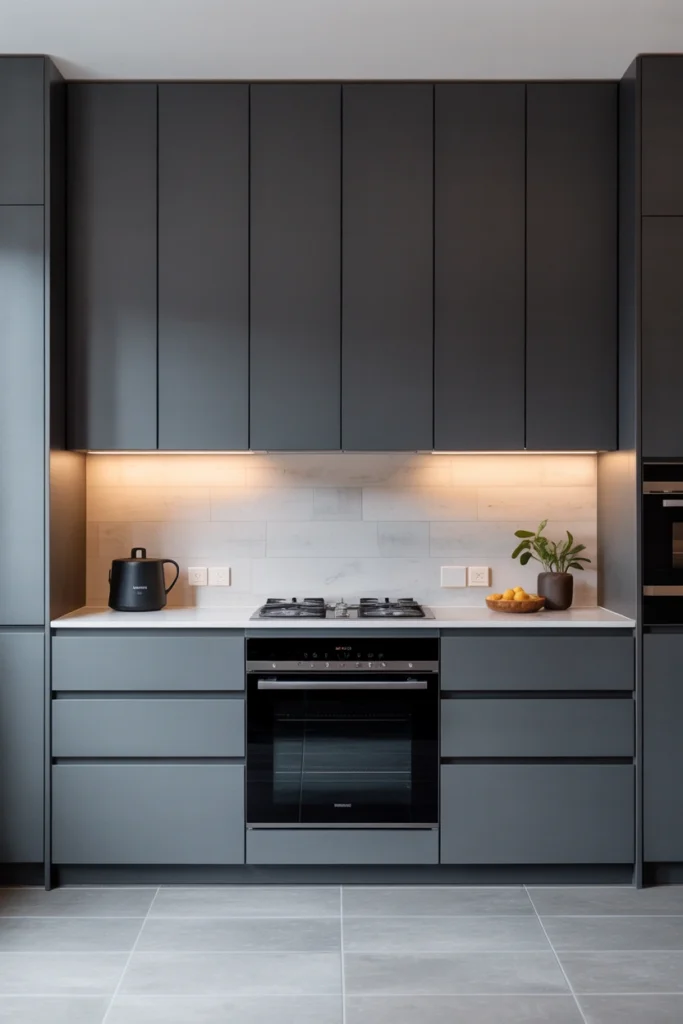
13. Charcoal Gray With Integrated Appliances
Hiding the appliances behind charcoal doors gives you the calm of uninterrupted cabinetry — no steel rectangles breaking the dark run. It works particularly well with charcoal because the colour already reads as architectural; the room starts to feel designed rather than equipped. Budget for proper integrated kits and ventilation; the seamless look depends on precise fitting.
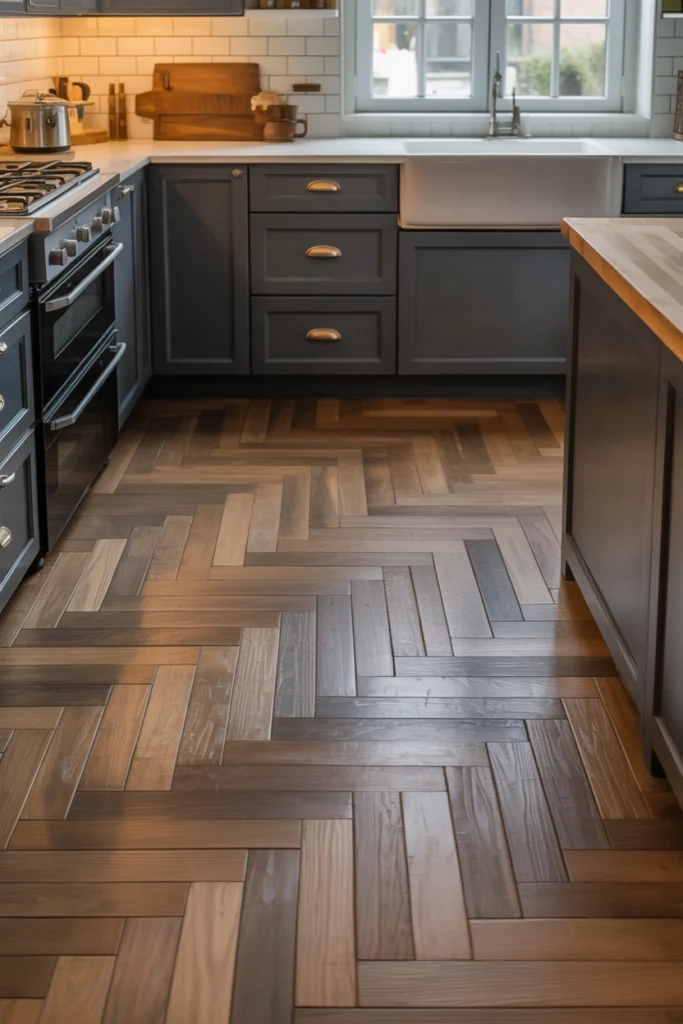
14. Charcoal Gray With Herringbone Wood Floors
Herringbone oak under charcoal cabinets is the floor doing half the design work. The pattern adds movement and craft to the room, and the warm timber lifts the dark cabinetry in a way flat flooring can’t.
Keep the oak mid-tone — pale oak can look washed out next to charcoal, and very dark oak merges into the gloom. A natural or lightly smoked oak is the sweet spot, and a matte lacquer finish keeps it practical under kitchen traffic.
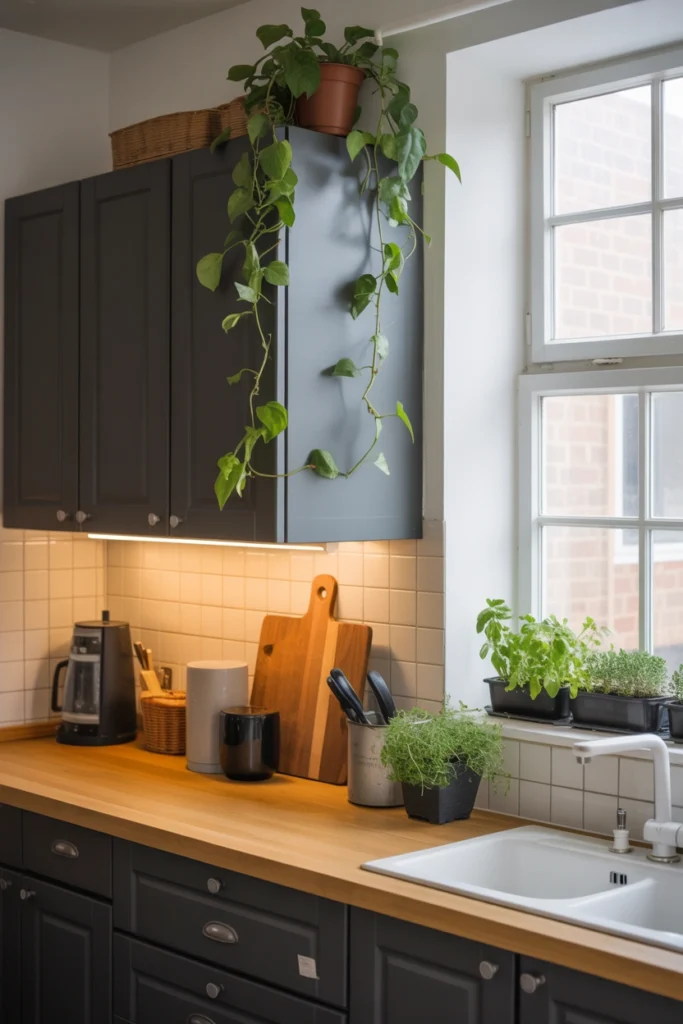
15. Charcoal Gray With Green Plants and Natural Elements
Plants are non-negotiable in a charcoal kitchen — the green is the living contrast the room needs, and the organic shapes soften all those dark rectangles. A big olive or fig in the corner, herbs on the sill, a trailing pothos on the open shelf: greenery is the cheapest way to keep a dark kitchen feeling alive.
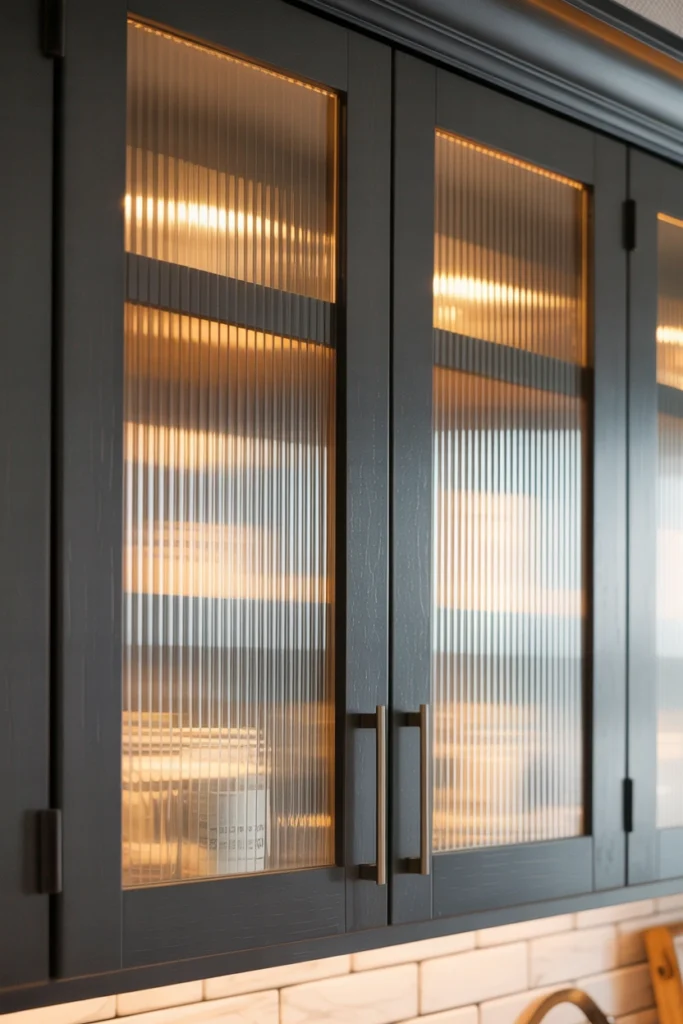
16. Charcoal Gray With Fluted Glass Cabinet Inserts
Fluted glass in a couple of charcoal wall units breaks the darkness beautifully — the ribbed glass glows when the interior light is on, turning storage into a feature. It’s the jewelry box effect: dark exterior, luminous interior. Limit it to one or two units; a whole wall of glass defeats the calm that charcoal creates.
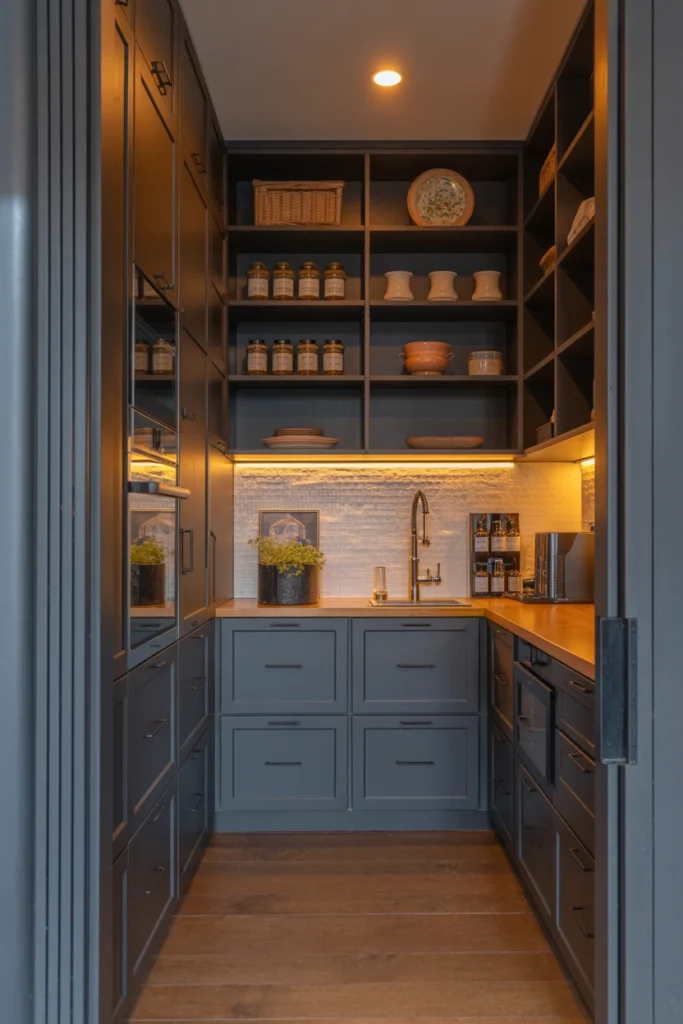
17. Charcoal Gray in a Scullery or Butler’s Pantry
The scullery is where charcoal belongs most naturally — it’s a working room, and dark colours hide the reality of work. A charcoal scullery behind a pale main kitchen gives you the best of both: the beautiful room for guests, the practical room for the mess. It’s also the safest place to experiment with dark if you’re nervous.
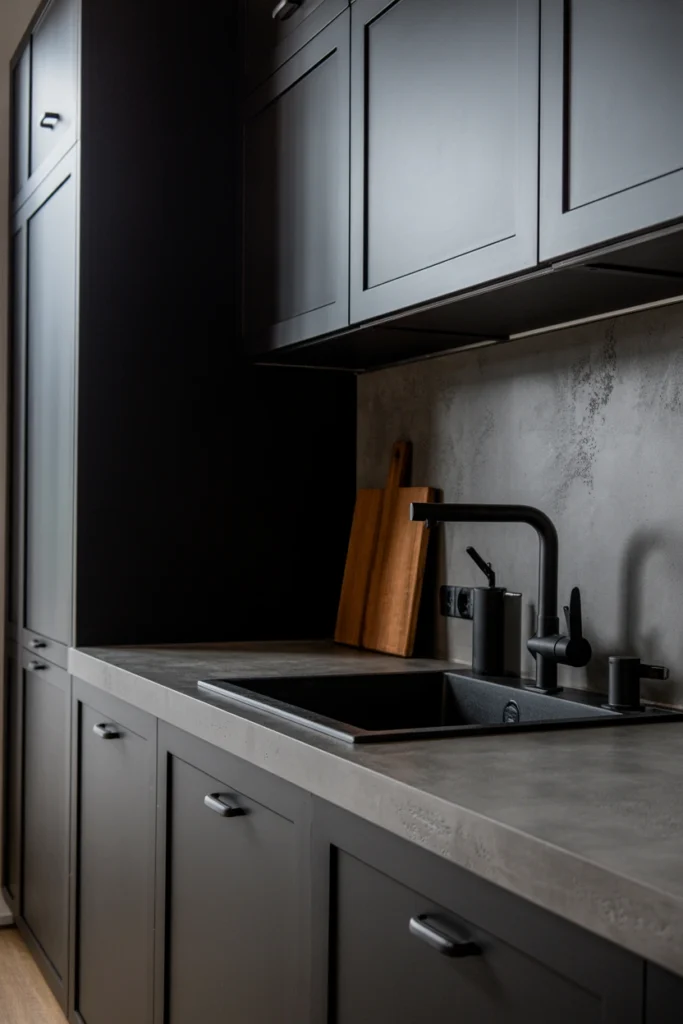
18. Charcoal Gray With Concrete Countertops
Charcoal cabinets with a concrete worktop is the industrial pairing done right — two honest materials, no pretending. The concrete’s subtle variation keeps the dark cabinetry from feeling flat, and the combination ages with genuine character rather than wearing out.
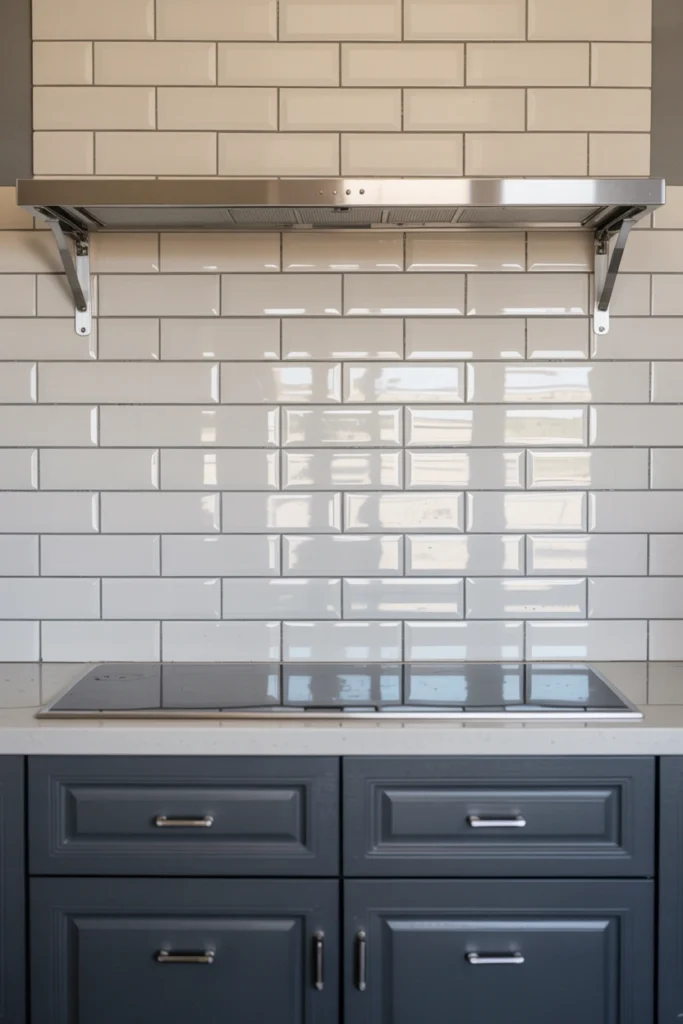
19. Charcoal Gray With Glossy White Backsplash Tiles
Glossy white tiles as the splashback bounce light back into a charcoal kitchen exactly where you need it — at the worktop, where the shadows fall. The gloss/matte contrast between tile and cabinet adds a layer of sophistication that flat pairings lack. Keep the tiles simple; the contrast is the design, not the pattern.
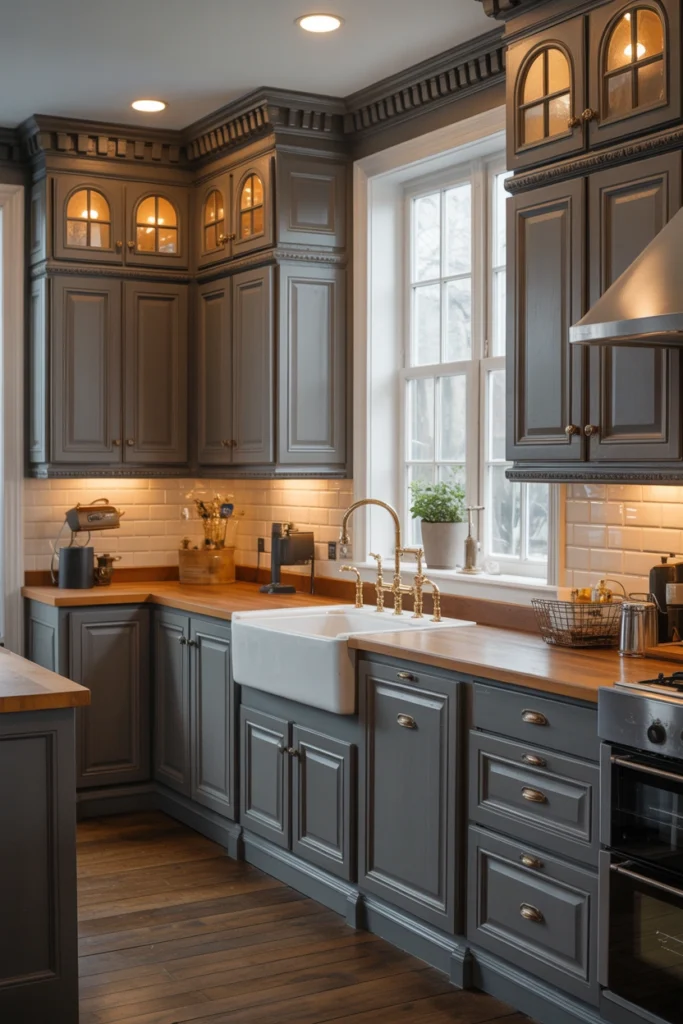
20. Charcoal Gray in a Traditional Kitchen With Ornate Details
Charcoal in a traditional kitchen — corniced wall units, a range cooker, a Belfast sink — is the colour at its most distinguished. The darkness gives period details a gallery-like gravity, and traditional architecture can carry dark colours in a way modern boxes sometimes can’t. This is the combination for period homes that want drama without gimmicks.
Conclusion
Charcoal gray rewards the decisive and punishes the tentative. Commit to the light it needs, the contrast it deserves, and the warm accents that keep it human — and it will give you a kitchen with more character than any pale room can offer.
It’s not the safe choice. It’s the interesting one. And done right, it doesn’t date — it deepens.
Pro Tips
- Light a charcoal kitchen like a stage. Under-cabinet strips, warm pendants, and a pale worktop aren’t optional with dark cabinetry — they’re the lighting design that makes the colour work. Budget for lighting before you finalize the cabinet colour.
- Sample in the darkest corner. Charcoal shifts dramatically with light. Tape your sample to the least-lit cabinet door and check it at night under artificial light — that’s the charcoal you’ll actually live with after 5pm in winter.
- Keep one pale horizontal. Whether it’s the worktop, the floor, or the ceiling, one broad pale surface stops a charcoal kitchen feeling heavy. Two dark horizontals (dark worktop plus dark floor) is where rooms start to close in.
- Choose warm metals first. Brass, copper, bronze — warm hardware flatters charcoal; chrome and cool nickel can make it read as corporate. If you must use chrome, warm up the room elsewhere with wood and plants.
FAQs
Do dark gray cabinets make a kitchen look smaller?
They can reduce the perceived size, but light matters more than colour — a charcoal kitchen with good natural and artificial light feels dramatic, not small. Keep one major surface pale (floor, worktop, or ceiling) and the room holds its sense of space.
What worktop goes best with charcoal gray cabinets?
White or pale quartz with subtle veining is the safest and most popular choice — the contrast lifts the room. Marble or marble-effect adds luxury; pale oak or concrete add warmth and texture. Avoid very dark worktops unless the floor is pale.
Is charcoal gray going out of style?
Charcoal has been a top-five kitchen colour for over a decade and behaves more like a neutral than a trend — it doesn’t spike and crash the way fashion colours do. Paired with classic materials (brass, marble, oak), it reads as timeless rather than trendy.
What wall colour works with charcoal gray cabinets?
Warm white is the default that never fails. For more character, try a pale warm greige or a soft plaster pink — both flatter the grey. Avoid cool blue-greys on the walls, which can make the whole room feel chilly and flat.

HowDecor is a home decor blog sharing simple, practical decorating ideas for everyday spaces. We believe a beautiful home should feel comfortable, personal, and full of warmth — and that great style does not require a huge budget. Our goal is to inspire readers to create spaces that feel peaceful, welcoming, and truly their own — one room at a time.