The Japanese kitchen doesn’t try to impress you. That’s the whole philosophy. Where Western kitchens accumulate — more storage, more gadgets, more display — the Japanese kitchen subtracts until what remains is essential, beautiful, and calm. Cooking in such a space feels different: slower, more deliberate, almost meditative.
These twenty ideas aren’t about copying a look; they’re about understanding principles — ma (the beauty of empty space), wabi-sabi (the acceptance of imperfection), and shizen (harmony with nature). Apply them honestly and your kitchen won’t just look Japanese. It will feel like a deep breath.
1. Embrace Minimalist Cabinetry
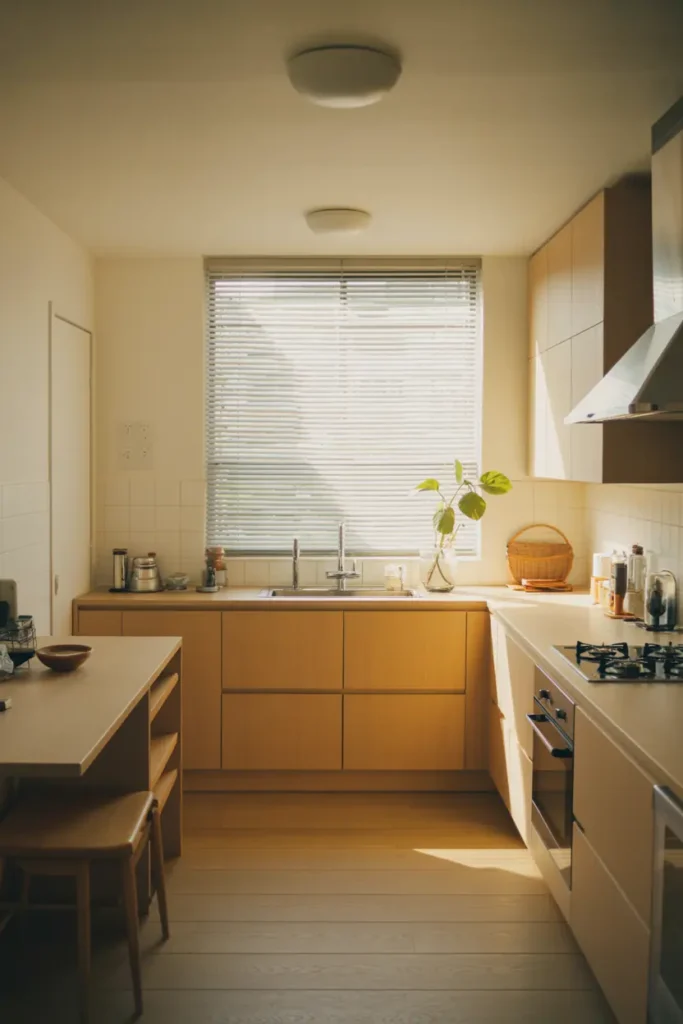
Japanese minimalism starts with the cabinets: flat fronts, no handles or the barest recessed pulls, and a finish that doesn’t call attention to itself. The goal is for the cabinetry to recede — to become the quiet background against which daily life happens, not the subject of it.
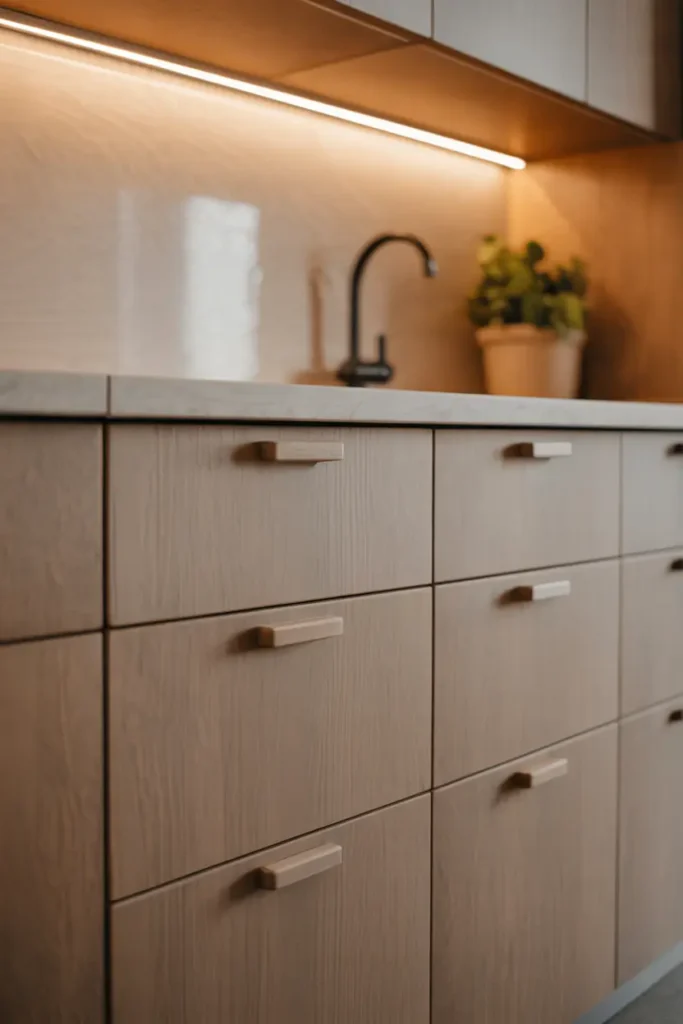
Keep the palette restrained: one cabinet colour, one worktop material. Every additional finish is a voice in the room; Japanese design wants a whisper, not a conversation. If you must have contrast, make it tonal — two depths of the same grey, not two different colours.
2. Use Natural Wood Tones
Wood is central to Japanese interior design. It brings warmth, texture, and a connection to nature that no painted surface can replicate. In the kitchen, consider using light oak, hinoki cypress, or bamboo for countertops, open shelving, or cabinet fronts. Even small wooden touches like a cutting board left on the counter or a wooden utensil holder can shift the entire feel of the space. The key is to keep the tones consistent and natural rather than overly polished or glossy.
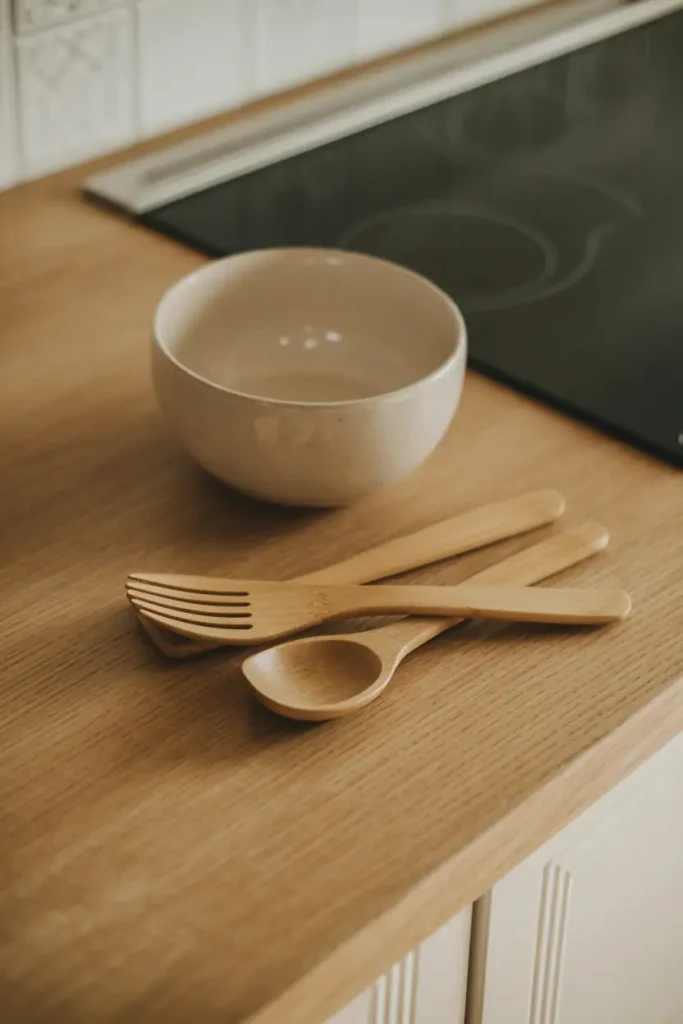
Hinoki cypress deserves special mention — it’s the timber of temples and baths, with a lemon-like scent that survives for years. A hinoki cutting board or bath-mat-style draining board brings an authentic sensory layer no oak can match. Treat it as the precious material it is: hand-wash, never dishwasher.
3. Incorporate Shoji-Inspired Elements
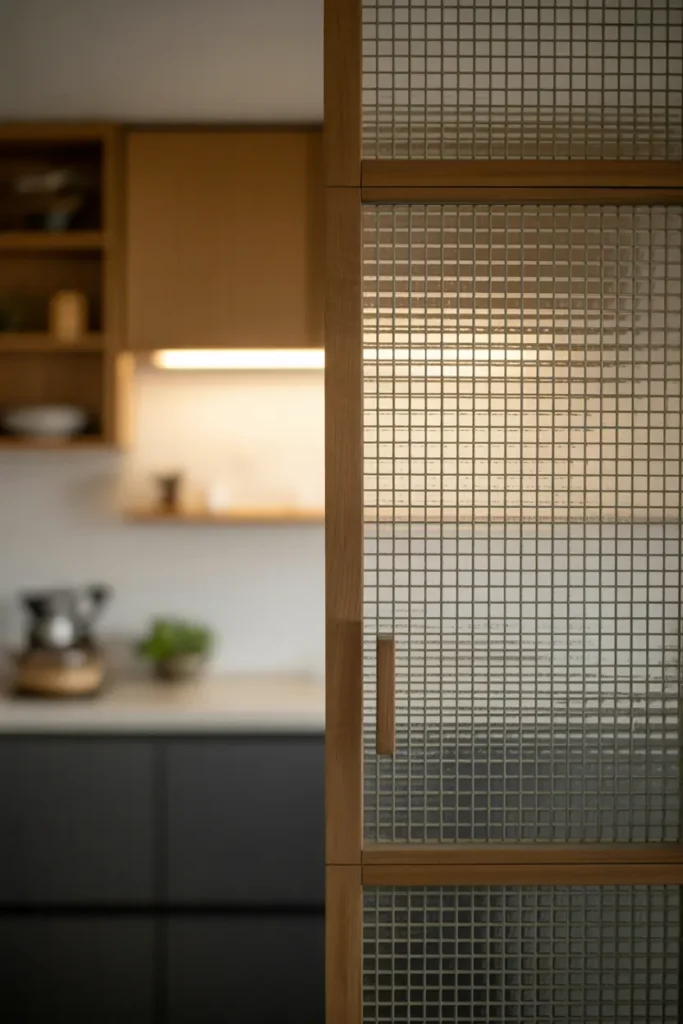
Shoji screens — timber frames with translucent paper — filter light into something soft and diffused. In a kitchen, shoji-inspired cabinet fronts (frosted glass in thin timber frames) give you the effect without the fragility of real paper. The diffused glow they produce is the opposite of harsh kitchen lighting.
4. Keep Countertops Clear and Purposeful
In Japanese design philosophy, a clear countertop isn’t empty — it’s ready. Keep only what you use daily in view: the kettle, the cutting board, perhaps the knife block. Everything else lives behind closed fronts. The discipline pays off every morning when the kitchen greets you calm instead of cluttered.
5. Choose a Neutral, Earthy Color Palette
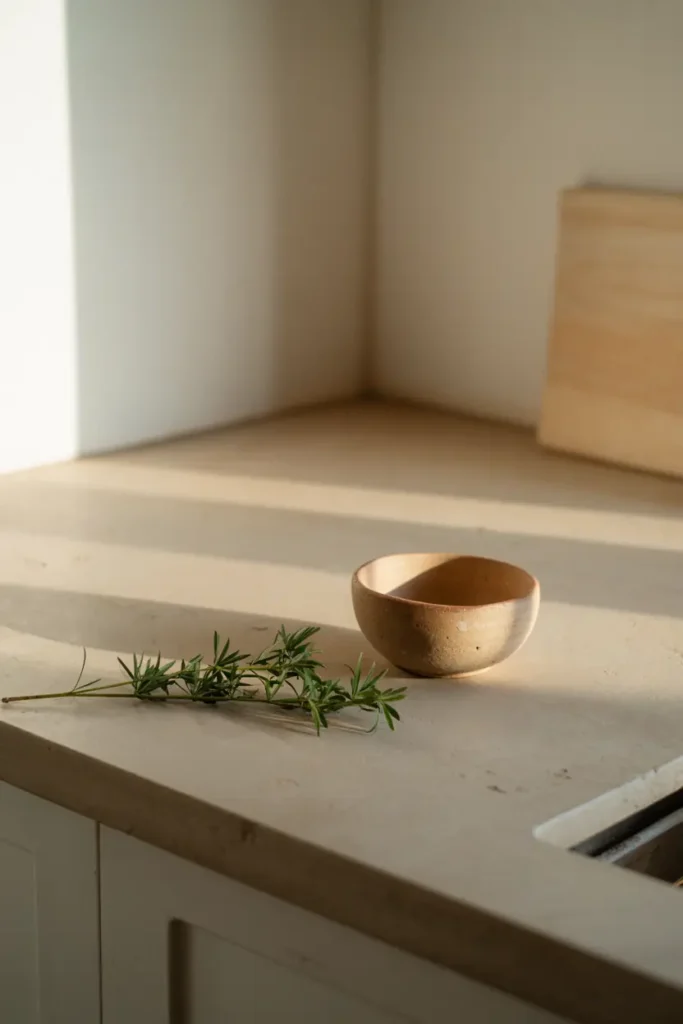
The Japanese palette comes from nature observed quietly: warm greys like river stone, soft whites like rice paper, the pale browns of timber and clay. There are no accent walls and no feature colours — the beauty is in the subtle variation between neutrals, the way morning light changes them through the day.
6. Add a Wabi-Sabi Touch
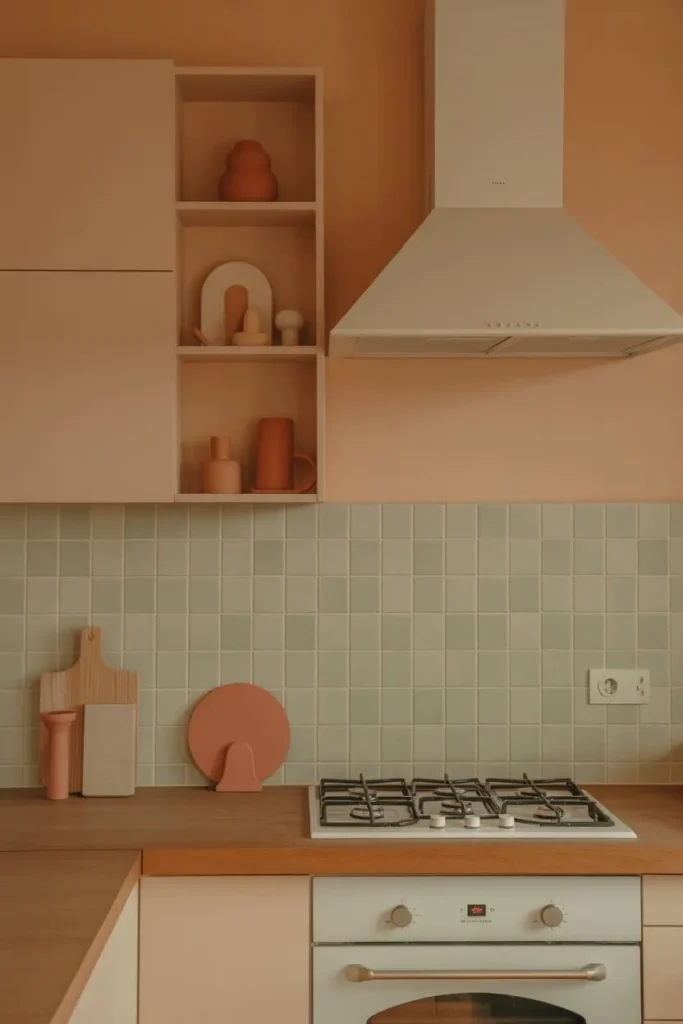
Wabi-sabi finds beauty in imperfection and transience — the cracked bowl repaired with gold, the worn wooden spoon, the handmade tile with uneven glaze. Add one or two genuinely imperfect objects to your kitchen: a kintsugi-repaired bowl, a hand-thrown vase with a wobble. They’re reminders that perfection is not the goal; presence is.
7. Install an Indoor Herb Garden
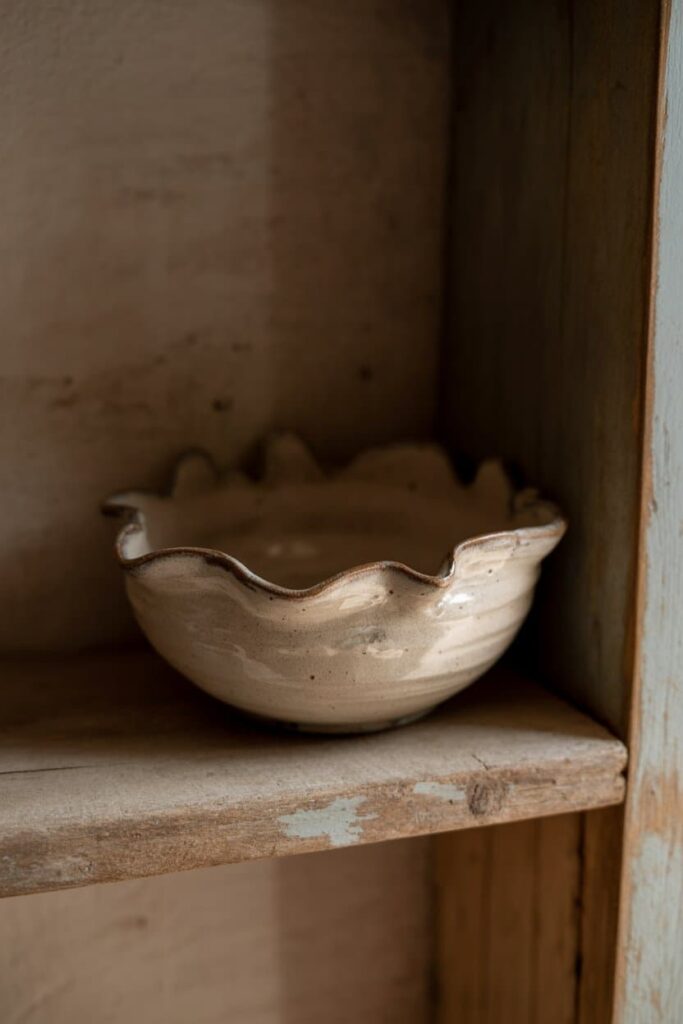
A small, deliberate herb garden — shiso, mitsuba, or simply basil and thyme in handmade pots on the sill — connects the kitchen to growing things. Keep it minimal: three pots, not twelve. In Japanese practice, the garden is tended daily as a small meditation; even watering becomes part of the kitchen’s rhythm.
8. Use Open Shelving Thoughtfully
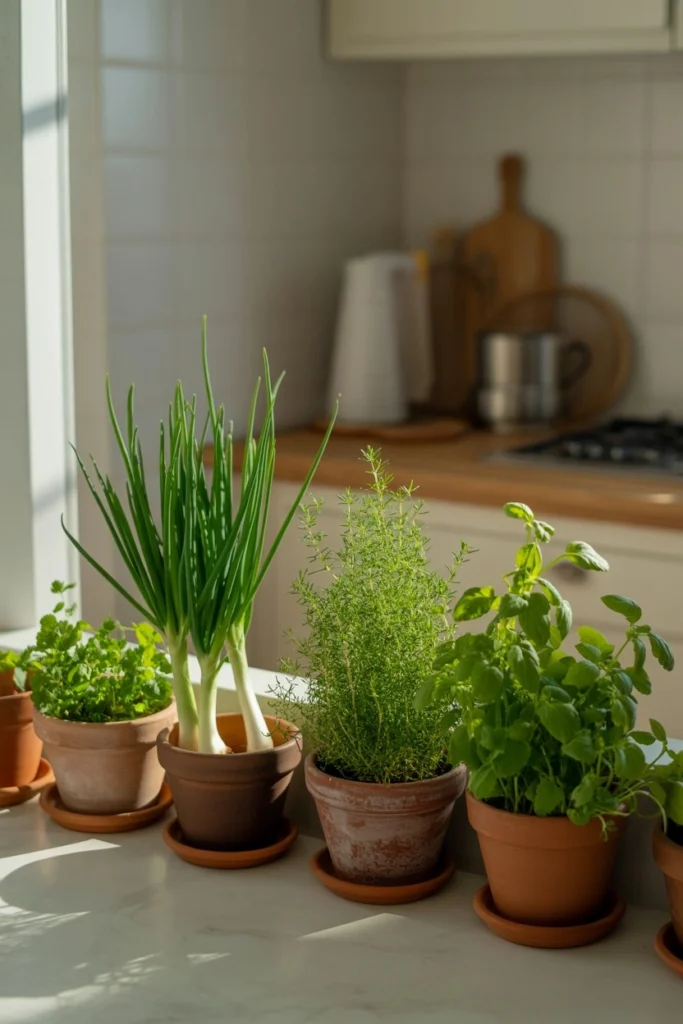
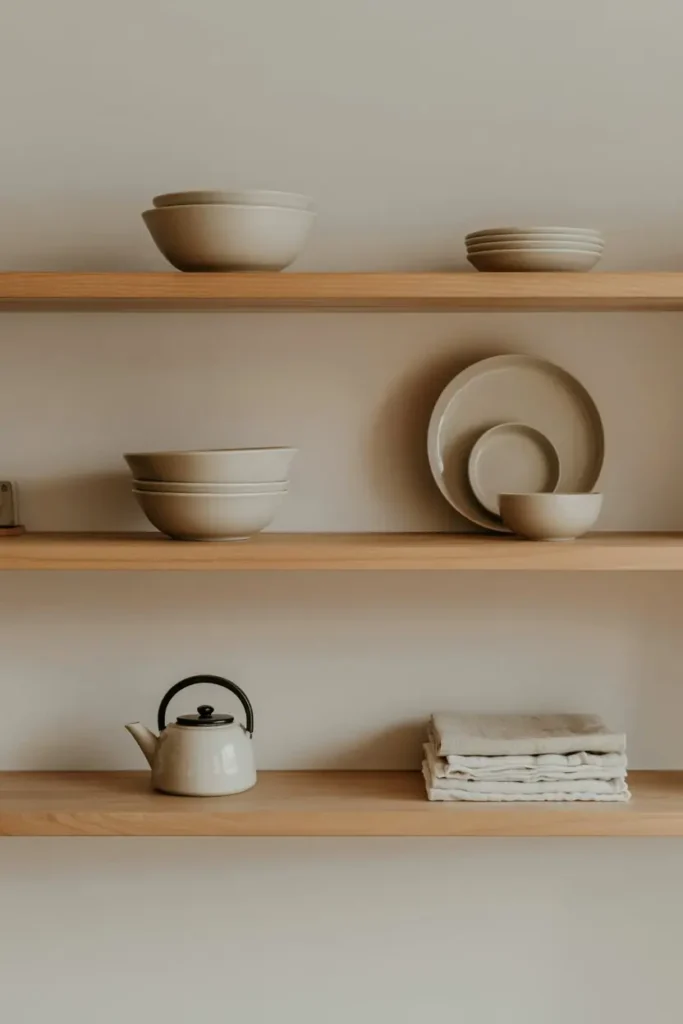
Open shelving in a Japanese kitchen displays only what is beautiful and used: handmade bowls, a teapot, a few perfect cups. The keyword is “thoughtfully” — every object earns its place, and empty space between objects is as important as the objects themselves. If a shelf looks full, remove half.
9. Bring In Natural Light
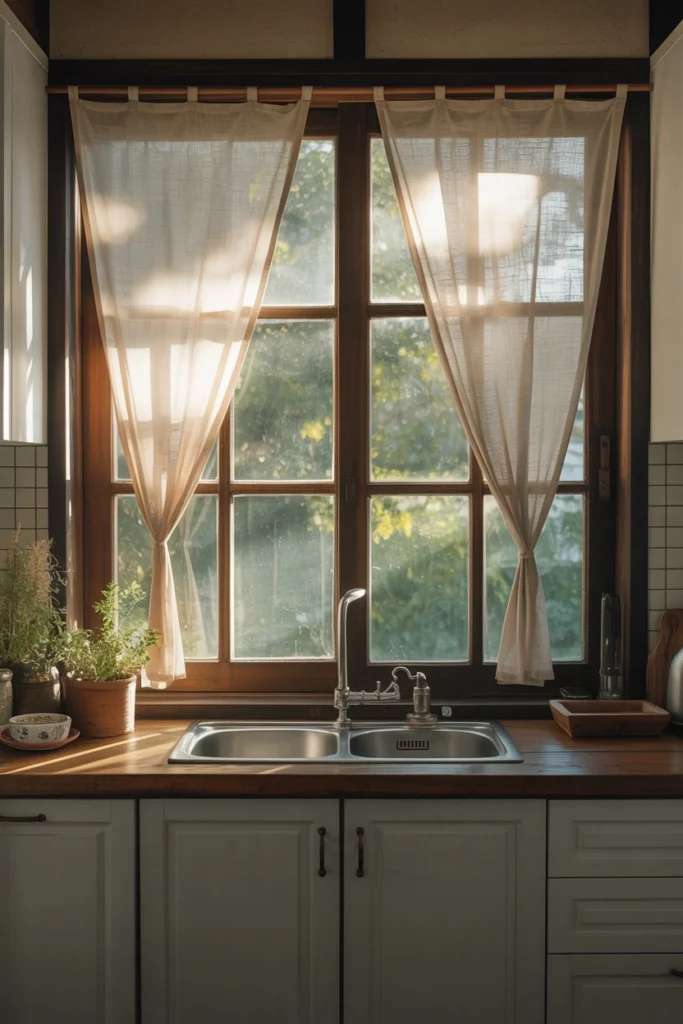
Japanese design treats natural light as a material. Maximize it: sheer linen instead of heavy curtains, pale surfaces that bounce it, nothing blocking the window. Notice how the light moves through the day and arrange the kitchen’s calmest corner — the tea spot, the looking-out place — where the morning light lands.
10. Choose Simple, Functional Fixtures
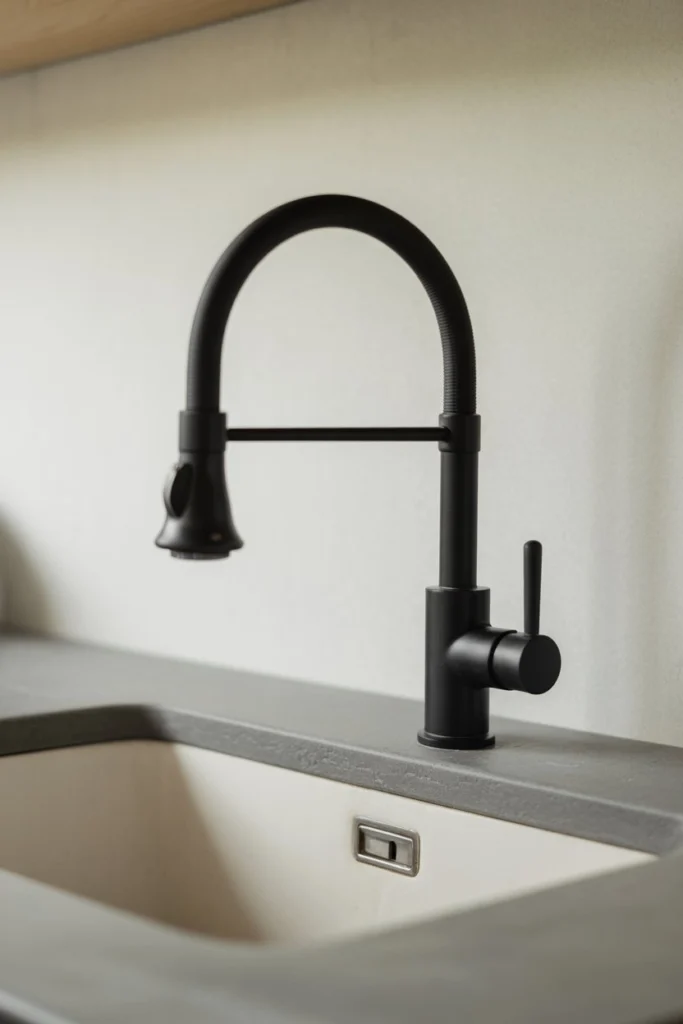
Every fixture should be the simplest version of itself: a tap that’s a clean arc, handles that are quiet recesses, a hob that’s flush and unobtrusive. Japanese functionalism isn’t cold — it’s respectful. Each object does its job without demanding attention, which is a kind of politeness toward the people using the room.
11. Incorporate Stone or Concrete Elements
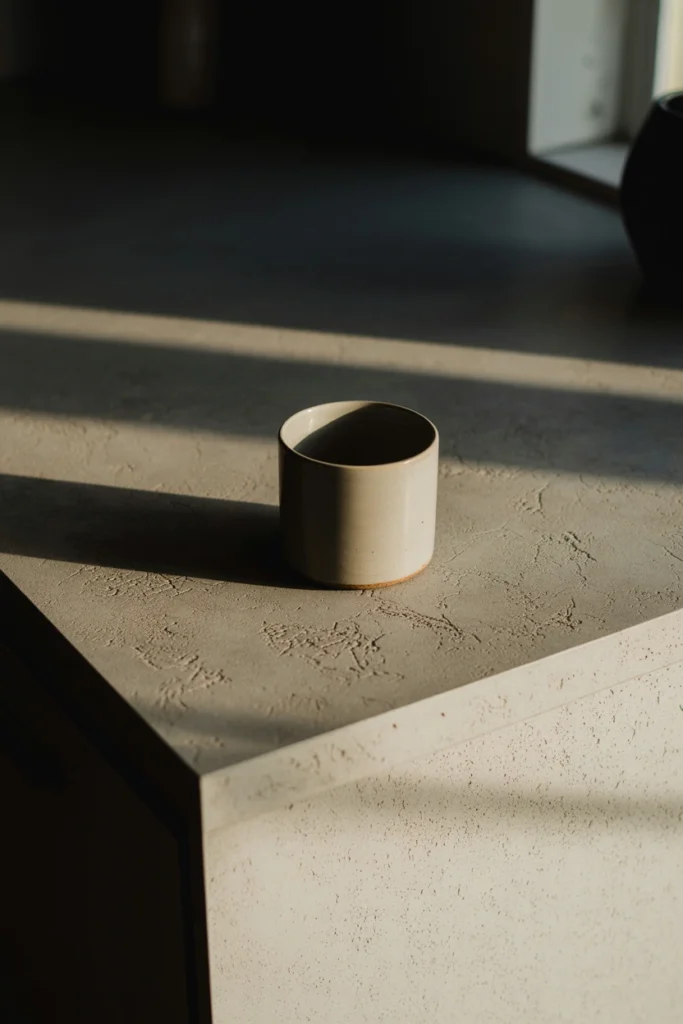
Stone brings the garden’s permanence indoors: a honed granite worktop, a concrete splashback, a stone mortar on the counter. These materials age with dignity — they stain slightly, wear gently, and record the kitchen’s life rather than resisting it. That’s wabi-sabi in material form.
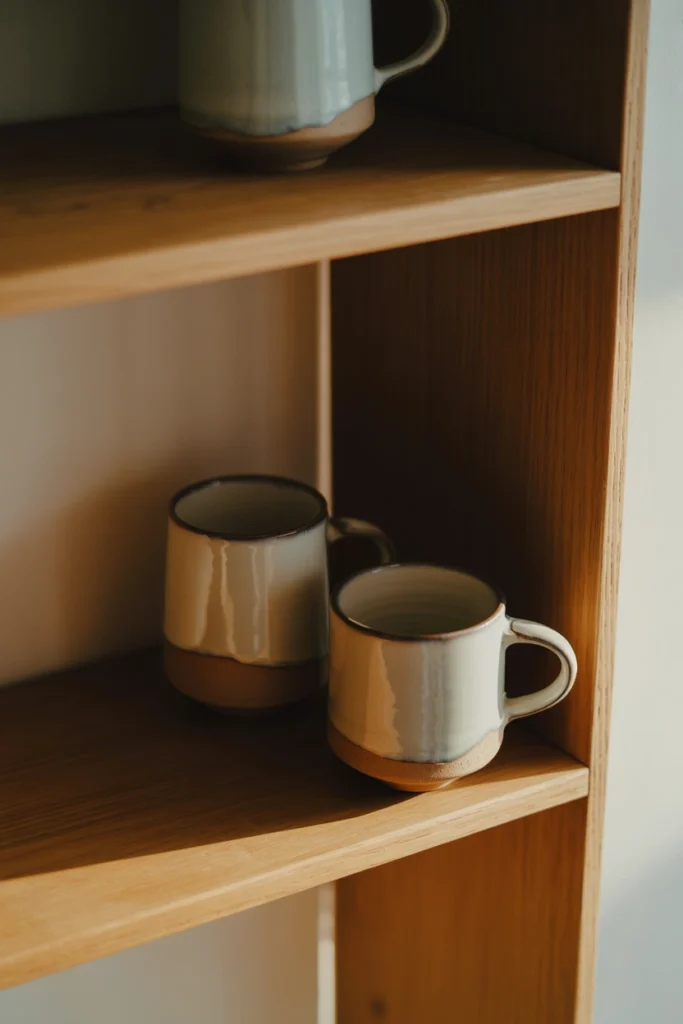
12. Display Ceramics with Intention
Choose a few handmade ceramics and display them where they’re seen daily — not locked in a cabinet for special occasions. Japanese aesthetics hold that beautiful objects should be used: the tea bowl gains character from daily hands, the plate from daily meals. Display is not separate from use; it’s an invitation to use.
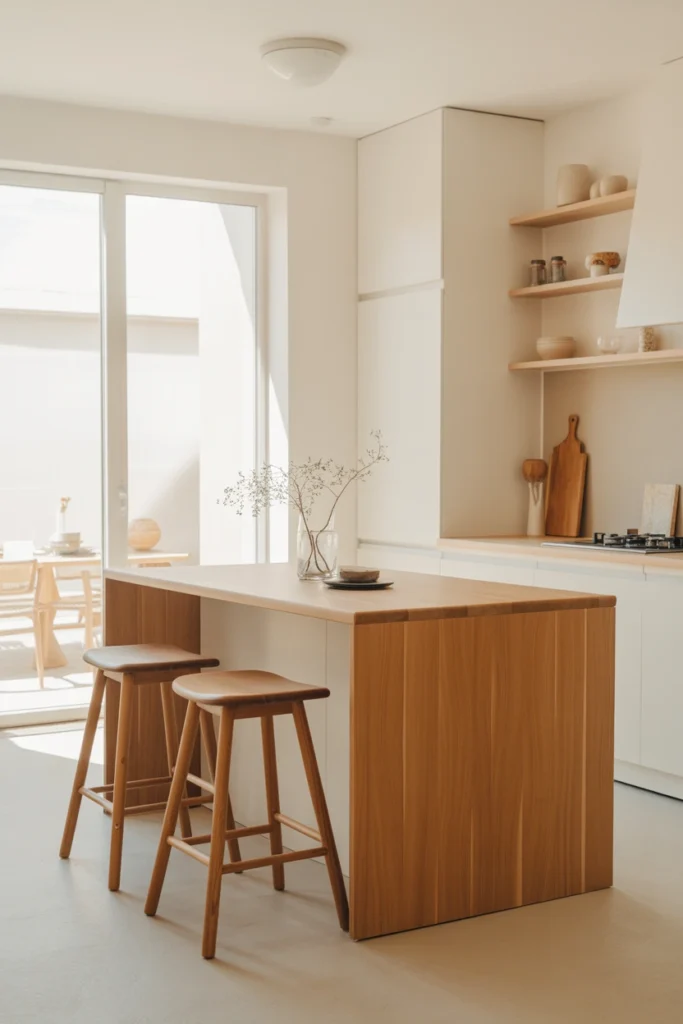
13. Try a Low-Profile Kitchen Island
A lower-than-standard island — 80cm instead of 90cm — changes the room’s proportions toward the horizontal, the Japanese ideal. It reads more as a table than a counter, which suits the way Japanese kitchens blend cooking and living. The lower height also suits seated prep work, the traditional way.
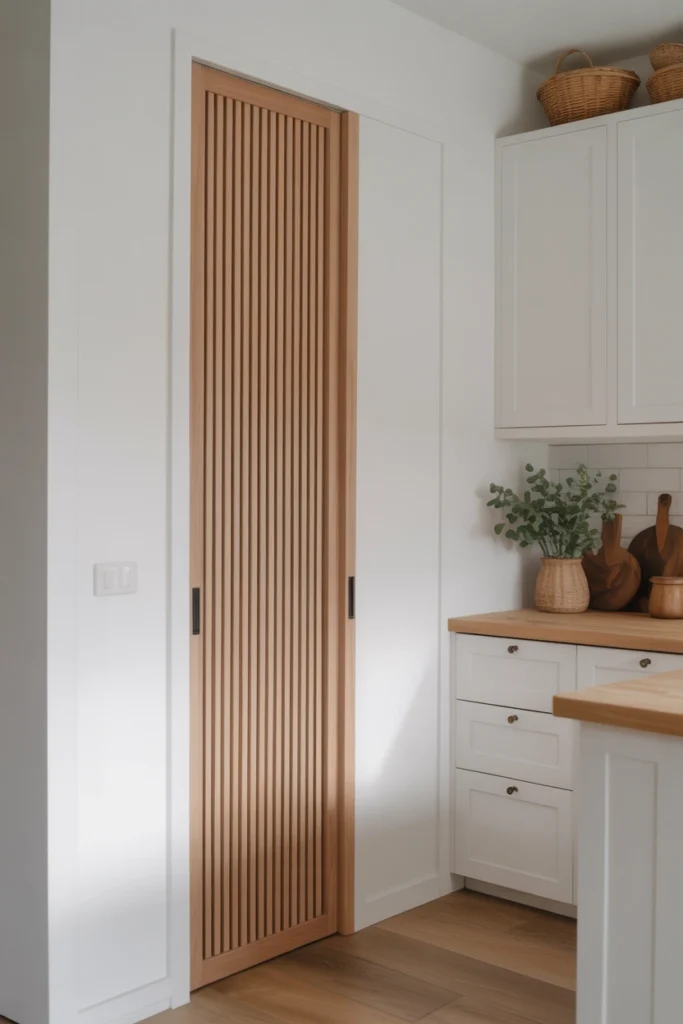
14. Use Sliding Doors Where Possible
Sliding doors — for the pantry, the bin cupboard, even the room entrance — save the swing space hinged doors waste and move with a quiet glide that’s deeply satisfying. They also allow the kitchen to be closed off or opened up in one gesture, which suits the Japanese sense of flexible space.
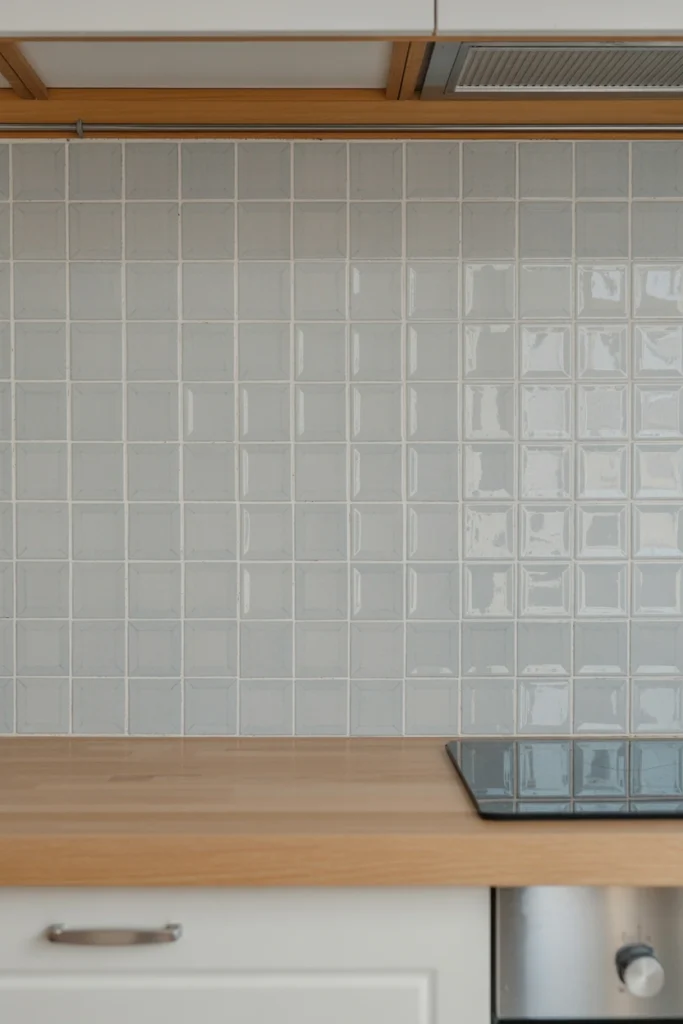
15. Keep the Backsplash Simple
The splashback should disappear: a single slab of honed stone, large-format tiles with minimal grout, or simply the worktop material run up the wall. No patterns, no features, no mosaics. In a calm kitchen, the splashback is background — and background should be quiet.
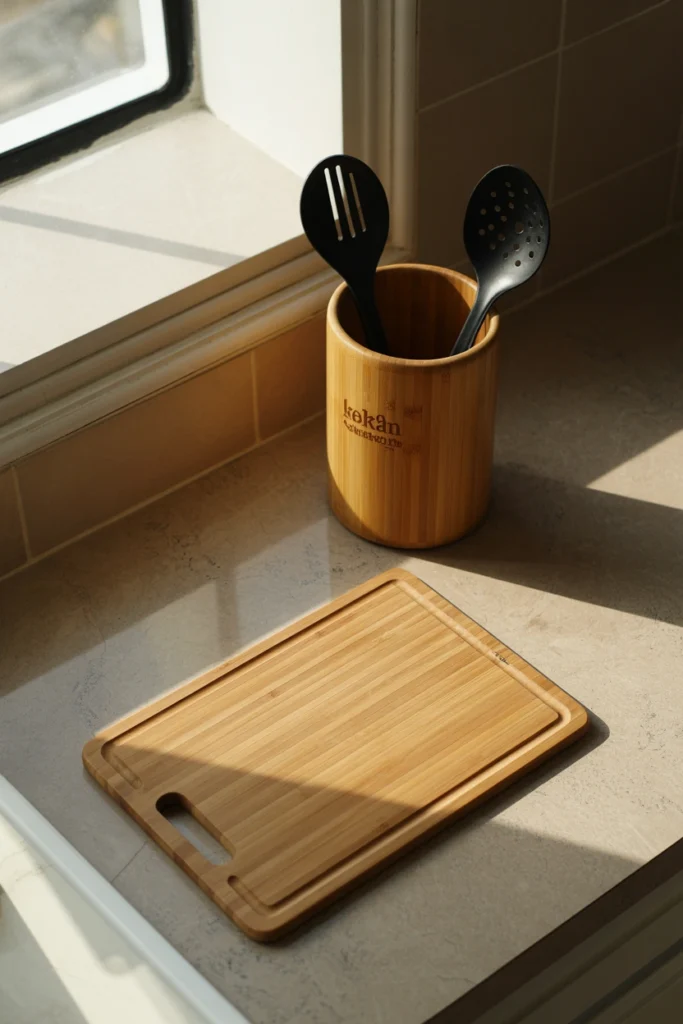
16. Introduce Bamboo Accents
Bamboo — in a blind, a utensil holder, a set of trays — adds a light, grassy note to the timber palette. It’s sustainable, beautiful, and unmistakably Japanese in feeling. Keep bamboo accents pale and simple; dark stained bamboo loses the freshness that makes it special.
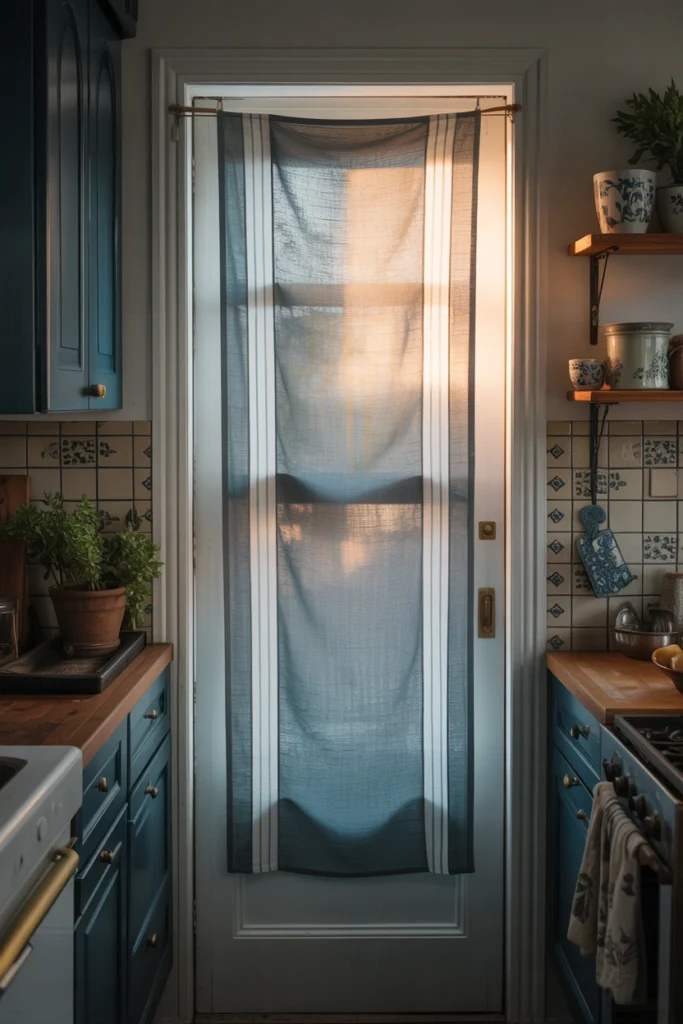
17. Add a Small Tatami or Textile Element
A tatami mat or a simple woven textile — as a runner, a seat cushion, a wall hanging — introduces the soft, natural texture at the heart of Japanese interiors. The scent of new tatami (like sweet grass) is itself a design element. One textile is enough; Japanese restraint applies to soft furnishings too.
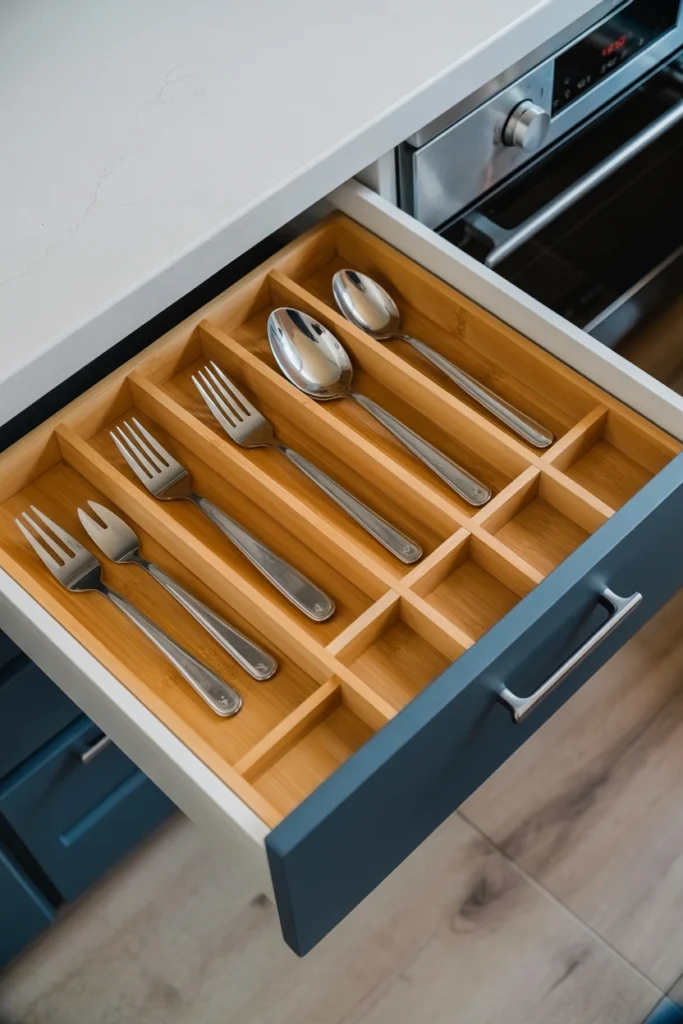
18. Prioritize Smart, Hidden Storage
The calm of a Japanese kitchen depends on invisible storage: deep drawers with bamboo organizers, a pantry behind flush doors, appliances garaged out of sight. Everything has a place, and every place is behind a quiet front. The visible kitchen should hold only what’s beautiful or in use right now.
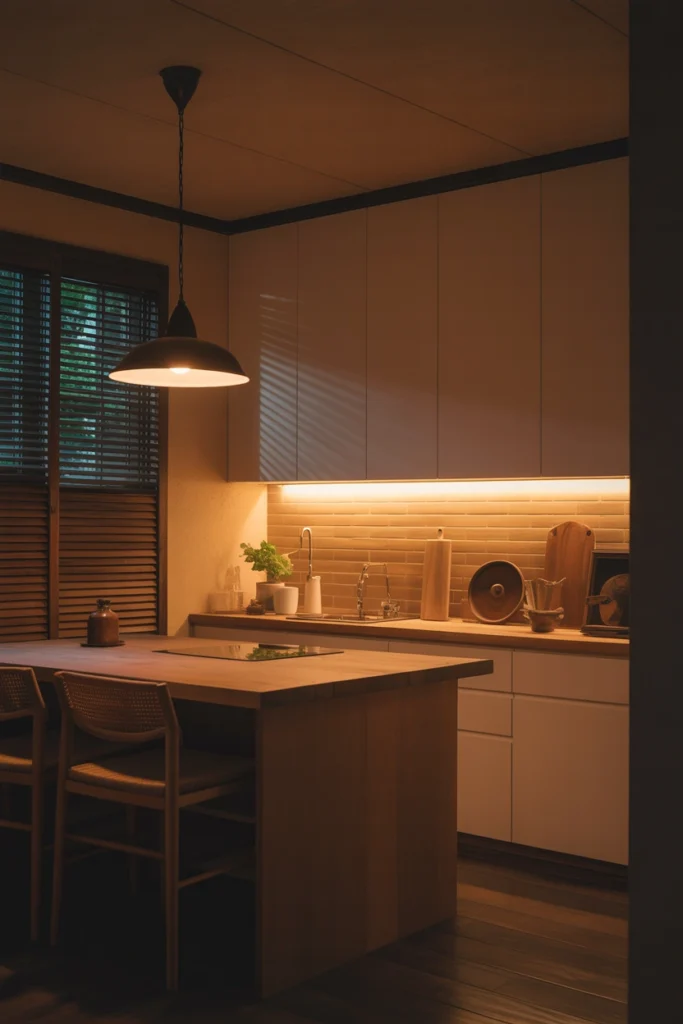
19. Use Soft, Layered Lighting
Japanese lighting is never harsh: paper-shaded pendants that glow rather than glare, under-shelf strips at warm temperatures, no downlights drilling pools of light into the worktop. Light should feel like it’s emanating from the room, not installed in it. Paper and fabric shades are the authentic choice — they diffuse and warm simultaneously.
20. Bring Nature Inside with a Single Statement Plant
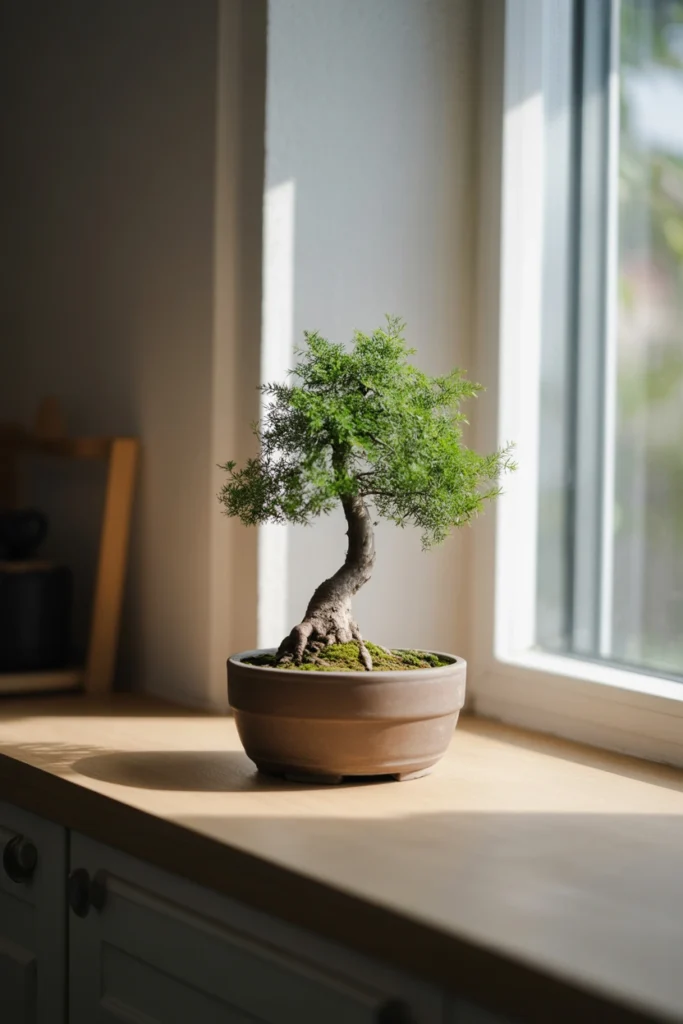
One plant, chosen carefully and placed deliberately — a sculptural pine, a single orchid, a branch in a tall vase. Not a collection, not a jungle: one living thing, given space and attention. In Japanese practice, the single plant is contemplated, not just decorated with. Choose something with beautiful structure; you’ll be looking at its silhouette daily.
Conclusion
A Japanese-inspired kitchen isn’t a style you apply — it’s a discipline you practice. Subtract until only the essential remains, choose natural materials, let light and space do the work, and accept imperfection as beauty.
The result isn’t just a calm kitchen. It’s a calmer way of moving through your day, starting with the first cup of tea.
Pro Tips
- Subtract before you add. The fastest route to a Japanese feeling is removing five things from your kitchen, not buying one. Stand in the room and ask of each visible object: is it essential or beautiful? If neither, it goes.
- Choose materials that age gracefully. Natural wood, stone, clay, paper — materials that patina rather than deteriorate. Avoid anything that looks worse with age; Japanese design is built on the beauty of time passing.
- Light like it’s paper. Swap harsh downlights for diffused sources: paper pendants, fabric shades, warm under-cabinet strips at 2700K. The goal is glow, not glare.
- Leave deliberate empty space. An empty stretch of worktop, a bare wall, a clear shelf — emptiness (ma) is a design element, not a failure to decorate. Protect it as carefully as you’d choose art.
FAQs
What defines a Japanese-style kitchen?
Minimalism, natural materials (wood, stone, bamboo), a neutral earthy palette, and the principles of ma (valued empty space) and wabi-sabi (beauty in imperfection). The overall feeling is calm, uncluttered, and connected to nature — achieved more by subtraction than addition.
How can I make my kitchen feel more zen without renovating?
Declutter ruthlessly, hide small appliances, switch to warm diffused lighting, and add one or two natural elements (a wood board, a single plant, linen textiles). Removing visual noise matters more than adding Japanese objects — calm comes from what’s taken away.
What colours work in a Japanese kitchen?
Warm whites, soft greys, natural wood browns, and muted earth tones — colours drawn from nature. Avoid saturated accent colours and stark contrasts. The palette should feel like river stones and rice paper: quiet, warm, and cohesive.
Is open shelving suitable for a Japanese kitchen?
Yes, if kept minimal and intentional — a few handmade ceramics and daily essentials, with generous empty space between objects. Japanese open shelving is curated, not storage overflow. If your shelves tend toward clutter, closed flush cabinetry serves the aesthetic better.

HowDecor is a home decor blog sharing simple, practical decorating ideas for everyday spaces. We believe a beautiful home should feel comfortable, personal, and full of warmth — and that great style does not require a huge budget. Our goal is to inspire readers to create spaces that feel peaceful, welcoming, and truly their own — one room at a time.