Most bedrooms fail at cozy in the same quiet way: people buy the bed they love, push it against the wall, hang whatever lamp they already own, and then wonder why the room still feels like a hotel checkout at 11 a.m. Coziness is not a shopping list. It is a layering problem — light, texture, scent, and breathing room, stacked in the right order until your shoulders drop the moment you walk in.
The twenty ideas below are arranged the way a decorator would actually sequence them: start with the palette and the light, move through the senses, and finish with the small habits that keep the feeling alive. Nothing here requires a renovation budget. What it requires is intention — choosing the duvet weight, the bulb temperature, the one corner that stays empty on purpose.
1. Build a Calm Base with Soft Neutral Colors
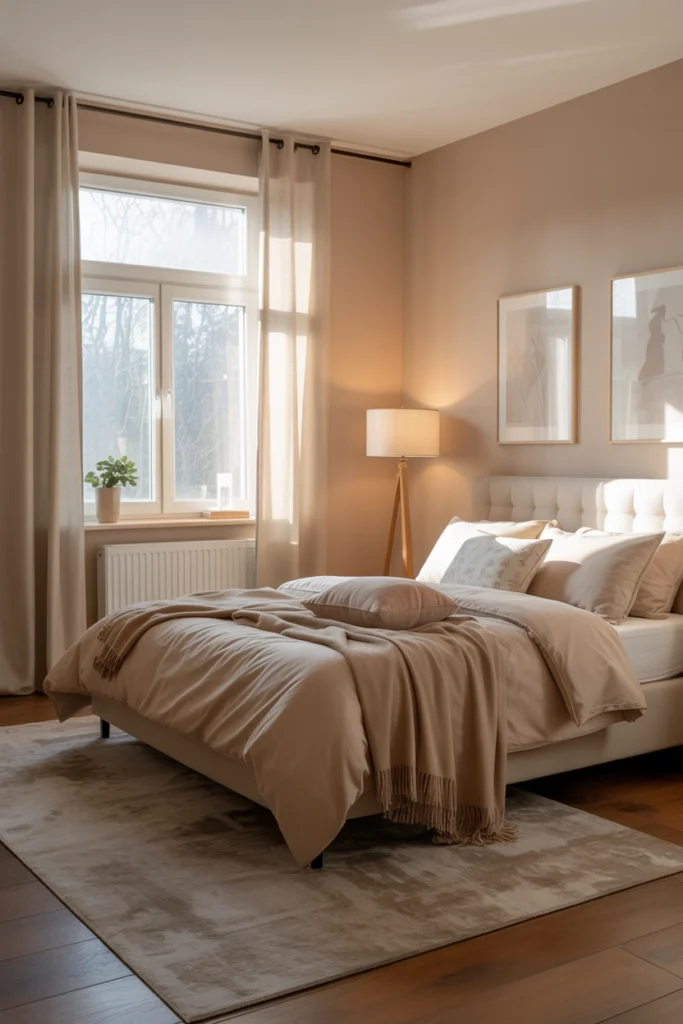
Walk into any genuinely restful bedroom and the walls are doing quiet work in the background. Warm beige, creamy off-white, soft greige, pale oatmeal — these tones absorb the day’s visual noise instead of reflecting it back at you. Paint is the cheapest square footage you own: a gallon of warm neutral costs roughly $35–$60 and covers a 12×12 room’s accent walls in an afternoon. The mistake I see constantly is painting first and furnishing second, then discovering the wall tone fights the bedding. Choose the palette from the bed outward instead — bedding and rug swatches in hand, held against paint chips in your actual evening light.
One nuance that matters more than the color itself: undertone. A beige with pink undertones can turn peachy under warm bulbs; one with gray undertones can read cold by morning. Sample three candidates on poster board, tape them up, and live with them for two full days before you commit.
2. Layer Your Bedding for Real Comfort
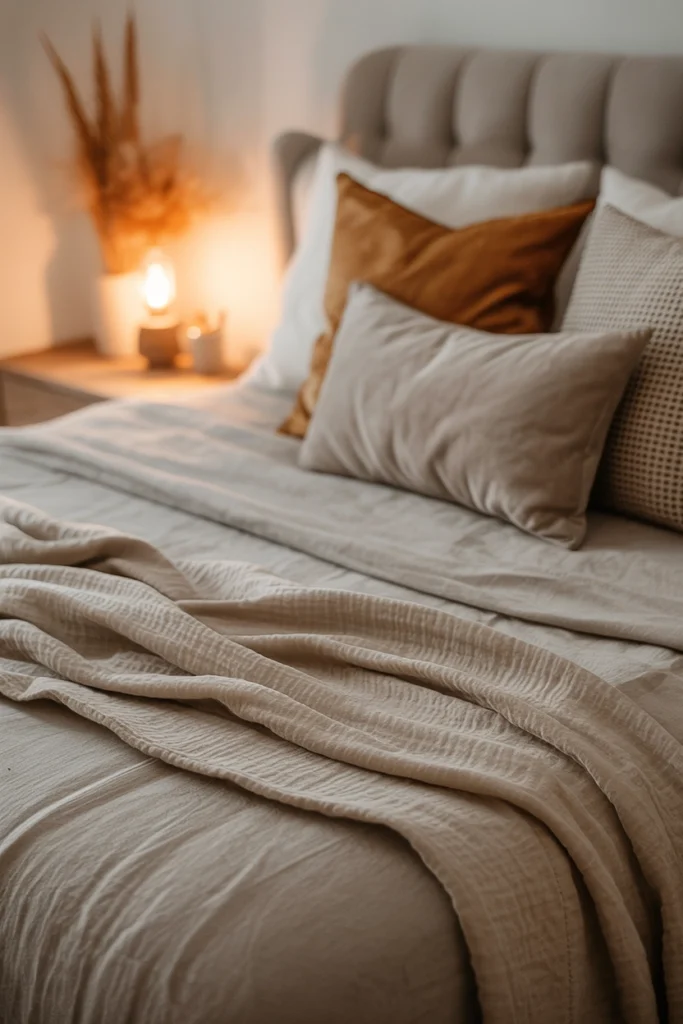
A cozy bed is built like a sandwich, and the order is non-negotiable: a supportive base (mattress topper if your mattress is firm, $50–$120 for a queen), a fitted sheet in breathable cotton or linen, a flat top sheet, then a duvet or comforter with a weight matched to your climate — all-season 10.5 tog works for most of us — and finally one textured throw folded across the foot. Four to six sleeping pillows arranged sleeping-behind, decorative-in-front is the arrangement that still lets you actually get into bed at night.
The part most people skip is mixing fabric finishes: matte linen against smooth sateen, a nubby knit against crisp percale. That contrast is what makes a bed look touched and inviting rather than flat and catalog-like. Wash linen bedding once before use — it softens dramatically and loses that initial stiffness.
3. Use Warm Lighting to Shift the Mood Instantly
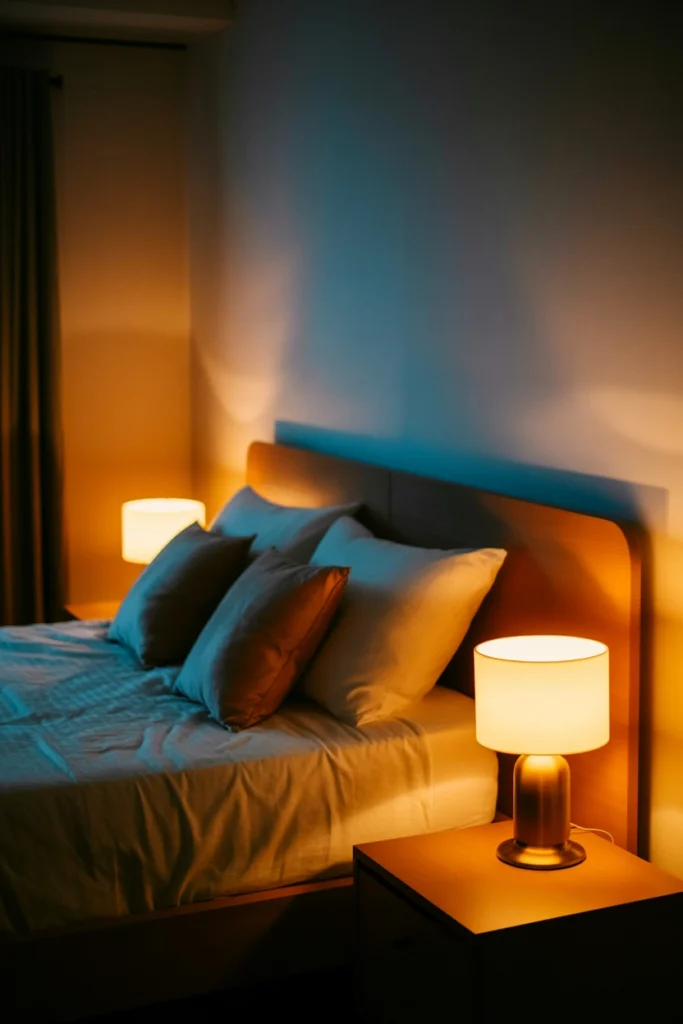
If your bedroom lighting is still a single ceiling fixture blasting 5000K daylight bulbs, everything else you do will fight uphill. Swap every bulb in the room to 2700K warm white — the color of candlelight and late afternoon — and the room will feel different before you’ve moved a single piece of furniture. A dimmer switch on the main fixture costs under $20 and takes fifteen minutes to install if you’re comfortable with basic wiring.
Evening light should come from low, scattered sources: a lamp on each nightstand, maybe a small one across the room, none of them brighter than 60-watt equivalent. Turn off the overhead entirely after 8 p.m. and watch what happens to your nervous system.
4. Add Texture to Create Depth Without Clutter
A bedroom can feel flat while still being full of stuff. The fix is rarely more decor — it is more texture. You want at least four tactile families in the room: something soft (velvet cushion, wool throw), something woven (a seagrass basket, jute rug edge), something natural (linen, raw wood), and something smooth (glass lamp base, polished ceramic). Each one catches light differently, which is what gives a simple room its visual richness.
Cheap texture beats expensive texture every time if you get the mix right. A $15 chunky-knit throw from a big-box store does more for coziness than a $200 decorative object, because you actually interact with it — your hand reaches for it, your eye reads its shadows.
5. Introduce Soft Accent Colors Thoughtfully
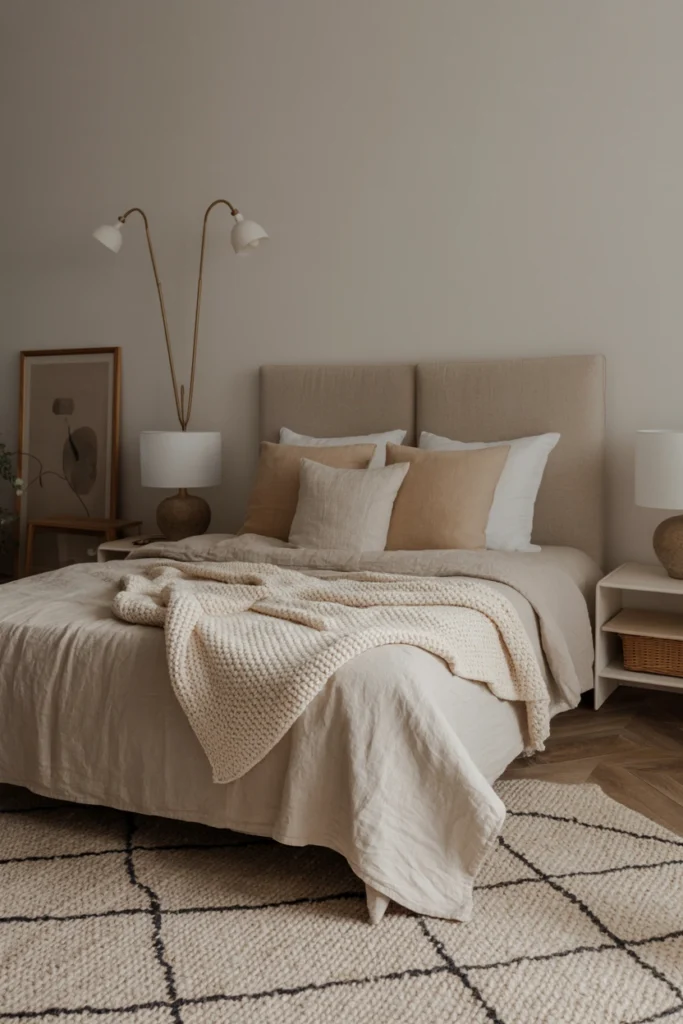
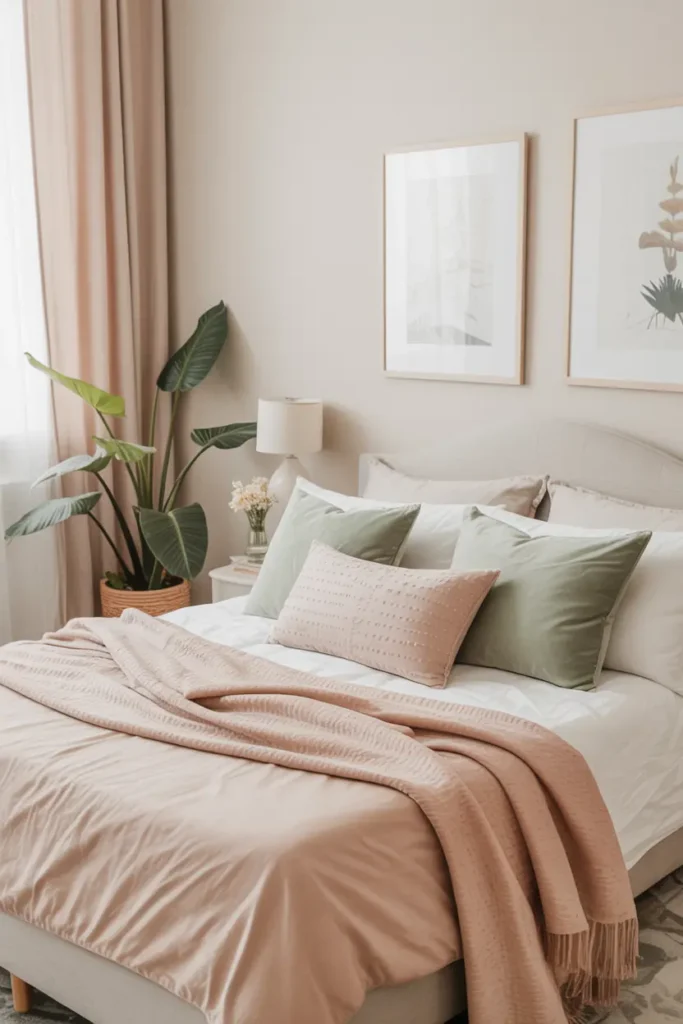
Neutrals build the calm; accents keep the calm from feeling clinical. The trick is keeping accents dusty and muted — sage green, dusty rose, muted terracotta, powder blue — and confining them to three or four repeating touches: a cushion, a folded throw, one piece of art. Repetition is what makes an accent feel intentional instead of accidental.
A reliable formula: pick one accent color and repeat it in three different textures across the room. Dusty rose in a velvet cushion, a linen pillowcase, and a single art print ties the room together without a single bold gesture.
6. Bring in Natural Elements for a Grounded Feel
Something in our nervous system registers real wood, stone, and living plants as safety signals — materials that are honest, heavy, and slightly imperfect. A solid oak nightstand, a travertine lamp base, or even a single branch in a ceramic vase introduces that groundedness faster than any color choice can. Houseplants like snake plants or pothos are almost indestructible and cost under $25 in a nursery pot.
Keep it honest rather than themed: three natural pieces is plenty. A wooden tray on the bed, a stone candle holder, one plant in the corner. More than that and the room starts performing “nature” instead of feeling it.
7. Keep Surfaces Clear for Mental Calm
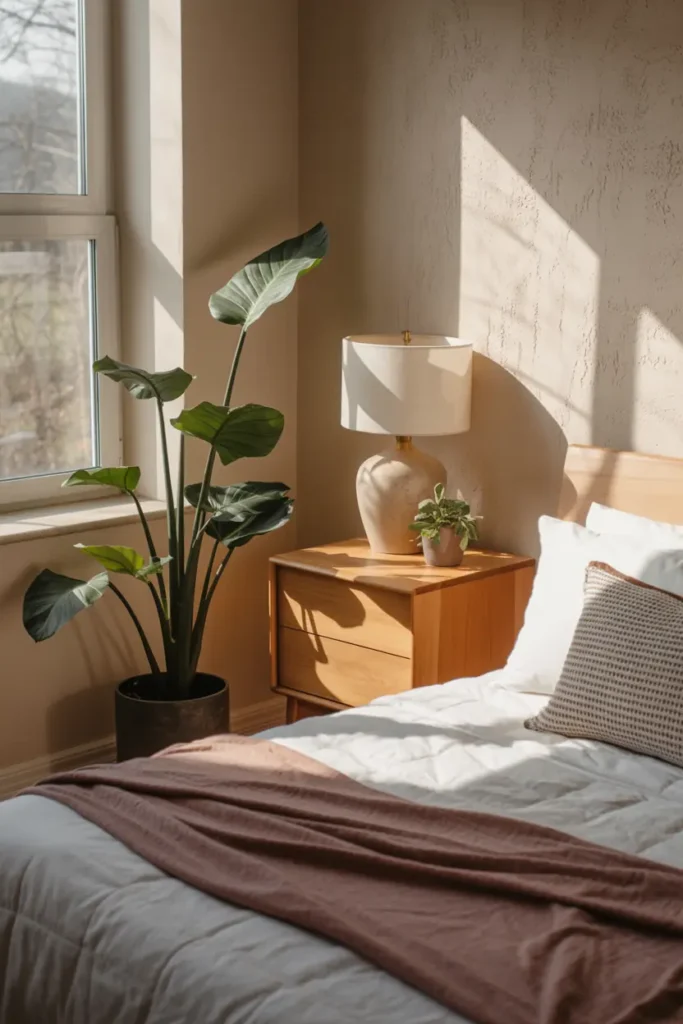
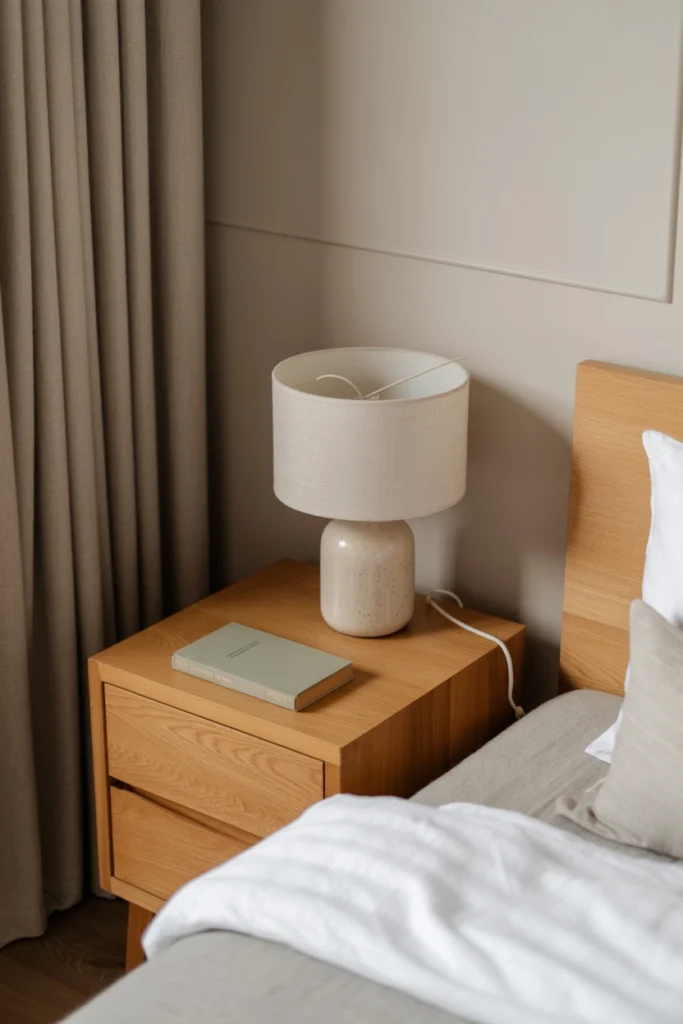
Visual clutter raises cortisol — that is not wellness poetry, it is documented. Your nightstand should hold a lamp, one book you are actually reading, and a small tray or dish for glasses and lip balm. Everything else belongs in a drawer. Do the same audit for the dresser top: if an object has not been touched in two weeks, relocate it.
The practical tool here is containment. Trays, small boxes, and baskets let you keep essentials visible without looking scattered — they turn five loose objects into one composed shape. Spend twenty minutes on each surface once, then protect the result with a five-minute nightly reset.
8. Soften Daylight with Sheer Curtains
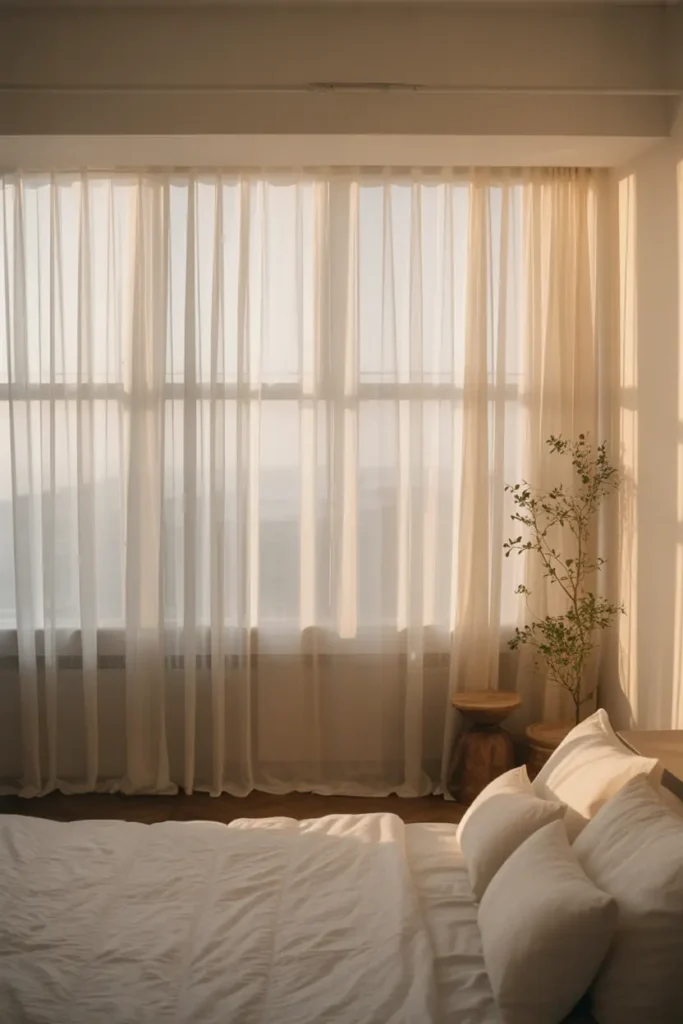
Bare windows in a bedroom give you glare at 7 a.m. and a black rectangle at night. Sheer curtains in white or warm ivory diffuse the daylight into a soft glow while keeping your privacy, and they cost very little — ready-made sheer panels run $15–$40 a pair. Hang them on a rod mounted 4–6 inches above the window frame and 3–4 inches wider on each side, so the window reads larger than it is.
Layer them over blackout curtains or a roller shade if morning light wakes you. The sheer stays closed all day for softness; the blackout stays open until bedtime. Two layers, two jobs.
9. Keep the Layout Open and Functional
A bedroom needs a minimum of 24–30 inches of clear walkway around the bed — measure yours, because most crowded rooms are crowded by exactly that much. Pull furniture away from the walkway first, then reassess. Often the room does not need fewer pieces; it needs the pieces in different places. Try the bed on the longest unbroken wall, with nightstands that are at least as tall as the mattress top.
One common layout error: pushing everything against the walls. Floating a small chair or a bench a foot off the wall actually makes a room feel more generous, because it creates shadow lines and depth where a flat wall had none.
10. Add Personal Touches That Feel Authentic
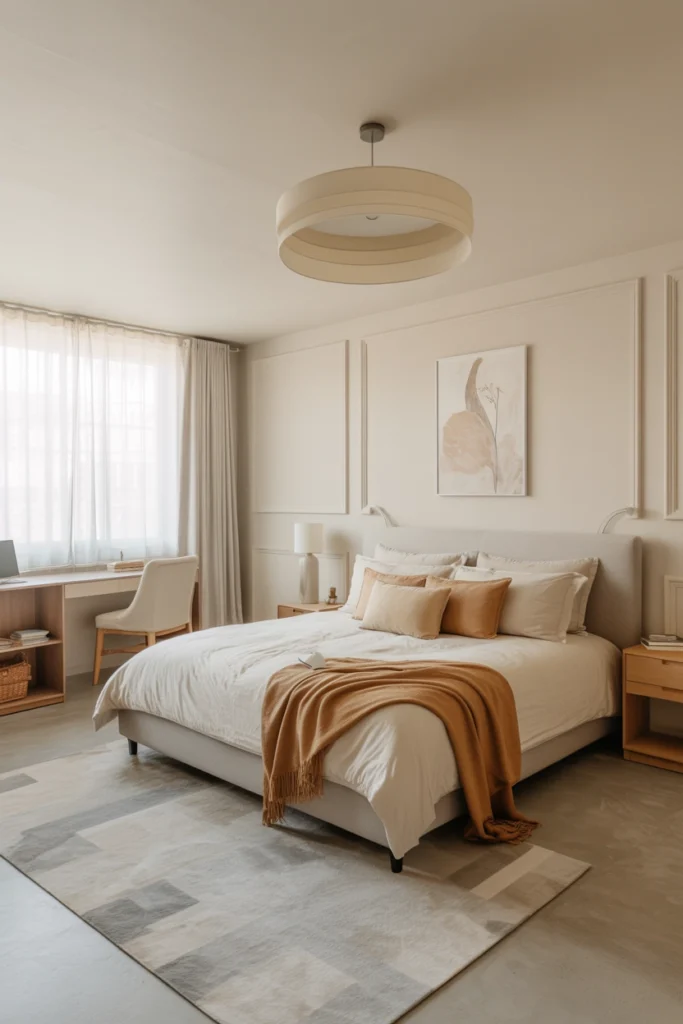
A cozy bedroom should carry fingerprints — a framed photo that is slightly crooked because you hung it yourself, the paperback with the broken spine, the souvenir from a trip that means nothing to anyone else. These are the details that make a room feel inhabited rather than staged, and they cost nothing.
The line is between personal and cluttered: five meaningful objects displayed with breathing room beats twenty crowded onto one shelf. Give each keepsake a deliberate home — the photo on the dresser, the book stack on the nightstand — and let the rest live somewhere else.
11. Place a Soft Rug for Everyday Comfort
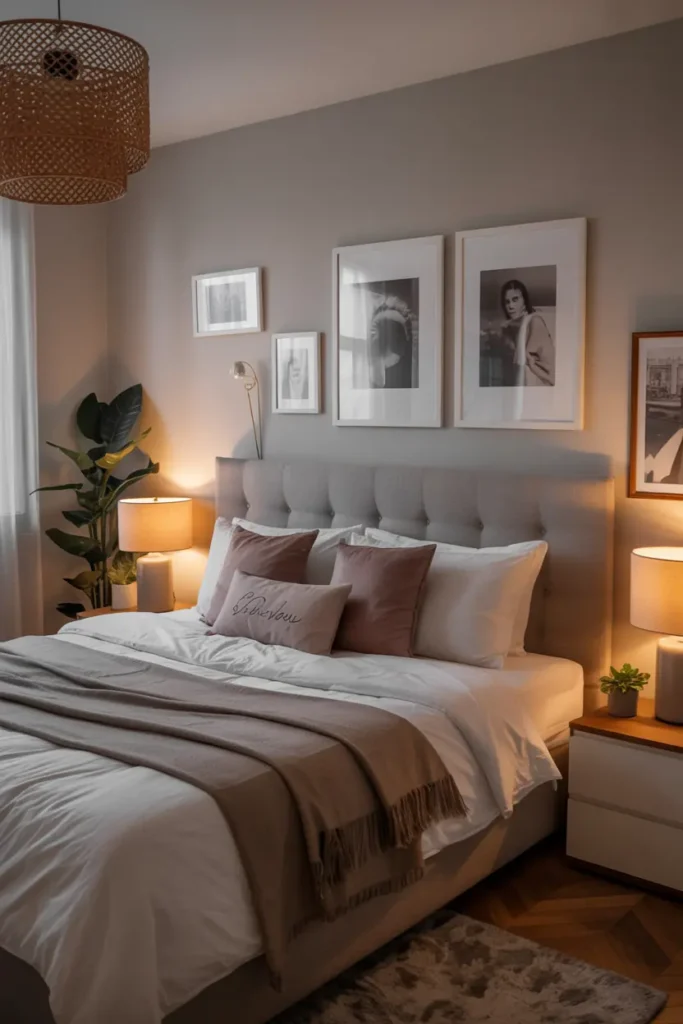
The first sixty seconds of your morning are set by what your feet land on. A rug that extends at least 18–24 inches beyond each side of the bed — 8×10 feet under a queen is the standard — turns that first step into something you look forward to. Low-pile wool or washable cotton rugs in the $100–$250 range handle bedroom traffic well and survive a washing machine or a professional clean.
If a full under-bed rug is out of budget, two runners flanking the bed deliver 80 percent of the comfort for a fraction of the cost. Just anchor them so they do not creep — rug tape is $10 and saves daily irritation.
12. Choose Light, Minimal Furniture for an Open Feel
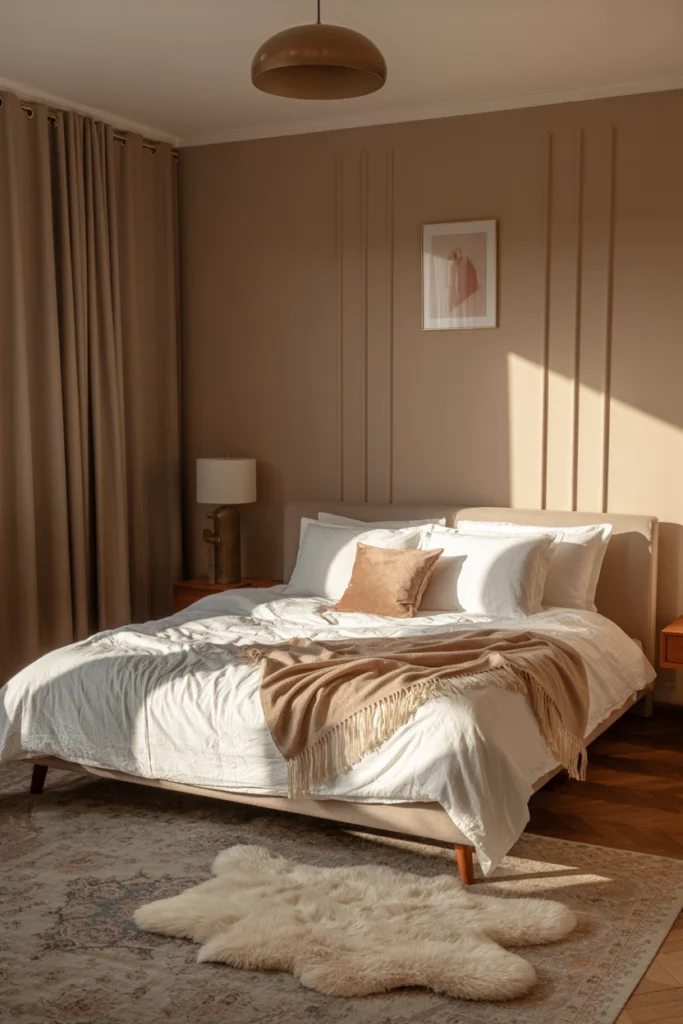
Bulky dark furniture eats light and floor space simultaneously. Pieces with visible legs, light wood finishes like white oak or ash, and simple silhouettes keep sightlines open — your eye travels under and around them, which reads as more room. You do not need to replace everything: swap the solid-front dresser for one with open or reeded detailing, or simply refinish a dark nightstand in a lighter stain.
Scale rule of thumb: in a small bedroom, no piece of furniture should be taller than the windowsill except the wardrobe, and the wardrobe belongs on the shortest wall where its height does the least visual damage.
13. Add a Subtle Fragrance for a Relaxing Atmosphere
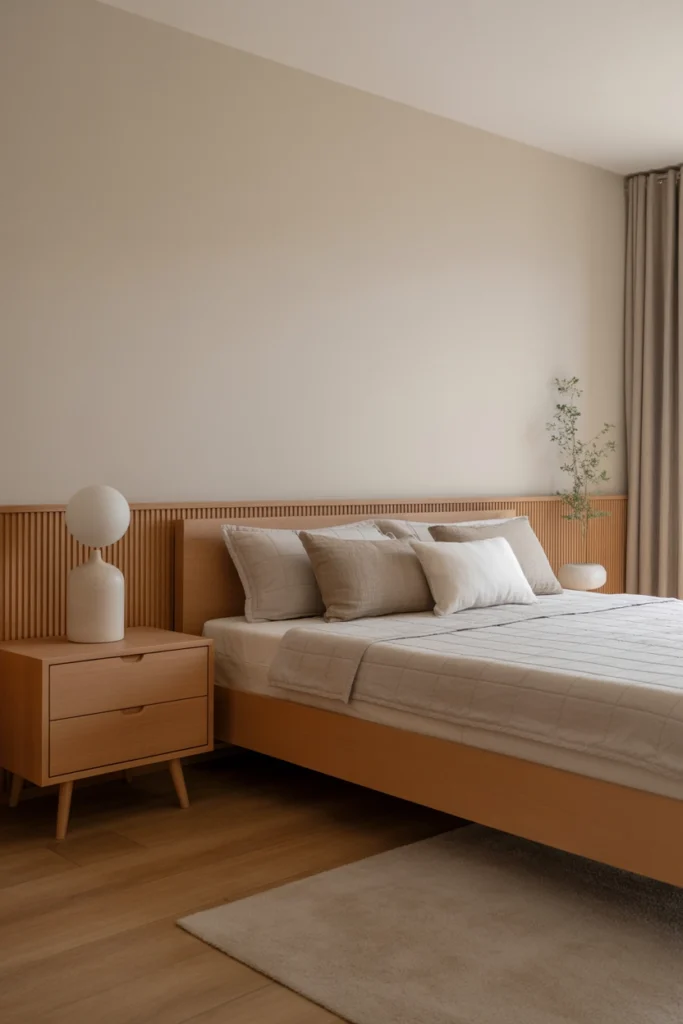
Scent is the fastest shortcut to a room feeling like yours. Lavender, cedarwood, vanilla, or sandalwood — pick one signature scent rather than cycling through many, because familiarity is what makes it comforting. A reed diffuser ($20–$40) lasts two to three months and needs no flame; a linen spray on the pillows refreshes the scent without touching the bedding fibers.
Go easy: one source of scent per room is plenty. A diffuser plus a scented candle plus a plug-in is how bedrooms end up smelling like a department store, and scent fatigue sets in within days. Subtle means you notice it when you enter and forget it after five minutes.
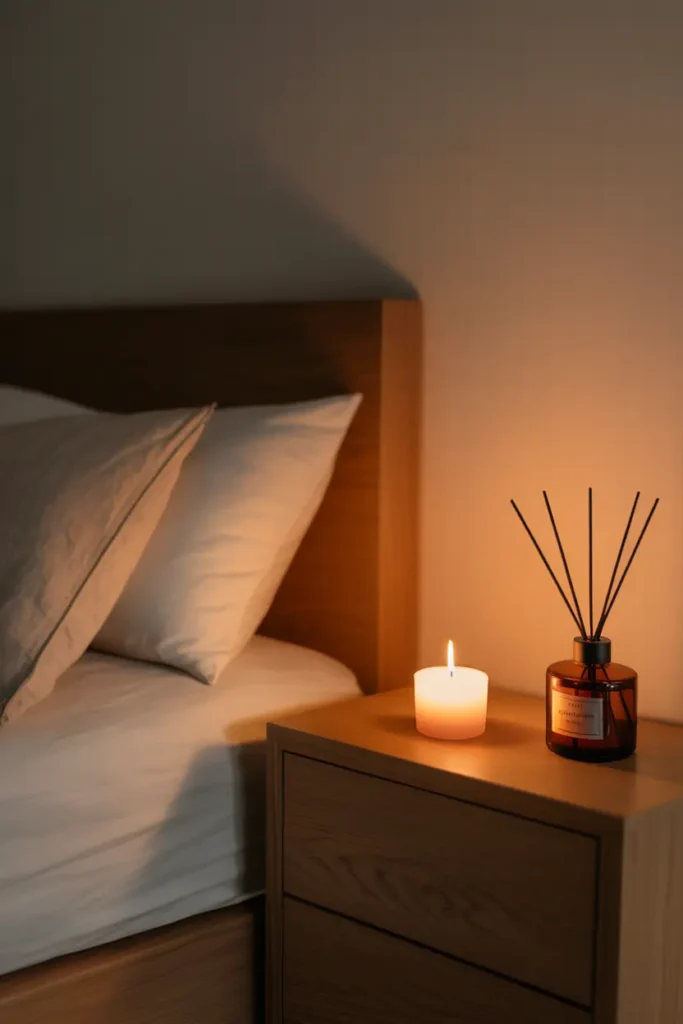
14. Use Layered Lighting for Flexibility
This is the companion to warm bulbs: even the perfect bulb temperature fails if there is only one source. Aim for three layers — ambient (a dimmed ceiling light or a shaded pendant), task (reading lamps at the bedside, at least 2700K with a shade that directs light down), and accent (a candle-height glow on the dresser, a small picture light, or LED tape behind the headboard). Each layer switches independently, so the room can be bright for folding laundry and candle-soft for winding down.
Smart bulbs with a “dim to warm” feature — they shift warmer as they dim — are the single best lighting upgrade under $30 per bulb. Put them in the bedside lamps first, since those set the evening mood.

15. Choose Wall Art That Supports a Calm Mood
Art in a bedroom should lower your heart rate, not raise it. Soft abstracts, misty landscapes, botanical studies, muted line drawings — anything with movement rather than sharp contrast. Scale it right: above the bed, art should span roughly two-thirds the width of the headboard, hung so its center sits at eye level when you are standing, about 57 inches from the floor.
One large calm piece beats a busy gallery wall in a bedroom. If you love the gallery look, keep the frames identical and the palette restrained, and stop at five pieces — the calm survives uniformity but dies in variety.
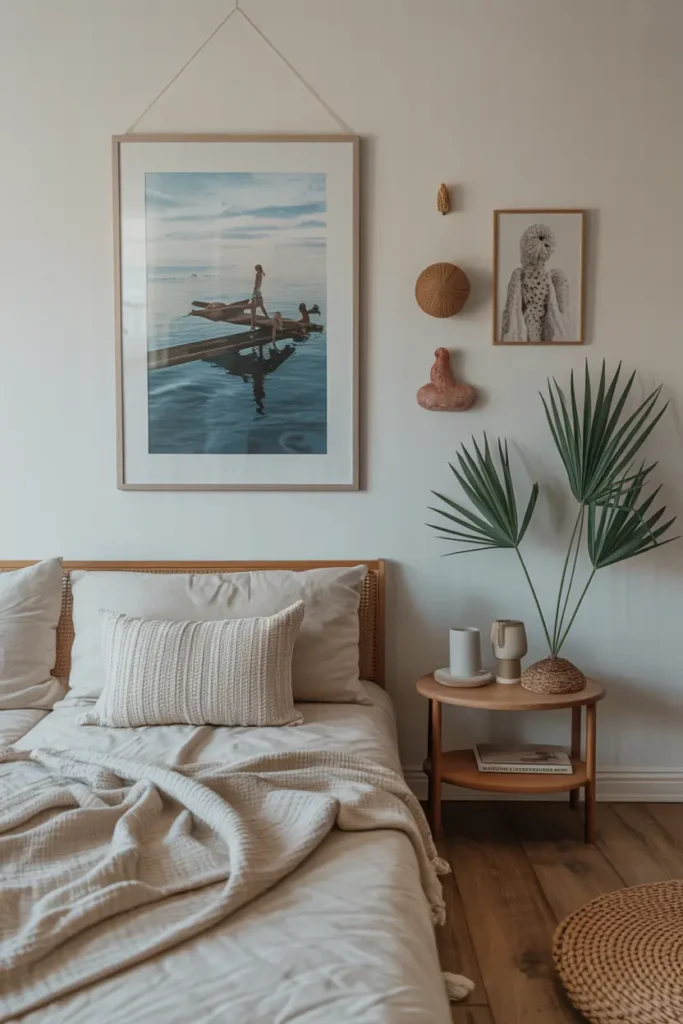
16. Use Light Bedding for an Airy Look
White, ivory, pale gray, and washed pastels reflect both daylight and lamplight, which is why light bedding makes even a north-facing bedroom feel brighter. The practical fear — stains — is solved by choosing machine-washable cotton or linen and keeping a bottle of oxygen-based stain remover in the laundry area. Hotel-white duvet covers are cheap ($40–$80) precisely because replacing them is expected, not tragic.
Keep the light palette from feeling sterile with one medium-tone element: a natural linen throw, a wooden tray, a woven cushion. One anchor of warmth against all that lightness is the whole trick.
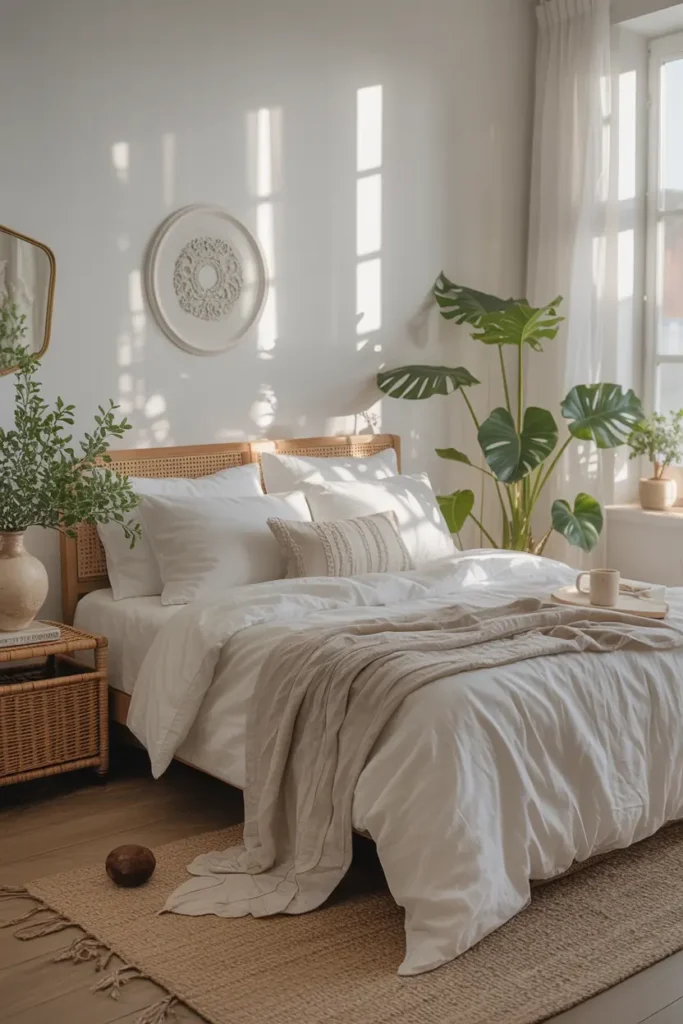
17. Add a Soft Headboard for Comfort and Style
A headboard changes how you use the bed, not just how it looks: reading, scrolling, and morning coffee all become comfortable when you can lean back against padding instead of a wall. Upholstered headboards in linen or boucle run $150–$400 for a queen and mount to the bed frame or the wall with a French cleat in under half an hour. Choose a height of 24–28 inches above the mattress so it reads substantial without swallowing the wall.
If buying new is off the table, a $60 upholstery job on a secondhand frame — or even a neatly hung quilt — delivers the same softness. Comfort is the point; the purchase is optional.
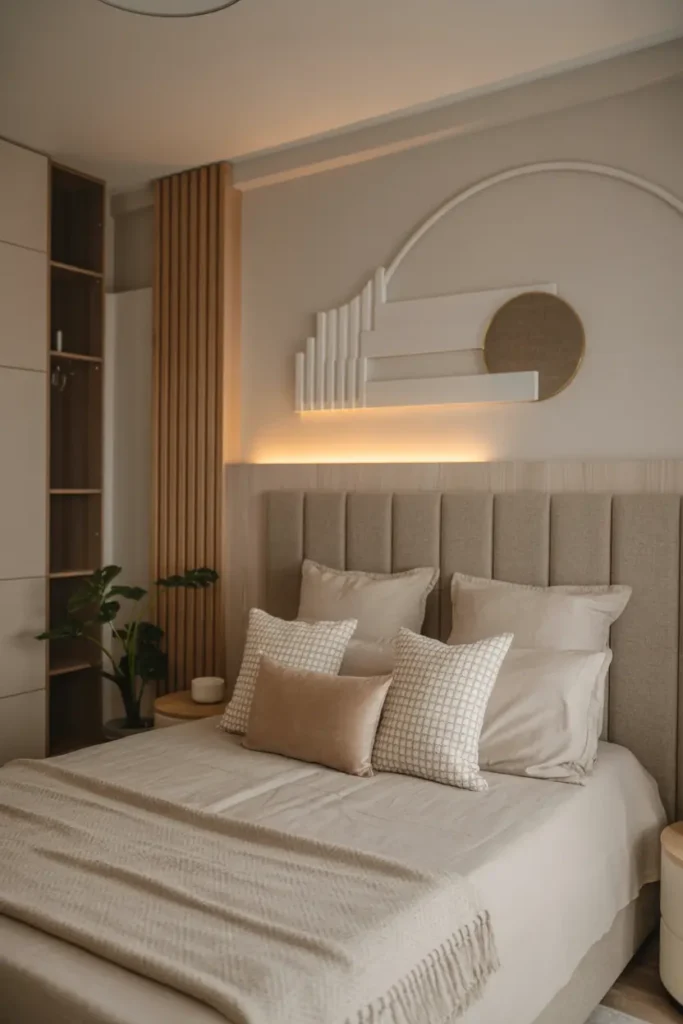
18. Keep Decor Minimal and Intentional
Every object in a bedroom should pass a simple test: does it add comfort, function, or genuine meaning? A candle you light, a clock you check, a plant you tend — keep. A decorative ladder you never touch, a pile of cushions you throw on the floor every night, a tray of objects you dust but never use — those are clutter wearing a costume. Cushion count is the fastest diagnostic: if you remove more than two before sleeping, you own too many.
Intentional does not mean empty. It means each remaining piece has a reason, and you could name it if asked.
19. Add a Throw Blanket for Instant Warmth
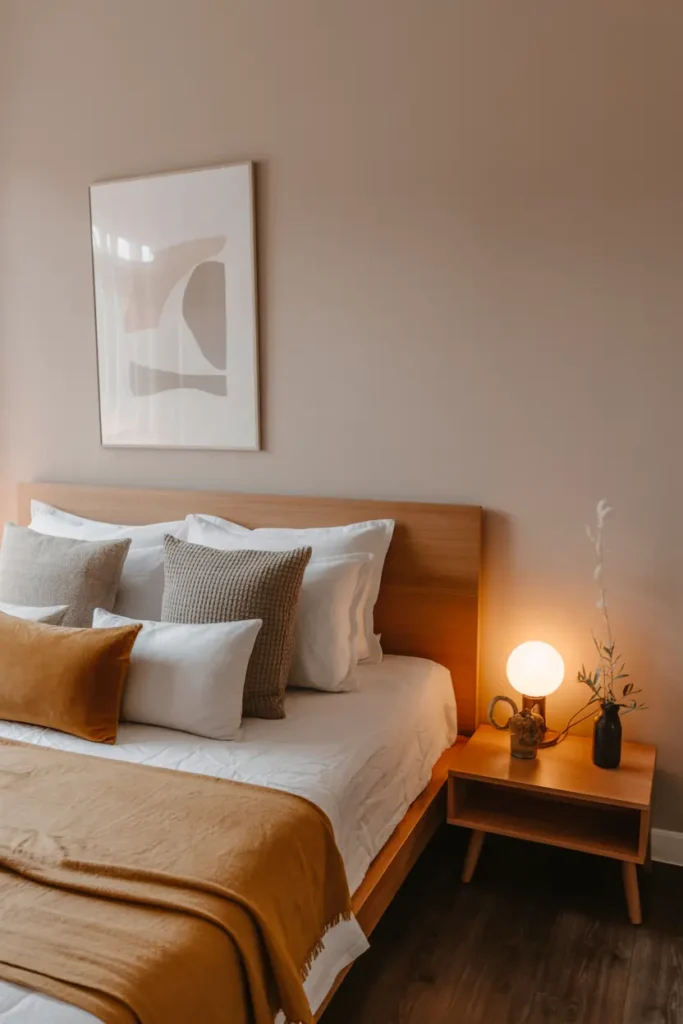
The throw is the hardest-working item in a bedroom: extra warmth on cold nights, a color and texture accent by day, a nap blanket, a guest blanket. Drape it folded in thirds across the foot of the bed or casually over one corner of an armchair — deliberately casual, not staged. Wool and chunky knits for winter, washed cotton or gauze for summer; a good throw costs $25–$60 and outlasts most decor purchases.
Storage matters: a throw that lives on the bed gets used; a throw folded in a closet gets forgotten. Keep one within arm’s reach and let it look slightly rumpled — perfection kills the invitation.
20. Focus on Comfort Over Perfection
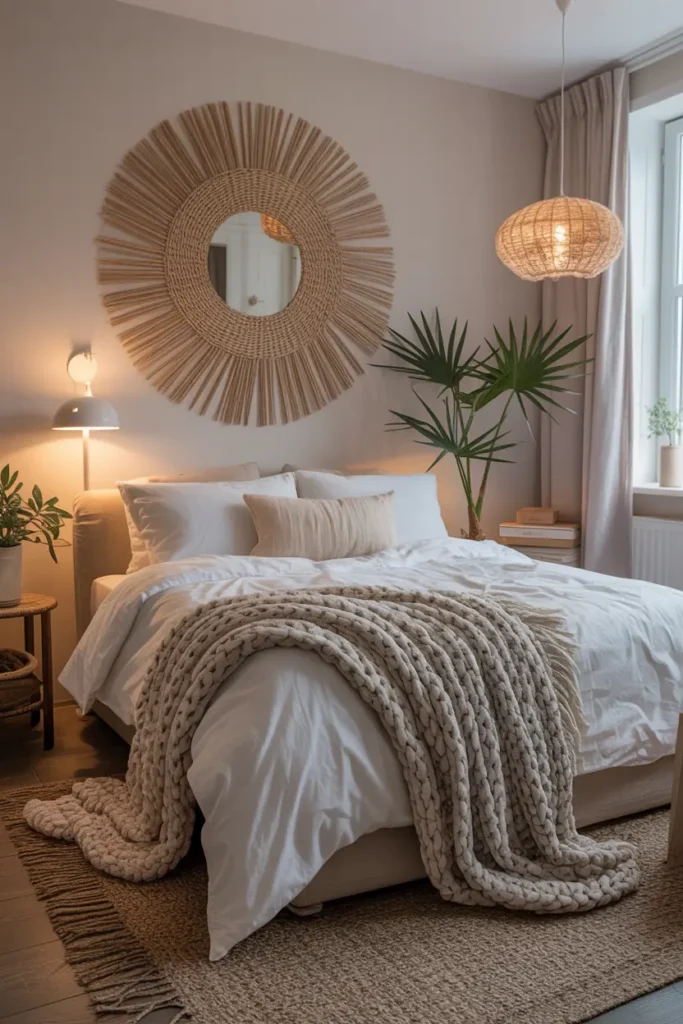
Here is the quiet truth under all nineteen ideas: the coziest bedrooms are never the most photogenic ones. They have a book splayed open on the pillow, a mug on the nightstand, a blanket that has slid half off the bed. Chasing a magazine finish turns the bedroom into a performance space, and performances are exhausting. Aim instead for a room that looks like someone is genuinely, happily living in it.
So use the ideas above as a foundation, then let the room get a little lived-in. The goal was never a perfect bedroom. It was a bedroom that makes you exhale.
Related Decor Ideas
- Cozy Bedroom Decor Ideas That Feel Warm and Relaxing
- Minimalist Bedroom Ideas for a Clean and Peaceful Space
- Small Bedroom Ideas That Make Your Space Feel Bigger
A cozy bedroom is not a project you finish — it is a feeling you maintain. Start with the light and the palette, layer in texture and scent, and give yourself permission to let the room be a little imperfect. In a week of small adjustments, you can have a bedroom that greets you at the door and lets your whole body stand down. That is the entire point of coming home.
Pro Tips
- Change every bedroom bulb to 2700K warm white before buying anything else — it is the highest-impact, lowest-cost move in this entire list.
- Test paint and fabric swatches in your room’s evening light, not the store’s fluorescents; undertones shift dramatically between the two.
- Keep a small basket in the closet for “bedroom drift” — stray items that migrate in during the week — and rehome them every Sunday to protect your clear surfaces.
- Buy the best mattress topper and pillow quality your budget allows; you spend a third of your life in direct contact with them, and no decor compensates for bad sleep.
FAQs
What is the cheapest way to make a bedroom feel cozier?
Warm 2700K bulbs plus a dimmer, a $25 throw blanket, and twenty minutes decluttering the surfaces. Those three moves change the sensory feel of the room for under $50 and an hour of your time.
What colors make a bedroom feel calm but not boring?
Warm neutrals — creamy off-white, warm beige, soft greige — with one dusty accent like sage, dusty rose, or muted terracotta repeated in three different textures. The neutral base keeps it calm; the repeated accent keeps it alive.
How many pillows and cushions should a cozy bed have?
Your sleeping pillows plus two to three decorative cushions is the sweet spot. If you have to remove more than two items before getting into bed, the bed is styled for photos, not for sleeping in.
Can a bedroom be cozy without a headboard?
Yes — comfort matters more than the furniture piece. A wall-mounted reading cushion, a neatly hung quilt, or even a thick row of sleeping pillows against the wall gives you the same lean-back comfort. A headboard is the polished version, not a requirement.

HowDecor is a home decor blog sharing simple, practical decorating ideas for everyday spaces. We believe a beautiful home should feel comfortable, personal, and full of warmth — and that great style does not require a huge budget. Our goal is to inspire readers to create spaces that feel peaceful, welcoming, and truly their own — one room at a time.