The square footage is not the problem. Walk through enough small bedrooms and a pattern emerges: rooms that feel cramped are almost always suffering from visual noise — dark furniture, a single glaring ceiling light, clutter with nowhere to hide. In 2026 the most interesting small-bedroom design is not about buying less. It is about making every square inch look deliberate, so the room reads expensive instead of squeezed.
Eight trends are doing the heavy lifting this year. None of them require knocking down walls. All of them work on the same principle: remove what the eye trips over, amplify what the eye glides across.
Warm Neutral Color Schemes That Make Small Bedrooms Feel Larger and More Refined
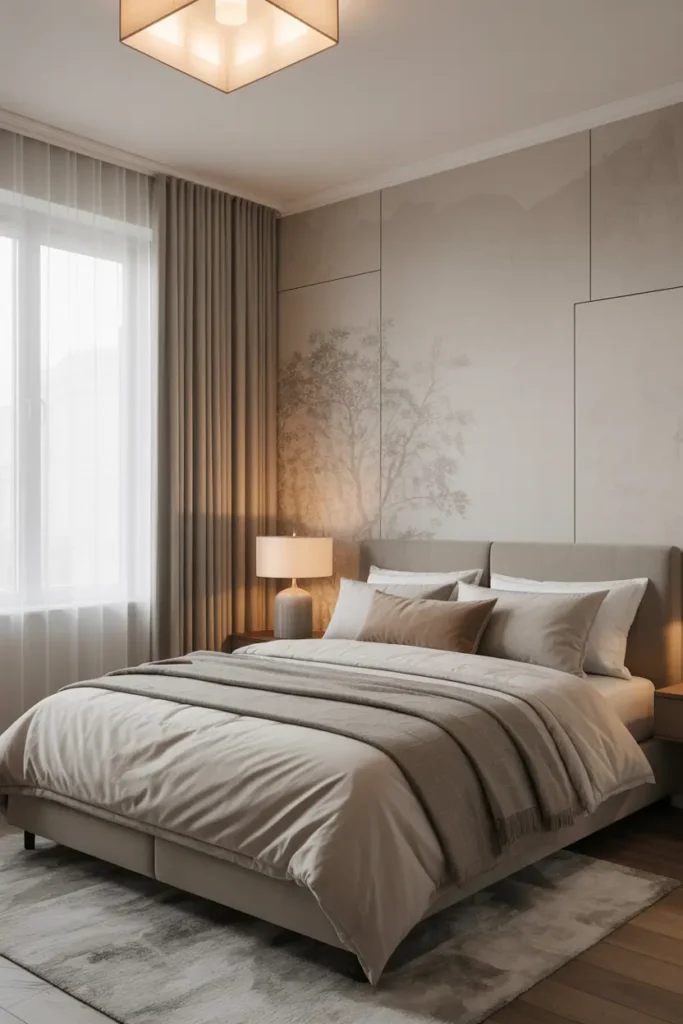
The 2026 palette has settled decisively on warmth: creamy beige, sand, warm taupe, mushroom, soft oat. Cool grays are out — they read as institutional in small rooms with limited daylight. Warm neutrals do two jobs at once: they bounce light around instead of swallowing it, and they make the walls feel like they are receding gently rather than closing in. Paint every wall the same tone, including the trim, for a seamless envelope effect that erases visual boundaries.
One specification to get right: keep the contrast between your wall color and your largest furniture piece under two shades on a paint strip. High-contrast furniture against walls chops the room into blocks; tone-on-tone lets it read as one continuous space.
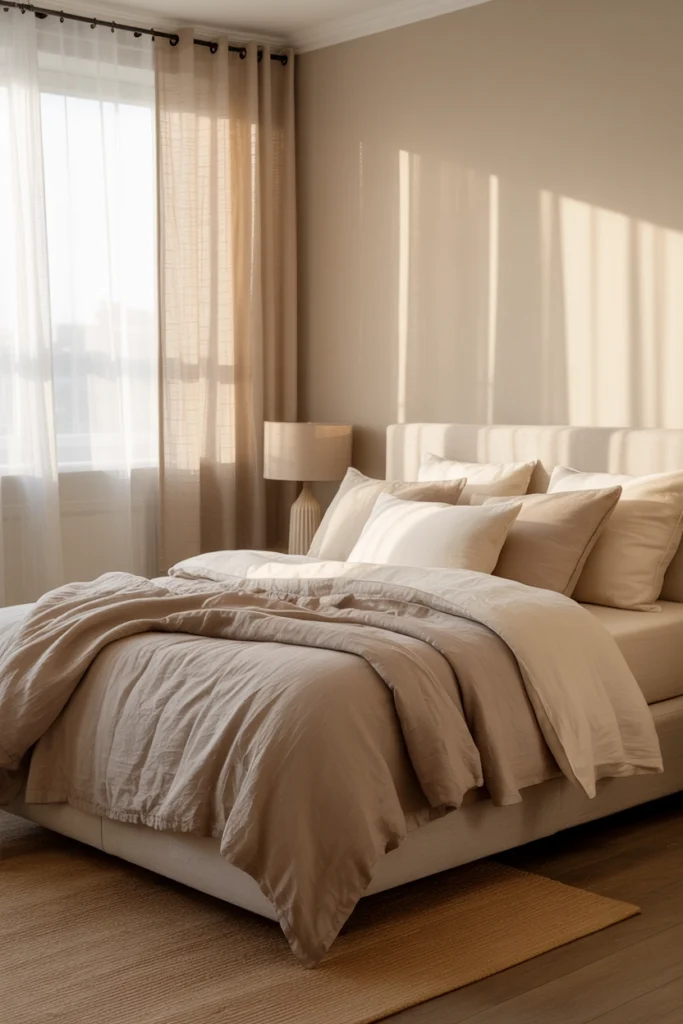
Low-Profile Bed Designs That Visually Expand Small Spaces
Bed height is the single most underrated lever in a small bedroom. A platform bed with a mattress top sitting 18–22 inches off the floor reveals more wall above it, which your brain reads as more air. Tall sleigh beds and chunky four-posters do the opposite — they claim vertical territory the room cannot spare. Upholstered low-profile platforms in boucle or performance linen, $300–$700 for a queen, are the dominant 2026 silhouette for exactly this reason.
Skip the footboard entirely. An open foot keeps sightlines traveling to the far wall, adding two to three perceived feet of depth. In a 10×12 room, that is a meaningful percentage.
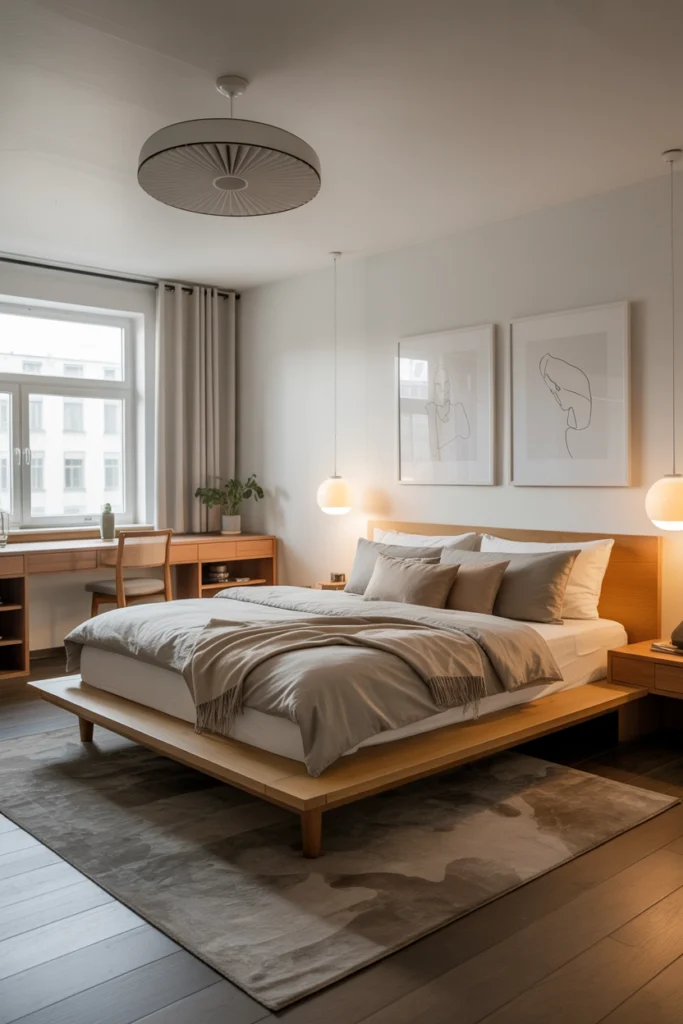
Layered Lighting Techniques That Add Depth and a Luxury Feel
A single ceiling fixture is the fastest way to make a small bedroom feel like a dorm room. The 2026 move is three modest layers: wall-mounted reading sconces flanking the bed (which free up nightstand real estate), one low ambient source such as a shaded floor lamp in a corner, and a concealed accent — LED tape behind the headboard or under a floating shelf. Total investment runs $120–$300 if you buy thoughtfully, and the room will look lit by a designer rather than a landlord.
Keep every source at 2700K and put the ambient layer on a dimmer. Small rooms forgive almost nothing under harsh white light; under warm dimmed light they forgive almost everything.
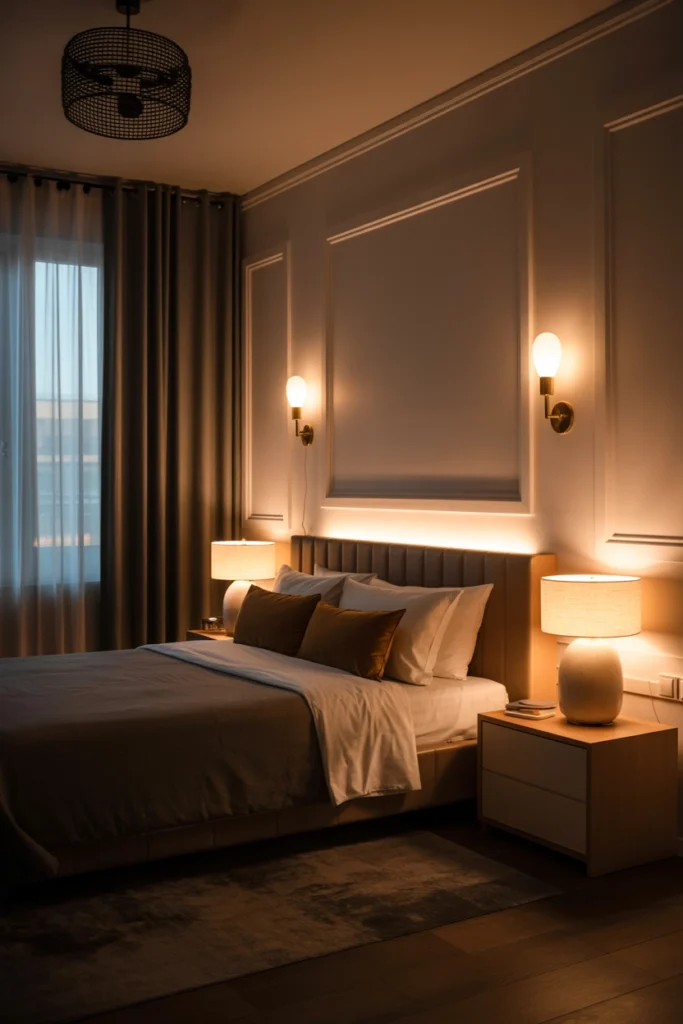
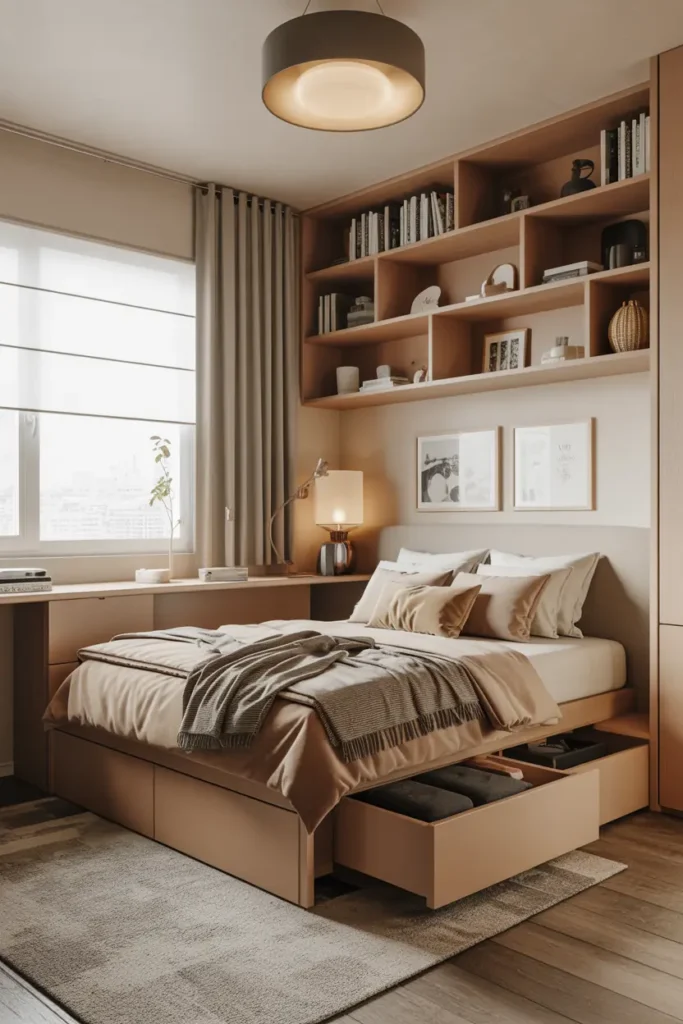
Smart Hidden Storage Solutions That Keep the Room Clean and Spacious
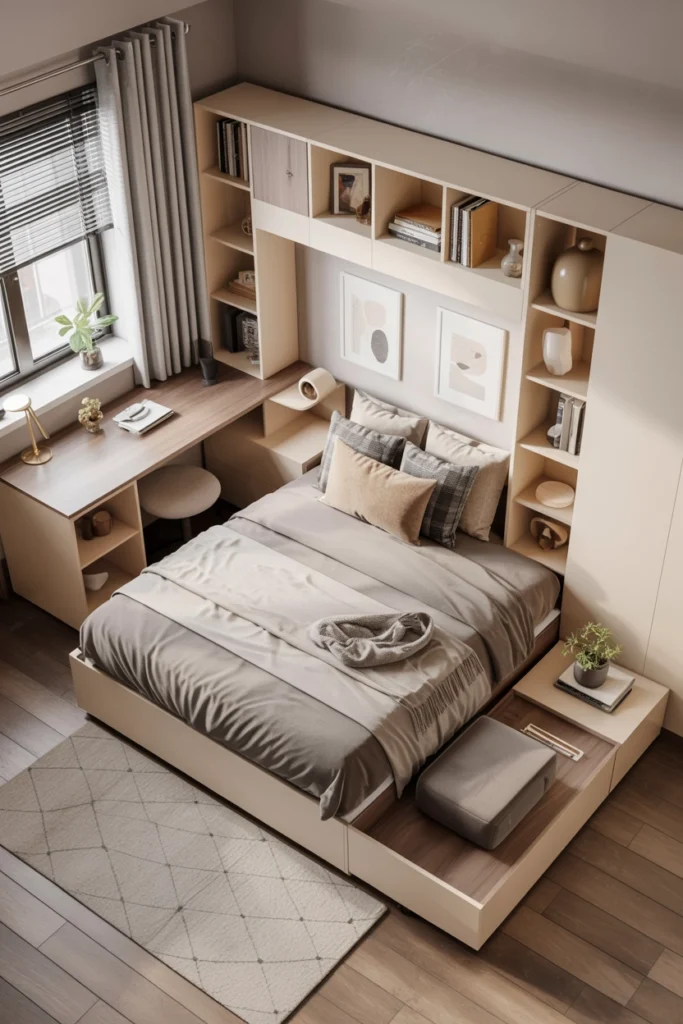
Clutter is the tax small rooms pay for not having enough closets. The 2026 answer is storage that disappears: platform beds with built-in drawers, ottomans that open, nightstands with concealed charging compartments, over-door organizers hidden behind full-length mirrors. A storage bed costs roughly $150 more than its hollow equivalent and swallows an entire dresser’s worth of off-season clothing.
Audit by category, not by item. Open every drawer, pull out one category — all the chargers, all the spare linens, all the “miscellaneous” — and give each category one container. Clutter you cannot see does not shrink the room.
Subtle Textures and Soft Wall Finishes That Add Quiet Depth
Bold wallpaper patterns are retreating; in their place, 2026 favors texture you feel more than you see — limewash paint, grasscloth, fine plaster effects, nubby bouclé upholstery. Limewash in particular is the small-room secret weapon: its cloudy, cloud-like variation gives walls depth without a single hard line for the eye to snag on. A gallon covers about 200 square feet and costs $60–$90.
Limit yourself to two dominant textures plus one accent. Limewash walls plus a bouclé headboard plus a single woven basket: that is a complete sensory palette. A fourth texture starts reading as busy, which is the small room’s enemy.
Strategic Mirror Placement That Enhances Light and Space
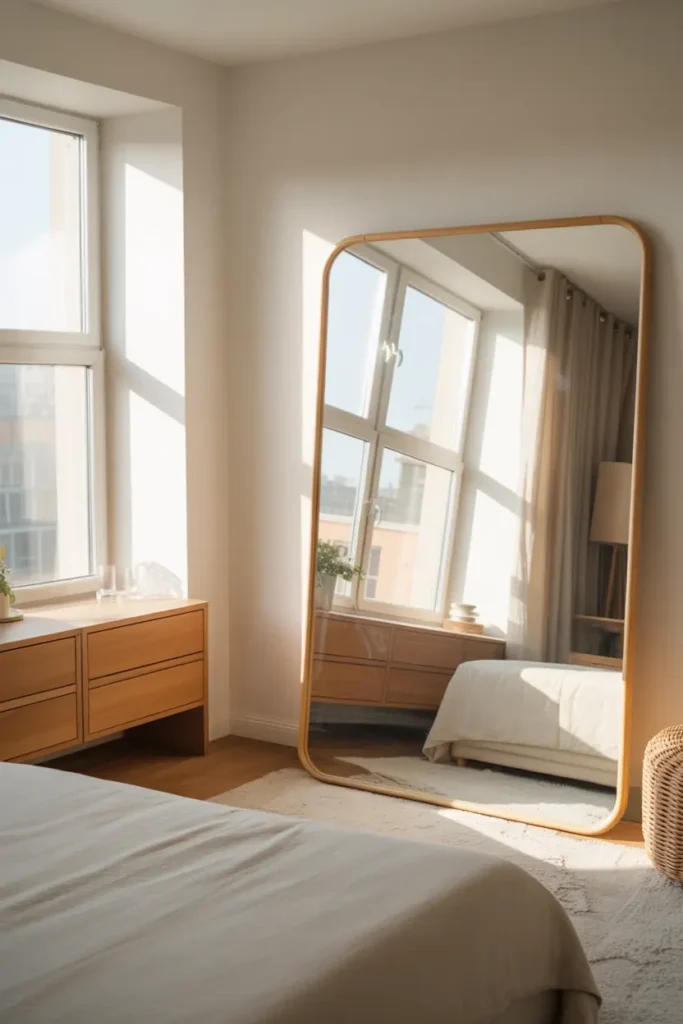
A mirror placed opposite or adjacent to a window doubles your daylight and your view — basic physics, dramatic effect. The 2026 refinement is scale and placement discipline: one large mirror, ideally 30×40 inches or larger, positioned to reflect the brightest part of the room, beats three small decorative mirrors scattered around. Floor-length leaning mirrors in thin brass or black frames, $80–$200, remain the workhorse choice.
Do not mirror the clutter. A mirror that reflects an unmade bed or a crowded dresser multiplies the mess instead of the space. Angle it toward the window, the art, or the calmest corner of the room.
Intentional Minimalism That Creates a Clean, High-End Look
Minimalism in 2026 is not the cold white-box version of a decade ago. It is warm, edited, and deliberate: every object earns its place, and the ones that stay are allowed to be beautiful. The practical rule is one statement piece per sightline — a sculptural lamp, one piece of art, a single striking plant — with everything else quiet and functional. Surfaces stay mostly clear, which is precisely what makes small rooms photograph and feel expensive.
Rotate rather than accumulate. Keep a small box of seasonal decor in the closet and swap one or two pieces quarterly. The room stays fresh, the surfaces stay clear, and you never pay the visual tax of owning everything at once.
Multi-Functional Furniture That Maximizes Space Without Compromise
In a small bedroom, a piece of furniture that does one job is a luxury you cannot afford. The 2026 standouts: nightstands that double as small desks, benches with lift-up storage at the foot of the bed, wall-mounted fold-down tables for rooms under 100 square feet, and headboards with integrated shelving that eliminate the need for bedside tables entirely. A good storage bench runs $100–$250 and replaces both a dresser drawer and a luggage rack for guests.
Before buying anything dual-purpose, test the second function in real life — fold the table, open the bench, sit at the “desk” — because your room deserves furniture that actually performs both roles, not just promises them on a product page. A beautiful piece that fails at its second job is just expensive clutter.
None of this is about pretending your bedroom is bigger than it is. It is about making a small room feel considered — and considered reads as expensive every time. Start with the light and the palette, hide what the eye should not trip over, and let the room do the rest.
Pro Tips
- Paint walls, trim, and ceiling the same warm neutral to erase visual boundaries — the single cheapest way to make a small bedroom feel larger.
- Mount reading sconces instead of using table lamps; you gain roughly a square foot of nightstand surface on each side of the bed.
- Choose one finish for all hardware and frames — matte black, brushed brass, or chrome — mixed metals make small rooms feel chaotic.
- Hang curtains 4–6 inches above the frame and let them kiss the floor; the vertical line stretches the wall even when the window is modest.
FAQs
What color makes a small bedroom look bigger in 2026?
Warm neutrals — creamy beige, sand, warm taupe, mushroom. They reflect light without the cold, institutional feel of gray, and painting walls, trim, and ceiling the same tone erases the boundaries that make rooms feel boxed in.
How do I fit storage into a tiny bedroom without it looking cluttered?
Use storage that disappears: a platform bed with drawers, an opening ottoman, nightstands with concealed compartments. A storage bed alone absorbs a dresser’s worth of clothing and costs only about $150 more than a standard frame.
Can a small bedroom still look expensive on a budget?
Yes — expensive is a look, not a price tag. Consistent warm neutrals, layered warm lighting, one statement piece per sightline, and clear surfaces read as high-end. The most common budget mistake is buying many small cheap items instead of fewer deliberate ones.
Where should I put a mirror in a small bedroom?
Opposite or adjacent to the window, large enough to reflect real daylight — 30×40 inches or bigger. Angle it away from clutter so it doubles your light and your calmest view, not your mess.

HowDecor is a home decor blog sharing simple, practical decorating ideas for everyday spaces. We believe a beautiful home should feel comfortable, personal, and full of warmth — and that great style does not require a huge budget. Our goal is to inspire readers to create spaces that feel peaceful, welcoming, and truly their own — one room at a time.