Here is the thing nobody tells you when you finish a basement: the paint color matters far less than the lighting. Basements get almost no natural light, the ceilings sit low, and a single bare bulb in the middle of the room turns the whole space into an interrogation room. I have seen $20,000 basement remodels undone by $40 worth of bad lighting — and I have seen modest basements feel like the best room in the house because somebody got the layers right.
This guide walks through the whole job in order: the base layer of light, the warm tone that kills the “cold basement” feeling, the accents and zones that make the space actually usable, and the finishing touches that give it personality. No electrician required for most of it — just a plan and a free weekend.
Start with Ambient Lighting to Brighten the Entire Basement Evenly
Ambient light is your foundation — the general wash that lets you see the whole room without thinking about it. In a basement, recessed can lights are the gold standard: space them 4–6 feet apart in a grid, and use 4-inch or 6-inch retrofit LED kits ($15–$30 each) that screw into existing cans or install into drywall with a simple template. For a 400-square-foot basement, eight to ten recessed lights at 800–1000 lumens each gives you even, shadow-free coverage.
If your ceiling is too low or unfinished for recessed lights, flush-mount or semi-flush fixtures every 6–8 feet do the same job. The key number: aim for roughly 20 lumens per square foot of ambient light as your baseline. You can always dim down; you cannot conjure light that is not there.
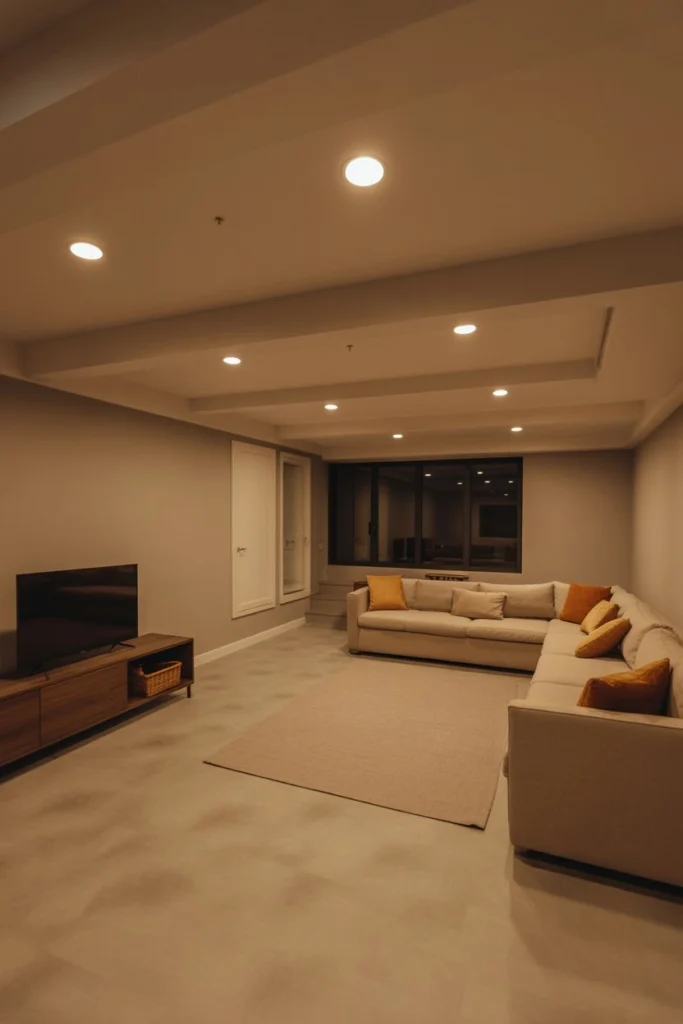
Layer Different Light Sources to Create Depth and a More Comfortable Feel
One light source, however bright, makes a basement feel flat — like a warehouse. Three types of light working together make it feel like a room: ambient (the recessed or flush lights above), task (lamps or under-cabinet lights where you actually do things), and accent (the glow that highlights a feature or washes a wall). You do not need all three everywhere; you need all three somewhere in every sightline.
A practical way to build this: keep your ceiling lights on a dimmer, add two lamps at seating height, and tuck one accent light somewhere unexpected — behind the TV console, inside a bookshelf, along a beam. That trio instantly reads as “designed” instead of “finished.”
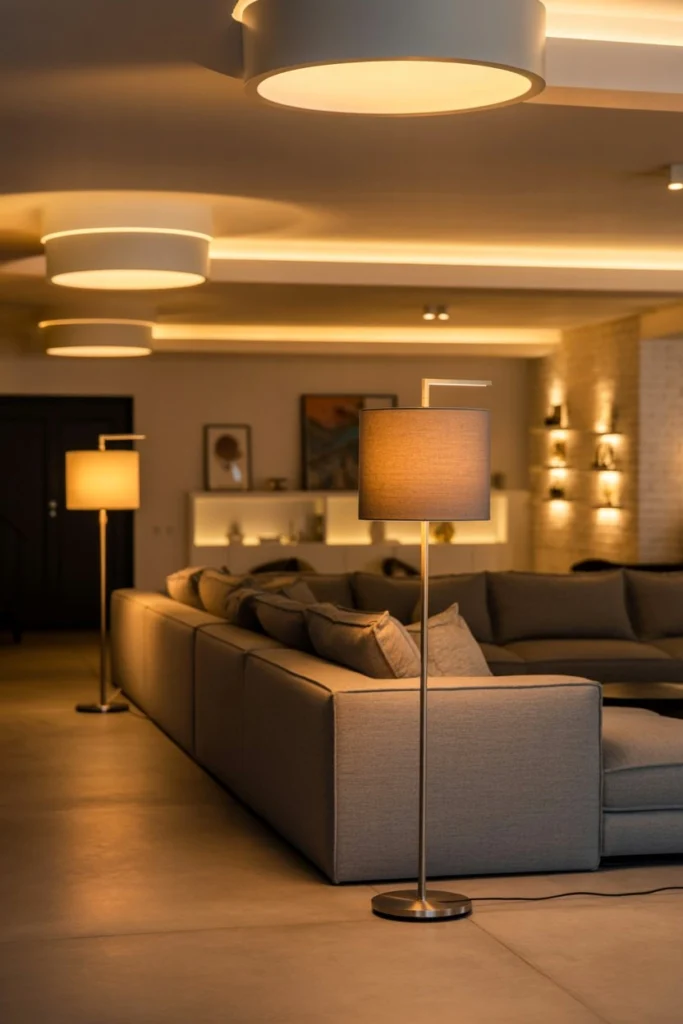
Use Warm Lighting to Make the Basement Feel Cozy Instead of Cold
Basements already fight a psychological battle — they are underground, windowless, and our brains associate them with storage and utility. Cool white 4000–5000K bulbs confirm that suspicion. Warm 2700–3000K bulbs argue against it. Swap every bulb in the space to warm white before you judge anything else about the room; the concrete floor you were about to replace might suddenly feel like a feature.
This matters most at night, when the basement is used most. Put the warm bulbs on dimmers — Lutron-style rotary or smart dimmers run $20–$40 per switch — and you can take the room from “kids’ playdate bright” to “movie night glow” without moving from the couch.
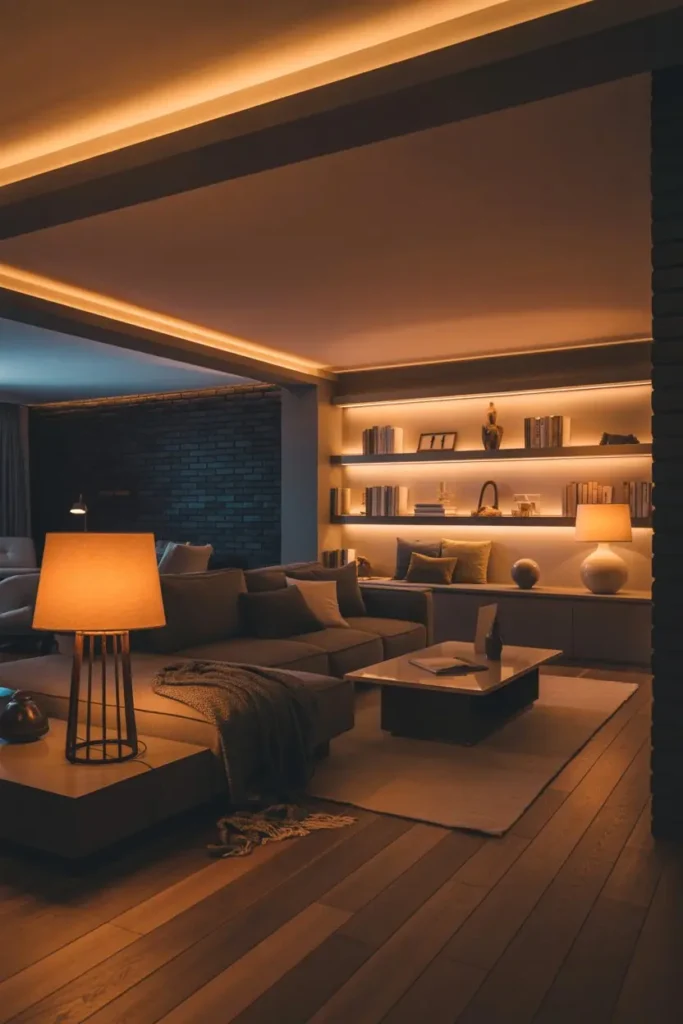
Add Accent Lighting to Highlight Key Areas and Features
Accent lighting is how you tell visitors’ eyes where to go. A picture light over framed art ($30–$60), a small uplight behind a plant, puck lights inside glass-front cabinets — each one creates a focal point that pulls attention away from the low ceiling and the lack of windows. The rule of thumb: accent lights should be roughly three times brighter than the ambient light around them, so the feature actually pops.
Start with one hero accent — the fireplace wall, the bar area, the gallery wall — and light it deliberately. One strong focal point does more for a basement than five half-hearted ones, and it gives the whole room a sense of intention.
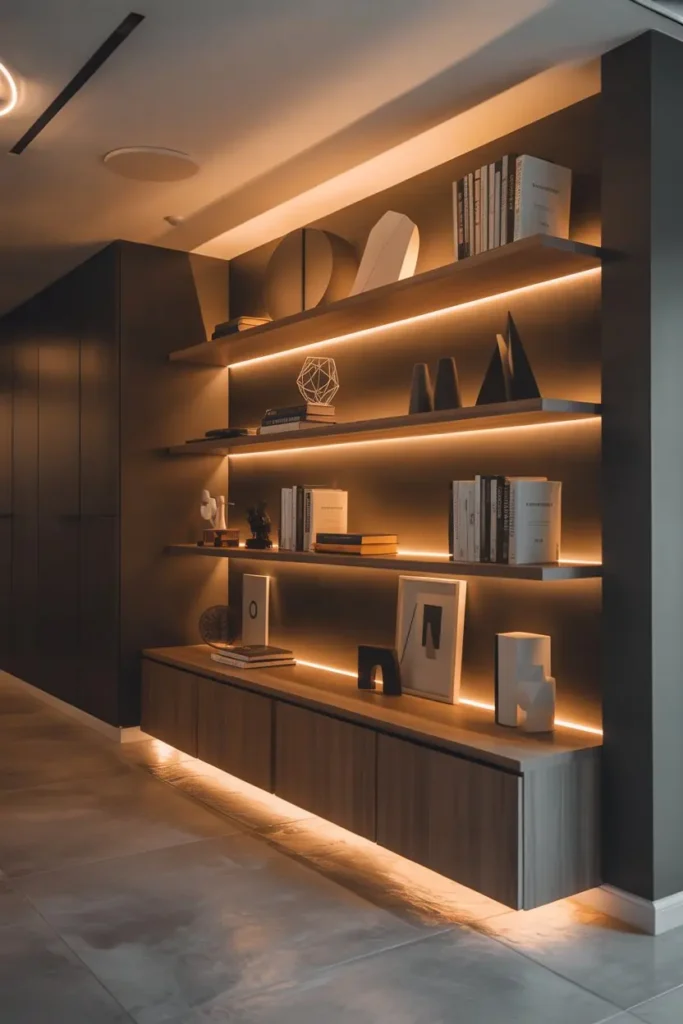
Use Floor and Table Lamps to Create a Relaxed and Lived-In Atmosphere
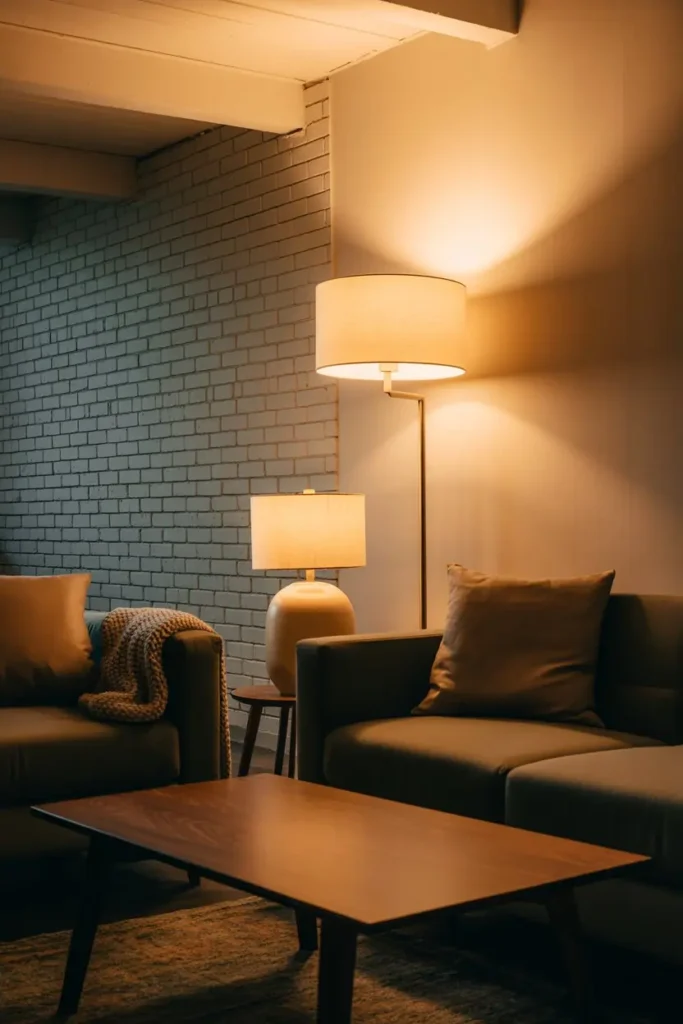
Ceiling light comes from above and feels institutional; lamp light comes from the side and feels like home. That is the entire psychology in one sentence. A floor lamp arcing over a reading chair, a table lamp on the media console, a small lamp on the bar — these are what make a basement feel like a living room instead of a finished storage area. Aim for lamp shades that diffuse rather than direct: fabric drums or linen shades soften the glow.
Height matters. Table lamp shades should sit at roughly eye level when you are seated — about 42–48 inches from the floor on a standard side table — so the light pools around you instead of glaring into your eyes. Two lamps minimum per seating zone; one lamp alone creates a lonely bright spot in a dark room.
Install LED Strip Lighting for a Modern and Subtle Glow
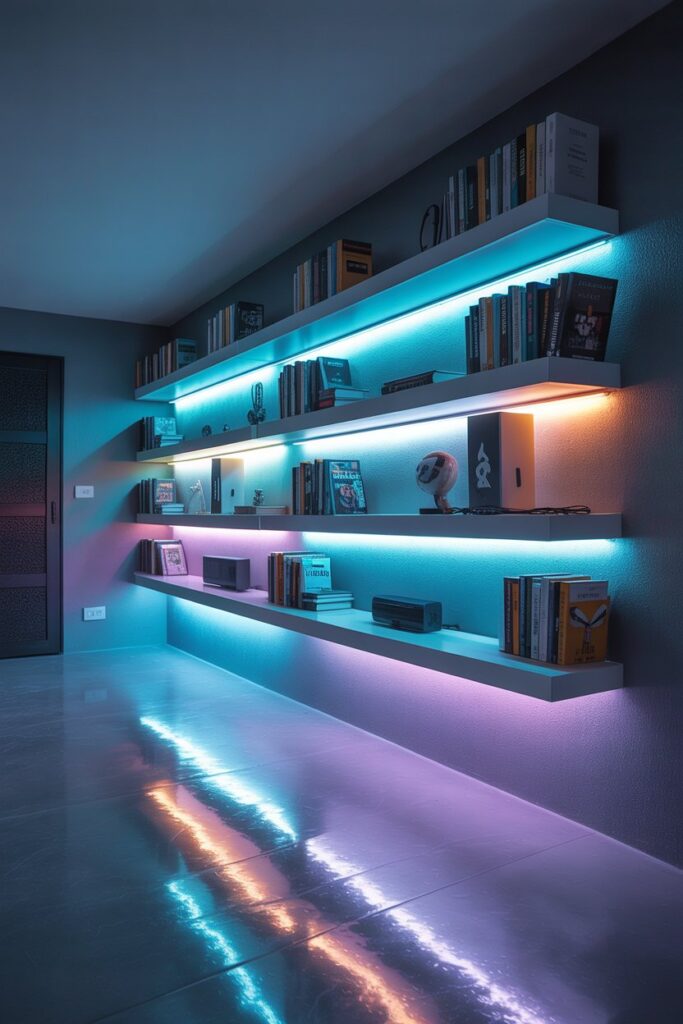
LED strips are the cheapest “wow” in basement lighting: a 16-foot reel of warm-white 2700K strip with an adhesive back costs $15–$25, plugs into a standard outlet, and installs with scissors and five minutes. Run them under floating shelves, along the toe-kick of a bar, behind the TV, or in the cove where the wall meets the ceiling. The glow they throw looks expensive and architectural; the effort is closer to hanging a poster.
Two installation tips that separate the pros from the amateurs: hide the strip itself so you see only the glow, never the diodes — aluminum channels with diffuser covers ($10 for a 6-pack) solve this completely. And buy dimmable strips with a remote or smart controller, because full-brightness LED strip behind a TV is a headache, not an ambiance.
Reflect Light with Light-Colored Surfaces to Enhance Brightness
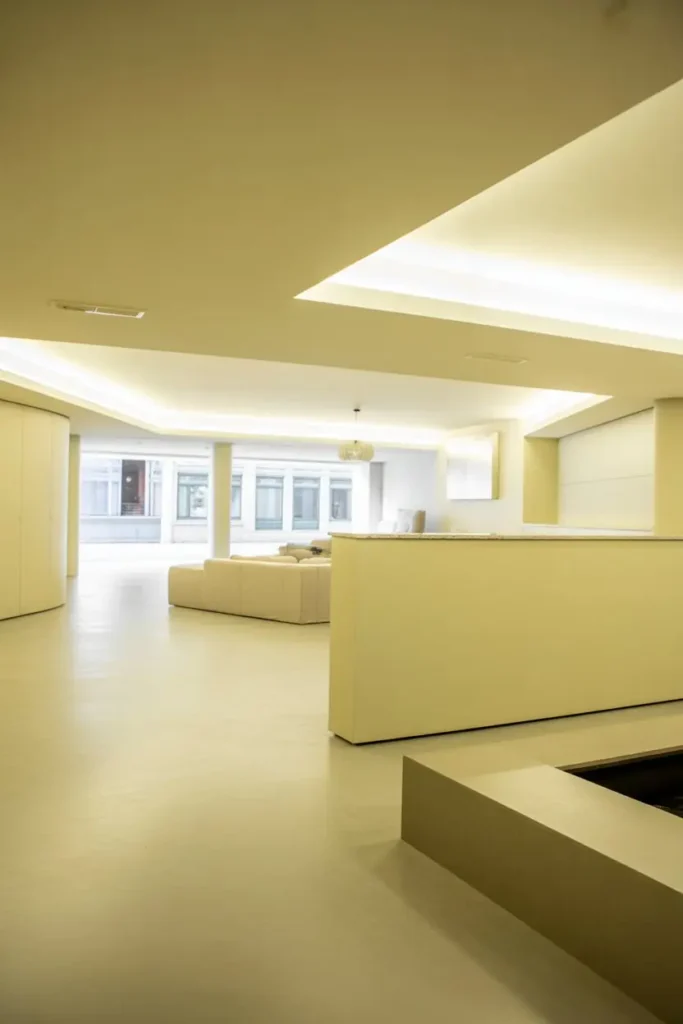
Light you bounce is light you did not have to buy. A basement with white or pale ceilings, light walls, and a light-toned floor can feel twice as bright as an identical room in dark finishes — same bulbs, same fixtures. If you are painting, use a ceiling white with a slight warm tint rather than stark blue-white, which can feel clinical under LEDs. Eggshell or satin finishes reflect more light than flat matte.
Furniture counts too. A light-colored area rug over a dark concrete or wood floor, pale upholstery, a glass or light-wood coffee table — each one is a reflector working for you. Even a large light-framed mirror on the darkest wall throws usable light back into the room.
Define Different Zones with Lighting to Make the Space More Functional
Most basements are doing two or three jobs — media room, gym corner, kids’ play area, home office — and lighting is the cleanest way to separate them without building walls. Give each zone its own switch or its own lamp circuit: brighter, cooler-task light over the desk or gym area; dim, warm, layered light in the media zone; cheerful even light in the play area. When only the media zone’s lamps are on, the treadmill corner disappears into soft shadow instead of looming.
Smart plugs ($10–$15 each) are the budget version of zoned lighting: plug each zone’s lamps into one, name them in the app, and you have voice-controlled zones with zero rewiring. Label the switches too — a future you, or a houseguest, will thank you.
Avoid Harsh Shadows by Spreading Light Evenly Across the Room
Shadows are what make basements feel cave-like, and they come from exactly one cause: too few light sources placed too far apart. A single bright fixture in a dark room creates deep, hard-edged shadows in every corner. The fix is distribution, not brightness — more fixtures at lower individual output, spread across the ceiling and the walls, so light arrives from multiple directions and shadows cancel each other out.
Walk the room at night and look for the dark pockets: the corner behind the sectional, the stretch of wall beside the stairs, the area under the ductwork soffit. Each dark pocket wants one small light — a wall sconce, a puck light, a short LED strip. Fill them all and the ceiling will visually lift by a foot.
Add Decorative Lighting to Bring Personality Into the Basement
Once the functional layers are in, decorative fixtures are what make the basement feel like yours instead of a contractor’s spec sheet. A rattan pendant over the bar, a vintage-style Edison bulb string along an exposed beam, a sculptural table lamp you actually love — these are the pieces guests remember. Decorative does not mean impractical: most statement pendants take standard LED bulbs and put out plenty of usable light.
One caution: pick decorative fixtures that suit low ceilings. Anything hanging more than 12–14 inches below an 8-foot ceiling becomes a head hazard and a visual anchor dragging the room down. Flush or semi-flush statement pieces, wall sconces, and table lamps are the safe bets down here.
Related Decor Ideas
- https://howdecor.com/small-living-room-ideas
- https://howdecor.com/modern-living-room-decor-ideas
- https://howdecor.com/budget-home-decor-ideas
A well-lit basement is not about spending more — it is about layering deliberately. Start with even ambient light, warm the tone, spread the sources so shadows have nowhere to hide, and finish with one or two fixtures that make you smile. Do it in that order, and the room that used to feel like a basement will start feeling like the best seat in the house.
Pro Tips
- Put every basement light on a dimmer before buying a single new fixture — dimmable warm light you already own beats new cool light every time.
- Buy one extra LED strip reel and one extra pack of puck lights; you will find dark pockets you missed on the first pass, and matching color temperature later is a gamble.
- Test bulb color temperature at night in the actual room, not in the store aisle — 3000K that looks fine under showroom lights can feel chilly against concrete and low ceilings.
- Run LED strips and lamp cords before final furniture placement; hiding cables is ten times harder once the sectional is in position.
FAQs
How many recessed lights do I need in my basement?
Space 4-inch or 6-inch recessed lights 4–6 feet apart in a grid, aiming for about 20 lumens per square foot of ambient light. A 400-square-foot basement typically needs eight to ten lights at 800–1000 lumens each for even, shadow-free coverage.
What color temperature is best for basement lighting?
2700K–3000K warm white for living and media areas — it counteracts the cold, underground feeling. Reserve cooler 3500K–4000K only for task zones like a workshop, laundry, or gym corner where you need alert, accurate light.
Can I improve basement lighting without an electrician?
Yes, for most of it. Plug-in LED strips, floor and table lamps, smart plugs for zoning, and screw-in retrofit recessed kits need no wiring changes. You only need an electrician for adding new hardwired fixtures, circuits, or dimmer switches if you are not comfortable with basic electrical work.
Why does my basement still feel dark even with bright lights?
Usually it is a distribution problem, not a brightness problem — one bright fixture creates harsh shadows everywhere else. Spread more sources across the room, bounce light off pale ceilings and walls, and fill the dark pockets with small accent lights. Even coverage reads as brighter than raw lumens.

HowDecor is a home decor blog sharing simple, practical decorating ideas for everyday spaces. We believe a beautiful home should feel comfortable, personal, and full of warmth — and that great style does not require a huge budget. Our goal is to inspire readers to create spaces that feel peaceful, welcoming, and truly their own — one room at a time.