Here is the uncomfortable truth about small living rooms: most of them are not actually too small. They are too full — of furniture scaled for bigger rooms, of decor that made sense in a showroom, and of the belief that pushing everything against the walls creates space. It does not. It creates a waiting room.
A small living room becomes comfortable when every piece earns its footprint and the eye has somewhere to rest. That means lighter-looking furniture, honest walkways, and the courage to leave some corners empty. None of this requires renovation. It requires editing, and editing is free.
Design the Layout Before Buying Anything
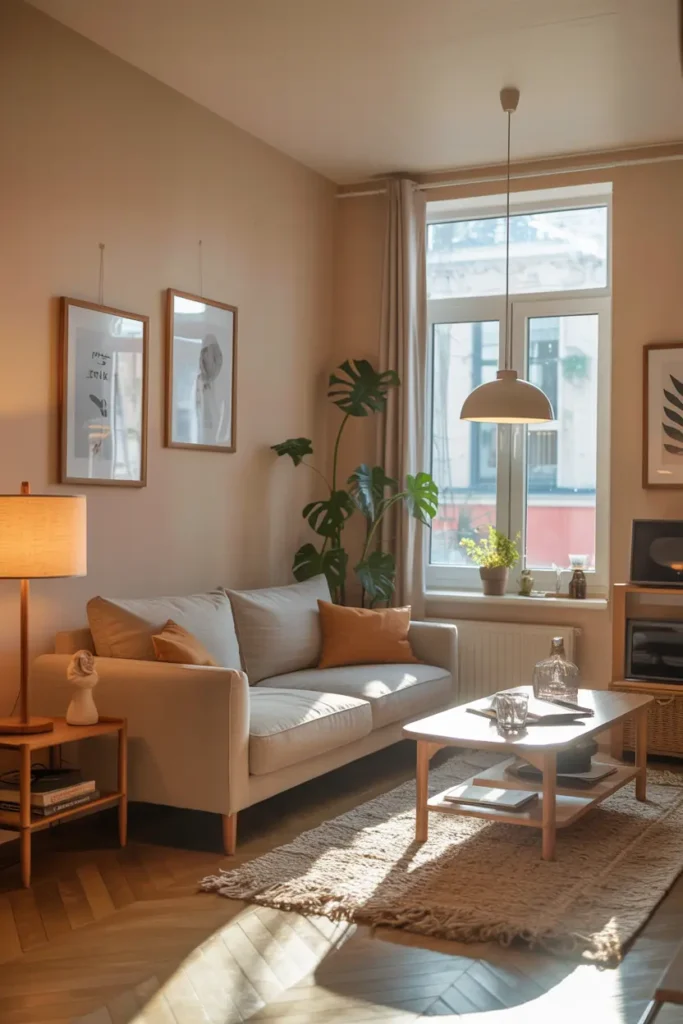
Start with paper, not purchases. Sketch the room, mark the doorways and windows, and draw your main walkway first — it needs 75 to 90 cm of clear width. Everything else fits around that path, not through it. The single biggest transformation in a small living room is usually moving the sofa off the longest wall and floating it to create a real circulation route.
Try the “conversation test”: sit in each seat and check you can talk to someone in every other seat without raising your voice or craning your neck. If a chair fails the test, it is decoration, not furniture — move it or lose it. Small rooms cannot afford passengers.
Choose Furniture That Looks Light
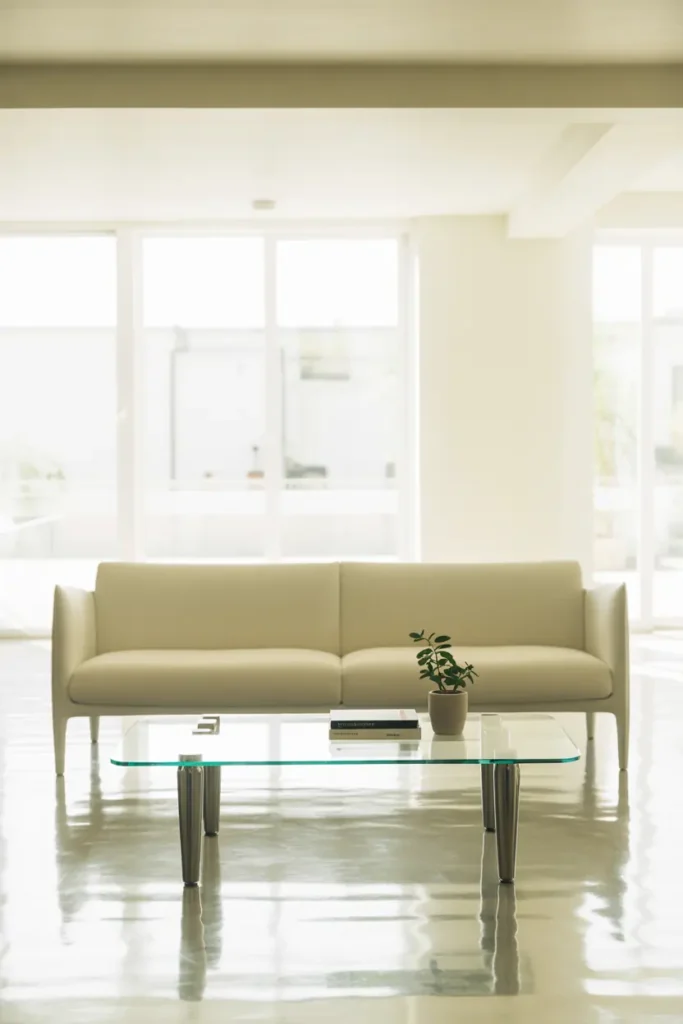
Visual weight matters more than actual size. A compact sofa on tall, slim legs looks lighter than a smaller sofa that sits flat on the floor, because you can see floor beneath it — and visible floor reads as space. The same goes for glass or open-frame coffee tables, slim-armed chairs, and anything that lets light pass through or under it.
Measure before you fall in love. In a small room, a sofa deeper than 90 cm will dominate; aim for 80 to 90 cm deep with slim arms. And check doorways and stairwells before delivery day — a sofa that cannot get into the room is an expensive anecdote, not furniture.
Add Warmth with Texture, Not Objects
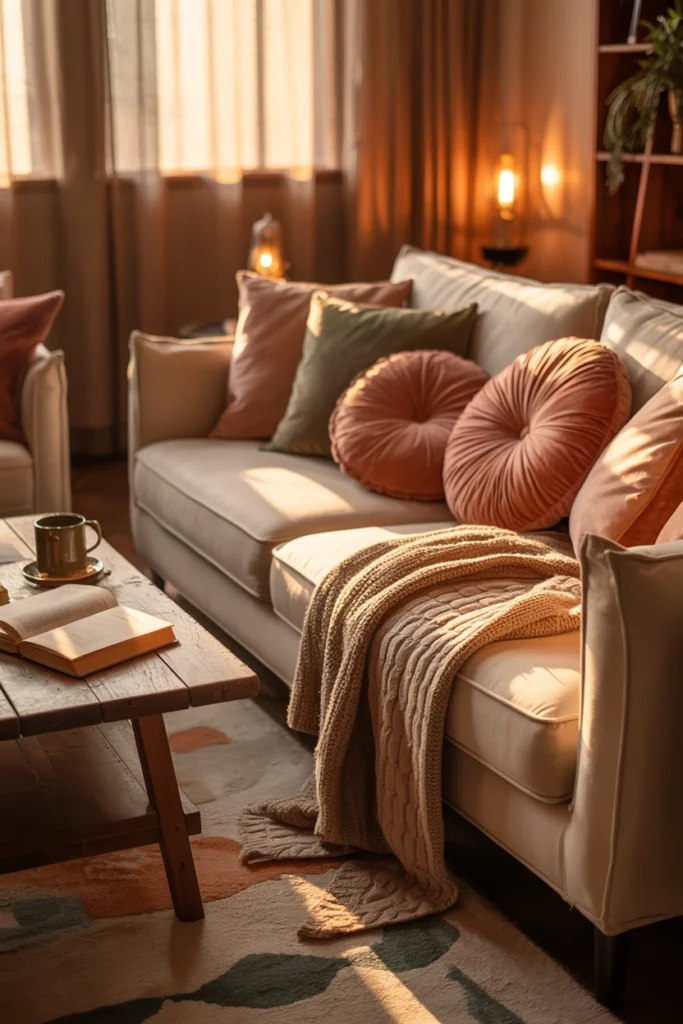
Coziness in a small room comes from how surfaces feel, not how many objects you own. One wool throw, two cushions in different textures, a soft rug underfoot — that is a complete coziness kit. Each texture you add does the work of three decorative objects without taking up a centimetre of floor.
The mistake is “cozy shopping”: buying lots of small decor items to make the room feel homey. Ten small objects on shelves create ten visual interruptions; one textured throw creates one feeling of warmth. When in doubt, add texture and remove objects.
Keep the Palette Calm and Connected
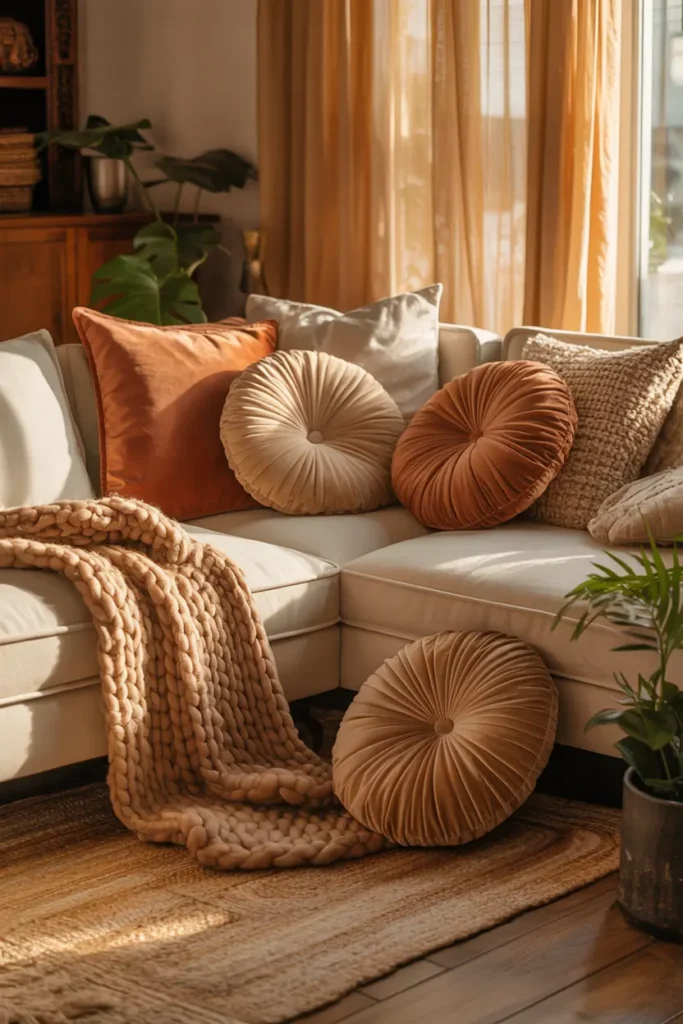
Colour is free square footage. Walls, large furniture, and the rug in closely related light tones — warm white, soft beige, pale grey — blur the boundaries between surfaces so the room reads as one continuous space. Every high-contrast jump (dark sofa against white wall, patterned rug against plain floor) is a visual stop sign.
This does not mean colourless. Pick one accent colour and repeat it three times at different heights: a cushion, a throw, a book spine. That is enough personality for a small room. Four accent colours is a crowd.
Make Every Piece Do Two Jobs
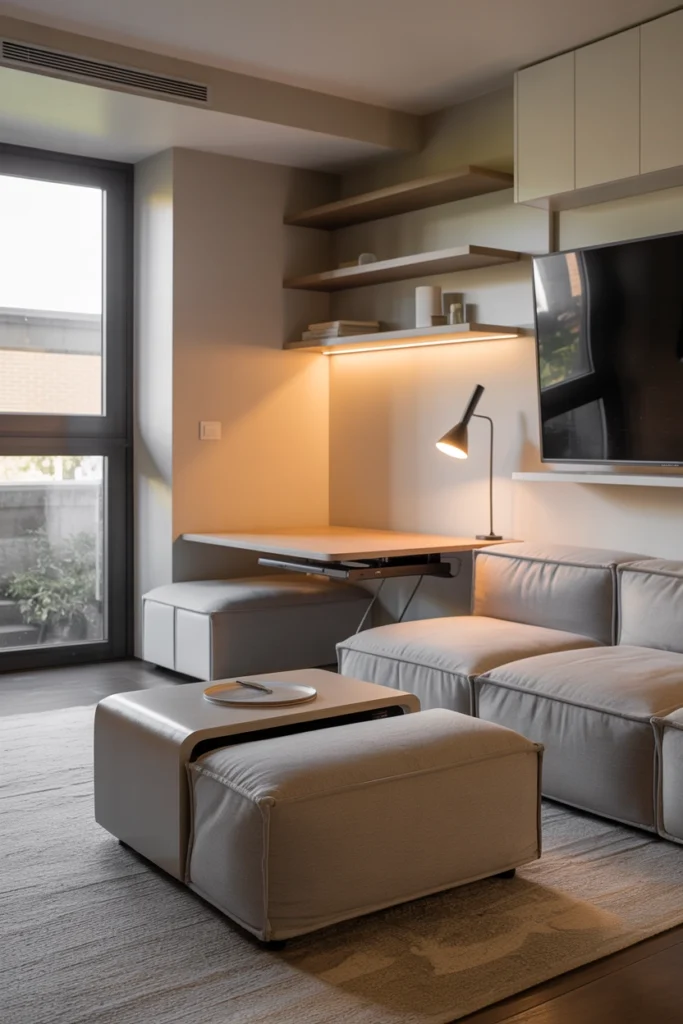
In a small living room, single-purpose furniture is a luxury you cannot afford. A storage ottoman is a footrest, a coffee table, and a blanket cupboard. A console behind the sofa is a lamp stand and a room divider. A daybed is a sofa by day and a guest bed by night. Before any piece earns a place, ask what its second job is.
Be honest about the jobs that matter. A “decorative” ladder shelf that holds nothing you use is just vertical clutter. Storage you cannot reach easily is storage you will not use. The best multi-functional pieces are the boring ones: ottomans, lidded baskets, a coffee table with a real shelf underneath.
Clear the Surfaces
Cluttered surfaces shrink a room faster than dark walls do. The eye reads every object as a boundary, so a side table with seven things on it feels like a wall. Aim for one to three items per surface, with actual empty space between them. Empty space is not wasted space; it is the thing that makes the objects you kept look deliberate.
Do a weekly five-minute reset: everything that migrated to surfaces goes back to its home. Small rooms do not stay tidy by accident. But a room with good storage — a basket per person, a drawer per category — makes the reset take minutes instead of an hour.
Layer the Lighting
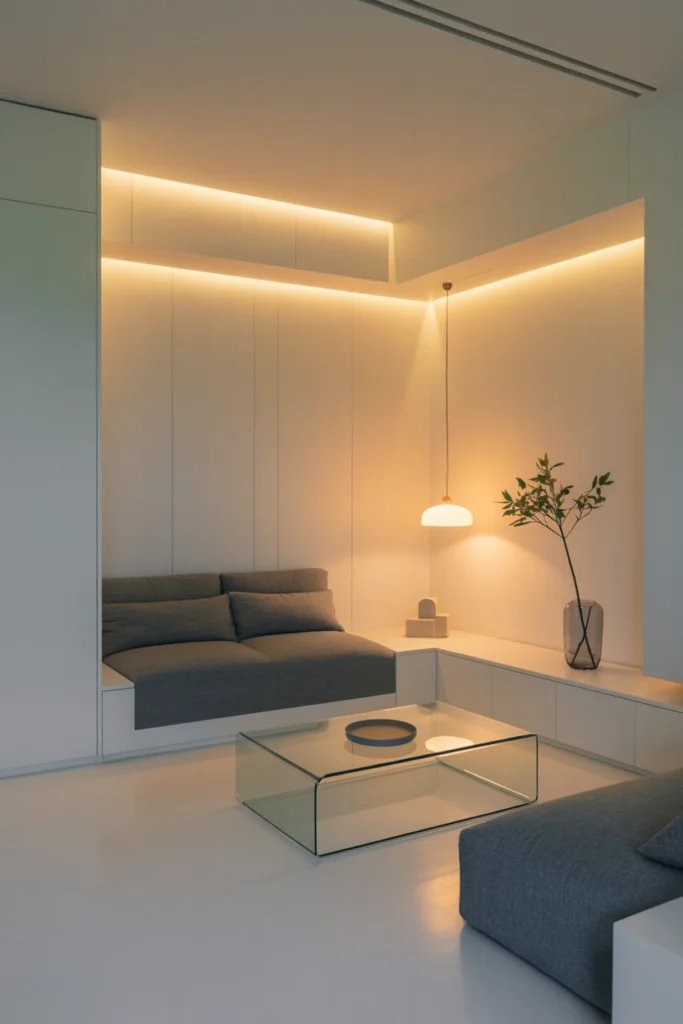
One overhead light flattens a small room and makes it feel smaller at night. Three light sources at different heights — a floor lamp, a table lamp, and one low accent like a picture light or LED strip — create depth and pools of warmth that make the room feel larger and infinitely more inviting after dark.
All bulbs at 2700K, all on dimmers if you can manage it. And put the brightest light where you read, not in the centre of the ceiling. Centre-ceiling brightness just lights up the clutter; task lighting lights up the life.
Use Mirrors with Intent
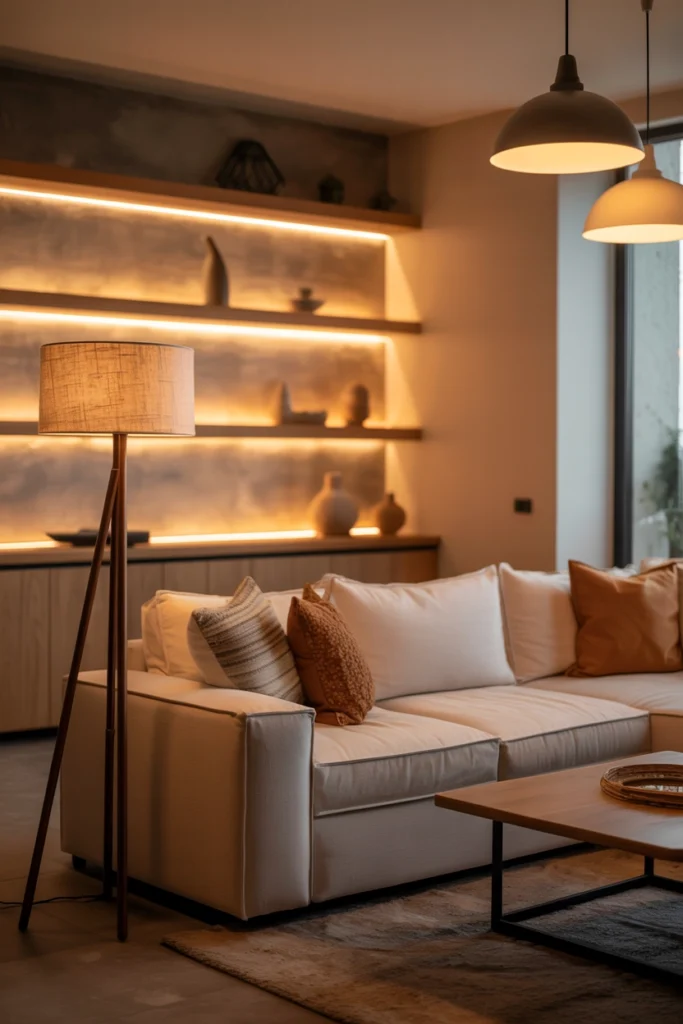
A mirror opposite a window doubles your daylight and your view — the single highest-impact trick in a small room. But placement is everything: a mirror reflecting a blank wall just doubles blankness. Angle it to catch the window, a plant, or the prettiest corner of the room.
One large mirror beats five small ones. A gallery of little mirrors reads as clutter; one generous mirror — leaning or hung, at least 80 cm in one dimension — reads as architecture. Round mirrors soften boxy small rooms particularly well.
Draw the Eye Upward
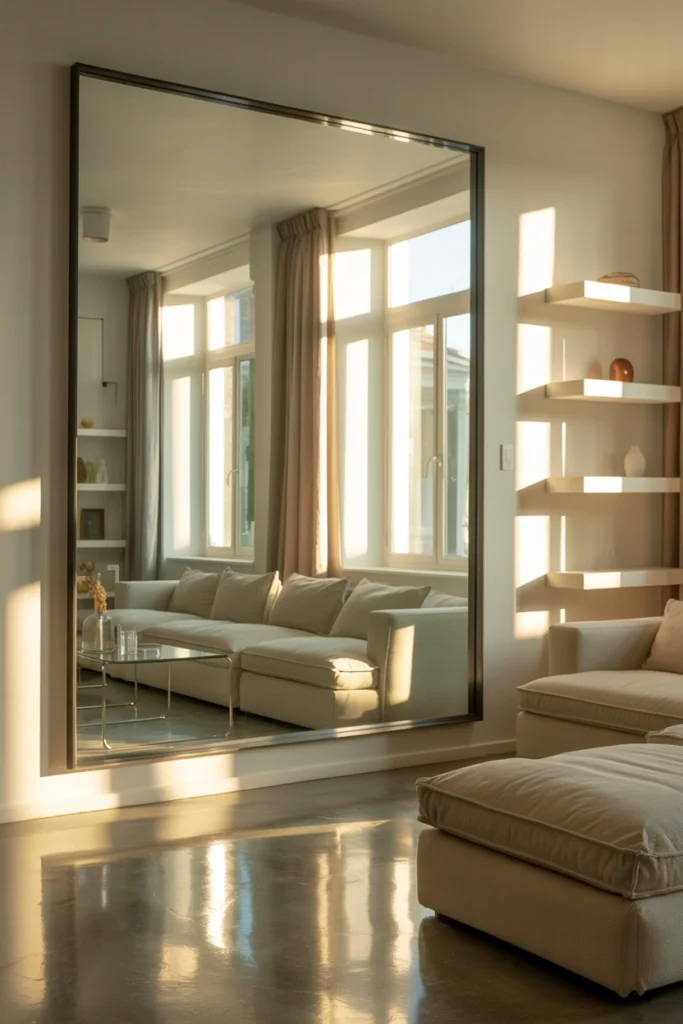
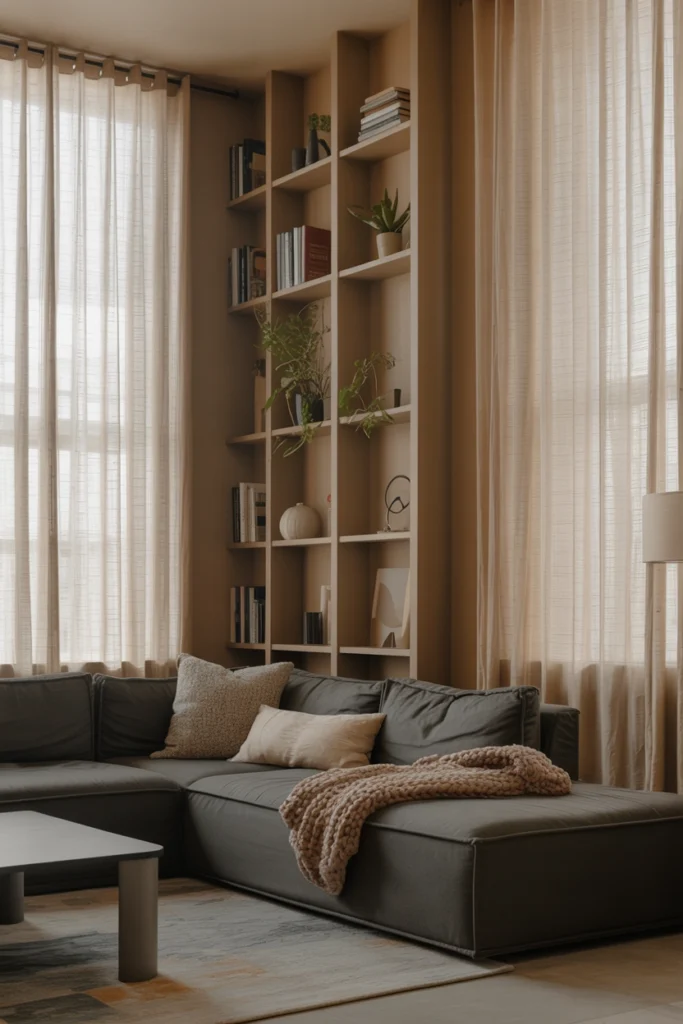
When floor space is limited, the walls above eye level are free real estate. Floor-to-ceiling curtains — hung at the ceiling, not at the window frame — make walls look taller instantly. Tall, narrow shelving or one piece of vertical art does the same. The eye travels up, and the room feels bigger than its footprint.
Do not fill that vertical space to the top, though. Leave the top 30 cm of tall shelving empty or nearly so. Crowded-to-the-ceiling shelving has the opposite effect: it presses the ceiling down and makes the room feel like storage, not living space.
Leave Room to Breathe
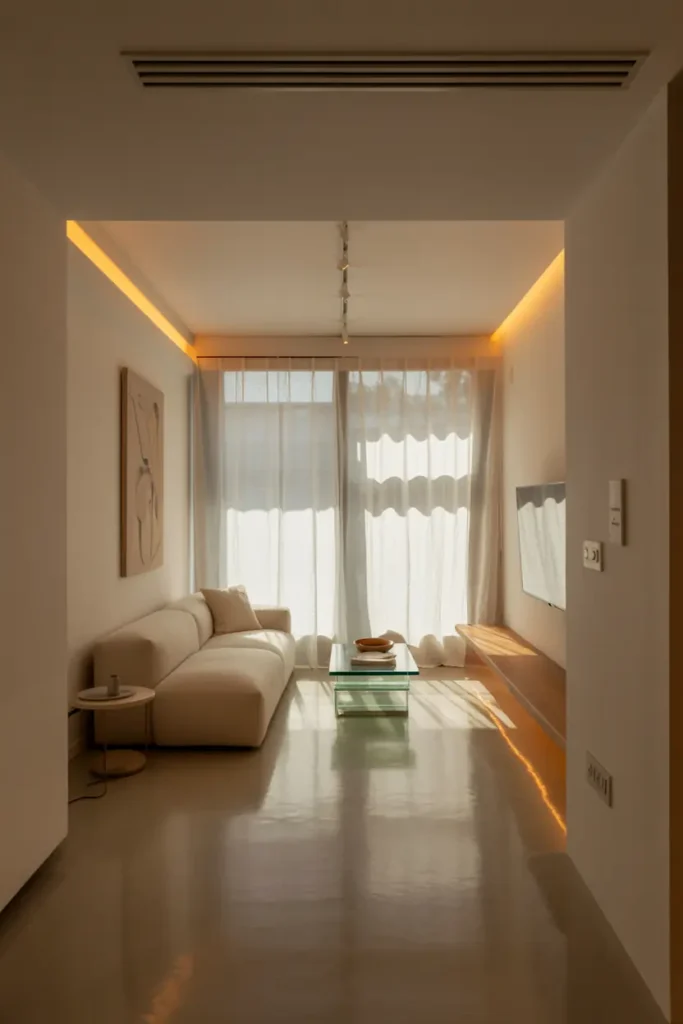
The hardest idea in this list: empty corners are a design choice. Not every wall needs art, not every corner needs a plant, not every surface needs an object. Negative space is what lets the things you kept be seen — and being seen is what makes them feel valuable rather than accumulated.
If a corner feels “unfinished” to you, live with it for two weeks before filling it. Half the time, you will stop noticing it. The other half, you will know exactly what belongs there — which is a much better outcome than buying something to fill a feeling.
Related Decor Ideas
- Modern Living Room Decor Ideas That Feel Stylish and Comfortable
https://howdecor.com/modern-living-room-decor-ideas
Conclusion
Small living rooms do not need to feel like a compromise. Lighter-looking furniture, a calm connected palette, three layers of warm light, and the discipline to leave space empty will make a compact room feel generous — not by adding square metres, but by removing everything that was pretending to be necessary.
Pro Tips
- Measure walkways first: Keep 75 to 90 cm of clear path through the room. If furniture blocks it, the furniture moves — not the path.
- Legs beat bulk: Furniture you can see under looks lighter. Tall slim legs, glass tops, and open frames all create the illusion of more floor.
- One mirror, placed with intent: A single large mirror angled to catch a window outperforms any number of small decorative mirrors.
- Texture instead of objects: When the room needs warmth, add a throw or cushion — not another decorative object. Texture warms without occupying visual space.
FAQs
Should I push all furniture against the walls in a small living room?
Usually not. Floating the sofa even 15 to 20 cm off the wall — or angling it to create a real walkway — makes the room feel larger and more intentional. Wall-to-wall furniture reads as “no room to spare,” while a floated layout reads as a designed space.
What is the best sofa size for a small living room?
Aim for 80 to 90 cm deep with slim arms, and a length that leaves at least 60 cm of circulation space on each side. Two smaller loveseats often work better than one large sofa, because they can be angled for conversation.
Do dark colours ever work in small living rooms?
Yes, but in accents, not expanses. A dark green armchair or navy cushions add depth beautifully against a light base. Dark walls in a small room demand excellent lighting and confidence — get the light layers right first, then consider it.
How do I make a small living room cozy without cluttering it?
Layer texture instead of objects: throws, cushions, a soft rug, curtains. Three to four tactile layers create all the warmth of a “full” room with none of the visual noise. Then ruthlessly clear surfaces to one to three items each.

HowDecor is a home decor blog sharing simple, practical decorating ideas for everyday spaces. We believe a beautiful home should feel comfortable, personal, and full of warmth — and that great style does not require a huge budget. Our goal is to inspire readers to create spaces that feel peaceful, welcoming, and truly their own — one room at a time.