Minimalism grew up. The stark, cold, gallery-white version had its decade, and most of us discovered we did not actually want to live in an art installation. What replaced it is warmer, more tactile, and — paradoxically — harder to get right: a minimalism built on warm neutrals, honest materials, and the radical idea that empty space is a luxury good.
This is not about owning less for the sake of it. It is about a room where everything present has earned its place, where texture does the work decoration used to do, and where the calm you feel walking in is the whole point. Here is how that room gets built, piece by deliberate piece.
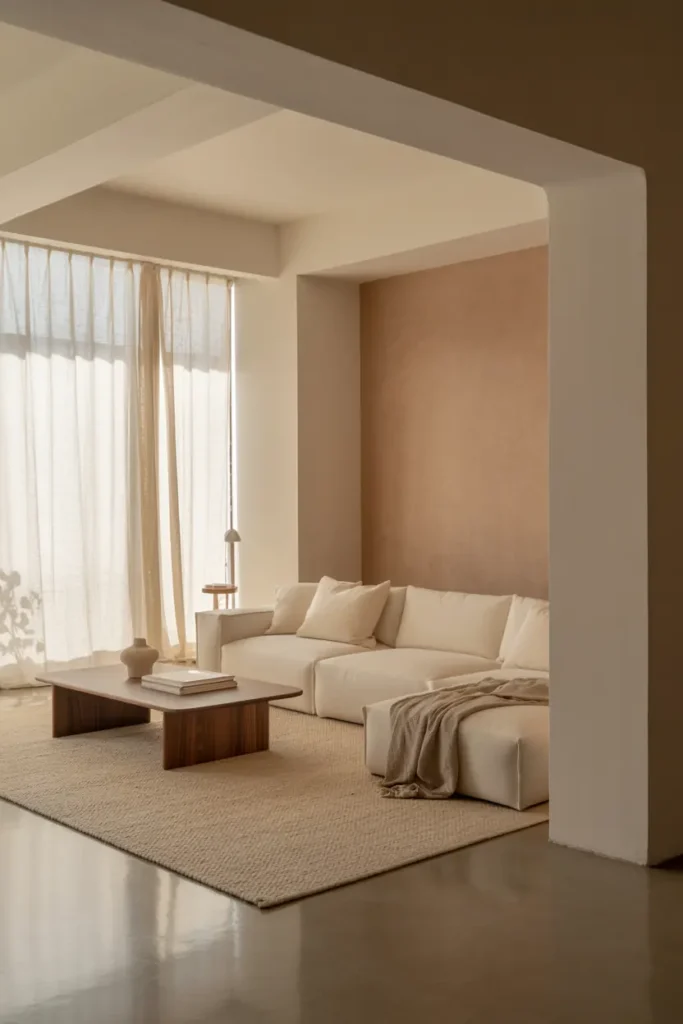
The palette comes first, and it is warmer than you expect: soft beige, warm taupe, greige with a brown (not grey) base, off-whites that lean creamy. These colours do something cold white never could — they make an empty-feeling room feel held. Paint large wall areas in one warm neutral and let everything else sit inside it.
Keep Only the Furniture That Earns Its Place
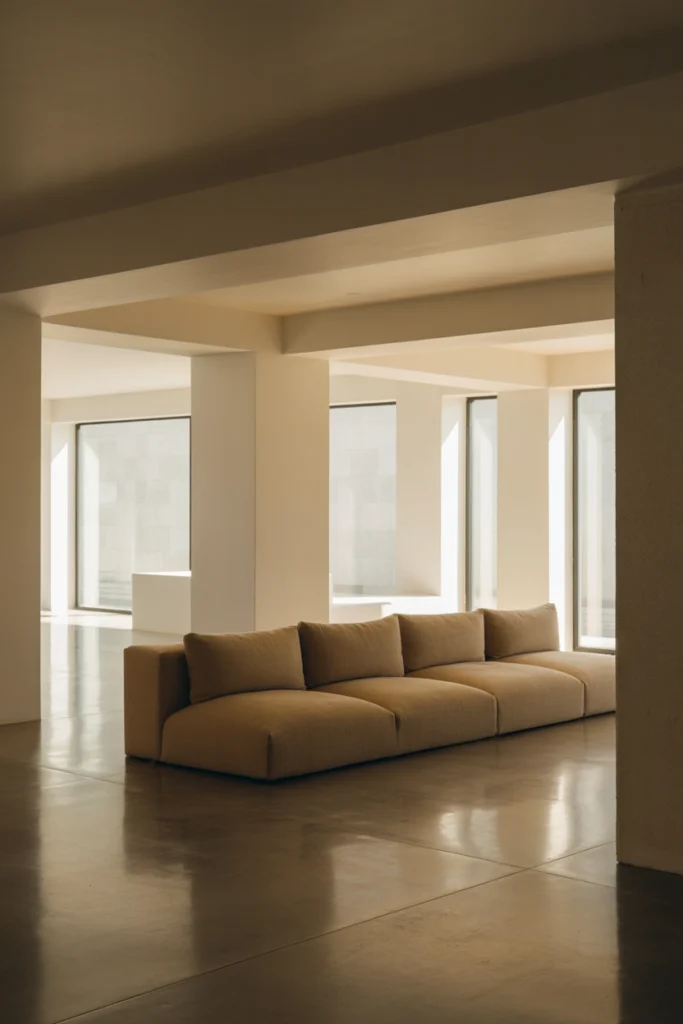
Every piece in a minimalist living room should pass a simple test: does the room fail without it? A comfortable sofa, one surface for drinks, one good light, and storage that hides the rest — that is a complete room. Anything beyond that list needs to justify itself, and “it was on sale” is not justification.
This is where most people go wrong: they buy the minimalism look (low sofa, neutral rug) but keep the maximalist quantity (side tables everywhere, three lamps, a console full of objects). The look without the edit is just beige clutter. Count your furniture pieces; if you are past eight in a living room, start removing.
Choose Low, Grounded Sofa Profiles
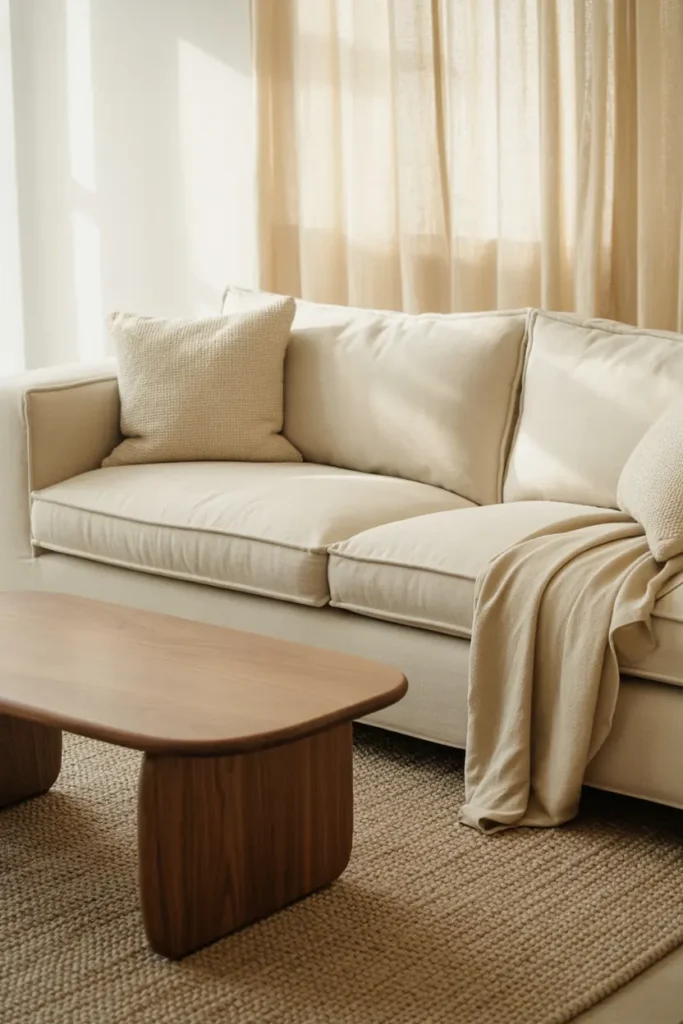
The low sofa is the signature of current minimalism, and it works for a structural reason: a lower back line (around 70 to 80 cm high) leaves more wall visible above it, which makes the whole room feel taller and calmer. It also forces a more relaxed sitting posture — you lounge rather than perch, which is the entire mood.
Keep the arms slim and the upholstery in a mid-tone warm neutral, not white. White sofas in minimalist rooms show every mark and create anxiety, which is the opposite of the brief. A warm oatmeal or greige hides life while looking intentional.
Let Texture Replace Decoration
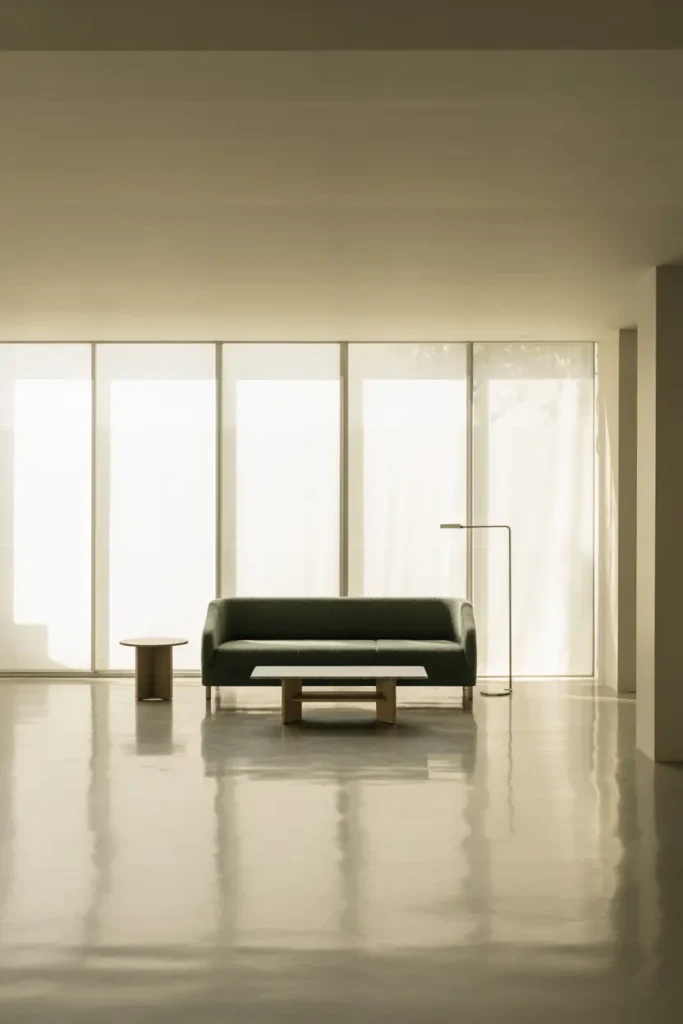
When you remove objects, surfaces have to carry the visual interest. This is where texture becomes the design: a linen-look sofa, a high-pile wool rug, a solid oak coffee table with visible grain, a hand-thrown ceramic vase. Run your hand across the room mentally — every surface should feel different from its neighbour.
The trap is “smooth minimalism”: everything matte and flat, which reads as cold and corporate. You need at least one deeply tactile element — a chunky knit throw, a shaggy rug, raw linen curtains — to keep the room feeling human. Texture is the warmth that minimalism’s critics say is missing; they are usually looking at rooms that skipped this step.
Layer Soft, Warm Light
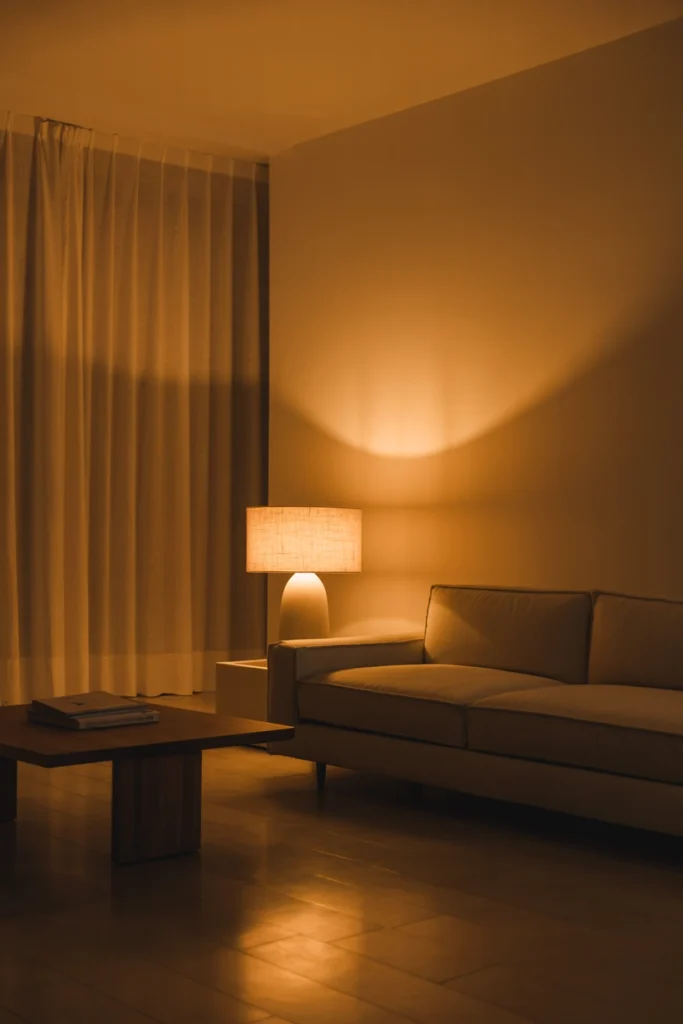
Overhead lighting is the enemy of calm. In a minimalist room, light should come from at least two low sources — a floor lamp with a fabric shade, a small table lamp — all at 2700K, all dimmable. The goal is pools of warm light, not uniform brightness. Uniform brightness is for offices.
Pay attention to what the light lands on. A warm pool of light on a textured wall or a wooden table is decoration in itself. This is why minimalists are so fussy about lamps: in a quiet room, the lamp is the jewellery.
Give the Walls One Job
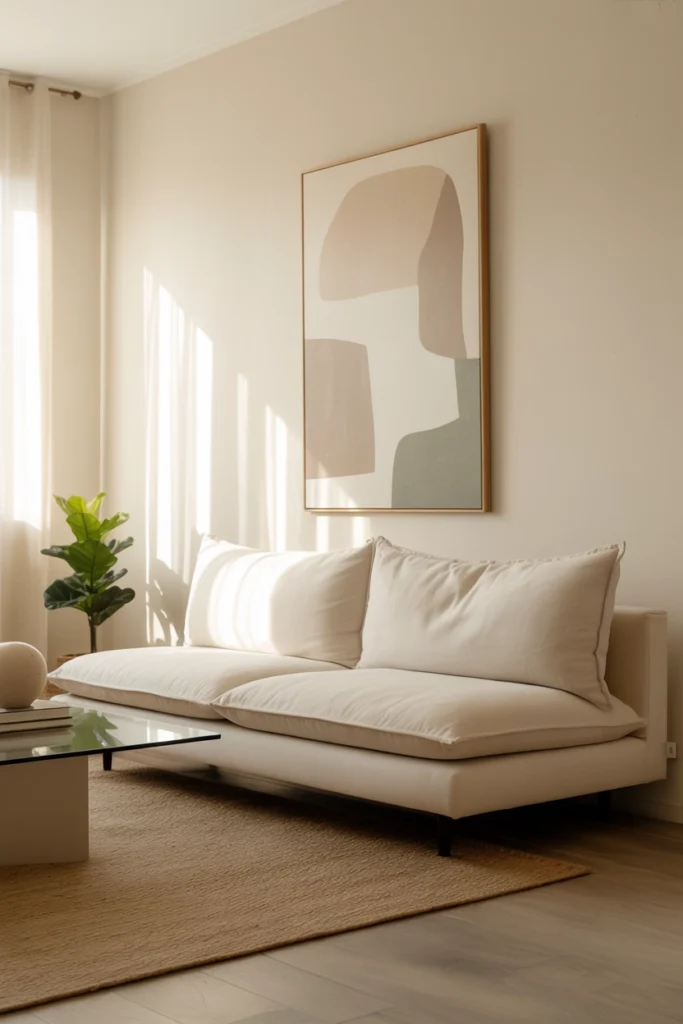
One large piece of art, or one sculptural object, or nothing at all. That is the entire wall strategy. A single generous piece — at least a metre wide over a sofa — gives the eye a destination without creating noise. Five small frames create five destinations, which is the opposite of calm.
Hang it lower than you think: the centre of the piece at about 145 cm from the floor, which usually means closer to the sofa than feels natural at first. Art floating high above furniture looks disconnected; art sitting in conversation with the sofa looks placed.
Hide the Storage, Clear the Surfaces
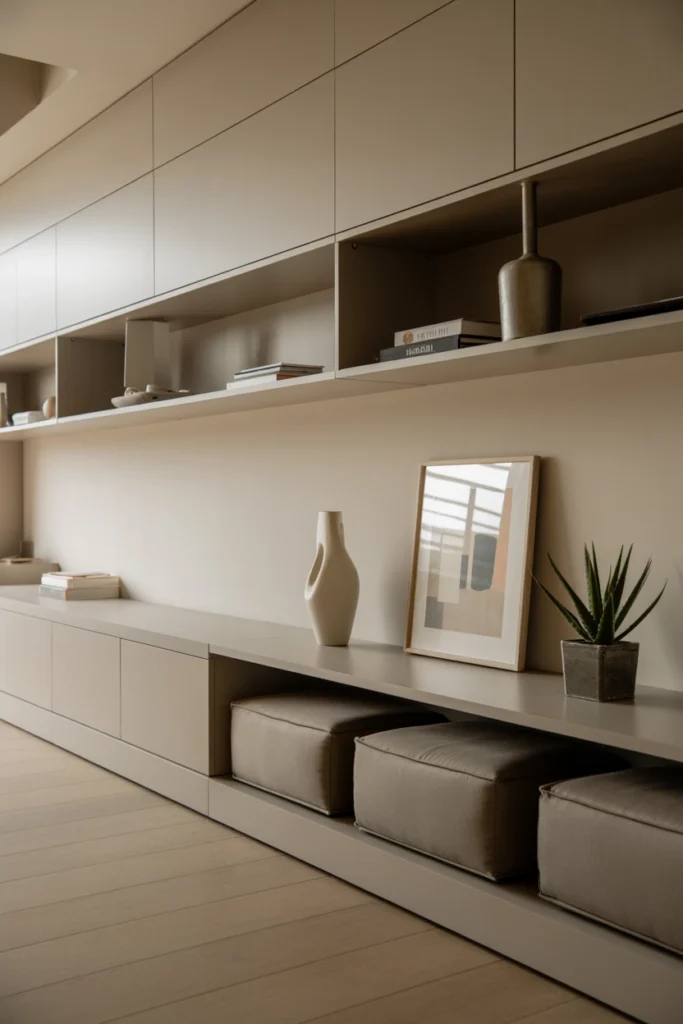
Minimalism is 20 percent buying the right things and 80 percent having somewhere to put the wrong things. Closed storage — cabinets with doors, ottomans with lids, a console that actually closes — is non-negotiable. Open shelving in a minimalist room is a display commitment most households cannot keep.
And the surfaces themselves are part of the design: a clear coffee table is a design statement, not an empty one. Give every daily object — remotes, chargers, the inevitable clutter of life — a closed home within arm’s reach of where it gets used, and the clear surfaces maintain themselves.
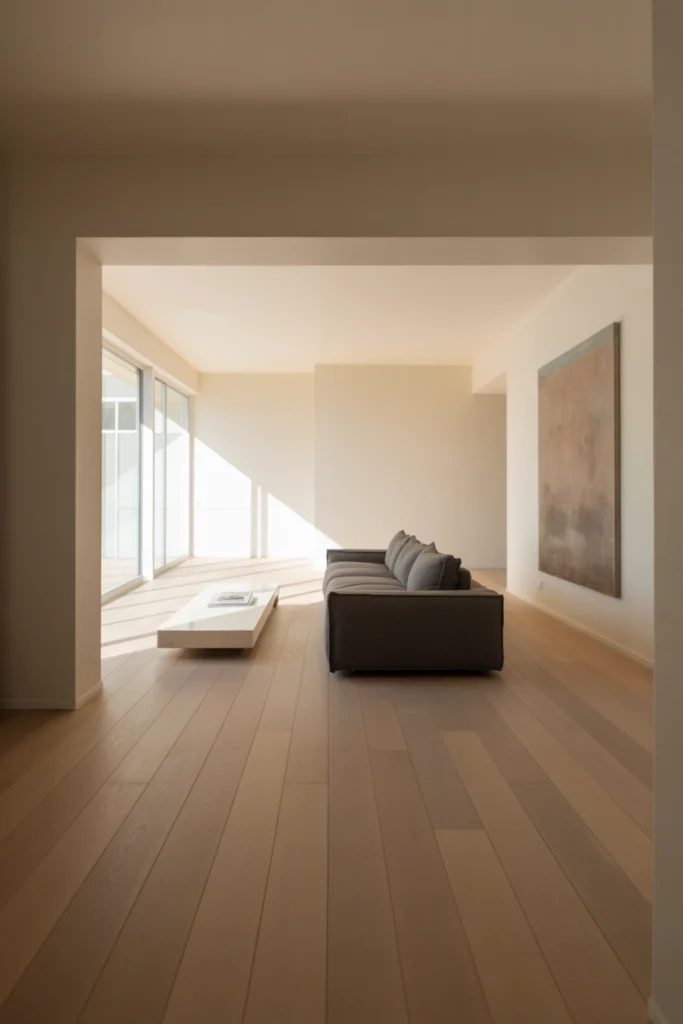
Finally, treat open space as the most expensive thing in the room — because it is. The empty stretch of floor between sofa and window, the clear wall, the unfilled corner: these are not gaps waiting for furniture. They are the luxury. Protect them the way you would protect any other investment, and the room will keep paying you back in calm.
A Final Thought
Warm minimalism is not a style you buy; it is a series of refusals. Refuse the extra chair, the extra frame, the overhead light, the cold white. What remains — texture, warmth, light, space — is more comfortable than the cluttered room you started with, and it stays that way with almost no maintenance. That is the real luxury: a beautiful room that asks nothing of you.
Pro Tips
- Count to eight: If your living room has more than eight furniture pieces, you are decorating, not minimising. Remove before you buy.
- Warm neutrals only: Beige, taupe, and greige with brown bases. Cold white minimalism is a decade old and feels like a waiting room.
- One wall piece, hung low: A single generous artwork at 145 cm centre-height beats any gallery wall for calm.
- Closed storage is the system: Minimalism survives on cupboards with doors. Open shelving is a display job most homes cannot sustain.
FAQs
Is minimalism practical with kids or pets?
More practical than cluttered design, actually — fewer objects means fewer things to break and faster tidying. The keys are washable upholstery, closed storage for toys, and accepting that “clear surfaces” is a direction, not a permanent state.
How do I keep a minimalist room from feeling cold?
Warmth comes from three things: warm-toned neutrals (not white), tactile textures (wool, linen, wood grain), and warm 2700K lighting in pools rather than overhead. Miss any one of the three and the room chills.
What is the difference between minimalism and just having no stuff?
Intention. An empty room is an accident; a minimalist room is edited. Every remaining piece is chosen for quality and placed with care, and the empty space itself is treated as a designed element rather than a gap.
Can I do minimalism on a budget?
Yes — minimalism is the cheapest style to attempt because it requires fewer things. Spend the savings on the few pieces that matter: the sofa, the rug, and the lighting. One good lamp transforms a sparse room more than five cheap accessories.

HowDecor is a home decor blog sharing simple, practical decorating ideas for everyday spaces. We believe a beautiful home should feel comfortable, personal, and full of warmth — and that great style does not require a huge budget. Our goal is to inspire readers to create spaces that feel peaceful, welcoming, and truly their own — one room at a time.