Most decorating advice fails because it treats your home like a showroom — all color matching, no character. Real designers work differently: they walk into a room and notice what it feels like first, and they fix that feeling with five or six deliberate moves rather than fifty small ones. The ideas below come from that exact way of thinking.
This is not another list of “add a throw pillow and call it styled.” Each idea here changes how a room actually behaves — how light moves through it, how your eye travels across it, where your attention lands when you walk in. Some cost almost nothing; a couple are weekend projects. All of them are the kind of thing a designer would genuinely do in their own home.
1. Layer Textures Instead of Adding More Color
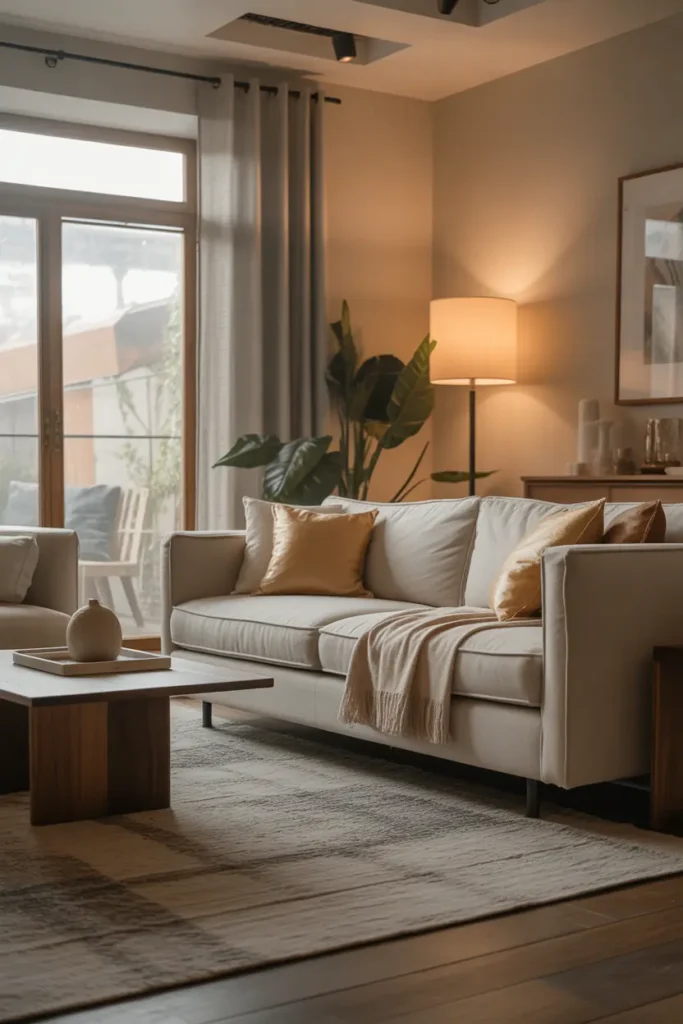
Here is the fastest way to make a room look expensive without buying a single new piece: combine three different textures at different heights. Think linen or boucle on the sofa, a chunky wool throw over the arm, a jute or low-pile rug underfoot, and one hard surface — wood, stone, or matte ceramic — to keep it grounded. Texture is what makes a neutral room feel rich instead of flat, and it’s far more forgiving than color. You can get the layering wrong in a dozen ways and it still looks intentional.
A practical rule of thumb: aim for at least one rough texture (raw wood, rattan, stone), one soft texture (velvet, wool, washed linen), and one smooth one (glass, polished metal, lacquered trays). Spread them around the room rather than clustering them — one wooden side table here, a linen curtain there, a ceramic vase across the room. This rhythm is what designers mean by “depth.” It works in living rooms, bedrooms, and even entryways, and it costs nothing if you shop your own home first.
2. Let One Lighting Piece Do the Talking
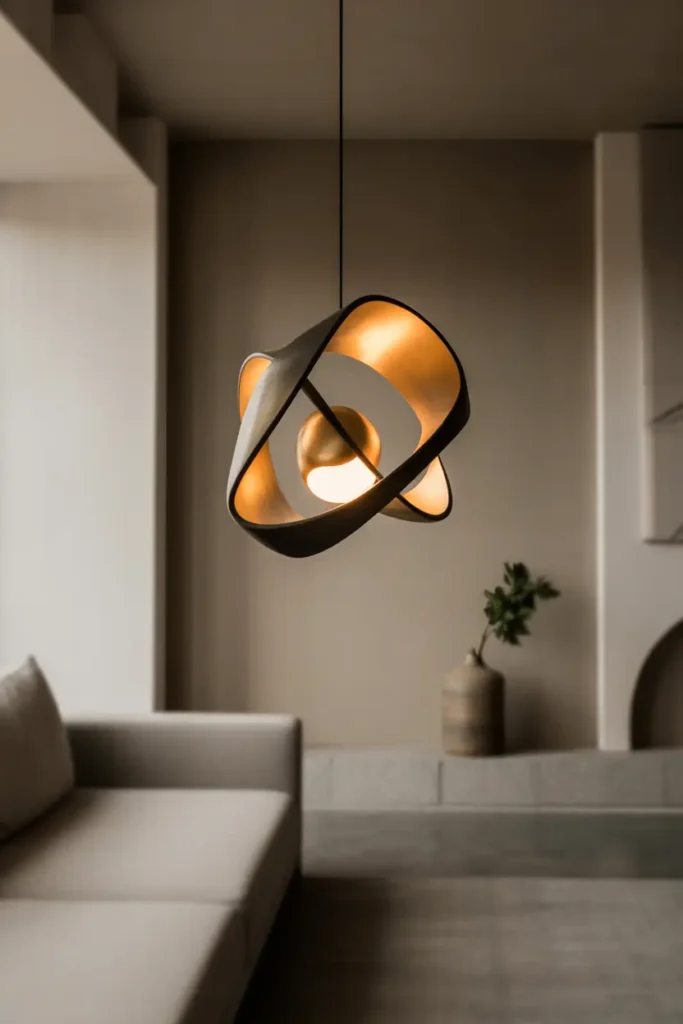
Every room needs a visual anchor — the thing your eye finds first. A sculptural pendant, an arched floor lamp, or even a dramatic paper lantern can do that job while also fixing your lighting. Designers spend a disproportionate share of a decorating budget on lighting for a simple reason: no other single item changes both the look and the mood of a room this dramatically.
When choosing, go bigger than feels comfortable. A pendant that looks “just right” in the store usually reads as small once it’s hanging in a real room. As a guide, the fixture’s diameter in inches should roughly equal the room’s length plus width in feet — so a 12-by-14-foot room wants something around 26 inches wide. And always, always put it on a dimmer. A $15 dimmer switch turns a harsh overhead light into evening ambience, which is the single cheapest upgrade in all of home decor.
3. Build Your Palette on a 60-30-10 Formula
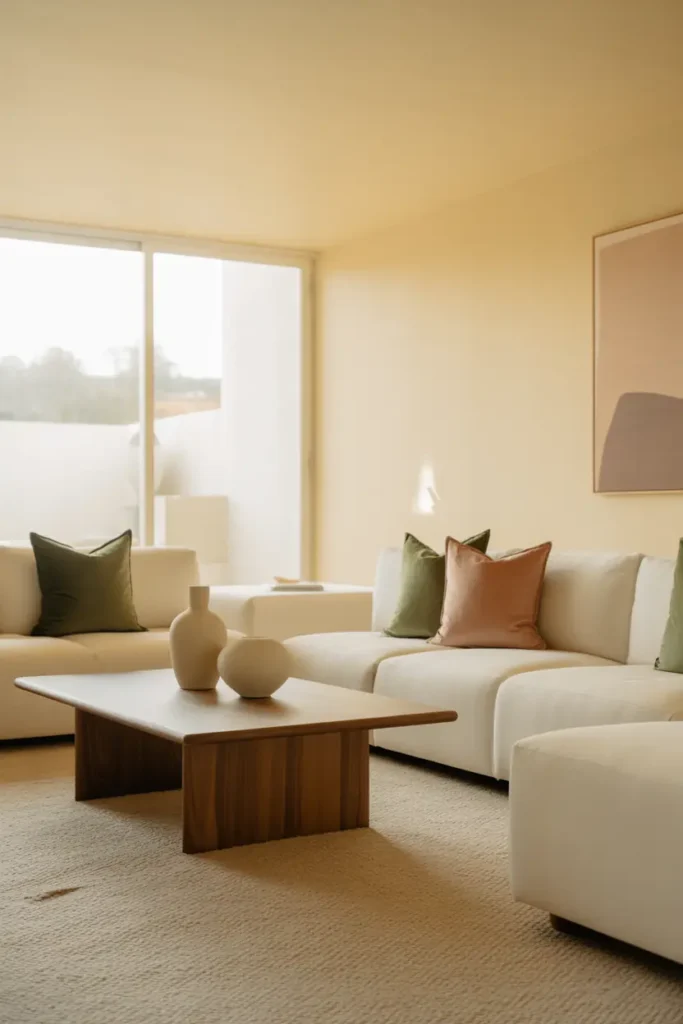
Random color choices are why rooms feel “off” without an obvious reason. The 60-30-10 rule fixes this: 60 percent of the room in a dominant neutral (walls, big furniture), 30 percent in a secondary tone (curtains, rugs, bedding), and 10 percent in an accent that repeats at least three times (art, cushions, a vase). That repetition is the secret — one red cushion looks like an accident, but three touches of the same terracotta make it look like a plan.
In open-plan spaces this matters even more, because your eye sees multiple zones at once. Carry the same 60-30-10 across the whole open area rather than restarting the palette in each corner. If you’re nervous about commitment, make your 10 percent accent the changeable stuff — cushion covers, a throw, small art — so you can swap the room’s personality seasonally for the cost of a pizza.
4. Use a Large Mirror as a Second Window
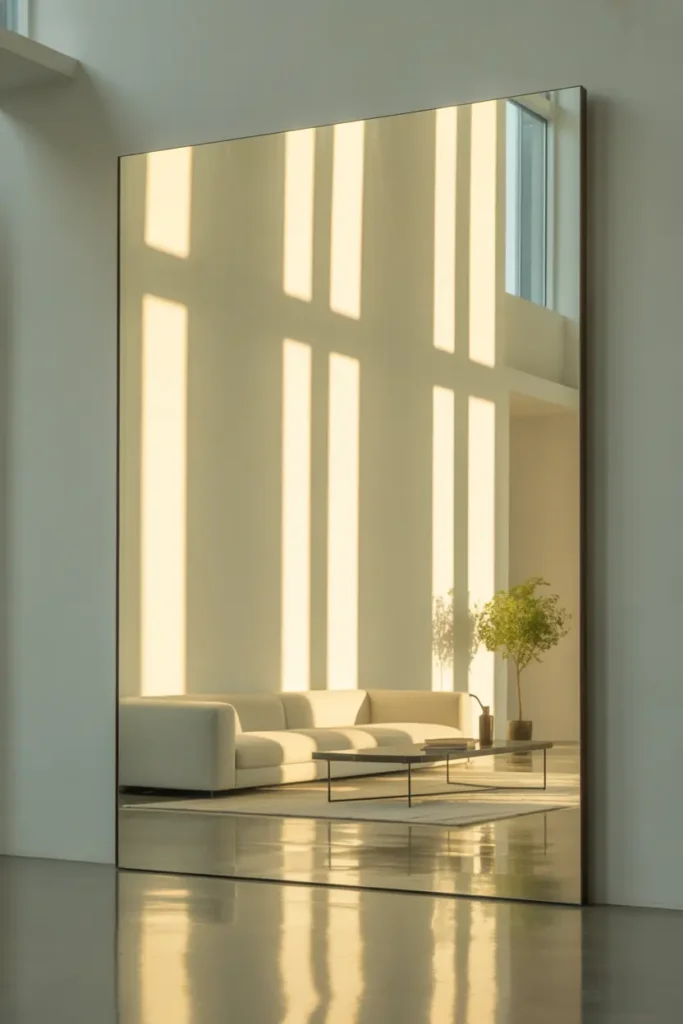
A small mirror over a console is decoration; a large mirror is architecture. Placed opposite or adjacent to a window, a floor-leaning or oversized wall mirror bounces daylight deep into the room and effectively doubles your window count. In dark or north-facing rooms, this one move can change the space more than a full repaint.
Size matters more than frame style. Aim for a mirror at least two-thirds the width of whatever it hangs above — a 36-inch console wants a 24-inch-plus mirror. Round mirrors soften boxy furniture; tall rectangular ones add height to low ceilings. Common mistake: hanging mirrors too high. The center of the mirror should sit around eye level, roughly 57–60 inches from the floor, the same height galleries use for art.
5. Mix Something Old With Something New
Rooms where everything was bought in the same year have a tell: they look like a catalog page, and catalog pages have no soul. Designers deliberately break that newness with one or two pieces that carry history — a vintage side chair, a flea-market lamp, a handwoven rug, even just an antique brass tray on a modern coffee table. The contrast makes both the old and the new look better.
You don’t need a flea-market addiction to pull this off. One rule: let the vintage piece be the only rough thing in a polished room, or the only polished thing in a rustic room. That single contrast creates the tension designers call “character.” Thrift stores, estate sales, and family attics are all fair game — and a $20 vintage find routinely outshines a $200 new accessory.
6. Edit Ruthlessly, Then Add One Thing Back
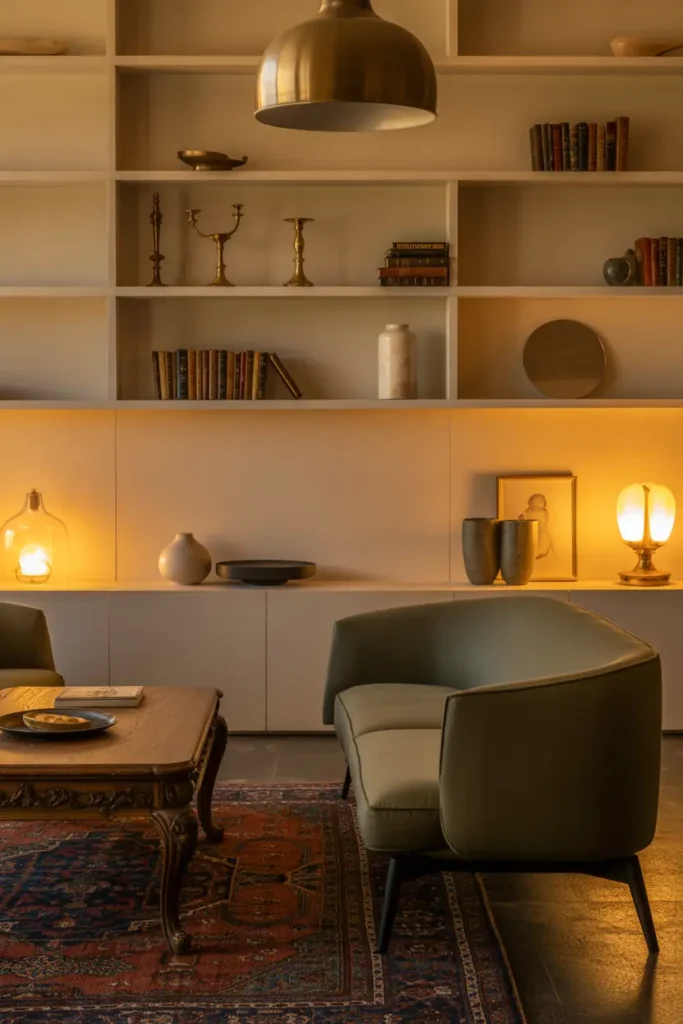
Designers decorate by subtraction first. Before buying anything new, clear every surface in the room completely, then put back only what you genuinely love or use — in odd-numbered groups of three or five. The famous designer trick: style the shelf, then remove one more item. The breathing room left behind is what makes a room look calm and expensive rather than crowded.
Once you’ve edited, add back exactly one piece with personality — something with a story, a color, or an unusual shape. This is the “curated” effect people pay designers for: restraint everywhere, character somewhere. If a surface collects clutter within a week, it needs a job — a tray, a bowl, a basket — because undefined surfaces attract random stuff like magnets.
7. Bring In at Least One Honest Natural Material
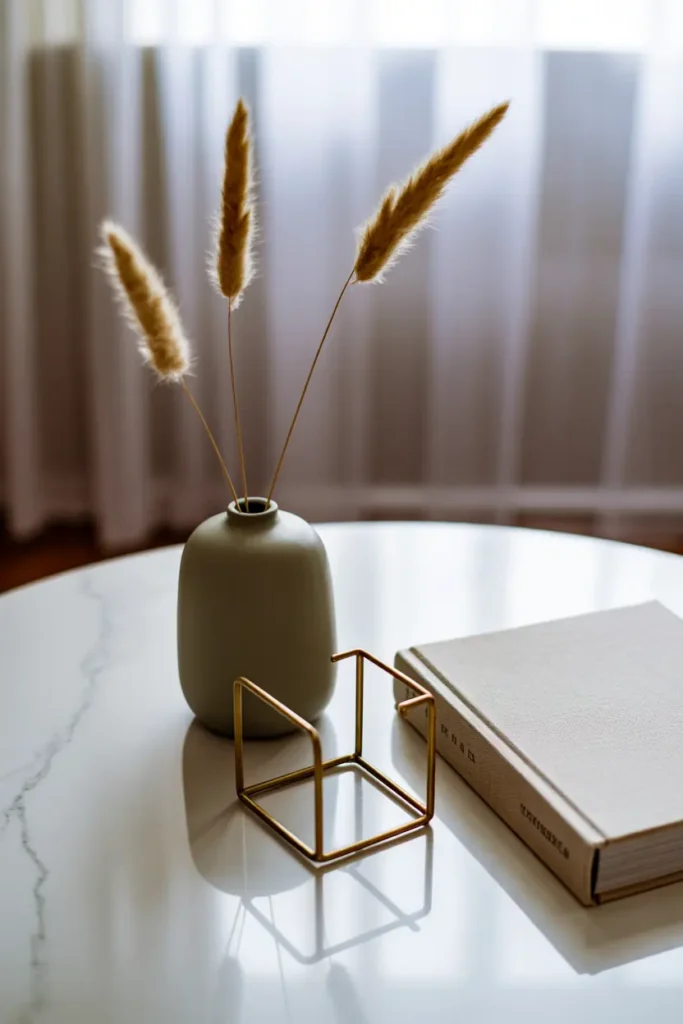
Synthetic everything reads as synthetic everything. One real material — solid wood, stone, wool, linen, rattan, clay — tells your senses the room is real, and the effect is wildly disproportionate to the effort. A single oak cutting board leaning against a backsplash, a stone soap dish, a wool throw: these small honest touches do more for warmth than an entire cart of matching decor.
The key word is honest — materials that look like what they are. Faux-marble contact paper and plastic “wood” frames undermine the effect. You don’t need much; in fact, restraint is the point. One or two natural pieces per room is plenty. And they age beautifully — real wood deepens, linen softens, stone patinas — while plastic just looks older.
8. Fix the Layout Before You Buy Anything
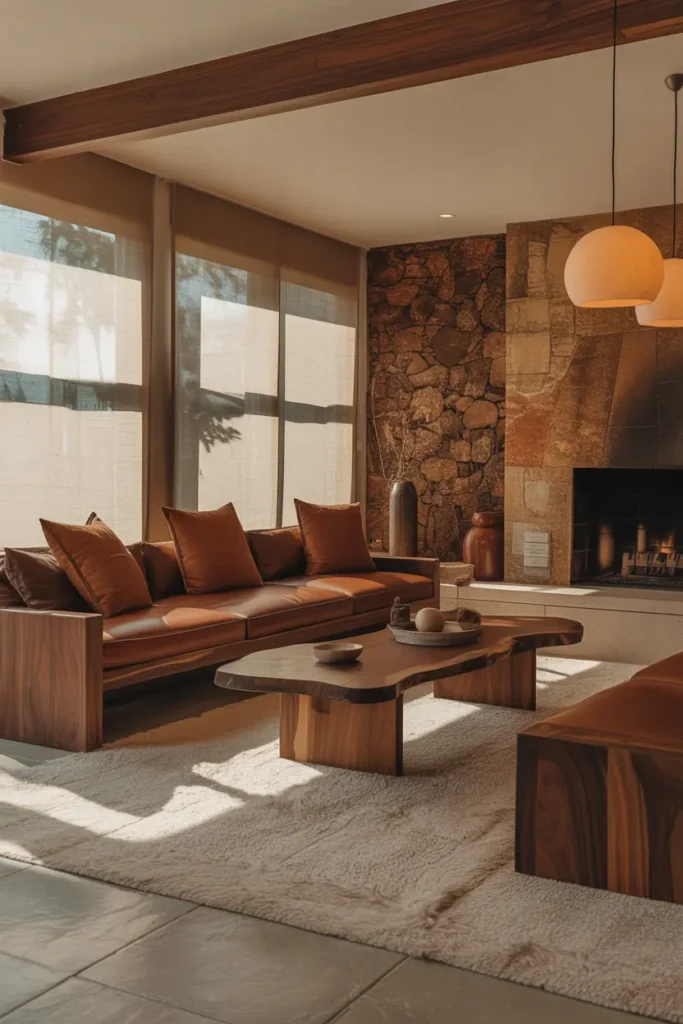
Ninety percent of “this room feels wrong” problems are layout problems, not decor problems. Before spending a dollar, try floating your sofa off the wall by even six inches, angling one chair, or pulling the rug fully under the front legs of the furniture. Traffic paths need 30–36 inches of clearance; coffee tables sit 14–18 inches from the sofa. These numbers aren’t fussy — they’re what make a room feel right without you knowing why.
Also: not every wall needs furniture against it, and not every corner needs filling. Empty space is a design element — it gives the eye somewhere to rest and makes the pieces you do have look deliberate. Sketch the room on paper first, measure twice, and live with a new arrangement for a full week before judging it. Layouts that feel “weird” on day one often feel perfect by day seven.
9. Light in Layers, Not Just From the Ceiling
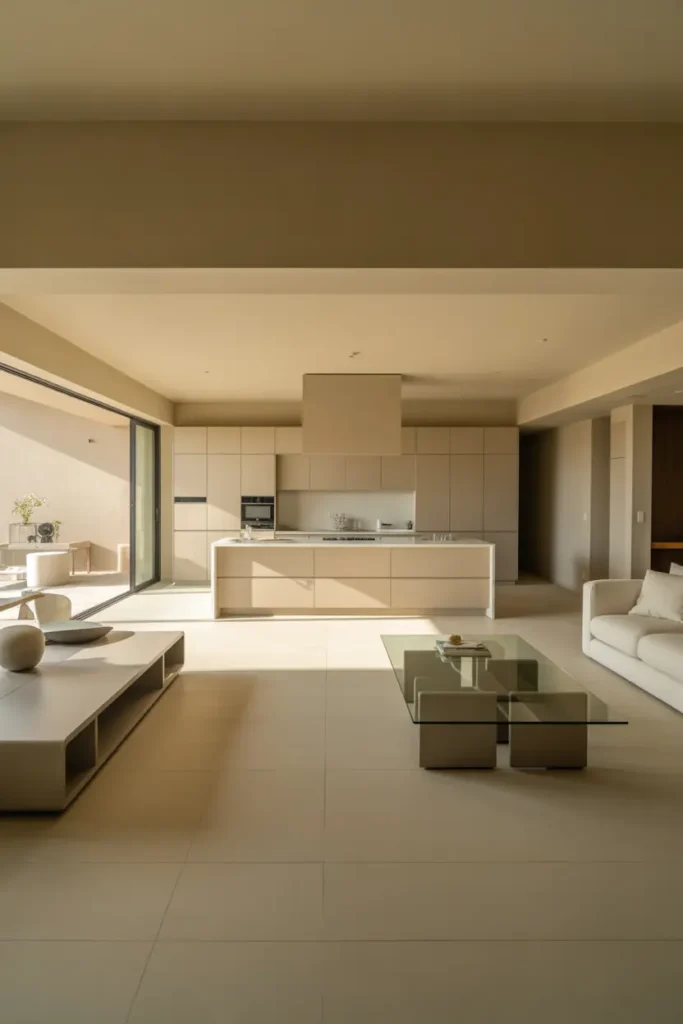
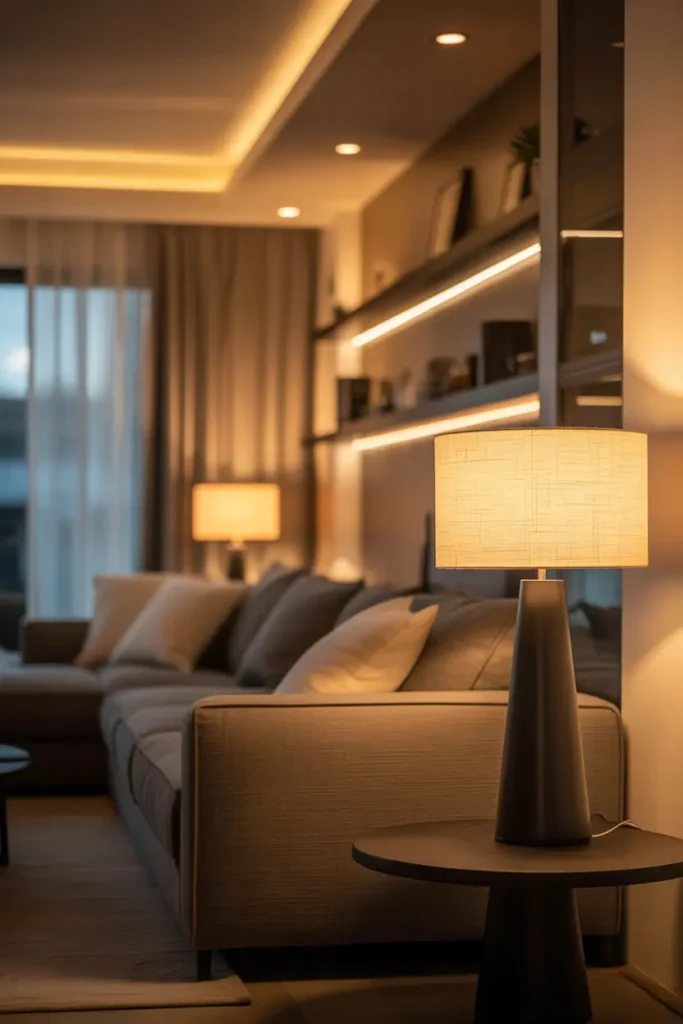
One overhead light is why your living room feels like an office at night. Designers think in three layers: ambient (the general glow — ceiling fixtures, dimmed), task (reading lamps, under-cabinet strips, desk lights), and accent (candles, picture lights, a small lamp on a bookshelf). Three light sources per room is the minimum; five is the sweet spot. Each layer should be dimmable or switchable separately.
Color temperature matters as much as placement. Stick to warm white — 2700K — for living areas and bedrooms; it flatters skin and wood tones. Cooler 4000K light belongs in kitchens and workspaces, not where you relax. And here’s the pro move: put your lamps on smart plugs or timers so the room “turns on” for evening automatically. Coming home to a softly lit room instead of a dark box changes how your whole home feels.
10. Make One Corner Unmistakably Yours
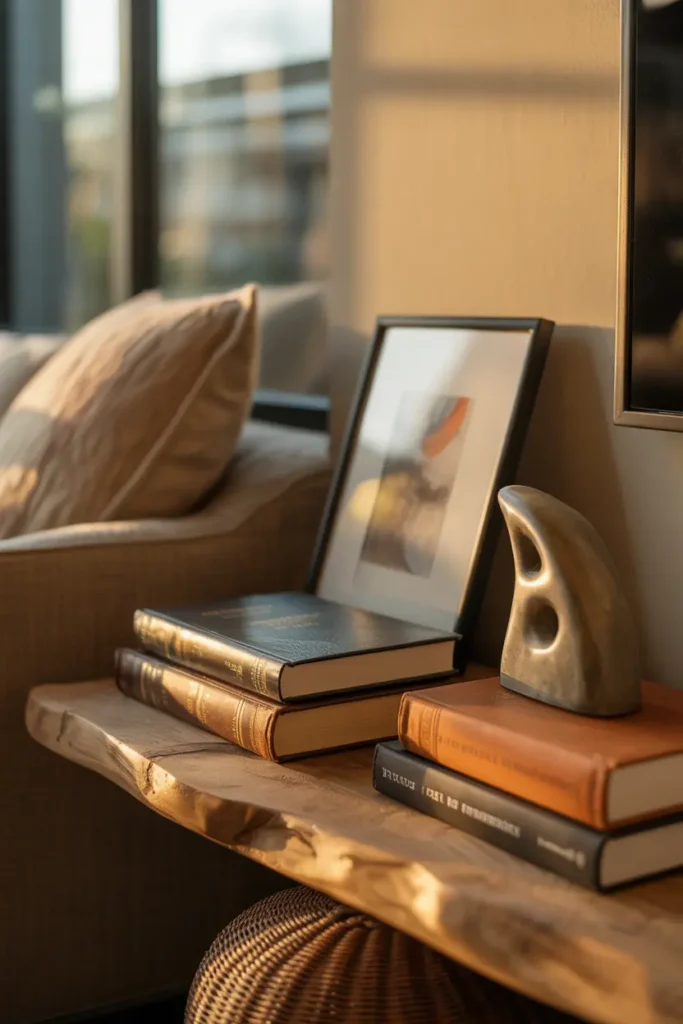
The difference between a decorated room and a designed one is personal evidence — the stuff that could only belong to you. Not generic “live laugh love” signs, but the actual artifacts of your life: framed travel photos, a bookshelf organized by color because you like how it looks, a collection displayed instead of boxed, your grandmother’s teacups in daily use. Designers call this the “soul” of a room, and no amount of shopping can fake it.
The trick is curation, not accumulation. Pick the ten best pieces, not all fifty. Group them with intention — three items of varying heights on a shelf always look better than the same three spread randomly. And rotate: swap a few pieces seasonally so the room keeps surprising you. A home that evolves with its owner never feels staged, because it isn’t.
Related Decor Ideas
If you enjoyed these unique home decor ideas, you might also explore:
- Budget-friendly decor ideas for small homes
- Cozy bedroom decor ideas with warm lighting
- Smart storage ideas for compact spaces
Conclusion
The thread running through all ten ideas is restraint with intention: fewer, better choices made for how a room feels rather than how it photographs. Texture over color, light over stuff, layout before shopping, and one honest personal touch to finish. That’s the actual designer playbook, and none of it requires a design degree or a big budget.
Start with whichever idea irritates you most about your current space — the dark corner, the flat-feeling living room, the shelf that looks cluttered no matter what. Fix that one thing properly, live with it a week, then pick the next. Good rooms are built in layers, and so is good taste.
Pro Tips
- Photograph the room before you start. A phone photo reveals clutter, imbalance, and dead corners your eyes have learned to ignore. Designers do this constantly.
- Set a “one in, one out” rule. Every new decor item means one leaves. This single habit prevents the slow creep back to clutter.
- Test paint and fabric in real light. Colors shift dramatically between morning and evening. Live with samples taped up for 48 hours before committing.
- Buy the best version of the things you touch daily. Splurge on the throw you use every night and the lamp you switch on constantly; save on the purely decorative stuff.
FAQs
Where should I start if my whole home feels dated?
Start with lighting and layout — they’re free or cheap and change everything. Rearrange one room, add a floor lamp, and put dimmers on your overheads before you buy a single decorative item. Most “dated” rooms are really just badly lit, badly arranged rooms.
How do I mix styles without it looking messy?
Pick one unifying element — a color palette, a material, or a mood — and let styles vary around it. A mid-century chair and a rustic wooden table work together if they share the same warm wood tone. Cohesion comes from repetition, not from matching.
Can these ideas work in a rental?
Almost all of them. Removable hooks, peel-and-stick wallpaper, plug-in sconces, large rugs, and freestanding furniture need no landlord permission. The only landlord-hostile move here is hardwiring a dimmer — use plug-in dimmer modules instead.
How much should I budget for a room refresh?
Honestly, $100–$300 transforms most rooms if you spend it on lighting and textiles. Save the bigger money for the pieces you touch every day. The most expensive-looking rooms are rarely the most expensive — they’re the most edited.

HowDecor is a home decor blog sharing simple, practical decorating ideas for everyday spaces. We believe a beautiful home should feel comfortable, personal, and full of warmth — and that great style does not require a huge budget. Our goal is to inspire readers to create spaces that feel peaceful, welcoming, and truly their own — one room at a time.