Small homes have a secret advantage nobody talks about: they punish bad decisions fast, which forces you to make good ones. In a 400-square-foot apartment, you can’t hide behind extra rooms or extra stuff. Every single thing you keep has to earn its place — and that constraint, handled well, produces rooms that feel calmer and more intentional than most big houses.
The ideas below aren’t about squeezing your life into less space. They’re about the specific moves that make small rooms feel genuinely good to live in — brighter, calmer, less cluttered — without spending more than a nice dinner out. Everything here has been tested in real small apartments, not staged showrooms.
1. Paint It Light, Then Stop Overthinking Color
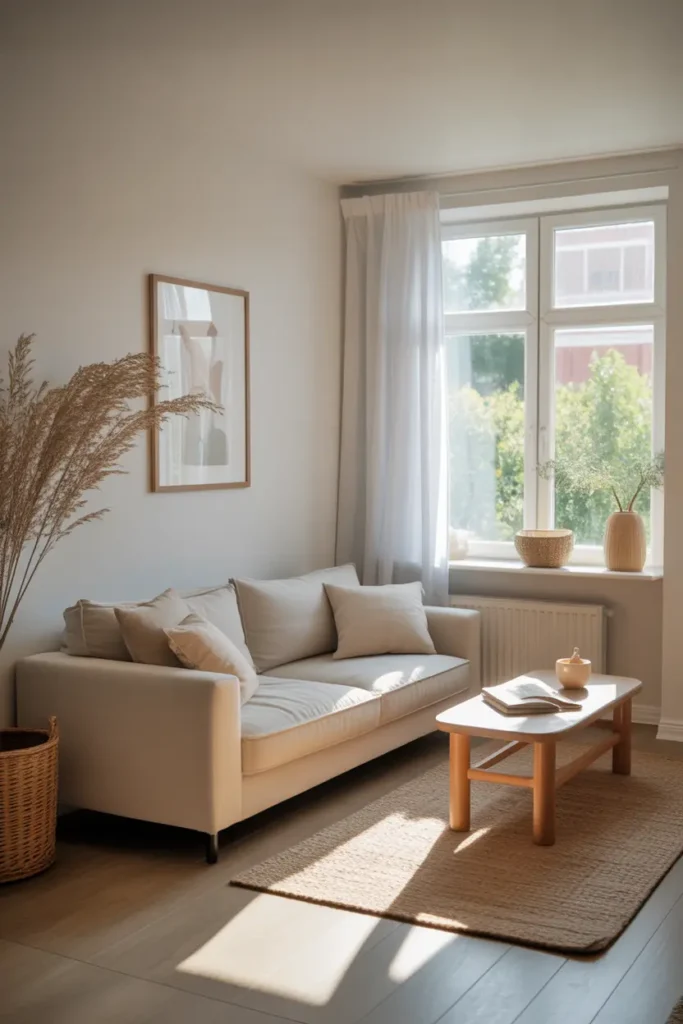
The single highest-impact change in a small home costs about $40: a fresh coat of light, warm paint. Soft white, warm greige, or pale beige on the walls bounces whatever daylight you have around the room instead of absorbing it. Dark walls in a small room aren’t wrong — a moody accent wall can look fantastic — but four dark walls in a 10×12 room will make it feel like a box. Keep at least three walls light.
The part people mess up: painting each room a different color. In small homes, running the same light tone through connected rooms makes the whole place read as one bigger space. Save your personality for the changeable stuff — art, textiles, a painted bookshelf. And here’s a renter-friendly trick if painting is off-limits: large light-colored curtains hung wall-to-wall create the same brightening effect as a fresh paint job.
2. Buy Furniture That Does Two Jobs
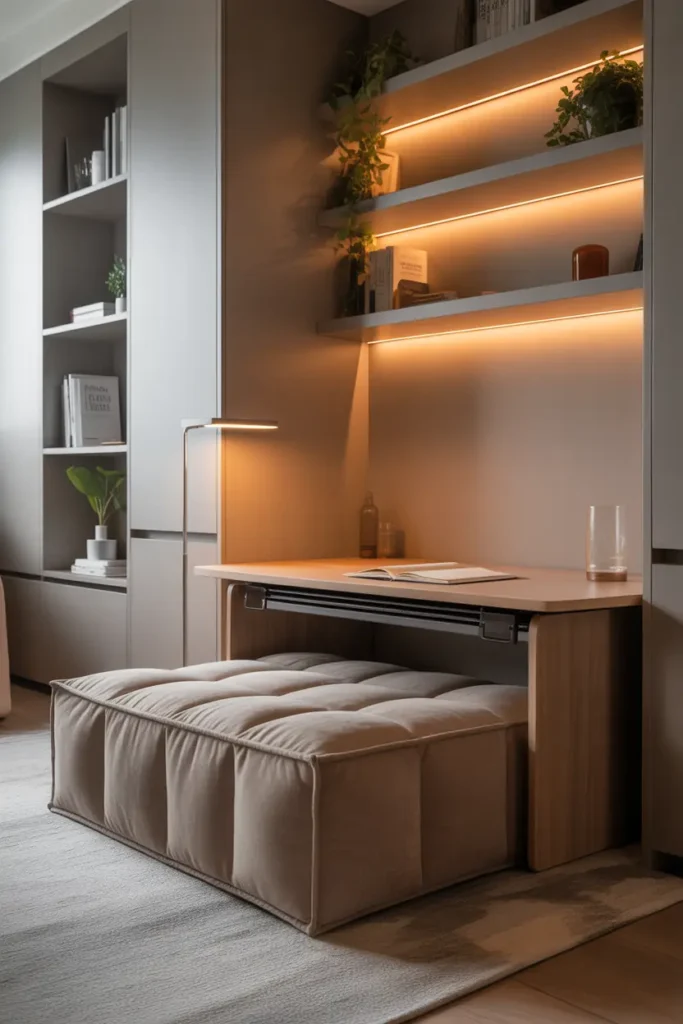
In a small home, a piece of furniture with one job is a luxury you can’t afford. Storage ottomans that hold blankets, a coffee table with a lift-top for laptop work, a daybed that sleeps guests, nesting side tables that tuck away — this is the furniture that makes small spaces work. Before buying anything, ask: “What else can this do?” If the answer is nothing, keep looking.
The math is simple and satisfying. One $120 storage ottoman replaces a $60 ottoman plus a $70 blanket basket, and it takes up less floor space than both. The biggest wins are usually the bed (under-bed drawers or a lift-up frame add a closet’s worth of storage) and the dining setup (a drop-leaf or extendable table seats two daily and six when it matters). Buy fewer pieces, but make each one work twice as hard.
3. Put Your Style on the Walls, Not the Floor
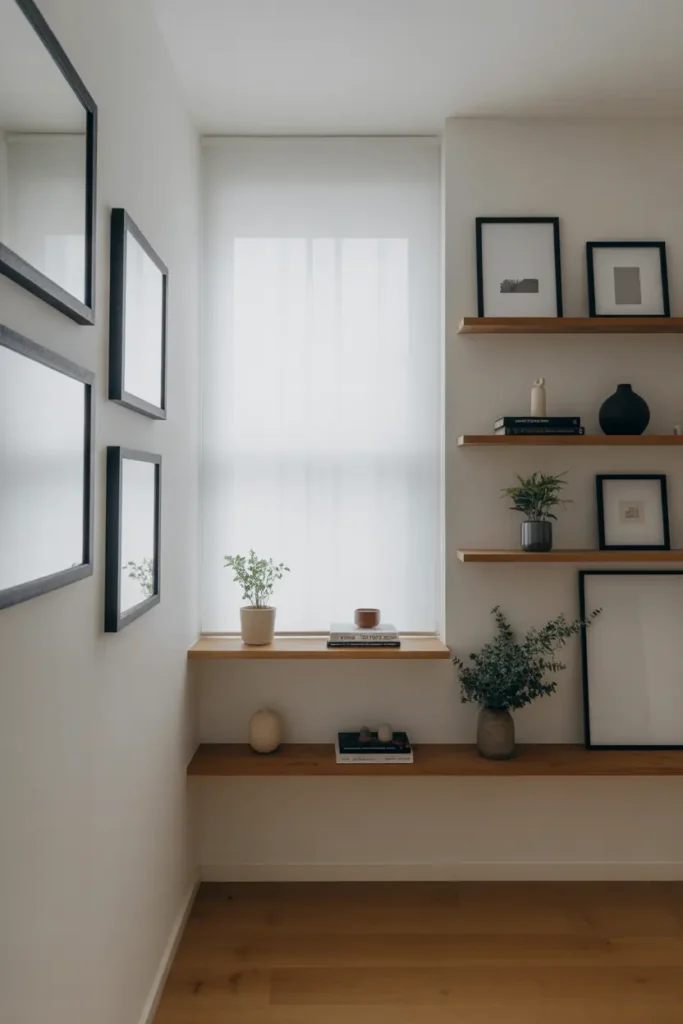
Floor space is the scarcest resource in a small home, so stop spending it on decor. Walls are free real estate. A gallery wall, floating shelves, a big mirror, or one oversized art piece gives you all the personality of a room full of objects while your floor stays gloriously clear — and clear floors are what make small rooms feel big.
A few practical rules: hang art so its center sits around 57 inches from the floor (gallery standard), and don’t scatter small frames across a huge empty wall — one large piece always beats six tiny ones in a small room. Floating shelves above a desk or beside a bed add storage and display without touching the floor. And peel-and-stick wallpaper on a single wall gives renters a real feature wall for under $50 with zero landlord drama.
4. Clear Surfaces Are Free Decor
This one costs nothing and it’s the most powerful idea on this list: clear every flat surface, then put back half of what was there. Clutter is visual noise, and in a small room there’s nowhere for it to hide — a messy counter in a studio apartment is basically wall art you didn’t choose. The “after” of a decluttered small home genuinely looks like a renovation.
Make it stick with the tray trick: every surface that tends to collect random stuff gets one tray or basket, and everything on that surface must live inside it. Entryway keys, coffee-table remotes, bathroom bottles — corralled, not scattered. A $10 tray makes a $0 countertop look designed. And be honest about “someday” items: if you haven’t used it in six months, the small home is not the place to store it.
5. Warm Light Makes Small Rooms Feel Like Home
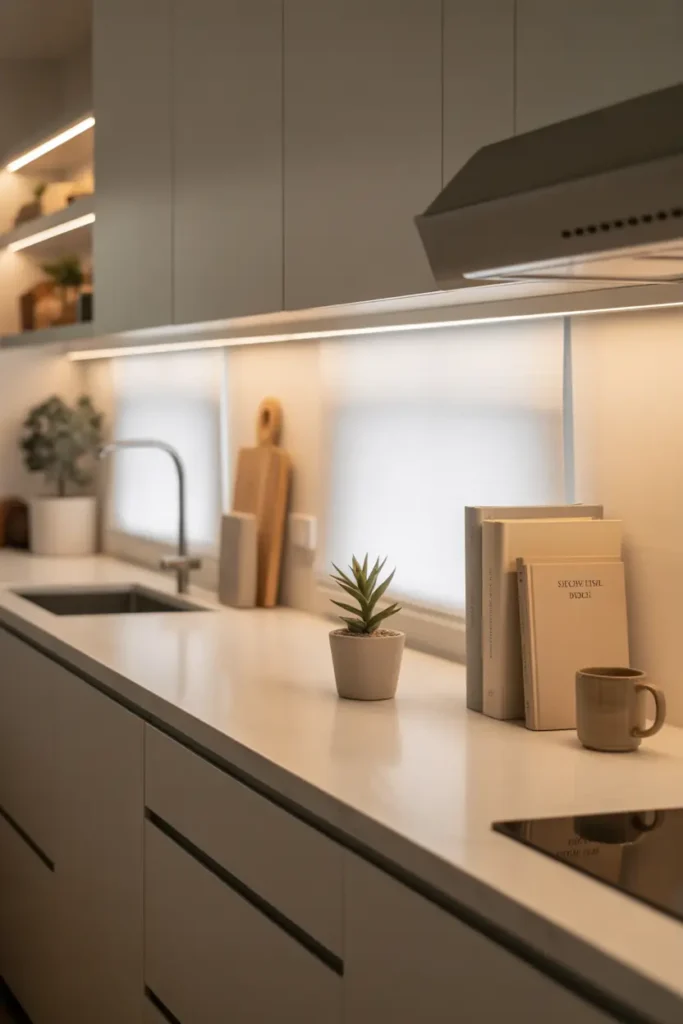
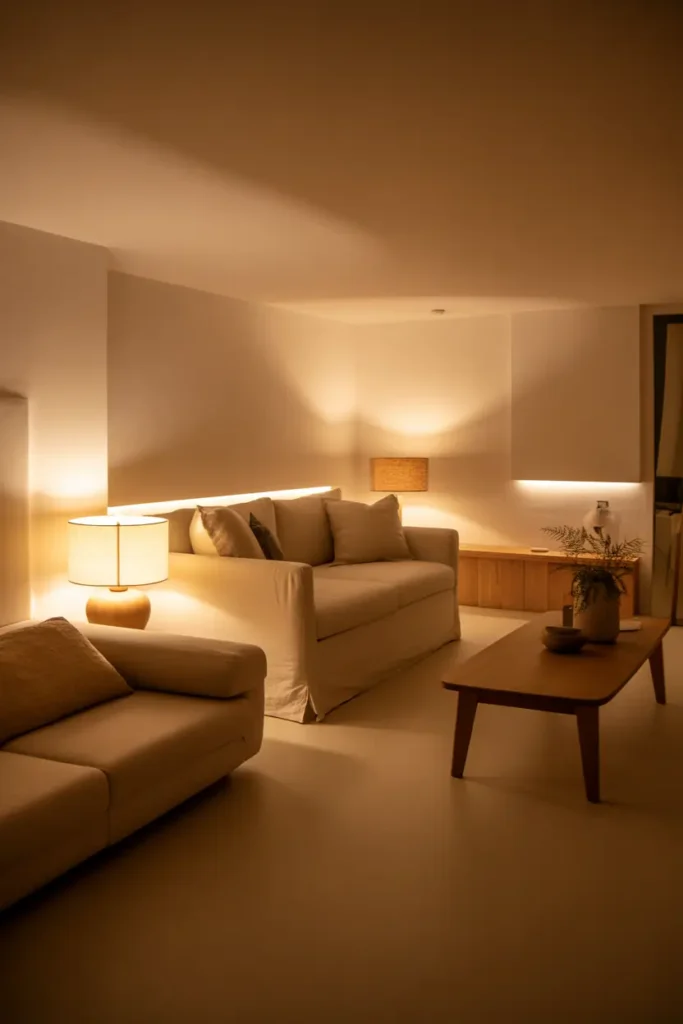
Overhead fluorescents and bare bulbs are why small apartments feel like dorm rooms. Warm, low light — lamps at different heights, fairy lights, a candle or two — wraps a small room in coziness that no amount of furniture can replicate. Small spaces actually have an advantage here: two or three warm light sources are enough to transform the whole place.
The formula: one floor lamp in the darkest corner, one table lamp where you read or work, and something small and glowy (string lights, candles, a salt lamp) for evenings. Keep bulbs at 2700K warm white — cool white in a small room feels clinical. Total cost for all three can stay under $60 if you thrift the lamp bases. And skip the overhead light entirely after 7pm; your room will feel twice as big and ten times calmer.
Related Decor Ideas
If you liked these budget decor ideas for small homes, you might also explore:
- Small apartment decor ideas that maximize space
- Cozy bedroom decor ideas on a budget
- Smart storage ideas for small spaces
Conclusion
Small-home decorating is really just decorating with discipline: light walls, hardworking furniture, clear surfaces, and warm light. None of these ideas requires money so much as intention — and the result isn’t a compromised version of a “real” home, it’s often a better one. Small rooms, styled well, feel cozier and more personal than big ones ever manage.
Pick the one idea that addresses your biggest complaint — if it’s darkness, start with paint and light; if it’s clutter, start with the tray trick. One weekend, one change, and your small home starts feeling like it was designed for you. Because now it was.
Pro Tips
- Mirror your light source, not your clutter. A mirror opposite a window doubles daylight; a mirror opposite a messy shelf doubles mess. Placement is everything.
- Go vertical before you go shopping. Over-door hooks, wall-mounted shelves, and tall narrow bookcases add storage without eating floor space — usually for under $30.
- Keep a donation bag permanently in the closet. Small homes stay clean when outflow matches inflow. When the bag is full, it leaves.
- Use rugs to fake separate rooms. In a studio, a rug under the bed zone and a different one under the living zone tells your brain these are different places — no walls needed.
FAQs
What’s the cheapest way to make a small room look bigger?
Clear the surfaces and add a large mirror opposite the window — both nearly free, and the combination routinely makes a room feel 30% larger. After that, one coat of light paint is the best $40 you’ll ever spend on your home.
How do I decorate a small home without it looking cluttered?
Follow the “walls, not floors” rule: put personality on walls and keep the floor clear. Group small items on trays so they read as one intentional arrangement instead of five random objects, and cap open shelving at about 70% full.
Is dark furniture okay in a small space?
Yes, in small doses. One dark anchor piece — a charcoal sofa, a black bookshelf — actually adds depth and contrast. The problem is only when everything is dark. Balance one dark piece with light walls and warm lighting and it looks deliberate, not heavy.
What furniture should I buy first for a tiny apartment?
A bed with storage underneath and a table that does double duty (dining + desk, or coffee table + storage). Those two pieces solve the two biggest small-space problems — where things go, and where you do things. Everything else can wait.

HowDecor is a home decor blog sharing simple, practical decorating ideas for everyday spaces. We believe a beautiful home should feel comfortable, personal, and full of warmth — and that great style does not require a huge budget. Our goal is to inspire readers to create spaces that feel peaceful, welcoming, and truly their own — one room at a time.