There is a particular kind of bathroom that stops you mid-step — dark, gleaming, unmistakably confident — and it is almost always black. For years black was treated as a bathroom risk, something you whispered about but didn’t commit to. That era is over. Done with intention, black is the most luxurious neutral you can put in a bathroom, and it photographs, ages, and impresses like nothing else in the palette.
The catch is that black exposes every lazy decision. Bad lighting looks worse against black. Cheap fixtures look cheaper. Clutter looks messier. So this isn’t a list of “add black towels and call it a day” — it’s a proper guide to building a black bathroom that feels bold and expensive rather than dark and gloomy, from the one-wall commitment to the full dramatic envelope.
1. Start With a Matte Black Feature Wall
Matte black on a single wall is the purest expression of this look — velvety, light-absorbing, impossibly deep. It works best behind the vanity or the freestanding tub, where it acts as a backdrop that makes everything in front of it (white basin, brass faucet, your own reflection) look sharper. One wall, that’s it. Let it be the statement and let everything else support it.
Matte finishes demand good prep: any wall imperfection shows through dark flat paint, so skim-coat and sand properly first. Use a bathroom-grade paint (moisture resistance is non-negotiable) and expect to need three coats for full depth. The reward is a wall with the visual texture of slate — no shine, all drama.
2. Anchor It With Crisp White
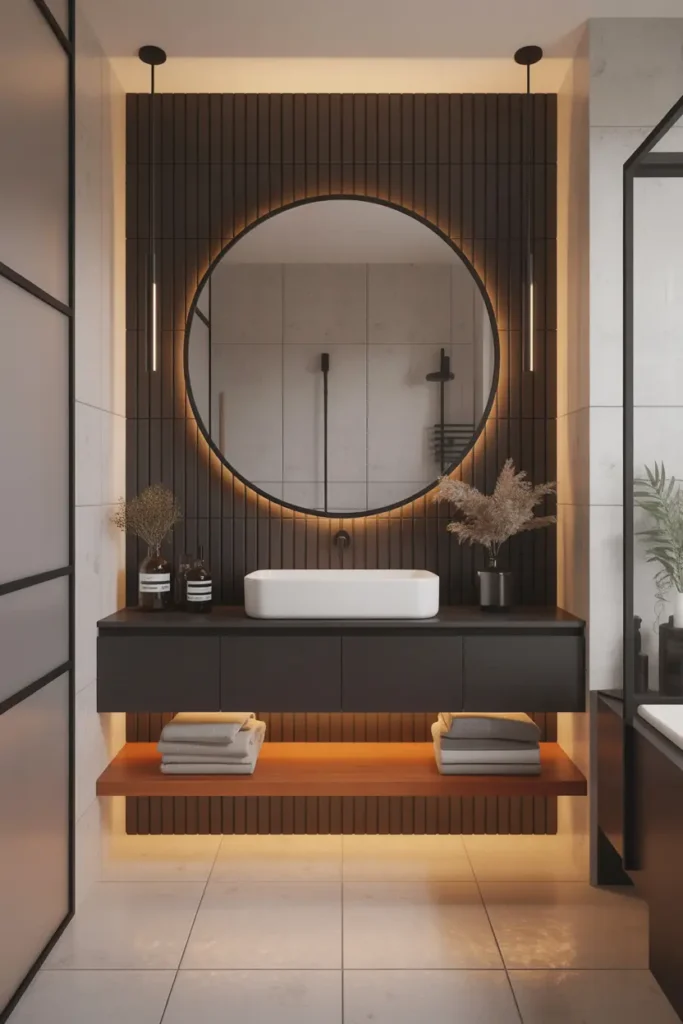
Black without white is a cave; black with white is a tuxedo. The white elements — sanitary ware, ceiling, towels, maybe the floor — are what let the black read as a choice rather than a mood. In smaller bathrooms, push the white ratio higher; in generous ones, you can let black take the lead. Either way, the contrast is the design.
The most reliable pairing in the business: white large-format tile, black vanity, black-framed mirror, brass somewhere small. It has never looked bad, in any decade, in any bathroom size. Keep grout light on the white tile and dark on any black tile — matching grout to tile color is what keeps the surfaces reading as seamless planes instead of grids.
3. Splurge on Black Marble (or Fake It Well)
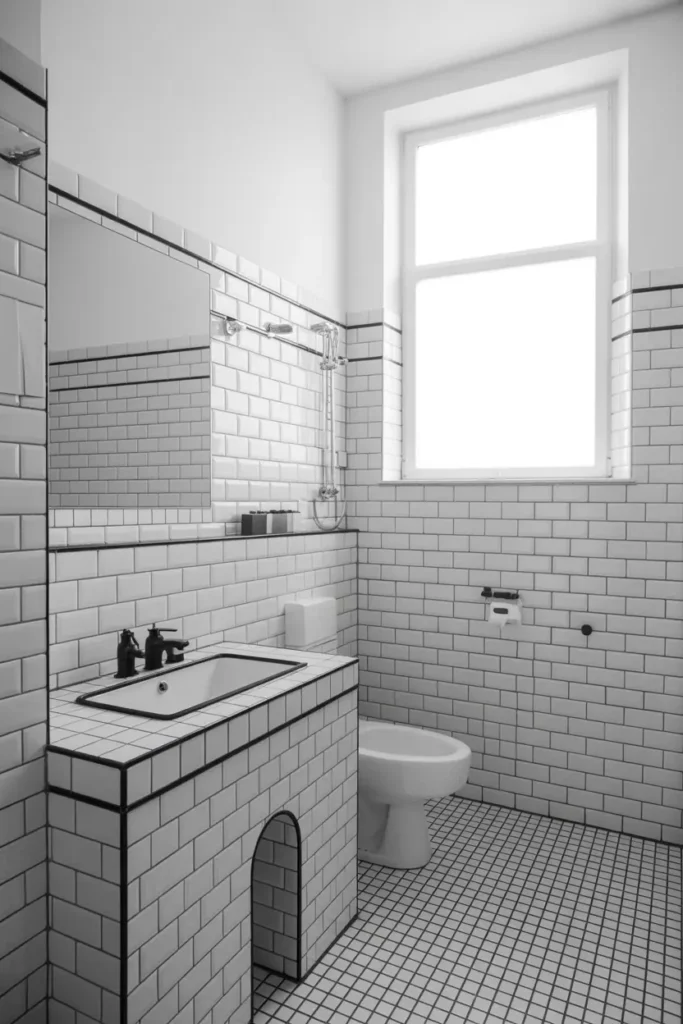
Nothing says luxury in a bathroom faster than black marble — Nero Marquina with its white veining is the icon. A marble countertop, a marble-clad shower wall, even just a marble bath tray: the veining gives black the movement and life that flat black paint can’t, and every slab is one of a kind.
Real marble is porous and needs sealing twice a year in a wet bathroom, and it etches if you use acidic cleaners. If that maintenance sounds like a chore, porcelain slabs that mimic black marble have become remarkably convincing — large format, minimal grout, a fraction of the price, zero sealing. Nobody touching it will know, and your weekends stay yours.
4. Add Gold Like Jewelry
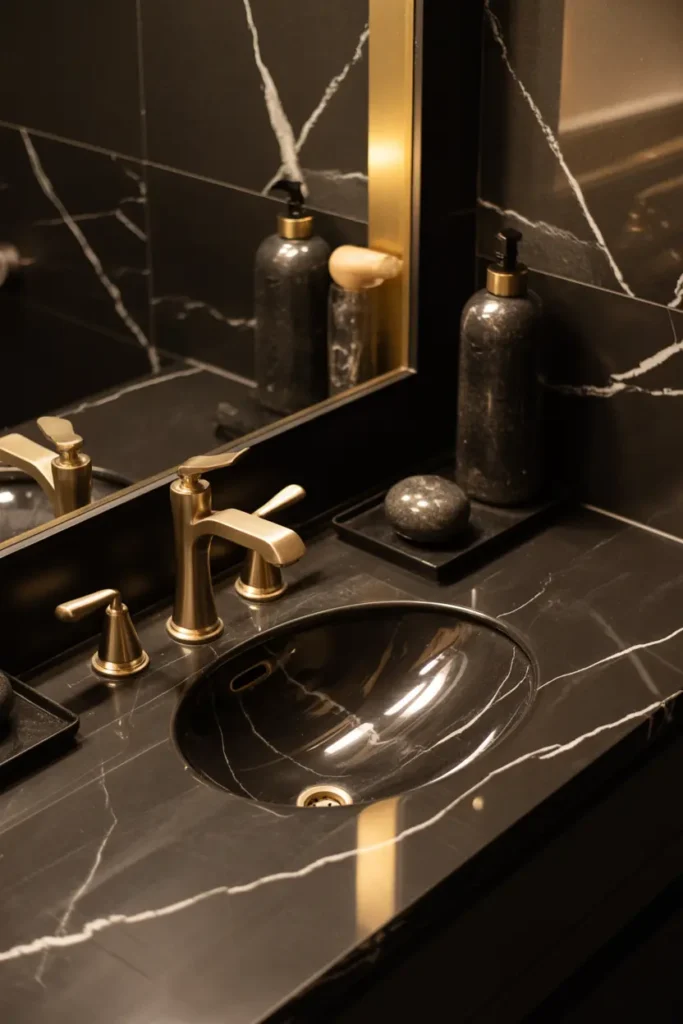
Black and gold is the oldest luxury combination in the book because it works at a biological level — the warmth of gold against the depth of black reads as precious. You don’t need much: a brushed-brass faucet, gold cabinet pulls, a thin gold-framed mirror. These are the jewelry of the bathroom, and like jewelry, a little goes a long way.
Brushed or satin brass beats polished gold here — it’s warmer, more modern, and hides water spots. Keep all your metals in the same family (don’t mix chrome taps with brass pulls in a small space) and repeat the metal at least three times so it looks deliberate. A $40 set of brass pulls can make a $400 vanity look like a $1,400 one.
5. Light It Warm, Light It Low
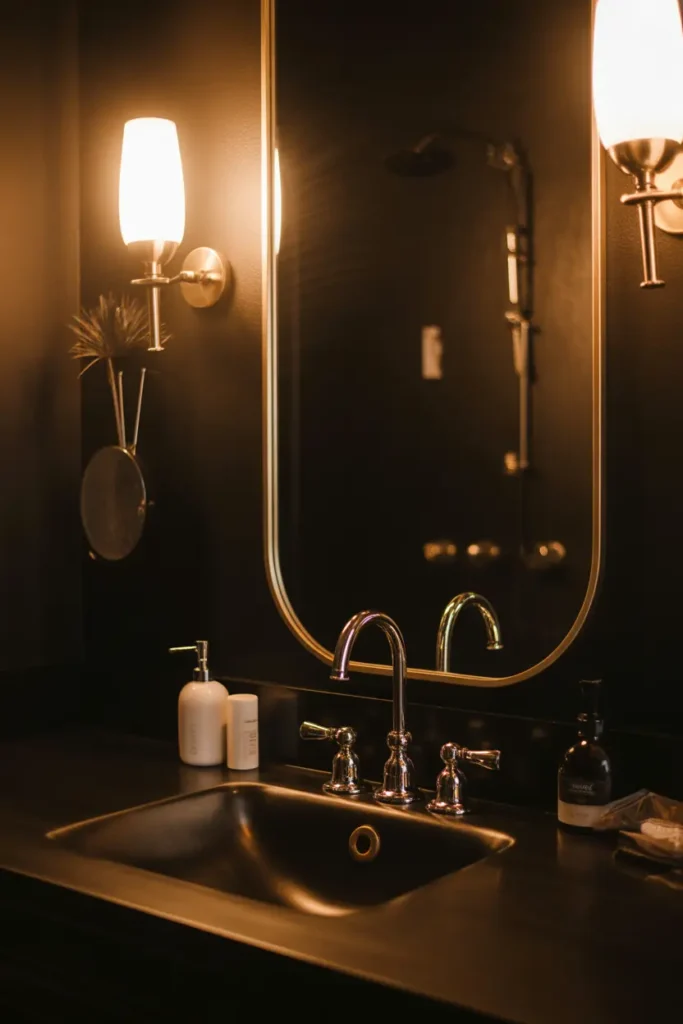
Black rooms need warm light the way deserts need water. Cool white LEDs against black tile create a harsh, commercial glare; 2700K warm light turns the same room into an evening cocktail bar. Layer it: dimmable overheads for mornings, sconces at face height for the mirror, and a low glow — candles or LED strips — for baths.
The mirror lighting deserves special attention. Front-lit mirrors or a pair of sconces at eye level (about 60 inches high, 28–30 inches apart) eliminate the unflattering shadows that a single overhead casts on your face. This is both a beauty decision and a design one — good face lighting makes the whole bathroom feel considered.
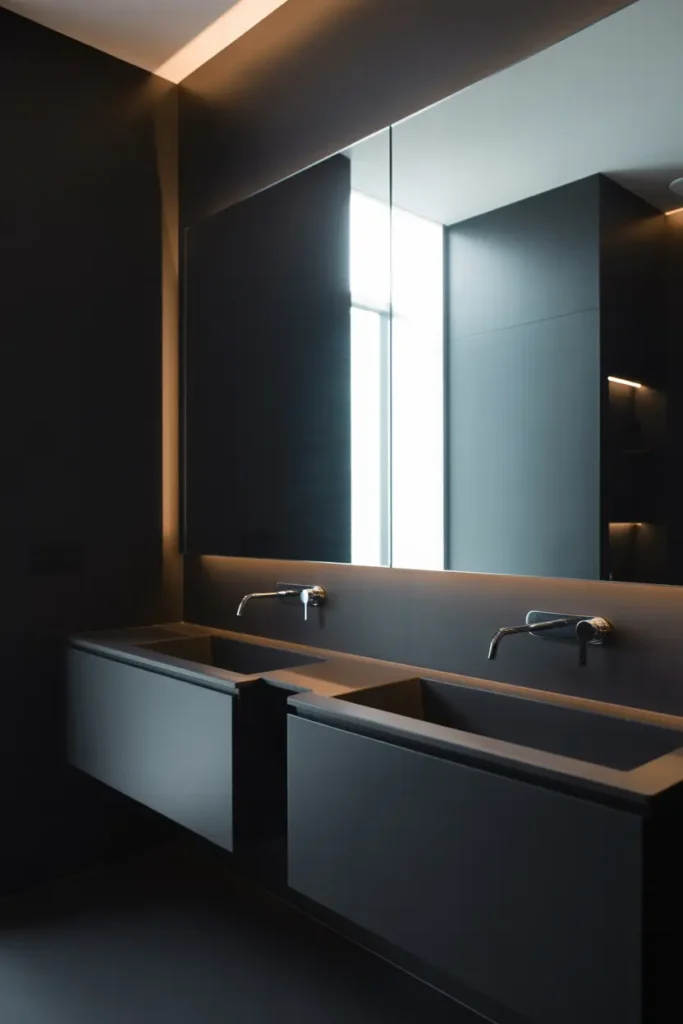
6. Float the Vanity
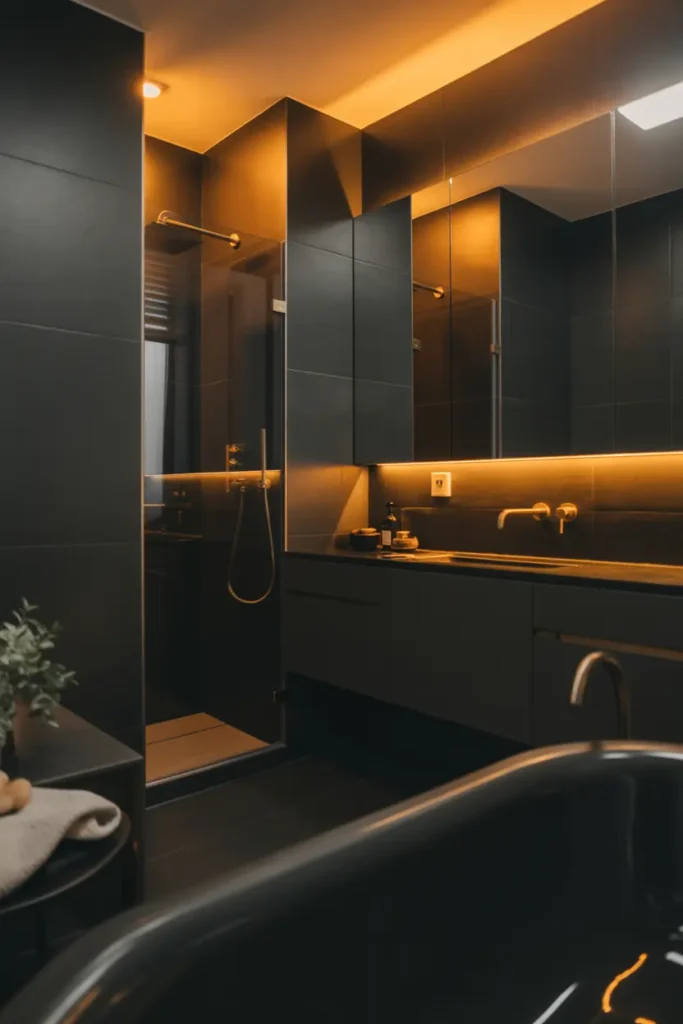
A wall-hung vanity in black is the modern bathroom’s signature move. The shadow gap underneath makes the floor read as continuous, which makes the room feel larger, and the floating form looks custom even when it’s off the shelf. In black, the floating vanity becomes a sculptural element rather than just storage.
Practically, floating vanities also make cleaning the floor effortless — no cabinet base to mop around. Make sure your wall can take the weight (tile over proper backing board, ideally with blocking behind) and leave at least 10–12 inches of clearance beneath for the floating effect to register. Add an LED strip under it and the vanity appears to hover.
7. Soften With Natural Wood
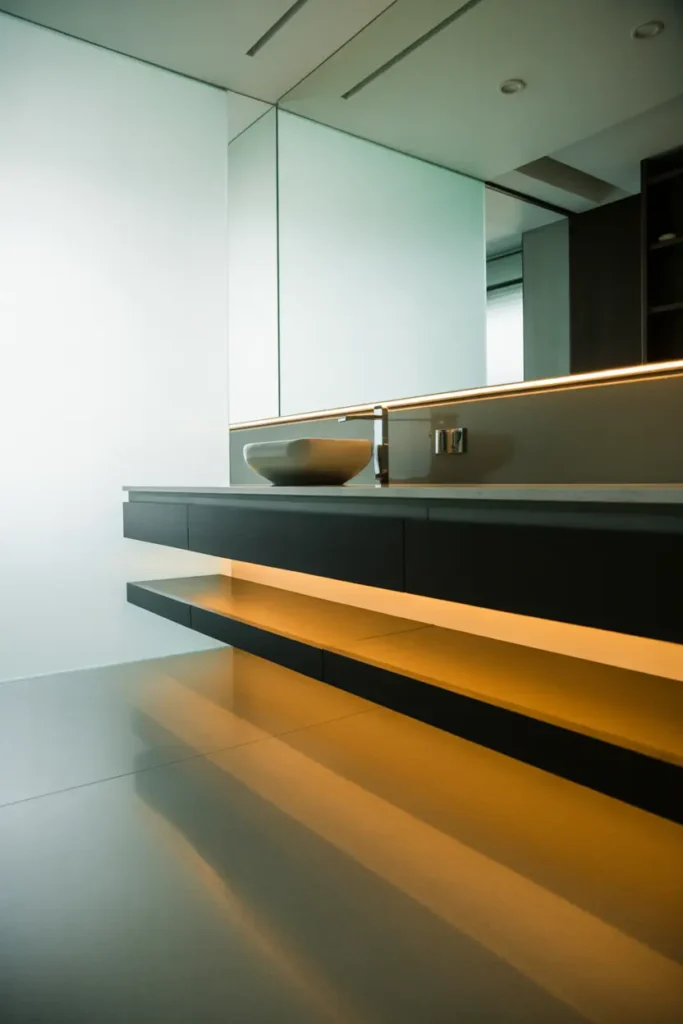
All black and white can feel like a graphic design exercise — beautiful but cold. Wood is the antidote. A warm oak vanity, teak bath mat, or even just wooden shelving introduces an organic note that makes the whole room feel human. Black + white + wood is the holy trinity of modern bathroom palettes for a reason.
Keep the wood warm-toned and natural rather than dark-stained; you’re adding warmth, not more darkness. In wet zones, choose teak, iroko, or properly sealed oak — they handle humidity gracefully. Even small doses work: a wooden stool, a tray, a ladder shelf. One wood element per sightline is plenty.
8. Play With Black Tile Texture
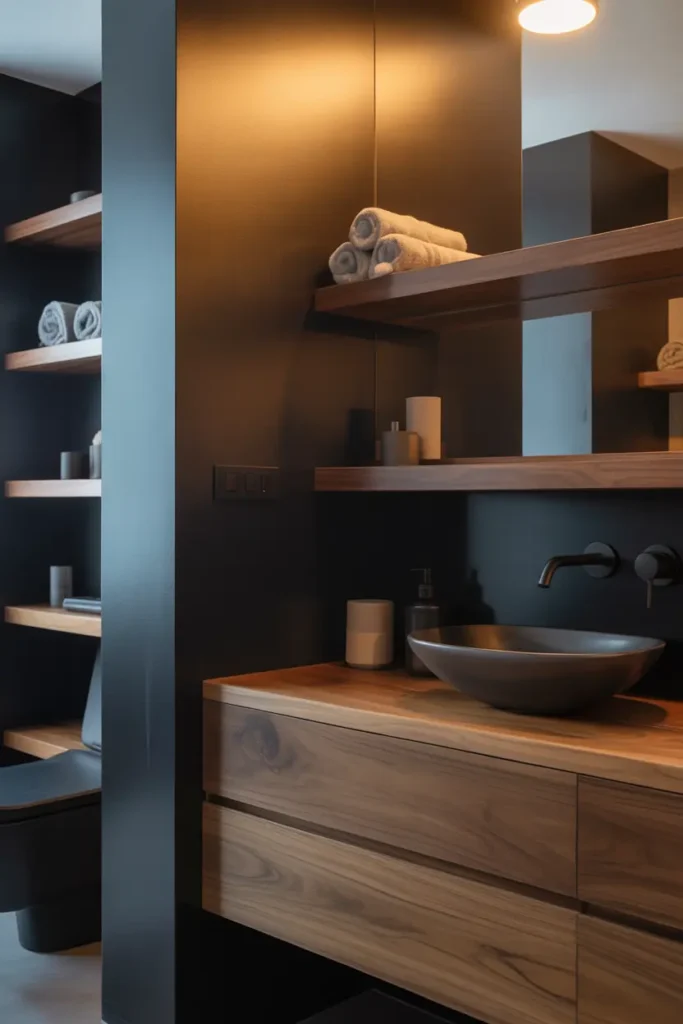
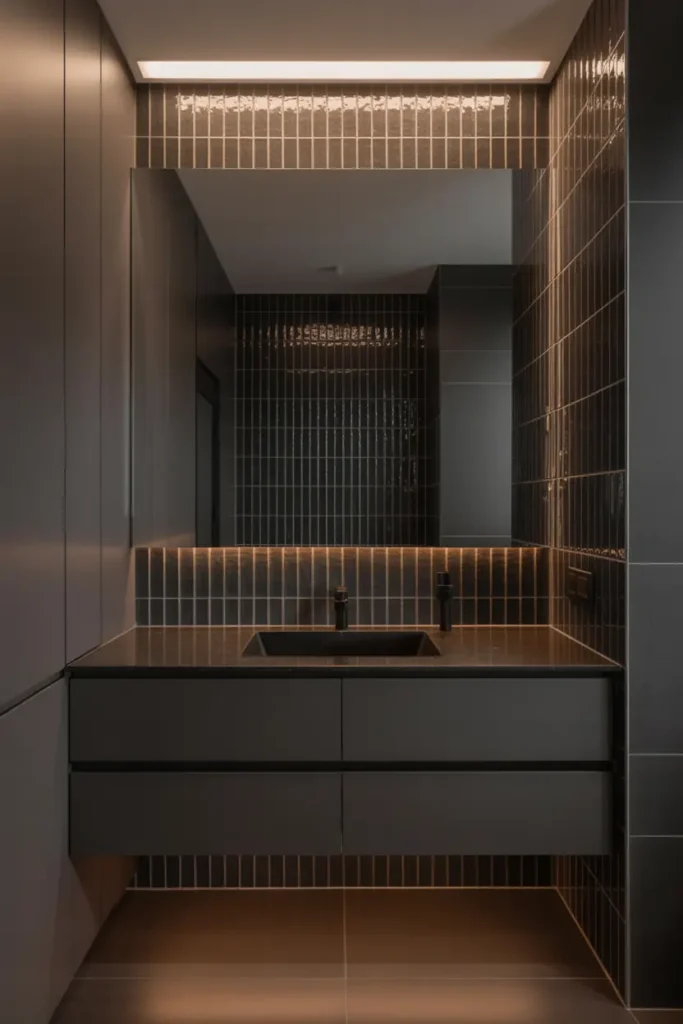
Flat black tile can look one-dimensional; textured black tile looks alive. Fluted, zellige-style, three-dimensional, or subtly patterned black tiles catch light at different angles, so the wall shifts and shimmers as you move. It’s the difference between a black wall and a black surface.
Zellige-look tiles are the star here — their handmade variation means no two tiles reflect light identically, creating a living, rippling effect. Use them on one wall or in the shower niche as an accent; a whole bathroom of 3D tile can overwhelm. And note: textured tile needs a bit more grout maintenance, so seal it well.
9. Mirror Generously
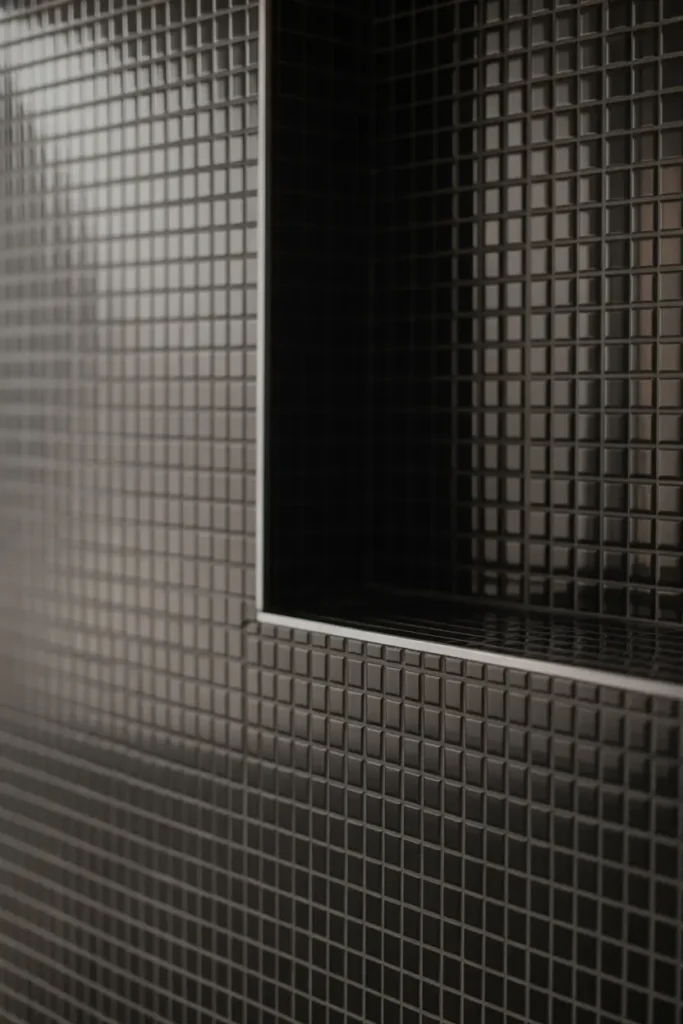
In a black bathroom, mirrors do double duty: they’re decor and they’re light sources. A large mirror — ideally spanning the full vanity width — reflects both natural and artificial light back into the room, which is exactly what a dark palette needs. Round mirrors soften all the hard geometry; arched mirrors add a current, architectural feel.
If the budget allows, a backlit mirror is transformative in a black bathroom: the halo of light around the glass lifts the whole wall. For a budget version, mount two simple sconces flanking a large plain mirror. Either way, think of the mirror as the brightest object in the room and size it accordingly.
10. Start Small With Black Fixtures
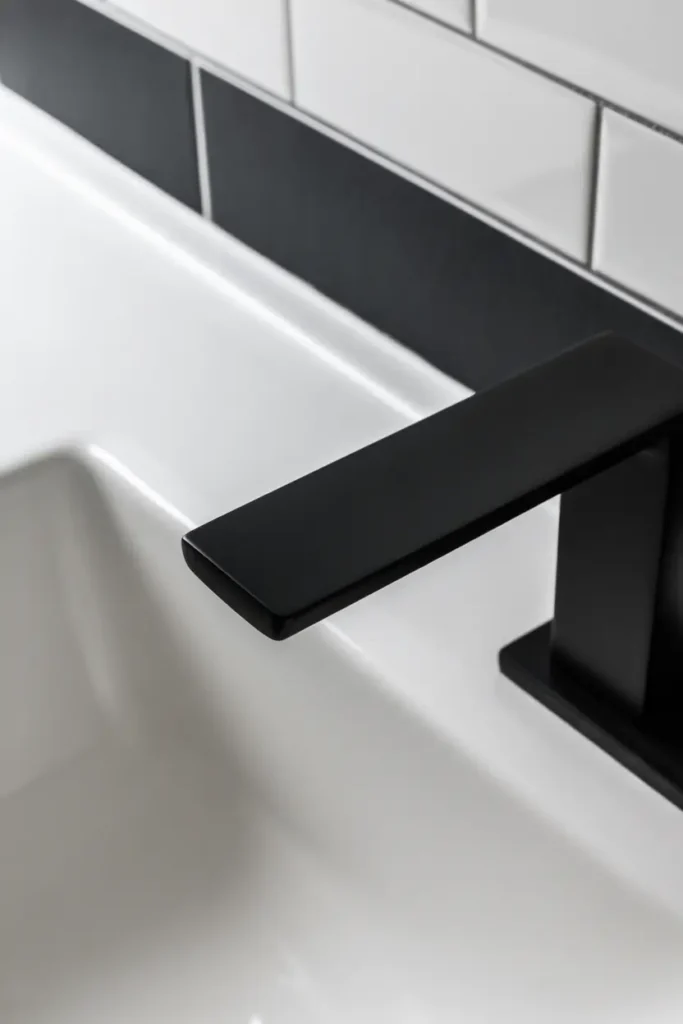
Not ready for black walls? Black fixtures are the low-commitment entry point. A matte black faucet, showerhead, or towel rail against white tile delivers the contrast and the modern edge with zero renovation. It’s also the cheapest way to test whether you actually love living with black before you commit to tile.
Matte black fixtures have gone mainstream, which means good ones exist at every price point — but avoid the very cheapest, where the coating can chip. Look for solid brass bodies with a quality powder-coat finish. And keep the finish consistent: matte black tap with matte black shower arm and matte black flush plate reads as a set; mixed finishes read as an accident.
11. Layer in Soft Textiles
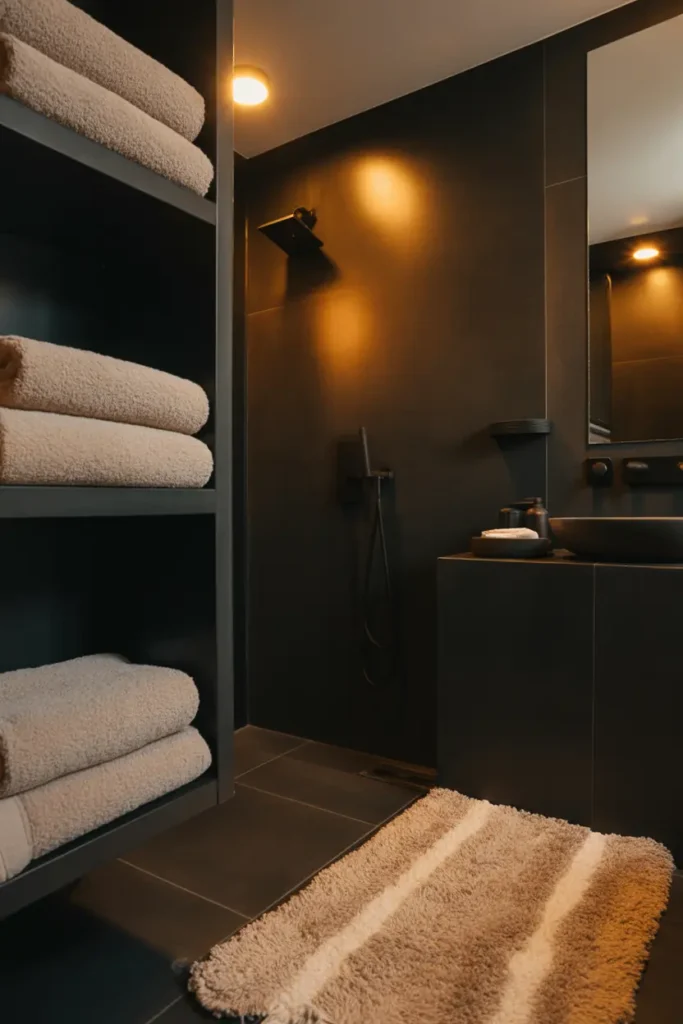
Black bathrooms are all hard surfaces — tile, glass, porcelain, metal. Textiles are what make them feel like rooms instead of installations. Plush white or cream towels, a soft bath mat, a waffle-weave shower curtain: these absorb both sound and visual harshness, and the contrast of soft white fabric against black tile is genuinely luxurious.
Invest in the towels — thick, white, hotel-quality. They’re the most-touched textile in the room and the fastest way to signal luxury. A Turkish or waffle-weave texture adds visual interest even in plain white. And keep them fresh: dingy towels against black tile look worse than dingy towels anywhere else.
12. Use Black Glass for Sleek Reflections
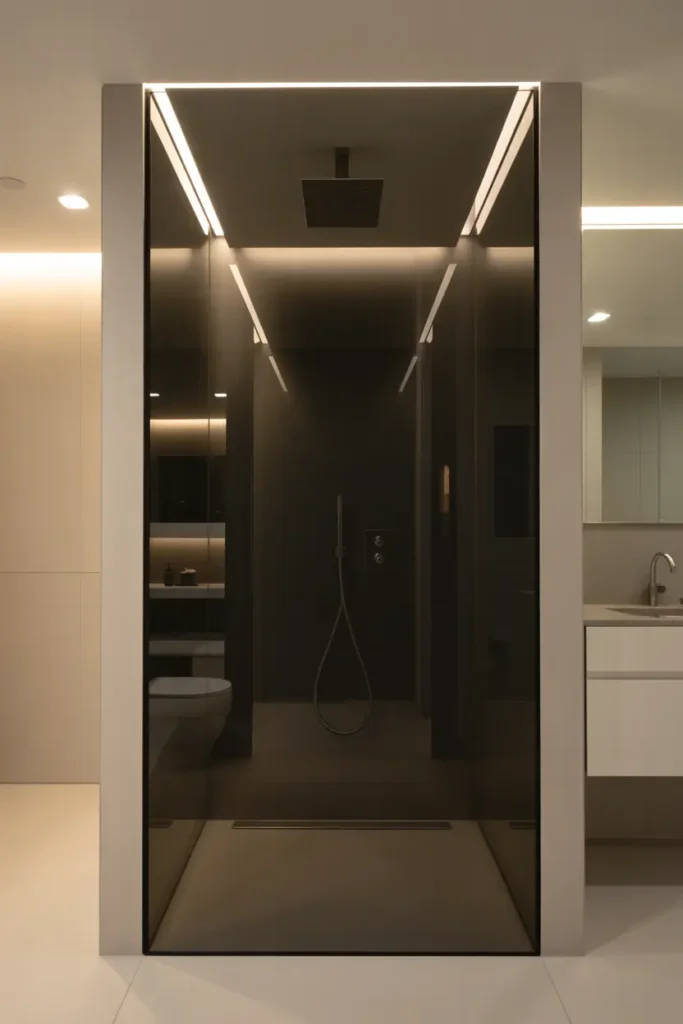
Smoked or black-tinted glass is black’s sophisticated cousin — dark, but with depth and reflection. A black glass shower panel, tinted mirror, or smoked glass accessories keep the dark palette while bouncing light in a way matte black can’t. It’s the material equivalent of sunglasses: dark, but luminous.
Use it where reflection helps: shower enclosures, splashbacks, shelving. Smoked glass shows fewer water spots than clear glass, which is a practical bonus in hard-water areas. Pair it with black metal framing for a cohesive, architectural look.
13. Try Black and Beige for Soft Luxury
If black-and-white feels too stark, black-and-beige is its softer, more forgiving sibling. Warm beiges, taupes, and stone tones wrap the black in warmth, creating a look that’s luxurious without being severe — think boutique hotel rather than art gallery. It’s also more forgiving of imperfect lighting.
The formula: black as the accent (vanity, fixtures, one wall), beige as the field (walls, floor, textiles). Natural stone in beige tones — travertine, limestone — is the premium version of this palette. Keep the beige warm rather than gray-beige; warmth is the whole point of the combination.
14. Add Black Wall Panelling
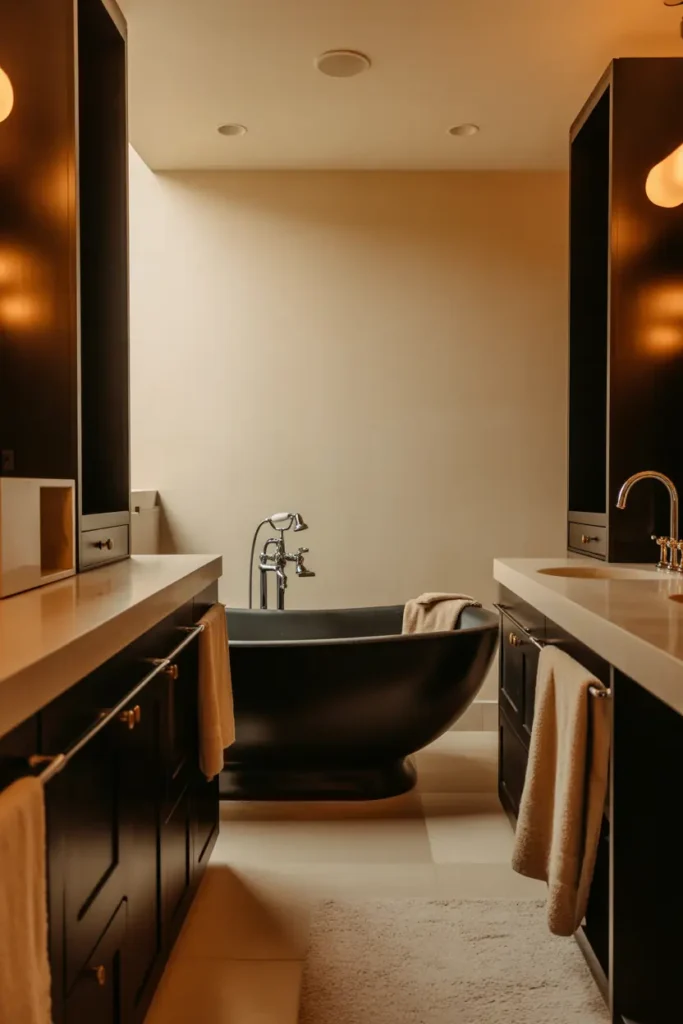
Flat black walls are bold; black panelled walls are architecture. Slatted wood panels, board-and-batten, or fluted panels painted black add shadow lines and dimension that flat paint can’t achieve. The panelling catches light and creates rhythm — the wall becomes a feature even before you hang anything on it.
In bathrooms, use moisture-resistant materials: PVC or composite slats, or properly sealed wood. Slatted panels behind the vanity or on the WC wall are the sweet spots. Paint the panels the same black as the wall behind them for a tonal, textured effect, or leave natural wood slats against a black wall for contrast.

15. Keep Decor Ruthlessly Minimal
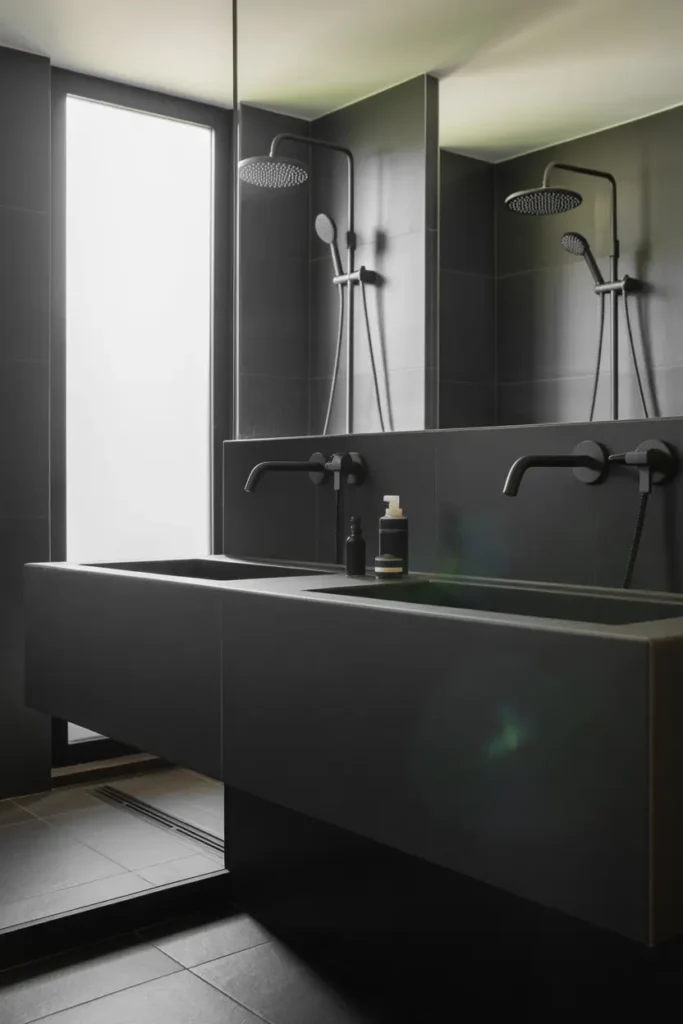
Black is a maximal color that demands minimal styling. Every object in a black bathroom competes with the drama of the room itself, so edit hard: one beautiful soap dispenser, one plant, one piece of art. The black is the decor — let it do its job without an audience of knick-knacks.
This minimalism is also practical: fewer objects means easier cleaning and less visual noise in a room where contrast already runs high. Corral the daily essentials on a single tray or in a niche, and hide everything else. A black bathroom with clear surfaces looks expensive; a black bathroom with cluttered surfaces just looks dark.
16. Add Living Greenery
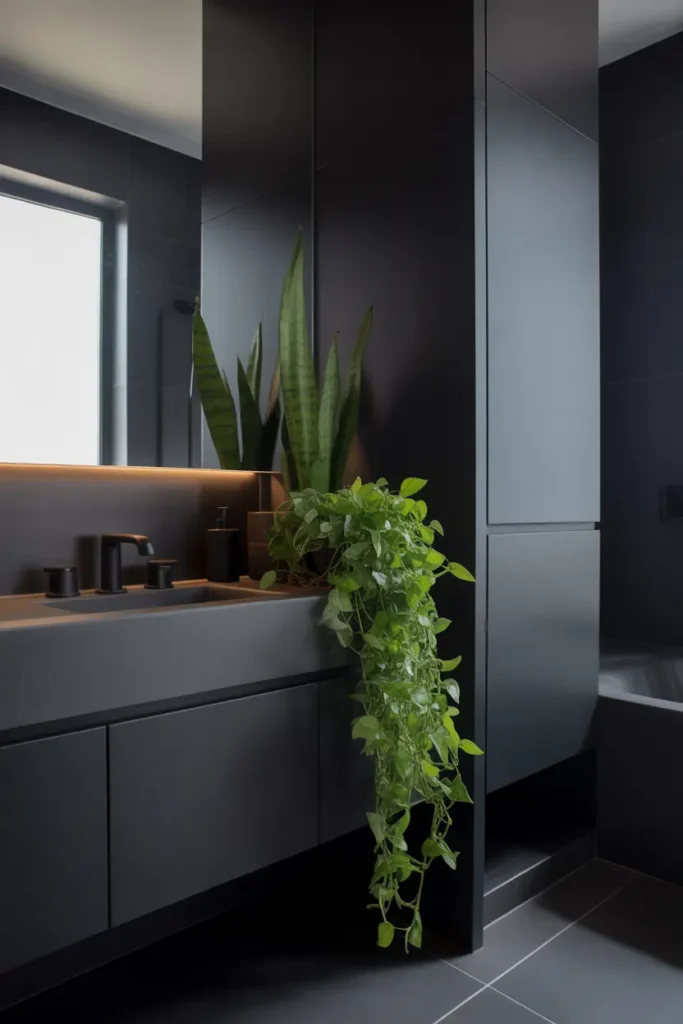
Plants are the cheat code for black bathrooms. Green against black is electric — the most vivid natural contrast there is — and a single healthy plant softens every hard edge in the room. Bathrooms’ humidity is a bonus: tropical plants think they’ve died and gone to heaven.
Pothos, ferns, and calatheas all thrive in bathroom conditions with indirect light. Hang a trailing pothos from a high shelf so it drapes against the dark wall, or place a large snake plant in the corner for architectural presence. One thriving plant beats five struggling ones — start with a single forgiving species.
17. Consider a Black Ceiling
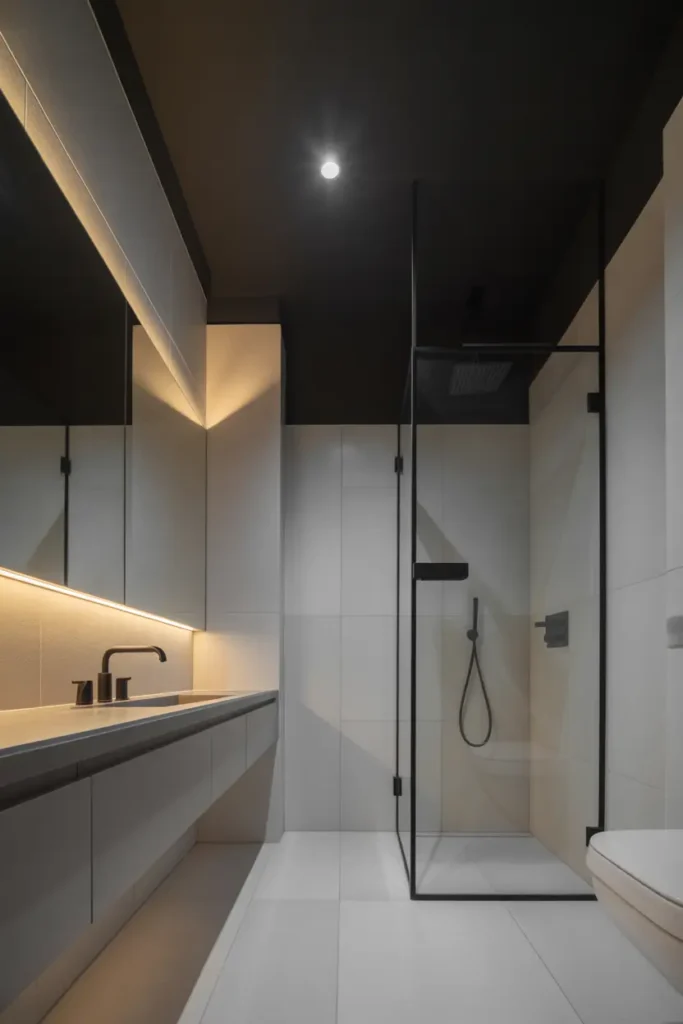
The boldest move on this list: painting the ceiling black. It sounds insane and looks incredible — the ceiling visually recedes, the walls seem to grow taller, and the whole room takes on the enveloping feel of a luxury hotel. It works best with light or mid-tone walls; black walls plus a black ceiling is a commitment for the very brave.
Use the same moisture-resistant satin paint as the walls. The trick to making it work is lighting: you need enough warm light washing the walls to keep the ceiling from pressing down. Done right, guests will ask about the ceiling before they notice anything else. Done wrong — with dim cool lighting — it feels like a basement. Light it well.
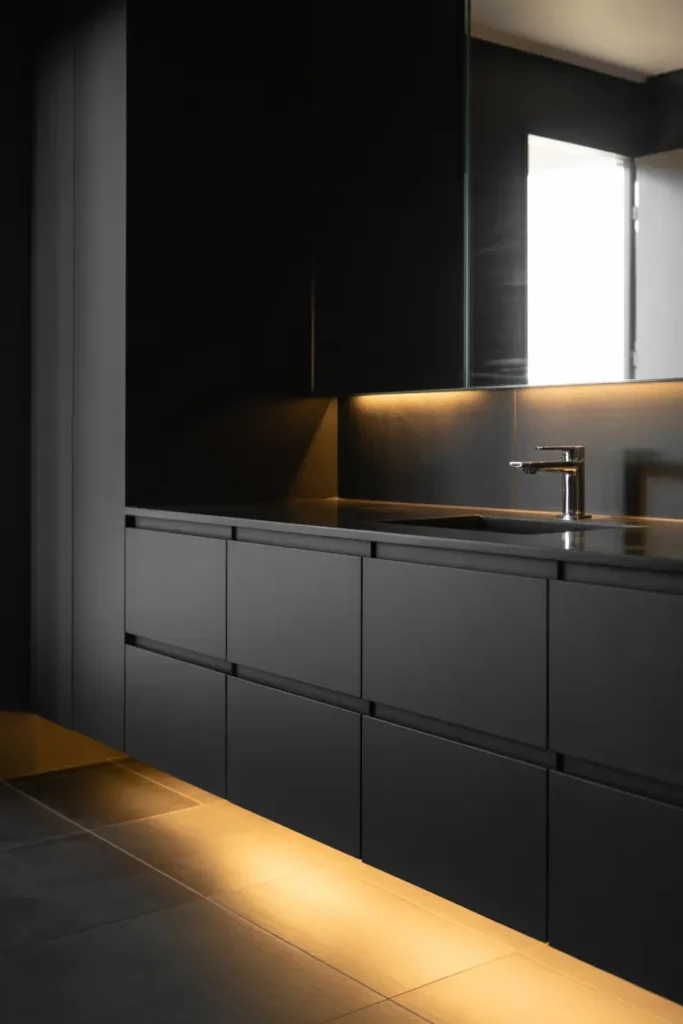
18. Glow From Below With Cabinet Lighting
Under-cabinet LED strips are the secret weapon of luxury bathrooms. The soft wash of light beneath a floating vanity or wall cabinet creates the illusion that the furniture hovers, adds a layer of ambient light exactly where black rooms need it most (low, warm, indirect), and doubles as the world’s most elegant nightlight.
Warm white strips (2700K) on a motion sensor or timer cost under $30 and install in minutes — many are USB or battery powered. Set the strip back from the cabinet’s front edge so you see glow, not hardware. It’s a small detail with an absurdly large impact on how expensive the bathroom feels after dark.
19. Upgrade Just the Accessories
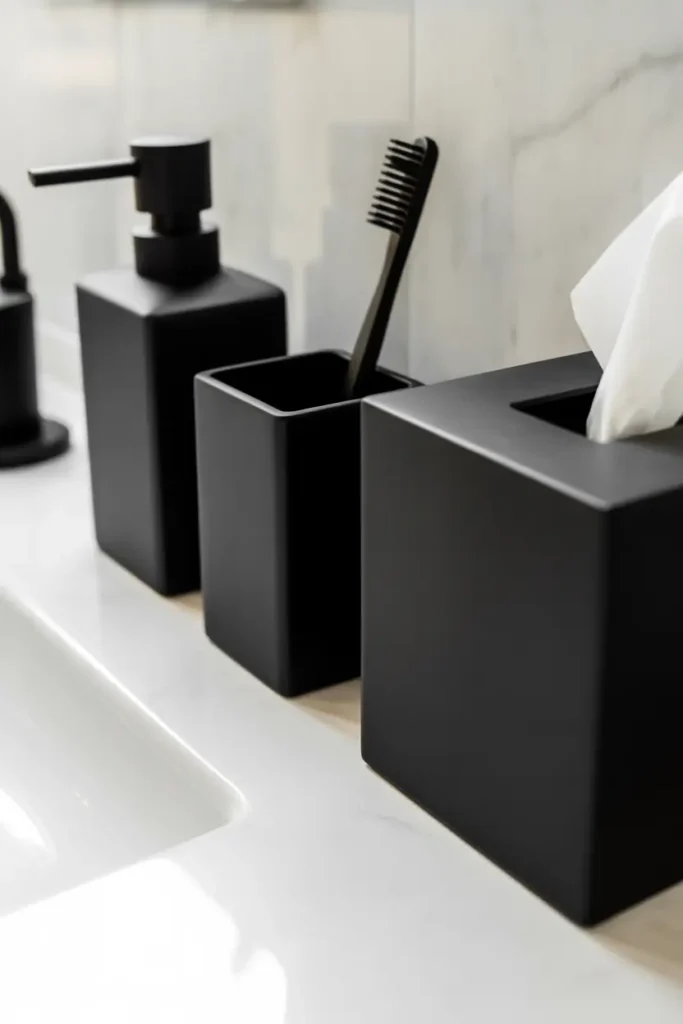
The fastest black bathroom transformation costs under $100: swap the accessories. Matte black soap dispenser, tray, toothbrush holder, towel hooks, and a waste bin — done in an afternoon, no tools beyond a drill for the hooks. Against a light bathroom, these small black hits deliver 80% of the look for 5% of the effort.
Buy them as a set or at least from the same finish family so the blacks match — mismatched blacks (one glossy, one matte, one charcoal) look accidental. This is also the perfect trial run: live with black accessories for a month, and you’ll know whether you’re ready for the full commitment.
20. Mix Matte and Gloss Black Together
Here’s a designer-level detail most people miss: black isn’t one finish. Pairing matte black (walls, vanity) with glossy black (tile, fixtures, glass) creates tonal contrast within the dark palette — the room gains depth and richness without any new color. It’s monochrome, but it’s not flat.
The rule of thumb: matte for large surfaces (it hides imperfections and feels soft), gloss for accents and wet areas (it reflects light and wipes clean). A matte black wall behind a glossy black vanity, or matte fixtures against glossy black tile — these pairings are what separate a designed black bathroom from a merely dark one.
21. Make the Sink the Star
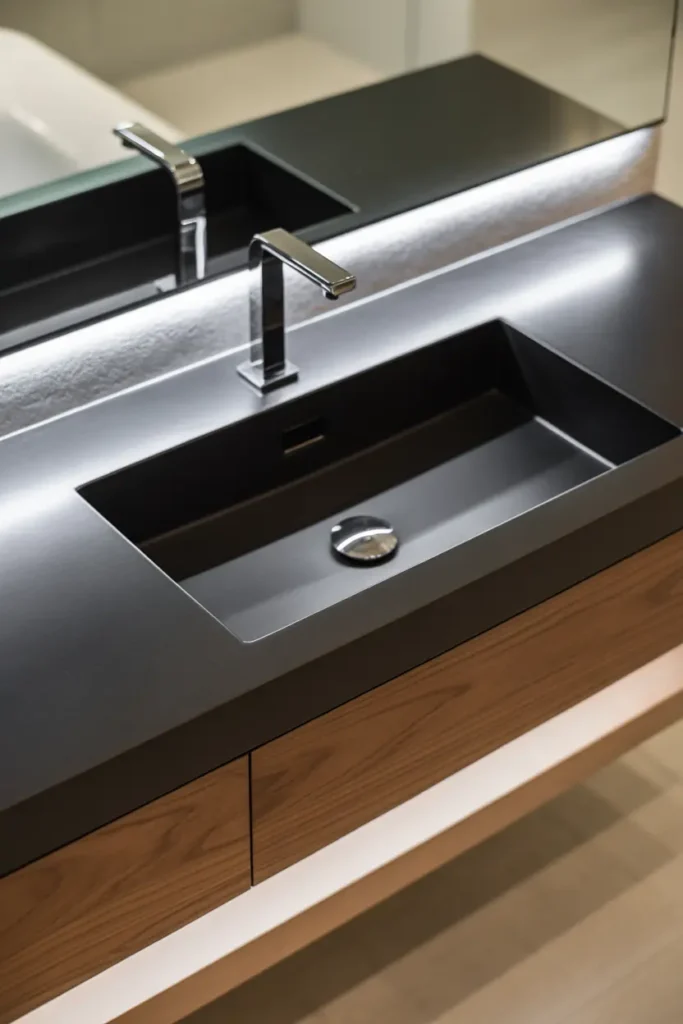
In a black bathroom, an ordinary white basin disappears; a statement sink becomes sculpture. A black stone vessel sink, a hammered brass basin, a concrete trough, or an unusually shaped vessel — the sink is at eye level and dead center, so it’s the highest-visibility upgrade in the room.
Vessel sinks sit on top of the counter, which makes them easy to retrofit onto an existing vanity — no new cabinetry needed. Just check the height: vessel plus counter should put the rim around 33–36 inches from the floor for comfortable use. Pair a dramatic sink with a simple faucet so they don’t compete.
22. Ground the Room With Dark Flooring
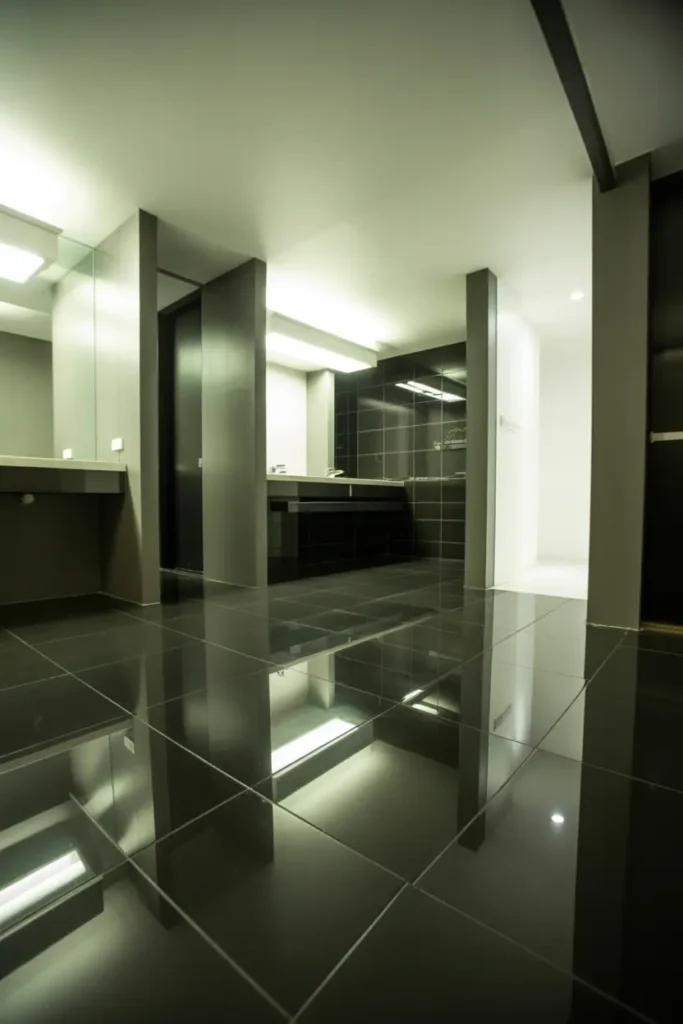
Conventional advice says keep small bathroom floors light, but dark flooring with light walls is a legitimate power move — it anchors the room the way a dark rug anchors a living room. The key is contrast in the right direction: dark floor, light walls, and enough lighting to keep the floor from disappearing into shadow.
Large-format dark tiles with minimal grout lines work best; busy small dark tiles chop up the floor visually. Add a light bath mat for the practical contrast (and to keep feet warm). This works especially well in larger bathrooms or ones with good natural light — in a tiny windowless bath, keep the floor light instead.
23. Finish With Metallic Details
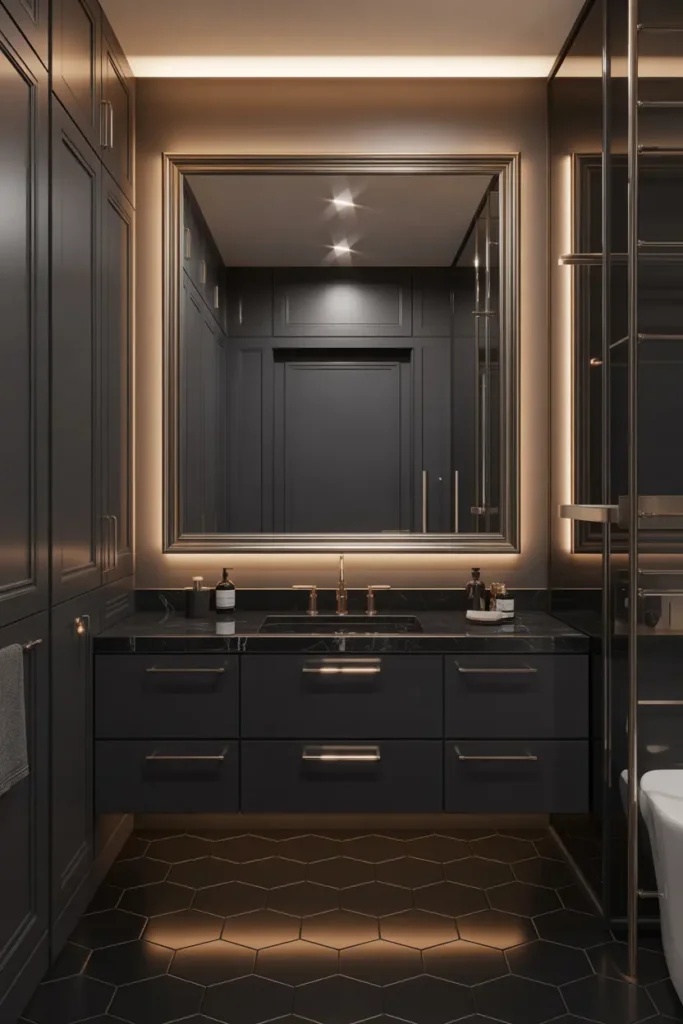
The final 5% of a luxury black bathroom is metallic detailing: a thin brass inlay in the tile, chrome edge trim, a metallic-framed mirror, brushed-gold drain covers. These are the details nobody consciously notices and everybody feels — they catch light at the edges of vision and signal that the room was finished, not just built.
Keep it to one metal and keep it subtle. The goal is glints, not bling. A black bathroom with restrained brass details looks like a five-star hotel; the same bathroom with brass everything looks like a theme. Edit until it feels almost too quiet — that’s the luxury zone.
24. Keep the Layout Open
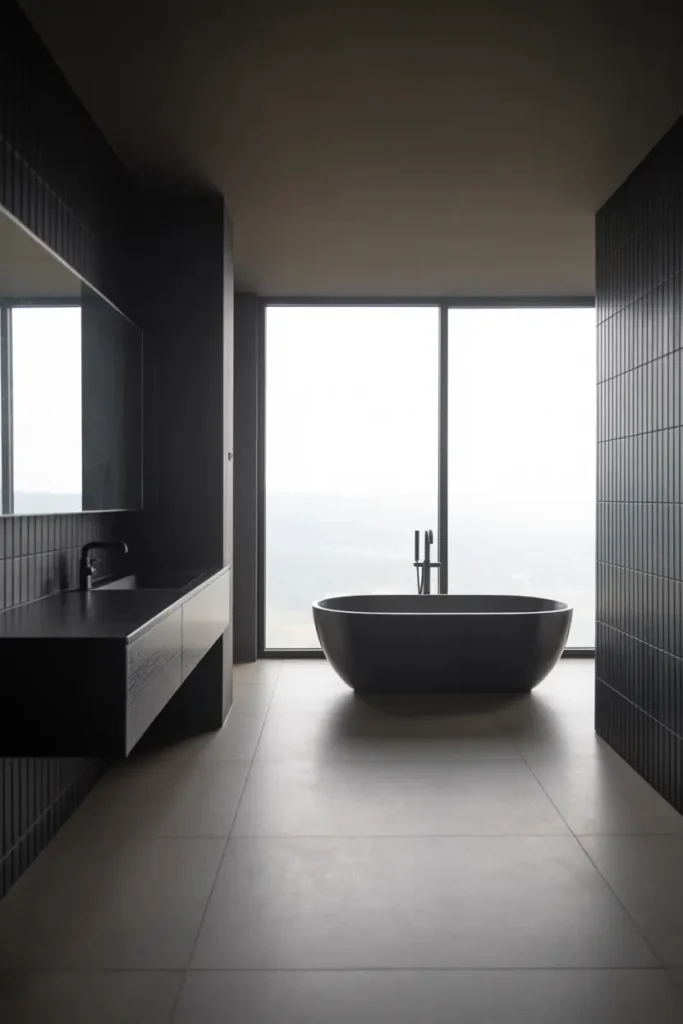
Black visually condenses space, so the layout has to work harder to keep things airy. Wall-hung fixtures, clear sightlines from door to far wall, minimal visual barriers — every layout decision should maximize the sense of openness. If you can’t see the far wall when you walk in, the room will feel smaller than it is.
Curbless showers, wall-hung toilets, and floating vanities are the big three for openness, but even small choices matter: a clear glass panel instead of a curtain, recessed niches instead of protruding shelves, a pocket door instead of a swing door. In a black bathroom, openness isn’t a style preference — it’s a structural requirement.
25. Balance Everything at the End
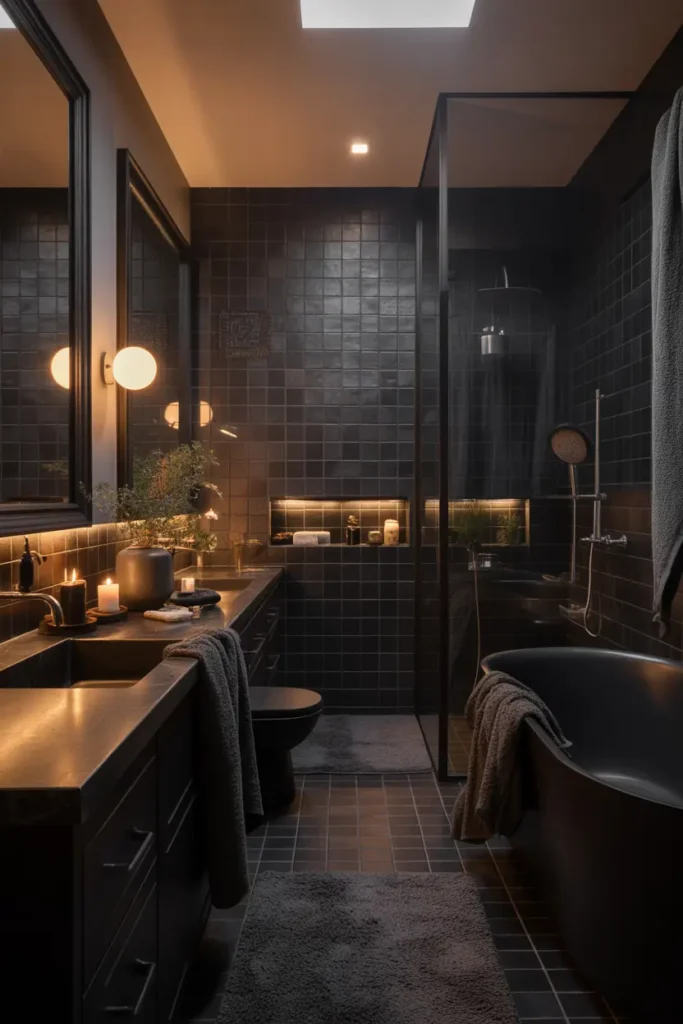
The master rule behind all twenty-four ideas: for every dark decision, make a light one. Black wall, white ceiling. Dark vanity, bright mirror. Matte surfaces, glossy accents. Bold envelope, minimal styling. Balance is what separates a black bathroom that feels luxurious from one that feels like a cave with nice fixtures.
Do the squint test when you’re done: blur your vision and look at the room. You should see a balanced composition of dark and light, not a black hole with edges. If it’s too dark, add light — a brighter bulb, a lighter textile, one more reflective surface. Black rewards the final 10% of effort more than any other color.
Related Decor Ideas
If you enjoyed these black bathroom decor ideas, you might also explore:
- Small bathroom decor ideas for modern homes
- Minimalist bathroom design trends for 2026
- Cozy bedroom decor ideas for a relaxing space
Conclusion
Black bathrooms work on a simple principle: confidence with balance. Every bold move — the feature wall, the marble, the black ceiling — needs a counterweight of light, warmth, or reflection. Get that equilibrium right and black stops being a risk and becomes the most sophisticated choice in the room.
You don’t have to do all twenty-five. Pick the three that excited you most — maybe the floating vanity, the brass details, the under-cabinet glow — and execute those properly. A black bathroom done 70% right still outshines a beige bathroom done perfectly. That’s the power of the color.
Pro Tips
- Order samples, not just paint chips. Tile, stone, and fixture samples viewed in your actual bathroom light will save you from expensive mismatches. Most suppliers ship samples free or cheap.
- Seal everything porous. Black marble, natural stone, and dark grout all stain more visibly than light ones. Seal stone twice a year and use a grout sealer from day one.
- Photograph at night. Take a phone photo of the bathroom with just the evening lighting on. If it looks moody and even, your lighting is right; if there are harsh bright spots and dead corners, rebalance.
- Keep cleaning supplies simple. pH-neutral cleaner for stone and marble, squeegee for glass, microfiber for matte black. Harsh chemicals etch stone and dull matte finishes — the two most expensive surfaces in the room.
FAQs
Is a black bathroom just a passing trend?
Black has been in bathrooms for a century — think 1920s Art Deco, 1980s Memphis, today’s modern luxury. It cycles in style emphasis but never disappears, because the contrast it creates is timeless. A well-balanced black bathroom won’t look dated; a trendy accent color will.
How do I keep a black bathroom from feeling too dark?
Three things: warm layered lighting (overhead + vanity + low glow), reflective surfaces (gloss tile, mirrors, metallics), and light counterweights (white ceiling, light floor or textiles). If the room still feels heavy, the answer is almost always more light, not less black.
What’s the easiest way to try the black bathroom look?
Swap the accessories and fixtures first — matte black faucet, dispenser set, hooks, and mirror frame against your existing light bathroom. Under $200, one afternoon, fully reversible. If you love living with it, graduate to the vanity or a feature wall.
Does black tile show more dirt?
It shows water spots, soap film, and dust more than light tile — but it hides very little, which means you clean what needs cleaning and the room always looks intentional. A 30-second squeegee after showers handles 90% of it. Light tile hides grime; black tile motivates you.

HowDecor is a home decor blog sharing simple, practical decorating ideas for everyday spaces. We believe a beautiful home should feel comfortable, personal, and full of warmth — and that great style does not require a huge budget. Our goal is to inspire readers to create spaces that feel peaceful, welcoming, and truly their own — one room at a time.