Here’s a secret designers know: the powder room is the most powerful room in your house. It’s the one room every guest uses, alone, with nothing to do but look around. Nobody judges your living room that closely — they’re busy talking. But in the powder room, it’s just them and your choices, for two full minutes. That’s an audience no other room gets.
This makes the half bath the best place in your home to take risks. Bold wallpaper you’d never commit to in a living room? Perfect here — it’s 30 square feet. A dramatic mirror, moody paint, brass everything: in a powder room, “too much” is usually just right. Ten ideas for making your smallest room the one people remember.
1. Go Bold on the Walls — It’s Only 30 Square Feet
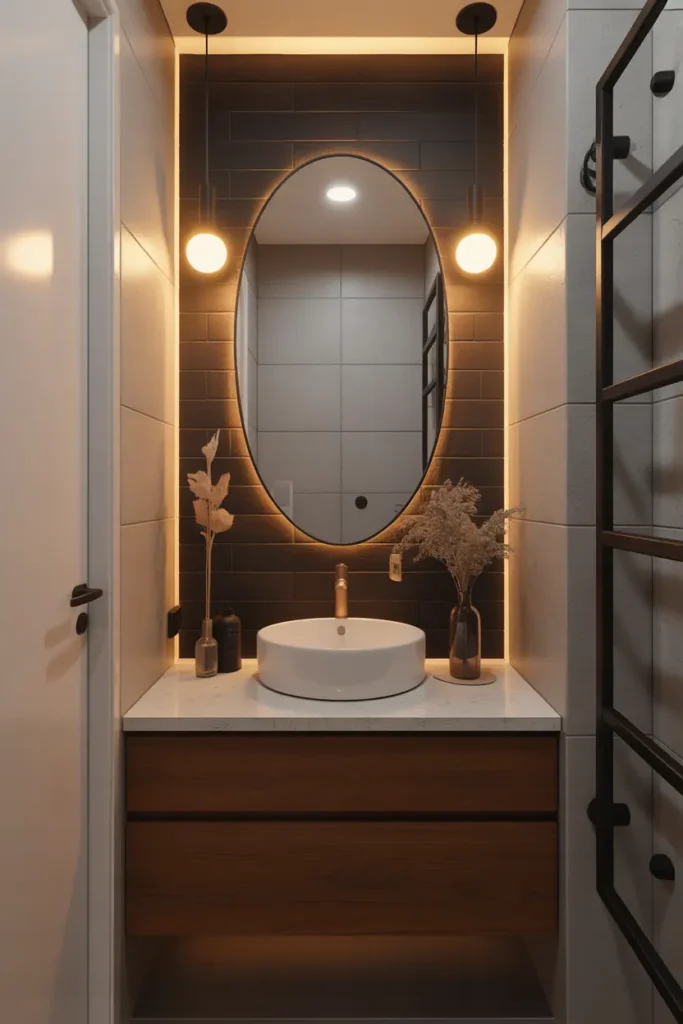
The powder room is where timid decorators become brave. Deep charcoal, inky navy, forest green, dramatic wallpaper — choices that would overwhelm a bedroom feel perfectly calibrated in a tiny bath. Because the space is small, bold walls read as intentional and jewel-box-like rather than oppressive.
The economics are unbeatable: one gallon of paint ($40–$60) covers the whole room, and a single roll of wallpaper ($80–$150) does an accent wall. That’s the cheapest dramatic transformation in your entire house. Put the boldest treatment on the wall behind the mirror — it’s the first thing guests see — and keep the other walls quieter if you want balance. Or don’t. Powder rooms forgive excess.
2. Hang a Mirror With Personality
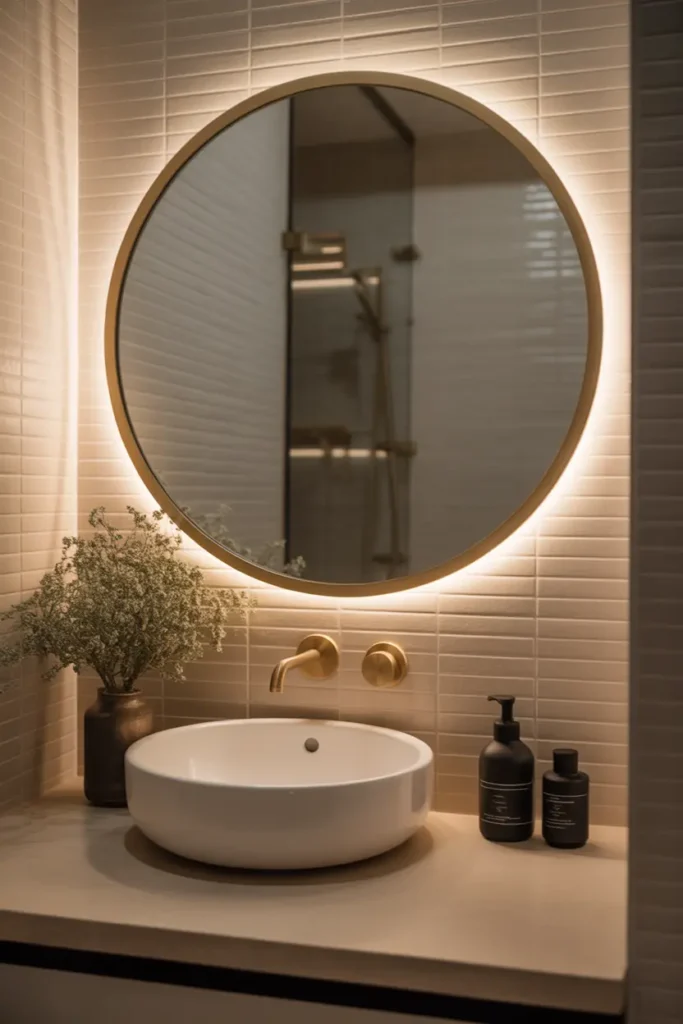
In a powder room, the mirror is the art, the light fixture, and the focal point all at once. This is not the place for a builder-grade rectangle — go round, arched, sunburst, or oversized. A mirror with an interesting frame (brass, rattan, carved wood, backlit) does more for the room than almost any other single item.
Scale up boldly: in a tiny bath, a mirror that nearly fills the wall above the sink looks luxurious, not oversized. Round mirrors soften all the boxy geometry; arched mirrors add instant architecture. And if there’s a window, angle the mirror to catch and multiply the daylight — free brightness, zero electricity.
3. Float the Vanity
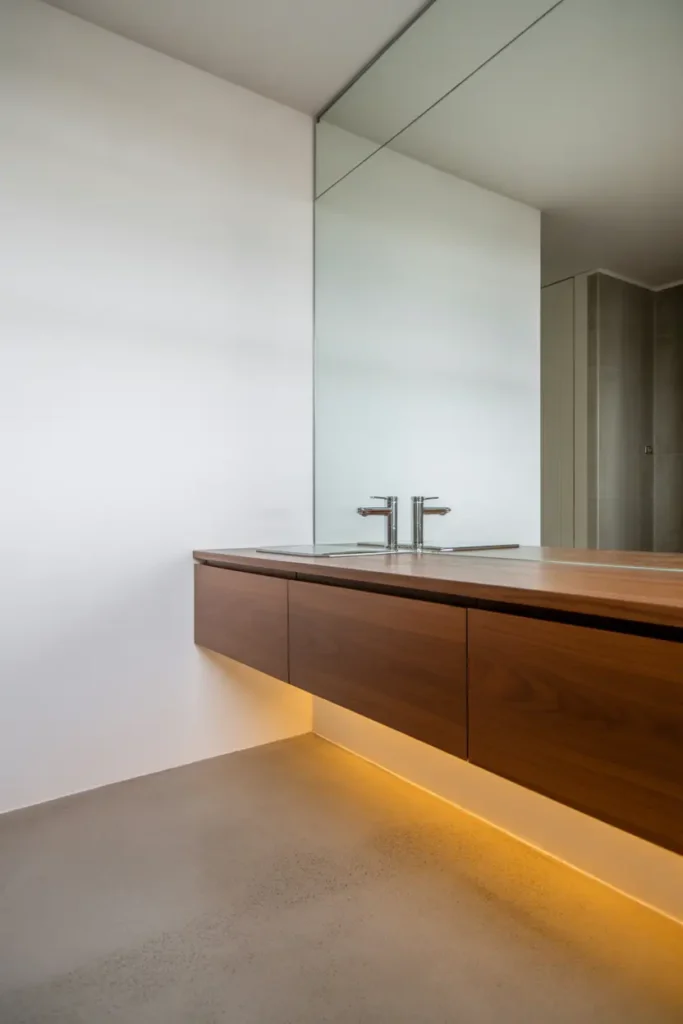
Wall-hung vanities were practically invented for powder rooms. The visible floor underneath makes a 5×7 bath feel noticeably larger, cleaning becomes trivial, and the floating form looks custom and contemporary. A compact 24-inch floating vanity is the sweet spot for most powder rooms — big enough to be useful, small enough to keep the room airy.
Choose a finish that contrasts the walls: dark vanity against light walls, light wood against dark walls. And add the under-vanity LED strip — in a small dark powder room, that low glow is pure magic after dark. Guests will assume you hired a lighting designer. You spent $20.
4. Light It Like Evening, Always
Powder rooms have no business with harsh overhead lighting. Warm sconces flanking the mirror (at about 60 inches high, warm 2700K bulbs) flatter faces and create the flattering glow that makes guests feel good — which is, not coincidentally, how they remember your house. This is hospitality design, not just decoration.
If you can only do one lighting change, put the existing overhead on a dimmer. Powder rooms are used mostly in the evening, when full-bright ceiling light feels clinical. Dimmed warm light plus a candle or small lamp transforms the same 30 square feet from “public restroom” to “boutique hotel.” The dimmer costs $15 and takes twenty minutes.
5. Fake the Marble
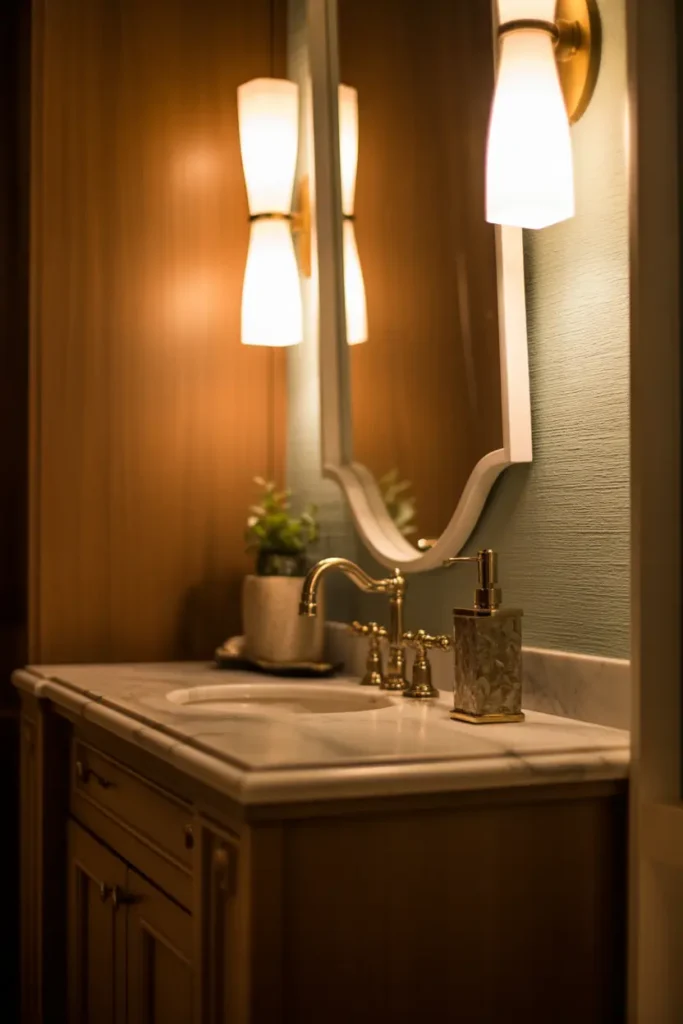
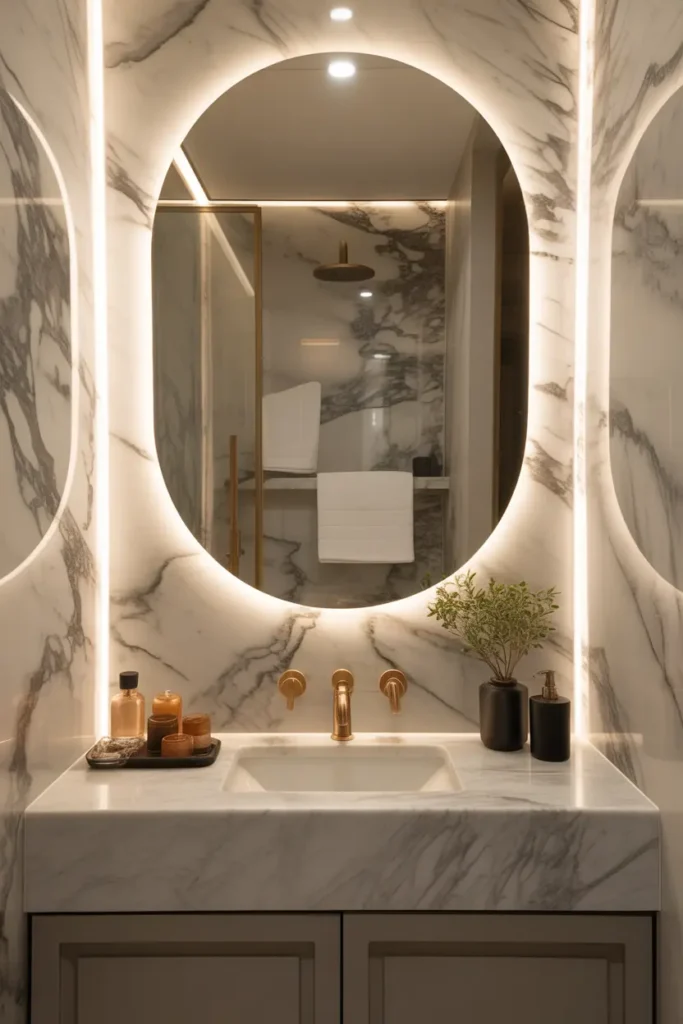
Real marble in a powder room is lovely and completely unnecessary — nobody’s showering in here, so the material takes almost no abuse. Marble-look porcelain, a marble-patterned vanity top, or even a marble tray on the counter delivers the veined luxury at a fraction of the cost. In a powder room, the “fake it” strategy is just smart.
The highest-impact application: a marble-look countertop or vessel sink. It’s at hand height, right where guests look, and it reads as expensive regardless of what it cost. Pair it with simple surroundings — the marble should be the luxury note, not one of twelve competing luxury notes.
6. Pick One Metal and Commit
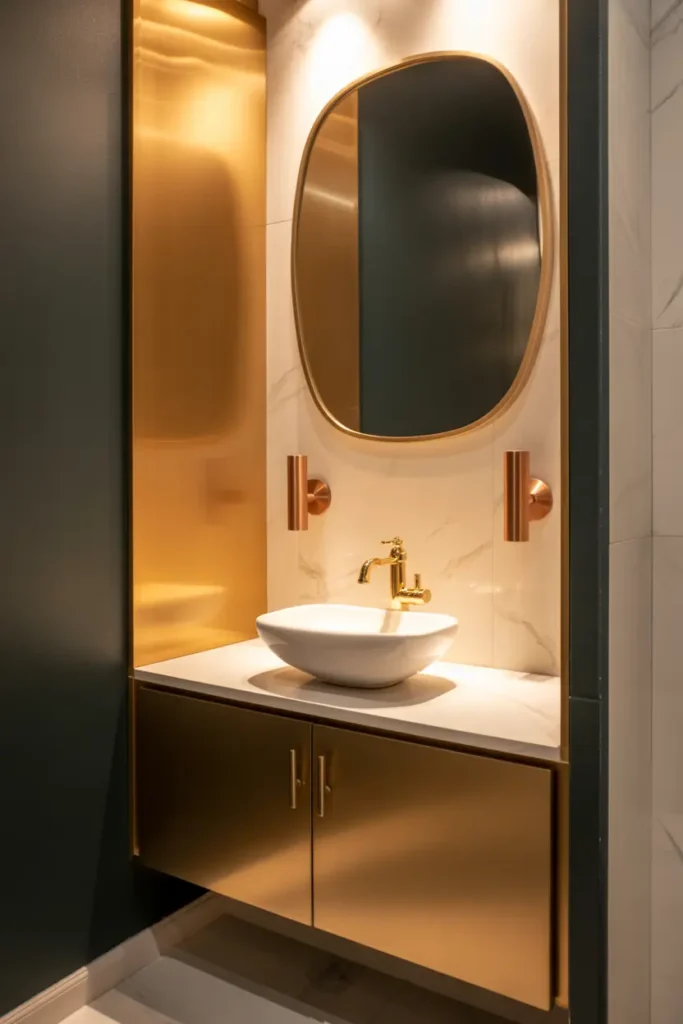
Metallics are the jewelry of the powder room, and in a small space they punch far above their weight. Brushed brass or champagne bronze reads warm and current; matte black reads modern and graphic; polished nickel reads classic. Pick one, then repeat it: faucet, mirror frame, light fixtures, cabinet pull, even the toilet paper holder.
The repetition is what makes it look designed rather than random. A brass faucet with chrome towel bars looks like a mistake; all-brass everything looks like a decision. This is also the cheapest luxury move on the list — a full set of matching metal accessories for a powder room often costs less than $150 total.
7. Decorate Less Than You Think
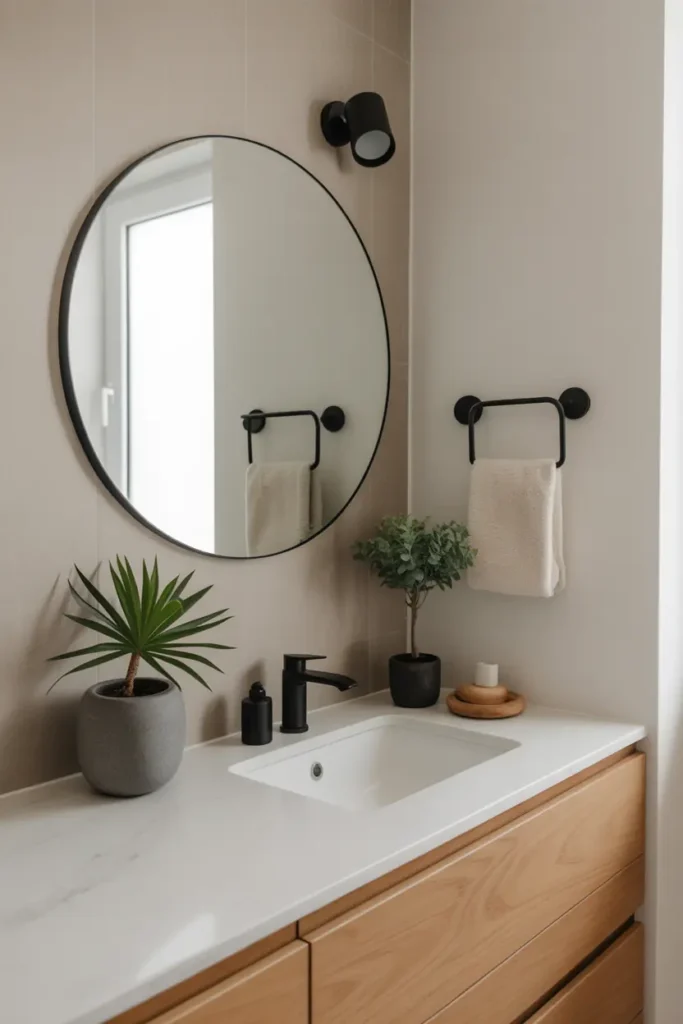
The powder room temptation is to fill every surface — it’s small, so surely it needs lots of stuff to feel “done.” The opposite is true. Three to five beautiful things in a powder room look curated; fifteen look cluttered. Let the bold walls, the mirror, and the lighting do the work, and keep the styling minimal.
The formula: one piece of art or one plant, one beautiful soap dispenser (decant the drugstore stuff), one candle or diffuser, and one great hand towel. That’s it. Everything else lives in a drawer or cabinet. A powder room with clear surfaces and strong bones looks expensive; a powder room with crowded surfaces looks busy, no matter how nice the bones are.
8. Add Texture to the Walls
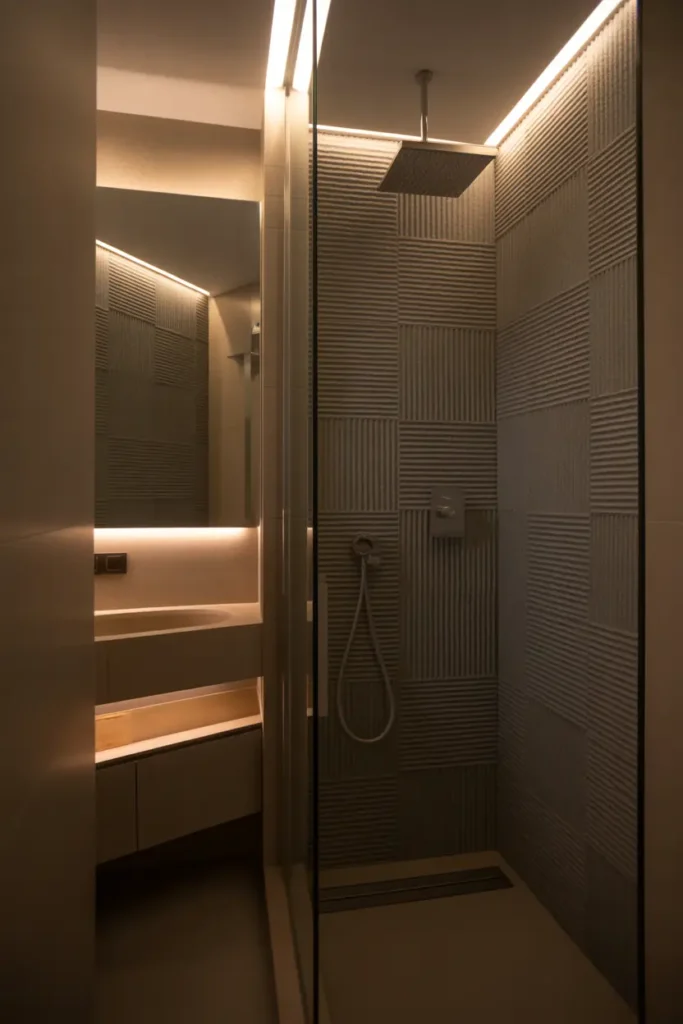
When a room is this small, the walls are most of what you see — so make them interesting. Board-and-batten, beadboard, limewash paint, grasscloth wallpaper, or even just a textured plaster effect: wall texture adds the depth that makes a tiny room feel layered and intentional rather than flat and boxy.
Beadboard or wainscoting on the lower half with bold paint above is the classic powder-room move — it adds architecture, protects the walls, and looks far more expensive than its cost (paintable MDF panels run a few dollars per linear foot). Limewash or Roman clay paint gives flat walls a soft, cloudy movement that photographs beautifully and hides imperfections.
9. Hide the Storage
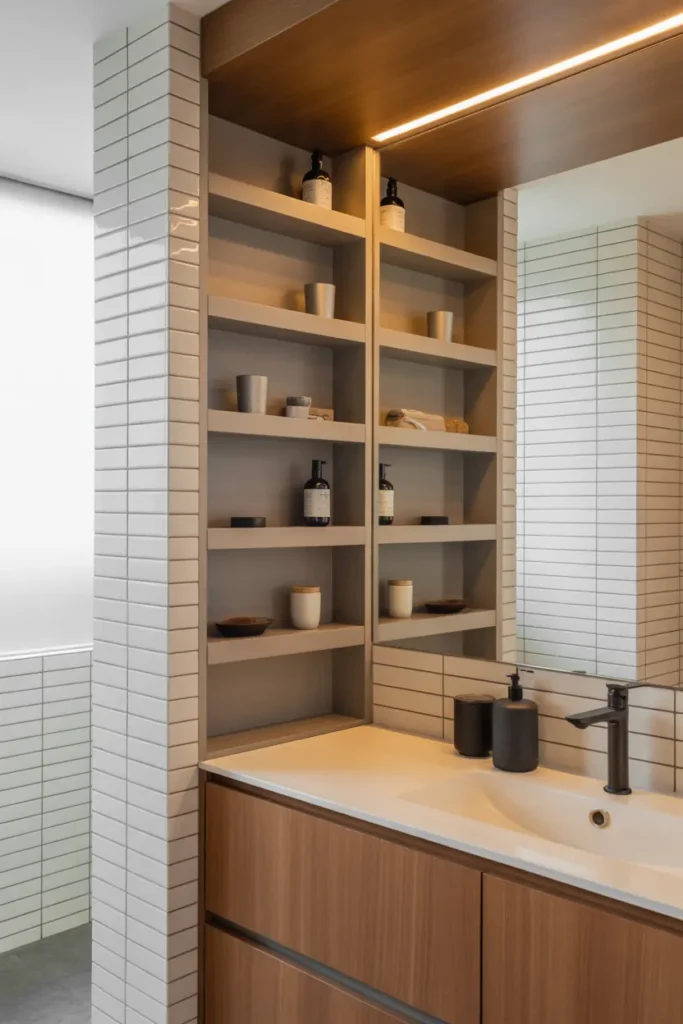
Powder rooms need storage — extra toilet paper, hand towels, cleaning supplies — but visible storage kills the jewel-box effect. The solution is storage that disappears: a recessed medicine cabinet behind the mirror, a floating shelf styled with only pretty things, a slim cabinet tucked beside the vanity, or baskets inside a closed vanity.
The rule: guests should see beauty, not inventory. Bulk toilet paper lives in a closed cabinet or a lidded basket, not stacked on the tank. Cleaning supplies live under the sink, not beside it. What stays visible is the curated stuff — the nice soap, the candle, the plant. Invisible storage is what separates a designed powder room from a merely decorated one.
10. Keep It Open and Balanced
The final principle: in a tiny room, every placement decision is magnified. Center the mirror over the sink, keep pathways clear, don’t block the door swing with furniture, and resist filling the one empty corner “because it’s empty.” Negative space in a powder room isn’t wasted — it’s what makes everything else look deliberate.
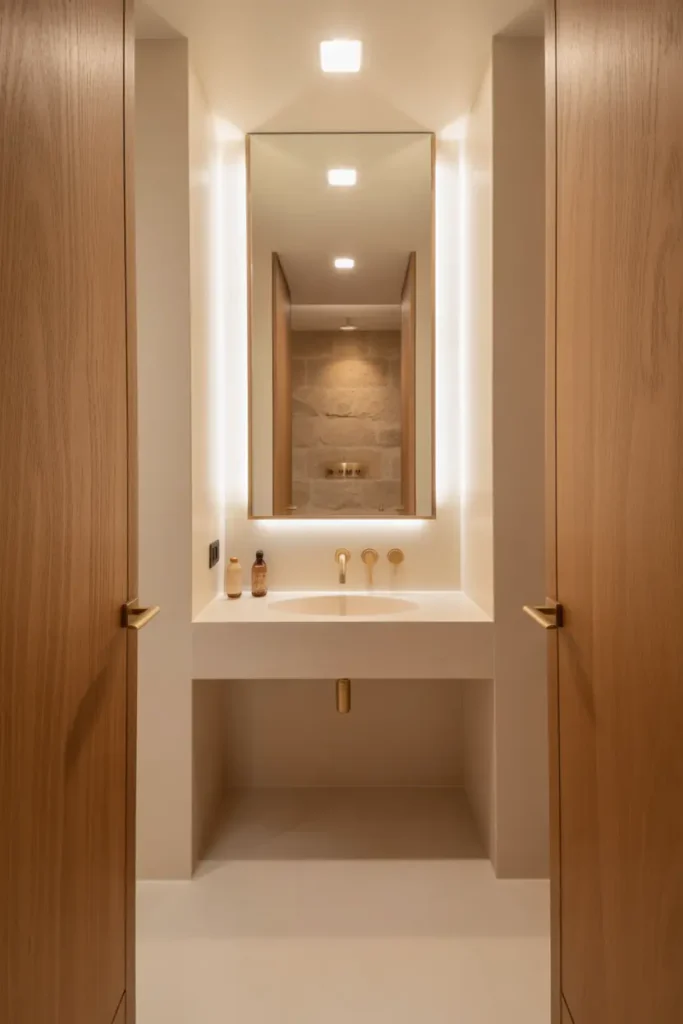
Do the doorway test: stand in the doorway and look in. Your eye should travel smoothly from the mirror to the vanity to one accent — not bounce between six competing focal points. If something feels off, remove one thing before adding anything. In powder rooms, subtraction is almost always the answer.
Related Decor Ideas
If you liked these half bathroom decor ideas, you might also explore:
- Small bathroom decor ideas for apartments
- Modern minimalist bathroom design trends
- Cozy home decor ideas for compact spaces
Conclusion
The powder room is proof that design isn’t about square footage — it’s about decisions per square foot. Bold walls, one great mirror, warm light, a single metal, and ruthless editing: that’s the whole formula, and it costs less than most people spend on throw pillows for the living room.
And here’s the real payoff: guests remember powder rooms. They’ll forget your sofa, but they’ll remember the moody green walls, the brass mirror, the candle that smelled like cedar. Your smallest room is your biggest impression. Design it like you mean it.
Pro Tips
- Scent is decor in a powder room. A reed diffuser or quality candle does as much for the impression as anything visual. Pick one signature scent (cedar, fig, sea salt) and keep it consistent — guests associate it with your home.
- Upgrade the hand towel. Guests actually touch this, unlike most of your decor. One thick, beautiful hand towel — replaced or washed frequently — signals care more than any accessory.
- Check the sightlines. Sit on the toilet and look around — that’s the view guests get. Make sure the art, mirror, and prettiest details are visible from there, not just from the doorway.
- Keep a guest kit. A small tray or drawer with the essentials (pain reliever, bandages, stain remover pen, phone charger) turns a pretty powder room into a legendary one. Nobody forgets the house that had everything.
FAQs
What’s the cheapest way to make a powder room look expensive?
Paint one wall a deep, moody color ($50), swap the mirror for something with a real frame ($80–$150), and put the light on a dimmer ($15). Those three moves — all doable in a weekend for under $250 — transform a builder-basic powder room completely.
Can I use wallpaper in a powder room?
It’s the ideal room for it — small area means one or two rolls, and there’s no shower steam to worry about. Go bold: powder rooms are where wallpaper maximalism belongs. Just use paste-the-wall or peel-and-stick rated for bathrooms, and avoid direct splash zones.
How do I make a windowless powder room feel less gloomy?
Warm layered lighting is everything: sconces at the mirror plus a dimmable overhead, all at 2700K. A large mirror multiplies the light, light-colored fixtures keep it bright, and a candle adds living warmth. Avoid cool white bulbs — they make windowless rooms feel like basements.
What should I absolutely avoid in a small powder room?
Pedestal sinks with no storage (you need somewhere for the extras), dark floors with dark walls (the room disappears), and cluttered counters. Also skip the tiny rug that slides around — either a proper-sized washable runner or nothing.

HowDecor is a home decor blog sharing simple, practical decorating ideas for everyday spaces. We believe a beautiful home should feel comfortable, personal, and full of warmth — and that great style does not require a huge budget. Our goal is to inspire readers to create spaces that feel peaceful, welcoming, and truly their own — one room at a time.