Green is the color your nervous system has been asking for. Biophilia isn’t just a design buzzword — studies consistently show that green tones lower stress and that people rate green rooms as calmer and more restorative. So the green bathroom trend isn’t really about fashion. It’s about building a room that actively makes you feel better, twice a day, every day.
The spectrum is wide, from whisper-soft sage to inky forest, and each green does a different job. Sage calms, emerald energizes, olive grounds, mint refreshes. Here’s how to use the full range — on walls, in tile, through plants and materials — to build a bathroom that feels like the deep breath you take on a forest walk.
1. Wash the Walls in Soft Sage
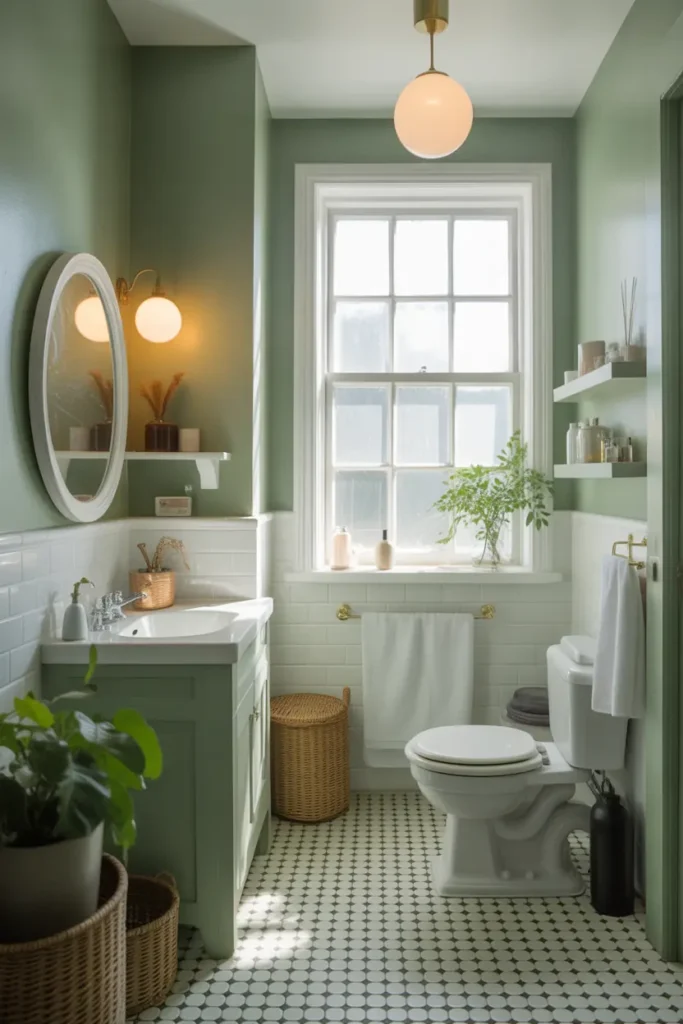
Sage is the gateway green — gray enough to behave like a neutral, green enough to change how the room feels. On walls, it softens harsh bathroom light and makes white fixtures glow. It’s nearly impossible to get wrong: sage flatters every skin tone (important in a room with mirrors), pairs with any wood, and works in windowless baths where stronger greens would feel heavy.
Look for sage paints with warm gray undertones rather than minty ones — the mint family can read as 1950s retro, while grayed sage reads as modern spa. It covers beautifully in two coats, touches up invisibly, and plays well with both chrome and brass. If you’re nervous about color, sage is the safest bold move in decorating.
2. Go Deep With Emerald Tile
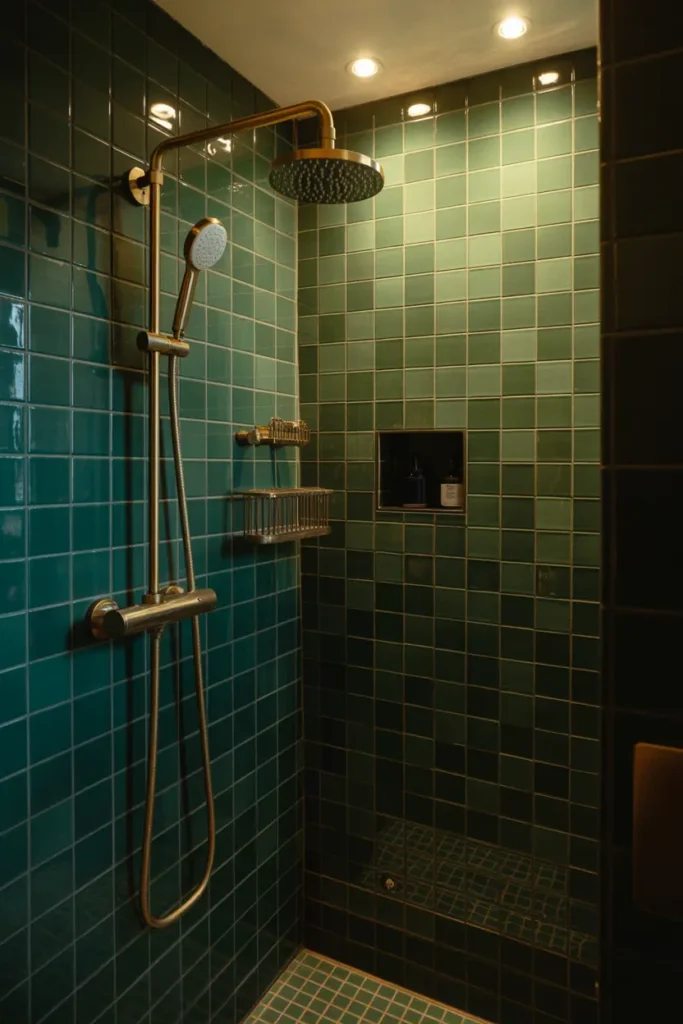
When you’re ready for drama, deep green tile delivers it like nothing else. Emerald, forest, or bottle green in a glossy finish — especially in the shower or as a vanity backsplash — creates a jewel-box effect that’s pure luxury. The gloss is essential: it bounces light around so the dark color reads as rich rather than gloomy.
Zellige-style handmade tiles are the premium version — their uneven surfaces catch light differently on every tile, creating a living, rippling wall. Budget alternative: standard glossy subway tile in deep green, stacked vertically for a modern feel. Either way, keep grout tight and color-matched, and balance the drama with plenty of white or light wood elsewhere.
3. Pair Green With Crisp White
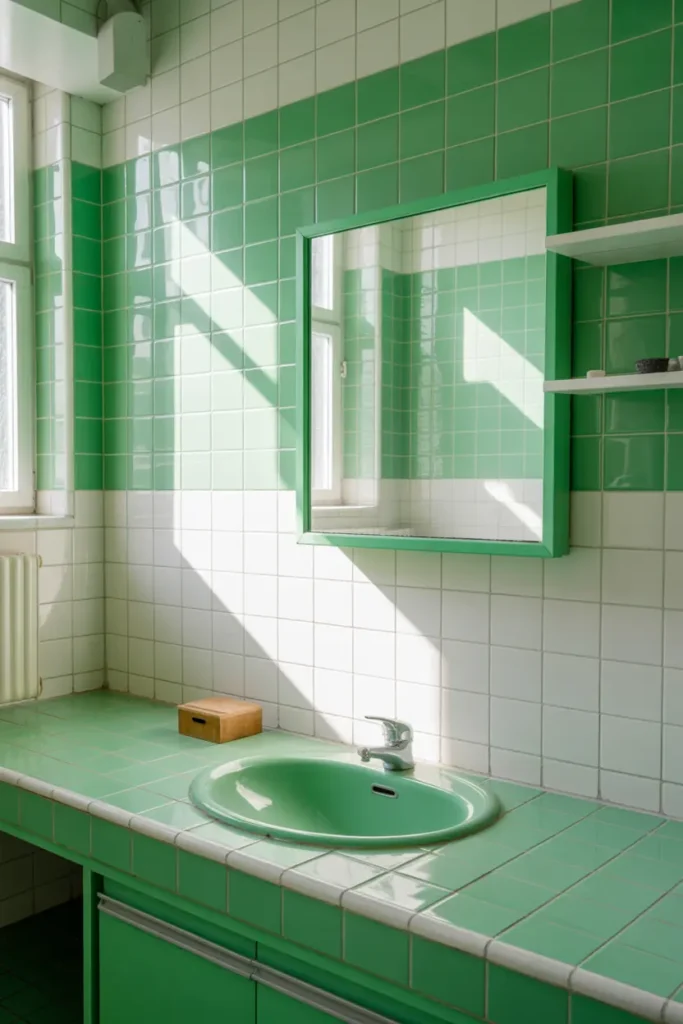
Green and white is the combination that never fails — fresh as cut grass, clean as a lab coat. White keeps green honest: it stops deep greens from feeling heavy and keeps pale greens from feeling washed out. In small bathrooms, let white dominate (60–70%) with green as the confident accent.
The classic execution: white sanitary ware and ceiling, green on the walls or vanity, white towels. It’s simple, it’s bright, and it photographs beautifully. For a more current feel, try white tile with green grout — subtle, surprising, and much easier to change than green tile when tastes evolve.
4. Let Real Plants Do the Talking
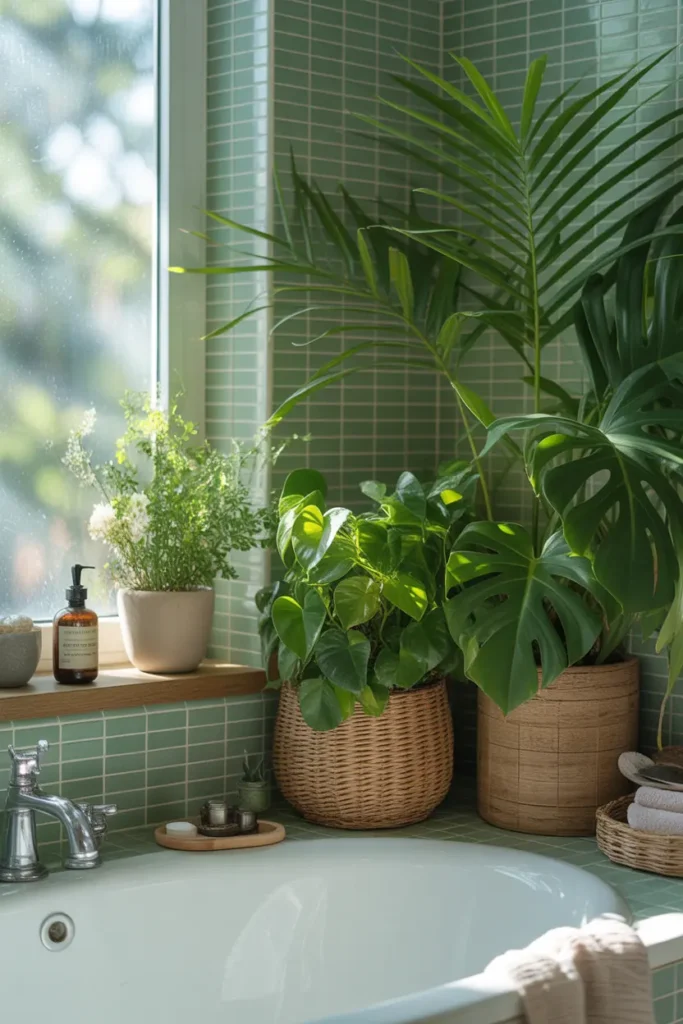
The most authentic green in any bathroom is a living one. Bathrooms are genuinely great plant habitats — the steam from showers mimics tropical humidity, and most bathrooms have at least some indirect light. A trailing pothos, a bird’s nest fern, or an orchid on the vanity adds life that no paint can replicate.
Match the plant to your light: no window means pothos, snake plants, or ZZ plants (all nearly indestructible); a bright window opens up ferns, calatheas, and orchids. Hang trailing plants high where steam rises, and don’t overwater — bathroom humidity does half the watering for you. One thriving plant beats five struggling ones.
5. Paint the Vanity Green
A green vanity is the commitment-phobe’s feature wall — all the color impact concentrated in one piece of furniture, with the walls free to stay light and bright. Deep forest or olive on a vanity reads as custom and expensive; sage keeps it soft and approachable. Either way, it’s the piece guests notice first.
Cabinet paint needs to be tough: use a dedicated cabinet enamel (not wall paint) in satin or semi-gloss, and prep properly — clean, sand, prime, two coats. The whole project costs under $60 and a weekend. Pair a green vanity with brass hardware and a light countertop and it looks like a $3,000 custom piece.
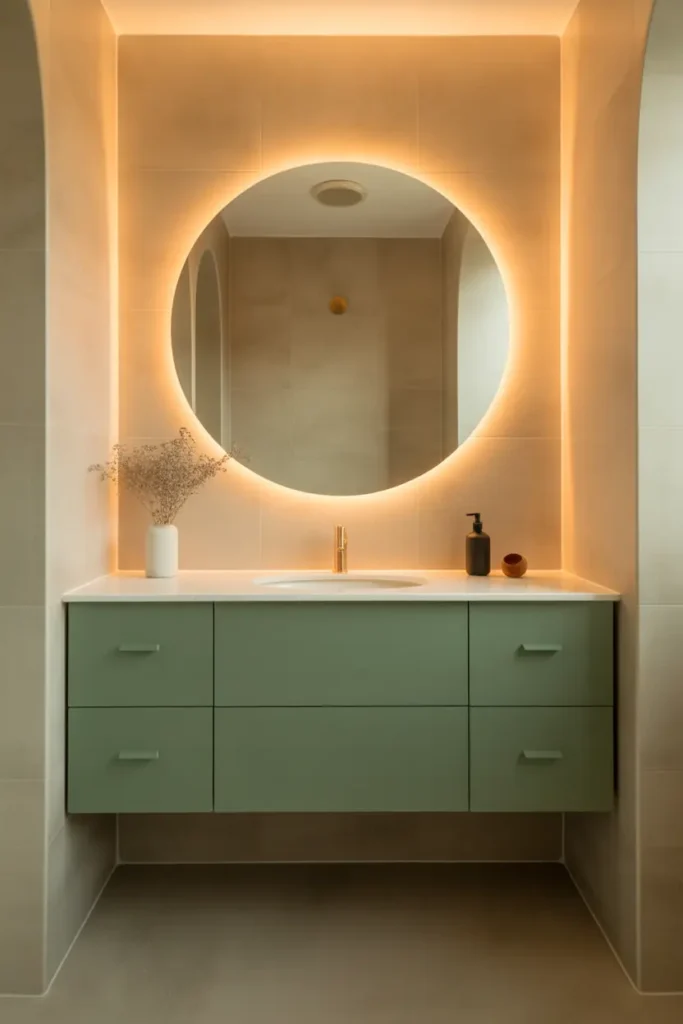
6. Warm It Up With Wood
Green and wood are nature’s own palette — forest floor, moss on bark — so they pair with zero effort. Light oak or teak against sage green feels Scandinavian and serene; walnut against emerald feels rich and moody. Wood keeps green from reading as cold or clinical, which is the main risk of an all-green scheme.
You don’t need much: a wooden vanity top, open oak shelves, a teak bath mat, or even just a wooden stool. Keep the wood natural and matte rather than glossy-stained — the organic texture is the point. In wet areas, teak and sealed oak handle the humidity; everywhere else, any wood you love works.
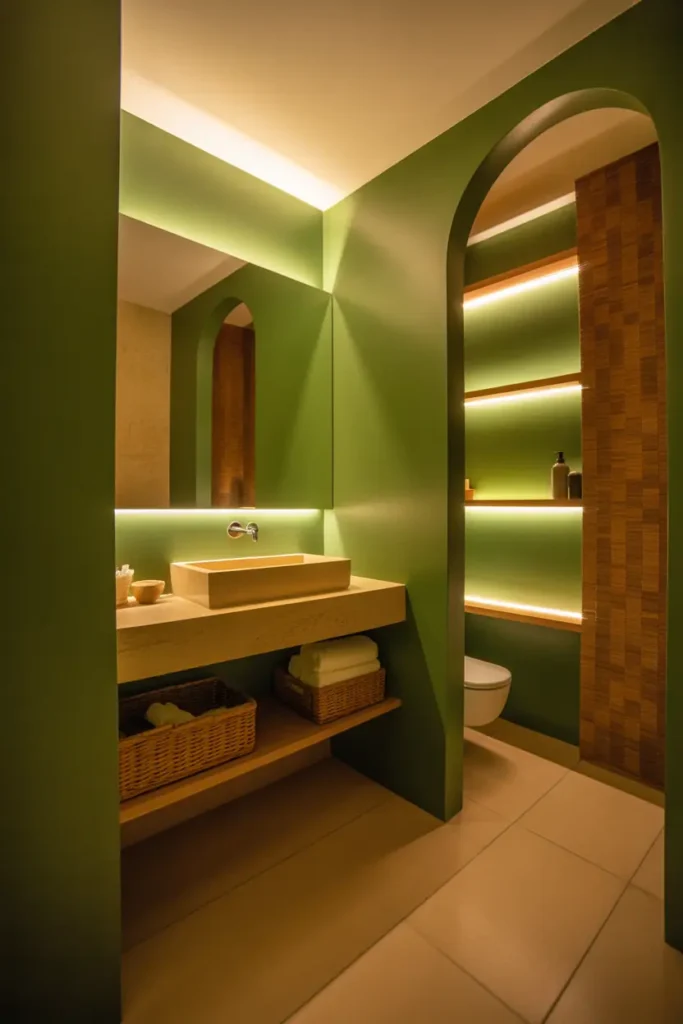
7. Test the Waters With Accessories
The $50 green bathroom: new towels, a soap dispenser, a bath mat, and a candle in coordinating greens. It’s reversible, it’s instant, and it tells you within a week whether you actually love living with green or just like the idea of it. Every big color commitment should start as an accessory test.
The trick to making accessories look intentional rather than random: pick one green and repeat it. Same shade on the towels, the dispenser, and the mat reads as a scheme; three different greens reads as a sale rack. Buy them together or carry a swatch — greens vary wildly between brands.
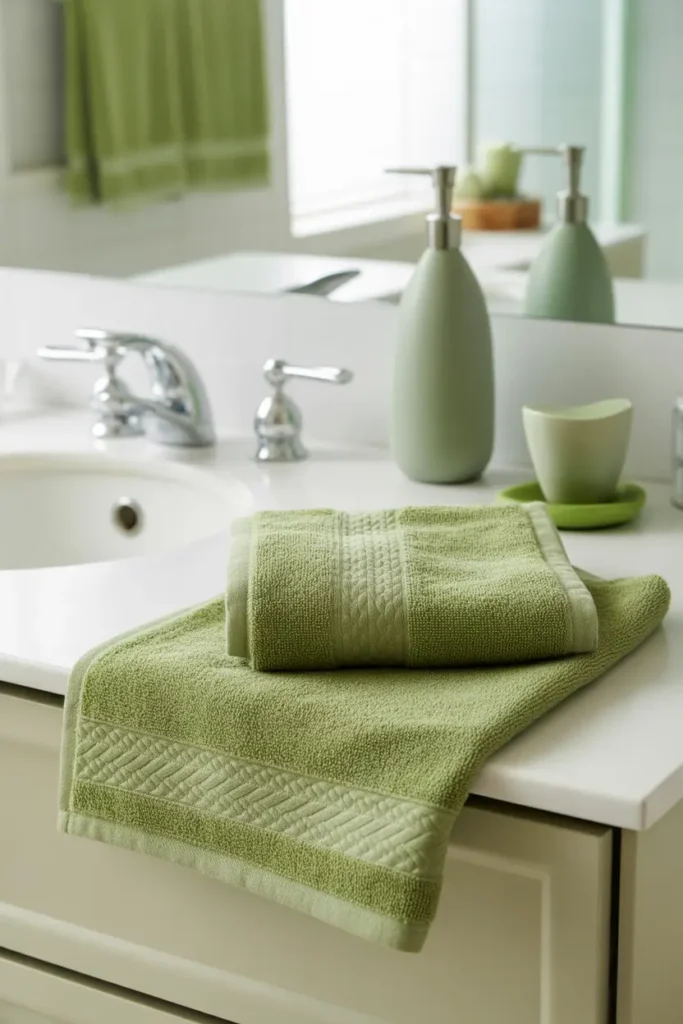
8. Try Patterned Green Tile
Solid green is beautiful; patterned green is memorable. Encaustic-look tiles with geometric or botanical patterns in green tones turn a floor or shower wall into art. The pattern adds the visual interest that keeps a single-color scheme from feeling flat, and green patterns feel organic rather than busy.
Use patterned tile as an accent — the shower floor, a vanity backsplash, or a border — not on every surface. Pattern everywhere is exhausting; pattern in one place is a focal point. And choose patterns with a light background and green motif rather than all-over dark green — they stay bright and timeless.
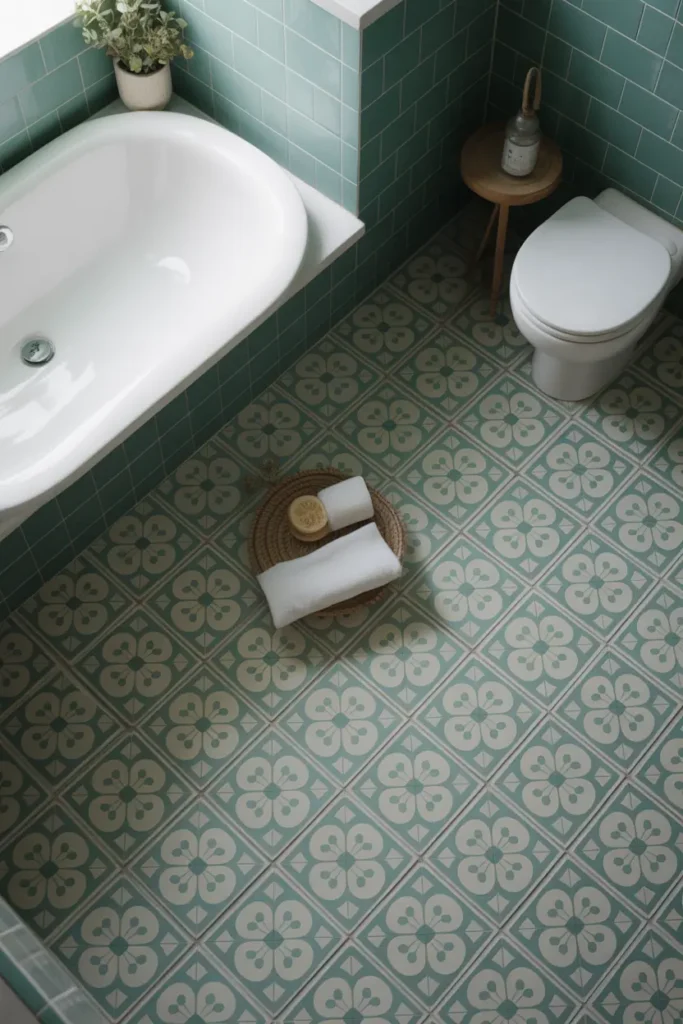
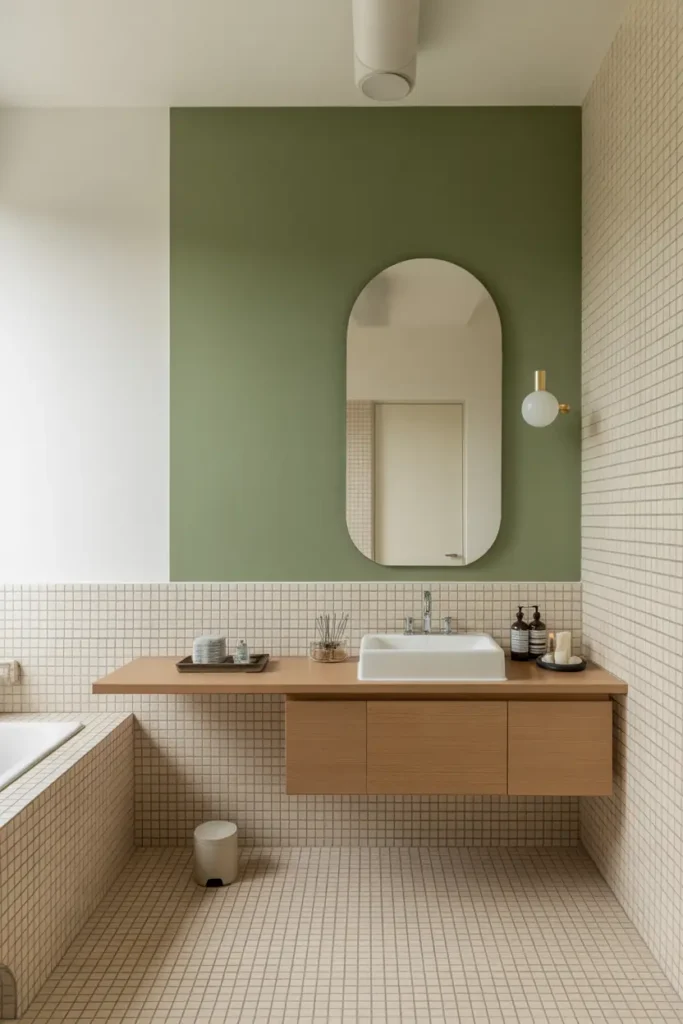
9. Commit to One Green Feature Wall
A single green wall — behind the vanity or the tub — gives you the full emotional impact of the color with a fraction of the commitment. It’s also the easiest green move to execute: one gallon of paint, one afternoon, completely reversible if you change your mind.
Deep greens (forest, emerald, hunter) work best as feature walls because they create real depth; pale greens need all four walls to register. Put the feature wall where you’ll see it most — behind the mirror, so it’s in your sightline every morning. Frame it with white trim or light surroundings so the green reads as a deliberate gesture.
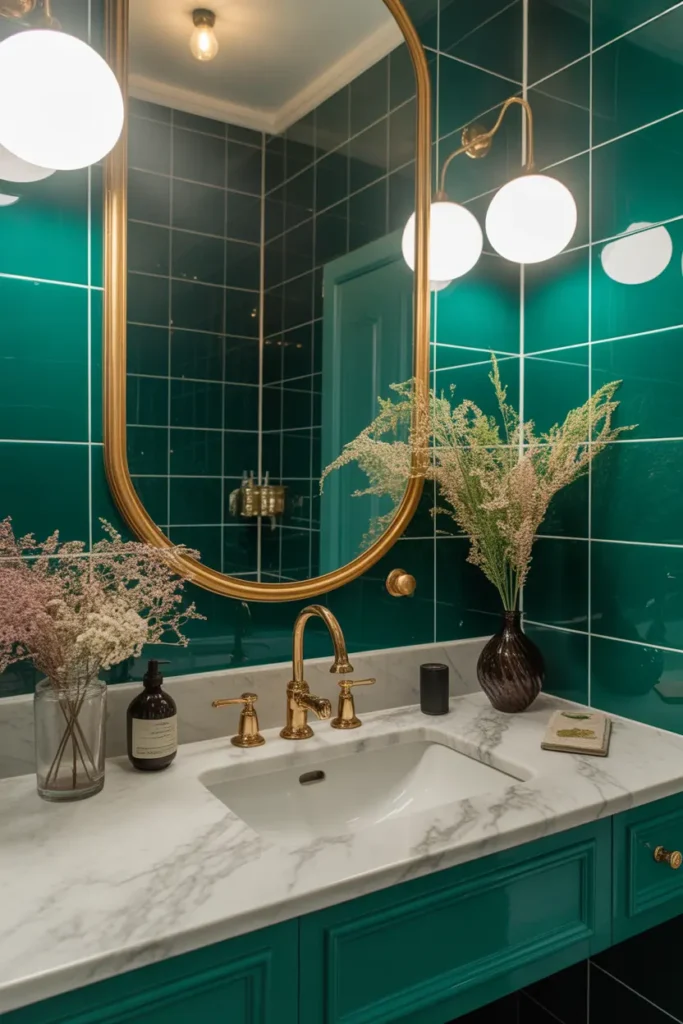
10. Add Brass for Instant Luxury
Green and brass is the combination that launched a thousand boutique hotels. The warmth of brass against the coolness of green creates a tension that reads as expensive — it’s the same reason emerald and gold has been a luxury pairing for centuries. A brass faucet, mirror frame, or set of pulls transforms a green bathroom from nice to notable.
Brushed or satin brass (not polished) is the current sweet spot — warm, modern, forgiving of water spots. You don’t need to replace everything: a brass mirror frame and matching pulls against a green vanity deliver 90% of the effect. Keep the brass consistent in finish; mixed brasses look accidental.
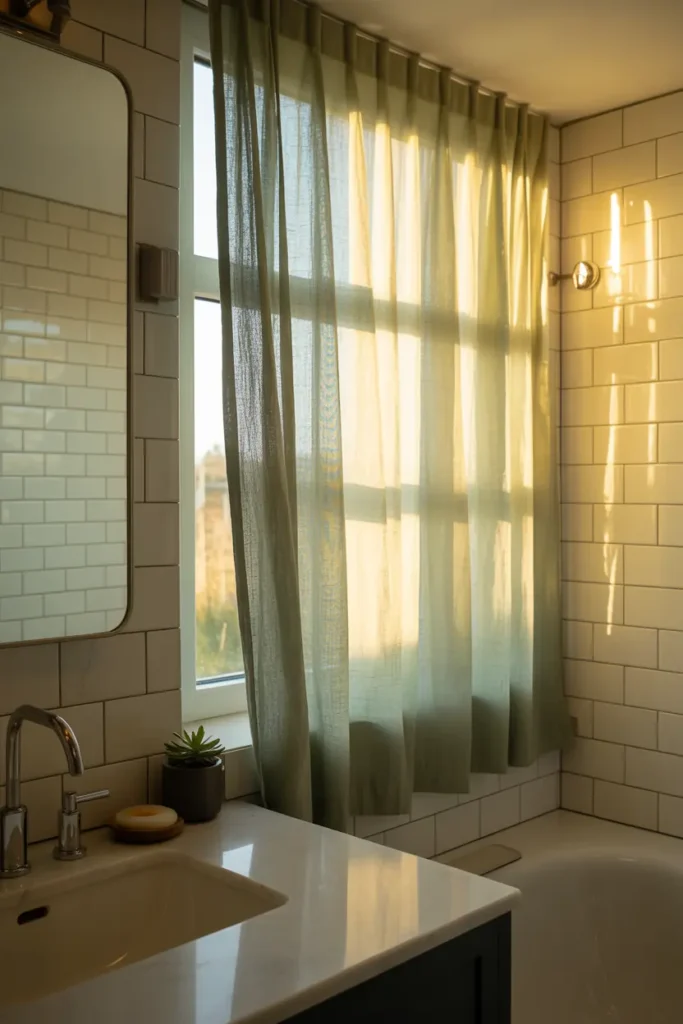
11. Soften the Window With Green Textiles
Bathroom windows are often an afterthought — bare glass or a sad blind. A green curtain, Roman shade, or even just a green valance turns the window into part of the design while filtering light into a soft green-tinted glow. In the morning, that filtered light is genuinely beautiful.
Choose moisture-resistant fabrics (or shades rated for bathrooms) and keep them out of direct splash zones. A cafe curtain — covering just the lower half — gives privacy while leaving the top open for light, and it uses half the fabric. In a green bathroom, the window treatment should whisper, not shout: solid or subtly textured, not patterned.
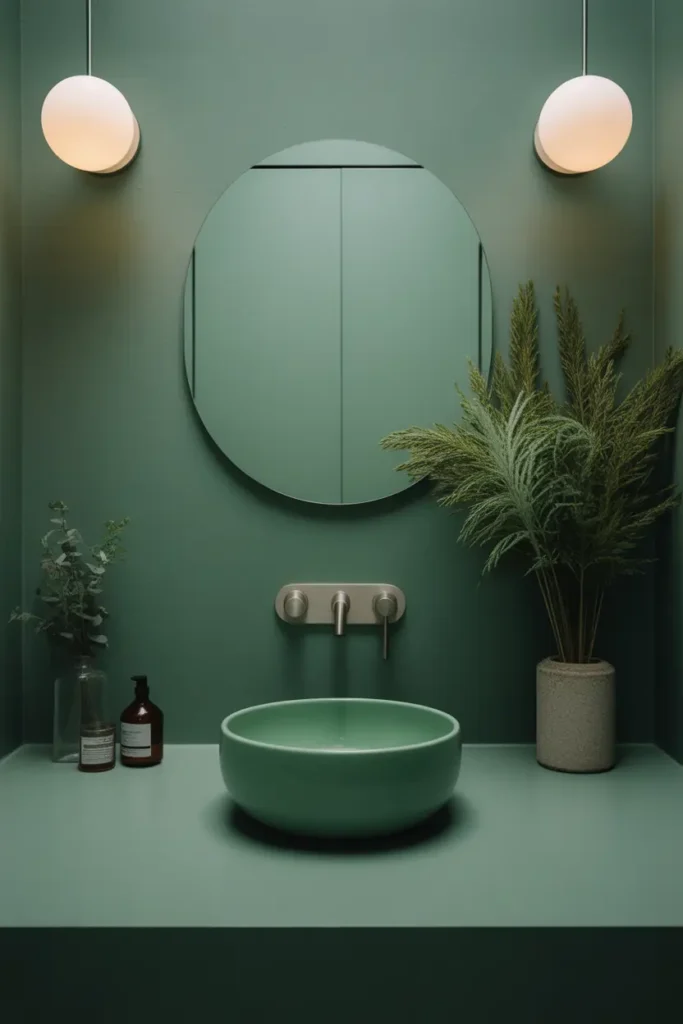
12. Go Matte for Modern Calm
Glossy green is dramatic; matte green is serene. Matte finishes absorb light instead of reflecting it, which gives green walls and cabinetry a soft, velvety depth — like moss or eucalyptus leaves. It’s the finish that makes a green bathroom feel like a spa rather than a showroom.
The trade-off: matte shows less light, so it needs good lighting to avoid feeling flat, and matte paint marks more easily than satin. Use matte on walls and cabinetry (low-touch surfaces) and save wipeable satin for trim and high-touch areas. In bathrooms, always use a bathroom-grade matte — standard flat paint and steam are a bad combination.
13. Ground Green With Warm Beige
Green plus beige is the combination for people who find green-plus-white too crisp. Warm beiges, taupes, and stone tones wrap green in softness — the palette of a forest floor rather than a laboratory. It’s calming in a deeper, earthier way, and it’s very forgiving of imperfect lighting.
Use beige on the largest surfaces (floor, walls) and green as the accent (vanity, textiles, plants), or reverse it for more drama. Natural materials bridge the two beautifully — travertine, limestone, light wood all sit comfortably between green and beige. Avoid gray-beige here; you want warmth, and gray-beige plus green can turn chilly.
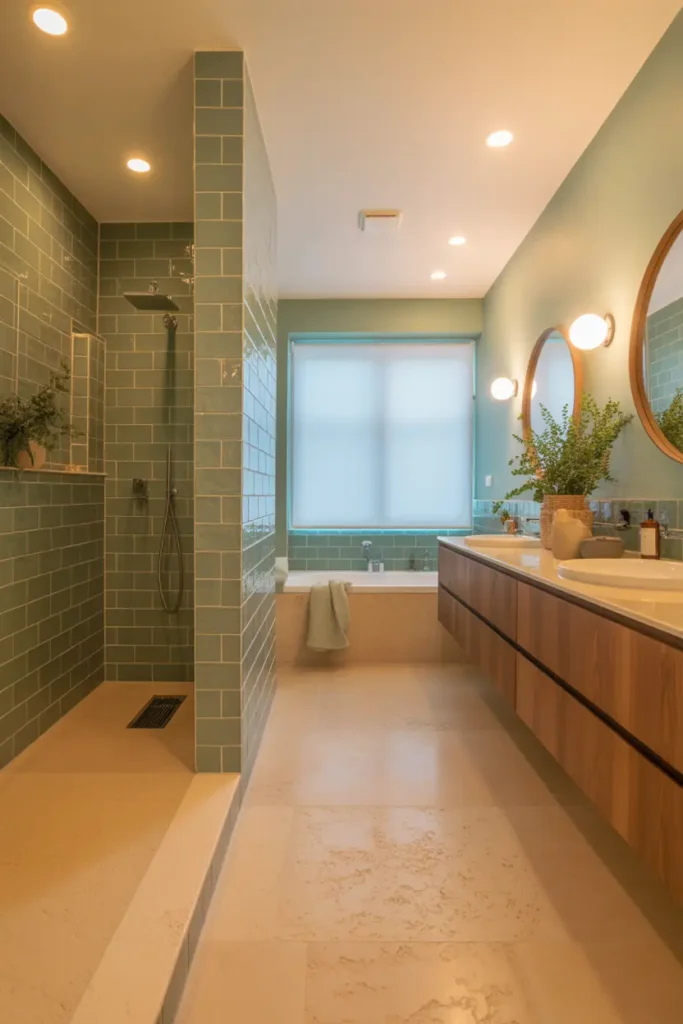
14. Style Open Shelves in Green
Open shelving is a display opportunity, and in a green bathroom it’s a chance to build the palette in 3D. Style the shelves with green glass bottles, a trailing plant, folded sage towels, and a couple of natural wood or ceramic pieces. The shelf becomes a still life that reinforces the whole room’s theme.
The styling rules: odd numbers, varying heights, and about 70% full — never stuffed. Decant everyday products into green or clear glass bottles so the shelf looks curated rather than cluttered. One shelf styled well beats three shelves styled carelessly.
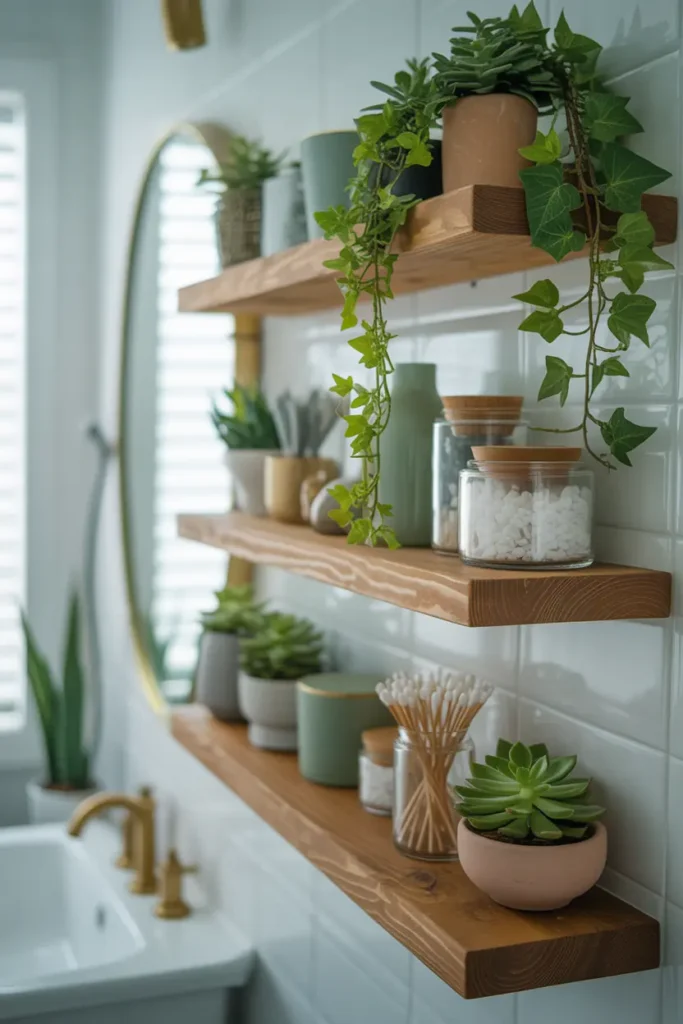
15. Choose Green Glass Accessories
Green glass — sea-glass tones, not emerald — is the subtle luxury move. Soap dispensers, trays, vases, and candle holders in soft green glass catch light beautifully and add color without weight. They’re the finishing touches that make a green bathroom feel considered rather than just painted.
Sea glass and recycled glass pieces have a naturally soft, frosted quality that suits the palette perfectly. Group them in odd numbers on a tray or shelf. And they’re practical: glass wipes clean, doesn’t absorb moisture, and looks good wet — which is more than you can say for most bathroom accessories.
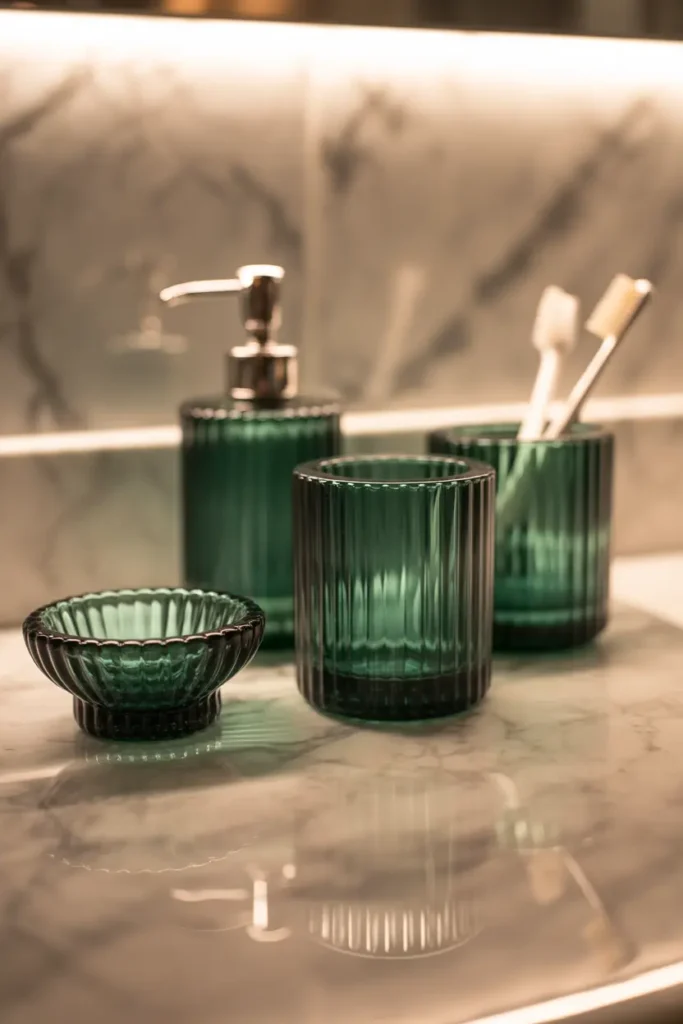
16. Warm the Floor With a Green Rug
Bathroom floors are cold — literally and visually. A green rug or bath mat adds the warmth and color your feet (and eyes) want, and it’s the easiest green commitment there is: unroll it, done. In a neutral bathroom, a green rug can be the entire color story.
Choose rugs made for bathrooms: washable, quick-drying, with non-slip backing. Cotton and microfiber work; avoid anything that stays soggy. Size it generously — a too-small mat looks apologetic. And wash it regularly; a dingy rug undermines the fresh feeling that green is supposed to deliver.
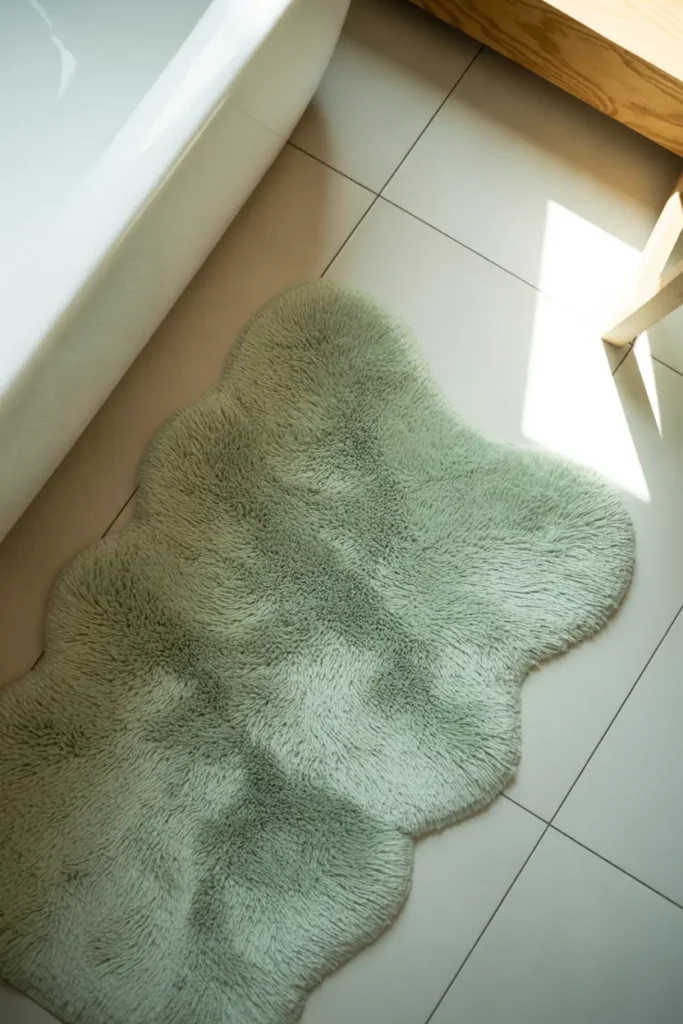
17. Hang Green-Toned Art
Art is the personality layer, and in a green bathroom it’s a chance to deepen the palette. Botanical prints, abstract landscapes, misty forest photography — art with green tones ties the room together and gives the eye somewhere to rest beyond tile and fixtures.
One large piece beats several small ones in a bathroom (humidity is kinder to fewer frames). Keep the frame simple — thin black, natural wood, or white — and make sure the art is behind glass or sealed for moisture protection. The art should feel like a window into somewhere green, not a poster on a wall.
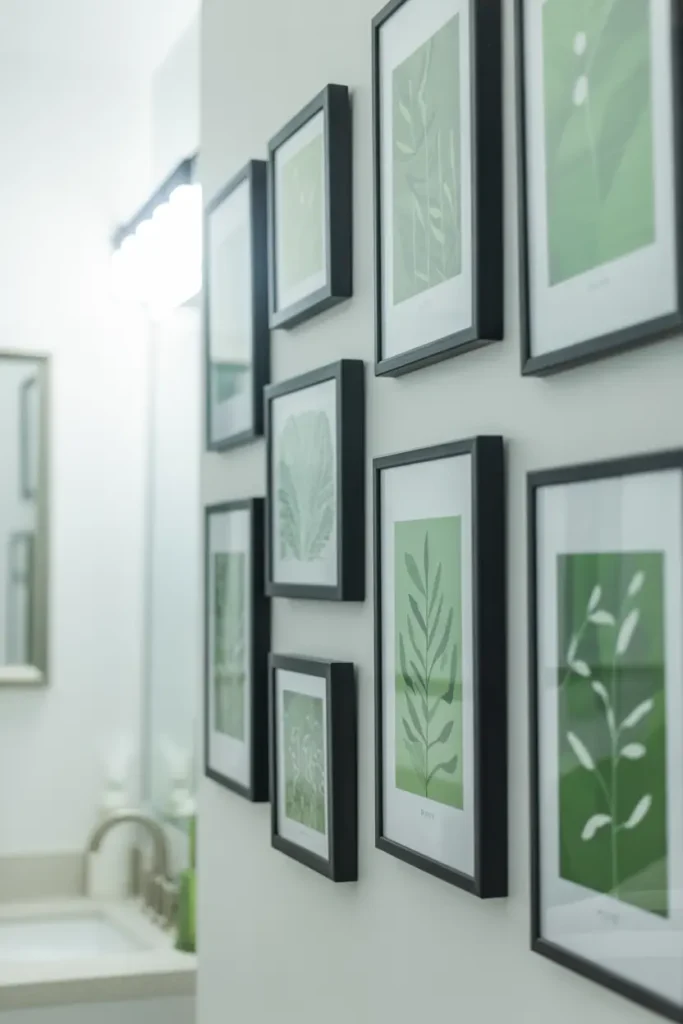
18. Frame the Mirror in Green
A green-framed mirror is the detail that makes guests ask where you got it. Painted, lacquered, or upholstered in green, the frame turns the hardest-working object in the bathroom into a design feature. It’s a small surface with outsized impact because the mirror is always in the sightline.
Match the frame green to your palette’s dominant green — or go one shade deeper for contrast. A deep green frame around a large mirror against pale walls is a particularly sharp combination. Seal painted frames well; mirror edges in humid bathrooms need protection from moisture creep.
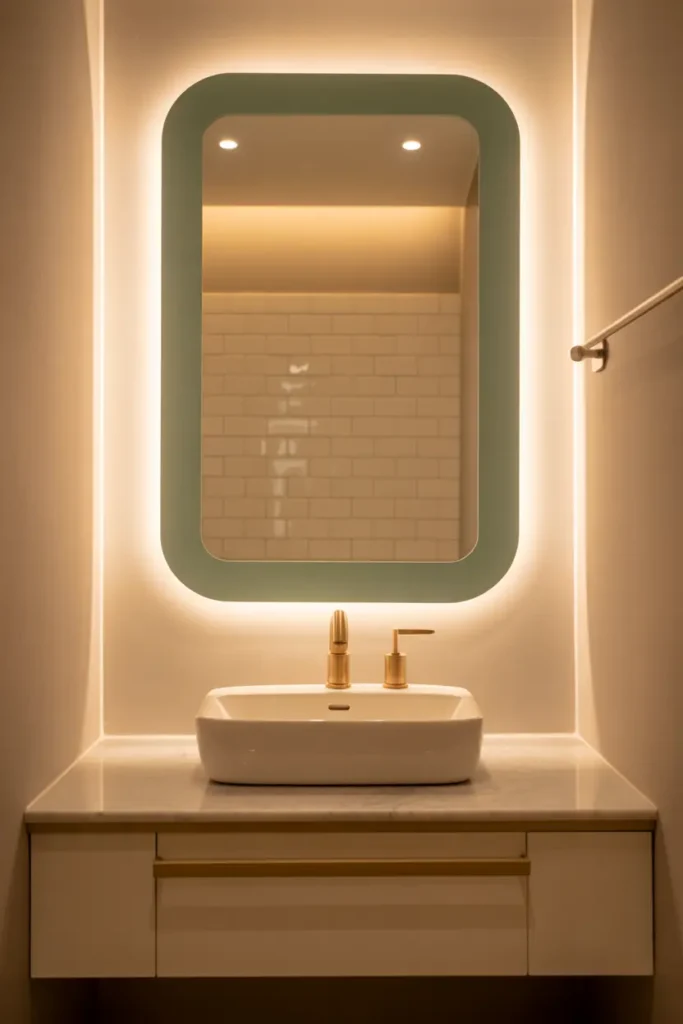
19. Keep Everything Else Quiet
Green is a strong personality — give it room. When green is the star, everything else should be supporting cast: clear counters, hidden storage, minimal visible products. A green bathroom with clutter reads as busy; the same bathroom with clear surfaces reads as serene. The color does the decorating; you just have to get out of its way.
This is really a maintenance philosophy disguised as a design tip: decant, corral, conceal. A single tray for daily items, closed storage for the rest, and nothing on the floor that doesn’t belong there. The green will thank you by looking twice as good.
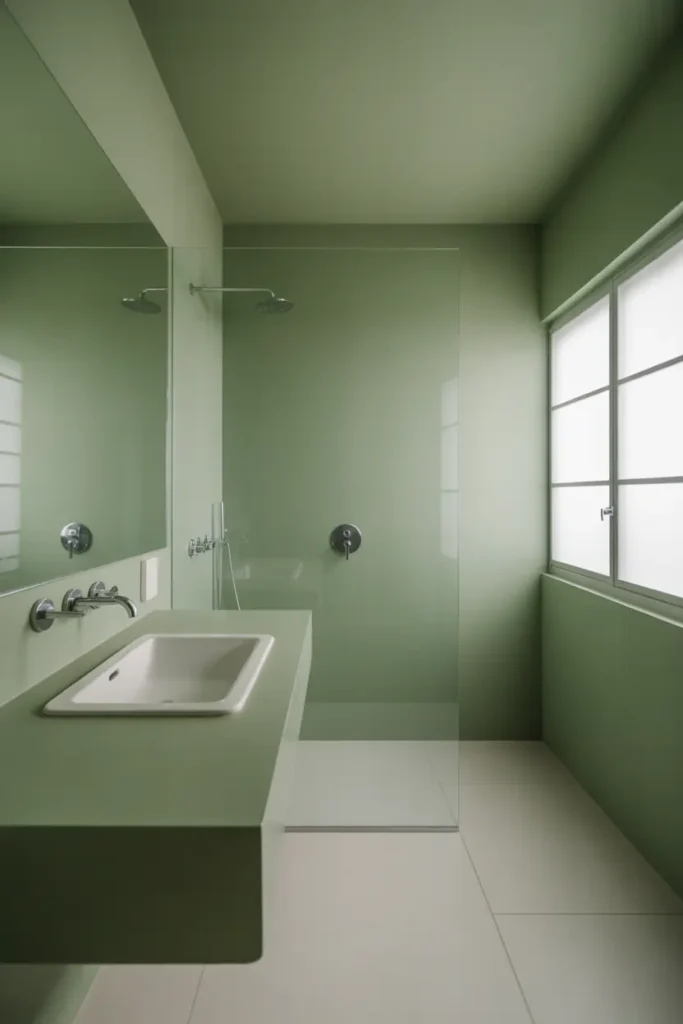
20. Layer Multiple Greens Together
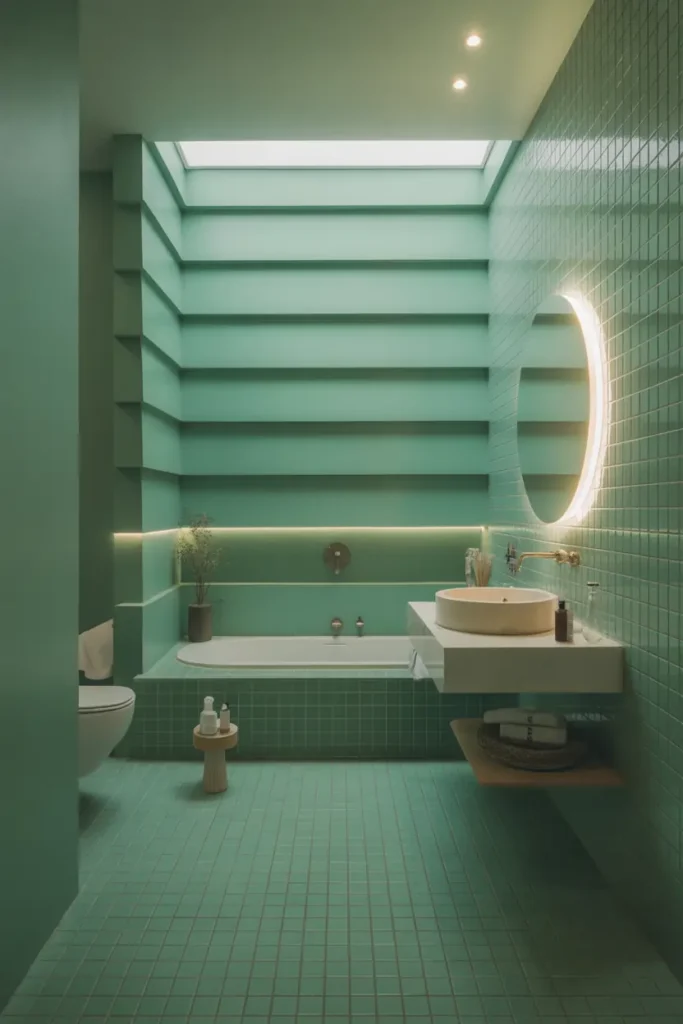
The most sophisticated green bathrooms don’t use one green — they use five. Sage walls, emerald tile accent, forest towels, a trailing pothos, sea-glass accessories: layered greens create a depth and richness that a single shade can’t achieve. It’s the difference between a green bathroom and a bathroom that understands green.
The layering rule: vary the greens in both tone and texture — matte wall, glossy tile, soft textile, living plant, translucent glass. Keep them in the same family (all warm greens or all cool greens) so they harmonize rather than clash. Done right, the room feels like a forest canopy: endlessly varied, completely calm.
Related Decor Ideas
If you love these green bathroom decor ideas, you might also explore:
- Small bathroom decor ideas for modern homes
- Neutral bathroom styling with natural tones
- Minimalist home decor trends for 2026
Conclusion
Green bathrooms work because they borrow from nature’s own palette — the colors our eyes evolved to find restful. Whether you go all-in with emerald tile or just add sage towels and a pothos, you’re tapping into something deeper than trend: the human preference for spaces that feel alive.
Start where your comfort is. Accessories today, a painted vanity next month, the full forest-bathroom when you’re ready. Green is patient — it’ll wait for you to catch up. And once you live with it, you’ll wonder why every bathroom isn’t green.
Pro Tips
- Test green in your bathroom’s light, not the store’s. Greens shift more than any other color family between warm and cool light. Paint a large swatch and live with it for 48 hours, checking morning, noon, and night.
- Keep one white anchor. No matter how green you go, keep the ceiling white and at least one major fixture white. It’s the brightness reserve that keeps deep greens from closing in.
- Quarantine new plants. Bathroom plants from the store can carry pests. Keep newcomers away from existing plants for two weeks, and check undersides of leaves before introducing them to the steamy bathroom ecosystem.
- Seal natural stone and grout. Green marble and stone are porous; in a wet bathroom they stain without sealer. Seal on installation and reseal yearly — fifteen minutes that protects a major investment.
FAQs
What green paint color works best in a small bathroom?
Soft sage with warm gray undertones — it reflects light well, flatters skin in the mirror, and never feels heavy. Avoid deep forest or emerald on all four walls of a tiny bath; use those as accents and keep the field light.
Will a green bathroom look dated in five years?
Green is one of the most timeless bathroom colors — it’s been in and out of fashion for a century because it’s rooted in nature, not trend cycles. Sage and forest greens age gracefully; the only risk is very trendy shades (like neon mint), so stick to the classics.
Can I mix different shades of green?
Yes — layering greens is actually more sophisticated than using one. Keep them in the same temperature family (all warm or all cool), vary the textures (matte, gloss, textile, living plant), and let white or wood separate them so they read as intentional layers.
What metal finish goes best with green?
Brushed brass is the classic luxury pairing; matte black gives a modern edge; polished chrome keeps it fresh and clean. All three work — the key is picking one and using it consistently rather than mixing finishes in the same sightline.

HowDecor is a home decor blog sharing simple, practical decorating ideas for everyday spaces. We believe a beautiful home should feel comfortable, personal, and full of warmth — and that great style does not require a huge budget. Our goal is to inspire readers to create spaces that feel peaceful, welcoming, and truly their own — one room at a time.