I lived in a 90-square-foot bedroom for three years. I know the exact feeling of opening the door and having the bed, the desk, and the dresser all compete for the same two square feet of floor. Tiny rooms aren’t a design challenge — they’re a daily negotiation.
But here’s what those three years taught me: tiny rooms force good decisions. You learn what you actually need, you get creative in ways big-room people never have to, and eventually the constraints start feeling like freedom. These are the tips that genuinely worked — not theory, survival.
1. Choose Light and Soft Colors
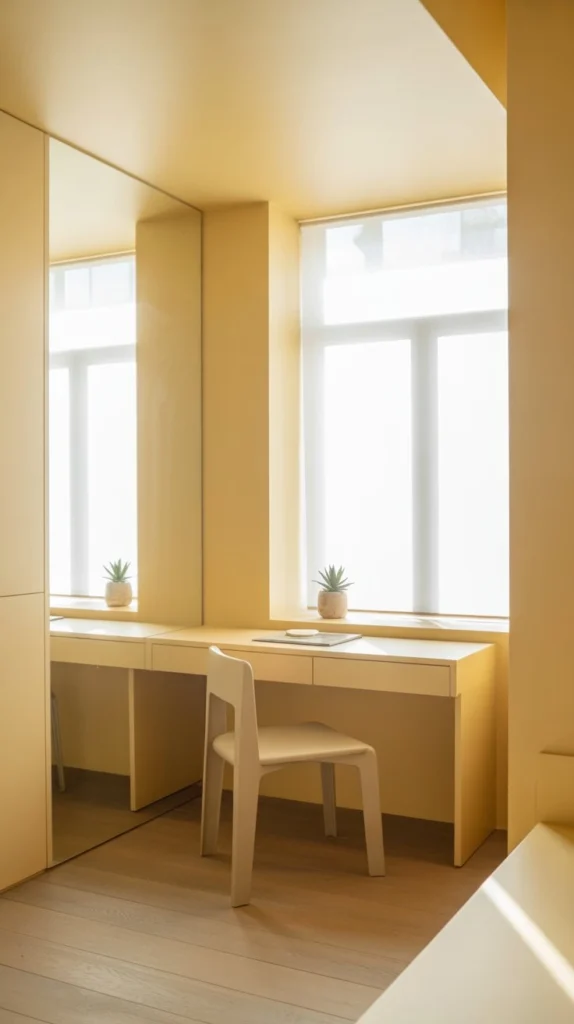
Light paint is the oldest trick because it’s the truest one. In my shoebox room, going from landlord-beige to warm white felt like knocking down a wall — same square feet, completely different feeling. Soft grey, pale peach, warm cream all do the same job. One caveat from experience: keep the ceiling the lightest color in the room, always. A white ceiling with slightly deeper walls lifts the whole space; a dark ceiling in a tiny room feels like it’s descending on you.
2. Use Mirrors Strategically
Mirrors in a tiny room aren’t decoration — they’re infrastructure. Mine hung opposite the window and effectively gave me a second window’s worth of light. If you can only do one thing from this list, do this. Renter tip: lean a full-length mirror against the wall instead of mounting it. No holes, no hardware, and you can angle it to bounce light exactly where you want it.
3. Keep Furniture Minimal and Functional
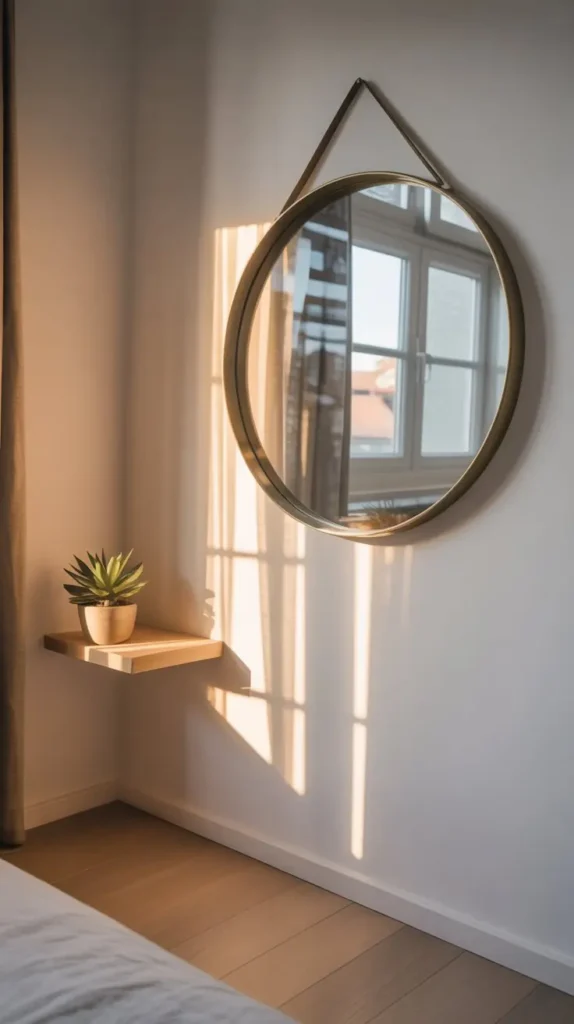
Every piece in a tiny room has to justify itself twice: does it fit, and does it do enough? My desk was also my dining table and my vanity. My ottoman stored winter clothes. Nothing in that room had only one job.
The pieces that earned their keep: a storage bench at the foot of the bed (seating + linen storage), a fold-down wall desk (workspace that vanishes), and nesting side tables (one table or two, as needed).
Measure everything before buying — I learned this the expensive way with a bookshelf that blocked my closet door by two inches. In tiny rooms, two inches is a lot. Tape the footprint on the floor with painter’s tape and live with the outline for a day before you commit.
4. Maximize Vertical Space
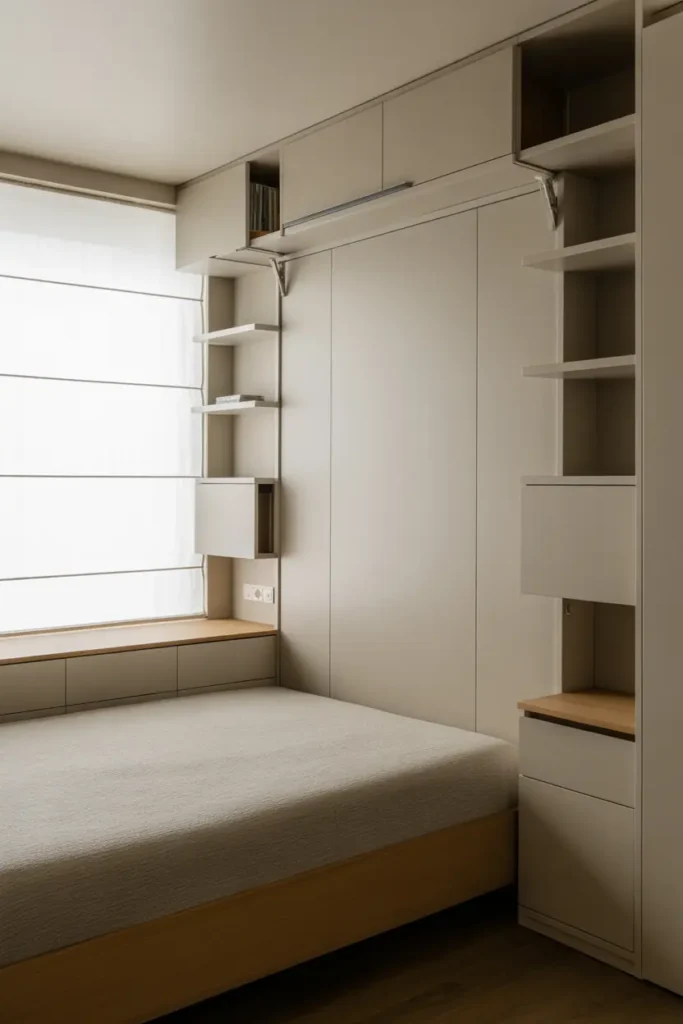
Your walls are the only square footage nobody’s charging you for. In my room, a $30 set of floating shelves held my entire book collection, plants, and speakers — probably 15 square feet of stuff that would otherwise have eaten my floor. Go high: most people stop shelving at eye level and waste the top two feet of wall. That’s prime real estate for things you use weekly, not daily — out of the way but still reachable.
5. Let Natural Light In
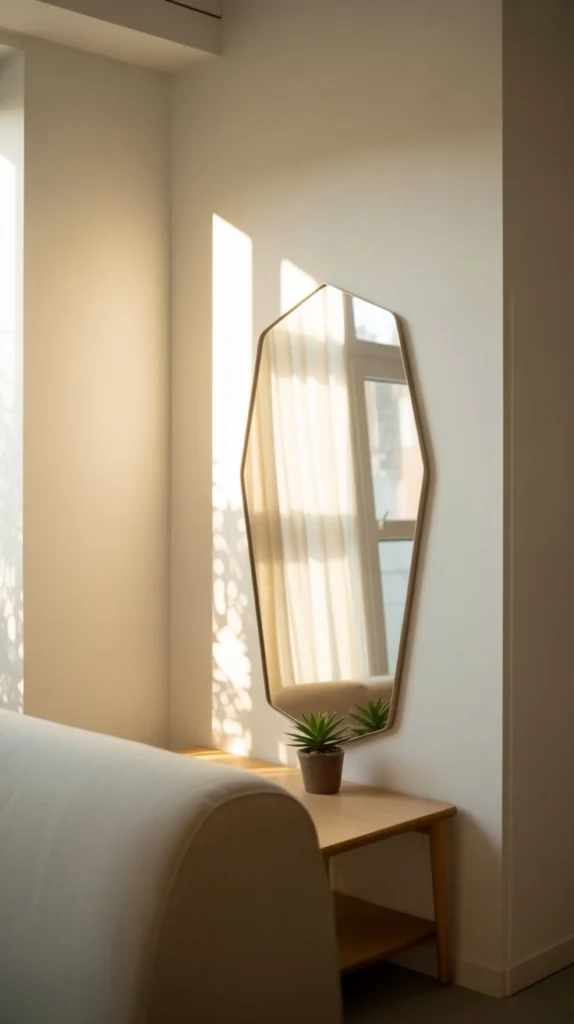
Light is everything in a tiny room, and heavy curtains are light thieves. I swapped mine for sheer white panels and the room gained what felt like an extra window. You still get privacy; you just stop living in a cave. If your window faces a wall or alley, fake it: daylight-mimicking bulbs (5000K) in your main lamp make a surprising difference. Your brain reads bright as big, even when the “sunlight” comes from IKEA.
6. Keep the Layout Open
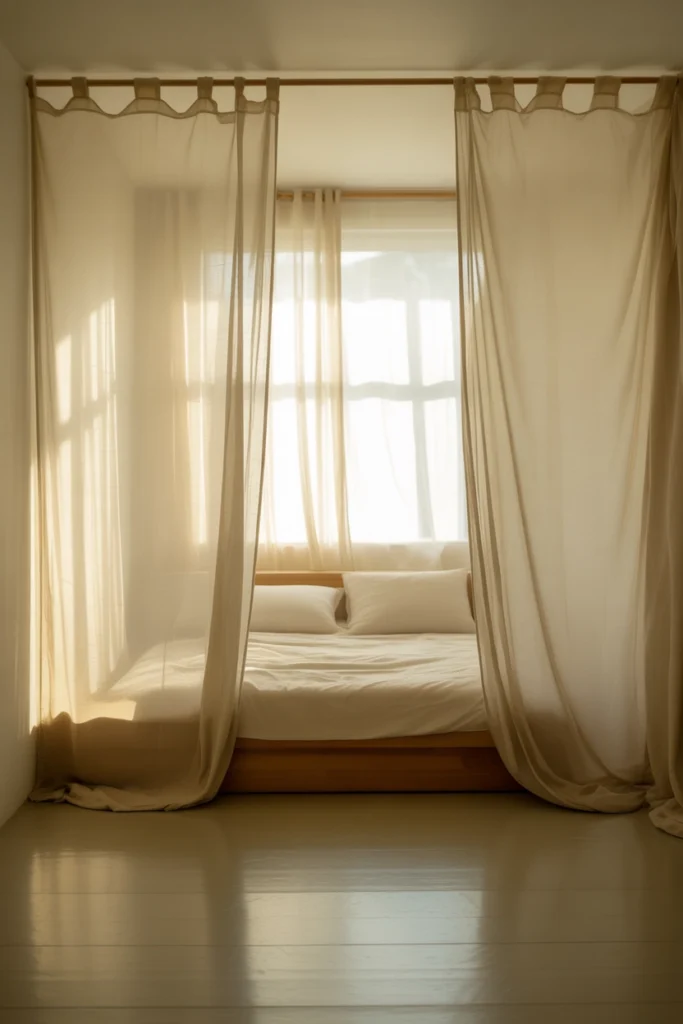
In a tiny room, your layout is your floor plan, your traffic system, and your sanity. Push the bed into a corner (you only need access from one side — fight me), keep a clear path from door to window, and never let furniture float in the middle of the floor. Walk the path yourself after arranging: if you have to sidestep or squeeze, it’s wrong. Thirty inches of clearance is the minimum for moving comfortably; in a tiny room, protect every inch of it.
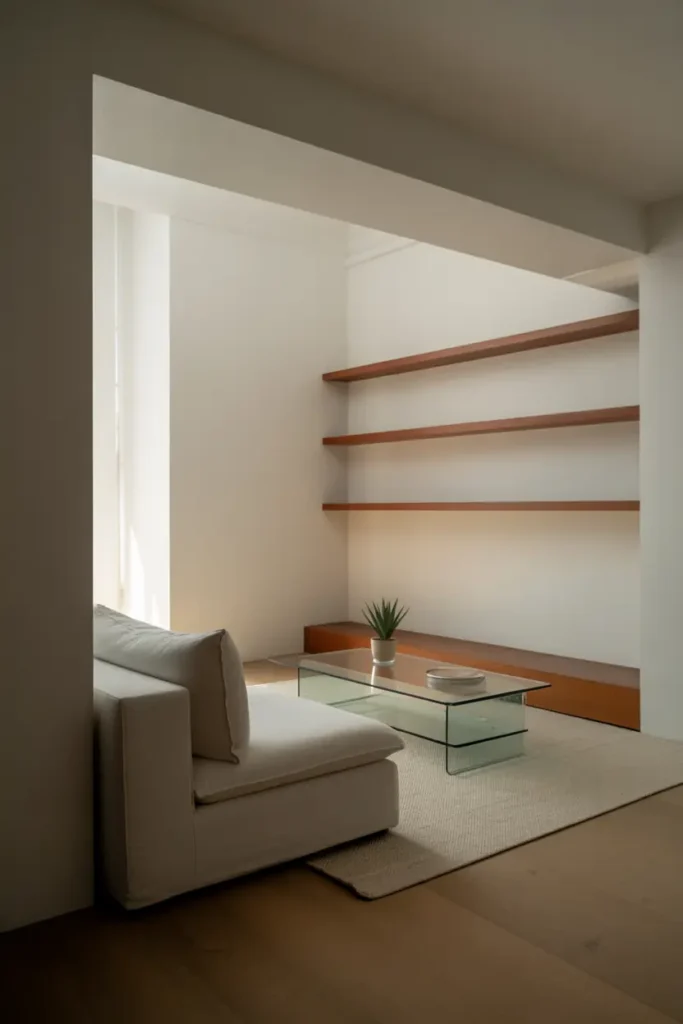
7. Add Texture Instead of Bulk
When you can’t add space, add texture. A chunky knit throw, a nubby rug, linen curtains — texture gives the eye places to land, which makes a room feel layered and intentional instead of just… small and bare. The trick is keeping the palette tight while varying the feel: all neutrals, but some rough, some smooth, some soft. Texture without color chaos reads as cozy; texture plus five colors reads as cluttered.
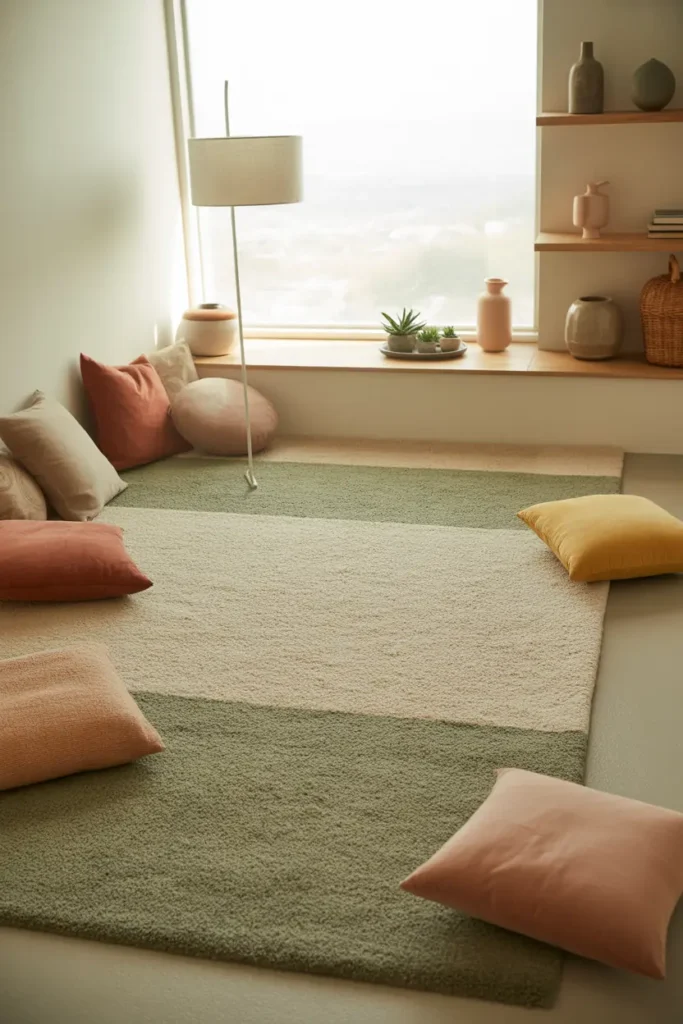
8. Use Furniture with Visible Legs
This one’s pure visual psychology: when you can see floor under and around furniture, your brain counts that floor as available space. Pieces on legs — mid-century style, basically — make tiny rooms feel dramatically airier than blocky furniture sitting flat. Apply it everywhere: bed frame with 6+ inches of clearance (bonus: under-bed storage bins slide right in), sofa on legs, even a raised media console. Every visible inch of floor is a win.
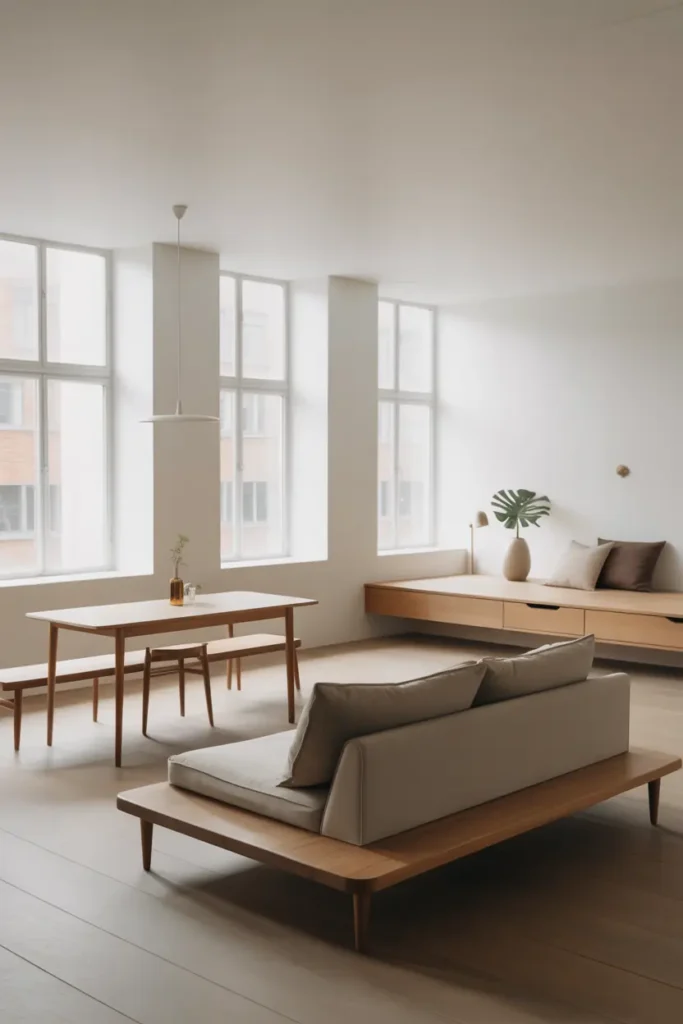
9. Stick to a Simple Color Palette
Pick your palette and marry it: one main neutral, one secondary, one accent — that’s the whole wardrobe for the room. Mine was warm white, light oak, and terracotta, and everything I bought for three years fit into it. A limited palette does something magical in tiny rooms: it makes unrelated things look like they belong together, which reads as intentional design instead of accumulated stuff. It’s the cheapest upgrade on this list — it costs nothing.
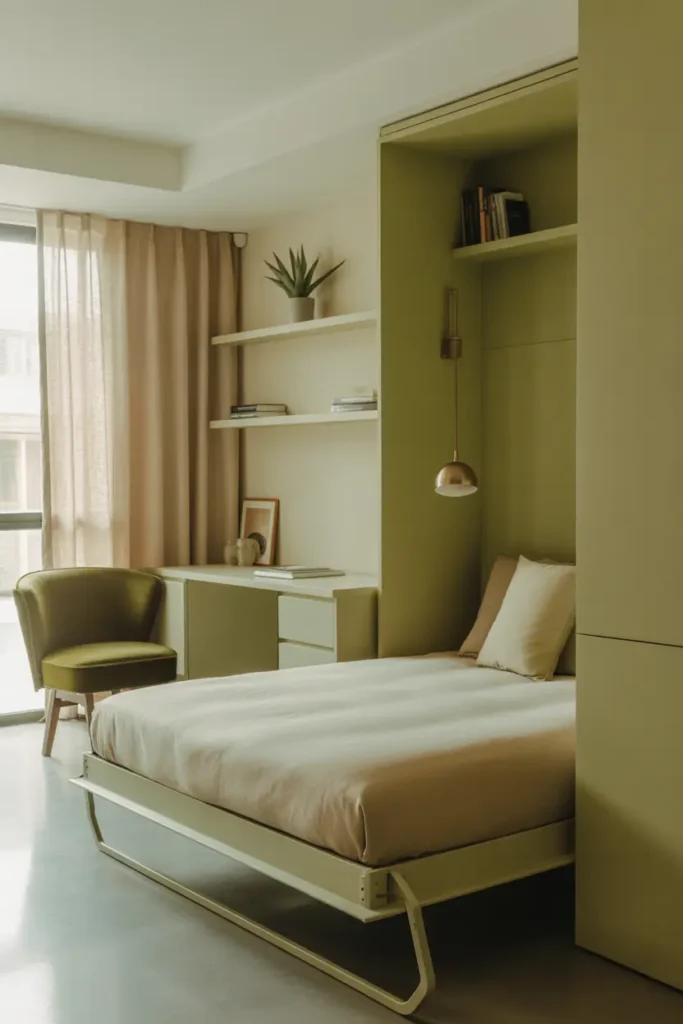
10. Keep Clutter Under Control
Clutter in a tiny room isn’t a mess — it’s a space thief. Every stray object is visually loud when there’s nowhere for the eye to rest. My rule: if I hadn’t used it in 30 days, it lived somewhere else (or left entirely). Build the habit, not the system: a five-minute nightly reset where everything goes home. In a tiny room, tidiness isn’t personality — it’s architecture. The room literally cannot function without it.
Final Thoughts
Tiny rooms get a bad rap, but mine taught me more about what I actually need than any big apartment ever did. Constraints clarify.
Start with light and mirrors, right-size everything, and protect your floor space like the precious resource it is. Do that, and your tiny room stops feeling like a compromise. It starts feeling like exactly enough.
Pro Tips
- Use the door. Over-the-door hooks and organizers add storage without touching floor or wall space. In a tiny room, the back of the door is prime real estate.
- Choose one statement piece. A tiny room with one bold item (art, a colorful chair, a great lamp) looks designed; a tiny room with ten small decorations looks cluttered. Edit down to one star.
- Keep the floor visible. The more continuous floor your eye can see, the bigger the room feels. Storage goes up (shelves) or under (bed), never in the middle of the floor.
- Embrace the cozy. Stop fighting the smallness and lean in: moody lighting, soft textures, a reading nook. A tiny room that’s cozy on purpose beats a tiny room pretending to be big.
FAQs
My room is REALLY tiny (under 100 sq ft). Where do I even start?
Start with the bed — it’s the biggest thing in the room. A lofted or storage bed instantly frees the floor beneath it for a desk, dresser, or just breathing room. After that, it’s ruthless decluttering: in a room that small, every object is either earning its place or stealing it.
How do I decorate a tiny rental without losing my deposit?
Command strips, removable wallpaper, tension rods, and leaning (not hanging) mirrors and art. Washi tape creates surprisingly chic wall designs and peels off cleanly. Document everything with photos on move-in day so you have proof of the original condition.
What colors work best in a tiny bedroom?
Warm whites and pale neutrals for walls, then bring personality through bedding and one art piece. A tiny room can handle one bold element — a colorful duvet, a gallery wall — but keep the big surfaces calm so the room doesn’t close in on you.
How do I fit a workspace in a tiny room?
A wall-mounted drop-leaf table ($40–$80) gives you a full desk that folds to 6 inches deep when you’re done. Pair it with a comfortable chair that tucks completely under, and your “office” disappears in ten seconds flat.

HowDecor is a home decor blog sharing simple, practical decorating ideas for everyday spaces. We believe a beautiful home should feel comfortable, personal, and full of warmth — and that great style does not require a huge budget. Our goal is to inspire readers to create spaces that feel peaceful, welcoming, and truly their own — one room at a time.