Architects have a saying: space is perceived, not measured. Two apartments with identical floor plans can feel wildly different — one cramped, one generous — based entirely on how light moves, where the eye travels, and what interrupts the sight lines. Making a small apartment look bigger is applied perception.
These ten ideas are the spatial principles behind that perception, translated into things you can actually do this weekend. No renovation required — just smarter decisions about color, furniture, and arrangement.
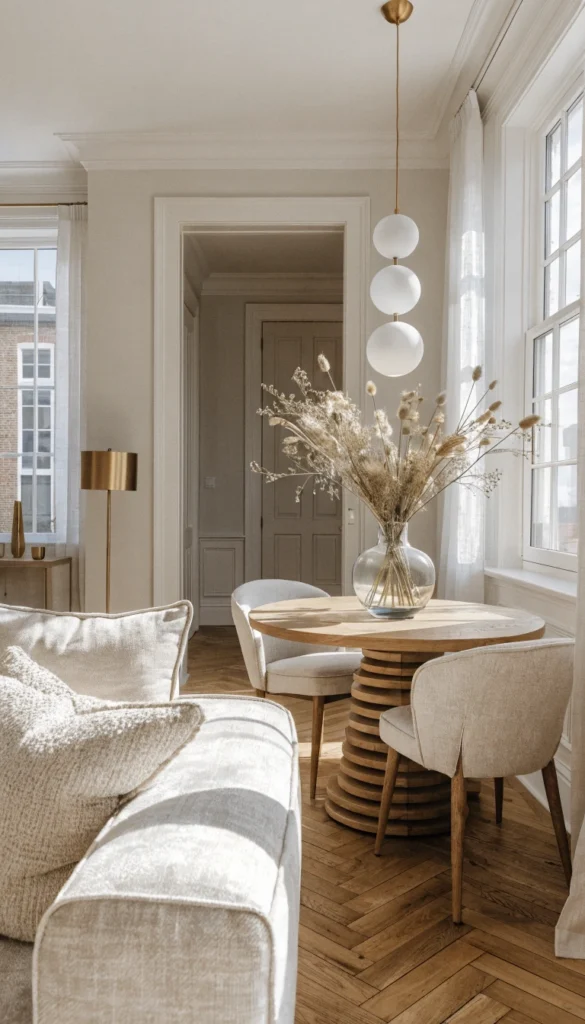
1. Use Light and Neutral Colors
Light colors expand space through reflectance: pale walls bounce daylight into corners that would otherwise fall into shadow, and shadow is what the brain reads as boundary. White, cream, warm beige — anything with high reflectance flattens the contrast gradients that signal “small room.” Dark colors aren’t banned — they’re tools. A single dark accent wall adds depth by reading as distance, the way a dark hallway seems to go on. Just keep darks contained and deliberate; a dark room absorbs light, but a dark accent creates dimension.
2. Choose Multi-Functional Furniture
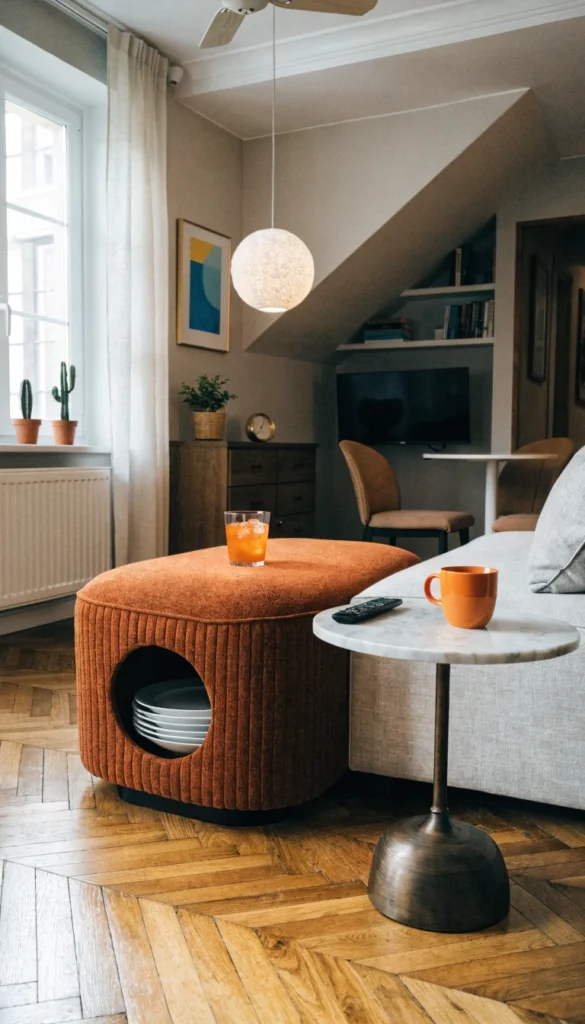
Dual-purpose furniture is spatial efficiency: a storage bed is a bedroom and a closet in one footprint; a drop-leaf table is a desk, a dining table, and (folded) nothing at all. In small apartments, every piece should justify its floor area with at least two functions.
3. Use Mirrors to Reflect Light
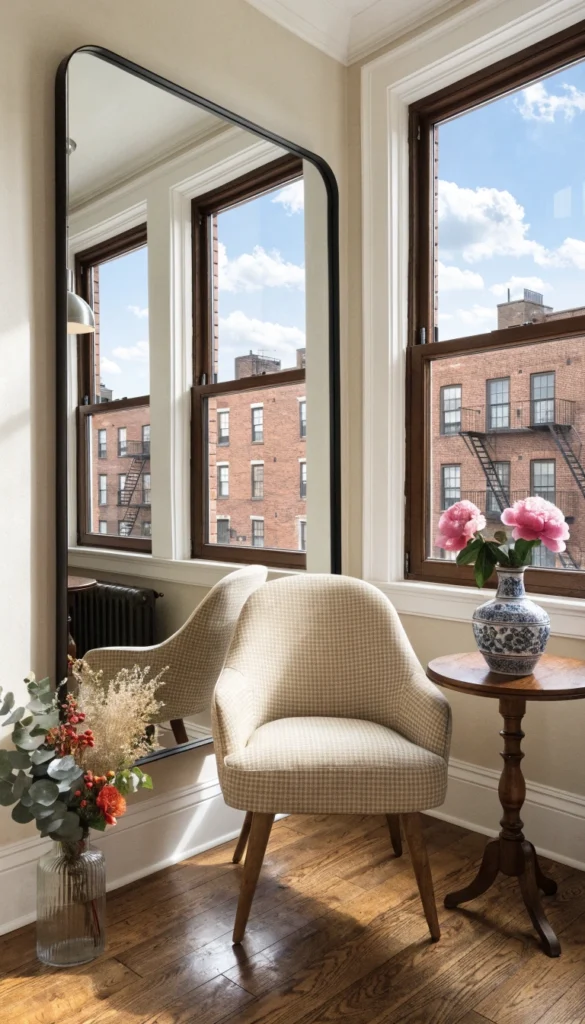
A mirror opposite a window is the oldest spatial trick in the book because it works on two levels: it doubles the perceived light source and extends the sight line straight through the wall. Go big — a small mirror reads as decor, a large one reads as architecture.
4. Keep Furniture Low and Simple
Low-profile furniture manipulates one specific perception: the ratio of furniture height to ceiling height. Lower sofas and beds expose more wall above them, and that uninterrupted vertical wall space reads as height. It’s why a low platform bed makes an 8-foot ceiling feel like 9.
5. Maximize Vertical Space
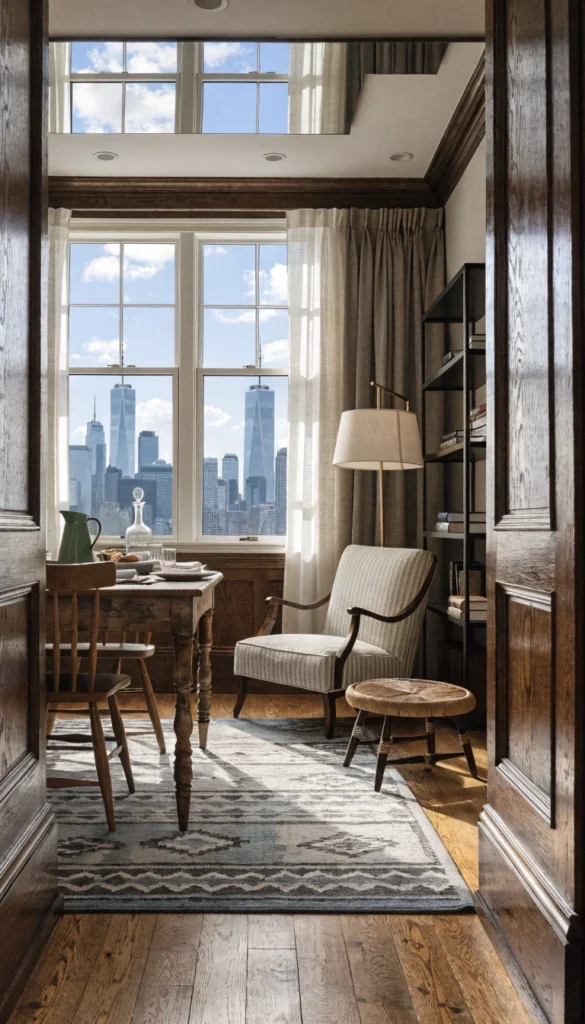
Walls are your highest-ROI square footage. Tall, narrow storage — bookcases, wall-mounted cabinets, pegboard systems — moves belongings off the floor plane where they obstruct movement and sight lines. Keep the floor clear and the room’s circulation (and perceived size) improves immediately.
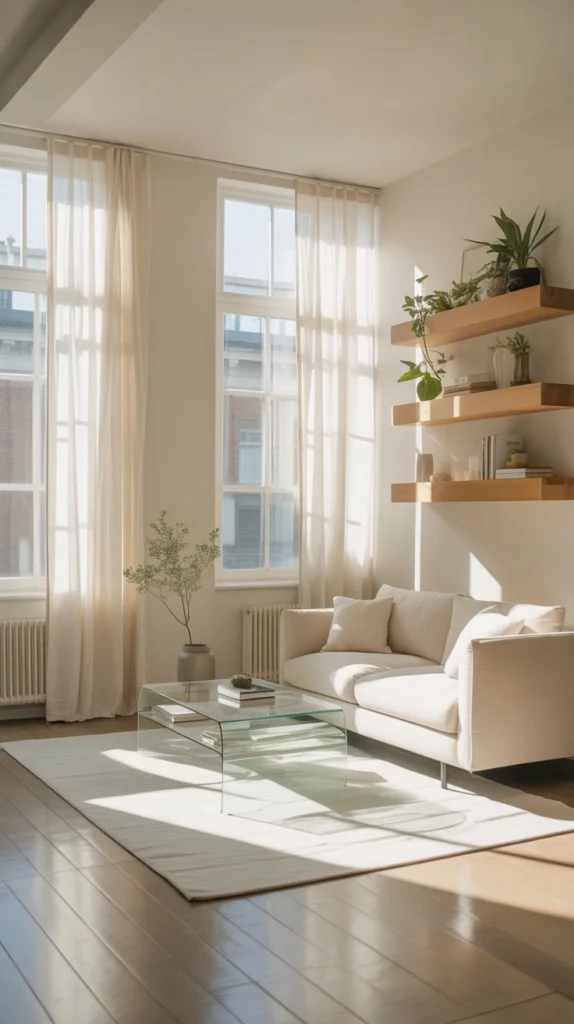
6. Let Natural Light Flow
Daylight is the most powerful spaciousness cue available, and it’s free. The enemy is anything that filters or blocks it: heavy drapes, furniture crowded against windows, grimy glass. Sheers, clean windows, and clear glass perimeters let light penetrate deep — and deep-penetrating light reads as deep space.
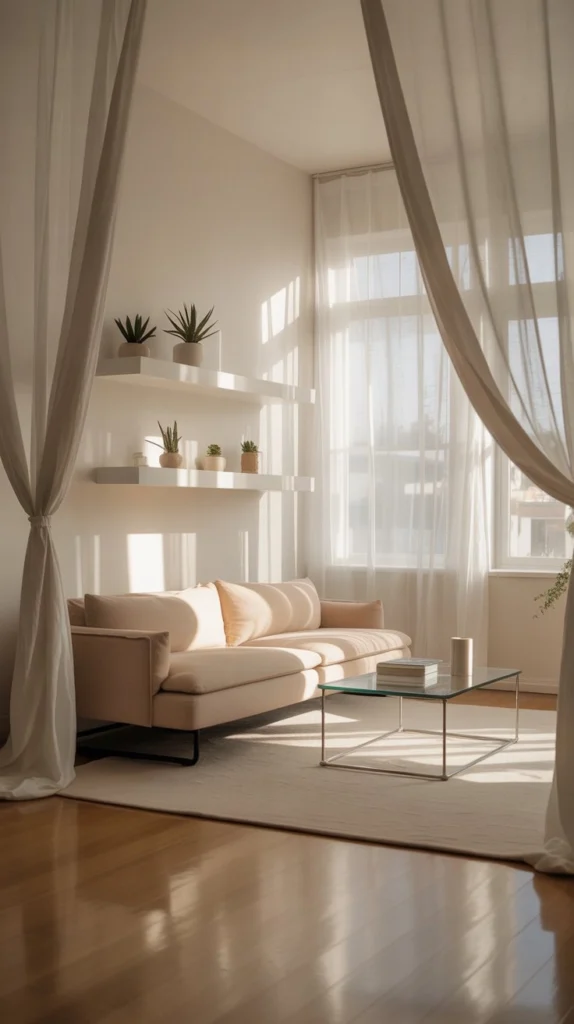
7. Use Rugs to Define Areas
Rugs create rooms without walls by defining visual territories. In a studio, one rug under the seating area and another under the dining spot tells the brain it’s looking at two intentional spaces, not one small one. The rug edges are psychological walls — and psychological walls don’t need square footage.
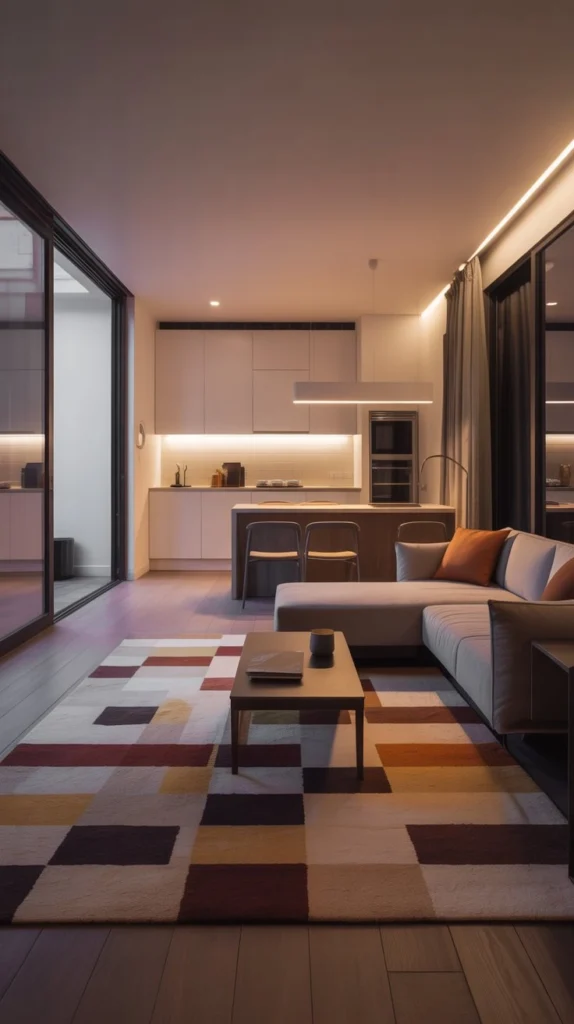
8. Keep Decor Minimal
Every object in a small apartment is either contributing to the composition or competing with it. Curate ruthlessly: keep the pieces with the strongest form or the deepest meaning, and remove everything that’s merely filling space. Negative space isn’t empty — it’s the frame that makes everything else read clearly.
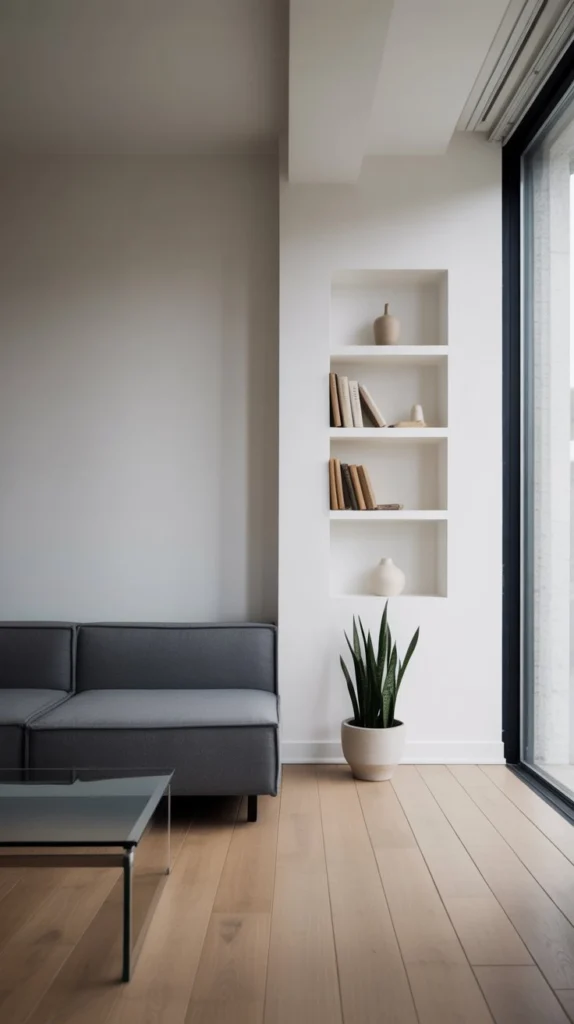
9. Choose Furniture with Legs
Visible floor is perceived floor. Furniture on legs — sofas, beds, consoles — reveals the continuous floor plane beneath, and the brain counts that visible floor as available space. It’s a simple geometric truth: uninterrupted surfaces read larger than interrupted ones.
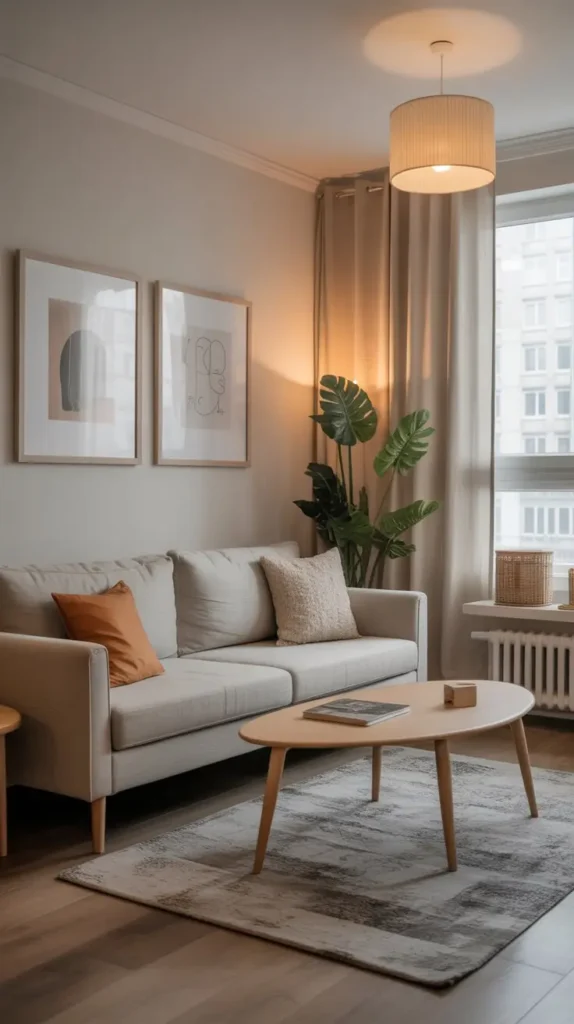
10. Maintain Smart Organization
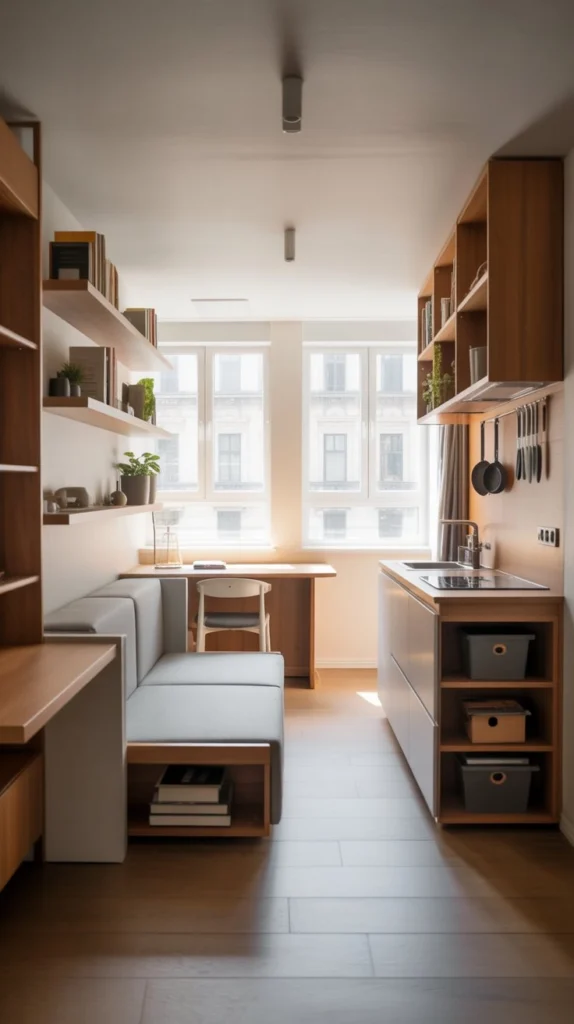
Organization is the maintenance system for all of the above. Hidden storage, consistent containers, and a place for everything keep surfaces clear — and clear surfaces preserve the clean sight lines and light flow that make the whole system work. Ten minutes of daily reset protects the entire investment.
Final Thoughts
None of this requires knocking down walls. Spaciousness is a set of decisions — about light, scale, sight lines, and discipline — that compound into a home that feels twice its size.
Make those decisions deliberately, and your small apartment stops being a limitation. It becomes exactly what good architecture always is: a small space, intelligently used.
Pro Tips
- Protect your longest sight line. Stand at your front door and look toward the farthest window — keep that entire visual corridor clear of tall furniture. It’s the view that defines how big your home feels.
- Match your largest furniture to the architecture. A sofa that aligns with (rather than fights) the room’s proportions looks built-in instead of crammed. When in doubt, go 10% smaller than you think.
- Use one flooring visually. Area rugs aside, keep the base floor consistent throughout — every material change is a visual stop sign. If you rent, large rugs in the same family create the same continuity.
- Light the corners. Dark corners read as dead ends; a small lamp or uplight in each corner pushes the perceived walls outward. It’s the cheapest square footage you’ll ever buy.
FAQs
What’s the cheapest way to make a small apartment look bigger?
Declutter (free), then paint the walls a warm white ($30–$50 for a small room). Those two changes alone transform most apartments. After that, the best value is a large mirror opposite the window ($40–$80) — it doubles your perceived light for the price of a dinner out.
Should I use dark colors anywhere in a small apartment?
Yes, strategically. Dark colors recede, which means a dark accent wall can actually add perceived depth — it reads as “farther away.” Keep darks to one wall or large art pieces, and keep everything else light so the contrast works for you instead of against you.
How do I arrange furniture in a small apartment living room?
Float the seating away from walls (even 3–4 inches creates breathing room), keep sight lines from the door to the window open, and anchor the arrangement with a rug. The biggest mistake is pushing everything against the walls — it actually makes rooms feel smaller.
Can curtains make a small apartment look bigger?
Absolutely — hang them high and wide: rod 4–6 inches above the window frame and 3–4 inches beyond each side, with curtains that just kiss the floor. This makes windows (and the room) look significantly larger. Sheer or light fabrics keep the light flowing.

HowDecor is a home decor blog sharing simple, practical decorating ideas for everyday spaces. We believe a beautiful home should feel comfortable, personal, and full of warmth — and that great style does not require a huge budget. Our goal is to inspire readers to create spaces that feel peaceful, welcoming, and truly their own — one room at a time.