My first apartment after college had beige carpet, a landlord who banned paint, and a decorating budget of roughly two hundred dollars. Six months later, visitors kept asking who my “designer” was. The secret was never money — it was sequence. Budget decorating fails when people buy random cute things; it works when you fix the biggest visual problems first: light, color, and clutter, in that order.
Everything below follows that logic. Each idea costs little, needs no landlord approval, and compounds on the ones before it. Do them in order and a tired rental genuinely starts to look considered.
1. Stick to a Neutral Color Base
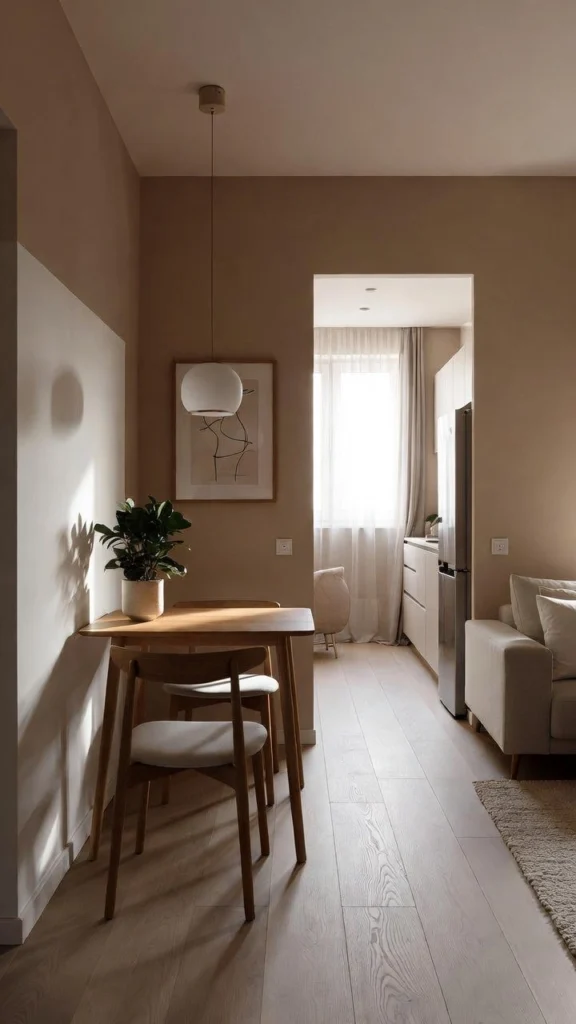
Walk into any room that looks expensive and count the colors. You will rarely find more than three, and the biggest surfaces — walls, sofa, rug — are almost always quiet neutrals: warm white, greige, soft oat, pale gray. That restraint is what reads as “designed.” In a rental you cannot repaint, so you build the neutral base with textiles instead: a light slipcover or throw over a dark sofa, cream curtains, a natural-fiber rug.
The practical payoff is flexibility. A neutral shell lets you swap a forty-dollar accent — cushions, a throw, a vase — and the whole room feels refreshed, because nothing is fighting. One caution: go too cool-gray everywhere and the room feels clinical. Warm up with at least one natural material (wood, jute, linen) so the neutrality feels intentional rather than default.
2. Upgrade with Cushion Covers and Throws
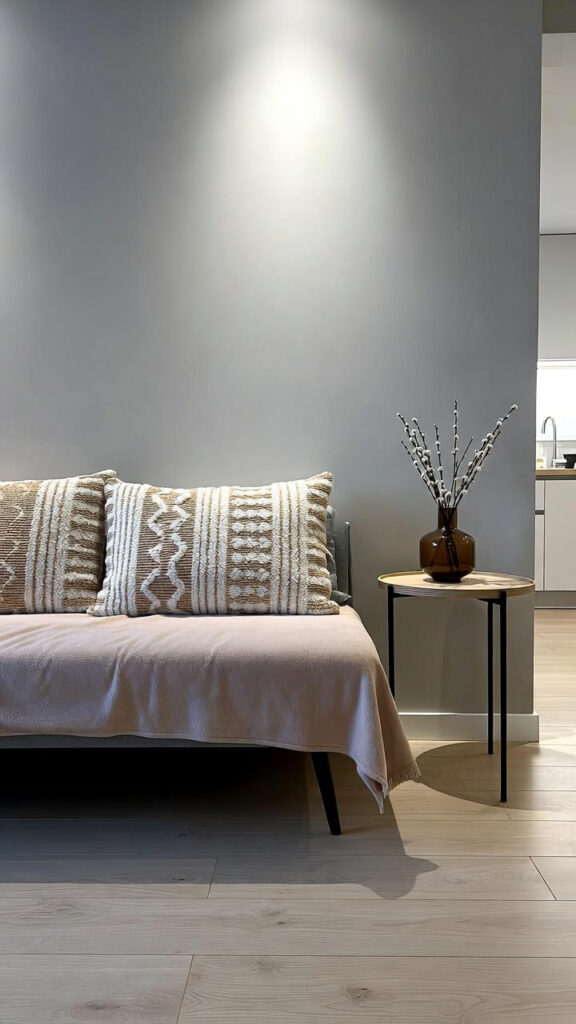
This is the highest return-per-dollar move in decorating. A sofa you hate becomes a sofa you tolerate with four cushion covers (18×18 inches for standard sofas, 20×20 if you like a plumper look) and one textured throw. Buy covers, not new cushions — a decent insert costs little and lasts through many cover changes.
Mix like a stylist: two solid covers in your base neutral, one in a muted accent pulled from your art or rug, and one with texture — chunky knit, washed linen, or a subtle stripe. Drape the throw over one arm or folded across a corner, never spread flat like a bedsheet. Total spend at discount or thrift stores: often under fifty dollars for a full refresh.
3. Use Affordable Wall Art
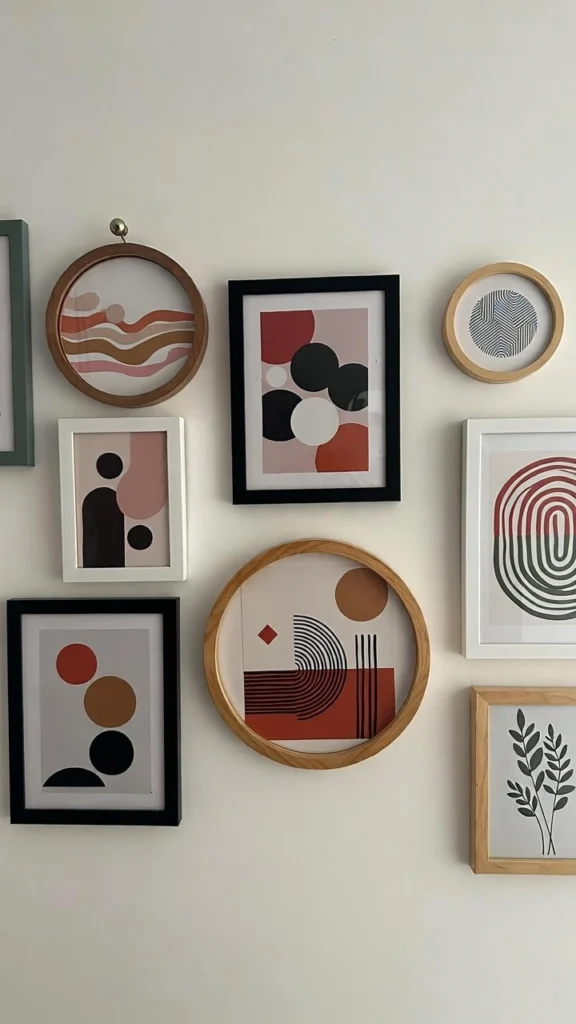
Bare walls are the fastest way a room reads as “temporary.” But gallery-worthy art does not require gallery prices. High-resolution printable art costs a few dollars per file; get them printed as 11×17 or 16×20 engineering prints at a local copy shop and frame them in simple black or oak frames. A set of three matching frames hung in a row above a console or sofa creates a focal point for under sixty dollars.
Scale is the common mistake: one tiny frame floating on a big wall looks apologetic. As a rule, art should span roughly two-thirds the width of the furniture beneath it. Hang the center of the piece at about 57 inches from the floor — gallery height — and your walls will look deliberate. Choose simple designs that match your color theme.
4. Add Mirrors to Create Space
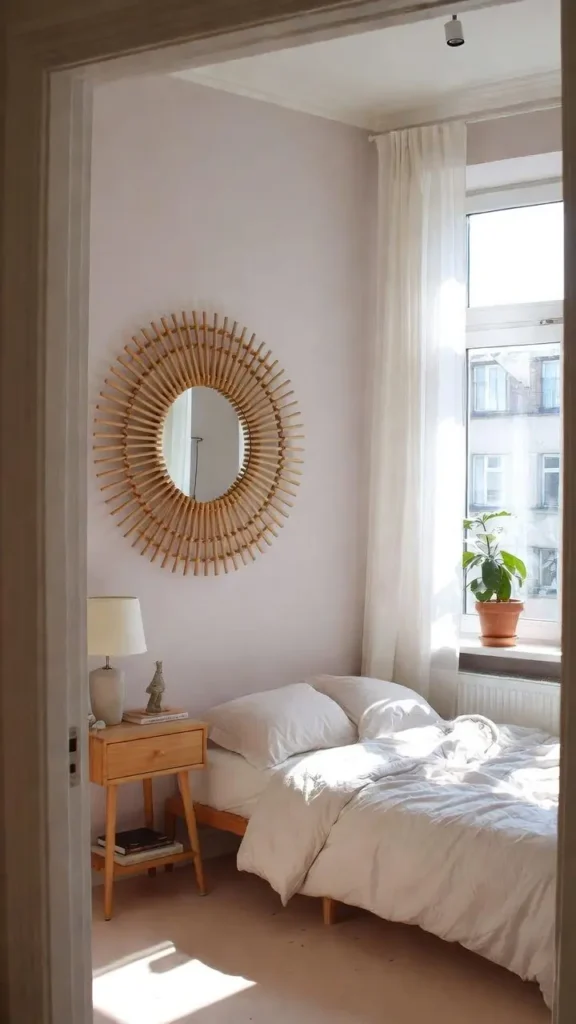
A mirror is the only decor item that literally adds square footage to how a room feels. Place a large mirror opposite or adjacent to a window and it bounces daylight deep into the room, doubling the effect of your best light source. In a narrow hallway or galley kitchen, a long mirror makes the corridor feel twice as wide.
Thrift stores are full of solid-wood-framed mirrors for a fraction of retail — check the back for warping and make sure the hanging wire is intact. If you are nervous about hanging a heavy piece in a rental, lean a full-length mirror against the wall at a slight angle; it looks relaxed and modern, and costs you zero holes. Round mirrors soften boxy rooms; rectangular ones add height.
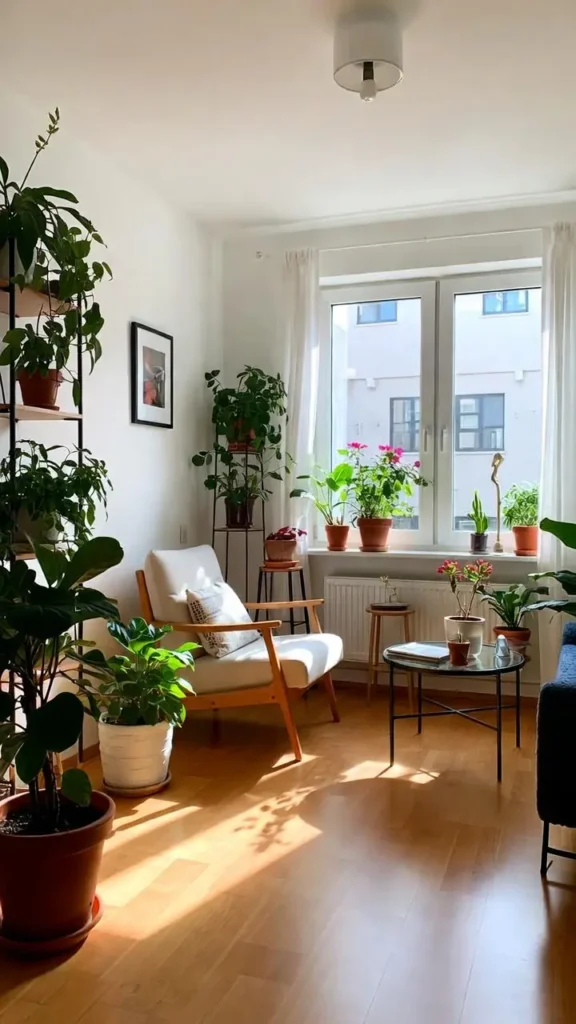
5. Bring Life with Indoor Plants
Nothing animates a neutral room faster than something green and alive. Plants add a color that never clashes, a shape that breaks up all the rectangles, and a sense of care that makes a space feel inhabited. If you have killed plants before, start with the forgiving ones: snake plant, pothos, and ZZ plant survive low light and irregular watering.
Group in odd numbers — three plants of different heights on a side table or windowsill look styled; one lonely succulent looks like an afterthought. Use simple pots in one material (terracotta, matte ceramic, or woven baskets) so the greenery, not the containers, does the talking. A ten-dollar pothos in a nice basket routinely looks like a fifty-dollar styling decision.
6. Improve Lighting Instead of Furniture
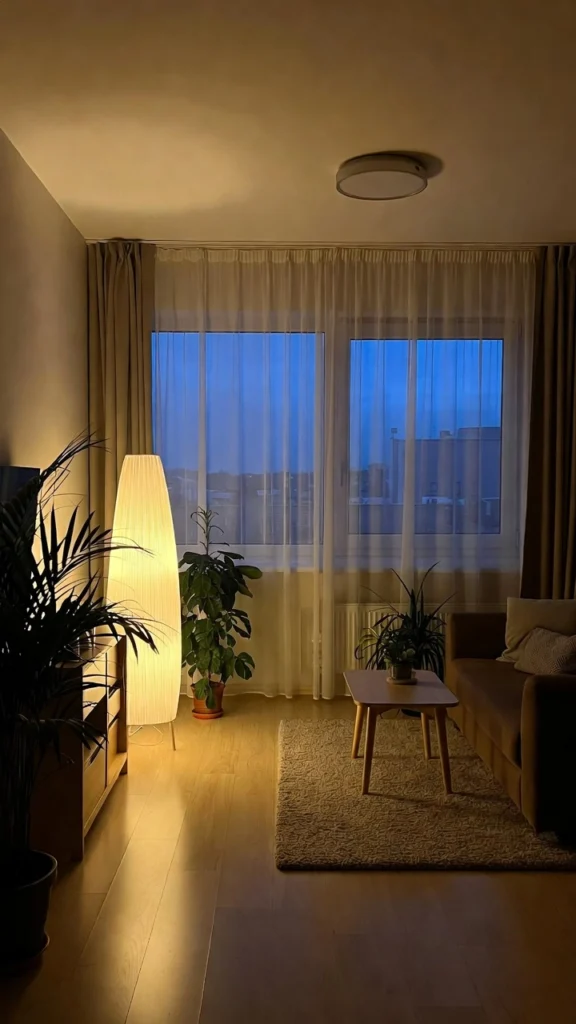
Here is an uncomfortable truth: most “ugly rooms” are badly lit rooms. A single overhead ceiling light flattens everything and casts harsh shadows. The fix is layering: one ambient source (floor lamp or table lamp with a warm 2700K bulb), one task source (a reading light or desk lamp), and one accent (string lights, a candle cluster, or an LED strip behind a shelf).
Warm light — 2700K, not the bluish 5000K “daylight” bulbs sold for offices — is what makes skin, wood, and textiles look good in the evening. A paper floor lantern or a linen-shade table lamp from a discount store, plus three warm bulbs, often totals under forty dollars and changes the room’s mood more than a new coffee table would.
7. Use Multi-Purpose Furniture
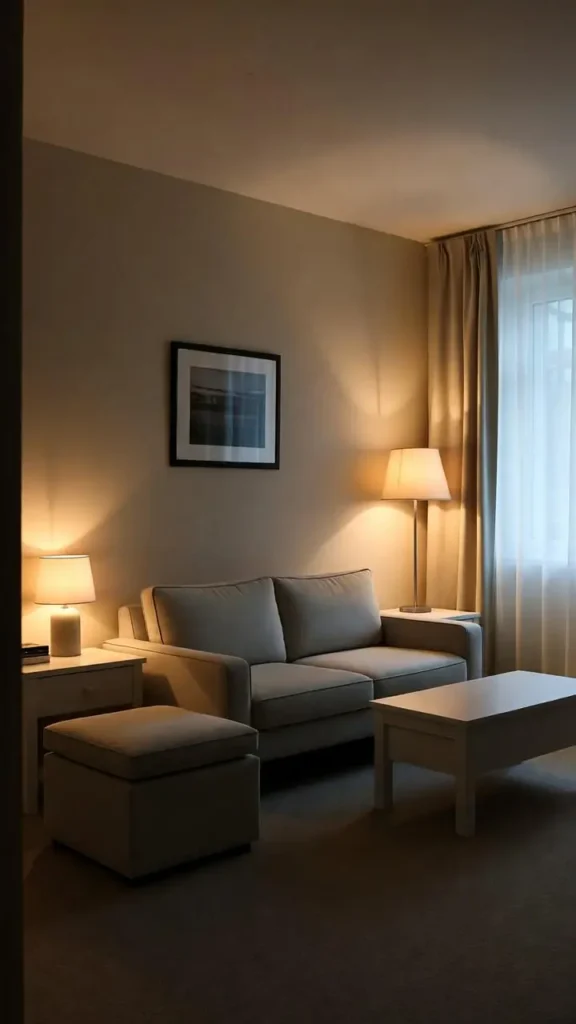
In a small apartment, every piece should earn its footprint twice. A storage ottoman is a footrest, extra seating, and a hiding place for blankets. A nesting side table tucks away when you need floor space. A daybed or futon in the living room doubles as a guest bed without a dedicated guest room.
Measure before you buy — literally tape the footprint on the floor with painter’s tape and live with it for a day. The most common small-space mistake is a piece that is two inches too deep for the walkway it blocks. Leave at least 30 inches for main paths and 18 inches between a coffee table and the sofa edge; rooms feel cramped when those clearances shrink.
8. Layer Rugs for Comfort
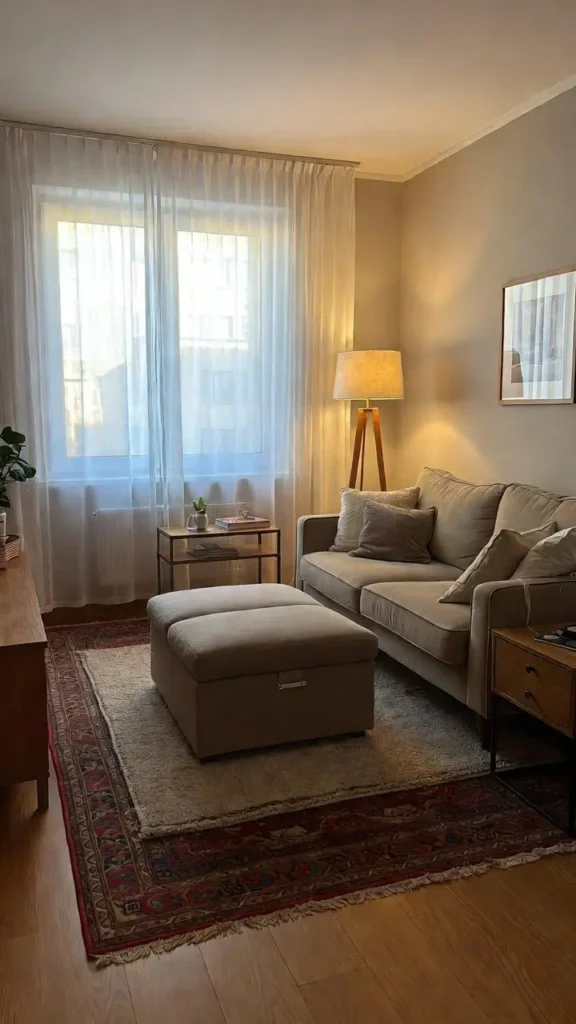
Bare floors make even furnished rooms feel unfinished. A rug anchors the seating area, quiets echo, and adds the texture layer that flat rooms lack. The trick for rentals with wall-to-wall beige carpet: layer a flat-weave or low-pile rug over it. The contrast in texture looks deliberate and defines your zone within an open floor plan.
Size matters more than pattern. A rug that is too small — the classic “postage stamp” under a coffee table — makes the room feel smaller. Aim for the front legs of the sofa and chairs to sit on the rug; in a living room that usually means 5×8 feet minimum, 8×10 if the space allows. Jute, cotton dhurries, and low-pile synthetics give the look for far less than wool.
9. Create a Small Decor Corner
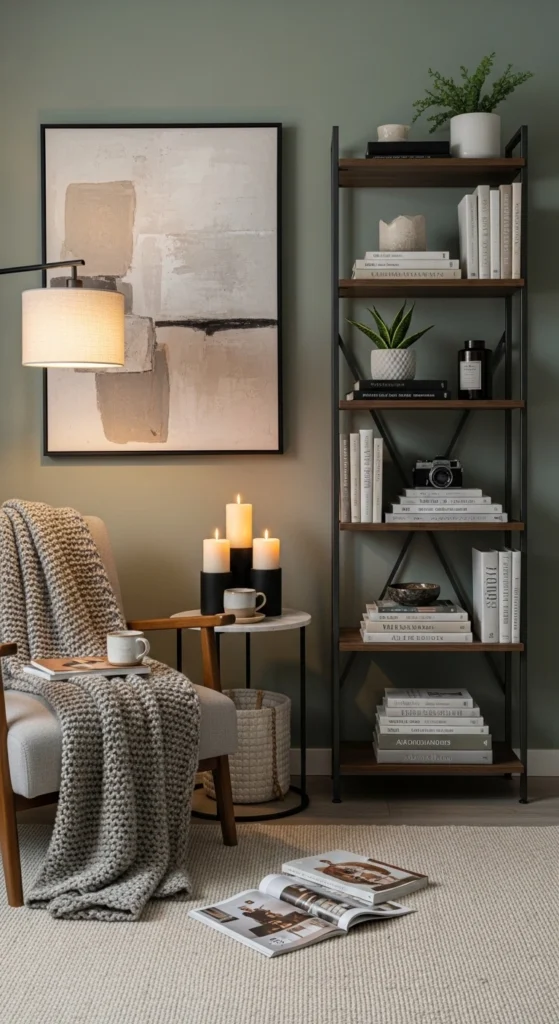
You do not need to style the whole apartment at once. Pick one corner — a side table, a bookshelf top, a windowsill — and make it genuinely beautiful: a stack of two or three books, a small plant or vase, a candle, and one personal object. This “vignette” becomes the visual anchor that makes the rest of the room feel intentional by association.
The stylist’s formula is simple: vary heights (tall, medium, low), stick to three to five objects, and leave breathing room. Edit ruthlessly — remove one item and see if the arrangement improves. A single well-styled corner photographs beautifully and gives guests somewhere for their eyes to land.
10. Keep the Space Clean and Minimal
The cheapest luxury is empty surface. Clutter is visual noise, and no amount of decor survives it. Before buying anything new, do a ruthless pass: if an object has no function and no meaning to you, it is making your home look cheaper. Clear every surface, then put back only what earns its place.
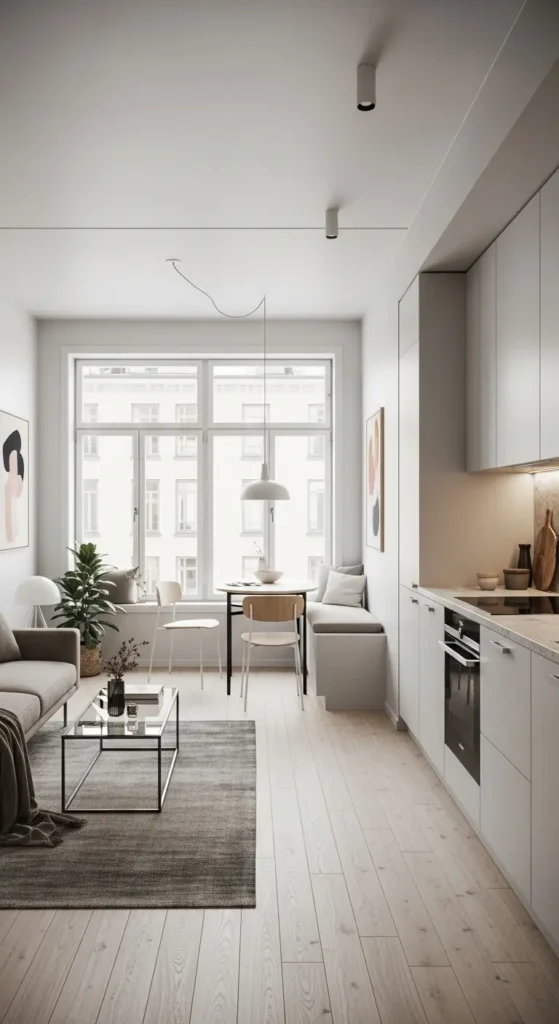
Maintenance beats marathons. A ten-minute nightly reset — cushions fluffed, throws folded, dishes cleared, one quick surface wipe — keeps the apartment at a baseline that always looks styled. Minimal does not mean empty; it means every visible thing was chosen. That discipline reads as expensive because it is rare.
Final Thoughts
A stylish apartment is not a shopping list — it is a sequence of good decisions. Start with light and a calm color base, add texture through textiles, give the walls something to say, and keep the whole thing edited. None of these ten ideas requires permission, a big budget, or a design degree. They require attention, which is the one thing money cannot buy and the one thing every beautiful room has in common.
Pro Tips
- Shop your home first: before buying, move existing pieces between rooms. A bedroom lamp often transforms a living room corner for free.
- Set a per-room budget cap: decide the number before you shop — constraints force creativity and prevent the slow bleed of “just one more thing.”
- Photograph the room: a phone photo reveals clutter and imbalance your eyes have learned to ignore. Style to the photo, not the mirror.
- Buy the boring version first: get the right size and neutral color before the fun pattern. Basics carry the room; accents are garnish.
FAQs
How much should I budget to decorate a small apartment stylishly?
You can make a real difference with $150–$300 if you spend in the right order: lighting and textiles first, art second, accessories last. Thrift stores and discount retailers stretch that budget surprisingly far.
My landlord won’t let me paint. What can I do about ugly walls?
Build color with removable elements: large art, curtains hung high and wide, tapestries, and peel-and-stick wallpaper on a single accent wall. All of it comes down cleanly when you move.
What is the single fastest way to make a rental look better?
Fix the lighting. Swap cool-white bulbs for warm 2700K ones and add one floor or table lamp. It takes twenty minutes and changes how every other thing in the room looks.
How do I keep a small apartment from looking cluttered?
Give everything a home, keep surfaces 70% clear, and do a ten-minute nightly reset. Small spaces look styled when every visible object was deliberately chosen.

HowDecor is a home decor blog sharing simple, practical decorating ideas for everyday spaces. We believe a beautiful home should feel comfortable, personal, and full of warmth — and that great style does not require a huge budget. Our goal is to inspire readers to create spaces that feel peaceful, welcoming, and truly their own — one room at a time.