Here is what nobody tells you about living rooms: they are the only room guests judge, the room you actually live in, and — if you are in an apartment — usually the first thing you see when you walk in the door. No pressure, right? The good news is that living rooms respond to small changes faster than any other room, because one sofa, one rug, and one wall of light do most of the visual work.
Think of the ten ideas below as a weekend project list, ordered by impact. Start at the top and stop whenever the room feels done — most people never need all ten.
1. Use Light and Neutral Colors
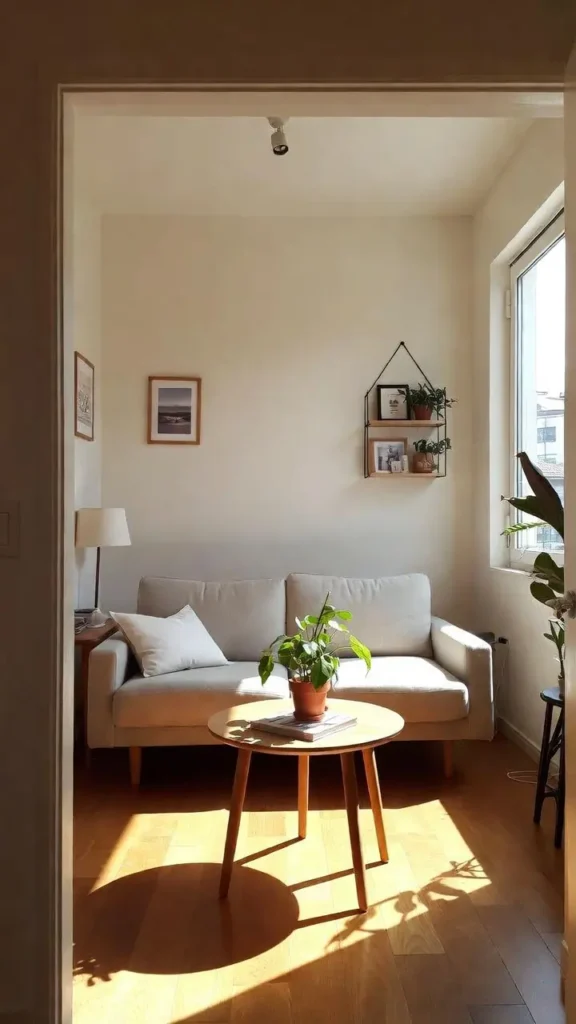
Dark walls and heavy fabrics shrink a living room visually; light ones push the walls back. You do not need white-everything — warm beige, soft greige, pale sage, and warm whites all read as light without feeling sterile. The key is keeping the largest pieces (sofa, rug, curtains) in the same light family so the eye glides instead of stopping.
If your sofa is dark and unchangeable, lighten around it: cream throw, light cushions, a pale rug under the front legs. Contrast is fine — a dark sofa on a light rug looks grounded and intentional. What you want to avoid is dark-on-dark, which swallows light and makes even a decent-sized room feel like a cave by 6 p.m.
2. Rearrange Furniture for Better Space
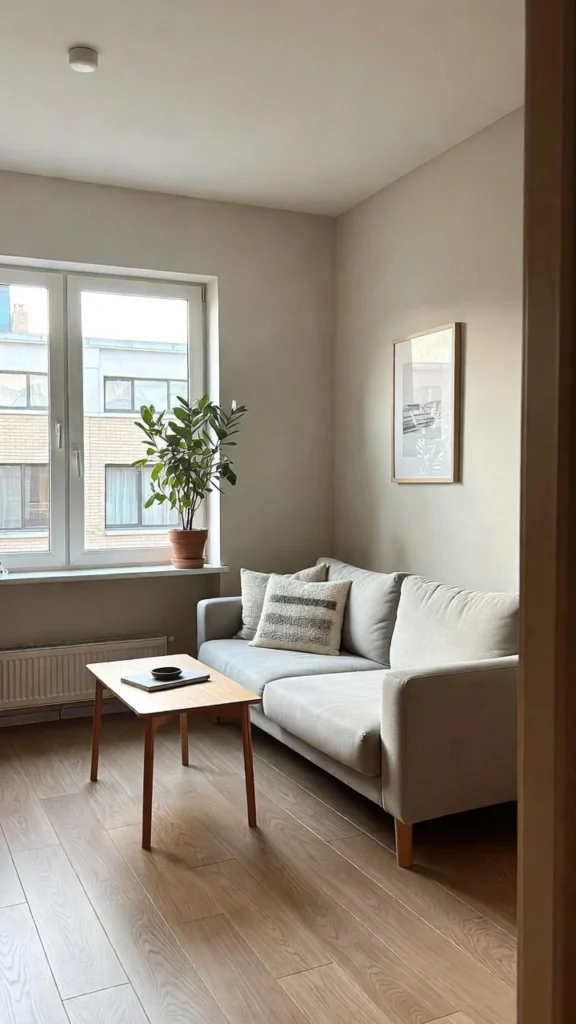
Before spending a single dollar, try the free makeover: pull furniture off the walls. It sounds wrong in a small room, but floating the sofa even six inches from the wall creates a shadow line that reads as depth, and angling a chair slightly makes the layout feel designed rather than default.
Walk your traffic paths after rearranging. You want a clear lane of about 30 inches from the door to the seating area, and nobody should have to sidestep a coffee table to sit down. The most common apartment mistake is pushing everything to the perimeter, which leaves a dead empty middle — bring pieces inward and the room suddenly has a center.
3. Add Affordable Throw Pillows
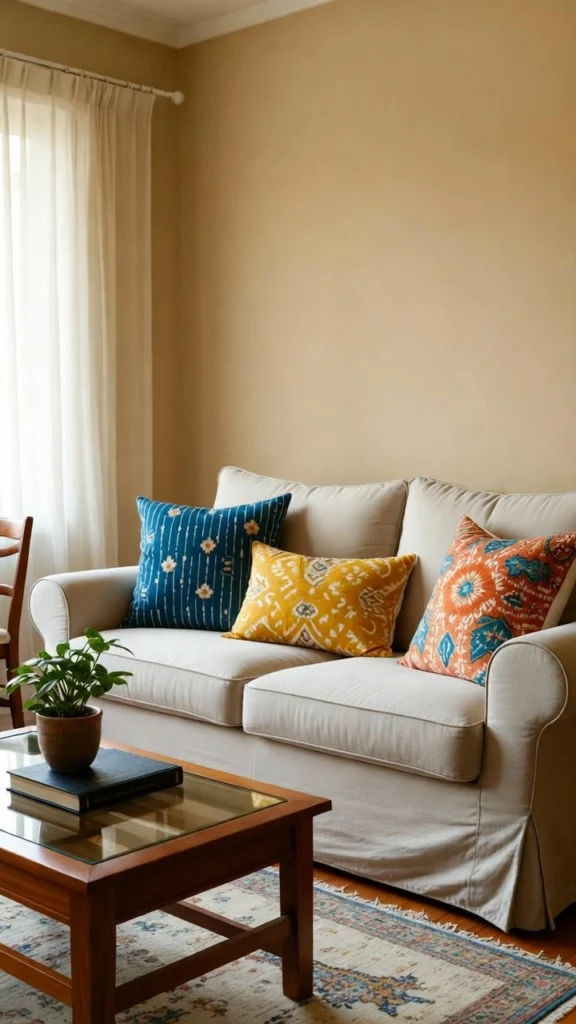
Cushion covers are the living room’s cheat code. For a standard three-seat sofa, five cushions is the sweet spot: two 20-inch squares at the back corners, two 18-inch in front of them, and one lumbar pillow in the center. Buy covers, keep your existing inserts, and you have a new sofa look for the price of a takeout dinner.
The mix matters more than the price tag. Pair a solid neutral with something textural — boucle, chunky knit, washed linen — and one quiet pattern like a thin stripe or small-scale geometric. Avoid buying a matched set of four identical pillows; that is what makes sofas look like furniture showrooms instead of homes.
4. Use Wall Art or Printable Decor
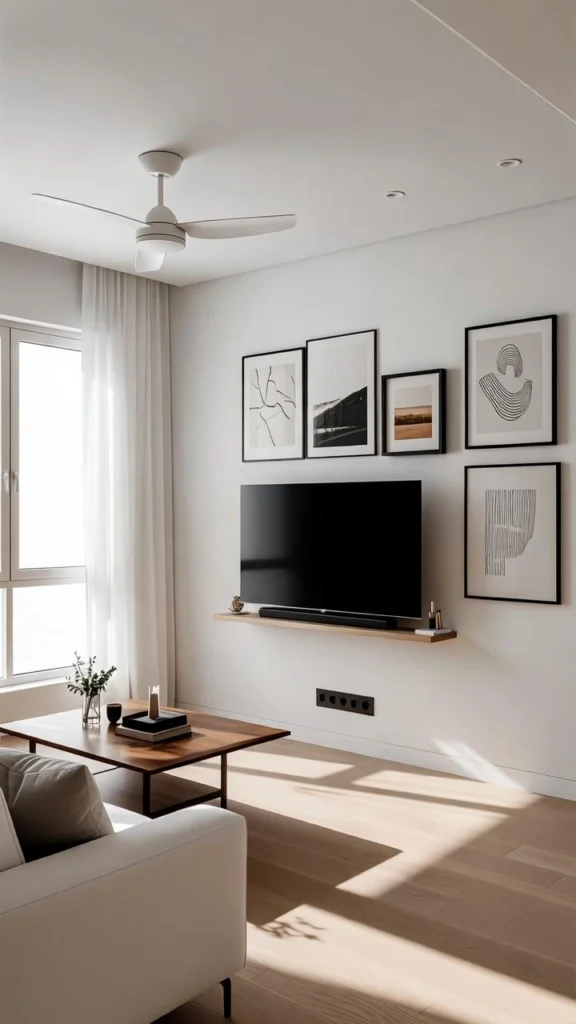
A living room with bare walls always looks half-moved-in, no matter how nice the furniture is. Printable art has quietly become the budget decorator’s best friend: a five-dollar digital file, a twenty-dollar large-format print from a copy shop, and a simple frame gives you a 24×36 statement piece for less than a restaurant meal.
Hang art at eye level — the center of the piece around 57 to 60 inches from the floor — and size it to the furniture, not the wall. Above a sofa, the art should be about two-thirds the sofa’s width. One large piece almost always looks better than four small scattered ones, which read as visual clutter from across the room.
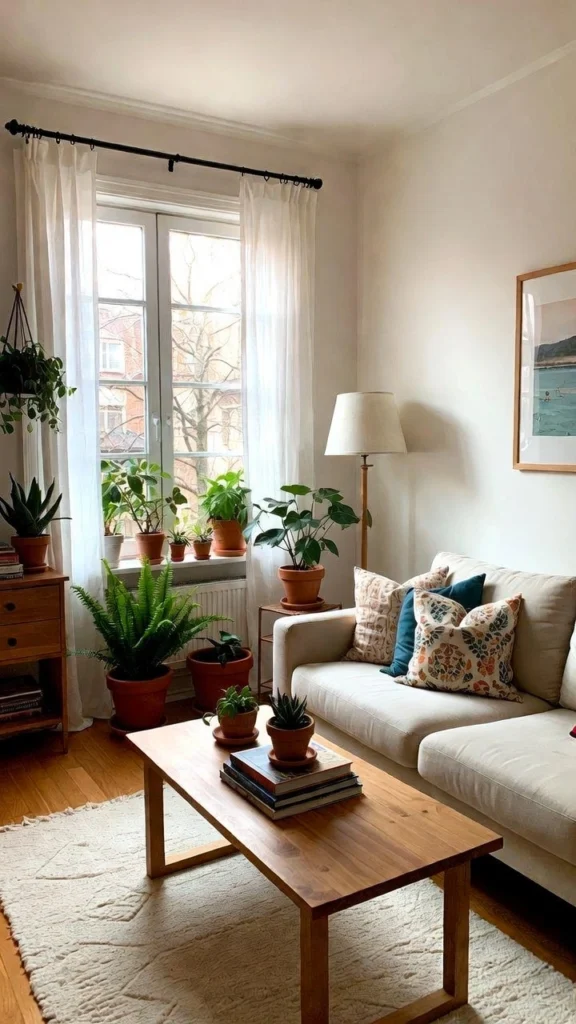
5. Bring in Indoor Plants
Plants do something no throw pillow can: they are alive, and rooms with living things in them feel cared for. In a living room, go for one statement plant rather than a crowd of tiny ones — a 3- to 4-foot fiddle-leaf fig, olive tree, or bird of paradise in a woven basket instantly gives the corner purpose.
Low light? A snake plant or ZZ plant tolerates neglect and dim corners. Small plants work best grouped in threes on a side table or shelf, where their combined mass reads as one intentional arrangement. Watering tip: most houseplants die from overwatering, not underwatering — when in doubt, wait a day.
6. Layer Rugs for Warmth
A rug is what turns “furniture in a room” into “a living room.” It defines the seating zone, softens hard floors, and adds the color and pattern that bare floors withhold. In rentals with existing carpet, layer a flat-weave rug on top — the texture contrast looks deliberate and high-end.
Get the size right or skip it: a too-small rug is worse than none. Front legs of all seating should rest on the rug, which usually means 8×10 feet for a standard living room, 5×8 at minimum. If a big rug is out of budget, layer two smaller affordable rugs side by side — the seam disappears under the coffee table.
7. Improve Lighting on a Budget
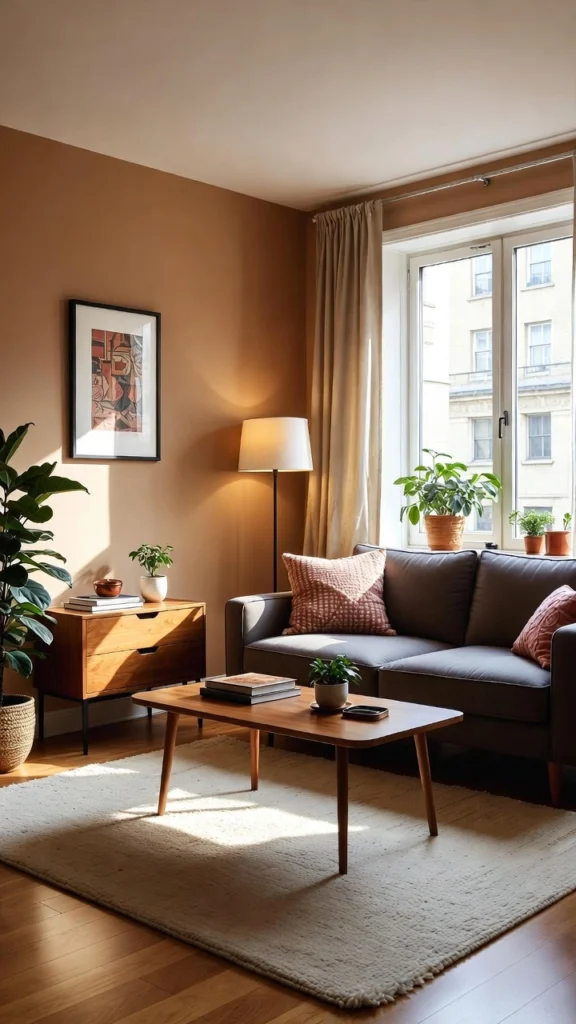
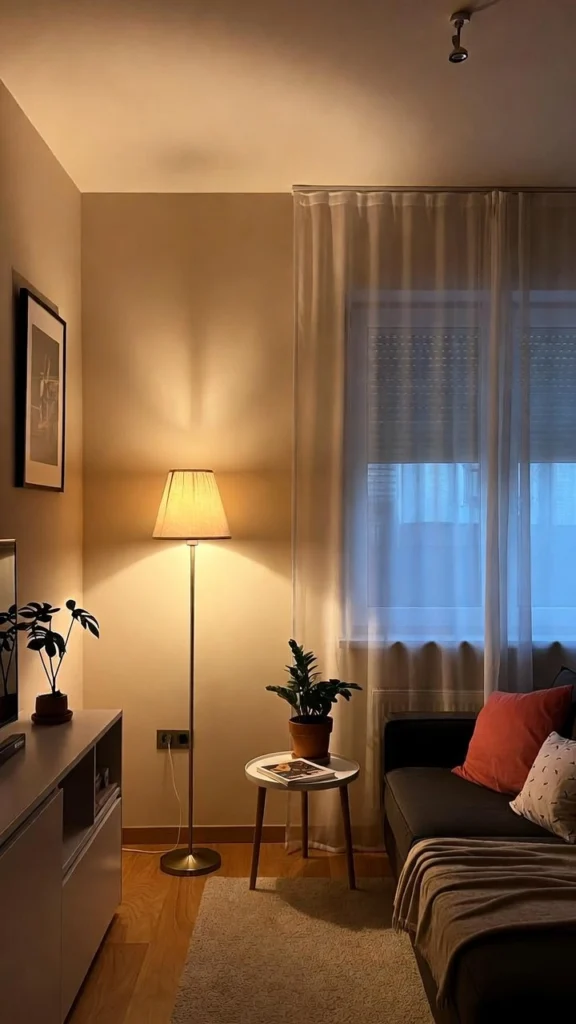
Overhead lighting is the enemy of cozy. A living room needs at least three light sources at different heights: a floor lamp arcing over the reading chair, a table lamp on the console, and something low and warm — candles, fairy lights, or an LED strip behind the TV console — for evenings.
Bulb temperature is the whole game: 2700K warm white flatters skin and wood; anything labeled “daylight” (5000K+) makes a living room feel like a dentist’s office. Smart bulbs that dim from an app cost little now and let you drop the room from “working” brightness to “movie night” glow without getting up.
8. Use Multi-Functional Furniture
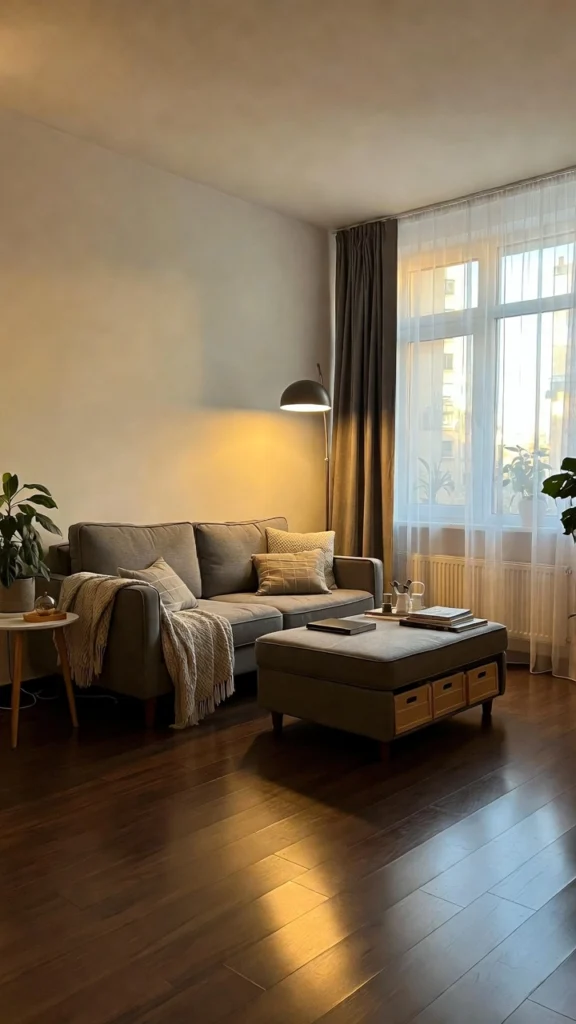
Apartment living rooms work hardest when furniture multitasks. A storage ottoman is a coffee table, footrest, and blanket hiding spot in one. A console table behind the sofa adds display space and doubles as a room divider in open plans. A daybed-style sofa hosts overnight guests without a guest room.
The trap is buying multi-functional pieces that do everything badly. Sit on the sleeper sofa before you buy it. Open and close the storage ottoman in the store. A piece earns its place only if its primary job — the thing you will do daily — is genuinely comfortable.
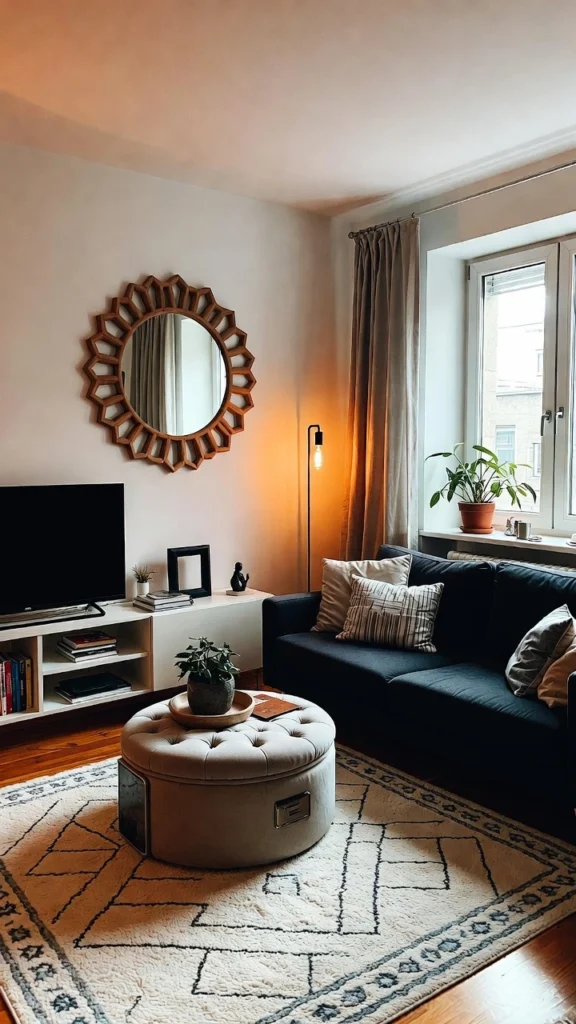
9. Decorate with Mirrors
A mirror across from a window is the closest thing to a free second window. It throws daylight into the room’s darker half and makes the space feel wider than its measurements. In a living room, one large mirror beats three small decorative ones — scale is what creates the illusion.
Lean a full-length mirror against the wall beside a bookshelf or console for a relaxed, modern look that needs no drilling. Round mirrors soften rooms full of rectangles; an arched mirror adds architecture to a plain rental wall. Check thrift stores first — heavy, well-made mirrors with solid frames turn up constantly for a tenth of retail.
10. Keep Decor Minimal and Organized
Here is the paradox of budget decorating: the less stuff visible, the more expensive the room looks. Every surface should pass the test — does this object earn its place? Remotes live in a tray or drawer, throws get folded when not in use, and the coffee table holds three to five intentional objects, not a drift of mail and mugs.
Hidden storage is what makes minimalism sustainable: lidded baskets for the throw blankets, a lidded box for remotes and chargers, one drawer that is allowed to be messy so the surfaces do not have to be. Minimal is not a personality — it is a maintenance system, and it is free.
Final Thoughts
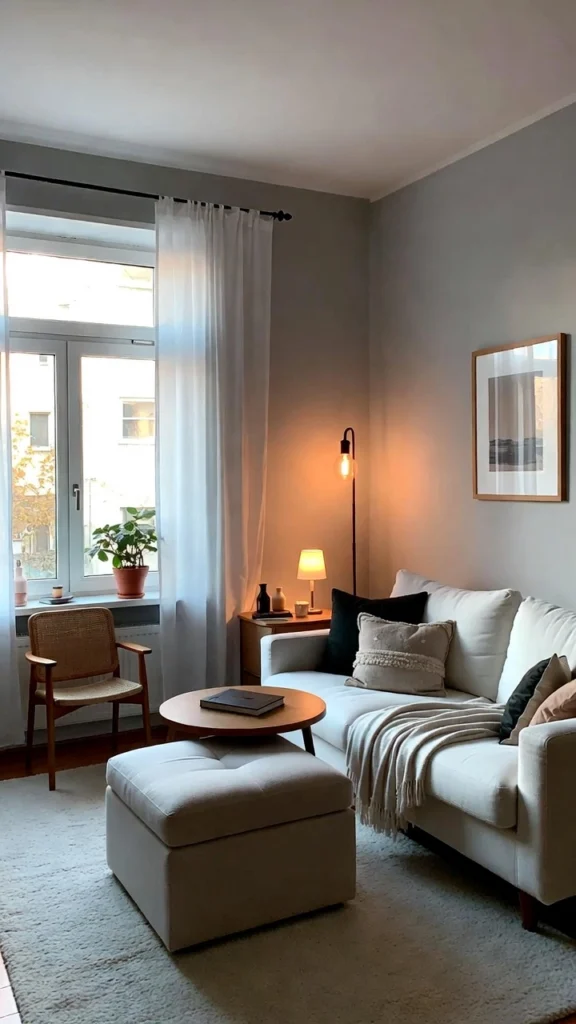
A great living room is not the most expensive one — it is the one where every choice serves the life lived in it. Light colors open the space, layered light sets the mood, textiles add the warmth, and editing keeps it all honest. Work through these ten ideas in order, stop when the room feels like you, and put the money you saved toward something you will actually enjoy — like the view from that well-placed chair.
Pro Tips
- Style the coffee table in thirds: one stack of books, one living thing (plant or flowers), one personal object. Three groups, varying heights — done.
- Hang curtains high and wide: mount the rod 4–6 inches above the frame and extend it 6–10 inches past each side. Windows instantly look bigger.
- Keep one “landing zone”: a tray by the door for keys and mail stops clutter from migrating to every surface.
- Dim everything after 8 p.m.: lower light levels make small rooms feel intimate instead of cramped.
FAQs
How can I make my small living room look bigger on a budget?
Light colors, one large mirror opposite the window, furniture pulled slightly off the walls, and a properly sized rug. Together these cost little and can make a 12×14 room feel noticeably larger.
What is the cheapest way to refresh a tired sofa?
New cushion covers and a throw — usually under $50 total. Five cushions in a mixed set (two solids, two textured, one patterned lumbar) make even a dated sofa look styled.
How many light sources does a living room need?
At least three at different heights: ambient (floor lamp), task (table or reading lamp), and accent (candles or LED strip). Warm 2700K bulbs throughout.
My living room has no overhead light. What should I do?
That is actually a gift — overheads are harsh anyway. Use a tall arc or tripod floor lamp for general light, plus table lamps on consoles. Plug them into one smart plug and control the whole room from your phone.

HowDecor is a home decor blog sharing simple, practical decorating ideas for everyday spaces. We believe a beautiful home should feel comfortable, personal, and full of warmth — and that great style does not require a huge budget. Our goal is to inspire readers to create spaces that feel peaceful, welcoming, and truly their own — one room at a time.