Modern contemporary is the style for people who find minimalism cold and traditional fussy. It keeps modernism’s clean lines and open space, then warms them up with texture, curves, and a few things you actually love. The result is a living room that looks current without looking like a furniture catalog — tailored, but lived in.
The discipline of the style is subtraction with intent: every piece should be beautiful or useful, preferably both. These ten ideas build that room layer by layer.
1. Build a Neutral Foundation
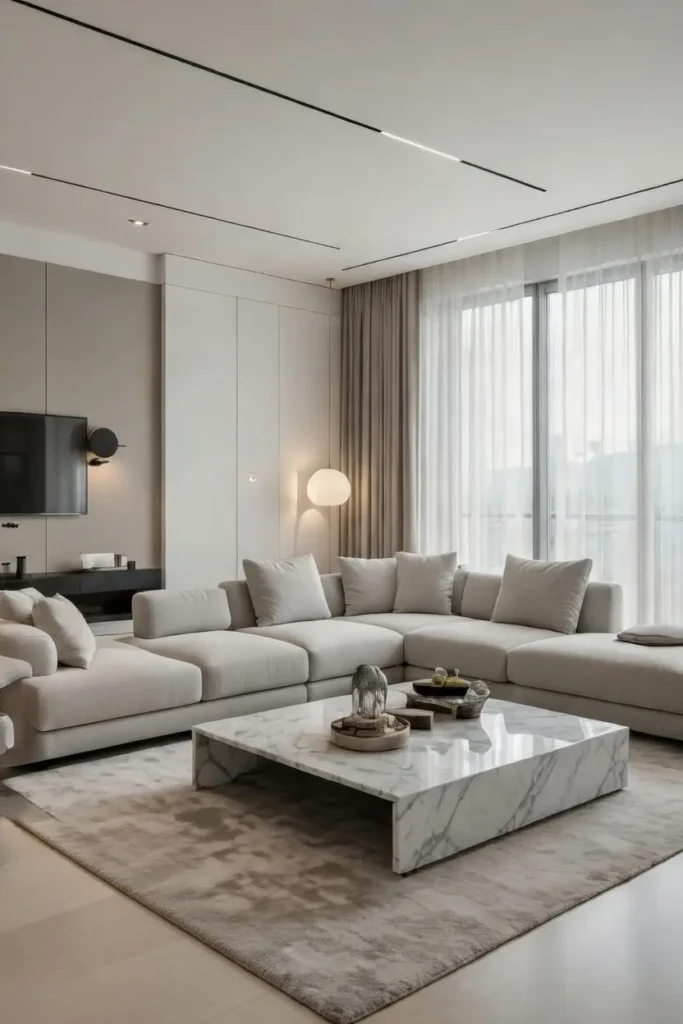
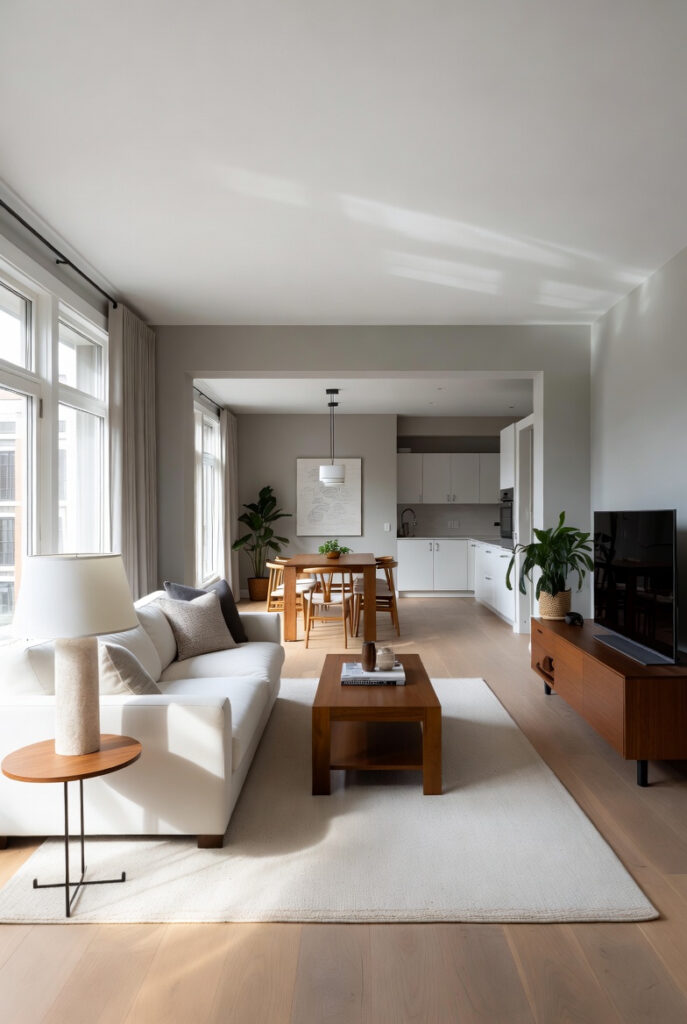
Contemporary rooms start quiet. Walls in warm white, greige, or pale stone; floors in light wood or a natural low-pile rug; the big upholstery in oatmeal, taupe, or soft gray. This is not boring — it is strategic. A calm foundation makes the few bold choices you do make read ten times louder.
Choose warm-leaning neutrals over cool ones. Contemporary design’s reputation for sterility comes almost entirely from blue-gray walls under cool lighting. Warm white walls (think Benjamin Moore’s White Dove family, not stark blue-white) with 2700K lighting underneath keeps the neutrality feeling like sunlight rather than a laboratory.
2. Introduce Bold Accent Colors
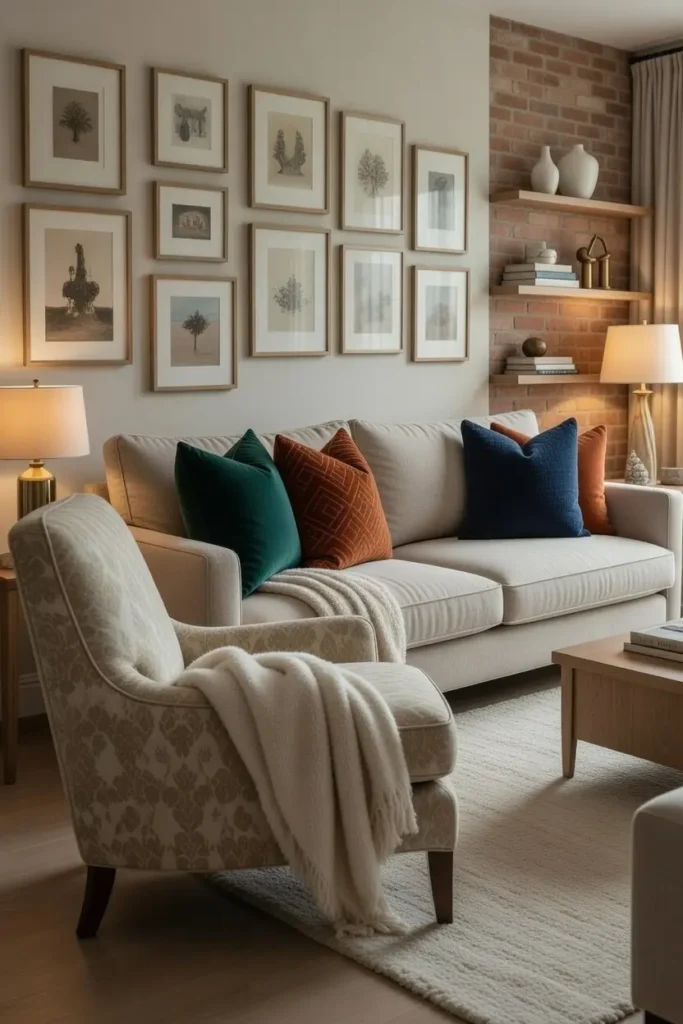
Against that quiet base, one saturated color becomes jewelry. Deep emerald, burnt sienna, ochre, or inky navy — pick one and repeat it three times in the room (cushions, a throw, one art piece) so it reads as a decision rather than an accident. The 60-30-10 rule applies: 60% neutral, 30% secondary tone, 10% bold accent.
Restraint is the whole game. Two bold colors compete; one commands. If you are nervous, start with the accent in easily swapped items — cushion covers and a throw — and live with it for a month before committing to anything permanent like an accent chair.
3. Choose Furniture with Soft Curves
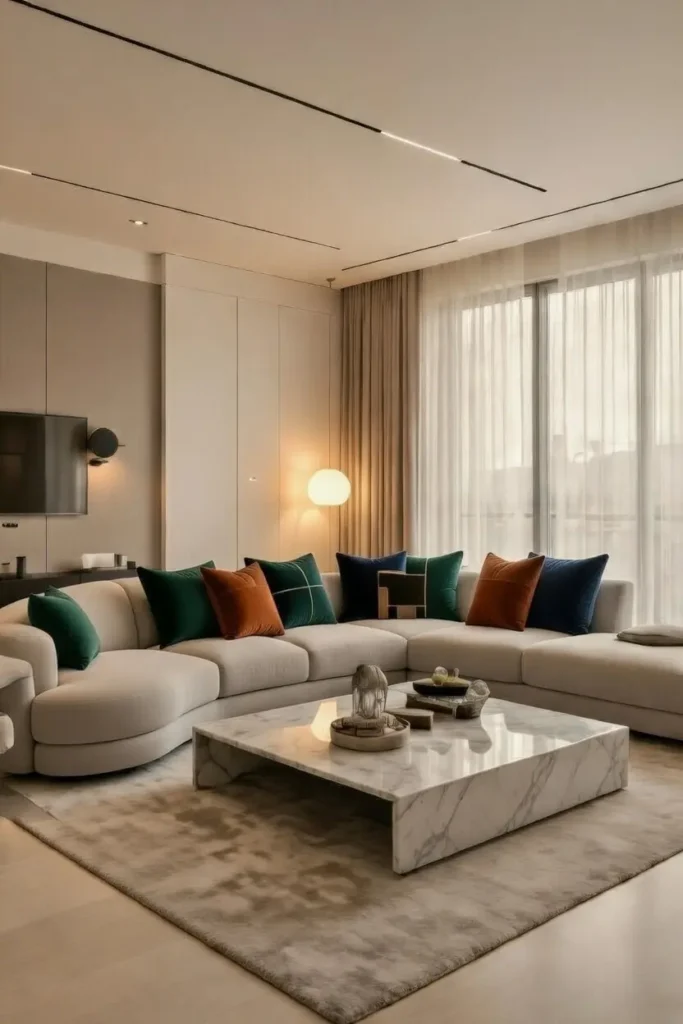
Contemporary design has moved decisively away from the razor-sharp boxes of early modernism. Curved sofas, rounded armchairs, arched floor lamps, and oval coffee tables soften a room’s geometry and — not coincidentally — are more comfortable to actually live with. A curved back cradles; a sharp corner just sits there.
You do not need to replace everything: one curved piece per seating area is enough to shift the whole room’s feel. A round coffee table instead of a rectangular one, or a barrel chair angled into the conversation zone. Curves also improve flow in small rooms — no corners to navigate around.
4. Layer Different Textures
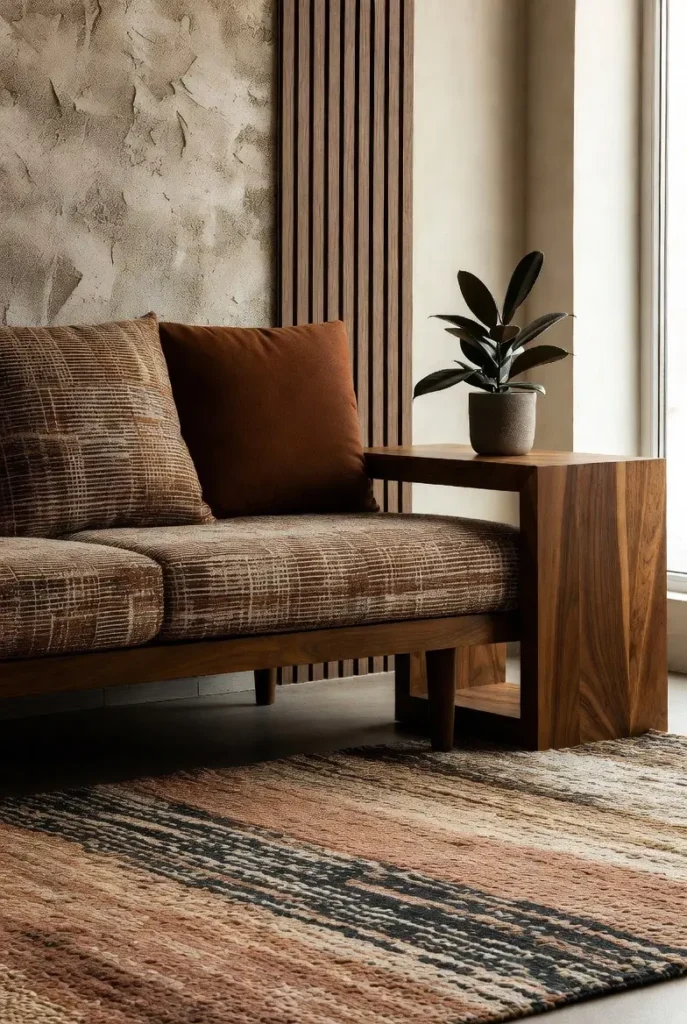
When the palette is restrained, texture carries the visual interest. This is the layer most people skip, and it is why some neutral rooms feel rich and others feel flat. Aim for at least five textures in the seating area: something nubby (boucle or chunky knit), something smooth (leather or velvet), something natural (linen, jute, wood), something reflective (glass, brass), something soft (a high-pile throw).
Texture is also how you make affordable pieces look expensive. A simple linen-look sofa with a boucle throw and a travertine side table reads as curated; the same sofa bare reads as budget. Touch everything before you buy — texture you can feel is texture that works.
5. Use Statement Lighting
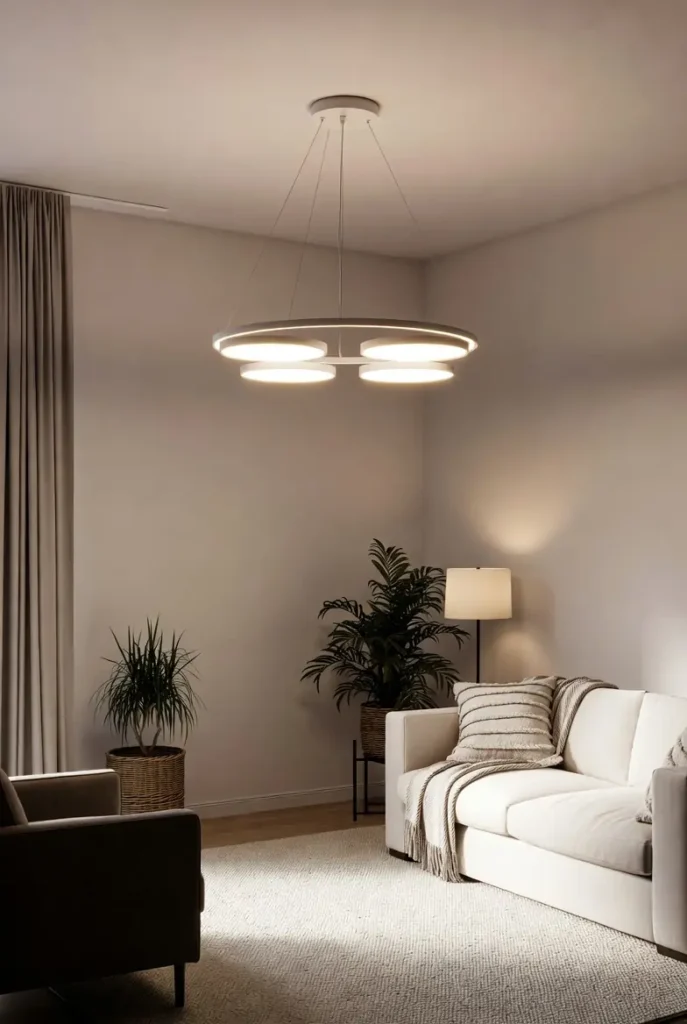
In contemporary rooms, lighting is sculpture. One dramatic fixture — an arc floor lamp, a cluster of glass pendants, a sculptural table lamp — does more for the room’s personality than any other single object. It is the piece guests comment on, and it sets the tone after dark.
Scale it to the room: a pendant cluster should hang 30–36 inches above a coffee table, and an arc lamp needs enough floor space for its base (usually a 2-foot square). Keep the bulb warm (2700K) and dimmable — a statement fixture on a harsh bright setting loses all its drama. One statement plus two quiet supporting lamps is the right ratio.
6. Keep Wall Decor Minimal but Meaningful
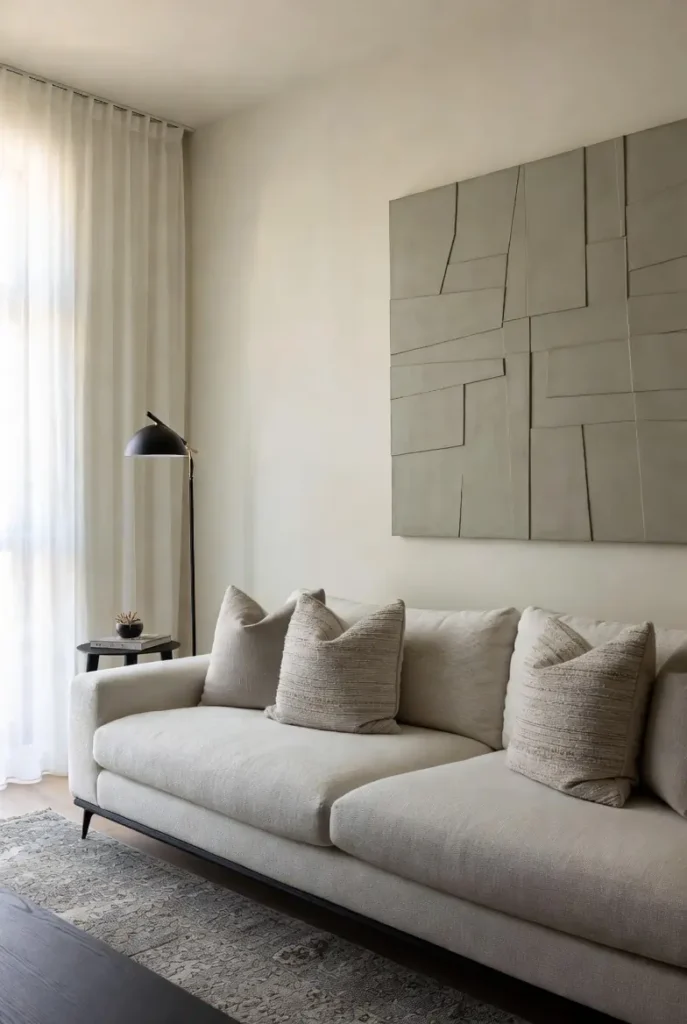
Contemporary walls are edited, not empty. One large-scale piece — an abstract canvas, a dramatic photograph, a textile hanging — makes a stronger statement than a gallery wall of small frames. The contemporary eye likes breathing room; negative space is part of the composition.
Size the art to the wall, not the other way around: above a sofa, aim for art roughly two-thirds the sofa’s width, hung with its center at 57–60 inches. And choose work you genuinely respond to — in a minimal room there is nowhere for meaningless decor to hide, which is exactly why the meaningful pieces shine.
7. Add Natural Elements
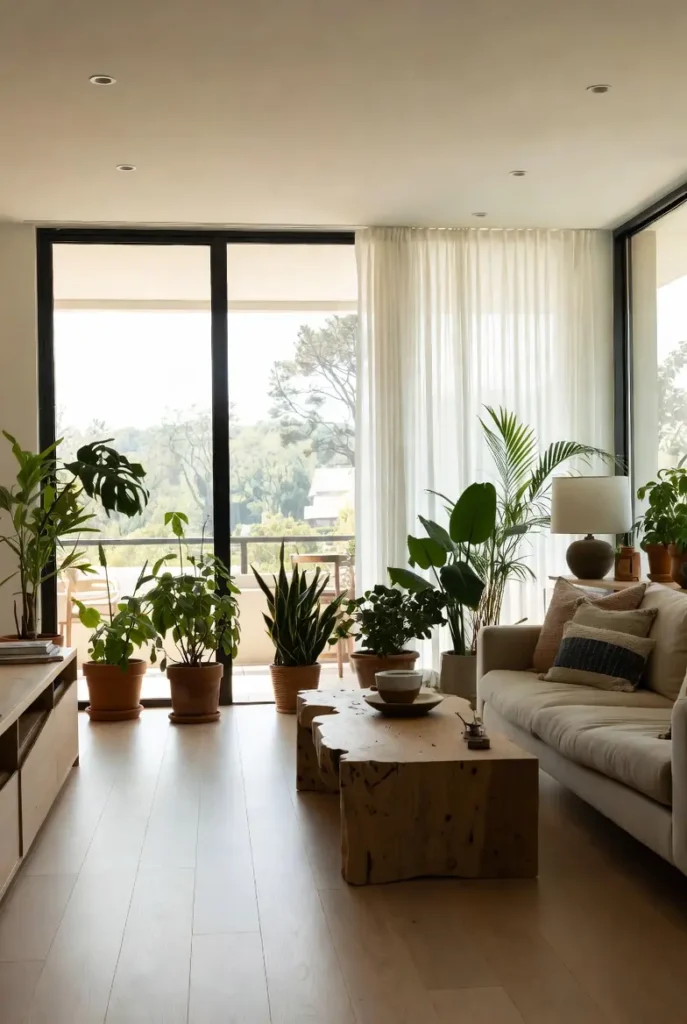
Wood, stone, plants, and natural fibers are contemporary design’s warmth engine. A travertine side table, an oak media console, a single sculptural plant (olive tree, fiddle-leaf fig), or a jute rug underfoot — these organic notes keep the clean lines from feeling manufactured.
The key is authenticity of material: real wood grain, real stone veining, real plants. One genuine natural element outweighs five imitations. If budget is tight, prioritize one real-wood piece (even small, like a side table) over a room of wood-look laminate — the eye knows the difference, even if the mind cannot name it.
8. Mix Materials for Visual Interest
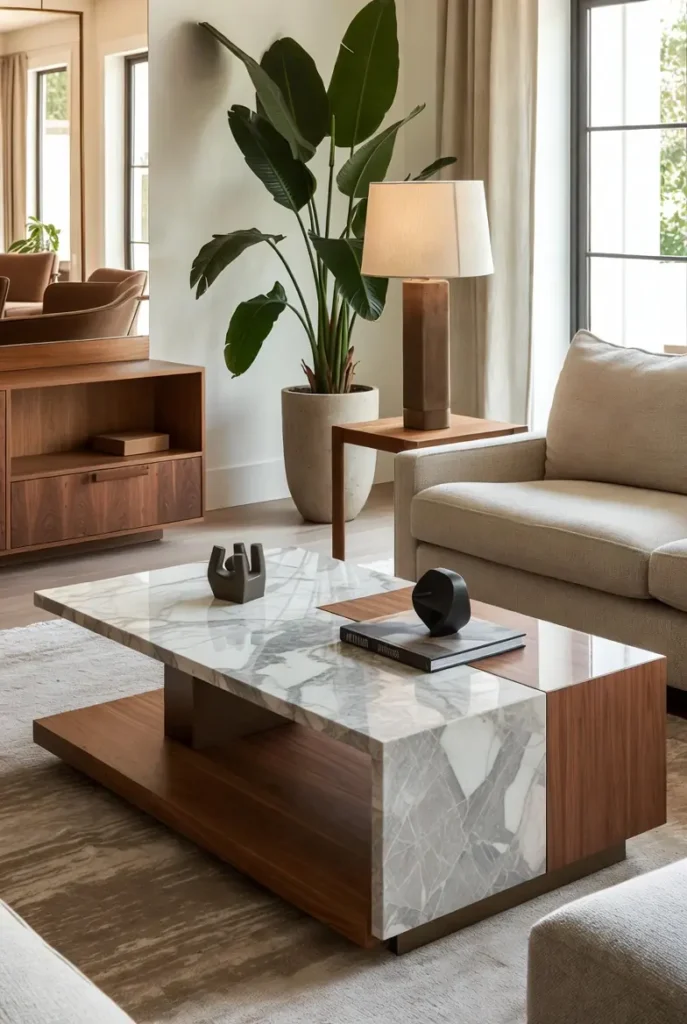
Contemporary rooms hum when materials contrast: matte against polished, rough against smooth, warm against cool. Brushed brass next to honed stone. Blackened steel next to pale oak. Velvet against linen. Each pairing creates a small visual tension that keeps the eye engaged.
Limit yourself to three or four dominant materials per room, repeated in multiple places — brass in the lamp and the side table frame, oak in the console and the shelving. Repetition is what makes mixing look intentional rather than random. When a new piece enters the room, ask which material family it joins.
9. Maintain an Open Layout
Contemporary design breathes. Resist pushing every piece against the walls; float the seating to create a defined conversation zone, even in a modest room. The space between furniture is as designed as the furniture itself — it is what makes a room feel calm rather than crowded.
Protect your sightlines: from the entrance, you should see through to a window or a focal point, not into the back of a sofa. Keep pathways at 30 inches minimum. And edit ruthlessly — if a piece does not serve the layout, it does not belong in the room, no matter how much you like it. Store it, sell it, or move it.
10. Personalize with Meaningful Decor
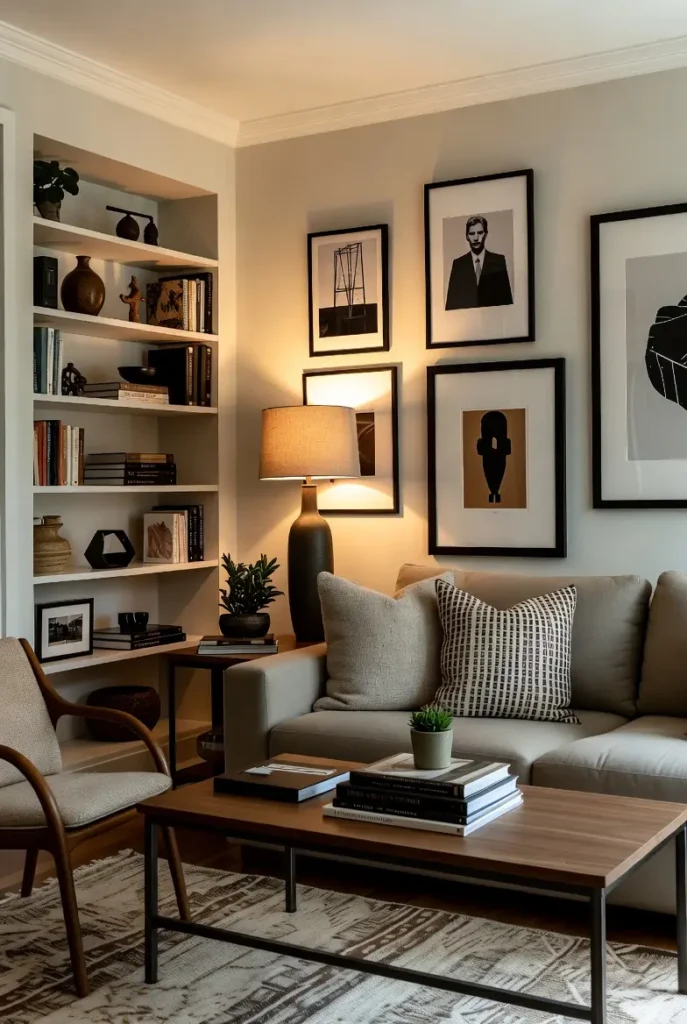
Here is where contemporary rooms diverge from showrooms: the personal layer. A stack of books you have actually read, a ceramic from a trip, a framed photo that matters, an heirloom in a modern frame — three to five such objects, styled with intention, give the room its soul.
Style them, do not scatter them: group on a console, a shelf, or the coffee table in odd-numbered clusters with varying heights. The contemporary rule is that personal does not mean cluttered — each object gets space to be seen. A room with five meaningful things feels richer than a room with fifty decorative ones.
Final Thoughts
Modern contemporary is really a philosophy disguised as a style: fewer, better things, arranged with breathing room, warmed by texture and nature, and finished with the objects that make the room yours. Build the neutral foundation, add your one bold note, layer the textures, and then stop — the confidence to stop is the most contemporary move of all.
Pro Tips
- Audit in black and white: photograph the room and apply a grayscale filter. If the composition still looks good without color, your layout and texture are working.
- One in, one out: contemporary rooms stay contemporary through maintenance. Every new object should replace or earn its place against an existing one.
- Invest in the sit: if the budget allows one splurge, make it the piece your body touches most — the sofa or the primary chair. Comfort is the ultimate luxury.
- Dim everything: put the main lights on dimmers. Contemporary rooms transform after dark, and dimmers cost almost nothing.
FAQs
What is the difference between modern and contemporary design?
Modern refers to a specific historical style (early-to-mid 20th century: clean lines, minimal ornament). Contemporary means “of the moment” — it borrows modern’s lines but is warmer, more curved, and constantly evolving with current trends.
Can a contemporary living room still feel cozy?
Yes — coziness in contemporary design comes from texture, warm lighting, and natural materials rather than from clutter or heavy fabrics. Layer boucle, wool, wood, and warm 2700K light and the room feels inviting without losing its edge.
What colors work best in a modern contemporary living room?
Warm neutrals as the base (warm white, greige, oatmeal, taupe) with one bold accent (emerald, ochre, navy, terracotta). Keep the palette to three or four colors total for the tailored contemporary look.
How do I add personality without creating clutter?
Choose three to five meaningful objects and style them deliberately with breathing room — grouped on a console or shelf, not scattered. In a minimal room, each personal piece gets more attention, not less.

HowDecor is a home decor blog sharing simple, practical decorating ideas for everyday spaces. We believe a beautiful home should feel comfortable, personal, and full of warmth — and that great style does not require a huge budget. Our goal is to inspire readers to create spaces that feel peaceful, welcoming, and truly their own — one room at a time.