Scandinavian farmhouse style wasn’t invented by designers — it was invented by winters. In a place where December gives you five hours of gray daylight, you learn to manufacture warmth: pale walls that squeeze every photon out of the sky, wood that holds the memory of summer, lamplight instead of overhead glare. That’s why this style works so well in bedrooms. Every one of its rules exists to make a dark room feel like morning.
The other thing to know: this is the most forgiving style there is. Wrinkled linen isn’t sloppy here, it’s correct. A scratch on the wood isn’t damage, it’s patina. If your life is a little imperfect — and whose isn’t — this is the bedroom style that meets you where you are.
1. Soft Whites That Feel Warm, Not Cold
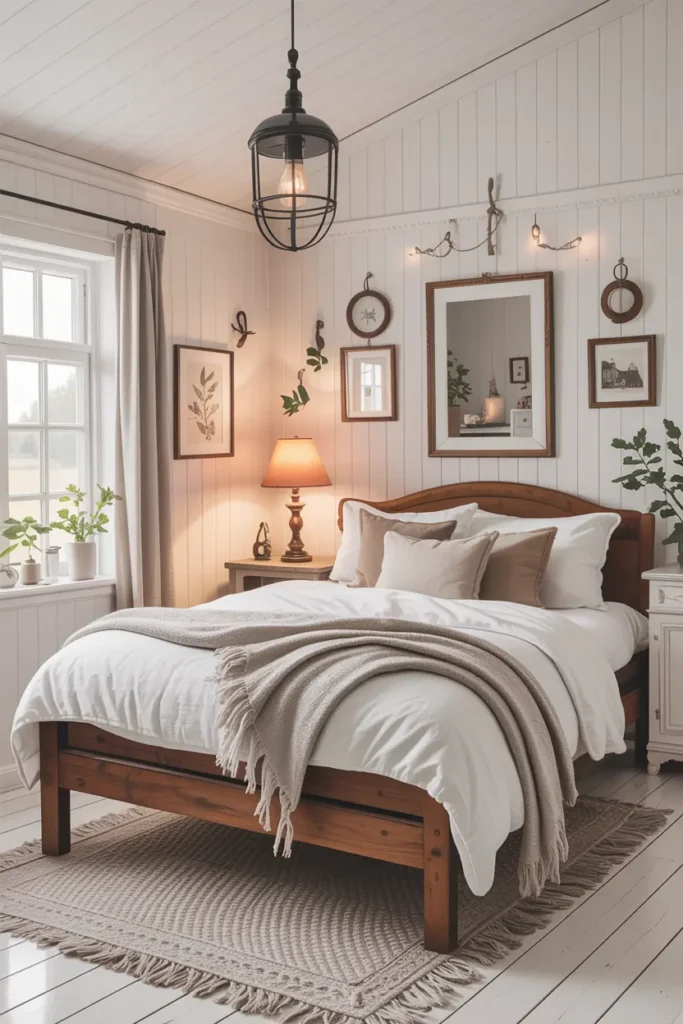
The white you choose depends entirely on which way your windows face — this is the detail that separates a cozy room from a chilly one. North-facing bedrooms get cool, bluish light all day, so they need a white with a warm, creamy undertone to compensate; a cool white in a north-facing room reads as icy no matter what else you do. South-facing rooms get warm light and can handle a cleaner, slightly cooler white. Paint big test swatches and check them at 8am and 8pm before you commit.
Finish-wise, eggshell on the walls gives you a soft glow that flat paint can’t, and it survives the occasional scuff. Keep the ceiling a touch brighter than the walls — it lifts the room visually. And here’s the Scandinavian secret: the white is only the background. It exists to make the wood tones, the textiles, and the lamplight look warmer by contrast. White alone is just white; white as a foil for warmth is the whole style.
2. Wooden Bed Frames with Natural Character
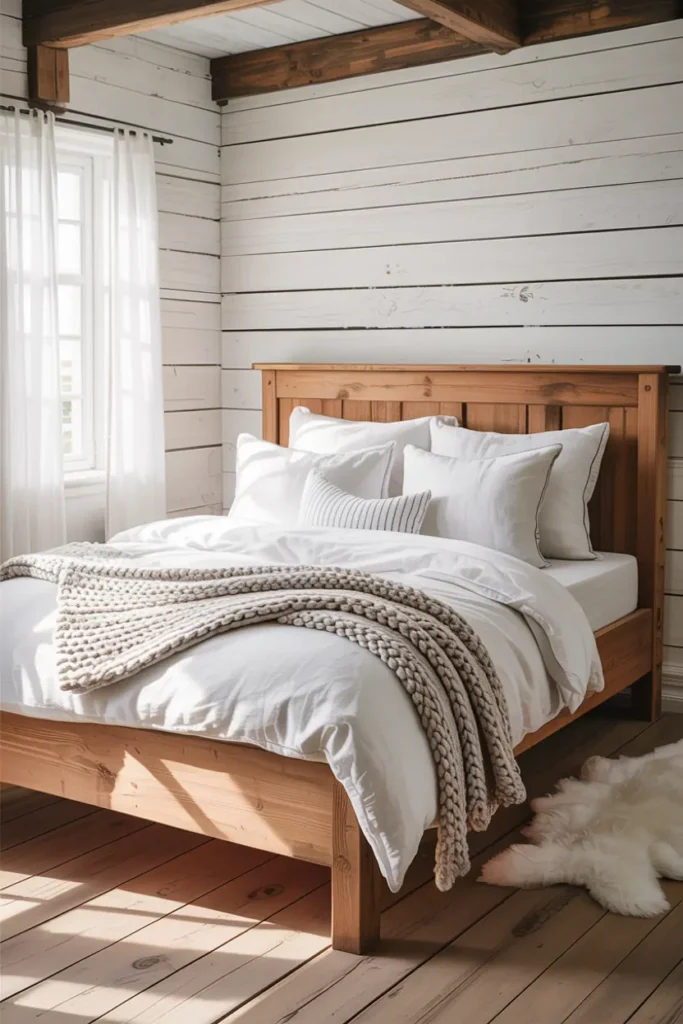
The bed is the largest wooden object in the room, so it sets the wood tone for everything else. Solid pine or oak with a visible grain is the honest choice — and “honest” matters here, because this style has no patience for fake finishes. A thin veneer over MDF will chip at the corners within two years and there’s no fixing it; solid wood can be sanded, re-oiled, and handed down. Check secondhand markets first: a well-made pine frame from the 90s is often sturdier than a new flat-pack one.
Keep the design simple — a low headboard or none at all, clean legs, no ornate carving. The frame should sit low enough that the mattress top lands around 22 to 24 inches off the floor, which makes the room feel grounded rather than towering. Let the wood show its age. The small dents and the way the color deepens over the years aren’t flaws in this style; they’re the entire point. Perfection is for showrooms.
3. Bedding That Looks Effortless, Not Perfect
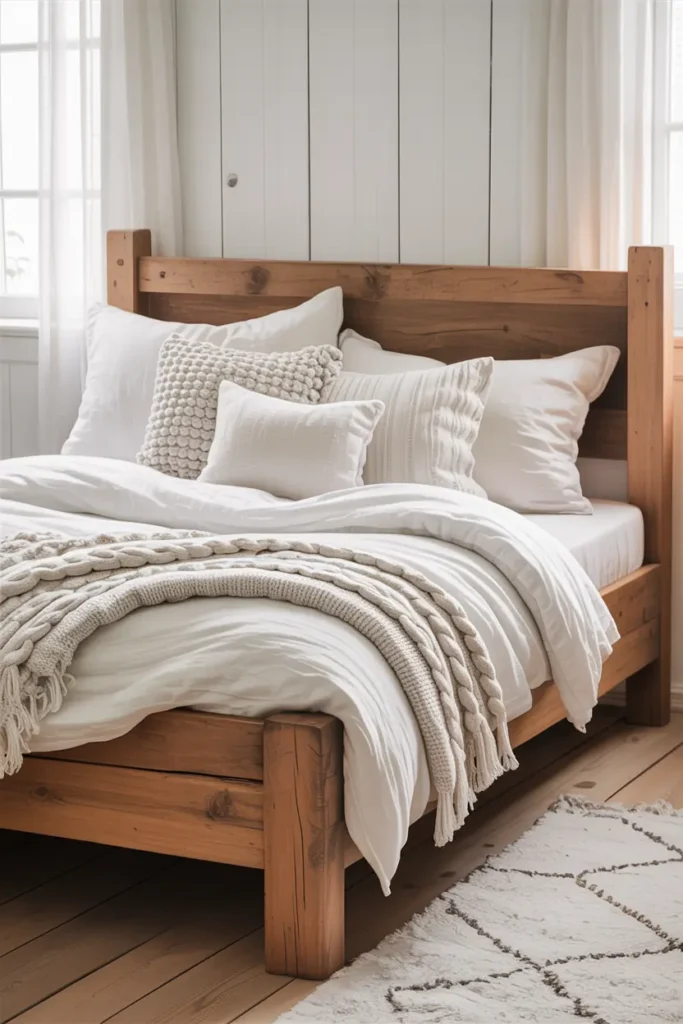
Linen is the fabric this style was built around, and it behaves differently from cotton in ways that matter. It wrinkles — embrace it, because pressed linen looks wrong here. It gets softer with every wash instead of wearing out, so a good linen duvet cover is a five-year purchase, not a seasonal one. It also breathes, which means fewer night sweats in summer and less clamminess in winter. Expect to pay more upfront ($80 to $150 for a duvet cover), and expect it to outlast three cotton sets.
The layering formula is simple: fitted sheet, flat sheet folded back, duvet, then one throw across the foot — never more. Stick to white, oatmeal, and soft gray; the texture variation between the linen, the quilt, and the throw creates all the visual interest you need. And make the bed the “lived-in” way: pull the duvet up, shake it once, fold the top third back. That slightly rumpled look isn’t laziness — it’s the style’s signature, and it takes thirty seconds.
4. Lighting That Feels Gentle and Calm
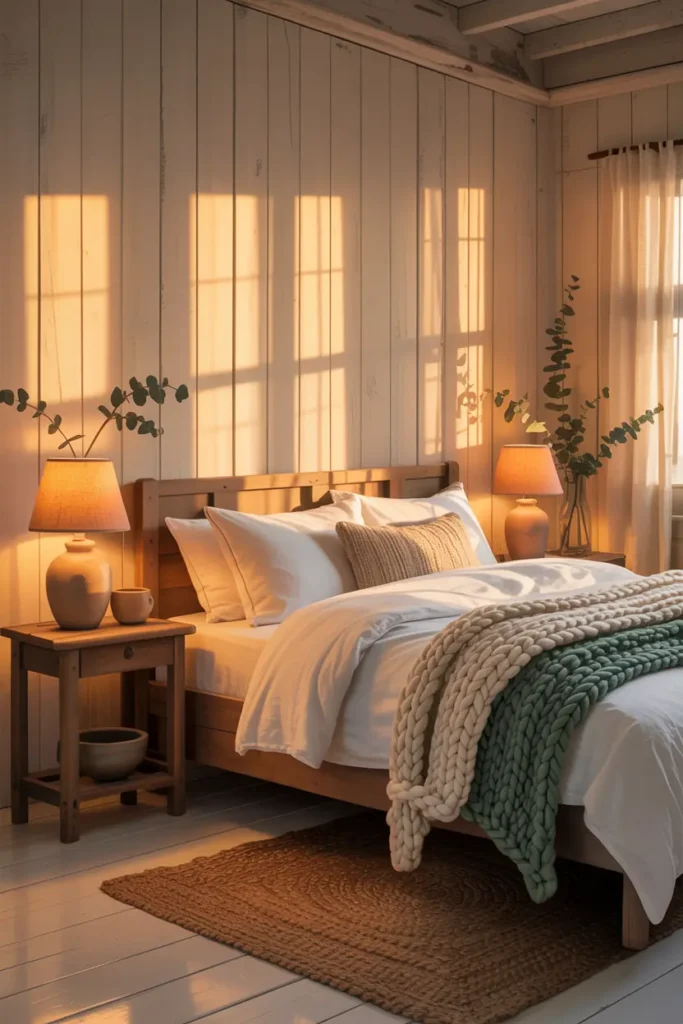
Scandinavians have a word for this — hygge — and it translates roughly to “the feeling of candlelight.” The rule is simple: no single bright source, ever. A bedroom needs at least two, preferably three, low warm lights: a bedside lamp on each side (or one lamp and one wall sconce if space is tight), plus something at a lower level like a small table lamp on the dresser or a cluster of candles. Every bulb between 2200K and 2700K — the warmer end reads as firelight.
Shade material changes everything. A linen or cotton drum shade diffuses light into a soft pool; a bare bulb or glass shade creates glare that kills the mood instantly. Put bedside lamps on small dimmers or use smart bulbs you can warm and dim from bed — being able to drop the room to a ember-glow without getting up is a small luxury that pays off every single night. The overhead light? It exists for cleaning. That’s its only job.
5. Nightstands That Stay Simple
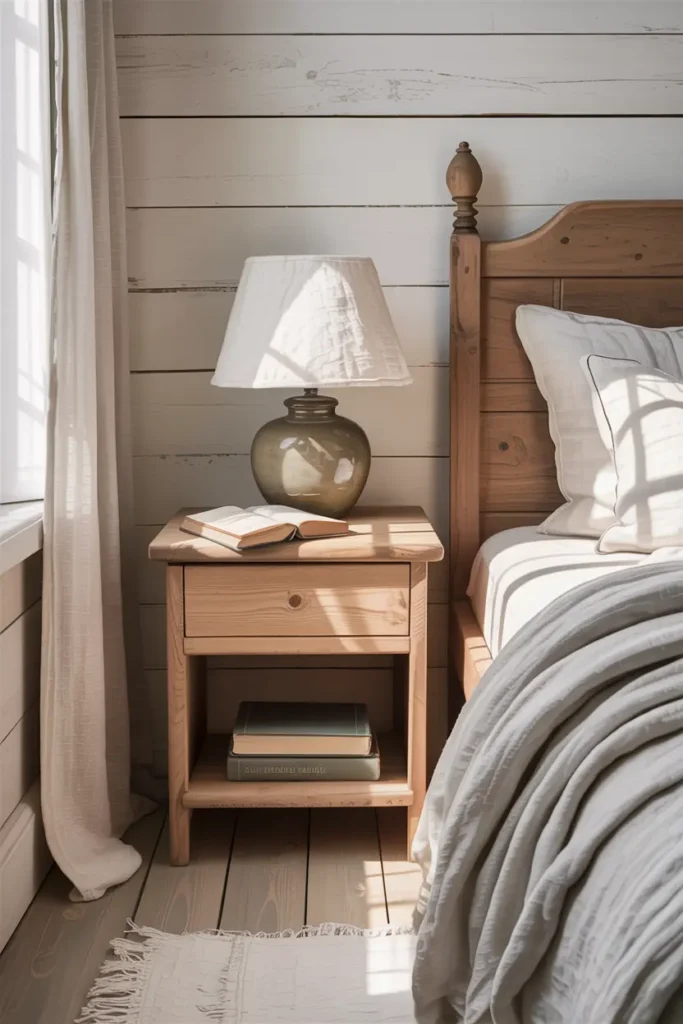
The nightstand has exactly three jobs: hold a lamp, hold a book, hold water. That’s it. A small wooden table — roughly 18 to 22 inches wide — with one drawer for the things you don’t want to see is the complete specification. The drawer matters more than it seems: it’s where the charger, the lip balm, and the reading glasses disappear to, keeping the top clear. A nightstand without a drawer becomes a clutter shelf within a month, guaranteed.
Match the nightstand’s wood to the bed frame’s tone family but don’t obsess over an exact match — close is more Scandinavian than identical, and a slight variation looks collected rather than showroom-bought. Keep the styling to the rule of three: lamp, one book (the one you’re actually reading), water. If a fourth object moves in, something else moves out. The clear surface is what makes the bedroom feel calm when you wake up to it.
6. Rugs That Add Warmth Quietly
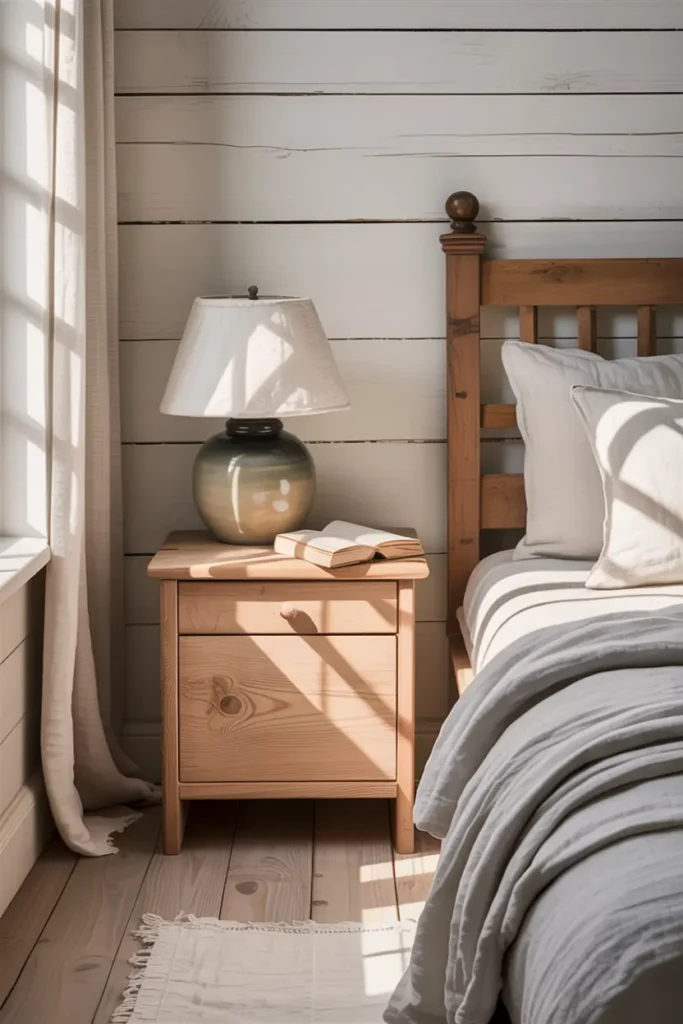
Cold floors are the enemy of the whole concept — stepping onto bare wood on a winter morning undoes every bit of coziness you’ve built. In a bedroom, you have two good options: one large rug under the bed extending at least 18 inches beyond each side, or a runner on each side of the bed (2.5×8 feet is the standard). The runners are the budget move and honestly the cozier one, because that’s where your feet actually land.
Flatweave wool or a wool-cotton blend is the right material: soft enough for bare feet, thin enough that doors clear it, and durable enough for daily use. Keep the color within two shades of your floor — the rug should whisper, not announce. And skip the rug pad marketing panic for runners; a simple non-slip underlay cut to size ($15) is all they need. The rug’s job is warmth underfoot, not a design statement.
7. Wall Decor That Doesn’t Shout
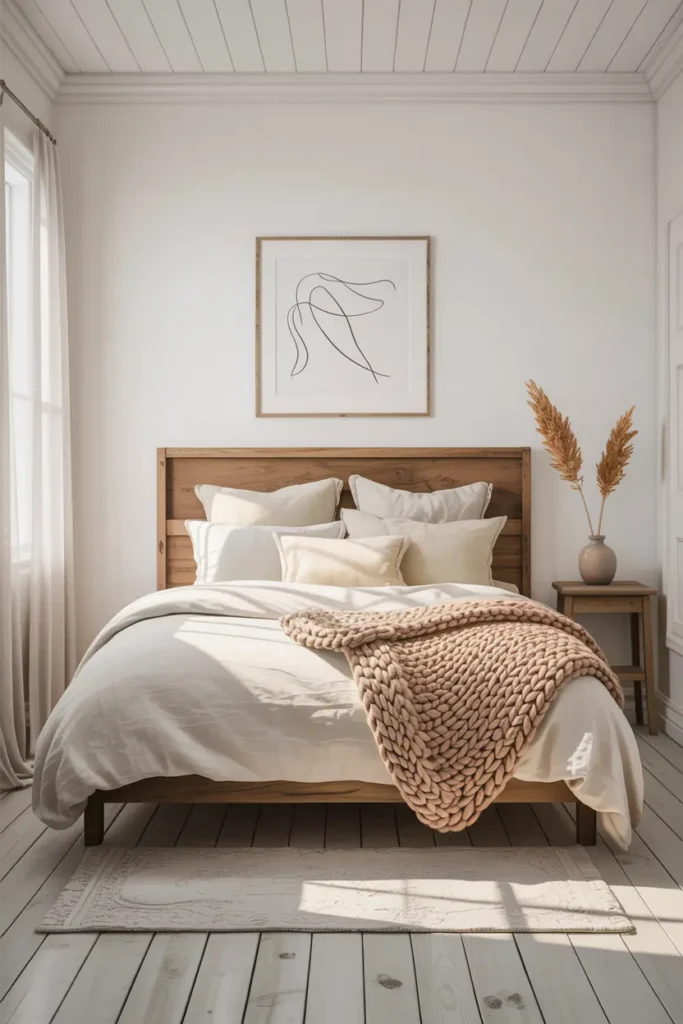
In this style, the walls are allowed to rest. One piece over the bed, sized to about two-thirds the width of the headboard, is the complete art program for most bedrooms. Nature prints — soft landscapes, botanical studies, muted abstracts — work because they echo the style’s roots without demanding attention. Black frames keep it crisp; thin oak frames keep it warm. Either is correct, but pick one and use it for every frame in the room.
Hang it lower than you think: the center of the piece should sit around 57 to 60 inches off the floor, which feels right when you’re lying in bed looking at it. And know that an empty wall is a legitimate choice here, not a failure to decorate. If no piece of art earns its place, the bare wall — in that soft warm white, catching the lamplight — is doing its own quiet work.
8. Space That Feels Open and Relaxed
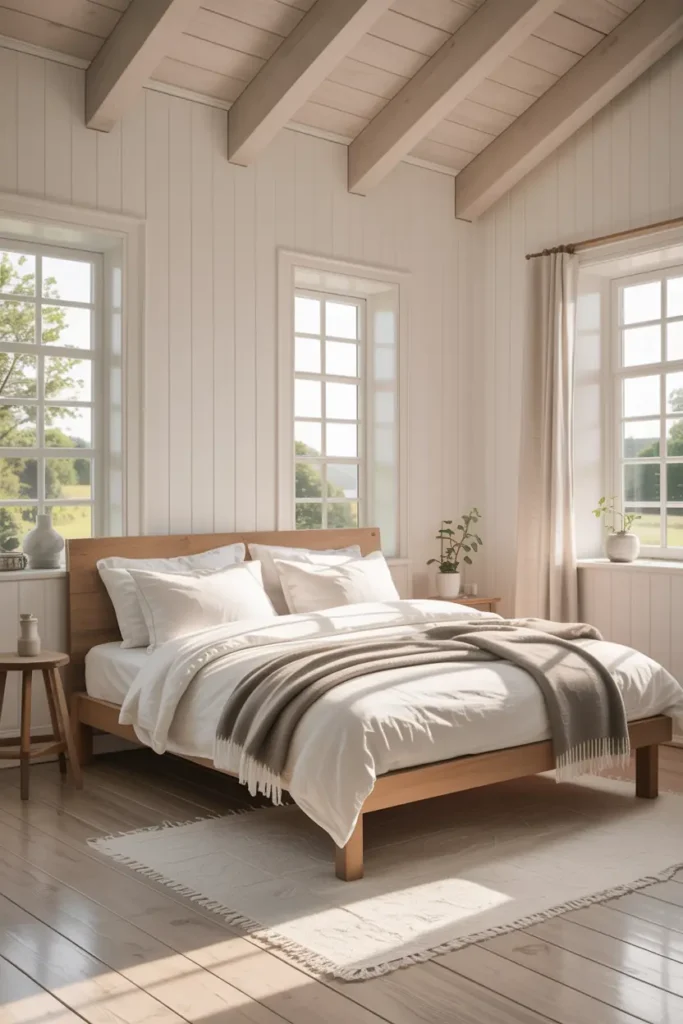
The calm of a Scandinavian farmhouse bedroom is literally empty space, so protect it like a design element. Leave at least 18 inches between the bed and any wall or furniture — enough to walk through without turning sideways. If the room allows, don’t push the bed into a corner; a bed you can walk around feels like a choice, while a bed wedged in feels like a compromise. Not every room allows this, and that’s fine — but don’t sacrifice it without trying.
Resist filling corners just because they’re empty. An empty corner with good light is where the calm lives; a corner crammed with a chair nobody sits in is just storage with extra steps. If a corner truly begs for something, a single plant in a simple pot is the maximum intervention. The test is always the same: does removing it make the room feel better? If yes, it was clutter wearing a costume.
Final Thought
A Scandinavian farmhouse bedroom works when it feels like exhaling. Soft white walls, honest wood, wrinkled linen, low warm light, and room to breathe — none of it is complicated, and all of it is deliberate. Choose less, choose well, and let the imperfections stay. They’re the warmest part.
Pro Tips
- Match your white to your window direction. North-facing rooms need warm, creamy whites; south-facing rooms can go cleaner and cooler. This one decision affects the whole room more than any furniture choice.
- Buy linen once, cry once. A $120 linen duvet cover that softens for five years is cheaper than replacing $40 cotton sets every eighteen months — and it looks better the whole time.
- Ban the overhead light after 8pm. Make it a house rule: evenings are lamplight only. The room’s entire mood depends on this one habit.
- Secondhand first for wood. Solid pine and oak frames are abundant on resale markets, often better made than new flat-pack, and the existing patina is a head start on the look you want.
FAQs
How do I keep white bedding actually white?
Wash in warm (not hot) water with a scoop of oxygen bleach rather than chlorine bleach, which yellows fibers over time. Line-dry in sun when you can — sunlight is a natural whitener. And accept that lived-in white is the goal; brilliant showroom white isn’t this style anyway.
Can I do this style in a small bedroom?
It’s ideal for small rooms — the pale palette, the low furniture, and the empty space all make rooms feel larger. Keep the bed low, use runners instead of a big rug, and mount one sconce instead of two table lamps to save nightstand space.
What if I already have dark wood furniture?
Dark wood can work if it’s the only dark element and everything else stays pale — the contrast is actually very Scandinavian. What’s harder is mixing dark wood with mid-tone wood; if you have both, consider refinishing the mid-tone pieces lighter for consistency.
Is “farmhouse” here the same as modern farmhouse?
Not quite. Modern farmhouse leans rustic with shiplap, barn doors, and decorative signs. Scandinavian farmhouse is quieter — cleaner lines, paler palette, less thematic decoration. Think “Nordic cabin,” not “country kitchen.”

HowDecor is a home decor blog sharing simple, practical decorating ideas for everyday spaces. We believe a beautiful home should feel comfortable, personal, and full of warmth — and that great style does not require a huge budget. Our goal is to inspire readers to create spaces that feel peaceful, welcoming, and truly their own — one room at a time.