Let’s define “classy” clearly, because the word gets misused. Classy is not expensive — some of the most elegant bedrooms I’ve seen were furnished for under a thousand dollars. Classy is not trendy, either; trends expire, and nothing dates a room faster than last year’s must-have. Classy is restraint plus intention: a room where everything looks like it was chosen by someone who knows exactly who she is. That’s not a budget thing. It’s a clarity thing.
The ten ideas below are really ten exercises in that clarity. Each one removes something — visual noise, harsh light, clutter, indecision — and replaces it with one confident choice. Do all ten and the room won’t just look classy. It’ll feel like you, on your most self-assured day.
1. Soft Neutral Elegance
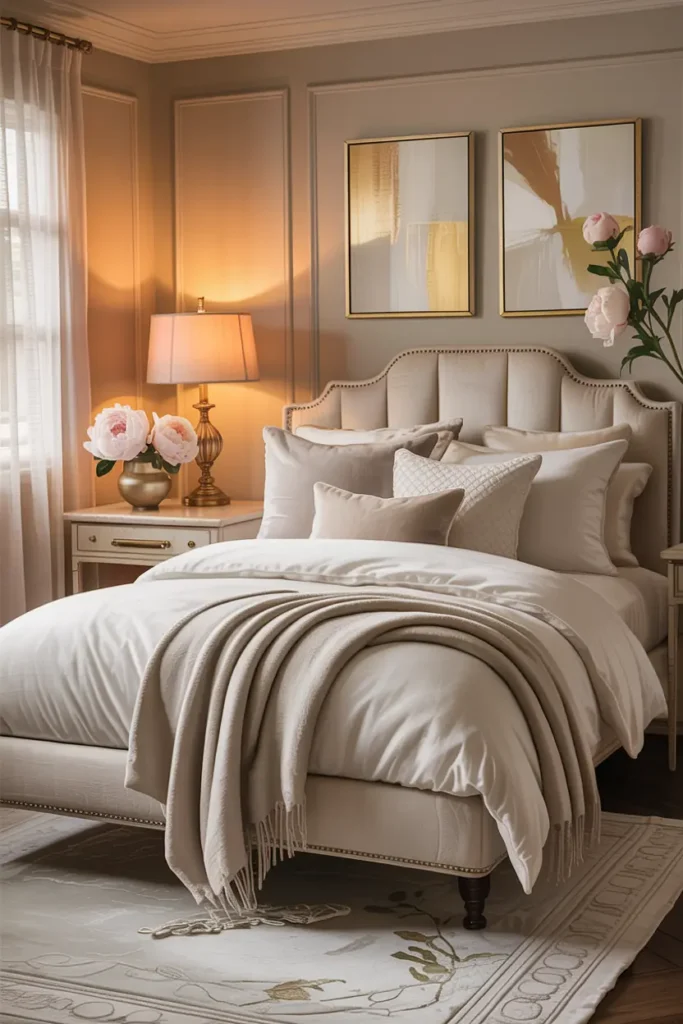
The “quiet luxury” look that dominates high-end interiors right now is built on one insight: neutrals make everything in a room look more expensive. A greige wall, cream bedding, and warm white curtains create a backdrop where even a $40 vase reads as considered. The palette to aim for is warm white, greige, soft taupe, and one deeper tone — camel or warm brown — for grounding. Four tones, all warm, nothing stark.
The discipline is in what you exclude: no primary colors, no busy patterns, no high-contrast black-and-white (which reads modern, not classy). If you want a whisper of color, blush and sage are the two that sit comfortably inside a neutral scheme without breaking its spell. Paint the walls first in the lightest tone — everything else gets chosen against that backdrop, which is why starting with the wall color prevents the mismatched-undertones problem that ruins so many neutral rooms.
2. Luxurious Layered Bedding
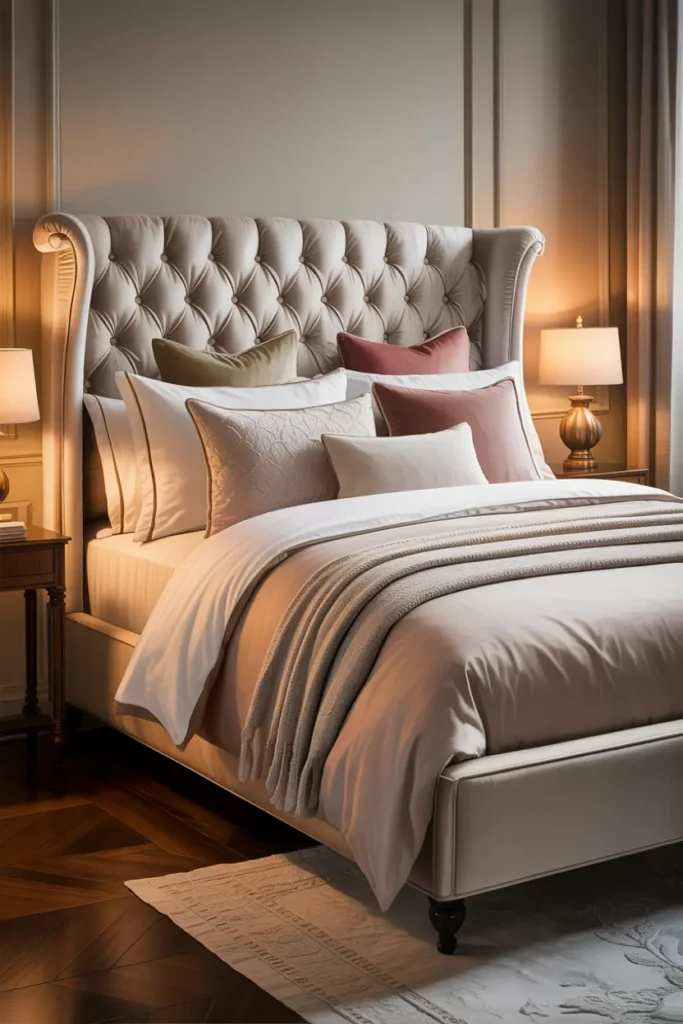
Hotels make beds look luxurious with a trick called triple sheeting: fitted sheet, flat sheet, a light blanket, then the duvet — each layer folded back to reveal the next. You can replicate it at home with what you already own. The visual secret is the fold: pull the duvet and blanket down about 18 inches from the top and fold them back over themselves, so you see three distinct bands of fabric. That single fold is what separates a “made bed” from a “hotel bed.”
Keep every layer in the same tonal family — white, ivory, and oatmeal, for instance — and let texture do the differentiating: smooth sateen sheets, a quilted coverlet, a chunky knit throw. Crisp versus soft is a personal call, but classy leans crisp: a steamed duvet cover and pillowcases with a simple flange read as polished, while deliberately rumpled reads casual. Iron or steam the pillowcases. It’s a five-minute job that changes the whole bed.
3. Statement Headboard Style
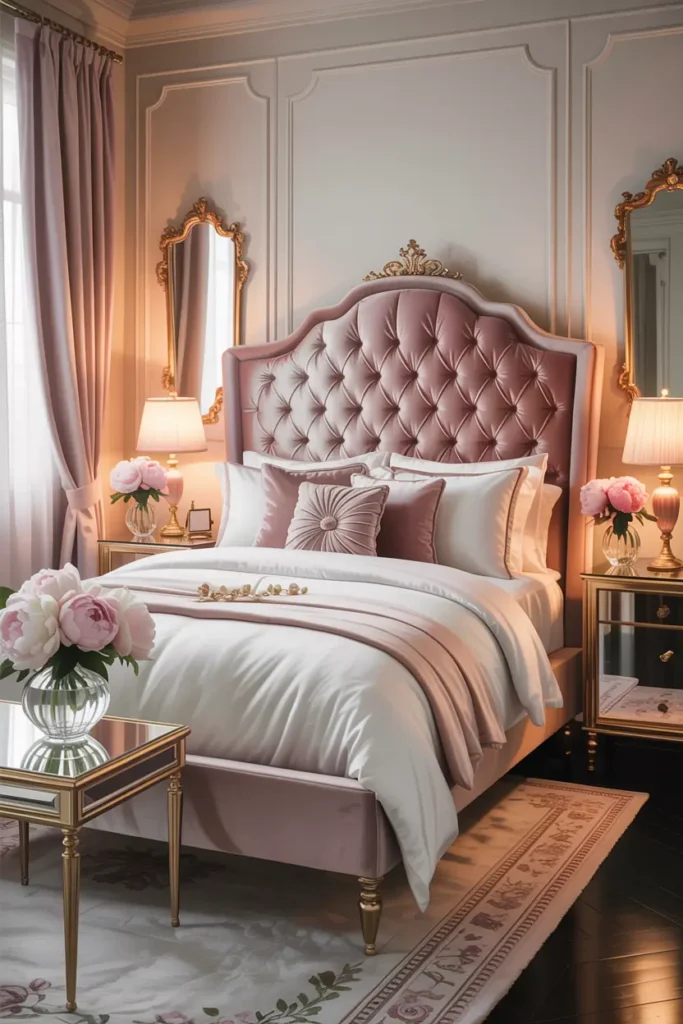
If you buy one thing for this room, make it the headboard — it’s the headboard that does the “classy” work, not the nightstands or the art. An upholstered headboard in a performance linen or velvet, 48 to 60 inches tall, gives the bed presence and gives you something comfortable to lean against. Wingback sides feel traditional and enveloping; a clean rectangular panel feels modern. Either is classy; what’s not classy is a headboard that disappears — too short, too thin, or missing entirely.
The budget move is a DIY upholstered headboard: a plywood panel, two-inch foam, batting, and fabric, mounted to the wall with a French cleat. Total cost $100 to $200, one weekend, and it looks indistinguishable from a $800 retail piece. Mount it so the bottom sits 2 to 4 inches above the mattress top — floating slightly rather than sitting on the floor makes it look custom and keeps the floor easy to clean behind the bed.
4. Soft Ambient Lighting
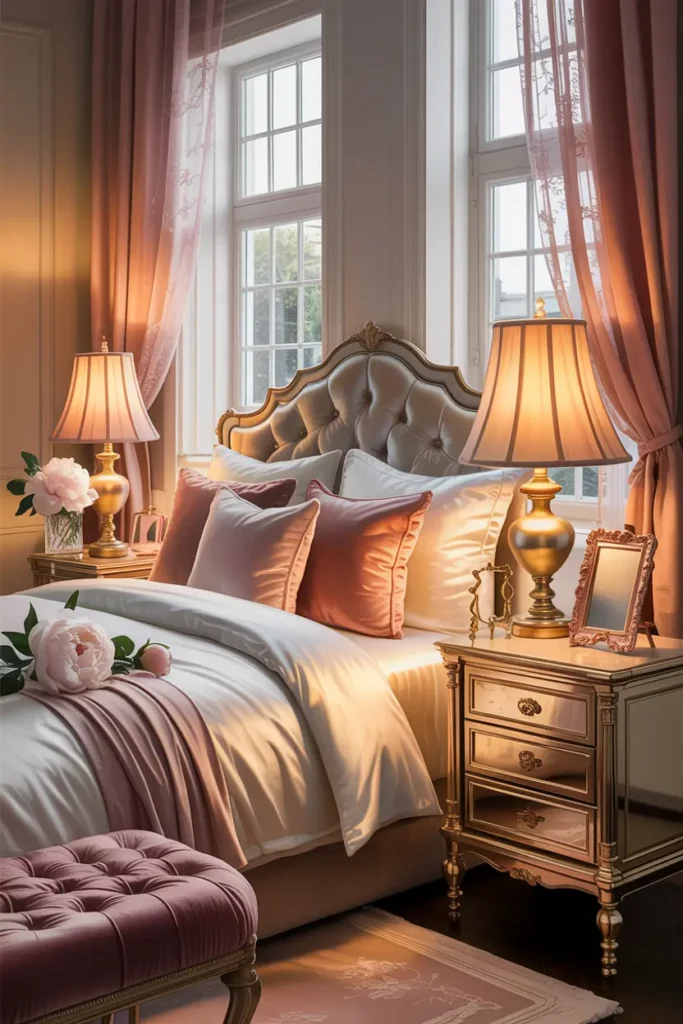
Overhead lighting is the enemy of elegance — it flattens faces, washes out textures, and makes even a beautiful room feel like a dentist’s office. The classy bedroom runs on three warm sources, all at 2700K or below: matching bedside lamps with fabric shades (matching matters here — symmetry reads as intentional), plus one low accent like a small lamp on the dresser or a cluster of candles. Put the bedside lamps on dimmers; the ability to drop the room to a candlelit glow is the entire evening mood.
One exception to the warm-light rule: the vanity or makeup area, where you need accurate color. There — and only there — a daylight-balanced light (around 5000K) at face height is the professional choice. Keep it visually discreet and separate from the room’s ambient scheme. Everywhere else, warm and low. If you can see a bare bulb from the bed, it needs a shade; glare is never classy.
5. Minimal Wall Art Beauty
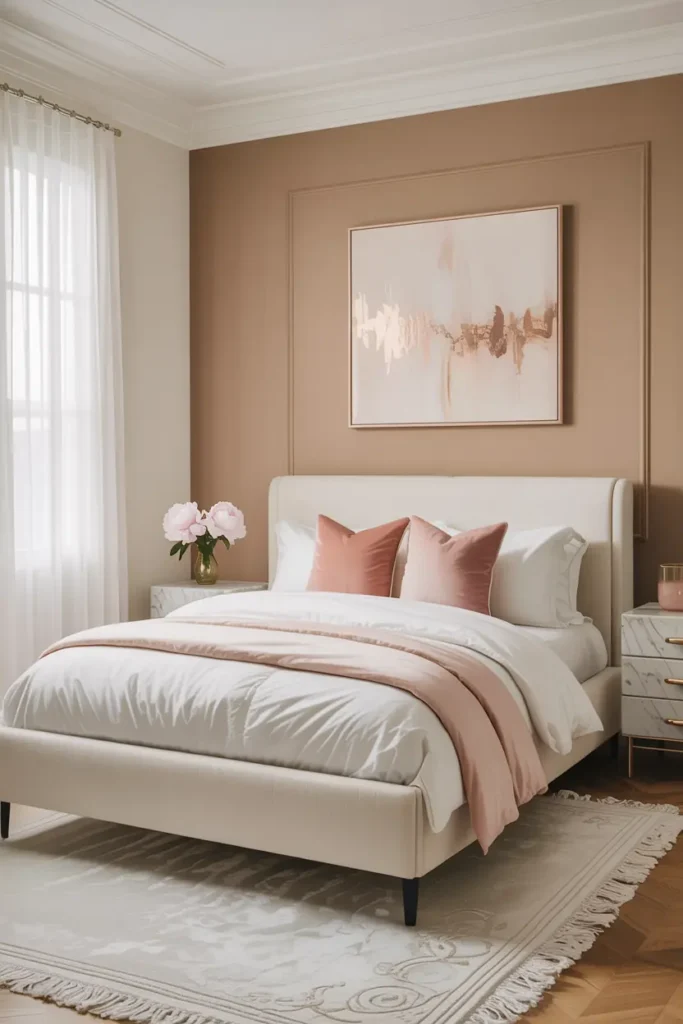
Two frames, maximum, and they should relate to each other — same frame, same mat, same size, hung as a pair. A single large piece over the bed (about two-thirds the headboard’s width, centered 8 to 10 inches above it) is the other correct option. What to choose: soft abstracts, botanical studies, fashion sketches, black-and-white photography — anything with a restrained palette that echoes the room’s neutrals. The art should harmonize, not perform.
Frame choice is where the classiness actually lives. Thin black or brass frames with wide white mats make even an inexpensive print look gallery-grade; the mat should be at least 2 to 3 inches wide, because generous matting is the visual cue that says “this was framed properly.” Avoid the pre-matted sets where the art, mat, and frame all came in one package — the proportions are always slightly off, and it shows.
6. Chic Vanity or Side Table
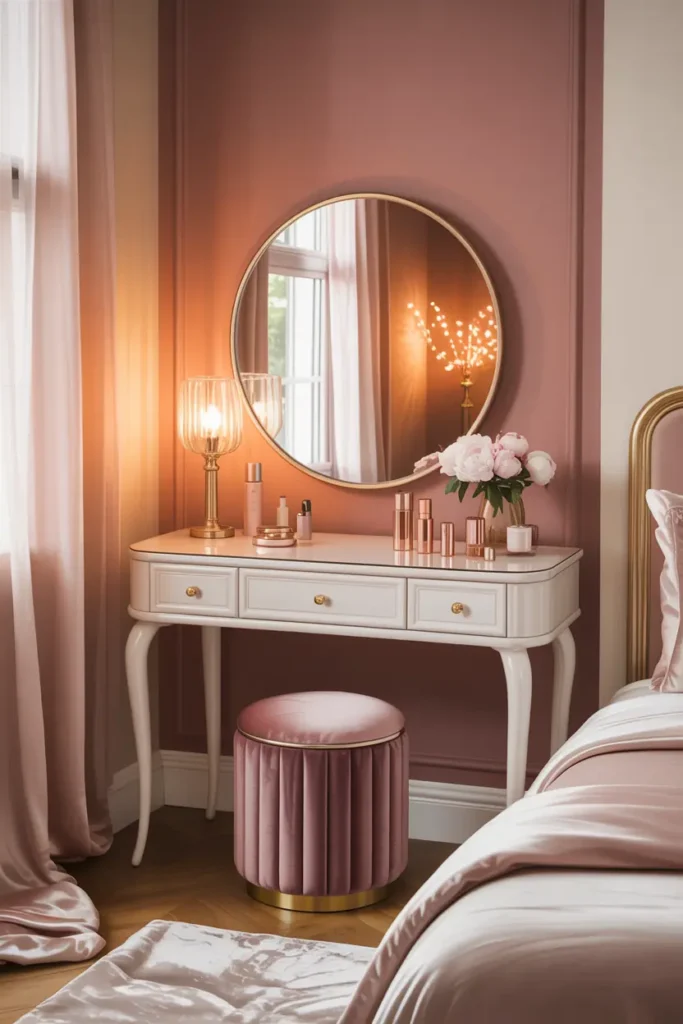
A vanity isn’t about vanity — it’s about giving your morning routine a dedicated, beautiful home instead of spreading it across the bathroom counter. The requirements are simple: a surface at desk height (28 to 30 inches), a mirror at face level, good task light, and seating that tucks completely underneath when not in use. A small writing desk works perfectly; it doesn’t need to be sold as a “vanity” to function as one.
Style it like a still life, not a storage unit: the mirror, one tray corralling daily essentials, one beautiful object (a perfume bottle, a small vase, a candle). Everything else lives in the drawer. The tray is the key move — it turns scattered items into an arrangement and makes the surface wipeable in one motion. If space is tight, a floating wall-mounted desk with a round mirror above it gives you the ritual without the footprint.
7. Elegant Curtains and Drapes
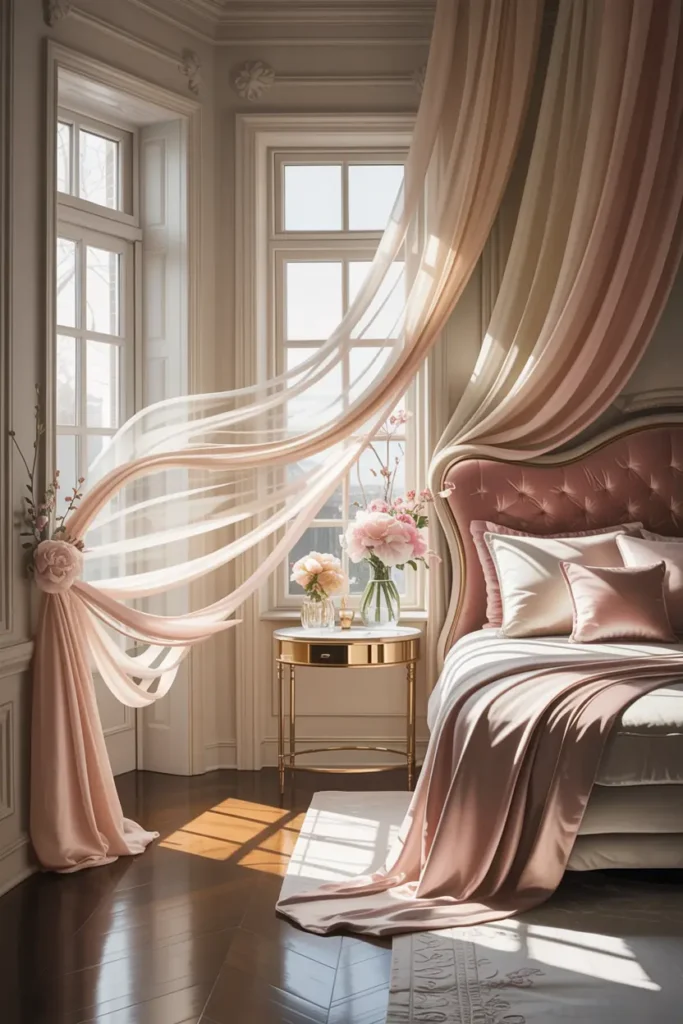
Curtains are one of the highest-impact, lowest-cost upgrades in a bedroom, and most people hang them wrong. The rules: mount the rod 4 to 6 inches above the window frame (or halfway to the ceiling, whichever is higher) and extend it 8 to 12 inches beyond the frame on each side. This makes the window look dramatically larger and lets the panels stack on the wall, not the glass, so they don’t block light when open. Panels should be twice the width of the rod for proper fullness — skimpy curtains are the fastest way to make a room look cheap.
Length: hemmed to just kiss the floor, or puddling 1 to 2 inches for a more romantic feel (puddling only works with washable fabrics unless you enjoy dusting hems). Fabric-wise, a linen blend in a warm white or natural tone filters light beautifully and never looks heavy. And iron or steam them after hanging — wrinkled curtains straight out of the package undermine the entire effect. Ten minutes with a steamer, once.
8. Subtle Gold or Metallic Accents
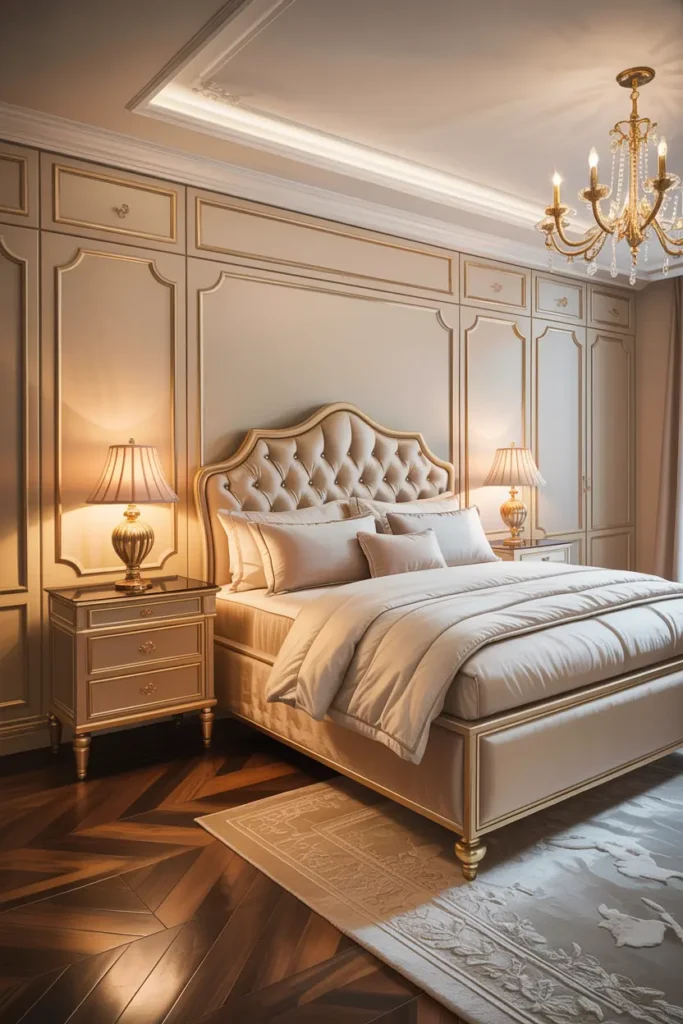
Metallics are jewelry for the room: a little elevates everything, too much looks gaudy. The rule is three touches, no more — a brass table lamp base, a thin gold picture frame, a small mirrored tray, for example. Three is enough to create a thread of warmth through the room without turning it into a theme. And choose brushed or satin brass over polished gold; the softer finish glows rather than glares, and it doesn’t show fingerprints.
Never buy the matching set. A “gold bedroom set” where the lamp, mirror, and knobs all came together reads as a showroom, not a home. The classy approach is collected: the brass lamp from one place, the vintage-style mirror from another, the tray you already owned. Slight variation in the metal tones is fine — even desirable — as long as they’re all in the warm family. Mixed metals across warm and cool (brass plus chrome) is where it falls apart, so keep the thread warm.
9. Soft Area Rug Comfort
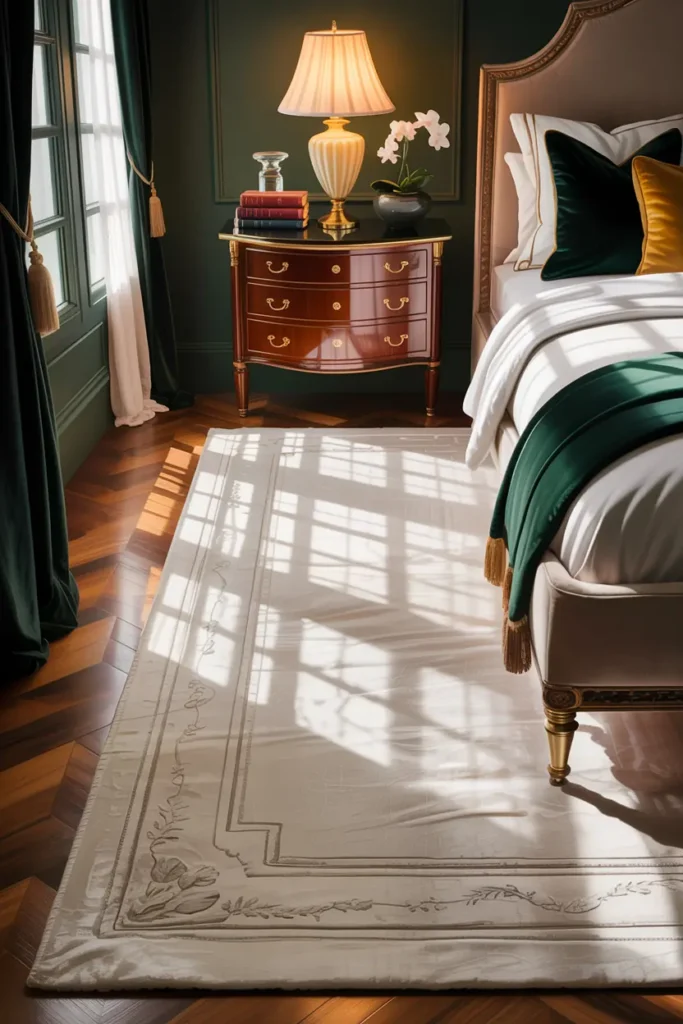
The rug anchors the bed the way a frame anchors art — without it, the furniture floats. For a queen bed, that means 8×10 feet: the rug should extend at least 18 to 24 inches beyond each side and the foot of the bed, with the nightstands sitting on it too. Anything smaller looks like an afterthought. In a classy neutral room, the rug should be the softest texture in the space — a plush wool or a high-quality faux fur in ivory or pale greige.
Here’s the maintenance reality nobody mentions: light rugs in bedrooms get dirty fast, and a dingy rug ruins the whole effect. A rug pad underneath ($60 to $90 for 8×10) prevents slipping and adds the plushness you’re after, and a handheld vacuum once a week keeps it fresh. If the thought of maintaining ivory makes you anxious, go one shade deeper — a warm greige hides life while still reading as light and elegant.
10. Personal Feminine Touch
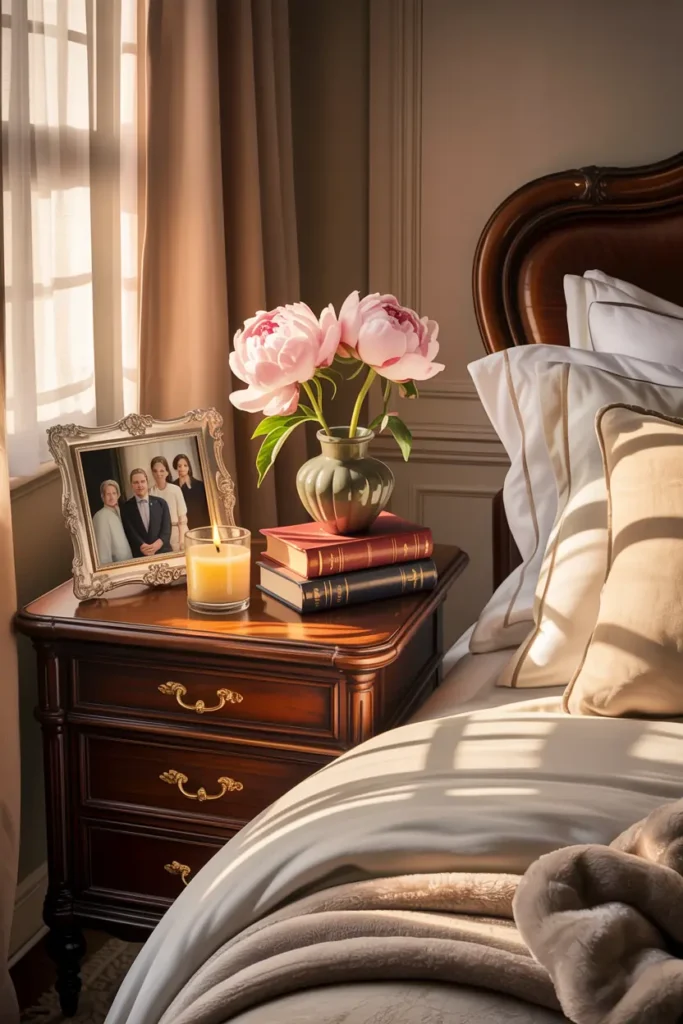
This is where the room stops being a catalog and starts being yours — but “personal” needs editing, or it becomes clutter wearing a sentimental costume. Choose three personal objects, maximum, and give each one a proper stage: the framed photo in a beautiful frame on the nightstand (not taped to the mirror), the favorite book on the vanity tray, the scented candle on the dresser. Three objects, each placed deliberately, each visible.
The test for every personal item: would you still display it if a guest you admire were staying in this room? If yes, it belongs. If it’s there out of guilt or habit — the gift you never liked, the souvenir that doesn’t fit — it goes in a memory box, not on display. A classy room isn’t impersonal; it’s personal on purpose. The restraint is what makes the chosen pieces feel precious instead of crowded.
Final Note
A classy bedroom isn’t decorated — it’s curated. Neutrals that flatter, bedding folded with intention, one confident headboard, light that glows instead of glares, and the discipline to stop at three of everything. None of it requires a big budget. All of it requires knowing what to leave out.
Pro Tips
- Steam the pillowcases. Five minutes with a handheld steamer on the duvet cover and shams is the difference between “nice bed” and “hotel bed.” It’s the cheapest luxury in this entire guide.
- Hang curtains high and wide. Rod 4-6 inches above the frame, 8-12 inches wider each side, panels twice the rod width. This one move makes windows — and rooms — look significantly larger.
- Three metallic touches, max. Count them. If you hit four, remove one. Restraint is what makes brass look expensive instead of flashy.
- Audit with fresh eyes monthly. Stand in the doorway and photograph the room. Anything that bothers you in the photo has been bothering you in person — remove it or fix it that day.
FAQs
How do I make my bedroom look expensive on a small budget?
Spend where the eye goes: the headboard, the bedding, and the curtains. Those three cover most of what you see from the doorway. Save on nightstands, frames, and accessories — neutrals and good styling make inexpensive pieces disappear into the scheme.
What colors count as “classy neutrals”?
Warm white, ivory, greige, soft taupe, oatmeal, and camel — all warm undertones, no stark whites or cool grays. If you want one accent, blush or sage sits comfortably inside this family without breaking its calm.
How many pillows should be on the bed?
For the classy look: two sleeping pillows, two shams in front, and one lumbar or small square accent — five total, arranged largest to smallest. More than that starts looking fussy and becomes a nightly chore.
Can a small bedroom still feel classy?
Absolutely — small rooms actually do “classy” well, because restraint is easier when space forces it. Keep the palette tight, the surfaces clear, and the lighting warm. A small, calm, well-lit room always reads as more elegant than a large cluttered one.

HowDecor is a home decor blog sharing simple, practical decorating ideas for everyday spaces. We believe a beautiful home should feel comfortable, personal, and full of warmth — and that great style does not require a huge budget. Our goal is to inspire readers to create spaces that feel peaceful, welcoming, and truly their own — one room at a time.