The difference between a vintage farmhouse bedroom and a room full of old stuff is curation — and curation is a skill, not a budget. Anyone can buy a “distressed” bed frame from a big-box store (and it will look exactly like what it is: new wood beaten up in a factory). The real thing comes from the hunt: the estate sale, the flea market, the grandmother’s attic. This guide is about telling the difference, because in vintage farmhouse, authenticity is the entire style. Fake patina is just… damage you paid extra for.
The good news: this is the cheapest “high-end look” in interior design, because the best pieces are the ones other people are getting rid of. Here’s how to hunt, what to buy, and the formulas that keep old things looking collected instead of cluttered.
1. Soft Neutral Farmhouse Palette
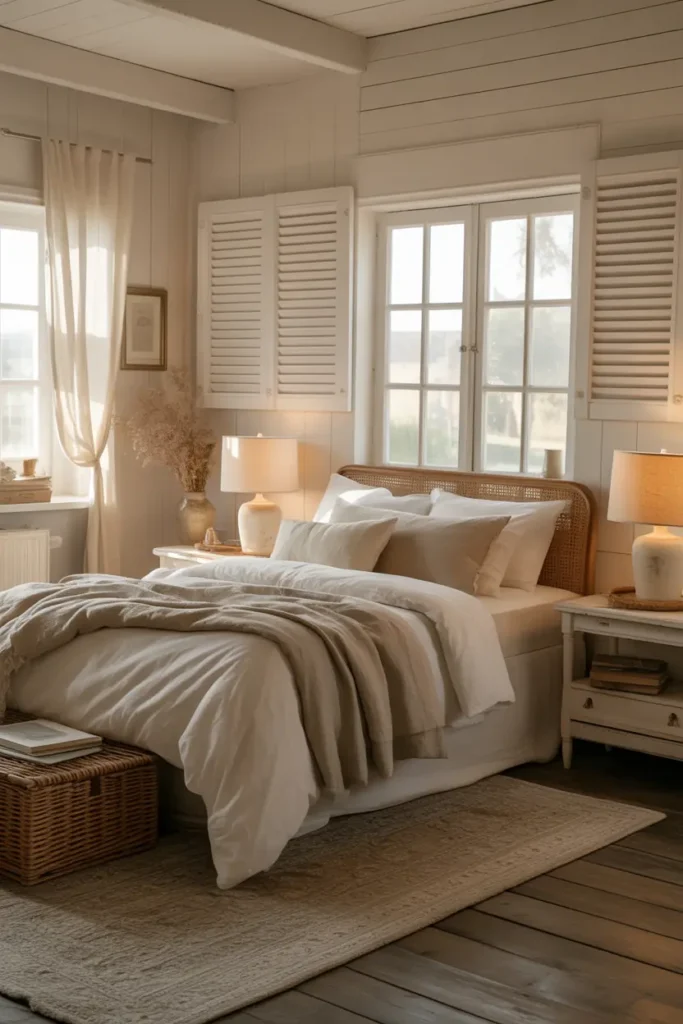
Vintage farmhouse neutrals aren’t the same as modern neutrals — they have age in them. Think milk-paint shades: aged cream, weathered beige, putty, and soft clay. These are colors that already look like they’ve lived a little, which is why they harmonize with old wood instead of fighting it. A crisp modern white next to a 100-year-old pine dresser makes the dresser look dirty; an aged cream makes it look like it belongs.
If you’re painting, look at historic paint lines — most major brands have a “historic” or “heritage” collection, and the colors are pre-aged for you. Keep the walls in one quiet tone and let the furniture carry the variation. And here’s the rule that keeps the room from looking like a museum: at least one thing in the room should be genuinely new (fresh white bedding, a new rug). The contrast between old and new is what makes the old pieces read as chosen rather than leftover.
2. Distressed Wooden Bed Frame
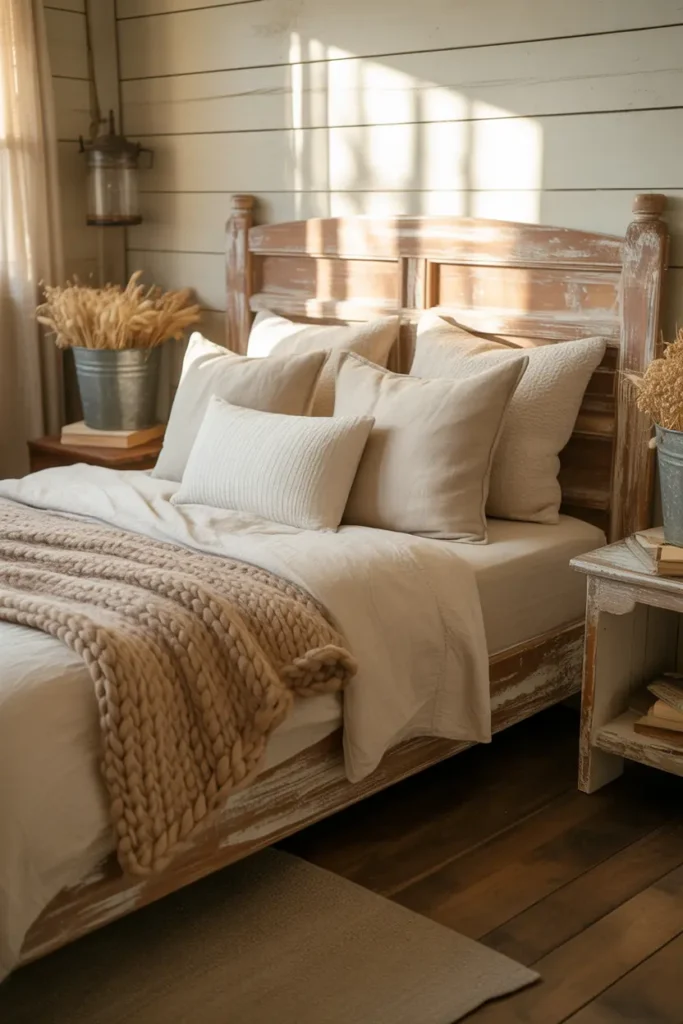
Real distressing comes from decades of use — worn edges where hands grabbed, a softened sheen where bodies leaned. Factory distressing comes from chains and hammers, and you can always tell: the “wear” is uniform, random, and in places no human hand would ever touch. When you’re hunting a real vintage frame, look for solid wood (check the underside and back — real wood shows grain everywhere, veneer shows a different material underneath), dovetail or mortise-and-tenon joinery, and wear patterns that make sense.
Where to hunt: estate sales and Facebook Marketplace beat antique stores on price by half or more, because you’re buying from people clearing houses, not dealers. A solid wood vintage bed frame typically runs $100 to $300 secondhand versus $800+ new. Check that the side rails sit solidly in the headboard slots and that slats are intact — wobble is fixable with brackets, but cracked rails are a pass. A light sanding and a coat of clear wax (not polyurethane, which looks plasticky on old wood) is all the refinishing most pieces need.
3. Layered Linen Bedding

The crown jewel of a vintage farmhouse bedroom is a real handmade quilt — and they’re still findable. Flea markets, estate sales, and Etsy sellers regularly list hand-stitched quilts for $50 to $150, a fraction of what a new “vintage-style” quilt costs. Look for even stitching, no musty smell (air it outside for a day; persistent mildew smell is a pass), and colors in the faded range — quilts that have softened to gentle pastels are the ones with the real patina.
Wash vintage textiles gently: cold water, mild detergent, no bleach, and line dry or tumble low. Layer the quilt over washed linen sheets in cream or oatmeal — never tuck everything in military-tight. The vintage farmhouse bed is folded back, slightly rumpled, with the quilt’s pattern showing. One real quilt plus simple linen does more for this style than any amount of new “rustic” bedding from a chain store.
4. Antique Nightstand Styling
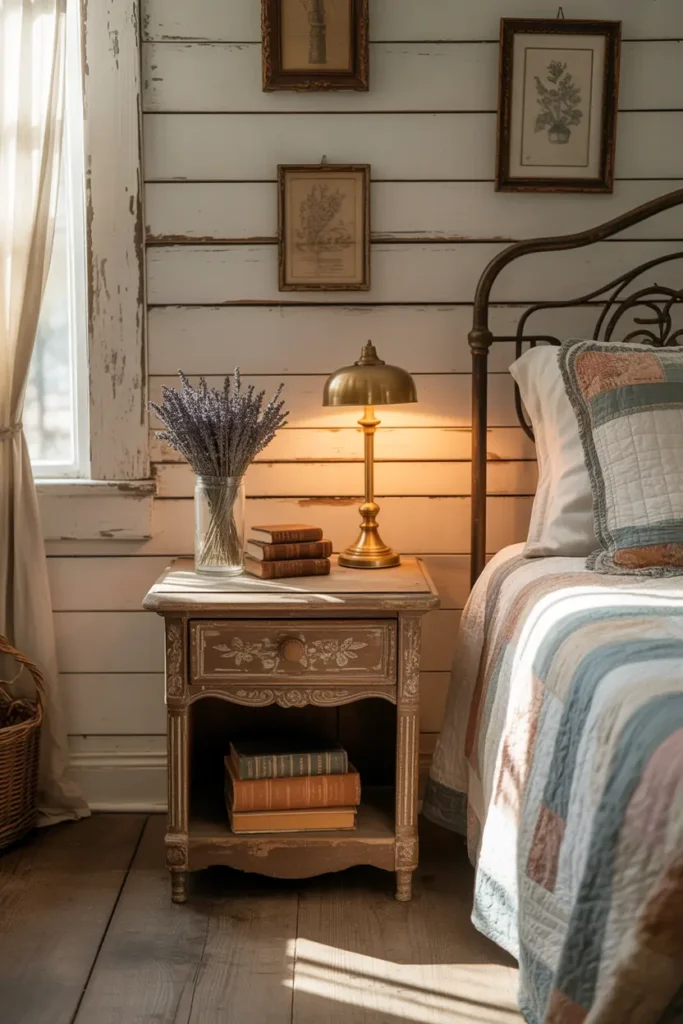
Here’s a liberating truth: your nightstands don’t need to match. In fact, a matched pair of reproduction nightstands is the fastest way to make a vintage room look new. One genuine antique — a small oak side table, a repurposed sewing cabinet, a pine washstand — paired with something simple and quiet on the other side looks collected and confident. The mismatch is the style.
When evaluating a vintage piece, open the drawers. Dovetailed drawers (the interlocking wedge joints) signal real craftsmanship; drawers that are just stapled boxes signal a reproduction. Check that drawers slide without sticking — a little candle wax rubbed on wooden runners fixes most sticking. Style the top with restraint: a lamp, the book you’re actually reading, and one small thing. The antique is the decoration; it doesn’t need additional decoration.
5. Soft Farmhouse Lighting
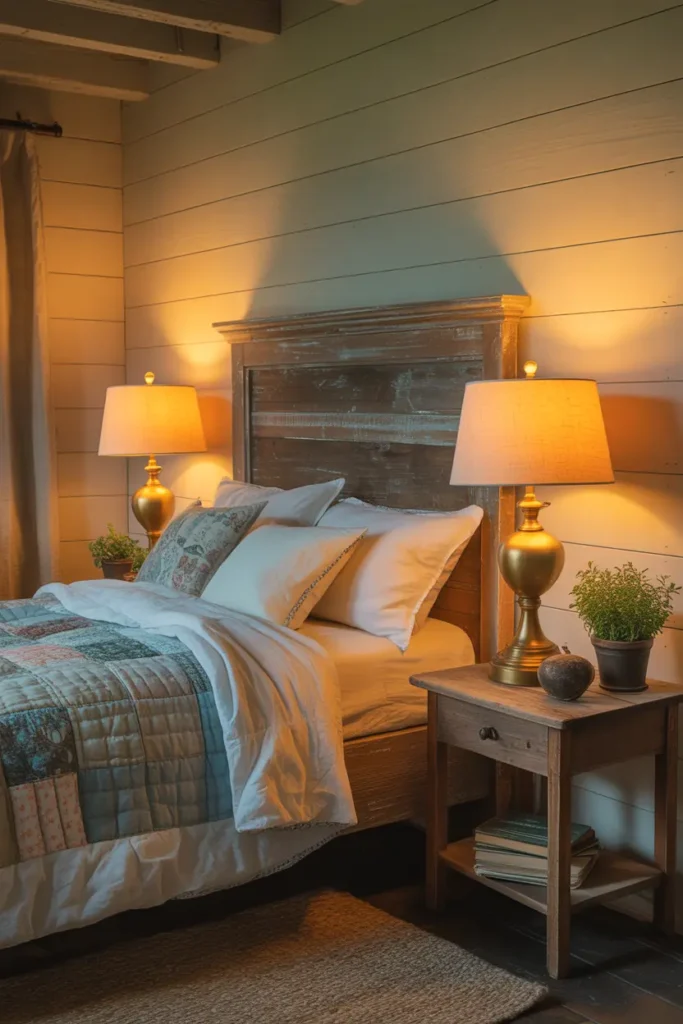
Edison-style filament bulbs were made for this style — their warm 2200K glow and visible filaments look like they belong in a farmhouse, because the technology is genuinely old. But use them wisely: filament bulbs are dim (most put out the equivalent of a 40-watt bulb), so they’re for atmosphere, not task lighting. Pair them with a proper reading lamp where you actually need light, and let the Edison bulbs do the mood work.
For fixtures, look for oil-rubbed bronze or aged brass — finishes with variation, not uniform color. Wall sconces with candle-style lights flanking the bed are the vintage farmhouse signature, and plug-in versions mean no electrician. Keep every bulb warm (2700K max for task lights, 2200K for atmosphere), and put the bedside lights on dimmers. A vintage room under harsh white light looks like an antique shop after closing; under warm dim light, it looks like home.
6. Minimal Vintage Wall Decor
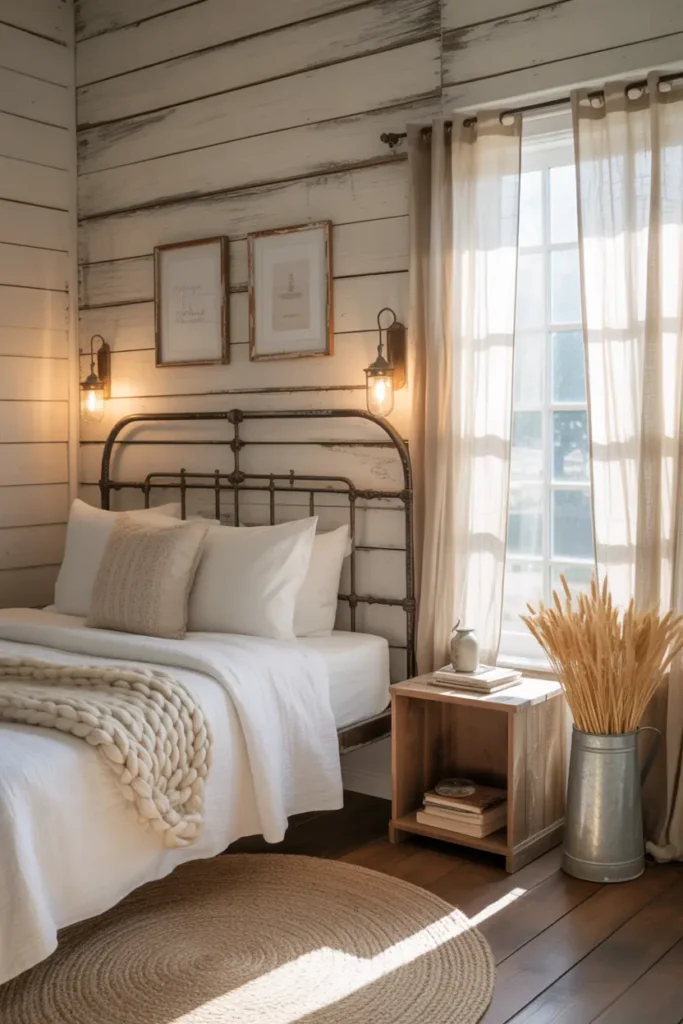
Architectural salvage is the vintage farmhouse wall decor that actually works — an old window frame, a section of tin ceiling tile, a weathered shutter — but the rule is one piece per wall, maximum. A wall of twelve small salvaged items reads as a craft fair; one substantial piece reads as architecture. Old mirrors deserve special mention: the foxing (those dark spots in antique mirror glass) that dealers apologize for is actually desirable here. It proves age, and it softens reflections beautifully.
Hang substantial pieces with real hardware — a 20-pound vintage mirror needs a wall anchor or stud, not a nail. And resist the word art. Nothing breaks the vintage spell faster than a mass-produced “FARMHOUSE” sign from a home goods chain; it’s the equivalent of wearing a t-shirt that says “VINTAGE.” Let the old things speak for themselves. They’ve earned it.
7. Woven Textures and Rugs
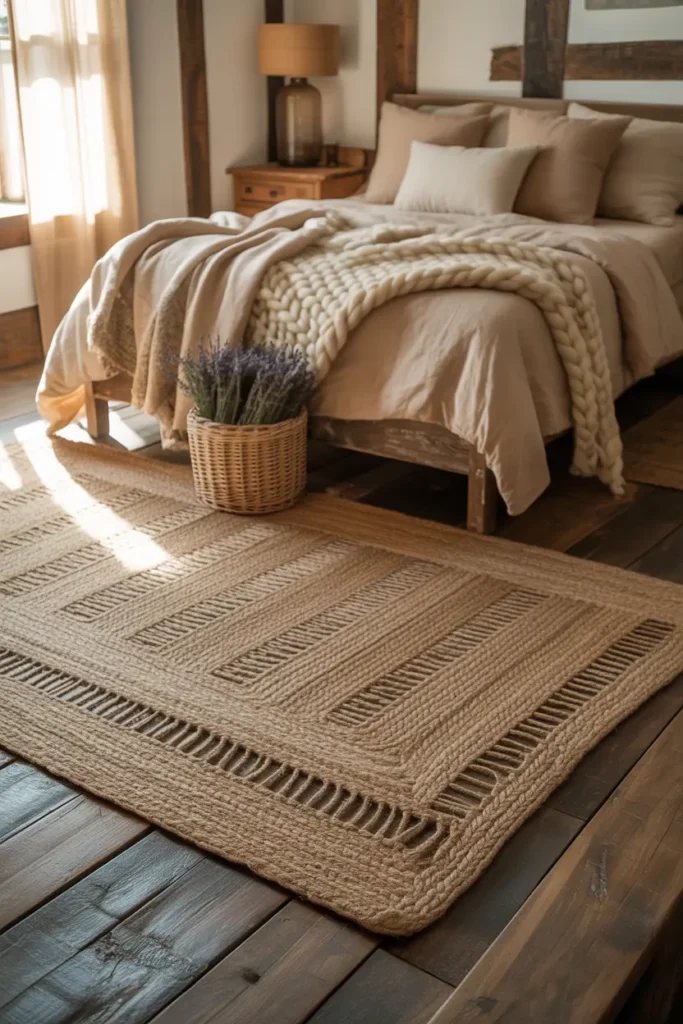
Jute, braided cotton, and rag rugs are the textiles of this style — all of them with history as working-class floor coverings, all of them honest. A braided jute rug beside the bed ($60 to $120 for a 3×5) adds the texture and warmth the room needs, and it ages well, darkening slightly and softening underfoot. Layer a smaller vintage rag rug over it at an angle for the collected look — overlapping rugs in different weaves is a classic farmhouse move.
The practical notes: jute is rough under bare feet compared to wool, so it’s best beside the bed where you step briefly, not where you lounge. It also sheds initially — vacuum without the beater bar for the first month. And keep rugs away from the “distressed” trap: a genuinely worn vintage rug with faded patches is beautiful; a new rug manufactured to look worn is the textile equivalent of pre-ripped jeans. Buy the real thing or buy plain.
8. Simple Vintage Accents
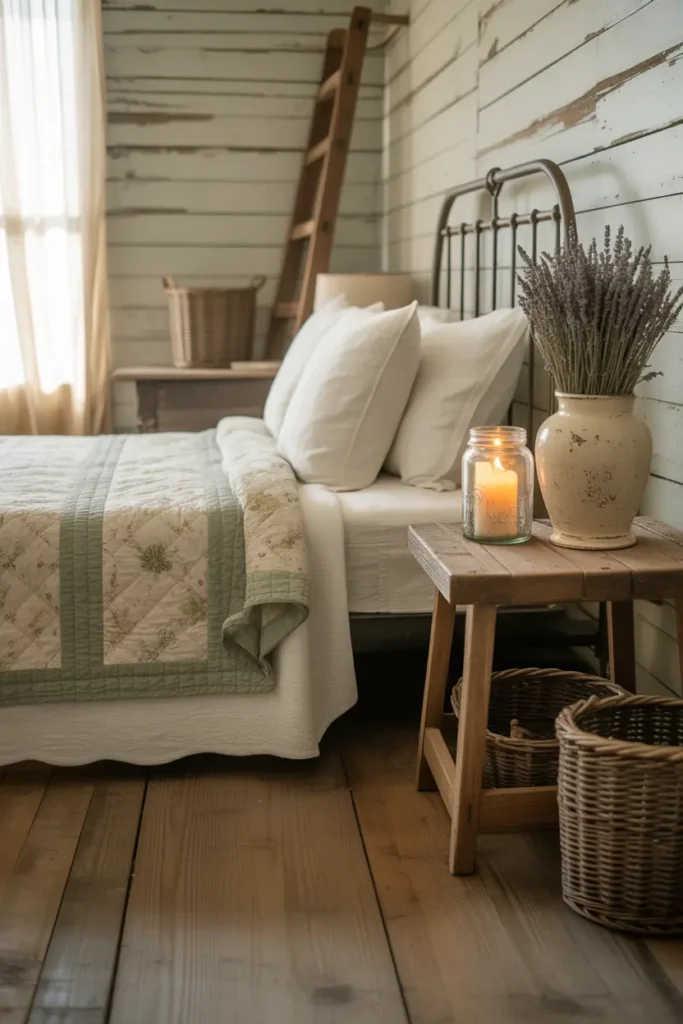
The rule for vintage accents: old things should have jobs. A stoneware crock holding wooden spoons or a plant, a stack of leather suitcases as a side table with storage inside, an old ladder holding quilts — these earn their place through function. Decorative-only vintage (the tiny rusted trinkets, the fifth ceramic chicken) is what turns “farmhouse” into “clutter.” Every object should pass the test: is it useful, or is it beautiful enough to justify being useless? Most should be useful.
Group in odd numbers, vary the heights, and leave breathing room — the same styling rules as any other style, because good composition is universal. And edit seasonally: box up half the smalls for three months, then rotate. You’ll rediscover pieces you’d stopped seeing, the room will feel fresh for free, and anything you don’t miss during its time in the box can leave permanently. Even vintage needs editing.
Final Note
Vintage farmhouse isn’t a look you buy — it’s a hunt you enjoy. Learn to spot real joinery, real patina, and real craftsmanship, buy the old things that have jobs, and let one new thing keep the room honest. The bedroom that results won’t look like anyone else’s, because it can’t. That’s the whole point.
Pro Tips
- Learn the underside test. Flip furniture over or look at the back: real solid wood shows grain on every surface; veneer over particle board reveals itself instantly. Five seconds that saves you from overpaying for fake.
- Estate sales beat antique stores. Same solid-wood pieces, half the price or less, because you’re buying from families clearing houses rather than dealers with overhead. Go on the last day for the deepest discounts.
- One new thing per room. Fresh bedding, a new rug, or new lighting keeps vintage from reading as “old stuff.” The contrast between genuinely old and deliberately new is what makes the style work.
- Ban the word art. Mass-produced “farmhouse” signs are the fastest way to make real vintage look fake. If the old things are good, they don’t need labels.
FAQs
How can I tell real distressing from factory distressing?
Real wear happens where hands and bodies touch — edges, arms, drawer pulls — and it’s gradual and uneven. Factory distressing is uniform, appears in illogical places (the middle of a panel nobody touches), and often includes identical “worm holes” drilled in patterns. If the wear doesn’t tell a story of use, it’s manufactured.
Is it safe to buy a used bed frame?
Yes, with basic checks: inspect joints for bed bugs (tiny dark spots in crevices — pass immediately if you see them), verify rails and slats are solid, and clean thoroughly before bringing it inside. Solid wood frames clean up completely; upholstered vintage frames are riskier and harder to sanitize.
How do I clean a vintage quilt?
Cold water, gentle cycle, mild detergent, no bleach or fabric softener. Air dry flat or tumble on low — never high heat, which can shatter old fibers. If it smells musty, air it outside in shade for a day before washing; sunlight deodorizes but prolonged direct sun fades dyes.
My partner thinks vintage looks like junk. How do I convince them?
Start with one undeniable piece — a beautiful old dresser or a handmade quilt — in an otherwise clean, neutral room. Most “vintage looks like junk” objections are really about clutter, not age. One stunning old piece among calm surroundings converts skeptics fast.

HowDecor is a home decor blog sharing simple, practical decorating ideas for everyday spaces. We believe a beautiful home should feel comfortable, personal, and full of warmth — and that great style does not require a huge budget. Our goal is to inspire readers to create spaces that feel peaceful, welcoming, and truly their own — one room at a time.