Most apartment living rooms fail for one unglamorous reason: the sofa is too big. Measure your wall before you buy anything — a standard 84-inch sofa swallows a 10-by-12-foot rental living room whole, leaving you 18 inches of walkway and a room that feels like a showroom storage unit. Start with tape on the floor instead: outline your sofa footprint, then outline a 30-inch path for walking. Whatever furniture fits inside those lines is your real budget of space.
That discipline pays off fast. When every piece earns its square footage, even a 300-square-foot living room can hold a reading corner, a TV zone, and a place for two guests — without feeling squeezed. Here are seven ideas that work specifically in rentals, where you can’t knock down walls or paint everything charcoal.
1. A Light Neutral Palette That Actually Stays Interesting
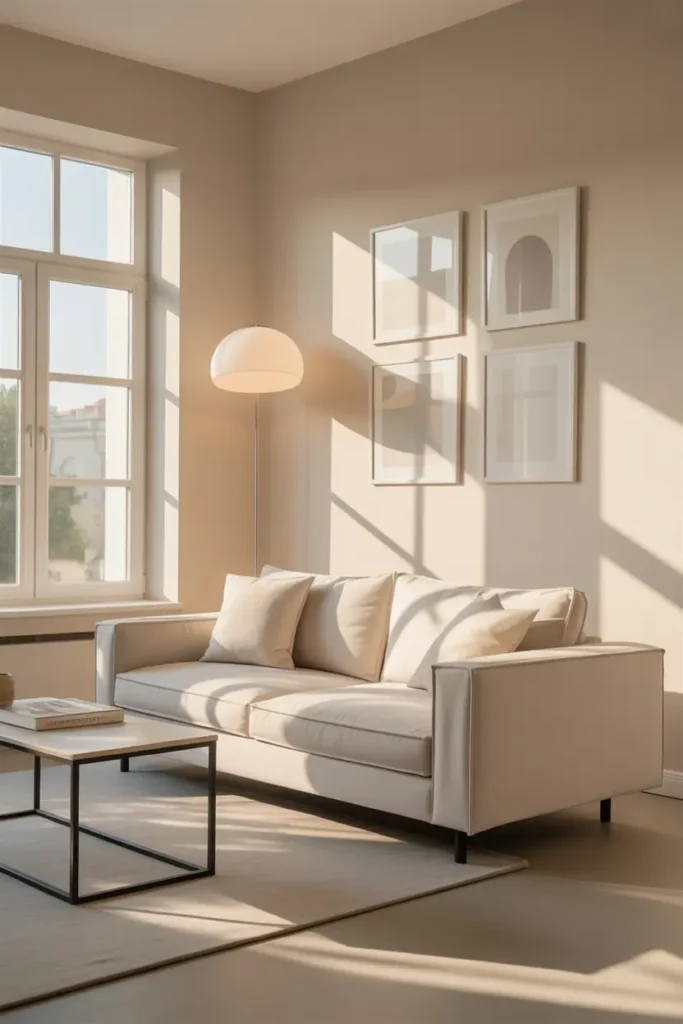
White-on-white looks great in photos and sterile in person. The fix isn’t abandoning neutrals — it’s layering three tones: a warm white on walls, a mid-tone like greige or oatmeal on upholstery, and one deeper note (charcoal, walnut, espresso) for grounding. That third tone is what keeps a beige room from looking unfinished. Keep wall paint in the LRV 65–85 range; anything lighter photographs flat, anything darker closes in a small room.
Renter trick: if you can’t paint, do the same three-tone trick with removable pieces. A large oatmeal area rug, ivory curtains, and a walnut-stained coffee table give you the palette without touching the walls. Common mistake: buying everything in the exact same shade of beige, which reads as a hospital waiting room rather than a designed space.
2. Choosing a Sofa That Doesn’t Eat the Room
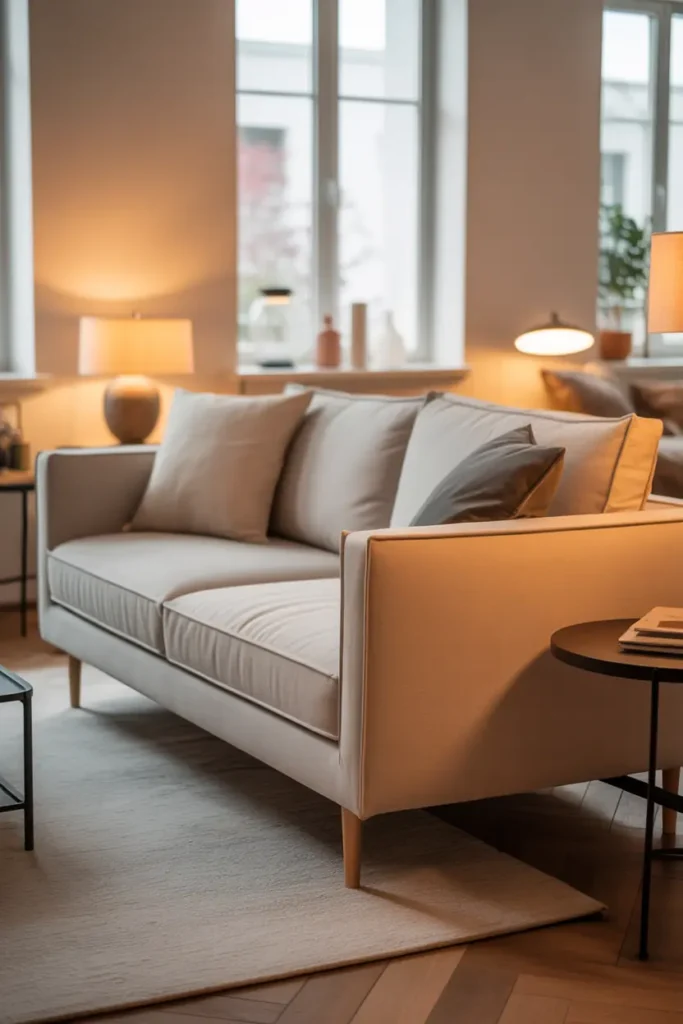
For apartments, cap sofa depth at 36 inches and look for raised legs of at least 4 inches — visible floor underneath makes the piece read smaller than it is. Armless or low-profile arms save 6–8 inches of width, which is an entire side table in a small room. A loveseat (58–68 inches) plus one accent chair often serves a small room better than a full three-seater, because the chair can float near a window while the loveseat anchors the wall.
Skip the matching loveseat-plus-sofa set; it fills rooms fast and looks dated. If your budget is tight, a quality slipcovered loveseat beats a cheap full-size sofa every time — slipcovers wash, which matters when the couch is three feet from the front door.
3. Mirrors Placed With Intent, Not Just Hung Anywhere
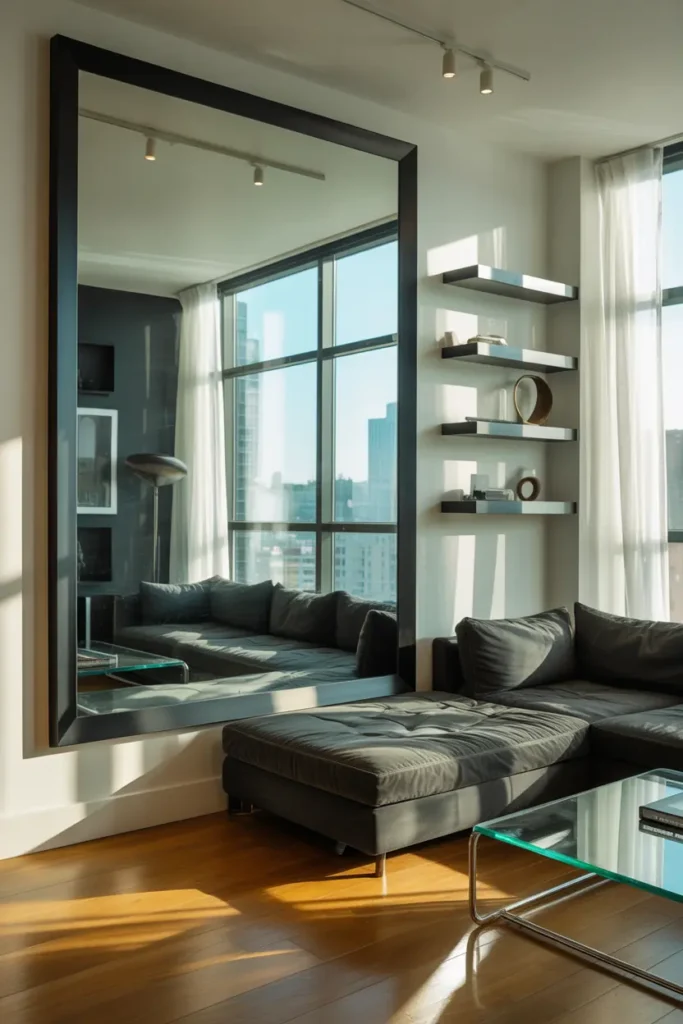
A mirror doubles a room only if it reflects something worth doubling. Hang it across from a window, not across from a blank wall or the TV — you want daylight and greenery bouncing, not your own reflection mid-movie. Size matters: a mirror under 24 inches wide reads as decoration, not expansion. Aim for 30–40 inches wide on the main wall, with the center at roughly 57 inches from the floor.
Leaning floor mirrors (60+ inches tall) work brilliantly in rentals because they need no holes in the wall. Anchor the base behind a console or plant so it can’t slide. One honest caveat: mirrors also double clutter, so this idea pairs badly with open, busy shelving.
4. Wall Decor With Breathing Room

In small living rooms, wall art should occupy 60–75% of the wall width above a sofa — smaller looks lost, larger overwhelms. One strong piece usually beats a scattered gallery wall in tight quarters, because every frame adds visual edges that chop up the space. If you love the gallery look, keep all frames in one finish and hang them inside a tight rectangle rather than sprawling.
Leave one wall nearly bare. That single calm surface gives the eye somewhere to rest and makes the decorated walls look deliberate instead of crowded. Mistake to avoid: art hung too high — the center of any piece should sit at eye level, around 57–60 inches, not floating near the ceiling.
5. Floating Shelves That Hold Things Without Looking Heavy
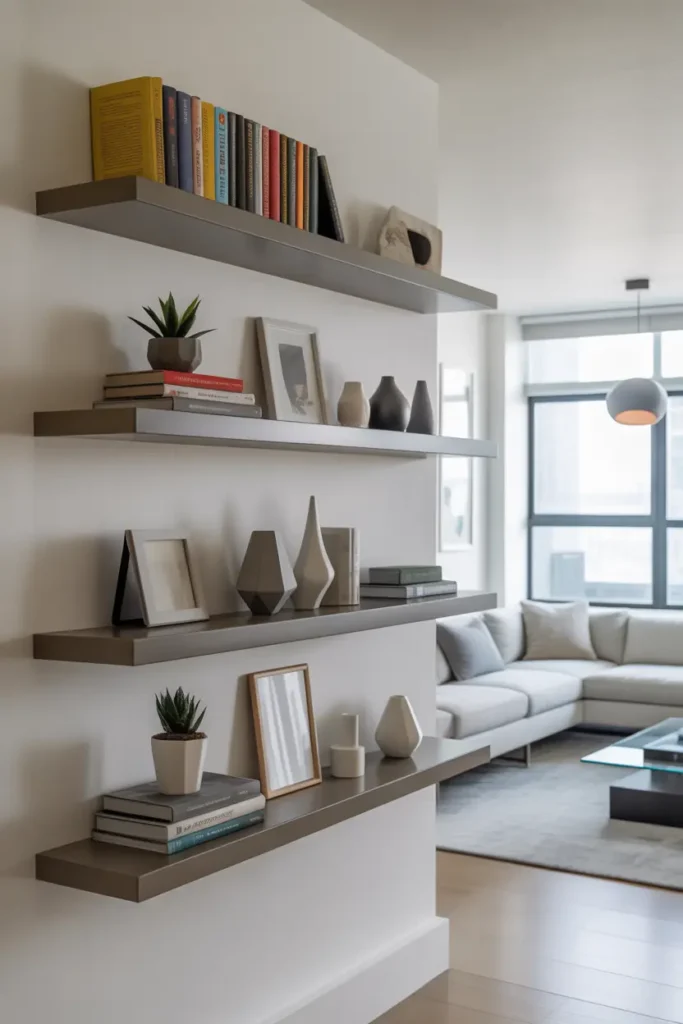
Floating shelves earn their keep in apartments because they store vertically without a bookcase’s footprint. The styling rule is the rule of thirds: one third books or closed boxes, one third decorative objects, one third empty space. Crammed shelves look like storage; edited shelves look like design. Standard brackets fail on drywall — use floating shelves with hidden metal cleats rated for at least 25 pounds per shelf, and always hit a stud for anything holding books.
Keep shelf depth at 8–10 inches; deeper shelves cast shadows and collect junk. Style from the top down, tallest items at the back, and group objects in odd numbers. In a rental, two well-styled shelves beat a whole wall of cluttered ones.
6. Lighting in Layers, Not One Sad Ceiling Light
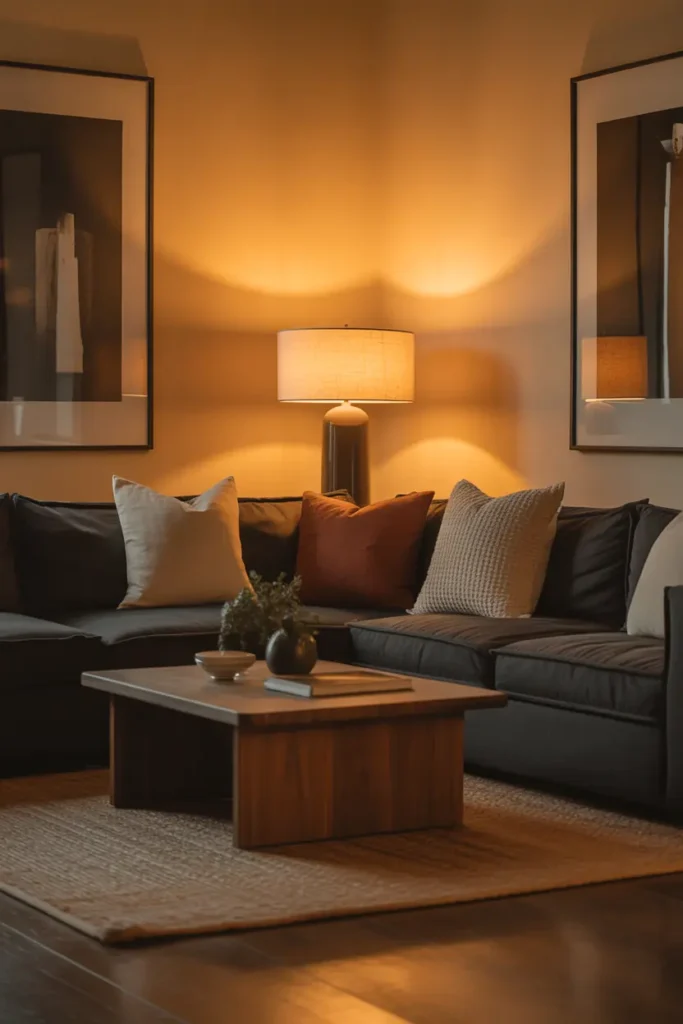
Rental ceilings usually offer one harsh overhead fixture. Don’t fight it — leave it off and build three layers instead: ambient (a floor lamp with a fabric shade, 2700K bulbs), task (a small table lamp where you read), and accent (LED strip behind the TV or a candle cluster on the coffee table). Warm white at 2700–3000K makes small rooms feel cozy; daylight bulbs at 5000K make them feel like offices.
Plug-in wall sconces with cord covers give you the layered look without an electrician. Dimmer plugs cost under $15 and transform a $40 floor lamp into something that feels designed. The most common error: lighting only the center of the room, which leaves corners dark and makes the space feel smaller than it is.
7. Leaving Floor Visible on Purpose
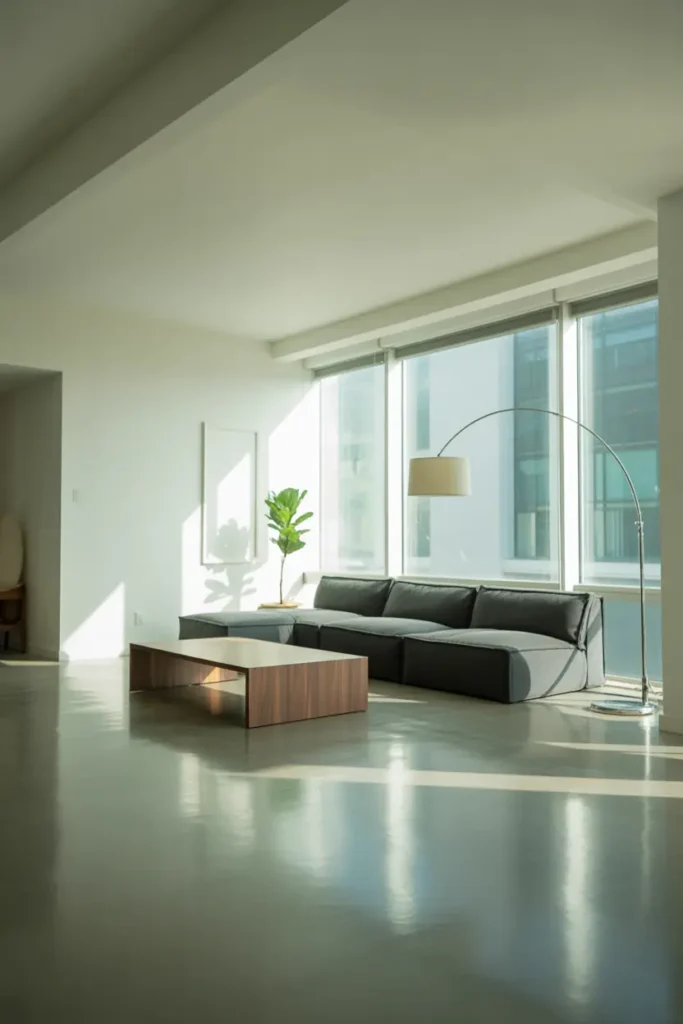
The single most luxurious thing in a small apartment is empty floor. Resist the urge to fill every corner — a 24-inch gap between furniture groupings reads as intentional, not sparse. Pull the sofa 3–4 inches off the wall; the shadow line behind it adds depth and stops the room feeling shoved against the edges.
Choose one piece with legs for every piece that sits on the floor. If the media console is a solid box, make the coffee table open-legged. That mix of visible and hidden floor is what makes a 400-square-foot living room feel airy rather than packed.
Final Note
A great apartment living room isn’t about having more — it’s about each piece pulling its weight. Measure first, choose a three-tone palette, light in layers, and leave some floor empty. Small rooms styled this way don’t feel like compromises; they feel curated.
Pro Tips
- Before buying anything, tape out furniture footprints on the floor with painter’s tape and live with the outlines for two days — it prevents 90% of too-big purchases.
- Buy your rug last, not first. It must be large enough that the front legs of the sofa and chairs sit on it — an 8×10 rug in most apartment living rooms, 5×7 at minimum.
- Swap cool-white bulbs for 2700K warm-white the day you move in. It’s the cheapest single upgrade in any rental.
- Photograph your room from the doorway before and after each change. The camera reveals clutter and imbalance your eyes have learned to ignore.
FAQs
What is the best sofa size for a small apartment living room?
Stay under 72 inches wide and 36 inches deep, with raised legs. A loveseat plus an accent chair usually fits better than a full three-seater and gives you more layout flexibility.
How can I make my rental living room look bigger without painting?
Use a large light-colored rug, hang curtains high and wide to frame windows generously, lean a tall mirror across from a window, and keep furniture 3–4 inches off the walls. Visible floor and daylight do more than paint ever will.
Should I mount the TV or use a console in an apartment?
A low, slim console is usually better for renters — no wall damage, and it provides storage. Keep it no wider than the wall section it sits on, and leave 4–6 inches of clearance on each side so it doesn’t look wedged in.
How many light sources does a small living room need?
At least three: one ambient (floor lamp), one task (table or reading lamp), and one accent (LED strip, candles, or a small sconce). Three sources at different heights eliminate the flat, shadowy look of a single ceiling light.

HowDecor is a home decor blog sharing simple, practical decorating ideas for everyday spaces. We believe a beautiful home should feel comfortable, personal, and full of warmth — and that great style does not require a huge budget. Our goal is to inspire readers to create spaces that feel peaceful, welcoming, and truly their own — one room at a time.