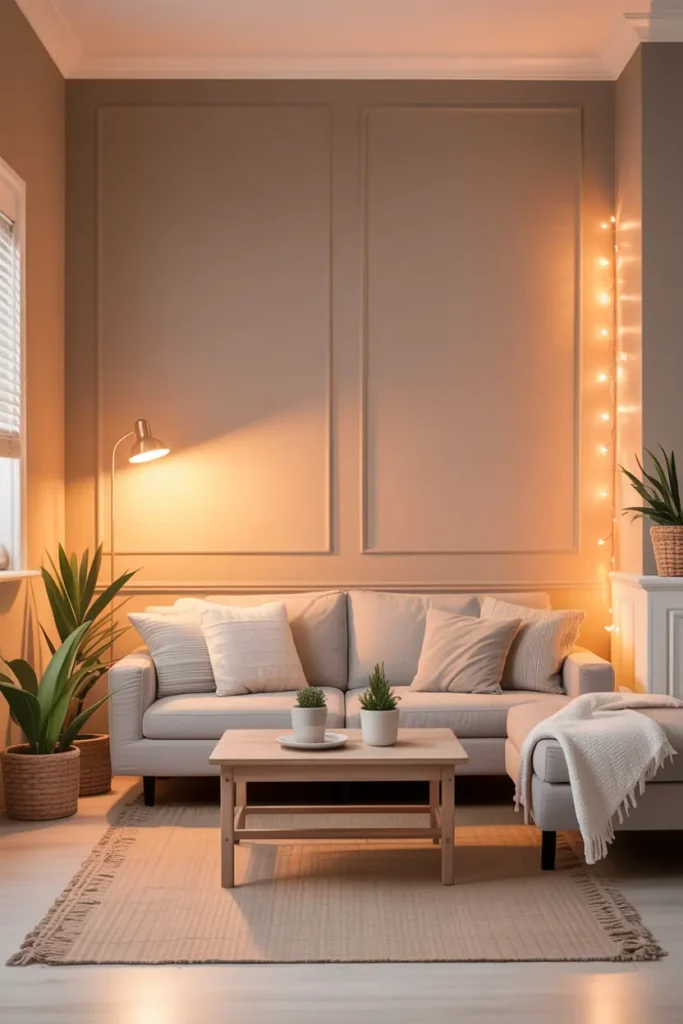
When my friend moved into her first apartment last year, she had exactly $200 to make the living room feel finished. No new sofa, no new rug — just a strict little budget and a weekend. By Sunday evening, the place looked like it belonged to someone with a decorator’s number saved in their phone. The secret wasn’t luck; it was spending where it counts and ignoring everything else.
That project convinced me of something: a modern home is not bought, it’s edited. The ideas below are the ones that actually move the needle — each one costs less than a nice dinner out, and most take under an hour. Start anywhere; you don’t need to do all ten to feel the difference.
Table of Contents
- Cushion Cover Switch
- Minimal Wall Frames
- Mirror Style Trick
- Basket Storage Decor
- Warm Lighting Touch
- Corner Styling
- Bed or Sofa Focus
- Final Thought
Cushion Cover Switch
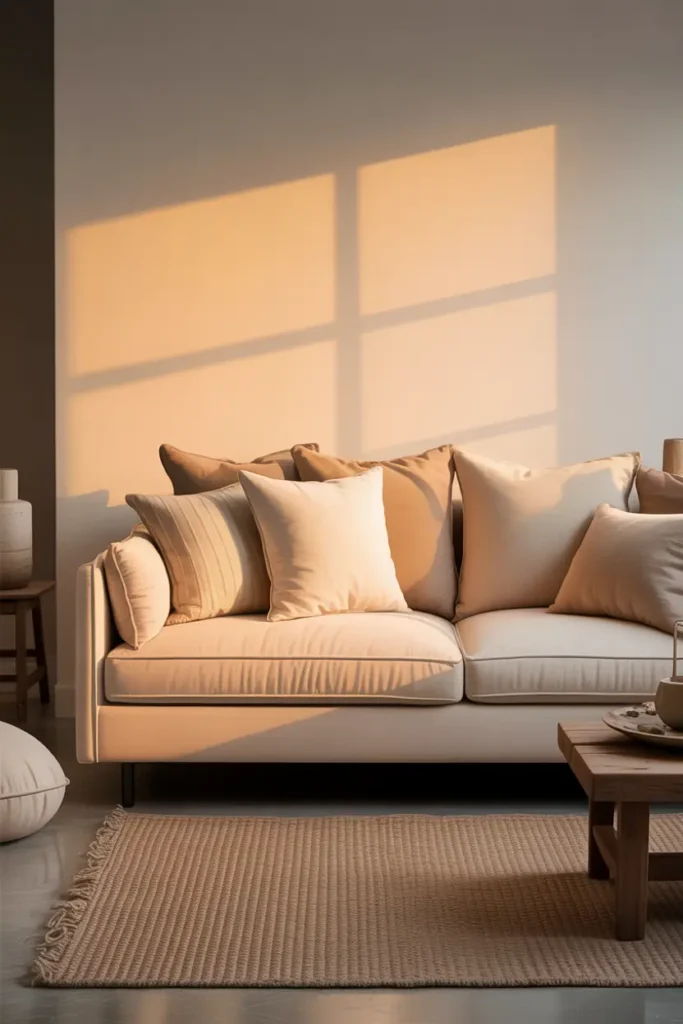
This is the fastest win in decorating, and most people underestimate it. A new set of cushion covers — not new cushions, just the covers — costs roughly $15–$30 for a four-pack and takes ten minutes to put on. Buy them a size down from your inserts (an 18-inch insert in a 16-inch cover) and you’ll get that plump, designer-style look instead of the sad, flat pancake most living rooms suffer from.
The mistake I see everywhere is matching everything. A modern sofa looks best with a quiet formula: one solid in a warm neutral, one with a simple texture (linen, chunky knit), and one with a small-scale pattern that picks up a color from the room. Three cushions, done. Rotate them seasonally — heavier knits in winter, light cottons in summer — and your sofa gets a fresh identity twice a year for almost nothing.
Minimal Wall Frames
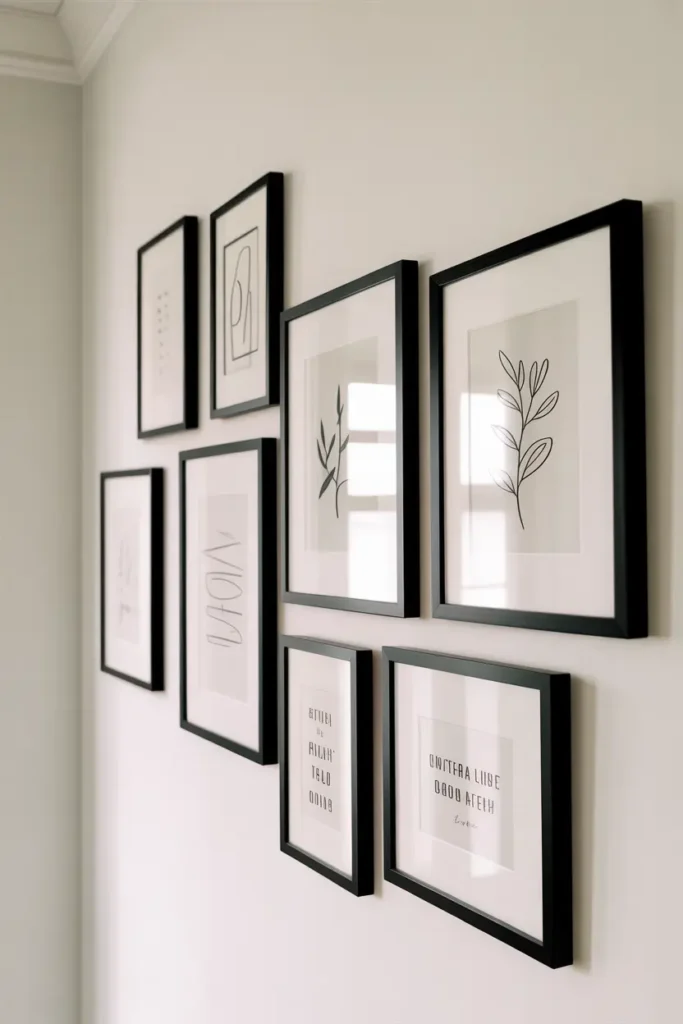
Bare walls are what make a room feel unfinished, but filling them doesn’t require gallery-wall ambition. Two or three minimal frames, hung in a straight horizontal line at eye level (center the row at 57 inches, the standard museum height), can anchor an entire wall. Black metal frames in the same slim profile look pulled-together; mixing ornate gold with cheap plastic is what reads as chaos.
Skip expensive art prints. Frame pages from old calendars, botanical illustrations from public-domain archives, or even a piece of beautiful fabric stretched inside a frame. The frame does 80% of the visual work. And measure twice: frames hung too high is the single most common wall-decor mistake — when in doubt, go lower than your instinct says.
Mirror Style Trick
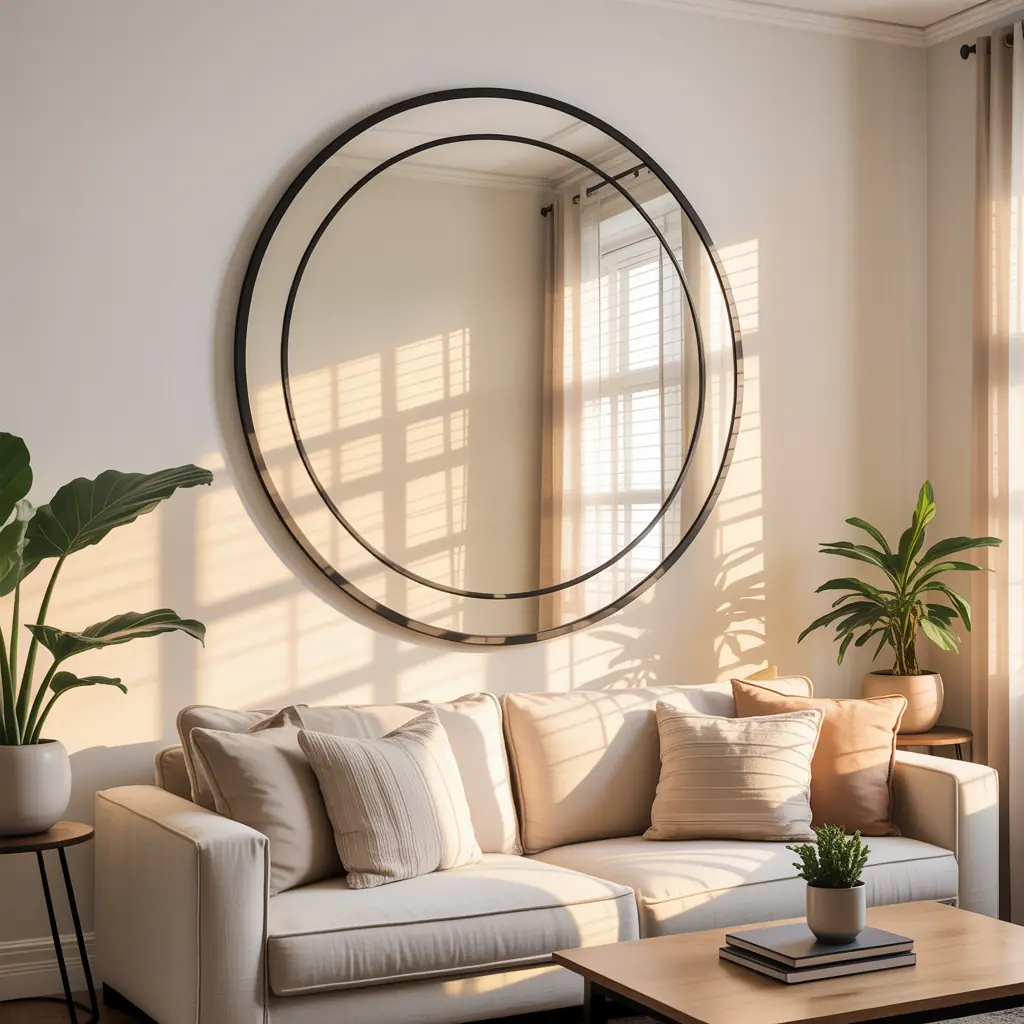
A mirror is the only decor item that literally doubles light and space, so placement matters more than the mirror itself. Hang it where it reflects a window — not a blank wall — and you get a second source of daylight for the price of one. Opposite a window is the power position; across from a wall of art is pointless.
For small rooms, one large mirror beats a cluster of small ones. A 24×36-inch leaning mirror against a bedroom wall adds depth without a single nail hole, and round mirrors soften the hard rectangles of modern furniture. Buy the simplest frame you can find; the mirror’s job is to disappear and reflect, not to perform.
Basket Storage Decor
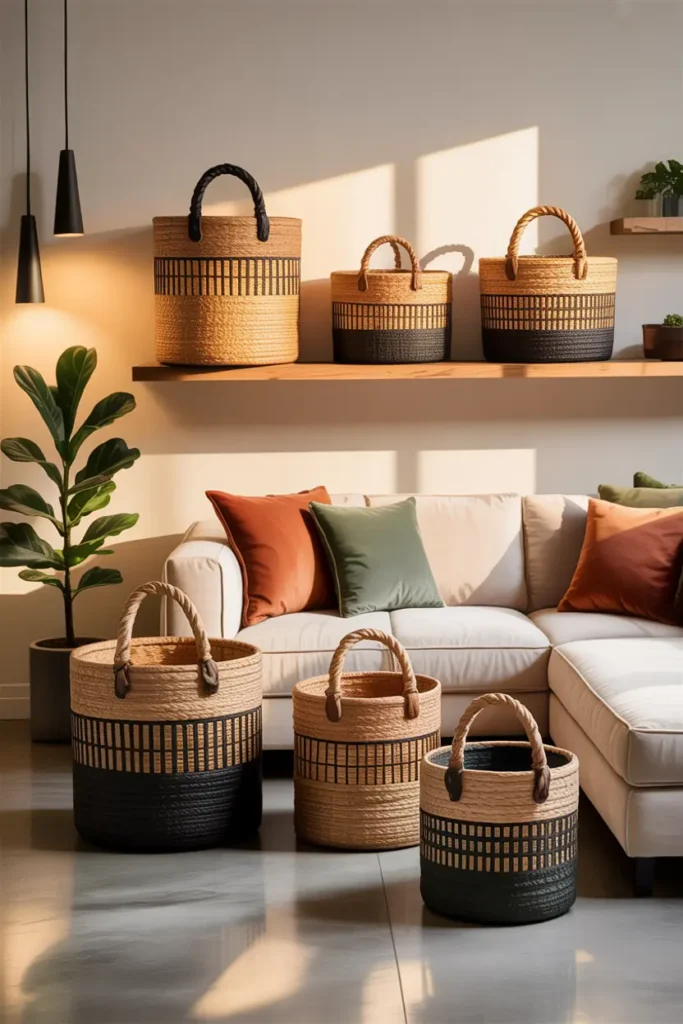
Every lived-in home has stuff that needs somewhere to go — throws, remotes, the dog’s toys. A seagrass or jute basket (roughly 16–18 inches wide for a living room) turns that problem into texture. Group two in different sizes beside the sofa or fireplace; alone, one basket looks like an afterthought.
Choose open-weave baskets for living areas and lidded ones for anywhere visible clutter collects, like entryways. One warning: keep them off wet bathroom floors, where natural fibers mildew. In dry rooms, they’re the rare storage that gets better-looking with age.
Warm Lighting Touch
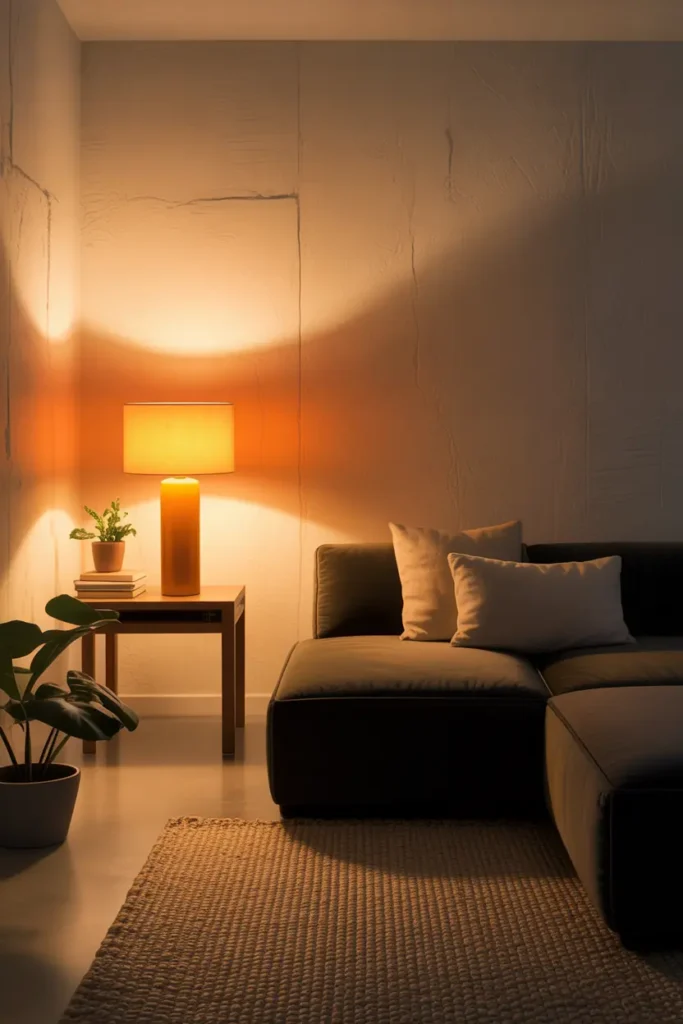
This is the idea people skip and shouldn’t. Swap your overhead bulbs for 2700K “warm white” LEDs — cool daylight bulbs (4000K+) are what make a room feel like an office — and add one floor lamp or table lamp to a dark corner. Three light sources per room is the rough rule; most homes have exactly one.
A lamp placed beside a reading chair at about 42–48 inches high throws light exactly where you sit. Dimmable bulbs cost a dollar or two more and change everything: full brightness for cleaning, a low glow for evenings. Under $25 total, and the room feels expensive in a way no cushion can fake.
Corner Styling
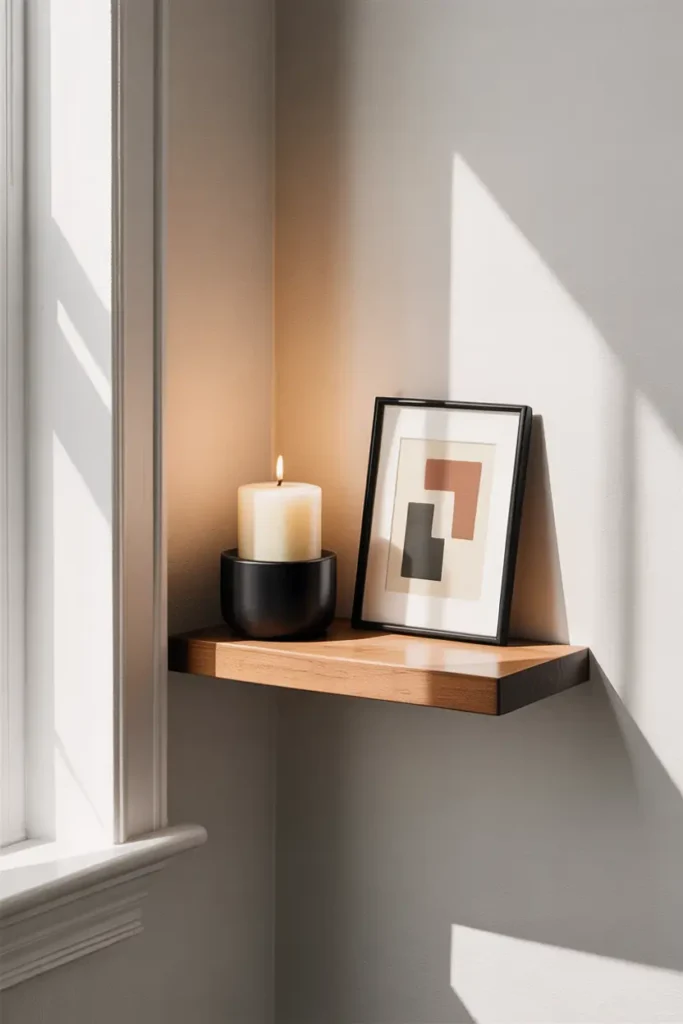
Empty corners make a room feel abandoned. The fix is a “corner moment”: one tall element (a snake plant, a floor lamp, a leaning frame) plus one small one (a candle, a stack of two books). That’s it — two items, different heights, and the corner reads as intentional.
Resist the urge to fill every corner. One styled corner per room is plenty; three styled corners reads as a showroom. Pick the corner you actually see when you walk in — the first thing your eye lands on sets the tone for the whole space.
Bed or Sofa Focus
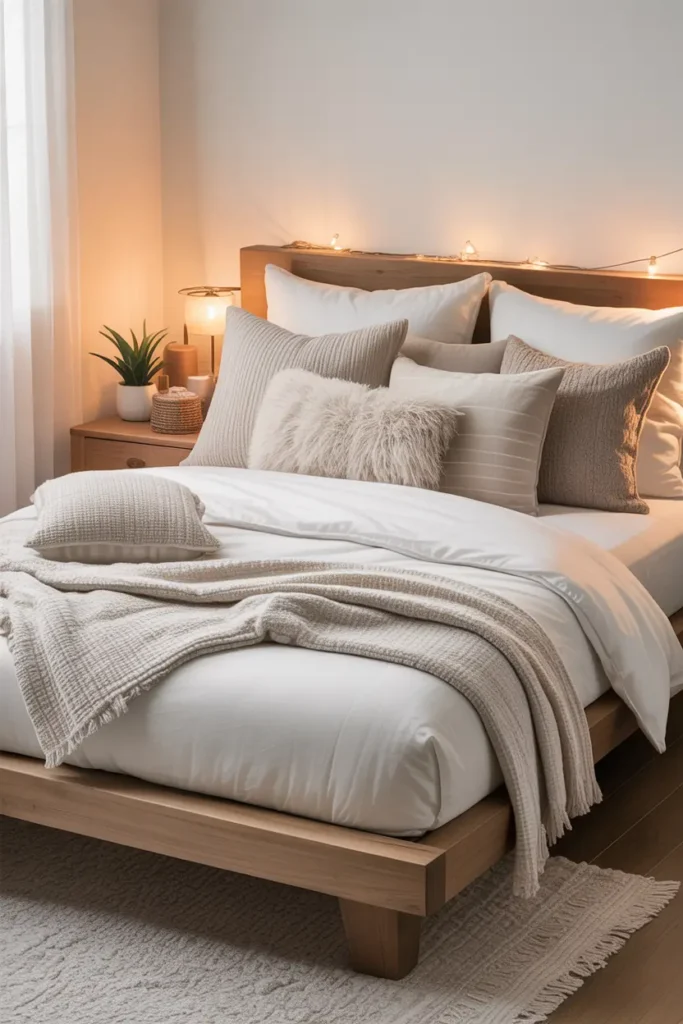
Pick the one piece of furniture your eye hits first — usually the sofa or the bed — and style only that. A $20 throw draped over one arm, cushions in the formula above, and a neatly folded blanket at the foot of the bed. When the hero piece looks styled, the brain forgives the plain side tables and the old rug.
This works because perception is lazy: one well-dressed anchor convinces visitors the whole room is considered. Spend your ten ideas’ worth of energy here and let the rest of the room stay quiet. Hotels do exactly this — one gorgeous bed, everything else fades.
Final Thought
Modern doesn’t mean expensive; it means deliberate. Two or three of these ideas, done well, will outperform ten done halfway. Start with the one that bothers you most when you look at your room — that’s always the right first move.
Pro Tips
- Shop your own home first. Before buying anything, move cushions, art, and lamps between rooms. A frame that looks lost in the bedroom often shines in the hallway.
- Keep receipts for a week. Buy the covers or the lamp, live with it seven days, and return it if it doesn’t earn its place. Budget decorating only works when every dollar is deliberate.
- Photograph before you start. One phone photo of each room gives you a “before” that makes the improvement visible — and tells you honestly whether the change worked.
- One in, one out. For every new decor item, remove something. Modern style is subtraction; clutter is the enemy of every idea on this list.
FAQs
What is the cheapest way to make a modern home look better?
Start with lighting and cushion covers. Warm 2700K bulbs plus a lamp in a dark corner cost under $25 and change the room’s entire mood, while new covers in the right sizes make the sofa look designer-made for another $20–$30.
How many cushion covers do I need for a modern look?
Three is the sweet spot for a standard sofa: one solid neutral, one textured, one small-scale pattern. Odd numbers look more natural than even, and three keeps it minimal instead of cluttered.
What size mirror makes a small room look bigger?
One large mirror — at least 24×36 inches — does more than several small ones. Place it where it reflects a window so it bounces actual daylight, not just wall space.
Can I mix metals and natural materials on a budget?
Yes, but keep it disciplined: pick one dominant material (say, natural fibers like jute and seagrass) and let metals be accents (a slim black frame, brass lamp base). When everything competes, nothing looks intentional.

HowDecor is a home decor blog sharing simple, practical decorating ideas for everyday spaces. We believe a beautiful home should feel comfortable, personal, and full of warmth — and that great style does not require a huge budget. Our goal is to inspire readers to create spaces that feel peaceful, welcoming, and truly their own — one room at a time.