Decorating a whole home on a budget feels overwhelming until you stop thinking “whole home” and start thinking “one room, one move.” Every room has a single change that delivers most of the transformation — the 80/20 of decorating. Find that move per room, do them one weekend at a time, and in two months the entire house feels different without a single big purchase.
This is your room-by-room playbook: the highest-impact affordable idea for each space, what it costs, and the detail that makes it work. Do them in any order — each room stands alone.
Idea 1: Living Room — The Cushion Refresh
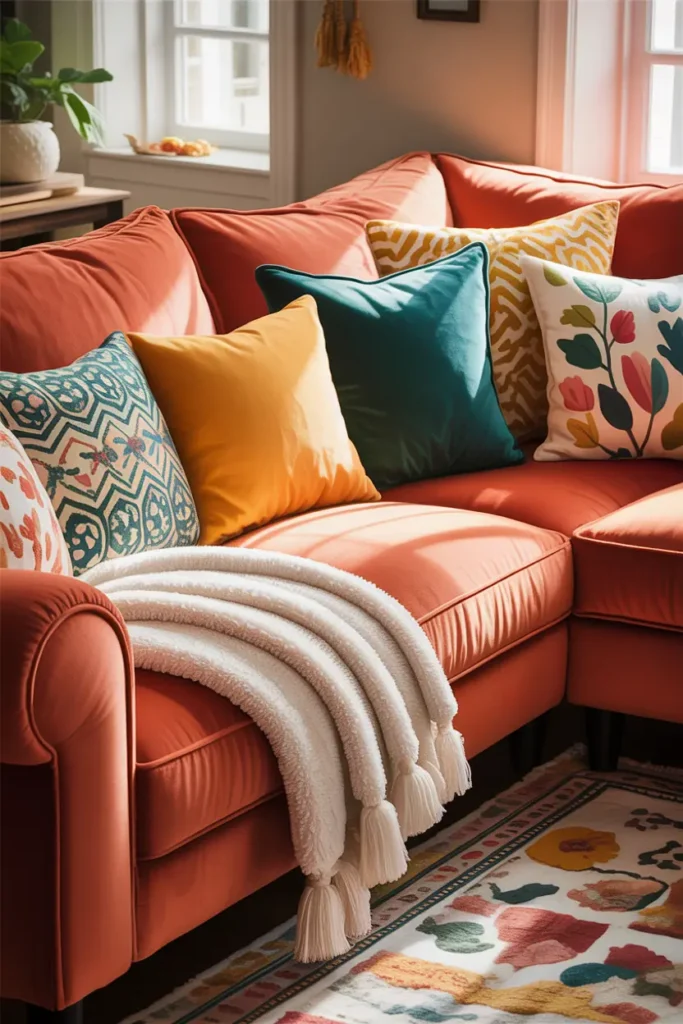
The living room’s 80/20 move is textiles: new cushion covers and a throw. The sofa is the room’s largest object, and redressing it changes the room’s entire color story for $30–50. Choose covers in two coordinating tones plus one pattern, all in the same fabric family, and add a throw in a contrasting texture draped over one arm.
While you’re at it, do the free companion move: pull the sofa 3 inches off the wall and angle one chair toward the conversation instead of the TV. New cushions plus a better layout reads as a new room, not a refreshed one.
Idea 2: Hallway — A Gallery That Guides
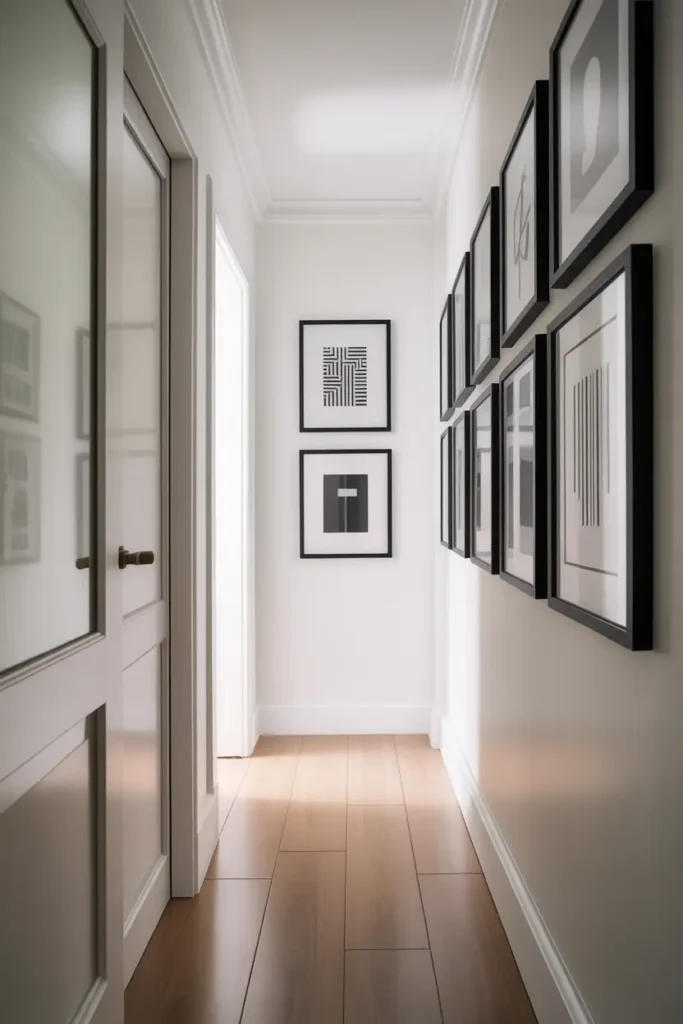
Hallways are the most under-decorated space in most homes, which means they’re the cheapest to transform. A simple gallery — 5–8 frames in matching finishes, hung in a straight line at 57 inches to center — turns a pass-through into a destination. Use family photos, travel prints, or free public-domain art; the uniformity of framing does the design work.
Hallway galleries work because people view them in motion — keep images simple and bold enough to read at walking pace. Add one small picture light or a plug-in sconce above the center frame and the hallway feels like a gallery wing, not a corridor.
Idea 3: Bedroom — Bedding as the Whole Decor
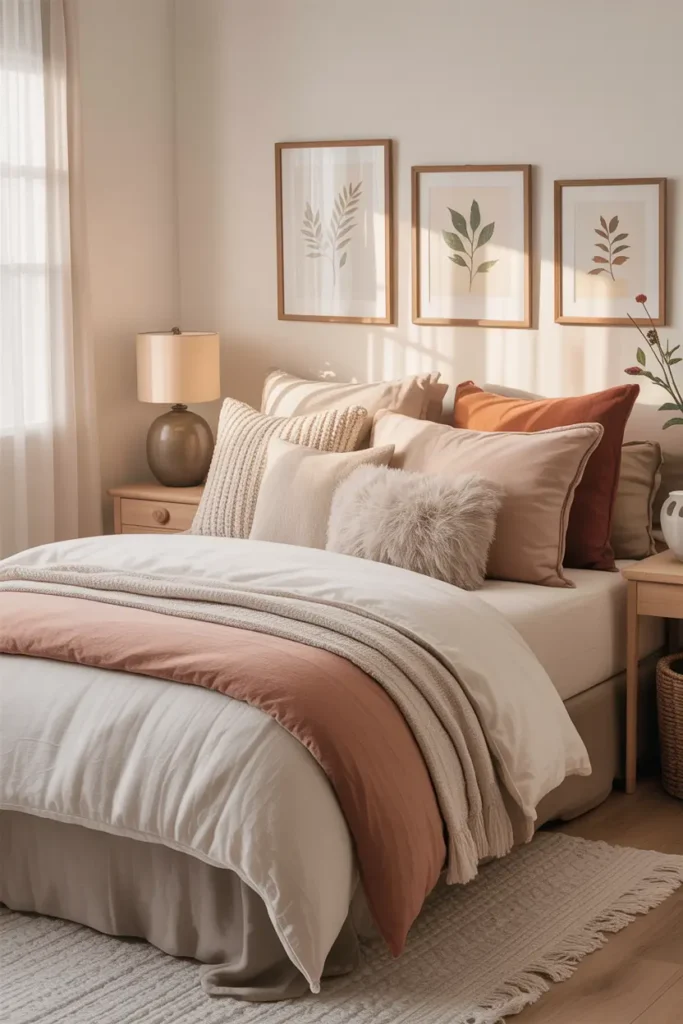
In the bedroom, the bed is 70% of what you see — so bedding IS the decor. One quality-feeling duvet set in a warm neutral or soft pattern ($40–70), layered with a throw and two sleeping pillows plus two shams, makes the entire room feel designed. It’s the single purchase with the biggest bedroom impact per dollar.
Choose natural fibers for comfort and a duvet one size larger than the bed for that plush, hotel drape. Then clear the nightstands to one lamp, one book, one small object each — the styled bed plus calm surfaces is a complete bedroom look.
Idea 4: Dining Room — One Centerpiece, Always
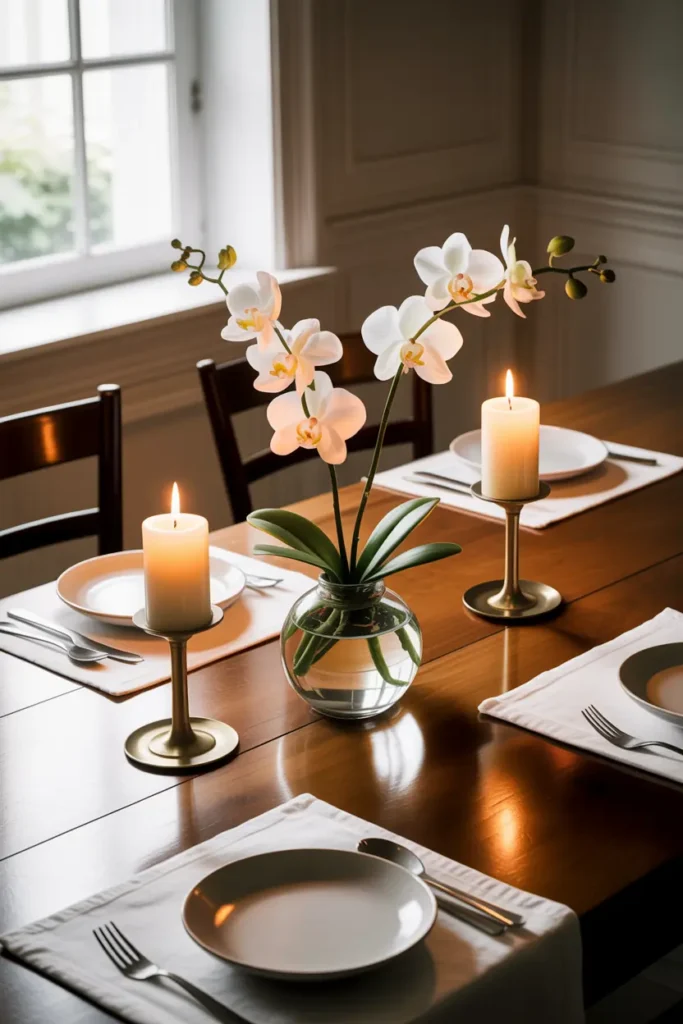
A dining table with a permanent centerpiece always looks ready — and “ready” reads as styled. The affordable formula: a runner ($10–15) plus a low arrangement that never moves — a wooden tray with three candles of varying heights and a small plant or bowl of fruit. It takes five minutes to assemble and the table never looks bare again.
Keep it under 12 inches tall so conversation flows over it, and choose elements that survive daily life — no fussy flowers that die in three days. The centerpiece should look good on a Tuesday with no effort, not just on dinner-party Saturday.
Idea 5: Entryway — Mirror Plus a Landing Spot
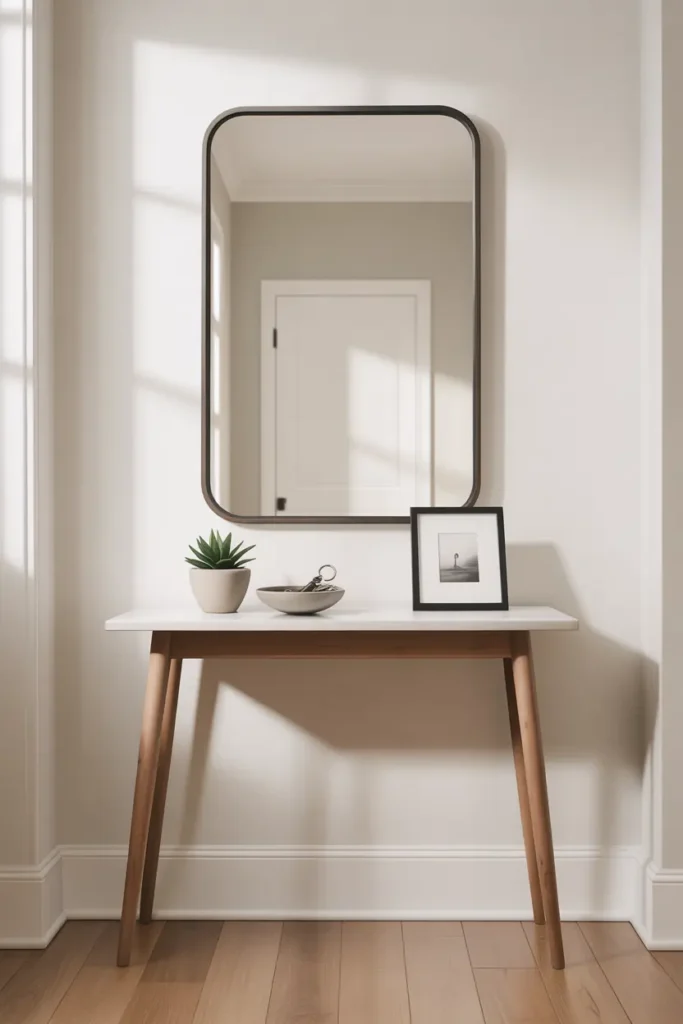
Every entryway needs two things: a mirror (for last looks) and a landing spot (for keys, mail, bags). A round mirror ($20–30, or thrifted for $8) hung at eye level plus a small console, shelf, or even a wall-mounted ledge with a tray and hooks covers both. This $30–50 zone eliminates the “drop everything on the nearest surface” chaos that makes homes feel messy.
Add a small rug or runner to define the entry zone — it catches dirt and signals “you’ve arrived.” The entryway is the first and last thing you see daily; making it functional and pretty pays off twice a day, every day.
Idea 6: The Forgotten Corner — A Reading Nook
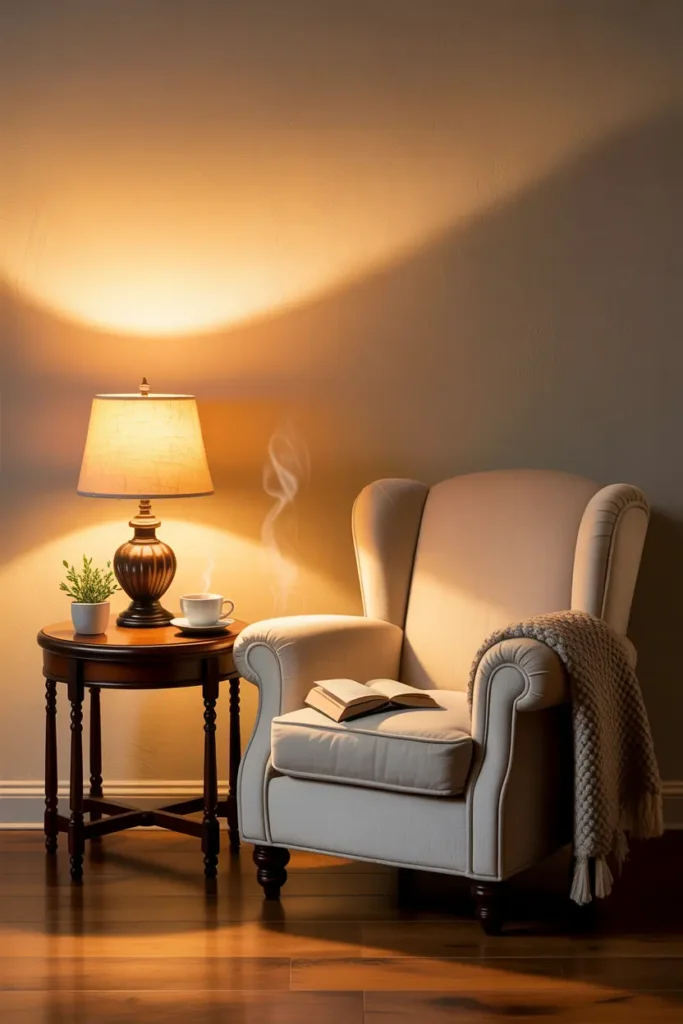
Every home has a dead corner — and every dead corner wants to be a reading nook. The recipe: a comfortable chair (thrifted armchair $20–40, or even a large floor cushion), a small side table, and a floor or table lamp with warm light. Total: $40–70 for a whole new “room” within your room.
Position it near a window for daylight reading, add a throw and a small basket for books, and suddenly the house has a retreat. Unused corners make homes feel incomplete; a nook makes them feel generous. It’s the cheapest square footage you’ll ever “add.”
Idea 7: Shelves — Styled, Not Stuffed
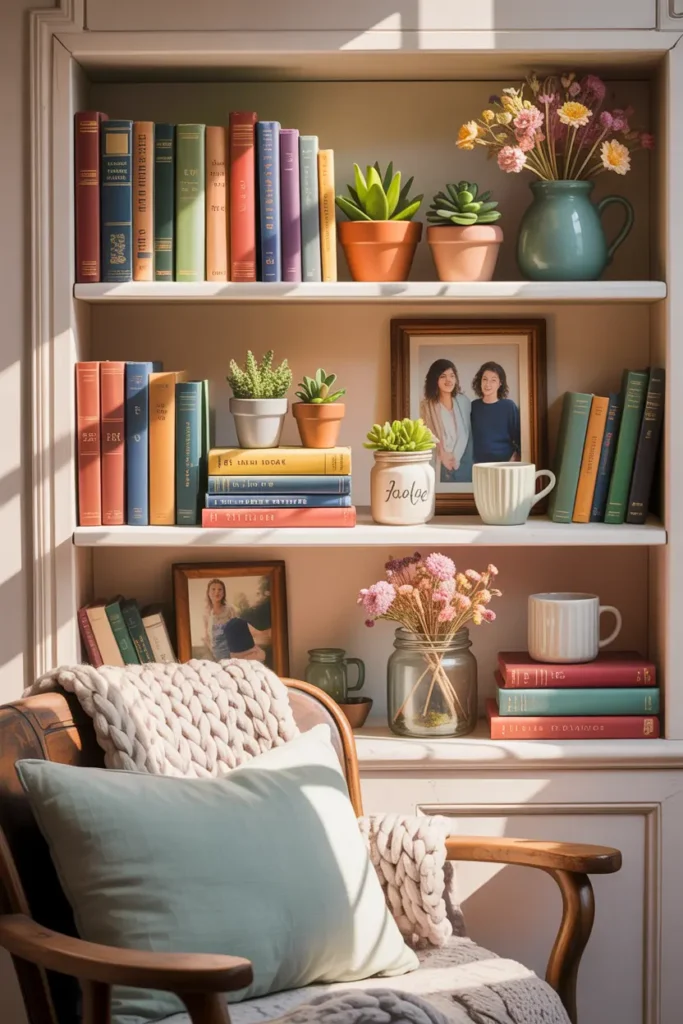
Open shelves in any room transform with the same affordable formula: remove everything, then put back one-third — books in short vertical runs, one basket per shelf for small items, one decorative object per shelf, and empty space. The empty space is the design; it’s what separates “styled shelf” from “storage shelf.”
Repeat one material across shelves (all baskets matching, all frames one color) for cohesion. Style in odd numbers, vary heights, and step back to check from the doorway — shelves are viewed from across the room, not up close, so the overall composition matters more than any single object.
Idea 8: Every Room — The Lighting Pass
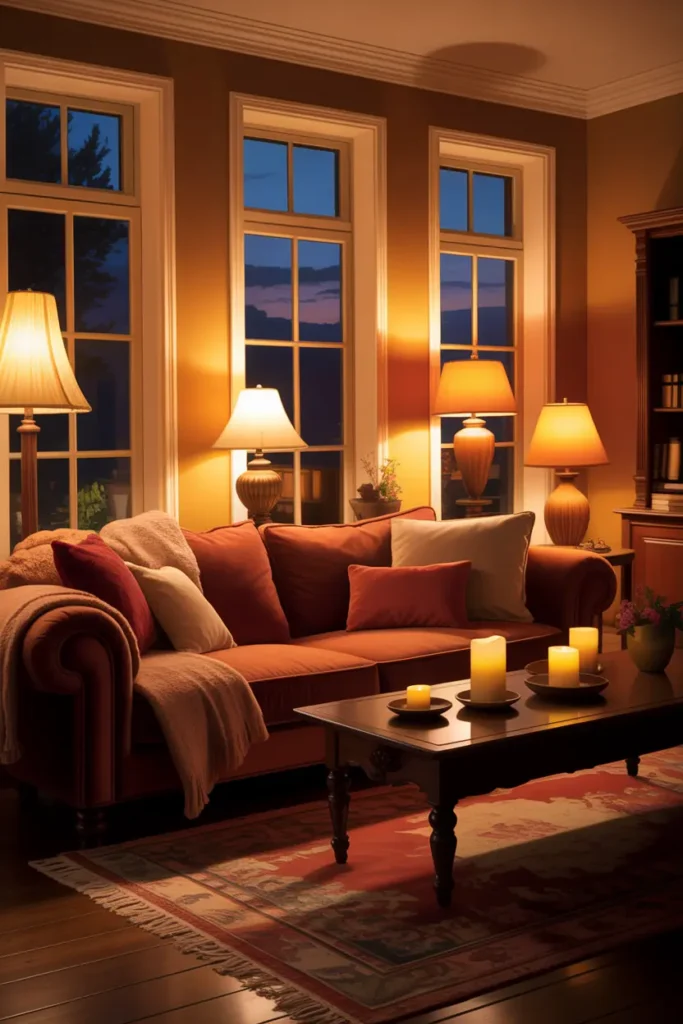
The one idea for every room: fix the light. Walk through the house and replace every cool-white bulb with 2700K warm white ($3 each), add one lamp to any room that has only overhead lighting, and put living areas on dimmers or smart bulbs. Total cost for a whole house: $30–60. Total impact: every room feels warmer, calmer, and more expensive.
Light is the only decor element you experience in every room, every day. It’s also the cheapest to change and the most transformative. Do the lighting pass first, before any other room project — it improves everything else you’ll do afterward.
Final Thought
A whole home on a budget isn’t decorated all at once — it’s improved one 80/20 move at a time. Start with the lighting pass (it helps everything), then take rooms one weekend at a time. In two months, with maybe $300 total spent, the house won’t just look different. It’ll feel different.
Pro Tips
- Do the whole-house lighting pass first ($30–60). Warm light improves every room and makes all subsequent decorating decisions look better.
- Tackle one room per weekend, not the whole house at once. Finished rooms motivate; half-finished everything demoralizes.
- Keep a running list on your phone of what each room needs, and buy only from the list. Impulse decor purchases are how budgets die.
- Photograph each room when you finish it. The before-and-after pair is motivating — and it stops you from re-decorating rooms that are already done.
FAQs
How much does it cost to decorate a whole home on a budget?
Meaningfully: $250–400 total if you follow the 80/20 approach — lighting pass ($50), textiles per room ($30–50 each), thrifted accents, and paint where it counts. The key is one high-impact move per room, not many small purchases.
Which room should I decorate first?
The one you spend the most waking hours in — usually the living room. It gives the biggest daily payoff. Bedrooms come second (a third of your life), then the entryway (first/last impression twice daily).
How do I keep a consistent style across rooms on a budget?
Repeat three things everywhere: one neutral palette, one wood tone, one metal finish. Consistency of palette and materials unifies rooms more than matching furniture — and it’s free, since it’s a decision, not a purchase.
Can I decorate room by room without it looking mismatched?
Yes, if you set the palette and materials once at the start and apply them in each room. Decorate sequentially but decide globally: write down your three colors, wood tone, and metal finish, and check every purchase against the list.

HowDecor is a home decor blog sharing simple, practical decorating ideas for everyday spaces. We believe a beautiful home should feel comfortable, personal, and full of warmth — and that great style does not require a huge budget. Our goal is to inspire readers to create spaces that feel peaceful, welcoming, and truly their own — one room at a time.