I judge every dining room by one test: do people stay after dessert? The rooms that pass aren’t the most expensive ones — they’re the ones where the light flatters everyone, the chairs don’t punish anyone, and something in the room gives guests a reason to linger.
These twenty ideas come from dining rooms that work — rooms where dinner parties run two hours longer than planned. They cover the big decisions (table, light, layout) and the small ones (scent, sound, the centrepiece nobody dusts), because a dining room that keeps people happens by design, not accident — transforming it into a space where guests linger long after the meal is over.
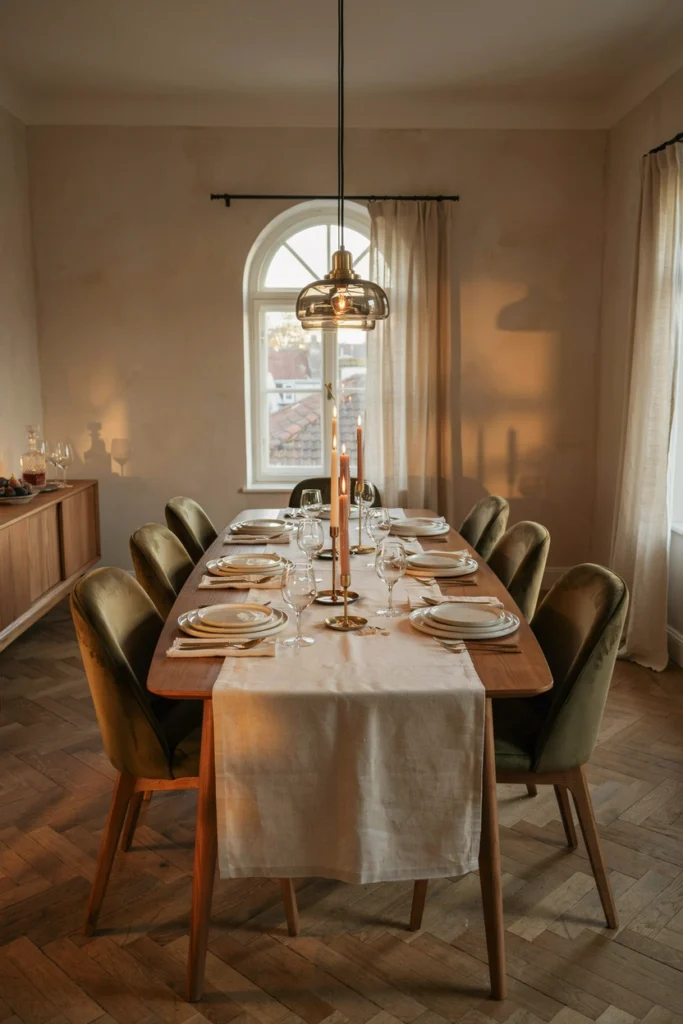
1. Start With the Right Table for Your Space
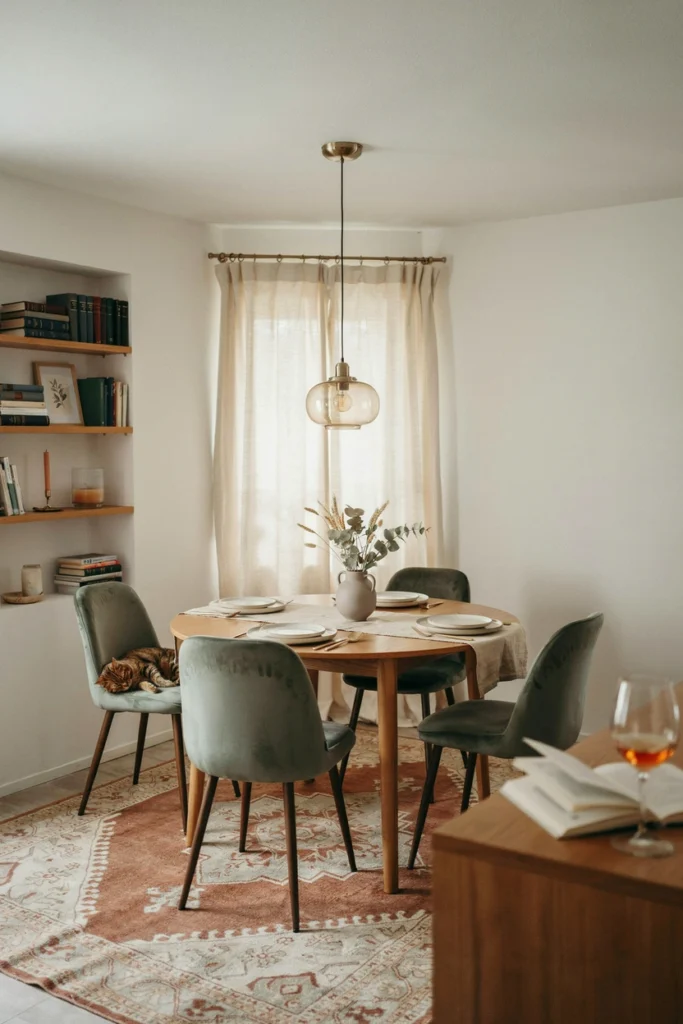
The table is the room — everything else is commentary. Allow 60cm of width per person and 90cm of clearance behind each chair for people to push back and stand. A 180cm table seats six comfortably; squeezing eight around it means nobody’s comfortable, and uncomfortable guests leave.
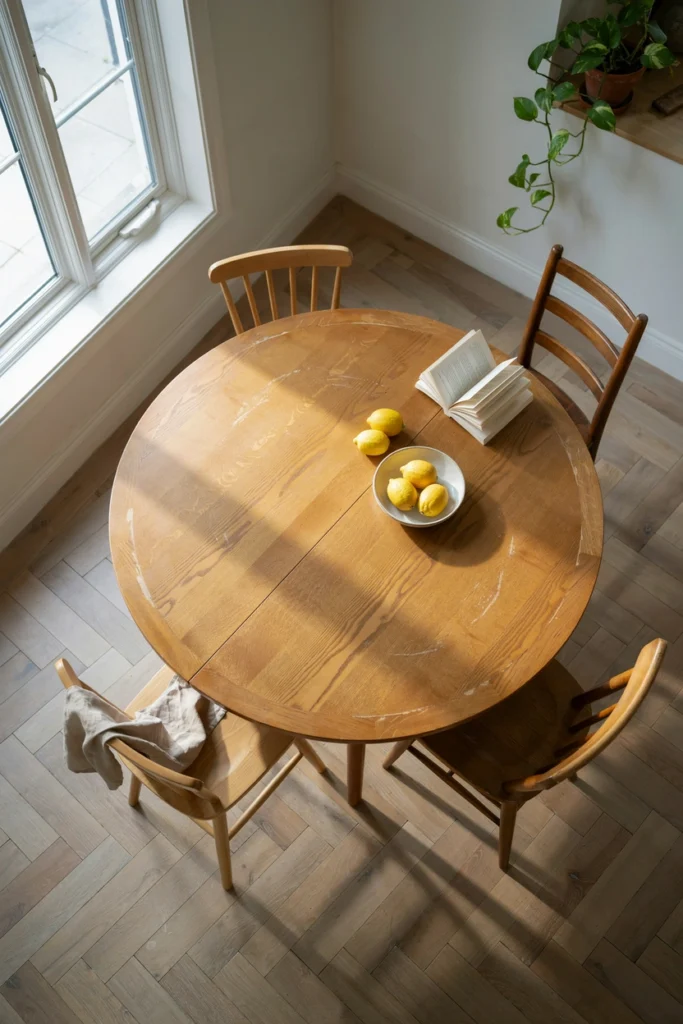
2. Layer Your Lighting for Atmosphere
Lighting is the single most powerful tool in a dining room, and most people underuse it. Overhead lighting alone creates a flat, almost clinical feel. Instead, layer it. Start with a statement pendant or chandelier above the table as your main source, then add a dimmer switch so you can bring the light level down during meals. Supplement with wall sconces, a floor lamp in the corner, or candles on the table. This combination of light sources gives the room depth and warmth that makes guests feel instantly relaxed.
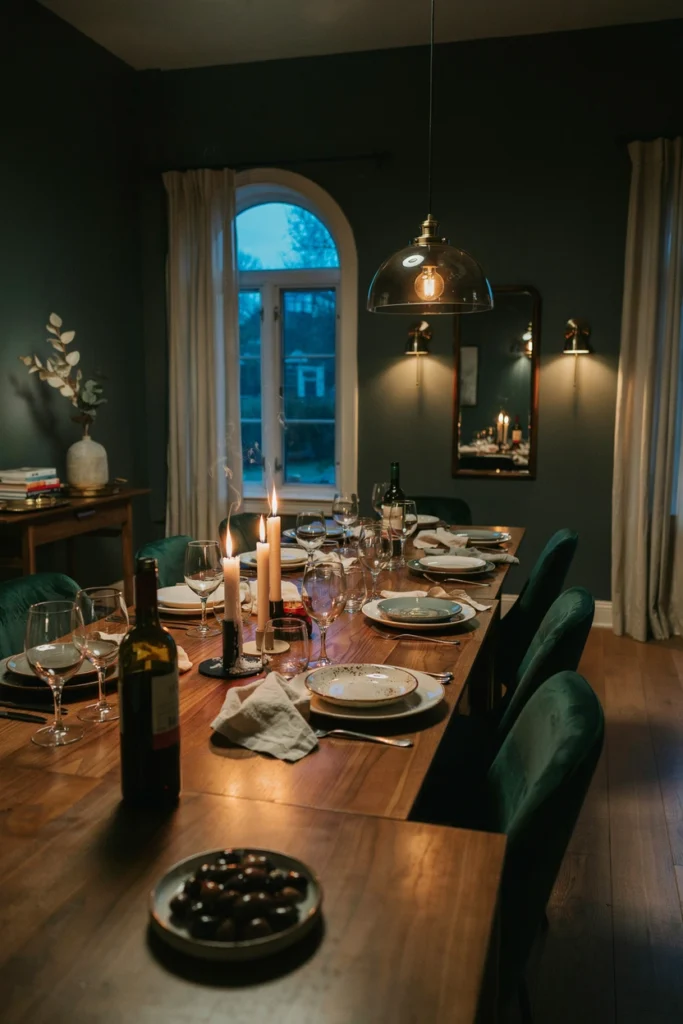
3. Choose a Color Palette That Invites Conversation
Warm, mid-depth colours make people talk; stark white and cool grey make people eat and leave. Deep greens, warm terracottas, rich ochres — colours with body — flatter skin tones and lower voices slightly, which is exactly what you want. If repainting feels drastic, try it on one wall first; the wall behind the sideboard is the classic choice.
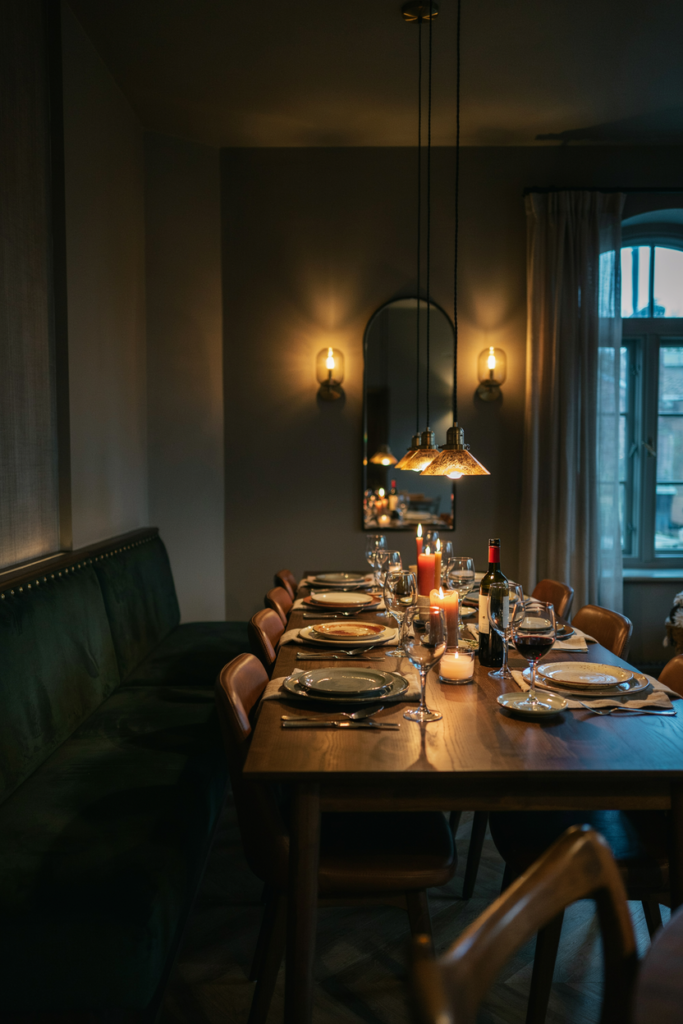
4. Invest in Comfortable Seating
Guests stay longer when they’re physically comfortable. This sounds obvious, but a surprising number of dining rooms have chairs that look lovely in photos and feel terrible after twenty minutes. Look for chairs with a bit of padding on the seat, adequate back support, and the right height relative to your table — 45cm seat height for a 75cm table. Upholstered chairs add warmth and comfort, though they require more maintenance. A mix of chairs and a bench along one side is both practical and visually interesting, and it gives the room a relaxed, casual feel that encourages people to settle in.
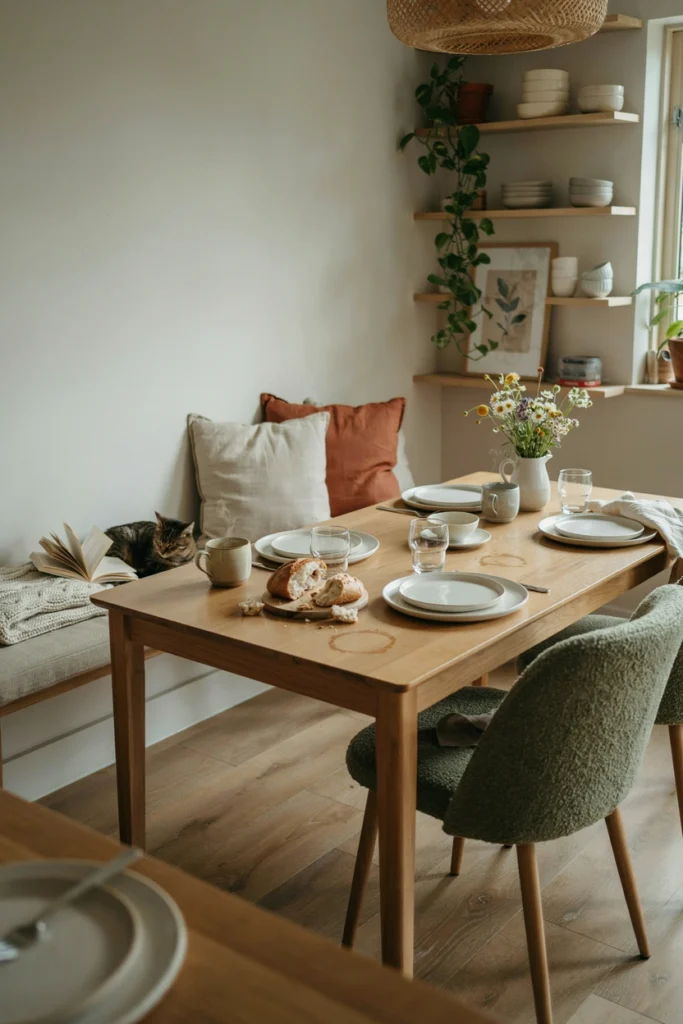
5. Add a Statement Light Fixture
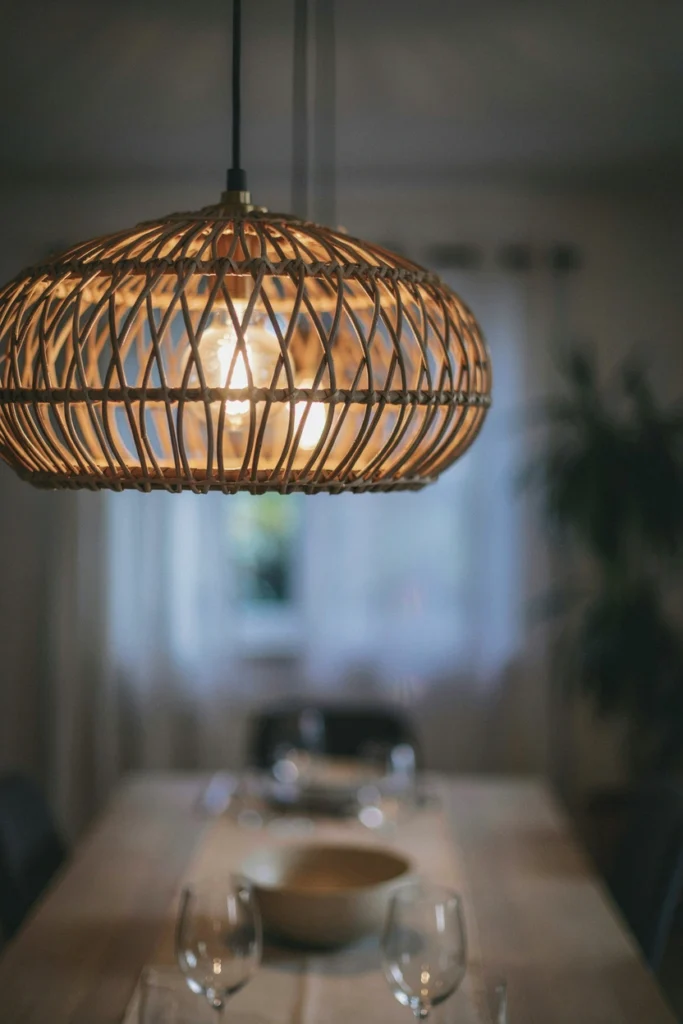
One great light fitting does more for a dining room than almost any furniture. Hang it low — 75–85cm above the tabletop — so it creates a pool of light that defines the table as its own intimate zone within the room. Oversized works: a pendant that’s one-third to one-half the table’s length looks deliberate; a small lonely pendant looks apologetic.
6. Use a Rug to Anchor the Space
A rug under the dining table does three jobs: it defines the dining zone, softens the acoustics, and protects the floor. Size it generously — the rug must extend at least 60cm beyond the table on all sides so chairs stay on it when pushed back. A rug that chairs keep catching on is worse than no rug.
7. Create a Focal Wall With Wallpaper or Texture
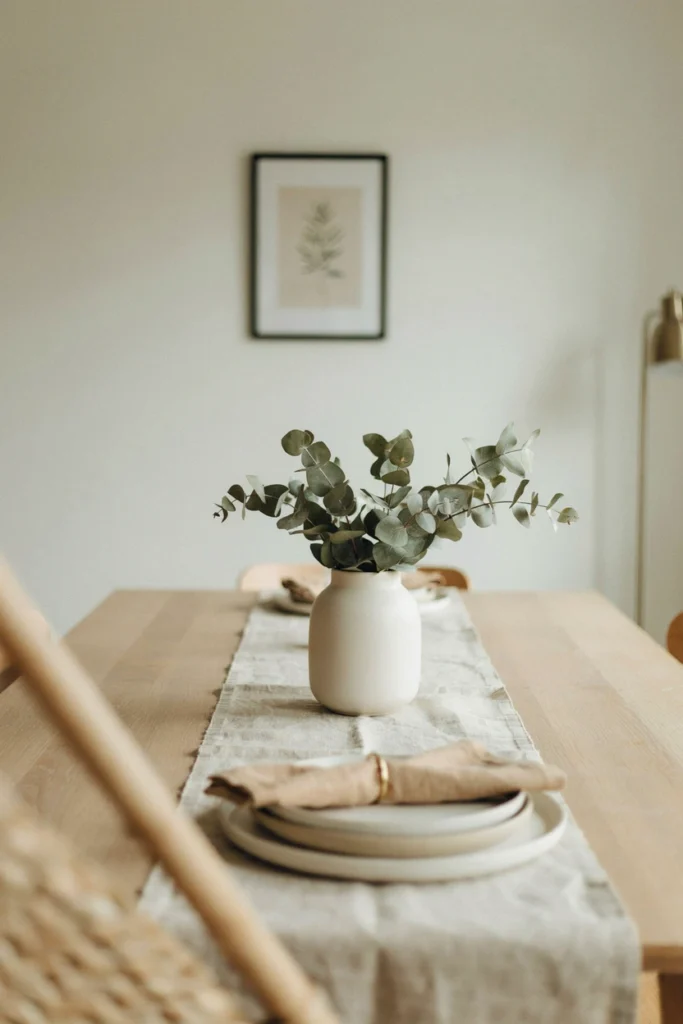
One wall with intent transforms a dining room from “room with a table” to a designed space. Grasscloth, a mural, panelled moulding, or a bold wallpaper — the focal wall is where the room’s personality lives. Choose the wall guests face when seated; that’s the view they’ll live with for two hours.
8. Bring in Natural Elements
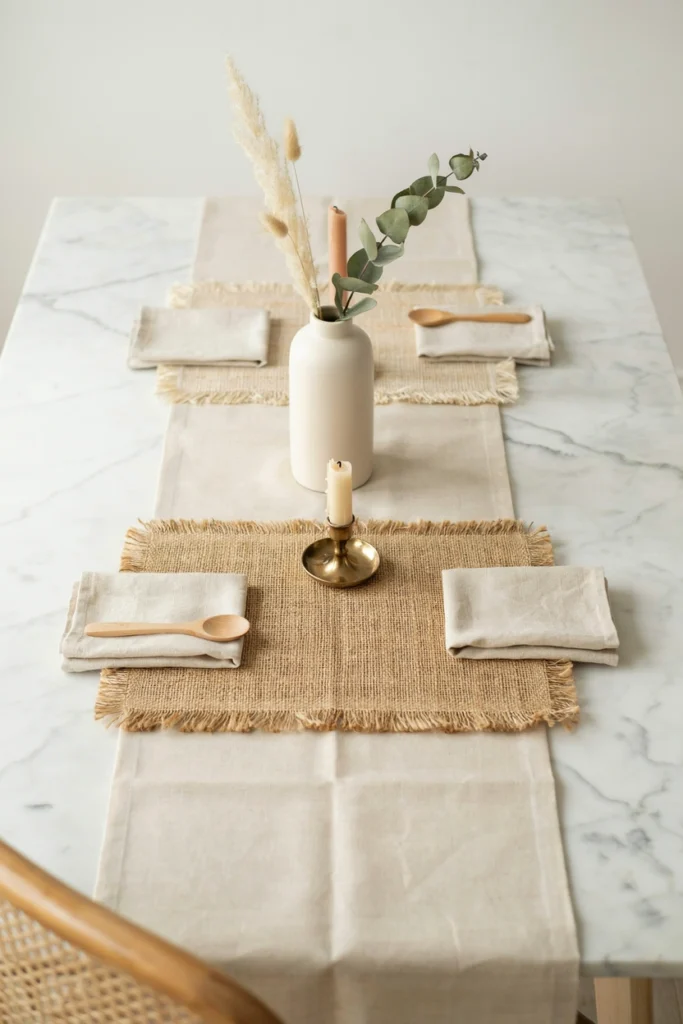
Wood, stone, linen, a branch in a tall vase — natural materials stop a dining room feeling like a showroom. They’re also the easiest way to add texture without adding colour, which matters in a room where the food should be the brightest thing on the table. A single sculptural branch beats a fussy arrangement every time.
9. Rethink Your Centrepiece
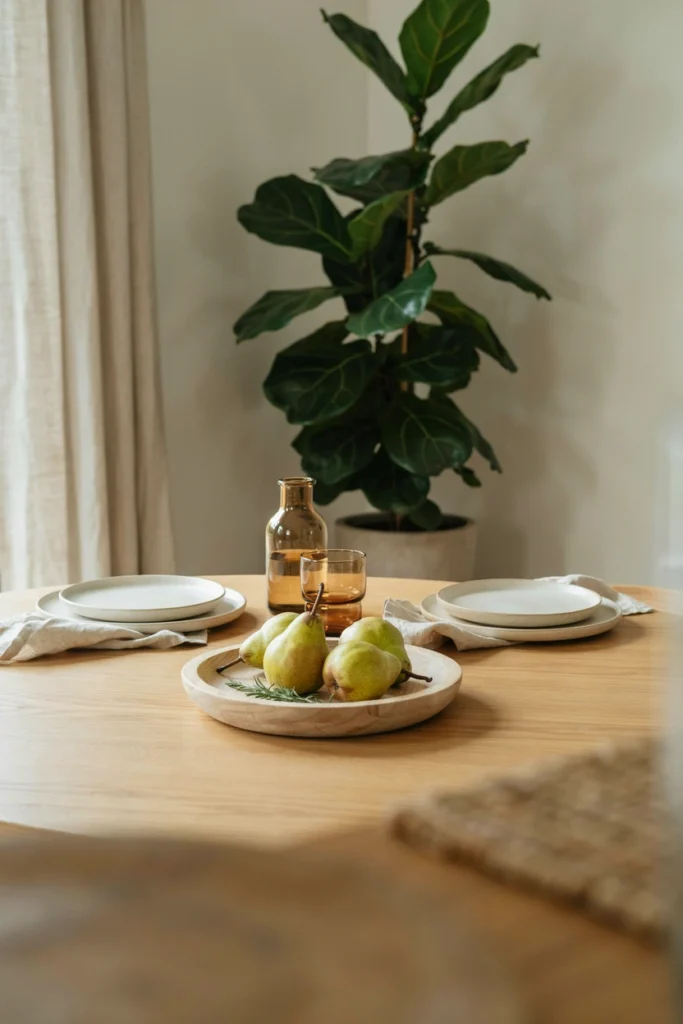
The centrepiece should be low enough to see over — 30cm maximum — or guests will be playing peek-a-boo all evening. A long low bowl of fruit, a runner of candles, or a simple arrangement of seasonal stems: the best centrepieces look effortless and cost almost nothing. Retire anything tall, dusty, or obviously fake.
10. Install a Sideboard or Buffet
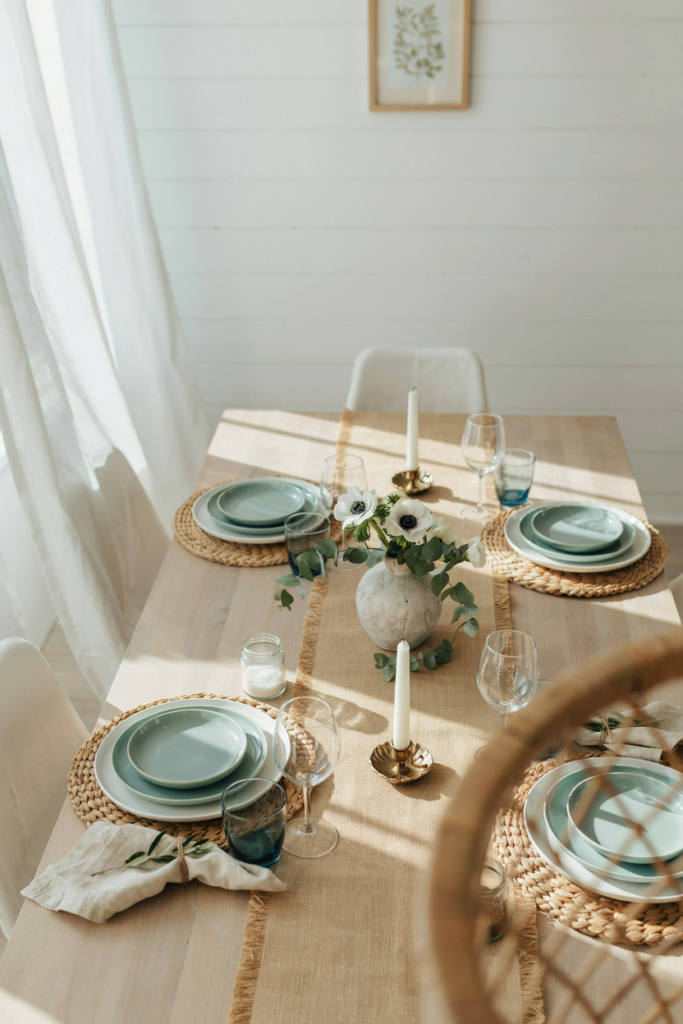
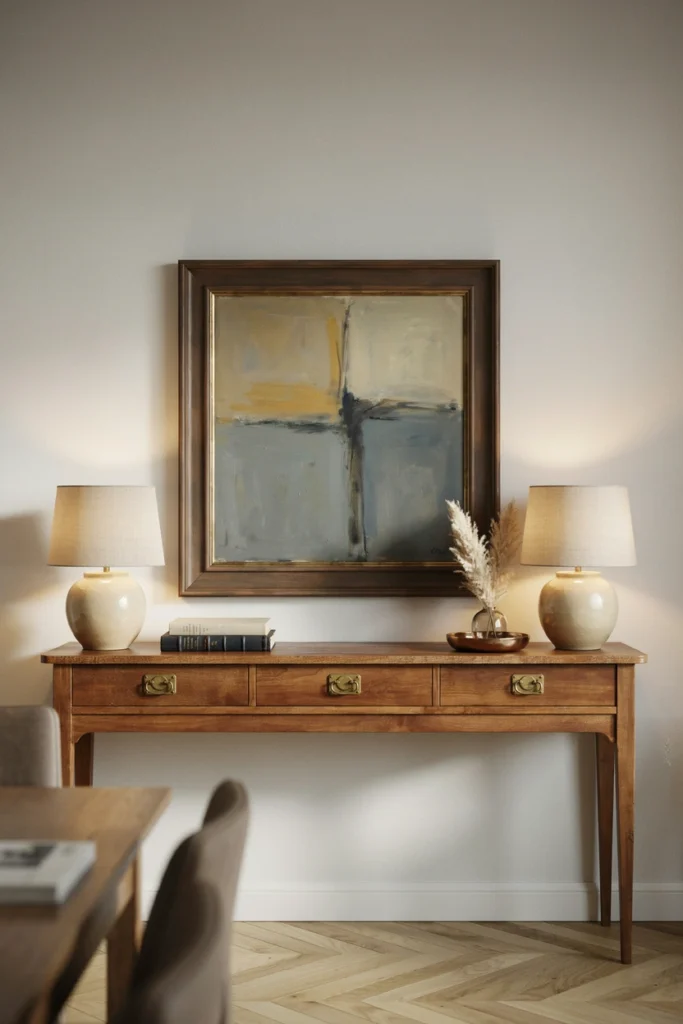
A sideboard is the hardest-working piece in a dining room: serving station during dinner, bar between courses, display surface always. Position it within three steps of the table — any further and you’ll stop using it for serving. Style the top with a lamp, a stack of beautiful bowls, and nothing else; clutter here photographs as chaos.
11. Use Mirrors to Add Light and Depth
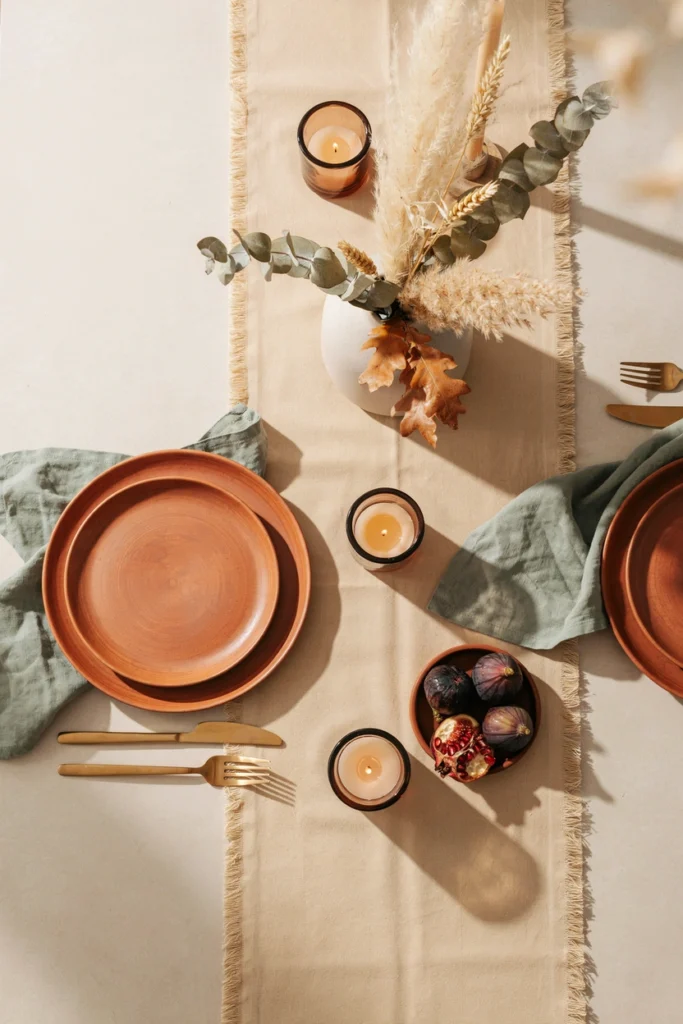
A large mirror on the dining room wall doubles the candlelight and makes the room feel twice its size. Hang it where it reflects something worth doubling — the pendant light, the window, the sideboard styling — not the blank wall opposite. An antique or foxed mirror adds character; a plain one just adds space.
12. Upgrade Your Window Treatments
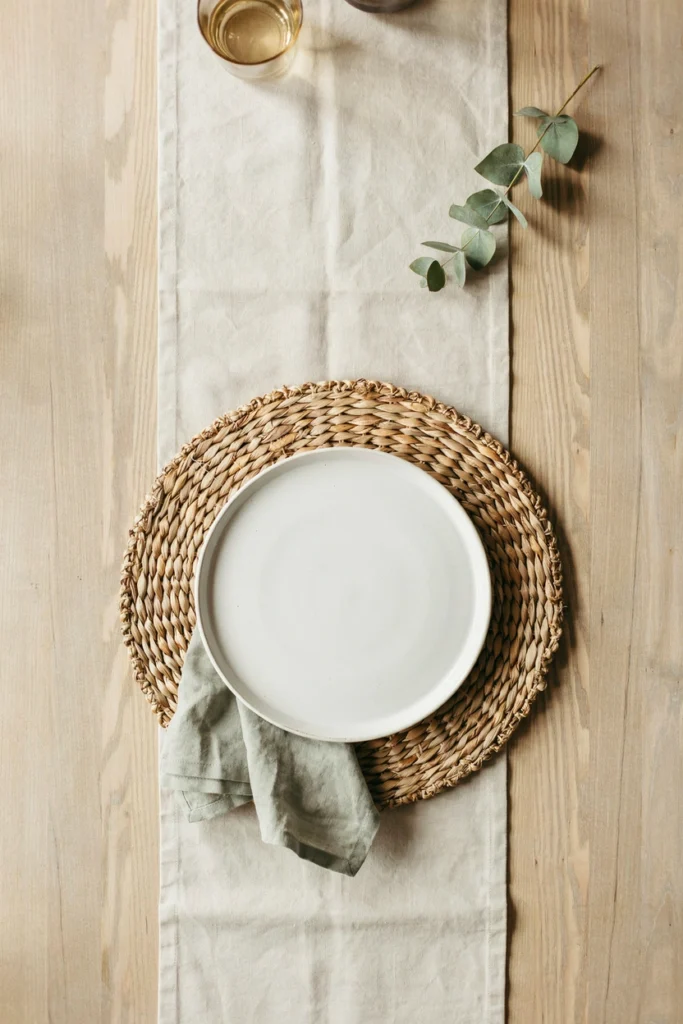
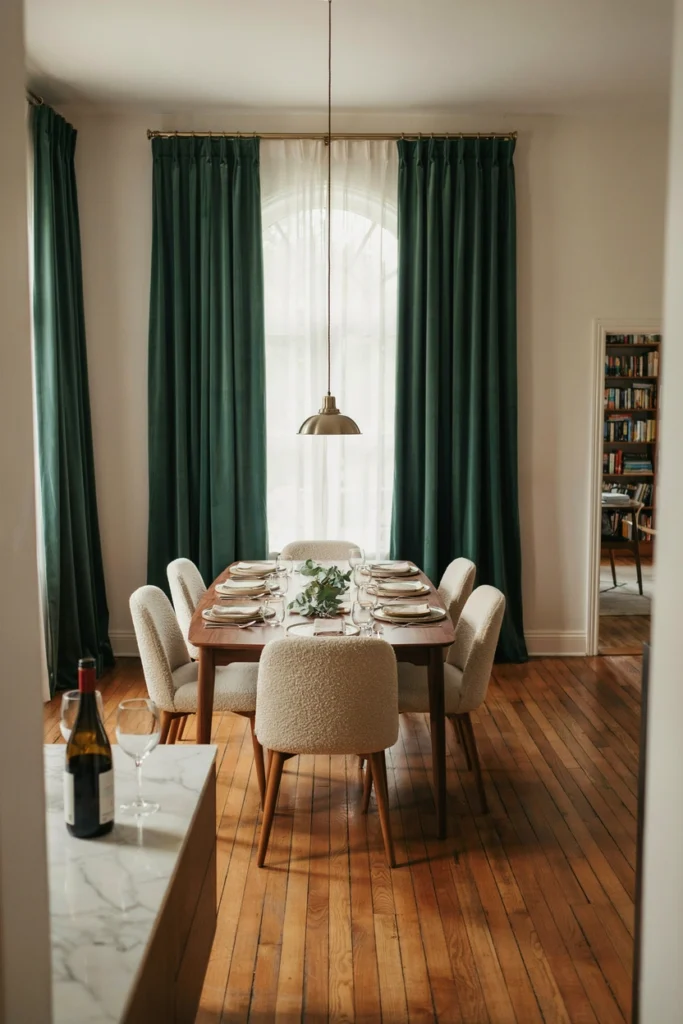
Dining rooms are evening rooms, so window treatments matter more here than almost anywhere. Floor-length curtains in a heavy fabric — velvet, lined linen — soften the room acoustically and visually, and closing them creates instant intimacy. Hang the rod 15cm above the frame and 20cm wider each side so the curtains frame the window rather than covering it.
13. Add Art That Starts Conversations
Dining room art has a captive audience for hours — make it interesting. One large piece beats a scatter of small ones, and anything with a story (a market find, a family piece, something slightly provocative) gives guests something to talk about during the lulls. Hang it at seated eye level, around 120cm from the floor to the centre — most art hangs too high for people sitting down.
14. Incorporate Open Shelving
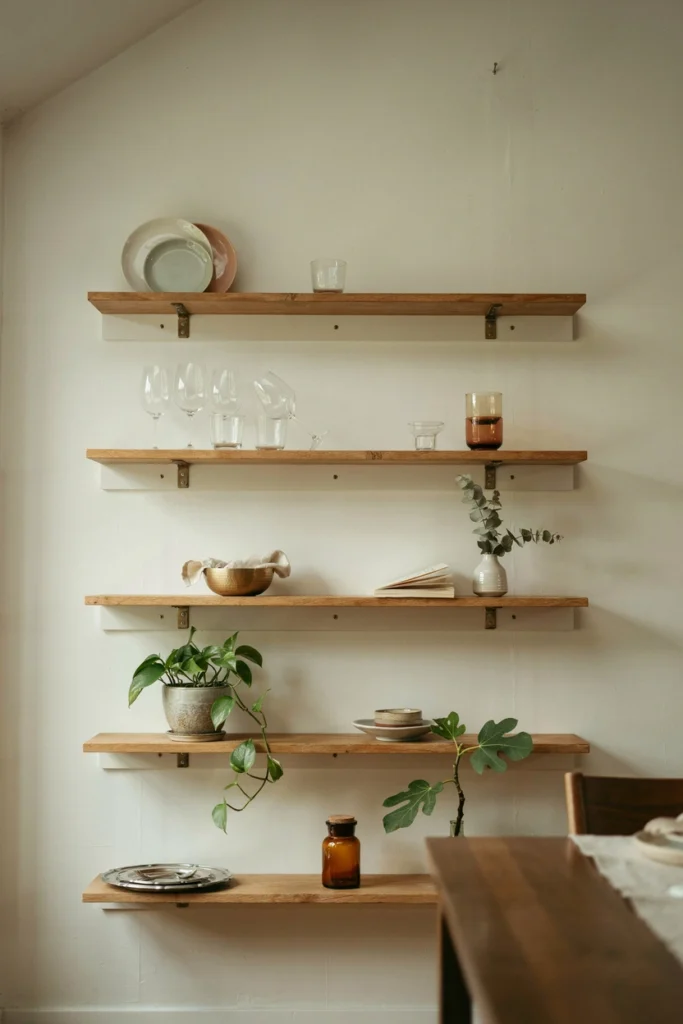
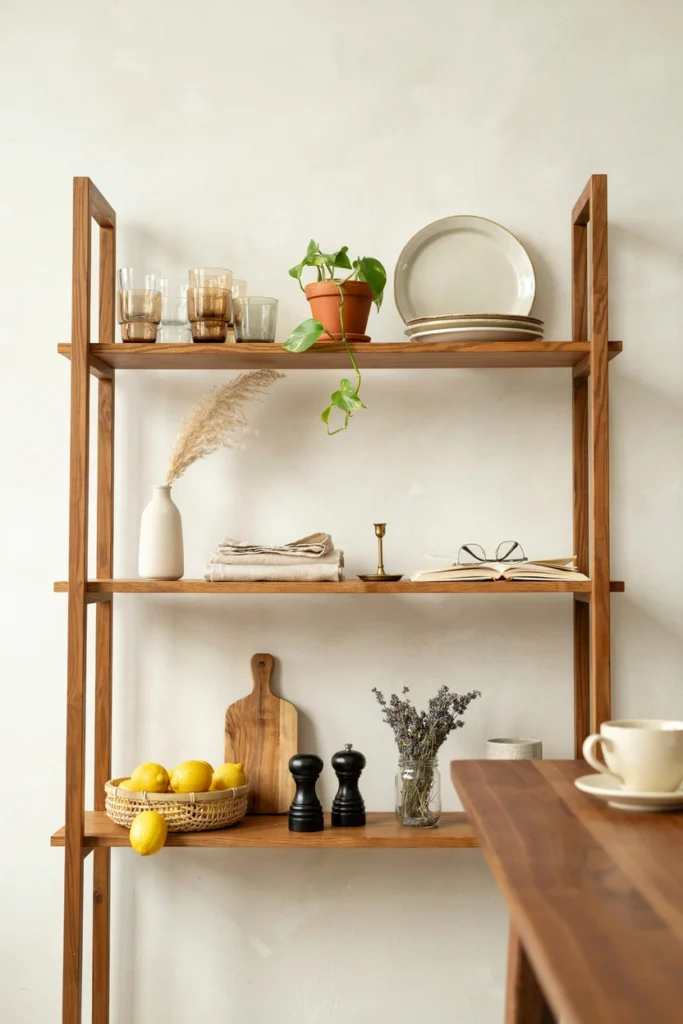
A single open shelf or a glazed cabinet in the dining room displays the beautiful serving pieces and keeps them accessible. Style it with the discipline of a shop window: group by colour or material, leave breathing room, and edit quarterly. The shelf is a promise that this room gets used for pleasure, not just storage.
15. Create an Intimate Atmosphere With Curtain Dividers
In an open-plan space, a ceiling-mounted curtain track lets you close off the dining area for dinner parties — instant intimacy, better acoustics, and a genuine sense of occasion. Heavy linen or velvet curtains absorb sound dramatically; the difference in conversation quality is immediate and remarkable.
16. Upgrade Your Tableware and Linens
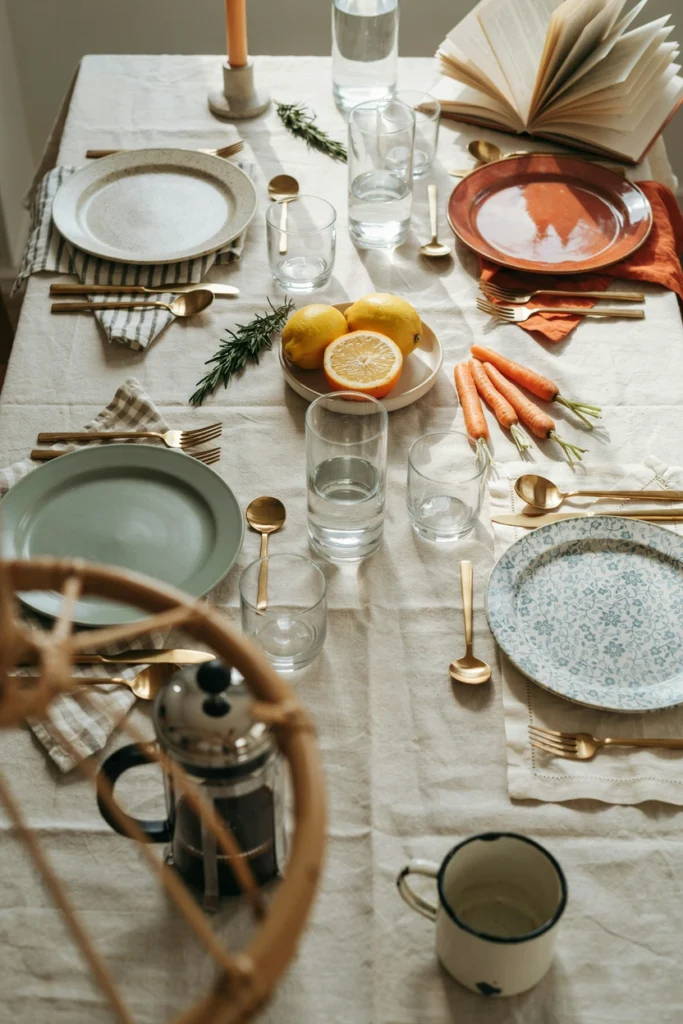
You don’t need twelve place settings of the good china — you need one set you love and use. Real linen napkins (not paper, not polyester) change the feel of a meal out of all proportion to their cost; they soften, they drape, they make Tuesday dinner feel considered. Buy white or natural; patterned napkins date faster than the plates.
17. Improve Acoustics for Better Conversation
The dining rooms people love are the ones where you can hear each other. Hard floors, bare walls, and glass tables create echo that forces everyone to shout — and shouting guests don’t linger. A rug, curtains, upholstered chairs, even a fabric wall hanging: every soft surface lowers the volume and raises the pleasure.
18. Add a Bar Cart or Drinks Station
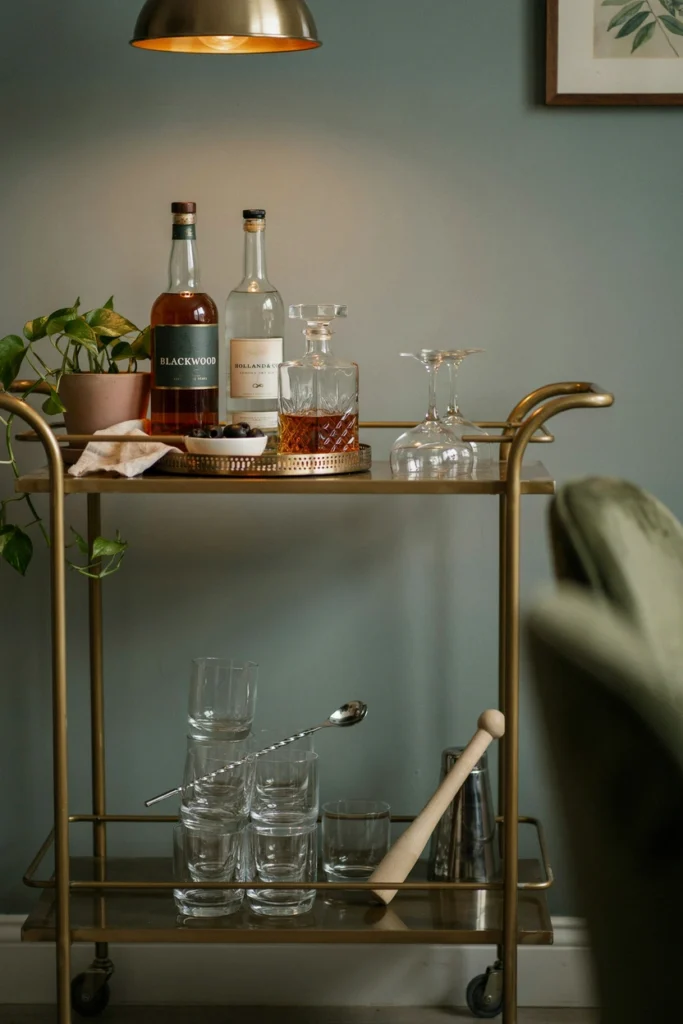
A bar cart is theatre and function: it keeps drinks off the table, gives guests a reason to stand and mingle, and looks wonderful styled with decanters and glassware. Stock it simply — two spirits, wine, something sparkling, good ice — and keep the mixers on the sideboard. Restraint reads as sophistication; a fully stocked bar reads as a pub.
19. Think About Scent
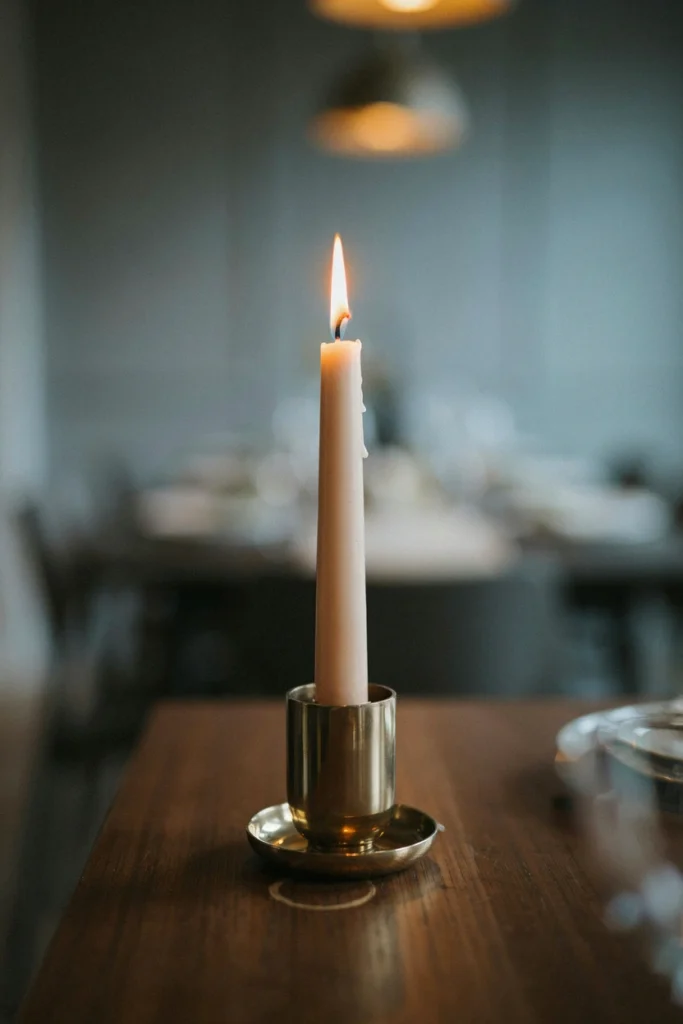
Scent is the forgotten sense in dining rooms. A candle lit an hour before guests arrive (then blown out before food is served — scented candles and dinner are enemies), fresh eucalyptus in a vase, or simply the smell of good cooking: the room should smell like something, and that something should be subtle and warm.
20. Personalize the Space With Meaningful Details
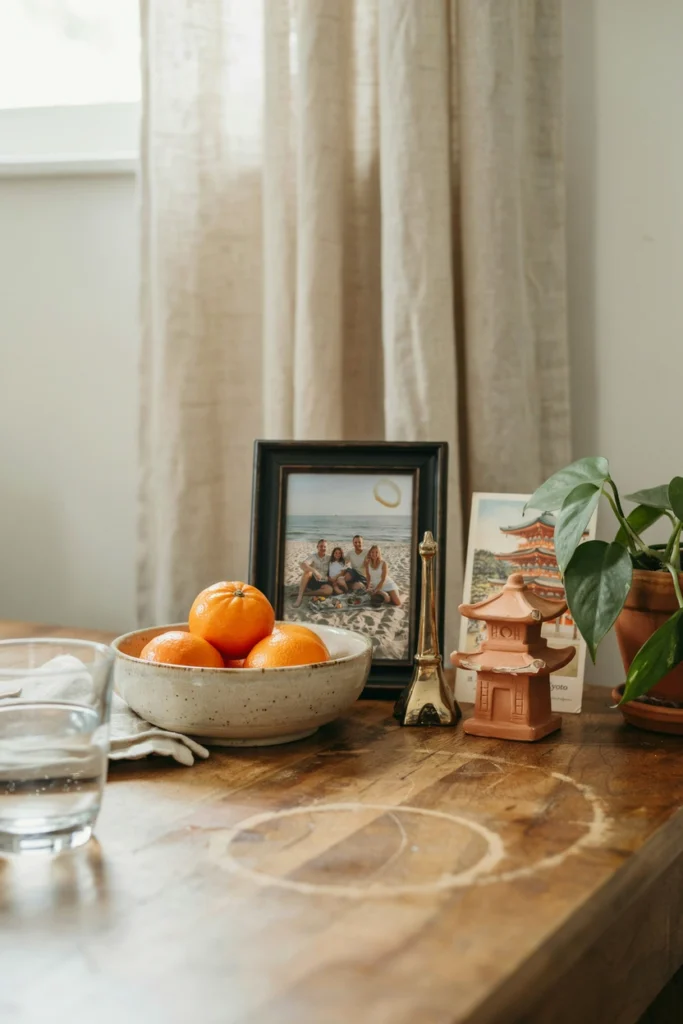
The dining rooms guests remember have something personal — family photos done well, a collection displayed with intent, the table your grandfather made. One meaningful layer beats ten decorative ones. If everything in the room could belong to anyone, the room belongs to no one, and guests feel it.
Conclusion
A dining room that keeps guests isn’t decorated — it’s hosted into being. The light, the chairs, the sound, the scent: each one removes a reason to leave, until staying feels like the only option.
Start with the table and the light, then add the layers. Your guests won’t be able to say why they stayed until midnight. That’s the point.
Pro Tips
- Dim everything. Put every dining room light on a dimmer — overhead, sconces, lamps. Bright dining rooms feel like cafeterias; dimmed ones feel like restaurants. It’s the cheapest atmosphere money can buy.
- Test chairs for a full hour. Sit in any dining chair you’re considering for sixty minutes before buying. Twenty minutes in a showroom tells you nothing; the forty minutes after that tell you everything.
- Keep the table clear between meals. A dining table buried in clutter stops being inviting. Clear it daily and the room stays ready for the spontaneous dinner that becomes the best evening of the month.
- Set the table before guests arrive. Even for casual dinners, laid places signal intention. Guests relax faster when the room tells them they’re expected.
FAQs
What size dining table do I need?
Allow 60cm of table width per person and 90cm of clearance behind each chair. A 180cm table seats six comfortably; a 240cm table seats eight to ten. When in doubt, go slightly smaller — a table that fits the room beats one that seats hypothetical guests twice a year.
How low should a dining room pendant hang?
75–85cm above the tabletop is the sweet spot — low enough to create an intimate pool of light, high enough to see across. In rooms with 2.4m ceilings, stay nearer 75cm; with higher ceilings you can go a little lower for drama.
Should I put a rug under my dining table?
Yes, if it’s big enough — it must extend 60cm beyond the table on all sides so chairs stay on it when pushed back. Choose a low-pile, washable rug; dining rooms are spill zones. If the rug is too small, skip it entirely — a too-small rug is worse than none.
How can I make a small dining room feel bigger?
Use a round or oval table (no corners to navigate around), a large mirror to double the light, and chairs that tuck fully under the table. Keep the palette light and the window treatments simple. A glass table visually disappears, though it needs daily wiping to earn its keep.

HowDecor is a home decor blog sharing simple, practical decorating ideas for everyday spaces. We believe a beautiful home should feel comfortable, personal, and full of warmth — and that great style does not require a huge budget. Our goal is to inspire readers to create spaces that feel peaceful, welcoming, and truly their own — one room at a time.