I’ve organized over 200 pantries, and here’s the pattern: the messy ones aren’t messy because their owners are lazy. They’re messy because nobody ever gave them a system — just a cupboard and good intentions. A pantry without zones is like a wardrobe without hangers; everything technically fits, nothing actually works.
Below are 22 organization ideas that hold up in real kitchens — with kids, with small spaces, with actual grocery shops happening weekly. They’re ordered the way I’d do them if I walked into your kitchen tomorrow: first the reset, then the system, then the habits that keep it alive for real people.
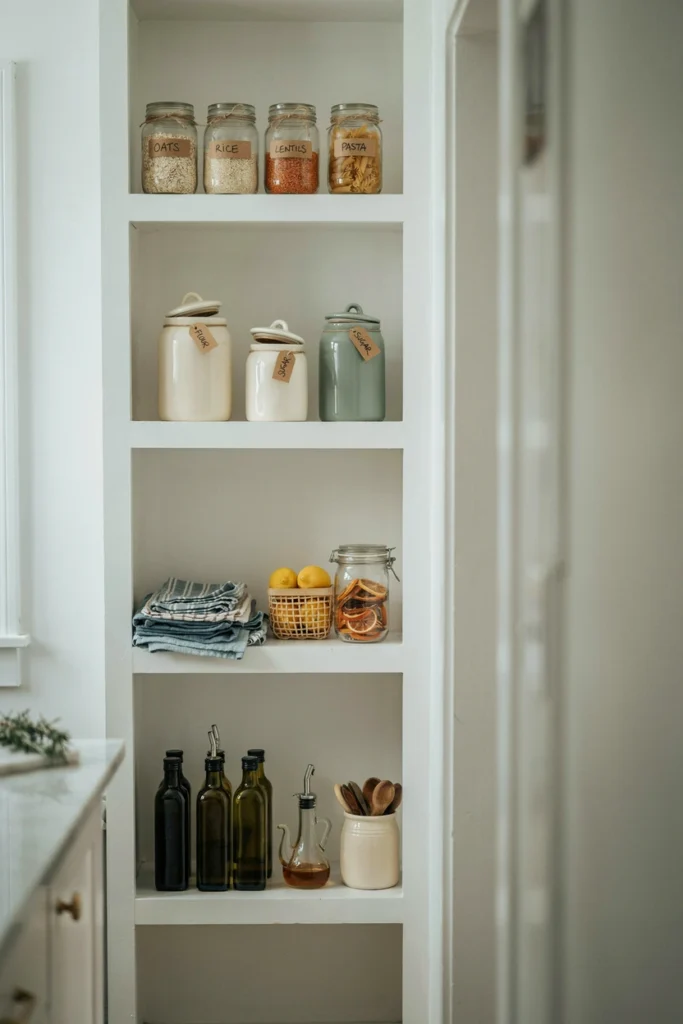
1. Start With a Complete Cleanout
Every professional organizer starts here, and there’s no skipping it. Pull everything out — every tin, every half-used bag of flour, every mystery jar. Wipe the shelves, check dates (you’ll throw away more than you expect; the average pantry I clear has 15–20% expired or stale items), and only then start putting things back.
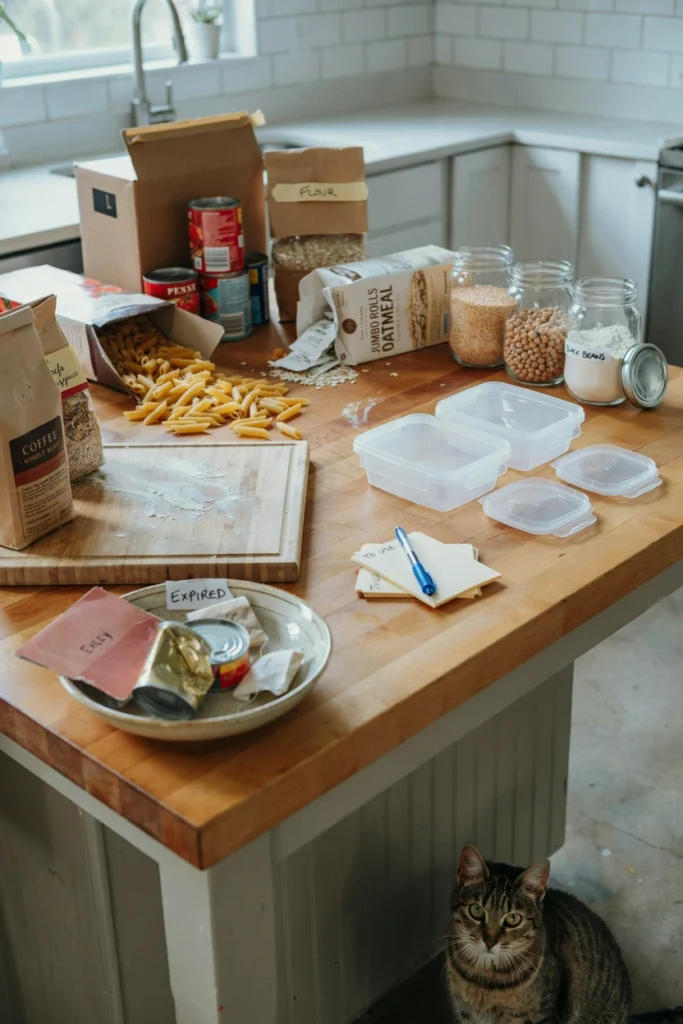
2. Group Items by Category
Once your pantry is empty, put things back in logical groups. Baking supplies together, canned goods together, snacks in one zone, grains and pasta in another. This sounds simple, but it’s the foundation of a pantry that stays organized. When everything has a category, it has a home, and things stop getting lost.
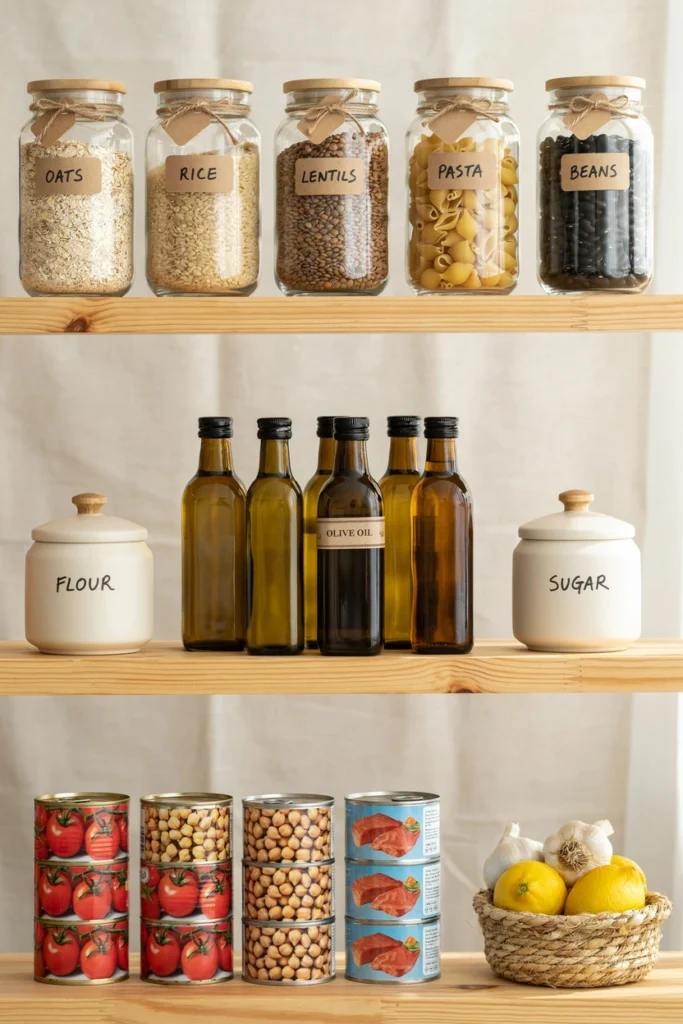
3. Use Clear Containers for Dry Goods
Decant flour, rice, pasta, cereal, and lentils into clear airtight containers. You’ll see at a glance what you have and what you’re running low on, which ends the “buy a third bag of rice” problem. Square containers use 25% more shelf space efficiently than round ones — measure your shelf depth first and buy to fit, not to admire.
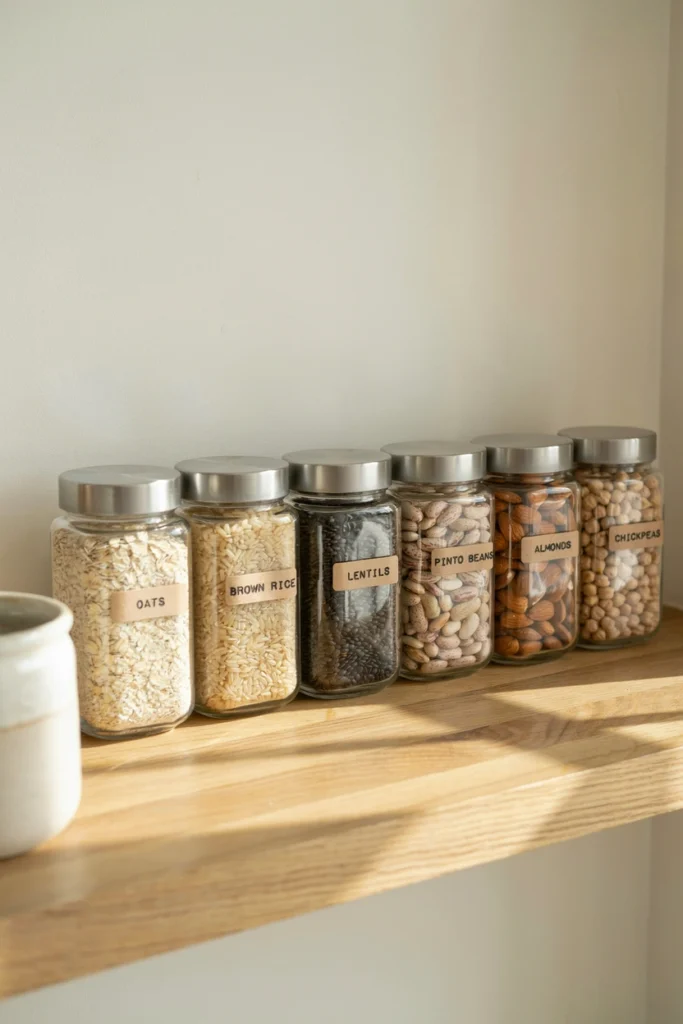
4. Label Everything
Labels aren’t decoration; they’re the difference between a system that lasts a month and one that lasts years. Label the container, not just the shelf — containers move, shelves get reorganized. A £15 label maker pays for itself the first time someone else puts the shopping away correctly.
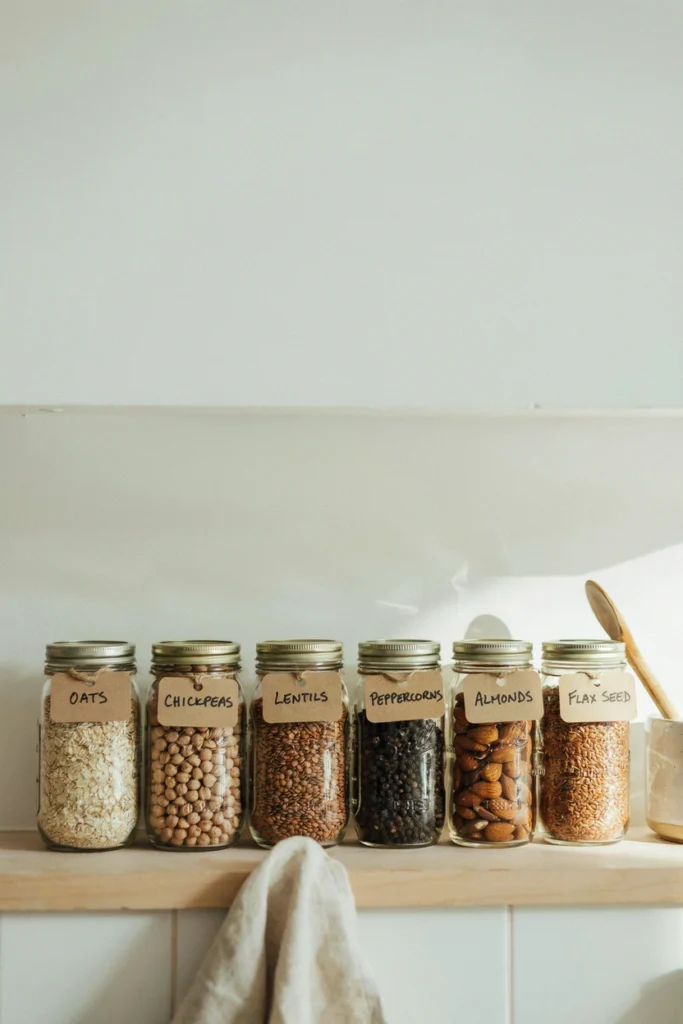
5. Add a Lazy Susan for Corner Shelves
Corner shelves are where condiments go to die. A 25–30cm turntable brings the back of the shelf to you with one spin. Get the ones with a raised lip — flat turntables send bottles sliding on the first enthusiastic spin. One per corner shelf is enough; two is luxury.
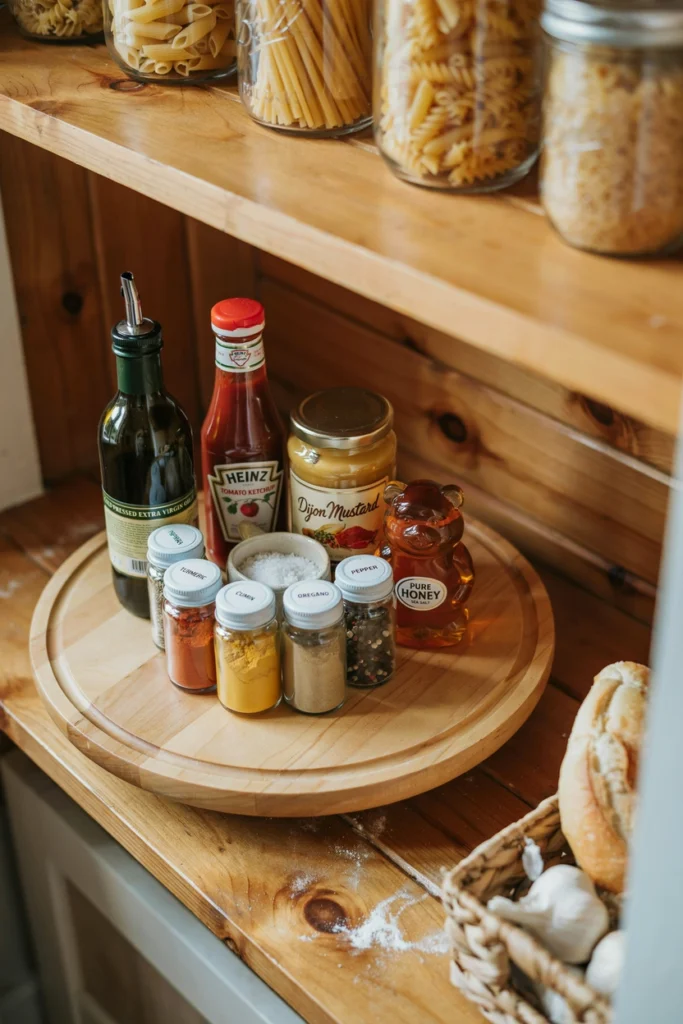
6. Use the Door for Extra Storage
The inside of your pantry door is often completely wasted space. Add an over-the-door organizer or a few mounted racks, and you suddenly have extra room for spices, foil, cling wrap, snack bags, or small bottles. This is especially useful in smaller pantries where shelf space is limited. Check the door closes fully with the organizer loaded — measure the gap between door and shelf front first (you need at least 8–10cm).
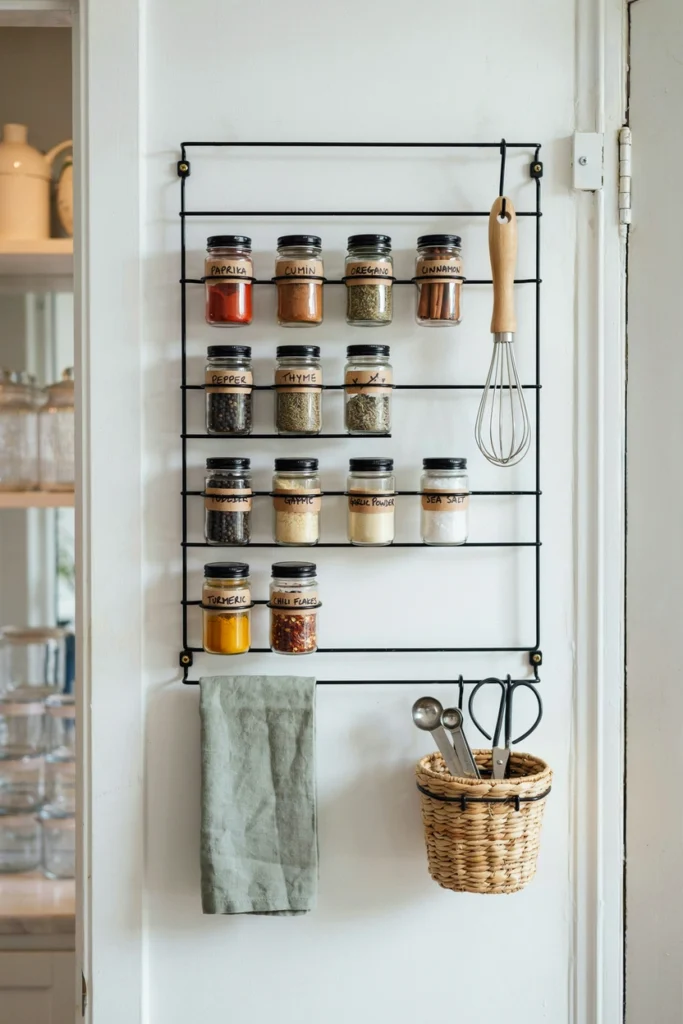
7. Keep Snacks at Eye Level (Especially for Kids)
Put the snacks you want eaten at eye level for whoever eats them. Kids’ snacks on a low shelf they can reach; adults’ “don’t touch” chocolate on the top shelf. This isn’t just tidiness — it ends the daily excavation of the entire pantry by small hands searching for biscuits.
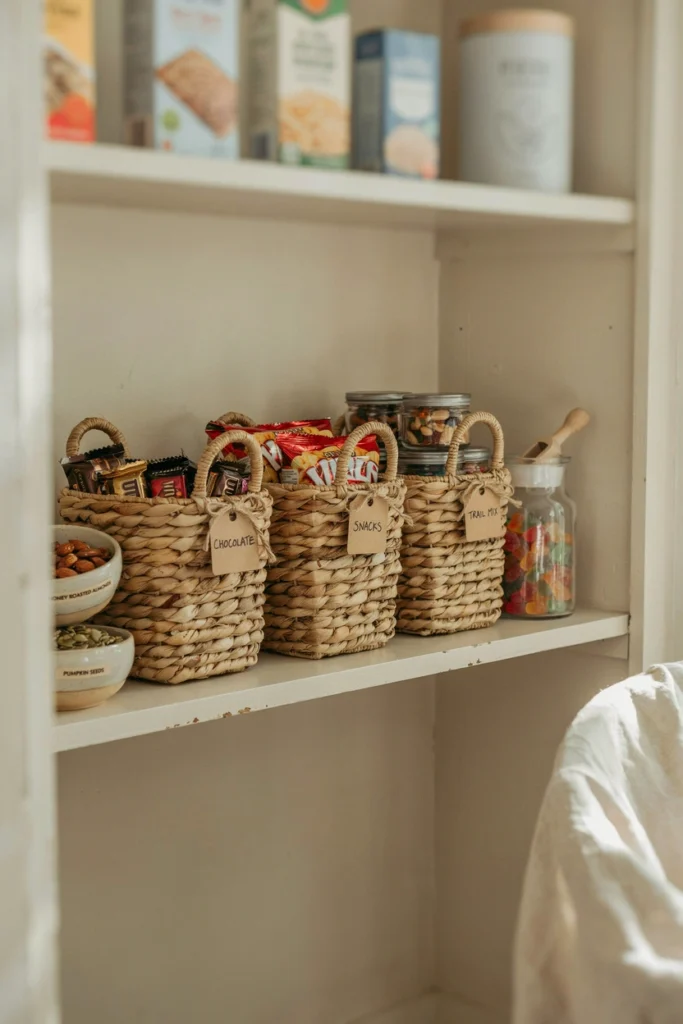
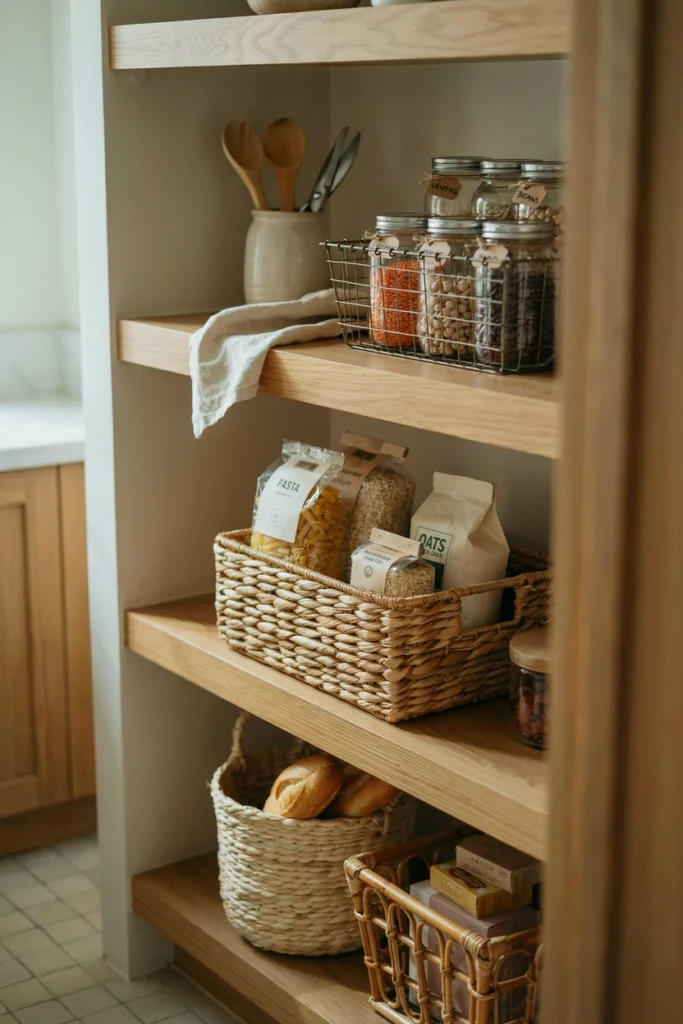
8. Use Stackable Bins and Baskets
Open baskets corral the chaos of packets, sachets, and small boxes that otherwise slide everywhere. Choose stackable ones so you’re using vertical space, and keep one basket per category — one for snacks, one for baking, one for the random sachets. When a basket is full, that’s your signal to stop buying, not to start a second basket.
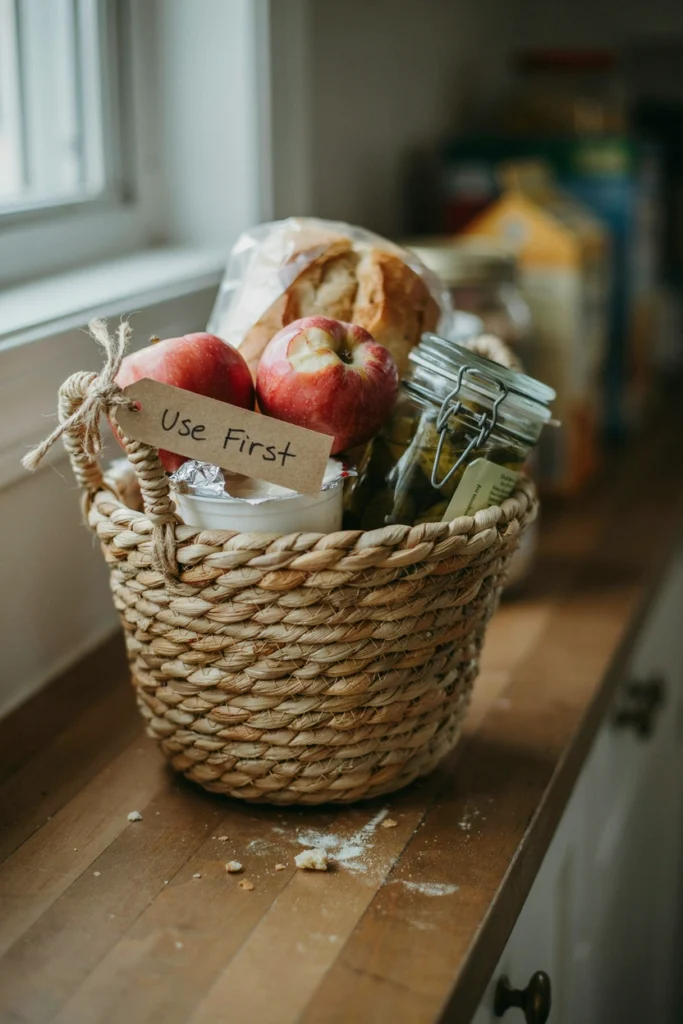
9. Create a “Use First” Zone
Designate one small basket or shelf section for things that need using up: the half bag of pasta, the tin expiring next month, the sauce you bought for a recipe you never made. Shop this zone first when meal planning. It cuts food waste dramatically — most households throw away far more from the pantry than they realize.
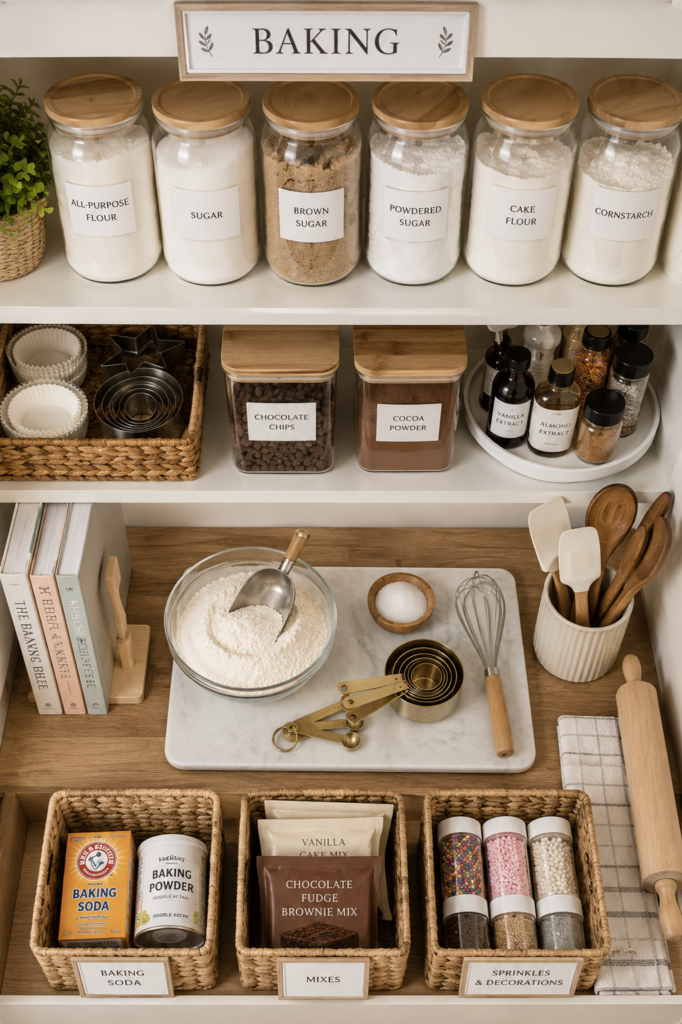
10. Store Baking Supplies Together
Flour, sugar, baking powder, vanilla, chocolate chips — keep them as one kit, ideally on one shelf or in one large basket you can lift out. Baking happens in bursts, and having to hunt across three shelves for ingredients is why the good intentions die. If you bake rarely, one compact basket is enough; daily bakers earn a full shelf.
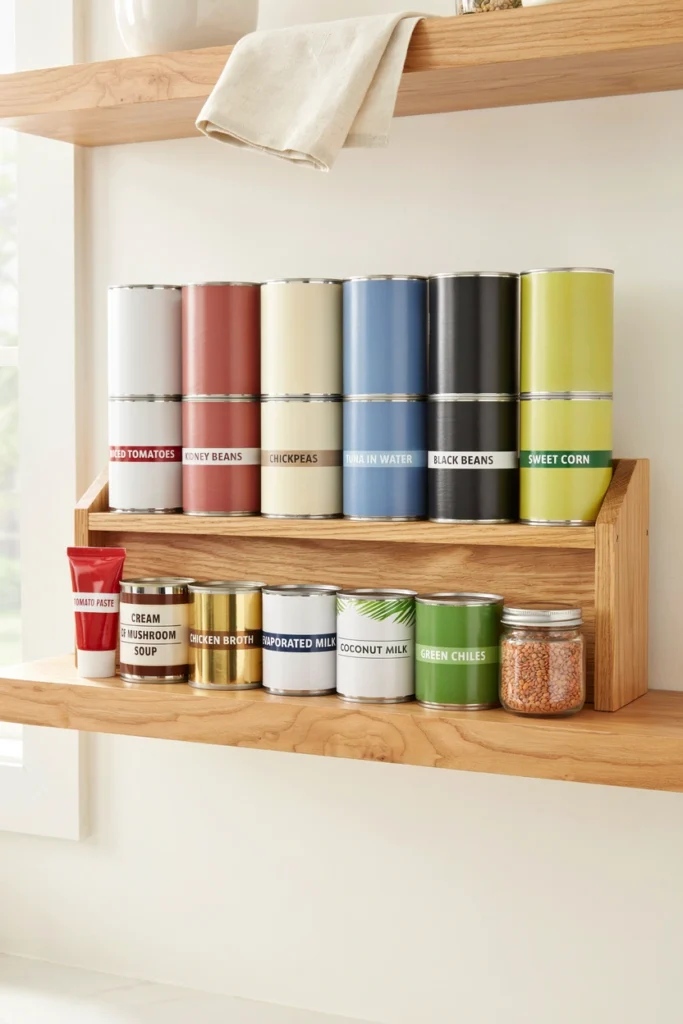
11. Use Risers to See Canned Goods Clearly
A three-tier shelf riser turns one row of tins into a stadium display where every label is visible. Without risers, tins hide behind tins and you buy duplicates for years. The 30cm-wide expandable risers fit most pantry shelves; for deep shelves, use two in a row rather than one deep one you can’t reach behind.
12. Designate a Breakfast Zone
Cereal, oats, honey, peanut butter, tea, coffee — everything for the first meal in one zone at accessible height. Mornings are the worst time to hunt through a pantry, and a breakfast zone turns a bleary 7am into a two-minute operation. Keep it near the kettle if your pantry layout allows.
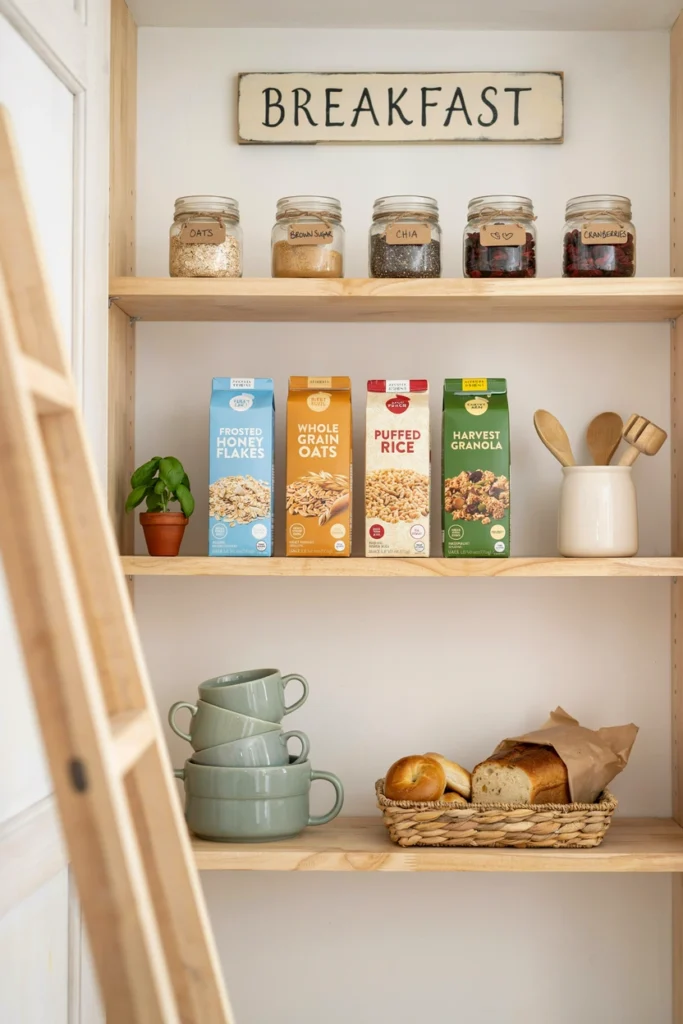
13. Add Shelf Dividers for Tall Items
Cereal boxes, baking trays stored vertically, chopping boards — tall thin items that topple like dominoes. Inexpensive wire or acrylic shelf dividers clamp onto the shelf and keep them upright. Space dividers 10–15cm apart; any wider and the items lean, any narrower and you can’t get your hand in.

14. Store Oils and Vinegars Near the Cooking Zone
Cooking oils, olive oil, vinegars, and soy sauce belong as close to the hob as your pantry allows — ideally on the shelf nearest the cooker. Every step saved, multiplied by every meal, is hours back per year. Keep them in a small tray or caddy so drips don’t stain the shelf, and keep chilli oil away from anything it can leak onto.
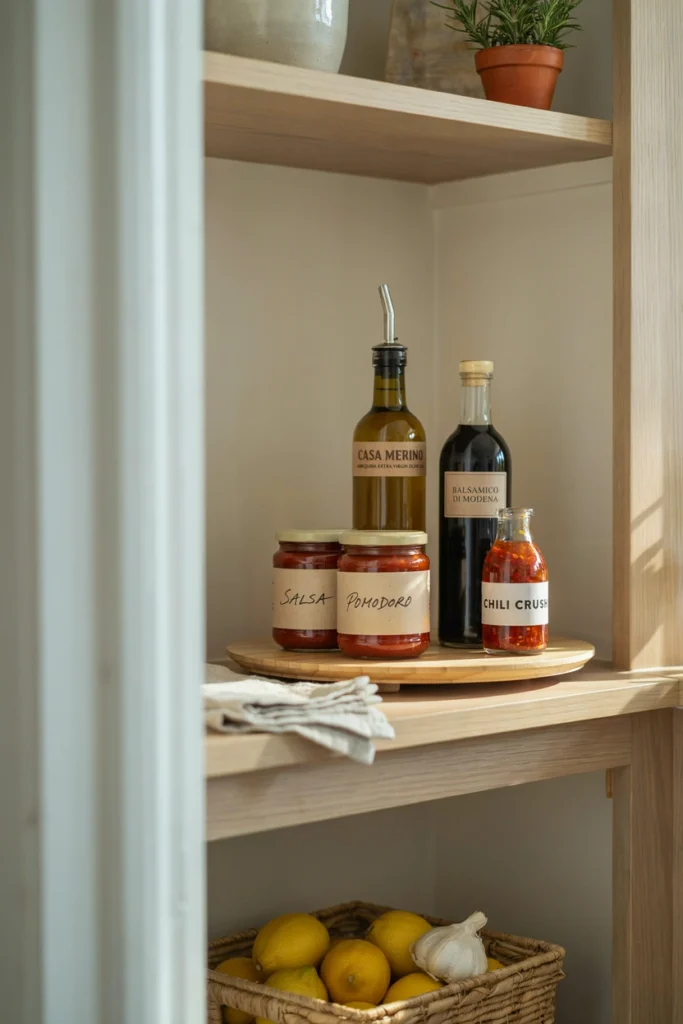
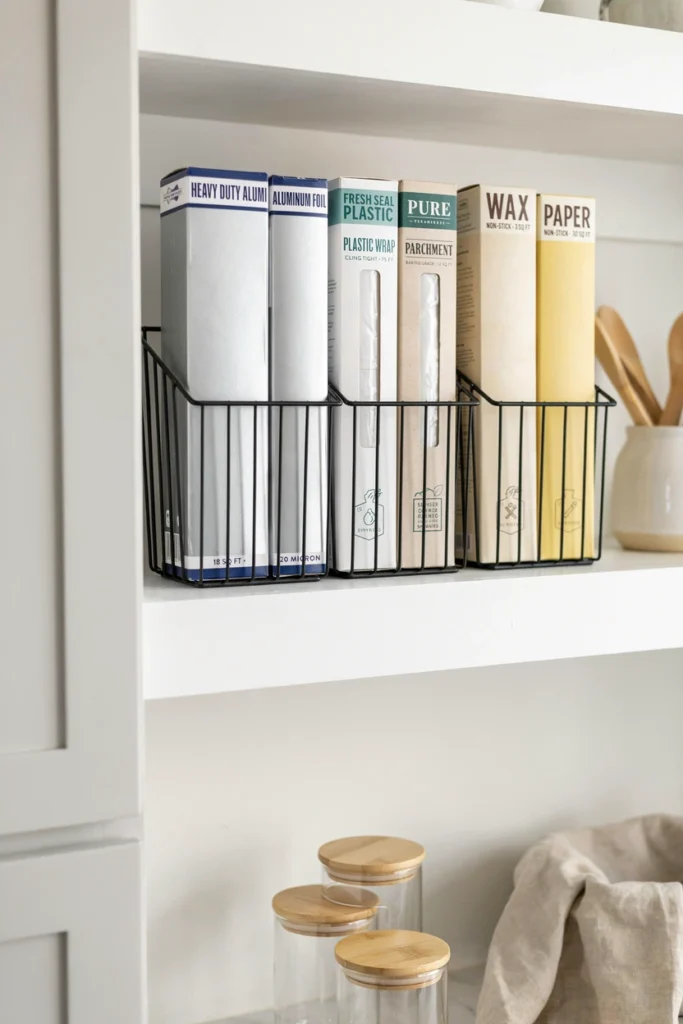
15. Use Magazine Holders for Foil and Wrap Boxes
Stand cling film, foil, baking parchment, and freezer bags upright in a magazine holder like files in a filing cabinet. You can read every box at a glance and pull one out without the whole stack collapsing. Metal mesh holders wipe clean; cardboard ones go soggy within months in a kitchen.
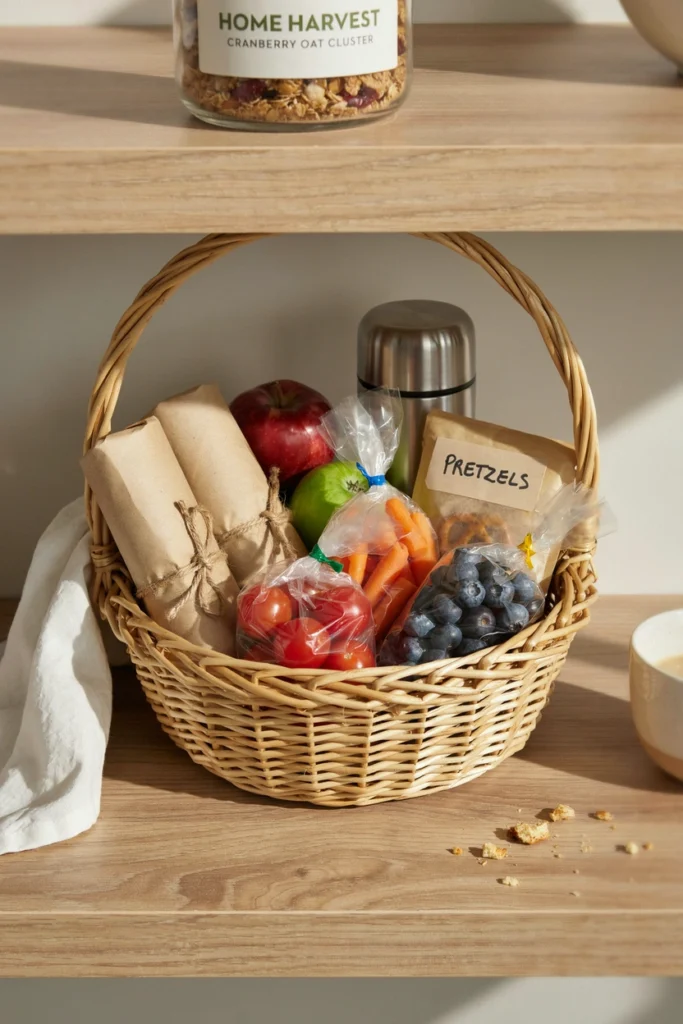
16. Create a School or Work Snack Basket
One basket, packed on Sunday night with the week’s lunchbox and desk snacks. It ends the morning panic hunt and stops the “there’s nothing to eat” complaint when there’s plenty — just nothing visible. Restock it with the weekly shop; when it’s empty, it’s empty, which also quietly rations the good biscuits.
17. Keep One Shelf for Overflow and Extras
The multipacks, the 2-for-1 tins, the backup olive oil — they need a home that isn’t crammed in front of daily items. One shelf (top shelf is ideal) as the “shop stockroom” keeps bulk buys from swallowing the working pantry. When the working shelf runs low, you restock from overflow rather than from the supermarket.
18. Use Pegboards Inside Large Pantries
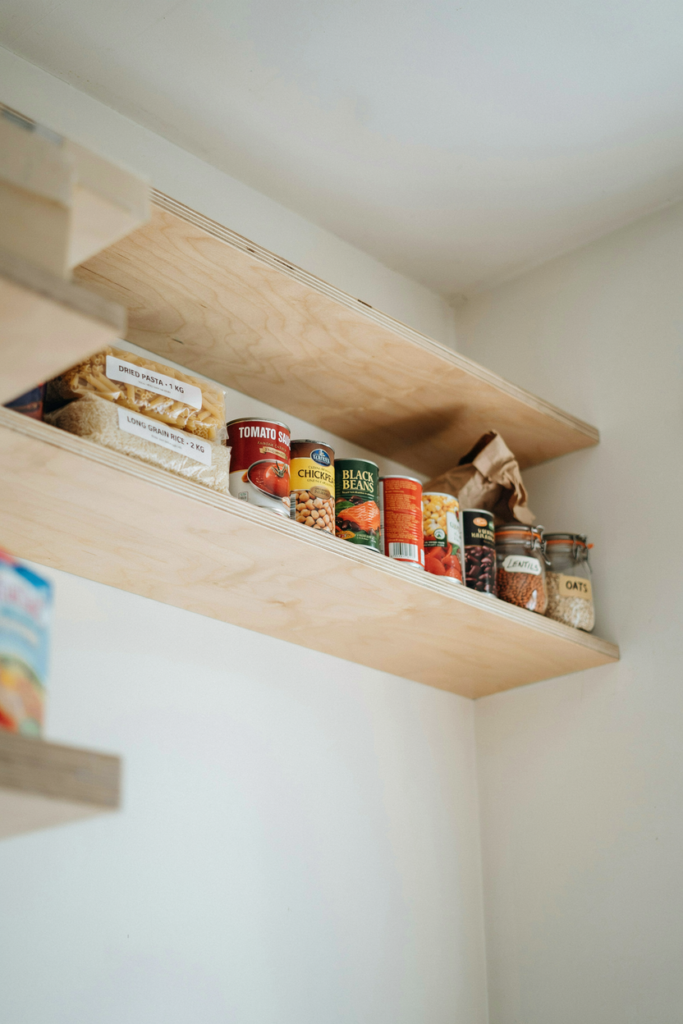
In a walk-in pantry, the walls are storage you’re not using. A pegboard panel on the inside wall holds measuring cups, small baskets, scissors, bag clips, and the shopping list — everything that clutters shelves but gets used constantly.
Mount the pegboard with 2cm spacers off the wall so hooks seat properly, and keep it to one panel: a wall of pegboard looks like a workshop. The most-used items go at chest height; rarely-used gadgets go high where they’re out of the way but still visible.
19. Store Spices Alphabetically or by Cuisine
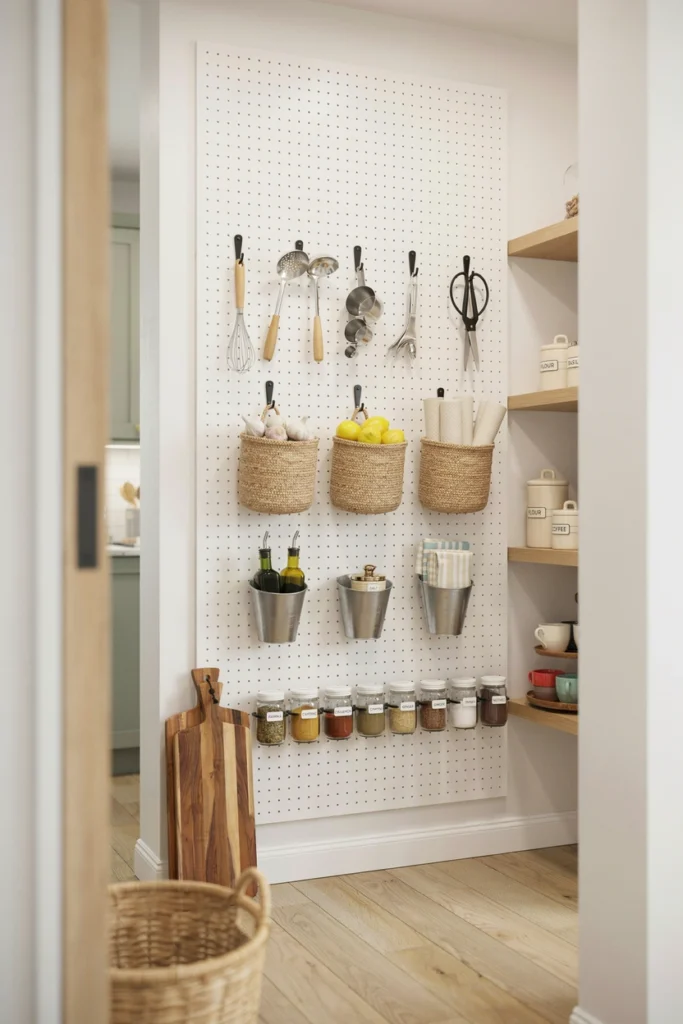
Spices are the fastest-multiplying item in any pantry — most households own 25–40 jars and use 8 regularly. Pick one system and commit: alphabetical is fastest to maintain, by-cuisine (Italian together, Indian together, baking together) is fastest to cook from. Tiered spice risers or a drawer insert beat a jumbled shelf every time.
20. Add Lighting to Dark Pantries
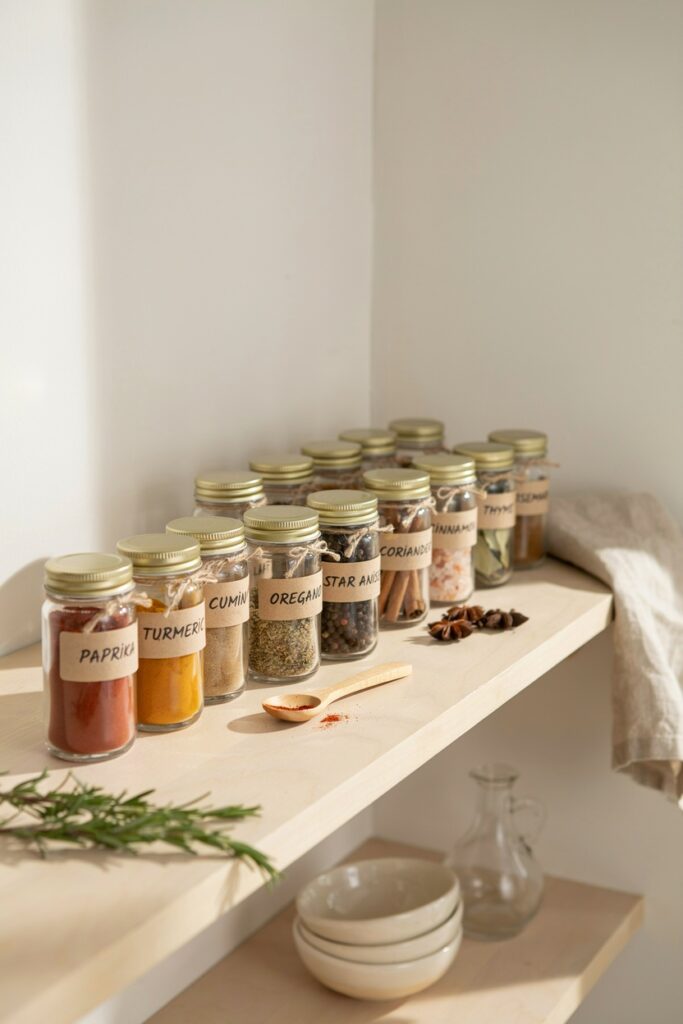
You can’t organize what you can’t see. A battery-powered motion-sensor LED strip (£10–15) inside a dark pantry is the single best upgrade for the money — it turns on when the door opens and you can finally read labels on the back shelf. Stick it under the top shelf pointing down; side-mounted strips create shadows.
21. Reassess the Layout Every Few Months
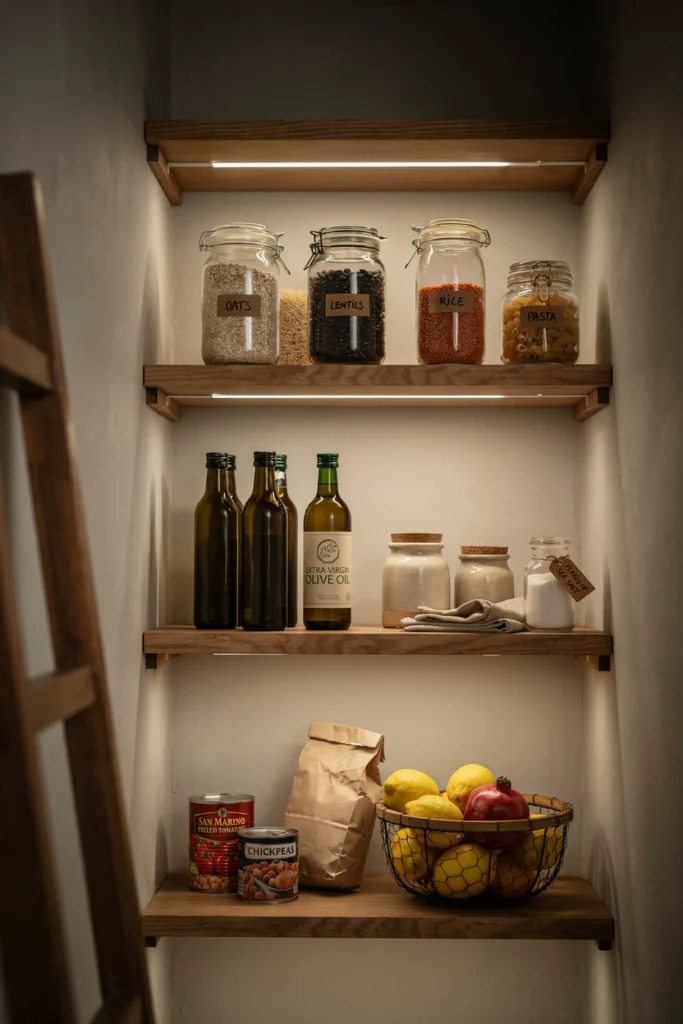
Pantries drift. Seasons change what you cook, kids’ tastes change, and the system slowly stops matching reality. Every three months, spend ten minutes asking: what’s hard to reach that I use daily? What’s front-and-centre that I never touch? Swap them. A pantry is a living system, not a monument.
22. Maintain It With a Weekly Reset
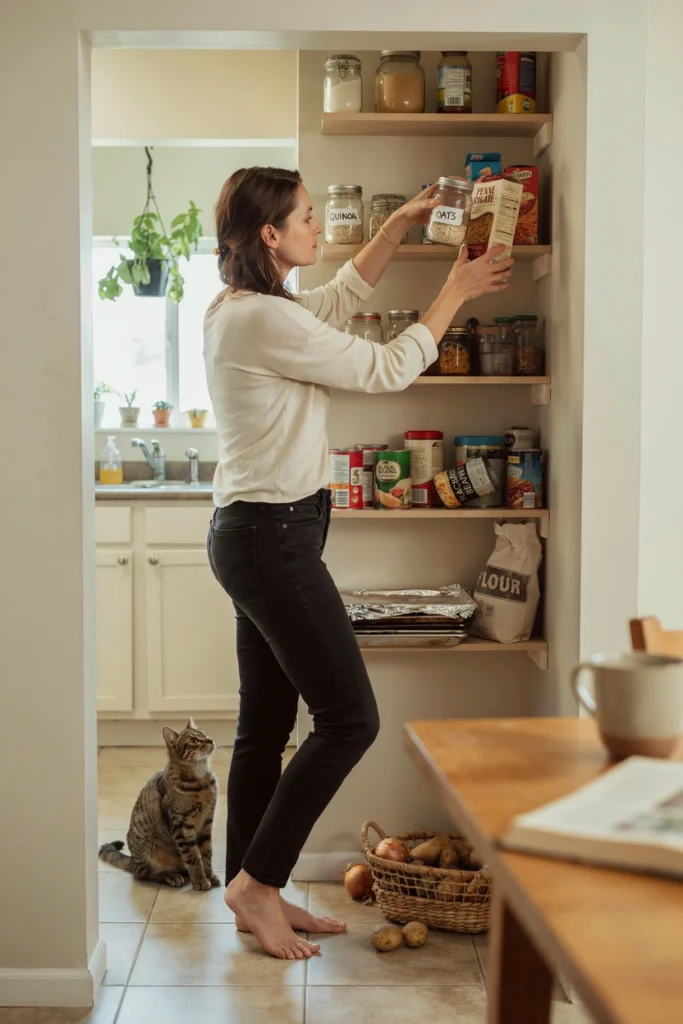
The whole system survives on a five-minute weekly reset: put strays back in their zones, pull anything expired to the “use first” basket, wipe one shelf. Do it while the kettle boils. Pantries don’t fail because the system is wrong — they fail because nobody spends five minutes a week on them.
Conclusion
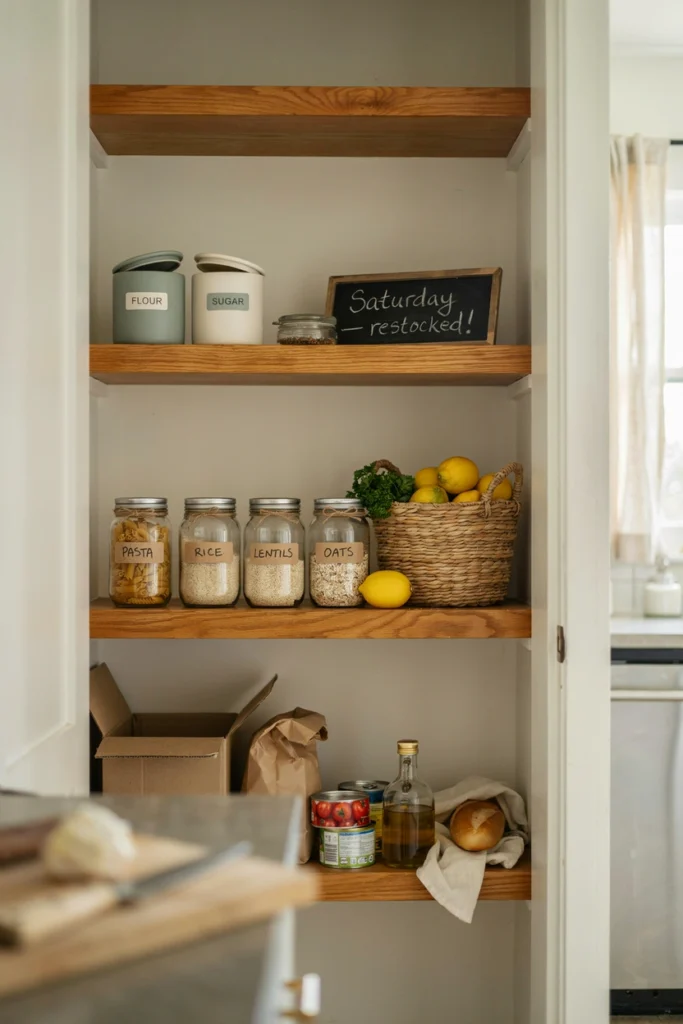
An organized pantry isn’t about matching containers or a photo-ready shelf. It’s about knowing what you have, finding it in seconds, and never buying your fourth jar of cumin. Start with the cleanout, build the zones, and protect it with five minutes a week.
Do it once, properly, and your future self — the one cooking dinner at 6pm on a Tuesday — will thank you every single day.
Pro Tips
- Measure before you buy any organizer. Shelf depth, height between shelves, and door clearance — write all three on your phone. Most organizers are returned because they don’t fit, not because they’re bad.
- Decant only what you use regularly. Don’t decant the special flour you use twice a year; decant the rice, pasta, and cereal you touch weekly. Decanting everything is a chore that kills the system.
- Keep a running shopping list on the pantry door. A small whiteboard or notepad where anyone can write what’s running low. It ends the “I thought we had some” conversation permanently.
- Photograph your organized pantry. When it drifts (and it will), the photo is your reset target. Ten minutes with the photo and you’re back to day one.
FAQs
How do I organize a very small pantry?
Use the door, go vertical with stackable bins and risers, and be ruthless about duplicates — small pantries can’t afford a backup of everything. Decant into square containers that fit your exact shelf depth. If it still doesn’t fit, the overflow shelf (or a hallway cupboard) is your pressure valve.
What’s the best way to keep a pantry organized with kids?
Give kids their own reachable snack zone and label it — ownership keeps it tidier. Keep everything else either high or behind a system they don’t need to disturb. Accept that the kids’ shelf will never look perfect; the goal is contained, not pristine.
How often should I clean out my pantry?
A full cleanout once or twice a year, plus the five-minute weekly reset and a quick date-check when you do a big shop. Pantries quietly accumulate expired items, so the date-check matters more than the deep clean.
Are clear containers really worth it?
For dry goods you buy regularly — absolutely. They end duplicate buying, keep food fresher, and make inventory instant. For rarely-used specialty items, skip them; the original packaging is fine. Start with five containers for your most-used staples and expand only if it helps.

HowDecor is a home decor blog sharing simple, practical decorating ideas for everyday spaces. We believe a beautiful home should feel comfortable, personal, and full of warmth — and that great style does not require a huge budget. Our goal is to inspire readers to create spaces that feel peaceful, welcoming, and truly their own — one room at a time.