Decorating for kids is a design challenge with a moving target: the room has to survive toy trucks today and still work when the dinosaur phase ends next spring. The parents who get this right share one strategy — they build a calm, durable foundation and let the kid stuff be the changeable layer. The room grows by swapping accessories, not by repainting every eighteen months.
These eight ideas work for boys, girls, and shared rooms alike, because they are built on flexibility rather than stereotypes. Pink or blue can visit; the room itself stays timeless.
1. Neutral Base with Colorful Accents
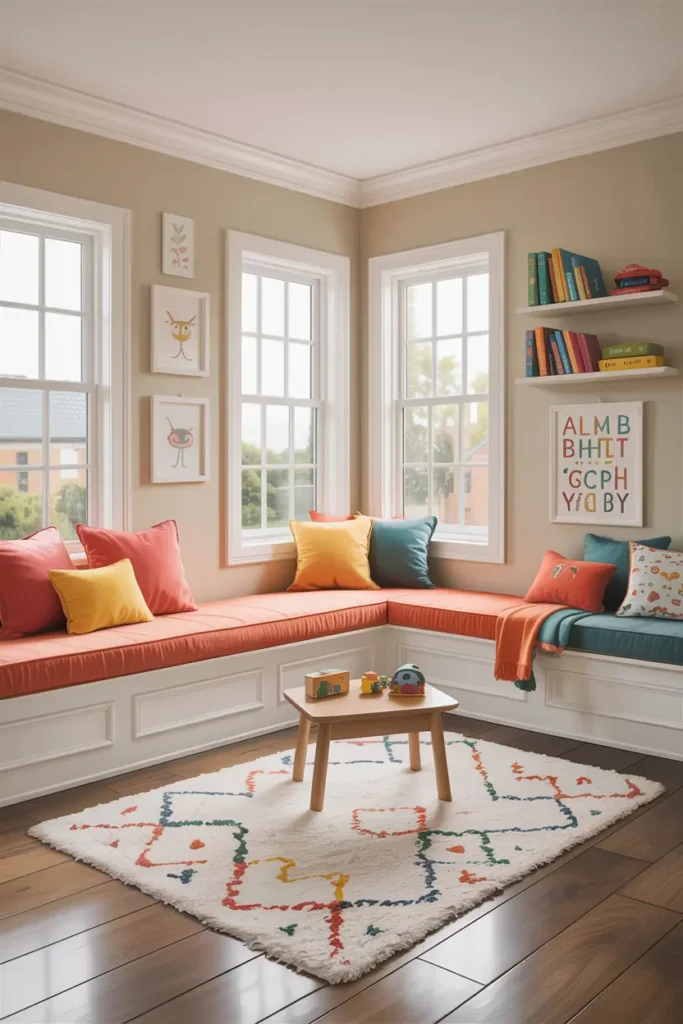
Paint the walls a warm, forgiving neutral — soft white, pale greige, light warm gray — and put the color in things you can change: bedding, curtains, cushions, art. When your six-year-old’s obsession shifts from space to soccer, you swap a duvet cover and two posters, not a paint job.
Choose scrubbable paint (eggshell or satin finish, not flat) because walls in kids’ rooms are contact sports. Keep one accent wall’s worth of color in removable form — peel-and-stick wallpaper or large decals — so the next phase peels off cleanly when the time comes.
2. Fun Wall Art and Stickers
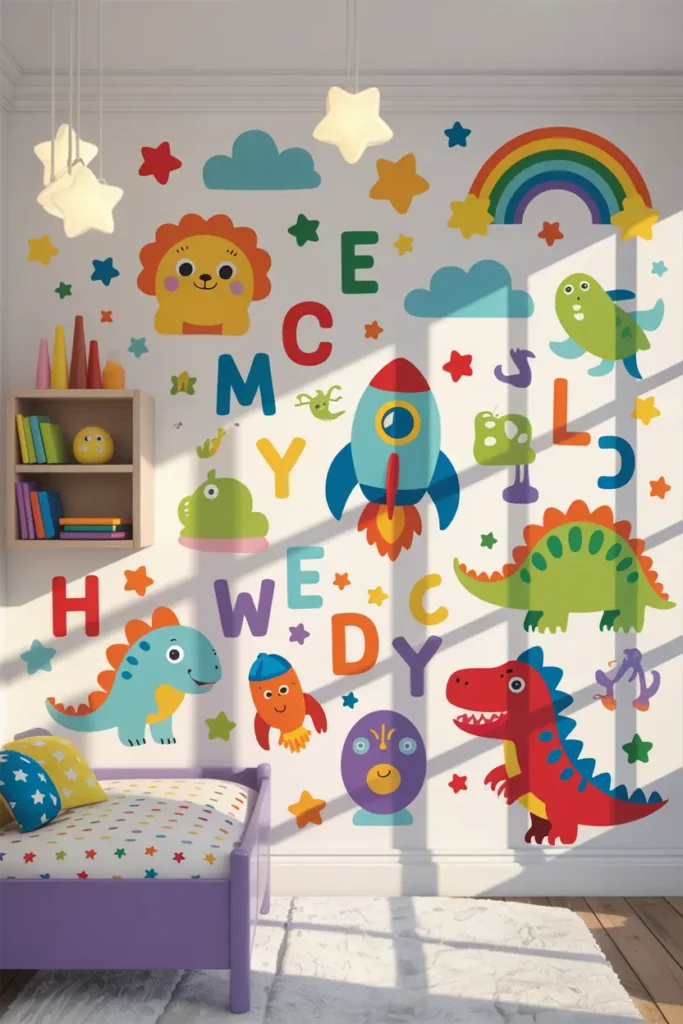
Walls are a kid’s gallery, and removable wall decals are the parent’s best friend. Oversized animals, maps, stars, alphabets — modern decals look genuinely stylish, apply in an afternoon, and remove without damage when tastes change. Let the child choose; ownership of the choice is half the delight.
Dedicate one wall or board as their art space: a corkboard, a magnetic board, or a simple wire with clips for their own drawings. Rotating their artwork monthly costs nothing and makes them feel the room is truly theirs. Frame one special piece properly — the frame signals that their work matters.
3. Multi-Purpose Furniture
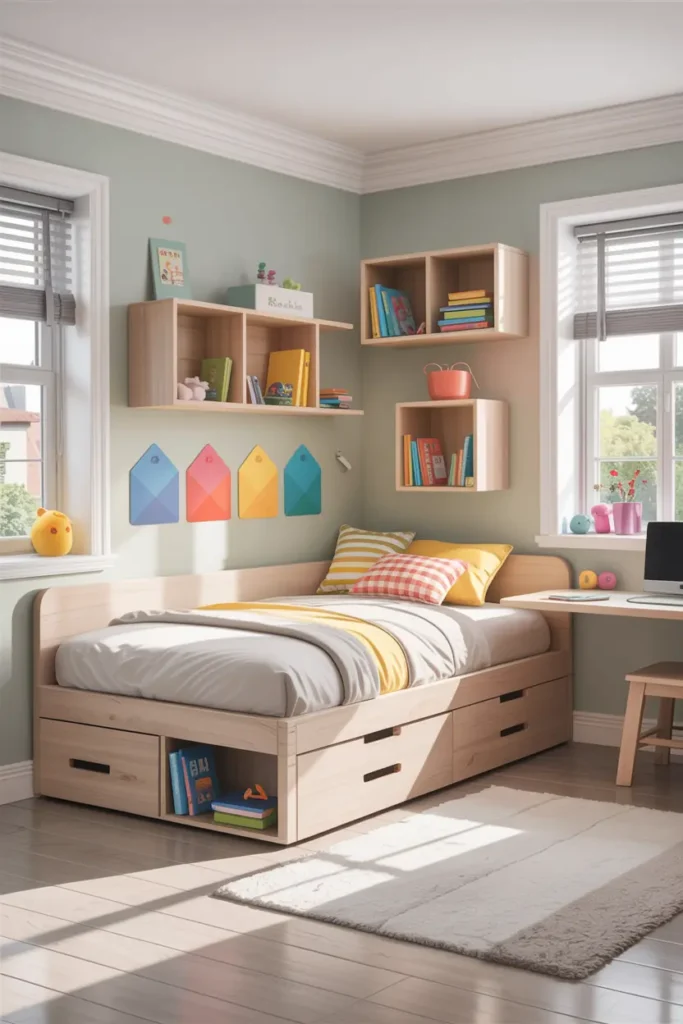
Kids’ furniture should work as hard as kids play. A bed with drawers underneath swallows toy overflow. A desk that adjusts in height lasts from kindergarten to high school. A small table that serves as Lego station today becomes homework headquarters later — same table, new job.
Buy for the next stage, not just this one: a “toddler” table is outgrown in a year, while a small adjustable desk lasts a decade. And anchor tall furniture to the wall — bookcases and dressers tip, and anti-tip straps cost almost nothing. Safety is not optional decor; it is the foundation everything else sits on.
4. Play Area with Soft Flooring
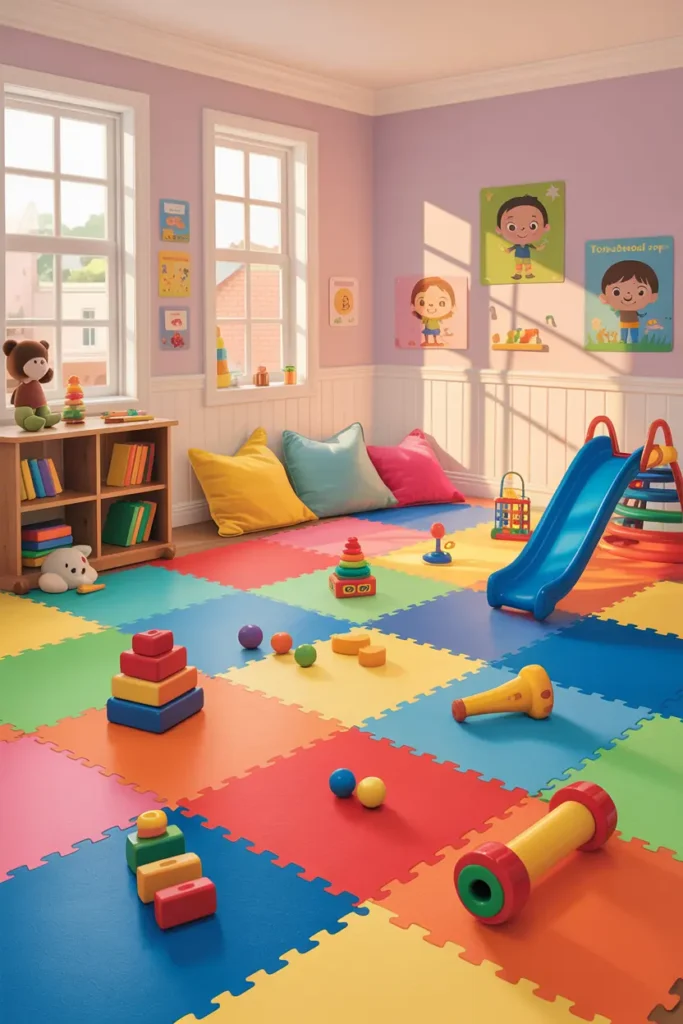
Designate a play zone with forgiving flooring and watch the rest of the room stay calmer. Interlocking foam mats, a large washable play rug, or a low-pile carpet tile area — soft under knees, easy to clean, and visually containing the chaos to one zone. Kids play harder and longer when the floor invites it.
Size the zone generously: a 6×8-foot area fits most play setups without swallowing the room. Washable is non-negotiable — juice, paint, and mystery stickiness are certainties, not risks. A rug you can throw in the washing machine is worth twice a prettier one you cannot.
5. Creative Storage Solutions
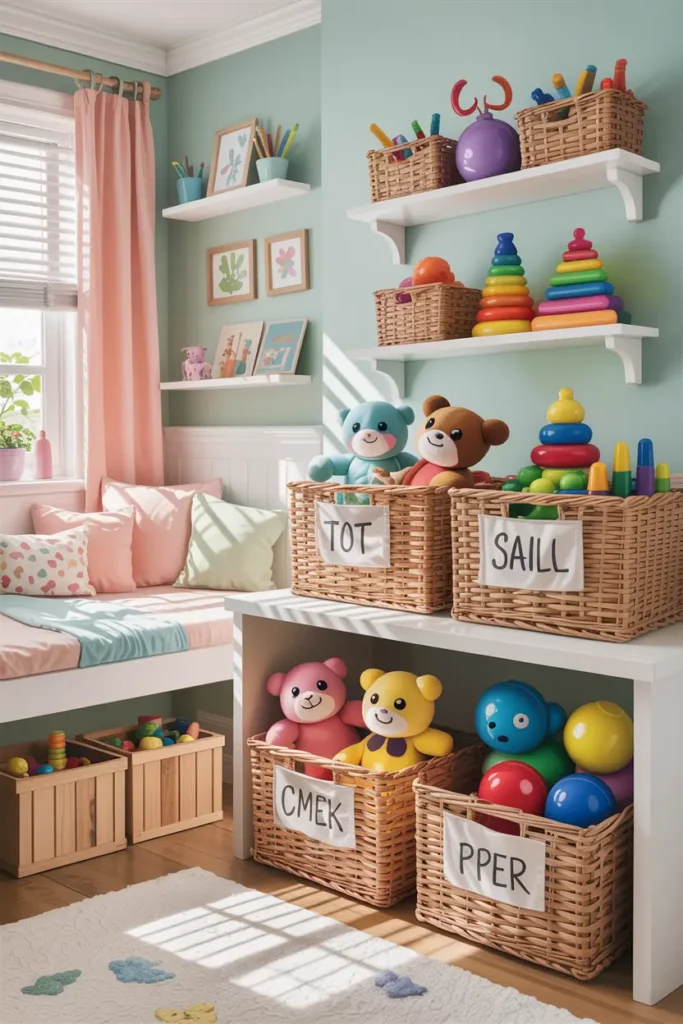
Toy chaos is a storage design problem, not a child behavior problem. The system that works: broad categories, not fussy sorting — one bin for blocks, one for art supplies, one for stuffed animals. Open bins at child height for daily toys (if putting away takes more than ten seconds, it will not happen), closed storage for the overflow.
Label with pictures for pre-readers — a photo of blocks on the block bin. Do a monthly toy rotation: box up half the toys and store them; bring them back in a month and they feel brand new. Less visible at once means more actually played with, and cleanup takes minutes instead of an hour.
6. Cozy Reading Corner
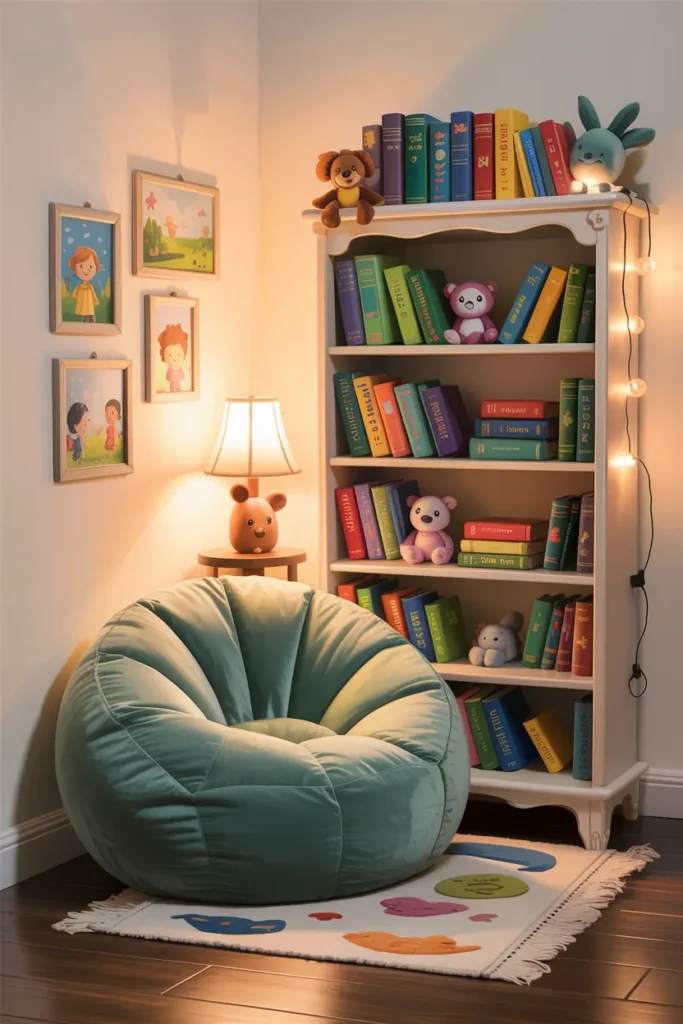
Every kids’ room deserves one soft spot built for stories: a beanbag or floor cushions, a small bookshelf at child height, and a warm reading light. This corner pays dividends far beyond decor — children with a dedicated reading nook read more, and bedtime gets measurably easier when the room has a wind-down zone.
Keep the book selection small and rotating — ten to fifteen books, swapped monthly from the library, beats a stuffed shelf nobody browses. A forward-facing picture-book shelf (covers visible) invites pre-readers far more than spine-out shelving. Add one soft blanket that lives there permanently; ritual objects matter to kids.
7. Soft and Warm Lighting
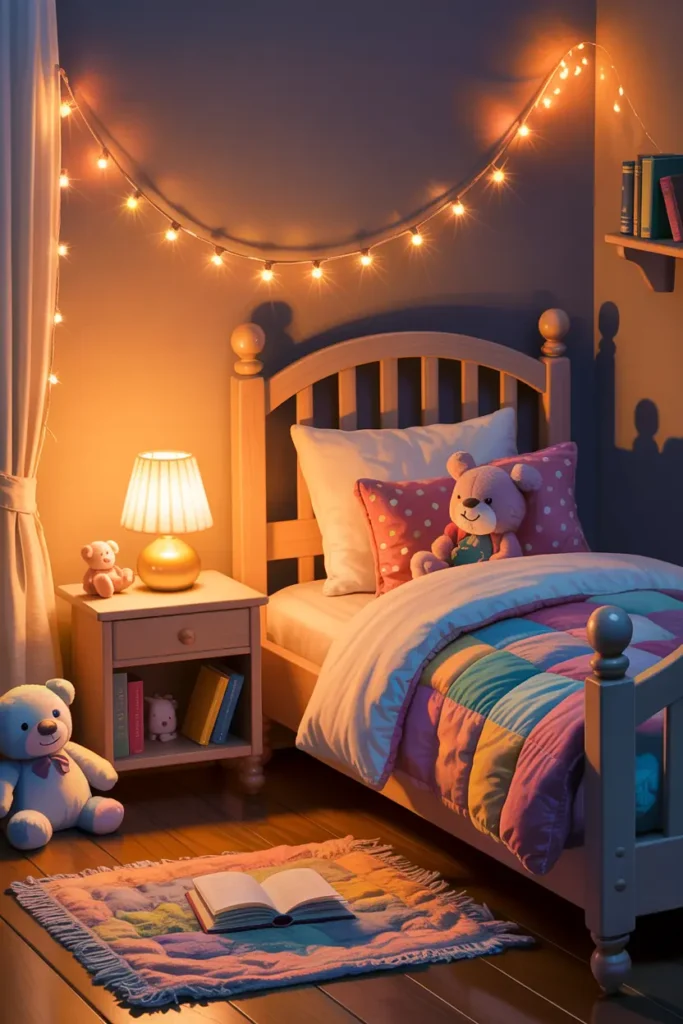
Harsh overhead light is the enemy of calm bedtimes. Layer the room’s light: a dimmable main light for playtime, a warm table or wall lamp for reading, and a soft nightlight for the just-in-case hours. Warm bulbs (2700K) throughout — cool white light suppresses the sleepiness you are trying to encourage.
Put the main light on a dimmer or use a smart bulb: full brightness for cleaning and play, low warm glow for the bedtime routine. Blackout curtains or blinds are worth every penny for naps and early summer sunrises — sleep is the ultimate room function, and light control is how you protect it.
8. Personalized Decor Elements
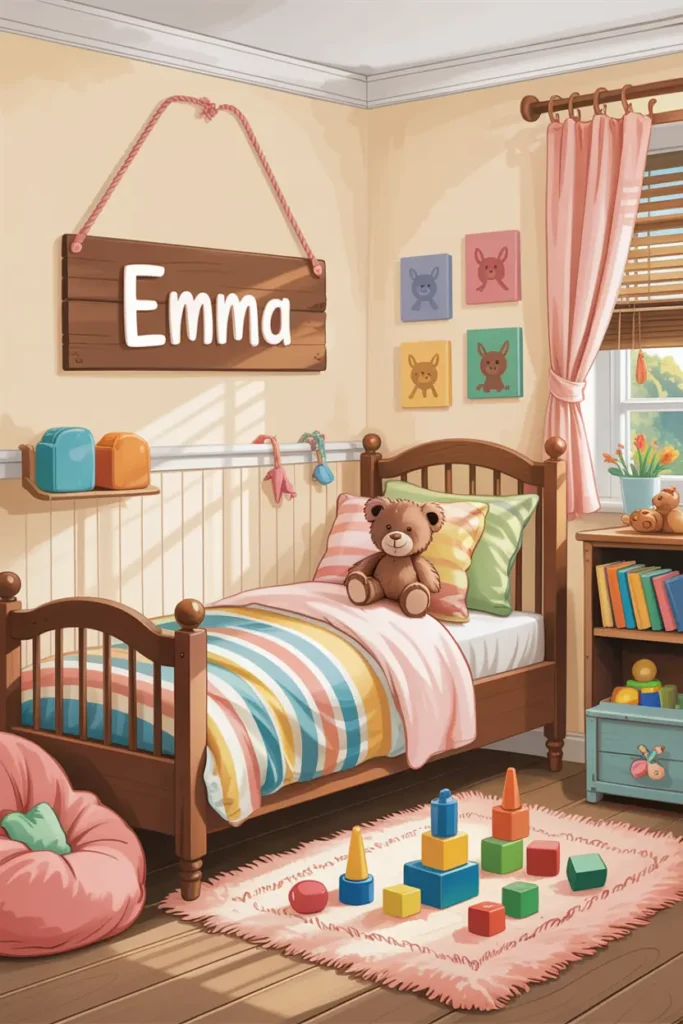
A name on the wall, a growth chart marking heights, a shelf for trophies and treasures — personalization is what turns a nice kids’ room into their room. Wooden name letters, a custom print with their birth details, or a simple framed “about me” page they helped make.
Leave room for evolution: a gallery ledge where they can rearrange their own treasures, a pinboard for new obsessions. The room should have blank space for who they are becoming, not just who they are now. The most loved kids’ rooms are never finished — they are frameworks for a childhood in progress.
Final Thoughts
The secret to kids’ rooms that work for years is restraint at the foundation and generosity in the changeable layer. Neutral walls, durable multi-use furniture, serious storage, and soft warm light — then let the color, the characters, and the chaos live in bedding, decals, and bins that swap out as fast as childhood phases do. Build the room to last; let the kid stuff be gloriously temporary.
Pro Tips
- Anchor everything tall: bookcases, dressers, and wardrobes get anti-tip straps. Do it the day the furniture arrives, not “later.”
- Choose washable everything: rugs, bedding, curtains, paint finish. If it cannot survive the washing machine or a scrub, it does not belong in a kids’ room.
- Rotate, don’t accumulate: store half the toys out of sight and rotate monthly. Fewer visible toys means more play and faster cleanup.
- Involve the kid: let them choose the decals, the bedding color, the reading-corner cushion. A room they helped design is a room they respect.
FAQs
How do I decorate a shared room for a boy and a girl?
Keep the foundation neutral and give each child their own zone with personalized bedding and a dedicated shelf or wall area. A shared color both like (teal, sunny yellow, sage) unifies the room without forcing either into the other’s palette.
What paint finish is best for kids’ rooms?
Eggshell or satin — both wipe clean without looking shiny. Avoid flat paint; it marks permanently. Look for scrubbable formulas marketed for high-traffic areas.
How can I make a small kids’ room fit everything?
Go vertical (tall narrow bookcase, wall shelves), choose multi-purpose pieces (storage bed, desk with drawers), and zone with a rug rather than furniture. The play area can overlap the sleep area if storage keeps toys contained.
At what age should I let my child choose their room decor?
Give guided choices from about age three (“which of these two bedding sets?”) and real input from five or six. Kids who choose their room take better care of it — and you avoid the heartbreak of a full redo they hate.

HowDecor is a home decor blog sharing simple, practical decorating ideas for everyday spaces. We believe a beautiful home should feel comfortable, personal, and full of warmth — and that great style does not require a huge budget. Our goal is to inspire readers to create spaces that feel peaceful, welcoming, and truly their own — one room at a time.