There is a particular magic to a kid’s bedroom done right — the one where the bed looks like a cloud, the walls tell stories, and there is always a soft place to land with a book. Cute does not have to mean chaotic, and fun does not have to mean fragile. The sweetest kids’ bedrooms are the ones designed with a wink: playful on the surface, seriously practical underneath.
Think of these ten ideas as ingredients for that magic, each one chosen to delight the child and quietly make the parent’s life easier.
1. Soft and Cheerful Color Palette
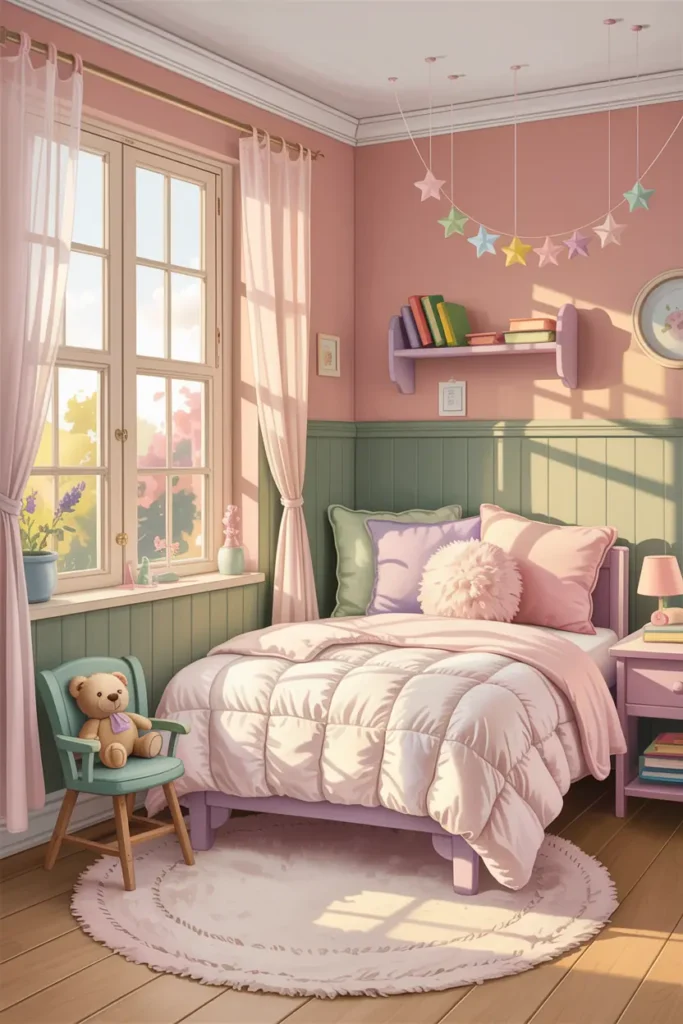
Start with colors that feel like a hug: buttery yellow, soft peach, mint, sky blue, lavender — pastels and light brights that keep the room sunny even on gray mornings. Cheerful does not mean loud; a pale yellow wall with white trim feels joyful without overstimulating, which matters when this is also the room where sleep happens.
The trick is balancing the sweetness: pair the cheerful color with plenty of white or cream so the room breathes. One cheerful wall plus white everywhere else, or cheerful bedding against neutral walls — either way, the color sings instead of shouting. And always test with the child present; their delight at “their” color is part of the design.
2. Fun-Themed Bedding
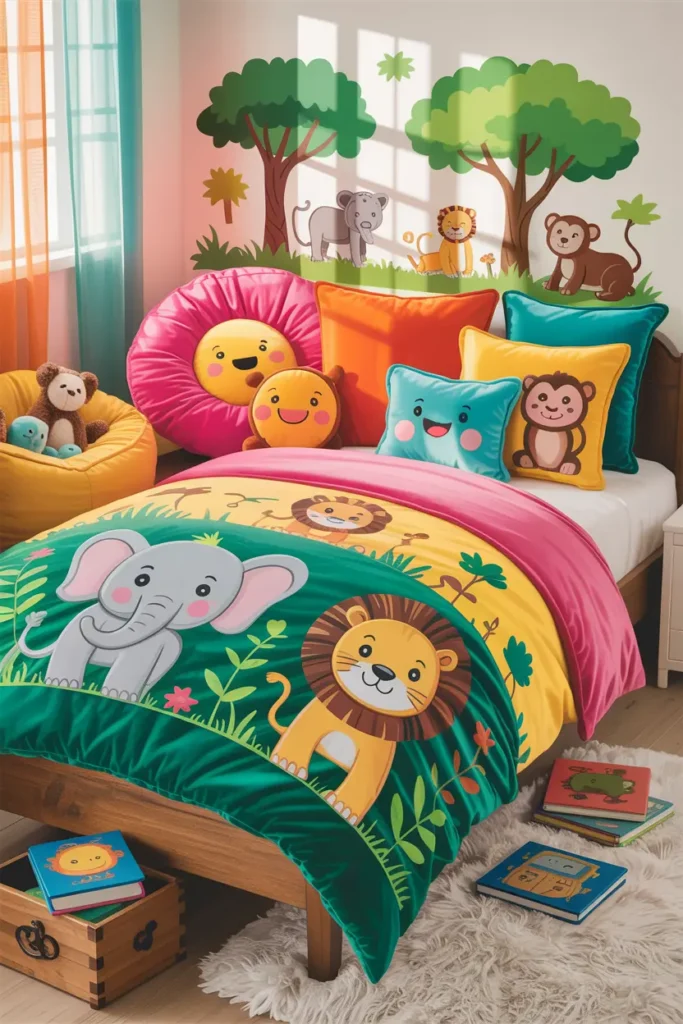
Bedding is the fastest route to a themed room and the easiest to change when the theme expires. Dinosaurs, unicorns, space, princesses, race cars — a themed duvet cover transforms the room’s whole story overnight, for the price of bedding you were buying anyway. Buy the cover, not the whole set, and layer it over plain sheets.
Go one step further with a themed throw pillow or two, but stop there — bedding plus pillows plus curtains plus rug in the same theme tips from cute to overwhelming. The duvet is the headline; everything else is supporting cast. And choose machine-washable everything, because themed bedding gets loved hard.
3. Creative Wall Decor
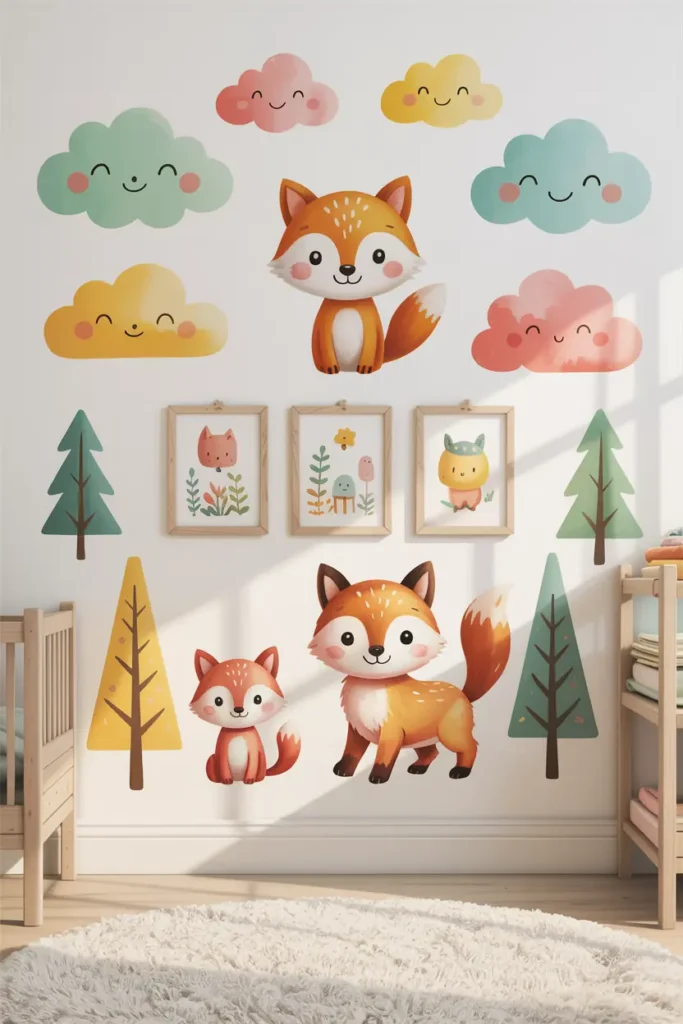
Walls are where a kid’s bedroom gets its personality. Beyond paint: a mural-style decal of a forest or galaxy, a string of their own artwork on clips, wooden letters spelling their name, or a chalkboard wall section for endless reinvention. The best kid walls are a little bit gallery, a little bit playground.
Keep it changeable — decals over murals, frames over direct paint — because today’s beloved theme is tomorrow’s embarrassment. One “wow” wall plus simpler companions keeps the room exciting without visual overload. And hang some art at their eye level, not yours; the room belongs to someone three feet tall.
4. Comfortable Reading Corner
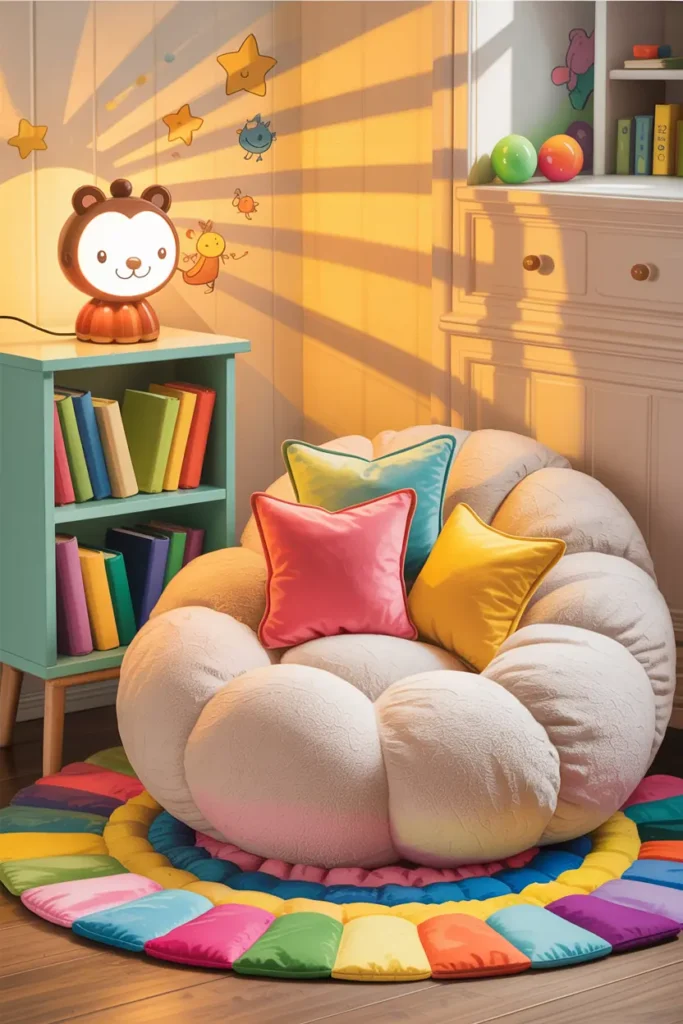
Tuck a reading nook into the brightest corner: a soft beanbag or a pile of floor cushions, a low bookshelf with covers facing out, and a warm lamp at just the right height. There is something about a dedicated reading spot that makes books irresistible — it turns reading from an activity into a place.
Stock it with ten to fifteen books and rotate monthly; a small fresh selection beats a big stale one. Add a special blanket that lives only in the nook — kids adore ritual objects, and “the reading blanket” becomes part of the bedtime wind-down. This corner often becomes the most-used square footage in the whole room.
5. Smart Storage for Toys
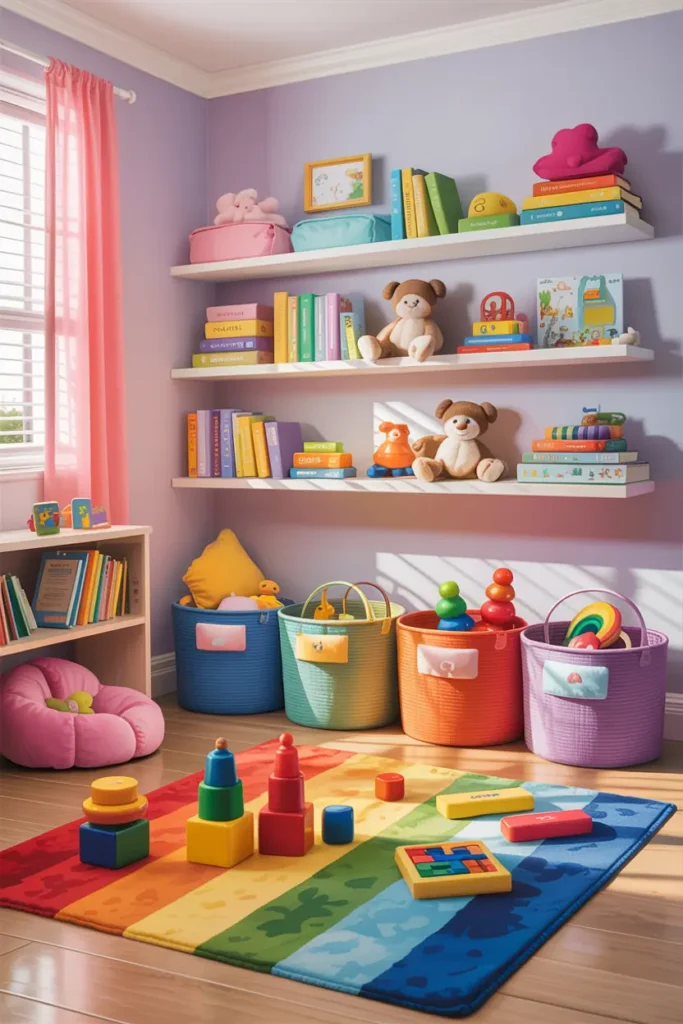
Cute rooms die under toy avalanches, so storage has to be part of the decor, not an afterthought. The winning formula: open bins at kid height for everyday favorites (labeled with pictures for little ones), pretty closed storage — a toy chest that doubles as a bench, lidded baskets — for the rest.
Make cleanup a game, not a chore: “race the timer,” color-sorted bins, a special home for the current favorite toy. And embrace the rotation trick — store half the toys away and swap monthly. The room stays manageable, and old toys feel new again. Storage that children can actually use is storage that actually gets used.
6. Playful Rugs and Mats
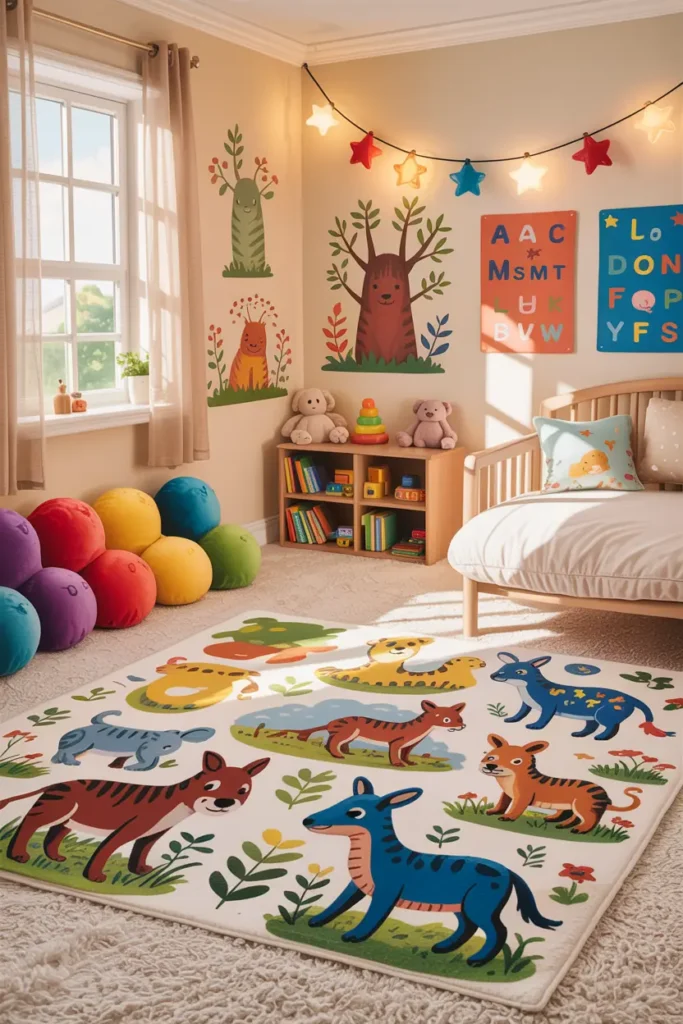
A rug in a kid’s bedroom is a play surface, a crash pad, and a decor statement in one. Round rugs soften boxy rooms; rugs printed with roads, hopscotch, or alphabets turn the floor into a game board. Choose low-pile and machine-washable — this rug will meet paint, snacks, and mystery substances.
Size it generously: big enough for the main play action, which usually means 5 feet across minimum. Layer a soft play mat over hard floors in the play zone for tumble protection. The rug also visually zones the room — sleep here, play there — which helps small rooms feel organized instead of jumbled.
7. Study or Activity Table
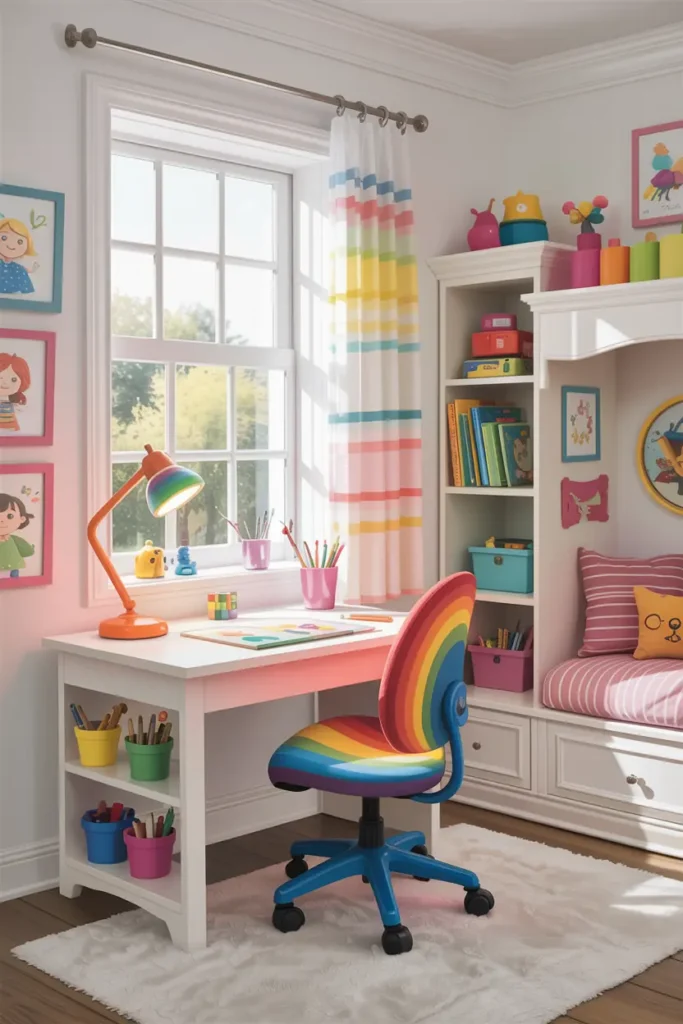
Even preschoolers benefit from a “my table” — a small surface at their height for drawing, puzzles, and later homework. A child-sized table and two chairs tuck into a corner and signal that creating things has a honored place in the room. For school-age kids, this evolves into a proper desk setup.
Choose adjustable or convertible pieces when you can: a table that grows, a desk with storage built in. Position near natural light for daytime use, with a dedicated task lamp for evenings. Keep supplies in a caddy on the table — the ten-second rule applies: if starting an activity takes longer than ten seconds of setup, it happens less.
8. Soft and Safe Lighting
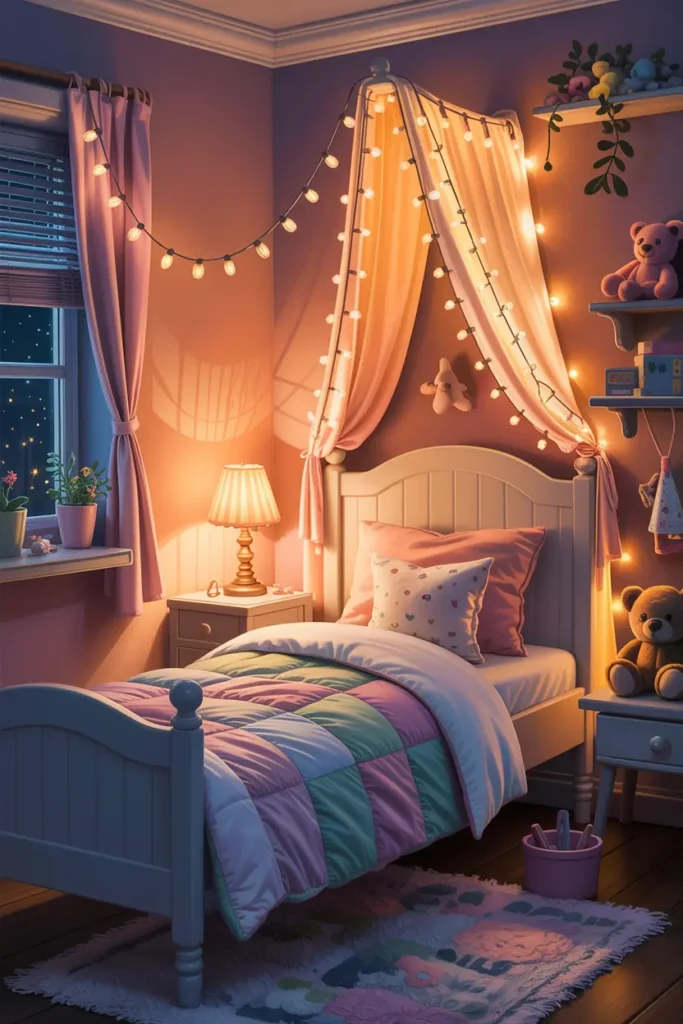
Lighting shapes the room’s whole rhythm: bright and cheerful for play, warm and low for winding down. A dimmable ceiling light plus a cute table lamp (think animal shapes, star projectors, cloud lamps) plus a gentle nightlight covers every mode. Warm bulbs only — 2700K keeps the room cozy and sleep-friendly.
Safety specifics: secure cords out of reach, choose cool-touch LED bulbs (little fingers touch everything), and prefer wall-mounted or heavy-base lamps that cannot be pulled over. A star-projector nightlight does double duty as decor and sleep aid — the slowly moving stars are genuinely soothing, not just cute.
9. Personal Touches
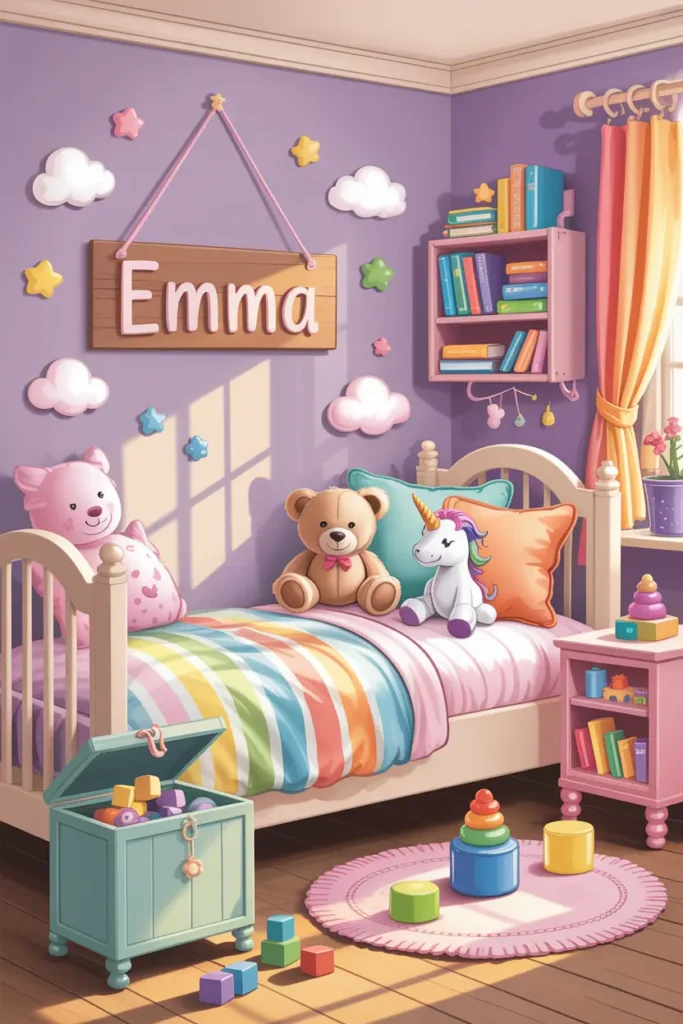
The details that make a kid’s eyes light up: their name in wooden letters above the bed, a growth chart on the doorframe, a shadow box for treasures (the cool rock, the first lost tooth box, the medal), photos of their favorite people at their height. These are the things they will remember.
Let them co-curate: a shelf that is entirely theirs to arrange, a pinboard for ticket stubs and drawings, the choice of which stuffed animals earn bed privileges. A bedroom with the child’s fingerprints on it — literally and figuratively — is a bedroom they love, and loved rooms get cared for.
10. Keep the Layout Open
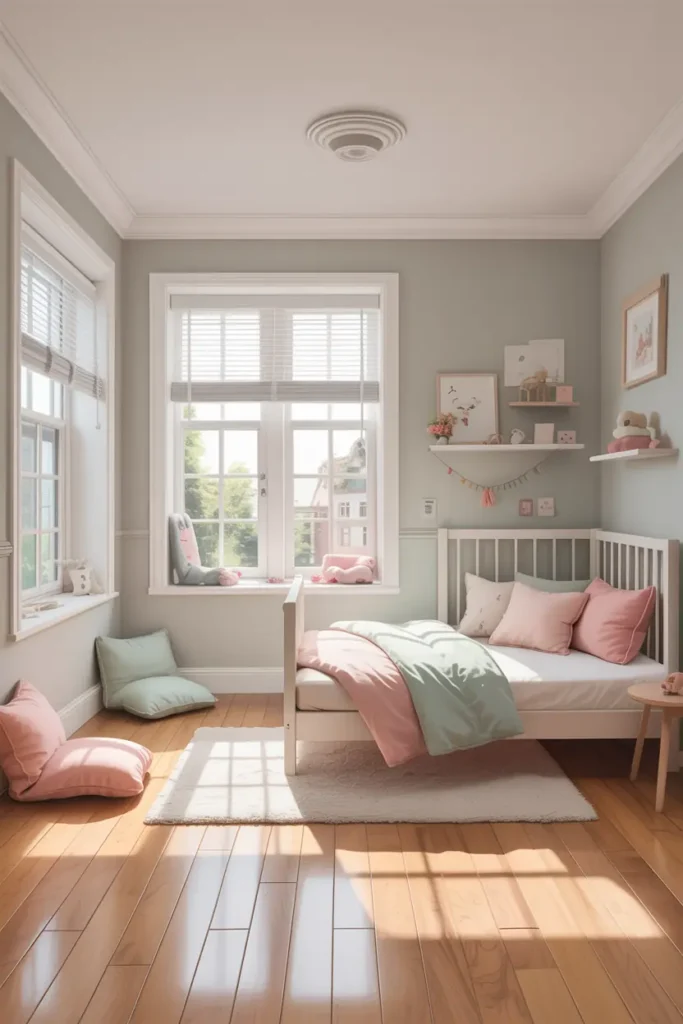
Resist filling every square foot. Kids need floor — for building, sprawling, dancing, and the elaborate imaginary worlds that require staging areas. Keep the center of the room open: bed against one wall, storage along another, and a generous clear middle that can become anything by afternoon.
This also future-proofs the room: open floor adapts to every age’s play, while a room crammed with themed furniture boxes the child in. Fewer, better pieces with room to breathe — the layout equivalent of leaving blank pages in a coloring book. The emptiness is not unfinished; it is potential.
Final Thoughts
A cute kid’s bedroom is really a love letter in room form: cheerful colors, a bed that invites dreams, walls that celebrate who they are, and enough open floor for who they are becoming. Build it soft, keep it washable, light it warmly, and leave space for the beautiful chaos of childhood. The cutest rooms are not the most perfect ones — they are the most lived in, by very small, very happy people.
Pro Tips
- Theme the bedding, not the room: duvet covers swap in minutes when obsessions change; painted murals do not. Keep permanent elements neutral and cute.
- Buy washable first, pretty second: every textile should survive the machine. Cute that cannot be cleaned becomes shabby within months.
- Light in three modes: bright for play, warm and low for stories, gentle glow for night. A dimmer or smart bulb handles all three.
- Leave growth space: open floor and one empty shelf. The room should have room for who they become next year.
FAQs
How do I make a small kid’s bedroom feel bigger?
Light cheerful colors, one mirror to bounce light, furniture against walls with open floor in the middle, and vertical storage (tall narrow bookcase, wall shelves). Avoid oversized themed furniture that eats floor space.
What is the best flooring for a kid’s bedroom?
Whatever is underneath plus a large washable low-pile rug in the play zone. The rug handles comfort, noise, and mess; the hard floor underneath handles everything else. Foam play mats add extra softness for toddlers.
How often should I update my child’s bedroom?
Refresh the changeable layer (bedding, decals, art) whenever their interests shift — usually every 1–2 years. The foundation (furniture, paint, storage) should last 5+ years if chosen neutrally.
Are themed bedrooms a good idea?
As a light touch, yes — themed bedding and a few accessories delight kids enormously. As a full-room commitment (themed paint, themed furniture), it is risky: themes expire fast and full redos are expensive. Theme the soft stuff, keep the hard stuff timeless.

HowDecor is a home decor blog sharing simple, practical decorating ideas for everyday spaces. We believe a beautiful home should feel comfortable, personal, and full of warmth — and that great style does not require a huge budget. Our goal is to inspire readers to create spaces that feel peaceful, welcoming, and truly their own — one room at a time.