There is a particular kind of living room that makes you exhale when you enter — not because it is impressive, but because it is easy. Nothing shouts, everything belongs, and the whole space seems to be at peace with itself. That feeling is not an accident of expensive furniture. It is the result of simple decisions, made consistently: calm colors, honest materials, soft light, and the discipline to leave things out.
These ten ideas are the quiet fundamentals. None is dramatic alone; together, they build the room people describe as “warm” without quite knowing why.
1. Start With a Neutral Base
Warmth begins with restraint. Choose a neutral foundation — warm white walls, a natural rug, upholstery in oatmeal, greige, or soft taupe — and let it be the canvas everything else rests on. A calm base does two things: it makes the room feel larger, and it makes every subsequent choice look intentional.
The nuance is undertone. Warm neutrals (creamy, honeyed, earthy) create the cozy feeling; cool neutrals (blue-gray, stark white) create distance. If your room feels cold despite neutral colors, the undertones are almost certainly the culprit — warm it with textiles in caramel, rust, or golden beige before changing anything structural.
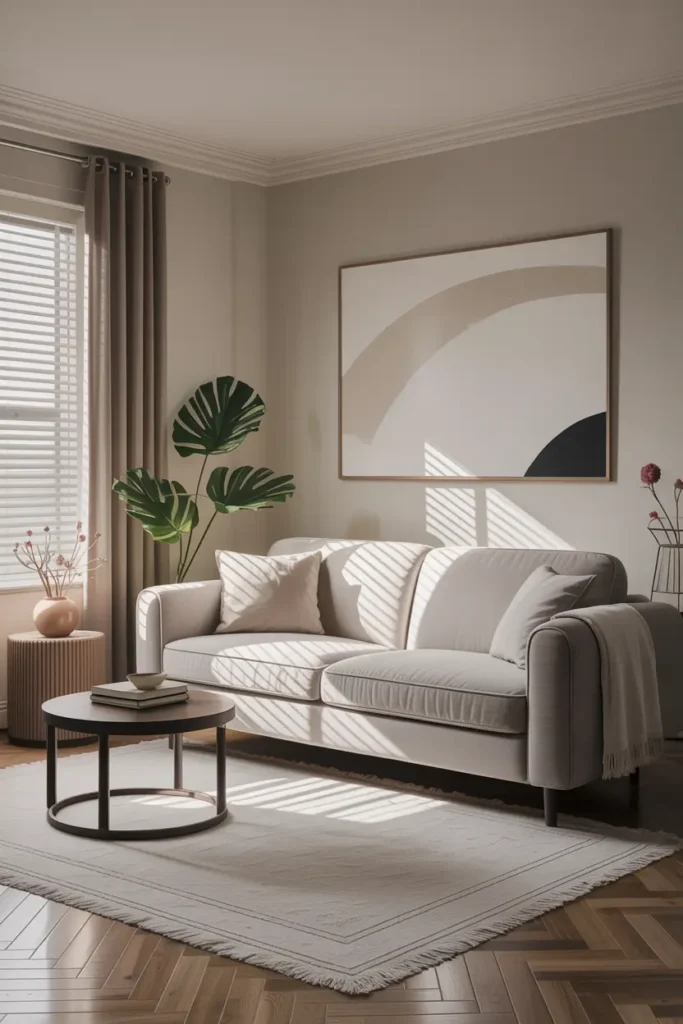
2. Choose Comfortable Seating
A warm room is a room you can sink into. Prioritize seating you actually want to sit in for hours: a sofa with a deep enough seat (22–24 inches), cushions with real fill that do not go flat in a month, an armchair angled for conversation rather than pushed against a wall as decoration.
Comfort has a visual language too — slightly rumpled linen, a throw that looks used (because it is), cushions plumped rather than karate-chopped. The overly perfect, untouched sofa reads as a showroom; the gently lived-in one reads as home. Choose comfort, then let it show.
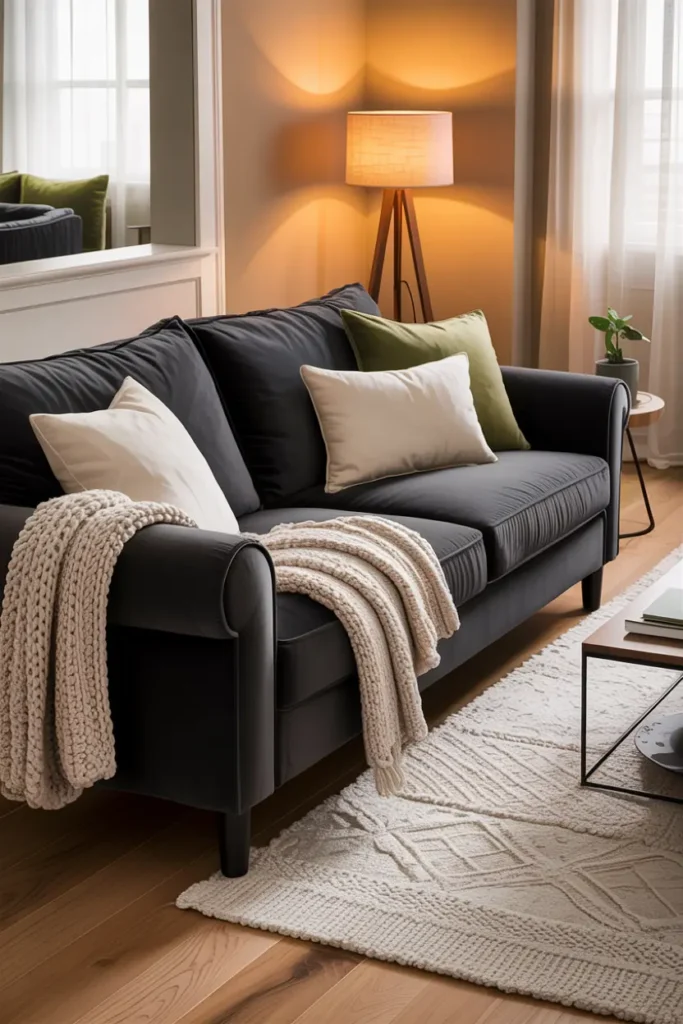
3. Use Soft and Warm Lighting
Nothing warms a room like warm light. Replace any cool-white bulbs with 2700K warm white, and build three gentle layers: a floor or table lamp for general glow, a reading light where you sit, and something low — candles, fairy lights, a small lantern — for the evening hours when warmth matters most.
Lampshades matter as much as bulbs: fabric shades diffuse light softly, while bare bulbs glare. Keep the overhead light off in the evenings whenever possible — rooms lit only from lamps and candles feel intimate at any size. Light is the cheapest thermostat for a room’s emotional temperature.
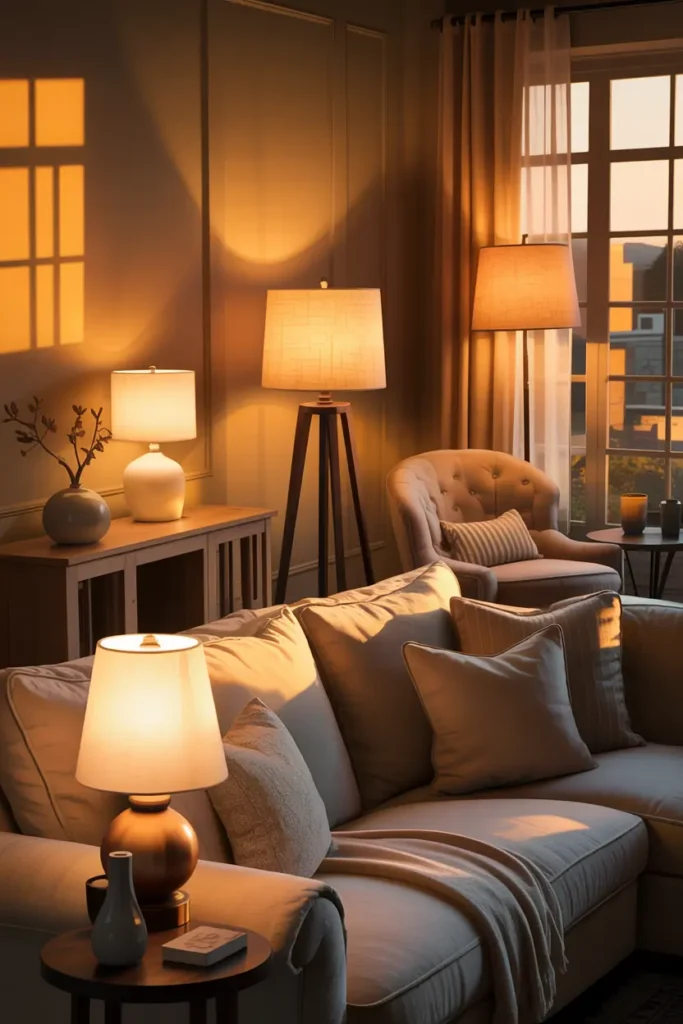
4. Add Texture With Fabrics
In a simple room, texture is the decoration. A chunky knit throw over a smooth linen sofa, a nubby wool cushion against washed cotton, a soft high-pile rug underfoot — each contrast gives the eye and the hand something to enjoy. Texture is warmth you can touch.
Build it gradually: start with the throw and two cushions in contrasting textures, then the rug. Natural fibers — wool, linen, cotton, jute — age beautifully and feel better than synthetics pretending to be them. A simple room with rich textures feels luxurious; a simple room without them feels bare. The difference is entirely tactile.
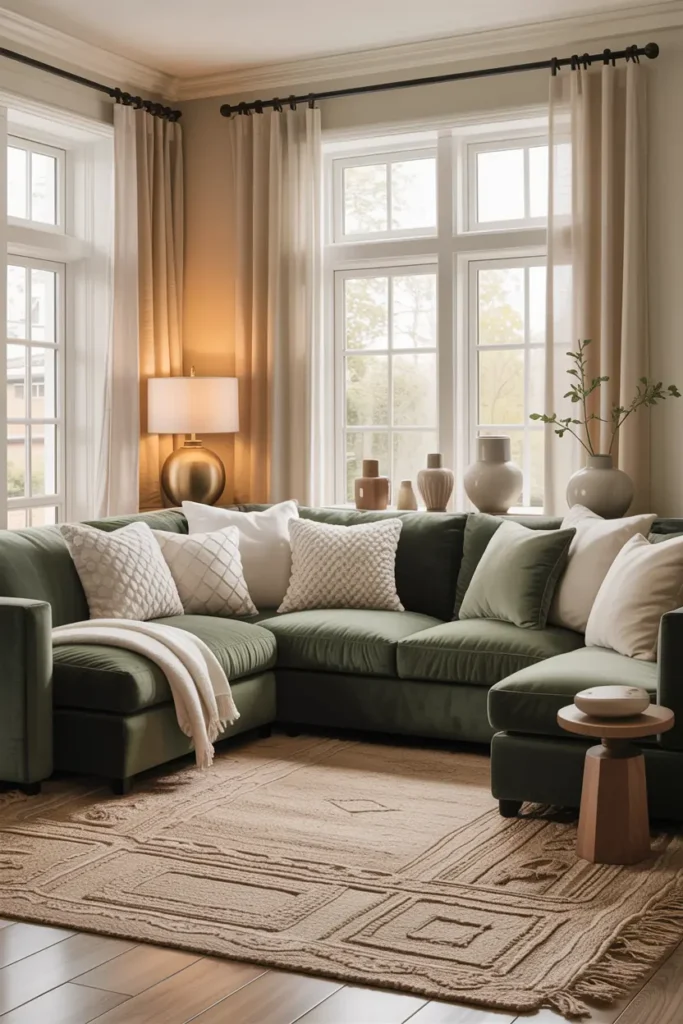
5. Keep the Color Palette Balanced
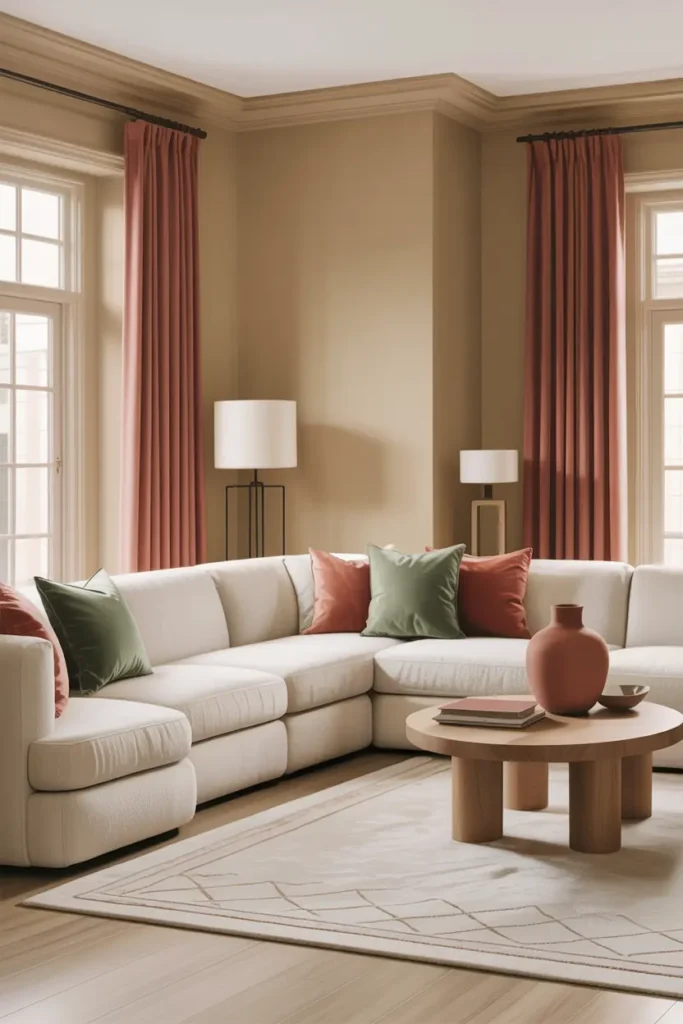
Warm does not mean colorful. The most inviting rooms typically use just three or four colors: the neutral base, one warm accent (terracotta, amber, sage), the green of plants, and the natural tones of wood. Discipline with color is what keeps “warm” from sliding into “busy.”
Repeat each color at least twice in the room so nothing looks accidental — the terracotta cushion echoed in a small vase, the sage throw picked up in a plant pot. Balance also means distribution: spread colors around the room rather than clustering them in one corner, so the warmth feels even.
6. Decorate the Walls Simply
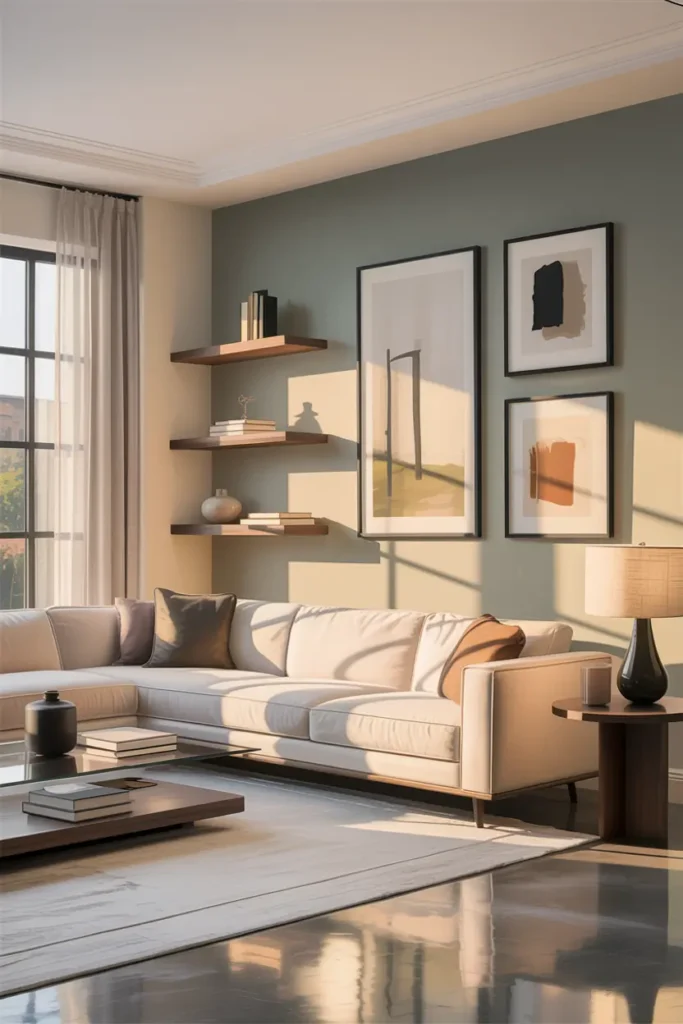
Warm walls are quiet walls. One meaningful piece — a landscape print, a textile hanging, a simple mirror in a wood frame — says more than a crowded gallery. Leave generous empty space around it; the breathing room is part of the warmth, the visual equivalent of a deep breath.
Hang at human scale: center around 57–60 inches, sized to the furniture below (about two-thirds its width). Natural frames — oak, walnut, rattan — warm a wall more than black metal or white lacquer. And choose art that feels like yours: in a simple room, the one piece on the wall carries the whole room’s personality.
7. Bring Nature Indoors
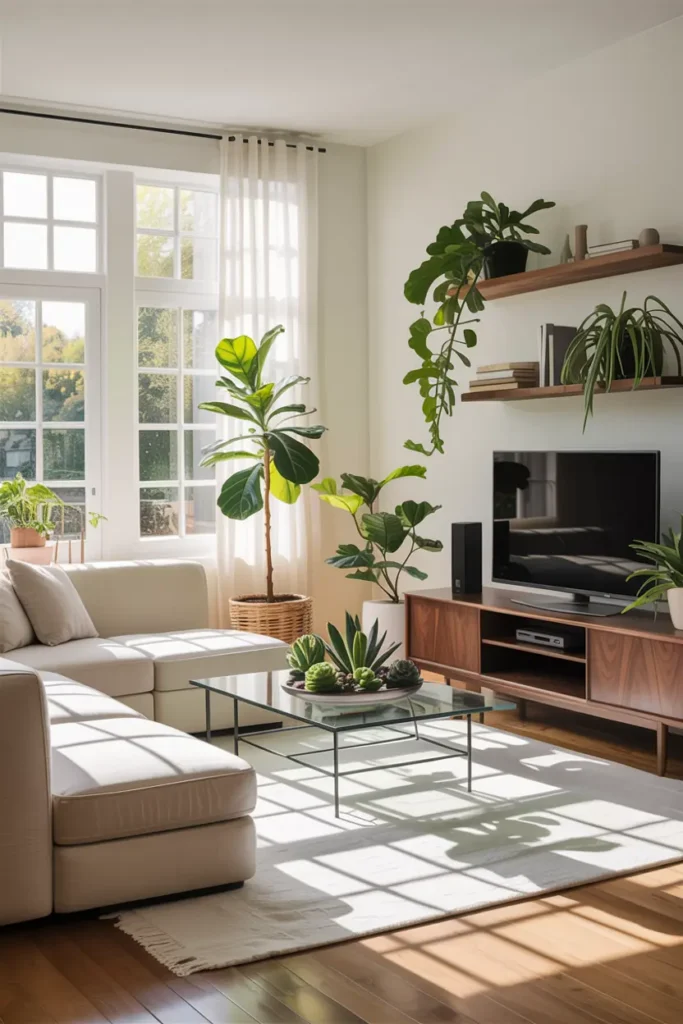
Every warm room has something alive in it. A leafy plant in the corner, eucalyptus in a vase, a bowl of lemons on the coffee table — living things add a color and energy that no object can replicate. They also soften all the straight lines with organic shapes.
Start with the unkillable: pothos, snake plant, ZZ plant. One medium plant beats five tiny ones — scale is what makes greenery read as design rather than clutter. Real wood and stone do similar work: a wooden bowl, a stone coaster set, materials that were once alive and still carry that warmth.
8. Use a Rug to Define the Space
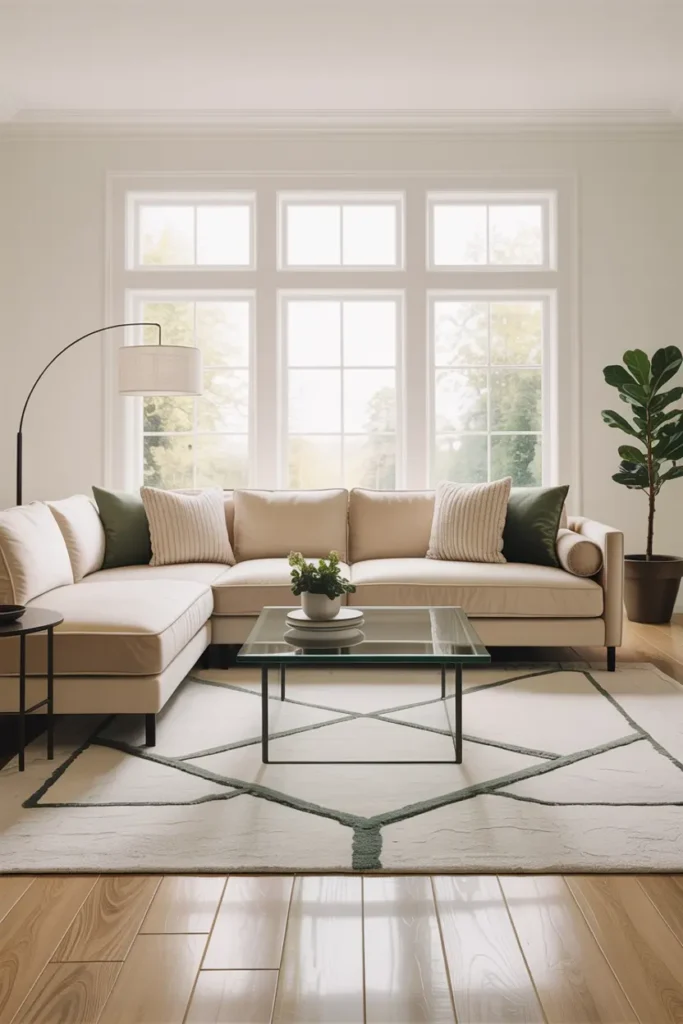
A rug gathers the room. It pulls the seating into a conversation, softens footsteps and voices, and adds the foundational layer of color and texture everything else builds on. In open plans, the rug is what says “this is the living room” without a single wall.
Size generously — front legs of all main seating on the rug, which usually means 8×10 for a full living room. A too-small rug fragments the space instead of uniting it. Choose natural fibers and warm tones; the rug is the largest textile in the room and sets the temperature for everything above it.
9. Add Personal Touches
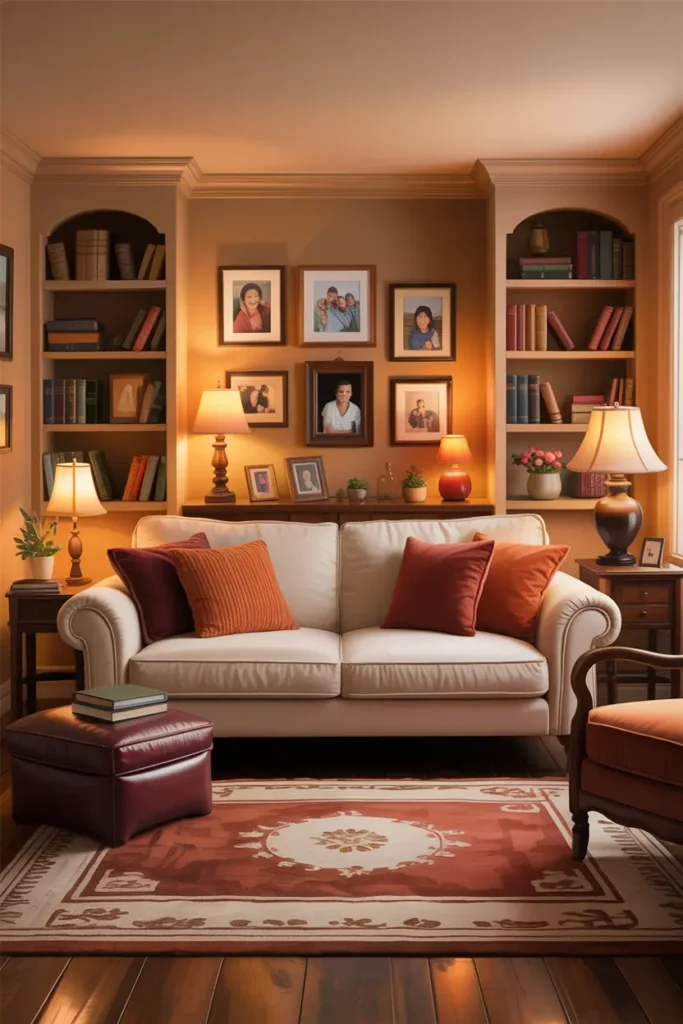
Warmth is personal — it comes from the objects that could only be in your room. The books you reread, the photo that makes you smile, the ceramic from the trip, the blanket your grandmother made. Three to five such things, given space and intention, warm a room more than any purchase.
Display them simply: grouped on the coffee table or a shelf, not scattered. In a calm room, each personal object gets full attention — which is why choosing them matters. Rotate occasionally; a small rotation refreshes the room’s feeling for free and keeps the personal layer alive rather than static.
10. Keep It Clean and Open
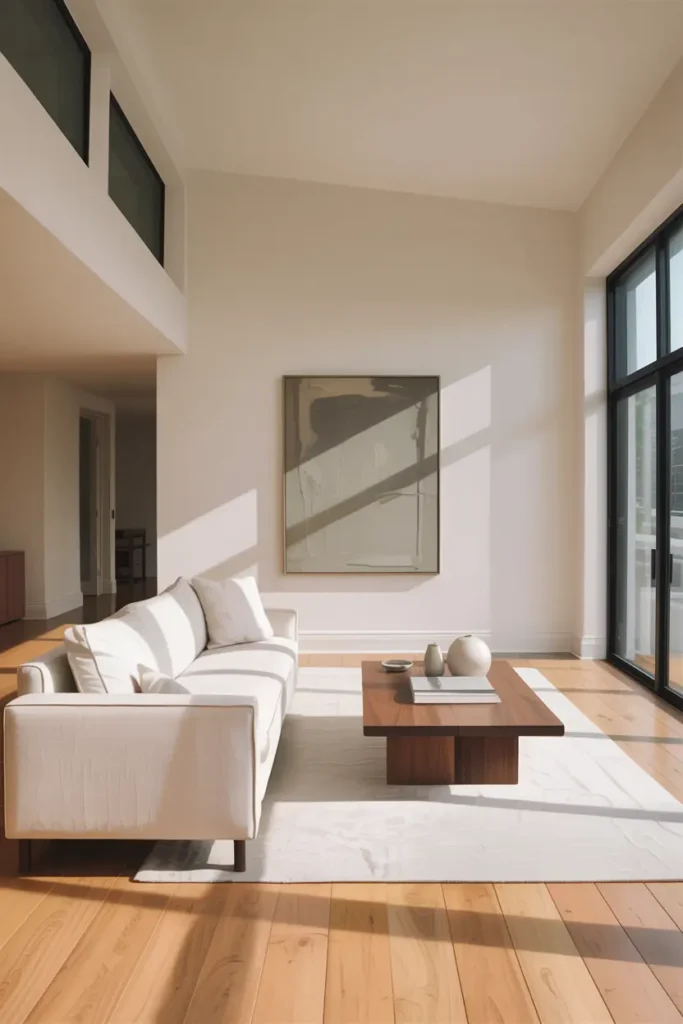
The final ingredient is space itself. Warm rooms breathe — clear surfaces, open floor, room to move and think. Clutter is visual noise, and noise is the opposite of warmth. This is not about minimalism as an aesthetic; it is about giving the beautiful things you do have room to be appreciated.
Make it sustainable with homes for everything: a basket for throws, a tray for remotes, one drawer for the miscellany. A ten-minute evening reset keeps the room at its warm baseline. Clean and open is a daily practice, not a one-time purge — and it costs nothing at all.
Final Thoughts
A warm, stylish living room is not built in a shopping trip — it is cultivated through simple, consistent choices. Neutral base, comfortable seating, warm light, honest texture, a little nature, a few things you love, and the discipline of space. None of it is complicated. All of it compounds. And the result is the room everyone gravitates to, the one that feels like an exhale.
Pro Tips
- Warm the light first: before buying anything, swap to 2700K bulbs and use lamps instead of overheads in the evening. The room’s temperature changes overnight.
- Touch before you buy: texture is this style’s main decoration — feel every fabric. If it does not feel good in your hands, it will not feel good in your room.
- One in, one out: for every new object, one leaves. Simple rooms stay simple through maintenance, not willpower.
- End each day reset: ten minutes — fluff cushions, fold the throw, clear surfaces. Warmth is a maintained state.
FAQs
What makes a living room feel warm vs. cold?
Warm undertones in colors, warm 2700K lighting, natural textures (wood, wool, linen), and soft layered light. Cold rooms usually suffer from cool-gray palettes, harsh overhead lighting, and hard shiny surfaces — all fixable without renovation.
Can a small living room feel warm and not cramped?
Yes — warmth and spaciousness are allies, not enemies. Light warm colors, a properly sized rug, mirrors for light, and ruthless decluttering make small rooms feel both cozy and open. Avoid dark heavy pieces that visually compress the space.
How do I add warmth to a rental I can’t paint?
Textiles do the work: warm-toned curtains, throws, cushions, and a rug. Add warm lighting and wood-toned accessories. Removable peel-and-stick elements can add a warm accent wall that comes down cleanly.
What is the easiest first step toward a warmer living room?
Lighting. Swap cool bulbs for warm 2700K ones and add one table or floor lamp. It takes twenty minutes, costs little, and changes how every other thing in the room feels.

HowDecor is a home decor blog sharing simple, practical decorating ideas for everyday spaces. We believe a beautiful home should feel comfortable, personal, and full of warmth — and that great style does not require a huge budget. Our goal is to inspire readers to create spaces that feel peaceful, welcoming, and truly their own — one room at a time.