Here’s what twenty years of small-space design has taught me: the difference between a cramped living room and a charming one is rarely square footage. It’s decision-making. Small rooms punish vague choices — the “maybe this will work” armchair, the rug you guessed at, the lamp you grabbed on sale. Every item needs a reason to be there, and once you adopt that mindset, a 250-square-foot room stops feeling like a limitation and starts feeling like a brief.
These ten ideas are the ones I return to in every small, modern home I work on. None requires renovation. All of them require measuring twice.
1. Building a Neutral Base With Depth
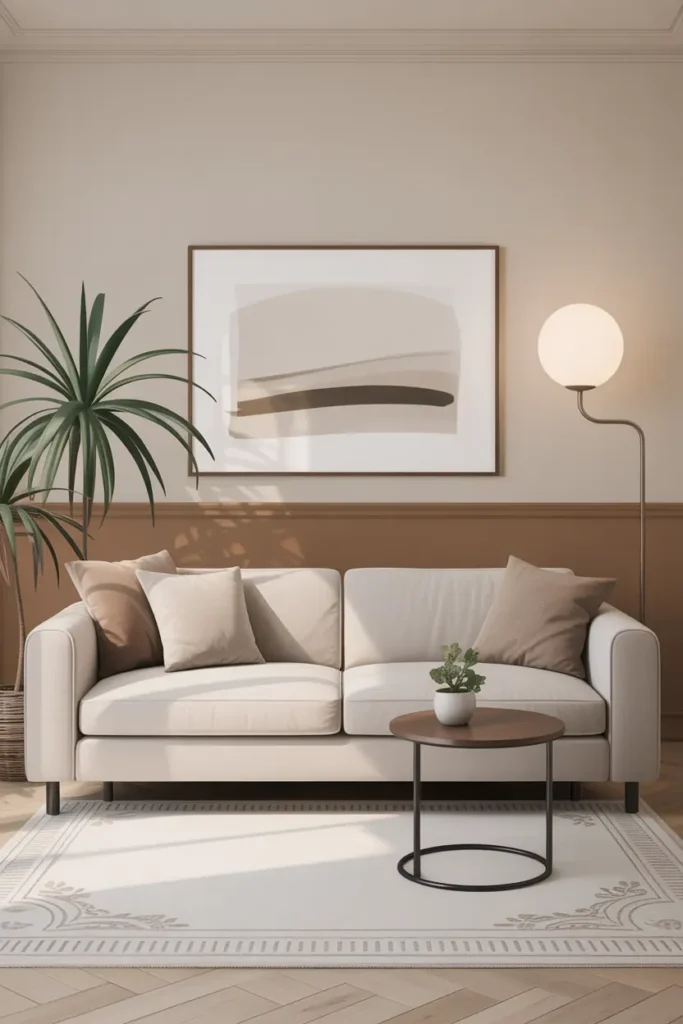
A single neutral color flattens a small room; three neutrals give it architecture. Choose your trio deliberately: a light wall tone (warm white or pale greige), a mid-tone for large upholstery (oatmeal, stone, taupe), and one dark accent (espresso wood, black metal, deep olive). The dark accent is the secret ingredient — without it, neutrals drift toward bland. Keep the ratio roughly 60-30-10 and the room reads modern, not monotonous.
Texture does the work that color can’t in a neutral room. Bouclé, linen, jute, and matte ceramic all read as “neutral” but catch light differently, which is what makes the space feel layered. Mistake I see constantly: everything in the same smooth finish, which makes even expensive pieces look flat.
2. The Compact Sofa Done Right
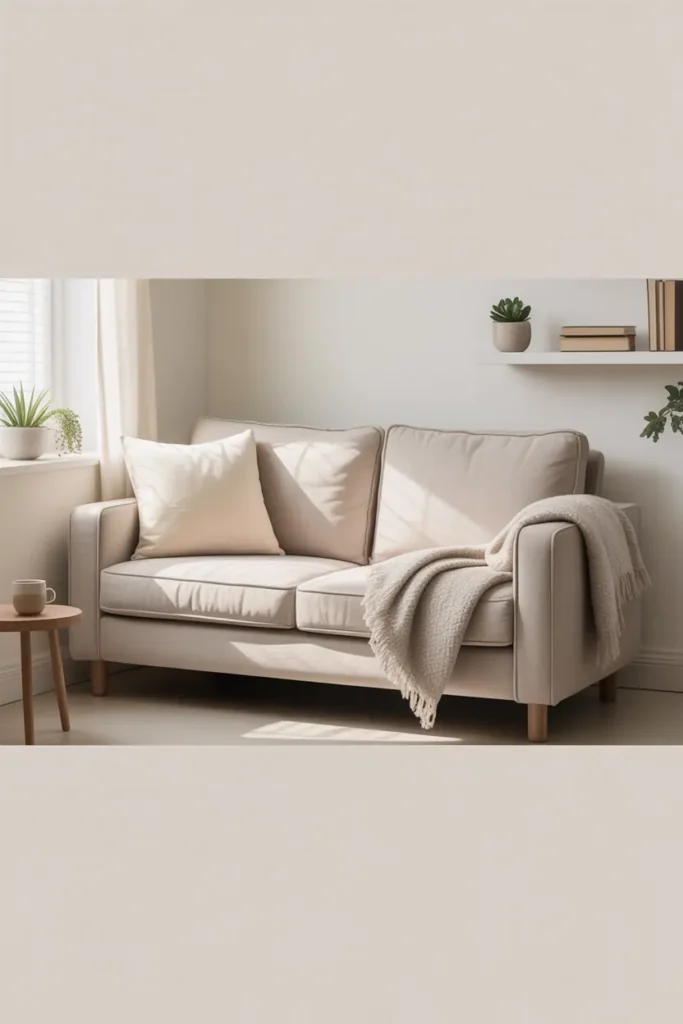
In a small modern home, your sofa should be no more than two-thirds the length of its wall — leave the remaining third for breathing room or a side table. Look for a seat depth of 21–23 inches (deep enough to lounge, shallow enough to keep posture), arms under 5 inches wide, and legs that lift the base at least 3 inches off the floor. That sliver of visible floor is worth more than any design trick.
Avoid sectionals in rooms under 200 square feet; they dictate the entire layout and block flow. A better formula: a compact two-seater plus one sculptural accent chair. The chair adds personality the sofa can’t, and you can angle it toward a window or fireplace the sofa could never reach.
3. Using Mirrors to Borrow Light
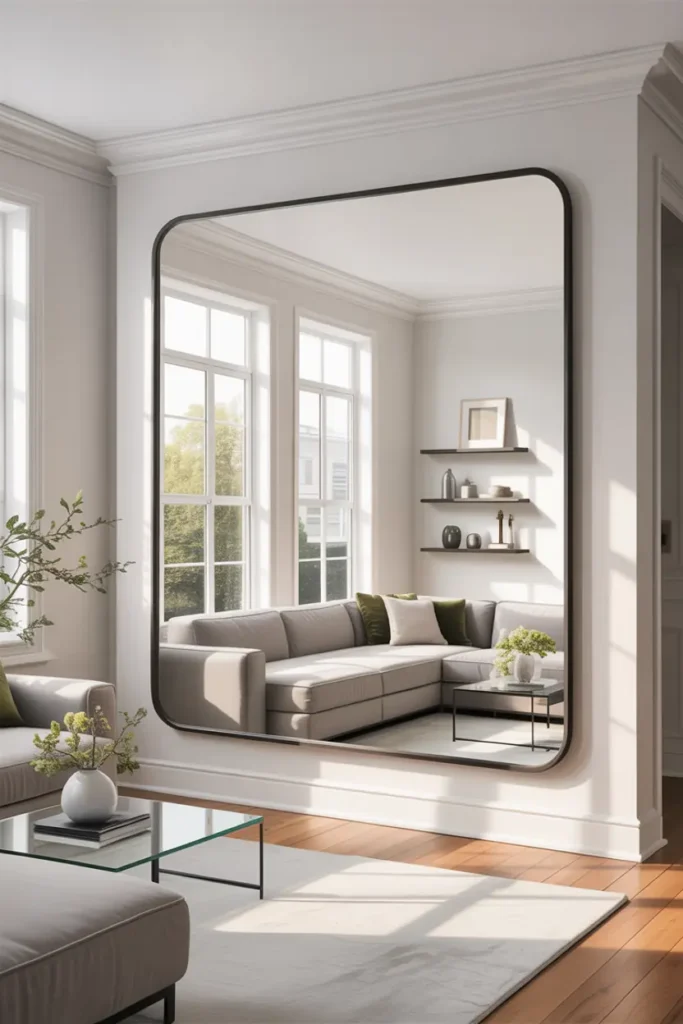
Mirrors work on physics, not magic: they return whatever light hits them. Place yours perpendicular to a window rather than directly opposite it, so the reflected view is the room itself plus a wash of daylight — direct opposition can create glare and a disorienting double-window effect. One large mirror (at least 32 inches on its longest side) outperforms a cluster of small ones for the sense of space.
Round mirrors soften rooms full of rectangles — sofas, rugs, screens, shelves. Hang the center at 57 inches, and keep the frame thin or frameless in modern rooms; a heavy frame reintroduces the visual weight you’re trying to eliminate.
4. Wall Art That Earns Its Place
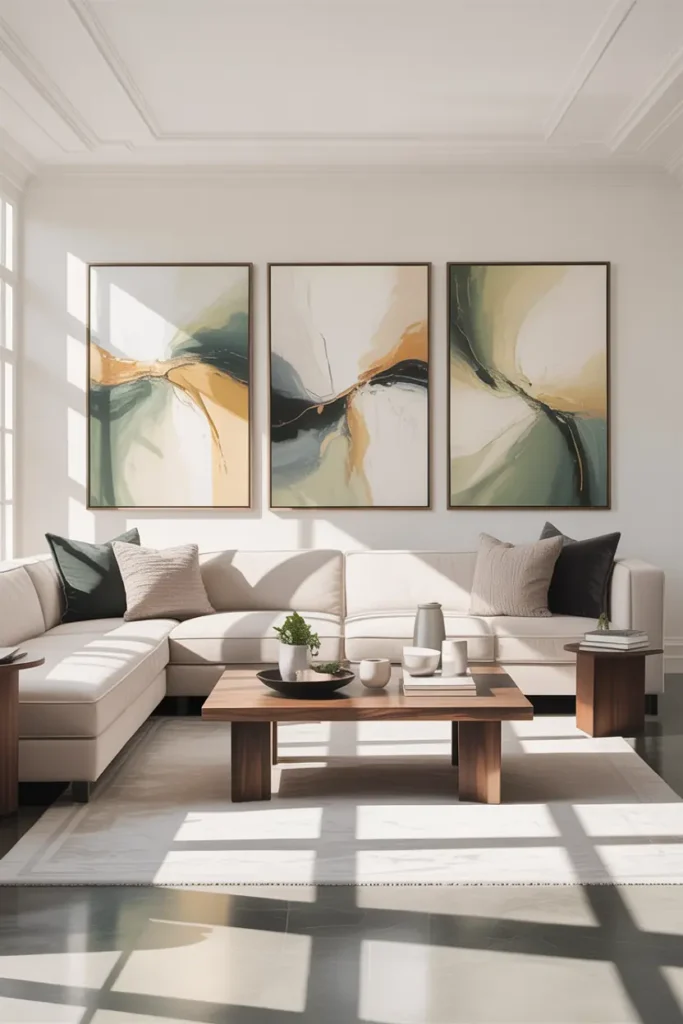
Modern minimalism on walls doesn’t mean empty walls — it means fewer, better decisions. In a small room, cap yourself at three art moments: one anchor piece above the sofa (sized at two-thirds the sofa width), one secondary piece elsewhere, and one small surprise (a tiny print in a hallway, a framed textile). That’s a complete art program for most small living rooms.
Abstract or landscape pieces in muted tones keep the calm; busy figurative work demands more visual attention than a small room can spare. And please — no gallery wall that climbs toward the ceiling. Art belongs at eye level, 57 to 60 inches to center, full stop.
5. A Coffee Table That Works Overtime
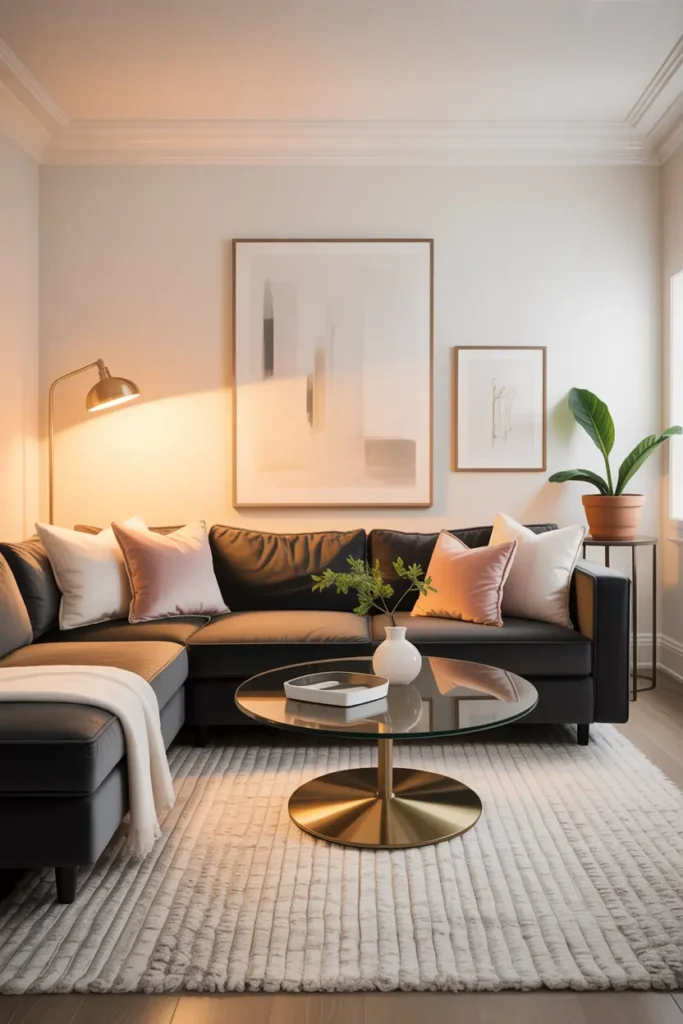
The coffee table is the hardest-working piece in a small living room, so give it a job description: hold drinks, hide remotes, and store something. Lift-top tables raise to 24–26 inches for laptop work and reveal storage inside — genuinely transformative in homes without a desk. If you prefer open designs, choose a table with a lower shelf for books and baskets.
Scale it to the sofa: the table should be half to two-thirds the sofa’s length and sit 14–18 inches away — close enough to reach your tea, far enough to walk past. Round or oval tables save shins and square inches in tight layouts; sharp corners in a small room are both a hazard and a visual dead end.
6. Lighting Layers That Flatter Everything
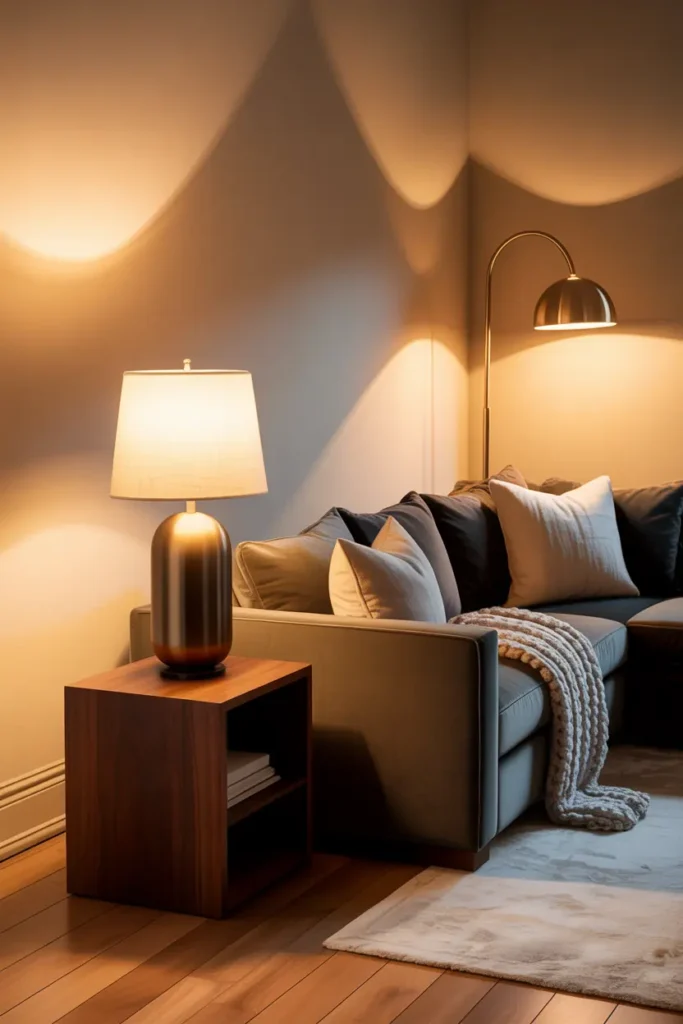
Overhead lighting is the enemy of coziness, especially the single flush-mount most small homes come with. Build downward instead: a floor lamp arcing over the seating area (ambient), a table lamp on the console (task), and something low — candles, a small lantern, an LED strip behind shelving (accent). All bulbs at 2700K. The room will feel larger at night because lit corners push the walls outward visually.
Put the two main lamps on one power strip with a foot switch or a $12 smart plug. “Turn off the bright light” becomes a single tap, and you’ll actually use the layers instead of defaulting to the overhead out of laziness.
7. Floating Shelves Without the Clutter Trap
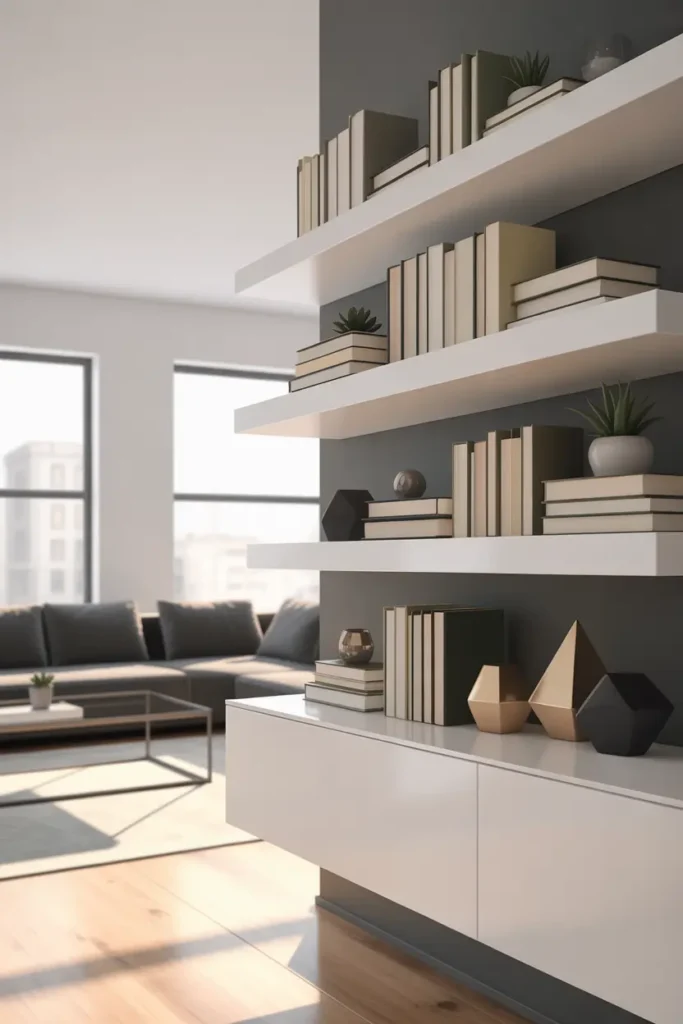
Shelves in a small room must be edited like a magazine, not packed like a warehouse. The formula: group items in threes, vary heights, and leave 30% of every shelf empty. Books stored vertically in short runs with a bookend read as intentional; a full wall of spines reads as storage overflow. Limit yourself to two shelves unless you genuinely need more.
Mount at a height where the bottom shelf clears seated eye level — roughly 48–54 inches from the floor for the first shelf — so they decorate rather than loom. Use a stud finder; drywall anchors alone will eventually sag under books, and sagging shelves are worse than no shelves.
8. The Rug as Room Architecture
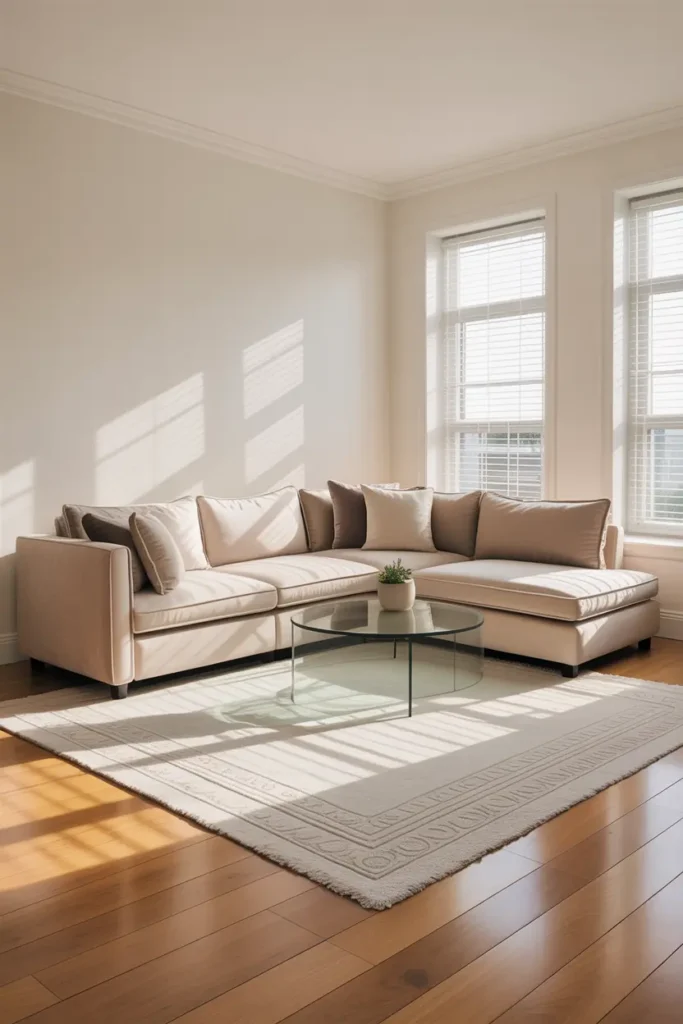
A rug that’s too small is the most common mistake in small living rooms — it visually shrinks the floor instead of defining it. In a compact room, go 8×10 if you can; the front legs of all seating must sit on the rug, with 12–18 inches of bare floor between the rug edge and the wall. That border of floor is what makes the rug look like a deliberate zone rather than a postage stamp.
Low-pile flatweaves or short-pile rugs (under half an inch) keep doors swinging and chairs sliding. In modern rooms, a subtle pattern — tone-on-tone geometric, faint stripe — hides wear far better than a solid light color, which shows every footprint by Friday.
9. One Statement Plant Instead of a Jungle
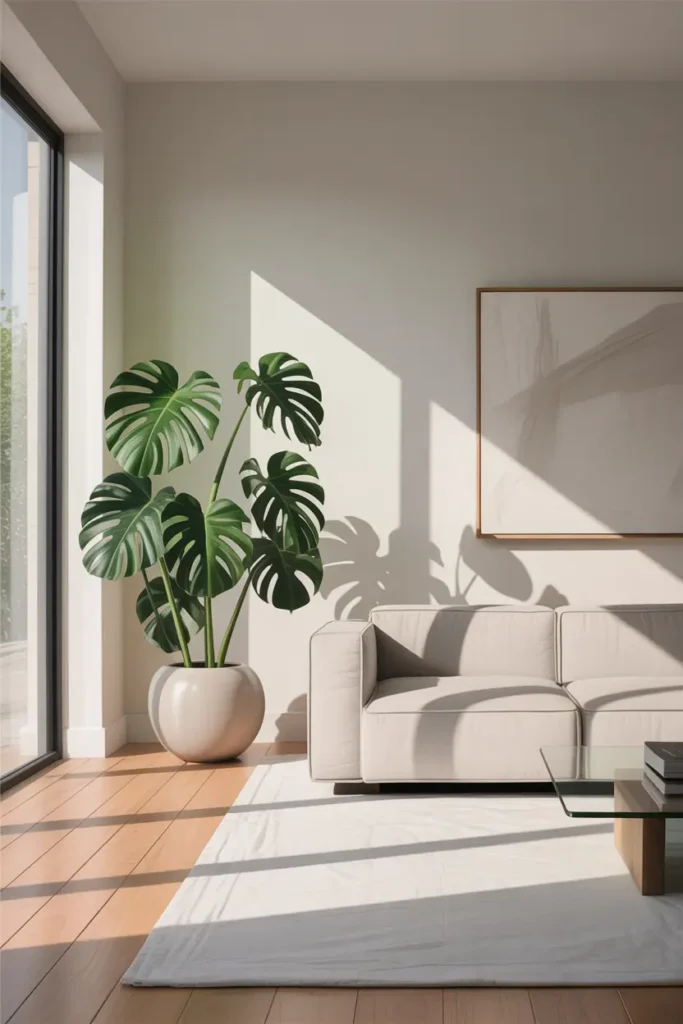
Ten small plants in a small room read as clutter; one confident plant reads as design. A fiddle-leaf fig, olive tree, or bird of paradise in a 12–14 inch pot, placed in an empty corner, fills vertical space nothing else can. It also gives the room something alive to look at, which matters more than people expect in compact homes.
Be honest about your light: if the corner gets under 4 hours of indirect sun, choose a snake plant or ZZ plant instead of a fiddle-leaf — a struggling plant is depressing, not decorative. Elevate the pot on a small stand so foliage starts above furniture height and doesn’t fight the sofa for attention.
10. Protecting Empty Space Like It’s Furniture
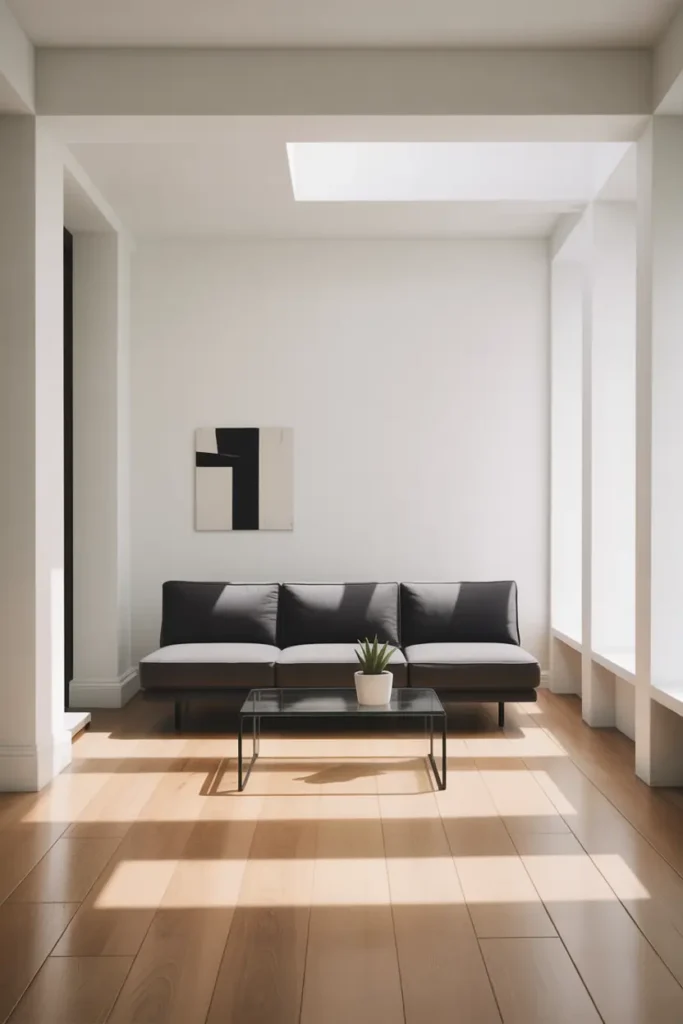
Every small room needs one stretch of nothing — a clear wall, an unfilled corner, an uncluttered surface. That negative space is what makes the styled areas look styled. When you’re tempted to fill the last empty corner, remember: the corner isn’t empty, it’s resting. Rooms with nowhere for the eye to rest feel exhausting, no matter how pretty the objects are.
Walk your room monthly with a laundry basket and remove anything that migrated there without a decision. Small rooms accumulate drift — mail, chargers, “temporary” boxes — and a five-minute reset restores the calm faster than any new purchase.
Final Thought
Small modern living rooms reward intention over inventory. Measure everything, choose a three-tone palette, light in layers, and defend your empty space. Do that, and the room won’t just look bigger — it will feel like it was designed on purpose, because it was.
Pro Tips
- Keep a tape measure in the room you’re decorating. Guessing dimensions is how small rooms end up with furniture that almost fits.
- Choose double-duty pieces first — storage ottoman, lift-top table, sleeper chair — then fill remaining space with pure-comfort items.
- Limit your palette to three neutrals plus one accent color used sparingly; restraint is what makes small rooms feel expensive.
- Style in odd numbers and edit ruthlessly: if removing an object makes the shelf look better, it never belonged there.
FAQs
What size rug should I buy for a small living room?
As large as you can fit: 8×10 is ideal for most small living rooms, 6×9 at minimum. All front furniture legs should sit on the rug, with 12–18 inches of bare floor visible between the rug and the walls.
How do I arrange furniture in a long narrow living room?
Float the seating away from the long walls to create a defined zone, use a rug to anchor it, and leave clear walkways on both long sides. Avoid lining all furniture against the walls — it emphasizes the tunnel shape.
Can dark colors work in a small living room?
Yes, as accents. A dark media console, black-framed art, or deep-toned cushions add depth and contrast. Keep walls and large upholstery light so the room’s overall value stays bright.
How do I stop a small living room from looking cluttered?
Give everything a home with closed storage, keep 30% of shelves and surfaces empty, and do a monthly five-minute reset with a basket. Clutter in small rooms is almost always a storage problem, not a stuff problem.

HowDecor is a home decor blog sharing simple, practical decorating ideas for everyday spaces. We believe a beautiful home should feel comfortable, personal, and full of warmth — and that great style does not require a huge budget. Our goal is to inspire readers to create spaces that feel peaceful, welcoming, and truly their own — one room at a time.