An empty bedroom is the best and worst starting point. Best, because there are no mistakes to undo. Worst, because every decision is yours and they all feel equally urgent. Here’s the order that actually works — the sequence professionals use, whether they’re styling a studio or a master suite. Do it in this order and each step makes the next one easier. Do it out of order and you’ll buy the rug before you know the bed size, which is how regret is manufactured.
Nine steps, one weekend of planning, and as many weekends of doing as your budget allows. The steps don’t have to be fast — they have to be in order.
Table of Contents
- Step 1: Start with a Calm Color Palette
- Step 2: Choose the Right Bed as Your Main Focus
- Step 3: Add Soft Lighting for a Warm Glow
- Step 4: Bring in Texture with Rugs and Fabrics
- Step 5: Style Your Nightstands with Purpose
- Step 6: Add Wall Art and Simple Decor
- Step 7: Bring Nature Indoors with Plants
- Step 8: Keep the Space Calm and Clutter-Free
- Step 9: Add Personal Touches to Make It Yours
- Final Thought
Step 1: Start with a Calm Color Palette
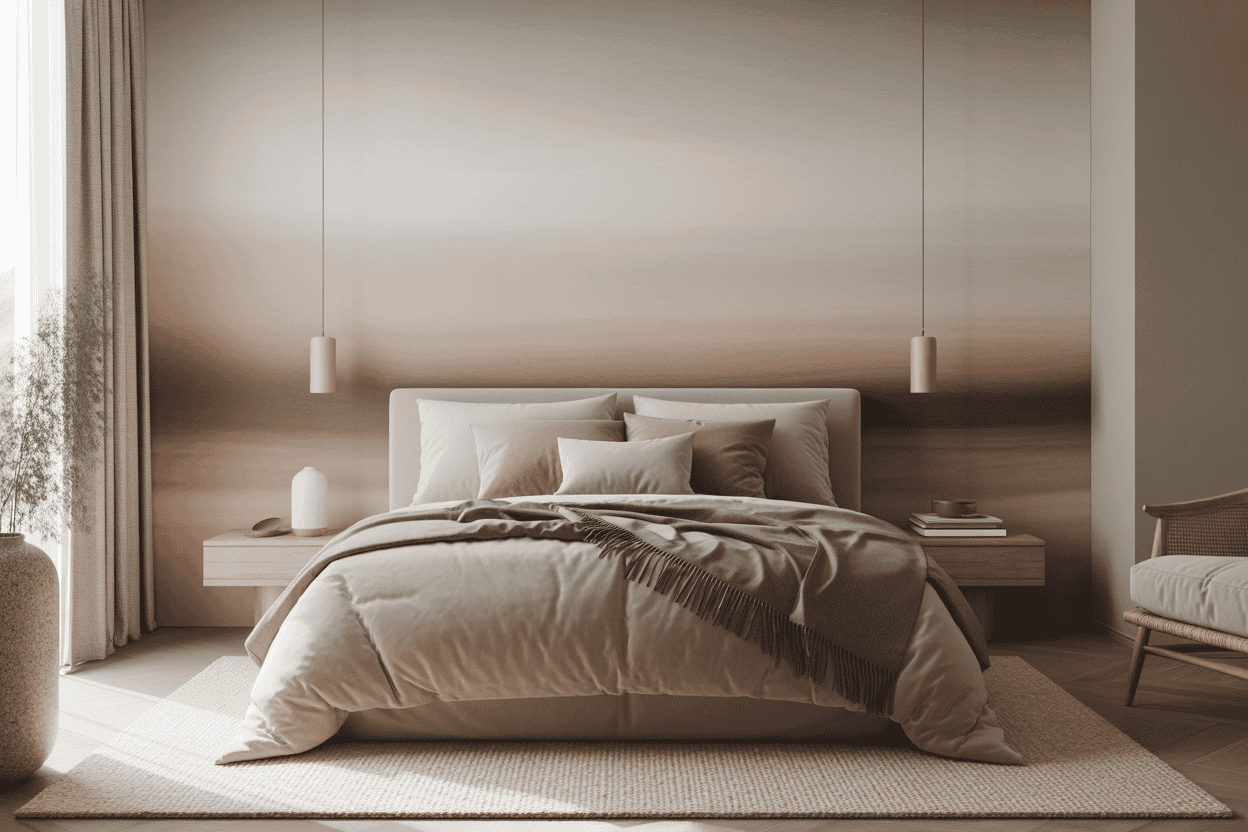
Everything starts here because every later decision references it. Pick three colors: a dominant neutral (warm white, greige, soft beige — this covers walls and big pieces), a secondary (a muted tone like sage, dusty blue, or clay — for bedding and the rug), and one accent you’ll use sparingly (brass, terracotta, deep green — for the small things). Write them down. Photograph the swatches together. This little palette card becomes your shopping filter — if it doesn’t match, it doesn’t come home.
The reason this is step one: color mistakes are the most expensive kind. A wrong rug is a return; a wrong wall color is a repaint. Decide the palette while the room is empty and you can still see it clearly, before furniture starts arguing with your choices.
Step 2: Choose the Right Bed as Your Main Focus
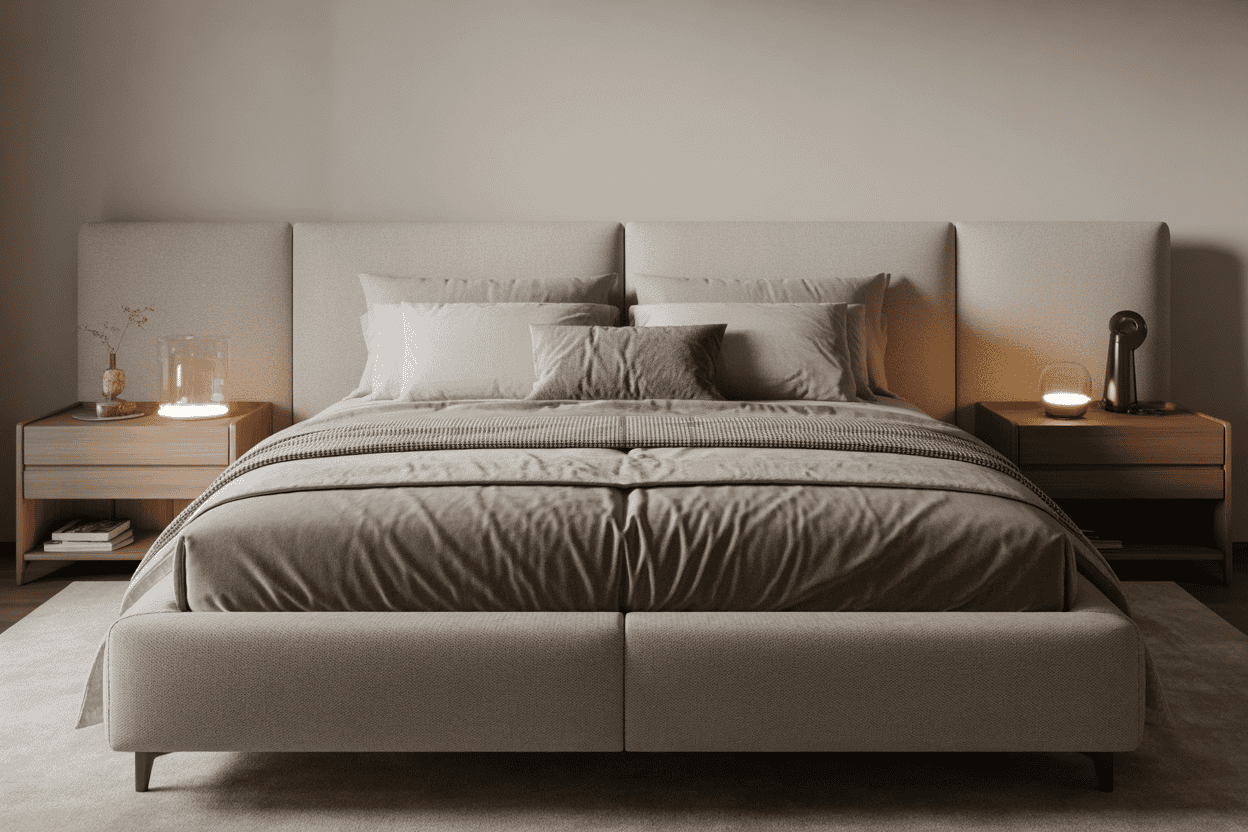
The bed is roughly a third of the room’s visual weight, so choose it second — after the palette, before everything else. Size it to the room, not your dreams: measure the wall, subtract 24 inches of walkway per side, and that’s your maximum frame width. A queen needs a 10×12-foot room minimum; a king wants 12×14. When in doubt, size down — a well-proportioned full beats a crammed king.
Style-wise, keep it simple: an upholstered headboard in a palette neutral, or a clean wood frame. The bed should feel like an invitation, not a monument. And invest in the mattress before the frame — you’ll spend a third of your life on one and merely look at the other. Good bedding (washed cotton or linen in your palette) does more for the bed’s look than any headboard upgrade.
Step 3: Add Soft Lighting for a Warm Glow
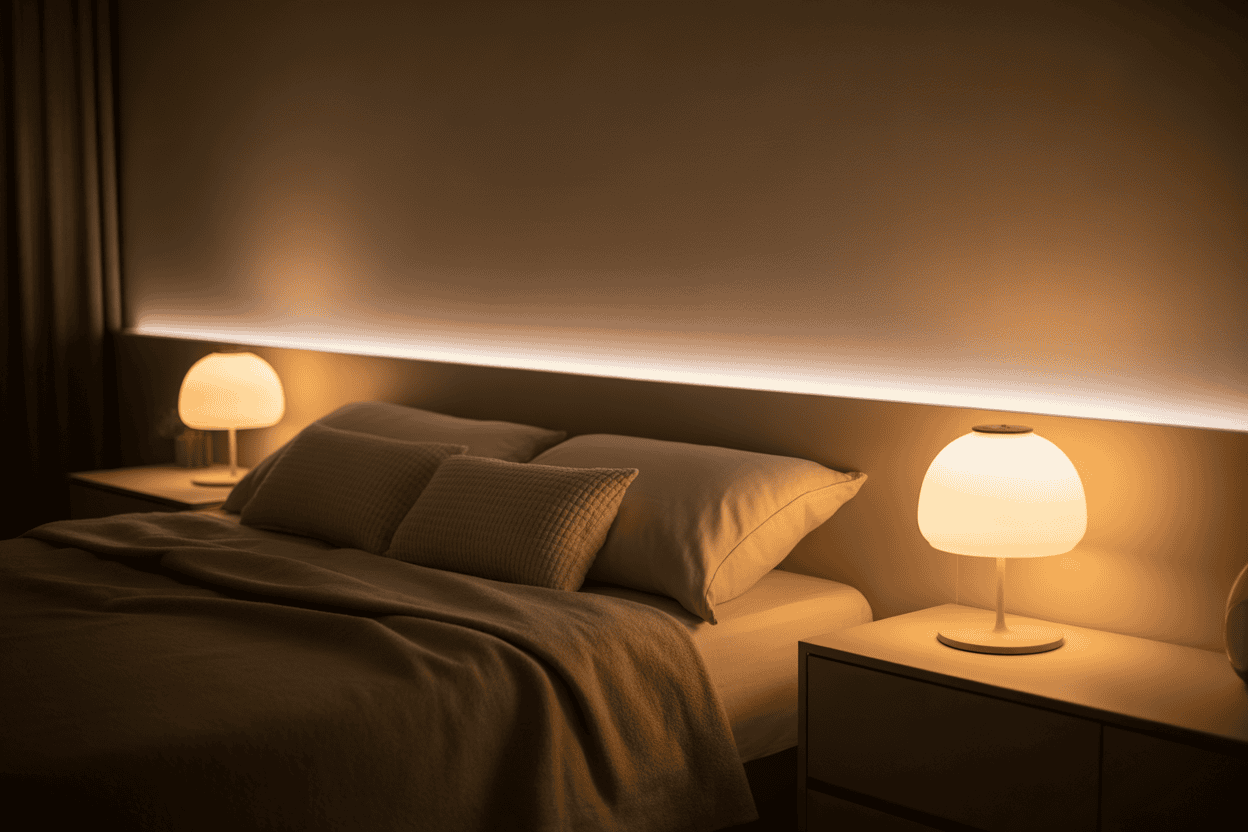
Lighting is step three because it changes how everything else looks — the paint, the bedding, your face in the mirror. Plan three layers: ambient (the ceiling light, on a dimmer — a $15 dimmer switch is the best money in this whole guide), task (bedside lamps for reading, 2700K warm bulbs), and accent (a small lamp in a dark corner, or fairy lights if that’s your thing).
The non-negotiable: no cool-white bulbs in a bedroom, ever. 2700K is the target — it’s the color of candlelight-adjacent warmth, and it makes skin, wood, and fabric all look better. Put bedside lamps on either side at about 24–28 inches tall so the light falls on your book, not in your eyes. Lighting is the difference between a bedroom and a hotel room, and hotels figured this out decades ago.
Step 4: Bring in Texture with Rugs and Fabrics
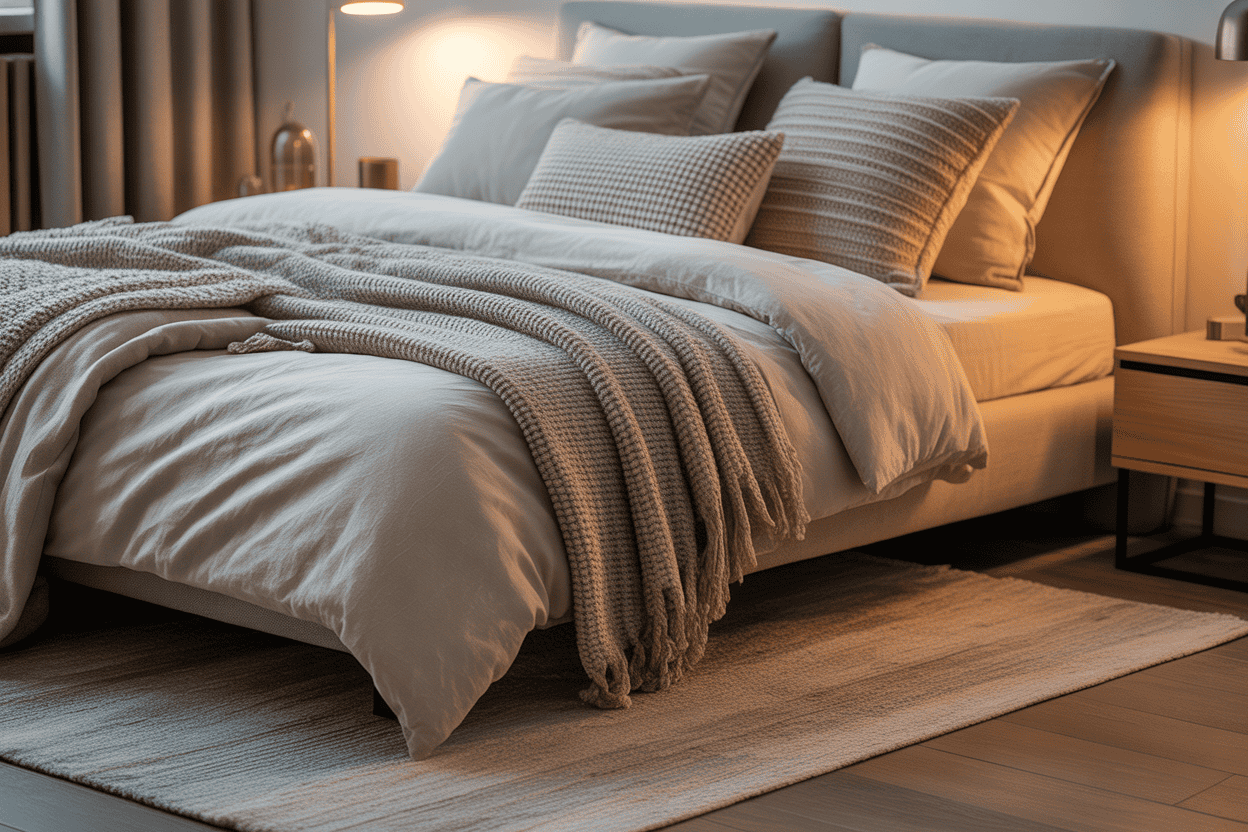
Texture is what makes “modern” feel “cozy” instead of “cold.” The formula: three textures minimum, all in your palette. A low-pile rug under the bed (8×10 for a queen, extending 24 inches each side), washed linen or cotton bedding, and one tactile throw — chunky knit, faux fur, waffle weave. Same colors, different surfaces. That’s the whole trick, and it’s why neutral rooms can feel rich instead of boring.
Texture also does acoustic work — rugs, curtains, and upholstery absorb sound, and a quiet room feels calmer in a way that’s hard to name but impossible to miss. If your bedroom echoes, you don’t need decor, you need soft surfaces. Start with the rug; it’s the biggest acoustic panel you’ll ever buy.
Step 5: Style Your Nightstands with Purpose
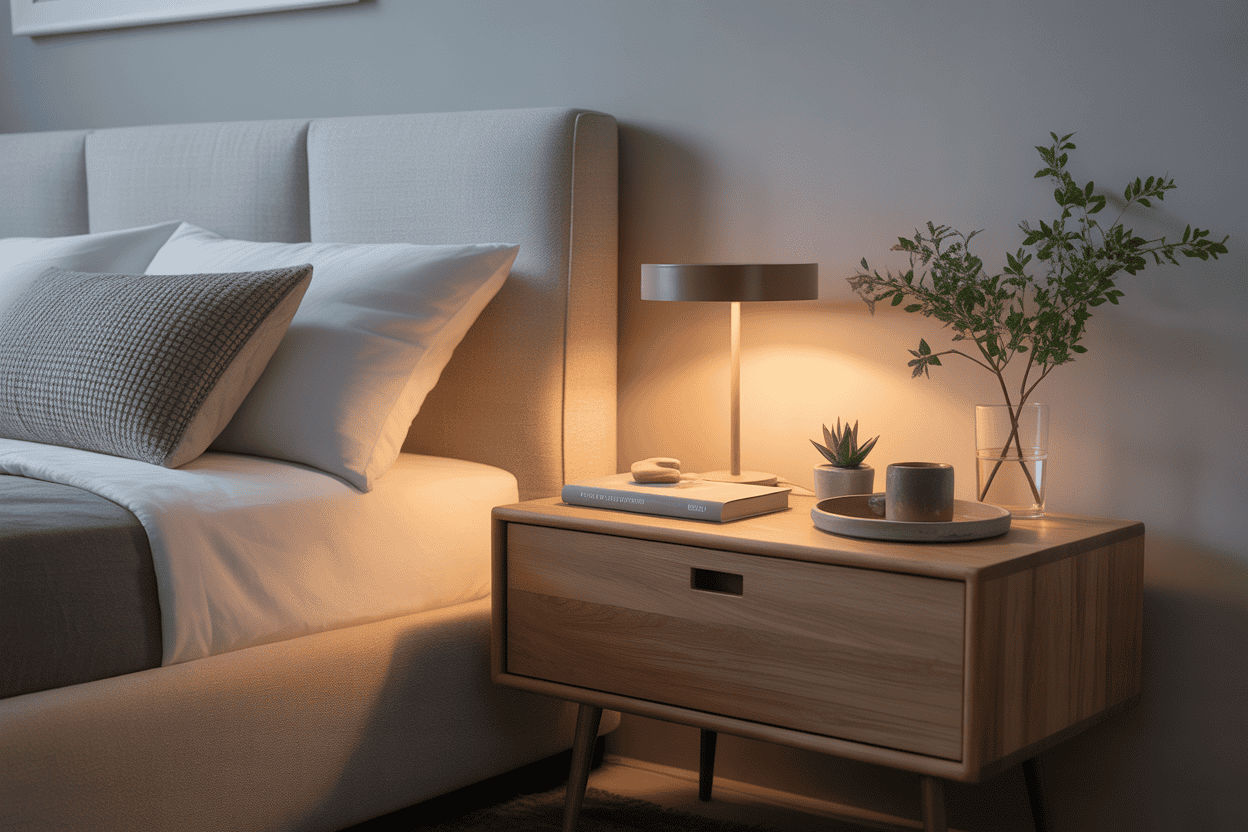
Nightstands are the frame around the bed — get them wrong and the whole composition wobbles. Height first: the top should sit within a couple inches of your mattress top. Then the styling rule of three: lamp, one personal item (book, small plant, framed photo), one tiny luxury (candle, hand cream, a carafe of water). Three items, not seven. A nightstand is a landing pad, not a display shelf.
Think of it as designing your evening routine, not decorating a surface. What do you actually reach for at night? Phone charger (get a short cable — long cables are visual spaghetti), water, lip balm, the book. Everything else is clutter wearing a costume. Keep the surface 70% clear and the whole bedroom feels calmer, because the last thing you see at night sets the tone for sleep. A calm surface makes the easier wind-down genuinely easier.
Step 6: Add Wall Art and Simple Decor
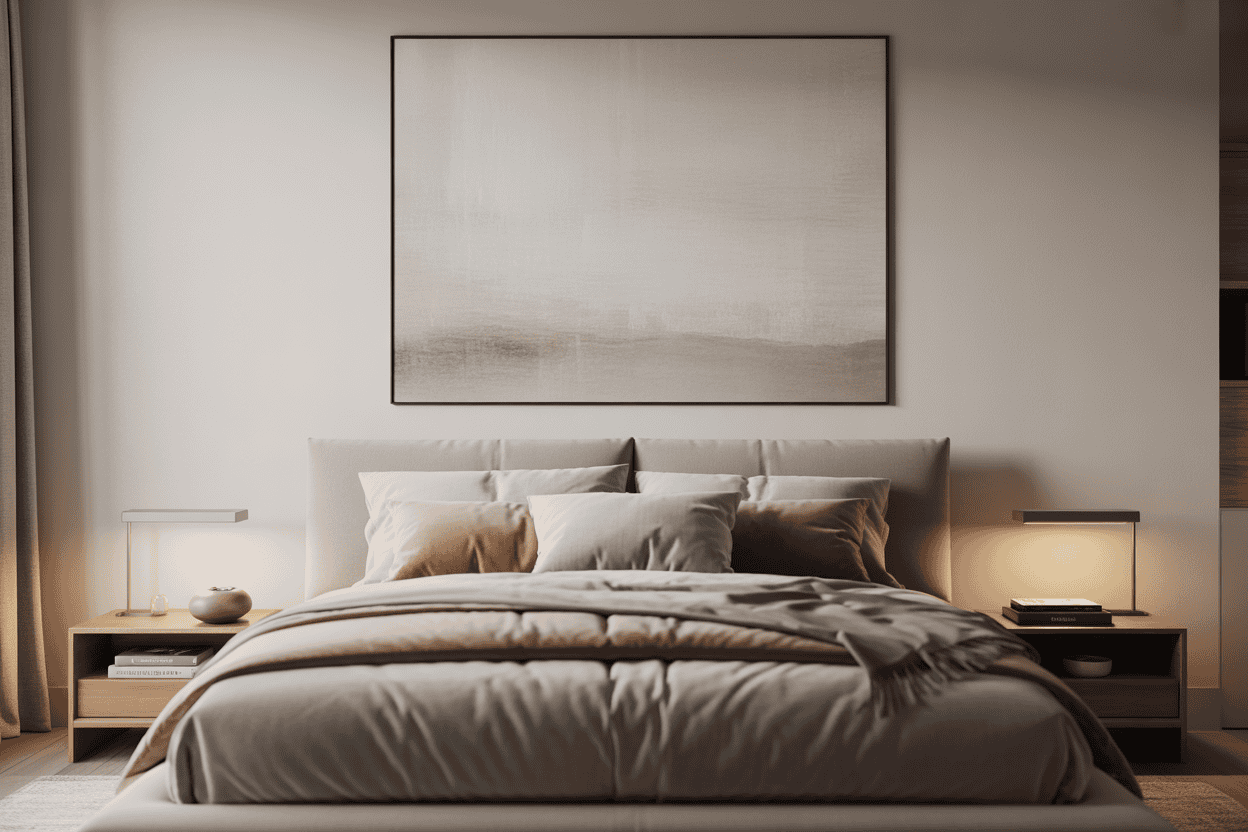
Walls come after furniture for a reason: art should respond to the room, not precede it. The anchor piece goes above the bed — one large piece (roughly two-thirds the bed’s width) or a tight pair, centered at eye level when you’re standing, which means the center sits around 57–60 inches. Above-bed art hung too high is the most common bedroom mistake; when in doubt, lower it.
Keep the palette connection: art in your room’s colors (or black and white, which goes with everything) will look intentional even if it’s a $20 print. One strong piece beats five small scattered ones — visual rest matters in a room built for rest. And leave some walls empty. Not every wall needs a job; negative space is what makes the art you do hang actually get looked at.
Step 7: Bring Nature Indoors with Plants
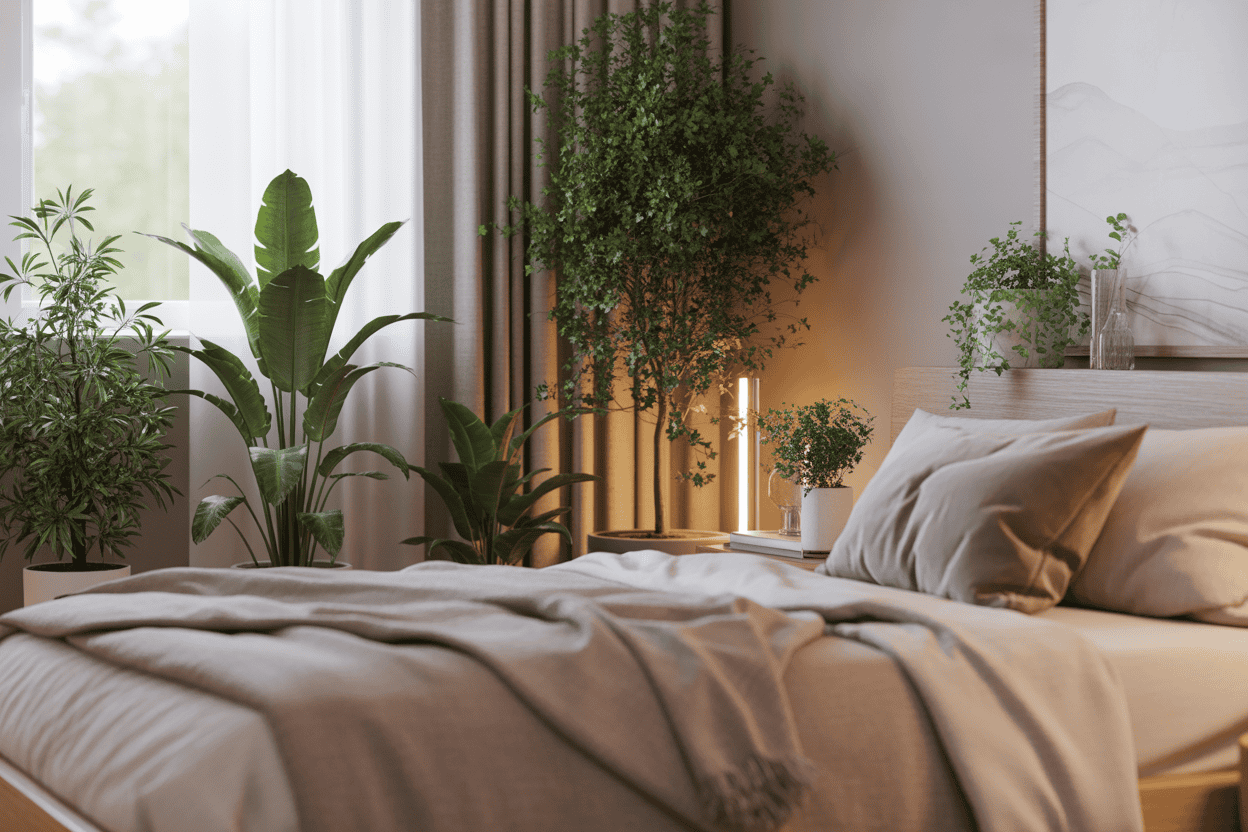
One plant changes a bedroom’s entire feeling — it’s the only decor that’s literally alive, and the room knows it. For bedrooms specifically: snake plant (tolerates low light and neglect, releases oxygen at night unlike most plants), pothos (trails beautifully from a shelf, nearly unkillable), or a peace lily if you have decent light. Start with one. A single thriving plant beats three dying ones.
Placement matters more than species: a tall plant in an empty corner fills vertical space nothing else can; a trailing plant on the dresser softens hard furniture lines. And be honest about your light — a north-facing bedroom grows snake plants and ZZ plants, not fiddle-leaf figs. Matching the plant to the light is the difference between decor and a slow tragedy.
Step 8: Keep the Space Calm and Clutter-Free
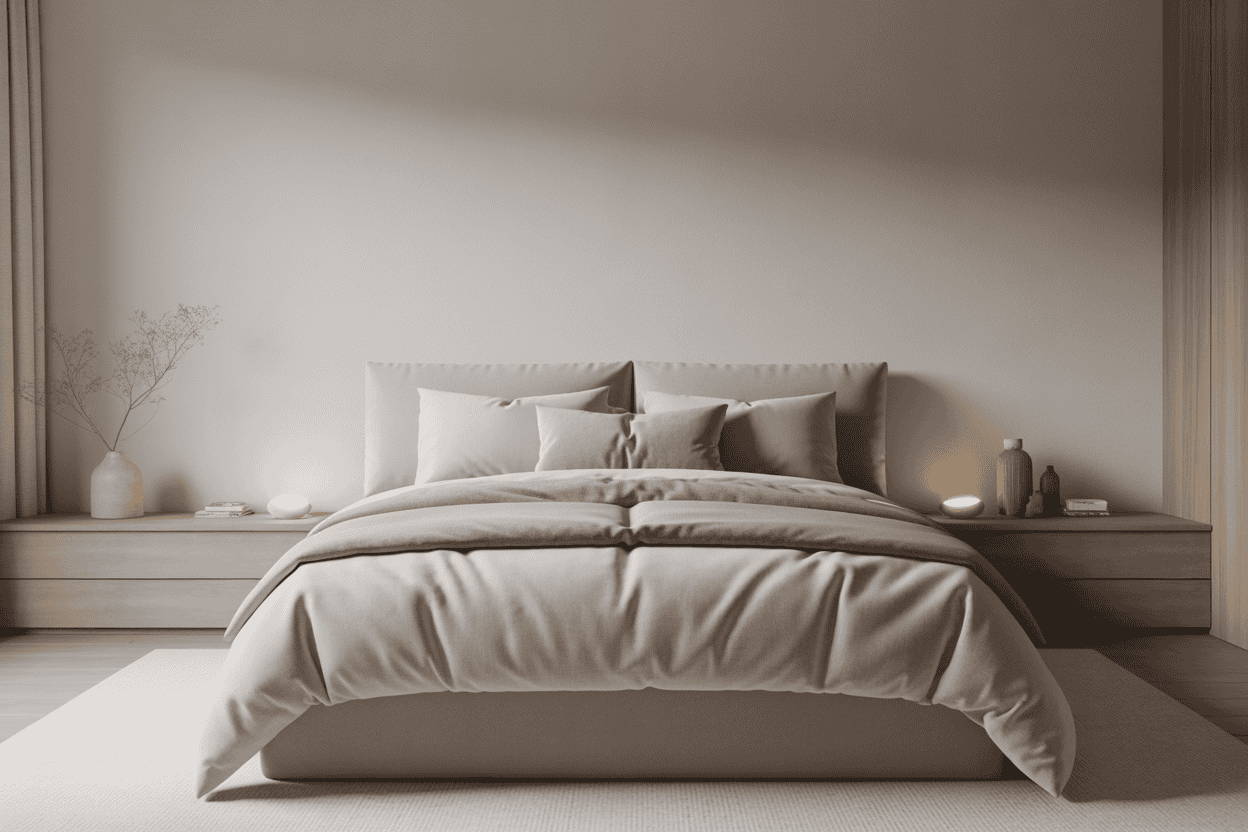
Clutter is the enemy of every previous step — it doesn’t matter how good the palette is if you can’t see it. The practical system: everything needs a home, and the home needs to be where the thing lands. Laundry hamper where clothes come off, not across the room. A small tray on the dresser for the daily pocket-dump. Under-bed bins for the overflow that has nowhere else to go.
The two-minute rule maintains it: if putting something away takes under two minutes, do it now, not later. And do a monthly five-minute sweep — one trash bag, one donation bag, walk the room. Bedrooms accumulate stealth clutter (dead chargers, unread magazines, the drawer of mystery cables), and a regular tiny purge keeps the calm intact without a weekend overhaul.
Step 9: Add Personal Touches to Make It Yours
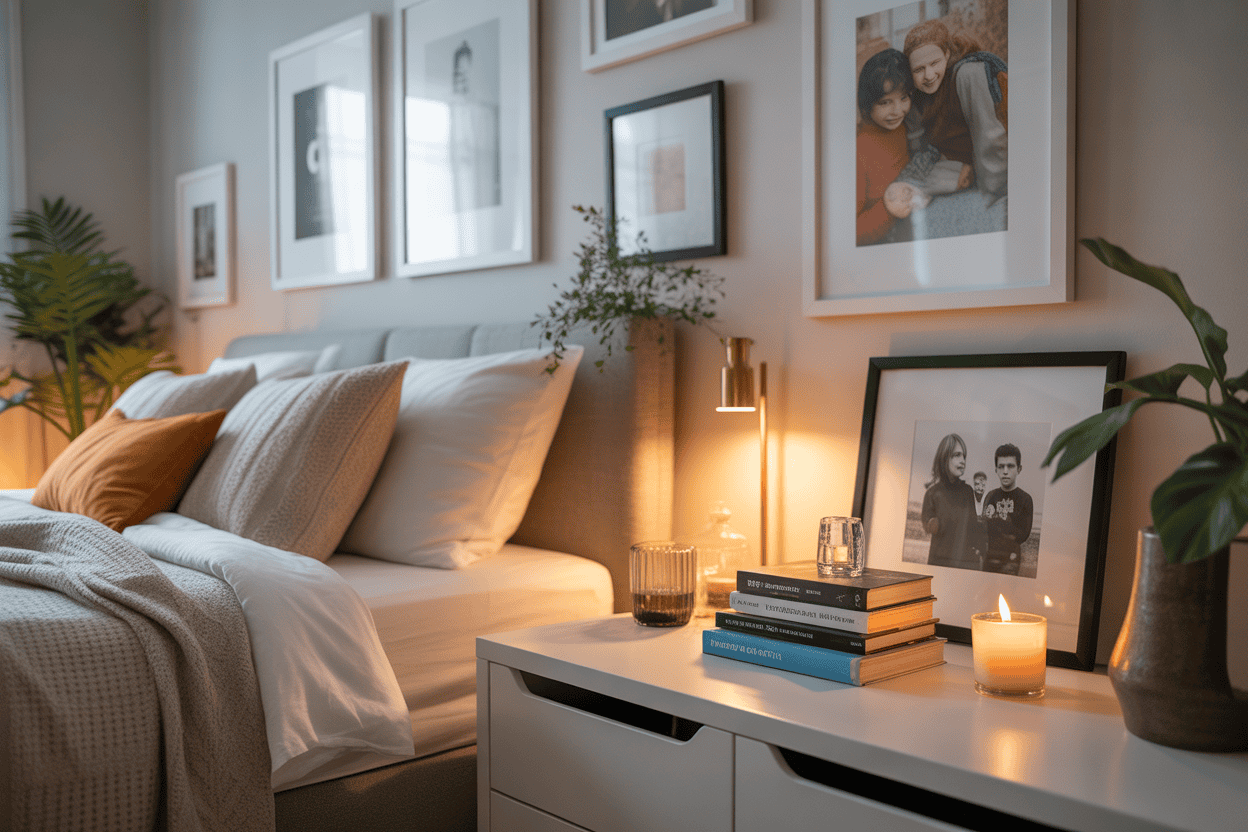
This is last on purpose. Personal touches added too early become clutter; added after the room works, they become the point. The framed photo from the trip, the quilt your grandmother made, the weird little sculpture you love — these are what make it yours instead of a showroom. A bedroom without personal objects is a hotel room, no matter how well designed.
The curation rule: five personal items, displayed with intention, beat twenty scattered ones. Give each one space — a photo gets a frame and a spot, not a lean against the wall. And let it evolve: swap things seasonally, add new memories, retire what no longer resonates. A personal bedroom is a living document, not a finished product. When the room holds your story alongside its calm modern bones, it’s done — and it’s yours.
Final Thought
Nine steps, in order, and the order is the whole secret. Palette, bed, light, texture, nightstands, walls, plants, calm, personality — each one builds on the last, and none of them requires a big budget, just attention. Take it one weekend at a time. The bedroom you wake up in tomorrow is built by the decisions you make today, and the best decision is simply to start with step one.
Pro Tips
- Do the free steps first. Decluttering, rearranging, and planning cost nothing and often reveal that you need less than you thought. Shop only after the free work is done.
- Buy the rug after the bed. Rug size depends on bed size and placement — an 8×10 for a queen, positioned with the top third under the bed. Buying it first is how you end up with a rug that fights the layout.
- Put every light on a dimmer. A $15 dimmer switch per room transforms more than any single purchase. Bedrooms need at least two light levels: functional and wind-down.
- Photograph, then decide. Before buying anything significant, photograph the room and look at the photo, not the room. Cameras flatten space and reveal imbalances — too much on one side, art hung too high — that your eyes forgive in person.
FAQs
Where should I start when decorating an empty bedroom?
With the color palette — three colors (dominant neutral, secondary, one accent) decided before you buy anything. Every later choice references it, and deciding it while the room is empty prevents the expensive mistake of furniture that fights your walls.
What order should I buy bedroom furniture in?
Bed first (it’s the anchor and the biggest purchase), then nightstands, then lighting, then rug and textiles, then decor last. Buying decor before the big pieces is how rooms end up with beautiful objects and no composition.
How can I make a bedroom cozy on a small budget?
Texture and light do 80% of it: a rug, layered bedding in your palette, and warm 2700K lighting with dimmers. Those three cost a few hundred dollars total and transform the room more than any furniture upgrade.
How do I keep my bedroom from getting cluttered again?
Give everything a home where it naturally lands, follow the two-minute rule (put it away now if it takes under two minutes), and do a monthly five-minute sweep with a trash bag and a donation bag. Systems beat willpower — design the tidiness in.

HowDecor is a home decor blog sharing simple, practical decorating ideas for everyday spaces. We believe a beautiful home should feel comfortable, personal, and full of warmth — and that great style does not require a huge budget. Our goal is to inspire readers to create spaces that feel peaceful, welcoming, and truly their own — one room at a time.