The typical kids’ bedroom in a city apartment measures barely 90 to 110 square feet — and by Friday evening, half of that floor has usually vanished under toys, books, and one mysteriously enormous stuffed giraffe. Parents in these rooms often conclude they need a bigger apartment. They don’t. They need the room to work harder, because small kids’ rooms aren’t a storage problem so much as a perception problem: if the space reads as airy, it gets treated as airy, and it stays calmer longer.
Everything below is about that reading of the room — how light moves, where the eye lands, how much floor stays visible. None of it requires structural work or a big budget. Most of these ideas cost less than one Saturday at a furniture store, and several of them you can do this weekend with a paint roller and a screwdriver.
1. Use Light Colors to Open Up the Space Visually
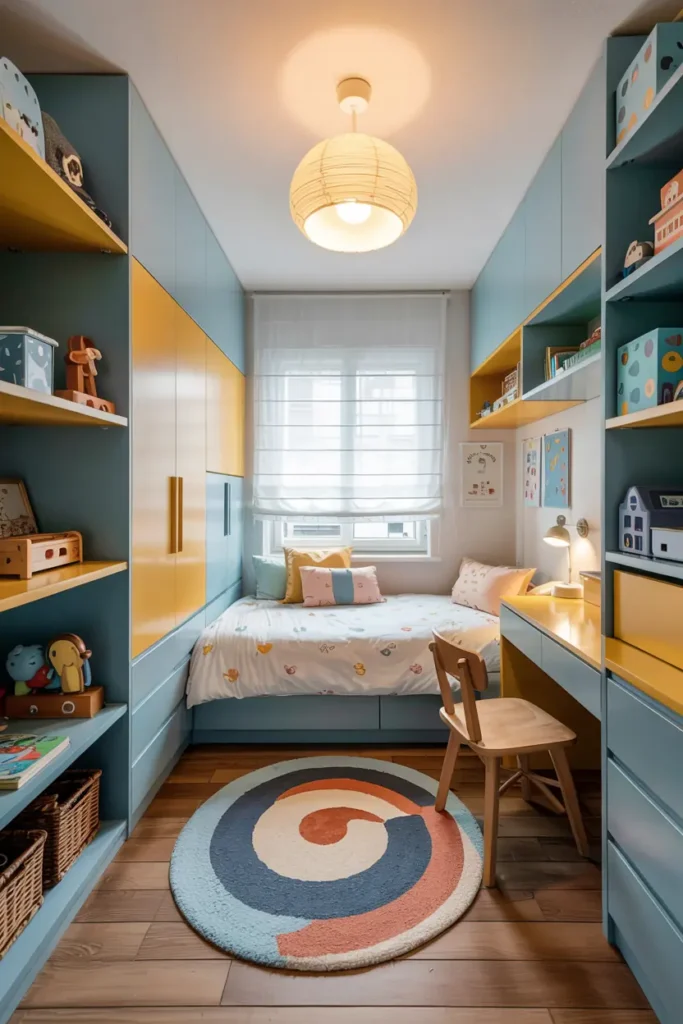
Paint color changes the perceived volume of a room more than almost anything else, and in a small kid’s bedroom the ceiling matters more than the walls. Go with the lightest shade you can tolerate — a soft warm white like a decorator’s white on the ceiling, with walls one gentle step darker (think pale sage, warm ivory, or a dusty sky blue). That ceiling-to-wall contrast of just one shade tricks the eye into reading the ceiling as higher than it is. A gallon of quality washable paint covers about 350 square feet and costs roughly $35–$55; a kid’s room usually needs two gallons at most, and the washable formula (look for scrubbable or kid-proof on the label) matters because crayon and sticky hands are not hypothetical.
The mistake people make here is painting all four walls in a “fun” saturated color — bright turquoise, fire-engine red — because it feels cheerful in the paint aisle. On four walls of a 10×10 room, saturated color closes the space in like a box lid. If your child is begging for bold color, give it to them on one thing: a single accent wall behind the bed, a painted dresser, or bedding. You keep the room feeling open and they still get their color. Win-win.
2. Go Vertical With Storage and Shelving
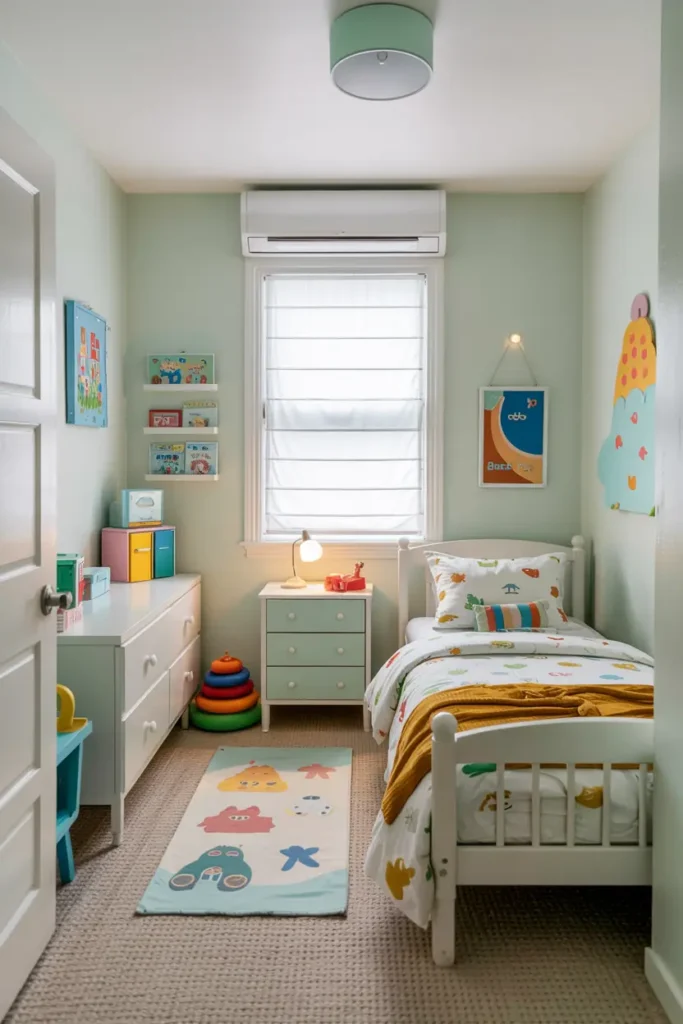
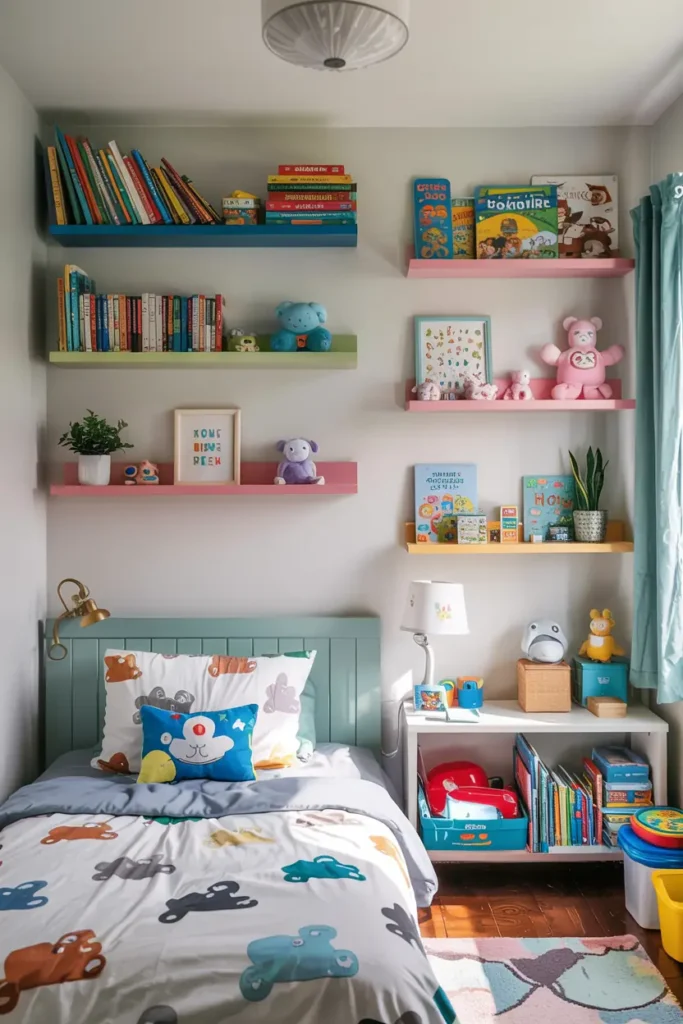
When the floor plan is fixed, the only unclaimed territory is the wall. Floor-to-ceiling shelving on one wall can replace an entire dresser and a bookcase while eating zero additional floor space. For kids, the critical detail is mounting height: put daily-use shelves between 24 and 42 inches off the floor so little hands can reach without climbing, and reserve the upper tiers for out-of-season clothes, keepsakes, and the Lego sets you’re pretending you’ll rebuild someday. A 72-inch tall bookcase costs $60–$150 depending on material, and it must be anchored to a wall stud with an anti-tip kit (usually included) — this is non-negotiable in a kids’ room.
Corner shelves are the underused hero here. A simple three-tier corner unit slots into the dead space where two walls meet and holds books, small toys, and night-light clutter that would otherwise colonize the floor. Avoid mounting heavy shelves directly above the bed, though — even well-anchored ones make parents nervous and kids feel boxed in. Aim your vertical storage at the walls you see when you walk in, not the wall the child sleeps against.
3. Choose Multi-Functional Furniture That Earns Its Place
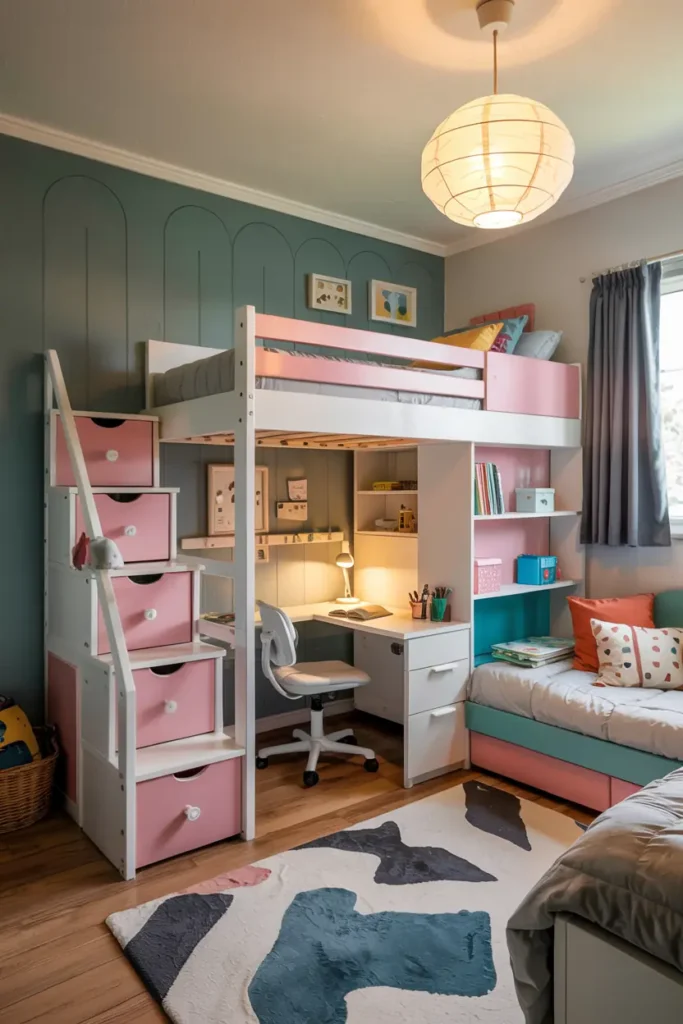
In a small children’s room, every piece of furniture should be auditioning for at least two jobs. A loft bed is the classic example: the sleep surface sits about 55 inches up, leaving the full footprint underneath for a desk, a reading nook, or a dresser — you effectively gain a second room in the same square footage. A decent wooden loft bed runs $200–$450; check the weight rating (look for at least 200 lbs) and the guardrail height, and skip the cheapest metal frames if your kid is a restless sleeper, since they tend to wobble.
For younger kids who aren’t ready for a loft, a captain’s bed with deep drawers underneath swallows clothes, toys, and bedding that would otherwise need a dresser. Storage ottomans double as seating and toy chests ($30–$70 each), and a fold-down wall desk gives a school-age child a real homework surface that disappears after dinner. The tradeoff to watch: multi-functional pieces are heavier and harder to rearrange, so measure your doorways and commit to the layout before you assemble.
4. Keep the Floor as Clear as Possible
Here’s the proportion that matters: a room reads as “small” or “spacious” largely based on how much floor you can see. Aim to keep roughly a third of the floor visible at all times. That sounds impossible with kids until you realize most floor clutter is homeless stuff — toys with no designated spot, shoes with no rack, laundry with no hamper. Under-bed rolling bins (about 6 inches tall, $15–$25 each) are the fastest fix; they hide an astonishing volume of stuff and roll out for cleanup races that kids actually enjoy.
Next, get the big things off the floor: mount the desk to the wall instead of using four legs, hang the backpack on a wall hook by the door, and corral charging cables with a small wall-mounted organizer. A foldable play mat instead of a permanent play table means the middle of the room can be open space by evening. Every square foot of visible floor is worth more visually than any decoration you could buy.
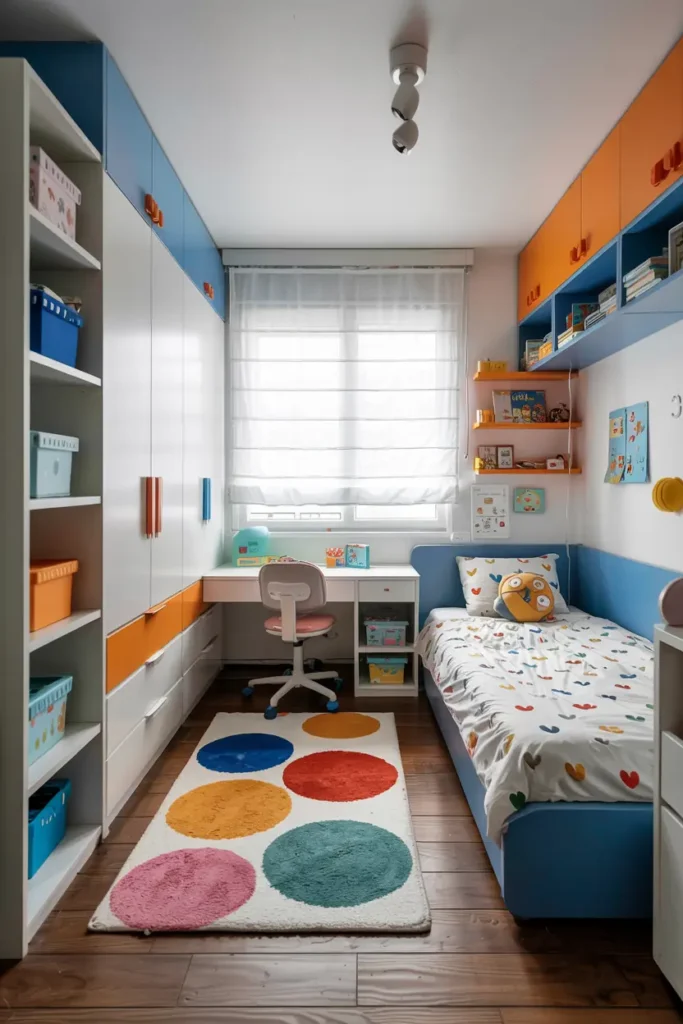
5. Use Mirrors to Reflect Light and Create Depth
Mirrors are the oldest small-space trick in the book because they genuinely work — a mirror doubles the light coming through the window and gives the eye a second “room” to look into. In a kid’s room, safety comes first: use acrylic safety mirrors rather than glass. They’re shatterproof, featherlight, and cost $15–$35 for a full-length 48-inch version. Mount one on the back of the closet door or beside the window (never directly opposite the bed, unless you want to explain at 2 a.m. why there’s a “person” in the room).
Size and placement matter more than quantity. One large mirror beats three small decorative ones, because small scattered mirrors read as clutter. A 24×36-inch mirror hung at the child’s eye level above the dresser bounces daylight across the room and doubles as a getting-ready spot for older kids. Keep the frame slim and light-colored so the mirror itself stays the star.
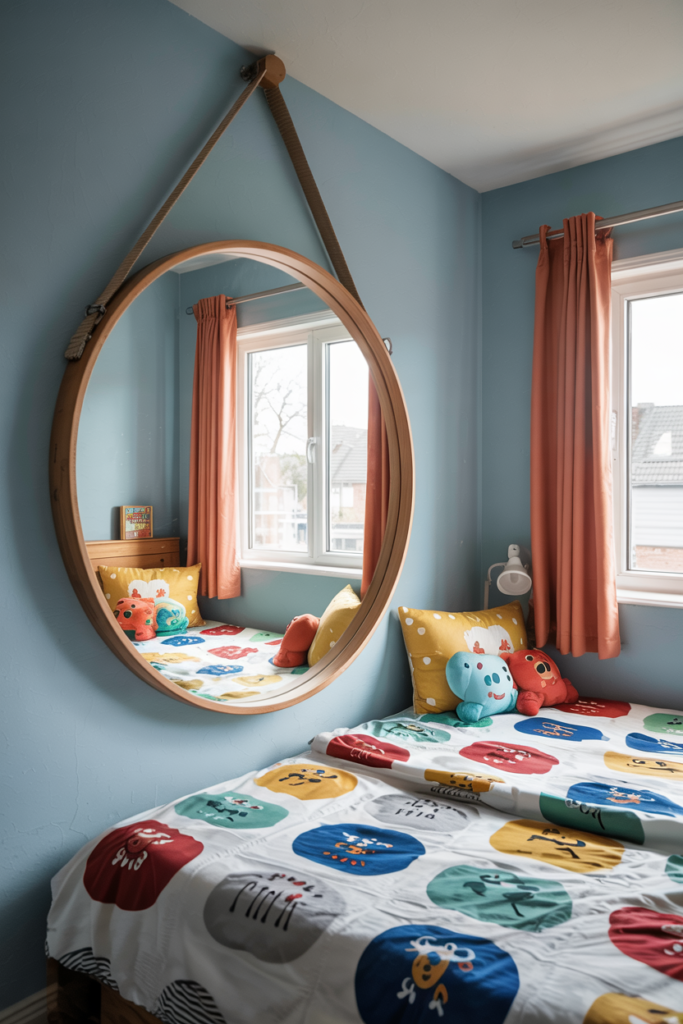
6. Choose Curtains That Maximize Light and Height
Curtains can quietly steal a foot of perceived height — or give it back. The rule: mount the curtain rod 4 to 6 inches above the window frame and extend it 3 to 4 inches past the frame on each side. This makes the window look dramatically larger, and when the curtains are open they stack against the wall instead of covering glass, so more daylight gets in. A basic 1-inch rod and brackets cost $15–$30, and it’s the highest-impact $25 you’ll spend in the room.
Fabric choice matters too. In a small room, heavy dark curtains absorb light and visually shrink the wall. Layer instead: a sheer white panel for daytime privacy that lets light flood through, plus a light-colored blackout panel behind it for naps and early bedtimes. Keep the color close to the wall color so the curtains blend in rather than chopping the wall into segments. And hem them to just kiss the floor — curtains that puddle eat visual space, and curtains that hover two inches short look unfinished.
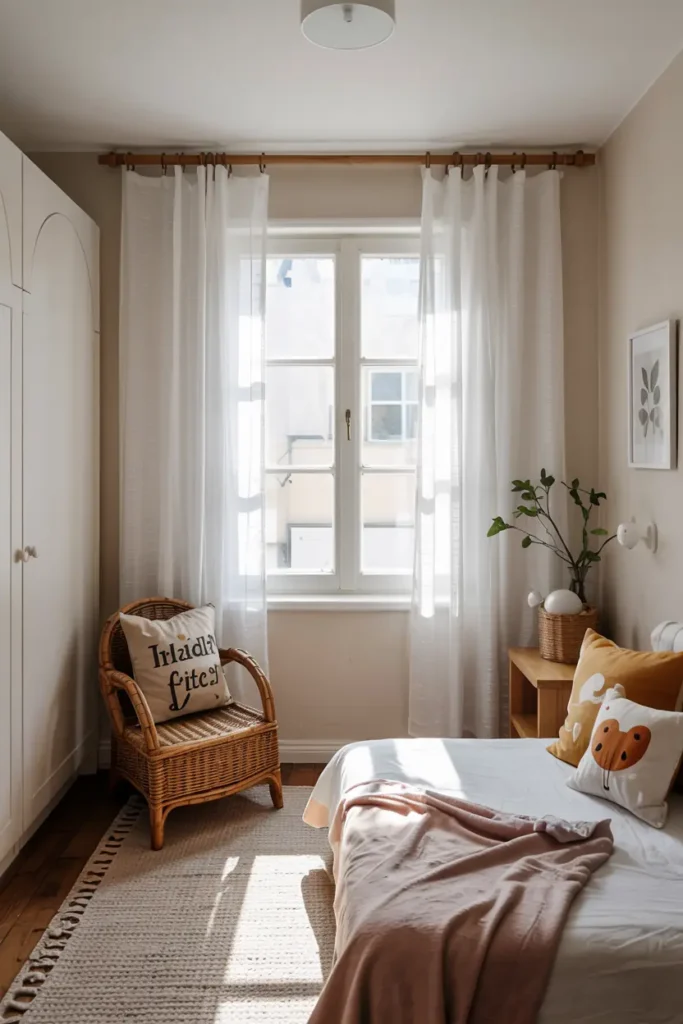
7. Create Zones Without Adding Walls or Bulk
A small kids’ room has to be a bedroom, a playroom, and often a study — and the trick is signaling those zones without dividers that eat space. A 5×7-foot rug (about $40–$90) instantly defines the play zone; the eye reads the rug as a separate “room” within the room. A painted arch or a strip of washi tape on the wall behind a floor cushion marks a reading nook for under $10. Even lighting can zone: a small clip lamp on the desk says “work happens here” while a warm string of fairy lights over the bed says “this part is for winding down.”
Once the zones exist, the room feels bigger because it feels more organized — three clear purposes instead of one cluttered blur. A low open bookcase turned perpendicular to the wall can act as a gentle divider between sleep and play areas while still storing things on both sides. If you want to add personality on top of this structure, these playful kids decor ideas for a colorful room show how to layer color and pattern without crowding a small room back up again.
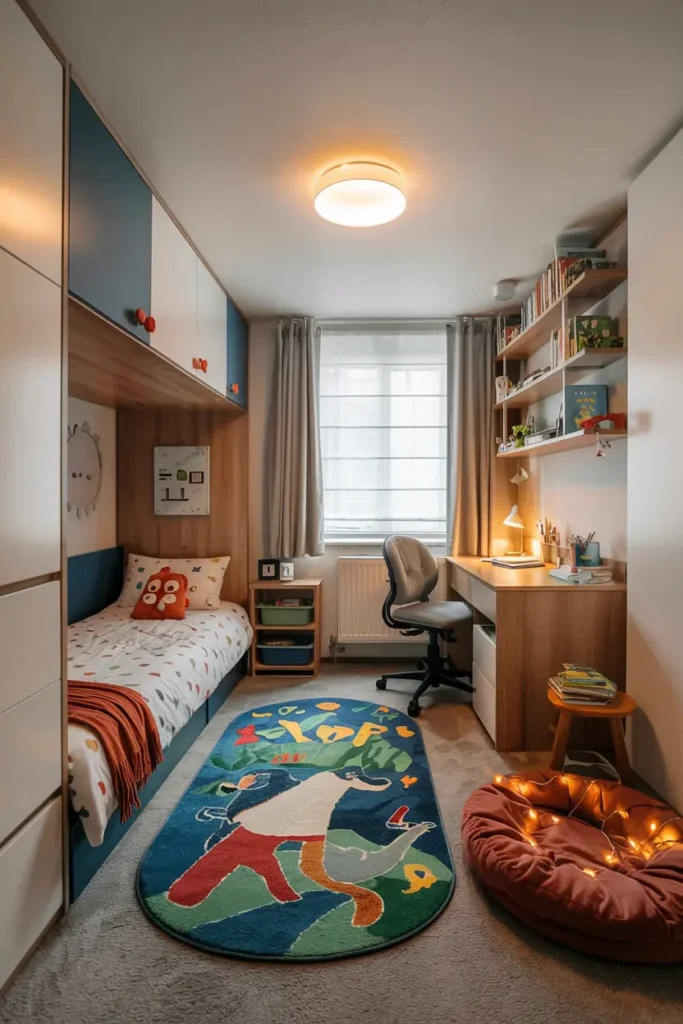
Small kids’ rooms don’t need to feel like a compromise. With light colors lifting the walls, storage climbing instead of spreading, furniture doing double duty, and clear zones giving every activity its place, a 100-square-foot bedroom can feel genuinely generous — and stay that way past Friday. Start with whichever idea costs you the least this weekend; momentum does the rest.
Pro Tips
- Before buying anything, measure the room and sketch it on graph paper with each piece of furniture to scale — a $3 pad of graph paper prevents a $300 “it doesn’t fit” mistake.
- Choose one metal finish and one wood tone for the whole room (brushed nickel + light oak, for example); matching finishes across shelves, rods, and frames make a small room feel deliberately designed rather than assembled.
- Do the “doorway test” after every change: stand in the doorway and look in. If your eye lands on clutter first, that spot needs a home for the homeless items.
- Revisit storage heights every year or so — a shelf that’s perfect for a five-year-old becomes a climbing temptation for a three-year-old sibling, so adjust as kids grow.
FAQs
What is the best paint color for a small kids’ bedroom?
Soft, light, and warm: warm white, pale sage, light peach, or dusty sky blue all reflect light well and make walls feel farther apart. Keep the ceiling the lightest shade in the room, and save bold colors for bedding or one accent piece rather than all four walls.
How do I fit storage in a really tiny kids’ room?
Go up, not out: a tall anchored bookcase, shelves at kid-reachable height, and under-bed rolling bins together can replace a dresser and a toy chest. Wall-mounted hooks and a fold-down desk free up floor space that bulky furniture would eat.
Are loft beds safe for small children?
Loft and bunk beds are generally recommended for kids aged six and up, with guardrails on both sides and a weight rating of at least 200 lbs. For younger children, a low captain’s bed with storage drawers underneath is the safer multi-functional choice.
How can I make a shared kids’ room feel bigger?
Give each child a defined zone — a rug, a wall color block, or a small bookcase divider — so the room reads as two organized spaces instead of one crowded one. Matching bedding in a light color keeps it visually calm, and vertical storage keeps the shared floor clear.

HowDecor is a home decor blog sharing simple, practical decorating ideas for everyday spaces. We believe a beautiful home should feel comfortable, personal, and full of warmth — and that great style does not require a huge budget. Our goal is to inspire readers to create spaces that feel peaceful, welcoming, and truly their own — one room at a time.