Elegance in cake is a discipline, not a price tag. I’ve seen $300 cakes that looked cluttered and $80 cakes that looked like they belonged in a gallery. The difference is never money — it’s editing.
An elegant birthday cake follows three rules: a restrained palette, one hero detail, and flawless finishing. Everything below obeys those rules. Whether you’re ordering from a patisserie or attempting it yourself, these twelve designs are proof that simplicity, done well, is the most luxurious choice of all.
Choose the design that matches the room, the outfit, and the mood — then resist the urge to add “just one more thing.”
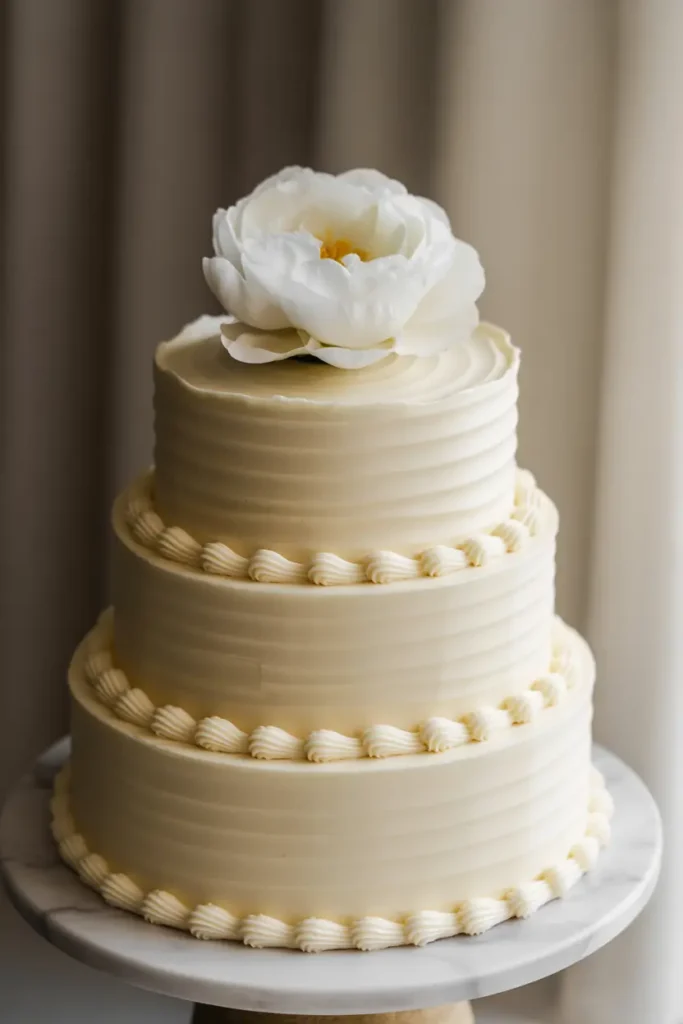
1. Classic White Buttercream Cake
There is a reason pastry chefs still start here. A perfectly smooth white cake — sharp edges, no crumbs, no smudges — is the hardest simple thing in baking and the most versatile canvas in the room.
Dress it with almost nothing: a single line of piped pearls at the base, or three fresh white blooms placed asymmetrically. White on white is not empty — it’s confident.
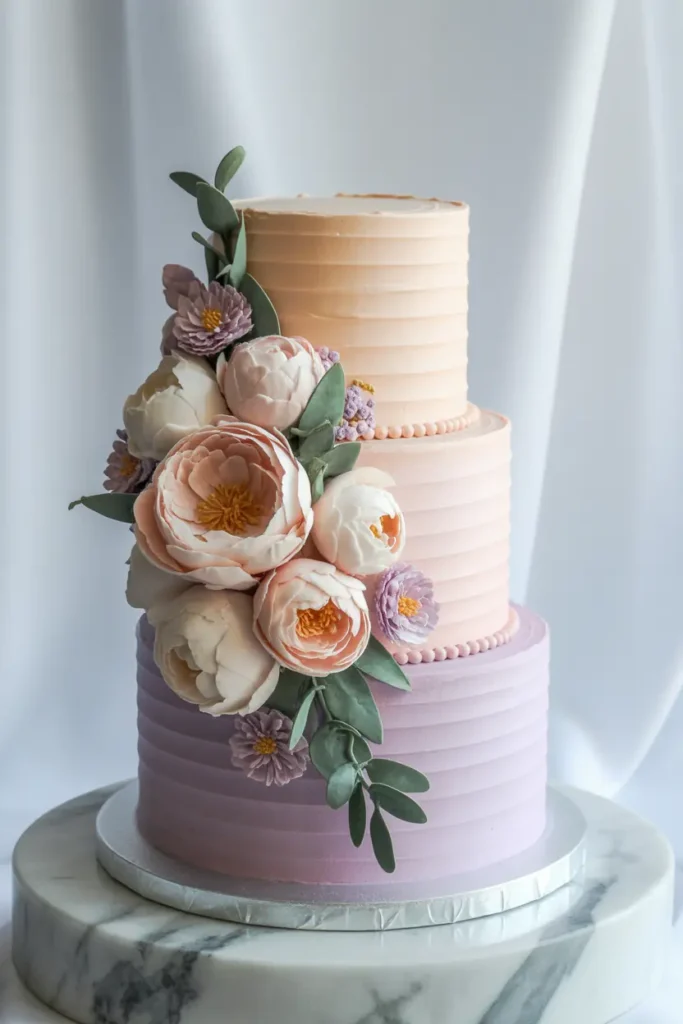
2. Floral Elegance Cake
Flowers are the oldest cake decoration and still the most beautiful, provided they’re chosen with intent. One variety, one color, placed with space around each bloom. A dozen mixed flowers is a bouquet; five roses in a cluster is design.
Use only food-safe, pesticide-free flowers, and keep stems out of the frosting with posy picks. For evening parties, white and cream blooms catch candlelight beautifully.
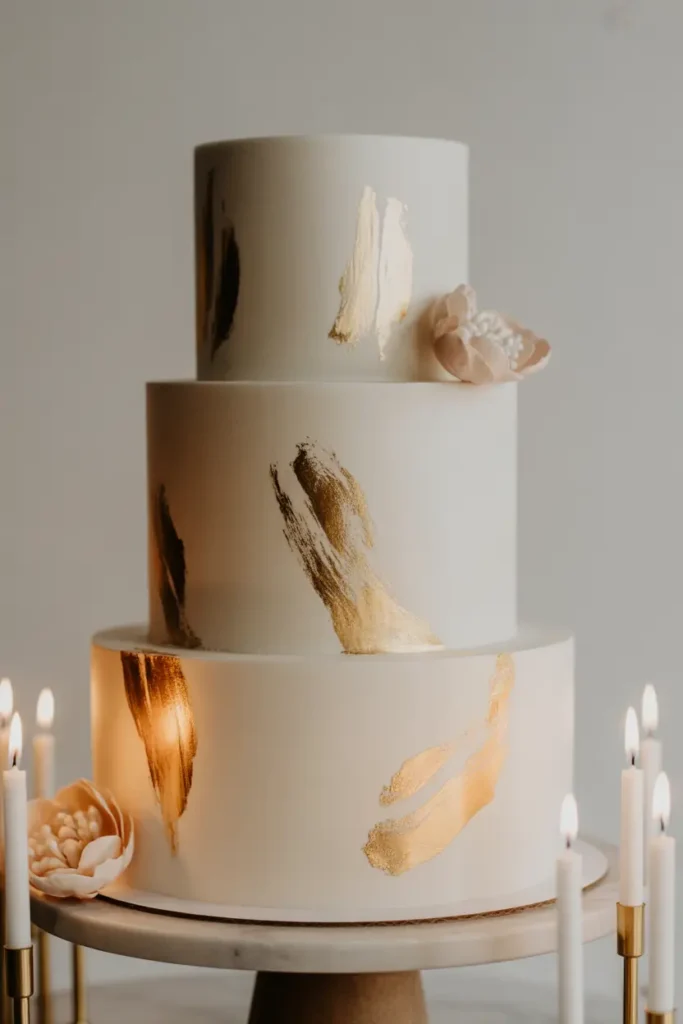
3. Gold Accent Cake
Gold is powerful precisely because a little does so much. Five flakes of gold leaf, a thin painted gold line at the base, or a single gold initial topper — any one of these turns a quiet cake into a luxurious one.
The rule: gold needs a calm background. White, ivory, blush, or black let it shine; busy colors fight it. Never combine gold leaf with glitter — one metallic is elegance, two is a craft project.
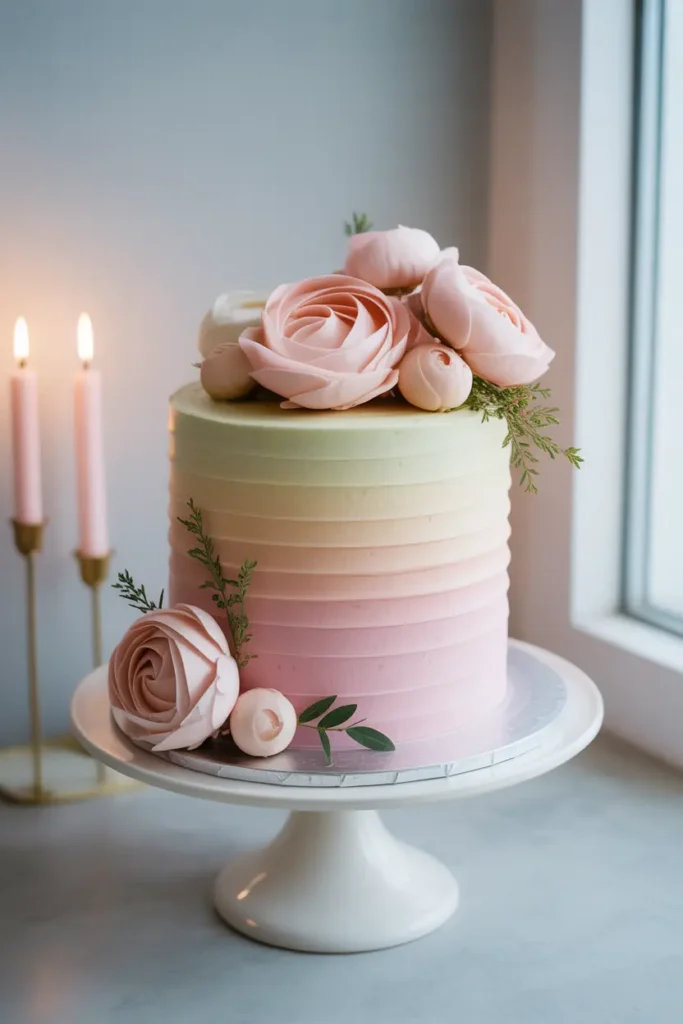
4. Soft Pastel Cake
Pastels work when they’re deliberate, not default. Choose one pastel as the lead — say, lavender — and let the others whisper: a blush ribbon of frosting, a mint leaf, a pale blue berry.
The most photogenic pastel cakes are monochromatic: all blush, or all sage, with texture doing the talking instead of color. They look expensive because they look considered.
5. Marble Effect Cake
Marbling is controlled chance: two or three fondant colors kneaded just enough to vein, never enough to blend. White and grey with a whisper of gold is the classic; charcoal and white is the modern one.
Let the marble speak — no topper, or at most a single stem. This cake doesn’t need help; it needs space.
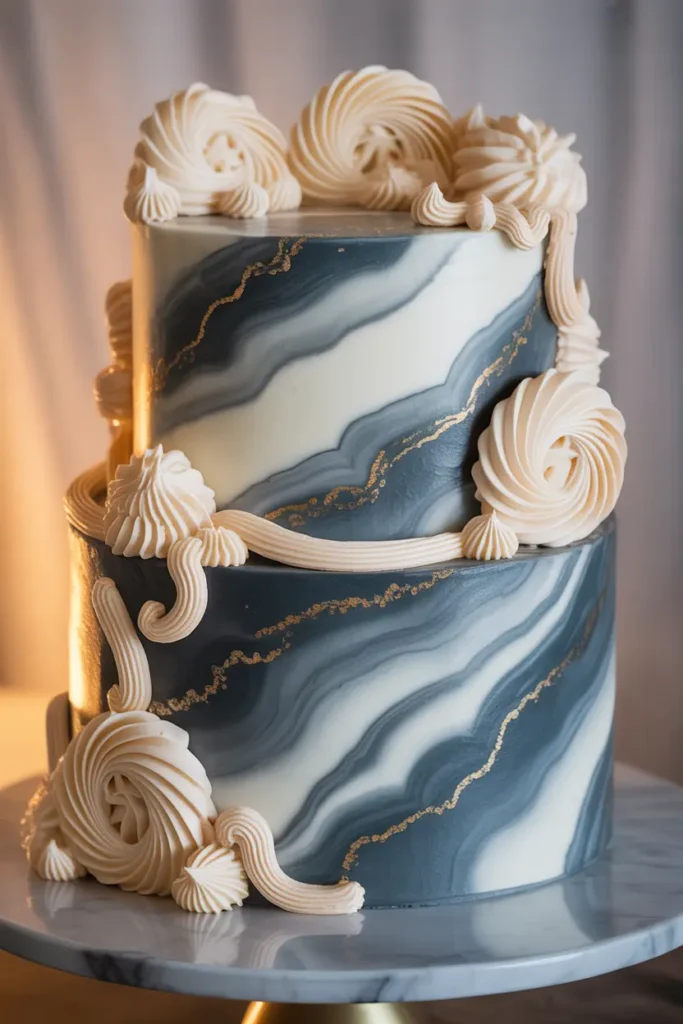
6. Minimal Floral Cake
The difference between floral and minimal floral is courage: three perfect blooms instead of thirty. Place them in a tight cluster off-center, stems trimmed short, and let the bare cake around them do half the work.
This is the design for people who find most decorated cakes “too much.” It’s quiet, it’s precise, and guests always lean in closer to look.
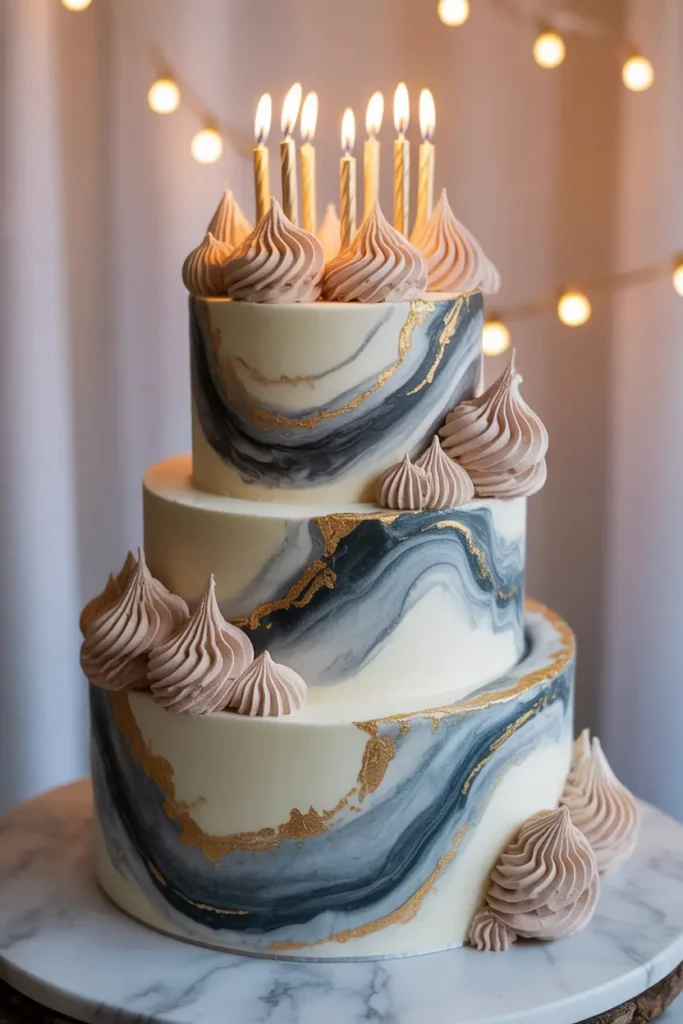
A study in restraint — delicate flowers, clean lines, modern styling.
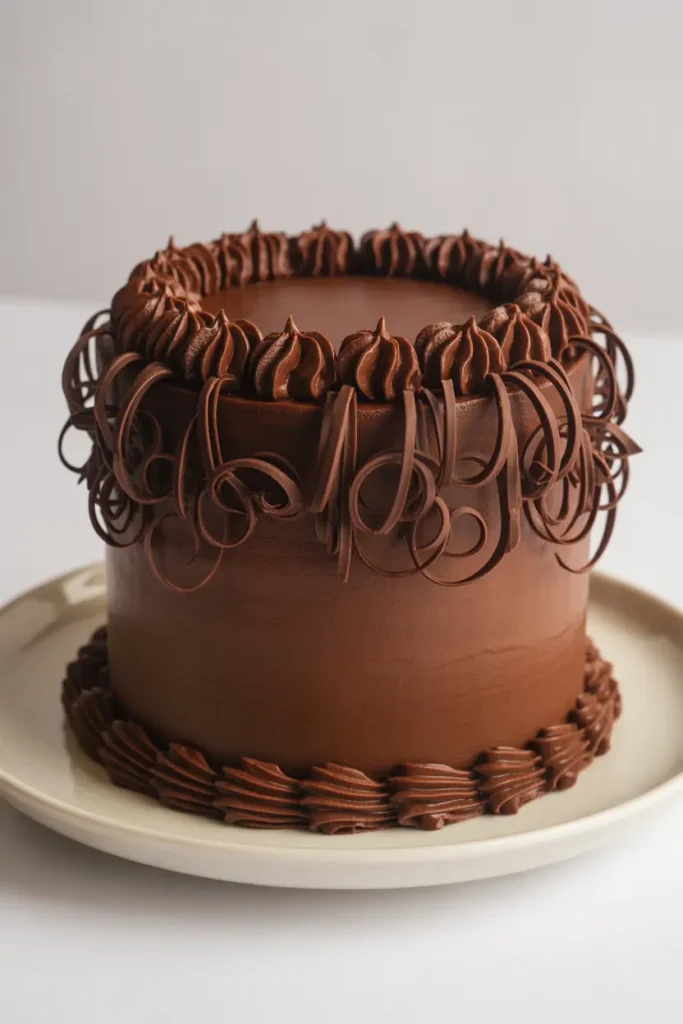
7. Chocolate Elegance Cake
Chocolate becomes elegant through finish, not flavor. A mirror-smooth dark ganache, chocolate curls placed with tweezers, or a single perfect drip — each says luxury without shouting.
Keep the palette dark: chocolate, black cocoa, a touch of gold. Chocolate elegance is evening elegance — it belongs under warm light, not noon sun.
8. Ombre Gradient Cake
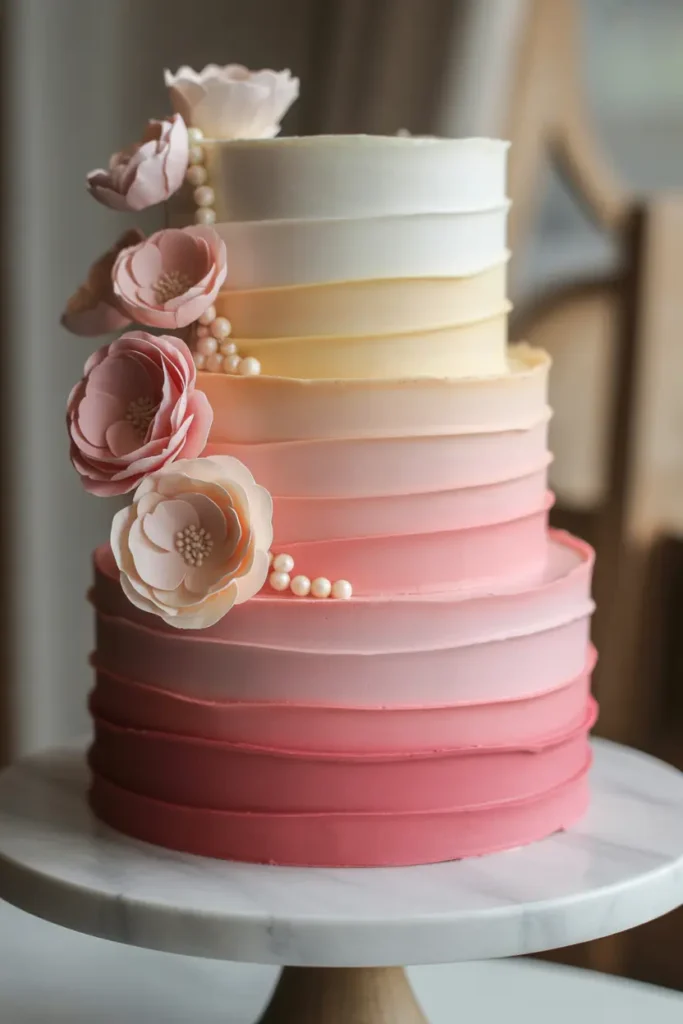
Ombre rewards patience. Tint buttercream in four graduated shades, apply in bands, and blend the seams with a heated bench scraper. The result should look like the color is dissolving, not striped.
Choose sophisticated gradients — ivory to taupe, blush to burgundy, pale grey to charcoal. Neon ombre is fun; it is not elegant.
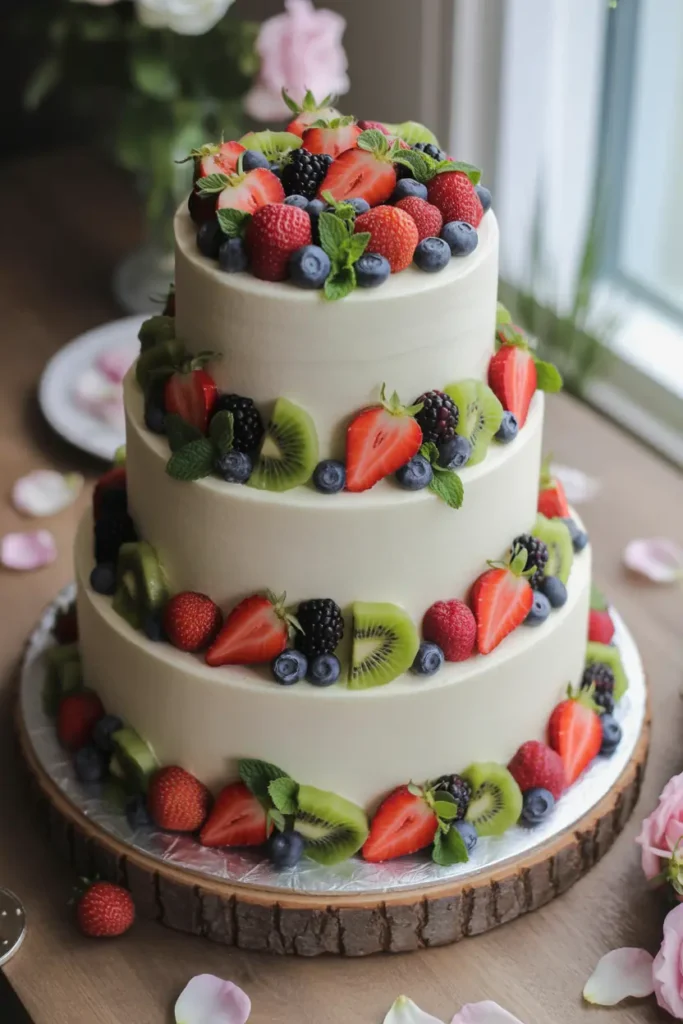
9. Fruit-Topped Cake
Fresh fruit, arranged with a florist’s eye: height in the center (figs, strawberries), small berries filling gaps, a few mint leaves for contrast. Brush with warmed apricot jam for a patisserie shine.
Add fruit within hours of serving. Beyond looks, it’s the elegant choice for guests who prefer dessert that tastes fresh rather than sweet.
10. Textured Buttercream Cake
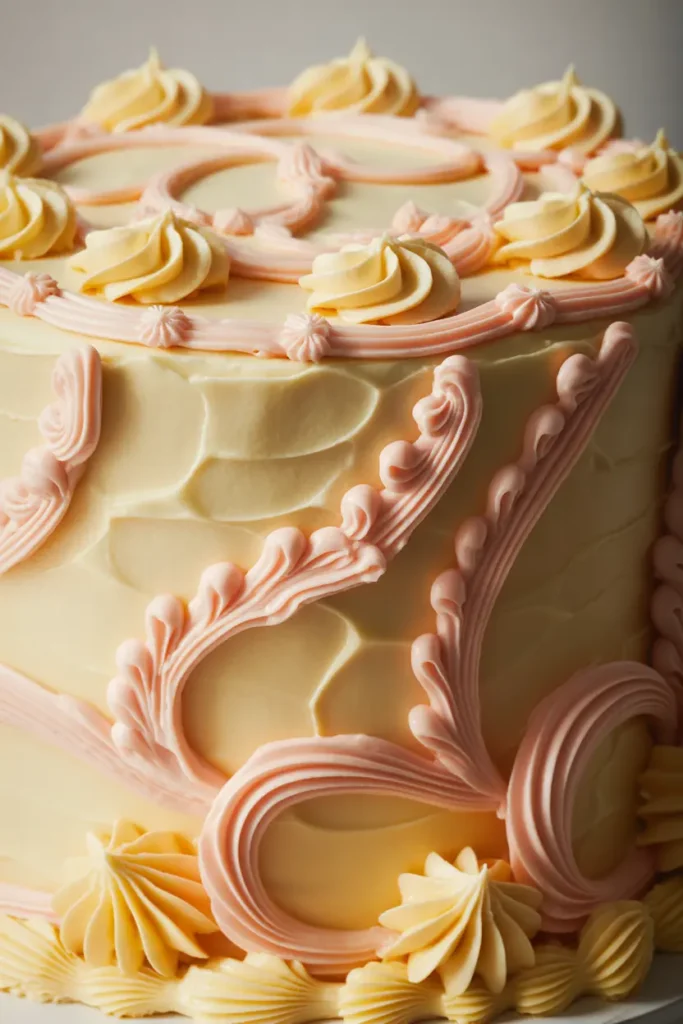
Texture is the quiet luxury of buttercream: vertical ridges from a comb, soft waves from a spatula, brush-stroke swoops. It catches light and shadow in a way smooth frosting can’t.
Keep the color single — white, ivory, or pale grey — so the texture is the entire design. This is the cake for people who notice craftsmanship.
11. Personalized Elegant Cake
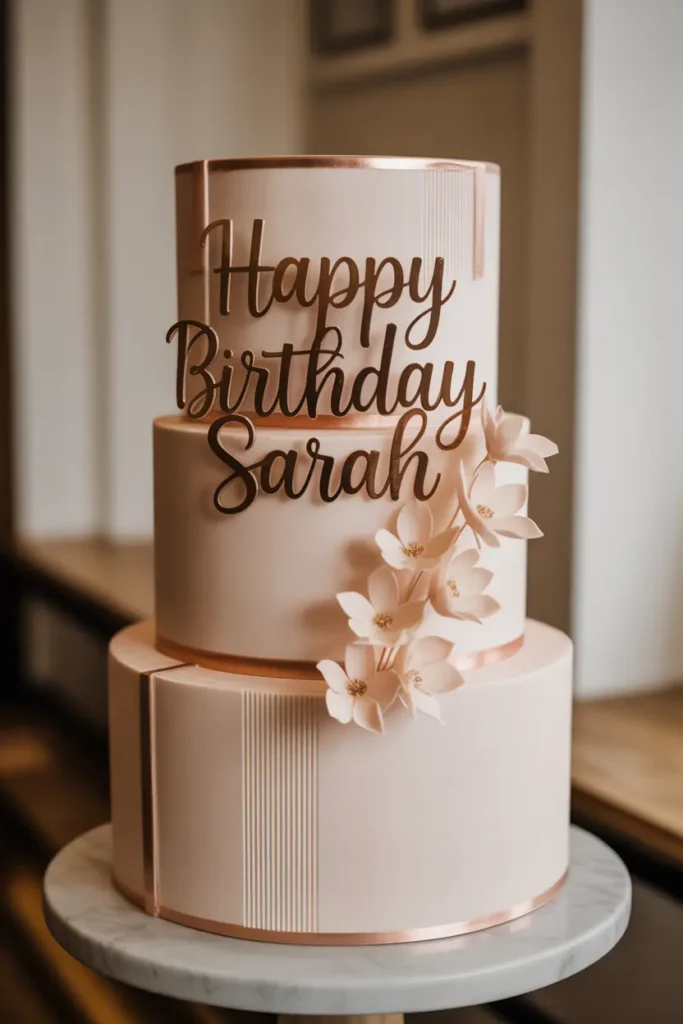
Personalization, done elegantly, means one name in beautiful script — piped by a steady hand or set in a fine acrylic topper — and nothing else competing with it. The name is the decoration.
Choose a classic typeface, not a trendy one. Trends date; a simple serif or script endures in photographs for decades.
12. Candle & Flower Celebration Cake
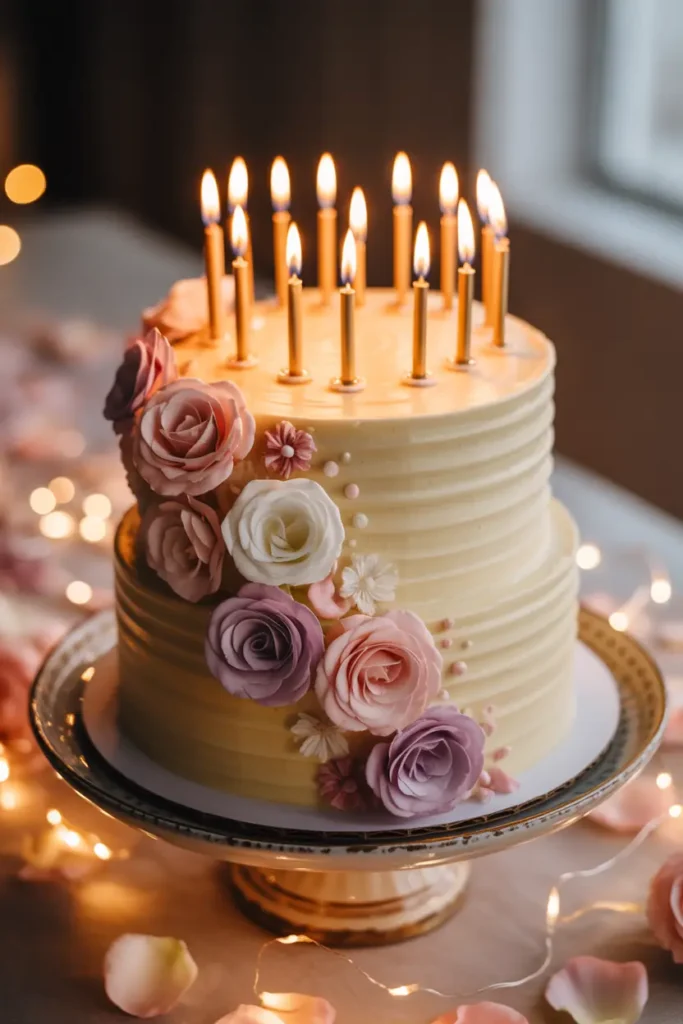
Fresh flowers ringed around the base, slim taper candles rising behind them, lit just before the room goes quiet. It’s romantic, it’s dramatic, and it takes five minutes to assemble.
This design lives for evening: dim the room, light the candles, and let the cake glow. Keep flames away from blooms and never leave it unattended — beauty still needs common sense.
Final Thoughts
Elegance is not the absence of decoration. It’s the presence of judgment — knowing what to leave off is the entire skill.
Pick one idea from this list and execute it with care: smooth the frosting twice, place each flower deliberately, step back and remove one thing. That’s the whole method.
The result won’t just look beautiful in photos. It’ll feel beautiful in the room — calm, intentional, and quietly unforgettable.
Pro Tips
- Chill between steps. A 20-minute chill firms buttercream so the next layer goes on clean. Most “messy” elegant cakes are just warm cakes.
- Photograph in natural light. Elegant cakes depend on subtlety, and harsh overhead light flattens it. Near a window, no flash, and the textures will show.
- Less topper, more cake. If you use a topper, make it thin and simple — heavy, glittery toppers fight the elegance you’re paying for.
- Taste before you commit. Order a small tasting box from the bakery. An elegant look with a dry crumb is a failed cake; flavor is non-negotiable.
FAQs
What makes a birthday cake look elegant rather than ordinary?
Restraint. Elegant cakes use a limited palette (two to three colors), one focal decoration instead of five, and clean finishing — sharp edges, smooth frosting, no visible seams. If you can remove a decoration without missing it, remove it.
How much does an elegant birthday cake cost?
A refined buttercream design from a good bakery runs $80–$140 for an 8-inch cake. Marble, hand-piped florals, and gold leaf push it to $130–$200. You’re paying for the decorator’s restraint and precision as much as the ingredients.
Can I make an elegant cake at home?
Yes — elegance is achievable with basic tools. A bench scraper for smooth sides, an offset spatula, and one beautiful element (fresh flowers, a gold topper, perfect berries) will outperform a fussy design. Practice smoothing on a spare cake first; the finish is everything.
What flavors suit an elegant birthday cake?
Classic pairings read as elegant: vanilla bean with raspberry, lemon with elderflower, chocolate with salted caramel, almond with apricot. Avoid novelty flavors — elegance is about familiar things done exceptionally well.

HowDecor is a home decor blog sharing simple, practical decorating ideas for everyday spaces. We believe a beautiful home should feel comfortable, personal, and full of warmth — and that great style does not require a huge budget. Our goal is to inspire readers to create spaces that feel peaceful, welcoming, and truly their own — one room at a time.