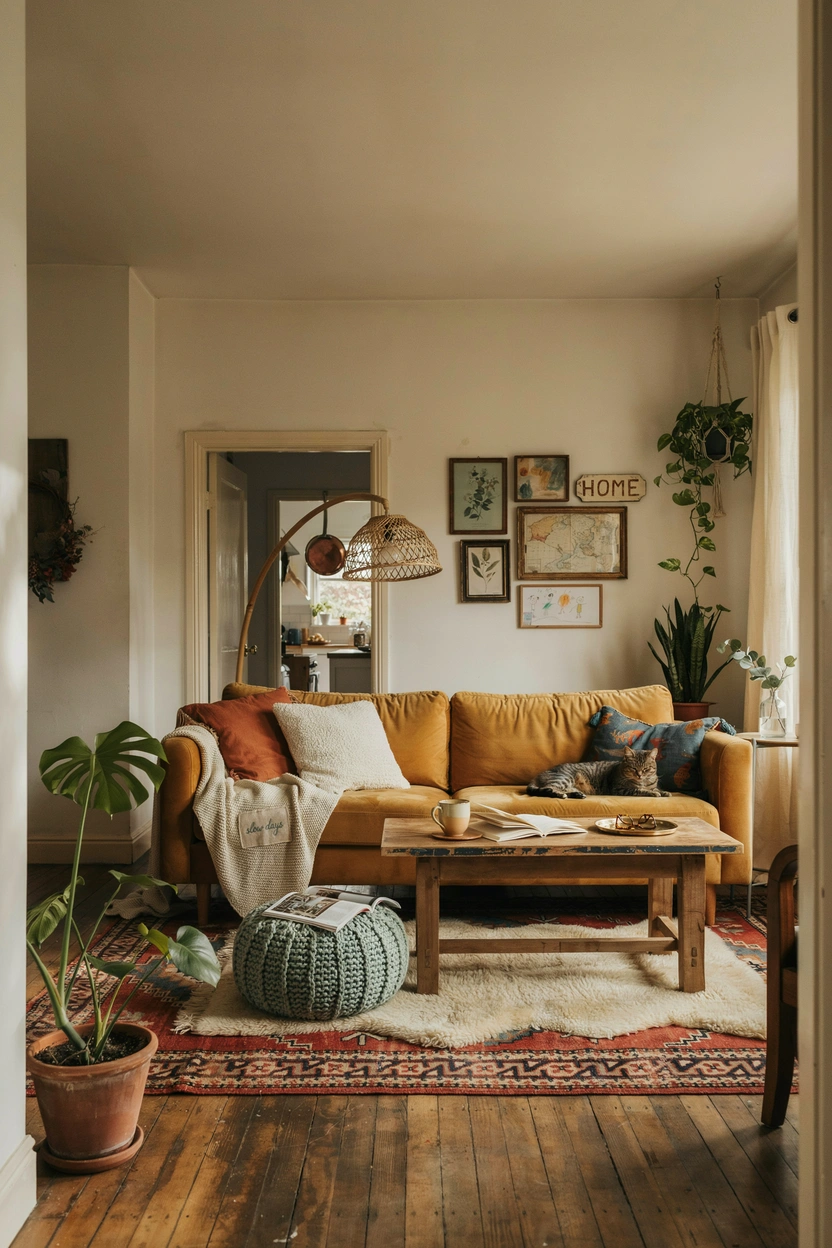
Here’s what nobody tells you about expensive-looking homes: most of them weren’t expensive. I’ve been in £2 million houses that felt flat and rented flats that felt like a million pounds. The difference was never money — it was decisions. Small, deliberate, almost-free decisions, made consistently.
These 27 ideas are the ones that actually move the needle without moving money. No renovations, no designer, no “just” spending £500 on the one perfect thing. Just the practical tricks — rearranging, editing, swapping, styling — that make a home feel considered. Pick five, do them this weekend, and watch what happens.
One rule before you start: do the free ones first. Half this list costs literally nothing, and they’re the half that matters most. Money spent on decor before the free fixes are done is money wasted — I’ve watched people buy £200 of accessories for rooms that needed rearranging, not shopping.
1. Rearrange What You Already Have
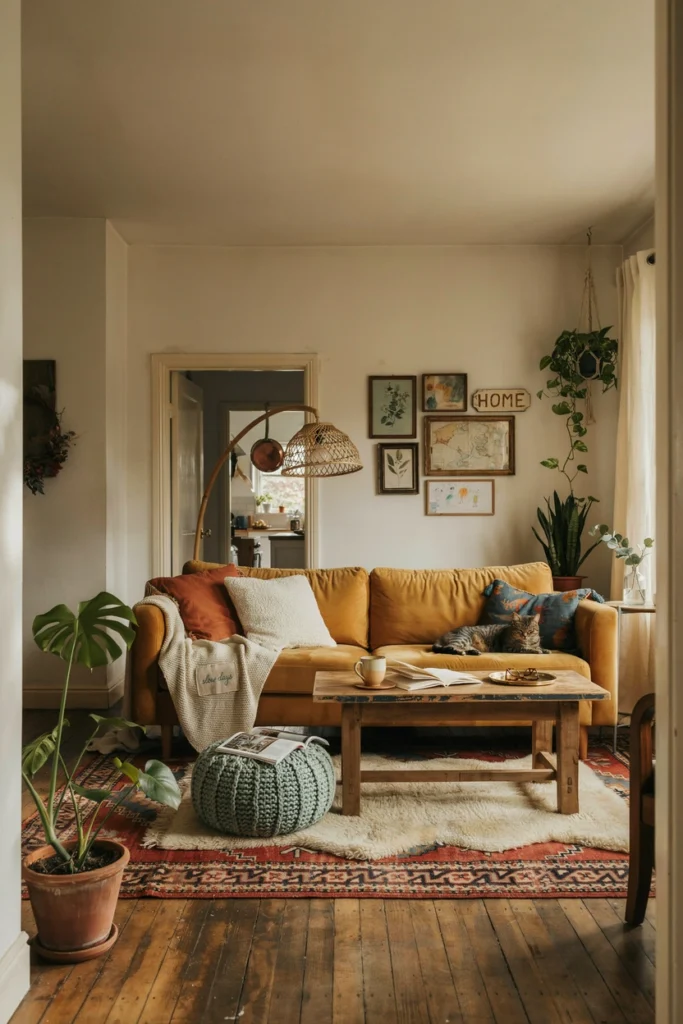
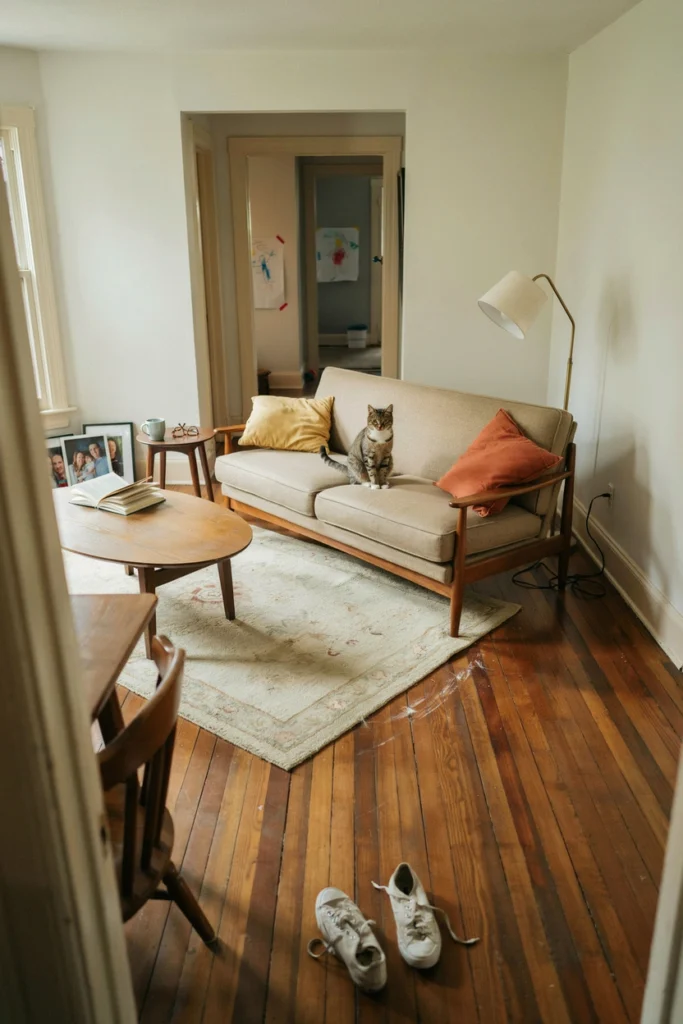
Before spending a single penny, move your furniture. Pull the sofa off the wall, angle the armchair toward the window, swap the bedroom art into the living room. It costs nothing and it works because your eye has gone blind to the current arrangement — anything different reads as fresh. Give it 48 hours before judging; new layouts feel wrong on day one and right on day three.
2. Add Plants for Instant Life and Color
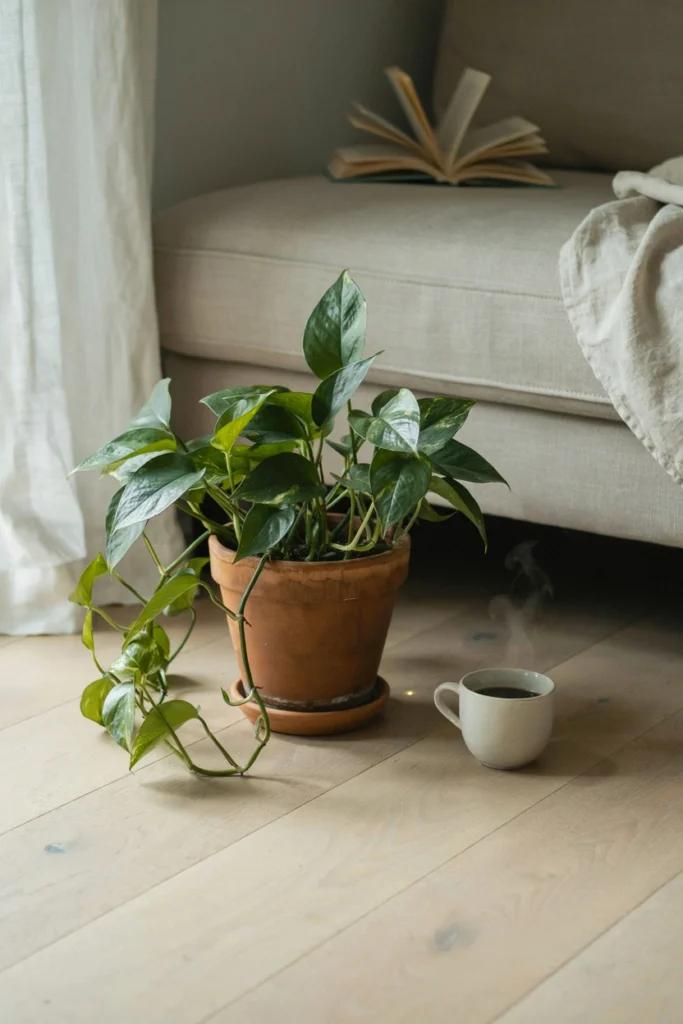
Few things transform a room as quickly and affordably as greenery. A single large plant in a plain corner adds height, color, and a sense of vitality that almost no decor item can replicate. Pothos, snake plants, and peace lilies are widely available, inexpensive, and practically impossible to kill. You don’t need to fill every surface. One or two well-placed plants in a room is often more effective than a dozen scattered randomly. If natural light is limited, opt for low-light varieties that thrive in almost any condition.
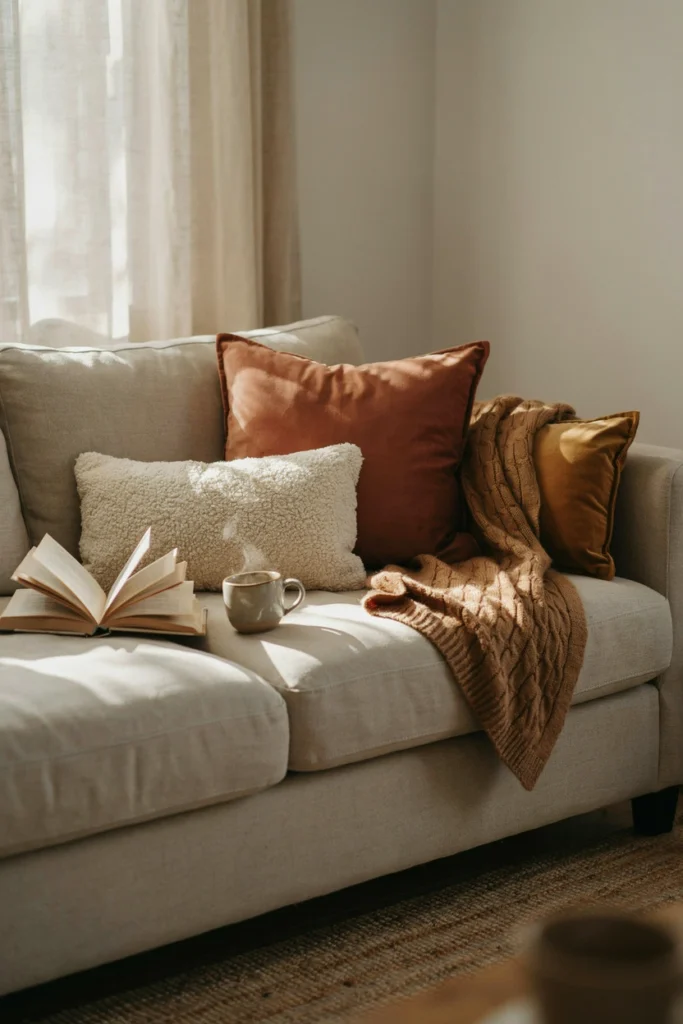
3. Swap Out Cushion Covers
New cushion covers are the fastest room refresh known to interiors — £30 of covers changes a sofa more than £300 of other things. Go for texture over pattern: velvet, linen, chunky knit. And break the matching set habit: cushions in three related tones look styled; six identical cushions look like a furniture showroom.
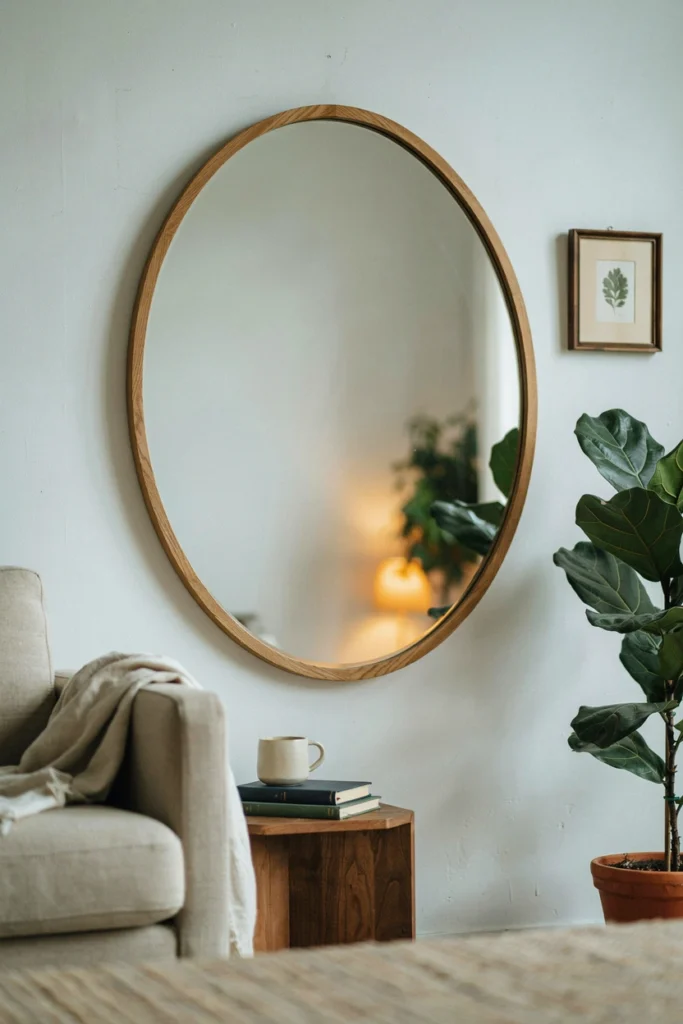
4. Use Mirrors to Brighten and Expand Space
A well-placed mirror does the work of both a window and a piece of art. It reflects light around the room, makes smaller spaces feel more open, and adds a decorative element that works in virtually any style. Thrift stores and secondhand markets are full of interesting mirrors at a fraction of retail prices. A round mirror with a simple wooden or metal frame works in almost any room. Lean a large mirror against a wall rather than hanging it if you want a more relaxed, contemporary look.
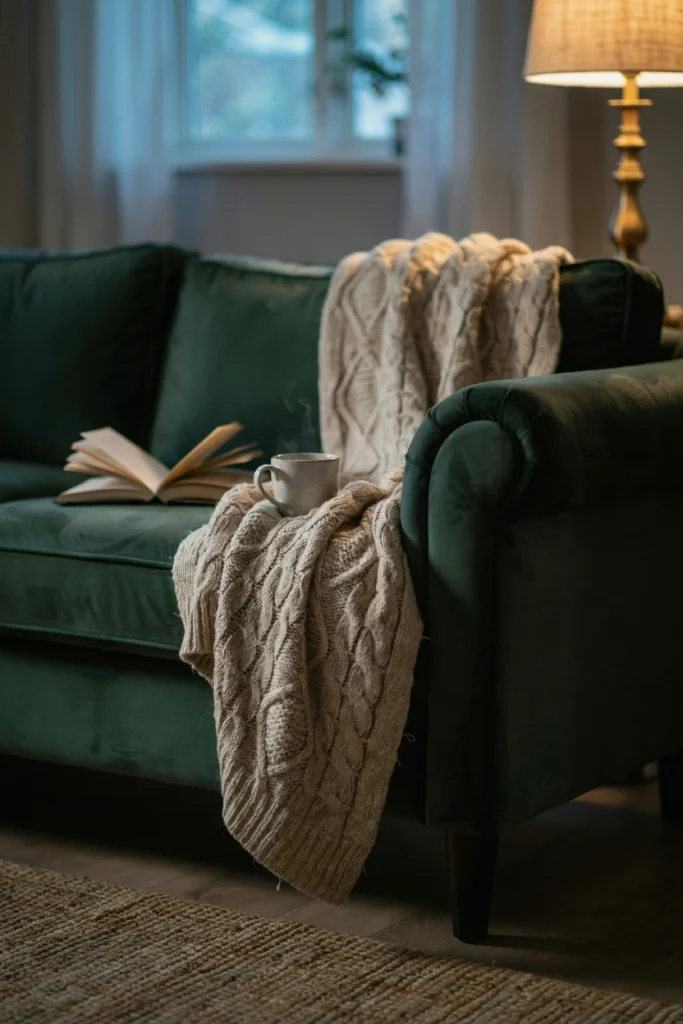
5. Introduce a Throw Blanket
A throw is a £25 shortcut to “this home is comfortable.” Drape it — don’t fold it with military precision — over the sofa arm or the bed’s corner. The slightly undone look is the point; a perfectly folded throw reads as a display home, a casually draped one reads as a lived-in home. Chunky knits photograph best and feel best.
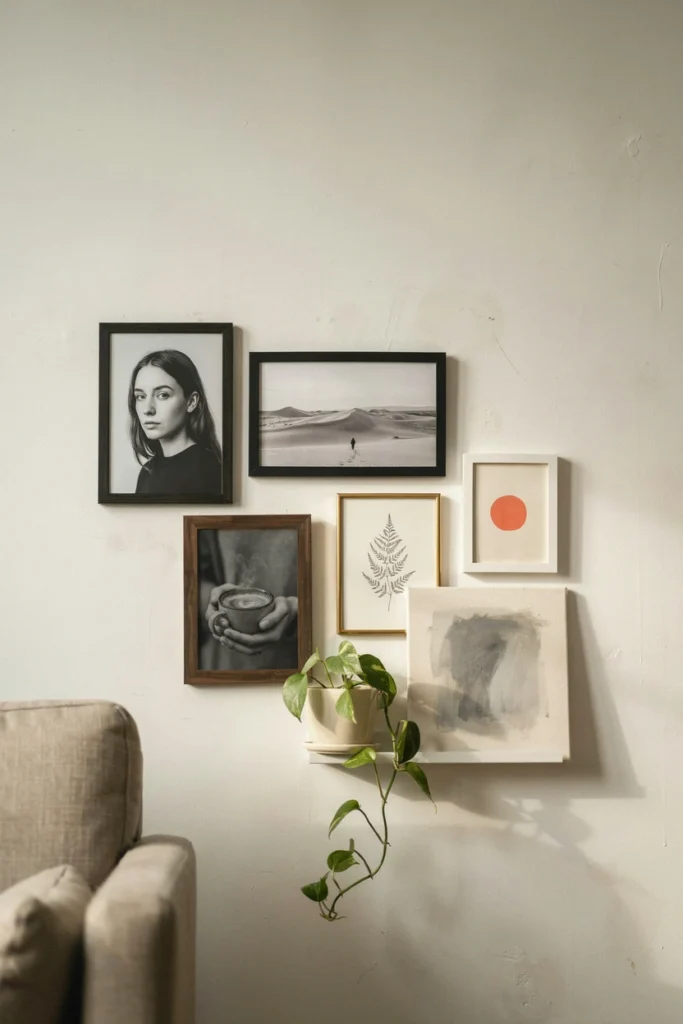
6. Create a Gallery Wall With Affordable Prints
Gallery walls look expensive but they genuinely don’t have to be. Download and print artwork from free sites, frame pages torn from old calendars or magazines, mix personal photos with simple text prints, or use postcards. The frames themselves can come from secondhand shops, painted in the same color for a cohesive look. Lay your arrangement out on the floor before committing to nails in the wall, and don’t be afraid of mixing frame sizes. Start with the biggest piece slightly off-centre and build outward — symmetry is the enemy of interesting gallery walls.
7. Paint One Accent Wall
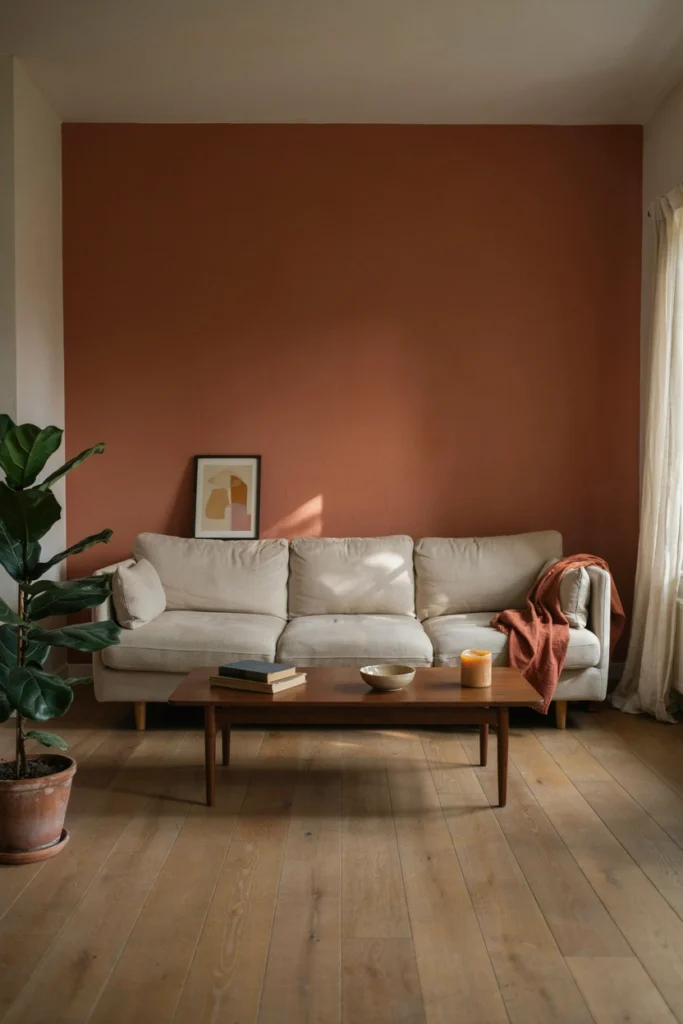
One wall, one tin, one afternoon. An accent wall in a deep, confident colour — forest green, navy, warm terracotta — gives a room the depth that costs thousands in furniture to achieve otherwise. The wall behind the sofa or the bed is the classic choice. And if you hate it, it’s one wall to repaint, not a disaster.
8. Upgrade Your Lampshades
The lampshade is the most overlooked object in most rooms — and one of the cheapest to fix. A dated shiny shade makes the whole lamp look tired; a simple linen drum shade makes it look current. Size up: most people buy shades too small. The shade should be roughly as wide as the lamp is tall, and it should hide the bulb from eye level when you’re seated.

9. Style Your Shelves Intentionally
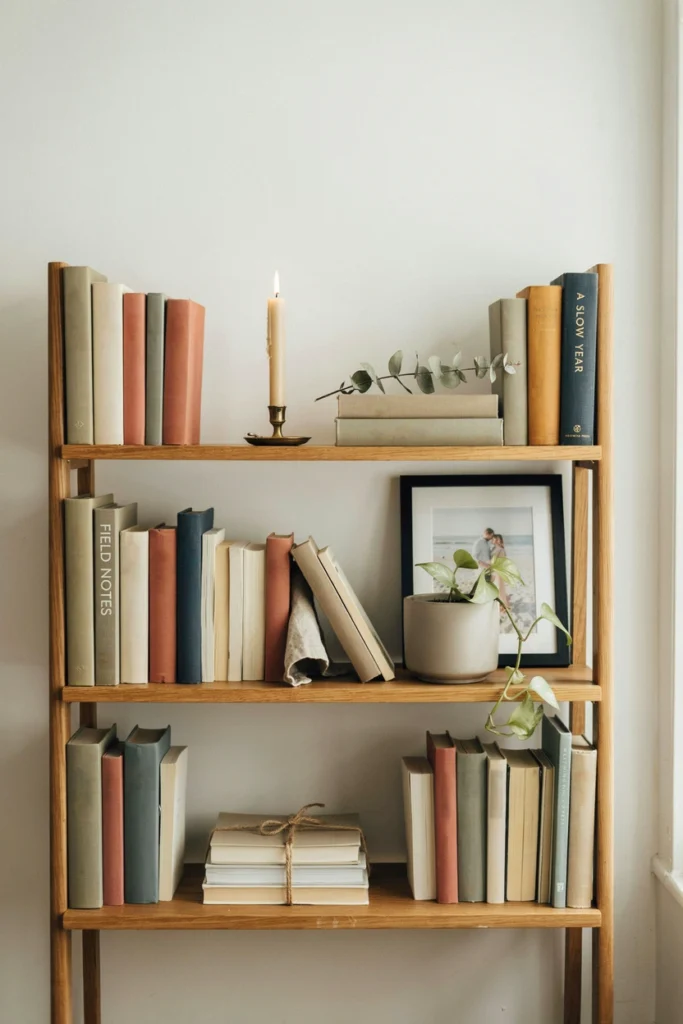
Take everything off, then put back half. That’s shelf styling in one sentence. Group what remains in odd numbers, vary the heights, leave a third of each shelf empty, and put the prettiest things at eye level. Books stacked horizontally make perfect risers for smaller objects. The goal is “curated,” not “cleared” — a styled shelf still holds things, just deliberately.
10. Use Curtains to Add Height and Drama
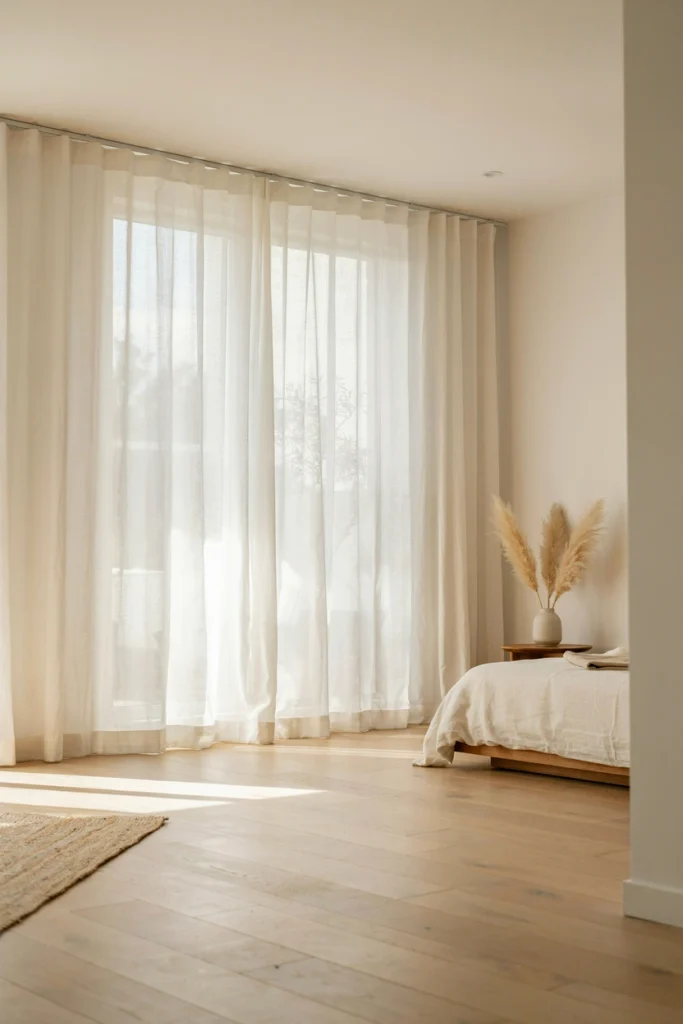
Hang curtains 15cm above the window frame and 20cm wider on each side, floor-length, and the room instantly feels taller and more expensive. It’s pure visual trickery — the eye reads the curtain’s height as the window’s height. Cheap curtains hung high look better than expensive curtains hung at frame level. This is the highest-impact £40 in interiors.
11. Repurpose Items You Already Own
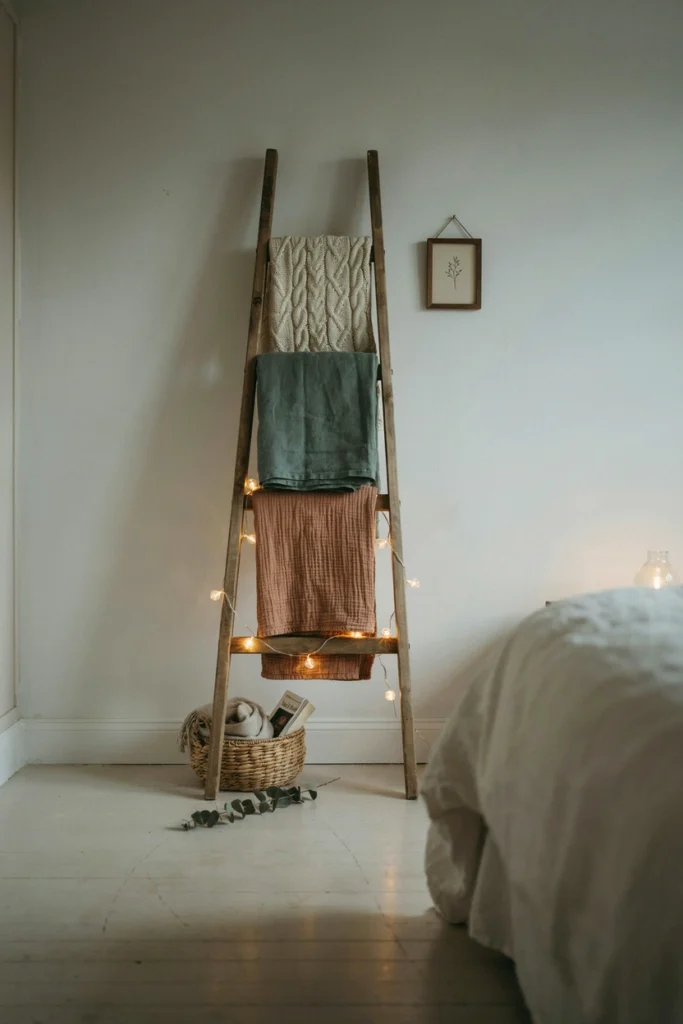
Shop your own house before you shop the shops. The ladder in the garage becomes a blanket rack; the wooden crate becomes a side table; the jug in the back of the cupboard becomes a vase. Repurposing works because the objects have history — they look collected rather than purchased, which is exactly what expensive-looking rooms have.
12. Add a Rug to Define Your Space
A rug tells the room where things belong: the seating area lives here, the walkway goes there. In open-plan spaces this zoning is essential; without it, furniture floats aimlessly. Size it so front legs of all seating sit on the rug — a rug that only the coffee table touches looks like a coaster. Flat-weave and jute rugs give the look for the least money.
13. Update Your Hardware
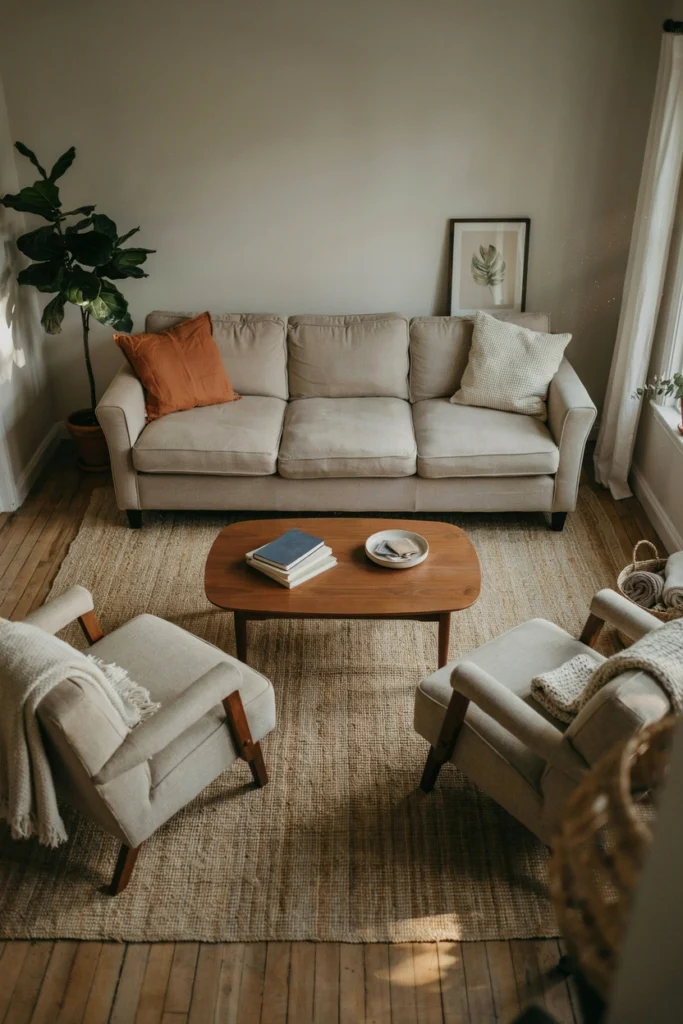
Cabinet handles, door knobs, light switch plates — the small metal things you touch daily and never notice until they’re ugly. Swapping builder-grade chrome for matte black or aged brass costs £2–4 per piece and takes minutes with a screwdriver. Do the kitchen and the front door first; they’re the most-touched and most-seen.
14. Create a Cozy Reading Nook
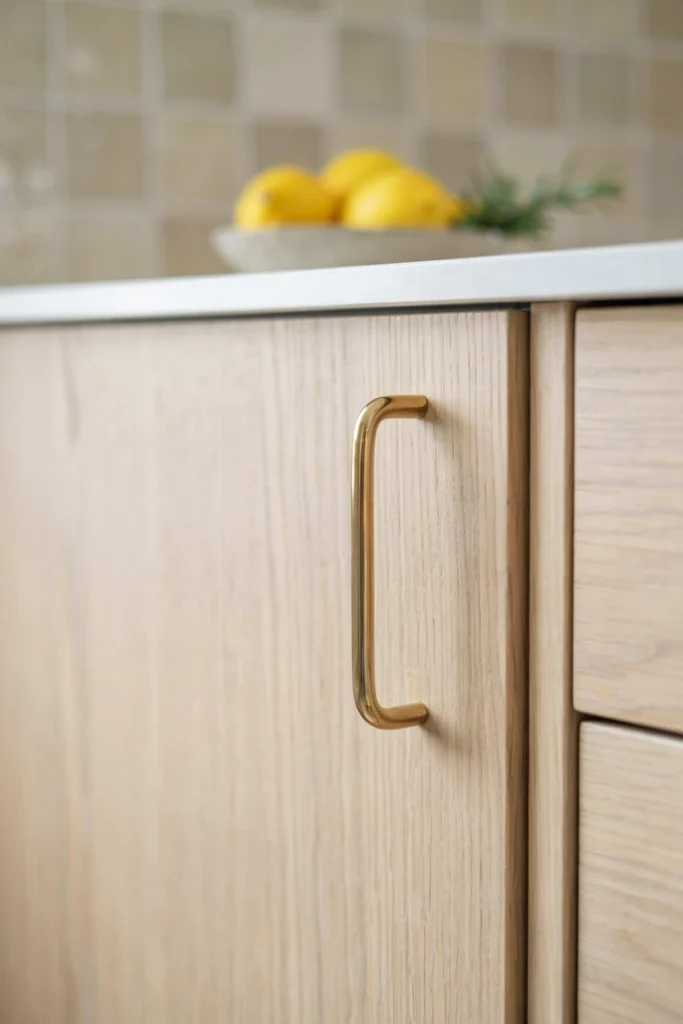
A chair, a lamp, a small table — that’s a reading nook, and it’s the corner guests gravitate to and homeowners actually use. Put it where the light is good (by a window, ideally) and where it’s slightly tucked away; nooks work because they feel separate. A £30 floor lamp with a warm bulb is the difference between a chair in a corner and a destination.
15. Use Candles for Mood and Atmosphere
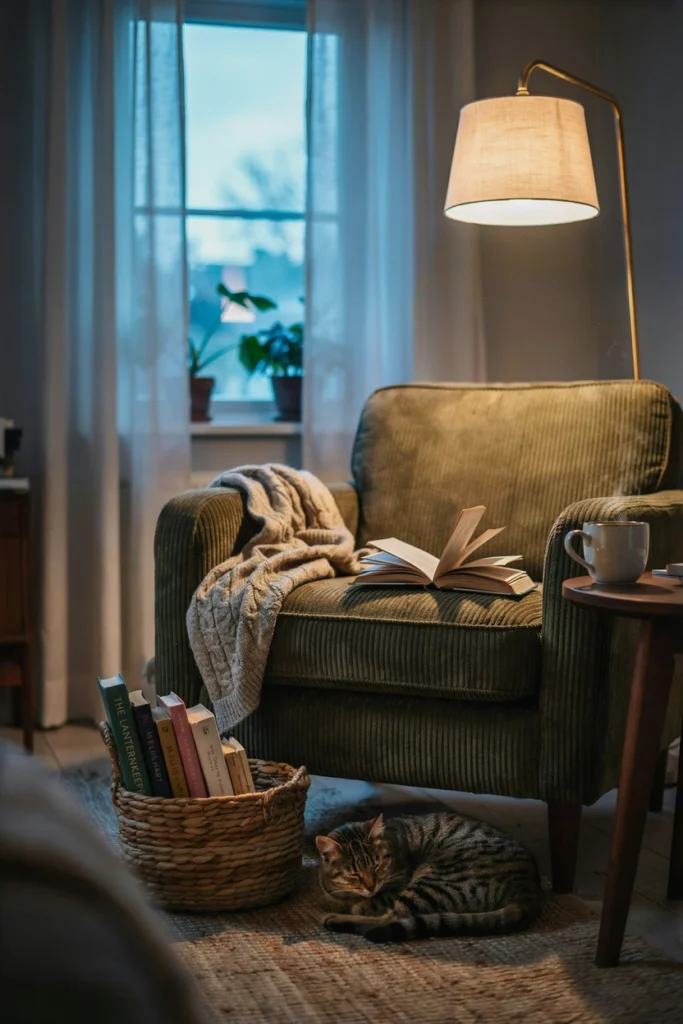
Candlelight is the most flattering light ever invented — it softens every room and every face in it. Group candles in odd numbers at varying heights: a cluster on the coffee table, a pair on the mantel. Unscented for dining areas (scent fights food), one subtle scent elsewhere. Battery candles have become genuinely good; use them where real flames are impractical.
16. Declutter as a Decor Strategy
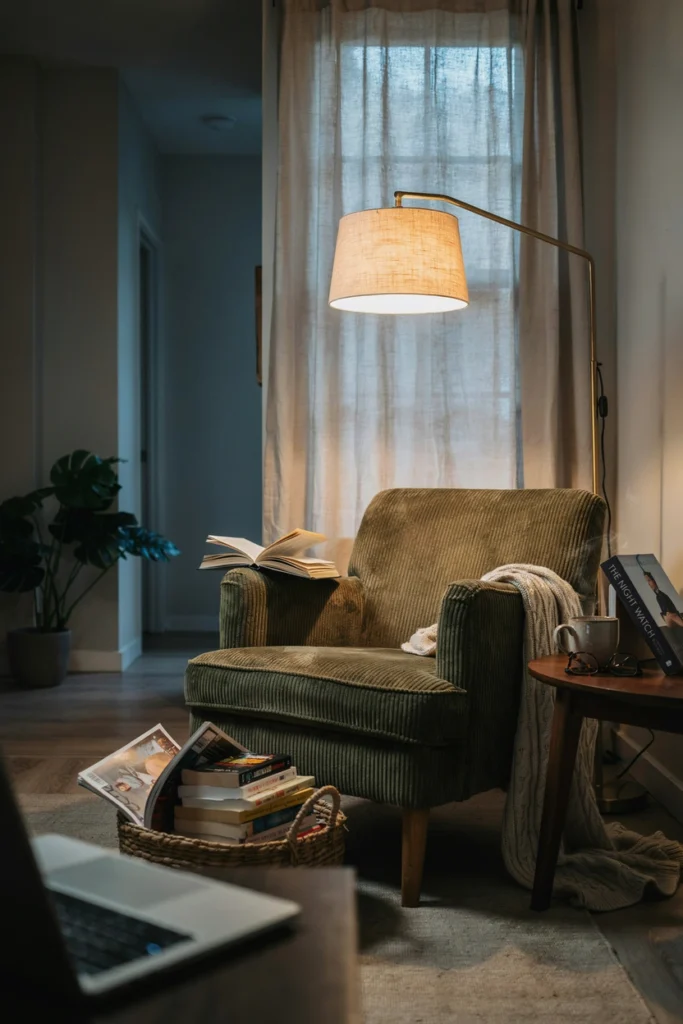
Removing things is decorating. Every surface you clear makes the remaining objects look more intentional and the room look bigger — for free, in an afternoon. Be honest about the “someday” pile: if you haven’t used it in a year and it has no story, it goes. Decluttered rooms don’t just look better; they’re easier to clean, which keeps them looking better.
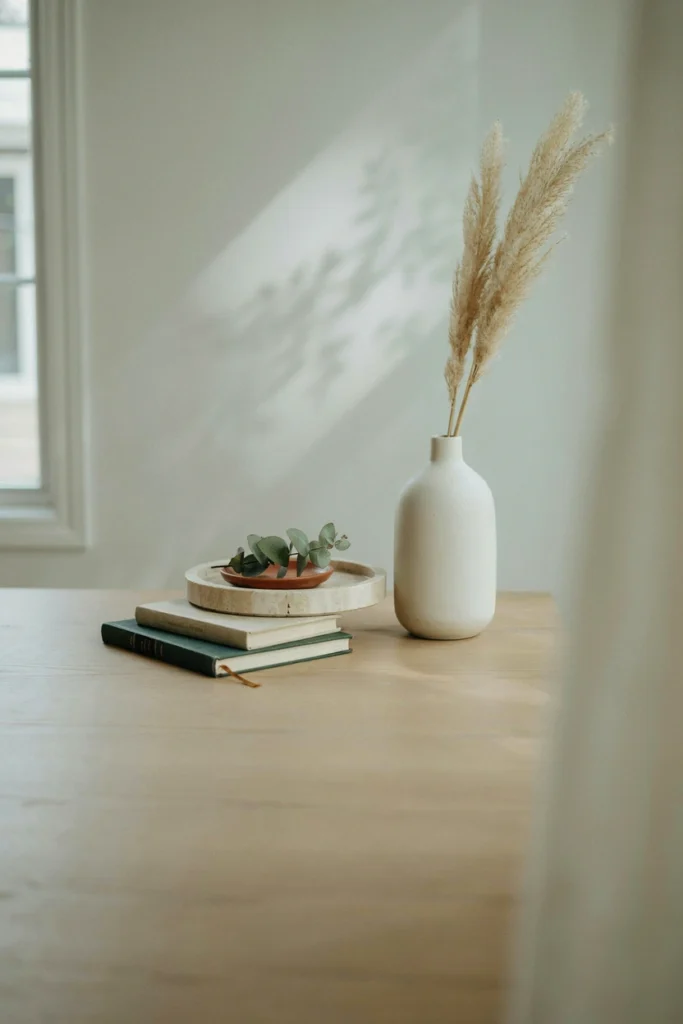
17. Frame Fabric or Wrapping Paper as Wall Art
A beautiful piece of fabric, wallpaper sample, or wrapping paper in a simple frame is genuine art for under £10. The frame does the heavy lifting — a £5 print in a good frame looks expensive; a £50 print in a bad frame looks cheap. Charity shops are full of solid frames for £2; the glass is usually fine, just replace the art.
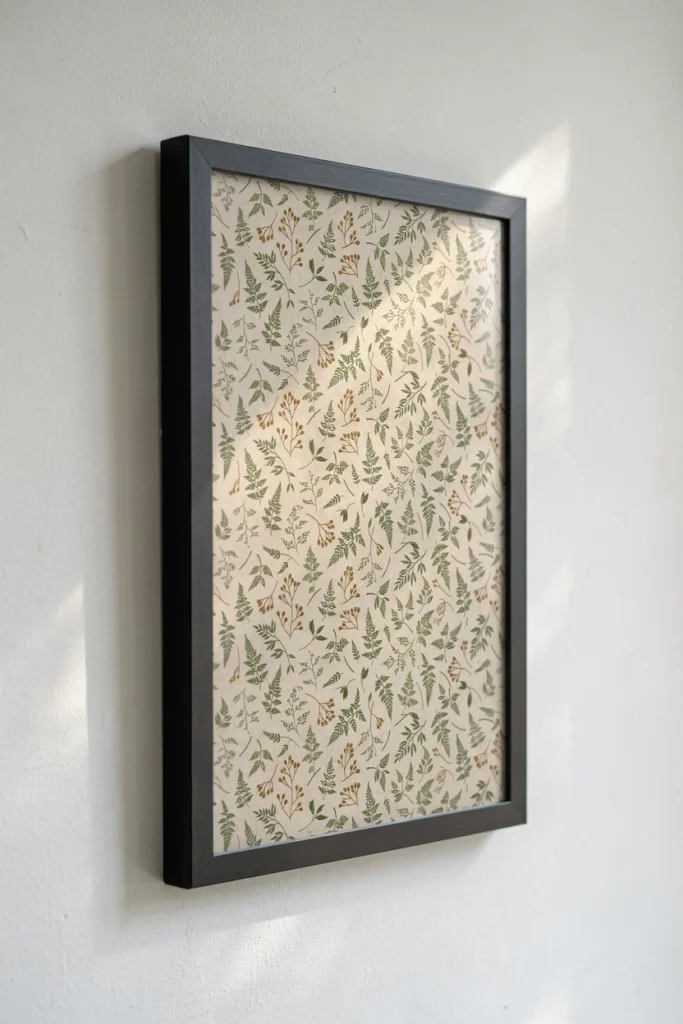
18. Hang String Lights for Soft Ambiance
Warm-white fairy lights aren’t just for December. Draped along a shelf, around a mirror, or in a glass vase, they add a layer of warm glow that overhead lighting can’t. Keep them warm white (never cool/blue), hide the battery pack, and put them on a timer plug so they come on at dusk by themselves. Magic, automated.
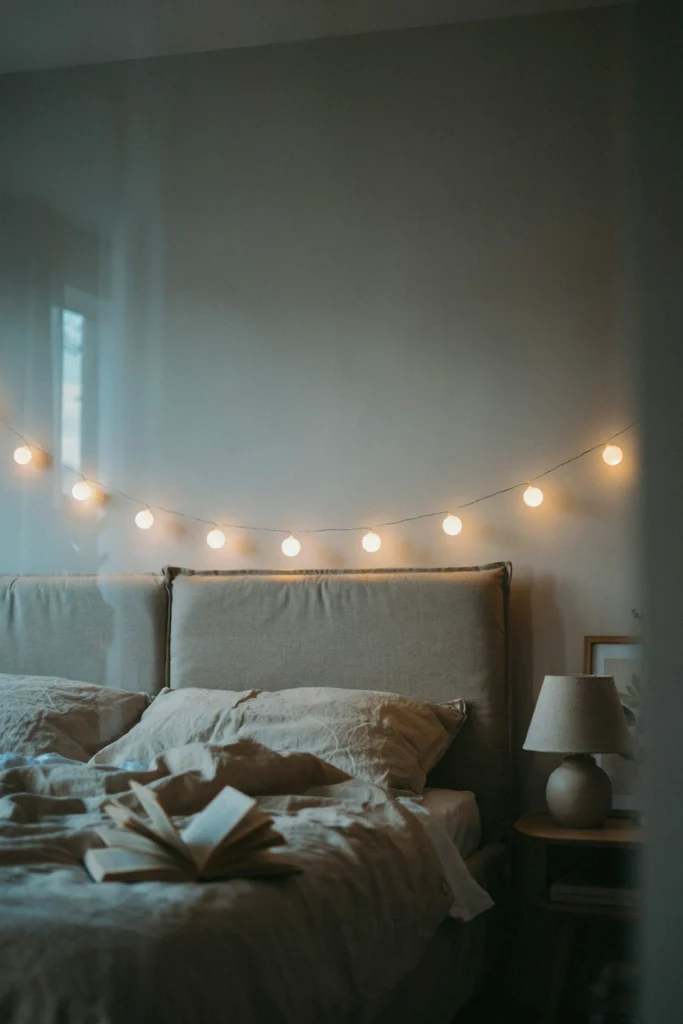
19. Add a Tray to Style Any Surface
A tray turns scattered objects into an arrangement. Coffee table, ottoman, bathroom counter, bedside table — corral the small things onto a tray and they instantly look curated. Wood, rattan, or simple black: the tray should be quieter than what sits on it. One tray per surface; two trays on one surface is just clutter with borders.
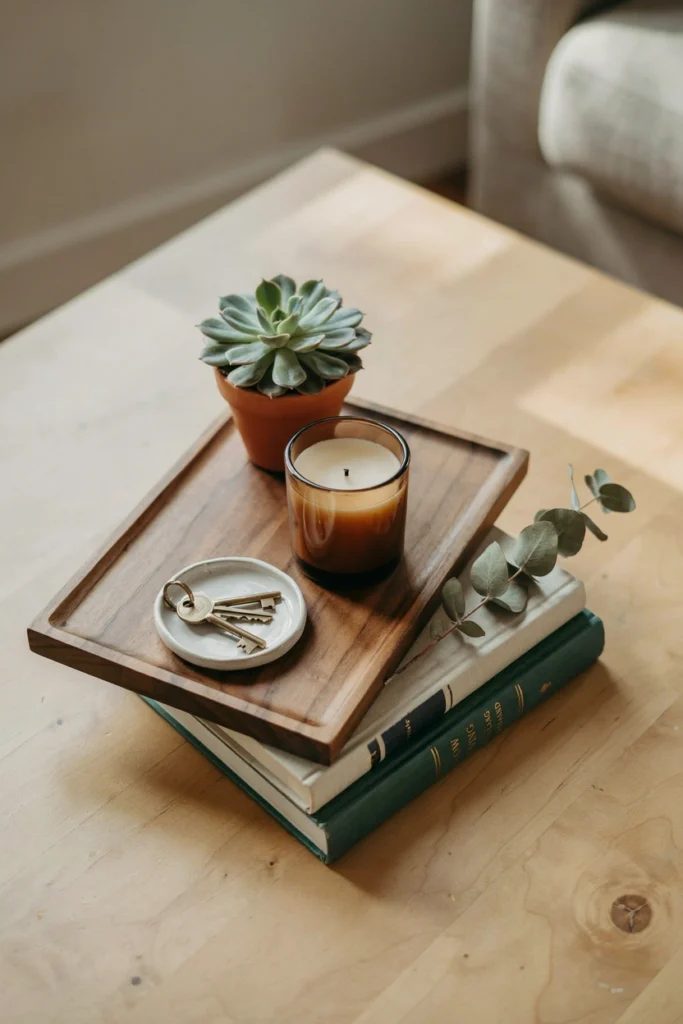
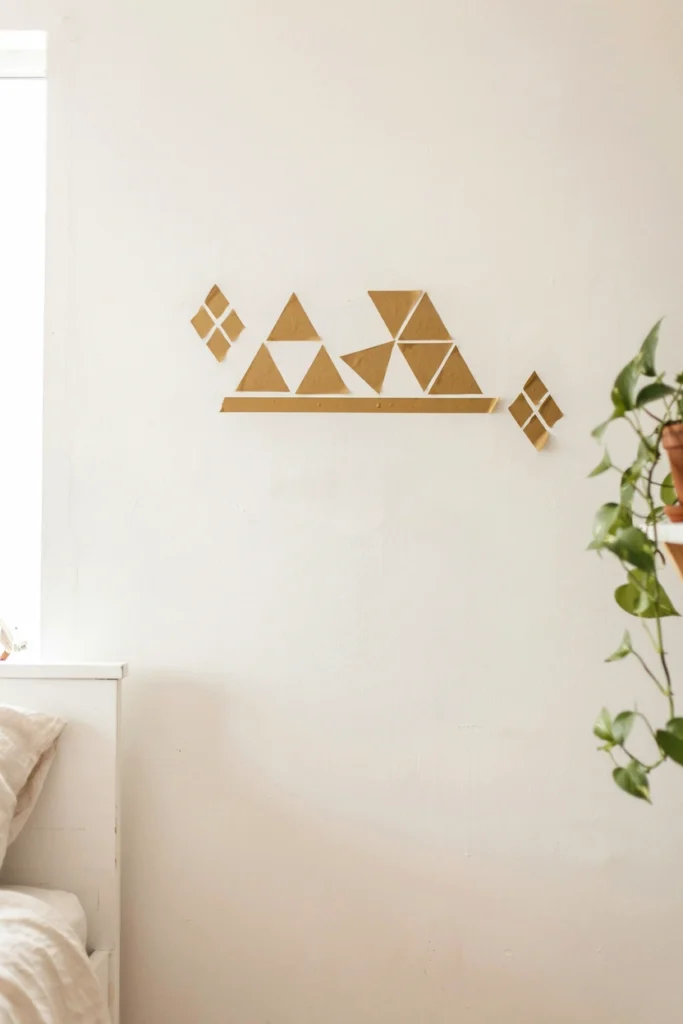
20. Use Washi Tape for Temporary Wall Art
Washi tape is the renter’s paintbrush: geometric patterns, faux picture frames, colour-blocked shapes — all removable, all cheap, all surprisingly effective. It works best in small doses: one wall section, one geometric design. The tape’s slight texture reads as intentional from across the room. Peel slowly when removing; heat with a hairdryer if it’s been up for years.
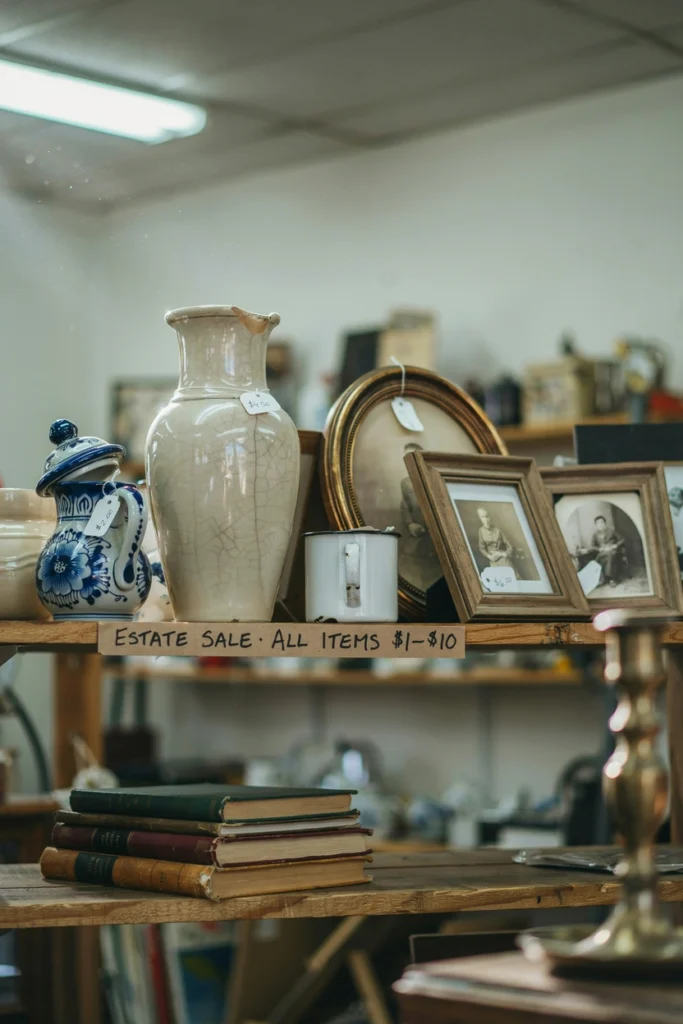
21. Shop Secondhand First
Before buying anything new, check the secondhand route — charity shops, flea markets, online marketplaces. Solid wood furniture, brass lamps, ceramic vases, and real art all appear regularly at a tenth of retail. The trick is going often and buying when you see it; the good pieces don’t wait. And learn to see past ugly upholstery — bones matter, fabric is changeable.
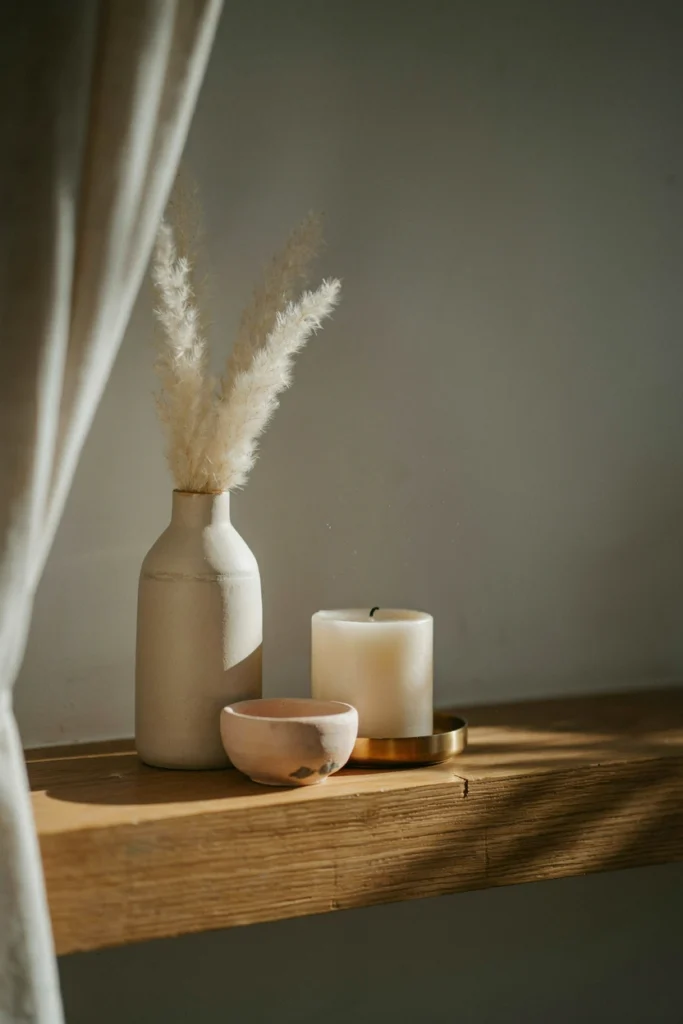
22. Create a Vignette on a Shelf or Surface
A vignette is three objects that look good together: tall, medium, small; different textures; one unifying colour. That’s the whole formula, and it works on mantels, sideboards, shelves, and bedside tables everywhere. Once you see it, you can’t unsee it — and you’ll start building them instinctively.
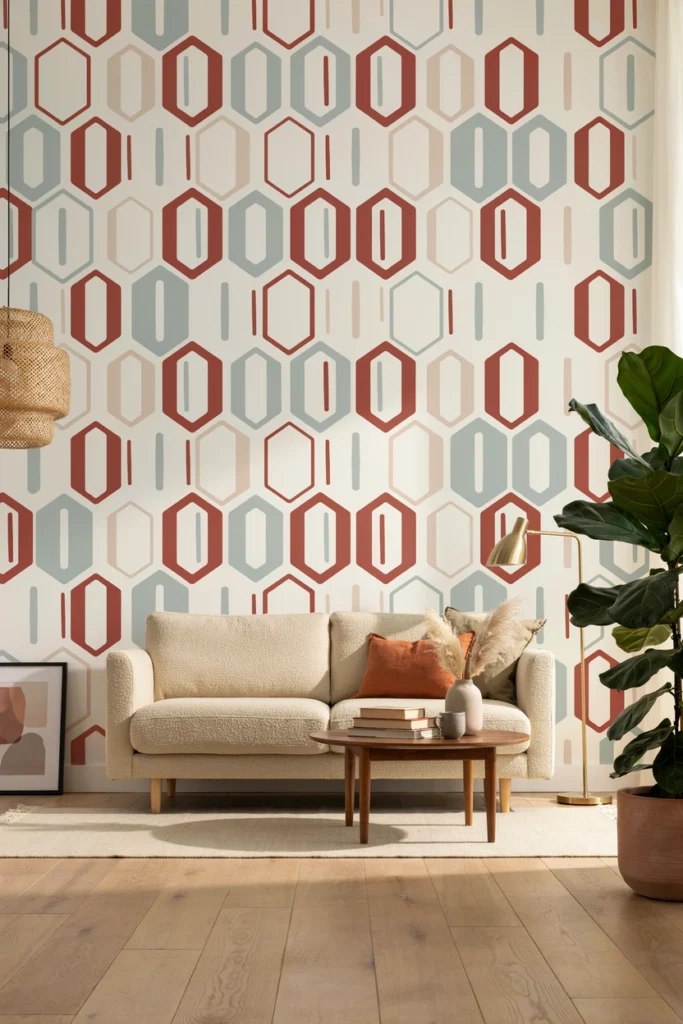
23. Refresh Walls With Removable Wallpaper
Peel-and-stick wallpaper has grown up: the patterns are good now, it goes up without paste, and it comes down without damage. One accent wall, the back of a bookcase, or inside wardrobe doors — small applications with big impact. Order samples first; colours on screen lie, and a £3 sample beats a £60 roll of regret.
24. Make Your Own Simple Art
You don’t need to be an artist — you need to be brave for twenty minutes. Abstract brushstrokes in two colours, pressed flowers in a frame, a single line drawing: handmade art has a presence that prints lack, because it’s one of one. Guests always ask about it, which is more than any poster ever achieved.
25. Add a Statement Clock
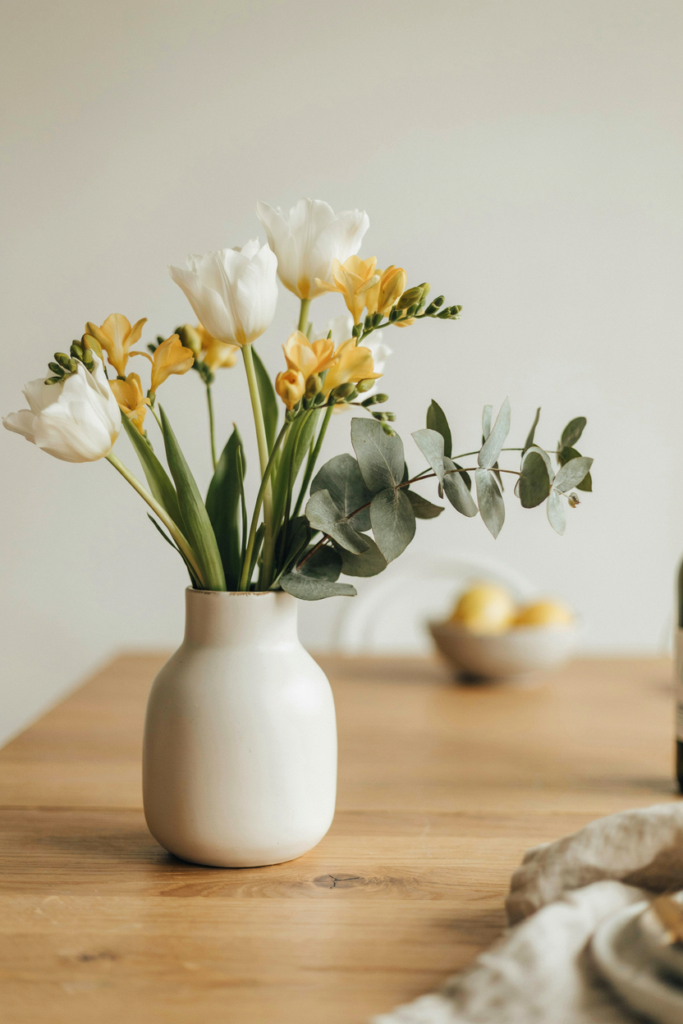
A big clock fills a wall with purpose — it’s decoration that also tells the time, which is why it never looks frivolous. Oversized and simple beats small and fussy; a 60cm clock on a bare wall is a statement, a 20cm clock is an afterthought. Hang it where you’ll actually check it, or it’s just a circle.
26. Layer Different Light Sources
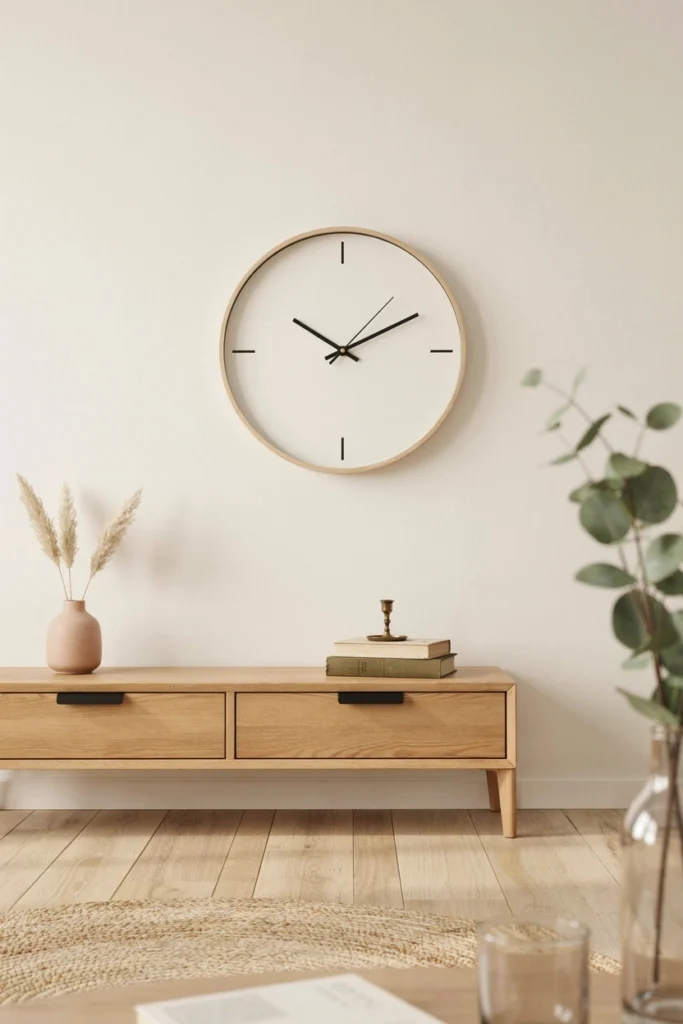
Rooms with one overhead light feel flat; rooms with four light sources feel rich. Aim for ambient (ceiling), task (reading lamp, kitchen spots), and accent (candles, fairy lights, picture lights) — three layers minimum, all warm white. Put them on separate switches or smart plugs so you can set the mood in seconds, not minutes.
27. Edit and Rotate Your Decor Seasonally
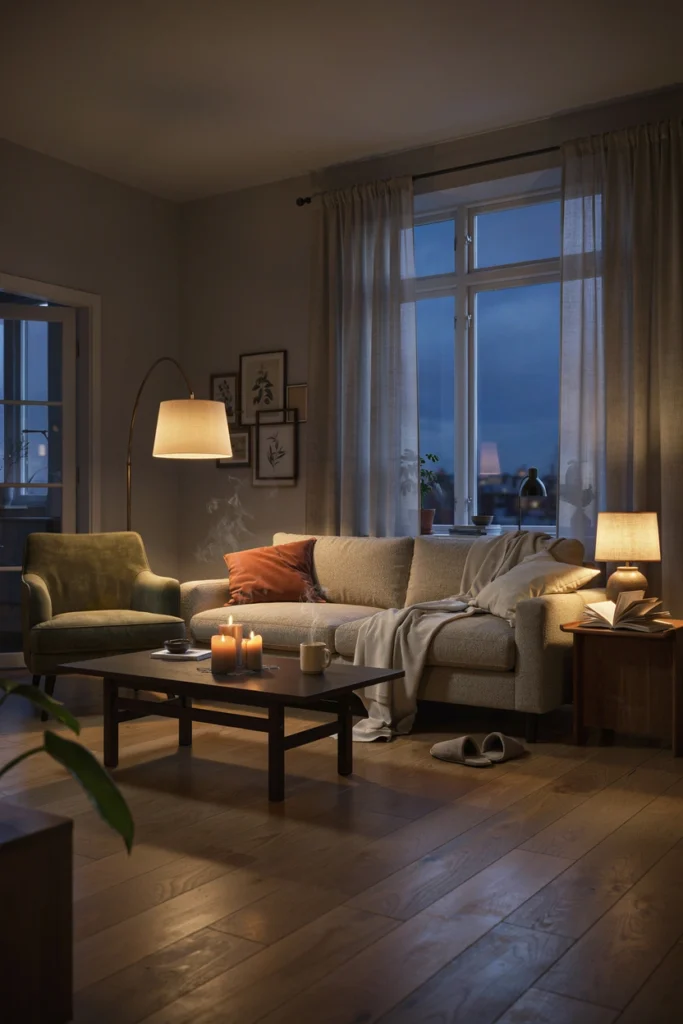
The final free trick: rotate, don’t accumulate. Swap the cushion covers, move the art, change the throw — the same objects in new places feel new. Store the off-season pieces out of sight so their return feels like shopping. Homes that feel fresh year-round aren’t buying constantly; they’re editing constantly.
Conclusion
None of these ideas require money. They require looking at your home with fresh eyes and making deliberate choices — which, it turns out, is what expensive-looking homes are actually made of.
Start with the free ones today. Rearrange, declutter, restyle. Then, only then, spend money — and you’ll spend it on the right things.
Pro Tips
- Do the free half first. Rearranging, decluttering, restyling, and rotating cost nothing and deliver 70% of the transformation. Spending money before these are done is the most common decorating mistake.
- One room at a time, fully. A finished living room plus an untouched bedroom beats three half-done rooms. Completion is what reads as “designed” — partial efforts read as mess.
- Photograph before you shop. Take phone photos of the room before buying anything. Photos reveal what’s actually missing (usually texture, light, or scale) versus what you assumed was missing.
- Set a “sleep on it” rule. Anything over £50 waits 48 hours. Most impulse decor purchases are for problems that a free fix would have solved — the waiting period catches them.
FAQs
How can I make my home look expensive on a tight budget?
Focus on the free fundamentals first: declutter ruthlessly, rearrange thoughtfully, and fix the lighting (warm bulbs, layered sources). Then spend small amounts on high-impact swaps — cushion covers, curtains hung high, hardware. Cohesion beats cost every time: a consistent palette and edited rooms read as expensive regardless of budget.
What is the cheapest way to refresh a room?
Rearrange the furniture — it’s free and instantly transformative. After that, declutter, swap textiles (cushion covers, throws), and change the lighting to warm white. These four moves together can remake a room for under £50.
Where should I shop for budget home decor?
Charity shops and flea markets for unique solid pieces; online marketplaces for furniture; discount home stores for textiles and basics. Shop secondhand first for anything made of wood, brass, or ceramic — the quality per pound is unbeatable. Buy new for mattresses, upholstery you can’t clean, and anything safety-related.
How do I avoid my budget decor looking cheap?
Cohesion is everything: stick to one palette, repeat materials, and edit ruthlessly. Cheap looks come from clutter and clashing, not from price tags. Good lighting (warm, layered) flatters everything, and proper scale — curtains hung high, art at the right height, rugs big enough — reads as expensive at any budget.

Ahsan Yousaf is a home decor writer and enthusiast behind HowDecor. He shares practical, budget-friendly decorating ideas — from colour schemes and small-space solutions to seasonal makeovers — for real homes, not showrooms.